Category: Applications

  • New Report on Global Military GPS/GNSS Market Looks at Next Decade

    Reportstack has announced a new report on The Global Military GPS/GNSS Market 2013-2023.  This report offers the reader detailed analysis of the global military GPS/GNSS  market over the next 10 years, alongside potential market opportunities to enter the industry, using detailed market size forecasts, Reportstack said.

    A satellite navigation system provides GPS positioning from a global perspective, and is therefore of utmost importance for modern-day military operations, which rely on accurate real-time data on hostile forces in order to carry out precision attacks, Reportstack said. It is here that GPS/GNSS devices assume an important role, as they are imperative to transfer signals from these satellites back to earth.

    The U.S. is the highest spender on military GPS/GNSS navigation, and is responsible for 42.9% of the global military GNSS devices market. Others major spenders in this sector include Russia, the UK, China and India. In July 2013, India launched the IRNSS-1A, the first of seven satellite constellation to be deployed under the Indian Regional Navigation Satellite System (IRNSS) program to be completed between 2015-2016. And China’s BeiDou is scheduled to be operational by 2020.

    Another factor driving the market is the integration of satellite navigation technology with other navigation systems, such as the inertial navigation system (INS) and gyro, as GPS devices are to be used in order to decipher data correctly, Reportstack said.

    The increasing demand for satellite navigation and communications is driven primarily by the desire of militaries to monitor more areas and derive accurate information by a range of GNSS receivers/sensors in the shortest time possible. Major military aircraft and helicopters are dependent on GPS embedded INS systems for effective navigation. Similarly, naval vessels and guided munitions are increasingly relying on the collaboration of laser, gyro, INS, and satellite navigation technologies to derive accurate real time data.

    Furthermore, it has been observed that the usage of standard positioning services/open service receivers, which use unencrypted signal for non-combat purposes has increased, and is expected to drive demand and encourage expenditure, Reportstack said. The military GPS/GNSS technology is expanding its horizon beyond the basic characteristics of navigation and tracking. The use of GPS, in conjunction with a number of software applications, has expanded its use in military operations. A number of new technologies are now embedded with GPS receivers to produce a more sophisticated military tool.

    Recently, a Swiss-based company developed a device called GPS Log Book based on u-blox technology. The new device has extended the scope of GPS technology to the administrative side of military operations. It provides an easy way for military drivers to automatically keep an accurate travel log book which can be securely accessed later from anywhere via a web interface. Information logged includes route, speed, and distance traveled. It also keeps a close record of fuel used by the vehicle, based on the distance traveled at various speed levels.

    The advent of Differential GPS (DGPS), an enhancement to GPS, which provides improved location accuracy, from the 15-meter nominal GPS accuracy to approximately 10 cm, has further expanded the scope of GPS in missile technology. The intercontinental ballistic missiles, which are capable of hitting targets across thousands of miles navigation, use inertial navigation with DGPS receivers. The advent of DGPS is expected to be one of the most significant steps in accurate missile targeting for militaries across regions.

    The companies mentioned in this report are Northrop Grumman, Raytheon, Rockwell Collins , Lockheed Martin, ITT Exelis, Thales, and BAE Systems. More details and table of contents about this report can be found by visiting The Global Military GPS/GNSS Market 2013-2023 report.

  • Gordon’s Positioning System, Circa 1970

    Remembering a Time before GPS — and a Lifelong Friend

    One of my oldest and best friends died today – and he was just a kid, only 62. In the prime of his life, and yet I know he led a very full life and had no regrets when he passed on to that highway in the sky — somewhere where he will hopefully not have to ask directions, because neither one of us was very good at that. Indeed, in our youth, both Gordy and I were GPS-challenged long before GPS was a gleam in Dr. Parkinson’s eye.

    I first came across Gordon F. Oates, Jr., and his future wife Valerie at a private media party more than 40 years ago. Gordon was the nephew of Warren Oates, the famous actor — who was a regular on the Gunsmoke and Rawhide westerns in the late 1950s — black and white television ring a bell? Warren Oates was certainly known to have a wild streak in him. As I grew to know Gordy, I always suspected he inherited a bit of Warren’s independent DNA. But I digress — Gordon and I teamed up one summer while I was attending the University of Kentucky, both as a student and as the managing editor of the Kentucky Wildcat newspaper, and Gordon was attending the University of Louisville, also in Kentucky. Our common theme when we met was we were both working for the Courier Journal newspaper at the time. Not that we were well-known columnists or writers — no, we were just two young men of the South from two of Kentucky’s finest universities trying to make a few extra bucks during the summer break. Over the two summers of 1970-71, I think we visited every city, tiny berg, holler, village, and wide spot in the road that existed in eastern Kentucky.

    After the Courier Journal paired Gordon and I as a team, assigned us to cover eastern Kentucky, they then notified us we would need to provide our own transportation. I had a 1965 Fiat Spyder that I had brought home after attending college in Europe a few years before, which would barely fit my six-foot-one frame and a suitcase. Gordy, although two years my junior, was a few inches taller, loved basketball, and outweighed me by fifty pounds, so the Fiat was not an option for the both of us. But Gordon’s mode of transportation — Wow! Gordy had a brand-new 1970 bright red 320 Boss Mustang with a huge spoiler. The specs state the original Boss Mustang capable of accelerating from 0-60 mph in 6.9 seconds. The quarter mile took 14.6 seconds at 98 mph and we routinely and brazenly tested those specifications in the mountains of Appalachia — fog, rain, snow, coal trucks, slow-moving farm tractors, blind curves, thousand-foot sheer drops and all. The Dukes of Hazard had nothing on us “City Slickers” (more on that appellation shortly) from the Courier Journal. We visited Hazard and Walker Town, Kentucky, several times those two summers, and although we never met Daisy Mae, we met a young lady whose story changed both our lives.

    Lost? Never. Bewildered? Maybe.

    When I say we visited several places several times, our repeat visits were not always planned or even generally on purpose. You see, Gordon always drove the Mustang, and while he loved that car and he loved to drive, he was also always a happy soul and not overly concerned with directions. Even when I gave him directions, he could not always hear me because we listened to whatever country station he wanted — driver’s prerogative, of course, and there were few choices — for sure Loretta Lynn and Dolly Parton were on every station singing as loud as the volume knob in that Mustang would take them. Plus, as the driver in charge, it was also Gordy’s privilege not to ask directions. That’s right, it’s a guy thing, and yes, I said not to ask directions. Many of my masculine readers will be familiar with the concept. After all, how could two college boys from the big city of Louisville, the biggest city then and still today in the Commonwealth of Kentucky, ever admit to being lost in the mountains of Appalachia? And how could we ever stoop so low as to ask directions, especially since every single time, rain or shine, we stopped for gas, which was frequently at those speeds, a huge crowd gathered to gawk at that bright red Boss Mustang? Now, just how could we lower ourselves to admit we were lost? Horrors! I can hear the snickers now — big city slickers are lost! So Gordy drove like a bat out of the proverbial nether regions and I attempted to read the map. Ever try to read a Texaco map while careening around curves in the mountains of Appalachia, while avoiding coal trucks and trying to keep your lunch down? Losing your lunch in the Mustang was not an option, just as it was not such a good idea to look down at the rusted hulks of automobiles strewn along the mountainside or at the river gorge so far below you could barely make out the water.

    I did not have an inkling then that anything like GPS (Global Positioning System) would be commonplace just 20 years later, but it would have been merely one of the many things I would have been praying for had I known. So we made do with Gordon’s Positioning System — which invariably failed, except for the day it took us to a tiny mountain village in far eastern Kentucky.


    Pikeville

    We rarely spent more than 30 minutes in one of the tiny hamlets or hollers in Kentucky’s eastern mountains, better known to the world as Appalachia. But I know Gordon never forgot and I will never forget the cold and rainy late fall day we stopped in Pikeville, pronounced proudly by the young lady in the café that day as “PYKE-vull” as in “Howdy gents, water you two city slickers adoin’ in Pikeville?”

    We were there merely to have lunch at the only café in the entire village. It featured six tables with mismatched cane-bottom chairs, sawdust on an aromatic, weathered and stained (with what, I did not want to know) pine floor with knotholes every few feet, and a menu that seemingly the locals and our waitress knew by rote, since we never saw one. We, of course, according to our very young waitress, would have the Blue Plate Special, consisting of “burgers, fried ’taters with catch-up, cola and pie.” She “allowed” as we could have a fried egg or gravy on our burger for an extra five cents. I think we both passed.

    It was actually the life story our waitress haltingly related that caught and held our attention that day. She said she was 14 years old — our best guess was twelve. She wore a flour-sack dress that could only be described as threadbare — but if you looked carefully, you could still read “50# lbs of bread flour by weight” right on the back of her dress. She wore no socks or shoes, and this was in late November, just the week, according to her, afore Thanksgiving in 1970. Come on back next week, she said, and we could have turkey with all the trimmin’s. Which we hoped meant more than a fried egg and gravy.

    Although she spoke with a strong Kentucky burr, she obviously knew the limited menu by heart, as we never saw her write down an order. When she spoke to the cook in the kitchen, her strong accent made her almost indecipherable, even to two Kentucky boys. And, without a doubt, she was clearly the one who gave us the handle “Big City Slickers” and informed us that she “hain’t never read no ‘pepper’ from the big city.” We talked while we were waiting for our food, as everyone else in the café was, as she exclaimed, “out pawin’ and fawin’, over the big red car in the rain with’n the horse on it, parked right in front.” That is, except for an old gentlemen sitting in the corner by the roaring fireplace, who was chewing and spittin’ tobacco. Obviously a favorite appetizer for folks in Pikeville. But I digress — our obviously underage waitress wanted to talk, and she told us about her life back in the holler, living in a log cabin/tarpaper shack over a hog pen. Her daddy was a part-time coal miner and moonshiner, who could get us some shine (moonshine) iffin we wanted it — the cops didn’t make no never mind, she said. She reckoned she was one of eleven children from her Momma, who were livin’! She did not say how many of her brothers and sisters had passed on, but it was obvious the number was not small. She went to school when the truant officers caught her and made her go, but her family needed the five dollars a week plus tips she got from the cafe.

    Consider that back in 1970 regular gasoline went for about 36 cents a gallon in Appalachia, cheaper than in Louisville I remember, and it took just about six dollars every time we filled the tank on the Mustang. And this young lady worked as a waitress at twelve years of age so she could make $5 a week plus tips for her family. Of course she said she also received her meals “free” and could occasionally take some food home “if’n she could carry it the five miles yonder to the holler.”

    Please don’t get the wrong impression; neither Gordon or I ever made fun of this young lady, of Pikeville, Kentucky, or of Appalachia. We had just never encountered anyone like her or her circumstances previously. After all, we were “big city slickers,” university men, newspapermen, and this young lady was proud of her story — there was not a single “woe is me attitude” on her behalf ever in the short time we knew her. Quite the opposite: she was obviously responsible, and very proud to have her job. She was forthrightly proud of her Momma and her family, and as she said, she respected her Daddy. She was getting a new dress for Christmas, but her only lament was that she had never owned a pair of shoes. But then she said, “It is hard to miss something you never had.

    Prior to visiting this particular café in Pikeville, Gordon and I never ate more than one meal in any one restaurant or café for the entire two summers. Moving from town to town several times a day was the name of the game in the newspaper business. However, somehow Gordon kept “getting lost,” and we ate nearly every meal at the same café in Pikeville for three days straight, until it was just too far to “get lost to” anymore. Our meal receipts were always about a dollar, and yet I know we both quietly left five one-dollar bills underneath our plate every time we ate there. Years later we both commented on the fact that it was snowing the week after Thanksgiving, which was the last time we were in Pikeville and in that little café. Our waitress still had no shoes, but she proudly showed us her new wool socks.

    Gordon and I have since discussed that we could not find that little café or that waitress in Pikeville ever again with or without a GPS, because hopefully they no longer exist, at least not under the same circumstances. Pikeville is certainly still there, and has grown from a population of less than 5,000 souls in 1970 to just about 7,000 inhabitants today. Our little waitress would be 56 years old today, if she is still living, and believe me, living in Appalachia in a tarpaper shack, longevity is not a given. But her memory still lives in our hearts, along with the highways and byways of Appalachia, and who knows, Gordy may be speaking with her today, because every time we left that little Café she would sing out, not just a wholehearted thank you for the tip, but a loud and obviously heartfelt “God bless y’all! Come back, ya hear!”

    Until next time, happy holidays, happy navigating and pick up the phone and call an old friend today — you just never know. Hope to see you right here next year.


  • CHC Delivers 520 GNSS Receivers in Big Myanmar Contract

    CHC Delivers 520 GNSS Receivers in Big Myanmar Contract

    The X91+ GNSS receiver by CHC Navigation.
    The X91+ GNSS receiver by CHC Navigation.

    CHC Navigation announced today the successful delivery of 520 units of X91+ GNSS receivers to the Settlement and Land Records Department (SLRD), a part of the Myanmar Ministry of Agriculture and Irrigation.

    Awarded as one of the world’s largest GNSS tenders, CHC Navigation successfully delivered 520 units of X91+ receivers within the tight 60-day time frame allowed by the tender.

    “This might be the largest single contract award for RTK receivers I’ve ever heard of,” commented Eric Gakstatter, GPS World’s survey editor.

    The Settlement and Land Records Department activities encompass the collection of agricultural statistics, annual assessment of land revenue, land lease and tenure, and many other agricultural land administration tasks.

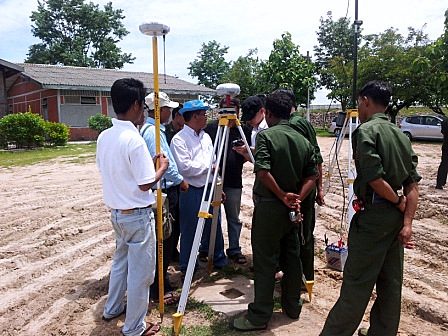
    CHC Navigation, in cooperation with its distributor, IGS Company Limited, demonstrated the performance of the X91+ during stringent field technical assessments versus other major GNSS industry players.

    CHC Navigation demonstrates the X91+ during field technical assessments.
    CHC Navigation demonstrates the X91+ during field technical assessments.

    “We are excited about the international recognition of CHC’s GNSS solution by leading governmental organizations. I believe the win highlights our firm commitment to provide high precision, outstanding quality products and more over dedicated support and services,” said George Zhao, CEO of CHC. “The award of this significant tender is a real achievement in CHC international development.”

    The X91+ GNSS receiver is a compact 220-channel GNSS receiver designed for high accuracy and productivity in harsh environments. According to CHC, the receiver has an easy-to-use, efficient and intuitive work flow, and is optimized for efficient RTK positioning.

  • Qualcomm Introduces Chipset with Integrated 4G LTE World Mode for High-Volume Smartphones

    Qualcomm Technologies, Inc., has introduced the Qualcomm Snapdragon 410 chipset with integrated 4G LTE World Mode. According to Qualcomm, the delivery of faster connections is important to the growth and adoption of smartphones in emerging regions, and Qualcomm Snapdragon chipsets are poised to address the needs of consumers as 4G LTE begins to ramp in China.

    Snapdragon 410 chipsets support all major navigation constellations: GPS, GLONASS, and China’s new BeiDou, which helps deliver enhanced accuracy and speed of location data to Snapdragon-enabled handsets.

    The new Snapdragon 410 chipsets are manufactured using 28-nm process technology. They feature processors that are 64-bit capable along with superior graphics performance with the Adreno 306 GPU, 1080p video playback and up to a 13 megapixel camera. Snapdragon 410 chipsets integrate 4G LTE and 3G cellular connectivity for all major modes and frequency bands across the globe and include support for dual and triple SIM. Together with Qualcomm RF360 front-end solution, Snapdragon 410 chipsets will have multiband and multimode support. Snapdragon 410 chipsets also feature Qualcomm’s Wi-Fi, Bluetooth, FM and NFC functionality.

    The chipset supports all major operating systems, including the Android, Windows Phone and Firefox operating systems. Qualcomm Reference Design versions of the processor will be available to enable rapid development time and reduce OEM R&D, designed to provide a comprehensive mobile device platform. The Snapdragon 410 processor is anticipated to begin sampling in the first half of 2014 and expected to be in commercial devices in the second half of 2014.

    Qualcomm Technologies also announced for the first time the intention to make 4G LTE available across all of the Snapdragon product tiers. The Snapdragon 410 processor gives the 400 product tier several 4G LTE options for high-volume mobile devices, as the third LTE-enabled solution in the product tier. By offering 4G LTE variants to its entry level smartphone lineup, Qualcomm Technologies ensures that emerging regions are equipped for this transition while also having every major 2G and 3G technology available to them. Qualcomm Technologies offers OEMs and operators differentiation through a rich feature set upon which to build innovative high-volume smartphones for budget-conscious consumers.

    “We are excited to bring 4G LTE to highly affordable smartphones at a sub $150 ( ~1,000 RMB) price point with the introduction of the Qualcomm Snapdragon 410 processor,” said Jeff Lorbeck, senior vice president and chief operating officer, Qualcomm Technologies, China. “The Snapdragon 410 chipset will also be the first of many 64-bit capable processors as Qualcomm Technologies helps lead the transition of the mobile ecosystem to 64-bit processing.”

    Qualcomm Technologies will release the Qualcomm Reference Design (QRD) version of the Snapdragon 410 processor with support for Qualcomm RF360 Front End Solution. The QRD program offers Qualcomm Technologies’  technical innovation; customization options; the QRD Global Enablement Solution, which features regional software packages, modem configurations, testing and acceptance readiness for regional operator requirements; and access to a broad ecosystem of hardware component vendors and software application developers. Under the QRD program, customers can rapidly deliver differentiated smartphones to value-conscious consumers. There have been more than 350 public QRD-based product launches to date in collaboration with more than 40 OEMs in 18 countries.

  • Non-Profit Seeks Help with GIS Project for Costa Rica through Crowdsourcing

    20131013143401-Fullscreen_capture_10132013_33021_PM

    Geoporter, a non-profit focused on leveraging advanced mapping technology to empower communities to address burgeoning problems from within, has launched an Indiegogo crowdsourcing campaign to help support continued work and expansion. Funds will be used to provide resources to current projects in Costa Rica, while allowing the team to establish new operations in other areas globally.

    Besides financial donations, the group is seeking serviceable digital cameras, GPS units, and laptop computers — worn but working well.

    The organization uses GPS-driven technology to map behaviors in a community, allowing them to better define problems, develop and implement solutions, and evaluate the effectiveness of their efforts for continual improvement. The technology can be used to address a wide variety of problems, from tackling trash build up in the area to monitoring whale patterns in order to facilitate more sustainable tourism practices. In Costa Rica, the Geoporter team worked to map mosquito larva and water treatment to help reduce the risk of exposure to dengue fever.

    “It’s exciting and rewarding work,” said co-founder Anita Palmer. “We’re going into areas where we can make a real difference in the everyday lives of people through the power of data analysis. What’s more, we’re helping to reverse trends that would otherwise have regional and, in some cases, global implications.”

    gI_65702_Kids-trash-gpsGeospatial mapping is not new, but it has traditionally been executed by teams of experts in the aftermath of a crisis. Geoporter’s approach is a proactive one, where experts move into communities as challenges are developing so they can effect change before there’s a real problem. Still, building and sustaining a team of experts would have been cost-prohibitive, so Geoporter decided it would try something radical: teaching people within these communities to use the technology themselves.

    “We started by training adults and youth,” explains Geoporter Director Amy Work. “Now, children in the area are taught how to use the technology in and outside of school. We have eight-year-olds navigating commercial-grade geospatial mapping technology like Esri ArcGIS Online better than some of the professionals I’ve known. The lessons they’re learning today will not only enable them to take ownership of their communities, but provide them with skills they can leverage through adulthood.”

    Geoporter is hoping to use the IndieGoGo campaign to raise the funds necessary to continue their work in Costa Rica, and are looking to expand into other areas over the course of the next year. Donations will go towards funding technology, educator travel and living expenses, and community staffing.

    To support the Geoporter mission or learn more about their work, visit the Indiegogo campaign by clicking here.

  • Reflecting on 2013, from Your Perspective

    As the end of the year approaches, I’d like to reflect on 2013. One of the new features of the GPS World website allows me to access webpage statistics so I can understand which articles and news items were “hot.” Following is a list of GPS World magazine’s hot topics for 2013 with some commentary from me.

    Top 5 Most Popular Pages at GPSWorld.com in 2013


    1. GPS World Webinars

    While it seems everyone is conducting webinars today, GPS World was a pioneer in offering technical webinars more than six years ago, and they continue to be very popular today. Three of the latest webinars are:

    • Detect and Locate GPS Jamming
    • Unmanned Aircraft Navigation
    • What’s the Latest & Greatest? GNSS Products for 2014 and Beyond

    As a side note, I’m trying to talk the GPS World publishers into allowing me to host a bi-monthly or monthly 60-minute radio show hosted by myself and featuring various GNSS industry guests. The show would be an informal, roundtable discussion about current events related to high-precision GNSS and similar technology. It would likely be broadcast live over the Internet as well as recorded in MP3 format so you could listen to it using your smartphone or music device at a time convenient to you. Please send me a quick email if you think this is something you’d be interested in listening to.

    2. RTK GNSS Receivers: A Flooded Market?

    I wrote this article in March 2013 discussing the myriad of new RTK receivers recently introduced. Since the article was written, even more have been introduced! Smaller, lighter and cheaper is where RTK is headed. The fact that this article was GPS World’s second most visited web page in 2013 speaks volumes of the growing interest in centimeter-level, real-time positioning (RTK).

    Just recently, my friends at the University of Texas at Austin (UT) took RTK where it hasn’t been before…on a smartphone.

    Dr. Todd Humphreys and his graduate assistants, including Ph.D. student Ken Pesyna, are part of the UT Radionavigation Laboratory. This team has been exploring, among other things, the feasibility of implementing RTK technology on smartphones. If you recall, in 2012 at the GPS World dinner during the Institute of Navigation (ION) GNSS Conference in Nashville, Dr. Humphreys proclaimed that RTK technology will be readily available on smartphones and tablets by the year 2020.

    Well, Dr. Humphreys and his team are doing their part to realize this vision. Just a few short weeks ago, he reported that they have enjoyed some initial success.

    However, before I present the details, I’ve been reminded several times over the years that smartphone GNSS chipsets aren’t the problem. In fact, two of the key GNSS engineers on the team (Broadcom) that designed the GNSS chipset used in the Apple iPhone, Dr. Frank Van Diggelen and Charlie Abraham, used to work for Ashtech. They know RTK.

    The challenge with implementing RTK in smartphones is the antenna, not the GNSS chipset.

    “The smartphone GNSS antenna is nothing more than a cleverly-designed wire trace, as are all smartphone GNSS antennas,” said Dr. Humphreys. “Some have joked that you could do better with a paperclip, and that’s probably not far from the truth.”

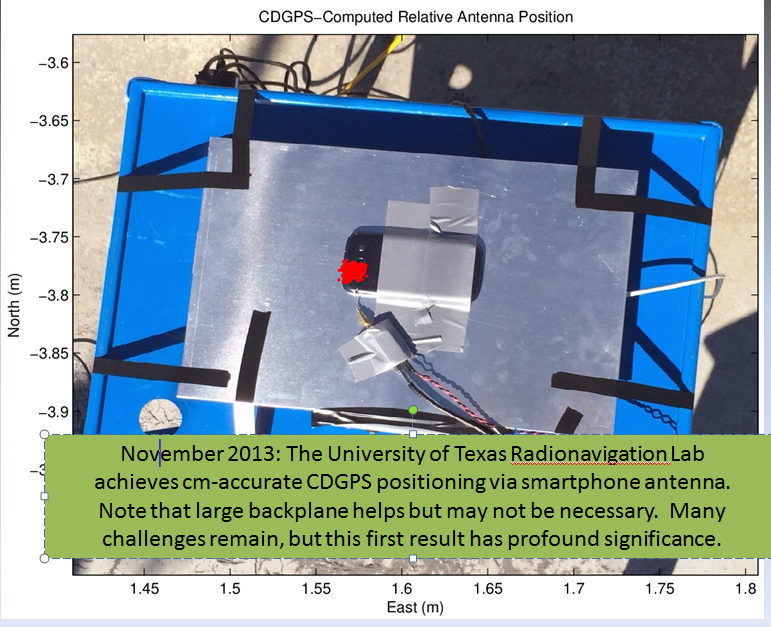
    Nevertheless, just a few weeks ago Dr. Humphreys and his team at UT were able to use a standard smartphone antenna (Samsung Galaxy SIII) to achieve an RTK solution. To his knowledge, this is the first time a successful RTK solution has been derived using an off-the-shelf smartphone antenna.

    UTSmartphoneRTK
    Source: University of Texas at Austin

    Ken Pesyna added that RTK initialization took a little under seven minutes using seven satellites. He added that with 10 satellites in view he’s seen RTK initialization drop to about two minutes. Mind you, this is GPS L1-only. Certainly, the addition of L2, GLONASS would further reduce initialization times, not to mention BDS, Galileo, etc.

    So, RTK in smartphones next year? Not so fast.

    “Many challenges remain”, said Dr. Humphreys, “and in some senses we are cheating (big backplane, good clock). Nonetheless, this is a huge step forward that presages great disruption.”

    He added, “We were astonished to find that we could track L2C signals through the smartphone antenna. We didn’t exploit the L2C signals in our solution, but we could have, as the L2C carrier we recovered was quite clean.”

    Stay tuned…

    3. Seven Free Alternatives to OPUS GPS Post-Processing During U.S. Federal Government Shutdown

    Not far behind the RTK article, in web hits, was the article I co-wrote with Mark Silver on various free online post-processing services available to the general public. The article was super timely, as it was published a day after the U.S. government shutdown and the NGS OPUS website went blank. Therefore, thousands of GNSS users read the article in a very short amount of time.

    Photo: NOAA

    Dr. Minghai Jia, a key developer of Australia’s AUSPOS online GNSS post-processing service, commented, “This is an excellent article, which has boosted AUSPOS demand significantly.”

    4. Look, No Base-Station! — Precise Point Positioning (PPP)

    Number four on GPS World’s website for 2013 was Tony Murfin’s article on the real-time PPP landscape.

    Whereas the real-time PPP landscape remained relatively unchanged for many years, with OmniStar and Starfire services being the only games in town for satellite-based precise positioning on land (as opposed to off-shore), this landscape is changing.

    In 2012, TerraStar began offering a commercial service very similar to OmniStar and Starfire — real-time decimeter positioning using corrections delivered via satellite (no terrestrial Internet connection required).

    Also in 2012, Trimble introduced its satellite-based RTX service, touting 4-cm real-time PPP accuracy.

    In April 2013, the IGS announced it began offering a public (free) real-time PPP decimeter service (IGS RTS). While only supporting GPS initially, IGS plans to support GLONASS by the end of 2013.

    The challenge for both TerraStar and IGS RTS is that receiver manufacturers need to integrate firmware to utilize these services. It’s unlikely that those companies offering competitive services that also design GNSS receivers (Trimble, Navcom) will do so, thus making it difficult for the new services to gain market traction.

    5. The Almanac

    Rounding out the Top 5 GPS World web pages of 2013 is The Almanac, featuring GNSS constellation tables compiled by Prof. Richard B. Langley at the University of New Brunswick.

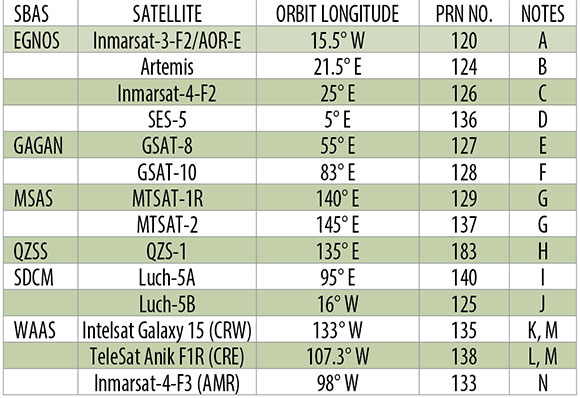
    If you want a single, comprehensive webpage that lists all the navigation satellites from the various constellations, this is one you should bookmark in your web browser. Heck, there’s even a PDF version of it. GPS, GLONASS, Galileo, BeiDou, IRNSS, and public SBAS systems are listed in detail as well as many useful links to various GNSS resources.

    An updated Almanac will appear in the January issue of GPS World.

    Almanac-SBAS
    Public SBAS satellites

    Happy Holidays, and I’ll see you next year.

    Follow me on Twitter at https://twitter.com/GPSGIS_Eric

    If you are not quite feeling the holiday spirit, take a look at these wonderfully talented people in this four-minute music video. They don’t use any instruments besides their amazing voices.

  • Situational Awareness, New Tech Discussed at Spatial Plexus Conference

    Front

    A Report on the Annual GIS Conference of the Georgia Tech Research Institute (GTRI)

    By Art Kalinski, GISP

    “Plexus is defined as any complex structure containing an intricate network of parts. The Spatial Plexus annual event elevates Geographic Information Science as the cross-disciplinary application of GIS and geo-technologies against so many interconnected issues.” — Spatial Plexus website

    Two weeks ago, I attended Spatial Plexus 2013, a GIS conference put together by Danielle Ayan of GTRI. Her reputation of building well-organized conferences helped draw some very interesting and influential speakers. The conference was held at the historic Academy of Medicine at Georgia Tech in Atlanta. The academy is listed on the National Register of Historic Places and even has a connection to the movie Gone with the Wind. Built before television and movies, the auditorium was designed for doctors to view medical demonstrations using actual cadavers on the stage. Fortunately, none of the Plexus presentations were cadaverously dull.

    Theater-W

    The conference opened with several pre-conference workshops, including Course Development Workshops to advance GIS-related education based on DACUM (Developing A CUrriculuM) and the Geospatial Technology Competency Model (GTCM). This was tied in with a GeoTech Advisory Council Meeting. The GeoTech Center, funded in part by National Science Foundation, is a collaborative effort between colleges, universities and industry to expand the geospatial workforce by providing professional development and curriculum resources.

    A workshop I attended covered new capabilities of ArcGIS Online. The hands-on workshop was conducted by Dr. Tom Mueller of California University of Pennsylvania and Dr. Rich Schultz of Elmhurst College, Illinois. If interested, you can go through the same tutorial online.

    I liked the linear format of this conference rather than separate break-out sessions found in mega conferences, because I always get frustrated missing competing break-out sessions. Additionally, we tend to overly focus on our primary areas of interest to the exclusions of other topics. The linear format pulls your mind and attention through a variety of subject areas, expanding the breadth of your knowledge. That was certainly the case with Spatial Plexus — lots of variety. The following are just a sample of the presentations. You can go to the Spatial Plexus website for a complete list, including many of the presentations and associated SharePoints.

    The opening keynote was given by Daniel Edelson, vice president of education for the National Geographic Society. He discussed “The Importance of Geo Literacy for College, Career and Civic Readiness.” His presentation was reinforced by Dr. Max Baber, the director of academic programs for the U.S. Geospatial Intelligence Foundation (USGIF). He discussed the multitude of excellent positions in the geospatial intelligence community, both at NGA and associated contractors. He also stressed the growing need and demand for GEOINT analyst certification, which is becoming a way to ensure qualified personnel in government and contractor positions.

    Tamarin Gullett-Tyrrell, GIS analyst for Cherokee County, Georgia, demonstrated the county geospatial Situational Awareness website. The Esri/Silverlight system by GeoCortex was designed to serve the public as well as emergency responders. Tamarin and Joe Woycke, Director of GIS and Mapping, built the well thought out and elegant system by bringing together all the county stakeholders early in the process. They determined that the complexity and diversity of stakeholder requirements pointed the way to two separate sites — one for tax work / county planning and the other for the public and emergency responder situational awareness including the sheriff, police, fire departments, EOC and the 911 call center. The early collaboration and consensus building saved a lot of time and expensive change orders. The result is two systems that all users are happy with. Shown below is . It not only incorporates county data and imagery, it toggles Bing and Google geospatial data.

    Situational awareness website SAGE.
    Situational awareness website SAGE.

    Joe Francica, editor-in-chief of Directions Magazine in Huntsville, Alabama, gave a rapid-fire summary of new technology he was following that he believed will impact the geospatial community. These include:

    • WiFiSLAM, an indoor location technology
    • geofencing, which sends location-based notifications to consumers approaching a store
    • connected cars
    • TracDot, a tag that tracks your luggage, and
    • the much-publicized Google Glass.

    He also mentioned my favorite new emerging technology — 3D printers, as well as drones and nano technology. He recommended James McQuivey’s book Digital Disruption: Unleashing the Next Wave of Innovation.

    In one of the open group discussions related to my presentation on Soft Power, I mentioned the 2010 Foreign Affairs magazine article on the disruptive effect of social media and mobile devices on second- and third-world countries. I discussed my amazement at the ingenuity of people who find a way to communicate without the benefit of a well-established communications systems. FabFi is a very low cost and simple wireless network developed by MIT students that is being used in Kenya and Afghanistan to provide wireless communications between villages. The system uses inexpensive $40 off-the-shelf wireless routers and home-made parabolic antennas of plywood and chicken wire to send wireless signals from one village to another. The networks are so quick and easy to establish that governments may no longer have the power to turn off the Internet when they feel threatened. This is democratization at its best.

    The FabFi program brings the Internet to villages in developing nations.
    The FabFi program brings the Internet to villages in developing nations.

    There were several presentations on the use of GIS in medical applications, especially the work being done by the Centers for Disease Control (CDC), and even a presentation by Chris Smith, director of IT Services for the U.S. Architect of the Capitol on how GIS had streamlined the management of Capitol facilities.

    Chris Smith, director of IT Services for the U.S. Architect of the Capitol.
    Chris Smith, director of IT Services for the U.S. Architect of the Capitol.

    The closing keynote was given by Major General William Reddel, the National Guard Adjutant General for the State of New Hampshire, who also serves as the chair of the U.S. Adjutant Generals Association Cyber/GIS/IT Committee and was the keynote speaker at last year’s ESRI Federal Users Conference. The General seems to be a good steward of our tax dollars, since he quickly realized and acted to reduced 54 separate state National Guard Esri licenses to one enterprise license, saving us 1.5 million dollars annually. He also discussed how the needs of the National Guard had evolved and are moving to cloud services such as Virtual USA and Web EOC. He closed with a slight redefinition. He said most people use the term “Common Operational Picture” (COP), but he prefers the growing reality of “User Defined Operational Pictures” as capabilities and user needs evolve.

    As you can surmise from this short sampling, Spatial Plexus 2013 was a very diverse and interesting collection of GIS practitioners and presentations. The linear format exposed all us attendees to corners of the community that we might not otherwise investigate, so it was especially informative. The conference was certainly well worth the time, and I strongly encourage all who can to attend next year.

  • Navtech Partners with DW International on GNSS Coverage for Flight Planning

    Navtech, Inc., a Toronto-based provider of flight operations services, has entered a partnership with DW International (DWI). The UK-based aviation consultancy will provide Navtech Flight Plan (NFP) customers with GNSS RAIM/RNP Prediction Services. This service, required to meet FAA Performance Based Navigation (PBN) guidelines and state requirements, fits into Navtech’s current suite and provides GPS coverage information for routes and airports as part of the flight planning process.

    Navtech serves more than 350 airlines and aviation services customers. Its product suite includes aeronautical charts, navigation data solutions, flight planning, aircraft performance software (take-off/landing, weight and balance), and crew planning solutions.  Many of Navtech’s products can be configured as part of an EFB solution, including take-off data calculation, weight and balance, and aeronautical charts.

    DWI is an independent consultancy which provides technical support in the fields of air navigation, civil air communications and air traffic management. The company also develops and maintains bespoke (custom) software and manages websites that support air operations. The company has access to a wide range of experienced technical experts including airworthiness and operational approvals inspectors, aviation safety engineers and air traffic management consultants.

    “The relationship with DWI will strengthen the Navtech Flight Plan product,” said Bill Macey, Product Director, Flight Planning at Navtech. “We are continuously motivated to provide our customers with superior quality offerings, especially when they are supported by a partnership with a reputable aviation firm like DWI. Their reliable 24/7 service along with their initial help desk support will afford our users peace of mind.”

    The GRPS service allows operators to comply with all FAA, European, ICAO and other worldwide RAIM requirements and guidelines. Specifically, real-time tailored RAIM predictions for RNAV and RNP operations are delivered through NFP via the internet to NFP users.

    The service is fully automated for dispatchers/flight planners to obtain their predictions as they plan their route and the service allows dispatchers/flight planners and crew to plan around periods of reduced GNSS availability by taking all route details from the flight plan and calculating RAIM availability for all route types (such as enroute, terminal, approach) on a leg-by-leg basis. Destination and alternate airports for RNAV and RNP around the world are included. GRPS also processes GPS NANUs, evaluating and interpreting them in view of establishing their relevance to the RAIM availability.

    “DWI is pleased to be working with Navtech to provide their customers with the RAIM predictions they need for GNSS-based operations,” said John Wilde, CEO of DWI. “The consistency and availability of our service provides the reliability NFP users require.”

  • Trimble Updates Cloud-Based Software, App for Wastewater Management

    Trimble has introduced a new version of its smart water and wastewater management software — Trimble Connect version 1.5. The latest release of the cloud-based software includes a suite of applications that help water and wastewater utilities to deploy smart meters, repair leaks and reduce non-revenue water (NRW), locate and map critical infrastructure using geographic information system (GIS) technology, extend the life of aging assets, and improve worker safety and productivity.

    Trimble Connect software version 1.5 can be configured and deployed quickly on a variety of rugged mobile devices, laptops, tablets and smartphones to automate field workflows and eliminate paper-based maps and field work tracking and management, the company said.

    Over the last decade, water and wastewater utilities have made investments in GIS mapping systems and asset maintenance management databases to manage their pipes and assets that are installed over large geographic areas. A large number of these utilities have implemented the Esri ArcGIS as their primary GIS mapping system. Maintenance of the information is an ongoing task and requires that information about the location of assets and the work performed on these facilities is accurately collected in the field. Trimble Connect helps with this challenge by integrating Esri ArcGIS technology and allowing utilities to view and update maps, assign work, manage workflows and collect field data and mapping updates using a variety of mobile devices. When used with a Trimble GeoExplorer series or Trimble Juno T41G series handheld, workers can map assets with up to decimeter accuracy in the field, helping improve the quality of their critical infrastructure GIS and asset management data.

    Trimble Connect integrates the latest Esri ArcGIS Server, mobile and ArcGIS Online map services. The software is designed to automate a variety of specific water and wastewater industry workflows through individual apps offered within the product. The new version provides standard core apps including Map Book, Meter Changeout, Leak Repair, Manhole Inspector, and Pipeline Mapper. In addition, an optional partner app developed for hydrant and valve inspection, called AFC Mapper, can be purchased from American Flow Control (AFC) and their distributors coupled with a Trimble rugged handheld.

    In addition to the standard core apps, Trimble Connect version 1.5 includes:

    • Multi-mobile platform support including Apple iOS, Android, Windows Mobile and Windows 7/8 devices
    • Offline support for Android, Windows Mobile and Windows 7/8
    • Esri ArcGIS based Web, mobile GIS mapping and ArcGIS Online basemaps
    • Work management support for single and multi-asset work orders
    • Business rules for customer mobile form design
    • Support for over-the-air network data and background map updates
    • Advanced spatial asset searching
  • GPS HUD Windshield Display Helps Drivers Navigate Safely

    GPS HUD Windshield Display Helps Drivers Navigate Safely

    Sygic-HUD-W
    GPS HUD Windshield Display

    Sygic has announced a new product to make driving safer. Sygic’s Heads-up-Display (HUD) product projects navigation information onto drivers’ windshields, so they never have to take their eyes off the road to look down at their navigation software.

    The product comes at a critical time for the holiday travel and shopping season, which is one of the most auto accident-heavy periods of the year. Sygic’s HUD is available as an in-app purchase for $4.99 and doesn’t need an expensive add-on product, as the projection can be emitted right from the Sygic GPS Navigation app on any iOS and Android phone or tablet.

    Using Sygic’s HUD interface is straightforward. Drivers activate the feature from the app’s navigation menu, flip the screen via pop-up menu, and place their phone on their dashboard. The specially optimized interface will then
    reflect clearly on the car’s windshield, displaying navigation information without the need for any expensive accessories. Sygic’s HUD feature gives them the full Sygic experience, complete with features like live traffic and turn-by-turn voice guidance.

    “As we head into the heavy travel season, we hope our HUD will help drivers stay safe on the roads so they can spend more time with their family and friends and less time driving down heavily-trafficked and dangerous winter road conditions,” said Sygic CEO Michal Štencl.

    Features of Sygic GPS Navigation include:
    •       Offline maps that don’t require a cellular data connection
    •       Turn-by-turn voice-guided GPS navigation
    •       3D cities and landscapes
    •       Voice guidance in more than 40 languages
    •       Multi-stop routes and Drag & Drop route editing
    •       Speed limit display and audio warning
    •       SOS/Help to find assistance nearby
    •       Interactive map – tap on any street, POI, or photo to choose action
    •       Robust integration with third party
    services like Groupon and TripAdvisor to find
    things like deals, restaurants, hotels, attractions and more
    •       New speed cameras feature with a
    constantly-updated database of stationary and mobile speed traps

    Unlike other map services, data in Sygic: GPS
    Navigation is stored on the user’s phone instead
    of streamed from the Internet, which means that
    Sygic users don’t have to worry about running up
    against their cellular data caps by using GPS
    navigation or getting lost in an area with poor
    cell reception. When Sygic’s users are online,
    they now have access to other helpful features
    like real-time traffic and road incident sharing with other drivers.

    Sygic GPS Navigation, now upgraded to version
    13.3, is available in the iOS App Store and
    Google Play, while the HUD feature can be
    purchased from within the app for $4.99.
    – See more at:
    http://www.gisuser.com/content/view/31596/2/#sthash.goudUtyE.dpuf

  • u-blox Launches Precision Timing Module for Cellular Networks

    u-blox Launches Precision Timing Module for Cellular Networks

    u-blox module LEA-M8F.
    u-blox module LEA-M8F.

    Swiss-based u‑blox has unveiled the LEA-M8F precision timing GNSS module. The compact, surface-mount module generates a precise 30.72 MHz reference clock crucial for synchronizing industrial data and communication systems such as small, femto and macro-cell mobile networks. High accuracy is achieved by disciplining a local oscillator or other clock source with timing signals received from satellite-hosted atomic clocks.

    To ensure satellite availability, LEA-M8F is able to acquire and track all 50+ GPS, GLONASS and BeiDou satellites. High sensitivity enables quick autonomous start-up even inside structures with limited sky-view.

    “A reliable, compact and cost-effective precision reference clock is a crucial component used in many systems in the Critical Infrastructure and Key Resource sectors (CIKR),” said Thomas Nigg, vice president of product marketing at u-blox. “Our LEA-M8F GPS/GNSS satellite-disciplined timing module enables the proper operation of many mission-critical infrastructure systems including mobile and fixed-line communication networks, power generation and distribution systems, gas and chemical processing plants, banking, postal and goods distribution processes.”

    Measuring 17 x 22 mm, the LEA-M8F module includes a low-noise 30.72 MHz VCTCXO (voltage and temperature controlled oscillator), meeting the master reference requirements for LTE Small Cells while providing 100 parts-per-billion autonomous hold-over accuracy. The module is also suitable for TD-LTE, LTE-Advanced and other applications requiring extended hold-over times when integrated with small cell platforms.

    External sources of synchronization are supported through time-pulse and frequency inputs and a message interface. This allows measurements from macro-sniff, Sync-E or packet timing to be combined with measurements from GNSS to extend the availability of accurate synchronization and in doing so maximize cellular service availability.

    LEA-M8F can track signals from satellites from any two constellations simultaneously (e.g. GPS and GLONASS, GPS and BeiDou, GLONASS and BeiDou). Compatibility with multiple GNSS systems gives the LEA-M8F access to a large number of satellites, allowing synchronization even in urban or indoor areas with limited sky view. For stationary applications, once a location is known, accurate timing can be maintained based on the signal from just a single satellite.

    For more information, download the u-blox whitepaper “GNSS Timing and the Rise of Small Cells”. Detailed information about the LEA-M8F and evaluation kit EVK-M8F can be found on the u-blox website. Samples of the LEA-M8F will be available in Q1 2014.

    Also, the LEA-M8F will be demonstrated at the Small Cells Americas exhibition in Dallas, Dec. 3-4, at u-blox stand number 3.


  • Directions 2014: Keeping Our Commitment to Civil Users

    Directions 2014: Keeping Our Commitment to Civil Users

    Colonel William T. “Bill” Cooley.
    Colonel William T. “Bill” Cooley.

    By Colonel William T. “Bill” Cooley, U.S. Air Force, Director, Global Positioning System

    The cliché “time flies when you’re having fun” accurately describes how quickly the past six months have passed for me. In a program as challenging, rewarding, and mission-critical as GPS, it is full-speed ahead all the time. As the GPS director, I am acutely aware of the importance of time — particularly high-accuracy time. Since declaring initial operational capability in December 1993, the extremely precise time service delivered by GPS has enabled numerous technological advances around the globe. While extremely proud of the accomplishments over the past 20 years, I look forward to the next 20 years, as GPS brings on new signals and continues to deliver on its promise of a worldwide free positioning, navigation, and timing (PNT) service. This article elaborates on the GPS Directorate commitment, along with the 2nd Space Operations Squadron (2 SOPS), to provide unparalleled space-based PNT accuracy, availability, and reliability to the civil community.

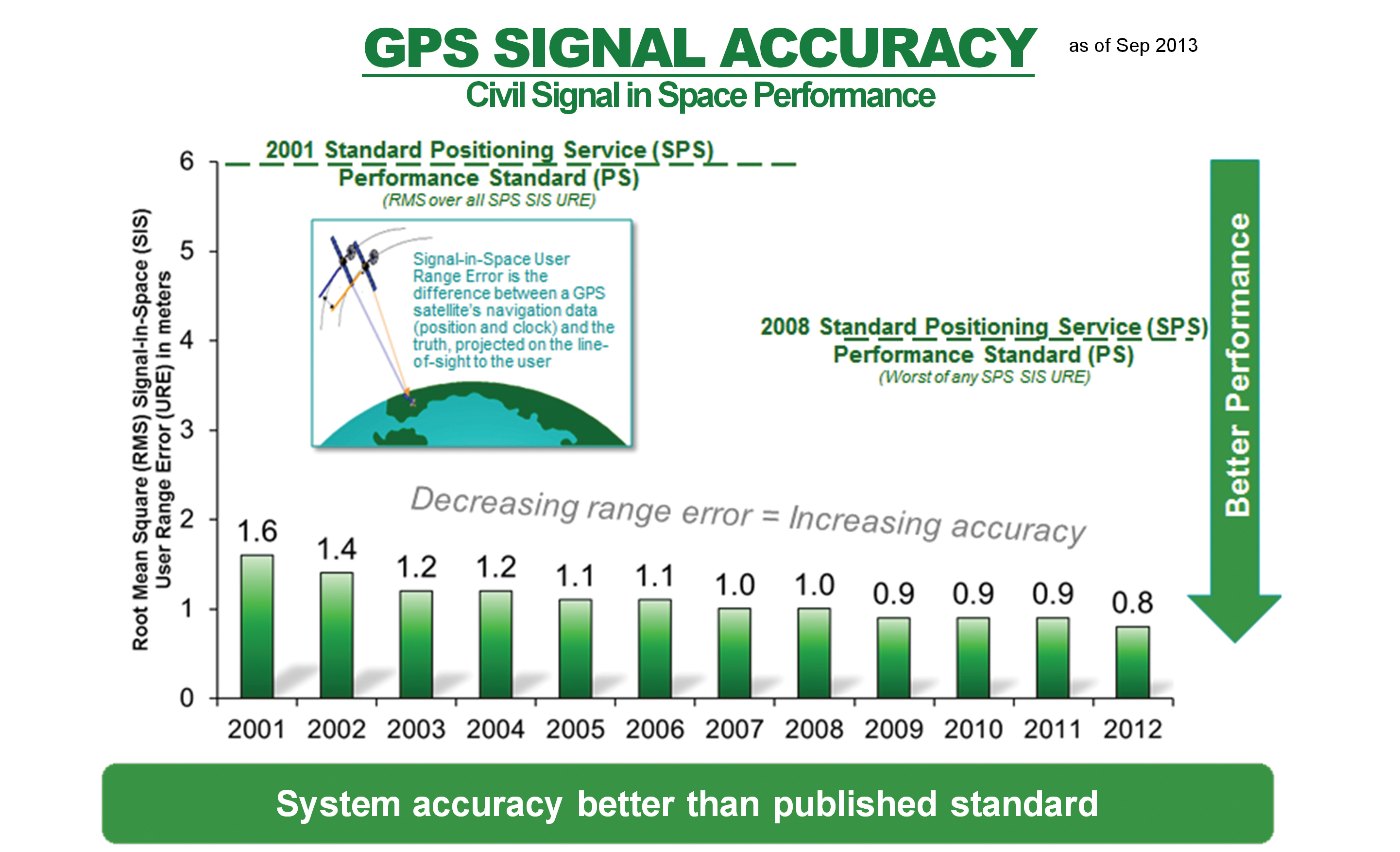
    The first commitment, arguably the most important for users everywhere, is the commitment to high accuracy for space-based PNT. After speaking at the ION GNSS+ conference and meeting many of you in Nashville this September, I realized that some users remain worried that selective availability (SA) — the intentional degradation of public GPS signals — could return and negatively impact GPS signal quality. SA was discontinued in May 2000 to provide an increased level of accuracy to all users around the globe. Since that time, the U.S. government has adopted a policy to no longer use SA and, furthermore, in 2007 removed that function from the upcoming GPS III satellites. The GPS Performance Standard for the Standard Positioning Service reflects our commitment to accuracy by ensuring the signal-in-space (SIS) user range error remains low: better than 4-meter accuracy. Figure 1 shows the record-setting SIS accuracy and how GPS meets and far exceeds this guarantee: consistently better than 1-meter accuracy! The 2 SOPS operators who command and control the GPS satellites do a masterful job ensuring global PNT accuracy is as good as it can be.

    Figure 1. Standard Positioning Service signal-in-space performance.
    Figure 1. Standard Positioning Service signal-in-space performance.

    The quality of these services, however, does not permit the GPS enterprise to rest in the comfort of past success. We are dedicated to updating and modernizing the program.

    The second commitment I’d like to highlight includes the GPS pledge for constellation sustainment and service availability. This is a guarantee to maintain a constellation of at least 24 satellites continuously broadcasting the GPS signals, providing a low dilution-of-precision value around the globe. Current efforts to meet this commitment range from replenishing unhealthy satellites to deploying improved, modernized satellites and corresponding ground support. For example, the GPS IIF satellites are rapidly becoming an integral part of the GPS constellation. With four IIFs on-orbit and a fifth soon to be launched, the constellation continues to exceed the 24-satellite requirement.

    The third commitment — to modernize the GPS constellation with new signals — is best illustrated by, but not limited to, the modernized GPS IIF and GPS III satellites that are beginning to populate the constellation. In addition to four GPS IIF satellites now on orbit, the remaining GPS IIFs are either ready for launch or in final testing.

    Down the road, GPS III satellites are completing development and progressing through early production. They will add the fourth civil signal, L1C, for civil users worldwide. Earlier this year, the GPS III program shipped the GPS non-flight satellite testbed (an engineering development unit) to Cape Canaveral; it successfully communicated with the next-generation operational control system (OCX), essentially as it would for launch and on-orbit check and control of functional GPS III satellites. The operational portion of the GPS ground segment, OCX Block 1 is on track to begin operations in 2016, modernizing the control segment by providing mission operation control of all legacy signals, as well as L2C and L5; later, OCX Block 2 will support L1C.

    GPS civil users will soon be able to take advantage of the L2C and L5 signals that broadcast the modernized civil navigation message (CNAV); this will effectively eliminate the need to access the L1 and L2 P(Y) signals through codeless or semi-codeless techniques. These codes permit civil users to access dual-frequency solutions for precision applications (using dual-frequency enables ionospheric corrections for highly accurate PNT solutions). Compared to the L1 C/A signal, L2C features faster signal acquisition, enhanced reliability, and greater operating range. L5 will provide for increased safety-of-life applications with broadcast power even greater than L1 C/A and L2C combined, increased bandwidth, and advanced signal design. Regardless of the early availability of L2C and L5, semi-codeless users will be able to access P(Y) code — unhindered and unaffected by fully tested and vetted flex-power operations — until the end of 2020. Overall, these modernization efforts emphasize a commitment that availability surpasses simply putting satellites on orbit.

    Finally, the GPS Directorate is committed to providing a high-quality service that is highly reliable. We achieve this by fielding first-rate satellites, conducting extensive test campaigns before deploying new capabilities or launching new satellites, and working closely with the operators at 2 SOPS, ensuring our constellation delivers top-quality PNT signals. An example of diligent testing is the recent live-sky test of the CNAV message on all GPS IIR-M and IIF satellites this past June. An example of a modernization feature that will enhance reliability is the capability of GPS III satellites to autonomously monitor the atomic clocks that drive the signal, thereby protecting users from clock instability and resulting signal errors.

    Our demonstrated commitment to deliver accurate, available, and reliable space-based PNT allows innovators around the world to invest confidently in the creation of a multitude of GPS and GPS-enabled technologies that shape the way we live. GPS and its related technologies go far beyond letting you find the deli down the street and “checking in” to let your friends know what you’re up to on Facebook; it tracks financial transactions, enables precision farming, and allows accurate real-time updates on natural disasters such as earthquakes and tsunamis with capabilities that organizations like the NASA Jet Propulsion Laboratory and the International GNSS Service provide using GPS. The GPS Directorate is keenly aware that innovators invest their time and talent because they know they can depend on GPS availability. Our commitments are not just “feel-good” words; they are our mission and promise to the world.

    I am very proud of the men and women in the GPS Directorate and thrilled to be part of this great team as the new GPS program director. The commitments listed here provide a glimpse into the services provided by the GPS enterprise. I am excited about bringing modernized signals to the world, but more excited to learn how the PNT community will use these signals to develop new innovative and useful applications. The world is easier to navigate because of GPS and GPS-enabled technologies, all of which rely on services the GPS enterprise provides: accuracy, availability, and reliability. We are committed to delivering these services as we modernize and improve the enterprise to continue GPS as the gold standard of space-based PNT.


    Colonel William L. cooley is Director, Global Positioning Systems (GPS) Directorate, Space and Missile Systems Center, Air Force Space Command, Los Angeles Air Force Base, California.