Trying to shake off last year’s mapping debacle, Apple recently bought two companies, HopStop and Locationary. The purchases, whose financial details were not disclosed, get Apple rooted once more in the location business; how firmly those roots prove to be, and how well they serve the company against arch-rival Google, time will tell.
Apple has been stockpiling companies and mapping software since last year’s introduction of Apple Maps on iOS devices, which turned out to be a big fiasco. GPS World’s LBS Insider reported extensively on the problems Apple encountered with its mapping software. Some of these problems included sending drivers to a wrong location and direction.
After the mapping software problems were made public, Apple CEO Tim Cook apologized for the mapping software’s problems and even suggested that users go to such competitors as Waze, MapQuest and Microsoft’s Bing. The fallout from the Maps debacle was swift. Apple fired Richard Williamson, who oversaw the company’s Maps team, according to Bloomberg. The company put pressure on Apple partner TomTom to update mapping data and consulting with third-party mapping experts.
The fiasco proved how important maps and navigation are to users of mobile phones. Industry experts noted two further points:
Maps are extremely hard to do, and
Maps are really important for a major platform to own, rather than rent from Google.
Hopping Forward. The HopStop app provides directions to users in 600 urban areas, with an emphasis on mass transit — real-time transit maps and schedules — as well as pedestrian- and bicycle-oriented guidance.
HopStop’s purchase may be Apple’s answer to Google’s recent purchase of Waze. HopStop traffic data, like Waze, is based on updates from people using the application; that is, crowd-sourced data.
Staying With It. The Locationary acquisition constitutes a further measure to keep current, going beyond the pressure Apple put on partner TomTom. Locationary checks on and seeks to eliminate out-of-date points of interest and business data with a platform that collects and verifies crowd-sourced and other data. It also checks the actual physical location of businesses and other places.
Coming Inside. To top off the company’s location awareness, Apple is even getting into the hotly-contested indoor positioning and navigation space, spending $20 million for Silicon Valley start-up WiFiSLAM in late March. According to published reports, WiFiSLAM can pinpoint a user’s indoor location to within 8 feet, using Wi-Fi. Apple rival Google already has been in the indoor positioning and navigation market, mapping shopping malls, airports and sports venues in several countries.
Google Maps Now Major Apple Feature
Speaking of the strange bedfellows, Google recently rolled out an iOS version of Google Maps for use on the iPad. For the last nine months, iPad users who wanted to use Google Maps have been required to use one designed for the iPhone, according to published reports. Google also updated the iPhone version of Google Maps.
Both the iPhone and iPad mapping software feature live traffic updates during turn-by-turn navigation. The app includes live incident reports, road closure information, construction sites, accident reports and other features. Apparently, Apple users won’t get the rerouting capability that Android folks will get, according to published reports.
Real Power. The cool factor, and one that industry experts believe is the real power of location-based services, is an “explore” function that both Apple and Android have with Google Maps. This proximity feature allows users to find nearby restaurants, shopping areas, gasoline and other sites. Google also introduced a rating system for the iOS application that allows users to rate restaurants and other businesses.
The Google Maps for iOS also has turn-by-turn directions for bicyclists, featuring more than 330,000 miles of bike paths and trails worldwide.
Previous versions of Google Maps, which were designed for the iPad, were removed by Apple last September. Apple, to replace the version, brought out the infamous mapping software that featured many errors.
The U.S. Geological Survey announced that advances in the technology of online map-based data collection platforms have made it possible for citizens of the U.S. to contribute to USGS topographic mapping efforts like never before.
The USGS is currently seeking volunteers to aid in collecting data for The National Map (TNM), which comprises a variety of products and services that provide the Nation with geospatial information to describe the landscape of the United States and its territories. The National Map Corps (TNMCorps) aims to improve this topographic information by updating existing and gathering previously uncollected data via volunteered geographic information (VGI).
Blue dots represent locations where citizen-mapping efforts are currently underway. Green states are currently available for editing with remaining states available around September
The National Map includes hydrographic features such as streams and lakes, elevation contours, geographic names, land cover, and structures. To improve and update The National Map, the USGS is turning to volunteers to map the location of important community buildings – such as police stations, schools, hospitals, post offices, prisons, cemeteries, and fire stations. Adding and verifying the locations of buildings to existing TNM datasets makes significant additions to the USGS’s ability to provide accurate information to the public.
After citizen input is peer-reviewed by fellow volunteers, the valid data are incorporated into The National Map databases. These databases are used to create many products, including US Topo maps – free and downloadable digital topographic maps that are released every three years.
Currently, the USGS is in the process of expanding TNMCorps; 35 new states have been added to the volunteer database and need mapping support from volunteers. These states are: Alabama, Arizona, Arkansas, Alaska, California, Colorado, Connecticut, Delaware, Florida, Georgia, Idaho, Illinois, Louisiana, Maryland, Massachusetts, Michigan, Mississippi, Montana, Nebraska, Nevada, New Hampshire, North Dakota, New Jersey, New Mexico, Ohio, Oregon, Pennsylvania, Rhode Island, South Carolina, South Dakota, Utah, Vermont, Washington, West Virginia and Wyoming.
Web Editor showing downtown Little Rock, AR. Red icons are structures that need to be checked or verified by volunteers. The green icon is an example of a structure that has been verified by a volunteer and which will be added to the National Map after it has gone through peer-review.
Similar to the way Wikipedia or OpenSteetMap allows users to add and edit information on the site, The National Map Corps web editing interface allows users to easily contribute geographic data that will eventually become part of The National Map.
A complete list of the types of buildings the USGS is looking to volunteers to verify throughout the country can be found here.
“Because of a lack of publicly available national authoritative datasets for some municipal buildings and infrastructure throughout the country, we are looking for volunteers who can fill in this information quickly and keep it up to date,” said Volunteer Geographic Information Project Leader Elizabeth McCartney.
In addition to adding previously unmapped community buildings and landmarks to The National Map database, volunteers are encouraged to remove structures that no longer exist, update existing buildings that have changed, and label correctly marked structures as correct.
The current platform used by TNMCorps is a customized version of OpenStreetMap, an online platform that enables users to edit, add, and access geographic data.
“The editor, like OpenStreet Map which has over a billion users worldwide, is meant to be accessible to non-professionals. Users don’t need to be professional scientists in order to contribute. Anyone who wants to volunteer can give it a go. There are a lot of people out there who love maps and are interested in improving information in their communities,” said McCartney.
Volunteer participants are not required to live within the state they review — the mapping technology used for TNMCorps allows anyone to update geographic data from anywhere.
Testing the feasibility of collecting VGI for the The National Map began in a series of pilot projects in January 2011. To test the viability of using volunteers to edit TNM map data, students at Colorado universities were asked to map structures in four topographic quadrangles around the Denver area. The results were impressive, as the structures mapped surpassed the quality standard maintained by the USGS. The success of the pilot projects confirmed that VGI is a viable source of data.
Since its start in Colorado, the program has expanded to 35 states. The National Map Corps hopes to have all 50 states available for mapping by September 2013.
Volunteer Recognition
The USGS has created a social media presence to support this program and reach new volunteers. Using Twitter , with more than 2,080 followers, and the USGS Facebook page, volunteers who contribute to The National Map Corps are awarded badges are recognized based on the number of points edited.
Each badge is represented by a different antique surveying instrument.
Volunteers can earn each successive badge by contributing structures through the editing or peer review process.
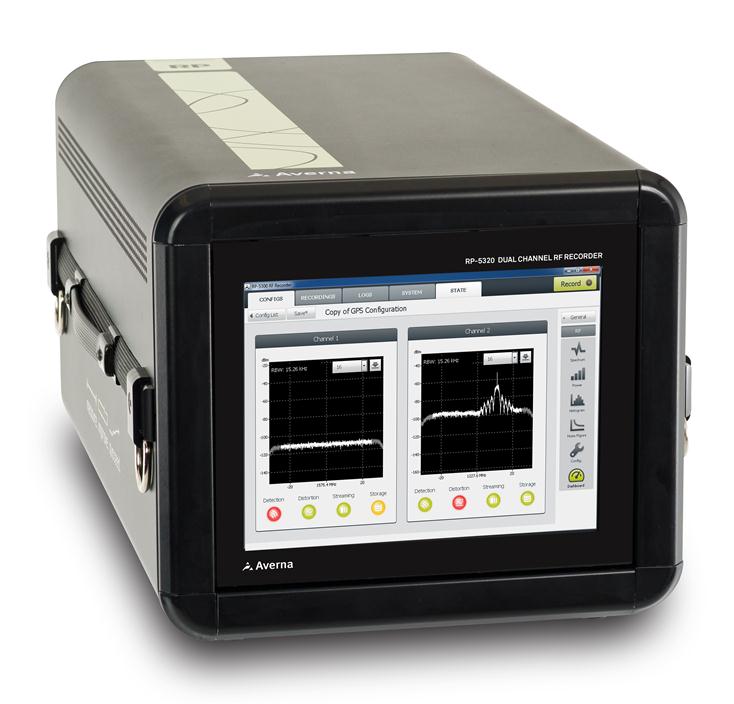
Averna’s Record & Playback platform. Photo: Averna
Averna, a developer of test solutions and services for communications and electronics device makers, announced today that Clarion has selected Averna’s Record & Playback solution to validate upcoming in-vehicle entertainment systems and certify that the devices perform well in real-world conditions. Clarion is a global manufacturer and seller of car navigation systems and in-vehicle equipment with a focus on car audio systems.
The R&D Division, Experiment and Evaluation Team at Clarion will use Averna’s R&P platform to record radio signals such as AM, FM, HD Radio, and DAB from key locations around the world and replay them in the Tokyo-based lab where the design team is located.
The R&P platform selected by Clarion features:
RP-5100, a compact 2-channel RF recorder designed to record live RF signals in the field
URT-5000, a software-defined RF Player and Signal Generator
RF Studio, high-performance RF record-and-playback software for RF product designers and researchers to facilitate recording, analysis and storage of RF signals
DriveView plug-in for synchronized recording/viewing of video, audio, and GPS positioning data
The Averna RP-5100 RF Recorder is specifically designed to capture real-world RF signals, with impairments, for navigation as well as broadcast radio and video receiver validation, testing and support. The system has two 20-MHz wide channels that can be tuned on any frequencies from 250 kHz to 2.65 GHz. To address the challenges of validating the RF response with the physical environment, Averna has developed DriveView, a plug-in for the proprietary RF Studio software, offering visual verification by video-recording drive tests.
“Clarion needed a platform to record live RF environments and reproduce them in a repeatable manner in their lab. Our R&P solution allows them to go through all the different use cases without having to go back in the field at each testing phase,” said Etienne Frenette, VP of Sales, Asia for Averna. “As receivers become more complex, it is imperative that real-world signals and conditions be recreated for thorough validation and testing in order to help enhance the user experience.”
“We recognize and appreciate Averna’s unique expertise and advanced solutions in device performance testing,” commented the R&D Division, Experiment and Evaluation Team at Clarion. “Clarion is dedicated to delivering better products reaching the market faster and Averna is helping us achieve this goal.”
Telit Wireless Solutions has been selected among various applicant members of the Italian Technology Industry as one of the nation’s key representatives in the global roll-out of Europe’s Galileo satellite positioning system. The selection reflects the high degree of credibility demonstrated by the Italian government in the strategic plan proposed by Telit to accelerate global adoption of the Galileo technology, Telit said.
Telit is a global enabler of machine-to-machine (M2M) communications providing cellular, short range and positioning module products. Telit’s positioning technology R&D center is an integral part of the company’s R&D function headquartered in Trieste, Italy.
Telit also received a grant to execute its proposed strategic plan. The grant offers Telit the opportunity to accelerate its activities in development of projects for the positioning technology market. It bolsters human and financial resources required to enable Telit to quickly advance in this market area and achieve leadership in product performance with services to match. This achievement is likely not only to enhance the company’s competitiveness but is also provide measurable boost for the Italian economy, concretely contributing tangible progress in the strategic and very high growth segment of m2m.
The inclusion of positioning expertise stems from the company’s mergers and acquisitions over the past few years, which have made it a leading designer and manufacturer of innovative GNSS solutions for OEM applications, from personal and asset tracking to automotive solutions. Telit has sold millions of high-performance GPS modules sold worldwide.
Galileo is Europe’s global navigation satellite system, designed to provide a highly accurate, guaranteed global positioning service under civilian control. It is inter-operable with GPS and GLONASS, the U.S. and Russian global satellite navigation systems. By offering dual frequencies as standard, Galileo delivers real-time positioning accuracy down to the meter range. It ensures availability of the service under all but the most extreme circumstances and informs users within seconds of any satellite failure, making it suitable for safety-critical applications such as guiding cars, running trains and landing aircraft. A range of services will be extended as the system is built up from initial operational capacity (IOC) to reach the Full Operational Capability (FOC) by this decade’s end. The fully deployed Galileo system consists of 30 satellites (27 operational + 3 active spares), positioned in three circular Medium Earth Orbit (MEO) planes at 23 222 km altitude above the Earth, and at an inclination of the orbital planes of 56 degrees to the equator.
“Achievement of a leading position in now in Galileo technology not only boosts Telit’s global stance and strength, and consequently that of the Italian technology industry but also extends the reach of our leadership in positioning which already includes two decades of pioneering work in GPS in the United States,” said Dominikus Hierl, chief marketing officer at Telit Wireless Solutions. “The planned work-force expansions in support of this new effort will create extraordinary value-add, not only in terms of project acceleration but also in innovation, vision and new relationships for Telit.”
Spectracom announced today a strategic partnership with Geodetics Incorporated of San Diego, California. The partnership includes a variety of initiatives to enhance each company’s customer reach, channels, products and technology.
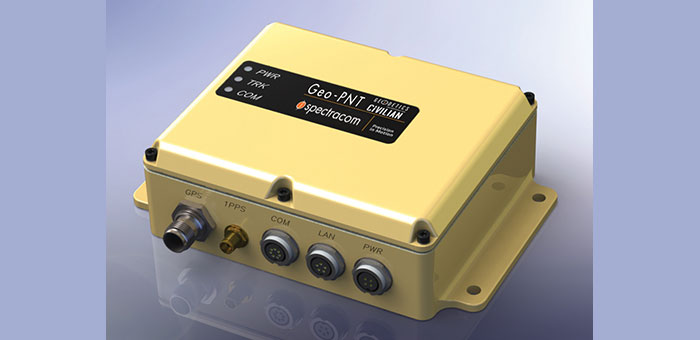
The partnership includes a distribution agreement for Geodetics’ Geo-iNAV inertial navigation products. Spectracom will offer Geo-iNAV alongside its portfolio of precision timing, test and simulation equipment. Geo-iNAV is a fully integrated GPS-aided inertial navigation system that provides real-time, high-precision positioning and navigation solutions for manned and unmanned air, sea and ground vehicles. It combines GPS and sensor fusion to achieve centimeter-level real-time positioning and navigation for dynamic platforms.
“In line with our long heritage in delivering robust precision time and frequency products and services, we understand the challenges our customers face to adopt and adapt new and often disparate GPS and GNSS technologies,” said Spectracom President and CEO, Lisa Withers. “We believe our partnership with Geodetics will help to simplify the integration of complex positioning, navigation and timing technologies and provide our customers with a broad range of GPS and inertial navigation platforms readily suited for today’s dynamic and mobile environments.”
Geodetics President and CEO Lydia Bock added, “Spectracom’s global reach immediately widens the playing field for our inertial navigation products and technology. They have a keen sense of customer’s needs for the convergence of PNT in both military and commercial applications.”
As the GNSS eco-system expands to support mission critical applications, so must the prevalence of interoperability and signal fidelity, and ultimately PNT applications must be able to withstand the temporary loss of GPS due to factors such as signal obscuration, Spectracom said. As such, contemporary GNSS signal management solutions must be resilient to various GPS impairments as required of the application. Geo-iNAV delivers this capability through six configurations. It is available in commercial as well as SAASM GPS configurations as well as a choice of IMU depending on accuracy requirements. It offers a low SWaP (size, weight and power) profile for autonomous vehicles and payloads on manned vehicles to meet a wide range of applications.
As a part of Spectracom’s broader initiative to provide a comprehensive portfolio of GNSS signal management products, systems and services, the Geo-iNAV is the first in a series of compact and rugged solutions specific to PNT applications. In addition to simplifying complexity for its customers with contemporary, modular platforms, Spectracom’s market reach, together with the technical strengths of their partners such as Geodetics will accelerate time to market and aggregate the resources necessary to support unique and changing needs for precision references, simulation and signal test and analysis.
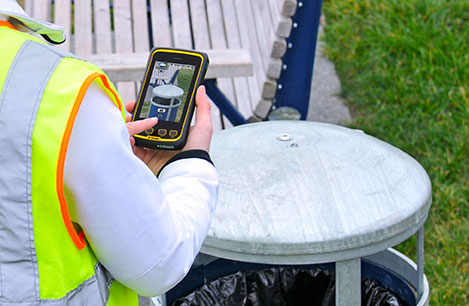
Trimble introduced today new functionality and configuration options for its Juno T41 rugged handheld computer. In addition to a handheld computer and smartphone configuration, the series now includes enhanced, real-time 1-2 meter GPS accuracy and high-speed 1D/2D barcode imaging technology.
The new configurations are in addition to the capabilities already available in Trimble’s Juno T41 handheld computer. All models are built to meet military-grade standards of ruggedness for drops, temperature, altitude, humidity extremes, vibration, chemical exposure and shock with either an IP65 or IP68 rating for water and dust.
“The Juno T41 is truly a workhorse,” said Jim Sheldon, general manager of Trimble’s Mobile Computing Solutions Division. “We designed it for today’s worker who needs a functional field computer that is tougher than any consumer-grade device, while providing easy-to-use features and convenience that people have come to expect.”
All Juno T41 handheld computers feature a 1 GHz processor and 512-MB RAM with either Android 4.1 or Microsoft WEHH 6.5 operating systems. Other standard features include an 8-MP integrated camera, multi-touch capacitive 4.3” sunlight-readable display and 9 PIN Serial and USB ports, all-day battery life and 2-4 meter GPS accuracy capability.
The Juno T41 X configuration is designed to replace Bring Your Own Device (BYOD) smartphones with SMS text and 3.75 cellular data transfer capabilities on GSM networks worldwide.
To increase real-time positional accuracy, the Juno T41 G configuration provides enhanced, 1-2 meter GPS acquisition capability and it can be combined with other Juno T41 configurations, including the smartphone or the 1D/2D Imager.
The Juno T41 G supports the GPS L1 band and offers reliable performance in reduced signal environments. Workers who have to move from place to place to collect remote assets won’t have to waste time waiting for a system warm-up: the Juno T41 G tests at an average cold start of less than 38 seconds, and a warm start of less than 6 seconds. The G configuration handheld collects data in real-time at 1-2 meter accuracy, while also capturing Raw Data Output for post-processing applications. The Juno T41 G is designed to work with Satellite Based Augmentation Systems (SBAS), third-party Real-Time Networks (RTN), and corrections services from Trimble.
Trimble Scan technology in the Juno T41 S reads a variety of traditional 1D barcodes as well as 2D matrix codes, and captures signatures and images. These features are customizable using the Trimble “Scan Agent” application. Enterprises can also use the Software Development Kit (SDK) to optimize applications to meet specific customer needs. Omni-directional reading capabilities along with high-motion tolerance allow for rapid, accurate scanning from virtually any angle or orientation from the handheld to the barcodes.
With these additions, the Juno T41 rugged handheld series has a configuration that can meet a wide variety of business needs in a single rugged device, Trimble said. Users can mix and match the capabilities to create the Juno T41 that is right for their specific business needs: combine the X smartphone with barcode imaging in the Juno T41 XS; add enhanced GPS for the XG. Combine barcode imaging with enhanced GPS and smartphone capabilities in the XGS.
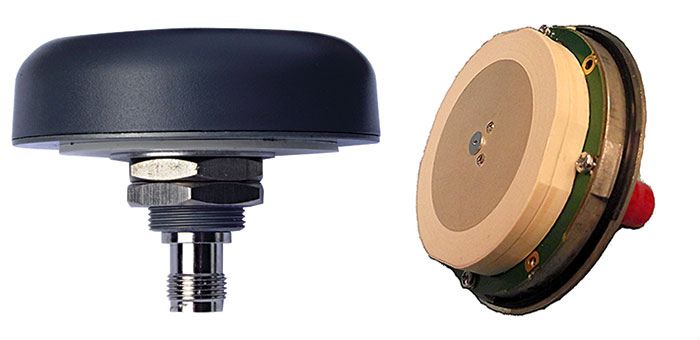
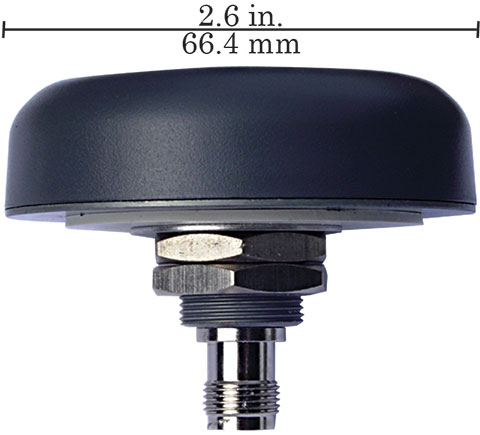
TW3802 Shown with flat radome. Conical radome also available.
Tallysman Wireless Inc. has added the dual-frequency TW3800 series to its high-quality precision line of antenna products.
The TW3800 series antennas feature a circular stacked patch antenna for improved axial ratio, yet are small and light, and have the extended bandwidth required for L1/L2 GPS & G1/G2 GLONASS, the company said. The operating voltage range is from +2.5 to 16 VDC. The antennas have a temperature compensated LNAs and operate from -40 to +85o C to provide reliable performance in most any environment. The TW3800 is packaged in a through hole mount making it suitable for mobile applications.
The TW380x is suited for many applications, including:
Anti-jamming GPS
Mission-critical GPS timing
Military and security
Network timing and synchronization
Precise tracking
High signal availability
The TW3805 is the OEM version of the TW3802, and can be custom tuned to provide optimal performance inside virtually any housing, Tallysman said.
“The circular patch design of the TW380X antennas permits precision custom tuning with excellent axial ratios.” said Gyles Panther, president of Tallysman Wireless. “This flexibility, combined with the very wide operating voltage enables this antenna to work with virtually any receiver on the market.”
Along with booming auto sales in China has come an increase in auto accidents, which has been a headache for the Chinese government. According to police statistics, most of the accidents in the past couple of years were being caused by new drivers, who have been ignominiously dubbed “road killers.”
One year ago, the China Police Ministry decided to change the method of licensing new drivers by using stricter methods for training and testing. The new system also was designed to avoid cheating.
Under to the new testing system rules, the high-accuracy GNSS receiver became the ideal sensor to enforce the new testing, according to ComNav, a ShangHai-based OEM receiver maker. By offering a turnkey solution, from November 2012 to July 2013 ComNav sold more than 5,000 GNSS OEM boards/receivers for driver testing — the major share of that market.
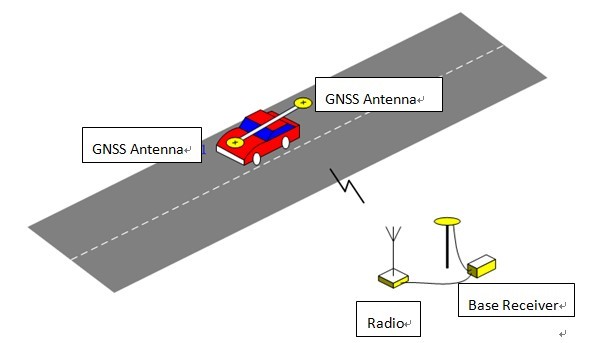
The system uses the real-time kinematic (RTK) method to establish the accurate heading and position of the car, with a ComNav M600 GNSS receiver. A base station sends differential data to a rover installed on the car. With the help of 3G or Wi-Fi, the real-time data is transmitted to the control center. Examiners can then can judge whether the car is in the right area. Both the trainee and system will know the testing results without delay.
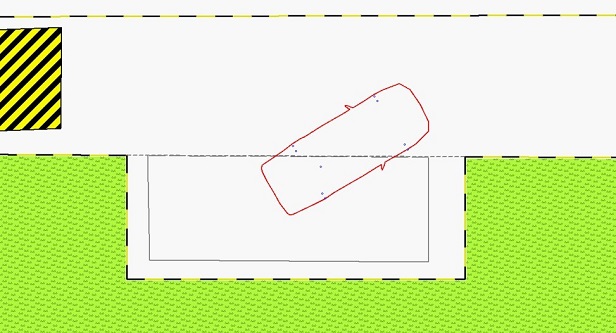
Surveying the testing place, marking the testing area, and measuring the car shape need to be done before the installation.
ComNav Technology Ltd. is a high-accuracy positioning solutions supplier that focuses on high-accuracy GNSS core technology R&D, manufacturing and marketing. ComNav is the first Chinese high-accuracy GNSS OEM board manufacturer and producer of a GPS+BeiDou OEM board.
System diagram. Source ComNavSide parking test. Source ComNav
Garmin International Inc. has announced HUD, the company’s first portable head-up display for smartphone navigation apps. With the HUD display, drivers can view navigation directions projected onto a transparent film on the windshield or an attached reflector lens. Garmin said by providing comprehensive road guidance at a glance and right within the driver’s line of sight, HUD can help increase safety and reduce driver distraction.
HUD receives navigation information from a Bluetooth-enabled smartphone running a Garmin StreetPilot or NAVIGON app.
“Head-up displays currently have their place in select high-end cars, but HUD makes this technology available as an aftermarket accessory for any vehicle, at an affordable price,” said Dan Bartel, Garmin vice president of worldwide sales. HUD has an MSRP of $129.99. Garmin StreetPilot and NAVIGON apps, starting at $29.99 for a regional map (NAVIGON U.S. Central, East or West), provide premium turn-by-turn navigation for smartphones, including onboard maps, lane guidance, speed limit warnings, real-time traffic, and other features.
HUD offers more navigation details than other portable head-up displays, yet presents them in a simplified way that doesn’t divert the driver’s attention from the road, Garmin said. The directions are easy to follow and allow drivers to navigate even the most challenging interchanges and traffic situations with ease. HUD displays turn arrows, distance to the next turn, current speed and speed limit, as well as estimated time of arrival. It even lets drivers know what lane to be in for the next maneuver and alerts them when they exceed the speed limit, the company said. HUD also warns users of potential traffic delays and upcoming safety camera locations. The crisp display automatically adjusts the brightness level so projections are clearly visible in direct sunlight or at night.
Complementing the visual display, spoken turn-by-turn directions are provided simultaneously by a compatible Garmin or Navigon app, either through the smartphone speaker or a Bluetooth-connected car stereo. Music streamed to the car stereo from the smartphone will automatically fade out for turn-by-turn voice prompts. HUD also continues to display navigation information while taking incoming calls.
Users can choose between displaying HUD navigation information on their windshield, with the included, transparent film, or on to the included reflector lens that attaches directly to HUD. The device pairs wirelessly with a compatible Bluetooth-enabled iPhone, Android phone or Windows Phone 8. An integrated USB port on the vehicle power/adapter cable makes it easy to charge the smartphone while driving, Garmin said.
If you were able to attend the webinar “Nightmare on GIS Street: GNSS Accuracy, Datums and Geospatial Data” held on June 20, thanks for attending. If not, you can view the webinar here. We had a world-class panel of experts discussing the nightmare of accurately combining different sources of geospatial data as well as on-the-fly datum transformations in the field when using high-precision GPS/GNSS receivers.
Let me apologize in advance if it seems like I’m “beating a dead horse” in writing about this issue. I intended to address the questions raised during the webinar. After addressing one of the first issues below (WGS-84), I expended my allocated space and energy. Rest assured I will publish answers to the other questions that were raised before and during the webinar.
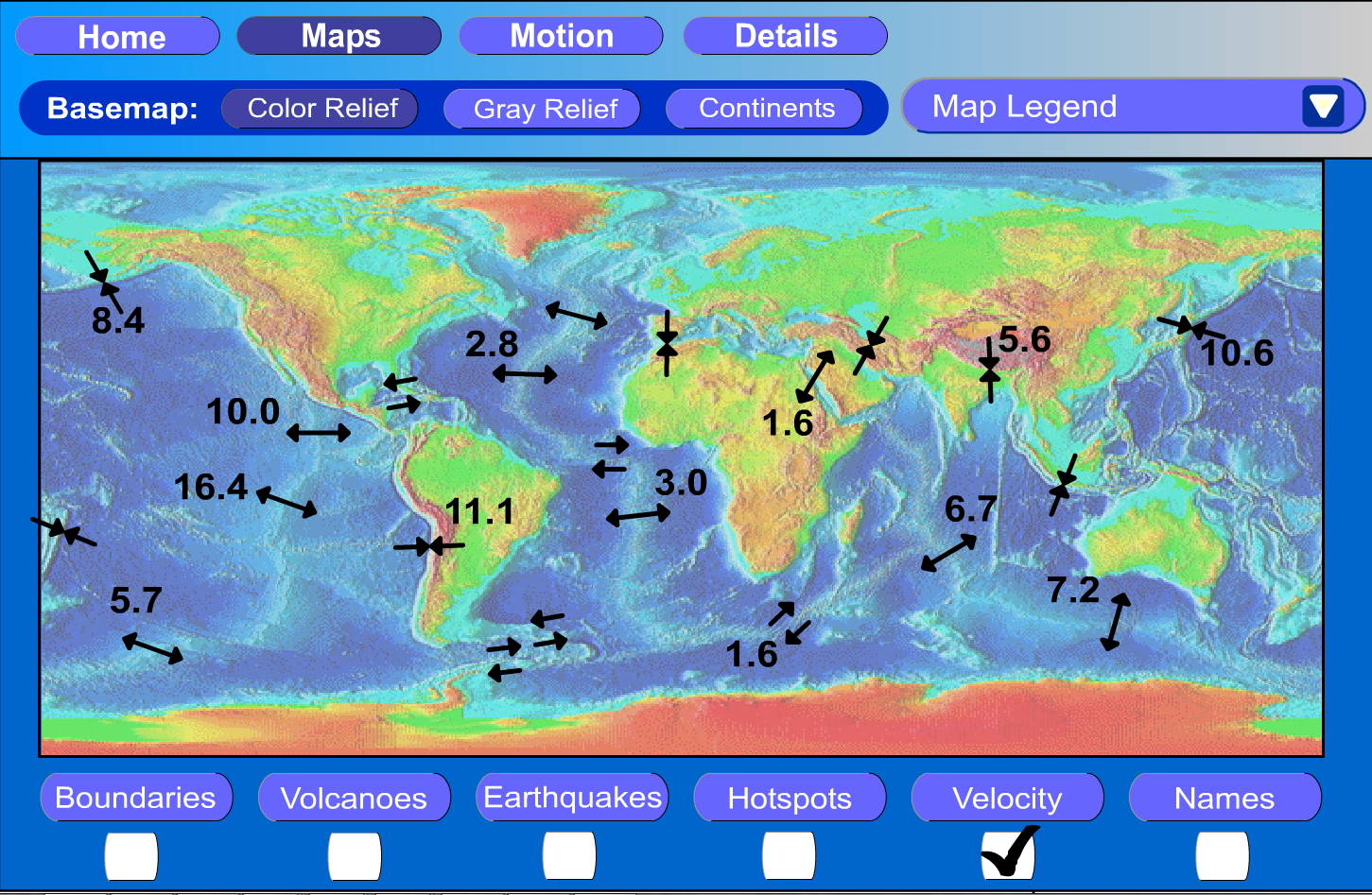
Very few of the geospatial software vendors (GIS or surveying) are handling horizontal datum transformations correctly or in a manner that is easy for the average GIS operator to understand. The good news is that hopefully we’re raising awareness and some are responding, such as Carlson Software. Carlson recently released version 3.0 of their SurvCE surveying software for GNSS data collection. It includes a 14-parameter transformation from ITRF08/WGS-84 G1674 to NAD83/2011. You might want to watch the four minute video below demonstrating the transformation process in SurvCE 3.0. You’ll see the difference after the transformation is about two tenths of a foot (~6cm). If I were to guess, I would say majority of the difference after the transformation is the tectonic plate movement that is unaccounted for. Reconciling the tectonic plate movement is difficult because you need to have an accurate velocity (movement) model for the software to reference. In some geographic areas, the movement is minor (1mm per year) while other geographic regions move 6cm per year or more. Lastly, what if there’s a major earthquake such as the 2011 earthquake off the coast of Japan or the 2010 earthquake off the coast of Chile. During those events, the ground shifted many meters in some cases.
Source: Michael Dennis – US National Geodetic Survey
I’d like to spend a little time on the subject of the WGS-84 reference frame. It’s a term that’s used and abused a lot, including by myself on occasion.
Taking a Look at the WGS-84 Reference Frame
First, let me begin with the statement that WGS-84 should not be in your geospatial vocabulary. In fact, I’ve been corrected in the past that it is actually a reference frame rather than a datum, but you’ll likely see it listed as a datum in your geospatial software.
WGS-84 is not something you’ll find physical marks on the ground that you can use to verify GNSS equipment performance. WGS-84 is defined by the U.S. National Geospatial-Intelligence Agency (NGA), which serves the U.S. Department of Defense and the U.S. Intelligence Community. In other words, one of its roles doesn’t include serving the civilian community. Originally, the accuracy of data referenced to WGS-84 could not be defined more accurately than a couple of meters. In fact, the definition of WGS-84 has changed several times over the years, usually without your knowledge, and usually not accounted for in the geospatial software you are using.
Originally (1987), the Department of Defense transformation values between WGS-84 and NAD83 (dX, dY, dZ) were set to 0, which led people to believe they were considered the same. A footnote that was largely ignored is that the standard deviation of the WGS-84 to NAD83 transformation values was ~2 meters (Doyle, D., 2013 email). The bottom line is that if someone hands you a GIS dataset and says it’s referenced to WGS-84, an alarm should immediately sound in your brain prompting you to query the presenter of the data. When and how was the data referenced to WGS-84? Likely, they won’t know the answers to the questions you ask. In that case, you have no choice but to tag the data as only accurate to two meters, at the very best. Of course, if it was data collected by a consumer-grade GPS unit, the accuracy is likely much worse.
The history of WGS-84 is as follows:
——————————————————–
WGS-84 (Original) – 1987
Aligned with NAD83/86 (original) but standard deviation of the transformation was +/- 2 meters.
——————————————————–
WGS-84 (G730) – 1994
Aligned with ITRF91 (epoch date 1994.0). A significant shift took place with this adjustment.
As you can see from above, if someone hands you a dataset and states it’s in WGS-84 format, it begs the question of “which one?”, not unlike the same question you should ask if someone states a dataset is “NAD83”
As I mentioned above, while the 14-parameter transformation to move from one datum to another is not commonplace in geospatial software yet, but it’s gaining traction and it’s not difficult to implement. The trickier, and more difficult variable to reconcile is the tectonic plate movement. It may not seem like the earth you stand on is moving very much, but years of movement can add up when you’re using GNSS equipment capable of 1-2cm accuracy.
Example: Let’s say you’re using OmniSTAR’s HP real-time correction service. The accuracy of that service is rated at 10cm horizontal 2DRMS. OmniSTAR informed me that their system is referenced to ITRF08 using the current epoch date (eg. the date you collect the data). Let’s say your GIS basemap is referenced to NAD83/2011 (epoch 2010.0), which is the most current version of NAD83 (I apologize to non-US readers for this example, but you likely have a similar situation). The 14-parameter transformation will transform your data from ITRF08 (current date epoch) to NAD83/2011 (current date epoch), but then you have to account for the tectonic plate movement from current epoch date (assume 2013.5) to 2010.0. That’s 3.5 years of crustal movement. The tectonic plate movement in some parts of the US are only 2mm/year so 3.5 years x 2mm/year = 7mm. Since OmniSTAR’s HP service is 10cm, you could say that 7mm of plate movement is below the noise floor. However, let’s say you’re in California where the tectonic plate movement is 5cm/year in some places. Reconciling the tectonic plate movement in that environment becomes important when you think about 3.5 years x 5cm/year = 17.5cm!
So, when populating your GIS database, especially with “high-accuracy” data, it’s important to understand not only the datum the incoming data is referenced to, but also the epoch date the data is referenced to. An answer of “WGS-84” is not good enough and probably not accurately represented in the geospatial software you’re using. More than likely, ITRFxx is more accurately defined in your software, if it is present.
Regardless, WGS-84 should not be in our geospatial vocabulary, or at least be quickly fading.
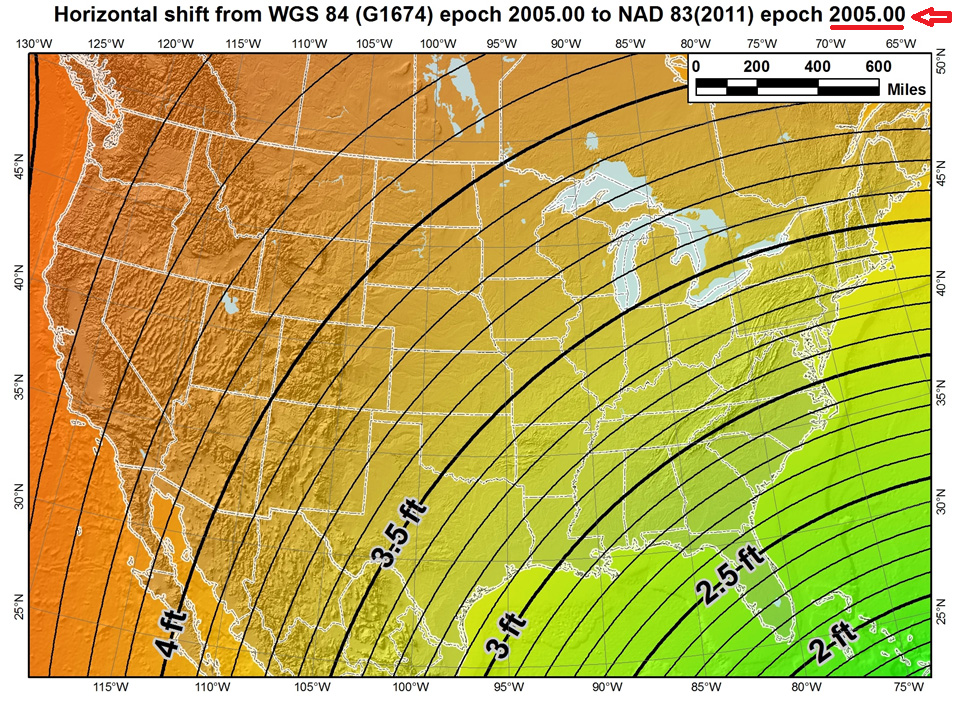
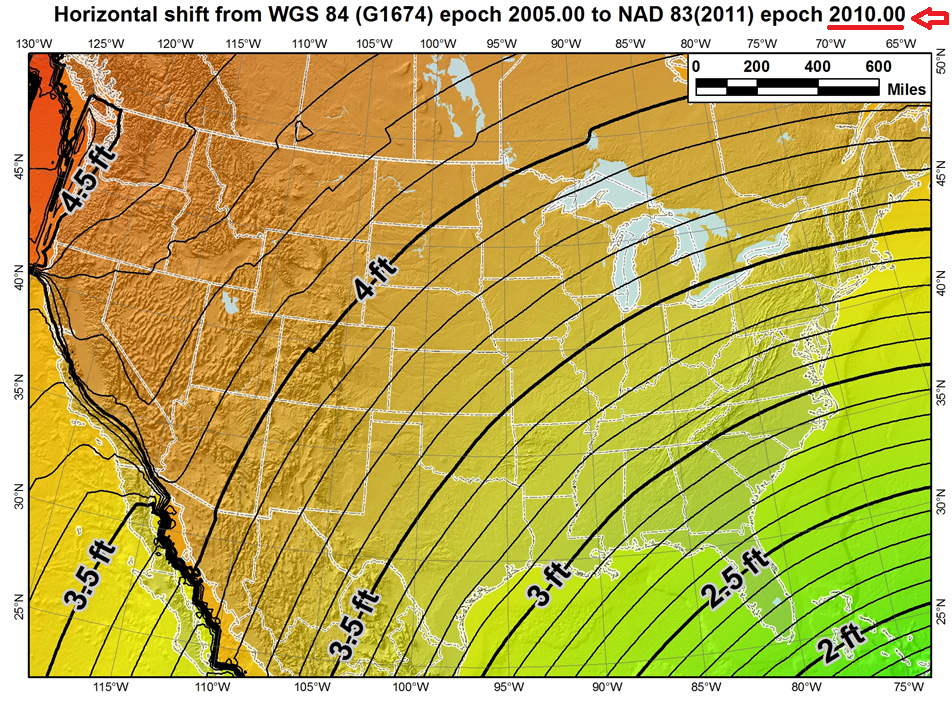
To illustrate the effect of tectonic plate velocities, please view the following two images:
The first image shows the the difference between the latest definitions of WGS-84 (G1674)/ITRF08 epoch 2005.0 and NAD83/2011 epoch 2005.0. Notice the smooth contour lines. This is using the 14-parameter transformation.
Source: Michael Dennis – US National Geodetic Survey
However, the correct US definition of NAD83/2011 is referenced to epoch 2010.0, a full five years later than the first image where it was referenced to 2005.0. Notice the dramatic effect of the tectonic plate movement in the western part of the US. In this case, the 14-parameter transformation was used as well as the velocity model to estimate the tectonic plate movement.
Source: Michael Dennis – US National Geodetic Survey
This illustrates that increasingly, geospatial data consumers will need to consider that “time is of the essence” when combining geospatial datasets.
GLONASS Rocket Crash
On July 2, 2013, a rocket carrying three GLONASS satellites crashed shortly after lifting off from its launch pad in Kazakhstan’s Baikonur cosmodrome. It’s the second launch crash for GLONASS, costing Russia six GLONASS satellites in the past three years. According to several sources, the cause of the July 2 crash was blamed on incorrectly installed angular velocity sensors. Despite the loss, GLONASS still has a full constellation of 24 satellites and, since GLONASS is largely used as an augmentation to GPS, people using GPS/GLONASS receivers should experience no change in performance.
Rumors are circulating that this crash signals the beginning of the end of the GLONASS program, but I don’t believe it. Although this crash is a serious blow to Russia’s space program and will certainly set back the GLONASS program due to the nature of the crash (at the launch pad), I believe that GLONASS is here to stay.
GPS suffered a major setback when, in 1986, the Space Shuttle Challenger exploded 73 seconds after lift-off because the space shuttle was the planned launch vehicle for GPS satellites. Subsequent launches were shifted to the Delta II rocket, causing a two-year delay in GPS satellite deployment. However, GPS never subsequently strayed from its course and for nearly three decades has been the so-called gold standard of satellite-based positioning, navigation, and timing.
с надеждой (here’s hoping) GLONASS can similarly recover its momentum and progress as planned.
Update: On July 9th, Ria Novosti reports that Russia will launch two GLONASS navigation satellites later this year to make up for the loss of three satellites in the recent Proton rocket explosion after launch from the Baikonur space center in Kazakhstan, according to a senior space industry official.
“We are planning to launch two satellites from the Plesetsk space center [in northern Russia] to replenish the GLONASS orbital grouping following the recent Proton-M accident,” said Nikolai Testoyedov, the head of the Information Satellite Systems (ISS) company, which manufactures satellites for the GLONASS project.
The first GLONASS is scheduled for launch in the beginning of September, and the second at the end of October, according to Testoyedov. The official added that both satellites will be launched on board the Soyuz carrier rockets, which has proven to be more reliable than ill-fated Protons.
A group of 29 GLONASS satellites is currently in orbit, with 24 spacecraft in operation, three spares, one in maintenance, and one in test flight phase, according to Russia’s space agency, Roscosmos.
Join me on the NSPS Radio Hour – Monday, July 22, 11:00am US Eastern Time/8:00am Pacific Time
I, along with Michael Dennis of the US National Geodetic Survey, will be guests on the National Society of Professional Surveyors (NSPS) radio hour talking about interesting geospatial data and GNSS subjects. You can tune in live or download the mp3 audio recording onto your smartphone or mp3 player. Feel free to send me an email ahead of time if there’s a particular subject you’d like to hear us discuss.
The Insurance Institute for Highway Safety (IIHS) has contracted Locata to provide local, ground-based precision positioning signals for vehicle testing in a new $30-million expansion at the famous Vehicle Research Center, focused on vehicle automation testing. A novel indoor section of the expansion will allow replication of parking garages and urban canyons — where GPS will be largely masked — and will enable evaluation of technologies such as forward collision-avoidance systems in adverse conditions.
Used to be that changes to equipment in and on cars took decades to enter production. As an example, just how long did it take to get headrests/restraints into most vehicles? Restraint patents were originally filed in 1921, and people started to get interested in putting them in cars in the 1950s, but they didn’t start to show up in vehicles until the 1960s and weren’t mandated until 1969 in the U.S. Since then, the rate of technology adoption by the automakers has accelerated.
Now, it seems that almost every new car has Internet, Bluetooth phone, GPS navigation, rain-sensing wipers, touchscreen, automatic foot sensing/hand waving/touch sensitive lift-gate/door-locks/touchscreens, and even massaging seats and automatic seat positioning… And safety devices galore, including multiple air-bags and anti-lock braking systems, rear-view cameras, intelligent speed adaptation, and now even lane-departure and forward collision mitigation/collision avoidance systems.
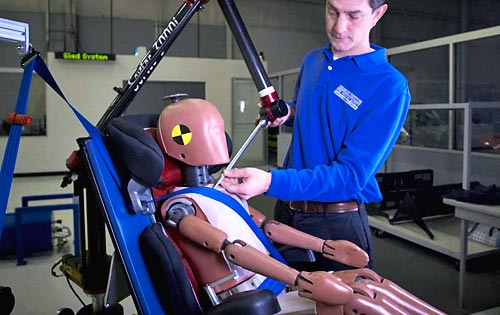
Safety has finally become a major selling feature on almost every make and every model, thanks in large part to organizations like the Insurance Institute for Highway Safety (IIHS) and the Vehicle Research Center (VRC) near Washington, D.C. The VRC is the principle location for U.S. vehicle crash testing that we see regularly on TV and YouTube videos with crash-test dummies being bashed around in all sorts of simulated vehicle accidents. These tests have led to significantly enhanced safety features in today’s vehicles.
Instrumented crash dummy preparation. Photo: IIHS
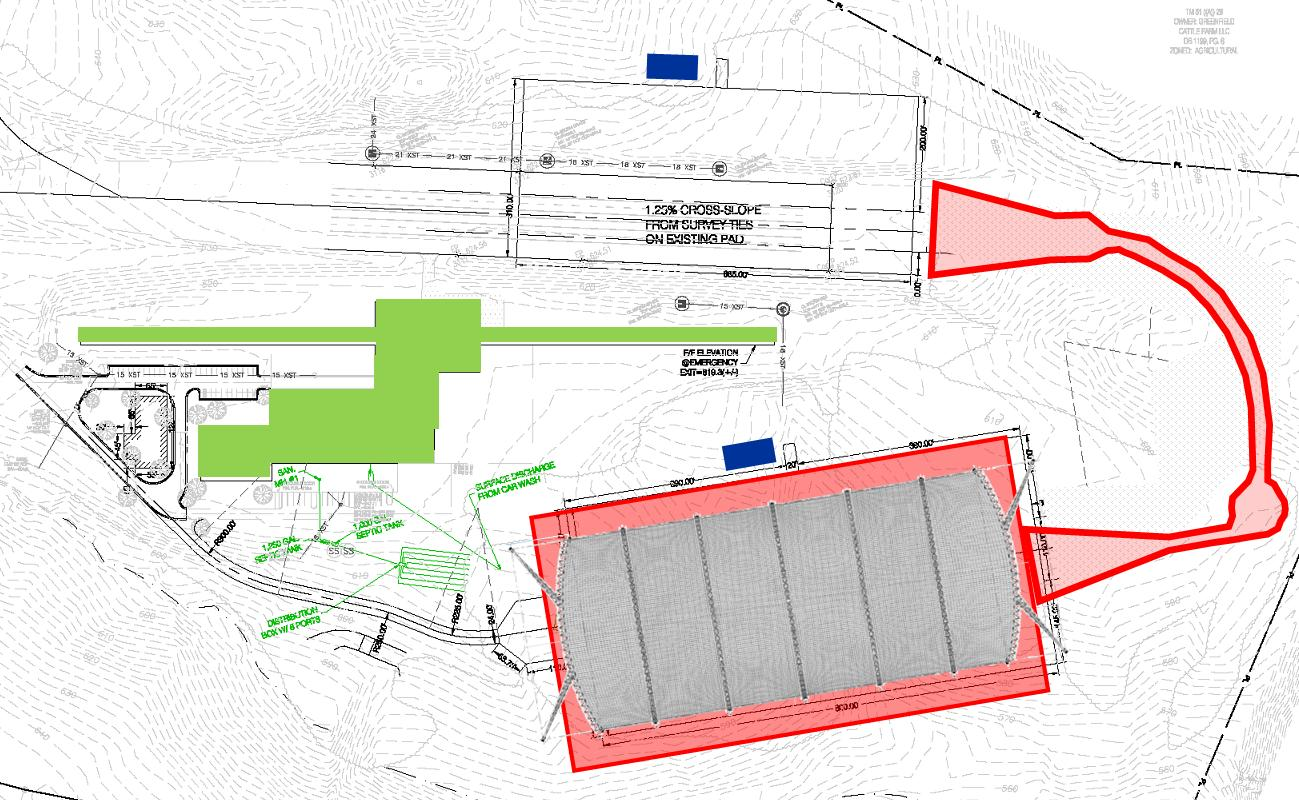
Automation in vehicles, particularly automation of safety devices, is seen as the next most promising phase of vehicle safety improvement. And as these safety devices become more complex, they need to be verified in realistic conditions. Hence, the VRC is now undertaking a major expansion of its testing capabilities with the addition of a continuous vehicle test track that transverses not only open-air roadway areas, but also includes a 300-foot by 700-foot fully covered testing area.
Covered test track section expansion. Photo: IIHSExterior test track links new VRC facilities. Photo: IIHS
The $30 million upgrade will include a Locata supplied LocataNet, which will provide the VRC with high-precision positioning to enable rigorous, consistent and repeatable scientific evaluation of new vehicle crash avoidance systems. Along with the cm-level positioning provided by the Locata network, VRC is also working on state-of-the-art robotics to enable the required level of testing precision. The LocataNet will furnish the IIHS with a locally controlled positioning system that is seamless over all the VRC test areas, including extremely accurate and consistent automated positioning of vehicles.
In the covered enclosure, VRC intends to set up collision avoidance testing for areas such as parking garages and urban canyons — areas where GPS is either not available, or is degraded to a level where positioning is intermittent or isn’t available. Locata will provide a consistent level of accuracy and reliability that the VRC requires for these GPS-degraded scenarios.
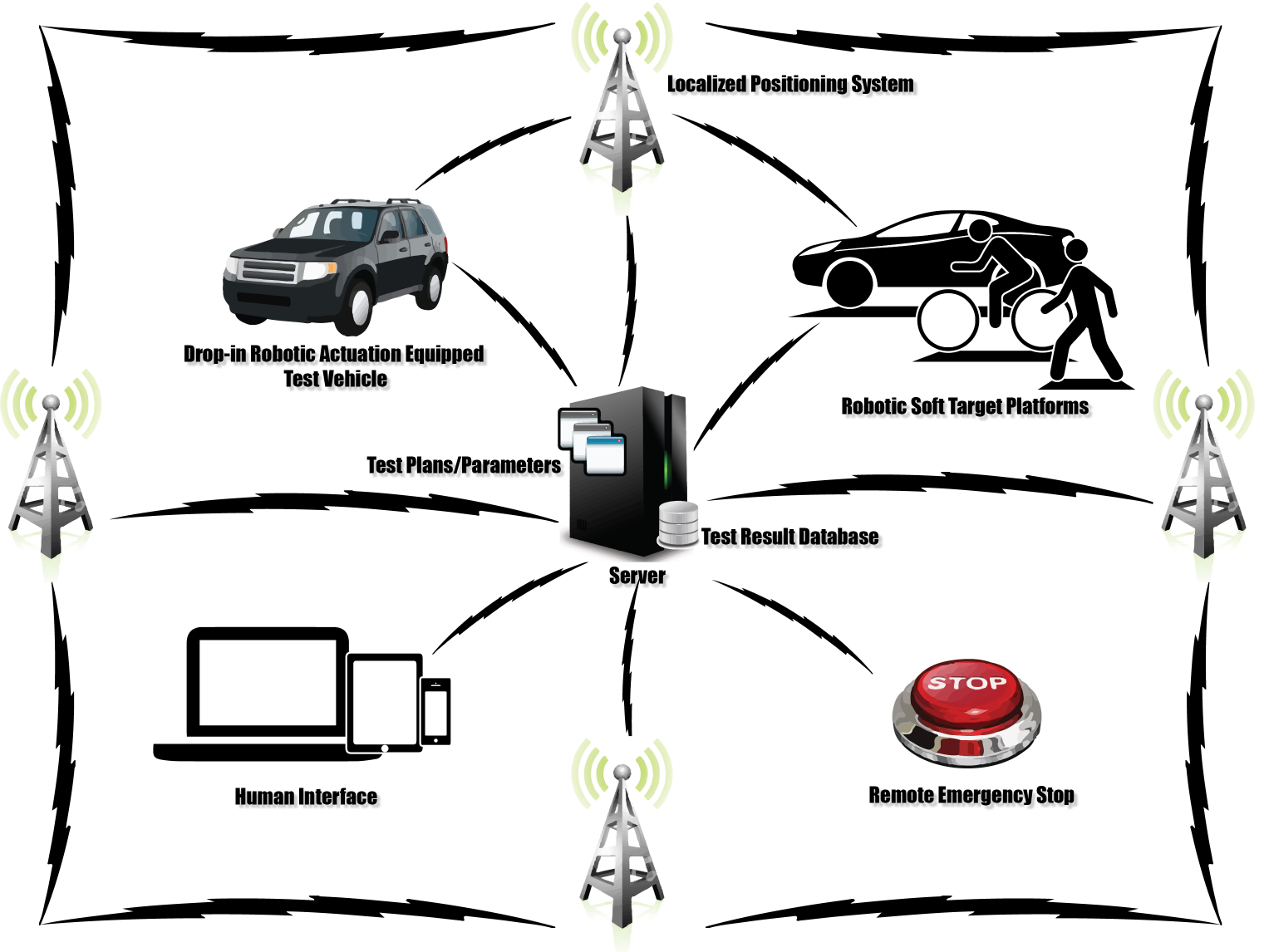
The VRC site currently looks very much like a construction site with the track extensions under way and the under-cover area just starting to be built. The VRC facility will come online in two stages — the outdoor track before the end of the year and the indoor around early Q2 next year. Locata engineers have been working with Perrone Robotics on very early integration testing. Perrone is contracted to deliver a system for testing vehicle safety systems in the test vehicles that IIHS is testing. For the first phase, the system includes a robot target vehicle with the footprint of a car, but only 4 inches high and 1 inch of ground clearance. If the vehicle being tested fails to prevent a collision with the robot target vehicle, the test vehicle runs over the robot target vehicle, dislodging a soft target, but avoiding damage to the test vehicle, robot target vehicle, or soft target.
(For a feature article on the Perrone Robotics soft-target unmanned ground vehicle and drop-in actuator kit, see the upcoming August issue of GPS World magazine.)
To ensure that the test vehicle drives repeatedly, the system also includes a drop-in actuator kit that can be installed into any test vehicle in 30 minutes or less. The system is designed to allow a human driver to sit comfortably in the vehicle and drive, but is also capable of controlling the throttle, brake and steering to drive test profiles. Perrone is using Locata as the positioning system. In addition to alleviating concerns about GPS outages or dead/weak signal spots, it also allows the system to be operated on the new, covered IIHS test track currently under construction.
DARPA Urban Challenge Peronne Robotics car. Photo: IIHSVRC robotic system using Locata positioning. Photo: IIHS
The Locata network has been running from ground-based tripods scattered around the track wherever construction will allow. IIHS will construct 30-foot masts on which to place Locata antennas, but even that is still several months away.
Locata’s autonomous positioning technology uses terrestrial networks that function as a “local ground-based replica” of GPS-style positioning. Locata works with GPS, but can also operate independently when GPS is not robust or is completely unavailable. Instead of orbiting satellites, Locata utilizes a network of small, ground-based transmitters that blanket a chosen area with strong radio-positioning signals. Because it is terrestrially based and provides relatively high power signals, Locata works in any internal or external environment.
A fundamental requirement for radio-positioning systems is nano-second-level synchronization of all transmitters in the positioning network. In the past, multiple atomic clocks were used to achieve this level of synchronization. Instead, Locata’s technology relies on a patented synchronization method called TimeLoc, which allows Locata to replicate GPS in a ground network.
Locata’s technology encompasses both the transmit and receive sides of the positioning network, allowing the system to be configured to meet specific, localized demand for availability, accuracy and reliability. This flexibility ensures that signal integrity can be guaranteed in even the most demanding environments — especially indoors, like the covered test track section of the expanded VRC.
Locata has also made significant progress in North America with the recent award of a contract to instrument the White Sands Missile Range to Locata’s partner TMC Design.The 746th Test Squadron’s new non-GPS-based positioning system is expected to be operational by Q3 2013, with a network that covers 2,500 square miles (6,500 square kilometers).Locata technology will provide the USAF’s “gold standard GPS truth system,” supplying continuous centimeter-level, independent positioning when GPS is completely jammed. This award followed several months of U.S. Air Force testing and evaluation of an initial LocataNet installation at the White Sands facility.
So, following the recent IIHS endorsement of the Locata technology for use at the VRC, Locata appears to be well on the way to acceptance as a reliable truth system for use alongside GPS. Along with other mining-related installations elsewhere in the world, it would seem that we are no longer in evaluation mode; rather, we should anticipate other future Locata production installations.
NovAtel has announced two new GNSS receivers: The OEM638 high precision receiver card and the ProPak6 enclosed receiver. The two products incorporate NovAtel’s most advanced GNSS technology, the company said.
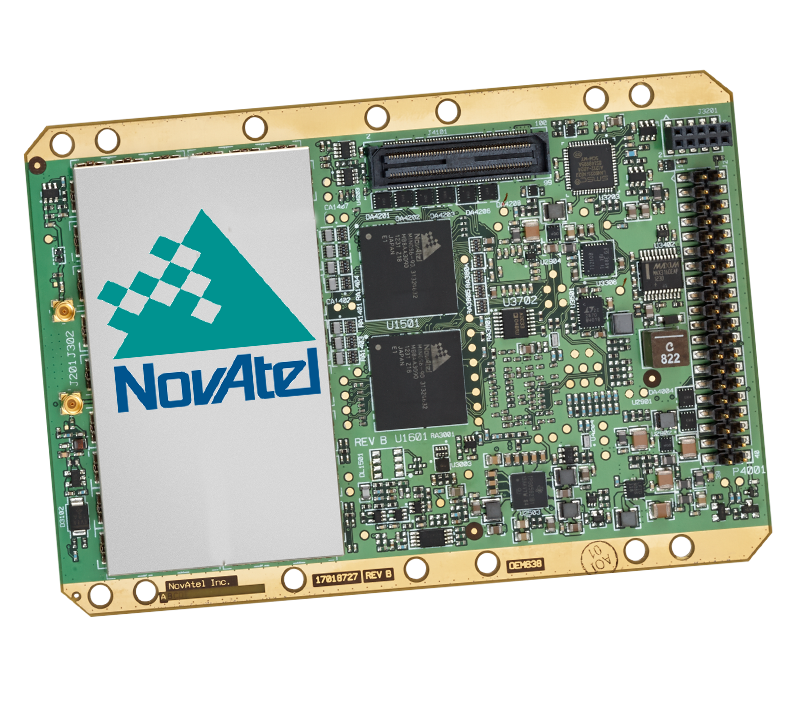
Novatel OEM638. Photo: NovAtel
The most advanced card within NovAtel’s OEM6 GNSS receiver family, the OEM638 tracks all existing and planned constellations including GPS, BeiDou, GLONASS, Galileo and QZSS. By providing flexible positioning options, from standalone meter-level to AdVanceRTK centimeter-level accuracy, the OEM638 offers the flexibility to meet a wide range of positioning requirements. A powerful API, 4-GB on-board data storage, wide input voltage and a host of interface options simplifies integration, decreasing time to market and overall system costs, NovAtel said.
“With the addition of the OEM638 GNSS receiver card, NovAtel’s OEM6 product line offers an even wider range of positioning options on our standardized technology platform. With three compact form factors to choose from, the OEM6 product line gives us the ability to meet the unique size, weight and performance requirements of our customers,” said Jason Hamilton, director of marketing for NovAtel.
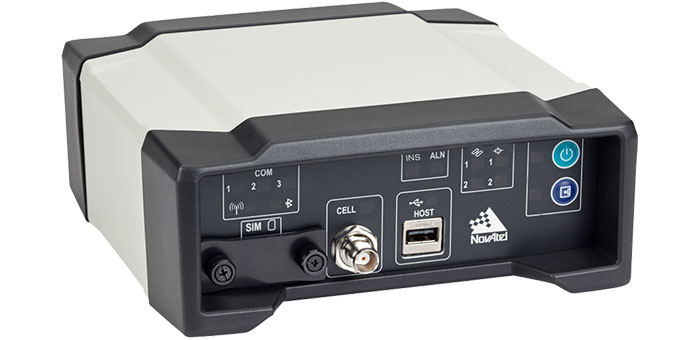
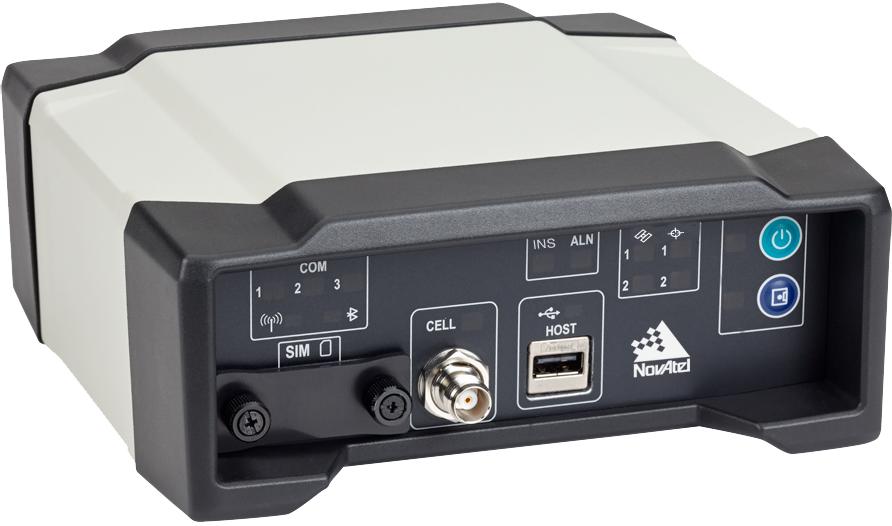
The ProPak6 is NovAtel’s most sophisticated GNSS enclosure product, offering meter-level to centimeter-level positioning in a rugged, water resistant IP67 housing. Standardized software and hardware connections, including multiple RS-232/RS-422 serial ports, CAN Bus, USB host and device, as well as Bluetooth, Wi-Fi, and optional cellular radio, speeds time to market and maximizes user capabilities, the company said. The ProPak6 is designed for reference station, timing, and general position applications.
NovAtel ProPak6. Photo: NovAtel
“Our ProPak6 provides a powerful enclosure option for integrators looking for positioning flexibility, multiple communication options and Ethernet support for remote configuration and access of data logs,” Hamilton said. “It was designed to simplify the integration process, by accelerating time to market and ensuring maximum return on investment. ”
The OEM638 and ProPak6 will be available to order July 26, with shipments beginning in August.