Category: Applications

  • Trimble Launches New Mobile Apps, Website for Sportsmen

    Trimble has launched a new mobile mapping product for hunters and anglers. The launch includes two smartphone apps (Trimble GPS Hunt and Trimble GPS Fish), one tablet app (Trimble GPS Maps), and a new Website — GPSHuntFish.com.

    The offerings combine the latest in mobile GPS technology and Trimble’s exclusive outdoor maps to help sportsmen plan trips, navigate in remote areas, record GPS information, and privately share details with friends.

    “We are excited to launch a comprehensive solution for hunters and anglers,” said Rich Rudow, general manager at Trimble Outdoors. “Now hunters can scout a future hunt at GPSHuntFish.com then send maps and GPS details to their iPhone, Android, or iPad to use in the field. In addition, they can print custom waterproof maps that compliment the digital maps displayed in the mobile apps.”

    The launch includes:

    Trimble GPS Hunt App

    Runs on: iPhone and Android phones

    Find hunting spots on detailed outdoor maps, navigate in remote areas and track wildlife. The Trimble GPS Hunt app uses the GPS built into smartphones to track position in the field—even in areas without a cell or data connection. In addition, users can mark waypoints, record tracks, view weather forecasts, see sun and moon phases, and view compass and trip details.

    Trimble GPS Fish App

    Runs on: iPhone and Android phones

    Use Trimble GPS Fish to record fishing trips and keep a report of daily catches. Pinpoint the exact location of each catch, take photos, record GPS tracks, and view detailed street, topo and terrain maps. Use the app to return to previous fishing hotspots. In addition, with an Elite membership, users have access to more than 6,900 lake maps showing 10-foot lake depth contours.

    Trimble GPS Maps App

    Runs on: iPad

    Plan and organize your next hunting trip or fishing trip with the Trimble GPS Maps app. Research hunting lands, find fishing spots and scout access roads on your iPad. This app allows users to fade between street, aerial and topographic maps, and instantly copy-and-paste GPS coordinates onto the digital maps.

    GPSHuntFish.com

    Works on: PC and Mac with an Internet connection

    GPSHuntFish.com is a portal for all of the Trimble hunting and fishing apps. In addition, users can view and store their trips, view maps in large format, and print maps at home or as a custom print by MyTopo.com. All trips created in the Trimble fishing and hunting apps are stored in the Trip Cloud, an online service that auto-syncs trips between a computer, smartphone and tablet device.

    Trimble Elite

    Works with Trimble GPS Fish, Trimble GPS Hunt, Trimble GPS Maps, GPSHuntFish.com

    Trimble Elite members have access to public land boundaries for 46 states, lake maps for 6,900 lakes, forest road overlays for 134 national forests, real-time weather maps, online trip planning tools and discounts off printed maps. In addition, users can pick from a library of 3,000 Mega Offline Map bundles. These topo map bundles can be downloaded by state, county, or hunt unit and be accessed on the mobile device in remote areas, even with no cell or data connection.

    How to Buy. Trimble GPS Hunt and Trimble GPS Fish are available in the Apple App Store and Google Play store. Trimble GPS Maps are available in the Apple App Store. Each app comes in a free or pro version for $4.99. The Elite membership is available for purchase in all the apps and at GPSHuntFish.com for $29.99/year or $2.99/monthly.

  • New Series of SPAN MEMS IMU Products Introduced by NovAtel

    New Series of SPAN MEMS IMU Products Introduced by NovAtel

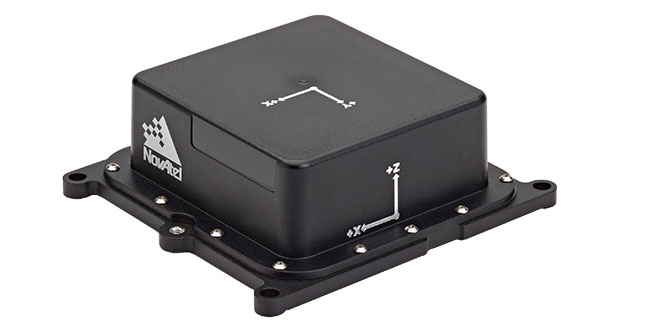
    NovAtel Inc. has announced a new SPAN-IGM series of Micro Electromechanical Systems (MEMS) inertial sensor products, including the IMU-IGM-A1 MEMS enclosure and the SPAN-IGM-A1 GNSS/INS enclosure.

    The IMU-IGM-A1 is a small, rugged enclosure that houses a MEMS inertial sensor. The IMU-IGM-A1 can be configured from the factory as an integrated GNSS + Inertial Navigation System (INS) or as a standalone IMU sensor for pairing with a customer’s existing NovAtel SPAN enabled OEM6 receiver. Featuring regulated 10-30 VDC input and a dedicated wheel sensor input to enhance GNSS outage bridging capabilities, the IMU-IGM-A1 delivers a 200 hertz navigation solution and raw measurement output.

    “The IMU-IGM-A1 is the smallest, lightest IMU enclosure in our SPAN GNSS/INS product portfolio,” said Jason Hamilton, director of marketing for NovAtel. “It provides NovAtel customers with the ability to leverage our powerful SPAN technology in new applications that are size and weight constrained but still require highly precise position, velocity, roll, pitch, and heading.”

    The SPAN-IGM-A1 combines NovAtel’s OEM615 GNSS receiver card with a MEMS inertial sensor in a single enclosure. By integrating the MEMS IMU with NovAtel’s tightly coupled OEM6 GNSS/INS SPAN engine, advanced positioning options such as AdVance RTK, ALIGN heading technology and RAIM are available to maximize performance.

    Shipments of the new IMU-IGM-A1 enclosure and the SPAN-IGM-A1 GNSS/INS integrated enclosure commence early Q2 2013.

  • RTK GNSS Receivers: A Flooded Market?

    Wow, if one counts the number of new RTK GNSS receivers introduced in the past ~six months, it’s impressive. If you’re in the market for such a GNSS receiver, this is good news for you. More competition in the product and distribution side of the equation usually means better products and better service for the consumer. While Trimble, Leica and Topcon still dominate the majority of RTK GNSS receiver sales in North America, it’s pretty clear that others are eating away at their market share, and most of the new competitors don’t even design their own RTK GNSS receivers! The high-precision user community has more choices for high-performance RTK receivers than ever before even though there are only a handful of companies capable of designing reliable RTK GNSS receivers:
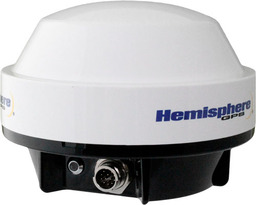
    image005

    • Trimble
    • Leica/Novatel
    • Topcon/Sokkia
    • Hemisphere GNSS
    • JAVAD GNSS
    • Septentrio
    • Ashtech (owned by Trimble)
    • Navcom Technology (owned by Deere & Co.)

    Some of you may think that I should include “consumer” GNSS chipset designers like GlobalLocate/Broadcomm, SiRF/CSR, u-blox, NVS Technologies, etc. While some of the engineers at consumer GNSS chip companies clearly have the knowledge (and experience in some cases) of RTK design, none of these chipsets are integrated into commercial RTK products. Yes, I know some of you have “made RTK work” with consumer GNSS chipsets, and I think that speaks volumes about where RTK capability will end up, but it’s not quite there yet with respect to a reliable commercial implementation.
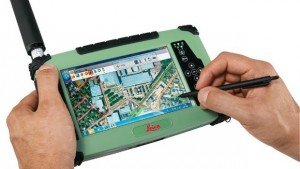
    image007Regardless of consumer GNSS chipsets, the multi-constellation, multi-frequency RTK GNSS receiver landscape is changing quickly, even before the deployment of the new L5 signal and Galileo as I’ve written about previously (Why the Price of Precision Receivers Will Drop). This is because of the proliferation of RTK GNSS receiver “boards” such as the Trimble BD series, Novatel OEM series, Hemisphere GNSS P series, and Septentrio AsteRx series. System integrators like Altus, Geneq, CHCNav, Stonex, FOIF, Carlson, etc., are scooping up these proven receiver boards and designing their own systems around them.

    There are more RTK GNSS system integrators in China than any other geographic region in the world. It makes sense because the Chinese market for RTK GNSS receivers is larger (much larger) than any other market in the world. Even though you don’t see many Chinese-made RTK GNSS receivers sold in North America (you do see them sold in Africa, Europe and South America), they sell a huge number of them within China. I would even go as far as to say that the North American market is likely considered a “leftover” market since the North American RTK GNSS receiver sales volumes are so low in comparison. In other words, North America is such a small market for RTK GNSS receivers, it’s not worth the marketing/selling effort it requires. That said, some companies, like CHCNav, are ramping up their marketing and selling efforts in North America.

    To put it in perspective, let’s take a look at some of the new RTK GNSS products (and services) introduced in the past ~6 months (in alphabetical order). I’m sure I’ve left some out because there are so many on the market, but this gives you an idea of the broad range of RTK GNSS receivers available. Again, these are products introduced just in the past ~6 months.

    Altus APS-3L

    Key benefit: Integrates Terrastar’s new 10cm real-time precise positioning service. Uses a Septentrio GNSS receiver board.

    Carlson SuperG

    Key benefit: Tablet-based RTK GNSS system capable of 1cm real-time accuracy. Uses a Novatel RTK GNSS receiver board.

    CHCNav X900+ GNSS

    Key benefit: Low-cost RTK GNSS made in China. Uses a Novatel RTK GNSS receiver board.

    FOIF A30

    Key benefit: Low-cost RTK GNSS made in China. Uses a Trimble RTK GNSS receiver board.

    Geneq SXBlue III-L
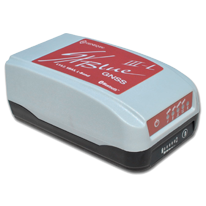
    image003Key benefit: Low-cost, palm-sized receiver integrates OmniSTAR’s G2/HP/XP 10cm service and also 1cm RTK capability. Uses a Hemisphere GNSS receiver board.

    Hemisphere A325 GNSS Smart Antenna

    Key benefit: All-purpose, low-cost RTK GNSS receiver.

    Javad J-Shield

    Key benefit: Innovative radio frequency (RF) interference visualization (onboard spectrum analyzer) and interference reporting feature.

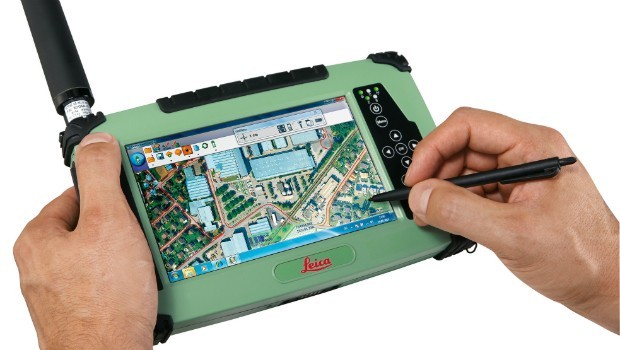
    Leica CS25 GNSS

    Key benefit: Tablet-based RTK GNSS system capable of <10cm real-time accuracy.

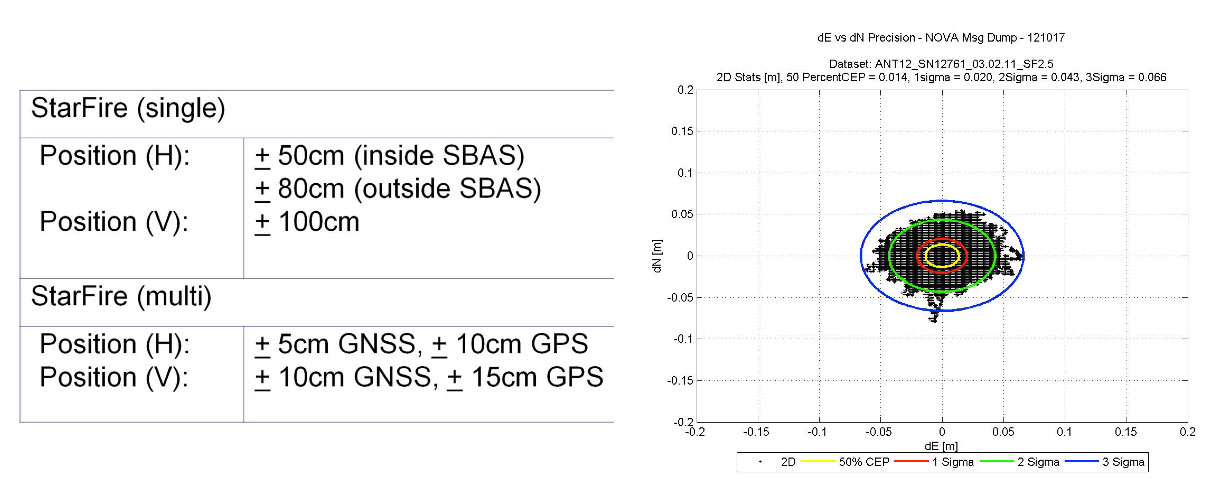
    Navcom StarFire Over IP

    Key benefit: 5cm (horizontal RMS) real-time correction service delivered via IP (Internet Protocol) as an alternative to delivering via satellite communications.

    Sokkia GRX-2

    Key benefit: Low-cost, lightweight (1.00kg) RTK GNSS receiver. Same as Topcon HiPer V.

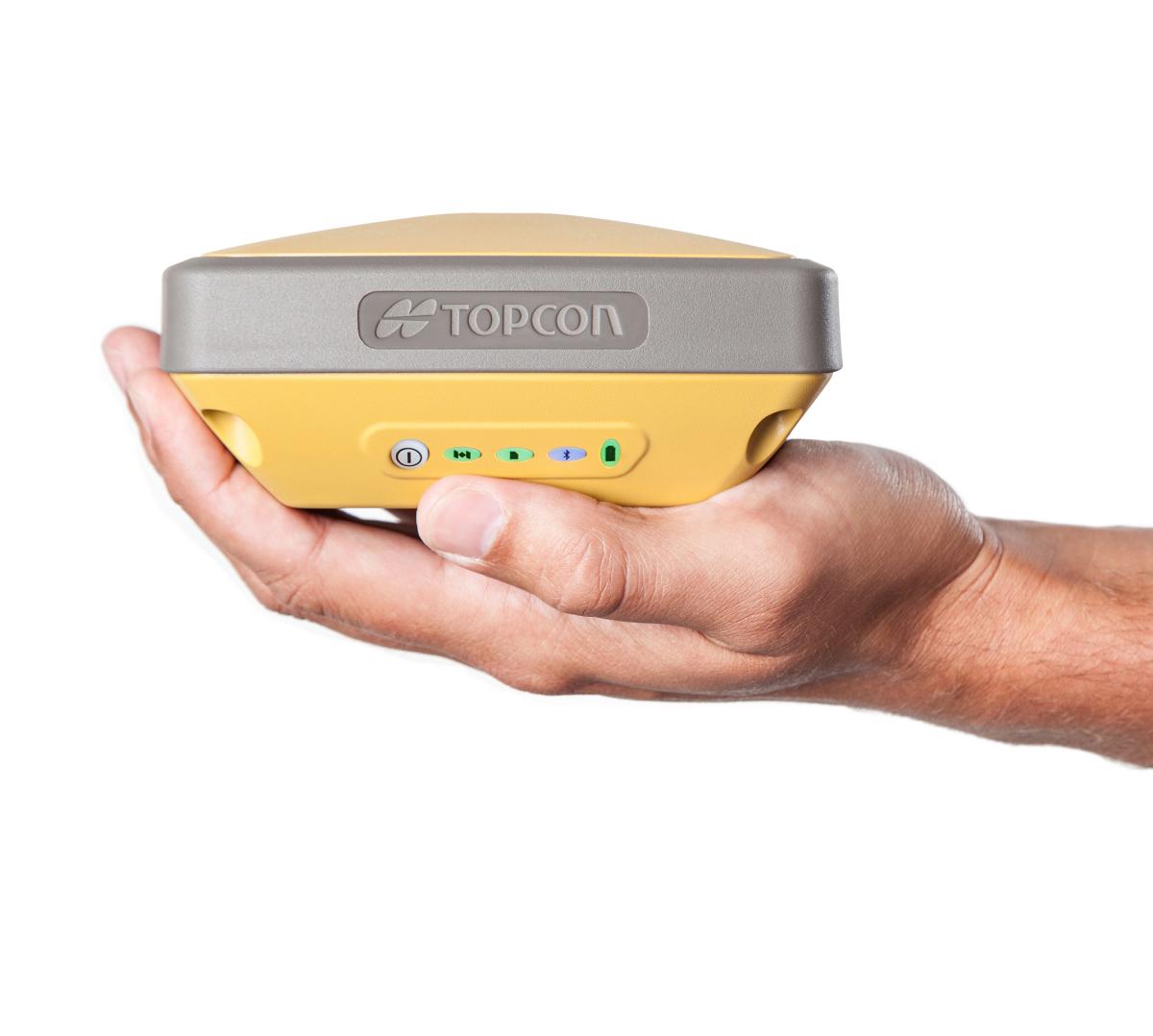
    Topcon HiPer SR
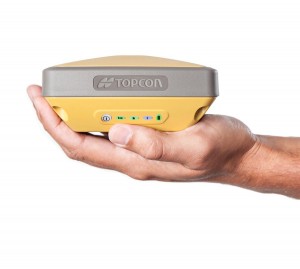
    image001Key benefit: Palm-sized, lightweight (.85kg) RTK GNSS receiver capable of surviving a two meter drop.

    Spectra Precision ProMark 700

    Key benefit: Lightweight (.65kg) RTK GNSS receiver. Uses Trimble RTK GNSS receiver board.

    Stonex S9III

    Key benefit: Lightweight (1.2kg) RTK GNSS receiver. Uses Trimble RTK GNSS receiver board.

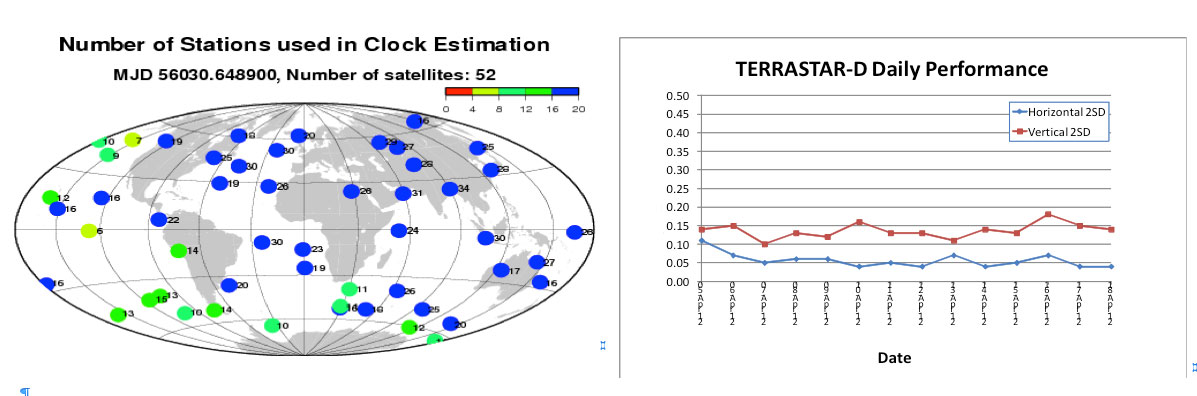
    Terrastar Terrastar-D Satellite Correction Service

    Key benefit: World-wide, real-time 10cm (horizontal 2DRMS) GNSS correction service delivered via satellite.

    Trimble R-10

    Key benefit: Lightweight (1.12kg) RTK GNSS receiver.

    Trimble RTX

    Key benefit: World-wide, real-time 4cm GNSS correction service delivered via satellite.

    Looking at this list, there are two key trends:

    1. RTK GNSS receivers are becoming smaller. Moore’s Law, or a GNSS version of it, is definitely in effect.
    2. The price of RTK GNSS receivers is falling, as low as US$7,000 (retail price) for a full RTK GNSS receiver in North America and likely less than that in other parts of the globe.

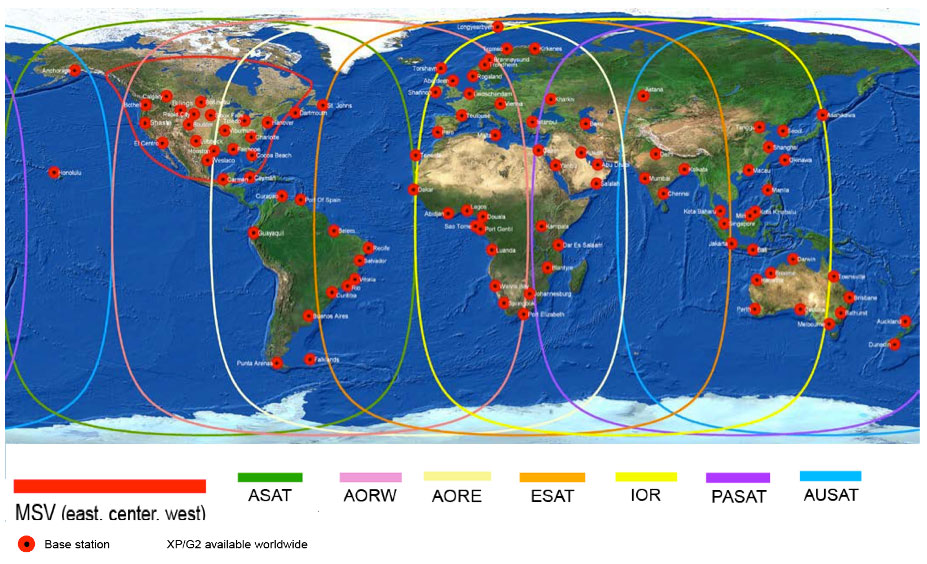
    image009Another clear trend is the advancement of global GNSS augmentation services (OmniSTAR, StarFire, Terrastar, Trimble). RTK networks are great when you have access to them, but in many places of the world, RTK networks aren’t available or there isn’t a data link (wireless network) available to receive corrections. This has created an opportunity for satellite-based (and Internet-based) global correction services. Whereas OmniSTAR (serving the agriculture and mapping markets) and StarFire (serving primarily the agriculture market) have been long-term players in this market, Terrastar recently announced its entry into the market and Trimble (who also owns OmniSTAR) announced its new RTX service.

    The advantage of satellite-based correction services is that you can receive them virtually anywhere in the world as long as you have a clear view of the sky. The disadvantage is that the initialization time it takes to achieve the stated real-time accuracy (<10 cm) is up to one hour if you aren’t starting on a known point. The addition of GLONASS helps reduce the initialization time, but it’s still much longer convenient than RTK initialization due to the sparse network of reference GNSS receivers used.

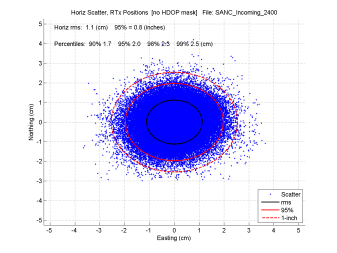
    Furthermore, the accuracy provided by the satellite-based correction vendors isn’t as good as RTK. OmniSTAR and Terrastar advertise 10-cm (horizontal 2DRMS) real-time accuracy. StarFire advertises 5-cm (horizontal RMS, as opposed to 2DRMS values given for competing services) real-time accuracy, and Trimble RTX advertises 4-cm (horizontal 2DRMS) real-time accuracy. RTK accuracy is solid at 2-cm or less.

    Lastly, in order to access satellite-based correction services, GNSS receivers must be specifically designed (additional hardware is required), so the reality is that few receivers on the market are capable of utilizing these services. But, if you’re performing mapping work across a large geographic area where RTK networks aren’t consistently available and you don’t want the go through the pain of owning, maintaining, and setting up your own RTK base station, the satellite-based correction service is a solid solution.

    For more information on these satellite and internet-based correction services, GPS World’s Tony Murfin published a detailed article this month entitled “Look, No Base-Station! — Precise Point Positioning (PPP)“. Tony offers some detailed insight into these services.

    Nightmare on GIS Street: Accuracy, Datums, and Geospatial Data

    Changing the subject a bit, but highly related to RTK GNSS receivers, is the subject of datums and geospatial data. Last month, I wrote an article for Geospatial Solutions that is a first in what promises to be a very interesting and complex discussion. I received quite a bit of email on the article with many good points made. If you think you know how to handle horizontal datums in a GIS environment, you might want to take a look at the article and follow the thread over the next few months. You can read the article by clicking here.

    Thanks and see you next month

    Follow me on Twitter by clicking here.
  • Brad Parkinson to Discuss GPS at Smithsonian Event

    Brad Parkinson to Discuss GPS at Smithsonian Event

    Dr. Bradford W. Parkinson, professor of Aeronautics and Astronautics Emeritus at Stanford University will discuss “GPS for Humanity — The Stealth Utility” at a special Smithsonian event Thursday, March 21.

    The 8 p.m. ET lecture at the National Air and Space Museum in Washington, D.C.,  follows a 7:15 p.m. viewing of the Imax film Space Junk 3D and commentary on the museum’s new exhibit Time and Navigation: The Untold Story of Getting from Here to There.

    In the 1970s, Parkinson was the chief architect and original program director for GPS. In his lecture, he will present the history, applications, and future of GPS and the GNSS. Central to operation of GPS is the relationship between time and navigation, and GPS will be explored in the Time and Navigation exhibit.

    The Smithsonian Time and Navigation exhibit opens April 12. Don Jewell, GPS World’s contributing editor for Defense, discusses the exhibit in his February column.

    The lecture will be available via webcast and is expected to be available for viewing afterwards. For more information, visit the museum website.

  • NovAtel Releases SMART6-L Integrated GNSS High-Accuracy Antenna

    SMART6-L front (2).jpg

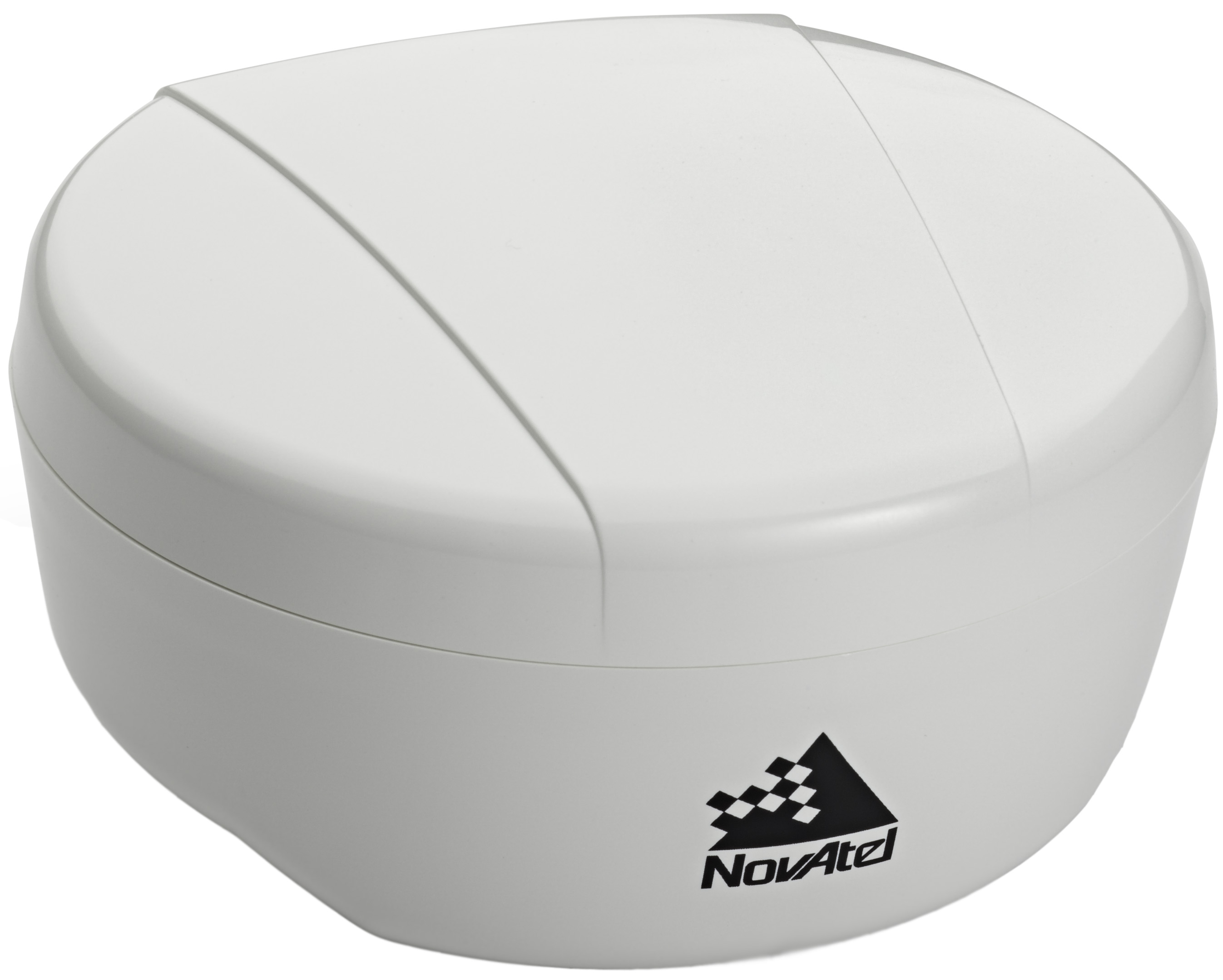
    NovAtel’s new SMART6-L GNSS antenna integrates its OEM6 engine with Pinwheel antenna technology. Tracking L1 and L2 GPS + GLONASS, the SMART6-L delivers scalable performance, from single-frequency GL1DE smoothing performance to centimeter-level accuracy using dual frequency real-time kinematic tracking. Optional L-band tracking improves positioning accuracy outside of L1 SBAS coverage areas.

    The SMART6-L is designed for manual guidance and auto-steer agriculture applications that benefit from ultra-smooth positioning and high pass-to-pass accuracy. The dual-frequency GL1DE firmware enhances the absolute accuracy of the GL1DE position, creating a robust solution and mitigating the effects of high ionospheric activity, NovAtel said. The design of the SMART6-L interface maximizes flexibility with NMEA 0183 compatible RS-232 serial ports and a NMEA2000 compatible CAN port. One PPS output, an event mark input, and three daylight readable status LEDs are also provided. Built-in magnets simplify mounting although fixed mounting options are also available.

    The SMART6-L is available for order starting March 18, with product shipments commencing April 15.

  • TIMEX Expands GPS Portfolio with IRONMAN Run Trainer 2.0

    TIMEX Expands GPS Portfolio with IRONMAN Run Trainer 2.0

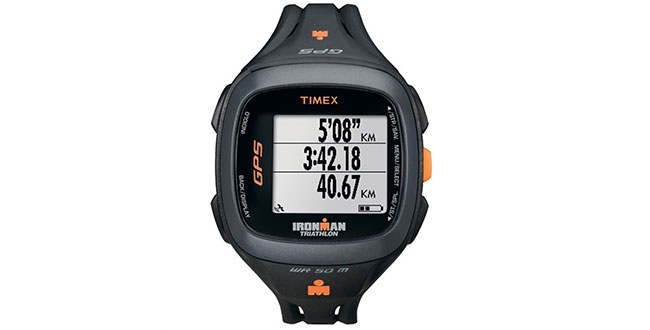
    Timex has introduced the Timex IRONMAN Run Trainer 2.0, a next-generation GPS-enabled watch that tracks pace, distance, heart rate, and elapsed time. This upgraded device is a smaller, more refined version of the brand’s signature Timex IRONMAN Run Trainer 1.0 GPS watch and is equipped with a reversible, high-resolution display and advanced interval training capabilities.

    The introduction of the Timex IRONMAN Run Trainer 2.0 marks a further expansion of the Timex GPS portfolio, following the recent launches of Timex Marathon GPS, Timex IRONMAN  Run Trainer 1.0, Timex Cycle Trainer  2.0 and Timex IRONMAN  Global Trainer Bodylink System.

    “We heard from the running community that they wanted a smaller, more comfortable GPS watch,” said Sam Martin, Senior Brand Manager, Sports. “We are excited to deliver on that need with the upgraded Run Trainer 2.0, enabling more efficient training through advanced technology.”

    The Timex IRONMAN Run Trainer 2.0 is designed for athletes who want to maximize the efficiency of their training. The watch offers a crisp, high-resolution display, but is smaller than the Run Trainer 1.0 to better fit a wider variety of wrist sizes. Armed with a chronograph and featuring hands-free split recording capability, the Run Trainer 2.0 includes Interval Training based on distance and time with vibrating and audible alerts. It has an eight-hour Li-ion battery life and is water resistant up to 50 meters.

    Like other Timex downloadable products, this Run Trainer 2.0 is customizable through a computer device agent for all settings and is compatible with TrainingPeaks and MapMyFitness.com, among others. It utilizes ANT+ wireless technology for chest and foot pod sensors to provide heart rate and indoor/cadence-based training data for runners looking to improve their performance.

    The Timex IRONMAN Run Trainer 2.0 will be available later this month in U.S. sports specialty retailers and on Timex.com at $224.95 for Speed + Distance or $274.95 (with Flex Tech Digital 2.4 HRM chest sensor).

  • Verizon Launches Fleet Management Solution

    Verizon is rolling out Networkfleet on the Verizon Wireless network, the company announced today. Networkfleet is a fleet-management solution that provides a wide variety of monitoring and management capabilities for increased productivity and improved customer service.

    The Networkfleet solution — part of Hughes Telematics, which Verizon acquired last year — will be combined with the Verizon Wireless network and will debut in Verizon’s U.S. service fleet for improved monitoring, management and route optimization capabilities.

    With this all-Verizon solution as part of the company’s telematics portfolio, Verizon is building on its and Hughes Telematics’ joint capabilities to help fleet, operations and risk managers use technology to improve operations by managing speed, fuel consumption, drivers and vehicles while optimizing vehicle use and routes using vehicle diagnostics to help hold the line on maintenance costs.

    “As one of the largest commercial fleet operators in the United States, Verizon recognizes the challenges and opportunities associated with managing fleets, and we continue to shape our offerings to help customers turn rolling assets into a competitive business advantage,” said David Small, senior vice president and chief platform officer for Verizon Enterprise Solutions. “We see the fleet management space as a tremendous opportunity. We will continue to work with our ecosystem to serve this growing market, and we are committed to innovating in the machine-to-machine space.”

    The Networkfleet telematics solution combines in-vehicle hardware and a web-based application to store, view and analyze data on specific vehicles as well as overall fleet performance. Vehicles are equipped with a GPS device that sends information to the Networkfleet Data Center over a secure wireless network. Key features include GPS fleet tracking, asset tracking, fleet maps, vehicle diagnostics with alerts, roadside assistance, preventative maintenance and other fleet management tools.

    Verizon is deploying Networkfleet to an initial 18,000 company vehicles in its fleet this year to expedite customer service, while increasing productivity and cost efficiencies. The initiative will help Verizon achieve its sustainability goal of decreasing its carbon footprint.

    The Networkfleet solution can be used in a wide variety of industries including:

    • transportation
    • energy and utilities
    • government
    • retail and sistribution
    • construction
    • insurance
    • healthcare
    • media and entertainment.

    The Eastern Municipal Water District in Southern California used Networkfleet to lower fuel costs and increase productivity:

  • Telenav Announces Planned Sale of Enterprise Business

    Telenav, Inc. (NASDAQ: TNAV) has entered into an agreement to sell the Telenav enterprise business unit to FleetCor Technologies Operating Company, LLC, for approximately $10 million in cash, with an anticipated closing date in 30 days. Telenav’s enterprise business allows companies to better manage operations by using the Telenav location-based services (LBS) platform to track status and the location of mobile workers, vehicles and assets deployed in the field.

    “As our consumer, advertising and automotive businesses grow, we have seen a divergence between the strategic direction of these areas and that of our enterprise business,” said HP Jin, president and CEO of Telenav. “This agreement will allow us to focus more and strengthen our strategic growth areas.”

    Telenav will provide certain services after closing to facilitate the transition of the business. Other terms of the agreement were not disclosed; however, the Company noted that as the deal will close near the end of the fiscal third quarter, the financial guidance provided for the quarter will be unchanged. As to the full-year revenue for fiscal 2013, the anticipated range for revenue will now be $190 to $194 million, reflecting the impact on revenue from this sale. Except as noted, the financial impact is not expected to be material to the financial results of Telenav.

  • RapidEye Imagery-Based MALAREO Project Complete

    RapidEye, a specialist in high-resolution, wide area repetitive coverage of earth through its constellation of five satellites, announced today that the African Malaria Control Project, MALAREORapidEye_coverage, which incorporates RapidEye data, has come to a close and results are now available on the project’s website.

    MALAREO, which began just over two years ago, was funded by the European Commission under FP7 and run by a mixed European-African comailnsortium, which incorporated years of experience in malaria control, with the Global Monitoring for Environment and Security (GMES) Earth Observation expertise.

    Remote Sensing Solutions GmbH (RSS) near Munich was responsible for data processing and the development of EO products for the project, which explored the spatial variability of malaria-relevant environmental factors at local level and supported the work of the National Malaria Control Programs in South Africa, Swaziland and Mozambique. The MALAREO study area, about 43,000 square kilometers, was imaged by the RapidEye satellite constellation, and data was provided via the EC/ESA GMES Space Component Data Access (GSC-DA).

    After completion of the project in January, a final meeting with end-users from the Southern African National Malaria Control programs and the MALAREO project team took place in Durban, South Africa, where the products derived from the RapidEye imagery were presented. The end-users emphasized the benefit of these products and the resulting Map Atlas for malaria control, as it greatly improves planning of malaria control measures. It also complements the approach of linking environmental and epidemiological data, which is a first step towards an early warning system for malaria.

    The MALAREO Map Atlas, summarizing the EO-based mapping approaches and additional information about the project can be found at the project website.

  • Plotter Wins Top Award at SXSW Interactive

    Plotter, a social network for maps, won the top award for the social technologies category March 12 at the annual South by Southwest Interactive Festival in Austin, Texas.

    The company won one of six categories at the festival’s fifth annual SXSW Accelerator program, which has previously recognized companies such as Twitter and Foursquare. Unlike Google Maps and Apple’s default maps app, which allow people to search for a place on a map and look up directions, Plotter’s mobile maps app offers the ability to plot multiple locations at once. Users can also create maps of their favorite locations and share them with friends.

    The app was released earlier this month on the Apple iTunes Store.

  • Powelectrics and Telit Expand Cooperation in Wireless Telemetry Market

    Powelectrics and Telit Expand Cooperation in Wireless Telemetry Market

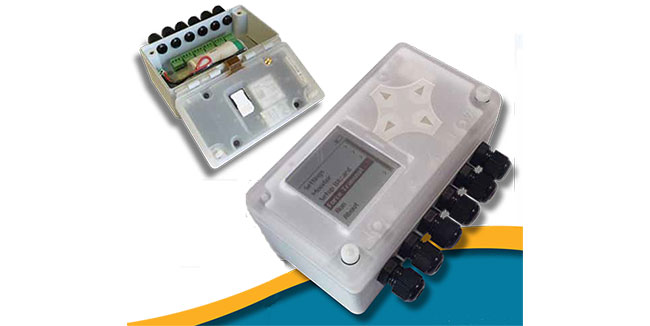
    Telit Wireless Solutions and Powelectrics Ltd. today announced collaboration in the wireless telemetry application market with the launch of Powelectrics’ Telit-based product Metron2.

    The Metron2 is a multi-function cellular-connected telemetry device capable of making remote fill-level readings in tanks containing liquids and gases.  The device’s integral display allows the unit to be used also as a local gauge and for system set up and testing. An optional pulse-counter board allows the device to take external meter readings.

    The Metron2 is wide-area-network connected with the Telit GE864-QUAD V2 cellular module and self powered from an internal battery. The Metron2 can be powered from different sources, including an internal battery or an external 6-24Vdc source. It is often not economically feasible to run power to the site for remote telemetry installation, the companies said, such as the cryogenic gas monitoring segment where it is important that the device be on and available to be polled any time, day or night. For this market, Powelectrics developed a solar-powered system.

    The solar-powered telemetry system allows the unit to remain always on and connected to the GSM/GPRS network so the server can make contact at any time with instant reading requests. Equipped with the Metron2, a tanker truck can be dispatched to best matching customer locations according to volume available in the tanker and volume required by customers, efficiently exhausting the tanker’s full supply of product instead of transporting it back to base saving fuel and removing the risk of the returned product contaminating the storage or process facility, the companies said.

    Knowing how much product is in the customer’s tanks makes it possible to plan when and which truck should make deliveries. This translates into fewer miles driven to deliver the same amount of product and therefore a significant reduction in costs. There is also a dramatic reduction in CO2 emissions. There are also accompanying operational benefits, including fewer emergency shipments, reduced customer service organization and reduced sales resources. These benefits translate into a balance sheet boasting reduced levels of finished goods and raw materials inventory.

    The European Chemical Industry Council (CEFIC) has been encouraging more extensive use of Enterprise Resource Planning (ERP) tools to improve supply chain efficiency. According to the Department for Transport in the UK, by 2015, total traffic on the roads will have grown by over 30 per cent compared to 2000 levels and the CBI has estimated that road congestion currently costs the UK up to £20 billion annually.

    Telit’s GE864-QUAD V2 ultra-compact, low-power, quad-band GSM/GPRS 3GPP Release 4 module integrated in Powelectrics’ Metron2 has one of the industry’s broadest certification profiles in its class, making it easily deployable anywhere in the global market, Telit said.  Modules in this family are capable of data rates of 48Kbps GPRS Class 10 also supporting 9.6Kpbs Circuit Switch Data (CSD) transfers ensuring connectivity in poor coverage areas. The GE864-QUAD V2 family features one of the market’s most compact Ball Grid Array (BGA) package measuring 30 x 30 x 2.8 mm and an extended operating temperature range of -40°C to +85°C, making it suitable for outdoor-environment mobile applications such as the Metron2.

    “The last couple of years have seen a dramatic upturn in demand for our product as users of telemetry become comfortable with the reliability and more aware of the benefits that telemetry brings. We continue to develop our already well proven solutions helping drive down the total cost of ownership and therefore reducing the payback time. Telemetry has never been so affordable,” said David Oakes, sales director, Powelectrics. “We realize the need to be flexible in what we offer. Some customers want a complete solution from us encompassing hardware, hosted software and SIM cards whereas others just want the hardware. It’s also vital that data is delivered where it is needed which often means us providing some form of automated interface into the clients systems, delivering data in a customized format.”