Category: Applications

  • Huawei Brings Connectivity to Vehicles with Telematics Solutions

    Huawei Brings Connectivity to Vehicles with Telematics Solutions

    Huawei, a global information and communications technology (ICT) solutions provider, unveiled a series of products heralding the company’s first foray into telematics solutions at the 2013 Mobile World Congress, being held this week in Barcelona, Spain.

    Huawei showcased its vehicle-compatible 3G and LTE communication modules, MU609T and ME909T, its 3G mobile hotspot, DA6810, and its 3G onboard diagnostic (OBD) box, DA3100. Huawei’s products for vehicles provide stable wireless solutions in diverse environments regardless of weather conditions, terrain, or reliability of power supply, providing new development opportunities for the automotive industry, and unsurpassed convenience for car owners.

    “Huawei is excited to welcome in an era of smart vehicles with the availability of products that integrate wireless communications and automotive electronic technologies,” said Kevin Liu, vice president, Mobile Broadband Division, Huawei Consumer Business Group. “Huawei’s telematic solutions are designed to enable cars and other transportation vehicles to exist in a seamless wireless mobile environment, so that users are truly able to enjoy the benefits brought about by ICT services.”

    The MU609T and ME909T are Huawei’s first 3G and LTE communication modules for vehicles. They are both pin-to-pin compatible, and cater specifically to the working enviroment temperature and power consumption of the automotive industry. The MU609T can support up to 14.4M under the HSPA+ network, and the ME909T can support up to 100Mbps under the LTE network. Both modules are pre-installed with GPS and eCall. In addition, the FOTA remote firmwire upgrade capability makes it possible to integrate new technologies into existing MU609T and ME909T modules. The strengths of MU609T and ME909T have been recognized by leading global car manufacturers, and will be integrated into the wireless communication systems of some of the world’s top vehicles in the near future, the company said.

    The DA6810 3G Wi-Fi Box creates 3G Wi-Fi hotspots in mobile environments to provide high-speed internet connectivity on-the-go. Once installed with the HUAWEI DA6810 3G Wi-Fi Box, a vehicle becomes interactive, high-tech and networked, providing owners with a high-speed internet and audio-visual entertainment experience, Huawei said.

    The DA3100 is an on-board diagnistics (OBD) data transferring system that enables insurance providers and fleet management companies to retrieve information such as location, vehicle conditions and driver habits. This in-car system transfers information in real time through a 3G network to the telematics service provider (TSP) platforms of various third-party entities. It also enables vehicle owners to activate the car horn, headlights and windows remotely via smartphone apps. The DA3100 is powerful yet easy to install, is not limited by geographical region or vehicles types, and can be activated upon installation, Huawei said.
  • Janam Announces 3G/4G Cellular Rugged Mobile Computer

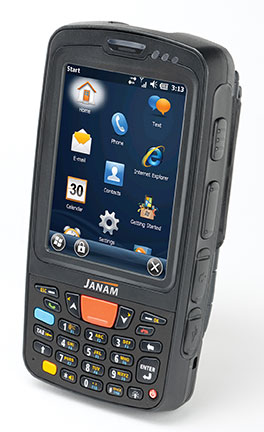
    XT85.NAngle.left.RGB.MR-W
    Photo: Janam Technologies LLC

    Janam Technologies LLC, a provider of rugged mobile computers that scan barcodes and communicate wirelessly, today announced the release of its new XT85, a high-bandwidth wireless rugged mobile computer designed to support demanding enterprise applications in equally demanding outdoor environments.

    Janam’s XT85 offers a complete set of features that enterprises require in a rugged wireless wide area device, at a price point that makes extending enterprise mobility affordable, Janam said. It is equipped with high-sensitivity GPS with anti-jamming technology.

    The XT85 survives multiple 5-foot drops to concrete at temperature extremes (and 6-foot drops at room temperature), offers a 3.5-inch high-transmissivity display that maximizes outdoor readability while minimizing power consumption, offers advanced 4G-ready cellular network connectivity with five-band UMTS for global roaming, and is small and lightweight.

    “Purpose-built mobile computers must appeal to today’s information worker who expects a device that is small, light, fast and highly capable while also serving the business needs of the enterprise for whom the mobile worker is performing mission-critical tasks,” said Harry B. Lerner, CEO of Janam. “Janam’s XT85 is optimized to appeal to both constituencies. It’s much more than a smart phone. It’s a brilliant PDA.”

    In addition to 4G-ready UMTS/HSDPA/HSUPA/GSM wireless wide area network communication, the XT85 is equipped with 802.11 a/b/g/n WLAN with enterprise-grade security and Bluetooth.  It is available with the SE965HP laser engine from Motorola or Honeywell’s Adaptus Imaging technology. Purpose-built to accommodate the realities of work processes and environments, the XT85 is UL-certified for use in hazardous environments, sealed to IP65 standards and available with QWERTY or numeric keypads.

  • Magellan Debuts SmartGPS Apps for Apple and Android Mobile Devices

    Magellan SmartGPS App_iPhone
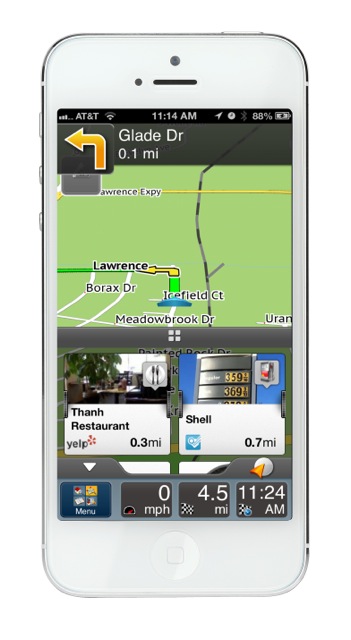
    screenshot: Magellan SmartGPS App

    Magellan has announced Magellan SmartGPS Apps for iOS and Android mobile devices.

    Following the recent announcement of Magellan’s SmartGPS device, the free Magellan SmartGPS Apps for iOS and Android devices are the next key elements in Magellan’s Smart Ecosystem, a cloud platform that integrates social media and navigation content directly onto a navigation map, the company said. The SmartGPS Apps automatically deliver continually updating reviews and tips for local businesses from social media including Yelp, Foursquare, and other partners to create current, local and personalized driving and pedestrian experiences.

    The Magellan SmartGPS mobile apps display location-relevant information “squares” that graphically flip to show reviews, tips and offers from Yelp and Foursquare for nearby restaurants, stores and services. Users can then navigate to those locations directly from the SmartGPS App without needing to open an additional application or device. The cloud architecture enables new monetization of end users’ mobile search and navigation, and additional social media and content partners.

    “We architected the Smart Ecosystem to integrate with automotive infotainment and mobile network service platforms so users can enjoy a truly mobile, connected car experience now,” said Peggy Fong, president of MiTAC Digital Corporation. “SmartGPS mobile apps connect to the vehicle dash, allowing users to easily search social media and points-of-interest for destinations, and send the locations via Bluetooth or Wi-Fi to SmartGPS-enabled vehicle navigation systems.”

    Magellan’s free iOS and Android SmartGPS apps create a total-solution SmartGPS experience that is truly mobile. Magellan connects the smartphone to the vehicle dashboard, enabling location sync and sharing, hands-free operation and data connectivity. Users can pair their Magellan SmartGPS app with SmartGPS-enabled navigation systems. Using their SmartGPS App, SmartGPS enabled navigation system, or PC, users can search for a location, save the location in Magellan’s Smart Ecosystem cloud, and sync and share the location to any SmartGPS enabled device via Wi-Fi or Bluetooth.

    The free Magellan SmartGPS Apps will be available in North America this Spring, and in Europe this Summer, from iTunes and Google Play. Premium versions of both apps featuring spoken turn-by-turn navigation will also be available.

  • Broadcom Introduces Femtocell Chip to Integrate RF and Baseband Modem

    Broadcom Corporation introduced at the Mobile World Congress a highly integrated digital baseband processor and RF transceiver designed for 3G femtocell residential access points, the BCM61630 systems on chip. The Mobile World Congress is being held in Barcelona, Spain, this week.

    The new devices integrate a multiband CMOS RF transceiver with GPS and full-time sniffing capability while maintaining software compatibility with all previous Broadcom WCDMA physical layer and backhauling interface architectures.

    With the new chips, mobile operator OEMs and ODMs have a powerful, low-cost, power efficient device to support small cell strategies and meet growing mobile traffic demands. Embedding a high-speed CPU and Broadcom’s Layer 1 modem and peripherals, these devices provide a complete low-power single-chip solution for residential and small enterprise 3G small cell deployments, the company said.

    “As on-the-go content consumption continues to drive traffic growth, mobile operators must meet consumers’ increasing demand for higher bandwidth without sacrificing quality of service,” said Greg Fischer, Broadcom’s vice president and general manager for Broadband Carrier Access. “Broadcom’s BCM61630 SoCs deliver a low-power, cost-efficient device for residential small cells to leverage existing mobile infrastructure and deliver faster data speeds through a smaller form factor.”

  • SIMcom Launches Modules at Mobile World Congress

    SIMCom Wireless Solutions Ltd. of Shanghai launched its first compact LGA 2G module SIM900E at Mobile World Congress 2013 today. The module’s small size and LGA encapsulation suit M2M applications of all sizes, especially satisfying requirements for slim, compact design, SIMcom said. The Mobile World Congress is being held in Barcelona, Spain, this week.

    With operations from 2002 to 2013, SIMCom has just celebrated its 10th anniversary. The company has developed into a global leader of wireless solutions with the integration of R&D, production, sales and after-sales services, and with products covering technologies such as GPS, GLONASS, GSM/GPRS, WCDMA/HSPA, TD-SCDMA, CDMA EVDO, SRD, and Wi-Fi. The products have been sold in more than 100 countries and regions, involving almost all M2M industries. With the celebration of its 10th anniversary, SIMCom also launched its first company magazine, SIMCom Inside.

    SIMCom launched its module series of 2G/3G, with the same size of 30 x 30 millimeters, including SIM928, SIM968, SIM5310 and more. Integrated with GSM/GPRS and GPS, the SIM928 module is a compact quad-Band GSM/GPRS-enabled module based on the PNX4851 platform. SIM968 is a combo module featuring quad-band GSM/GPRS and combining GLONASS technology for satellite navigation. SIM5310 is a low-cost 3G module that supports WCDMA 384Kbps and single frequency band 2100 MHz. In addition, SIMCom will also introduce the first LTE intelligent module SIM7290.

    The compact module SIM900E released today has an LGA encapsulation of 19.8 x 19.8 x 2.7 millimeters, and its LGA encapsulation is suitable for automatic assembly with SMT equipment, the company said. The configuration of four frequencies of GSM/GPRS — 850/900/1800/1900MHz — and wide temperature range of -40C to +85C is designed for global seamless coverage and various industrial application environments.

  • Ruckus Wireless Offers Wi-Fi Solutions for Rising Data Demands

    Ruckus Wireless, Inc. today outlined its SmartCell architecture for creating carrier class Wi-Fi networks to deal with the densification challenge sweeping the industry. Built on its SmartCell Architecture, Ruckus unveiled a wide range of new carrier-class Smart Wi-Fi products, including the Ruckus ZoneFlex 7782 family, which integrates a GPS receiver. The announcement came at the Mobile World Congress being held in Barcelona, Spain, this week.

    The rapid growth of mobile data services, driven by smartphones, laptops, and tablets has accelerated data-traffic growth to the point where macro cellular networks are no longer sufficient to meet subscriber demand in many high-density indoor and outdoor settings. While new macro cellular technology, such as long-term evolution (LTE), is being introduced to address this capacity crunch, it will provide only partial relief, as traffic volumes continue to grow faster than operators can economically add capacity, Ruckus said.

    Consequently, mobile operators are rapidly adopting Wi-Fi as an additional radio access network (RAN) option to augment mobile capacity. At the same time, fixed line carriers and multiple system operators (MSOs) are also deploying Wi-Fi for public access to enhance their service offerings, reduce subscriber churn and enter new markets such as managed enterprise wireless LAN (WLAN) services.

    For high-capacity outdoor environments, such as stadiums and other public venues, the Ruckus ZoneFlex 7782 outdoor AP Series is a family of four new, high-capacity Wi-Fi access points designed to give service providers unprecedented capacity and performance. With models supporting omni-directional antennas, 120º sectorized, and 30×30º narrow-beam coverage through integrated internal antennas as well as external antenna options, ZoneFlex 7782 APs offer a combination of high performance and flexibility in a sleek, low profile, light form factor essential for meeting the tight mechanical and aesthetic constraints of deployment outdoors, Ruckus said.

    Each Ruckus ZoneFlex 7982 AP is a dual-band, three stream (3×3:3) 802.11n access point enabled for high throughput approaching 900 Mbps. ZoneFlex 7782 APs with integrated antennas support Ruckus-patented BeamFlex adaptive antenna technology for greater signal gain and interference mitigation. Additionally, the Ruckus ZoneFlex 7782 family integrates a GPS receiver, allowing service providers to begin providing location-based services as well as continuous spectrum monitoring features.

  • Qualcomm Announces 4G LTE Advanced Connectivity Platform for Mobile Computing

    Qualcomm Technologies, Inc., has announced the industry’s first 4G LTE Advanced embedded data connectivity platform for mobile computing devices, including thin form factor laptops, tablets and convertibles. The technology, based on Qualcomm Technologies’ Gobi chipsets — the MDM9225 and MDM9625 — is the first embedded, mobile computing solution to support LTE carrier aggregation and LTE Category 4 with peak data rates of up to 150Mbps. The announcement came at the Mobile World Congress being held in Barcelona, Spain, this week.

    The Gobi MDM9x25 embedded platform includes an embedded GPS receiver with GLONASS support for enhanced asset tracking, turn-by-turn navigation and other location-based services.

    The introduction marks the arrival of Qualcomm Technologies’ third-generation 4G LTE embedded chip, extends Qualcomm Technologies’ modem technology leadership in mobile computing, and promises to deliver the fastest 3G and 4G LTE connections worldwide, while offering the broadest multi-region coverage via a single SKU solution, the company said. PC OEM customers can  select from embedded module vendors that support a range of Gobi chipsets, from 3G solutions with speeds up to 42Mbps to cutting-edge 4G LTE Advanced. Coupled with pay-as-you-go, no contract data plans, these products enable thinner, lighter and better connected mobile computing devices running leading operating systems such as iOS, Android, Windows 8 and Windows RT, and support a variety of modules for thin form factors, including PCI Express Mini Card, PCI Express M.2, and Land Grid Array.  Additionally, the Qualcomm RF360 Front End solution, providing expanded active band support integral to Qualcomm Technologies’ single SKU LTE World Mode solution will also be included.

    “Our broad portfolio of Gobi chipsets — including 3G 42Mbps, 4G LTE and 4G LTE Advanced — features industry-leading LTE multiband support for seamless connections to the fastest networks worldwide,” said Cristiano Amon, executive vice president of Qualcomm Technologies and co-president of Qualcomm Mobile Computing. “This latest addition can be easily implemented across enterprise, SMB and consumer industries allowing end users to download and stream rich HD content, access enterprise applications, share large files quickly and connect virtually wherever they are in the world.”

    Qualcomm Gobi MDM9x25 chipsets began sampling to module vendors last November and will enable commercial device launches in the second half of this calendar year.

  • CoPilot Brings GPS Navigation to Windows Phone 8

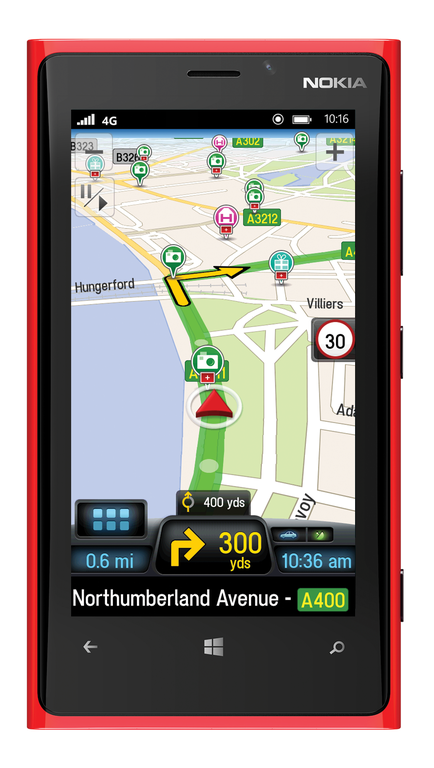
    lumia-920-copilot-ukALK Technologies, provider of navigation and GeoLogistics software, announced at the Mobile World Congress that its CoPilot GPS navigation apps for smartphones and tablets will be available for Windows Phone 8 and Windows 8. The Mobile World Congress is being held in Barcelona, Spain, this week.

    Designed as an alternative to traditional in-vehicle systems, the app provides voice-guided GPS navigation, with turn-by-turn guidance, comprehensive trip planning and automotive-grade street maps stored on-board the device for offline use. Integral real-time services include ActiveTraffic, Yelp, Wikipedia and Google Search to keep drivers fully informed on the road.

    “We’ve always been fans of Microsoft’s mobile solutions,” said David Quin, head of consumer applications at ALK Technologies. “CoPilot was originally developed for Microsoft’s Pocket PC and pioneered mobile navigation on Windows Mobile, so we are delighted to announce a new app for Windows Phone 8 and Windows 8. The Windows family of mobile devices is rapidly gaining momentum as an alternative to Android and iOS, and provides an ideal platform for us to deliver a full-featured and driver friendly CoPilot navigation experience.”

    “Windows Phone is backed by a vibrant app ecosystem with a variety of quality titles, like CoPilot, which help people enjoy a smartphone that is uniquely theirs,” said Todd Brix, general manager, Windows Phone Apps, Microsoft Corp. “CoPilot is a great example of the rich applications that people can enjoy on their Windows Phones.”

    CoPilot for Windows Phone 8 and Windows 8 provides a suite of advanced navigation features, including:

    • Clear, non-distracting 3D map views with lane arrows and signpost display.
    • ActiveTraffic, which calculates the fastest routes and accurate arrival times based on live traffic flow information.
    • CoPilot ClearTurn for navigating complex junctions.
    • On-screen speed limit indicator and excess speed warnings.
    • Advanced trip planning with a choice of three routes and drag-and-drop route editing.
    • Comprehensive local search with integrated Yelp, Wikipedia and Google.
    • Global map regions available to purchase and store on the device as required.

    CoPilot is expected to launch on the Windows Phone Store and Windows Store in summer 2013 with the following versions: CoPilot Premium, a paid app which includes turn-by-turn navigation and 12 months ActiveTraffic; CoPilot GPS, a free offline trip-planning and maps app with in-app purchase for turn-by turn navigation; and CoPilot Truck for truck-specific GPS navigation. Pricing will be in-line with existing CoPilot apps for iOS and Android.

  • senseFly eBee Drone Demonstrates Mapping Capabilities in Swiss Alps

    senseFly successfully demonstrated the 3D mapping capabilities of its fully autonomous mini drone under extreme conditions. In mid-February, the eBee conducted a mapping mission in the mountains above Zermatt at altitudes of up to 3000 meters. Several flights were conducted to map small hamlets and valleys at temperatures below -10 degrees Celsius (14°F).

    “Zermatt village, the starting point of this excursion, is a car-free zone, therefore all transportation of equipment had to be done manually,” said Andrea Hildebrand, co-founder of senseFly. “On top of this, the only means of transportation to reach the takeoff locations, some at altitudes as high as 2800 meters, were ski lifts and skis. Luckily the eBee only weighs 630 grams and fits with all its accessories in a carry-on case, so we could easily carry it with us and even ski down the slopes with it.”

    The entire mapping of a small valley, including the takeoff, flight, landing and resulting geo-referenced orthomosaic and 3D elevation map, is documented in a video available online.

  • Smartphone vs. Tablet vs. Desktop? It No Longer Matters

    Janice Partyka
    Janice Partyka

    The biggest mobile show, the Mobile World Congress, starts next week in Barcelona, Spain. It comes at an interesting time. Attendees will find it no longer makes sense to think about which device, or screen, is of primary importance to users. Google reports findings that 90 percent of users move sequentially between several screens (TV, phone, desktop computer and tablet) to accomplish tasks.

    Google, wanting to more fully exploit ad opportunities on all devices, has revamped AdWords to require that all ad campaigns include mobile. The GPS-based fitness watch market looks like it is on a steep curve upward, and feasible smartphone GPS watches are available. Rumor says Facebook is going to start tracking users’ locations at all times to be able to cull more ad revenue from individual’s preferences and geo life.

    Analytics firm Flurry tracked mobile app usage during the Super Bowl and found that overall app usage declined by less than 5 percent during the Super Bowl, compared to same time period on the prior Sunday. A large amount of consumers’ attention was spent in apps, even as they sat in front of their TVs on the biggest football day of the year. Surprisingly, app usage did not greatly differ between commercials and game play. Mobile app usage peaked during the game’s power outage and declined during Beyonce’s apparently riveting half-time show.

    Google Requires Mobile Advertising. Citing concerns that the shift from desktop to smartphones and tablets is damaging its bottom line, Google is revamping its AdWords advertising platform to integrate ad campaigns across all device screens. In fact, Google indicated that it will require all advertisers to pay for mobile ads even if they only wish to reach consumers on desktops. The revamp will allow customers to use contextual factors like location, time of day and device type to control integrated campaigns.

    Google provides an example of how a user’s location and device type could change the advertising message. “For example, a pizza restaurant probably wants to show one ad to someone searching for ‘pizza’ at 1 p.m. on their PC at work (perhaps a link to an online order form or menu), and a different ad to someone searching for ‘pizza’ at 8 p.m. on a smartphone a half-mile from the restaurant (perhaps a click-to-call phone number and restaurant locator),” reads Google’s blog.

    Will Apple Take Control of Your Wrist? Rumors continue that Apple will release a GPS-based fitness watch in 2013. Whether Apple enters the market or not, the GPS fitness market is huge and growing. The GPS fitness watch market is set to reach $1.07 billion in 2013, predicts ABI Research. Cellular connected GPS fitness watches like the I’m Watch may further speed this market. “There have already been unfounded rumors around Apple in 2013, so let’s wait and see. If an Apple watch did feature integrated GPS, it would no doubt significantly boost shipment forecasts in 2013,” asserts Dominique Bonte of ABI. Some start-ups in the GPS watch category have joined the action including Leikr, Pebble, Basis and others.

    Facebook Is Watching. Is it possible that the relationship between Facebook and Google can get even more tense? According to a Bloomberg article, Facebook is developing a smartphone application that will track the location of its users. The app is said to be scheduled for release by mid-March, and would run on handsets in the background even when the Facebook app or the phone isn’t open or in use. The location data would help Facebook capture more advertising revenue as ads can be more targeted with information about a user’s location and habits. The project is said to be headed by an ex-Googler and talent from Glancee and Gowalla, both of whom were purchased by Google.

    Privacy concerns with Facebook location tracking will undoubtedly be raised. Currently, Facebook records the GPS coordinates of users when they post status updates or photos from their phones, or check into a venue. Tracking users 24/7 is another thing. Facebook’s current location-sharing policy seems to cover them carte blanche. It allows the use of data “to serve you ads that might be more relevant,” and “to tell you and your friends about people or events nearby, or offer deals to you that you might be interested in.”

    Blackberry10-T_150x94Will Windows and BlackBerry Smartphones Succeed? Will there be a crack, even a tiny one, in the duopoly of iOS and Android? The biggest worry for Microsoft and BlackBerry is if initial sales of their smartphones are too small to excite developer interest. Without abundant applications, consumers won’t continue to buy these phones. ABI Research is predicting that the demand will be strong enough, and is forecasting a BlackBerry installed base of 20 million and Windows smartphone base of 45 million by year-end.

    Open Geospatial Consortium Location Standards for Next-Generation LBS.  The Open Geospatial Consortium (OGC) is having a free session and reception at the Mobile World Congress for mobile developers, location data providers, network operators and LBS service users. Attendees will learn the latest in open standards development. The event is being held on February 27, 2013 in Barcelona. Register for free.


  • Path Social Networking App Settles FTC Charges on Privacy Infringement

    The operator of the Path social networking app has agreed to settle Federal Trade Commission charges that it deceived users by collecting personal information from their mobile device address books without their knowledge and consent. The settlement requires Path, Inc. to establish a comprehensive privacy program and to obtain independent privacy assessments every other year for the next 20 years. The company also will pay $800,000 to settle charges that it illegally collected personal information from children without their parents’ consent.

    The settlement with Path is part of the FTC’s ongoing effort to make sure companies live up to the privacy promises they make to consumers, and that kids’ personal information isn’t collected or shared online without their parents’ consent.

    “Over the years the FTC has been vigilant in responding to a long list of threats to consumer privacy, whether it is mortgage applications thrown into open trash dumpsters, kids information culled by music fan websites, or unencrypted credit card information left vulnerable to hackers,” said FTC Chairman Jon Leibowitz. “This settlement with Path shows that no matter what new technologies emerge, the agency will continue to safeguard the privacy of Americans.”

    Path operates a social networking service that allows users to keep journals about moments in their life and to share that journal with a network of up to 150 friends. Through the Path app, users can upload, store, and share photos, written thoughts, the user’s location, and the names of songs to which the user is listening.

    In its complaint, the FTC charged that the user interface in Path’s iOS app was misleading and provided consumers no meaningful choice regarding the collection of their personal information. In version 2.0 of its app for iOS, Path offered an “Add Friends” feature to help users add new connections to their networks. The feature provided users with three options: “Find friends from your contacts;” “Find friends from Facebook;” or “Invite friends to join Path by email or SMS.” However, Path automatically collected and stored personal information from the user’s mobile device address book even if the user had not selected the “Find friends from your contacts” option. For each contact in the user’s mobile device address book, Path automatically collected and stored any available first and last names, addresses, phone numbers, email addresses, Facebook and Twitter usernames, and dates of birth.

    The FTC also alleged that Path’s privacy policy deceived consumers by claiming that it automatically collected only certain user information such as IP address, operating system, browser type, address of referring site, and site activity information. In fact, version 2.0 of the Path app for iOS automatically collected and stored personal information from the user’s mobile device address book when the user first launched version 2.0 of the app and each time the user signed back into the account.

    The agency also charged that Path, which collects birth date information during user registration, violated the Children’s Online Privacy Protection Act (COPPA) Rule by collecting personal information from approximately 3,000 children under the age of 13 without first getting parents’ consent. Through its apps for both iOS and Android, as well as its website, Path enabled children to create personal journals and upload, store and share photos, written thoughts, their precise location, and the names of songs to which the child was listening. Path version 2.0 also collected personal information from a child’s address book, including full names, addresses, phone numbers, email addresses, dates of birth and other information, where available.

    The COPPA Rule requires that operators of online sites or services directed to children, or operators that have actual knowledge of child users on their sites or services, notify parents and obtain their consent before they collect, use, or disclose personal information from children under 13. Operators covered by the Rule also have to post a privacy policy that is clear, understandable, and complete.

    The FTC charged that Path violated the COPPA Rule by:

    • not spelling out its collection, use and disclosure policy for children’s personal information;
    • not providing parents with direct notice of its collection, use and disclosure policy for children’s personal information; and
    • not obtaining verifiable parental consent before collecting children’s personal information.

    In addition to the $800,000 civil penalty, Path is prohibited from making any misrepresentations about the extent to which it maintains the privacy and confidentiality of consumers’ personal information. The proposed settlement also requires Path to delete information collected from children under age 13 and bars future violations of COPPA. Path has already deleted the address book information that it collected during the time period its deceptive practices were in place.

    The FTC has also introduced Mobile App Developers: Start with Security, a business guide that encourages developers to aim for reasonable data security, evaluate the app ecosystem before development, and includes tips such as making someone responsible for data security and taking stock of the data collected and maintained.

    The commission vote to authorize the staff to refer the complaint to the Department of Justice and to approve the proposed consent decree was 5-0. The DOJ filed the complaint on behalf of the Commission in U.S. District Court for the Northern District of California on January 31, 2013.  The proposed consent decree will be filed with the same U.S. District Court today and is subject to court approval.

  • Danaher Acquires Fleet Tracking Company Navman Wireless

    Navman Wireless, a provider of fleet and asset management technology, announced its acquisition by Danaher Corporation, a Fortune 250 science and technology company. Navman Wireless’ technology currently monitors more than 175,000 vehicles and assets owned by over 14,000 organizations worldwide.

    The OnlineAVL2 system, delivered under the Software-as-a-Service (SaaS) model, enables fleet and asset managers to track all vehicle and asset locations in real time as well as control fuel, labor and vehicle/asset operating costs.

    Navman Wireless reports it has had five successive years of revenue and installed base growth during which the company entered new vertical sectors including local services, transportation, construction, cold chain, mining, and oil and gas, and opened new geographic markets including Mexico, Italy, China and Taiwan.

    “Danaher has the resources, global footprint and commitment to support the continued growth of the Navman Wireless platform and business, along with a strong track record of building brands within its highly diversified portfolio,” said TJ Chung of Navman Wireless. “All of these factors will help us continue to enhance our technology platform, expand into new vertical and geographic markets, and bring the benefits of fleet and asset management to vehicles and assets around the world that are not yet taking advantage of the technology.”

    Navman Wireless is Danaher’s first acquisition in the fleet/asset management space, joining Danaher’s portfolio spanning test and measurement, life sciences and diagnostics, dental, environmental and industrial technologies. Financial details of the transaction were not disclosed.