Category: Applications

  • Stonewalling, Mapping, Google, and Fines

    After a long investigation, the FCC hit Google with a resoundingly soft penalty for stonewalling the FCC inquiry into its controversial street-mapping program. Google was picking up a payload of sensitive information from home wireless networks from 2007 through 2010. This included emails, passwords, and Internet usage history. The FCC declared that the data collection was technically legal because the information gathered was unencrypted. However, the FCC stated that, “for many months Google deliberately impeded and delayed the bureau’s investigation” and fined Google a paltry $25,000 for their behavior. After initially denying any wrongdoing, Google admitted in a blog entry in 2010 that it had made a mistake by collecting the data.

    Google and foursquare shared a panel at the GPS-Wireless conference, an interesting pairing given foursquare’s recent announcement that it is betting on the future of open source map data. New API pricing of Google Maps has a number of solution providers shopping for mapping alternatives. Google says that only the top .35 percent of Google map users is affected by the pricing (under 25,000 map views a day are still free). foursquare was among them, and re-launched its web maps using MapBox based on OpenStreetMap data. “These maps are adequate,” said Holger Luedorf of foursquare. “This helps the open street community and it felt like it was right thing to do. Google is very good and we will continue to use their products elsewhere.”

    Interesting tidbits. Heard at the “O’Reilly Where” and “GPS-Wireless” conferences this month:

    “People will pay for apps for family and safety. There is real monetization in this realm. When was the last time that people put an alarm on their house and paid for it with ads?”

    “I see nothing to augmented reality. I don’t think it will go anywhere. It feels like I’m looking through a toy camera viewer.”

    “Any location technology that has tried to compete against GPS has failed. They are useful but can’t compete head on against GPS. They now have a second life as a technology that supplements core location, which is GPS.”

    “Consumers are willing to share location if you can give them something in exchange of value. Not every company does that.”

    What’s happening to the vehicle aftermarket? It used to be that the vehicle aftermarket would lead innovation and benefited from a significant time-to-market advantage. The traditional aftermarket is currently struggling to find its special niche. The world has changed and the aftermarket is having a tough time rivaling connected vehicles. In the past, the aftermarket also offered consumers more value, but OEMS have gotten lighter on their feet. The aftermarket is now the consumer market, such as smartphones.

    Who will capture the indoor location frontier? Companies are lining up to get a shot at the indoor location market. Companies like Meridian, Google, aisle411, Point Inside, and Micello, and many others, have found their own niches. Meridian has staked out a niche for indoor navigation and mapping that is managed by the customer. “We aim to be the WordPress of indoor location,” says Jeff Hardison of Meridian. Meridian uses Wi-Fi when available and provides interactive mapping and navigation for various types of indoor venues including the American Museum of Natural History. For retail, the system can be tied into inventory systems to pinpoint items on shelves. One store has added advertisements for books on the indoor navigation system and reports 33 percent of users are clicking on the ads.

    Search rules location-based mobile ads. Locally targeted ads that accompany mobile search results are much more potent than locally targeted display ads. xAd, a mobile local ad network, reports significantly greater click-through rates for targeted local search (7 percent) compared to targeted local display ads ( 0.6 percent). Clicks alone don’t fully satisfy advertisers who want to see measured outcome. xAd self-reports secondary action rates of targeted local search ads of 37 percent and targeted local display ads of only five percent. Secondary actions include calls and requests for driving directions.

    It’s a race. Local and nationally targeted mobile advertising is currently neck and neck. This year, mobile local ad revenues have caught up with nationally targeted mobile ads, for a combined $2.7 billion in revenue, says BIA/Kelsey Group. This is an increase from last year, in which local ads were estimated to be 45 percent of total mobile ad revenues. According to projections by BIA/Kelsey Group, local mobile ads will exceed national ads in 2016 and total $5 billion of the estimated $7.7 billion in mobile ad revenues.

    Not everyone is convinced. “The financials for mobile advertising aren’t there for us. We won’t do it until our customers are asking for it,” says Bryan Trussel of Glympse at the GPS-Wireless show. “We tried it and got advertisements for toe fungus and Playtex on our screen. It wasn’t worth it. We don’t want generic banner ads. We’ll wait.”

  • Rugged Trimble Pro Series GNSS Receivers Provide Flexibility for GIS and Mobile Mapping

    Pro20Series20Cover20View Trimble
    Trimble

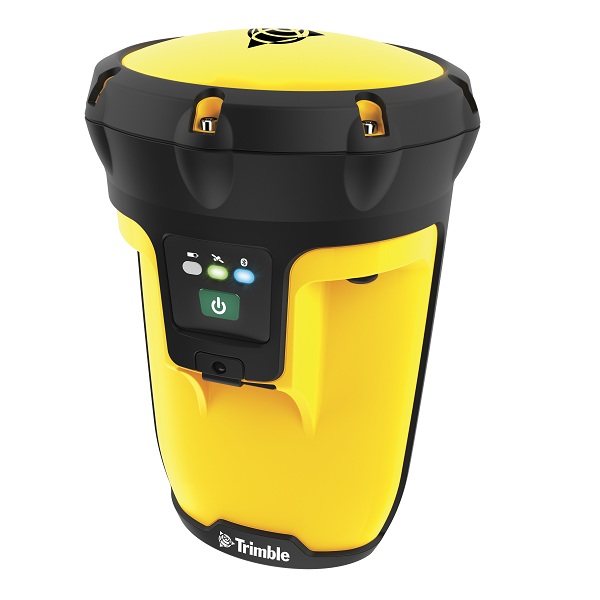
    Trimble introduced today the next-generation of its Trimble GPS Pathfinder family — the Trimble Pro 6H and Pro 6T receivers for GIS and mobile mapping. The Trimble Pro series with advanced features allows mobile workers to configure a solution for a wide range of applications, delivering flexibility in professional GIS data collection, Trimble said. The series offers a new streamlined form-factor and dramatic productivity improvements in difficult GNSS environments with Trimble Floodlight technology.

    The modular Trimble Pro series receiver gives users the flexibility to choose their setup configurations:

    • Optimized for use with Trimble data collection devices such as the Trimble Juno or Nomad G series handhelds, or Yuma tablet computer, the Trimble Pro series can also be used with other tablets and handhelds with NMEA output.
    • Real-time or postprocessed GIS workflows.
    • The receiver can be deployed in a backpack, on a pole or mounted on a vehicle.
    • Two models are available: the Trimble Pro 6H delivers decimeter accuracy, while the Pro 6T is the submeter model for standard GIS applications.

    With the availability of the new Pro series receivers, data collection professionals now have access to the productivity-enhancements of Floodlight technology in both integrated and modular configurations,” said Daniel Wallace, general manager of Trimble’s GIS Data Collection Division. “While some prefer the convenience of an integrated, all-in-one handheld, others will appreciate the Pro series’ flexibility to choose from a range of data collection devices such as a high-resolution tablet or lightweight Trimble Juno.”

    Trimble Floodlight technology allows users to collect decimeter accuracy data in tough GNSS environments, Trimble said. Buildings and trees can cause satellite shadow and limit the environments where high-accuracy GNSS data collection can be performed. Trimble Floodlight technology combines a range of techniques to increase the availability of positions and boost accuracy in areas affected by satellite shadow. Using Floodlight technology, the Pro series can keep teams productive without compromising on accuracy. Users can work with fewer disruptions and ensure better data, faster data collection and higher field efficiency.

    Trimble Pro series receivers are rugged and built to withstand the rigors of long hours in tough outdoor conditions, yet optimized for high-accuracy GIS data collection workflows, Trimble said. For applications such as utilities inspections and timber stand valuations, Trimble Pro receivers provide long battery life and tough construction for dependable service over the course of rigorous data-collection projects.

    With its IP65 rating, the receivers offer reliable operation, even after prolonged exposure to water and dust, Trimble said. An integrated antenna reduces the complexity of the system for fast setup and swift data collection campaigns. Field workers can be up and running with minimal training, saving time and money. Combined with a Trimble handheld solution and Trimble TerraSync software, the complete system provides dedicated field workflows to simplify data collection and improve integration with the GIS for total workflow improvements.

    The new Trimble Pro 6H and 6T receivers are available from Trimble’s worldwide Mapping & GIS authorized distribution channel.

  • TRUSTe Introduces Mobile Advertising Privacy Management Solution

    TRUSTe has introduced TRUSTed Mobile Ads, a unified mobile advertising privacy management solution. TRUSTed Mobile Ads support mobile browsing and application privacy preferences across all platforms and devices. The solution addresses the evolving privacy compliance standards, growing consumer privacy concerns, and complicated technology requirements unique to the mobile ecosystem.

    Developed in partnership with mobile advertisers, publishers, networks and platforms, TRUSTed Mobile Ads provides an end-to-end privacy management solution that enables businesses to deploy advertising capabilities such as behavioral targeting, while providing consumers with transparency, choice, and control over the collection and use of their personal information, TRUSTe said. The solution builds upon TRUSTe’s web advertising privacy management solution, TRUSTed Ads, and its mobile privacy management solutions, TRUSTed Apps, TRUSTed Mobile Websites, and the recently released Free Mobile Privacy Policy Service.

    “The need for a standardized cross-platform approach to mobile privacy is essential to maximize mobile advertising opportunities, address growing regulatory concerns and build trust for consumers,” said Chris Babel of TRUSTe. “With TRUSTed Mobile Ads, TRUSTe wants to bring our success as the largest DAA-approved online behavioral advertising compliance provider to the mobile ecosystem. With the support of our partners, we are fully committed to helping the industry take a proactive stance for mobile privacy compliance and consumer confidence.”

  • Trimble GCSFlex Offers GPS Guidance for Flexibility in Excavation

    Trimble today introduced a new system configuration for its GCSFlex Grade Control System. The addition of GPS guidance extends the system’s functionality and allows a contractor to work faster and with more freedom than other traditional laser-referenced grade control systems for excavators, Trimble said. With the benefit of GPS guidance and in-field design templates created directly from the cab on the Trimble CB450 Control Box, an excavator operator can accurately dig to a desired depth, slope or alignment without creating a digital design in the office, Trimble said. There’s little prep work before the job and no grade checking after.

    The new GCSFlex system with GPS guidance allows users to create in-field designs in the cab and take advantage of GPS guidance in 2D mode rather than 3D. This capability adds more flexibility to the system without adding additional complexity in its use. Where traditional excavator grade-control systems have used a laser plane as a reference for these tasks, the new GCSFlex replaces the laser plane with GPS guidance for position and orientation of the excavator. This configuration gives the operator maximum freedom to move the machine without being tethered to a bench point on the ground or a laser transmitter with range limits, Trimble said.

    The latest system configuration comprises a CB450 Control Box in the cab; angle sensors on the boom, stick and bucket; a MS972 GNSS Smart Antenna on the cab roof; and a Trimble SNM940 Connected Site Gateway for receiving GPS corrections. Subscription services such as Trimble VRS Now Service or Trimble Internet Base Station Service (IBSS) communicate GPS corrections via a cellular connection to the SNM940 and eliminate the need for a base station.

    User-friendly menus on the CB450 Control Box allow the operator to create an in-field template for a particular excavation task and begin working on that project immediately, Trimble said. The display software provides step-by-step instructions to create an in-field design template for excavating to a fixed depth, a depth with slope, an alignment or a profile. For operators with little to no experience with machine control, it is an easy way to create an alignment similar to traditional methods that use staking and stringlines, Trimble said.

    Trimble introduced GCSFlex for excavators in 2011 as an affordable, easy-to-use machine control system for owner operators and small- to mid-sized contractors who want to increase their productivity and become more competitive. With several flexible system configuration options available, contractors can select the sensor options that fit their job site needs at a price point that fits their budget.

    The new Trimble GCSFlex Grade Control System is expected to be available in the second quarter of 2012 through Trimble’s worldwide SITECH Technology Dealer Channel.

  • Grand Setting for a Grand Summit

    Most of Munich is an ultra-modern German city, albeit one of the most expensive cities in Europe, where you can travel anywhere by tram, automobile, S-Bahn, rail or taxi. But why bother when you have the opportunity and thrill of walking through the old city center and have Bavarians greet you with “May God greet you” or “God bless­”? — what a way to say hello. That experience, which brings back fond memories — more on that in my main column — combined with the wonderful aromas from bakeries and early morning baristas hard at work, which are hard to pass by, made the short walk to the Residenz München seem all too short; and then you are there — greeted with the magnificence of the Munich Satellite Summit venue.

    The Residenz München served as the seat of government and residence of Bavarian dukes, electors and kings from 1508 to 1918. The Residenz began life in 1385 as a castle on the outskirts of München and subsequently transformed over the centuries into a magnificent palace or Schloss, its buildings and gardens extending further into the center of town or Stadtmitte. And this is the incredible venue for the Munich Satellite Summit. It is breathtakingly magnificent and yet for all its age and history the Residenz serves its varied and ever-changing purposes well, and certainly is the perfect venue for the summit. This is the 10th anniversary of the summit in this location, and hopefully it will never change. Anything else now, with so much grandeur and history, would be a huge disappointment.

    As you ascend steps that have been trod and worn down daily by kings, dukes, barons, and commoners alike for more than 625 years, it comes home that you are in a very special place. If that is not enough, the König’s guarded banquet room, which is still set with silver place settings, silverware, and crystal goblets to feed more than 100 at one grand table, soon gives you a clue that you are someplace special. Whilst there are several large banquet rooms and court areas easily capable of holding the 400+ attendees, the organizers have wisely chosen to keep you moving from place to place to pique your interest in the old castle and to keep the blood flowing after sitting through a series of high-tech presentations.

    In the alte Schloss, the summit presentations are in one area, the company and sponsor booths are in another, and the German coffee and refreshments in yet another. This keeps you moving and also keeps the noise and modern-day distractions to a manageable level — plus, of course, it is perfect for networking. There are a myriad of interesting nooks and crannies for meet-ups and impromptu discussions. Fortunately the conveniently provided summit Wi-Fi signals penetrate the thick stone walls and are available in all meeting and presentation areas.

    The real danger of meeting in this iconic Bavarian palace is that you are constantly distracted by the beauty and history surrounding you. I constantly reminded myself I was attending a 21st-century satellite summit and not a whirlwind tour of gorgeous historical Bavarian architecture. Although I must admit I managed to do a little of the latter in between presentations and meetings. Just don’t tell my editor.

    Fortunately, lunch is served in-suite, so you do not have to leave the fabulous Schloss for sustenance — and what a gourmet lunch. You guessed it: the meals were fit for a King or König, certainly more than sufficient for a mere journalist. Although I must admit to being a bit worried since as a vegetarian, Germany does not exactly have the reputation of providing veggie substitutes for wurst und sauerbraten. However, to say I was happily surprised is putting it mildly.

    Frauleins Heike Haas and Bärbel Deisting, whom I cannot praise highly enough, the intrepid and unflappable organizers of this wonderful international event, had obviously warned their chef and he provided sumptuous vegetarian or “vegetarisch auf Deutsch,” options for every meal. My most common refrain at mealtimes, as I returned for seconds and thirds, was…are you sure this does not have any meat in it? The meals, snacks, and of course the coffee are not to be missed. You might miss five minutes of a presentation but don’t dare miss a meal.

    This was my first year to attend the Munich Summit as Alan Cameron, our intrepid editor-in-chief and now publisher, has always attended in the past. So most of the greetings went like this: “Hi Don, glad you are here. Where’s Alan?” My invariable response was, “Busy being the publisher.”

    The opening plenary, as it is so aptly named, took place in the Allerheiligen-Hofkirche, or Court Church of All Saints, and it was a fitting venue. The master of ceremonies opined that the Court Church of All Saints only took 11 years to complete in the 1800s, in direct contrast to the Galileo constellation, which has already been in existence for more than 11 years with…well, you get the point.

    Now for an historical note: King Ludwig 1 who commissioned the Court Church of All Saints married Therese of Saxe-Hildburghausen in October 1810 and the resulting wedding celebration was the occasion for the first ever Oktoberfest. Beer drinkers for the last 200 years are still celebrating that wedding. I know I did when I attended University in München more than 45 years ago, but that is a story for another time. And no, this is not the Neuschwanstein, Wagner loving, mad King Ludwig, who unfortunately after a lifetime of swimming forgot how at the crucial moment…that was his grandson.


  • Grüss Gott – Munich Satellite Summit

    There is a reason the Munich Satellite Summit is billed as a summit and not a symposium or conference. It’s a different atmosphere that invites group chats, informal get-togethers, and networking. One item of note that I came away with is that the Chinese are looking for help and partners for their PNT constellations, of which there appear to be three in the making. But asked point blank when they would finally release the full ICD specifications for receivers (a partial ICD has been released) the answer was the same as last year. They did not know when that might happen. It is hard to build receivers and support a specific program, much less three PNT constellations, when you don’t have the specifications.

    Grüss Gott! rang out across the ancient cobblestoned Marienplatz, home of the beautiful and timeless Glockenspiel or mechanized clock tower as I strolled along. The Glockenspeil is located in the heart of the old city of München, Germany and I passed it every morning as I strolled toward the Residenz München, which centuries ago was home and castle to the Kings of Bavaria. This particular beautiful spring morning the ancient castle was my destination and the incredible venue for the Munich Satellite Summit. Talk about location, location, location! (Read more about this incredible setting.)

    Plenary Session

    There were no less than 10 plenary speakers on opening night. In retrospect there should have only been five, but that is a lesson learned, as is the fact that the Chinese presenter was totally indecipherable. Even reading his slides I still could not understand a word he said. As an organizer of such events, and yes I know from experience, you quickly learn that poor and even unintelligible speakers are just a curse that comes with the territory. However, the musical interludes presented by an a cappella musical group were outstanding. This was the highlight of the evening, which tells you something about the plenary — it was not bad actually as plenaries go, everything worked like clockwork. It was just a tad bit too long. No one ever hopes…well maybe that is backwards…actually everyone hopes to attend a plenary that is actually informative but it rarely occurs. The summit plenary wasn’t bad; the food, drink and networking opportunities were great, but next year I vote for more songs, fewer indecipherable speeches and, until they get their act together, the only Chinese item on the plenary or any summit agenda should be egg rolls.

    This is not an expression of Xenophobia or bigotry, not at all — I just hate to waste my time. I spent several hours listening to the Chinese presentations during the summit and literally understanding about 10% or less, and unless I, and everyone else missed it, there was absolutely nothing new announced. It was a total rehash of the National Space Symposiums uninformative Chinese forum from last April.

    The one item of note that I did comprehend is that the Chinese are looking for help and partners for their PNT constellations, of which there appear to be three in the making. But asked point blank when they would finally release the full ICD specifications for receivers (a partial ICD has been released), the answer was the same as last year. They did not know when that might happen. It is hard to build receivers and support a specific program, much less three PNT constellations, when you don’t have the specifications.

    I met Joel Szabat, the senior government representative at the plenary who is currently serving as a senior official in the U.S. Department of Transportation. Joel and I have corresponded but never met, so this was a great opportunity to get acquainted. And I must add that Joel’s comments during the plenary session were right on the mark. They were short, concise, and to the point. Very well done. If only others had emulated him.

    Other notable U.S. attendees were Colonel Bernie Gruber, director of the GPS Directorate, who gave a well received but brief GPS status briefing, and some of his staff along with Hank Skalski, the Civil GPS liaison at HQ AFSPC; Ron Hatch from John Deere (Starfire); as well as an old friend, Dr. Per Enge, director of the GPS laboratory and senior professor in the Department of Aeronautics & Astronautics at Stanford University. Representatives from Lockheed-Martin Space Systems and other U.S. companies were present as well, so the U.S. space program was well represented.

    One of the Royal Lions Guarding the entrance
    to the Munich Satellite Summit.

    Summit

    There is a reason the Munich Satellite Summit is billed as a summit and not a symposium or conference. There is a different atmosphere that invites group chats, informal get-togethers and networking. It may sound strange; however, in an ancient German palace the atmosphere is a bit less formal than at the National Space Symposium in Colorado Springs, Colorado, which is the largest Space Symposium in the world. The Munich Satellite Summit will garner ~400 international attendees while at the Broadmoor Resort there will be closer to 5,000 attending. So the summit is definitely a bit more intimate and less rushed. More conducive to networking, which in my estimation is the real value of the summit. At the summit you can easily visit all the booths in 30 minutes or less and in Colorado Springs you will be lucky to get through all the booths in less than three days of dedicated booth-hopping. In Germany everyone is a bit more relaxed, and at the National Space Symposium everyone is trying to see and attend everything; it is definitely a bit more frenetic and yet both venues are amazing in their own way and each event has its place in the scheme of things.

    Both the Munich Space Summit and the National Space Symposium, which includes Cyber 1.2 (15-19 April 2012), are about more than GPS and PNT, yet these are the predominant themes at both events…and this is only as it should be… Who me? Biased!

    eLORAN

    Seriously, the Munich Space Summit is naturally more European Space Agency (ESA) and Galileo-oriented than the National Space Symposium, and yet this year one of the main themes and topics of conversation was eLORAN and the USCG-supported UrsaNav foray into that endeavor.

    My GPS World column on that timely topic came out on March 14, the first full day of the summit, so it was a constant topic of conversation for me and I was happy to hear that sections from the article were quoted numerous times during the summit. Many were happily surprised by the UrsaNav efforts and even more surprised by the USCG support.

    A dedicated eLORAN session included Professor David Last from the UK and a speaker from the subcontinent, who told some pretty hair-raising pirate stories to illustrate his points of why a strong, impervious to jamming, low-frequency timing and PNT system is needed in his part of the world and is generally a good idea on a global basis. I would agree — when being attacked by pirates, knowing immediately exactly where and when you are can be of critical importance when seeking help. It was an entertaining, informative session that was standing-room only.

    During the entire summit, I only heard the word LightSquared used as an expletive. Most everyone said…thank goodness that “§”&%” is over… or words to that effect. Most everyone marveled that it took a year to get through the whole fiasco and wondered what will happen next…it is like waiting for the other shoe to drop…but there was an obvious huge sigh of relief and then inevitably comments like …see, that’s why the United States needs an eLORAN system. ” Point taken I hope.

    And the U.S. does desperately need a proven high-power LF Stratum-1 timing signal that covers the U.S., approaches to the U.S. as well as portions of Canada and Latin America. Faithful readers know that I often quote the statistic that 90% of GPS users globally use GPS for time. Time and frequency standards are critical to our national infrastructure, even more so since GPS freely provides time to a very high degree of accuracy for all and using the GPS timing source has become ubiquitous among most U.S. government agencies.

    Time is critically important to all we do — more so than most of us ever take the time to consider. However the subject of time fascinates many. I remember a conference on timing a few months ago in Boulder, Colorado, at NIST with numerous timing briefings given by an old friend, Judah Levine. The topics included, “What is Time?”, “What is a Second?”, “What is a Leap Second?” and “The Importance of Frequency” — I don’t remember anyone leaving the room while Judah was speaking.

    Some of the more critical factors concerning time as associated with GPS and eLORAN are that unlike mechanical devices — such as an INS (inertial navigation system) that display your position — GPS and eLORAN signals contain data that informs you when you are as well as where you are. GPS and eLORAN can give you the day, date and time as well as a geographical or spatial position, which is crucial data for automated scheduling of activities that is so prevalent in many of our critical infrastructures today.

    I and several subject matter experts will discuss aspects of eLORAN and more during a GPS World-sponsored webinar in June 2012. Stay tuned for more information concerning that event.

    Other Forays

    Munich is a big modern city with all that brings with it and it has changed a great deal in the last 45 years, since I attended University there. I helped edit the university newspaper, worked as a disc jockey at Radio Free Europe to pay my way though university, and worked as a roving correspondent. See, I really have been in this business for a long time in one way or another. So, being the intrepid journalist I have always been, only much older and wiser and with much less hair to lose, I scheduled side trips to Astrium, Audi, BMW, Mercedes, VW-Porsche, and NATO AWACS. Do you see a trend developing?

    The Astrium personnel and the factory tour were very special, and you will be hearing more about both at another time. Astrium is building several of the key components of the Galileo satellites as a subcontractor to OHB Technology AG in Bremen, Germany.

    Bottom Line

    There is so much to say about the Munich Satellite Summit and of course the extra curricular excursions; it is impossible to do so in just one or two columns, so I will be covering different aspects over the next several months. Bottom Line: the Munich Satellite Summit is a seminal event and a treat not to be missed. I want to thank our Editor-in-Chief and Publisher Alan Cameron for allowing me to attend this year, and I hope that Alan remains so busy that I will have the opportunity to personally greet you with Grüss Gott in München in February 2013. Tschüss!

    Until then, happy navigating.


  • Leica Geosystems Introduces Version 4.2 of Spider Software Suite for GNSS

    Leica Geosystems has released version 4.2 of its Leica Spider software suite for GNSS RTK networks and reference stations. Leica Spider software is an integrated suite of programs for GNSS networks, consisting of Leica GNSS Spider, Leica SpiderWeb and Leica SpiderQC. With its scalability and modularity, it can be tailored to suit various GNSS surveying, machine control, GIS, seismic and structural monitoring applications, Leica Geosystems said.

    One of the major enhancements is the added support for the Leica GR25 reference server. The newest member of Leica Geosystems’ GNSS Spider family is designed for numerous permanent and semi-permanent GNSS network installations and monitoring applications, which include RTK and static networks, single base station, field campaigns, structural monitoring, atmospheric and seismic studies and offshore positioning.

    “The suite of Leica Spider software programs now perfectly complements this new device for use in RTK networks with comprehensive remote control and advanced data quality analysis,” said Frank Pache, senior product manager at Leica Geosystems.

    Leica Geosystems has enhanced the SpiderNET processing strategies and algorithms to best cope with the current significantly increasing solar activity,” Pache said. “Within the 11-year cycle of solar activity we are currently approaching, the next sunspot maximum is expected in early 2013. During these times, reliable fixing of ambiguities becomes more difficult due to the increasing impact of the ionosphere on the signal propagation. This is particularly relevant to GNSS networks that typically have large station separations of up to 70 km. Therefore, an optimum handling of the ionosphere effects is required. With this new version of GNSS Spider, we are now minimizing the impact of the ionosphere disturbance to the data processing and optimizing the quality, availability and reliability of network correction information provided to the rover.”

    In addition, the updated Leica SpiderQC features an improved version of the Leica Geosystems patented Network Online Visualisation of Accuracy (NOVA).  “This unique feature allows visualization of the spatial and temporal quality of single base and network RTK positioning across a customer’s network.  Real time maps show the distribution of residual ionosphere and troposphere/orbit error, enabling our customers and their clients to monitor the network status and identify problem areas in the network, or get an indication of expected field performance,” Pache said.

  • ITT Exelis Delivers Imaging System for Next-Generation GeoEye-2 Satellite

    ITT Exelis XLS Geospatial Systems announced it has delivered GeoEye’s next-generation commercial imaging system for the GeoEye-2 satellite to Lockheed Martin Space Systems Company in Sunnyvale, Calif. When operational in 2013, GeoEye-2 will deliver the highest resolution and most accurate color imagery to GeoEye’s commercial, government and international customers.

    According to the announcement, the Exelis-built imaging payload for GeoEye-2 includes a telescope, sensor subsystem and outer barrel assembly and has the potential to capture panchromatic ground sample distance imagery of the Earth’s surface at 0.34-meter, or 13.38-inch, ground resolution.

    “Exelis was instrumental in helping Lockheed Martin revolutionize the commercial remote sensing market by designing and manufacturing the imaging system for GeoEye’s IKONOS satellite, launched in 1999. More than a decade later, Exelis is proud to deliver the imaging system for GeoEye’s next-generation satellite,” said Rob Mitrevski, vice president and general manager, Environmental Intelligence and Integrated Geospatial Sensing Systems at Exelis Geospatial Systems. “Exelis has long relationships with Lockheed Martin and GeoEye, and together, we look forward to the next phase of integrating the Exelis-built imaging system into the GeoEye-2 spacecraft.”

    ITT reported that GeoEye-2 will have significant improvements in capability compared with current systems, including enhanced tasking; longer focal length, which enables better resolution; advancements to the sensor subsystem, which improves image quality; and the ability to collect more imagery at a faster rate. The GeoEye-2 satellite will provide cost-effective, increased coverage and easier access to high-resolution satellite imagery for intelligence analysts, warfighters, map producers and commercial customers. GeoEye-2 will surpass the performance of the GeoEye-1 satellite, launched in 2008, in resolution, capacity and agility. GeoEye selected Exelis to begin work on the GeoEye-2 imaging system in October 2007.

    Bill Schuster, GeoEye’s chief operating officer, said, “We commend Exelis for completing this next milestone of our GeoEye-2 program with a superbly performing camera and an on-time delivery of the imaging system to Lockheed Martin. Commercial satellite imagery plays a fundamental and essential role in our country’s national security, disaster response and humanitarian efforts. Soldiers depend on it on the battlefield every day for the most up-to-date situational awareness and to meet many of their operational mission requirements. Commercial imagery is unclassified, and as such, is easily shared with coalition forces.”

    The GeoEye-2 satellite bus is being assembled at Lockheed Martin in Sunnyvale, Calif. Its propulsion system has been installed and many of the subsystems are completed and being integrated into the spacecraft.

    “Delivery of the imaging payload is a major milestone for the team and another critical step forward in our objective to deploy this cutting-edge satellite in a timely fashion,” said Allen Anderson, GeoEye-2 program director for Lockheed Martin Space Systems Company. “We look forward to integrating the payload with the GeoEye-2 space vehicle and achieving mission success for our customer.”

  • Esri Announces ArcGIS for Android Now Available for Kindle Fire

    Esri announced that ArcGIS for Android is now available for Amazon’s popular Android tablet, the Kindle Fire. ArcGIS for Android, also available on iOS devices, Windows Phones, and other Android devices, lets users access, edit, and share maps. The free app can be downloaded directly from the Amazon Appstore for Android.

    According to the announcement, ArcGIS for Android is a native application that serves as a mobile gateway into the ArcGIS system. It provides an intuitive user experience for querying map layers and data. With it, users can quickly access their own maps and data authored in ArcGIS Online as well as collect and edit geographic data. ArcGIS for Android includes a Favorites feature that accesses popular maps quickly; a tool for measuring area and distance; and the ability to display data in popups that support images, charts, links, and more.

    Esri reports that ArcGIS for Android is built on Esri’s ArcGIS Runtime Software Development Kit (SDK). This SDK lets developers create custom spatially enabled applications for Kindle Fire and other Android devices and is designed to use web services available from ArcGIS Online. Apps built using the SDK can be deployed within the enterprise or to the public via the Amazon Appstore for Android and Google Play.
    To download the ArcGIS app, visit the Amazon Appstore for Android or directly from your Kindle Fire.
  • Google Announces Google Maps Floor Plan Marker App

    Google introduced Google Maps Floor Plan Marker App which enables those who’ve uploaded floor plans to improve the indoor location accuracy their visitors experience when using indoor maps within their venue.

    According to the description in Google Play, the Google Maps Floor Plan Market App helps Google Maps show users their location more accurately within indoor venues. Walk around the floors in a popular, public building to collect publicly broadcast data, and afterwards, users of the Google Maps Android app will be able to see their location (“the familiar blue dot”) in those floors when they’re inside the venue. Note that you must first upload a floor plan. Likely to be of interest mostly to map enthusiasts and venue owners.

  • Thales to Provide GPS SAASM Receivers for French Navy Lynx Helicopters

    Thales has been awarded a contract by the Service Industriel de l’Aéronautique (SIAé), France’s military aircraft maintenance, repair and overhaul service, to supply stand-alone GPS receivers for the French Navy’s Lynx helicopters, which are currently being upgraded by the French defence procurement agency (DGA).

    Thales’s GNSS 1000-S receiver relies on SAASM (Selective Availability Anti-Spoofing Module) technology to access military GPS encrypted signals. This technology also uses state-of-the-art signal processing offering extended satellite tracking capabilities in terms of precision, integrity, availability and jamming resistance in severe operational conditions.

    This contract consolidates Thales’s European leadership in the field of military GPS receivers, which already equip FREMM multi-mission frigates, cruise missiles, Tiger helicopters, C-135 refuelling aircraft, Atlantique-2 marine patrol aircraft and Mirage 2000D fighters in service with the French armed forces, and the tanker aircraft being delivered for the UK’s FSTA (Future Strategic Tanker Aircraft) programme.

    The GNSS 1000-S is part of Thales’s suite of GNSS products which will be presented at the European Navigation Conference in Gdansk, Poland, April 25-27 on the Galileo Services booth.