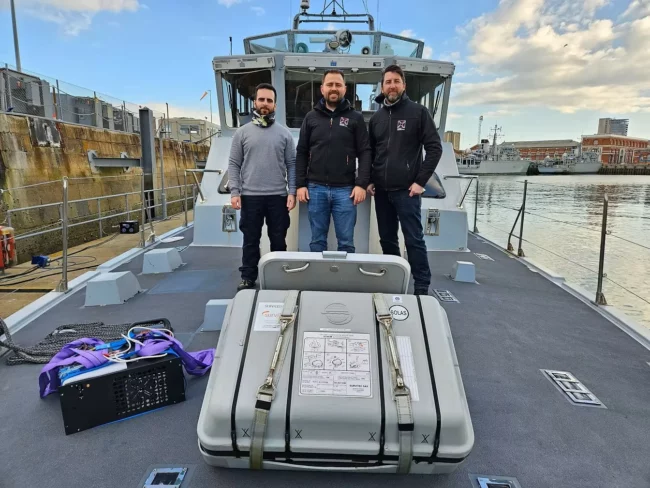
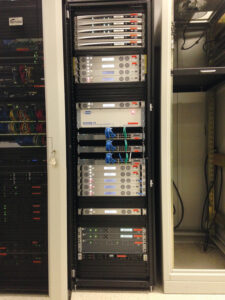
Quantum sensing specialist Aquark Technologies has completed a second trial of its AQlock atomic clock system, facilitated by the Disruptive Capabilities and Technologies Office (DCTO) of the UK Royal Navy. The AQlock functioned continuously aboard HMS Pursuer in the Solent area over three days, what Aquark calls an important milestone for position, navigation and timing (PNT) technology and a step forward in the mission to reduce global reliance on GNSS.
The Defence Science and Technology Laboratory supported the company’s latest trial, providing time and frequency test and evaluation expertise and equipment. It aims to improve conventional PNT by transferring the stability of atoms that have been cooled to near absolute zero to a conventional oscillator to reduce long-term drift. This makes the technology capable of maintaining high precision for longer, without the usual required correction from GNSS, augmenting existing timing capabilities.
The AQlock is an industrially designed and built cold atom-based atomic clock. The technology is underpinned by the supermolasses trap, a unique method of trapping atoms pioneered by Aquark that makes the technology highly robust, portable, and more affordable. The technology is suitable for miniaturization due to its reduced component count and power requirements when compared to alternative methods.
By demonstrating its ability to continuously operate aboard a Royal Navy vessel in rough offshore conditions, the company is moving closer to its goal to improve conventional PNT and reduce global reliance on GNSS for military operations, infrastructure, telecommunications, finance, transportation and other sectors.
The AQlock was developed with support from a Small Business Research Initiative (SBRI) grant from Innovate UK.
“Ultimately, it moves us closer to a future where critical technologies can continue to operate seamlessly, even in the absence of GNSS,” said Alexander Jantzen, co-founder and COO of Aquark.
UK-based Chronos Technology Ltd, an international leader in resilient synchronization and timing solutions, has acquired Norwegian company UpLink A/S.
UpLink is a leading supplier of time and timing systems and test equipment for the Norwegian market. Established in 1990 by owner and Managing Director Joachim Nielsen, UpLink supplies solutions to the telecoms, IT, transport, frequency and timing, power grid, offshore and defence markets.
“This strategic agreement will enhance the Chronos presence in Scandinavia enabling us to deliver Microchip’s solutions into the Norwegian market underpinned by our expertise and professional services,” said Joanne Akers, Managing Director of Chronos Technology. “I am delighted to work with Joachim to further support our Norwegian customers and ensure a seamless integration of business activities.”
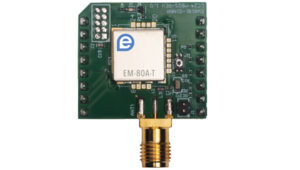
SiTime Corporation has introduced Symphonic, its first mobile clock generator featuring its integrated MEMS resonator, the SiT30100. The device is designed to deliver precise and resilient clock signals for 5G and GNSS chipsets, supporting efficient power consumption in mobile and IoT devices, including smartphones, tablets, laptops and asset trackers. According to SiTime, the Symphonic clock generator combines the functions of up to four separate timing devices, which helps simplify system design and reduces circuit board space requirements.
The integrated temperature sensor in the SiT30100 provides accurate data to compensation algorithms, enabling improved frequency stability. This results in improved GPS accuracy and faster lock times, which are critical for maintaining stable performance in challenging environmental conditions. The device operates within a temperature range of -30°C to 90°C and is engineered for dynamic stability and power optimization, helping to mitigate electromagnetic interference.
Symphonic offers four clock outputs, each capable of delivering 76.8 MHz, 38.4 MHz or 19.2 MHz, suitable for baseband, radio frequency and GNSS applications. The integrated MEMS resonator eliminates the need for an external resonator, resulting in a compact, single-chip solution with an area of 2.22 mm². The device also features a high-precision temperature-to-digital converter with a single-wire UART interface, supporting frequency stability as low as plus or minus 0.5 parts per million.
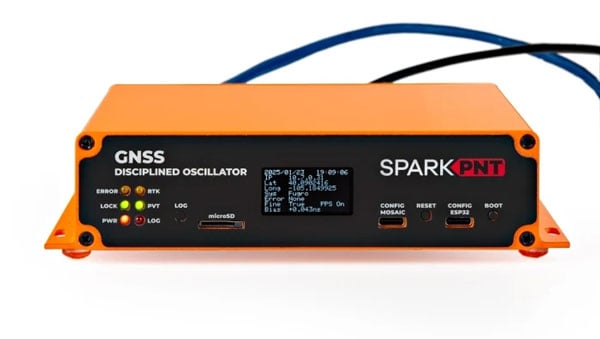
SparkFun Electronics has introduced its first ultra-high-precision GNSS timing product, the SparkPNT GNSS Disciplined Oscillator (GNSSDO). Designed for applications requiring sub-nanosecond timing and frequency precision, the GNSSDO is built around Septentrio’s multi-constellation, multi-frequency, L1/L2/L5-ready mosaic-T module.
The device integrates Septentrio’s mosaic-T GNSS timing receiver, Espressif’s ESP32-WROVER processor and the SiTime SiT5358 disciplined 10 MHz oscillator on a single circuit board. It is housed in a custom extruded aluminum case with machined end panels and slotted flanges, making it suitable for installation in weatherproof enclosures or server racks.
The GNSSDO offers impressive timing precision. Its time pulse accuracy is 5 ns, which improves to under 1 ns with an optional subscription to Fugro AtomiChron via L-Band. Event accuracy is less than 20 nanoseconds.
To ensure reliability and security, the Septentrio mosaic-T module provides robust performance even under challenging conditions such as GNSS jamming or spoofing. The system’s multi-constellation and multi-frequency capabilities, combined with AIM+ technology, are designed to enhance resilience. Additionally, the integration of SiTime’s Super-TCXO ensures superior clock frequency stability and accuracy during GNSS outages.
SpaceWERX, the innovation arm of the U.S. Space Force, has selected Xairos Systems Inc. for a $1.9 million Direct-to-Phase II contract to develop a fusion positioning, navigation and timing (PNT) system. This project aims to integrate quantum and optical synchronization of clock ensembles to address critical challenges faced by the Department of the Air Force (DAF).
Xairos Systems is collaborating with Luminous Cyber Corporation and Eritek on this initiative. The team has recently completed a Preliminary Design Review. The Air Force Research Laboratory (AFRL) shared that the collaboration is part of a broader effort by the AFRL and SpaceWERX to streamline the Small Business Innovation Research and Small Business Technology Transfer processes.
AFRL and SpaceWERX seek to streamline the Small Business Innovation Research (SBIR) and Small Business Technology Transfer (STTR) process through faster proposal-to-award timelines, changing the pool of potential applicants by expanding opportunities to small businesses and eliminating bureaucratic overhead by continually implementing process improvement changes in contract execution, according to AFRL.
In 2018, the DAF launched the Open Topic SBIR/STTR program to broaden its funding for innovations. As part of this initiative, Xairos is developing innovative technologies that enhance the national defense of the United States.
Adtran has launched its Enhanced Short-Term Unit (ESTU) precision timing module for its OSA 3300 series optical cesium clocks.
The module is designed to meet the demands of industries requiring ultra-stable short-term timing. According to the company, the module can achieve performance levels comparable to the passive hydrogen maser, which is no longer available in the Western market.
The ESTU module improves short-term frequency stability, measured through Allan Deviation, a key metric for timing accuracy. This improvement is particularly valuable for sectors such as metrology, space exploration and defense, where precise synchronization is crucial for data collection, satellite communication and measurement operations. Designed to optimize short-term frequency stability, the ESTU module is a versatile addition to Adtran’s Oscilloquartz synchronization technologies. It supports both 5MHz and 10MHz output frequencies, making it suitable for a wide range of high-precision applications, including those that previously relied on passive hydrogen masers.
Microchip Technology has introduced its second-generation Low-Noise Chip-Scale Atomic Clock (LN-CSAC), model SA65-LN. It features a lower profile height and operates in a wider temperature range, providing low-phase noise and atomic clock stability in challenging environments.
Chip-scale atomic clocks (CSACs) offer precise and stable timing in situations where traditional atomic clocks are impractical due to size or power constraints or where satellite-based references may be unreliable.
The SA65-LN, featuring Microchip’s Evacuated Miniature Crystal Oscillator (EMXO) technology, offers significant advancements in oscillator design. With a profile height of less than half an inch, power consumption under 295 mW, and an operating temperature range from −40°C to +80°C, this compact device delivers impressive performance. These enhanced specifications make the SA65-LN an ideal choice for a wide array of aerospace and defense applications. It is particularly well-suited for use in mobile radar systems, dismounted radios, IED jamming equipment, autonomous sensor networks, and unmanned vehicles, where size, power efficiency, and temperature resilience are crucial factors.
The LN-CSAC combines a crystal oscillator and an atomic clock in a single device, offering a low-phase noise of 10 Hz < −120 dBc/Hz, an Allan Deviation (ADEV) stability of < 1E-11 at 1-second averaging time, and an initial accuracy of ±0.5 ppb. The LN-CSAC also demonstrates frequency stability with a < 0.9 ppb/mo drift and maximum temperature-induced errors of < ±0.3ppb. These features contribute to high-quality signal integrity and atomic-level accuracy, potentially extending mission durations and reducing maintenance requirements.
Among them was a funding increase for the National Physical Laboratory’s National Time Centre (NTC) project, from £30 million to £62.7 million, and a plan to have NTC and the first of the nation’s new eLoran towers at initial operating capability by January of 2027.
Plans for all efforts beyond next year were necessarily caveated with “subject to spending review.”
Still, seminar attendees were gratified to hear the minister endorse the ten-point PNT policy framework published by the previous administration in 2023. It was particularly encouraging that he also committed to operationalizing it with implemented systems.
The minister did not mention the UK’s significant investment in quantum research, which was discussed later in the seminar. This research has the potential to contribute to PNT with better timekeeping and inertial and gravimetric sensing. Three quantum hubs — one each in Scotland, the Midlands and the South — are part of this effort.
Lord Vallance, UK Science Minister. (Image: 10 Dowing Street)
Lord Vallance and Shabana Haque, Ph.D., the head of the National PNT Office, who spoke later, also mentioned two important non-technology themes.
The first theme was that the PNT office is fully funded, staffed and very active. It was created last year as a cross-government effort and included representation from the Ministry of Defence. In addition to pushing the nation’s PNT efforts forward, the office has been engaged with numerous other governments, including those of the United States, Canada, Australia, New Zealand, Europe, Japan and Korea.
Secondly, the PNT initiatives are necessary for the nation’s resilience and security but will also be a source of economic benefits. This goes beyond PNT resilience, enabling Britain’s economy to function during local and potentially widespread GNSS disruption events. As the nation develops the technology stack to support its own resilient PNT architecture, along with enabling and supporting policies, devices and services will become marketable to others.
Shabana Haque, Ph.D., head of the UK PNT Office, spoke to the RIN at its 2024 UK PNT Leadership Seminar. (Image: RIN)
A sovereign PNT capability that can both stand independently and cooperate with GNSS is becoming increasingly attractive to many nations. Being able to source such a capability from a respected and trusted ally such as Great Britain could make acquiring and implementing such a system much easier for many.
The UK government has been working with several partners to advance its understanding and planning implementation of an eLoran capability. Haque highlighted work with the ESA’s F)!NAVISP program, resulting in the UK’s Roke developing an eLoran antenna for handheld devices. She also discussed the integration of the National Timing Centre’s clock and fiber network with eLoran signals and the development of GNSS/eLoran receivers. Of particular interest to many was an “eLoran Effectiveness Report” that the government commissioned and received from the General Lighthouse Authority’s Research and Development (GRAD) team. GRAD has had extensive experience with the technology, having operated and evaluated a differential eLoran system along Britain’s east coast for more than a year.
In a related move that helped signal the UK’s commitment to the technology, the Ministry of Defence issued a request for information (RFI) about a deployable eLoran capability in September. The RFI indicated that the document was a prelude to an acquisition.
The UK Science Minister also praised the RIN’s work and publication of a series of tools to help explain PNT and the need for resilience to those outside the community. The tools will also help organizations evaluate their readiness for GNSS disruptions.
A PNT Resilience Checklist for organizations to use to self-evaluate their risk from GNSS disruptions.
The RIN recommends that PNT experts use these tools to work with customers, suppliers and partners and act as a “guiding hand.”
The RIN sees these all as a “phase 1 release.” Feedback on the tools is encouraged and should be sent to [email protected] The RIN team say they are eager to know what works, what could be improved, and to receive suggestions for other efforts.
As a “learned society,” the RIN has a significant influence on government policy and direction. Lord Vallance recognized this, saying that “the Royal Institute has played a really important role in recent years to highlight the PNT opportunity and risk, to provide expertise, and to work with government on solutions.”
The RIN’s director, John Pottle, and RIN Fellows Ramsey Faragher, Guy Buesnel and Andy Proctor were all recognized during the seminar for their contributions to the organization’s resilient PNT efforts.
Commercial eLoran to be offered in the UK
Hellen Systems, Inc. and Arqiva have partnered to develop a commercial eLoran service in the United Kingdom. The announcement was made on the Hellen Systems LinkedIn page.
The partners seek to support critical national infrastructure, government, and military users by citing the need for “sovereign, independent, resilient” PNT alternatives.
eLoran is deployed and operating across China and South Korea. Older versions of Loran are operating in Russia and Saudi Arabia. Yet, aside from a single transmitter in the UK being used as a timing signal, operating Loran systems have been off the air in the West since the European system shut down in deference to Galileo in 2016.
In recent years, increasing interference with GNSS signals has rekindled Western interest in the technology. The European Space Agency (ESA) recently sponsored a project that produced an eLoran antenna suitable for mobile devices. Three transmitters are on-air in the U.S., presumably for testing, and the UK Ministry of Defence has issued a request for information, which is expected to lead to the purchase of a deployable eLoran system (the U.S. Air Force operated a deployable capability called Loran-D in the 1970s).
Originally developed and used in World War II, some still view Loran as old technology. Its advocates counter that today’s telephones and televisions are vastly improved over 1940s technology, and the same is true for eLoran over its older Loran-A and Loran-C versions.
A high-power terrestrial system operating at 100kHz, UK demonstrations with differential eLoran in 2014 showed an accuracy of 10 m positioning and 50 ns timing. The positioning accuracy for the previous version of Loran, Loran-C, was approximately 460 m absolute accuracy, 90 m repeatable accuracy and 5 µs.
Hellen Systems’ President, Bridge Littleton, says the partnership is “… excited to bring commercial eLoran to the UK as a unique resilient PNT capability” and cites its advantages as a secure signal able to penetrate deep indoors without the need for an external antenna. The UK frequency regulator, Ofcom, proposed offering commercial eLoran licenses in 2022 and began the process in 2023. Hellen was granted a UK spectrum license for eLoran earlier this year.
The announcement also lists Microchip, Chronos Technology, Ltd, Continental Electronics, and CGI as team members in the project.
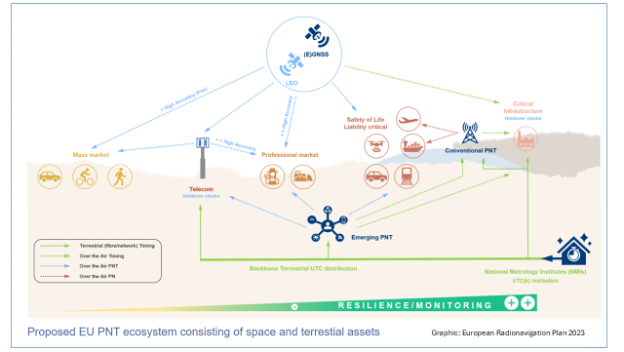
Citing a need for better “positioning, navigation and timing (PNT) resilience, availability and continuity,” a market consultation document from the EU’s Joint Research Center (JRC) says establishing a resilient PNT ecosystem is essential for “…EU autonomy, the economy’s overall resilience and EU global standing.” Therefore, creating this system-of-system ecosystem “… should be considered a critical priority for the EU.”
According to the JRC, complementary (or continuous) PNT, or C-PNT, is the combination of existing space assets (GNSS) and future services that can work together in the multi-system ecosystem. This extends the service to areas where GNSS is not available and increases overall resilience.
The JRC document goes on to say, “The first step towards the creation of such a C-PNT ecosystem is the deployment of the terrestrial timing backbone.”
Such a backbone would:
Interconnect existing Member States (MS) National Metrological Institutes (NMI) and National Research and Education Networks (NREN) architectures into a pan-European network.
Maintain and (if possible) enhance the existing use cases (NMI, NREN and their existing commercial customers) and enable time connections to critical entities (CE), as regulated by the directive on the resilience of critical entities, while also promoting GNSS for additional resilience.
Enable the commercial utilization of timing backbone to enhance EU competitiveness and enable further growth.
Responsibility for navigation issues with the European Union is somewhat dispersed. The European Radio Navigation Plan is developed as a staff working document published by the European Commission’s Director General for Defense, Industry and Space (DG DEIFS). This directorate implements the EU Space Programme, which is, in turn, managed by EUSPA, an EU executive agency.
At the same time the European Space Agency’s Navigation Directorate is responsible for “…positioning, navigation, and timing services of the European satellite navigation system Galileo and the augmentation system EGNOS” under agreement with EC. It is also responsible for ”…exploring future applications of navigation technologies for science and daily life.”
This latter includes the Navigation Innovation and Support Program (NAVISP). And while space is an important consideration in NAVISP, the program has funded some decidedly non-space projects such as the UK’s MarRINav effort which focused on terrestrial PNT, and development of an eLoran antenna for handheld devices.
The Joint Research Center supports a wide range of EU stakeholders for PNT efforts including DG DEFIS, ESA, member states, and pan-European organizations.
A “market consultation” may not seem to many as an affirmative step toward establishing a timing backbone for Europe. Experienced observers, though, point to the wealth of documentation both ESA and DG DEFIS have produced on the need for PNT resilience and the benefits that will accrue to member nations.
“The EU is very consultation and consensus-driven,” says timing expert Magnus Danielson at Net Insight. “So, you are not going to see the kind of top-down orders to do things as you might for a single state. Some of these decisions are made by each member state, as they should be. I am sure (European) Commission and ESA officials have seen what Sweden has done with distributed timing clocks operated by Netnoed, what the U.K. NPL is doing with its clock network, and are concerned about Russian jamming and spoofing in Ukraine and the Baltic. It’s pretty easy to connect the dots and make reinforcing PNT for Europe’s critical infrastructure and applications a priority. Working with the EC-JRC to develop this has been rewarding. Here’s hoping they move quickly enough. Several member states and friendly neighbors have already responded positively, and I sure the market consultation feedback will aid in moving decisions forward.”
The concept of a system-of-systems approach to resilient PNT that is underpinned by network timing is not a new one. The 2008 U. S. National PNT Architecture articulated such an approach, though it was never implemented. In 2020 the RNT Foundation expanded on this idea in a paper advocating a U.S. national resilient timing architecture using signals from space, fiber, and terrestrial broadcast. China’s National Timing Service Center adopted a similar strategy. Media reports indicate China has completed or will soon complete its High Accuracy, Ground-based Timing System with 20,000km of fiber, 295 timing stations, and nation-wide eLoran service.
The EU is asking for input about a European Timing Backbone and is interested in hearing from anyone, whether or not they are EU citizens.*
In the early 19th century, as the sun moved across Britain from east to west, people set their clocks to local mean time, so that noon in Greenwich would occur about 16½ minutes before noon in Plymouth. Back then, travel on foot, by horse, or by coach was slow and inconvenient, so having to adjust their pocket watch, for the few who even had one, was the least of travelers’ concerns.
However, with the advent of railway travel, keeping track of time differences became confusing and impractical. In 1845, Henry Booth, a railway businessman involved with the Liverpool and Manchester Railway, petitioned parliament for a “Uniformity of Time,” arguing that when “the great bell of St. Paul’s strikes ONE, simultaneously, every City clock and Village chime, from John of Groat’s to the Land’s End, strikes ONE, also.”
In addition to rail travel, advances in industrialization and automation also increasingly required time standardization, synchronization, and optimization. With the advent of satellite navigation, the requirement for accurate time reached the order of nanoseconds, because a signal delay of one nanosecond corresponds to roughly one foot of distance on the ground. This is why atomic clocks were one of the enabling technologies for GPS.
In turn, atomic clocks on GNSS satellites became the most convenient way to calibrate and synchronize local clocks on the ground and to meet the stringent timing requirements of financial institutions, communication and broadcast networks, power utilities, transportation networks, weather radars, and a variety of scientific, commercial, military and consumer systems. Even though computer networks use PTP and other synchronization protocols, they all ultimately tie back to GNSS timing receivers to synchronize them to a global clock. This has made GNSS timing receivers ubiquitous and indispensable. Yet, the T in PNT (positioning, navigation, and timing) is invisible to most people and often an afterthought even for many of us in the industry.
I discussed some of the challenges of GNSS timing with representatives of five companies:
Paul Skoog and Eric Colard, senior technical engineers of product marketing, Microchip, frequency and time systems business unit
Jeff Gao, GM of communications, enterprise and data centers, SiTime
Farrokh Farrokhi, founder and president, etherWhere
Beacham Still, director of business development and operations lead, SyncWorks
For the full transcripts of my interviews for this article, visit here.
Positioning vs. timing
The first step in using GNSS signals for time synchronization is to process them to extract pseudoranges in the same way as for positioning — except that the signal from a single satellite is usually sufficient, because the position of the phase center of the receiver’s antenna is determined once and for all when it is installed.
However, most timing applications require much more accurate timing than positioning applications. “In GPS, let’s say that position accuracy is one meter with a clear view of the sky,” said Farrokhi. “That translates to a few nanoseconds of error. To achieve that over, say, a 24-hour cycle requires much tighter jitter on the receiver. So, the challenge for a timing application is to do a much better job of removing sources of errors compared to positioning. In the past, a requirement of 20 ns jitter in timing may have been enough for many applications. However, as the communication systems’ bandwidth and throughput increase, the requirement for timing becomes more stringent. We must come up with new algorithms and new architectures to reduce jitter and improve accuracy.”
Another difference is that most timing receivers — such as those in a cellular base station — are stationary and connected to an antenna with a clear view of the sky. “There are methods to extract and remove most uncertainties and inaccuracies,” said Farrokhi.
“Since it’s not moving, many satellites feed into the equations that help you solve the math to get you very accurate timing,” said Skoog.
”Finally, most GNSS positioning applications don’t require holdover, while for GNSS timing “holdover is a universal requirement,” said Gao, “ranging from four hours, for an edge data center or a small facility, all the way to 24 hours for a large cluster of servers or, in some extreme cases, even 48 to 72 hours for deployment in or near a hostile environment, where you expect jamming and all those bad things to happen.”
Accuracy requirements
etherWhere’s ew 6181 multi-GNSS timing receiver has a very low jitter across a wide range of temperatures.
The main critical applications for GNSS timing can be roughly grouped by the accuracy they require — but they are changing. “For example, for cellular systems up to 30 ns jitter used to be enough,” said Farrokhi.
“As we move to 5G and 6G, this spec becomes tighter and tighter. We now must be below 5 ns for 6G. As we increase the bandwidth and must support higher throughput, we are more sensitive to timing inaccuracies.”
“5G probably has the clearest requirement because you need 130 ns of relative time accuracy from one tower to another, mostly for handoff,” said Gao. “The accuracy requirements increase as you start to provide different services. For example, if different carriers want to aggregate some services, you start moving from 130 ns down to 65 ns, maybe even down to something more accurate.
“Today, what’s driving the growth of our business is all in data centers and artificial intelligence (AI),” said Gao. “That ranges from traditional front-end server infrastructure and back-end AI workloads to edge data centers.” Timing requirements for data centers differ from those for other applications in terms of accuracy, reliability, and distribution to different locations, not all of which can have an antenna on the roof. “It’s a very interesting, multi-dimensional problem.”
The requirements for financial services are defined in the United States by the Securities and Exchange Commission (SEC) and in Europe by the European Securities and Markets Authority (ESMA). To be legal, timing must have an audit trail all the way back to UTC and not diverge from it by more than 100 μs at the transaction level — the servers and the routers, said Gao.
Additionally, in the United States, the Financial Industry Regulatory Authority (FINRA) requires financial institutions to be 50 ms to the National Institute of Standards and Technology (NIST). “That’s a hole so big you can drive a bus through it,” said Skoog. “However, if you want to trade on a stock exchange in Europe, you’re down to 100 µs. People typically will get a time server that will get them down to where they’re doing all their time stamping at better than a microsecond, but they put in a rubidium oscillator, so that if GPS goes away they can still finish that trading day and be better than 100 µs to UTC.”
“For the bigger data centers there are no industry-wide standards,” said Gao. “Cloud service providers can each define their own requirements. What they care about is the window of time uncertainty: whether at the server level I have an error of 1 ms or 5 ms. You can go to 1 μs of error or down to 10 ns of error, each of which will enable you to provide a set of services. At 100 μs, for example, 99% of all your services are running. At 5 ms, you may have to start shutting down some services. More accurate time on the server also enables you to minimize the network traffic. So, conceptually, you can look at data center requirements anywhere from 5 ms all the way down to hundreds of nanoseconds, or even more accurate.”
“Many markets have a lot in common, because they have communication networks,” said Colard. “For example, train and subway networks have communication networks very similar to those of telecoms. In the power industry, you have a communication network and a substation network. In the defense sector, you have confidential communication networks that are very similar to those from AT&T or Verizon. So, all these markets have the same requirements and the same features and challenges.”
“Probably the number one reason why people put in a Stratum 1 NTP time server is to make sure that their log file time stamps are accurate,” said Skoog, “because that makes their network management systems more accurate and reliable.” However, accuracy is not the only concern. “The clocks are pretty accurate, but they connect to the network. All the network guys — the people who manage these networks — cannot plug this clock in until the security people give their stamp of approval.”
Microchip Technology’s Precise Time Scale System (PTSS) is traceable to Universal Coordinated Time (UTC) and does not depend on GNSS.
Clocks and oscillators
For all these accuracies, the key mechanism is GNSS timing. “In a typical data center,” said Gao, “you’re going to start with two grandmaster clocks, which are boxes that combine GNSS timing with locally accurate timing. That’s probably going to provide 5 ns to 10 ns of accuracy. More importantly, in addition to that, they have extremely good local oscillators that could be OCXOs, even some atomic clocks, that enable them to hold over if they lose GNSS timing for four, five hours, or 10 hours — up to 24 hours or 48 hours for a huge facility with many AI clusters.”
Likewise, many financial services units don’t have GNSS antennas for every server, router and network card. “It just gets tremendously expensive to distribute the signal to each server,” said Gao, “because most of them are housed in huge warehouses that don’t have access to an antenna. They typically have a grandmaster clock.”
“The GPS receiver itself is one product for all the segments that we sell into, but configured depending on how many timing outputs the customer wants and which frequency outputs,” said Tommey. “We also put a holdover oscillator into the unit that — if, for whatever reason, the GPS signal is lost — continues to provide valid time outputs for days, weeks, or even months.”
“The advantage of GNSS is that over a long period of time it is extremely accurate,” said Gao. “The accuracy of an oscillator depends on how much holdover time you require. GNSS has a natural resolution of roughly 20 ns. At 5 ns, you start to rely on your local oscillator to do the next level filtering. For a base station or a core router, you need to get to 5 ns or better. So, you have GNSS native, you have an oscillator to do filtering to get a better accuracy and holdover, then you have network-based timing in a time scale of some sort.”
“A data center, core network, or edge network never relies on a single source for timing,” said Gao. “GNSS is always viewed as extremely stable timing that everybody needs when you have access to the receiver and the antenna. Then you rely on the local oscillators and 1588 network timing as complementary technologies to ensure that you will always have timing all the time at a given accuracy.”
Networks
Increasingly, timing is distributed over a network. Some markets are more focused on Network Time Protocol (NTP), which has an accuracy of a few milliseconds, while others, such as telecoms, are more focused on Precision Time Protocol (PTP), which follows IEEE standard 1588 and is traceable all the way to a grand master somewhere. If someone just needs NTP, “it’s pretty easy to get 1 µs to 10 µs time accuracy between an NTP server and an NTP client,” said Skoog. “They may not even need 1 µs to 10 µs, but they’re going to take it if they get it, because log file correlation is very useful. Then when you get to PTP, it brings in a lot of hardware, time stamping and on-path assistance to get rid of some of that asymmetric delay. Now you’re down to sub-microseconds, and even approaching low nanoseconds. Then, if you must be down to 1 ns or something smaller, you’re into a 1 PPS application.”
PFT3207A GNSS receivers in 1+1 configuration with a ptf1207A redundancy switch to provide timing and frequency reference signals to sub-systems in a satellite Earth station installation.
Jamming and spoofing
Any infrastructure that must always be in service requires redundancy and resiliency. “We build rubidiums, cesiums, hydrogen masers and so forth,” said Skoog. “For years, the cesium was the domain of the metrologist. Those days have passed. Sure, metrologists buy them. But you need a plan B for what you’re going to do if GPS goes away, so you can connect pretty much all our products to a cesium clock.”
When it comes to the impact of jamming and spoofing on timing, perspectives vary substantially between companies. “We’ve only ever had one customer who thought they’d been jammed or spoofed,” said Tommey. “We honestly don’t see very much of that at all.” However, according to Still, in the United States, a common problem is the proliferation of personal GPS jammers. “You see this through people with corporate vehicles and a fear of being tracked — similar to the rise of VPNs. Our power distribution systems, our substations, our telco central offices are in the communities they serve.” The problem arises, for example, “at substations located next to truck stops, night clubs, bars, all the different places that folks might not want to have pop up on their corporately tracked vehicles.”
Often, when network operators see anomalies on their GNSS-based timing systems, it is challenging for them to identify and effectively mitigate the source of that interference. “You can naturally go to the site and try to do audits, and there are tools to try to measure and monitor this,” said Still. “What is more common and practical for network operators is designing and deploying their GNSS networks with the expectation that they’re going to encounter some form of interference.”
Current wars have spurred great interest in distribution of timing over optical networks, said Colard. “Close to Russia, China, Israel, any of the conflicts in the world, there have been attacks on these networks every day. Spoofing is the main concern that I’ve seen. Anti-spoofing or anti-jamming are not enough. You need to find alternate time references for when GPS fails for any reason, so it’s an architecture discussion. For example, assisted partial timing support (APTS) has been used for years. It connects to other PTP grandmasters in the network and provides PTP input while GPS is down. Another alternative is to rely less and less on GNSS in general.
“The alternative to using GPS receivers everywhere is to limit them to very specific strategic points and distribute time over optical networks,” said Colard. “There are segments of hundreds of kilometers in many countries without any GPS receivers. There are also enhanced primary reference time clocks (ePRTCs), which are usually connected to GPS and cesium clocks for resiliency. Often, carriers now are not even using GPS there. They’re using metrology labs and the national time coming from NIST or similar national time agencies as the time reference, instead of GPS, to limit the use of GPS as much as possible across the network.”
A traditional GNSS-based clock for time-division multiplexing (TDM) services in a telecom’s central office.
Multipath
As with the impact of jamming and spoofing, perspectives vary regarding the impact of multipath on timing. “We haven’t seen issues with multipath, except where users don’t do a good job of positioning their antenna or antennas,” said Tommey. Conversely, Gao said that “multipath is extremely relevant to timing. Let’s say, to give an extreme example, that you’re locking onto a single satellite. Depending on whether you have an unimpeded line of sight and no multipath or the signals are bouncing off a building, the difference could be 100 ns to 500 ns.”
“Multipath might be a problem in a GPS antenna for timing, which usually sits on the roof,” said Skoog. “If you can keep this signal from reflecting up to the antenna in the first place with an adequate ground plane, that’s probably the singularly most effective thing you can do. I’ve been in GPS a long time. It used to be a very big deal. I never get asked about it anymore. It’s an old problem that’s sort of been solved.”
Many people who have static antennas do not understand “that their sky view changes over the course of the year, and their visibility throughout the seasons and the winter solstice will be different than in the summer,” said Still.
Transition
The telecom industry is transitioning how it times and synchronizes networks from the time-division multiplexing (TDM) method that it has used for decades to IP and packet-based networks. “Particularly in TDM networks, the idea of UTC-traceable time of day was not really a focus until the advent of NTP, but ultimately it was all frequency synchronization,” said Still. “The idea was that if your network was in a frequency lock, and the phased alignment was good, your network would all drift together. So, TDM networks were also inherently synchronous, in a Synchronous Optical Networking (SONET) environment. You can distribute that frequency again throughout your network and pull it down from the overhead. By comparison, packet networks are inherently asynchronous, so it breaks the frequency chains that we’ve long relied on to distribute and synchronize our networks, and ultimately requires a new approach.
“Modern networks and applications are increasingly reliant on precision time from GNSS-derived sources — high speed, low latency, high throughput, all being deployed to meet current and future needs,” said Still. This requires new sources of time, such as UTC-traceable time of day. Global networks and edge applications will all rely on time of day. “Not only are you trying to keep all your own networks synchronized, you must also have a relative accuracy to the rest of the world. So, some significant changes are taking place, particularly for engineers who have spent their whole career on TDM or SONET networks.”
Now, Still said, “we can be more accurate using PTP on the edge than we can be with GPS. On the edge GPS now is an option. We keep those in place, distributed throughout the network, in case of bi-directional fiber cuts or losing some of the transport that we use to distribute precision timing, but you can be more accurate, more secure and more stable by using PTP than we can by relying on GPS.”
Conclusions
GNSS timing receivers are central to timing vast swaths of our industrial societies. Yet, as with positioning and navigation, growing concerns about jamming and spoofing are motivating some sectors to reduce their reliance on GNSS for timing and to develop alternative time references, including low-Earth orbit (LEO) satellites and eLoran. Meanwhile, many networks are transitioning to a new way of distributing timing.
Timing — the unglamorous yet essential T in PNT (positioning, navigation and timing) — has been called “the invisible utility.” In fact, it’s been a long time since we last put a GNSS-timing receiver on the cover. (Partly that’s because, like with simulators, it’s hard to come up with a visually compelling image that conveys the role of such a device.)
From St. Augustine (“What, then, is time? If no one asks me, I know what it is. If I wish to explain it to him who asks, I do not know.”) to theoretical physicist Carlo Rovelli (who argues that time is “part of a complicated geometry woven together with the geometry of space”), time is both one of the greatest mysteries of nature and one of our most practical concerns. For satellite navigation, time is both essential to its functioning and a fabulous by-product. As David Wells and Alfred Kleusberg wrote in the first “Innovation” column, in the first issue of this magazine, “One of the by-products of getting an SPS [Standard Positioning Service] position fix is that a clock in the user’s receiver is automatically synchronized to clocks in the GPS satellites to an accuracy of one ten-millionth of a second. Therefore, any GPS receiver is a very accurate time distribution device.” (“GPS: A Multipurpose System,” January-February 1990.)
As Richard Langley wrote in another early “Innovation” column, “Thanks to minute energy changes in individual atoms of cesium and rubidium, humankind possesses the ability to synchronize clocks anywhere in the world to better than 10 nanoseconds. But given this amazing ability to measure time, we still don’t know what time actually is.” (“Time, Clocks, and GPS,” November-December 1991.)
I procrastinated the task of writing this editorial and now another aspect of time is here to impose its claim: our production deadline. So, just one anecdote and a final quote, and I will be done, just in time.
The anecdote. A quarter century ago, during my first time around on this magazine’s staff, when Glen Gibbons was the group editorial director, Alan Cameron the senior editor, and I the managing editor, we had just one meeting a month, called “edit check,” a couple of days before the deadline to send each issue to the printer. We printed out all the pages, laid them down in order around a large conference room table, and walked around the table examining each one and making notes about small final corrections and revisions.
Only one page routinely had a large empty area: It was the one for Glen’s monthly editorial, which he always finalized (wrote?) at the last possible moment. I once joked that it would be blown in at the printing plant like the magazine’s subscription cards. Well, as I finish this editorial, we are at T minus two days for the November issue. Enjoy it!
Oh, and the final quote, again from Rovelli: “The events of the world do not form an orderly queue like the English. They crowd around chaotically like the Italians.”
Adtran’s Oscilloquartz team of network synchronization specialists has demonstrated the capabilities of its positioning, navigation and timing (PNT) solution, the OSA aPNT+, during Jammertest 2024 in Norway.
According to the team, the OSA aPNT+ platform demonstrated exceptional resilience against jamming and spoofing attacks during the series of real-world tests. It seeks to serve as a vital role in PNT security for critical sectors such as infrastructure and defense. As we rely more on PNT systems, there is a need for robust protection against increasingly sophisticated threats. To meet this challenge, the OSA aPNT+ platform employs a multi-layered protection strategy and zero-trust architecture.
The company said that by integrating diverse PNT sources, including Iridium Satellite Time and Location (STL) services, the platform can effectively mitigate risks and establish new standards for securing applications across the public and private sectors.
Adtran’s Oscilloquartz aPNT+™ solution is built around a multi-layered approach, incorporating advanced GNSS signal analyzers, anti-jamming antennas and AI/ML-enhanced firewalls. Key products, including the OSA 5412, OSA 5422 and OSA 5430 grandmaster clocks, along with the OSA 5401 and OSA 5405 Series of small-form-factor solutions, underwent thorough testing at Jammertest.
The integration of Iridium’s Satellite Time and Location (STL) services was evaluated, showcasing its ability to diversify PNT sources and bolster defenses against jamming and spoofing attacks. The company shared that Oscilloquartz’s Syncjack technology could detect and mitigate meaconing attacks.
This approach aligns with IEEE 1952 standards and establishes Oscilloquartz solutions as indispensable for critical sectors dependent on assured PNT, including telecommunications, defense and finance.