Category: Mapping

  • Tersus offers handheld scanner with RTK-SLAM

    Tersus offers handheld scanner with RTK-SLAM

    Tersus GNSS has launched the MVP S1 RTK-SLAM handheld 3D laser scanner for mobile mapping and reality capture. The MVP S1 uses GNSS through an AI-driven RTK-SLAM workflow, as well as lidar data with imagery from dual 48-megapixel panoramic cameras.

    The combination provides survey-grade results in both GNSS-denied and open environments. The system achieves centimeter-level accuracy outdoors and maintains performance indoors or underground through SLAM processing.

    TimeSync 3.0 synchronizes the hardware, aligning sensor data at the microsecond level and supporting consistent datasets and reliable post-processing.

    A mobile application provides users with real-time feedback, including previews of colorized point clouds while scanning, as well as basic scan reports on site. This feature helps operators verify data completeness and quality before leaving the field, reducing the need for repeat visits.

    The MVP S1 supports 3D gaussian splatting (3DGS), enabling creation of textured, photorealistic 3D models. This capability is useful for building information modeling, construction progress monitoring, underground surveys, forestry analysis and industrial site documentation.

  • Robosat partners seek improved localization of autonomous machines

    Robosat partners seek improved localization of autonomous machines

    Researchers from Finland, Switzerland, Spain and Romania gathered at Tampere University in Finland for a workshop this month within the Robosat project focusing on localization of autonomous machines.

    Workshop participants discussed and demonstrated novel technical solutions to improve localization, particularly of autonomous machines operating in challenging and unconstrained environments, such as forests and mountainous regions.

    The Robosat project aims to change how autonomous robots navigate in the wild by integrating multi-sensor and multi-GIS data. During the Tampere workshop, partners from Tampere University (Finland), ETH Zürich (Switzerland), Universitat de València (Spain) and CITST (Romania) discussed strategies for sharing data, identifying relevant GIS and GNSS datasets, and leveraging AI for autonomous labeling of large-scale data. 

    Key topics included the integration of multi-sensor and multi-GIS data to enhance positioning accuracy, planning piloting tests with ETH’s ANYmal robot and TAU’s new I/Q GNSS grabber device, and discussing methods for AI-driven data labeling for massive datasets collected during field trials.

    The Tampere University project team includes Elena Simona Lohan and Jari Nurmi as supervisors and Ph.D. students Yelyzaveta Pervysheva and Muhammad Safi.   

    The Robosat efforts supports applications in robotics, environmental monitoring, and industrial automation. By combining expertise across Europe, Robosat intends to pave the way for smarter, safer and more efficient autonomous systems.

    It also aims to provide new open-access rich datasets to the research community. A first dataset enabling multimodal classification studies has already been published on Zenodo as a collaborative work between Tampere University and CITST teams.

    The Robosat project

    Autonomous robot navigation in the wild using satellite-based 3D geographical information (ROBOSAT) aims to provide a scalable MultiGIS high-quality data collection platform through the use of a quadrupedal robot that can autonomously perform long-distance missions in challenging environments, such as Alpes mountains or Finnish forests.

    Consortium organizations are comprised of three universities and one SME:

    • Tampere University, Finland. Expertise: GNSS, wireless positioning, sensing, and communications, RF Fingerprinting and interference mitigation. Coordinator: Elena Simona Lohan
    • ETH, Switzerland. Expertise: automation, mapping, control theory, and legged-robot research. PI: Marco Hutter
    • Universitat de Valencia, Spain. Expertise: computer science, database management, machine learning. PI: Joaquin Torres Sospedra
    • CITST, Romania. Expertise: machine learning/artificial intelligence, robotics, exploitation. PI: Irina Mocanu.
  • HERE and Precisely expand partnership to provide location data for businesses

    HERE and Precisely expand partnership to provide location data for businesses

    HERE Technologies has expanded its partnership with Precisely, a data integrity company, to provide accurate and reliable location intelligence for business use cases across industry sectors.

    The partnership builds upon location intelligence capabilities within the Precisely Data Integrity Suite, giving companies deeper analysis, validation, and governance of their location data.

    Through the partnership, HERE and Precisely use machine learning (ML) and artificial intelligence (AI) to collect and analyze location data, creating real-time updates that guide important business decisions like property management and analysis, among other business operations. The companies are working together to provide complete and accurate datasets to drive AI-powered intelligence for businesses.

    The Precisely Data Integrity Suite delivers the trusted location intelligence that organizations need to power critical business decisions. The suite verifies, standardizes, and geocodes address data with high levels of accuracy and enriches it with robust contextual datasets. This combination of accuracy, consistency, and context helps businesses understand where things happen and why, enabling smarter risk assessment, optimized service delivery, and more targeted customer engagement. With governance and transparency built in, the Data Integrity Suite ensures location data is AI-ready and reliable for even the most regulated industries.

    HERE’s Privacy Charter reinforces the company’s commitment to promote responsible privacy and security practices, including data minimization and anonymization. The company has a robust portfolio of certifications in security, privacy and cloud governance, including ISO 27001, SOC 2, TISAX, HITRUST r2, CSA STAR and ISO/IEC 42001, the first international standard specifically designed to guide organizations in managing AI systems responsibly.

  • Voyant Photonics expands Carbon lidar platform with chip-scale sensing

    Voyant Photonics expands Carbon lidar platform with chip-scale sensing

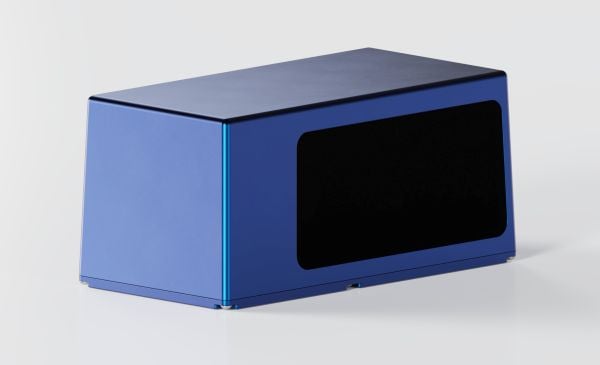
    Voyant Photonics is offering new versions of its Carbon lidar platform, adding 32-line and 64-line variants designed to bring the power of frequency modulated continuous wave (FMCW) sensing to more compact, cost-sensitive, and compute-limited systems.

    The new models will be on display at the upcoming Consumer Electronics Show (CES 2026) in Las Vegas (LVCC West Hall, Booth #4875). Voyant will demonstrate live FMCW sensing capabilities and provide development kits for qualified partners.

    The models complement the existing 128-line configurations, enabling broader choices and customizations from the Voyant portfolio of low-cost, high-performance sensors, and optimized for industrial autonomy, robotics, drones and smart infrastructure applications.

    Building on the same efficient semiconductor foundation as Voyant’s flagship Carbon platform, the new versions offer lower data rates and simplified integration without sacrificing core FMCW advantages such as velocity measurement, interference immunity, and high dynamic range.

    The Carbon family represents Voyant’s most versatile and scalable lidar product line, designed using Voyant proprietary silicon-photonics architecture that integrates beam steering and coherent detection on a single photonic chip. This integrated technology will unlock mass-production economics, reduced calibration drift, and unmatched consistency from unit to unit, the company said.

    The new Carbon variants extend the core Carbon platform’s advantages:

    • High-precision depth sensing and real time velocity
    • Exceptional ambient light immunity, ensuring reliability from dim warehouses to direct sunlight
    • Compact design for demanding industrial and mobile environments

    With line resolutions now spanning 32, 64 and 128, OEMs and system integrators can tailor performance, bandwidth and compute load to their specific use cases, from agile robotics and compact AGVs to drones and embedded edge platforms.

  • AAGS YouTube seminars on geodetic topics in support of a certificate in geodetic surveying

    AAGS YouTube seminars on geodetic topics in support of a certificate in geodetic surveying

    My May 2025 GPS World newsletter highlighted the American Association for Geodetic Surveying (AAGS) “Certificate for Geodetic Surveying” Program. This newsletter will update readers on the program. As I mentioned in the May 2025 newsletter, the Certificate for Geodetic Surveying program is designed to meet the needs of surveyors and others who perform spatial analyses and computations using geodetic methods. 

    Some of you may not be familiar with AAGS. The American Association for Geodetic Surveying (AAGS) aims to guide the community of geodetic, surveying and land information data users into the 21st century by working together to develop new educational programs — such as presentations, seminars, and workshops on geodetic surveying — and by publishing articles and papers that share the latest scientific and technological advances, along with advice for cost-effective, efficient implementation. AAGS also encourages a deeper understanding of geodesy by offering educational materials in geodesy, geodetic surveying and related fields.


    The AAGS Board meets on the second Wednesday of each month at 4:00 p.m. (Eastern Time). Please visit the AAGS website and consider joining our monthly board meetings — a forum to share ideas and learn about geospatial products and services. All are welcome. To be added to the attendee list, email me at [email protected].

    Here’s the latest on the certification program: AAGS has developed questions covering the seven core areas of minimum competence in geodetic certification: (1) Geometric Geodesy, (2) Physical Geodesy, (3) Accuracy and Error, (4) Temporal Aspects, (5) Global Navigation Satellite Systems, (6) Geodetic Survey Networks, and (7) Standards and Guidelines. For details on each topic, see my May 2025 GPS World newsletter. The information below includes examples the Board is considering for the exam.


    AAGS Geodetic Certification Exam — Sample Questions

    In the ECEF coordinate system, the X and Y axes define

    1. minor axis of a reference ellipsoid
    2. spin axis of the Earth
    3. prime meridian and north pole
    4. |equatorial plane
    • Physical Geodesy

    The term ‘deflection of the vertical’ applies to what?

    1. Error introduced when the curvature of the earth is not accounted for
    2. The angular difference between the perpendicular to a reference ellipsoid and perpendicular to the field of gravity at a location.
    3. The distortion induced on the Earth’s gravitational field by a large mass beneath the surface
    4. The difference between true and geodetic North at a location.
    • Accuracy and Error

    A __________________ is the difference between the observed value and the most probable value.

    1. blunder
    2. residual
    3. standard deviation
    4. systematic error
    • Temporal Aspects

    What is the purpose of National Geodetic Survey’s EPP model?

    1. To transform ITRF coordinates to NAD 83 (2011) Epoch 2010.00.
    2. To transform ITRF coordinates to a 2022 Terrestrial Reference Frames Epoch 2020.0 (a way of describing a plate’s rotation).
    3. To transform ITRF coordinates to WGS84 Epoch 2020.00.
    • Global Navigation Satellite Systems (GNSS)

    The satellite ______________________ sets up an arbitrary threshold below which GPS satellites should not be measured.

    1. azimuth
    2. inclination angle
    3. mask angle
    4. zenith angle
    • Geodetic Survey Networks

    In a GPS network adjustment, primary reason for the minimally constrained adjustment is to ensure that

    a) the baseline components are free of large errors

    b) the control point coordinates have no errors

    c) the degree of freedom of adjustment is correct

    d) integer ambiguities have been determined correctly

    • Standards and Guidelines

    Which of the following statements about the State Plane Coordinates System (SPCS) is false?

    1. Eliminates having individual adjacent surveys based on different assumed coordinates
    2. Extensive highway projects can start at one control point and close on another at some distance away.
    3. If a monument is lost, one can use other SPCS monuments to recover the lost monument.
    4. Since SPCS utilizes a “developable surface” to project ground points onto a plane, the resulting projection is “distortion free”

    The draft questions are under expert review to ensure they target the right geodetic concepts and effectively assess the knowledge needed by those creating geospatial products and services. Our aim isn’t to make everyone a geodesist, but to ensure anyone producing geospatial products understands enough geodesy to create, depict, and document them correctly. AAGS is partnering with NSPS to implement the program, aiming for a 2026 launch. I’ll share updates in future emails.

    Many are asking whether AAGS will create training materials to support the certification program. We do not have any official plans at this time. However, Muge Albayrak—an AAGS Director and researcher at Oregon State University—has been working with members to produce YouTube sessions on certification-related topics. So far, AAGS has released four sessions: (1) Astronomical Techniques in Geodesy, (2) Practical Precise Point Positioning (PPP): Properties and Performance, (3) Real-Time GNSS Networks – RTN Alignment – User Perspective, and (4) Real-Time GNSS Networks – RTN Alignment – Managing RTNs.

    We’ve discussed producing shorter YouTube sessions focused on key concepts from the seven competency areas of the geodetic certification program. These would complement the existing member-only educational videos on the AAGS website. For details, see the Resources tab on the AAGS website.


    YouTube of Real-Time GNSS Networks: RTN Alignment — User Perspective and Managing RTNs.

    The American Association for Geodetic Surveying The American Association for Geodetic Surveying

    New 4-Part Educational Video Series on Real-Time GNSS Networks (RTNs) – RTN Alignment
    The American Association for Geodetic Surveying (AAGS) is pleased to share a comprehensive four-part video series focused on Real-Time GNSS Networks (RTNs) and RTN Alignment — a topic that continues to grow in importance as more agencies, universities, and private organizations operate or rely on RTNs.
    This series brings together academic researchers and industry practitioners to provide clear user-level guidance and practical network-management insights grounded in current research and real-world field experience.
    Part 1 — RTN Alignment-User Perspective: Lecture : https://lnkd.in/eMuBqRkz
    Chase Simpson (Assistant Professor of Practice, Oregon State University) explains RTN fundamentals, field procedures, accuracy expectations, and how to combine real-time GNSS with conventional surveying.
    Part 2 — RTN Alignment-User Perspective: Q&A: https://lnkd.in/e_5vcM7Y
    A panel discussion addressing weighting strategies, redundant observations, GEOID2022 implications, and best practices for verifying RTN accuracy in the field.
    Part 3 — Managing RTNs: Lecture: https://lnkd.in/eV5P-daq
    William Ohene (PhD Student, Oregon State University) presents new research on monitoring core station stability, detecting reference station issues, and aligning RTNs with the National Spatial Reference System (NSRS).
    Part 4 — Managing RTNs: Q&A: https://lnkd.in/ejpkJq2Z
    A follow-up discussion on operational considerations for RTN managers, network density, coordinate updates, and improving user confidence across real-time networks.

    Why AAGS is sharing this series
    As part of our mission to support professional education and strengthen the geodetic surveying community, AAGS is committed to providing accessible, high-quality resources on emerging practices, technologies, and research.

    This RTN series supports surveyors, geodesists, GIS professionals, and RTN operators who rely on accurate real-time positioning.

    Watch the full 4-part series here: https://lnkd.in/ejvF6qQQ

    AAGS extends our appreciation to:
    • Lecturer: Chase Simpson
    • Lecturer: William Ohene
    • Moderator: Dave Zilkoski
    • Panel contributors: Karen Meckel, Müge Albayrak, and Brian Weave

    We hope this series supports your professional practice, education initiatives, and technical development.

    Please feel free to share your thoughts or questions — we welcome community discussion.


    As noted, AAGS members can access educational material on the AAGS website covering geodetic topics that will help answer many exam questions. Numerous external resources are also available. For example, NOAA’s National Geodetic Survey (NGS) offers webinars, online lessons, and educational videos, and GeoLearn provides continuing education courses for surveyors.


    Please visit the AAGS website and consider attending our monthly Board meetings. If you’d like to attend, want more information about AAGS, are interested in serving on a committee, or wish to collaborate on YouTube sessions about geospatial topics, email me at [email protected].

  • UAVOS partnership to advance HAPS technology for high-altitude missions

    UAVOS partnership to advance HAPS technology for high-altitude missions

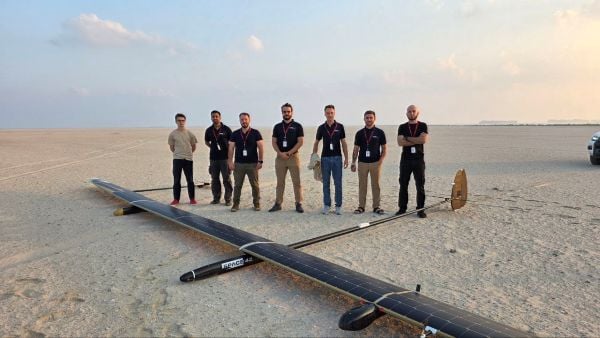
    UAVOS has successfully completed of a test flight of Mira Aerospace’s high-altitude pseudo-satellite (HAPS) ApusNeo 18, with UAVOS providing full engineering and technical support. A key objective of the flight was to evaluate the jointly developed optoelectronic, gyro-stabilized aircraft payload onboard device (POD) by obtaining imagery from altitudes between 3,000 and 12,000 meters.

    During the mission, the POD captured high-resolution imagery with precise geolocation data from an altitude of 12,000 meters, achieving a Ground Sample Distance (GSD) of up to two meters. The test took place in Abu Dhabi, UAE, and lasted continuously for 48 hours.

    “The data-relay station trials were conducted in preparation for upcoming commercial flights in Europe, planned for the coming months,” Aliaksei said.

    The optoelectronic gyro-stabilized aircraft POD is equipped with an innovative automatic temperature control system for  heating and cooling  electronic modules, ensuring reliable operation in the stratosphere at temperatures as low as -70°C under rarefied air conditions.

    The system also provides radio communication at distances exceeding 100 km. The gimbal’s optical unit allows observation within a ±90°C range with high-precision angular positioning. The payload housing features an aerodynamically optimized design, and the total payload weight is 3.6 kg.

    “The successful cooperation with Mira Aerospace reflects our commitment to continuously advancing the capabilities of both companies,” said Aliaksei Stratsilatau, founder and CEO of UAVOS. “We also continue to work toward our ultimate goal of leveraging the HAPS platform for multiple applications, including mobile connectivity, border monitoring, mapping, forest fire detection, and emergency response.”

    To extend the HAPS operational range, the test flight also incorporated a data-relay network based on ground modem repeaters. Each repeater is capable of providing a coverage area of up to 200 km.

    “The data-relay station trials were conducted in preparation for upcoming commercial flights in Europe, planned for the coming months,” Aliaksei said.

  • UK Working Group discusses next steps to protect PNT

    UK Working Group discusses next steps to protect PNT

    The UK Hydrographic Office (UKHO) hosted the UK’s first cross-government geodesy, positioning, navigation and timing working group in October. Representatives from 19 government bodies shared insight on the risks, opportunities and interdependencies linked to PNT systems, including GNSS.

    On Nov. 19, the UK announced a £155M investment in PNT. The working group will continue to support collaboration and exchange knowledge as further resilience actions progress, according to the UKHO.

    GNSS supports critical activities across the UK economy. It provides accurate location and timing for communications, maritime and aviation safety, and the smooth running of power and financial networks. As threats to space-based systems grow, improving national resilience is increasingly important.

    “The UKHO’s expertise in geodesy plays a key role in helping the UK understand and protect PNT services. Our specialists provide trusted positioning and timing advice across defense and civil programs, including supporting the safety of navigation in UK waters,” the agency said.

    “It is fantastic to hear that the work with eLoran, GNSS Interference Monitoring Programme, Space Based Time Transfer and the National Timing Centre have received ongoing funding,” said Joe Pearce, senior geodesy and PNT specialist, UKHO. “This funding will assist both our data collection and the mariner. It will protect and assist future geodesy and PNT, improving resilience as these systems come increasingly under threat.”

    The UKHO also provides information on how to protect against GNSS and AIS jamming and spoofing for vessel operators.

  • SPH Engineering’s new high-resolution GPR antennas for UAVs extend subsurface mapping

    SPH Engineering’s new high-resolution GPR antennas for UAVs extend subsurface mapping

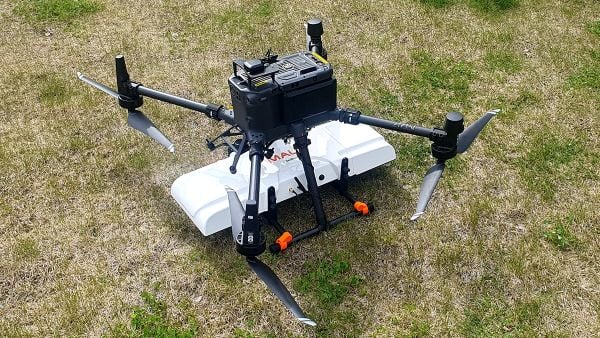
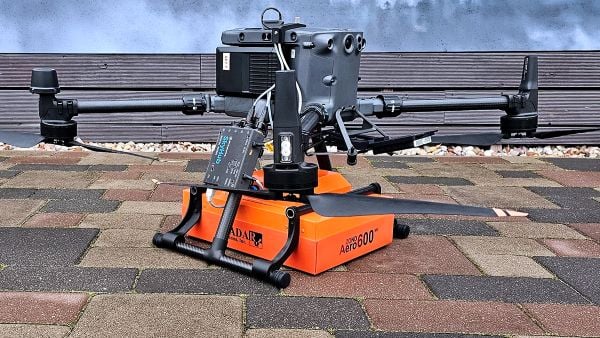
    SPH Engineering is offering two new ground-penetrating radar systems optimized for UAV integration: MALÅ GeoDrone 600 and Zond Aero 600 NG.

    Both 600 MHz antennas significantly enhance high-resolution subsurface investigations with drones, supporting applications in engineering surveys, utility mapping, archaeology, environmental studies and geophysical research. They enable surveyors to capture consistent, high-quality subsurface data in areas difficult, slow, or unsafe to access with traditional ground instruments.

    Operating at 600 MHz, the antennas offer a balance between penetration depth and fine near-surface resolution. Typical penetration from the drone is up to 2 meters, depending on the surface conditions, while SPH Engineering’s True Terrain Following ensures stable antenna height to maintain data quality and repeatability.

    Compared to ground-based carts or vehicle systems, the UAV-borne configuration enables operators to:

    • Survey rocky, uneven, vegetated, or steep terrain
    • Achieve consistent grid spacing and uniform antenna coupling
    • Cover large areas significantly faster than manual GPR methods
    • Improve safety by reducing personnel exposure in risky field conditions

    The MALÅ GeoDrone 600 combines the reliability of MALÅ instrumentation with SPH Engineering’s fully integrated drone workflow. Designed for precision engineering, utility detection, and geophysical mapping, the antenna produces clear, high-quality radargrams suitable for detailed structural assessment and shallow subsurface characterization.

    Key Specifications

    • Central frequency: 600 MHz
    • Operating Bandwidth: 250-900 MHz
    • Typical penetration: up to 2 m (soil-dependent)
    • Sampling: MALÅ HDR technology
    • Antenna design: Shielded
    • Weight: 2.7 kg
    The Zond Aero 600 NG antenna package. (Photo: SPH Engineering)
    The Zond Aero 600 NG antenna package. (Photo: SPH Engineering)

    The Zond Aero 600 NG is a next-generation shielded antenna designed specifically for airborne GPR operations. It offers a strong signal-to-noise ratio, improved ground coupling at low altitudes, and robust performance over natural terrain, making it particularly suitable for geophysical research, archaeology and environmental geoscience.

    Key Specifications

    • Central frequency: 600 MHz
    • Operating Bandwidth: 300-950 MHz (-12 dB)
    • Typical penetration: up to 2 m (soil-dependent)
    • Sampling: Real-Time Sampling (RTS) with high hardware stacking
    • Antenna type: Shielded
    • Weight: 1.7 kg

    Both antennas are fully compatible with SPH Engineering’s UgCS flight planning software and the SkyHub drone onboard computer, enabling:

    • Automated terrain-following flights over complex topography
    • Precise altitude control for optimal GPR signal geometry
    • Synchronized GNSS + radar trace logging (for Zond Aero 600, MALÅ GeoDrone 600 has built-in data recorder).
  • New data collection and mobile mapping software used in surveying and mapping projects

    New data collection and mobile mapping software used in surveying and mapping projects

    1. Data collection software

    Intuitive workflows require minimal training

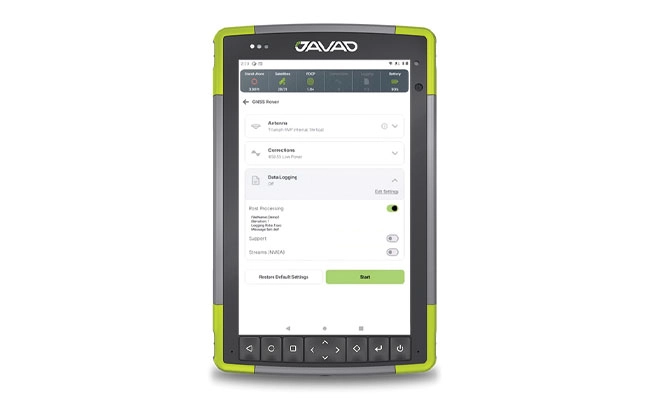
    JAVAD Data Collector (JDC) is designed to run seamlessly on any Android device and interface seamlessly with JAVAD GNSS smart antennas. JDC features simple, intuitive workflows that require minimal training, making it accessible for users of all skill levels.

    The software includes a Signal Bar for a quick view of receiver status, ensuring users can easily monitor their equipment’s performance. Its easy navigation allows users to move through the software efficiently. It is designed to streamline operations of customers ranging from individual surveyors to large surveying firms, making it easier to deploy and manage receivers across teams of any size with minimal training. JDC is available for download through the company website.

    JAVAD GNSS, javad.com

    2. Mobile mapping system 

    Lidar collects 2 million points per second

    Photo:
    Photo: CHC Navigation

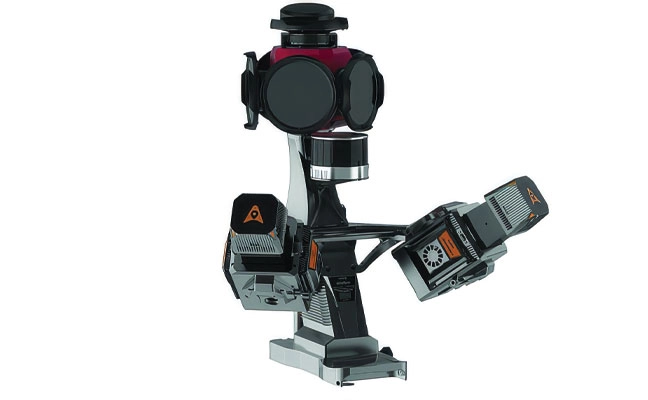
    The AU20 MMS is a vehicle-mounted mobile mapping system designed for accurate and efficient collection of 3D spatial data. It combines high-performance lidar technology, versatile sensor support and intelligent data processing to provide a practical and flexible solution for professionals in road surveying, asset management and infrastructure documentation. Its lidar system uses fourth-generation real-time waveform processing to achieve a scan rate of 2 million points per second and 200 revolutions per second, producing point cloud data with 5 mm accuracy and 3 mm precision. This level of detail allows for the identification of fine surface characteristics and features, supporting comprehensive asset inventories and condition assessments. The system’s long-range, multi-cycle laser technology enables high-density data capture up to 250 m in vehicle-mounted applications.

    CHC Navigation, CHCNAV.com 

  • Virtual vineyards created for self-driving tractors

    Virtual vineyards created for self-driving tractors

    While grapes are being harvested throughout Italy, the Politecnico di Milano is looking to the future of viticulture with an innovative approach that combines mechanics, IT and digital simulation.

    A team of researchers from the Departments of Mechanical Engineering and Electronics, Information and Bioengineering at the Politecnico di Milano has developed a system to test and optimize self-driving strategies for agricultural tractors in a virtual environment.

    The study, published in AgriEngineering (“Scenario Generation and Autonomous Control for High-Precision Vineyard Operations}, presents a complete methodology for creating realistic vineyard scenarios and evaluating control algorithms for autonomous driving. The goal is not simply to reduce the human presence, but to provide a high-fidelity digital environment in which to develop, verify and safely improve agricultural automation solutions based on sensors and predictive algorithms.

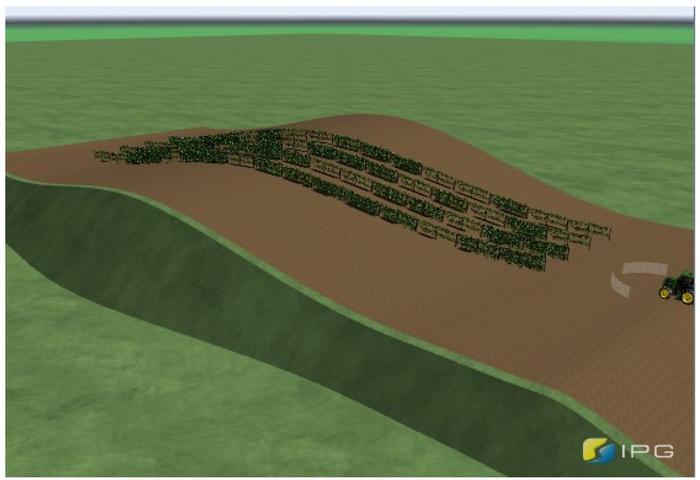
    The research has made it possible to create a digital twin of the vineyard, capable of reproducing slopes, soil irregularities and row layout. Tractors equipped with low-cost GNSS and inertial measurement systems (IMS) sensors and guided by advanced algorithms have been tested in this virtual environment, vehicles capable of moving autonomously between rows and of performing off-field turning manoeuvres with the utmost precision.

    The study explored new methodologies to simulate and independently control vineyard operations. (Credit: Politecnico di Milano, CC BY-SA).
    The study explored new methodologies to simulate and independently control vineyard operations. (Credit: Politecnico di Milano, CC BY-SA).

    “Our approach combines terrain modeling, advanced control and realistic sensors in a single simulation environment. This speeds up research and reduces the risks and costs of real field tests,” said Federico Cheli, professor at the Politecnico di Milano, Department of Mechanical Engineering, and project coordinator.

    According to the researchers, the use of realistic simulations not only reduces the risks and costs of field tests, but can also become a useful tool for operator training. It can accelerate the adoption of new agricultural technologies.

    The project stems from the partnership between researchers at the Politecnico di Milano and the company Soluzioni Ingegneria s.r.l. that develops software for dynamic vehicle simulation. It is part of a broader context of cooperation with industrial companies engaged in research on automation and sustainability in agriculture.

    Ruiz Mayo, C.; Cheli, F.; Arrigoni, S.; Paparazzo, F.; Mentasti, S.; Pezzola, M.E. Scenario Generation and Autonomous Control for High-Precision Vineyard OperationsAgriEngineering 2025, 7(2), 46. https://doi.org/10.3390/agriengineering7020046

  • ProStar, Tersus partner on precision mapping for utilities

    ProStar, Tersus partner on precision mapping for utilities

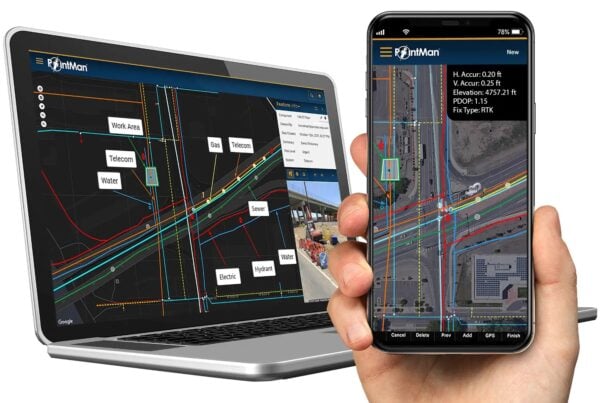
    ProStar Holdings is partnering with Tersus GNSS, a global manufacturer of patented GNSS technologies. ProStar is the developer of PointMan Precision Mapping Solutions and the LinQD enterprise integration platform.

    The collaboration will deliver a complete precision mapping solution to the utility and critical infrastructure industries worldwide, the companies announced.

    The partnership is designed to integrate Tersus’s survey-grade GNSS receivers with ProStar’s PointMan, providing an affordable, field-ready solution available through Tersus’s international distribution network. Tersus GNSS has operations in China, the United States, and Australia, and is recognized for its innovation in GNSS receiver and base station technology for high-precision positioning applications.

    The collaboration represents the latest step in ProStar’s strategy to expand its partnerships through the LinQD open API integration platform, delivering its technologies in one connected precision mapping solution.

    ProStar’s LinQD platform is designed to enable seamless interoperability between emerging technologies and legacy systems, creating a robust global ecosystem for geospatial intelligence. By uniting equipment manufacturers and service providers under this initiative, ProStar continues to strengthen PointMan’s position as a premier mapping solution for the critical infrastructure industry worldwide.

  • Savvy Navvy launches NMEA Connect for integrated onboard navigation

    Savvy Navvy launches NMEA Connect for integrated onboard navigation

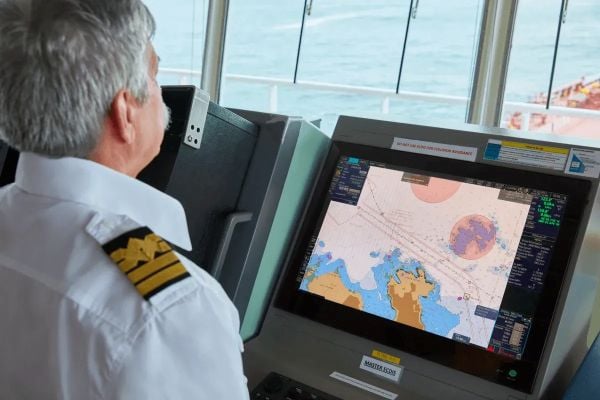
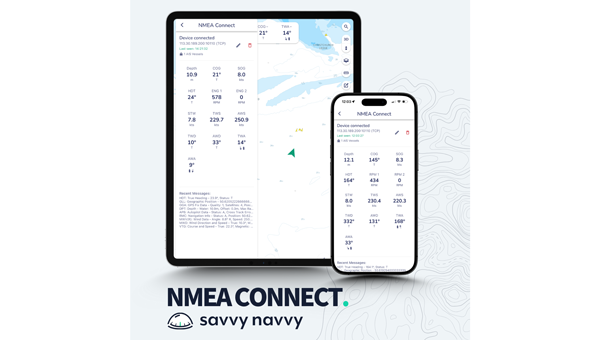
    Marine navigation company Savvy Navvy introduces a new NMEA Connect feature that seamlessly integrates NMEA-enabled boat instruments with the app, providing real-time data and enhanced AIS visibility.

    Working with award-winning Actisense, recognized globally for their NMEA interconnectivity specialty, Savvy Navvy’s new NMEA Connect feature enables boaters to view real-time data including wind, depth, engine RPMs, speed through water, heading and more in the app.

    By combining onboard and over-the-horizon AIS, NMEA Connect delivers a complete view of nearby vessels for safer, smarter navigation. Through NMEA Connect, boaters can now access their boat’s instruments and Savvy Navvy’s smart routing technology from their pocket, eliminating the need to switch between multiple screens or devices.

    “Boaters increasingly seek apps that simplify navigation and enhance onboard intelligence. NMEA Connect combines the proven reliability of NMEA technology with Savvy Navvy’s smart routing capabilities, giving boaters everything they need in one place. For boats without NMEA-compatible chart plotters, Savvy Navvy now becomes your all-in-one display,” says Misha Vysokovskiy, chief product officer at Savvy Navvy.

    Actisense, global specialists in marine electronics, help leisure and commercial operators build safer, smarter and more dependable onboard networks.

    “Savvy Navvy already delivers a huge amount of value to boaters, pulling together geographic location and environmental data streams. The addition of NMEA data connection means that other integral navigation and systems data will give boaters better visibility of things like depth, speed over ground, wind speed, heading and engine RPM — all within the easy-to-use Savvy Navvy app. Actisense are proud to have partnered with Savvy Navvy, lending our NMEA specialism. We share company missions of making journeys safer and more efficient through better data,” says Justin Cohen, commercial director at Actisense.

    Savvy Navvy has had more than 3 million downloads globally. Unlike any other boating navigation solution, Savvy Navvy provides smart routing — giving users optimal routes and dynamic ETAs based on real-time data: departure time, chart information, weather conditions, tide, boat specifications and local regulations.

    The NMEA Connect feature comes just weeks after Savvy Navvy launched an industry-first new chart annotation tool and Three Point Fix, following requests from boating instructors to turn digital charts into interactive learning tools for the next generation of boaters.