Category: Chipsets

  • Cavli CQM220 5G RedCap Module designed for next-gen IoT applications

    Cavli CQM220 5G RedCap Module designed for next-gen IoT applications

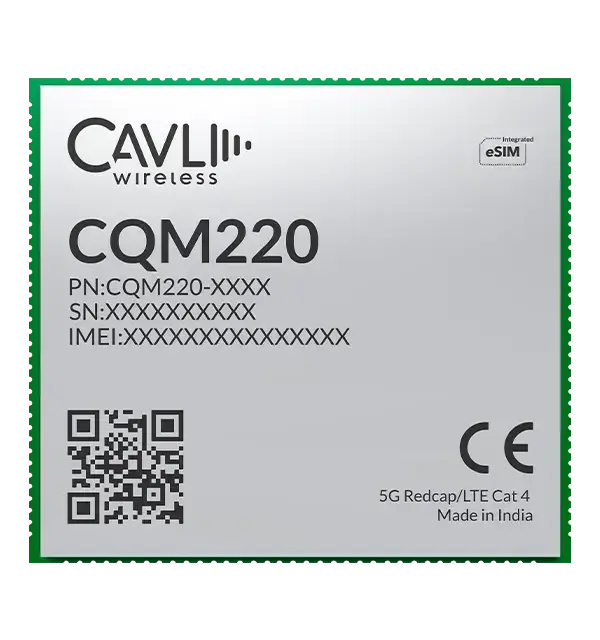
    Cavli Wireless offers the CQM220 5G RedCap module as a key part of its C-Series portfolio. Built on 3GPP Release 17 standards, the CQM220 brings the benefits of 5G reduced capability (RedCap) technology to internet of things (IoT) applications that require higher data rates, lower latency, and improved efficiency compared to traditional LTE solutions, while maintaining a cost- and power-optimized design.

    Cavli Wireless is an end-to-end IoT solutions provider specializing in cellular IoT hardware, connectivity, and software.

    For location-centric and mobility-driven use cases, the CQM220 integrates multi-constellation, dual-band GNSS with L1 and L5 support, including GPS, GLONASS, Galileo, BeiDou, NavIC, QZSS and SBAS. Dual-band positioning improves accuracy, reduces multipath interference, and enhances reliability in dense urban environments, industrial corridors, ports, mining zones, and other signal-challenged areas. This advanced GNSS architecture enables consistent, high-precision location awareness for mobile and geographically distributed IoT assets operating in dynamic conditions.

    The CQM220 supports data rates of up to 220 Mbps downlink and 120 Mbps uplink under 5G RedCap, with LTE Cat 4 fallback for backward compatibility with 4G networks. This combination enables reliable operation across diverse network environments and ensures seamless migration toward 5G for OEMs and solution providers.

    Designed in a compact LGA form factor and additionally offered in an M.2 form factor, the CQM220 provides flexibility for both embedded designs and standardized expansion-slot implementations. The LGA variant measures approximately 28.0 mm x 25.5 mm x 2.7 mm, making it well-suited for compact device architectures while still offering rich peripheral and interface support.

    At the core of the CQM220 is an Arm Cortex-A7 processor clocking up to 1.9 GHz, paired with flexible memory configurations and the OpenWrt operating system. This architecture provides a robust platform for developers to build and deploy applications, while Cavli’s SDK enables custom application development directly on the module. By supporting on-module processing, the CQM220 reduces reliance on external microcontrollers, lowers the bill of materials, and simplifies overall system architecture.

    The combination of precise GNSS and high-throughput 5G RedCap connectivity enables a new class of performance-driven and monitoring-intensive IoT applications. The CQM220 is well-suited for real-time fleet and asset tracking with continuous telemetry, smart logistics platforms with route optimization and cargo condition monitoring, industrial automation systems that rely on uninterrupted sensor data streams, HD and multi-camera smart surveillance deployments requiring sustained uplink bandwidth, and Industry 4.0 environments where low-latency data exchange and edge intelligence are critical to operational efficiency and predictive maintenance. These capabilities make the module an ideal foundation for solutions that demand both accurate location intelligence and sustained high data performance at scale.

    In addition, the availability of the CQM220 in an M.2 form factor makes it an ideal choice for routers, industrial gateways, and customer premises equipment. The standardized M.2 interface enables seamless integration into existing networking hardware platforms, reducing development complexity and accelerating time to market. For industrial gateways, it provides a high-performance 5G RedCap backhaul option to aggregate field device data and securely transmit it to cloud platforms. In enterprise and retail routers, it enables reliable primary or failover WAN connectivity with enhanced throughput. For customer premises equipment in residential, enterprise, or remote deployment scenarios, the M.2 variant supports scalable 5G broadband access with simplified installation, efficient thermal design, and compatibility with modular network architectures.

    The module also offers a wide range of interfaces, including USB 2.0, PCIe Gen2, I2C, UART, SPI, SDIO, I2S, ADC, and multiple antenna interfaces for main, diversity, and GNSS. With support for global and regional 5G and LTE bands, the CQM220 is designed for worldwide deployments, enabling OEMs to build a single hardware platform for multiple markets.


  • Iridium launches next-generation IoT platform

    Iridium launches next-generation IoT platform

    Iridium Communications has unveiled the Iridium 9604, a compact, three-in-one internet of things (IoT) module that integrates Iridium short burst data satellite service, LTE-M cellular connectivity, and GNSS positioning into a single platform.

    By combining these features in one device, the Iridium 9604 reduces solution complexity, lowers costs, and accelerates time to market, making dual-mode IoT connectivity viable for price-sensitive, high-volume deployments.

    The Iridium 9604, built on the u-blox SARA-R5 platform, delivers a compact 16 x 26 x 2.4 mm form factor, best for dual-mode IoT deployments previously cost-prohibitive across industrial, infrastructure, and mobility applications.

    “By integrating cellular, GNSS and Iridium satellite into a single, power-efficient module, we’re giving customers the flexibility to design and deploy lower cost, smaller, power-efficient, and location-aware solutions without the burden of integrating multiple components,” said Tim Last, executive vice president, Iridium.

    The Iridium 9604 beta program, which launched earlier this year and was oversubscribed by a select group of companies, has generated positive industry feedback highlighting:

    • Lower costs, simplified design, and enabling of location-aware network selection
    • Savings of 60 percent or more in board space with the 3-in-1 module, Iridium’s smallest form factor
    • Easy-to-use developer resources.

    “Our customers require essential data and real-time intelligence to operate with confidence anywhere in the world,” said Dean Welten, CEO, Everlink. “By integrating the Iridium 9604 with our secure cloud platform, we can now enable global connectivity, greater operational efficiency, and measurable impact at scale.”

    A unified connectivity architecture

    Representing the next phase of Iridium’s IoT strategy, the Iridium 9604 is moving the company beyond traditional satellite-only modules to a unified, multi-mode connectivity architecture. The Iridium network now offers customers three IoT service paths:

    • Iridium SBD packaged with cellular and GNSS in the Iridium 9604 or SBD/Iridium Burst dedicated modules.
    • Iridium NTN Direct for standards-based direct-to-device using third-party chips.
    • Iridium Messaging Transport-based (IMT) for industrial-scale, larger payload capabilities with the Iridium Certus 9704.

    Commercial availability begins in June, with the Iridium 9604 Development Kit made available for testing satellite and cellular services.

  • Hexagon | NovAtel updates firmware with advancements in GNSS reliability

    Hexagon | NovAtel updates firmware with advancements in GNSS reliability

    Hexagon | NovAtel has released its latest firmware for the OEM7 family of GNSS receivers, featuring improvements in positioning reliability and accuracy.

    Proven in tough defense markets, and now available for all customers, the firmware release sets new standards for innovation and reliability with the introduction of advanced tracking capabilities that enhance GNSS performance in challenging or obstructed environments, such as under foliage or in mixed urban scenarios.  

    Customers can now benefit from enhanced position accuracy and availability, leveraging NovAtel’s SPAN GNSS+INS technology, precise point positioning (PPP), and real-time kinematic (RTK) capabilities. This ensures greater operational availability and reduced downtime, according to the company.

    Key features

    • Tracking improvement of 5-7 decibels (dB) and acquisition improvement of 4-5 dB for most GNSS signals
    • PPP root mean squared (RMS) error improvement up to 26% under challenging conditions
    • RTK RMS error improvement up to 15% under challenging conditions
    • Up to 48% improvement on the 3D position error when using SPAN in severely GNSS-challenged environments.

    “Our latest firmware release is a testament to our dedication to innovation and customer success,” said Jonathan Auld, president, NovAtel Positioning Division, Hexagon. “By enabling receivers to track weaker signals and maintain positioning in the most challenging environments, we are empowering our customers with the tools they need to overcome obstacles and achieve their goals with confidence.”

    The latest firmware for OEM7 GNSS receivers is now available. Visit NovAtel to download it for your specific platform.

  • etherWhere and AsiaRF display new GNSS modules at CES 2026

    etherWhere has partnered with AsiaRF to offer two new GNSS modules based on its EW6181, a module that offers low power consumption with fast acquisition time.

    AsiaRF is offering two module designs (10.1 × 9.7 × 2.3 mm and 18 × 18 × 6.2 mm). The modules are targeted for wireless solutions, including Wi-Fi 7 access points, body-worn cameras, and asset tracking solutions.

    etherWhere specializes in low-power GNSS chipset solutions, and Asia RF is a leader in wireless connectivity. Both companies are attending CES 2026 (visit etherWhere at LVCC – North Hall Booth No. 10763; see the modules on display at the nearby Asia RF booth, No. 10676.)

    For customers with challenging applications, etherWhere offers performance improvement through the use of accuWhere cloud. accuWhere’s multi-modal operation can reduce power consumption for battery operated devices or improve accuracy for demanding applications.

    “We’re thrilled to work with AsiaRF, a leader in wireless connectivity solutions, targeting the enterprise, IoT, and public safety markets. Location awareness is becoming a key requirement across the industry, and we’re excited to be partnering with AsiaRF to bring solutions to the market,” said Michael Raam, CEO of etherWhere.

    “Our partnership with etherWhere marks a significant milestone in AsiaRF’s mission to push the boundaries of wireless innovation,” said Paul Lai, CEO of AsiaRF. “The new GNSS modules address critical market demand for high precision and ultra-low power consumption in compact form factors. We are excited to showcase these solutions at CES 2026, offering our clients the perfect synergy of Wi-Fi 7 connectivity and state-of-the-art geolocation.”

  • Quectel issues cease and desist letters in response to ‘disinformation’

    Quectel issues cease and desist letters in response to ‘disinformation’

    Quectel Jan. 7 announced that it sent letters to Telit Cinterion, Thales Group, DBAY Advisors, Liberty Bell Project and Charles Parton demanding that they stop disseminating false and defamatory statements about Quectel regarding risks associated with its products’ security and the company’s purported connections to the Chinese government.

    The letters assert that Telit Cinterion, Thales Group, DBAY Advisors, Charles Parton, and entities that Parton is associated with including Royal United Services Institute and the Council on Geostrategy, and the Liberty Bell Project, have conducted coordinated disinformation campaigns against Quectel.

    The letters allege that the efforts, which are designed to harm Quectel’s business using malicious falsehoods, constitute inappropriate and unfair business practices and must stop.

    “Quectel believes in fair competition and responsible business conduct,” said Jaron Xu, Quectel’s chief sales officer. “We will not tolerate attempts to interfere with our customer relationships and to compete on unfair terms by spreading maliciously false statements in a coordinated fashion under the guise of independent expertise. We will vigorously defend ourselves against competitors’ unfair business practices and we will not tolerate untrue and defamatory practices targeting Quectel and its customers.”

    Quectel demanded that the competitors and associates cease such conduct immediately.

  • U-blox launches firmware-upgradeable GNSS chips with low power consumption

    U-blox launches firmware-upgradeable GNSS chips with low power consumption

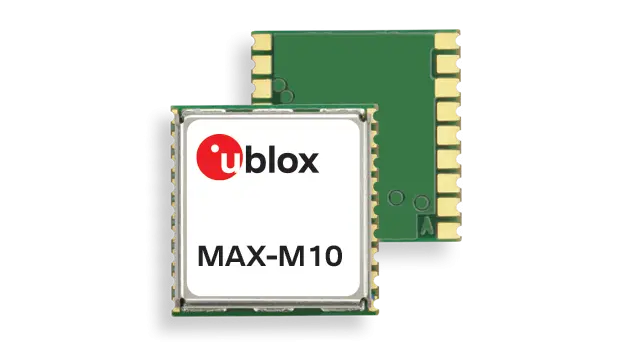
    U-blox has launched the UBX-M10150-KB chip and the MAX-M10N module, the first M10-platform GNSS hardware designed with firmware upgradeability. Both products run the new SPG 5.30 firmware, introducing Low Energy Accurate Positioning (LEAP) — a mode that reduces power consumption by up to 50 percent while maintaining superior positioning accuracy.

    Designed for battery-powered devices, the new chip offers ultra-low power consumption of just 8 mW in continuous tracking. The new products are suitable for vehicle, people and pet tracking, as well as livestock monitoring and wearable applications.

    The UBX-M10150-KB and MAX-M10N extend the capabilities of the M10 family beyond previous ROM-based products. With SPG 5.30, they offer a set of new technical features: LEAP replaces cyclic tracking mode to achieve significant energy savings including external LNA power cycling, and RTCM corrections input supports positioning accuracy down to the sub-meter level. In addition, the firmware adds data logging and geofencing functions, enabling more autonomous tracking and monitoring directly on the device.

    By combining these improvements with firmware upgradeability, the new hardware provides a future-proof solution. Customers can benefit from future firmware releases that deliver ongoing performance enhancements and new functionality throughout the product lifecycle, the company said.

    Both products include lifetime access to AssistNow Predictive Orbits and Live Orbits, which accelerate start-up times and improve positioning performance when using small antennas or operating in weak-signal environments. The EVK-M102 evaluation kit and u-center 2 software are available to simplify the design-in phase for developers.

    The UBX-M10150-KB and MAX-M10N, running SPG 5.30 firmware, are available as engineering samples now and will be fully available later in this month.

  • Syntony launches GNSS recording and playback system

    Syntony launches GNSS recording and playback system

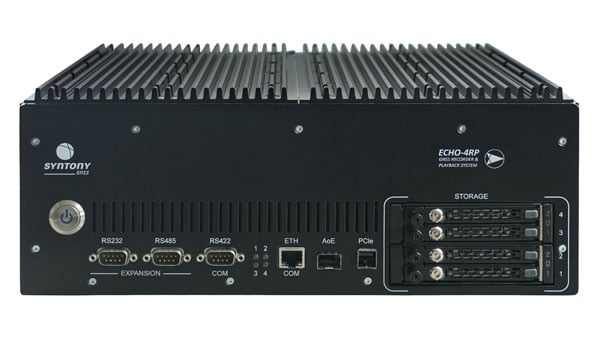
    Syntony GNSS has introduced the Echo 4RP, the latest addition to its Echo series of GNSS record and playback systems. This new model builds on the capabilities of the Echo R&P, offering advanced features designed to address the evolving needs of GNSS testing and development.

    The Echo 4RP expands its frequency range to include L, S, and C bands, surpassing the previous model’s coverage of 1100 MHz to 2550 MHz. This broader spectrum supports both current and emerging GNSS and non-GNSS signals, making it adaptable for diverse testing scenarios.

    The system now supports up to four RF channels for simultaneous recording and playback, an increase from three in the earlier version. This enhancement enables complex testing setups, including multi-antenna configurations and Controlled Radiation Pattern Antenna (CRPA) applications, with precise phase synchronization.


    The Echo 4RP delivers high-quality signal fidelity with options for 16-bit I&Q sampling at 93.75 MHz per channel or 8-bit I&Q sampling at 187.5 MHz per channel across all four channels simultaneously. These options provide flexibility to meet specific testing requirements.

    Weighing less than 10 kilograms, the Echo 4RP combines portability with performance, making it suitable for both laboratory and field environments. Its compact design simplifies deployment without sacrificing functionality.

    The system includes up to 32 terabytes of internal storage with a swappable SSD design, allowing extended recording sessions and efficient data handling.

    The Echo 4RP is designed for a wide range of GNSS testing applications:

    • CRPA testing: Phase synchronization across all channels supports anti-jamming and anti-spoofing technologies for enhanced signal integrity.
    • Multi-antenna configurations: Expanded channel capacity facilitates complex setups for developing advanced GNSS receiver architectures.
    • GNSS spectrum analysis: C-band coverage allows exploration of new GNSS signals and services, aiding research into next-generation navigation technologies.
  • Inertial Labs launches GPS-aided INS with fiber optic gyroscope

    Inertial Labs launches GPS-aided INS with fiber optic gyroscope

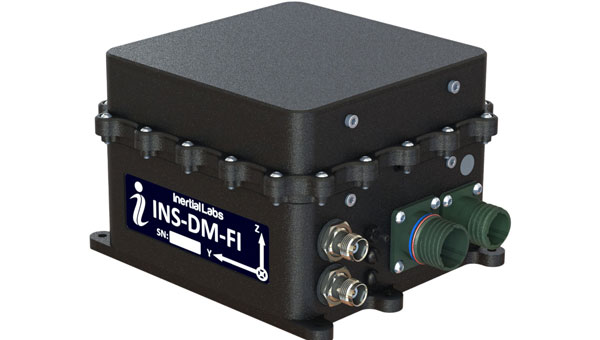
    Inertial Labs has introduced its latest GPS-aided inertial navigation system (INS), the INS-DM-FI. Designed with tactical-grade fiber-optic gyroscope (FOG) technology, the system is engineered to meet the demanding requirements of land, marine and aerial platforms.

    The INS-DM-FI is a robust, IP68-rated system specifically developed for challenging environments. It offers comprehensive protection against electromagnetic interference and integrates multiple advanced capabilities, including an INS, attitude and heading reference system (AHRS), motion reference unit (MRU) and FOG IMU-based technology. An optional embedded air data computer (ADC) allows for precise determination of position, velocity and orientation for mounted platforms.

    The system can deliver precise measurements of horizontal and vertical displacements and absolute orientation (heading, pitch, and roll) in both static and dynamic conditions. The system’s IMU incorporates tactical-grade FOG and MEMS accelerometers for high-precision data collection. It supports multiple GNSS receivers, including NovAtel OEM7, u-blox F9 and Septentrio mosaic-H series, which can process signals from all GNSS satellites. 

    The INS-DM-FI includes an optional air data Computer supported by two barometers and is compatible with external systems like the Stand-Alone Magnetic Compass (SAMC). The system’s design incorporates the latest sensor fusion filter, anti-jamming and spoofing algorithms, navigation capabilities and comprehensive calibration software.

  • Tronics developing north-seeking MEMS gyro, upgrades product line

    Tronics developing north-seeking MEMS gyro, upgrades product line

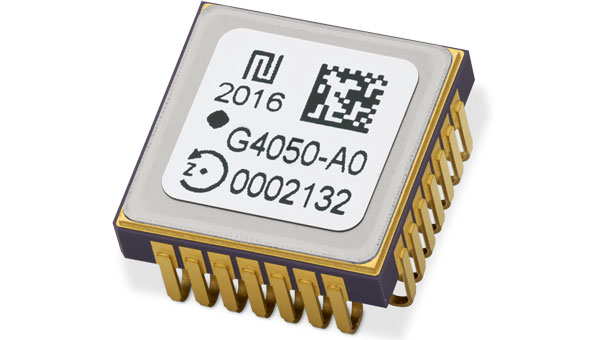
    Tronics Microsystems, a TDK company, has upgraded its GYPRO4000 product line, which consists of tactical-grade digital MEMS gyroscopes. As part of this product line, Tronics highlighted the GYPRO4300 and GYPRO4050 at INTERGEO 2024.

    The GYPRO4300 is a high-dynamics MEMS gyro designed for precision navigation applications. It features a ±300 °/s input range, 200 Hz bandwidth and 1 ms latency, making it ideal for dynamic environments. With a bias instability of 0.4 °/h and an Angular Random Walk of 0.07 °/√h, the GYPRO4300 offers high-performance sensing in a compact, digital and low size, weight and power (SWaP) package.

    Building on the GYPRO4300, the GYPRO4050 is a specialized North-seeking gyro for low-dynamics applications. This derivative offers 2° azimuth accuracy and is currently in the customer sampling stage. The GYPRO4050 maintains the same miniature package design as its predecessor, ensuring consistency across the product line.

    At INTERGEO 2024, TDK showcased a prototype based on an ongoing research and development project. This new development utilizes the same miniature package as the GYPRO4300 and GYPRO4050 but demonstrates ultra-low noise capabilities, achieving an azimuth accuracy of less than 1°. This product is slated for launch in 2025.

    The GYPRO4000 series offers a digital, cost-effective, low-SWaP alternative. The closed-loop architecture ensures strong vibration rejection, maintaining accuracy even in harsh conditions. The 24-bit digital SPI interface and miniature, hermetic ceramic package facilitate swift integration into various systems, including inertial navigation systems (INS) and inertial measurement units (IMU).

  • Unicore releases multi-application RTK module

    Unicore releases multi-application RTK module

    Image: Unicore Communications
    Image: Unicore Communications

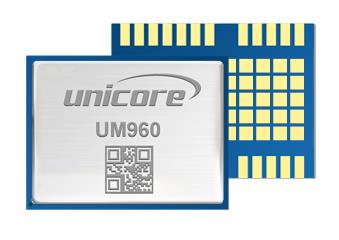
    Unicore Communications has released a GNSS, high precision, real-time kinematic (RTK) module, the UM960. This module can be used for a wide range of applications, such as robotic mowers, deformation monitoring, UAVs, handheld GIS, and more.

    It features a high position fix rate and provides accurate and reliable GNSS positioning data. The UM960 module supports BDS B1I/B2I/B3I/B1c/B2a*, GPS L1/L2/L5, Galileo E1/E5b/E5a, GLONASS G1/G2, and QZSS L1/L2/L5. The module also has 1,408 channels.

    In addition to its small size, the UM960 features low power consumption — less than 450 mW. The UM960 also supports single point positioning and RTK positioning data output at 20 Hz.

  • Inertial Labs launches attitude and heading reference system

    Inertial Labs launches attitude and heading reference system

    Credit: Inertial Labs
    Credit: Inertial Labs

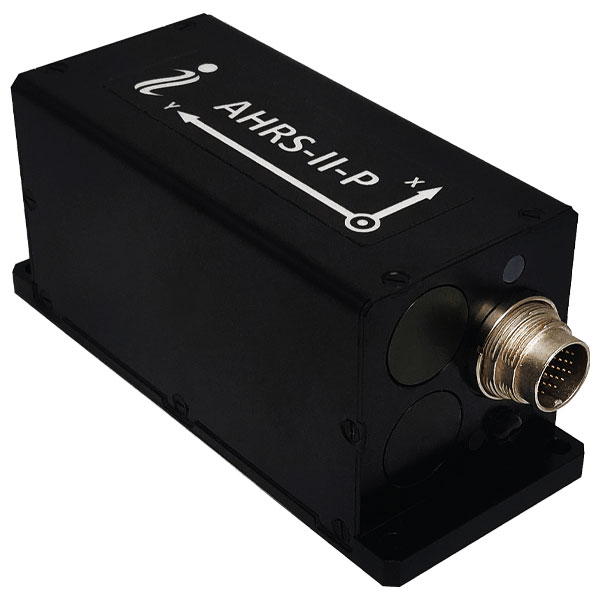
    Inertial Labs has released its new attitude and heading reference system, the AHRS-II-P. This device is an enhanced, high-performance strapdown system that determines absolute orientation (heading, pitch and roll) for any mounted device. The AHRS-II-P can determine orientation for both motionless and dynamic applications.

    The AHRS-II-P contains a tactical-grade inertial measurement unit (IMU) consisting of three high-precision MEMS accelerometers, three advanced MEMS gyroscopes and a high-precision, gyro-compensated, embedded fluxgate compass. It also uses 8 mm fluxgate magnetometers.

    This device is suitable for a variety of devices such as UAVs, antennas, ships and robotic devices.

  • SingularXYZ launches development kit

    SingularXYZ launches development kit


    Image: SingularXYZ
    Image: SingularXYZ

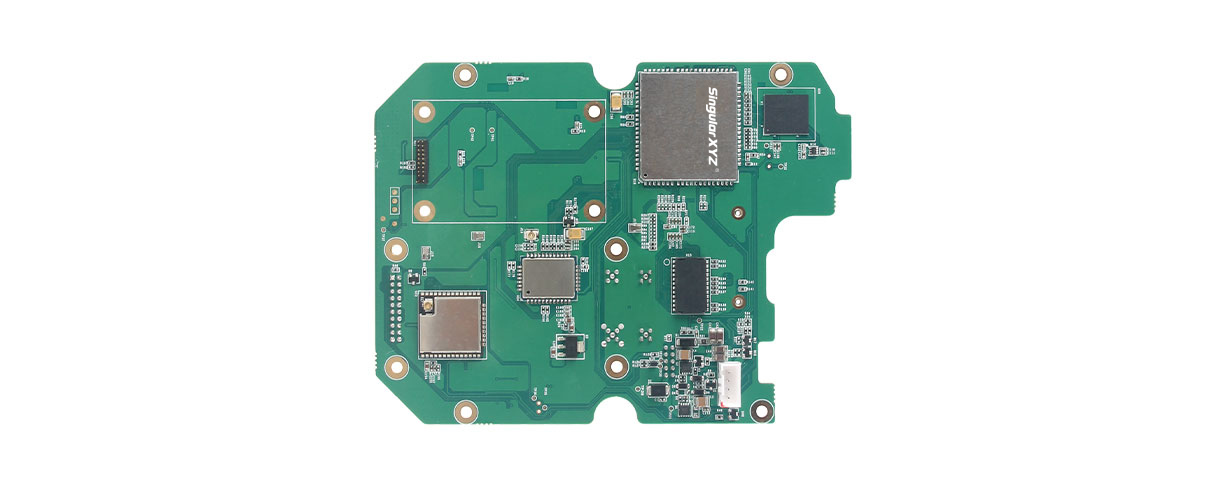
    SingularXYZ, a manufacturer of GNSS technology, has launched its DK100 development kit. This multi-functional kit has selectable single-antenna and dual-antenna modules, full constellation tracking and centimeter-level positioning.

    The DK100 development kit is a ready-to-use kit designed to simplify integration efforts and increase compatibility with a variety of applications. The kit reserves standard adapter board interfaces to connect different GNSS modules and radio modules for a variety of needs.

    The development kit features a 4G module, Wi-Fi, Bluetooth, and Ethernet modules as well as status indicators on a single PCBA.

    The DK100 development kit comes with its own web page for configuration. With Ethernet and Wi-Fi access, users can monitor device status and configure working mode and data transmission settings on the page.

    The centimeter-level DK100 kit can be integrated in a range of horizontal and vertical applications, such as construction using CORS networks, precision agriculture, construction machinery, smart navigation, monitoring, robotics, unmanned systems and more.

    The new DK100 development kits are available now.