Category: Chipsets

  • Launchpad: Navigation software, UAV and lidar systems

    Launchpad: Navigation software, UAV and lidar systems

    A roundup of recent products in the GNSS and inertial positioning industry from the March 2023 issue of GPS World magazine.


    UAV
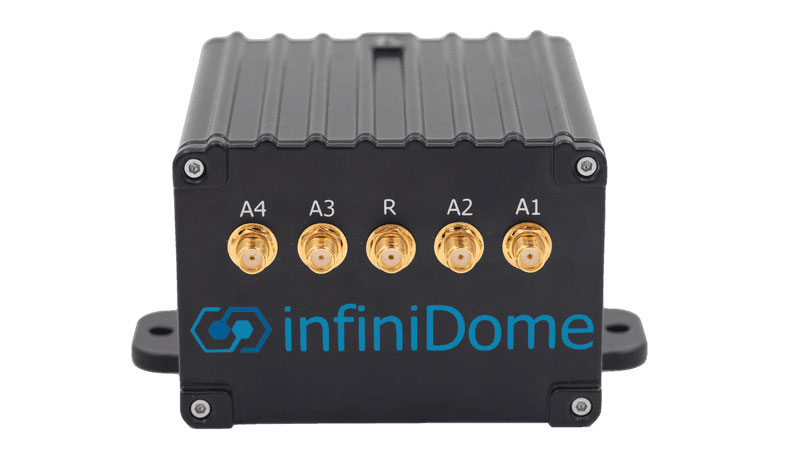
    Image: InfiniDome
    Image: InfiniDome

    Anti-Jamming Device
    Provides protection from three directions of attack 

    The GPSdome 2 is tailored to defend small- to medium-sized tactical UAVs as well as manned and unmanned ground vehicles. With a small form factor (500 g, 87 mm x 91 mm x 61.55 mm) and minimal power consumption, GPSdome 2 is suitable for loitering munitions as well as UAVs. Fully retrofit and completely standalone, the system is compatible with almost any off-the-shelf GNSS receiver as well as standard active GNSS antennas, meaning that it can be integrated into existing GPS systems or into new product lines, manned or unmanned. With sophisticated algorithms and a proprietary RFIC, GPSdome 2 analyzes RF interference in the environment and combines multiple antenna patterns to create and dynamically steer three nulls in the direction of any hostile signal. GPSdome 2 provides simultaneous dual-frequency protection (GPS L1 + L2 or GPS L1 + GLONASS G1), creating up to three nulls, protecting from three jamming directions within each band in real time, making it suitable for PNT applications. The GPSdome 2 is a dual-use, non-ITAR device and comes with optional mil-spec compliance.
    InfiniDome, infinidome.com

    uAvionix.jpg
    Image: uAvionix

    Command and Control
    Designed for easy integration

    The SkyLine C2 management platform and muLTElink airborne radio systems (ARS) are designed to integrate, which enables a self-healing command-and-control network capable of both path and link diversity. This eliminates lost-link possibilities over broad terrain and altitude ranges. MuLTElink ARS consists of two models — muLTElink915 and muLTElink5060, the core of the uAvionix C2 system. The muLTElink915 model combines globally licensed aviation LTE, enhanced with frequency hopping 902 MHz – 928 MHz industrial, scientific and medical frequencies capability. The muLTElink5060 model combines global LTE with aviation-protected 5,030 MHz – 5,091 MHz C-band. Each muLTElink model allows up to one external CNPC radio to be optionally connected to allow simultaneous use of all three frequency ranges, higher power C-band operation or future radio integrations.
    uAvionix, uAvionix.com 
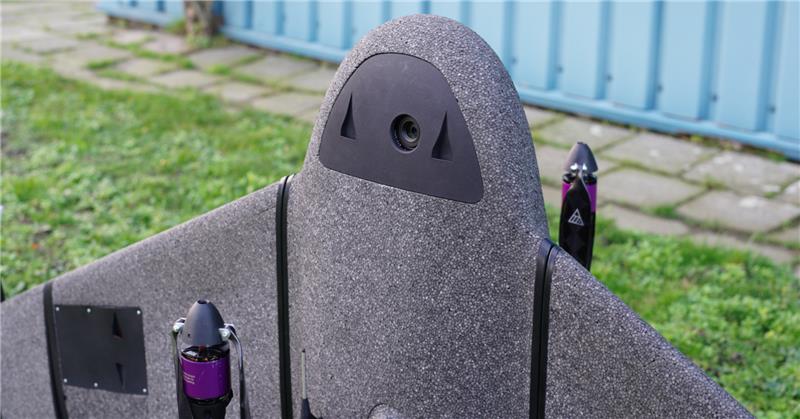
    Image: Atmos
    Image: Atmos

    VTOL UAV
    With Sony a7R mark III and IV camera 

    Atmos has integrated the Sony a7R mark III and IV cameras into its vertical take-off and landing (VTOL) fixed-wing UAV, the Marlyn Cobalt. This will increase coverage and accuracy achieved in a single flight for surveyors. Both cameras have an ISO of 32,000, which is expandable to 102,400, and camera sensors with high megapixel count — 42,4 MP for the a7R III and 61 MP for the a7R IV. When combined with Zeiss’ 35 mm and 21 mm lenses, it enables UAV surveyors to achieve ground sample distance levels below one 1 cm. The integration of the two cameras enables Marlyn Cobalt users to map an area of 210 ha with centimeter-level accuracy in a single flight.
    Atmos, atmosuav.com
    Trueview 720. (Image: GeoCue)
    Trueview 720. (Image: GeoCue)
    TrueView 535. (Image: GeoCue)
    TrueView 535. (Image: GeoCue)
    Accuracy Star. (Image: GeoCue)
    Accuracy Star. (Image: GeoCue)

    UAV and Lidar Systems
    Suitable for geospatial professionals 

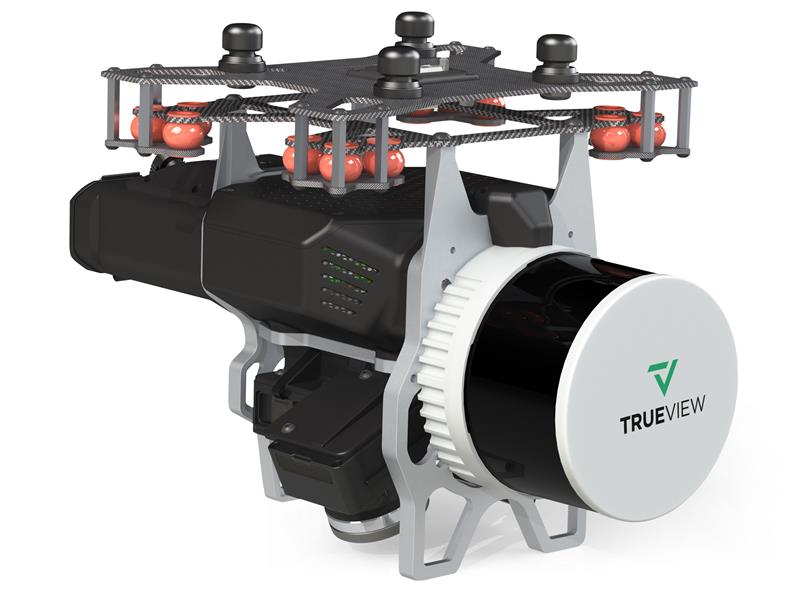
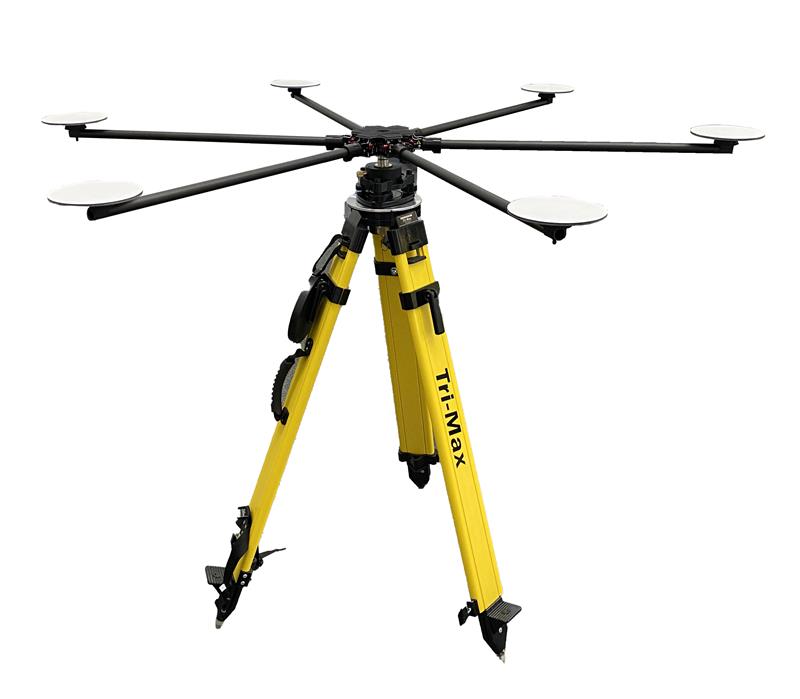
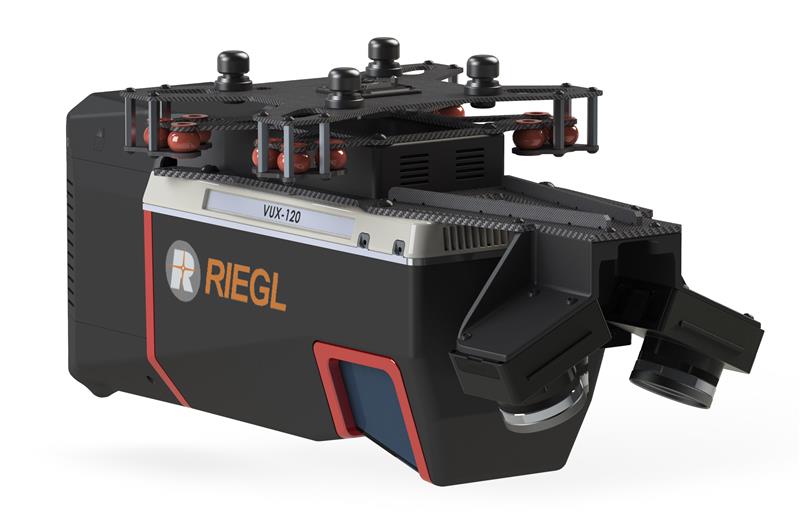
    TrueView 535 consists of updated lidar sensors, adding a third return, increasing mapping abilities below canopy. An additional third nadir camera offers another point of view and improves photogrammetry quality. It also includes a longer, usable lidar range to increase flexibility. TrueView 720 is a fourth-generation Riegl VUX-120 with three laser beam orientations. It provides high-point density corridor mapping. Using the Riegl VUX-120 with three laser beam orientations (nadir, +10 degrees forward and –10 degrees backward) and three oblique/nadir cameras enables data collection from more surfaces in one flight path. One application of TrueView 720 is scanning power lines. Users can capture the poles vertically, front and back. The extreme range of this system means it can be integrated with UAVs, airplanes or helicopters. In addition to the two sensor payloads, GeoCue has launched its LP360 software add-on for processing and visualization — the 3D Accuracy and the Accuracy Star hardware.
    GeoCue, geocue.com

    OEM
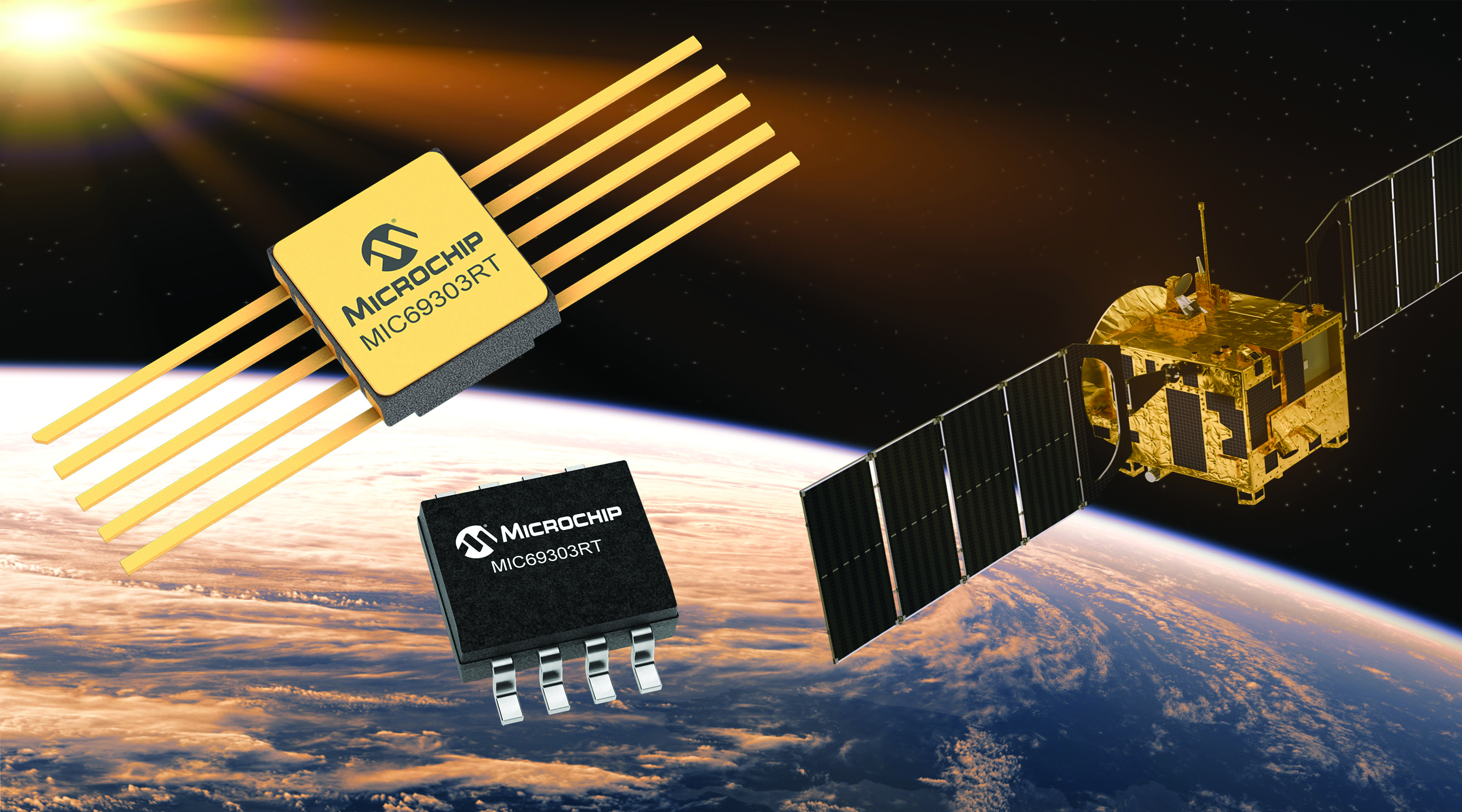
    Image: Microchip
    Image: Microchip

    Voltage Regulator
    Device for LEO space application

    The MIC69303RT is a radiation-tolerant power management device for space application developers. It is a high-current, low-voltage device targeting low-Earth orbit space applications. The MIC69303RT operates from a single low-voltage supply of 1.65 v to 5.5 v and can supply output voltages as low as 0.5 v at high currents. It offers high-precision and low dropout voltages of 500 mv under extreme conditions. The MIC69303RT is a companion power source solution for microcontrollers, such as the SAM71Q21RT and PolarFire field-programmable gate arrays. MIC69303RT is designed for harsh aerospace applications and remains operational in temperature ranges from -55 C to +125 C.
    Microchip Technology, microchip.com

    Image: Spirent Communications
    Image: Spirent Communications

    LEO Satellite Device
    Designed for GNSS/PNT lab testing

    SimORBIT is a low-Earth-orbit (LEO) satellite solution software designed to aid developers in determining LEO orbits more accurately for GNSS/PNT lab testing. The software replicates LEO orbits so that simulations can provide the realistic environment of a LEO satellite, including gravitational and atmospheric impacts the satellite could encounter in space. Developers can create non-ICD signals via I/Q injection, or by the “Flex” feature, generating space-centered PNT signals to be developed in the lab as realistically as possible. Spirent Communications developed SimORBIT in partnership with SpacePNT.
    Spirent Communications, spirent.com
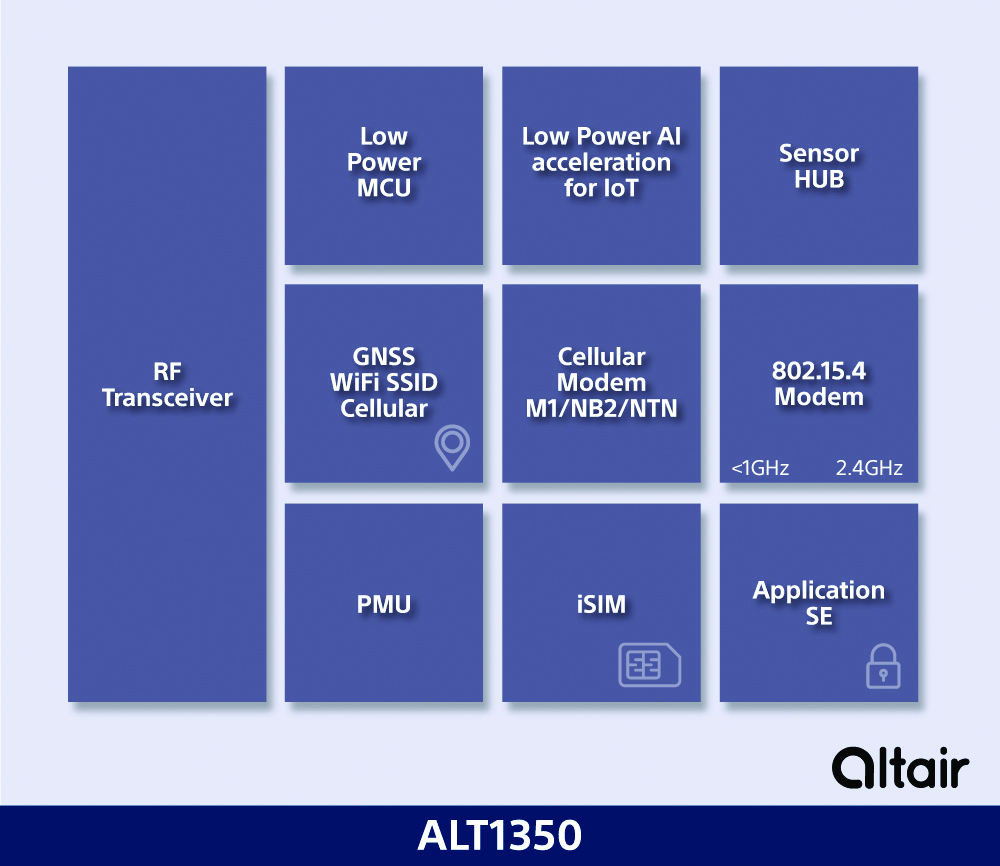
    Image: Sony
    Image: Sony

    5G Chipset
    Includes GNSS 

    The ALT1350 implements GNSS, cellular and Wi-Fi-based location in a single chipset. The cellular LTE-M/NB-IoT chipset is designed to enable additional low-power, wide-area (LPWA) communication protocols; intermittent LTE and GNSS (GPS/GLONASS) navigation for low-cost applications; and concurrent LTE and L1/L5 GNSS for tracking applications. The ALT1350 incorporates a sensor hub to collect data from the sensors while maintaining ultra-low power consumption. It also provides cellular and Wi-Fi-based positioning and is tightly integrated to provide power-optimized concurrent LTE and GNSS to accommodate various tracking applications, which can be demanding with a single chip. The chip is designed to enable deployments for the internet of things (IoT), including location technologies.
    Sony, altair.sony-semicon.com
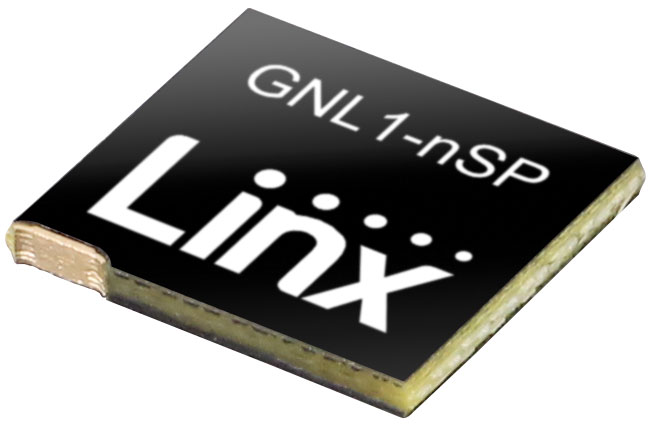
    Image: Linx Technologies
    Image: Linx Technologies

    Embedded Antenna
    Supports multiple satellite constellations

    The ANT-GNL1-nSP is a surface-mount embedded GNSS antenna supporting GPS, Galileo, GLONASS, BeiDou and QZSS in the L1/E1/B1 bands. The ANT-GNL1-nSP antenna exhibits high performance in a compact size (10 mm x 8 mm x 1 mm) and features linear polarization and an omnidirectional radiation pattern. The antenna is available in tape and reel packaging and is designed for reflow-solder mounting directly to a printed circuit board for high-volume applications.
    Linx Technologies, linxtechnologies.com
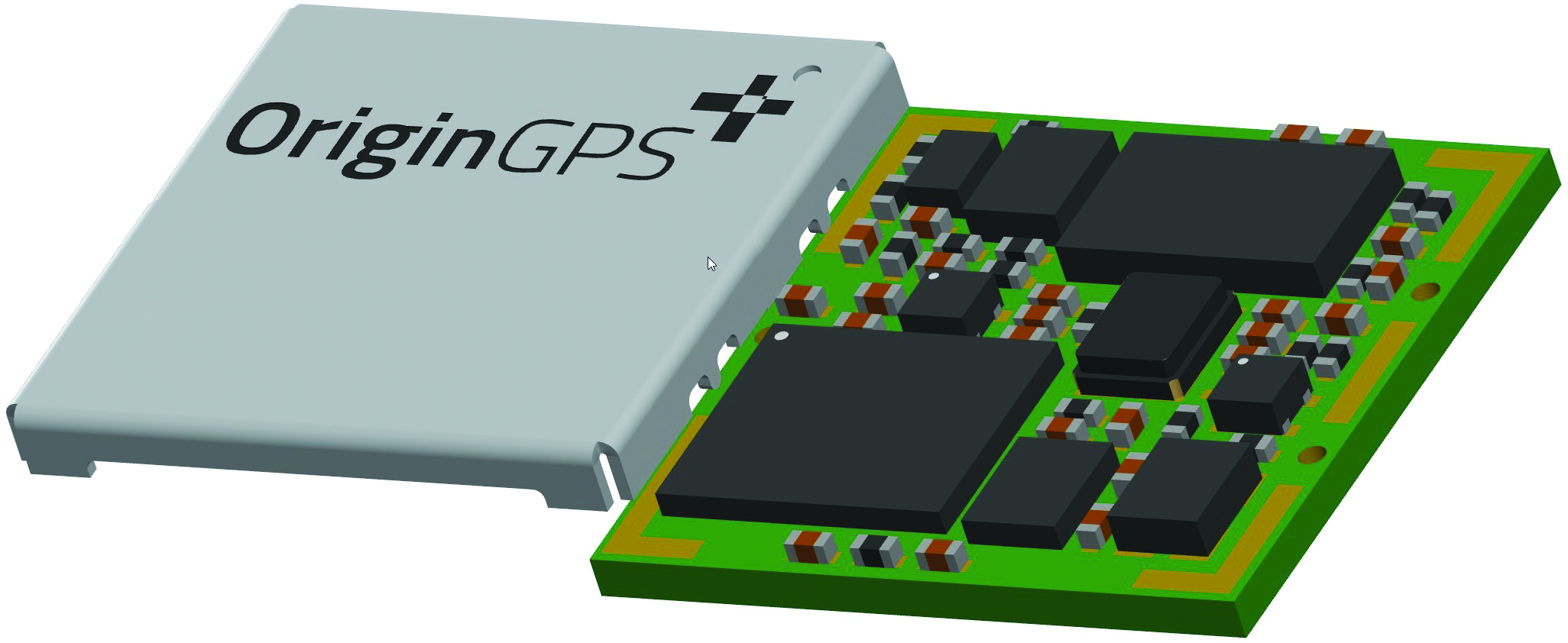
    Image: OriginGPS
    Image: OriginGPS

    GNSS Module
    Based on a MediaTek chipset

    The ORG4600-MK01 dual-frequency module provides higher precision than the company’s previous modules. It has sub-1 m precision at a cost lower than that of the company’s first L1+L5 module, the ORG4600-B01, which is based on Broadcom’s chipset. The 10 mm x 10 mm ORG4600-MK01 was designed for applications deployed in challenging environmental conditions. The solution also includes RTCM, a logger and accurate orbit prediction.
    OriginGPS, origingps.com


    MAPPING

    Image: Mapbox
    Image: Mapbox

    Navigation Software
    Includes enhancements to existing software and more

    Navigation software development kit version 2.9 provides pre-built applications compatible with Android and IOS. SDK v2.9 provides the primary navigation components across a workflow using lines of code instead of starting from square one. The drop-in user interface is customizable to reflect a developer’s brand, obviating the need to manually develop a full end-to-end application. Navigation SDK Copilot — a backend analytics tool for CX on navigation applications — collects trace files of navigation sessions and search analytics data from users. Developers can use this data to gather feedback and collective user data to create touch points with users and improve application experience based on their data-drawn conclusions. Matrix API has been updated to support scheduled departure times and provide optimal driving routes, creating a more accurate estimated time of arrival.
    Mapbox, mapbox.com

    Image: Hexagon
    Image: Hexagon

    Defense Platform
    For developing Android applications 

    LuciadCPillar is designed for the development of mobile applications for dismounted soldiers in the field. Developers can build applications with 2D and 3D views. It features military symbology and supports many geospatial data types including vector data, raster data, elevation data, point clouds and 3D meshes. It has the same capabilities found in desktops, in-vehicle and browser applications built with LuciadLightspeed, LuciadCPillar and LuciadRIA. The platform offers capabilities to match high-resolution screens, graphic processing units and multi-core processors including the ability to display 3D data in mobile applications. LuciadCPillar supports ARM processors and an application programming interface, which aligns with the Android developer experience. Impact, a French system integrator, partnered with Hexagon to test LuciadCPillar and will integrate it into its Delta Suite product, which is used by the French Special Operations Command. LuciadCPillar is part of Luciad 2022.1, which is available now globally.
    Hexagon, hexagon.com
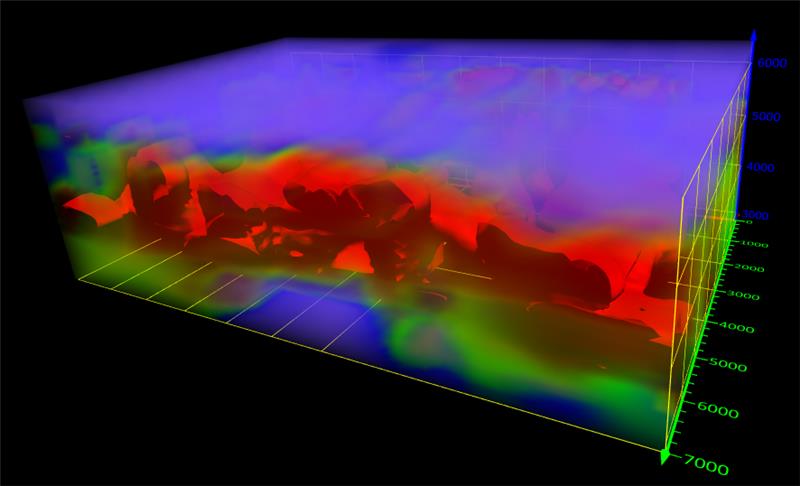
    Image: Golden Software
    Image: Golden Software

    Surface Mapping
    Designed for 3D surface mapping 

    The Surfer package is designed for 3D surface mapping and provides robust subsurface visualization and modeling functionality by incorporating many true 3D gridding and visualization tools. With the enhanced functionality, users can now model an additional variable, a C variable, such as a contaminant or chemical concentration, along with the traditional X, Y, Z values. Surfer also includes the ability to create a 2D map of a slice-through 3D grid, which users can move up and down through the grid, illustrating how the C value changes with depth. Part of Surfer’s enhancements is isosurface creation, enabling visualization of the 3D grid in the 3D view as an isosurface, providing another way to see how C data varies with depth or elevation. The new 3D-rendered volume functionality also allows users to visualize the 3D grid in the 3D view as a solid body by assigning colors to different C values, highlighting variations in the data.
    Golden Software, goldensoftware.com
     

  • Sony Israel offers low-power 5G chipset with GNSS

    Sony Israel offers low-power 5G chipset with GNSS

    Innovative chip offers multiple ultra-low power connectivity options and low-power processing for internet of things (IoT) market

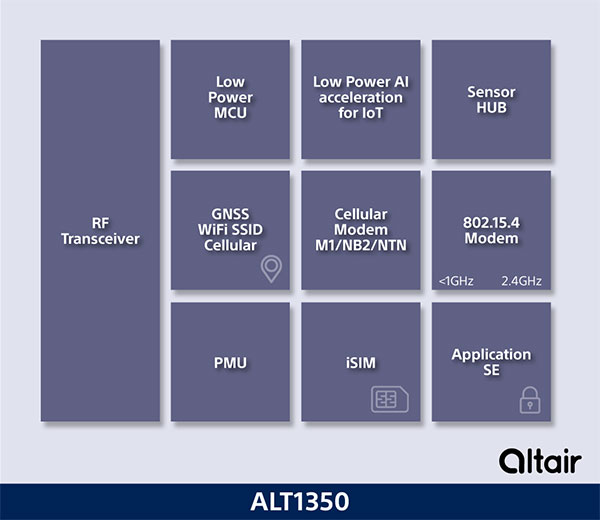
    Sony Semiconductor Israel has launched the ALT1350 for the global market. The ALT1350 is a cellular LTE-M/NB-IoT chipset designed to enable additional low-power wide-area (LPWA) communication protocols, as well as GNSS, in a single chipset.

    The ALT1350 incorporates a sensor hub to collect data from the sensors while maintaining ultra-low power consumption. It also provides cellular and Wi-Fi-based positioning and is tightly integrated to provide power-optimized concurrent LTE and GNSS to accommodate various tracking applications, which can be demanding with a single chip.

    “The market demand for this multiprotocol, ultra-low power IoT chipset is intensifying, and Sony’s ALT1350 chipset meets that demand,” said Nohik Semel, CEO at Sony Semiconductor Israel. “This is the game changer we’ve been waiting for, which will enable IoT deployments, utilizing universal connectivity on edge processing and multiple location technologies.”

    Diagram: Sony
    Diagram: Sony

    The ALT1350 is an advanced cellular IoT solution, with architecture that resolves IoT service provider’s power-consumption concerns. Its optimized standby mode (eDRX) reduces power consumption by 80% when compared to the current generation and by 85% when using it to send short messages.

    Overall improvements in the system’s power consumption will enable four times longer battery life for a typical device, enabling additional functionalities and use cases with smaller batteries.

    The ALT1350’s sub-GHz and 2.4 GHz integrated transceiver enables hybrid connectivity for smart meters, smart cities, trackers and other devices. This enhances coverage, reduces costs and further decreases power consumption using IEEE 802.15.4-based protocols such as Wi-Sun, U-Bus Air and wM-Bus, in additional point-to-point and mesh technologies.

    The chipset is designed to support the wide-ranging market needs of utilities, vehicle, tracking devices, smart cities, connected health and other verticals. Device manufacturers across all verticals can take advantage of its low power consumption, long-lasting battery life, mature Release 15 LTE-M/NB-IoT software stack, and future compatibility with 3GPP release 17.

    All these guarantee longevity and ensure the ALT1350 will operate with 5G networks. It contains an additional LPWA radio transceiver with targeting operation in <1 GHz and 2.4 ISM bands for universal connectivity options.

    The chipset provides advanced on-the-edge low power processing capabilities, ranging from data collection, low power AI/ML processing of the data, and MCU to enable IOT applications on the chip.

    The device is now sampling to lead customers and will become commercially available in 2023. The ALT1350 also includes a secure element for application usage and integrated SIM designed for PP-0117 to meet GSMA requirements.

  • SBG Systems introduces Quanta Micro INS for UAV surveying

    SBG Systems introduces Quanta Micro INS for UAV surveying

    Photo: SBG Systems
    Photo: SBG Systems

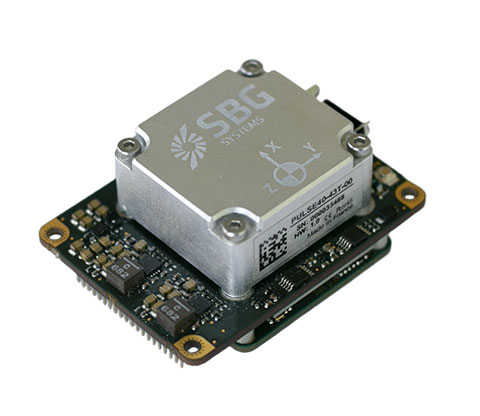
    SBG Systems has launched the Quanta Micro, a navigation system in an extremely compact form factor with a dual-frequency, quad-constellation GNSS receiver for centimeter position with a high-performance inertial measurement unit (IMU).

    The Quanta Micro is a real-time kinematic (RTK) capable, miniature inertial sensor that measures 50 mm x 37 mm x 23 mm and weighs 38 g. Its high-end performance includes centimeter positioning, roll/pitch with less than 0.02° error, and heading with less than 0.06° error. It is suitable for all applications, especially those that have low size, weight, power and cost (SWaP-C) requirements. Quanta Micro has already been selected for the development of lidar payloads for UAV and mobile-mapping systems.

    To achieve such performance in the harshest conditions, Quanta Micro benefits from SBG Systems’ unique experience in designing and manufacturing inertial sensors, including an individual calibration of each of the manufactured sensors across the full range of working temperatures (–40° C to +85° C).

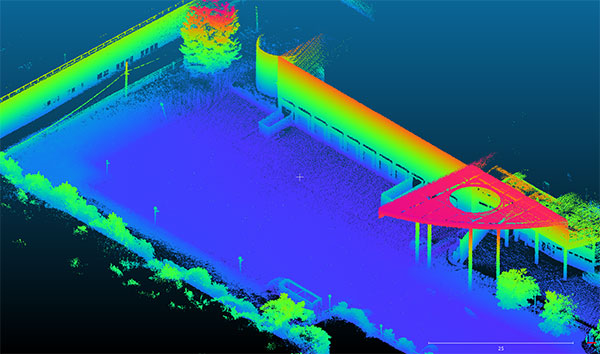
    Lidar point cloud of SBG Systems head office created using the Quanta Micro. (Photo: SBG Systems)
    Lidar point cloud of SBG Systems’ head office created using the Quanta Micro. (Photo: SBG Systems)

    Despite its compact form factor, Quanta micro embeds all the features usually present in the other SBG inertial sensors: a built-in datalogger, Ethernet connectivity, a PTP server, multiple serial ports, a CAN port and more. It is easy to configure with a user-friendly built-in web interface; but can also be configured using SBG systems’ API or ROS drivers.

    While the Quanta Micro supports dual GNSS antenna mode to improve heading accuracy in low dynamic applications, it has been designed to maintain exceptional heading performances even in a single antenna configuration. This makes it the right tool for UAV payloads that cannot embed two GNSS antennas.

    Post processing with Qinertia. To further enhance its extreme real-time performances, the data acquired from the Quanta Micro can easily be post-processed using Qinertia: SBG’s own post-processing kinematic tool. This allows users to process the data with tight coupling of the GNSS and inertial data, and a merge of forward and backward solutions allowing it maintain centimeter precision even during multiple seconds of GNSS outages. It also improves heading errors to less than 0.035° and roll/pitch to less than 0.015°.

  • Tallymatics launches TW5390 antenna with IP network and L-band capability

    Tallymatics launches TW5390 antenna with IP network and L-band capability

    Photo: Tallymatics
    Photo: Tallymatics

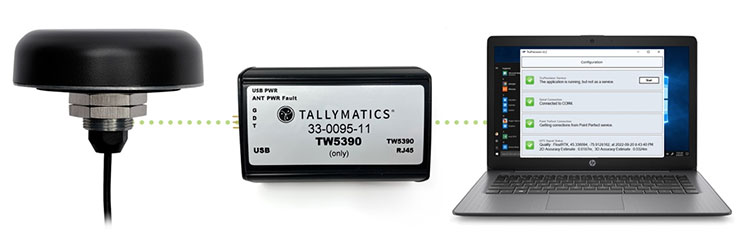
    Tallymatics has introduced the TW5390 smart antenna with IP network and L-band augmentation service capability.

    Tallymatics is a division of Tallysman Wireless, a Calian company, specializing in of precision geolocation applications and equipment.

    To create the TW5390, Tallymatics leveraged its experience in GNSS applications, design and manufacturing,  combining Tallysman’s GNSS antenna technology with the high-precision u-blox F9R GNSS receiver and DS9 L-Band receiver modules.

    The combination delivers a reliable and convenient smart antenna yielding <6 cm accuracy, with precise point positioning/real-time kinematic (PPP/RTK) augmentation services via the PointPerfect subscription service.

    The TW5390 solves the complexities of GNSS design — it sends the host system PPP/RTK corrected coordinates in NMEA format over a robust RS-485 interface, assuring results that meet customers’ high expectations.

    Features of the TW5390

    • simultaneous dual-band coverage for GPS, Galileo, GLONASS and BeiDou
    • superior multipath rejection with Tallysman Accutenna technology
    • low noise amplifier
    • Tallysman’s eXtended Filtering (XF) technology, which mitigates saturation from nearby RF signals (targeting
    • LTE and Ligado)
    • tight, measured phase-center offset and low axial ratio, enabling accurate and precise positioning
    • direct decoding of PointPerfect, SPARTN formatted augmentation packets (u-blox specific)
    • IP network and L-band augmentation communications channels
    • built-in inertial measurement unit for UDR and ADR
    • fast convergence time of 40 seconds (PPP/RTK) with < 6 cm accuracy
    • IP69K package
    • RS-485 transceivers
    • Tallymatics SDK available with computer interface, TruPrecision software and 60 days of free PointPerfect
    • service
    • cable lengths of 5, 15 and 25 meters
    • rugged, fixed mount
  • Septentrio’s Stellar 2022

    Septentrio’s Stellar 2022

    Receiver maker Septentrio, based in Leuven, Belgium, has made a series of announcements this year that push the industry forward, from updating existing receivers to accepting new services to launching new product lines.

    Head of the CLAS

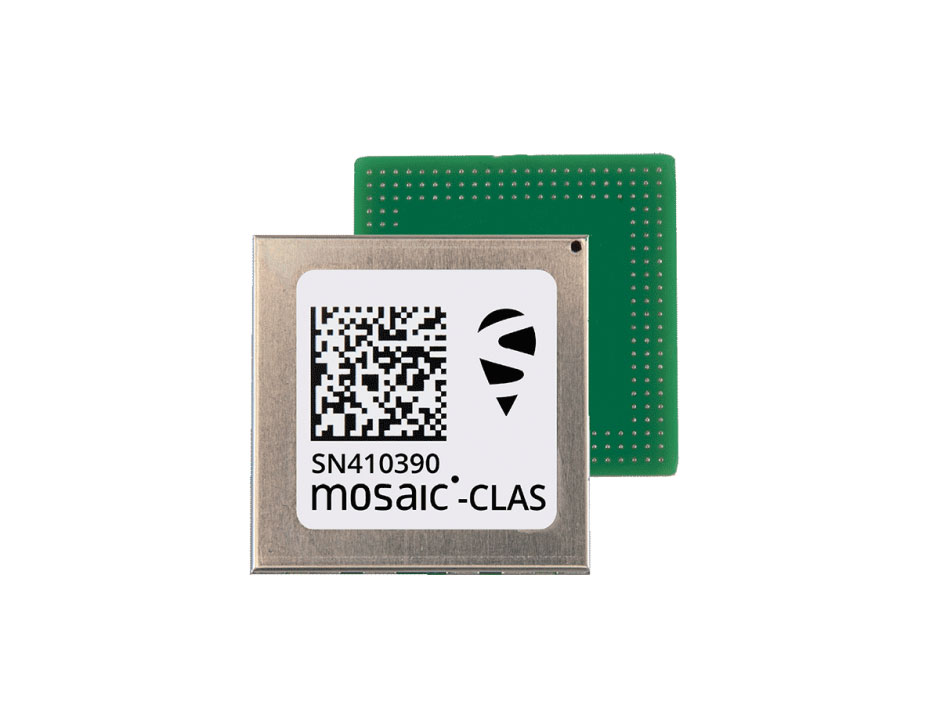
    In March, the company launched three new products that support Japan’s high-accuracy Centimeter Level Augmentation Service (CLAS). CLAS, which receives the L6 signal, transmits high-accuracy corrections from Japan’s QZSS constellation. The technology was developed in close cooperation with CORE, a leading integrator of high-accuracy positioning technology and services in Japan.

    Photo: Septentrio
    Photo: Septentrio

    Septentrio now offers the mosaic-CLAS receiver for high-volume industrial applications; the AsteRx-m3 CLAS that combines PPP-RTK CLAS with dual-antenna heading functionality; and the AsteRx SB3 CLAS in a ruggedized IP68 enclosure to protect it in harsh environments.

    Septentrio is simultaneously offering various receiver types to the Japanese market ensuring an optimal match between products and customer needs in various applications including robotics, precision agriculture, construction, machine control and UAV.

    Stopping the Spoofs

    Following the CLAS upgrade, the mosaic line received another boost in April, when Septentrio announced Open Service Navigation Message Authentication (OSNMA) functionality. OSNMA offers end-to-end authentication on Galileo’s civilian signals, protecting receivers from OSNMA attacks.

    For the past two years, Septentrio has been working closely with the European Space Agency (ESA) during the test phases of OSNMA deployment. The know-how gained during this period allowed Septentrio to be one of the first to market with this advanced security feature.

    OSNMA’s anti-spoofing capability complements Septentrio’s Advanced Interference Mitigation (AIM+) technology and further strengthens the overall security of Septentrio GNSS receivers, making them suitable for assured PNT solutions as well as critical infrastructure, such as 5G network synchronization.

    Vertical Markets

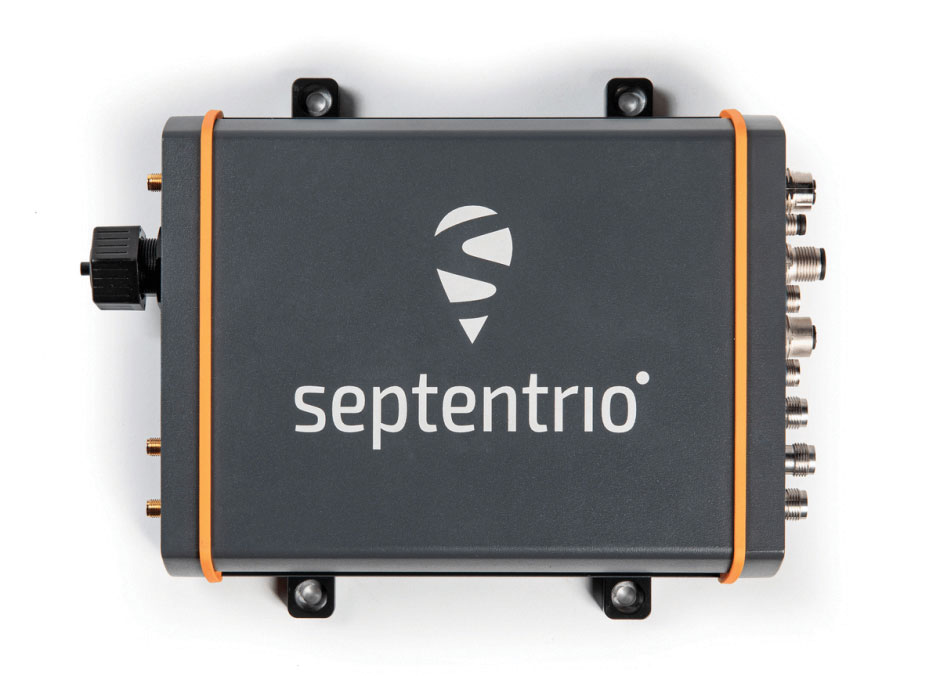
    Machine Control. In April, Septentrio launched the AsteRx-U3 ruggedized GNSS receiver, successor to the AsteRx-U for construction, mining and other machine control applications. The new receiver combines Septentrio’s latest triple-band precise positioning GNSS core with extended wireless communication features including Wi-Fi, UHF and 4G LTE. The versatile connectivity features of this receiver make it easy to fit it into any control system and enable simple and cost-effective overall design.

    Photo: Septentrio
    Photo: Septentrio

    Unmanned Aerial Vehicles (UAVs). Also in April, Septentrio is collaborating with MicroPilot, maker of professional UAV autopilots. Septentrio receivers, including the small form factor mosaic modules, as well as the OEM board AsteRx-m3, will support seamless integration of positioning and orientation into MicroPilot’s autopilot ecosystem. MicroPilot chose Septentrio GNSS receivers for their resilience to radio interference such as jamming and spoofing, as well as security and robustness with high-accuracy real-time kinematic (RTK) positioning.

    Marine. In May, Septentrio introduced the housed AsteRx-U3 Marine and the OEM board AsteRx-m3 Fg, two receivers for dredging, marine construction and offshore applications. Both offer accurate positioning near shore and offshore via centimeter-level real-time kinematic (RTK) or the built-in Fugro precise point positioning (PPP) sub-decimeter subscription service, delivered either over NTRIP internet or over L-band satellite.

    Corrections delivered over L-band allow dredging, bathymetry or marine construction projects even in areas where there is no internet service. The AsteRx-U3 Marine receiver, enclosed in an IP68-rated housing, offers a dedicated L-band demodulator with a separate L-band RF input, which allows for the use of dedicated antennas for excellent reception of L-band signals even at high latitudes.

  • Skytraq Technology modules meet market needs

    Skytraq Technology modules meet market needs

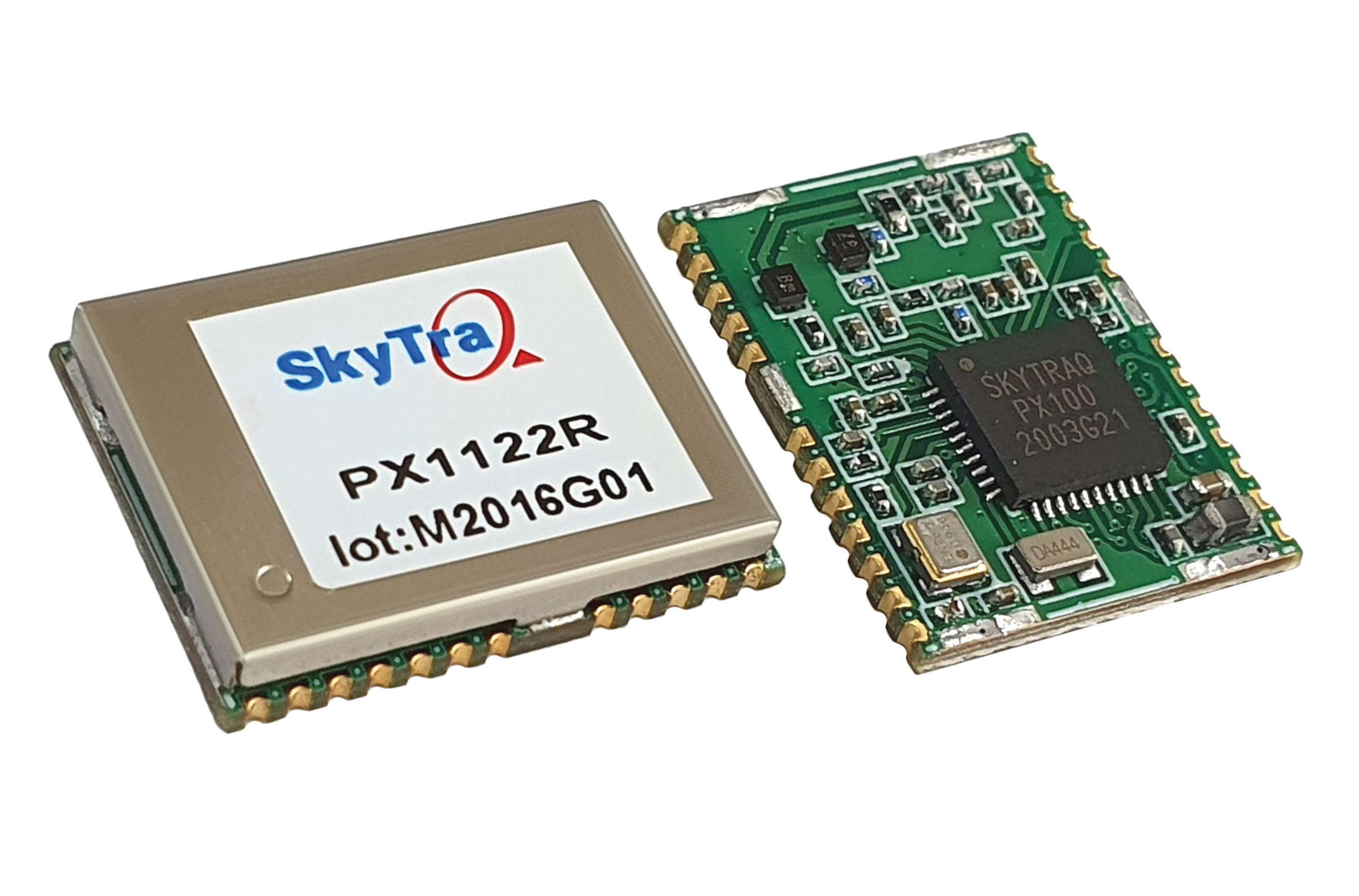
    SkyTraq Technology, a fabless semiconductor company, develops GPS/GNSS chipsets and modules for meter-level accuracy vehicle navigation and tracking applications and for centimeter-level accuracy real-time kinematic (RTK) surveying and precision guidance applications.

    Photo: SkyTraq
    Photo: SkyTraq

    The company’s chipset design is driven by market trends, said Oliver Huang, the company’s general manager. He explained the company has moved from single-frequency to dual-frequency devices.

    SkyTraq’s chipset is designed to be common hardware for different target applications enabled by customized software. Traditionally, in the automotive market, vehicle navigation systems have relied on fusing GNSS receivers with dead-reckoning technology that uses micro-electromechanical (MEMS) inertial measurement units (IMUs) and wheel-tick data.

    “We are now seeing more aftermarket vehicle tracking applications that take advantage of superior GNSS/DR performance using untethered dead-reckoning technology that uses sensor fusion of GNSS receiver and MEMS IMUs without the need for wheel-tick data,” Huang said. “GNSS receivers with decimeter or better accuracy, combined with dead-reckoning that uses low drift IMUs, will be important in emerging autonomous vehicle applications.”

    SkyTraq’s PX100 chipset for L1 meter-level accuracy applications and centimeter-level accuracy RTK applications uses L1 and L1/L2 signals from all four major GNSS constellations (GPS, GLONASS, Galileo and BeiDou).

    Because of the trend toward high-precision, which requires good carrier-phase raw measurement data, the biggest challenge in receiver design is with the antenna, Huang explained. “Using an advanced semiconductor process, one can have low power, small size chipsets taking advantage of all the available GNSS signals, yet there is no small antenna capable of producing high-quality carrier phase data for high-precision GNSS applications. So far, we have only seen bulky RTK antennas capable of generating high-precision results.”

  • Septentrio introduces Mowi open-source board for IoT

    Septentrio introduces Mowi open-source board for IoT

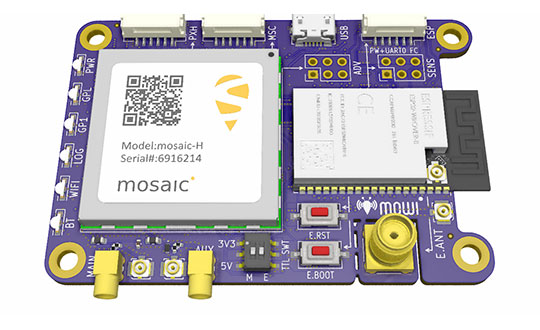
    Mowi is an open-source reference design for Septentrio’s highly accurate GNSS module mosaic. It offers Wi-Fi and Bluetooth communication, which can easily be programmed for custom applications.

    Septentrio, a manufacturer of high-precision GNSS positioning solutions, has added to its open-source resources for GPS/GNSS module receivers with mosaic wireless, which it calls mowi.

    Mowi combines the Septentrio mosaic-X5 or mosaic-H module receiver with a dual-mode Bluetooth and integrated Wi-Fi from the well-known ESP32-WROVER programmable module by Espressif Systems. It is an addition to the already existing mosaicHAT board, designed on the Raspberry Pi platform.

    “We are excited about the mowi project being part of the GitHub and prototyping community,” said Gustavo Lopez, market access manager at Septentrio. “The project is available as open-source, thus empowering the community to easily fit autonomous or robotic systems with communication and highly accurate and reliable GNSS positioning technology. Mowi empowers the native Ethernet features of the mosaic module, the perfect tool for fast prototyping and developing proof-of-concept projects in a simple and connected way.”

    The mowi project facilitates accurate and reliable GNSS positioning for robotic and autonomous devices, on a hardware level. Numerous engineers today use the ESP32 and the multiple libraries available for internet-of-things (IoT) prototyping. The mowi board is an easy way for integrators to get started with Septentrio’s mosaic-X5 or mosaic-H heading module receivers.

    The mowi board can be used on its own or plugged into a mobile computer such as Raspberry Pi or Arduino to deliver high-accuracy positioning with high update rates, suitable for machine navigation, monitoring or control. The internet connection via Wi-Fi or Bluetooth enables numerous industrial IoT applications, simplifying the connectivity to mobile data for the delivery of GNSS corrections needed for centimeter-level RTK positioning.

    On top of the wireless communication, the 47.5 x 70 mm board can host IoT applications in its internal memory. It has onboard logging and exposes interfaces such as USB, serial communication and general-purpose pins. The schematic’s reference design, PCB layout and documentation are openly available for prototyping or further customization.

    The mowi open-source project is available to the community on the Septentrio GitHub repository.

    Photo: Septentrio
    Photo: Septentrio
  • Tallysman provides full-band GNSS helical antenna

    Tallysman provides full-band GNSS helical antenna

    Photo: Tallysman Wireless
    Photo: Tallysman Wireless

    Tallysman Wireless Inc. has added its first full-band GNSS antenna to its line of helical antennas.

    The full-band GNSS HC990E embedded helical antenna is designed for precise positioning, covering the GPS/QZSS-L1/L2/L5, QZSS-L6, GLONASS-G1/G2/G3, Galileo-E1/E5a/E5b/E6, BeiDou-B1/B2/B2a/B3, and NavIC-L5 frequency bands, including the satellite-based augmentation system (SBAS) available in the region of operation [WAAS (North America), EGNOS (Europe), MSAS (Japan), or GAGAN(India)], as well as L-band correction services.

    The HC990E embedded helical antenna is designed and built for high-accuracy positioning. It is packaged in a very light and compact form factor, making it suitable for a wide variety of applications, especially lightweight unmanned aerial vehicle (UAV) navigation.

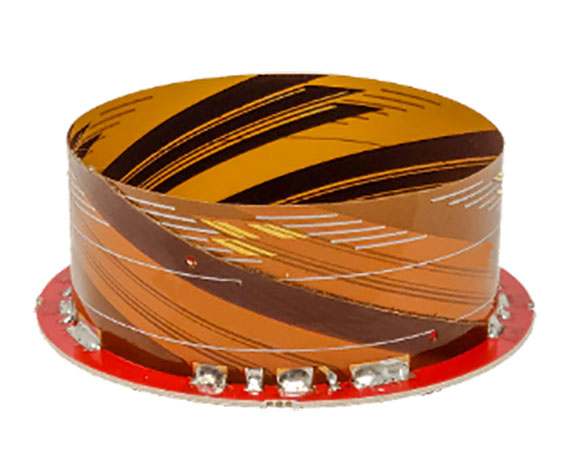
    The HC990E is 60-mm wide and 25-mm tall, weighing 12 grams. It features a precision-tuned helical element that provides an excellent axial ratio and operates without the requirement of a ground plane. The HC990E also features a low-current, low-noise amplifier (LNA) and pre-filter to prevent harmonic interference from high-amplitude signals, such as 700 MHz band LTE and other nearby in-band cellular signals.

    The HC990E antenna base has a flying lead with a UFL connector. To facilitate the installation, Tallysman provides an optional embedded helical mounting ring, which traps the outer edge of the antenna circuit board to the host circuit board or any flat surface. Tallysman also supports the installation and integration of embedded helical antennas to enable successful implementation and provide optimal antenna performance.

  • Harman to demonstrate Autotalks’ C-V2X capabilities at CES 2019

    Harman to demonstrate Autotalks’ C-V2X capabilities at CES 2019

    Hagai Zyss, CEO of Autotalks. (Photo: Daniel Danilov)
    Hagai Zyss, CEO of Autotalks. (Photo: Daniel Danilov)

    Autotalks’ second-generation chipsets have been selected by Harman International to provide the vehicle-to-everything (V2X) chipset for the Harman telematics platform. The platform will be showcased at the Consumer Electronics Show, taking place Jan. 8-11 in Las Vegas.

    With V2X, all vehicles share location, speed and trajectory, giving drivers warnings of on-road dangers. Autotalks’ second-generation chipsets are mass-market ready and support both DSRC and C-V2X direct communications (PC5 protocol).

    Harman is a wholly-owned subsidiary of Samsung Electronics Co. Ltd., focused on connected technologies for automotive, consumer and enterprise markets.

    Harman will showcase a connectivity display of its telematics platform with C-V2X capabilities. The live demonstration will show a vehicle communicating with a motorcycle using C-V2X direct communications (the Autotalks chipset is used in both).

    Harman’s solution consists of a modular telematics control unit (TEC) accommodating a cellular network access device (NAD) beside Autotalks’ second-generation chipset providing C-V2X capabilities. Autotalks C-V2X capabilities consist of a 3GPP compliant PC5 modem, with dual antenna and diversity for both transmission and reception, as well as an optimized closed-loop remote antenna solution for the highest radio performance.

    “Autotalks is proud to work with Harman on their TCU with our secure and deployment-ready C-V2X solution,” said Hagai Zyss, CEO of Autotalks. “We are excited to have our chipset inside Harman’s telematics platform and to demonstrate the flexibility and maturity of our global V2X solution which has been chosen for series production by leading automakers.”

    “Together with Harman, we will achieve deployment readiness before the mass-commercialization of C-V2X in China and elsewhere,” Zyss said.

    “We are pleased to showcase Autotalks’ C-V2X capabilities in our Telematics platform at CES 2019,” said Mike Peters, president, Connected Car Division at Harman. “The Autotalks chipset provides us with the flexibility, security and performance needed in today’s worldwide market for telematics and V2X.”

    Autotalks’ V2X chipset is now available for customer and partner demonstrations.

  • Autotalks launches vehicle-to-everything chipset

    Graphic: Autotalks
    Graphic: Autotalks

    Israel-based Autotalks has launched what it calls a global V2X (vehicle-to-everything) chipset.

    The chipset supports both dedicated short-range communications (DSRC) and cellular vehicle-to-everything (C-V2X) technology — both allow vehicles to share their location and speed to help prevent accidents and improve the safety of autonomous driving systems, the company said.

    The chipset’s processor also could allow customers to switch between the two standards. It minimizes development, testing and certification efforts for a V2X system to be deployed anywhere via a software-defined toggle between the two V2X technologies.

    Two competing standards

    Automakers have announced intentions to equip their new car models with V2X technology. In recent years, V2X has diverged into two different solutions, DSRC and C-V2X.

    While DSRC-based V2X is deployed in the U.S., Europe and Japan, C-V2X is gaining momentum in other regions. Its fundamentally different architectures have made it difficult to harmonize a single global solution.

    Autotalks’ response is to equip its second-generation chipsets with C-V2X in addition to native support of DSRC.

    Autotalks’ deployment-ready, second-generation V2X chipset supports both DSRC and C-V2X direct communications (PC5 protocol) at the highest security level. According to the company, the chipset supports DSRC based on 802.11p/ITS-G5 standards and C-V2X based on 3GPP specifications.

    Autotalks said its chipsets were designed to meet V2X market requirements and standards, including security, environmental, quality, thermal and other requirements.

  • Farewell to the Golden Age of GPS

    Farewell to the Golden Age of GPS

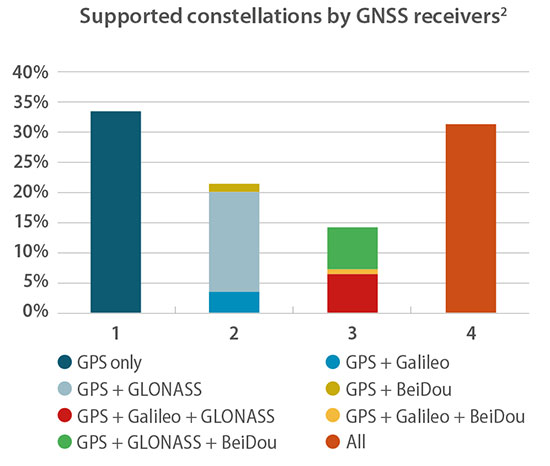
    One remark in particular caught my eye as I read the press release précis of the European GNSS Agency’s 2018 GNSS User Technology Report. In point, “Today only around 30 percent of receivers use GPS only.”

    “What?!?” methought. Incredulously, I downloaded the 92-page document, so easily done at www.gsa.europa.eu, and scrutinized it closely. Surely the GPS-only installed base out there is wider, vaster and deeper (it’s certainly older!) than could have been overtaken already by the wave of multi-constellation devices.

    Yes, they are clearly the future. But is the past already gone? That golden age when GPS was all that anyone lived, positioned and navigated by — vanished into the mist?

    Only earlier this very year was I upgraded from an iPhone 3 to an 8, with Galileo onboard for the first time. “Hip, but by the skin of my teeth,” I breathed.

    Chart: GSA report
    Chart: GSA report

    In the fine print on page 20 of the report lay clarification for my consternation. “For the analysis, each device is weighted equally, regardless of whether it is a chipset or receiver and no matter what its sales volume is. The results should therefore be interpreted as the split of constellation support in manufacturers’ offerings, rather than what is in use by end users.”

    Of the roughly 500 chipsets and modules tallied by the GSA, 30 percent of those models are GPS-only. That’s a number of quite a different color. See the chart for fuller information.

    Better minds than this can take a stab at how many devices in the hands end users on this day are still GPS-only. I’d put it above 50 percent.

    The writing’s on the wall for the GPS-only artifact, but a good many of those veterans are still out there, working hard in the marketplace. Their reign as the majority may be limited, especially with the rising global tide of multi-constellation smartphones, but let’s honor them one last time before consigning them to the museum.

    The GSA’s report, by the way, is a remarkably good and valuable read. No one can know it all, but this slim volume packs a remarkable and essential density of key facts, trends, issues, markets and more.

  • Altair selects Rohde & Schwarz for testing new IoT chipsets

    Modules featuring Altair’s ALT1250 CAT-M1/NB1 chipset will be demonstrated at Mobile World Congress.

    Altair Semiconductor, a provider of LTE chipsets, has selected Rohde & Schwarz as its partner for test equipment for its dual-mode CAT-M1/NB1 internet of things (IoT) ALT1250 chipset, as well as its next-generation IoT chipsets.

    The ALT1250 is a highly integrated dual-mode CAT-M1/NB-IoT chipset with GNSS. Modules with ALT1250 inside are the world’s smallest, and may be as small as 100 millimeters square in area.

    The ALT1250 includes GNSS location positioning, a wideband RF front-end supporting all commercial LTE bands within a single hardware design, a multi-layered and hardware-based security framework, an internal application subsystem and packaging that enables standard, low-cost PCB manufacturing.

    The Rohde & Schwarz R&S CMW500 test platform offers the most validated CAT-M1/NB-IoT protocol conformance tests. It allows manufacturers and test houses to use a single instrument to verify that chipsets, modules and devices comply with GCF and PTCRB standards, and specific network operator requirements.

    The test equipment will be used for protocol testing as well as RF, RRM performance and carrier tests.

    Rohde & Schwarz is a global manufacturer of wireless communications and EMC test and measurement equipment and plans to develop new testing protocols for Altair’s next generations of cellular IoT chipsets.

    “Our ALT1250 chipset is already forming the foundation for multiple current and emerging IoT applications,” said Ilan Reingold, VP of business development and marketing for Altair. “The choice of Rohde & Schwarz is part of our commitment to the highest quality of advanced validation and performance testing for our game-changing products.”

    “This announcement confirms the commitment of Rohde & Schwarz to the wireless industry to provide innovative test tools and solutions that allow the testing and certification of cellular IoT devices,” said Anton Messmer, vice president, mobile radio testers, for Rohde & Schwarz. “We are pleased to have been selected by Altair and are looking forward to supporting them in the development of highly integrated chipsets in conformance with 3GPP Release-13 standards for CAT-M1 and NB-IoT, and beyond.”

    Altair will be demonstrating partner modules based on ALT1250 at Mobile World Congress (MWC) in Barcelona, Spain, Feb. 26 to March 1 at Altair meeting rooms in Hall 2, Stands 2B2Ex and 2B4Ex.

    Rohde & Schwarz will showcase CAT-M1/NB-IoT test solutions with the R&S CMW500 at MWC in hall 6, booth 6C40.