Category: Survey

  • Compact Modules for RTK GNSS

    Hemisphere GPS announces the Eclipse P300 and Eclipse P301 OEM modules — its next-generation high‑performance compact modules for RTK GNSS applications. Based on new Hemisphere GPS multi-function application firmware and Eclipse GNSS multi‑constellation technology, P300 and P301 provide the ability for tracking commercially available GNSS signals for precise positioning.

    P300 is a drop-in board replacement for Hemisphere GPS’ successful Crescent L1 board as well as the first‑generation miniEclipse P200 GPS-only OEM board. P301 is the company’s 20‑pin OEM module configured as a drop-in replacement for a different industry standard interface. Eclipse P300 and P301 improve GNSS positioning performance, particularly with RTK applications, through Hemisphere GPS’ patent-pending SureTrack technology. Benefits include extended and more robust RTK solutions as the rover RTK receiver will process all available signals even if they are not common with the base receiver. RTK solutions are therefore better maintained in challenging environments, with baselines of up to 50 km, and reacquisition times are improved resulting in more robust overall performance, the company said.

    P300 and P301 are designed for OEM system integrators who demand the highest level of multi-frequency positioning, accuracy, fast initialization time, and GNSS RTK solutions. Hemisphere GPS’ miniEclipse series includes a single frequency L1 GPS + L1 GLONASS model named P202. Both series are designed for developing integrated high-precision and control applications for geomatics, survey, machine control, and unmanned vehicle solutions.

    “P300, P301, and P202 all improve upon our already successful miniEclipse OEM modules adding GNSS support to our most compact modules for excellent accuracy and affordability,” said Phil Gabriel, vice president and general manager, Precision Products, for Hemisphere GPS. “System integrators have a wider range of Hemisphere GPS solutions from which to choose to develop world‑class high‑precision products.”

    Measuring 71 mm long and 41 mm wide, miniEclipse allows for easy integration, especially for integrators who are accustomed to Hemisphere GPS’ Crescent and miniEclipse OEM module performance and footprint.

    All miniEclipse modules are available through the Hemisphere GPS Precision Products global dealer network.

  • Spectra Precision Introduces GNSS Receiver

    Spectra Precision Introduces GNSS Receiver

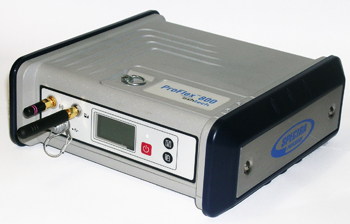
    Photo: Spectra Precision

    Spectra Precision introduced the new ProFlex 800, a GNSS solution with Z-Blade GNSS-centric technology. The ProFlex 800 delivers fast and reliable RTK positioning, even in environments where GNSS signals may be difficult to acquire, Spectra Precision said. Rugged and IP67 rated, the ProFlex 800 is built to withstand harsh operating conditions for a variety of positioning applications.

    “The ProFlex 800 is an ideal solution for customers wanting a single GNSS receiver for multiple applications,” said François Erceau, general manager of Trimble’s Spectra Precision, Nikon and Ashtech Business Area. “It offers a unique design with a range of mounting and communications options.”

    Used as a backpack rover or reference station, the ProFlex 800 with Z-Blade technology is a flexible GNSS solution for land surveying. Its innovative design also makes it ideal for hard-mounted survey applications such as coastal work, dredging, bathymetry or offshore vessel operations.

    The weatherproof, high-impact-resistant molded aluminum housing allows the ProxFlex 800 to operate in harsh conditions.

    In addition to a 3.5G internal cellular modem, the ProFlex 800 can use a variety of internal or external UHF modules, providing stable and reliable wireless communications. It can be used as a rover or a base without additional accessories in the field. Its Z-Blade long-range RTK capability combined with industry-leading UHF options help to ensure maximum productivity while in the field.

    With its built-in Ethernet capability and embedded web server, users can access the ProFlex 800 from any computer connected to the Internet. This capability allows instant real-time multi-data streaming over an Ethernet connection to build an RTK corrections server without any additional software or equipment, the company said.

    Spectra Precision ProFlex 800 CORS Receiver. The Spectra Precision ProFlex 800 is also available as a Continuously Operating Reference Station (CORS). This configuration is an optimal solution when collecting, storing and transferring high-quality GNSS raw data for post processing surveys, geodetic and other applications. Automatic sessions programming, a user-friendly Web-interface, an embedded RINEX converter, FTP push functionality and many other advanced CORS features make the ProFlex 800 CORS a powerful, robust and easy-to-use GNSS solution.

    Advanced Ashtech Z-Blade Technology. Z-Blade is a new GNSS centric signal processing technology. Z-Blade uses all of the available satellite signals equally, without preference to any particular satellite constellation, maximizing the user’s ability to obtain reliable GNSS positions in tough conditions. Z-Blade allows users to receive and maintain RTK positioning even if GPS coverage is insufficient. In many work locations, just a few GPS and GLONASS satellites may be visible due to obstacles such as trees or buildings.

    The ProFlex 800 is now available through the Spectra Precision global dealer network. For more information visit: www.spectraprecision.com and www.ashtech.com or email: [email protected]

  • Trimble Introduces Receivers for GIS and Mobile Mapping

    Trimble has introduced the next-generation of its Trimble GPS Pathfinder family — the Trimble Pro 6H and Pro 6T receivers for GIS and mobile mapping. The Trimble Pro series with advanced features allows mobile workers to configure a solution for a wide range of applications, delivering flexibility in professional GIS data collection, Trimble said. The series offers a new streamlined form-factor and dramatic productivity improvements in difficult GNSS environments with Trimble Floodlight technology.

    The modular Trimble Pro series receiver gives users the flexibility to choose their setup configurations:

    • Optimized for use with Trimble data collection devices such as the Trimble Juno or Nomad G series handhelds, or Yuma tablet computer, the Trimble Pro series can also be used with other tablets and handhelds with NMEA output.
    • Real-time or postprocessed GIS workflows.
    • The receiver can be deployed in a backpack, on a pole or mounted on a vehicle.
    • Two models are available: the Trimble Pro 6H delivers decimeter accuracy, while the Pro 6T is the submeter model for standard GIS applications.

    “With the availability of the new Pro series receivers, data collection professionals now have access to the productivity-enhancements of Floodlight technology in both integrated and modular configurations,” said Daniel Wallace, general manager of Trimble’s GIS Data Collection Division. “While some prefer the convenience of an integrated, all-in-one handheld, others will appreciate the Pro series’ flexibility to choose from a range of data collection devices such as a high-resolution tablet or lightweight Trimble Juno.”

    Trimble Floodlight technology allows users to collect decimeter accuracy data in tough GNSS environments, Trimble said. Buildings and trees can cause satellite shadow and limit the environments where high-accuracy GNSS data collection can be performed. Trimble Floodlight technology combines a range of techniques to increase the availability of positions and boost accuracy in areas affected by satellite shadow. Using Floodlight technology, the Pro series can keep teams productive without compromising on accuracy. Users can work with fewer disruptions and ensure better data, faster data collection and higher field efficiency.

    Trimble Pro series receivers are rugged and built to withstand the rigors of long hours in tough outdoor conditions, yet optimized for high-accuracy GIS data collection workflows, Trimble said. For applications such as utilities inspections and timber stand valuations, Trimble Pro receivers provide long battery life and tough construction for dependable service over the course of rigorous data-collection projects.

    With its IP65 rating, the receivers offer reliable operation, even after prolonged exposure to water and dust, Trimble said. An integrated antenna reduces the complexity of the system for fast setup and swift data collection campaigns. Field workers can be up and running with minimal training, saving time and money. Combined with a Trimble handheld solution and Trimble TerraSync software, the complete system provides dedicated field workflows to simplify data collection and improve integration with the GIS for total workflow improvements.

    The new Trimble Pro 6H and 6T receivers are available from Trimble’s worldwide Mapping & GIS authorized distribution channel.

  • Spatial Plexus

    Two weeks ago I attended a somewhat different GIS conference at Georgia Tech called Spatial Plexus touted to be a new conference devoted to solving “Wicked Problems.” This was not to be confused with “Wicked,” the only musical I ever attended where the audience went home humming the scenery. As stated in the program brochure, “Wicked problems are those difficult to solve because of incomplete, contradictory, and changing requirements. By inspecting wicked problems with “geospatial goggles,” complexities and interdependencies can be exposed, better defined, dissected, better managed through the geospatial approach and reassembled for overall improvements.”

    One of the reasons that I attended this conference is that most of the attendee names were not familiar to me so I had a chance to meet some new people in the GIS community. The conference was all plenary sessions, so we didn’t have to play the game of running from one break-out session to another and missing some because of conflicts. It was held at the Georgia Tech Hotel & Conference center in Atlanta, a new, nicely designed conference center.

    Danielle Ayan, GISP of GTRI (Georgia Tech Research Institute), organized the conference and it was perfectly planned, executed, and well-documented. The dominant themes of this new conference included higher education sustaining academic programs in ever-shrinking budget times and getting spatial thinking accepted in more disciplines across the campus disciplines. Geospatial technology in infrastructure and economic development were also major topics.

    Key speakers included: David DiBiase of Esri, GTCM, and Penn State fame; Dr. Peter Lea of the NSF ATE program serving geospatial technologies; Peter Folger, specialist in energy and natural resources, Policy Resources Science and Industry Division, Library of Congress; and Dr. Helen N. Parker, regional administrator for the Atlanta Region of the Employment and Training Administration at the Department of Labor. You can view some of the key presentations online by clicking here.

    A major portion of the conference was devoted to GeoTECH, a collaborative organization of colleges, universities, and industry working to enhance GIS education. The organization is funded by the National Science Foundation supporting the efforts of the Department of Labor to build a Geospatial Technology Competency Model (GTCM). Simply put, the GeoTech Center goals are to provide resources and guidance that will expand the geospatial workforce with qualified technicians that meet the GTCM guidelines. Most of the GeoTECH programs are aimed at two-year college programs but there was also discussion about K-12 programs.

    Attendees were asked to review sample curricula developed by GeoTECH participants to make sure that they reflected current technology and thinking. Without going into the details, I can tell you that the sample curricula were very thorough and well thought out. Only minor tweaking was recommended by the reviewers.

    If any of you are doing volunteer work at your local K-12 schools, you may want to investigate two resources that came up in several discussions: “ESRI Press” and an organization called “GIS etc.”

    GIS etc was created by Roger and Anita Palmer to provide GIS professional development, curriculum, and software to support K-12 and post-secondary educators and students. Roger and Anita started out as high school teachers so they had hands-on experience teaching science and technology. Along with Lyn Malone, they co-authored “Mapping Our World” and “Analyzing Our World” as well as the first GPS activity book “Going Places with GPS” that many conference attendees cited as superb entry-level GIS resources. They also authored a beginner’s GIS program called “20 Minute GIS for Young Explorers” for teachers who want to add geospatial elements to their classroom but have only one computer in the classroom, have minimal GIS skills, and are not permitted to use Google Earth, but want a virtual globe experience for students.

    The new version of “Mapping Our World” contains a GIS media kit including a CD and DVD that contain files with student worksheets, GIS data for completing the lessons, and additional files and resources for teachers. The DVD contains a one-year trial version of ArcView 9.3 software for computers using Microsoft Windows operating systems. This is proving to be ideal for entry-level GIS programs.

    There were also several “ignite” sessions, at which presenters were limited to 7 minutes each. These were the equivalent of Pecha Kucha sessions or elevator pitches that quickly get to the point and focus the mind sharply. One of those sessions that I wish was longer was from Max Baber, director of Academic Programs for USGIF. For those of you not familiar with USGIF, it is a non-profit geospatial organization comprising geospatial industry partners that puts on GEOINT and other geospatial activities that NGA can’t do itself.

    Max provided advanced word of a pending USGIF credentialing process that was officially announced at USGIF Tech Days last week. The credentialing is in response to NGA desires to have minimally qualified personnel working on NGA contracts similar to URISA’s GISP qualifications. The credentialing process will eventually be required for all geospatial analysts working for NGA and should be in place within three years. I saw some angst in the audience from potential contractors, but hopefully this will minimize past problems resulting from delays and communication errors caused by contractors using personnel with little or no prior geospatial experience.

    As with most conferences, there were new sidebar lessons to be learned. One example was an Apple Bluetooth keyboard. How many times have you been at a conference or on a plane where you wish you could do a little unobtrusive typing without breaking out a laptop and power cord or struggling with the tiny on-screen iPhone keyboard? One of the attendees was typing his notes using a nicely designed solid keyboard with his iPhone. I’ve seen several cheesy foldable plastic keyboards, but this Apple keyboard was small, high quality, and had a nice tactile feel. I had to get one and wrote most of this article while flying to D.C. using it and my iPhone. Minimalists would approve.

    I learned another item of interest from one of the presenters, Randy Hale, GISP of North River Geographic Information Systems, Inc. Imagine being able to view a video of the best teachers in the country covering concepts and topics that many of us struggled with in school. The Khan Academy is a not-for-profit organization with the goal of changing education for the better by providing free world-class online lessons to anyone anywhere. With more than 3,000 separate video lessons in science, math, economics, and others, this is a free resource you should share with anyone in school or needing a refresher.
  • GNSS Handheld Data Collector

    Nexteq Navigation, based in Calgary, Alberta, Canada, has announced the T5A, its new flagship multifunctional GNSS handheld data collector. The device is a high-accuracy GPS unit capable of 2-centimeter accuracy using real-time kinematic (RTK) and 50-centimeters globally using Nexteq’s i-PPP technology. With the T5A, users can achieve extremely accurate and consistent results anywhere in the world with no loss in flexibility, Nexteq said, adding that the unit’s centimeter-level precision coupled with versatility allows for accurate data collection in the most diverse weather conditions.

    Suitable for projects in all-environments, the T5A has a professional quality internal GPS receiver that provides accurate real-time results. Using Nexteq’s Freedom, i-PPP, or RTK technologies, the T5A data collector can provide flexible and accurate positioning in all parts of the world, Nexteq Navigation said.

    The T5A has a 3.7-inch color touchscreen that is both waterproof and dustproof. The device includes features such as Bluetooth, Wi-Fi, digital cellular data and voice, microSD card slots, and a 3.0 megapixel digital camera.

    Like all Nexteq Navigation GPS handhelds, the T5A is a ruggedized and tough unit. The T5A has an IP66 rating with excellent dust and water resistance.

  • Data-Collection Software

    Nexteq Navigation has release the newest version of its NexGeo software line-up: NexGeo Mobile, NexPos and NexGeo Office. Optimized for Nexteq handhelds, NexGeo Mobile integrates Nexteq Freedom, i-PPP, and RTK positioning augmentation technology into a more reliable, user-friendly data collection software, the company said. With easy display of features, background images, labeling and attributes, data is readily collected, accessed and edited. The tracking feature now allows for efficient communication and management between field workers and the office. Raw data recorded in NexGeo Mobile can be used for post processing in NexGeo Office.

    Those using third-party software with a Nexteq handheld are not left behind. NexPos was created with the intent of allowing freedom in benefitting from Nexteq position augmentation technology, the company said. The NexPos software acts as a bridge, applying Freedom, i-PPP, or RTK algorithms to GPS measurements. The final positions are transferred to third-party software via virtual COM port, allowing users to benefit from improved position accuracy while NexPos runs discreetly in the background. Raw data can also be recorded and used for post processing in NexGeo Office.

    On the desktop, NexGeo Office ties together collected data, attributes, and post-processing information to provide efficient project management capabilities, data organization, live field monitoring and integration with a wide variety of other software, Nexteq said. Building and maintaining a project specific database is easy using NexGeo Office: import existing data, build on the project using a Nexteq handheld and transfer it back to the office for editing. Exporting the project to ESRI or AutoCAD file formats allows for users to seamlessly continue expanding.

    NexGeo software suite is available and included with all Nexteq Navigation handhelds.

  • Entry-Level, Rugged PDA

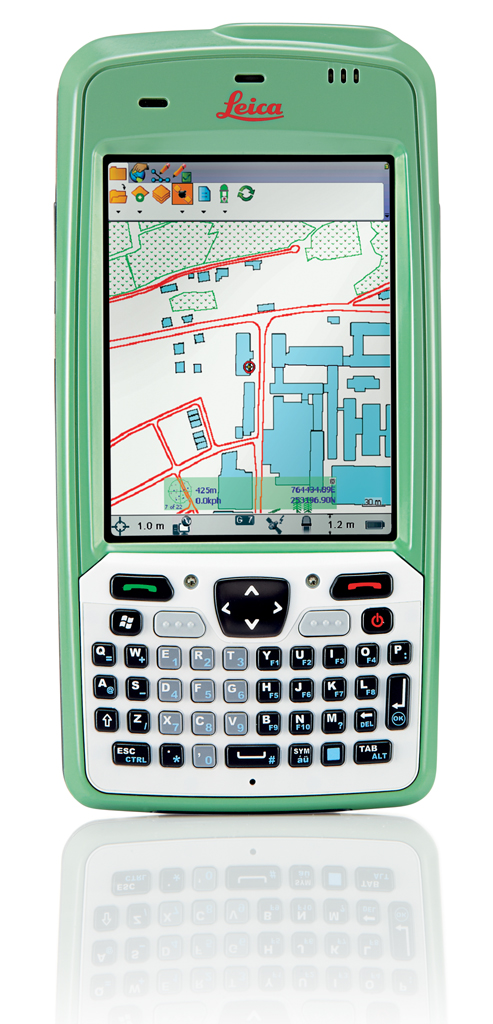
    Leica Geosystems announced a further enhancement to the Leica Zeno GIS family – the Leica Zeno 5, an entry-level, rugged PDA for organizations that require a durable compact device with integrated modem and high-sensitive GPS. The new Leica Zeno 5 supports field workers by combining a mobile phone with asset collection and management capabilities.

    Senior Product Manager Johannes Hotz comments ”Together with our Leica Zeno Field and Zeno Connect applications, the Zeno GIS family continues to grow and further addresses all mobile GIS market segments ranging from utilities and natural resources to municipalities”.

    The new Leica Zeno 5 provides a complete, integrated package of positioning, imaging and communications tools:

    • 48 channel, high-sensitivity GPS receiver (SirfStarIV)
    • GSM HSPA+ and CDMA with full phone capabilities, Wi-Fi and Bluetooth
    • Texas Instruments latest high performance processor, the Sitara 3715 (OMAP3) at 800 MHz
    • Large 3.7” full VGA transflective display
    • Windows Embedded Handheld 6.5.3 Operating System
    • Rechargeable and hot-swappable all-day battery (10 hours +)
    • Full range of interactive sensors including camera, digital compass, gyroscope, light sensor, proximity sensor and accelerometer

    “The new Leica Zeno 5 is the fastest and best equipped rugged PDA for a mobile user”, said Johannes Hotz. “Designed to be, at the same time, a mobile phone, GPS-enabled data collector and a controller for our out-standing Leica GG02 plus GNSS SmartAntenna. This new handheld will help users to get the maximum out of from their investment. Together with our Zeno Field application, the Zeno 5 provides an easy-to-use, streamlined GIS data collection and management solution. The Zeno Connect, as stand-alone application or SDK, enables our software partners to combine their industry specific solution with our high-accuracy data collection solutions”.

    According to the announcement, the Leica Zeno 5 is shock resistant, withstands a drop from to 1.8 m, and is protected against water and dust. The large 3.7 inch screen is optimized for sunlight readability and maintains exceptional clarity in outdoor conditions, including direct sunlight. Field workers can collect features and descriptive information using the in-built, high-sensitive GPS data, attach photos to the collected assets, and synchronize, with high-speed up- and download times, with the office using a single and compact device, all in a full working day without re-charging the Zeno 5.

  • INTERGEO 2012: Cloud Computing will Dominate the GIS Environment

    INTERGEO 2012, which is taking place October 9-12 in Hanover, Germany, announced the conference will show that the key topics at INTERGEO, such as capturing, processing, archiving and presenting data can be made available on an entirely new basis using cloud computing. Accessing geoinformation systems (GIS) via the cloud unlocks a whole new range of uses and makes them more accessible to new user groups who have found existing solutions too complex and ultimately too expensive.

    Otmar Didinger, President of the Rheinland-Pfalz Regional Authority for Surveying and Geoinformation, on how the cloud can benefit users: “It solves the issue of how they can access information without having to worry about where it is located.” Didinger cites WebAtlasDE. As part of this national pilot project, the Regional Surveying Authorities in Germany are providing access to their geodata. Merged into a single standardised national inventory, this geodata forms the basis of a web service. Similar to Google Maps, users surf a map that covers the whole of Germany and is based largely on the very latest official data, presented in a more professional format. Authorities, companies and citizens can access the store of geodata at WebAtlasDE (e.g. via www.geoportal.de) and combine it with their own information. This creates an excellent basis for making a whole range of decisions relating to everything from infrastructure management to sales campaigns.

    According to the announcement, Johannes Schöniger was the man responsible for the ambitious aim of making a high-performance IT system – a cloud solution – available in a short space of time. As Strategic Account Director Geoinformation Germany at Fujitsu Technology Solutions GmbH, he was certain of one thing in particular: “Cloud Computing is a pioneering and sustainable operator model. Just as with geoinformation, it’s no longer a question of whether or not we want cloud computing. Instead, we have to choose whether to actively engage with it and look to the future or not. If we do, we can ride the wave, if we don’t, it will come crashing down on us sooner or later.” Schöniger is in no doubt: “Cloud computing will dominate the GIS environment over the coming years.”

  • Leica Introduces Zeno 5 Rugged GPS Handheld

    Zeno 5 by Leica Geosystems.
    Zeno 5 by Leica Geosystems.

    Leica Geosystems announced a further enhancement to the Leica Zeno GIS family – the Leica Zeno 5, an entry-level, rugged PDA for organizations that require a durable compact device with integrated modem and high-sensitive GPS. The new Leica Zeno 5 supports field workers by combining a mobile phone with asset collection and management capabilities.

    Senior Product Manager Johannes Hotz comments ”Together with our Leica Zeno Field and Zeno Connect applications, the Zeno GIS family continues to grow and further addresses all mobile GIS market segments ranging from utilities and natural resources to municipalities”.

    The new Leica Zeno 5 provides a complete, integrated package of positioning, imaging and communications tools:

    • 48 channel, high-sensitivity GPS receiver (SirfStarIV)
    • GSM HSPA+ and CDMA with full phone capabilities, Wi-Fi and Bluetooth
    • Texas Instruments latest high performance processor, the Sitara 3715 (OMAP3) at 800 MHz
    • Large 3.7” full VGA transflective display
    • Windows Embedded Handheld 6.5.3 Operating System
    • Rechargeable and hot-swappable all-day battery (10 hours +)
    • Full range of interactive sensors including camera, digital compass, gyroscope, light sensor, proximity sensor and accelerometer

    “The new Leica Zeno 5 is the fastest and best equipped rugged PDA for a mobile user”, said Johannes Hotz. “Designed to be, at the same time, a mobile phone, GPS-enabled data collector and a controller for our out-standing Leica GG02 plus GNSS SmartAntenna. This new handheld will help users to get the maximum out of from their investment. Together with our Zeno Field application, the Zeno 5 provides an easy-to-use, streamlined GIS data collection and management solution. The Zeno Connect, as stand-alone application or SDK, enables our software partners to combine their industry specific solution with our high-accuracy data collection solutions”.

    According to the announcement, the Leica Zeno 5 is shock resistant, withstands a drop from to 1.8 m, and is protected against water and dust. The large 3.7 inch screen is optimized for sunlight readability and maintains exceptional clarity in outdoor conditions, including direct sunlight. Field workers can collect features and descriptive information using the in-built, high-sensitive GPS data, attach photos to the collected assets, and synchronize, with high-speed up- and download times, with the office using a single and compact device, all in a full working day without re-charging the Zeno 5.

  • Hexagon Acquires Minority Stake in Blom ASA

    Hexagon AB announced that it will acquire 25 percent of the shares in Blom ASA for a total amount of approximately 9 MEUR.

    According to the announcement, Blom ASA has headquarters in Oslo, Norway, and is listed on the Oslo Stock Exchange. The company is a European service provider in the geospatial arena, offering a wide selection of geographic services to the government, enterprise and consumer markets. Services include the acquisition, processing and modeling of maps and images. With subsidiaries in 13 countries, Blom’s geographic information database houses one of the largest collections of maps, aerial images, and geospatial models across Europe. Through its online services, Blom provides access to its expansive database enabling customers to update their own datasets and partners the ability to create applications using Blom’s location-based services and navigation solutions.

    “Our alliances with geospatial information providers around the globe strengthens our vision of providing “dynamic”, more accurate and in the end real-time updates of the world around us”, said Ola Rollén, president and CEO of Hexagon AB. “With this investment, Hexagon secures access to high resolution and up-to-date geospatial information which is becoming increasingly important to our entire customer base, especially within Intergraph, where access to such data provides the foundation for industry-specific software solutions”.

    Hexagon reports that it has no current plans for any further offer with respect to shares in Blom. The transaction will close as of Friday, June 1, 2012.

  • GSA Releases 2012 SatNav Market Report

    The European GNSS Agency (GSA) has published its second Global Satellite Navigation System (GNSS) Market Report, providing key information to entrepreneurs in the satellite navigation sector.

    GNSS market forecasting is of great interest to private and public GNSS stakeholders, for business and strategic planning and policymaking, according to the GSA. According to the 2012 GSA Market Monitoring Report, the worldwide GNSS market is growing fast and the total market size is expected to increase at an average of 13 percent per year until 2016.

    The total enabled GNSS market size is expected to stabilise in the latter half of the decade due to market saturation, price erosion and platform convergence. Global shipments of GNSS devices are lower than previously forecasted up until 2015 yet are forecasted to continue growing to over 1.1 billion units per year.

    Expanding coverage. Following up on the first GNSS Market Report published in 2010, the GSA’s 2012 Report includes an analysis of two new sectors: maritime and surveying. Relevant examples from EU research projects have also been included for each sector.

    2012 Report Highlights

    Road and location-based services (LBS) still in the lead. Road and LBS dominate GNSS device sales (54% and 44% respectively). LBS constitutes 87% of the total GNSS market in terms of units sold and GNSS penetration in smartphones is set to increase from 30% today to almost 100% in 2020. For road navigation, traditional Personal Navigation Devices (PNDs) will gradually disappear from the European market yet remain present in other regions in the form of low cost OEM products. Smartphones and in-vehicle devices will be the preferred means of navigation.

    Commercial aviation use will grow. In the Aviation sector, the segment that will see the greatest growth in terms of GNSS equipment revenues will be Commercial Aviation, surpassing general and business aviation by 2018.

    GNSS use in agriculture continues to rise. In agriculture the current positive growth trend will continue; low cost precision agriculture solutions based on EGNOS are driving GNSS adoption by farmers in Europe.

    Surveying: a growing opportunity. In surveying, the construction segment is dominating the market in terms of units and value. North America is leading in terms of market penetration but the other regions will catch up by 2020 as GNSS is rapidly replacing the traditional surveying and mapping methods in Europe and around the world.

    Safer seas with GNSS. In the open sea segment, shipments of search-and-rescue (SAR) beacons will exceed those of other categories making the SAR segment the largest in terms of shipments and second largest in terms of market size.

    The 2012 GSA Market Monitoring Report can be downloaded for free.

  • Gakstatter to Give GNSS Technology Update at Esri Conference

    Eric Gakstatter, GPS World’s contributing editor for Survey/GIS, will speak at the 2012 Esri International User Conference, which will be held July 23-27 in San Diego, California.

    In his “GPS/GNSS Technology Update,” Gakstatter will provide a discussion on how current and upcoming satellite systems affect the user. The talk will be held in Room 31B at 10:15-11:30 a.m. on Thursday, July 26. Here is the official description:

    ArcGIS Mobile users around the world are challenged to keep current with evolving satellite systems. There are new GPS satellites being launched with new GPS signals being broadcast (L5). The Russian GLONASS system is near operational and Europe has launched its first two Galileo satellites. Not only are the satellite systems changing but also GPS augmentation systems such as WAAS, DGPS, EGNOS, MSAS and GAGAN systems. ArcGIS Mobile users take advantage of these GPS/GNSS augmentation systems and should be aware of how they are evolving. The LightSquared controversy is still a major threat to GPS/GNSS users. How might that affect the future of GPS/GNSS mapping/surveying? How do these changes affect spatial data collection and navigation services within ArcGIS Mobile? Which factors should one consider when using these different satellite systems. What are the current trends and developments that one should consider when preparing GPS/GNSS mapping hardware budgets?

    To learn more about the conference, read about it in our Events section here.