Category: Survey

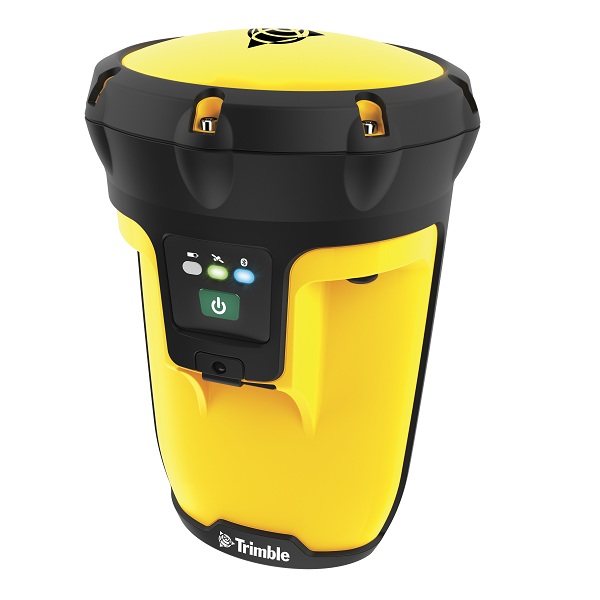
  • Rugged Trimble Pro Series GNSS Receivers Provide Flexibility for GIS and Mobile Mapping

    Pro20Series20Cover20View Trimble
    Trimble

    Trimble introduced today the next-generation of its Trimble GPS Pathfinder family — the Trimble Pro 6H and Pro 6T receivers for GIS and mobile mapping. The Trimble Pro series with advanced features allows mobile workers to configure a solution for a wide range of applications, delivering flexibility in professional GIS data collection, Trimble said. The series offers a new streamlined form-factor and dramatic productivity improvements in difficult GNSS environments with Trimble Floodlight technology.

    The modular Trimble Pro series receiver gives users the flexibility to choose their setup configurations:

    • Optimized for use with Trimble data collection devices such as the Trimble Juno or Nomad G series handhelds, or Yuma tablet computer, the Trimble Pro series can also be used with other tablets and handhelds with NMEA output.
    • Real-time or postprocessed GIS workflows.
    • The receiver can be deployed in a backpack, on a pole or mounted on a vehicle.
    • Two models are available: the Trimble Pro 6H delivers decimeter accuracy, while the Pro 6T is the submeter model for standard GIS applications.

    With the availability of the new Pro series receivers, data collection professionals now have access to the productivity-enhancements of Floodlight technology in both integrated and modular configurations,” said Daniel Wallace, general manager of Trimble’s GIS Data Collection Division. “While some prefer the convenience of an integrated, all-in-one handheld, others will appreciate the Pro series’ flexibility to choose from a range of data collection devices such as a high-resolution tablet or lightweight Trimble Juno.”

    Trimble Floodlight technology allows users to collect decimeter accuracy data in tough GNSS environments, Trimble said. Buildings and trees can cause satellite shadow and limit the environments where high-accuracy GNSS data collection can be performed. Trimble Floodlight technology combines a range of techniques to increase the availability of positions and boost accuracy in areas affected by satellite shadow. Using Floodlight technology, the Pro series can keep teams productive without compromising on accuracy. Users can work with fewer disruptions and ensure better data, faster data collection and higher field efficiency.

    Trimble Pro series receivers are rugged and built to withstand the rigors of long hours in tough outdoor conditions, yet optimized for high-accuracy GIS data collection workflows, Trimble said. For applications such as utilities inspections and timber stand valuations, Trimble Pro receivers provide long battery life and tough construction for dependable service over the course of rigorous data-collection projects.

    With its IP65 rating, the receivers offer reliable operation, even after prolonged exposure to water and dust, Trimble said. An integrated antenna reduces the complexity of the system for fast setup and swift data collection campaigns. Field workers can be up and running with minimal training, saving time and money. Combined with a Trimble handheld solution and Trimble TerraSync software, the complete system provides dedicated field workflows to simplify data collection and improve integration with the GIS for total workflow improvements.

    The new Trimble Pro 6H and 6T receivers are available from Trimble’s worldwide Mapping & GIS authorized distribution channel.

  • Trimble GCSFlex Offers GPS Guidance for Flexibility in Excavation

    Trimble today introduced a new system configuration for its GCSFlex Grade Control System. The addition of GPS guidance extends the system’s functionality and allows a contractor to work faster and with more freedom than other traditional laser-referenced grade control systems for excavators, Trimble said. With the benefit of GPS guidance and in-field design templates created directly from the cab on the Trimble CB450 Control Box, an excavator operator can accurately dig to a desired depth, slope or alignment without creating a digital design in the office, Trimble said. There’s little prep work before the job and no grade checking after.

    The new GCSFlex system with GPS guidance allows users to create in-field designs in the cab and take advantage of GPS guidance in 2D mode rather than 3D. This capability adds more flexibility to the system without adding additional complexity in its use. Where traditional excavator grade-control systems have used a laser plane as a reference for these tasks, the new GCSFlex replaces the laser plane with GPS guidance for position and orientation of the excavator. This configuration gives the operator maximum freedom to move the machine without being tethered to a bench point on the ground or a laser transmitter with range limits, Trimble said.

    The latest system configuration comprises a CB450 Control Box in the cab; angle sensors on the boom, stick and bucket; a MS972 GNSS Smart Antenna on the cab roof; and a Trimble SNM940 Connected Site Gateway for receiving GPS corrections. Subscription services such as Trimble VRS Now Service or Trimble Internet Base Station Service (IBSS) communicate GPS corrections via a cellular connection to the SNM940 and eliminate the need for a base station.

    User-friendly menus on the CB450 Control Box allow the operator to create an in-field template for a particular excavation task and begin working on that project immediately, Trimble said. The display software provides step-by-step instructions to create an in-field design template for excavating to a fixed depth, a depth with slope, an alignment or a profile. For operators with little to no experience with machine control, it is an easy way to create an alignment similar to traditional methods that use staking and stringlines, Trimble said.

    Trimble introduced GCSFlex for excavators in 2011 as an affordable, easy-to-use machine control system for owner operators and small- to mid-sized contractors who want to increase their productivity and become more competitive. With several flexible system configuration options available, contractors can select the sensor options that fit their job site needs at a price point that fits their budget.

    The new Trimble GCSFlex Grade Control System is expected to be available in the second quarter of 2012 through Trimble’s worldwide SITECH Technology Dealer Channel.

  • Leica Geosystems Introduces Version 4.2 of Spider Software Suite for GNSS

    Leica Geosystems has released version 4.2 of its Leica Spider software suite for GNSS RTK networks and reference stations. Leica Spider software is an integrated suite of programs for GNSS networks, consisting of Leica GNSS Spider, Leica SpiderWeb and Leica SpiderQC. With its scalability and modularity, it can be tailored to suit various GNSS surveying, machine control, GIS, seismic and structural monitoring applications, Leica Geosystems said.

    One of the major enhancements is the added support for the Leica GR25 reference server. The newest member of Leica Geosystems’ GNSS Spider family is designed for numerous permanent and semi-permanent GNSS network installations and monitoring applications, which include RTK and static networks, single base station, field campaigns, structural monitoring, atmospheric and seismic studies and offshore positioning.

    “The suite of Leica Spider software programs now perfectly complements this new device for use in RTK networks with comprehensive remote control and advanced data quality analysis,” said Frank Pache, senior product manager at Leica Geosystems.

    Leica Geosystems has enhanced the SpiderNET processing strategies and algorithms to best cope with the current significantly increasing solar activity,” Pache said. “Within the 11-year cycle of solar activity we are currently approaching, the next sunspot maximum is expected in early 2013. During these times, reliable fixing of ambiguities becomes more difficult due to the increasing impact of the ionosphere on the signal propagation. This is particularly relevant to GNSS networks that typically have large station separations of up to 70 km. Therefore, an optimum handling of the ionosphere effects is required. With this new version of GNSS Spider, we are now minimizing the impact of the ionosphere disturbance to the data processing and optimizing the quality, availability and reliability of network correction information provided to the rover.”

    In addition, the updated Leica SpiderQC features an improved version of the Leica Geosystems patented Network Online Visualisation of Accuracy (NOVA).  “This unique feature allows visualization of the spatial and temporal quality of single base and network RTK positioning across a customer’s network.  Real time maps show the distribution of residual ionosphere and troposphere/orbit error, enabling our customers and their clients to monitor the network status and identify problem areas in the network, or get an indication of expected field performance,” Pache said.

  • Nexteq Releases RTK Float Augmentation for T6 Handheld

    Nexteq, based in Calgary, Alberta, Canada, announces the release of its new RTK-F (Real Time Kinematic Float) positioning augmentation system for its T6 GNSS handheld (at right). RTK-F is well suited for demanding applications by providing the highest accuracy available for the T6, Nexteq Navigation said. With RTK-F, the T6 reaches a consistent 20-centimeter accuracy level, further improving upon the unit’s sub-meter level accuracy currently available with Nexteq’s Freedom or i-PPP point positioning technologies. The addition of RTK-F further enhances the flexibility of the T6 platform.

    The T6 RTK-F augmentation system utilizes RTCM messages with code and phase corrections from reference networks or stand-alone base stations. These corrections can then be transmitted over the Internet with non-proprietary hardware, drastically improving efficiency and giving freedom of movement to the user with minimal latency, Nexteq said. Further, Nexteq Navigation’s upcoming T5A GNSS handheld can be used as a reference base station for RTK-F, eliminating the need for costly subscriptions to corrections from commercial sources.

    Like all Nexteq Navigation handhelds, the T6 is a ruggedized and tough unit. The T6 has an IP66 rating with excellent dust and water resistance, Nexteq said.

  • Blue Marble Releases 13.1 Update to Global Mapper Software Developer Toolkit

    Blue Marble Geographics announced the release of Global Mapper Software Developer Toolkit version 13.1. This update features many new drawing and analysis tools along with enhanced geospatial PDF and LAS 1.4 support.


    According to the announcement, Global Mapper SDK 13.1 syncs up the software developer toolkit with Global Mapper desktop software releases. This will enable a more consistent release cycle ensuring the software developers are able to work with the latest and greatest feature/functions introduced to the desktop version of the software. The 13.1 release introduces many new drawing tools such as drawing map layout items, including elevation legend, distance scale, map feature legend, and north arrow. The update also introduces powerful new analysis tools like the function for creating density/heat grids from loaded point features, the function for creating roughness length grids from a land cover layer and the method for easily calculating a watershed with stream paths and drainage basins from loaded terrain layers. The ability to add custom online data sources is introduced along with improved Geospatial PDF support, new LandXML, LASzip and LAS 1.4, I.H.S. Well Data point files, GeoJSON, and Digital Bathe Bathymetric Database Variable Resolution (DBDB-V) files and much more.

    “Blue Marble has been directly supporting hundreds of geospatial software developers implement cutting edge technology for years,” stated Blue Marble President Patrick Cunningham. “The Global Mapper SDK is a great tool to add to a suite of libraries and we are excited to work directly with our developer community with this new display and translation api. Syncing up the SDK kits with the desktop releases will help us provide the latest features and functionality to our existing users as well as new customers for future releases.”

    Blue Marble’s geospatial data manipulation, visualization, and conversion solutions are used worldwide by thousands of GIS analysts at software, oil and gas, mining, civil engineering, surveying, and technology companies, as well as governmental and university organizations.

  • Leica Geosystems Announces Leica MissionPro Software

    Leica Geosystems Geospatial Solutions Division is pleased to announce the release of its new mission planning software, Leica MissionPro. The software provides mission planning capability for all airborne sensors including LiDAR, line and frame sensors and is fully integrated into existing Z/I Imaging and Leica Geosystems workflows.


    The company reported that in addition to the core planning functionality, Leica MissionPro includes an exciting range of new features such 3D virtual Globe View and tools for project management and evaluating missions.

    “Leica MissionPro combines the best features from Z/I Mission and Leica FPES into a comprehensive and highly productive planning software”, says Jacques Markram, Product Manager for Leica MissionPro. “Leica MissionPro represents an exciting first step in our combined product roadmap and is truly the result of synergies across the new division. Leica MissionPro simplifies planning for any type of airborne sensor mission and allows our combined customer base to further enhance their productivity.”

    According to Leica, MissionPro supports integrated multi-sensor and LiDAR planning in a true 3D mission planning environment and exports flight plans for both Z/I Inflight and Leica FCMS. In addition, Leica MissionPro provides access to Web Map Services and uses worldwide SRTM data.

    Leica MissionPro replaces Z/I Mission and Leica FPES software. A free upgrade is provided to all Leica FPES and Z/I Mission maintenance customers.

    For more information about Leica MissionPro please visit: http://www.leica-geosystems.com/missionpro

  • The Kinematic GPS Challenge: First Gravity Comparison Results

    By Theresa Diehl

    The National Geodetic Survey (NGS) has issued a “Kinematic GPS Challenge” to the community in support of NGS’ airborne gravity data collection program, called Gravity for the Redefinition of the American Vertical Datum (GRAV-D). The “Challenge” is meant to provide a unique benchmarking opportunity for the kinematic GPS community by making available two flights of data from GRAV-D’s airborne program for their processing. By comparing the gravity products that are derived from a wide variety of kinematic GPS processing products, a unique quality assessment is possible.

    GRAV-D has made available two flights over three data lines (one line was flown twice) from the Louisiana 2008 survey. For more information on the announcement of the Challenge and descriptions of the data provided, see Gerald Mader’s blog on November 29, 2011. The GRAV-D program routinely operates at long-baselines (up to 600 km), high altitudes (20,000 to 35,000 ft), and high speeds (up to 280 knots), a challenging data set from a GPS perspective. As of December 2011, ten groups of kinematic GPS processors have provided a total of sixteen position solutions for each flight. At two data lines per flight, this yielded 64 total position solutions. Only a portion of the December 2011 data is discussed here, but all test results will soon be available on when the Challenge website is completed.

    Why use the application of airborne gravity to investigate the quality of kinematic GPS processing solutions? Because the gravity measurement itself is an acceleration, which is being recorded with a sensor on a moving platform, inside a moving aircraft, in a rotating reference frame (the Earth). The gravity results are completely reliant on our ability to calculate the motion of the aircraft— position, velocity, and acceleration. These values are used in several corrections that must be applied to the raw gravimeter measurement in order to recover a gravity value (Table 1). The corrections in Table 1 are simplified to assume that the GPS antenna and gravimeter sensor are co-located horizontally and offset vertically by a constant, known distance.


    Table 1. GPS-Derived Values that are used in the Calculation of Free-Air Gravity Disturbances

    All Challenge solutions are presented anonymously here, with f## designations. For each flight of data, the software that made the f01 solution is the same as for f16, f02 the same as f17, and so on.

    Test #1: Are the solutions precise and accurate?

    The first Challenge test compares each free-air gravity result versus the unweighted average of all the results, here called the ensemble average solution (Figure 1). This comparison highlights any GPS solutions whose gravity result is significantly different from the others, and will group together solutions that are similar to each other (precise). Precision is easy to test this way, but in order to tell which gravity results are accurate calculations of the gravity field, a “truth” solution is necessary. So, the Challenge data are also plotted alongside data from a global gravity model (EGM08) that is reliable, though not perfect, in this area.

    Figure 1 shows two of the four data lines processed for the Challenge; these two data lines are actually the same planned data line, which was reflown (F15 L206, flight 15 Line 206) due to poor quality on the first pass (F06 L106, flight 6 Line 106). The 5-10 mGal amplitude spikes of medium frequency along L106 are due to turbulence experienced by the aircraft, turbulence that the GPS and gravity processing could not remove from the gravity signal.


    Figure 1.


    Figure 2.

    Data from Flight 6, Line 106 (F06 L106, top) and Flight 15, Line 206 (F15, L206, bottom) for all Challenge solutions (anonymously labeled with f## designators). Figures 1 and 2. Comparison of Challenge free-air gravity disturbances (FAD) to the ensemble average gravity disturbance (dotted black line) and comparison to a reliable global gravity model, EGM08 (dotted red line).


    Figure 3.


    Figure 4.

    Figures 3 and 4. Difference between the individual Challenge gravity disturbances and the ensemble average. The thin black lines mark the 2-standard deviation levels for the differences. For F15 L206, one solution (f23) was removed from the difference plot and statistics because it was an outlier. For both lines, the ensemble’s difference with EGM08 is not plotted because it is too large to fit easily on the plot.


    The results of test #1 are surprising in several ways:

    • The data using the PPP technique (precise point positioning, which uses no base station data) and the data using the differential technique (which uses base stations) produce equivalent gravity data results, where any differences between the methods are virtually indistinguishable.
    • There was one outlier solution (f23) that was removed from the difference plots and is still under investigation. Also, on F15 L206, solution f28 had an unusually large difference from the average though it performed predictably on the other lines. Of the remaining solutions, four solutions stand out as the most different from all the others: f03/f18, f04/f19, f05/f20, and f07/f22.
    • The solutions on the difference plots (right panels) cluster closely together, with 2-standard deviation values shown as thin horizontal lines on the plots. The Challenge solutions meet the precision requirements for the GRAV-D program: +/- 1 mGal for 2-standard deviations.
    • However, the large differences between the Challenge gravity solutions and the EGM08 “truth” gravity (left panels) mean that none of the solutions come close to meeting the GRAV-D accuracy requirement, which is the more important criterion for this exercise.

    Test #2: Does adding inertial measurements to the position solution improve results?

    NGS operates an inertial measurement unit (IMU) on the aircraft for all survey flights. The IMU records the aircraft’s orientation (pitch, roll, yaw, and heading). Including the orientation information in the calculation of the position solution should yield a better position solution than GPS-only calculations, but it was not expected to be significantly better. Figure 2 shows the NGS best loosely-coupled GPS/IMU free-air gravity result versus the Challenge GPS-only results and Table 2 shows the related statistics.


    Figure 5.


    Figure 6.

    Figures 5 and 6. F06 L105. (Figure 5) Comparison of Challenge FAD gravity solutions (ensemble=black dotted line) with EGM08 (red dotted line); (Figure 6) comparison of Challenge gravity solutions (all GPS-only; ensemble=black dotted line) with NGS’ coupled GPS/IMU gravity solution (red dotted line).


    Table 2. Statistics for Comparison of GPS-only Challenge Ensemble Gravity and NGS GPS/IMU Gravity.


    For all data lines, the GPS/IMU solution matches the EGM08 “truth” gravity solution more closely than any of the Challenge GPS-only solutions. In fact, the more motion that is experienced by the aircraft, the more that adding IMU information improves the solution. One conclusion from this test is that IMU data coupled with GPS data is a requirement, not optional, in order to obtain the best free-air gravity solutions.

    Additional Testing and Future Research

    Other testing has already been completed on the Challenge data and the results will be available on the Challenge website soon. Important results are:

    • Two Challenge participants’ solutions perform better than the rest, two perform worse, and one is a low quality outlier. The reasons for these differences are still under investigation.
    • A very small magnitude sawtooth pattern in the latitude-based gravity correction (normal gravity correction) is the result of a periodic clock reset for the Trimble GPS unit in the aircraft. This clock reset is uncorrected in the majority of Challenge solutions. The clock reset causes an instantaneous small change in apparent position, which results in a 1-2 mGal magnitude unreal spike in the gravity tilt correction at each epoch with a clock reset.
    • There are significant differences, as noted by Gerry Mader, in the ellipsoidal heights of the Challenge solutions and the differences result in unusual patterns and magnitude differences in the free-air gravity correction.

    In order to further explore these Challenge results, IMU data will be released to the GPS Challenge participants in the spring of 2012 and GPS/IMU coupled solutions solicited in return. Additionally, basic information about the Challenge participants’ software and calculation methodologies will be collected and will form the basis of the benchmarking study.

    We will still accept new Challenge participants through the end of February, when we will close participation in order to complete final analyses. Please contact Theresa Diehl and visit the Challenge website for data if you’re interested in participating.

  • Geospatial Mapping Enhances Arlington National Cemetery Management

    Officials at Arlington National Cemetery will use an Army-designed geospatial mapping system to manage cemetery operations, said the executive director of the Army National Cemeteries Program.


    Kathryn A. Condon testified before the House Veterans Affairs Committee's disability assistance and memorial affairs subcommitee to provide an update on the progress made in rectifying long-standing management problems at Arlington National Cemetery.

    Source: Arlington National Cemetary

    "Arlington is no longer a paper-based operation. By producing a single electronic map of Arlington, the staff will assign, manage and track gravesites with an authoritative digital map," Condon said. "It will allow us to synchronize in real time our burial operations at Arlington."

    The geospatial mapping system allows officials to synchronize burial operations with other daily operations, such as public ceremonies, infrastructure repair, grounds upkeep and public safety activities, Condon explained. The system is linked to Arlington's interment scheduling system, which allows schedulers to assign gravesites and assign procession routes. It also alerts Arlington staff of other activities in the area, she said.

    Arlington is the first national cemetery to use this technology, Condon told the panel.

    The geospatial mapping system will use the information collected and validated as part of the Army's gravesite accountability study. The gravesite accountability effort resulted in the first review, analysis and coordination of records kept in various ways at Arlington over the cemetery's history, Condon said.

    The Gravesite Accountability Task Force physically examined and photographed 259,978 gravesites, niches and markers using a custom-built smartphone application and matched each photo with records in a database. Arlington officials are 84 percent complete in validating records, officials said, and are on track to finish this summer.

    Once complete, Arlington's accountability effort will create a single, verifiable and authoritative database of all those laid to rest at Arlington, officials added, and it will be linked with Arlington's geospatial mapping system.

  • Blue Marble Releases 13.1 Update to Global Mapper

    Blue Marble Geographics announced the release of Global Mapper version 13.1. This update features new network licensing, enhanced geospatial PDF support and much more. Blue Marble’s geospatial data manipulation, visualization and conversion solutions are used worldwide by thousands of GIS analysts at software, oil and gas, mining, civil engineering, surveying, and technology companies, as well as governmental and university organizations.

    According to the announcement, Global Mapper 13.1 introduces Flex LM licensing to the software which provides multi-seat users with a flexible network licensing function. This efficient checkout or borrowing process allows easier access to the software across entire organizations, paving the way for new enterprise features in coming releases. The 13.1 update also introduces new geospatial PDF functionality such as the ability to import and export to 64-bit versions, the ability to select which layer to load from a geospatial PDF and the ability to load multi-page PDFs with geo-positioning. Additional enhancements include support for LAS version 1.4 and LASzip files, GeoJSON formatted data, Digital Bathymetric Database Variable Resolution (DBDB-V), LandXML files and over fifteen additional new formats. Version 13.1 also includes significant speed increases to the depression filling step when generating watersheds/drainage areas, added built-in access to land cover datasets and generation of grids from layers, significant enhancements to the Digitizer tool as well as many other minor enhancements and updates throughout the software.

    "For a minor version release, this update is quite comprehensive," stated Blue Marble President Patrick Cunningham. "We are just starting to bring the support of our development team to assisting lead product developer, Mike Childs and we’re already seeing some great gains. Look for many more great enhancements over the next year."

  • How GLONASS, Galileo, and Compass Will Affect High-Precision Users

    Join GPS World’s Survey and GIS Editor Eric Gakstatter March 15 for the webinar, “Everything Else but GPS: How GLONASS, Galileo, and Compass Will Affect High-Precision Users.” The webinar will be held at 10 a.m. Pacific (1 p.m. ET/6 pm. GMT); registration is free.

    “In a rapidly changing world — which is the world of GPS and GNSS — those who invest significant amounts of their operating capital in hardware must plan carefully for the future,” said Gakstatter, who serves as moderator of the webinar. “Will your survey receiver remain relevant and up to date long enough for you to recoup your investment? How could taking advantage of newly operational constellations improve your efficiency and competitiveness? GLONASS is operational now. Compass has put forward a very aggressive schedule for regional and then global operations. Galileo is moving steadily forward.”

    Gakstatter closely follows all these systems, and can relate their capabilities — current and future — directly to surveyors’ needs. His guest speakers will add to the insight. This webinar is required listening for anyone planning to stay on survey’s leading edge.

  • LightSquared: CEO, Executive VP Over and Out

    The LightSquared machine continues to implode as CEO Sanjiv Ahuja and Executive Vice President Martin Harriman resigned last week in the wake of the NTIA recommendations against LightSquared rolling out their system. This week, Bloomberg reported that Sprint will end its infrastructure sharing deal with LightSquared. Meanwhile, the FCC is accepting public comments on the NTIA’s recommendations.

    On February 28, 2012, LightSquared announced that CEO Sanjiv Ahuja and Executive VP Martin Harriman resigned. Forbes reported that Ahuja will remain as LightSquared board chairman. LightSquared announced that Harbinger Capital Partners CEO Phil Falcone was appointed to the LightSquared board of directors. Chief Network Officer Doug Smith and Chief Financial Officer Marc Montagner will serve as interim co-chief operating officers while the search for a new CEO is underway. Amid the announcement, Falcone remained steadfast that LightSquared is focused on finding a solution.

    “We are, furthermore, committed to working with the appropriate entities to find a solution to the recent regulatory issues. We, of course, agree that it is critical to ensure that national security, aviation and the GPS communities are protected. I am confident that working together, we can solve this problem…,” said Falcone.

    In the week prior, on February 20, Reuters reported that LightSquared missed a $56.25M payment due to satellite partner Inmarsat. While LightSquared stated that Imarsat hadn’t completed it’s obligations, Inmarsat said it was negotiating with LightSquared but didn’t know if or when a payment would be made. Inmarsat issued a notice of default, starting the 60-day clock in which LightSquared has to resolve the issue. Inmarsat is a vital partner as LightSquared needs rights to certain MSS spectrum that Inmarsat has rights to. LightSquared has paid Inmarsat a total of $420M under their agreement, of which $260M was paid in 2011.

    Inmarsat isn’t the only vital partner not happy with LightSquared. Yesterday (March 6), Bloomberg reported that Sprint will opt out of its infrastructure sharing agreement with LightSquared. LightSquared had planned to use 31,000 Sprint towers, in addition to contributing 3,400 of its own towers, to roll out their system. Building its own towers from scratch would be prohibitively expensive and would not allow LightSquared to meet the roll out schedule detailed in the January 26, 2011, FCC order.

    The LightSquared-Sprint agreement is contingent on LightSquared gaining FCC approval. The original agreement expired December 31, 2011. Sprint agreed to grant a 30-day extension, some speculating for ~$20M. At the end of January, Sprint granted another extension, this time for 45 days, to March 15. Rumors are circulating that Sprint is done granting extensions. To date, LightSquared has paid Sprint $310M in prepayment for work. Sprint’s SEC filing last month stated that if LightSquared doesn’t achieve FCC approval by the agreed date (now March 15), Sprint is allowed to keep all but $74M of LightSquared’s deposit. MSS industry expert Tim Farrar called the $236M  “the most expensive press release in the world” stating that Sprint had done “basically nothing in terms of deployment apart from some initial network planning.”

    If Sprint pulls out, LightSquared is in a really tough spot. Although LightSquared owns its satellites for satellite-to-earth communications services,  they are relying heavily on Sprint’s infrastructure for its terrestrial service.

    Investor Lawsuit

    Obviously, LightSquared investors aren’t happy about how their money was squandered. On February 17, 2012, a LightSquared investor filed a lawsuit against Harbinger Capital Partners and Phil Falcone. Investor Lili Schad, daughter of the inventor of the snowmobile and noted film director, says she invested $4M in Harbinger and that they “implemented a very different investment strategy, which bore little or no resemblance to the investment strategy described in the Offering Materials.”

    Furthmore, the lawsuit states “By going all in on LightSquared, Defendents materially deviated from the Offering Material’s representations that the Fund would seek to achieve attractive returns by investing in distressing debt, special situation equities, and private loans and notes. The risks, rewards and time horizon implicit in the LightSquared investment were not those attendant upon an investment in a hedge fund with the objectives and investment strategy described in Harbinger’s Offering Materials.”

    FCC Seeking Comments on NTIA Recommendations

    The more than year-long battle between wireless start-up LightSquared and the GPS industry peaked on February 14, 2012 when the National Telecommunications and Information Administration (NTIA), tasked by the Federal Communications Commission (FCC) to study the potential interference problem between LightSquared’s mobile wireless proposal and GPS receivers, issued a statement and report with the following conclusion:

    “The federal agencies and LightSquared have invested significant time and resources to identify and analyze proposed solutions to address the impact of LightSquared’s planned network implementations. Based on the testing and analyses conducted to date, as well as numerous discussions with LightSquared, it is clear that LightSquared’s proposed implementation plans, including operations in the lower 10MHz would impact both general/personal navigation and certified aviation GPS receivers. We conclude at this time that there are no mitigation strategies that both solve the interference issues and provide LightSquared with an adequate commercial network deployment.”

    Read the entire letter from the NTIA to the FCC here (pdf).

    Read the NTIA technical report here (pdf). 

    The FCC subsequently issued a statement including the following paragraph:

    “NTIA, the federal agency that coordinates spectrum uses for the military and other federal government entities, has now concluded that there is no practical way to mitigate potential interference at this time. Consequently, the Commission will not lift the prohibition on LightSquared. The International Bureau of the Commission is proposing to (1) vacate the Conditional Waiver Order, and (2) suspend indefinitely LightSquared’s Ancillary Terrestrial Component authority to an extent consistent with the NTIA letter. A Public Notice seeking comment on NTIA’s conclusions and on these proposals will be released tomorrow.”

    As promised, the FCC subsequently opened a Public Notice seeking comments based on NTIA’s report and conclusions. View the Public Notice here. Public comments close on March 16, 2012. If you have invested in GPS technology, you should enter your comments to protect your investment.

    Submitting your comments to the FCC only takes five minutes. You don’t need to write an essay. Just state that you support the NTIA’s conclusion.

    You can compose your comments in a text editor like Notepad, then save the file and attach it. Once you go to the FCC comment submission website, it will make sense. If you have any problems, email me.

    1. Go to the FCC comment submission website by clicking here.
    2. Type in the following information:
    • Proceeding Number: 11-109
    • Name of Filer: Enter your name
    • Address Line 1: Enter your address
    • City: Enter your city
    • State: Enter your state
    • Zip: Enter your zipe code
    • Attach your comments

    That’s it. Five minutes and you’re done.

    You might have heard about another Public Notice that the FCC issued regarding LightSquared. It is in response to LightSquared’s petition to rule that GPS receivers are not entitled to interference protection. I wrote about it last week. You can read my article here. At that time, I was planning to submit my comments, but that was before the NTIA released its report and conclusions this week. I wouldn’t suggest you not enter a comment to the earlier Public Notice, but certainly I’d focus on entering comments on the latest Public Notice in support of NTIA’s report and recommendations.

    March 15 Webinar: “Everything Else but GPS: How GLONASS, Galileo, and Compass Will Affect High-Precision Users”

    In a rapidly changing world — which is the world of GPS and GNSS — those who invest significant amounts of their operating capital in hardware must plan carefully for the future,” said Gakstatter, who serves as moderator of the webinar. “Will your survey receiver remain relevant and up to date long enough for you to recoup your investment? How could taking advantage of newly operational constellations improve your efficiency and competitiveness? GLONASS is operational now. Compass has put forward a very aggressive schedule for regional and then global operations. Galileo is moving steadily forward.

    The webinar will be held at 10 a.m. Pacific (1 p.m. ET/6 p.m. GMT); registration is free.

    Thanks, and see you next time.

    Follow me on Twitter at http://twitter.com/GPSGIS_Eric