Category: Transportation

  • Machine learning boosts GPS precision: New method enhances ambiguity resolution

    Machine learning boosts GPS precision: New method enhances ambiguity resolution

    High-precision GNSS applications, such as real-time displacement monitoring and vehicle navigation, rely heavily on resolving carrier-phase ambiguities. However, traditional methods like the R-ratio and W-ratio tests often use empirical thresholds, which can lead to unreliable results due to biases and environmental variability.

    These limitations hinder the efficiency of Precise Point Positioning Ambiguity Resolution (PPP-AR), especially in dynamic or challenging conditions. Based on these challenges, there is a pressing need to develop more robust and adaptive techniques for ambiguity validation.

    Published (DOI: 10.1186/s43020-025-00167-8) on June 9, 2025, in Satellite Navigation, researchers from the Royal Observatory of Belgium and the State Key Laboratory of Precision Geodesy in China unveiled a Support Vector Machine (SVM)-based method for GNSS ambiguity validation.

    The study leverages machine learning to combine multiple diagnostic metrics, achieving higher accuracy and reliability than conventional approaches. The model was trained on extensive datasets and validated through real-world experiments, showcasing its potential to transform high-precision positioning.

    The study’s key innovation lies in its integration of seven diagnostic metrics — including R-ratio, ADOP, and ambiguity dimension — into an SVM model. This approach addresses the limitations of traditional methods, which often rely on single thresholds and fail to account for complex dependencies among variables.

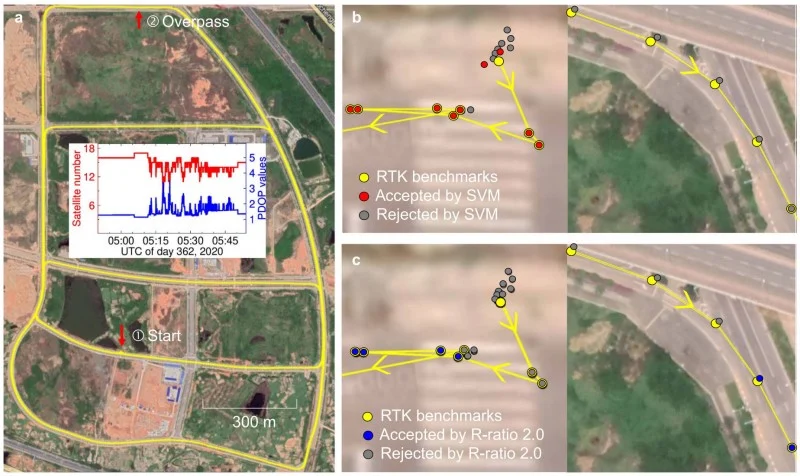
    The SVM model achieved an 92% success rate in ambiguity validation, outperforming the R-ratio test’s 82% in kinematic scenarios. Notably, the model reduced convergence time prediction errors to just 1.0 minute, compared to 5.0 minutes for conventional methods.

    Highlights of the research include:

    • Enhanced Reliability. The SVM model’s ability to adaptively weigh multiple metrics ensures more consistent ambiguity resolution.
    • Real-World Validation. A vehicle-borne experiment demonstrated a 92% success rate, proving the method’s practicality in dynamic environments.
    • Scalability. The framework is adaptable to both single- and multi-constellation GNSS systems, broadening its applicability.

    Despite its advancements, the study acknowledges a 5% error rate in unresolved ambiguities, pointing to future research directions, such as incorporating variance-covariance data for further refinement.

    “Our SVM model represents a paradigm shift in ambiguity validation,” emphasized Jianghui Geng, co-author of the study. “By harnessing machine learning, we’ve not only improved accuracy but also provided a scalable solution for diverse GNSS applications, from autonomous vehicles to geodetic monitoring.”

    The SVM-based method holds significant promise for industries requiring ultra-precise positioning, such as autonomous navigation, aerospace, and infrastructure monitoring. Its ability to shorten convergence times and enhance reliability could revolutionize real-time GNSS applications, particularly in urban or obstructed environments where signal interruptions are common.

    Future iterations of the model, incorporating additional data layers, could further bridge the gap between theoretical precision and real-world performance, setting a new standard for GNSS technology.

  • Trimble and TDK join forces to accelerate precision navigation

    Trimble and TDK join forces to accelerate precision navigation

    Trimble and InvenSense, a TDK group company, will work together to deliver an advanced navigation solution that combines the Trimble ProPoint Go engine and Trimble RTX correction service with TDK’s SmartAutomotive inertial measurement units (IMUs) module from InvenSense.

    The solution is expected to provide greater accuracy and reliability in positioning and navigation across various automotive and IoT applications.

    The Trimble ProPoint Go positioning engine is designed to deliver high-accuracy position and orientation data by utilizing internationally accessible Trimble correction services. With quad-frequency GNSS signal support and Trimble ProPoint Go’s first-in-market Automotive Safety Integrity Level-C (ASIL-C) certified correction data, this positioning ecosystem helps companies enhance their automated driving capabilities with a focus on safety. It also helps drive accuracy for IoT applications such as field robotics.

    TDK IMUs integrate a triaxal accelerometer and a triaxal gyroscope in a compact six-axis motion sensor to detect the linear acceleration and angular velocity of vehicles and objects with superior level of accuracy. With its proprietary six-axis and MEMS fabrication platform, TDK inertial sensors enhance applications possibilities thanks to their high-performance, small-size and low-power features.

    “Together with TDK we are bringing the power of high-accuracy and precise positioning along with state-of-the art ASIL-certified sensors to help our customers build innovative solutions for automotive and IoT markets,” said Olivier Casabianca, vice president, advanced positioning at Trimble. “As we continue to expand our positioning services with TDK and other tier one companies, we are powering the connected world while ensuring the safety and accuracy of connected systems.”

    Positioning Solutions Built for the Connected World
    Key benefits of the ProPoint Go positioning engine and RTX correction with TDK’s modules include:

    • Accuracy. The synergy between the two solutions delivers superior positioning accuracy under all conditions: open sky, urban canyons and indoor, even in harsh environments and among wide temperature variations.
    • Reliability. Customers can rely on consistent and dependable orientation and navigation data, crucial for applications such as autonomous vehicles, drones and industrial machinery.
    • Versatility. The integrated solution is adaptable to a wide range of applications, such as automotive positioning, advanced driver-assistance systems (ADAS), cellular vehicle-to-everything (C-V2X), field robotics and unmanned aerial vehicles (UAVs).

    “Inertial and positioning data have become critical in enabling automation, improving efficiency and monitoring conditions,” said Stefano Zanella, automotive motion VP and general manager, TDK. “Building on almost a decade of collaboration with Trimble, we are delighted to take our efforts to the next level: by offering an integrated solution, we empower customers to accelerate deployment, streamline integration and maximize the value of this transformative technology.”

    The TDK automotive safety IMU components, developed as SEooC according to ISO 26262, are suitable for applications with requirements up to ASIL-D. In addition to its six-axis solution, TDK provides quality-managed solutions that also include a three-axis magnetometer in a nine-axis solution.

  • IATA and EASA release joint strategy to counter GNSS interference risks

    IATA and EASA release joint strategy to counter GNSS interference risks

    The International Air Transport Association (IATA) and the European Union Aviation Safety Agency (EASA) have published a comprehensive plan to mitigate risks stemming from GNSS interference. The plan was part of the conclusions from a jointly hosted workshop on the topic of GNSS interference.

    With incidents of GNSS signal jamming and spoofing rising, especially in Eastern Europe and the Middle East, the workshop called for a broader, more coordinated response. The plan focuses on four areas: improving information gathering, strengthening prevention and mitigation, making better use of infrastructure and airspace management, and enhancing coordination among agencies.

    “GNSS disruptions are evolving in both frequency and complexity. We are no longer just containing GNSS interference — we must build resilience,” said Jesper Rasmussen, EASA Flight Standards Director. “Through collaboration with partners in the European Union and IATA and by supporting the International Civil Aviation Organization, we are committed to keeping aviation safe, secure, and navigable.”

    According to IATA, the number of GPS signal loss events increased by 220% between 2021 and 2024. “With continued geopolitical tensions, it is difficult to see this trend reversing in the near term,” said Nick Careen, IATA senior vice president for operations, safety, and security. “The next step is for ICAO to move these solutions forward with global alignment on standards, guidance, and reporting. This must command a high priority at the ICAO Assembly later this year.”

    Detailed Workshop Outcomes

    The workshop concluded that four workstreams are critical:

    1. Enhanced Reporting and Monitoring

    • Agree on standard radio calls for reporting GNSS interference and standardized notice to airmen (NOTAM) coding, i.e. Q codes.
    • Define and implement monitoring and warning procedures, including real-time airspace monitoring.
    • Ensure dissemination of information without delays to relevant parties for formal reporting.

    2. Prevention and Mitigation

    • Tighten controls (including export and licensing restrictions) on jamming devices.
    • Support the development of technical solutions to:
      • reduce false terrain warnings;
      • improve situational interference with portable spoofing detectors; and
      • ensure rapid and reliable GPS equipment recovery after signal loss or interference.

    3. Infrastructure and Airspace Management

    • Maintain a backup for GNSS with aminimum operational network of traditional navigation aids.
    • Better utilize military air traffic management (ATM) capabilities,including tactical air navigation networks and real-time airspace GNSS incident monitoring.
    • Enhance procedures for airspace contingency and reversion planning so that aircraft can navigate safely even in the event of interference.

    4. Coordination and Preparedness

    • Improve civil-military coordination, including the sharing of GNSS radio frequency interference (RFI) event data.
    • Prepare for evolving threat capabilities, including those related to drones.

    The workshop was held May 22-23 at EASA headquarters in Cologne, Germany, and included more than 120 experts from the aviation industry, research organizations, government and international bodies

  • SeRo Systems unveils live GNSS situation display to detect jamming

    SeRo Systems unveils live GNSS situation display to detect jamming

    SeRo Systems, a German-based leader in air traffic surveillance security and monitoring solutions, is expanding its portfolio with the launch of its newest monitoring technology for improved aircraft
    situational awareness. The live GNSS RFI Situation Display (GRSD) is a real-time solution that combines live air traffic information with SeRo’s advanced GPS jamming and spoofing detection and short-term predictive alerts — offering enhanced visibility into the airspace.

    For more than 10 years, SeRo has developed advanced air surveillance and monitoring technology for customers including EuroControl, Baltic air navigation service providers (ANSPs) and spectrum regulators, Austro Control, armasuisse and other aviation organizations. SeRo is the only company that provides real-time GNSS RFI monitoring to two of the three Baltic states.

    Operational picture at a glance

    Designed with and customized for ANSPs and spectrum regulators, the new GRSD leverages SeRo’s vertically integrated receiver network and uses its anomaly detection and high-precision multilateration (MLAT) to help users assess their operational picture at a glance. The system monitors the airspace and displays live traffic combined with a color-coded real-time GNSS interference intensity map that
    identifies zones subject to interference.

    Its short-term interference alerting feature utilizes AI to predict when aircraft will experience interference and gives the user a time estimate. As soon as an aircraft is impacted by spoofing, GRSD automatically highlights the aircraft and generates an alert indicating both the spoofed and the correct aircraft position.

    “With jamming and spoofing incidents on the rise, timely and actionable intelligence matters more than ever,” said Matthias Schäfer, CEO of SeRo Systems. “Our new GRSD product delivers real-time insights on GNSS RFI and provides a live operational view that helps users prepare and respond.

    GRSD works seamlessly alongside SeRo’s SecureTrack platform, combining real-time data for instant decision-making with historical insights for strategic airspace monitoring, analysis, reporting, and incident investigation. “Together with our SecureTrack solution, ANSPs and spectrum regulators now have the tools they need for unmatched situational awareness,” Schäfer said.

  • InfiniDome successfully resists jamming in test

    InfiniDome successfully resists jamming in test

    Security company InfiniDome has partnered with one of Israel’s largest vehicle tracking and fleet management companies to simulate a real-world car theft scenario.

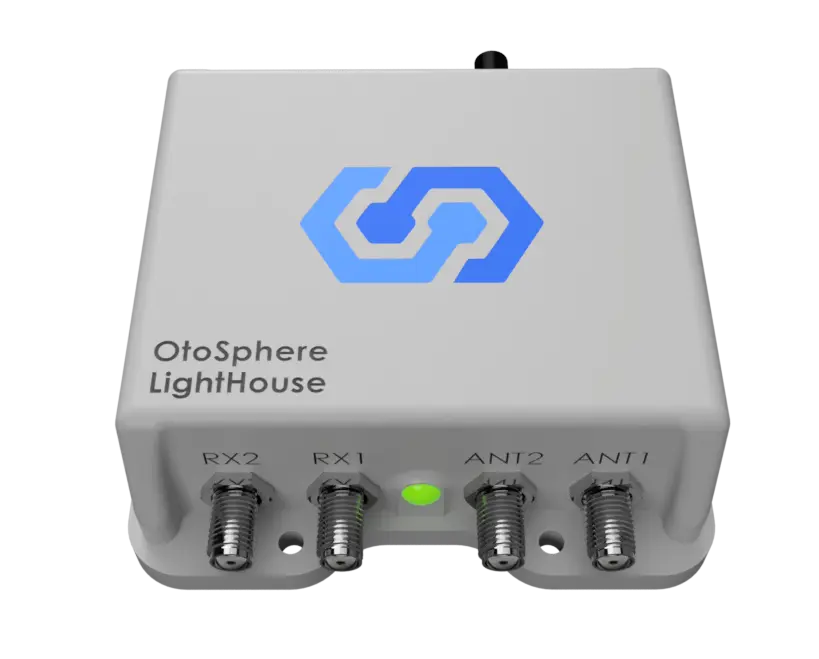
    The test recreated a scenario in which criminals deploy in-car GNSS jammers to disable location reporting systems. Two identical tracking units were installed: one protected by OtoSphere-Lighthouse (80×78.5x28mm, 180g), infiniDome’s newest anti-jamming module for commercial use, and one left unprotected.

    Credit: InfiniDome
    Credit: InfiniDome

    As jamming began inside the vehicle, the unprotected tracker quickly lost GPS signal and failed to transmit location. In contrast, the protected unit maintained full functionality, continuously reporting real-time data throughout the test.

    The trial demonstrated the reliability of infiniDome’s technology in commercial environments, the company said. The OtoSphere-LightHouse module was developed to deliver advanced anti-jamming protection for critical applications. As GPS has become essential across industries — from logistics to emergency service — so have the risks.

    InfiniDome’s presence at the International Drone Show in Denmark June 18–19, comes at a time when European stakeholders are actively seeking solutions to protect UAVs, maritime, and fleet operations from GNSS disruption — a risk that’s no longer theoretical.

  • 13 EU member states demand action on GNSS interference

    13 EU member states demand action on GNSS interference

    13 member states of the European Union have called on the European Commission to respond to interference with GNSS in EU countries.

    The interference originates in Russia and Belarus, as a result of the ongoing war with Ukraine.

    The ministers for transport from 13 countries urged immediate and coordinated action in response, reports the Baltic Times. The joint letter was signed by the ministers of Lithuania, Latvia, Estonia, Germany, Slovakia, Finland, Slovenia, the Czech Republic, Italy, the Netherlands, Spain, Denmark and Romania.

    In the joint letter, the ministers emphasize that since 2022, two types of interference to GNSS — jamming and spoofing — have been observed in the airspace of the Baltic Sea Region, posing a threat to various modes of transport, particularly civil aviation and maritime navigation.

    The General Secretariat of the Council of the EU responded to the joint letter with an outline of potential actions.

    1. Evaluate and coordinate the possibility to suspend the right to Russia and Belarus in the ITU to register the use of radio resources while GNSS interference is in progress. The lack of procedural legislation cannot be an excuse for deliberately contravening the spirit of the ITU Constitution and its general principles, endangering public health and life, without suffering any consequences.
    2. Based on good practice of EU and NATO cooperation on critical undersea infrastructure, enhance civil-military coordination mechanisms among Member States for shared monitoring, data exchange, and possible response to GNSS interference. Explore the benefits of dual use of various equipment and measures to combat the risks caused by GNSS interference.
    3. Intensify RFI monitoring by eligible national organizations and bodies, e. g. national regulator, police and military, and aggregate non-classified information on observed RFI to a publicly available near real-time monitoring and alert service on European level.
    4. Accelerate the deployment of interference resistant GNSS services, especially the antispoofing features that are part of the Galileo program, e. g. authentication and/or encryption of signals exchanged between stations and user equipment.
    5. Reassess the current reliance on GNSS-based navigation and develop resilient Positioning, Navigation and Timing (PST) services by deploying alternative or complementary systems, including ground-based legacy solutions. Simultaneously, upgrade and modernize conventional navigation infrastructures to serve as robust backups.
    6. Promote industry-manufacturer collaboration for mitigation tools and updates. Support operator-level reviews of backup system readiness, ensuring non-GNSS alternatives are usable and practiced. 2 TREE2B 9198/25 EN
    7. Draw the attention of critical infrastructure operators and unmanned system manufacturers to the risks that may arise from interference with GNSS.
    8. Develop action plans for different domains (space, aviation, maritime, telecommunications) to avoid potential duplication of efforts and coordinate short-term and long-term measures at EU and national level.
    9. Continue cooperation with all relevant stakeholders (ITU, ICAO, IMO, EASA, EMSA, IATA, EUROCONTROL). These actions, among others, could contribute to building the overall resilience of the critical infrastructure and strengthening safety and security in Europe.

    The letter highlights the urgent need to accelerate the deployment of interference-resistant GNSS services, enhance the overall resilience of critical infrastructure, and strengthen safety and security across Europe.

    “The current security environment demands a unified response to hybrid threats posed by hostile regimes, as well as close cooperation to strengthen Europe’s preparedness and resilience,” said Lithuanian Transport and Communications Minister Eugenijus Sabutis.

    “Disruptions to GNSS signals have a direct impact on strategic sectors such as transport, energy, and telecommunications. To prevent potential incidents, we must act swiftly and decisively at the European Union level — not individually, but in a coordinated manner,” Sabutis said.

    The interference is not random incidents but a systematic, deliberate action by Russia and Belarus, which can be used as a hybrid attack on strategic radio spectrum, essential for modern technology, regional safety and security, particularly in transportation.

    Furthermore, the ministers call on the EU to increase diplomatic efforts to address the interference and apply pressure on the responsible parties, including legal action against responsible individuals and entities involved in the deliberate interference with GNSS signals, to enhance European safety and security.

    “So far, the attempts by several Member States to address the problem have not brought any more tangible results,” the EU General Secretariats said. “Therefore, it is necessary to increase diplomatic efforts to address the interference and put the pressure on the responsible parties.”

    The ministers propose intensifying radio frequency monitoring and enhance civil-military coordination mechanisms among Member States for shared monitoring, data exchange and possible response to GNSS interference. They also advocate for accelerating the deployment of interference-resistant GNSS services, particularly the anti-spoofing features of the Galileo program, and for upgrading and modernizing conventional navigation infrastructure.

    Reports of increased interference include:

    • Lithuania: starting from 556 cases in March 2024 to 890 in October 2024 and 1185 in January 2025
    • Latvia: 790 cases in October 2024 to 1288 cases in January 2025
    • Estonia: 1150 cases in October 2024 and 1085 cases in January 2025
    • Poland: 1908 cases in October 2024 to 2732 cases in January 2025.

  • Lithuanian port hit by GNSS interference

    Lithuanian port hit by GNSS interference

    Russia’s war with Ukraine continues to affect GNSS signal availability in the Baltic Sea, reports LRT News. Aircraft and ships near the Lithuanian seaport of Klaipėda are losing signals becausse of Russia’s efforts to shield its Kaliningrad exclave from potential airstrikes, said Saulius Skvernelis, speaker of the Lithuanian parliament.

    “The Russians are protecting the Kaliningrad region from potential air attacks,” Skvernelis told LRT TV. “This is not specifically intended to disrupt or harm our aircraft flying to Lithuania. It’s just that the protection zone extends beyond the Kaliningrad region’s borders, and the threat, the interference, is affecting our territory as well.”

    Skvernelis warned that this problem will persist across the region as long as the Kremlin continues its war in Ukraine.

    Thirteen European Union member states have called on the European Commission to respond to interference with GNSS in EU countries. In a joint letter, the countries stressed that GNSS interference cases are not random incidents but systematic and deliberate action by the Russian and Belarusian regimes aimed at destabilizing regional infrastructure, especially in the transport sector, reports LRT.

    “We can appeal to all EU countries and any institution, but it won’t help as long as Russia uses this kind of electronic protection for its military sites to defend itself against Ukrainian strikes,” Skvernelis said. “We must force Russia to end the war and then this problem will simply go away.”

  • 2025 NASAO Conference

    2025 NASAO Conference

    The National Association of State Aviation Officials provides opportunities for those engaged in aviation and unmanned aerial vehicles.

    NASAO’s Annual Convention & Trade Show provides a space for state aviation directors and their staff to connect, collaborate, and become inspired. Not only does the annual convention provide hundreds of attendees with engaging sessions and demonstrations, it also gives them the chance to experience the state like a local.

    The 2025 conference will take place in Grand Forks, North Dakota, Sept. 21-24, at the Dena’ina Civic and Convention Center.

  • FocalPoint, STMicroelectronics to deliver enhanced GNSS solution for automotive

    FocalPoint, STMicroelectronics to deliver enhanced GNSS solution for automotive

    The combination of ST’s Teseo chipsets with FocalPoint’s S-GNSS Auto software delivers enhanced GNSS accuracy in challenging environments

    FocalPoint, a UK software company providing next-gen positioning solutions for automotive, wearables and smartphones, has announced a strategic collaboration with STMicroelectronics, a global semiconductor leader serving customers across the spectrum of electronics applications.

    The joint offering provides automotive OEMs a combined solution that enhances navigation performance by improving GNSS reliability and accuracy — key to making autonomous vehicles safer.

    Within this collaboration, FocalPoint will integrate its S-GNSS Auto software, powered by Supercorrelation technology, onto ST’s Teseo devices, known for their high performance and multi-constellation support. Combined with S-GNSS Auto, they will offer next-level industry-leading reliability and accuracy, surpassing other commercially available options.

    GNSS is an important component in advanced driver assistance systems (ADAS), providing absolute location data. However, its accuracy is compromised in urban canyons and forested roads due to signal interference. S-GNSS Auto transforms GNSS into a reliable, high-performance sensor in these challenging scenarios. This allows automakers to harness the full potential of GNSS and confidently extend the operational range of hands-free driving beyond open-sky roads. Delivered as a simple firmware update to the Teseo device, S-GNSS Auto is cost-effective and easy to adopt.

    This engagement is a significant milestone in the growth and demand for FocalPoint technology that follows a recent strategic investment from GM Ventures and collaboration with General Motors.

    Key findings from the collaboration show that the combined solution of ST’s Teseo devices and FocalPoint’s S-GNSS Auto enhances measurement accuracy by up to four times and position accuracy by up to three times (in challenging multipath environments).

    Contact FocalPoint at [email protected] for the full results report.

  • OxTS launches GNSS-denied localization solution

    OxTS launches GNSS-denied localization solution

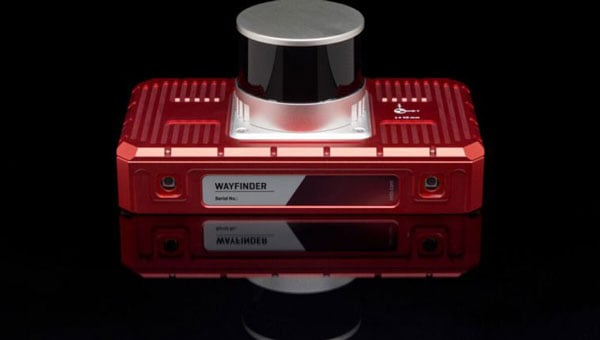
    OxTS has released WayFinder, a new localization solution designed for use in GNSS-denied environments. The system combines a GNSS/INS system, onboard processor, lidar scanner and two cameras to enable accurate positioning in areas with limited satellite coverage, such as urban canyons and underground tunnels.

    Precise localization data is crucial for various industries, including autonomous navigation, automotive testing and sensor data georeferencing. However, obtaining accurate positioning information in areas with weak or unavailable GNSS signals has been a persistent challenge. WayFinder is designed to operate with minimal setup, requiring only basic configuration before use. The system’s key feature is Lidar Boost, a new software technology that enhances GNSS/INS performance in environments with unreliable satellite signals.

    Lidar Boost employs advanced algorithms to process data from the integrated Lidar scanner, compensating for missing or erroneous GNSS updates in real time. This allows WayFinder to maintain high-accuracy localization in areas with limited satellite coverage and ensure smooth transitions between GNSS-supported and GNSS-denied environments.

    The system can be used across multiple sectors. In ports, it can provide precise localization for autonomous vehicles operating among stacked shipping containers. In mining, it can support navigation for both underground and surface vehicles. WayFinder also offers a solution for indoor automotive testing without the need for fixed infrastructure. Surveyors working in areas with intermittent GNSS coverage can also benefit from its positioning capabilities.

  • Precise positioning for autonomous vehicles

    Precise positioning for autonomous vehicles

    GNSS researchers presented hundreds of papers at the 2024 Institute of Navigation (ION) GNSS+ conference, which took place Sept. 16-20 in Baltimore. The following papers focus on high-accuracy positioning for autonomous vehicles in various environments. The papers are available here.

    High-accuracy and resilient GNSS receiver for autonomous vehicles

    The G3STAR GNSS receiver, a key component of the GAMMS Horizon 2020 project, is designed to improve high-definition navigation map production for autonomous vehicles. This Galileo-based receiver leverages the constellation’s Open Service features, including the High Accuracy Service (HAS) and Navigation Message Authentication (OSNMA). The research team shared that G3STAR’s ability to obtain and decode HAS messages from Galileo E6-B signals, as well as to process OSNMA bits from live Galileo E1-B I/NAV messages, demonstrates its advanced capabilities in providing secure and precise navigation data.

    Preliminary tests highlight G3STAR’s proficiency in utilizing Galileo’s new services. However, the research team shared that further evaluation is necessary to fully assess its impact within the GAMMS project. Plans include validating the HAS data’s effect on navigation accuracy, conducting field tests to evaluate OSNMA availability in various environments and assessing the influence of the Chip Scale Atomic Clock on receiver performance. Additionally, comparing the G3STAR’s performance to commercial off-the-shelf receivers will be crucial in determining its overall contribution to the GAMMS navigation system and HD map generation. These evaluations will be carried out during upcoming test campaigns, providing valuable insights into G3STAR’s potential to advance autonomous vehicle navigation.

    Filipe Carvalho, Ricardo Prata, Bruno Cardeira, Carlota Cardoso, Rui Nunes and António Fernández; “High-Accuracy and Resilient GNSS Receiver for an Autonomous Vehicle.”

    GNSS/INS positioning software library

    The autonomous vehicle industry has seen significant interest and investment throughout the past 15 years, with numerous practical applications emerging in the market. However, the technology for functionally safe GNSS/INS localization in autonomous vehicles is still not fully established. This gap is particularly crucial in safety-critical applications, where positioning algorithms must be robust against potential faults, especially in challenging environments. This paper highlights Hexagon’s Safety-Critical Positioning Solution, which addresses this need by providing both precision and safety for autonomous land vehicles.

    The Positioning System is a safety-first software library that integrates GNSS signals, state space corrections from the TerraStar-X Enterprise service, inertial measurement units (IMUs) and additional vehicle sensors. This system employs an extension of Receiver Autonomous Integrity Monitoring techniques, originally developed for the aviation industry. It computes multiple navigation solutions using a solution separation technique, including an “all-in-view” solution and several subset solutions that exclude various fault hypotheses. These solutions are used to calculate Protection Levels (PLs), which provide an estimated upper bound on positioning errors, accounting for systematic biases and measurement faults. The PLs can be compared against alert limits to determine whether the navigation solution is sufficiently accurate for autonomous decision-making.

    Eduardo Infante, Rudi Gaum and Laura Norman; “Demonstration of a Functionally Safe GNSS/INS Positioning Software Library for Autonomous Land Vehicles.”

    Unmanned ground vehicles in off-road environments

    This paper explores the emerging potential of radar for localization in GNSS-denied scenarios, particularly in challenging off-road environments where lidar-based systems struggle. The research focuses on two distinct settings: a dense forest and an underground mine. To address the localization challenges in these environments, the team developed a pipeline that combines an adaptive extended Kalman filter (EKF) for unstructured forested regions with a factor graph approach that fuses EKF estimates and point-to-plane radar iterative closest point (ICP) measurements for structured underground environments. The results demonstrate significant improvements in localization accuracy compared to existing methods, with the adaptive EKF proving particularly effective in forested areas.

    The study provides valuable insights into the integration of radar and IMU data for vehicle localization in GPS-denied scenarios. While the adaptive EKF outperformed conventional EKF in structured outdoor settings, the standard EKF showed better performance in the highly dynamic conditions of the underground mine. The factor graph approach exhibited improved tracking performance, especially in reducing lateral drift along straight trajectory segments. The research also highlights the importance of selecting high-quality ICP registrations for radar-based SLAM. These findings pave the way for future research directions, including refining adaptive EKF for varied environments, exploring radar-based navigation on feature-sparse roads and enhancing the factor graph framework to incorporate additional sensor modalities.

    Petar Mitrev and Mohamed Atia, “Radar-Inertial Localization for Unmanned Ground Vehicles in GNSS-Denied Off-Road Environments.”

    Clock drift monitoring-based GNSS spoofing detection

    GNSS plays a vital role in autonomous systems, providing essential positioning, velocity and timing (PVT) information for platforms such as autonomous vehicles, UAVs and ships. However, GNSS vulnerability to spoofing attacks poses significant security risks, potentially disrupting decision-making processes in these systems. To address this issue, researchers have developed a novel approach called Clock Drift Monitoring (CDM) for detecting GNSS spoofing in autonomous vehicles. Unlike previous methods that focused on directly detecting Doppler bias from measurements, CDM indirectly monitors the adverse impact of Doppler bias on the PVT solution, overcoming challenges associated with bias extraction from raw measurements.

    The CDM technique exploits user clock drift derived from Doppler positioning as a detection metric. Under normal conditions with authentic GNSS signals, the clock drift remains stable, reflecting the user’s frequency source stability. However, spoofing conditions introduce counterfeit signals with consistent Doppler bias across all measurements, resulting in abnormal clock drift variations. A Generalized Likelihood Ratio Test-based detector identifies these variations, offering a practical and flexible method for GNSS spoofing detection. Field tests have validated the CDM technique’s effectiveness in real-world scenarios, demonstrating its robustness as a solution for autonomous vehicles to counter emerging cyber threats. This method’s ease of implementation, broader applicability and inherent robustness make it a promising approach for safeguarding autonomous systems against counterfeit GNSS signals.

    Ziheng Zhou, Hong Li, Yimin Deng and Mingquan Lu Tsinghua; “Clock Drift Monitoring Based GNSS Spoofing Detection Method for Autonomous Vehicles.”

  • FAA and NAWCAD advance CRPA approval process

    FAA and NAWCAD advance CRPA approval process

    The Federal Aviation Administration (FAA) has partnered with the Naval Air Warfare Center Aircraft Division (NAWCAD) to initiate steps toward approving Controlled Reception Pattern Antennas (CPRAs) for use in aircraft. This collaboration addresses GPS/GNSS jamming and spoofing threats, with the current focus on a Request for Information (RFI) to study anti-jamming and anti-spoofing technologies. The RFI, published on SAM.gov, aims to identify and evaluate vendors’ antenna technologies for potential integration into civilian aircraft.

    CPRAs could significantly mitigate terrestrial-based GPS/GNSS jamming and spoofing, enhancing aviation safety by preserving situational awareness and reducing pilot workload during disruptions. The technology’s effectiveness in neutralizing ground-based threats positions it as a critical tool for maintaining reliable navigation systems.

    RFI details and next steps

    NAWCAD is leading the RFI process, which includes hosting industry days and establishing Cooperative Research and Development Agreements for testing hardware and evaluating performance. Responses to the RFI are due by May 26, 2025, at 5:00 PM EST, with questions accepted until April 25, 2025. Data from the RFI and subsequent testing will inform updated Minimum Operational Performance Standards for GPS/GNSS antennas and cockpit displays.

    Dana Goward, president of the Resilient Navigation and Timing Foundation, noted that this is a great first step, but cautioned that widespread adoption of CPRAs in commercial aircraft will take a long time due to the lengthy FAA approval and certification processes, along with the significant financial investment and effort required to install CRPAs in airplanes.

    Although CPRAs address terrestrial threats, space jamming continues to be a critical concern. Adversaries often outpace countermeasures, necessitating continuous innovation to keep up with advancing threats.

    FAA safety alert highlights risks

    The FAA issued Safety Alert for Operations (SAFO) 24002 on Jan. 1, 2024, to alert operators and manufacturers about the risks of GPS/GNSS disruptions. The alert emphasized the potential for increased pilot workload and safety risks due to situational awareness loss during jamming or spoofing incidents.

    On Jan. 17, 2025, the State Department proposed removing CPRAs from the U.S. Munitions List (USML), shifting their regulation to the Commerce Department’s Export Administration Regulations (EAR). This change, effective Sept. 15, 2025, aligns CRPA export controls with other dual-use technologies, streamlining their adoption. A 60-day public comment period is open via regulations.gov.