Tag: Australia

  • GNSS-IR aids in water-level research

    GNSS-IR aids in water-level research

    Cost-effective sensors from the University of Bonn are measuring water levels along rivers and coastlines in Africa and the Pacific region.

    Using a low-cost sensor and GNSS Interferometric Reflectometry (GNSS-IR), river water levels can be monitored around the clock. The water-level data are automatically transmitted via cellular networks to an analysis center.

    Researchers at the University of Bonn developed the method several years ago and tested it on the Lower Rhine. With support from the European Space Agency (ESA), the monitoring system is now also being used in Africa and the Asia-Pacific region.

    Researchers at the Institute of Geodesy and Geoinformation at the University of Bonn, led by Makan Karegar, have transferred water -level monitoring technology from the Rhine to Africa, Australia and the Philippines as part of ESA projects. Originally developed in the DFG Collaborative Research Center SFB 1502 (DETECT), the technology enables continuous, freely accessible monitoring of inland and coastal waters in data-poor regions worldwide.

    Active on three continents

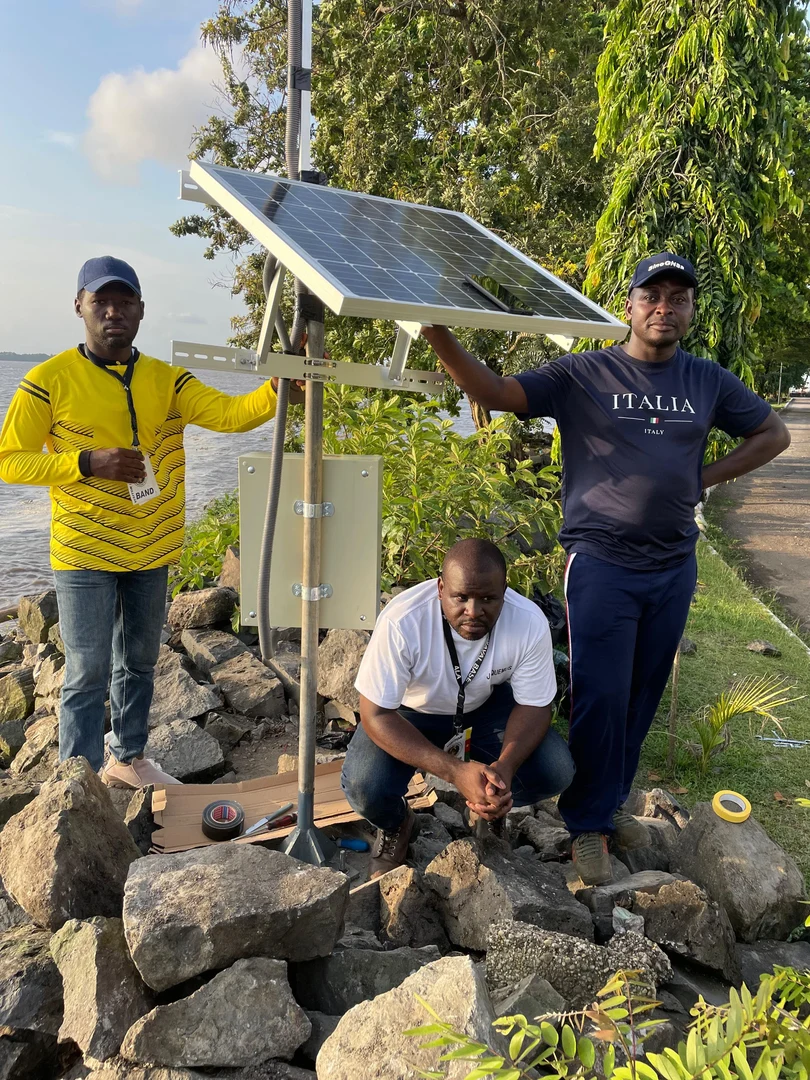
    The technological centerpiece is the Raspberry Pi Reflector (RPR), a compact, solar-powered sensor developed at the University of Bonn. Using GNSS-IR, it measures water levels with centimeter-level accuracy.

    Only a portion of the signals emitted by the GNSS satellites is directly captured by the antenna. The rest is reflected by the water surface and reaches the receiver via this detour. When superimposed with the directly received signal, it forms specific patterns known as interference patterns. These can be used to calculate the distance from the antenna to the water surface.

    Each unit costs less than 800 euros, is powered by solar energy, and transmits data daily via mobile networks. “Modern gauge stations are prohibitively expensive, and conventional ones are highly vulnerable to flood damage,” said Makan Karegar, project manager. “These two factors together have left many countries in the global south with little to no ground-based water-level monitoring. The low-cost GNSS-IR sensor was developed precisely to address this gap.”

    CAMEO-WAGST Project

    The CAMEO-WAGST project (“Cameroon Advanced Measurements for Enhanced Observations of Water levels using Affordable GNSS-IR and Sentinel-3 & 6 Technology”) has established the first dedicated GNSS-IR network for monitoring water levels along coasts and rivers in Camroon and was funded by ESA. Between May and June 2025, researchers collaborated with Loudi Yap, director of the Research Laboratory in Geodesy at the National Institute of Cartography to install eight RPR sensors in Cameroon: two on the Sanaga River and six along the coast. “A lack of infrastructure for reliable hydrological and coastal monitoring in Cameroon has so far hindered effective flood risk management and early warning systems,” Yap said.

    This collaboration, under the umbrella of the EO Africa Research and Development Facility, is already bearing fruit, said Roelof Rietbroek, research coordinator at ESA’s EO Africa R&D Facility. “We hope this paves the way for more reliable monitoring of flood-prone regions in Africa.”

    St3TART-FO Project

    Building on this success, the follow-up project St3TART-FO also was launched in collaboration with ESA. A total of 17 RPR sensors will be installed in seven countries, including West Africa, Australia and the Philippines. “The goal is to create a freely accessible reference measurement network for calibrating satellite data,” Karegar said. For the first time, the network will provide continuous water-level data at previously unmonitored locations.

    The collaboration is based on years of scientific exchange between Africa and Europe. Partners include:

    • International Institute for Water and Environmental Engineering (2iE), Burkina Faso
    • National Institute of Cartography, Cameroon
    • Environmental Protection Authority (EPA), Ghana
    • Nigeria Hydrological Services Agency (NiHSA)
    • University of Maiduguri, Nigeria
    • Assane Seck University of Ziguinchor, Senegal
    • University of Southern Queensland, Australia
    • University of the Philippines Diliman.

    Technology Transfer and Capacity Building

    Both projects promote technology transfer and local capacity building through training, workshops and mentoring, enabling partner institutions to operate RPR networks independently. “We want to leave behind a sustainable monitoring capacity that is operated by local scientists and institutions, openly shared with the world, and maintained well into the future,” Karegar said.

    With financial support from the Transdisciplinary Research Area (TRA) “Sustainable Futures” at the University of Bonn, Karegar developed the open-access data platform gnss4surfacewater.com, which provides an independent, ground-based service for monitoring current and historical water levels using GNSS-IR. Also visit CAMEO-WAGST GitHub for code and field photos.
  • Aptella offers free RTK positioning for bushfire and flood recovery volunteers

    Aptella offers free RTK positioning for bushfire and flood recovery volunteers

    Australia-based Aptella is offering free access to its AllDayRTK high-accuracy positioning service for volunteers and organizations involved in bushfire and flood recovery efforts.

    Reliable positioning aids in coordinating recovery operations, assessing damage and restoring essential infrastructure. However, extreme weather events often disrupt permanent GNSS base stations due to power outages and loss of internet connectivity.

    To address this challenge, AllDayRTK has developed a Synthetic Base Station system, enabling high-accuracy positioning even when permanent bases are offline. This technology creates a virtual reference station network that ensures continuity of service in disaster-affected regions, supporting emergency response teams and volunteers where traditional infrastructure cannot.

    Key Benefits:

    • Free access for registered volunteers and recovery organizations.
    • High-accuracy GNSS positioning for mapping, surveying and logistics.
    • Synthetic Base Station technology ensures service continuity without reliance on damaged or offline permanent bases.

    “Aptella is always willing to do what we can to support volunteer services with high-accuracy positioning that assist with recovery after natural disasters and extreme weather events,” said Greg Macklin, CEO at Aptella. “Our commitment is to ensure that those on the front lines have the tools they need to rebuild communities quickly and safely.”

  • Australian Defence selects Adtran optical cesium clock for PNT research

    Australian Defence selects Adtran optical cesium clock for PNT research

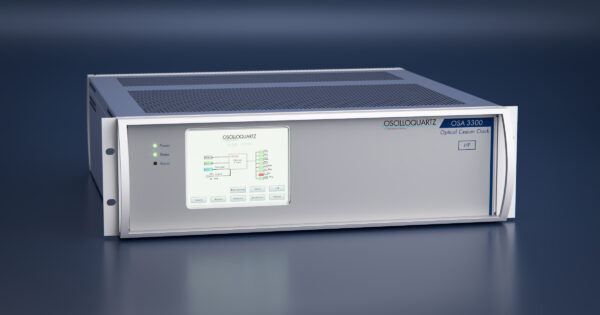
    Australia’s Defence Science and Technology Group (DSTG), part of the Australian government’s Department of Defence, has selected Adtran’s Oscilloquartz high-performance optically pumped cesium clock to support research at its Adelaide facility.

    The OSA 3300 HP will serve as a time and frequency reference for positioning, navigation and timing (PNT) research. Delivered in collaboration with local partner CoverTel, the deployment marks the first integration of optical cesium technology within Australian defense research.

    “DSTG’s selection of our optical cesium reflects a broader shift toward autonomous, long-term synchronization solutions,” said Stuart Broome, GM of EMEA and APAC sales at Adtran. “Defense organizations around the world are reassessing how they ensure timing resilience, particularly as reliance on GNSS becomes more of a risk.”

    The OSA 3300 HP will give national infrastructure precision and adaptability, supporting DSTG’s research into new strategies for assured PNT. DSTG selected the OSA 3300 HP to support advanced PNT research within its Sensors and Effectors division.

    Using optical pumping technology that measures 100 times more atoms than traditional magnetic cesium clocks, the device delivers outstanding frequency stability and precision, Adtran said. Its all-digital design ensures consistent performance, while its 10-year operational lifespan offers long-term value.

    With its compact form factor, robust construction and advanced atomic technology, the OSA 3300 HP provides the reliability needed to support Australia’s evolving synchronization requirements and critical scientific initiatives.

    The clock will help DSTG explore new approaches to synchronization and build greater resilience into the Australian Defence Force’s long-term PNT capabilities, especially in contested environments where GNSS jamming and spoofing are prevalent. It will lay the groundwork for systems that rely on precise, dependable timing — from secure defense communications to advanced sensing and navigation.

  • Viasat awarded second SouthPAN contract

    Viasat awarded second SouthPAN contract

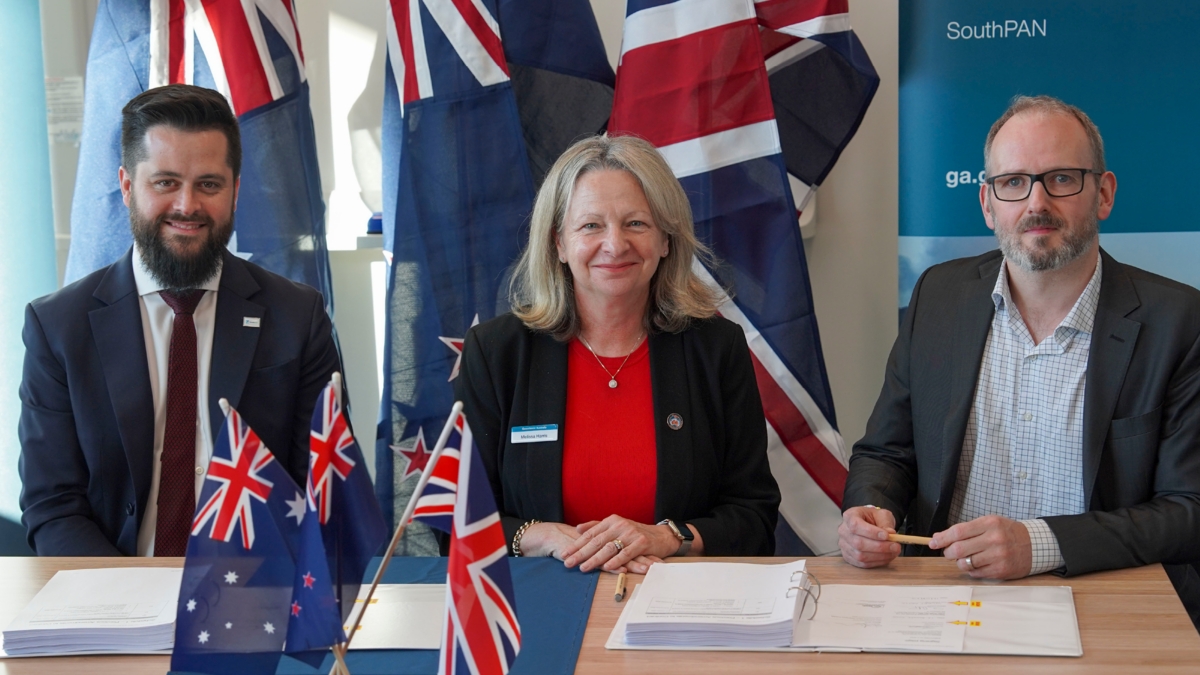
    Viasat Inc. has received $252 million AUD from Geoscience Australia and Toitū Te Whenua Land Information New Zealand (LINZ) to deliver additional satellite services for the region’sSouthern Positioning Augmentation Network (SouthPAN).

    SouthPAN is a collaborative satellite-based augmentation system developed jointly by Australia and New Zealand. It provides precise positioning and navigation services to support aviation, maritime, agriculture, surveying and emergency response.

    This is the second contract award for Viasat, after Inmarsat — which has since combined with Viasat — was awarded a contract in May 2023 to deliver a satellite payload for SouthPAN. The new agreement, which amends the previous award and comes under Viasat’s Communication Services segment, covers the continuation of services from Viasat’s existing in-orbit satellites as well as a new payload, marking a significant extension of Viasat’s partnership with both governments.

    The agreement secures satellite service and ground infrastructure to deliver precise positioning across Australia, New Zealand and the region’s maritime zones.

    SouthPAN is delivered by Geoscience Australia in partnership with Toitū Te Whenua Land Information New Zealand, with early services available to both countries since 2022.

  • SouthPAN satnav program for Australia passes Critical Design Review milestone

    SouthPAN satnav program for Australia passes Critical Design Review milestone

    SouthPAN includes Safety-of-Life L1 SBAS for civil aviation and open services for precise point positioning and next-generation SBAS.

    The Southern Positioning Augmentation Network (SouthPAN) has successfully completed its Critical Design Review (CDR), marking a pivotal milestone towards delivering advanced satellite-based augmentation services (SBAS) across Australia and New Zealand. 

    Led by Lockheed Martin Australia, with GMV as a key strategic partner, SouthPAN is jointly supported by the Australian and New Zealand governments to provide satellite navigation and precise positioning services throughout Australasia.

    The Critical Design Review represents a vital checkpoint in the lifecycle of a safety-critical system such as SouthPAN, validating that the design meets stringent performance, safety and security requirements necessary for civil aviation operations. As part of this milestone, the SouthPAN team provided comprehensive certification artifacts aligned with international aviation standards, including ARP 4754A for systems development processes, DO-254 for hardware, and DO-278A for software assurance.

    The successful completion of the CDR demonstrates that the system’s architecture and implementation will satisfy the rigorous design assurance levels mandated for safety-of-life applications.  Achieving this milestone confirms the readiness of the system’s design for operational deployment and marks a critical step forward towards its future certification for safety‑of-life services in the aviation sector.

    SouthPAN is notable as the first SBAS globally designed from its inception as a service rather than as a conventional turnkey system. This service-oriented approach enables scalability and potential expansion into other regions, while establishing clear customer-provider interactions governed by service-level agreements (SLAs) and adherence to defined key performance indicators (KPIs).

    Early open services have been provided since September 2022, demonstrating immediate benefits to users across Australasia. Moving forward, the SouthPAN service will fully deliver safety‑of-life L1 SBAS critical for aviation operations, significantly enhancing flight safety through precise runway approaches and superior navigation accuracy.

    Additionally, SouthPAN has integrated cutting-edge dual-frequency multi-constellation (DFMC) SBAS and precise point positioning (PPP) through SBAS as open services available to diverse users, including the agriculture, maritime, rail, road transport and geomatics sectors. The DFMC SBAS capability is designed to support an effortless transition to future safety-of-life services through engineering updates and software modifications, without necessitating costly hardware replacements.

    GMV is responsible for two core elements of the SouthPAN project: the Corrections Processing Facility (CPF) and the Ground Control Center (GCC). These facilities will ensure that SouthPAN consistently meets stringent performance benchmarks by generating precise corrections for navigation signals and promptly identifying and reporting anomalies critical for safety-of-life aviation services. GMV also leads the navigation performance engineering activities and continuous performance monitoring, ensuring the system reliably fulfills its specified operational criteria.

  • Australian Navy trials validate quantum solution for GPS denial at sea

    Australian Navy trials validate quantum solution for GPS denial at sea

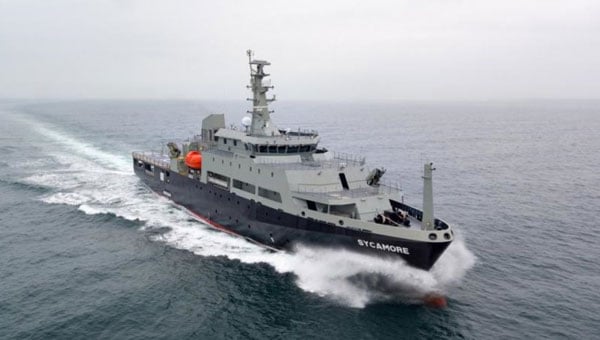
    Q-CTRL has completed a major field trial with Australian Defence on board the Royal Australian Navy’s Multi-role Aviation Training Vessel (MATV), the MV Sycamore. The results of the trial demonstrated advancements in software-ruggedized quantum sensing for navigation.

    In the trials, Q-CTRL field deployed a quantum dual gravimeter, which measures tiny variations in Earth’s gravity as part of a next-generation quantum-assured positioning, navigation, and timing (PNT) system operable when GPS is unavailable or untrusted.

    This first trial saw over 144 hours of continuous operation and successful data collection with no human intervention during real maritime operations. 

    “Quantum sensors provide a near-term opportunity to achieve transformational defense capabilities, but previous deployments in the field have struggled to deliver defense-relevant performance,” said Q-CTRL CEO and founder Michael J. Biercuk. “Operating on a real moving vehicle is just not the same as conducting a science experiment; at Q-CTRL, we’ve taken a different approach to getting quantum sensors out of the lab, focusing on software as the critical enabler of performance in the real world.”

    Earlier this year, Q-CTRL announced successful airborne field trials of a new generation of quantum-magnetic navigation solutions, Ironstone Opal, validated for the first time to outperform comparable conventional alternatives in challenging real-world settings by 50 times. 

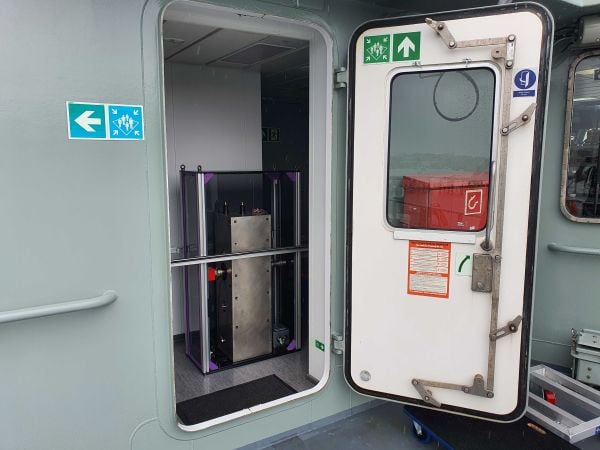
    Developed and fielded in 14 months, the dual gravimeter was installed in a “strapdown” configuration (bolted to the floor) in the space of a single server rack in a communications room onboard MV Sycamore. The sensor consumed only 180W of power – about 10 times less than a household toaster.(Photo: Q-CTRL)
    Developed and fielded in 14 months, the dual gravimeter was installed in a “strapdown” configuration (bolted to the floor) in the space of a single server rack in a communications room onboard MV Sycamore. The sensor consumed only 180W of power – about 10 times less than a household toaster.(Photo: Q-CTRL)

    The newly announced trials of Q-CTRL’s gravimetric navigation technology open opportunities to bring quantum-assured navigation to maritime vessels where magnetic navigation can be less effective. 

    GPS denial has become one of the most pressing strategic challenges in both defense and commercial settings, risking major disruptions to civilian and military operations. Quantum navigation promises a robust and reliable GPS backup that cannot be jammed or spoofed. 

    Q-CTRL’s navigation capability is urgently needed in contested maritime environments, as instances of spoofed signals caused significant disruptions to ships in the Middle East waterways as recently as June 23. This causes not only critical logistical issues but disrupts collision avoidance efforts, revealing major safety implications.

    In quantum gravimetric navigation, the quantum gravimeter continuously “sees” the otherwise invisible hills and valleys in Earth’s gravity, allowing a navigation computer to compare its observations against known gravity maps. This is similar to orienteering, where one can position oneself on a map by identifying landmarks like valleys, mountains, rivers, or roads.  GPS is not needed, making it a robust backup in contested regions.

    Q-CTRL’s demonstration with the Royal Australian Navy departs from most previous quantum sensing field trials in that these tests mandated peak performance with full autonomy and without the addition of any special infrastructure. The sensor had to operate as a real navigation system would operate during a defense mission. 

    The ship’s motion and engine vibrations were sufficient to cause total loss of signal using conventional operating techniques typically employed in research experiments. To address these losses, Q-CTRL’s software-ruggedization strategies recovered operation even while MV Sycamore was underway.

    Quantum sensing leverages the physics of light and matter on the smallest scales to enable the detection of tiny signals. Because these devices work based on the fundamental laws of physics and are not affected by drift like other GPS alternatives, their outputs do not change over time, enabling new opportunities where long-term stability is essential. Generally, however, these devices are significantly degraded when taken from a research laboratory into the real world, an issue addressed by Q-CTRL’s software-ruggedization technology.

    For more on Q-CTRL’s software-ruggedized quantum sensing technology, read their peer-reviewed technical demonstration published in Nature.

  • Advanced Navigation to develop INS for Gilmour Space rocket launches

    Advanced Navigation to develop INS for Gilmour Space rocket launches

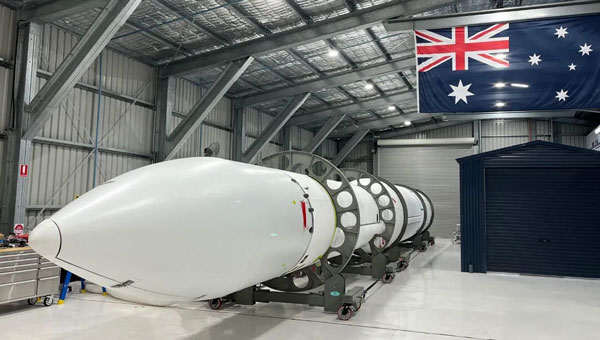
    Advanced Navigation has secured grant funding from the Australian Space Agency through the Moon to Mars Initiative Grant. This funding will expedite the development of a space-grade high-shock inertial navigation system (INS) designed to endure extreme conditions during rocket launches.

    The INS will support Gilmour Space Technologies, an Australian launch services company, in the development and launch of Eris Rockets and Elara Satellite platforms to low-Earth orbits (LEO). This collaboration aims to enhance Australia’s sovereign aerospace capabilities and contribute to the growing space industry.

    The development of this advanced INS presents significant engineering challenges due to the harsh conditions experienced during rocket launches. From lift-off to payload deployment, every phase of a rocket’s journey requires precise engineering and seamless coordination. All electronic and fiber-optic components must be capable of withstanding intense shock, vibration, shifting gravity, payload impact and extreme temperature fluctuations.

    The onboard INS consists of a plethora of high-end sensors, including accelerometers and gyroscopes, sensitive enough to detect the smallest change in noise and vibration. To ensure accurate and reliable performance, these delicate components must be shielded from the extreme forces experienced during launch. One solution is the integration of a high-shock enclosure — a protective barrier encircling the INS housing. This enclosure acts as a cushion between the system and the surrounding structure, absorbing and redistributing intense g-forces from engine ignitions and launch vibrations. By dampening these shocks, the enclosure prevents disruptive forces from reaching the sensors, preserving their precision in the harshest conditions.

  • Advanced Navigation partners with Rheinmetall Defense Australia to deliver inertial navigation solutions for combat vehicles

    Advanced Navigation partners with Rheinmetall Defense Australia to deliver inertial navigation solutions for combat vehicles

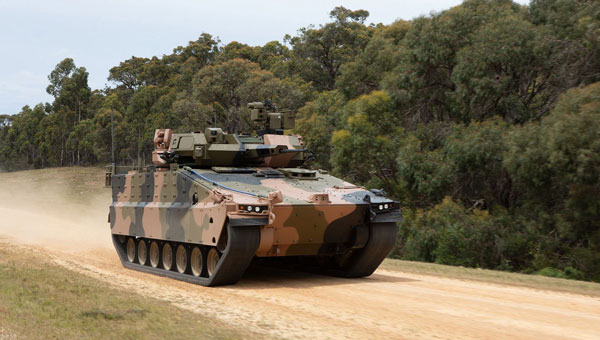
    Advanced Navigation has finalized a multi-million dollar deal with Rheinmetall Defense Australia to provide fiber-optic gyroscope (FOG) inertial navigation systems (INS) for integration into Rheinmetall’s Boxer Combat Reconnaissance Vehicles (CRV), currently deployed by the Australian Army.

    This agreement builds upon a previous collaboration in 2021, where Advanced Navigation supplied over 200 FOG INS units for the Boxer CRV as part of the LAND 400 Phase 2 Program.

    Arming the Boxer CRV with FOG INS technology

    The FOG INS technology developed by Advanced Navigation incorporates sophisticated algorithmic capabilities, resulting in a compact yet powerful navigation solution that outperforms traditional filter-based systems.

    The system incorporates Advanced Navigation’s algorithmic technology, enabling the FOG INS to provide navigation data that surpasses outputs based on traditional filter methods while maintaining a compact form factor. The optical gyroscope’s design, free from moving parts, ensures exceptional resilience against shock and vibration-induced errors – a crucial feature for vehicles traversing challenging terrains.

    Validated in real-world operations, the FOG INS integrated into the Boxer CRV, an armored 8×8 vehicle, offers enhanced troop safety, security and protection, coupled with high levels of firepower and mobility for sustained operations ranging from peacekeeping to high-intensity combat. The Boxer CRV is equipped with a reconnaissance mission module, including the two-person digital Lance turret, the first crewed medium-caliber turret to be put into service on the Boxer platform.

    This partnership between Rheinmetall and Advanced Navigation aligns with the objectives of the Australian Defense Global Supply Chain (GSC) Program, aimed at expanding opportunities for Australian suppliers and boosting export prospects within the global defense industry.

  • Australia and India advance resilient PNT

    Australia and India advance resilient PNT

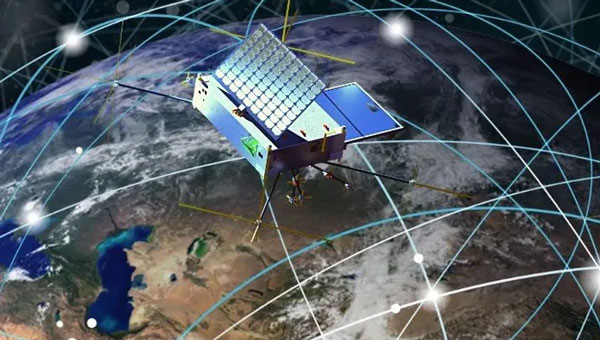
    Skykraft, an Australian space technology company, has signed a participating project partner agreement to advance positioning, navigation and timing (PNT) systems in low-Earth orbit (LEO). This agreement, backed by an International Space Investment (ISI) India Projects grant from the Australian Government, marks a significant milestone in fostering space cooperation between Australia and India.

    The project’s primary objective is to develop and demonstrate collaborative PNT systems. This includes establishing the viability of large-scale LEO constellations, addressing vulnerabilities in existing GNSS in denied environments, and exploring novel applications for PNT signals from LEO. Additionally, the project aims to create a comprehensive roadmap for collaborative LEO-PNT by implementing resilient, easily updatable constellations.

    The project also seeks to enhance environmental monitoring capabilities through GNSS-reflectometry (GNSS-R) and radio occultation (GNSS-RO) technologies. This will improve understanding of Earth’s oceans, droughts, and floods while enhancing real-time space and terrestrial weather forecasting. It will explore emerging applications, such as tsunami monitoring and warning systems.

  • Advanced Navigation, Hanwha Defense Australia and Hanwha Aerospace advance military navigation

    Advanced Navigation, Hanwha Defense Australia and Hanwha Aerospace advance military navigation

    Advanced Navigation, Hanwha Aerospace and Hanwha Defense Australia (HDA) have signed a memorandum of understanding (MoU) to co-develop strategic grade assured positioning navigation and timing (APNT) solutions.

    Under the agreement, the three companies will collaborate on the development of high-performance inertial navigation systems (INS) for autonomous, airborne, and crewed systems. These systems will be used for precision targeting and vehicle navigation in GNSS-contested environments across land and air domains.

    The co-developed solutions will be integrated into Hanwha Aerospace’s global supply chain to advance the broader strategic APNT interests for Australia and international markets.

    By integrating Advanced Navigation’s IP in digital fiber-optic gyroscope (DFOG) technologies with Hanwha’s robust aerospace and defense capabilities, the agreement seeks to augment Australia’s manufacturing and supply chain resilience to meet the demand of global military supply chains.

    Hanwha Defense Australia’s Armoured Vehicle Centre of Excellence (H-ACE) in Melbourne, Australia, will provide critical facilities supporting the production and sustainment of tracked armored vehicles, including multiple assembly lines, a 1,200 m test track, a deep-water test facility, an obstacle course and a research and development center. Stage 2 of the development will also include Australia’s EMI/EMC (electromagnetic interference/compatibility) chamber and test shooting tunnel alongside an expanded manufacturing capability.

    In the neighboring state of New South Wales, Advanced Navigation’s manufacturing facility will be used for the secure production of APNT solutions. Specifically, it enhances the critical output of strategic-grade DFOGs, which possess the heightened sensitivity necessary to detect the Earth’s rotation.

  • AUKUS conducts trials for autonomous, AI-enabled sensing systems

    AUKUS conducts trials for autonomous, AI-enabled sensing systems

    Photo: AUKUS
    Photo: AUKUS

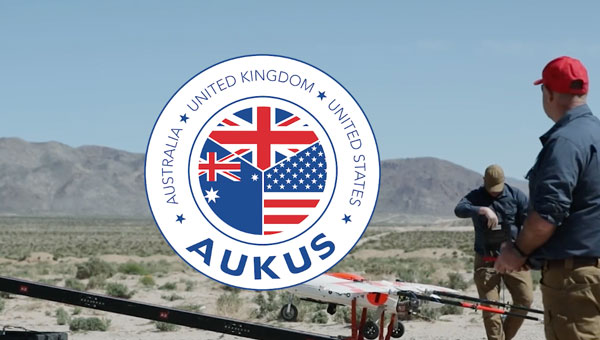
    AUKUS, the trilateral security partnership between Australia, the United Kingdom and the United States, deployed autonomous and artificial intelligence (AI)-enabled sensing systems during the Resilient and Autonomous Artificial Intelligence Technology (RAAIT) trials, showcasing advancements in their Pillar II advanced capabilities initiative.

    The trials took place at multinational Project Convergence exercises hosted by the United States Army. Military personnel from the three AUKUS nations tested autonomous and AI-enabled sensing capabilities in a multi-domain battlespace—land, maritime, air, and cyber—that minimized the time between sensing enemy targets, deciding how to respond, and responding to the threat.

    Once integrated into national platforms, these new sensing systems are designed to provide more reliable data, which can enable commanders to make optimal decisions and allow service members to respond more quickly to kinetic threats.

    During the RAAIT exercise, a sophisticated plug-in for the Tactical Assault Kit (TAK) demonstrated impressive capabilities in enhancing military operations. This map-based software application allowed a UK RedKite UAV to dynamically detect opposing force locations by making real-time adjustments based on collected data. Simultaneously, a second UAV provided high-resolution imagery for confirmation. The integrated system seamlessly transmitted this critical information to the Tactical Operations Center (TOC), where a designated “AI officer” provided essential human oversight. Upon verification, the officer authorized an Australian XT-8 UAV to execute a simulated strike. The success of this TAK plug-in has prompted the U.S. Air Force Research Laboratory (AFRL) to plan its wider distribution, showcasing the potential for enhanced interoperability among AUKUS partners.

    “It used to be that each nation used its own datasets to develop separate models and deploy those models on their own platforms. Under RAAIT, we’ve matured the AI pipeline, focusing on interchangeability and interoperability, which allows for any combinations of datasets, models, algorithms and platforms to be used across all three nations,” said Dr. Kimberly Sablon, the Principal Director of Trusted Artificial Intelligence and Autonomy in the Office of the Under Secretary of Defense for Research and Engineering.

    Lessons learned at the RAAIT trials will be used for future training events. The AUKUS Artificial Intelligence and Autonomy (AIA) Working Group hopes to use these findings to develop an AIA ecosystem that will one day enable the three partner nations to share data for operational success in contested environments.

  • US and Australia partner to improve GPS resilience in contested environments

    US and Australia partner to improve GPS resilience in contested environments

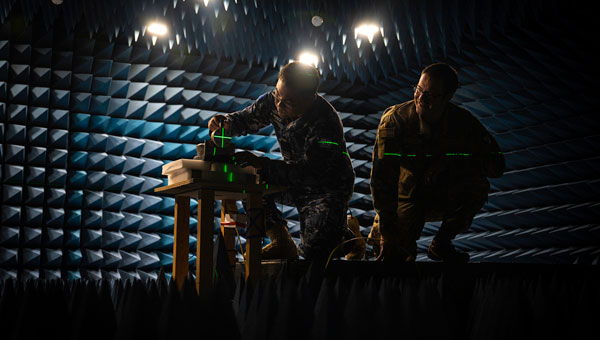
    Personnel from the Australian Joint Precision Navigation and Timing Directorate, Joint Capabilities Group and Joint Navigation Warfare Center align GPS test equipment in the JNWC anechoic chamber at Kirtland Air Force Base, N.M., in preparation for a GPS resilience test April 15, 2024. This combined effort not only enhances GPS navigation resilience but also exemplifies the power of international cooperation in addressing security threats. As the world faces evolving challenges, partnerships like these remain essential for maintaining an edge in contested environments. (U.S. Air Force photo by Senior Airman Spencer Kanar)
    Personnel from the Australian Joint Precision Navigation and Timing Directorate, Joint Capabilities Group and Joint Navigation Warfare Center align GPS test equipment in the JNWC anechoic chamber at Kirtland Air Force Base, N.M., in preparation for a GPS resilience test April 15, 2024. This combined effort not only enhances GPS navigation resilience but also exemplifies the power of international cooperation in addressing security threats. As the world faces evolving challenges, partnerships like these remain essential for maintaining an edge in contested environments. (U.S. Air Force photo by Senior Airman Spencer Kanar)

    The Australian Department of Defense has collaborated with the Joint Navigation Warfare Center (JNWC) to enhance the resilience of GPS devices in contested environments. The JNWC’s mission is to ensure positioning, navigation and timing (PNT) superiority for the Department of Defense and its partners. This joint effort aimed to test the performance of GPS devices under simulated jamming conditions.

    Personnel from the Australian Joint Positioning, Navigation and Timing Directorate worked with JNWC experts to evaluate the Defense Advanced GPS Receiver (DAGR), a crucial device used by U.S. and allied forces for navigation across land, sea, and air. The testing took place in an anechoic chamber designed to replicate contested and limited GPS conditions, providing insights to improve the device’s resilience.

    The JNWC, recognized for its expertise in navigation warfare, created optimal conditions for this assessment. The specialized chamber allowed them to test the DAGR’s performance in a jamming environment, generating data that can inform the device’s warfighting effectiveness. The team explored solutions such as antennas that enhance jamming resilience, and the findings will be shared with coalition partners to strengthen collective space resilience.

    The collaboration serves as a model for international cooperation in addressing security threats, enhancing GPS navigation and timing resilience for allied forces.