Tag: construction

  • Trimble expands machine control system for wheel loaders

    Trimble has introduced version 12.81 of its Trimble GCS900 Grade Control System. The new version further expands the mix of machines supported to now include wheel loaders, demonstrating Trimble’s continued commitment to meet the contractor’s needs for construction technology across a mixed fleet and for all phases of the project life cycle.

    Trimble GCS900trimble-gcs900forwheelloaders version 12.81 means big productivity gains for contractors who operate wheel loaders,” said Ryan Kunisch, marketing director for Trimble’s Civil Engineering and Construction Division. “We have seen up to a 40 percent increase in productivity for material placement and grading activities and typically a 25 percent reduction in undercutting when the GCS900 system is used.”

    The new configuration for wheel loaders allows contractors to realize productivity gains in both fine and rough grading applications. Operators can precisely control the amount of material being graded, improve fine grading accuracy and time, and reduce the potential for undercutting the surface during material placement or removal.

    Using a wheel loader equipped with GCS900, contractors can track material weight with a Trimble LOADRITE weighing system. In addition, material placement and grade can be monitored by adding a VisionLink Project Monitoring subscription for a more accurate and complete picture of project progress.

    Features of GSC900

    • Uses two GNSS receivers and solid state angle sensors and an inertial measurement unit (IMU) to measure the precise 3D position of the bucket
    • Tracks GPS, GLONASS and Galileo signals
    • Quickly performs complex tasks and simplify finishing slopes with accurate 3D positioning
  • Topcon introduces new data controller for surveying

    Source: GPS world staff
    Topcon’s FC-5000 data controller.

    Topcon Positioning Group has added the FC-5000 to its line of data controllers for construction and surveying professionals. The 7-inch sunlight-readable display field controller is designed to provide operators a larger, more versatile and faster handheld computer for the modern construction site.

    “At 7-inches, the FC-5000 has the largest handheld data controller screen in our product line,” said Ray Kerwin, director of global surveying products. “The display has a capacitive touch interface — with finger, glove, small tip stylus and water capable options — that is optically bonded to increase visibility. With the press of a key, a user can change the orientation of the screen from portrait to landscape to increase visibility when viewing maps or drawings.”

    The controller is compatible with all Topcon GNSS receivers and total stations — operating MAGNET Field, Site and Layout software.

    “The FC-5000 comes with two built-in cameras — an 8 MP camera with autofocus and LED flash for field photography — and a 2 MP camera on the front for video meetings. With 64GB of flash storage, users can store hundreds of photos in the unit, which can be easily transferred to any computer or USB stick,” Kerwin said.

    Additional features include an optional 4G LTE cellular modem, internal GPS navigation, Bluetooth and Wi-Fi, and a battery life of 10-plus hours.

  • Topcon releases compact digital sensor for construction

    LS-100D_Topcon-WTopcon Positioning Group has released the latest addition to its line of compact digital laser sensors — the LS-100D. The sensor digitally displays the offset value to on-grade, which is designed to help make elevation and vertical alignment control easier and faster for any application.

    “The LS-100D features an extra-wide beam capture sensor that also rejects annoying interference from strobe-light exposures,” said Kris Maas, director of construction product management. “The large and bright LCD displays (front and back) feature nine channels of grade information and digitally display the distance to on-grade. By pressing the hold button, the display is locked so the user can conveniently read the results.”

    The sensor offers three colored LED’s and a magnet mount for vertical operation, which is designed to be useful for steel erection or operator grade-checking while excavating. Alert icons appear on the LCD if the accompanying Topcon rotating laser instrument is disturbed (HI alert) or when the laser battery is low.

  • Topcon offers ES-50, an entry-level total station plus EDM

    The Topcon ES-50 total station.
    The Topcon ES-50 total station.

    Topcon Positioning Group has released the latest addition to its ES total station series, the ES-50. Featuring advanced reflectorless capabilities, the new ES-50 is designed to provide an entry-level total station option with a fast and powerful electronic distance meter (EDM).

    “With the functionality of many high-end robotic total stations, our ES series is known to be full-featured and ready to tackle modern job sites,” said Ray Kerwin, director of global surveying products. “The ES-50 incorporates all those time-honored expectations, along with a reflectorless EDM of up to 350 meters, and 4,000 meters with the use of a prism.”

    The ES-50 offers 2- and 5-arc second accuracies for distance measurements in projects such as land surveying, topography and as-built, construction and layout, or foundation and exterior job sites.

    Additional features include a battery life of up to 15 hours, dual-axis compensation, a waterproof design and a laser pointer.

  • Topcon launches new machine-control system for dozers

    Topcon Positioning Group has released an indicate dozer machine control system — the i-53. The new system comes with the latest Topcon GNSS receiver, a graphical user interface and machine-control software designed to deliver a versatile indicate dozer system at an economical price.

    The system expands the Topcon dozer indicate product line by offering a single-GNSS-plus-slope sensor designed for complete control of elevation and slope.

    “The i-53 features the Topcon GX-55 control box with audible grade reference alarms and visual LED lights, as well as the new MC-i4 GNSS receiver,” said Kris Maas, director of construction product management. “With safety and work efficiency in mind, the bright screen and grade guidance features deliver the highest quality graphical experience for modern machine control.

    “The communication of the machine is handled by the innovative MC-i4 GNSS receiver that allows various radio configurations in one receiver for the Sitelink3D site management solution and/or network corrections,” Maas said.

    “Topcon continually strives to provide the greatest value indicate systems in the market. Now by utilizing slope sensors in an indicate system — we are able to greatly improve the blade’s cutting edge position and angle — which advances the grading capabilities of the dozer,” Maas said.

    Additional features include integrated virus protection and easy-access USB ports for saving and downloading job files.

    Source: GPS world staff
    The Topcon i-53 machine-control system.
  • Topcon invests in virtual reality company for construction, infrastructure

    Topcon Positioning Group has acquired a significant share of holdings a company that assists customers in virtual design and construction (VDC).

    Viasys VDC — based in Espoo, Finland — has developed a suite of tools and services to assist customers in building virtual models for infrastructure and site-work projects. Using building information modeling (BIM) technologies, its solutions create VDC models that optimize the construction process throughout the project’s lifecycle, creating enhanced quality, higher efficiencies and reduced costs, Topcon said.

    “Viasys VDC solutions allow for the import of virtually any BIM or non-BIM design model, offering seamless interoperability with open design standards currently in the market — which provides the contractor or engineer with full control and visibility of the entire design throughout the entire project,” said Heikki Halttula, CEO and president, Viasys VDC Ltd. “With advanced simulation tools and communication functions, design-build issues can be detected before actual work starts, or at any time during the process.”

    Accurate 5D simulation allows for optimal planning and execution, Topcon said in a news release. Other significant features include cloud-based collaboration functions as well as mobile access to models and information on-site.

    Topcon currently offers various BIM and remote site management/visibility solutions aimed at many of the markets served by Viasys VDC.

    “Now, with our investment in Viasys VDC, we have partnered with the technology leader to allow us to offer an expanded platform for the future generation of advanced Topcon VDC solutions with seamless BIM interoperability for our partners and customers,” said Ewout Korpershoek, Topcon executive vice president for mergers and acquisitions.

    “Partnering with Topcon is an exciting step forward to help advance our industry-leading VDC solutions, while also expanding their reach to a global audience,” Halttula said. “With Viasys VDC offices in Finland, California and Vietnam, we are also well positioned geographically to work directly with existing Topcon operations in Europe, North America and Asia.”

    In addition to a full suite of BIM-based mobile workforce solutions, Viasys VDC offers an operational asset management solution as a basis for lifetime maintenance of the VDC managed projects.

  • Trimble’s Beijing airport construction contract extended with machine control

    Trimble’s Beijing airport construction contract extended with machine control

    Artist's concept of the new Beijing Airport terminal. (image © Zaha Hadid Architects)
    Artist’s concept of the new Beijing Airport terminal. (image © Zaha Hadid Architects)

    Trimble has received a contract extension for Beijing’s new airport project. In April, Trimble won the initial bid to supply the project with a construction information management system. Based on the success of the solution to date, the contract has been extended to include additional machine control systems for soil stabilization.

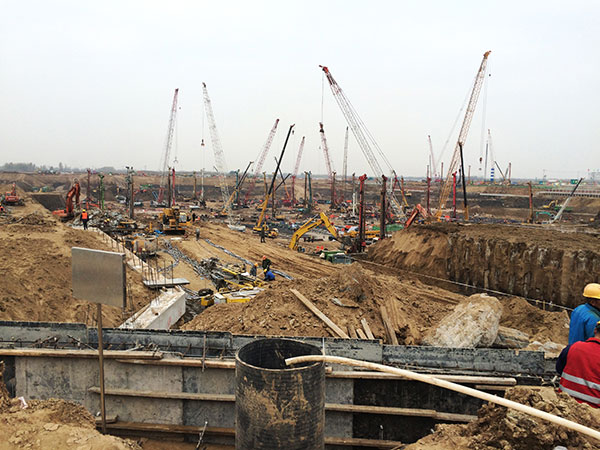
    Beijing’s new airport is projected to handle 72 million travelers, 2 million tons of shipping and 620,000 flights by the year 2025. It is a massive construction project with an unprecedented amount of civil aviation investment by the Chinese government. In order to construct the airport in a safer, more efficient manner, achieve transparent management, and maximize construction quality, the Beijing new airport project is using construction technology from Trimble to integrate construction and operations.

    Artist's depiction of the inside of the new Beijing Airport terminal. (image:  Zaha Hadid Architects)
    Artist’s depiction of the inside of the new Beijing Airport terminal. (image: Zaha Hadid Architects)

    Trimble was chosen to implement a browser-based, locally hosted digital construction information management system for tracking and monitoring construction operations in real time. The Trimble solution allows users to create 3D constructible models, perform soil stabilization, automate construction processes and effectively manage information. Based on the successful soil stabilization results using Trimble machine control over the past four months, another 15 systems have been ordered.

    “The research results for dynamic compaction have been extremely promising,” said Li Qiang, chief engineer of the Beijing New Airport Construction Office. “As a result, the project is pushing forward with a larger scale deployment to further the research into creating new methods and standards for airfield construction.”

    “The Beijing new airport project is a significant win for Trimble, and we are very excited about the success of the project,” said Steve Berglund, president and CEO of Trimble. “The contract extension validates Trimble’s ability to provide innovative solutions that transform work processes by maximizing management capability, ensuring construction quality and improving productivity.”

    Trimble’s machine control solutions leverage a variety of technologies, including GPS, construction lasers, total stations, wireless data communications, the Internet and application software. As part of the Trimble Connected Site strategy, these solutions provide a high level of process and workflow integration from the design phase through to the finished project, delivering significant improvements in productivity throughout the construction lifecycle, the company said.

    Terminal construction: The technology used allows creation of 3D constructible models and automated construction processes. (Photo: Trimble)
    Terminal construction: The technology used allows creation of 3D constructible models and automated construction processes. (Photo: Trimble)
  • Topcon and DAQRI collaborate on wearable tech for construction

    Topcon and DAQRI collaborate on wearable tech for construction

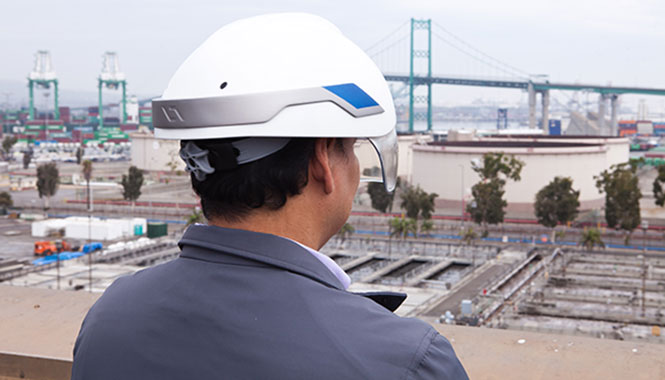
    Topcon Positioning Group is collaborating with DAQRI, an augmented reality company, on wearable technology designed to change the way construction and survey professionals interface with the job site.

    DAQRI is the creator of the DAQRI Smart Helmet, an industrial-grade wearable that seamlessly connects humans to their work environments by providing information about the world around them.

    Topcon and DAQRI will work together to create a solution designed to make workers on the job safer and more productive through the use of augmented reality technologies. They plan to do this by integrating DAQRI’s hardware and software solutions with Topcon positioning solutions.

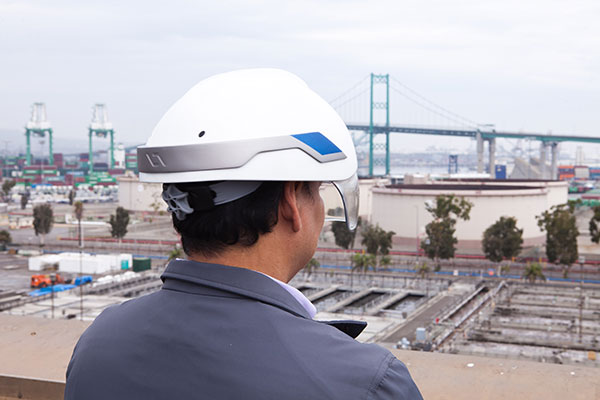
    The DAQRI Smart Helmet was designed for the industrial workplace. It includes an advanced sensor package, an intuitive user interface that requires zero calibration, and a battery that lasts a full shift.
    The DAQRI Smart Helmet was designed for the industrial workplace. It includes an advanced sensor package, an intuitive user interface that requires zero calibration, and a battery that lasts a full shift.

    Powered by 4D Studio, DAQRI’s software platform for positioning, the partnership will allow construction workers to view information from their projects in the real-world work environment to make their workflows safer and more efficient.

    The collaboration is designed to bring wearable technology to a wider AEC (architecture, engineering and construction) user base, empowering the wearer with a hands-free tool that can be used on the job, Topcon said in a news release.

    “DAQRI is a leader in providing solutions in outdoor environments, which will meld well with our positioning and software innovations,” said Jason Hallett, Topcon vice president of product management. “It’s the first step in utilizing our mutual synergies to develop rugged, heads-up display technology for our marketplace.”

    “We are committed to developing innovative solutions that power the future of work and Topcon is at the forefront of the industry with some of the most innovative products that are being used by millions of workers across a variety of environments,” said Matt Kammerait, vice president of product, DAQRI. “This makes them the perfect partner to integrate the Smart Helmet into existing workflows. We look forward to seeing how our partnership re-defines the nature of ‘work,’ by setting a new standard for wearables in the AEC space.”

  • Leica adds to GeoMo geodetic monitoring solution

    Leica adds to GeoMo geodetic monitoring solution


    Photo: Leica Geosystems

    Leica Geosystems has introduced two new additions to its Leica GeoMo deformation monitoring solution: Leica GeoMoS AnyData and GeoMoS API.

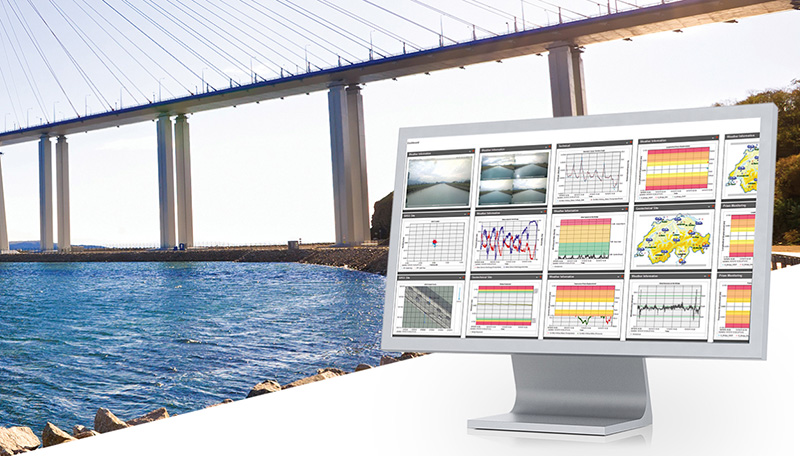
    Users of the system can now create comprehensible visualizations and customizable reports, which enables powerful sensor data fusion for applications, such as air or water quality monitoring and construction or building management.

    With GeoMoS AnyData and GeoMoS API, multiple open interface standards are accessible to provide even more information to projects than just classic geodetic monitoring applications, according to a news release from Leica. The open solution offers flexibility; it is capable of automatically acquiring, processing and distributing intelligent information locally or via the Internet in real time.

    Leica GeoMoS integrates, processes and distributes all project data within one software program.

    “Monitoring professionals are confronted daily with vast amounts of data collected and provided by a variety of sensors,” said Michael Rutschmann, senior product manager of Structural Monitoring at Leica Geosystems, in the news release. “With these additions to Leica GeoMoS, all information is now easily accessible via web-based visualisation. This is absolutely the most efficient way to convert raw data streams into intelligent information for any user.”

  • Topcon Releases iOS Version of MAGNET Construct App

    Topcon Releases iOS Version of MAGNET Construct App

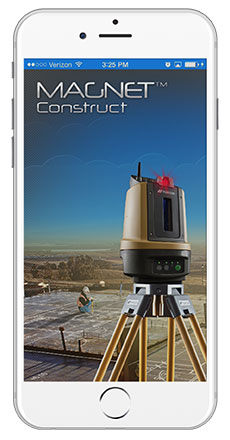
    Photo: MAGNET Construct AppTopcon Positioning Group announces cross-platform support for the MAGNET Construct app. The no-cost app is purpose built to drive the LN-100 Layout Navigator system and was initially released for the Android market.  This “out of the box productivity” is now available for Apple devices as well.

    “Whether you prefer Android devices or the latest Apple iPhone, iPad, or iPod Touch hardware, the free MAGNET Construct app offers intuitive options to wirelessly connect to and drive an LN-100 for fast as-built measurements as well as graphical guidance to your design data,” said David Ahl, director of software product management.

    “It’s an example of our focus to provide more options that cater to the preferences of end-users,” said Ahl. “This cross-platform compatibility of the MAGNET Construct app makes entry-level precise measurement solutions for diverse 3D layout applications even more accessible.”

    MAGNET Construct also offers secure connectivity to MAGNET Enterprise web services for real-time data exchange from active project sites to and from the office.

    MAGNET Construct is currently available on both the Apple App Store as well as Google Play.

  • Nikon-Trimble Introduces Updated Nikon Total Stations

    Nikon-Trimble Co., Ltd. introduced today updated mechanical total stations to expand its portfolio of solutions for mainstream surveying and construction applications.

    The announcement was made at INTERGEO 2015, the world’s largest conference on geodesy, geoinformatics and land management.

    The updated products include:

    Nikon NPL-322+ Series – an updated series of reflectorless 2” and 5” total stations providing powerful solutions and an excellent choice for value in terms of price and performance. The NPL-322+ Series feature a distance measurement accuracy of up to ±(2 + 2 ppm x D) mm and provide a long-distance reflectorless measurement range of 400 meters (1,312 feet.). The Nikon NPL-322+ Series also include a coaxial laser pointer, Bluetooth connection to external data collectors, onboard storage for 25,000 points and dual-axis compensation for significantly faster measurement times.

    Nikon DTM-322+ Series – an enhanced series of economic, prism-based 2” and 5” total stations offering full featured functionality in an entry-level package. The DTM-322+ Series offer a distance measurement accuracy of up to ±(3 + 2 ppm x D) mm and a measurement range of 2,300 meters (7,540 feet.) to a prism. In addition, the Nikon DTM-322+ Series include a Bluetooth connection to external data collectors, onboard storage for 25,000 points, dual-axis compensation and new, long-lasting Li-Ion batteries.

    “The Nikon optical portfolio continues to evolve to meet the ever changing needs of our customers who truly appreciate the reliability and dependability represented by the Nikon name,” said Olivier Casabianca, Spectra Precision Business Area Director. “Our customers enjoy the benefits of a mature, robust portfolio of survey and construction products from a single supplier they can trust.”

  • Septentrio Launches AsteRx-U and AsteRx-U Marine

    AsteRxU_left_orientation-W

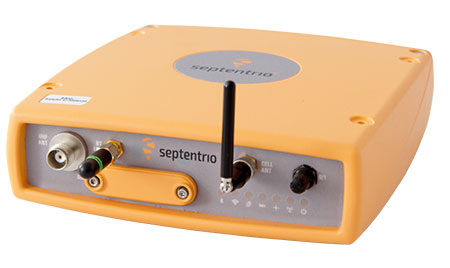
    Septentrio this week is launching two successors to its APS-U: The AsteRx-U and the AsteRx-U Marine multi-constellation dual-antenna receivers. The AsteRx-U will be presented to the public for the first time at two trade shows this week. ION GNSS+ takes place Sept.14-18 in Tampa, Fla., and INTERGEO 2015 will be held in Stuttgart, Germany, Sept. 14-18.

    The AsteRx-U and the AsteRx-U Marine incorporate the latest GNSS tracking and positioning algorithms and interference mitigation. Machine-control users in the agricultural and construction industries, as well as users in marine and mining industries, benefit from a complete system with integrated UHF radio, Wi-Fi, USB, Bluetooth and cellular connectivity and a spectrum analyzer, Septentrio said. All configurations can be done via the on-board web interface.

    The AsteRx-U and AsteRx-U Marine feature a full range of positioning techniques and algorithms to ensure that users have the highest accuracy and reliability. The spectrum analyzer enables users to visualize the RF spectrum. Based on its extensive experience with real-life interference sources and their mitigation, Septentrio has developed interference mitigation technology that automatically counteracts various kinds of ambient intentional and unintentional RF interference.

    The AsteRx-U family of receivers is built around Septentrio’s latest ASIC, GReCo4, which was introduced in 2014. It incorporates built-in jamming detection and countermeasures, multi-path rejection, fast acquisition and other advanced features. Both receivers have more than 500 hardware channels to track all available constellations (GPS, GLONASS, Galileo, Beidou, IRNSS and QZSS) and feature many algorithms: LOCK+ technology to maintain tracking during heavy vibration machine use and IONO+ technology to assure the accuracy of the position even in regions of elevated ionospheric activity.

    The AsteRx-U has decimeter- and centimeter-level RTK positioning including TerraStar. The AsteRx-U Marine also supports Veripos PPP augmentation services. It includes extra anti-jamming technology to counter Iridium and INMARSAT-uplink interference, as well as an extra antenna connector for a dedicated L-band antenna to optimize L-band reception at high latitudes.

    Straightforward to set up and integrate with existing systems, the AsteRx-U and AsteRx-U Marine use any device with a web browser to facilitate usability and configuration for the user.

    “We want to make it easy for our customers to use high-accuracy positioning in their work,” said Jan Leyssens, Septentrio product manager. “Using the integrated communication functionality in the compact and portable AsteRx-U, users won’t have to worry about adding their own modems or UHF radios to get access to corrections.”

    Leyssens continued, “The receiver web interface is available wirelessly on any mobile device. It was designed together with several of our key customers, resulting in an interface that is not only easy to use by field operators, but also provides many useful troubleshooting tools, such as the spectrum analyzer, to solve problems in the field and minimize downtime.”

    Septentrio will be at Booth 318 at ION GNSS+, and at Hall: 4, Booth: D4.014, at INTERGEO.