Tag: construction

  • Trimble Adds Compaction System for Bulk Earthworks and Landfill Operations

    Trimble has released a new GNSS-based machine control solution to improve efficiency of bulk earthworks and landfill compaction operations. Installed on a four-drum soil or landfill compactor, the Trimble CCS900 Compaction Control System allows a machine operator to make more uniform and efficient passes, report compaction production data in the field, and ensure target compaction is reached with minimal fuel usage and machine wear.

    The announcement was made at WasteExpo 2014, North America’s largest solid waste and recycling tradeshow.

    CCS900 for Bulk Earthworks. The CCS900 system tracks compaction passes in real time with easy-to-read color mapping on the in-cab display. It improves bulk earthworks operations by ensuring fill material is adequately balanced and uniformly compacted from the bottom up.

    CCS900 for Landfills. Landfill operations require contractors to compact the maximum amount of waste into the smallest area of vertical and horizontal cell space. Using CCS900, landfill owners can ensure that cell space is optimized, voids are eliminated and layers are compacted to their target density more efficiently. With real-time mapping on the in-cab display, the operator can avoid unnecessary passes that waste fuel and cause additional wear on the machine. The system also collects as-built layer information for in-field reporting and tracking of daily volumes.

    In-Field Reporting and Printing for Quality Control. For both soil and landfill applications, Trimble CCS900 offers extensive in-field reporting options, including in-cab report generation and printing. This functionality allows compaction production analysis to be carried out in the field instead of waiting until data is transferred back to the office. Compaction progress and problem areas are indicated on the in-cab graphical control box and listed in the in-field report so they can be addressed immediately, instead of at project completion when re-work is more costly. An optional serial printer in the compactor cab also enables supervisors to sign off on the completion of the compaction work in the field.

  • Veripos Upgrades Reference Stations with Septentrio GPS/GLONASS/Galileo/BeiDou Receivers

    Veripos Upgrades Reference Stations with Septentrio GPS/GLONASS/Galileo/BeiDou Receivers

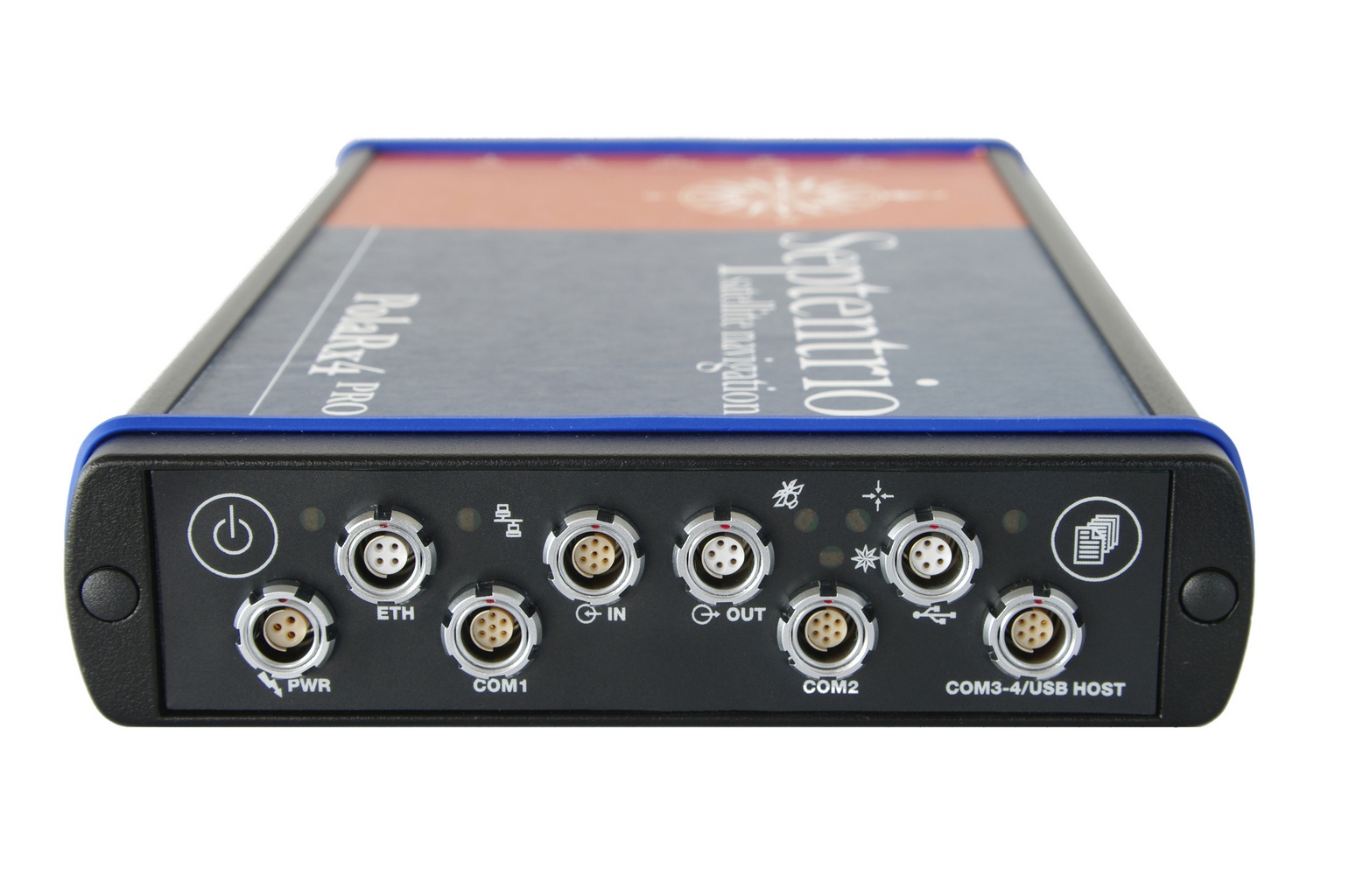
    The Septentrio PolaRx4 reference receiver.
    The Septentrio PolaRx4 reference receiver.

    Veripos, a global provider of precise satellite positioning solutions to the international offshore and marine industries, is concluding the upgrade of its global network of GNSS reference stations with high-performance multi‑frequency GPS/GLONASS/Galileo/BeiDou receivers from Septentrio.

    Veripos owns and operates a network of more than 80 reference stations worldwide that is used to determine estimates of the orbit and clock errors of multiple GNSS satellite constellations. Veripos uses these estimates to calculate corrections which are then broadcast to end users to significantly improve the accuracy of positioning. At the heart of the network is Septentrio PolaRx4, a full-featured reference receiver that provides high-quality tracking and measurement of all available and upcoming GNSS signals.

    The upgrade of the Veripos global network of reference stations with the latest Septentrio reference receiver technology is an outcome of the multi-year collaboration between the two companies. Septentrio also supplies Veripos with multi-frequency GNSS and heading receivers for its marine business, including the LD series of integrated mobile units that deliver the complete range of Veripos augmentation services to its customers worldwide.

    “Septentrio reference stations are renowned for their excellent data-quality and robustness,” commented Bobby Johnson, Chief Technical Officer of Veripos. “Septentrio technology enables us to provide a full range of services and to remotely manage and upgrade the hardware to enhanced features, which is crucial for managing a worldwide reference network, where the equipment is often not easily accessible.”

    “We are delighted to see continued positive outcome from the technical and commercial relationship we have established with Veripos over the years and that has developed into Septentrio enabling Veripos to deliver a variety of solutions with high-quality and robust industrial performance everywhere on the globe to the benefit of a multitude of users in one of the most demanding industries,” said Jan Van Hees, head of sales and business development at Septentrio.

  • Hemisphere GNSS Vector Products Now Have GLONASS Functionality

    Hemisphere GNSS has announced that all professional-level Vector products — including the V103, V113, VS131, and VS330 — now include the ability to utilize the GLONASS system along with GPS in the navigation solution. The tracking of the additional GLONASS signals provides a more robust solution, especially in challenging environments, the company said.

    Vector Technology processes L1 GPS and GLONASS signals to deliver precise heading, greater positioning reliability, and improved performance in challenging environments. Hemisphere GNSS’ patented Vector technology computes the heading and pitch or roll angle while stationary or in motion allowing for heading accuracy of up to 0.01 degrees depending upon the product selected. A variety of differential correction methods also make it possible for Vector products to provide sub-meter to centimeter level RTK position accuracy.

    Professional marine industry organizations can maximize performance by integrating Hemisphere GNSS Professional Vector technology into their systems for hydrographic and bathymetric surveys, autopilots, dredging, and buoys. For land applications, Vector Technology is designed for the alignment of cameras, antennas, and projectiles, and for machine control applications in agriculture, construction, and mining.

  • Topcon Adds Apps, Expands TopNETlive Service

    Topcon Positioning Group has added two new mobile applications to the Apple App Store.  Topcon Tierra and Sitelink3D mobile apps are designed to offer on-the-go remote connections to equipment and job sites.

    The Topcon Tierra mobile app lets customers login with their existing passwords and track their equipment fleets from an iPhone or iPad. “The Topcon Tierra app allows users to easily check on their fleets, fences, productivity reports and get alerts any time, anywhere,” said Kris Maas, construction products marketing manager.  The Topcon Tierra mobile app is available to download at no charge.

    Customers can also manage and monitor job sites with the new Topcon Sitelink3D mobile app. “The Sitelink3D app lets users visualize real-time project management information on their iPhone or iPad with their existing Sitelink3D logins,” said Maas. “Remote connection to equipment within Sitelink3D is easier than ever with the addition of the app.” The Sitelink3D mobile app is available for purchase on the Apple App Store.

    TopNETlive Expands. Topcon Positioning Group also announced the expansion of its TopNETlive network service into 19 states and five Canadian provinces. TopNETlive uses a dense network of ground-based reference stations capable of supporting all major GNSS satellite constellations to provide high-accuracy with fast initialization time.

    The 24 states and provinces now included in the service are Alabama, California, Connecticut, Delaware, Georgia, Illinois, Indiana, Maine, Maryland, Massachusetts, Mississippi, New Hampshire, New Jersey, New York, Pennsylvania, Rhode Island, Vermont, Virginia, Wisconsin, Ontario, New Brunswick, Newfoundland, Nova Scotia and Quebec.

    “TopNETlive network service is a primary source for all levels of correction for users in the agriculture, construction, surveying, civil engineering and GIS industries,” said Jonathan Ball, senior manager for Topcon network business. “It is designed to support all makes and models of GNSS and guidance equipment, making it a logical choice for companies that use multiple brands of positioning equipment.”  Ball further states that, “TopNETlive offers many different subscription plans to fit the operations and the budget of almost any user.”

  • Topcon Announces Haul Truck System, DS-200 Upgrade at CONEXPO

    Topcon Positioning Group has made several product and service announcements at CONEXPO-CON/AGG, being held this week in Las Vegas.

    Haul Truck System. The HT-30 haul truck module for Sitelink3D features a small, portable GPS-enabled control box that mounts into the truck cab. As the truck is loaded, data about the load is input, such as material type, driver, and quantity. The load is then integrated into Sitelink3D and can be tracked for scheduling, rerouted if needed elsewhere, and recorded once delivery is made.

    Whether the material is fill dirt, removal of overburden, select material, base course or even asphalt, HT-30 can be quickly plugged in so management and reporting can be maintained in real-time. For more information on the HT-30 or Sitelink3D, visit topconpositioning.com.

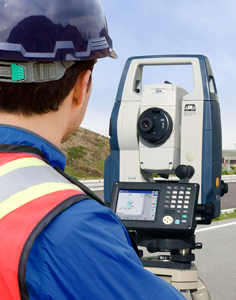
    Topcon DS-200.  Topcon has added the DS-200 with XPointing technology to its DS line of total stations in the North American market. XPointing technology allows the DS-200 to lock on to prisms quickly, even in dim or dark conditions, Topcon said.

    The DS-200 can be configured for interaction with Topcon’s RC5 remote system, which allows users up to 1000 feet (300 meters) away to easily perform a QuickLock with a push of a button, Topcon said.

    As a Hybrid Positioning capable total station, the DS-200 offers the use of both GNSS positioning and optical positioning technology designed to increase field efficiency. The system can become fully robotic with Hybrid Positioning technology, which can allow shots to measured with a GNSS receiver when the line-of-sight is blocked.

    Standard additional features of the DS series include LongLink communications, TSshield security and maintenance technology, MAGNET integrated software onboard, and rugged water-resistant IP65 construction.

    Enterprise Solutions. Topcon Positioning Group also announced a new workflow management system designed to connect all sites, all data, crews and equipment. Topcon Enterprise Solutions offers constant communication, data sharing, scheduling, updating, supporting, and accurate productivity data in real-time, no matter where the job or the office is located.

    Cloud-based Topcon Enterprise Solutions provides seamless connectivity from any office or remote user, to any site, to each enabled machine and field crew, throughout the entire project life cycle, Topcon said.

    Topcon_Enterprise_SolutionsThe system is designed to allow users quicker accessibility and management of increasing volumes of data, thereby exponentially increasing a company’s efficiency. Integrating data in a cloud-based environment from Topcon software services like Sitelink3D or MAGNET allows users to make time-sensitive decisions faster.

    The system can also be deployed to key partners of the company, such as engineers and sub-contractors, enabling instant updating of job files, material volumes and equipment schedules instantly with assured accuracy.

    In addition to site and data management, Enterprise Solutions includes the option to activate a corporate Topcon TotalCare account, providing immediate access to online training and technical support for virtually all Topcon products.


  • Topcon Technology Hits the Road in North America


    Topcon Technology Roadshow 2014, by Topcon Positioning Systems, launches in April. The hands-on educational program is focused on advanced positioning technologies and will feature a 5,000 square-foot mobile classroom/theater housed in a custom-designed 18-wheeler.

    The Technology Roadshow will cover North America, traveling more than 23,000 miles in six months. Each of the currently scheduled 23 stops for the free educational program – beginning April 10 in Pleasanton, California, and ending in October at Riverside, California — will include multiple sessions over two days. The events will focus on technology trends in the construction, surveying and GIS, engineering and architecture/engineering/contractor (AEC) professions.

    “With technology advancing so rapidly, many of our customers are telling us that it is difficult for them to keep up,” said Mark Contino, Topcon vice president of global marketing. “The Technology Roadshow is a fresh ‘we’ll-bring-the-technology-to-you’ concept that will provide an educational experience to construction and surveying professionals who want to learn about these exiting new solutions first hand, so they can determine the best fit for their business. Instead of flying half way across the country to attend a trade show or conference, we’re excited for this opportunity to bring tomorrow’s positioning technology to the construction, engineering and surveying backbone of North America — on their timetable, close to home, on a one-on-one basis.”

    “The focus of this unique learning event will demonstrate how the entire breadth of Topcon solutions works seamlessly together,” Contino said. “The real beauty is we’re bringing it directly to decision makers and end-users, allowing every company — big or small — the opportunity to see first-hand how new solutions and technologies can help them to become more productive and profitable.

    “We believe this rolling ‘user conference’ is a proactive way to help make sure the opportunity to learn about new technology is available to anyone who wants to learn.”Topcon industry and application professionals will staff the traveling unit. Topcon dealer personnel from the local area are tour sponsors and will assist them at each stop.

    For more information, go to the official Topcon Technology Roadshow website and register for an event in your area.

  • Topcon Adds Advances to P-32 Asphalt Paving System

    Topcon Adds Advances to P-32 Asphalt Paving System

    Topcon's P-32 asphalt paving system.
    Topcon’s P-32 asphalt paving system.

    Topcon Positioning Group announces advances to its P-32 asphalt paving system with new components including the ST-3 sonic tracker, anti-vibration slope sensor and a firmware update to the full-color, graphical display GC-35 control box.

    “The P-32 paver system was built to improve smoothness, ensure accurate slope and material thickness and provide unmatched operator ease-of-use,” said Kris Maas, machine control product marketing manager.  “Announced in 2013, the P-32 saves time and improves safety by allowing an operator to view elevation and slope values of the screed from a single control box. With these new components, this state-of-the-art 2D control system will continue to improve the speed and quality of asphalt paving.”

    The ST-3 sonic tracker is designed to enhanced position indication on string lines, give a wider range of linear detection and work better in tight areas. “The introduction of the ST-3 sonic tracker will increase productivity for users by providing smoother surface detections,” said Maas. “The smoother it can be, the faster the job will be finished.”

    The new slope sensor to the P-32 system is designed to increase accuracy in the most challenging conditions.  “This new slope sensor is amazingly resistant to vibrations and provides stable operation within dynamic temperature ranges,” said Maas.

    A firmware upgrade to the GC-35 full-color, graphical display control box provides enhanced slope accuracy data. “The cross slope value will be displayed even when the control box is set in elevation control mode on both sides, which takes the guess work out of knowing whether the cross slope is correct. Additionally, block slope calibration protects users from accidentally changing the slope sensor while the P-32 system is in operation,” said Maas.

  • Handheld Launches Nautiz X4 Rugged Computer for Mobile Workers

    Handheld Launches Nautiz X4 Rugged Computer for Mobile Workers

    Handheld-Nautiz-X4-rugged-IP65-W
    photo: Nautiz X4

    Handheld Group, a manufacturer of rugged mobile computers and smartphones, has launched the Nautiz X4 rugged handheld. The Nautiz X4 is a multipurpose compact handheld computer built for the mobile worker. It enables efficient and reliable data collection in the toughest environments, the company said.

    The Nautiz X4 is a compact and lightweight rugged handheld computer that is optimized for efficient field data collection. It has been designed and developed specifically for mobile workers in tough environments in industries such as warehousing, logistics, transportation, utility, field service, security and public safety.

    The Nautiz X4 rugged handheld computer has an integrated u-blox GPS receiver that provides professional-grade navigation functionality. It also offers multiple connectivity options, such as high-powered 3G and excellent Wi-Fi capability, the company said. It has a high-speed 1-GHz processor, 512 MB of RAM and 1 GB of flash memory. It runs Windows Embedded Handheld 6.5.

    Measuring 156 x 74 x 25.5 millimeters (6.1 x 2.9 x 1.0 inches) and weighing 330 grams (11.6 ounces), the Nautiz X4 is an ergonomic work tool and one of the thinnest and lightest handheld computers in the rugged-device sector, the company said. It features a high-brightness, sunlight-readable resistive touchscreen for reliable computing in challenging worksite environments, and comes with either a high-performance 1D laser scanner or a 2D imager for fast, accurate scanning and barcoding tasks. The device also features a 5-MP camera with auto focus and LED Flash.

    The Nautiz X4 has an IP65 Ingress Protection rating, which means that it is impervious to dust and highly resistant to water — the unit can be used in dusty work environments as well as in heavy rain, and can be rinsed off if dirty. It also meets stringent MIL-STD-810G military test standards for overall durability and resistance to humidity, shock, vibration, drops, salt and extreme temperatures.

    “Mobile data collection is performed in warehouses as well as outdoors, in all kinds of weather and for long work hours. It may be cold and it may rain or snow. So the field worker needs a computing tool that can not only handle adverse weather conditions, but is also ergonomic and user-friendly,” said Jerker Hellström, CEO of Handheld Group. “For this, we are proud to introduce the Nautiz X4, a new rugged handheld computer that merges ultimate mobility with true field functionality in a handy package and at a very attractive price. We are confident that the Nautiz X4 will be the obvious choice for mobile workers in a wide range of industries.”


  • Spectra Precision’s Latest Survey Receiver Uses Six GNSS Systems

    Spectra Precision’s Latest Survey Receiver Uses Six GNSS Systems

    Spectra-Precision-SP80-GNSS-Receiver-River-W

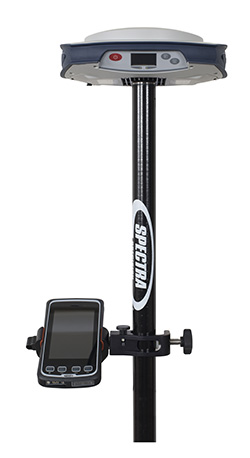
    Spectra Precision introduced today its next-generation Spectra Precision SP80 GNSS receiver. Designed to meet the evolving needs of the survey market, the new SP80 combines GNSS technology and a combination of communication capabilities with an ergonomic design, the company said. The SP80 is specifically designed for mainstream surveying and construction applications such as cadastral, topographic, control, stakeout and network RTK.

    Spectra Precision SP80 features Spectra Precision’s Z-Blade GNSS-centric technology running on a new-generation, 240-channel 6G chipset. The SP80 is capable of fully utilizing all six available GNSS systems (GPS, GLONASS, BeiDou, Galileo, QZSS and SBAS), but can also be configured to use only selected constellations in an RTK solution (GPS-only, GLONASS-only or BeiDou-only).The SP80 is also compliant with the new RTCM 3.2 standard, including the recently approved MSM RTCM messages, which means it supports all available GNSS corrections.

    SP80-GNSS-Front-with-Antenna-Pole-WThe extended communication capabilities of the SP80 receiver provide a combination of a 3.5G GSM/UMTS modem, Wi-Fi and Bluetooth connectivity, and an optional transmit UHF radio. The receiver’s built-in Wi-Fi and 3.5G modem can provide an Internet connection for RTK corrections and also send SMS or e-mails with system alerts. The SP80 features a unique anti-theft technology to safeguard the receiver and can detect if it is has been disturbed while in the field (for example, when operating as a GNSS base). The anti-theft protection feature informs the surveyor via SMS or e-mail if the SP80 receiver is moved and can provide its position to facilitate recovery.

    The Spectra Precision SP80 is rugged and waterproof, yet compact, lightweight and ergonomic for ease of use in the field, Spectra Precision said. When the UHF transmit radio module is used, its UHF antenna remains protected inside the rugged rod, extending the radio range performance. Powered with dual hot-swap batteries for typical all-day operation, the SP80 receiver is an ideal tool for any surveyor.

    “The Spectra Precision SP80 introduces several major enhancements and innovations, including the new 6G GNSS ASIC with enhanced Z-Blade technology, unique SMS and e-mail messaging and patented inside-the-rod mounted UHF antenna,” said Olivier Casabianca, business area director of Trimble’s Spectra Precision Division. “In addition, SP80 was designed as an extremely reliable receiver, making it suitable for a variety of challenging surveying projects.”

  • Trimble Adds Ultra High-Frequency RFID to Juno T41 Rugged Handhelds

    Trimble Adds Ultra High-Frequency RFID to Juno T41 Rugged Handhelds

    Juno-T41_Local-Govt_asset-W

    Trimble has introduced the Juno T41 rugged handheld computer with integrated Ultra-High Frequency RFID capabilities. In addition to high-speed 1D/2D barcode imaging technology, smartphone capability and enhanced, real-time 1-2 meter GPS accuracy, the Juno T41 series now offers new models that provide more functionality and configuration choices for data collection and mobile workforce management, Trimble said.

    “Often the RFID tag is specifically used because the item being tracked is in difficult or harsh environments where a barcode won’t survive,” said Jim Sheldon, general manager of Trimble’s Mobile Computing Solutions Division. “The rugged design of this handheld computer is an ideal solution for reading RFID in outdoor and extreme situations.”

    The RFID capability can be combined with Enhanced GPS and/or smartphone connectivity so customers can choose a specific handheld model that meets their needs.

    The Juno T41 R will automatically recognize tags across a variety of frequencies and work with any size or style of RFID tag that is designed for customized solutions. UHF RFID is an increasingly commonplace technology using the 860 to 960 MHz frequency range.

    Using the latest EPCglobal Gen 2 RFID technology from Trimble’s ThingMagic Division, the device uses two different antenna ranges to read or recognize the unique identification of an asset anywhere in the world.

    • FCC Certified (North America): 902-928 MHz bands
    • ETSI Certified (EU): 865.6-867.6 MHz bands
    • ACMA Certified (AU/NZ): 920-926 MHz bands

    Trimble Juno T41 RFID handheld computers feature a 1-GHz processor and 512-MB RAM and 32-GB onboard storage with either Android 4.1 or Microsoft WEHH 6.5 operating systems. Other standard features include an 8-MP integrated camera, multi-touch capacitive 4.3-inch sunlight-readable display, all-day battery life and 2-4 meter GPS accuracy capability. Other features include:

    • Rapid-read, high-accuracy performance on multiple tags with multiple orientations, even in crowded conditions.
    • Consistent read-range over 3.5 meters for 5 cm2 (2″) UHF tags in unobstructed space.
    • Integrated antenna with the ability to transmit up to +30 dBm (1 Watt) power for demanding applications.
    • >Configurable performance settings and use-case parameters in the pre-loaded Trimble SearchLight application.
    • Software Development Kit to customize all settings including read-range, power-consumption and other features.

    The Juno T41 models are built to meet military-grade standards of ruggedness for drops, temperature, altitude, humidity extremes, vibration, chemical exposure and shock with either an IP65 or IP68 rating for water and dust.

  • New DX-200 Expands Robotic Working Range, Features Hybrid Versatility

    New DX-200 Expands Robotic Working Range, Features Hybrid Versatility

    DX_200_Application_Sok_1D64Sokkia Corporation is offering enhanced abilities and versatility to its DX series of total stations with the introduction of the DX-200 in the North American market.

    When configured for hybrid positioning, the DX-200 has the ability to use both GNSS positioning and optical positioning data simultaneously. The standard Sokkia Hybrid Robotic System includes the DX, GRX2 GNSS receiver and MESA large-screen tablet controller.

    “The DX-200 is ideal for the professional looking for a mid-range, auto-pointing total station that can become a full-robotic instrument with a simple firmware upgrade,” said Ray Kerwin, director of global surveying products. “Advanced functionality such as hybrid positioning can be added to the robotic unit, making the DX-200 a versatile system for multiple applications.”

    The DX-200 can be used with the RC-PR5 remote controller for increased Bluetooth wireless operating range. “The remote allows for rapid prism search and lock up to 2,000 feet (600 meters) away,” Kerwin said.

    “Hybrid positioning adds a new dimension of versatility,” Kerwin said. “When line-of-sight is blocked, for example, shots can be measured with the GNSS receiver, and the receiver can also be used for quick lock functionality.”

    Standard additional features of the DX series include Direct Aiming auto-collimation technology, TSshield security and maintenance technology, MAGNET integrated software onboard and Sokkia’s patented RED-tech reflectorless measurement system.

    The DX-200 is available in 1, 3 and 5 arc second accuracy models.

  • Applanix Conducts Successful Test Flight of Professional Mapping UAS

    Applanix Conducts Successful Test Flight of Professional Mapping UAS

    Applanix_UAV3

    Applanix Corporation and American Aerospace Advisors have completed a successful series of test flights of AAAI’s RS-16 platform equipped with Applanix’ DMS-UAV aerial photogrammetry payload. This is the first successful mission for a long-endurance UAS (unmanned aerial system) capable of producing professional-grade, directly georeferenced mapping imagery for civilian applications such as pipeline monitoring, power line and emergency response mapping.

    The RS-16 Unmanned Aircraft System equipped with the Applanix Direct Mapping Solution (DMS).
    The RS-16 Unmanned Aircraft System equipped with the Applanix Direct Mapping Solution (DMS).

    Tests were conducted over restricted airspace in the state of New Jersey. A joint team from Applanix and AAAI planned and flew a sequence of missions to evaluate the capabilities of the UAS. These include, critically, the ability to provide highly accurate, directly georeferenced and orthorectified aerial imagery without the need for ground control points or aerial triangulation calculations. The system, consisting of the airframe, its avionics, mobile ground control station and the digital mapping payload, performed according to expectations and successfully produced high-quality imagery.

    “Performing safe and successful missions with long endurance unmanned aircraft in civilian airspace are a challenge that goes far beyond selecting the right aircraft and payload,” said David Yoel, CEO of American Aerospace Advisors. “Working with Applanix, we have produced an integrated system that is designed from the ground up with civilian mapping operations in mind. We believe this system has the capability to transform the aerial mapping industry.”

    The Applanix R16 in flight.
    The Applanix RS-16 in flight.

    The RS-16 DMS is a complete, operational system capable of conducting large area operations within the National Airspace System in the United States, and in other jurisdictions as local regulations allow. Within the USA, AAAI is engaged with several of the recently announced UAS research and test sites, which operate under the auspices of the FAA to develop the certification and operational requirements necessary to safely integrate UAS into the national airspace.

    The GNSS-Inertial systems at the core of Applanix’ DMS-UAV aerial mapping payload uses commercial inertial technologies that are offered globally.

    “The market for airborne imaging systems is in a state of rapid change,” said Joe Hutton, director of Inertial Technology and Airborne Products at Applanix. “Developments in imaging technology, in processing capability, and in the nature of inertial sensors, make a directly georeferenced UAS a reality today, where it would have been inconceivable even a few years ago. Our ability to take our established market-leading manned solutions, and integrate the technology successfully into an unmanned platform, speaks  volumes for the engineering expertise of Applanix and AAAI.”