Tag: digital edition

  • Launchpad: Nano drone, GNSS modules, survey application

    Launchpad: Nano drone, GNSS modules, survey application

    A roundup of recent products in the GNSS and inertial positioning industry from the October 2022 issue of GPS World magazine.


    OEM

    Software

    Aids GNSS/INS installation
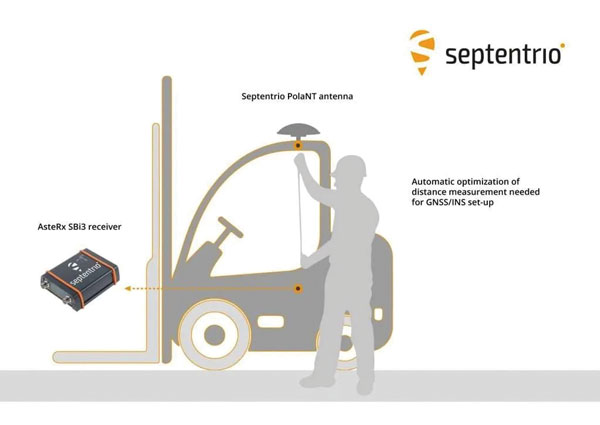
    Photo: Septentrio
    Photo: Septentrio

    The RxLeverArm software tool aids integration of GNSS receivers that include inertial navigation systems (GNSS/INS). RxLeverArm is part of Septentrio’s RxTools software package included with every Septentrio GNSS/INS receiver. The new tool visualizes, validates and automatically calibrates the exact distance between the INS sensor and the antenna, removing the need for accurate distance measurements with complex instruments. For lever-arm compensation, users only need to measure the rough distance between the INS sensor and the main GNSS antenna reference points on the vehicle. Data is then logged under open-sky conditions, which allows the RxLeverArm tool to optimize the initial rough distance measurement and prevent common errors such as sign inversion.

    Septentrio, septentrio.com

    Testing Board

    Enables proof of concept for IoT products and applications
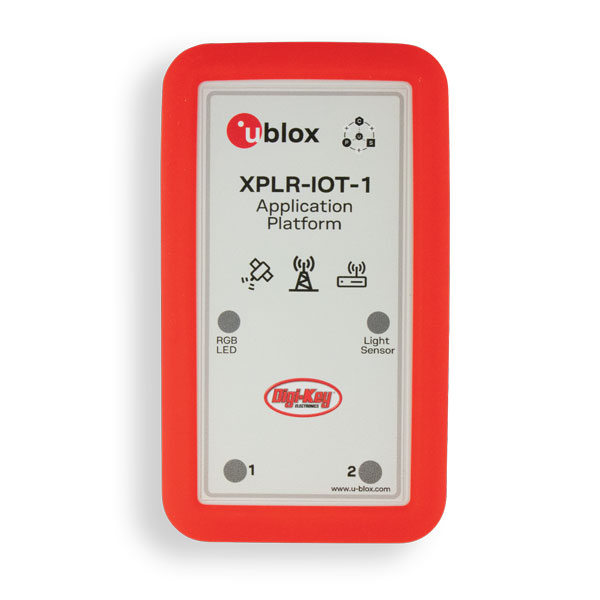
    Photo: u-blox
    Photo: u-blox

    The u-blox XPLR-IOT-1 IoT explorer kit is an all-in-one package to test, evaluate and validate applications for the internet of things (IoT). The board hosts an ultra-low-power MAX-M10S positioning module capable of concurrently tracking four GNSS constellations, delivering highly reliable location data. Integrating relevant u-blox technologies and services into a capable prototyping platform with a vast selection of sensors and interfaces as well as cloud connectivity, XPLR-IOT-1 makes it easier to explore the potential of IoT applications.

    u-blox, u-blox.com

    GNSS Module

    With RTK and dead reckoning

    Photo: Quectel
    Photo: Quectel

    The LC29H is a dual-band multi-constellation GNSS module built using the Airoha AG3335 platform. It is available in multiple variants and optionally integrates real-time kinematic (RTK) and dead reckoning. The LC29H series offers high performance with power efficiency to meet the market needs of high-precision positioning at the centimeter and decimeter levels. The LC29H concurrently receives and processes signals from GPS, GLONASS, BeiDou, Galileo and QZSS. The modules are suited to an expanding market for autonomous lawn mowers, drones, precision agriculture, micro-mobility scooters and delivery robots.

    Quectel Wireless Solutions, quectel.com

    LoRa/GNSS Board

    Equipped with u-blox tracking module
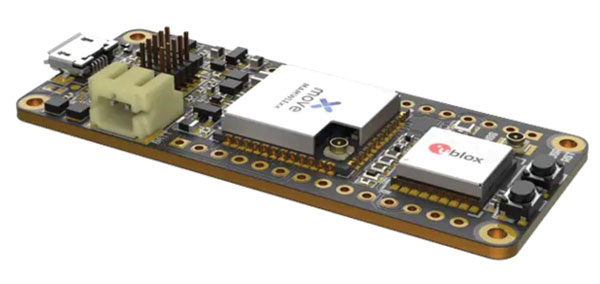
    Photo: Move-X
    Photo: Move-X

    The Cicerone LoRa/GNSS board is a high-performance, low-power, Arduino MKR-compatible development board based on the u-blox MAX-M10S GNSS module and the MAMWLE LoRa module. It delivers high-performance GNSS, long-range wireless connection, and high-performance processing in a low-power solution for optimal battery life. The board allows users to build tracking applications worldwide with meter-level accuracy and to communicate long-range, low-power data via LoRaWAN. The integrated Li-Po charging circuit enables the Cicerone board to manage battery charging through the USB port. It has a compact 63 mm x 25 mm form factor and is compatible with all Arduino MKR shield boards. These boards all share a common pinout to enable developers to easily add expansions with minimal software changes.

    Move-X, move-x.it

    GNSS Module

    New platforms improve positioning for wearables
    Photo: Qualcomm
    Photo: Qualcomm

    The Snapdragon W5 Gen 1 and W5+ Gen 1 platforms are designed to advance ultra-low power and breakthrough performance for next-generation connected wearables with a focus on extended battery life and premium user experiences. They incorporate innovations including low power islands for GNSS, Wi-Fi and audio; ultra-low power Bluetooth 5.3 architecture; and low power states such as Deep Sleep and Hibernate. New enhancements to the flagship Snapdragon W5+ platform offer 50% lower power, 2x higher performance, 2x richer features, and 30% smaller size, compared to the previous generation. The purpose-built platform is comprised of a 4 nm-based system-on-chip and 22 nm-based highly integrated always-on co-processor. By using these platforms, manufacturers can scale, differentiate and develop products faster in the continuously growing and segmenting wearables industry, Qualcomm said. Qualcomm also announced two reference designs from Compal and Pegatron, which showcase the capabilities of the platform and the company’s collaboration with ecosystem partners, helping customers develop products faster.

    Qualcomm Technologies, qualcomm.com


    SURVEYING

    GNSS Receiver

    Dual cameras enable vision RTK surveying

    Photo: Hi-Target
    Photo: Hi-Target

    The pocket-sized vRTK GNSS real-time-kinematic (RTK) receiver is equipped with dual cameras to enable non-contact image surveying. It also has a nine-axis IMU module with auto installation for tilt surveying. Visual positioning technology combines imagery with high-precision positioning equipment, allowing users to obtain the location of the target from a distance. The Live View Stakeout function improves stakeout speed, while non-contact measurement greatly improves the usable range of GNSS. The vRTK receives 1,408 channels (GPS, GLONASS, BeiDou, Galileo, QZSS, IRNSS and SBAS). A new generation of GNSS engine supports the new frequency points B1C, B2a and B2b RTK decoding of BeiDou-3 satellites.

    Hi-Target, en.hi-target.com.cn

    Compact Receiver

    Smart antenna for field work
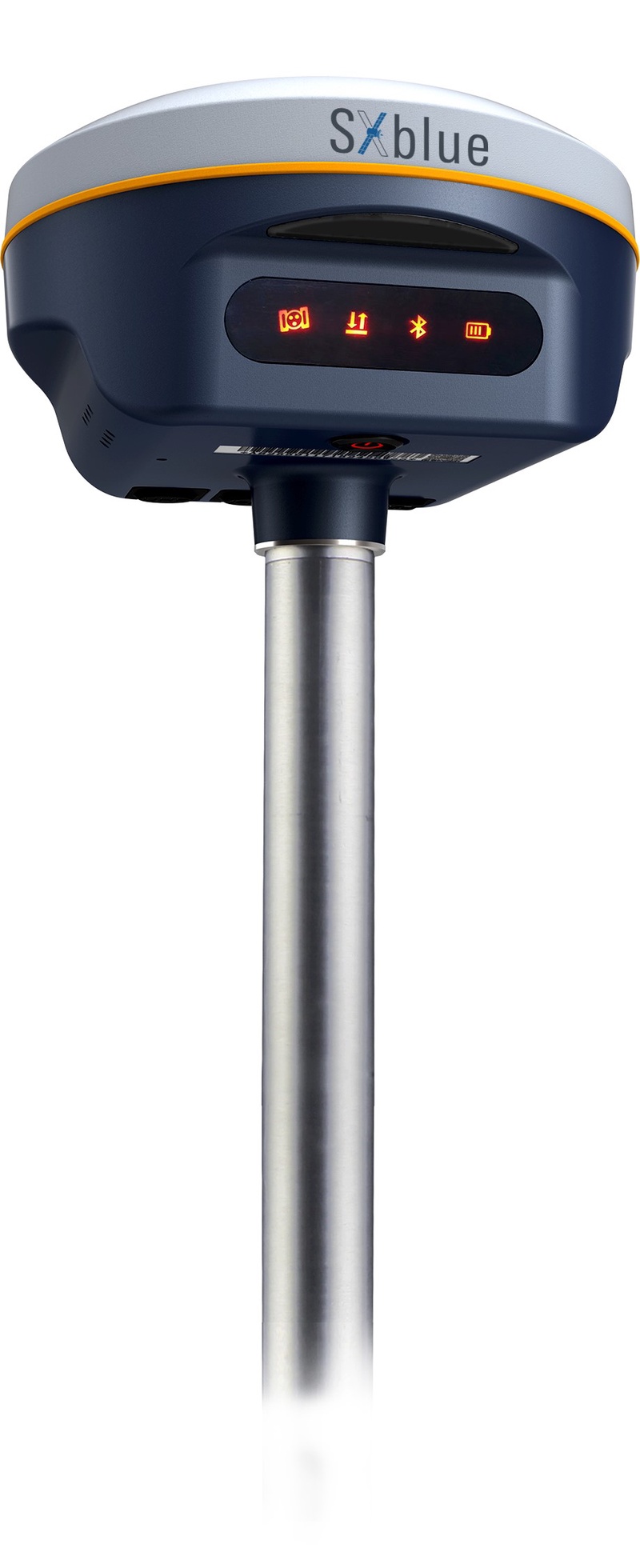
    Photo: Geneq
    Photo: Geneq

    The SXblue SMART features an engine capable of tracking all-in-view GNSS signals, with interference mitigation and optimization for handling a wide frequency band. Weighing 850 g including battery, the SXblue SMART is compact and rugged. Its radio link is based on the Farlink protocol that allows a range of up to 8 km while reserving a wide bandwidth for transmission of real-time kinematic (RTK) data. In addition to a tilt sensor for measurements in hard-to-reach places, the SXblue SMART features a high-performance attitude measurement module that can detect and measure movement of the device. Also integrated are an inertial measurement unit and a thermometer for monitoring and controlling its internal temperature.

    Geneq, geneq.com

    Post-processing

    For Windows and Mac users
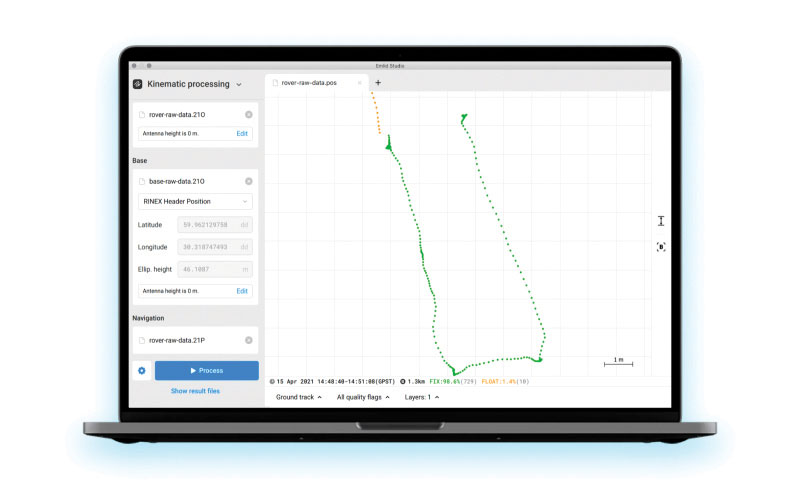
    Photo: Emlid
    Photo: Emlid

    Emlid Studio is a new post-processed kinematic (PPK) application designed specifically for post-processing GNSS data. It allows users to convert raw GNSS logs into RINEX, post-process static and kinematic data, geotag images from drones (including DJI brand), and extract points from survey projects completed with Emlid’s ReachView 3 app. With Emlid Studio, users can post-process data recorded with Emlid Reach receivers and other GNSS receivers or NTRIP services. Post-processing requires RINEX observation and navigation files. Raw data in UBX and RTCM3 format also can be used through conversion.

    Emlid, emlid.com

    GNSS Receiver

    Integrated receiver and antenna for portability
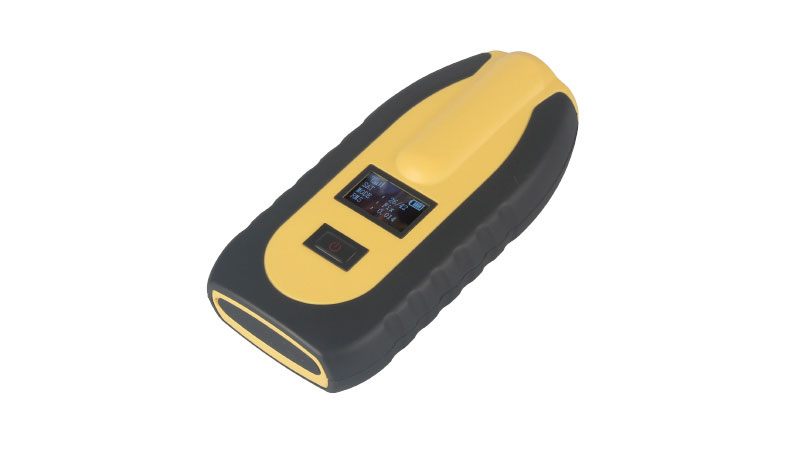
    Photo: SingularXYZ
    Photo: SingularXYZ

    The P1 GNSS receiver has a high-precision module that tracks GPS, GLONASS, BDS, Galileo, QZSS and SBAS to deliver centimeter-level real-time kinematic (RTK) accuracy even in harsh environments. It is also equipped with an anti-jamming and anti-spoofing algorithm. The P1 GNSS receiver has integrated the GNSS module and GNSS antenna while keeping the device as small as a smartphone, which makes it portable enough to be worn around the neck or placed in a pocket. With 4G/Bluetooth communication, the P1 supports real-time positioning data transmission, providing users with a stable correction data steam and positioning data uploads. The P1 also can be mounted on a pole.

    SingularXYZ, singularxyz.com

    Smartphone App

    Updates include vector map import
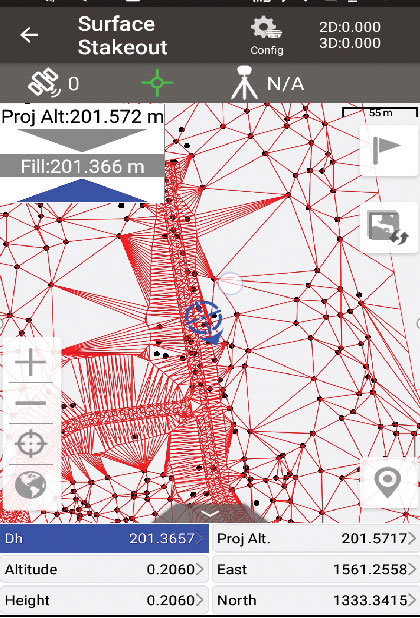
    Photo: Tersus GNSS
    Photo: Tersus GNSS

    Nuwa surveying smartphone app version 2.3.3.2 has vector map import and digital surface stakeout. The Nuwa app runs on Android and is reliable and easy to operate. It has rich and powerful functions that can help surveyors complete measurements more efficiently and accurately. The app is designed to work with the David and Oscar GNSS receivers from Tersus GNSS, plus other receivers that support NMEA-0183. Features include the ability to configure base, rover and static surveys; graphical interface with background map (online/import); CAD stakeout, road stakeout and earthwork; data management (import/export multiple formats); and Bluetooth and USB connection support.

    Tersus GNSS, tersus-gnss.com

    Survey Application

    Now supports Web Maps and multi-part geometries
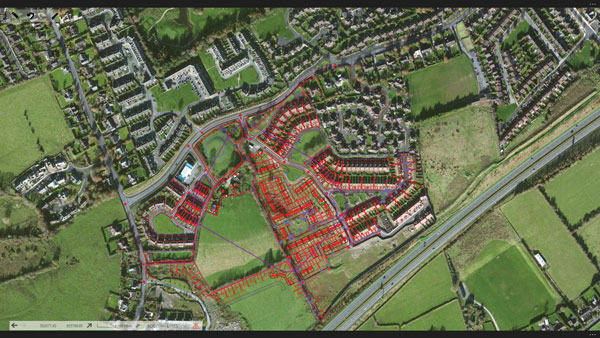
    Photo: 1Spatial
    Photo: 1Spatial

    Version 3.2 of the survey application 1Edit allows the use of Web Maps (WMS) to be used as background layers, making it easier for surveyors to identify assets and changes in context. It provides easier configuration of background maps and supports hybrid working practices for surveyors. Where offline background maps are required, 1Edit supports multiple raster files and handles large image files, providing visual context for geospatial data when there is no data signal. Enhanced support for complex geometries increases efficiency as features with multiple parts share common attributes and IDs.

    1Spatial, 1spatial.com


    MAPPING

    US Address Plug-In

    Provides geocoding accuracy of 95%
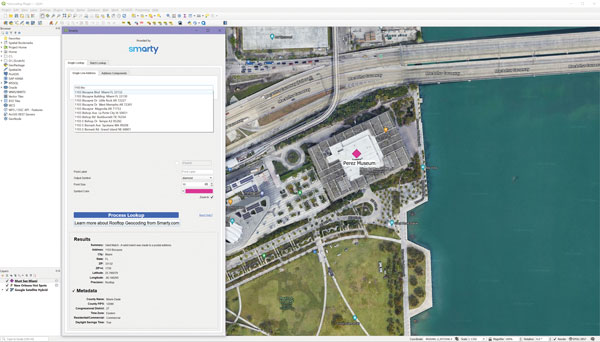
    Photo: Smarty
    Photo: Smarty

    The Smarty U.S. Geocoding QGIS Plugin provides an easy way for users of the software platform to validate, standardize, and convert addresses to their latitude and longitude coordinates (geocodes). The plugin allows manual address entry as well as batch geocoding via CSV. It features a 95% match rate with the actual rooftop and parcel, as well as providing sub-address geocoding that can match secondary addresses such as apartment units and office-suite rooftops in building. The free plugin also includes supplemental metadata useful for many geographic information system (GIS) purposes.

    Smarty, smarty.com

    GIS Location Data

    Datasets for the United States, UK, Canada, Australia and Europe

    Photo: Maptitude
    Photo: Maptitude

    Maptitude 2022 is a major release of the geographic information system (GIS) and mapping software. It includes up-to-date, accurate data encompassing expenditure, geodemographic segments, gross domestic product, medical and banking locations, branded business locations, traffic counts, building footprints, address points and financial assets, as well as the tools to leverage this information to improve the location intelligence of organizations in markets such as healthcare, franchising, communications, logistics, retail, real estate and banking.

    Maptitude, maptitude.com

    Rugged Tablet

    For mapping and data collection
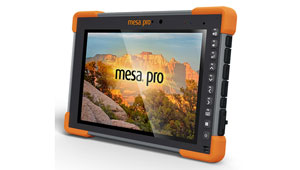
    Photo: Juniper Systems
    Photo: Juniper Systems

    The Mesa Pro rugged tablet features 11th-generation Intel Core processors, a Windows 11 operating system, device customization options, a large sunlight-readable display and the “Juniper Rugged” company design. Standard Mesa Pro units come with an 11th Gen Intel Core i5 processor and 16 GB of LPDDR4x RAM. Core i7 and Celeron versions are also available. Each Mesa Pro configuration offers powerful performance and allows users to select the computing performance that fits their needs and budgets.

    Juniper Systems, junipersys.com


    AUTONOMOUS

    Airspace Management

    Data fusion across multiple data sources, including ADS-B
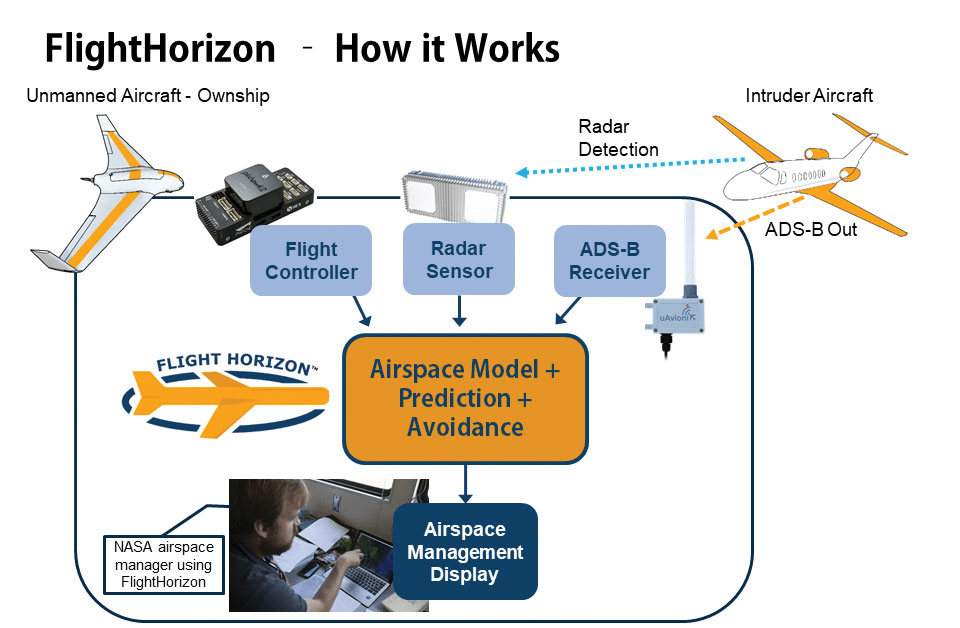
    Photo: Vigilant Aerospace
    Photo: Vigilant Aerospace

    FlightHorizon COMMANDER is a situational awareness and safety system for UAV airspace management. The system provides airspace managers with either a 2D or 3D view of all aircraft in the selected airspace using a combination of sensors and data sources to create an airspace safety picture for pilots, airspace managers and command centers. The system is based on an exclusively licensed NASA patent and prototype that has been used in extensive flight testing. FlightHorizon COMMANDER functions as a visualization tool for airspace management, an active situational awareness tool, and a detect-and-avoid system that enables unmanned aircraft to avoid other aircraft and keeps drone pilots and airspace managers aware of the location and air traffic around their UAS and in their airspace.

    Vigilant Aerospace, vigilantaerospace.com

    Heavy Lift Drone

    Supports both automated and manual operations
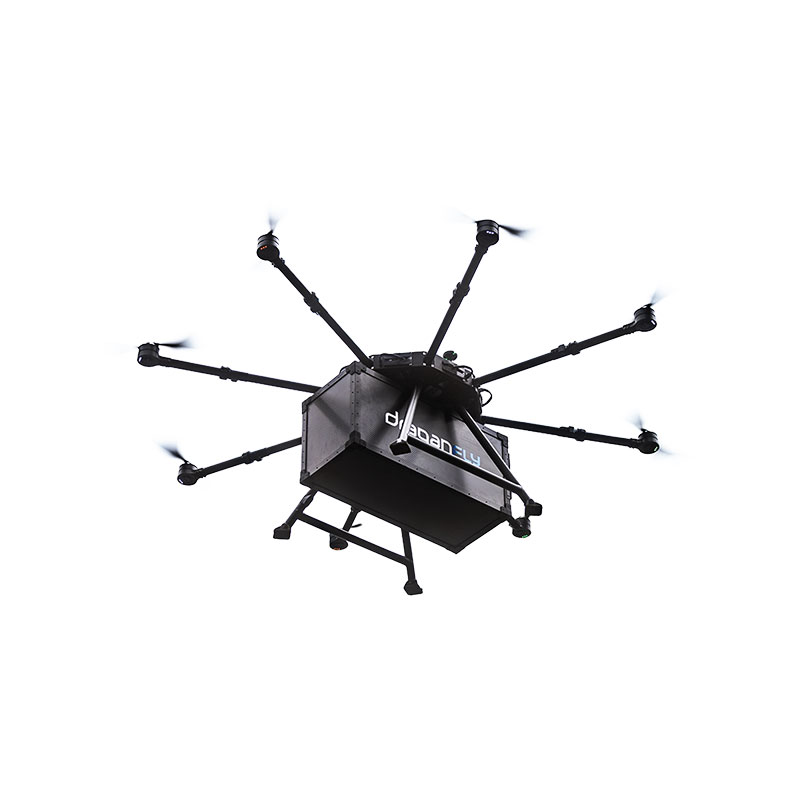
    Photo: Draganfly
    Photo: Draganfly

    The Draganfly Heavy Lift Drone is a versatile, multi-rotor unmanned aerial vehicle designed to enhance deliveries and flight times. Compatible with a variety of interchangeable payloads, the heavy-duty drone can carry more and fly longer than the typical professional drone. It has a payload/cargo-lift capacity of 30 kg (67 lbs) and up to 55 minutes of flight time. The industrial UAV handles heavy winds and high elevations with ease. Its lifting capacity permits flexibility in carrying large high-end sensors such as hyperspectral and bathymetric lidar to conduct large-area surveys.

    Draganfly, draganfly.com

    Infrared Camera Module

    Allows rapid MWIR integration for commercial, industrial and defense applications
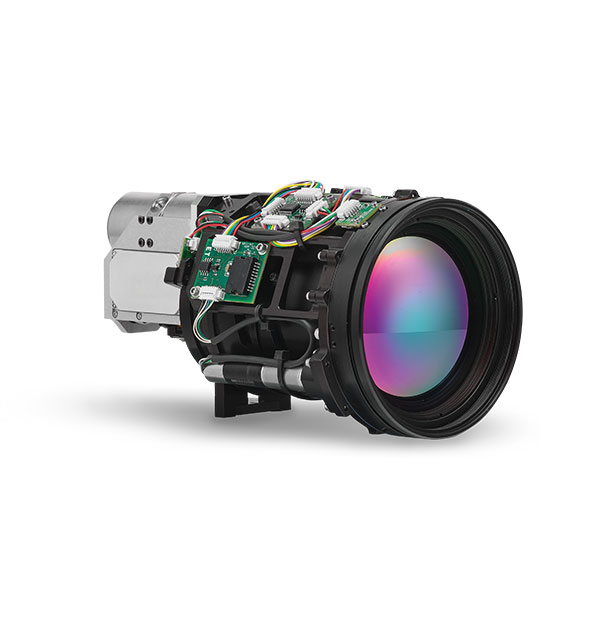
    Photo: Teledyne FLIR
    Photo: Teledyne FLIR

    Part of the Neutrino IS series, the Neutrino LC CZ 15-300 is a new mid-wavelength infrared (MWIR) camera module with integrated continuous zoom lenses. Designed for integrated solutions requiring crisp, long-range MWIR imaging, the camera offers size, weight, power and cost (SWaP+C) benefits to original equipment manufacturers (OEMs) and system integrators for airborne, unmanned, C-UAS, security and targeting applications. The LC CZ 15-300 offers high performance, 640 x 512 high-definition MWIR imagery and 15 mm to 300 mm zoom capability for ruggedized products requiring long life, low power consumption and quiet, low-vibration operation. The camera module and lens are designed for each other, providing optimal performance.

    Teledyne FLIR, flir.com

    Nano Drone

    Flies like a hummingbird
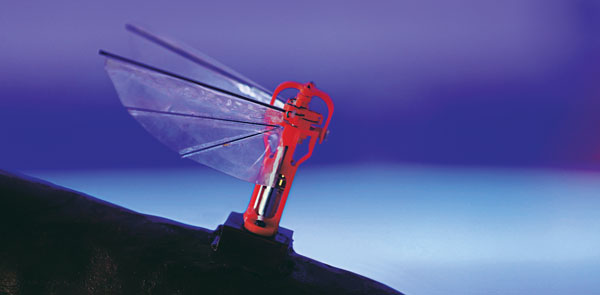
    Photo: Aselsan
    Photo: Aselsan

    A miniature drone with flapping wings was demonstrated at the Teknofest Black Sea aviation and defense industry event, which took place Aug. 30 to Sept. 4 at the Samsun Çarşamba Airport. With its low detectability, the nano drone is being developed to perform reconnaissance and surveillance missions. It is still in research and development.

    Aselsan, aselsan.com.tr


    TRANSPORTATION

    Lidar Transceiver

    Enables machine vision at highway speeds
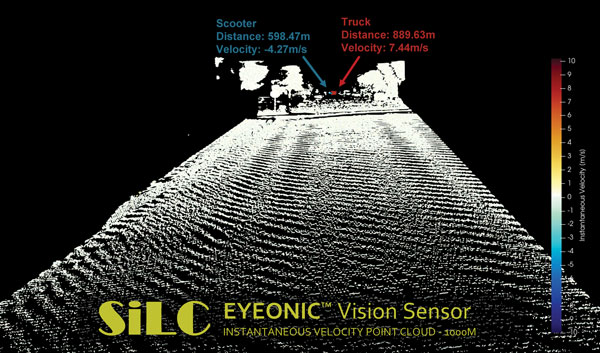
    Photo: SiLC Technologies
    Photo: SiLC Technologies

    The Eyeonic Vision Sensor can perceive, identify and avoid objects at a range of more than 1 kilometer. The sensor is a frequency modulated continuous wave (FMCW) lidar transceiver that uses a silicon photonic chip. Long-range visibility is a requirement for autonomous vehicles, which require sufficient awareness to evade obstacles at highway speeds. This capability requires vision sensors to provide millimeter-level accuracy and depth at instantaneous velocity. The highly detailed and ultra-long-range information from the Eyeonic Vision Sensor enables robots to classify and predict their environments. The sensor is designed to be integrated into autonomous vehicles, security solutions and industrial robots.

    SiLC Technologies, silc.com

    Vehicle Computer

    For fully connected buses, trucks and trains
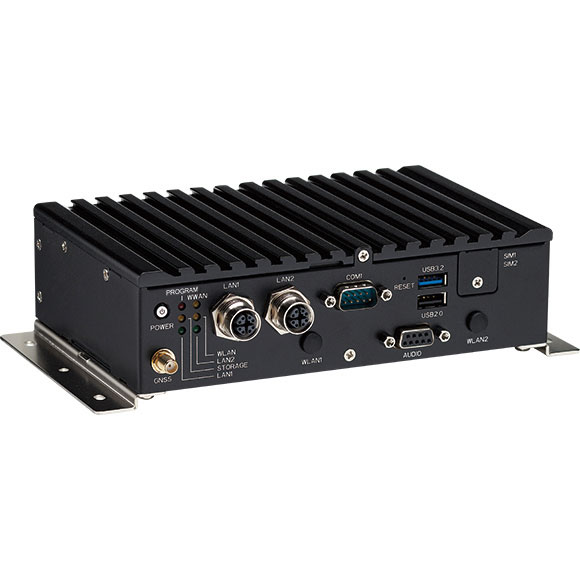
    Photo: Nexcom
    Photo: Nexcom

    The nROK 1030 is a compact, rugged entry-level vehicle computer with an advanced GNSS receiver. The u-blox NEO-M9N module supports GPS, GLONASS, Galileo, BeiDou and QZSS signals. An Intel Atom x6211E dual-core processor 1.3 GHz/3 GHz (burst) is designed for harsh in-train environments. Its fanless, compact design is suitable for vehicles with limited space. The nROK 1030 has onboard CAN 2.0B for vehicle diagnostics and driver behavior management. WLAN Wi-Fi 6/6E/Wi-Fi 5 and WWAN 5G NR/LTE wireless data connectivity is optional. The nROK 1030 is flexible to meet the demands of various rolling-stock applications, such as wireless gateway, infotainment and digital radio data/voice transmission systems.

    Nexcom, nexcom.com

  • The Ligado saga continues

    The Ligado saga continues

    Matteo Luccio
    Matteo Luccio

    The LightSquared/Ligado Networks saga, now in its second decade, continues. On Sept. 9, the Committee to Review FCC Order 20-48 Authorizing Operation of a Terrestrial Radio Network Near the GPS Frequency Bands of the National Academies of Sciences, Engineering and Medicine (NASEM) released its consensus study. Both sides claim the report supports their position.

    A summary of the report and reactions from various stakeholders can be found here.

    According to Ligado, the report confirms the FCC’s finding that the company’s operations “can co-exist with GPS.” It cited the report’s conclusion that “the technology to enable compatibility has been in use for over a decade, and most consumer equipment, commercial general navigation, timing, cellular and aviation receivers will not experience harmful interference from Ligado’s operations.”

    The NASEM report also confirmed, the company said, the FCC’s finding that “[a] small percentage of very old and poorly designed GPS devices may require upgrading.” Ligado reaffirmed its commitment to “upgrade or replace” federal equipment negatively impacted by its operations and expressed its hope that now the Department of Defense (DOD) and the National Telecommunications and Information Administration “will stop blocking Ligado’s license authority and focus instead on working with Ligado to resolve potential impacts relating to all DOD systems.”

    By contrast, the GPS Innovation Alliance applauded the NASEM’s “reaffirmation that Ligado’s terrestrial operations would have a harmful, real-world impact on the millions of federal and commercial users that rely on GPS, satellite communications, and weather forecasting services every single day.” It further stated that the report “demonstrates that Ligado would pose an unacceptable risk to services critical to safety-of-life operations, our national security, and our economy” and urged “government action to address the imminent, but preventable, harm that would result from Ligado’s deployment.”

    According to the DOD, the NASEM study “confirms that Ligado’s system will interfere with DOD GPS receivers, which include high-precision GPS receivers.” The study also concludes, DOD says, that the FCC’s proposed mitigation and replacement measures “are impractical, cost prohibitive, and possibly ineffective.”

    The NASEM committee pointed out repeatedly in its report that matters are more nuanced than represented by either side and that test results and harmful interference depend on many factors — including the receiver’s signal processing architecture, the amount of SNR loss, the use case, and the relevant failure modes. “The determination of harmful interference is dependent on the particulars,” it said.

    The committee also bemoaned “a lack of a quantifiable definition of harmful interference” and “the lack of common receiver assumptions” and called for “more definitive receiver standards.” It also pointed out that “many spectrum conflicts could be avoided if receivers were better designed and implemented.”

    The GPS user base is in the billions. Therefore, even if “most” receivers will not be harmed by Ligado’s operations, as the committee reported, tens of millions of devices will be. I highly recommend reading the full report.

  • Smart ways to improve smartphone location accuracy

    Smart ways to improve smartphone location accuracy

    The Google Smartphone Decimeter Challenge (SDC) competition, co-sponsored by the Institute of Navigation (ION), took place this summer. For the competition, teams developed high-precision GNSS positioning using a pool of smartphone GNSS + inertial measurement unit (IMU) datasets accompanied by high-accuracy ground truth. Teams competed to achieve the best location accuracy with the datasets provided. Winners received cash prizes and sponsored attendance at the ION GNSS+ 2022 conference in Denver, Sept. 19-23, to present their results.

    Origins

    The SDC has its origins in the Android Operating System, which is an open-source platform. In 2016, Google made GNSS raw measurements available as a public application programming interface (API) on all Android phones. Since then, the available measurements have become more sophisticated and more accurate. For example, dual-frequency carrier-phase data is now available on many Android phones. This enables new areas of research.

    Goals

    The competition had two goals:
    • Stimulate the research and development of high-accuracy algorithms that can produce submeter position accuracy on phones.

    • Establish a publicly accessible repository of labeled data so that all future research on location algorithms can be judged in a consistent way against a standard set of data.

    The first goal was met beyond our expectations. A total of 1,381 teams participated in the two competitions of 2021 and 2022. Discussion among competitors on the competition platform (kaggle.com) was wide-ranging, incredibly collegial, and beneficial to the entire community.

    Competitors have written and shared detailed descriptions, and these have been reviewed and commented on by other competitors. Moreover, winners have written formally peer-reviewed papers and made presentations at the ION GNSS+ conferences, which are available from ion.org.

    The second goal is a work-in-progress and is intended to be the legacy of the events.

    Legacy

    Disciplines such as machine learning have established benchmarks that make it possible to compare new approaches to previous ones in a proper quantitative way. In the GNSS community, this convention has been missing — a glance across papers at conferences will show that different algorithms tend to be presented with different test data and different metrics. Usually, the authors collect this data, and it is often fairly sparse (one or two drive tests, for example). Also, the reader never knows whether the data was cherry-picked (were bad results not mentioned?).

    The SDC data provides:

    • 206 different drive tests
    •86 total hours of dual-frequency (L1, L5) data with code and carrier-phase measurements
    •All labeled with ground-truth positions and velocities collected using NovAtel SPAN ISA-100C, with precise lever-arm compensation and validated with Google’s analysis tools.

    The Kaggle site allowed users to submit their results, then automatically scored them against the ground-truth data. We advocate that all GNSS researchers use this resource to measure their location algorithm improvements in a standard way. This creates trust in published results, accelerating the recognition and adoption of truly great improvements for the benefit of the entire industry and GNSS users worldwide.

    Read how to use the SDC data in Kaggle to test position algorithms here.


    Winners Reveal Their Approaches

    The top three winners of this year’s Smartphone Decimeter Challenge described their projects to Matteo Luccio, GPS World editor-in-chief.

    Suzuki
    Suzuki

    Taro Suzuki, Chiba Institute of Technology

    1st Place Winner: Two-Step Optimization of Velocity and Position using Smartphone’s Carrier Phase Observations

    What is your research focus and how does it relate to the contest?

    My current research focuses on the accurate positioning of vehicles and mobile robots in urban environments where GNSS multipath occurs. I usually use commercial GNSS receivers for my research. This competition is very relevant to my current research, except that the smartphone is replacing a receiver.

    How long have you been developing the technology or approach you used to win the contest?

    The competition was held for three months, but I concentrated my efforts on the past three weeks. However, I used technologies and resources developed in my previous research (for example, source code developed in last year’s competition).

    Have you participated in previous editions of this contest?

    Yes, I participated in the last competition and won. The approach used in this year’s competition is based on the method used to win last year’s competition, with additional innovations and improvements.

    Where, in what GNSS signal conditions, and at what speeds were the test data collected?

    The competition provides a training dataset, which contains raw GNSS observations from a smartphone installed on a vehicle as it travels on real roads. In addition to GNSS observations, the training dataset contains the ground truth of the smartphone’s position. The training dataset includes a wide range of GNSS signal conditions, such as driving on highways around San Francisco and Los Angeles, driving on tree-lined urban streets, and driving in tunnels and under overpasses. I have developed an algorithm that uses a training dataset containing ground truth to accurately estimate the location of smartphones in a variety of GNSS signal reception environments.

    What accuracies were you able to obtain?

    The competition metric was “average of 50th and 95th percentile horizontal errors.” The metrics are computed for each of the 36 runs in the test dataset, which are divided into public and private groups, then the metrics are averaged in each group to compute the final score. My final score was 1.382 m for public and 1.229 m for private. The best score given after the competition was 1.372 m for public and 1.197 m for private. The final result achieved sub-meter accuracy in the median (50th percentile).

    What are the key features of your approach?

    The key point of my method is global optimization using graph optimization, unlike a conventional Kalman filter or least-squares-based positioning methods. In addition, highly accurate relative position estimation using the time difference of carrier wave phases of smartphones contributed to the accuracy. Because the competition dataset included environments such as tunnels and elevated structures in which GNSS cannot be received at all, I devised an algorithm with two optimization steps (first velocity optimization, then position optimization) and applied it to the competition. This method enables highly accurate position estimation for vehicle driving data in various GNSS signal reception environments using only smartphone GNSS observation data.

    What end-user applications are you expecting your approach to enable?

    Decimeter-accurate location estimation could lead to lane-level navigation for vehicles, pedestrian navigation, and advanced location-based smartphone games.


    Dai
    Dai

    Shubin Dai, Kaggle Community

    2nd Place Winner: Improving Smartphone GNSS positioning using Gradient Descent Method

    What is your research focus and how does it relate to the contest?

    I am a data scientist and one of the top competition grandmasters on Kaggle. My research interests include computer vision, natural language processing, autonomous driving, and reinforcement learning. I placed in the top three in 14 related competitions (13 of which were solo). So, despite my lack of background knowledge in the GNSS field, these methods, skills and experiences helped me find a solution.

    How long have you been developing the technology or approach you used to win the contest?

    I spent about 50 days on this competition, including learning principles of GNSS and understanding all kinds of algorithms by reading books, papers and source codes. The Kaggle platform is very helpful when we want to get started in a new field.

    Have you participated in previous editions of this contest?

    I did not participate in the competition held last year, but I learned a lot from solutions of recent years, particularly the third-place solution.

    Where, in what GNSS signal conditions, and at what speeds were the test data collected?

    The benchmark datasets include raw GNSS measurement and raw readings from inertial sensors, using smartphones (Xiaomi Mi 8, Google Pixel 4, etc.) enabled with dual-frequency and ADR (accumulated delta range) in driving scenarios, collected in the San Francisco Bay area.

    In the GSDC2021 dataset, there are 29 drives with 73 phone GNSS logs in the training set and 19 drives with 48 phone logs in the test set. Compared to 2021’s competition, in the GSDC2022 dataset we can see more data overall and a wider variety of routes: 62 drives with 170 phone logs are provided in the training set and 36 drives with only one phone per drive are provided in the test set.

    The drives in the training set took 15 to 60 minutes at an average speed of 18 m/s.

    What accuracies were you able to obtain?

    According to the metric of this competition, the score is calculated as the mean of the 50th and 95th percentile distance errors. The score on my local validation set is 1.929 m, the score on the public test set is 1.608 m, and the score on private test set is 1.499 m. When we calculate the mean error, the score is 1.401 m on a validated set, the mean error of 40% of the trips are under 1 m. I think the competition metric is more reliable as the 95th percentile distance error is also important.

    By the way, my local validation set is more difficult to optimize than the test set, so the mean error on the test set is expected to be lower than 1.401 m.

    What are the key features of your approach?

    The competition data is noisy due to multipath effects, non-line-of-sight receptions, receiver noise and missing data, therefore it’s quite challenging. I found that the optimal estimation for each point locally is not stable and can be affected by noise at that point on the track. If we can find a solution to a whole track globally, the noise can be reduced as the model must follow all kinds of constraints, such as geometry constraints, speed constrains, and global acceleration constraints.

    Although we could extend the WLS and Kalman filter solution to take more points on a track into consideration, it’s not so easy to model all kinds of constrains. On the other hand, if we use a global optimization method, such as factor graph optimization and neural networks, we can add the constrains easily, which makes it more efficient to conduct experiments.

    Following the solution of the third-place winner in last year’s competition, I used the global optimization method by taking into account gradient descent, pseudorange, pseudorange rate, accumulated carrier phase (ADR), phone speed and acceleration constraints of every time epoch on a track. When optimizing the track using gradient descent, the losses are designed to filter out abnormal data and reduce the noise by a series of physical and geometrical rules. I spent much time searching for the constraints, proving them and turning them into losses that can be used to update the coordinates iteratively during the competition.

    What end-user applications are you expecting your approach to enable?

    According to the setting of this competition, we can post-process data collected using Android phones, which is easily obtained. The track obtained can then be optimized using the solutions from this competition. The solutions from the first and the second place can both be considered as a framework that can be extended by adding more constrains to it to improve accuracy.


    Everett
    Everett

    Tim Everett, RTK Consultants LLC

    3rd Place Winner: An RTKLIB Open-Source-Based Solution

    What is your research focus and how does it relate to the contest?

    I develop and maintain the demo5 fork of the popular RTKLIB open-source GPS/GNSS software tool. I have optimized this software for low-cost precision GNSS solutions, so it is very closely related to the goals of this competition. My background is in control system theory and I worked in product and technology development for servo systems in the disk drive industry for 25 years before switching to the GNSS field. The mathematics turns out to be quite similar between the two as both are problems in precision positioning, just different in scale. In disk drives, it is nanometers over centimeters and in precision GNSS, it is centimeters over kilometers.

    How long have you been developing the technology or approach you used to win the contest?

    I have been developing and maintaining low-cost precision GNSS solutions in the RTKLIB software for about six years but have only worked with smartphone solutions in the last year or two.

    Have you participated in previous editions of this contest?

    I did not participate in last year’s competition but I did work with the data after the contest was over and shared a solution using RTKLIB that would have placed fifth in the competition.

    What accuracies were you able to obtain?

    I achieved a score of 1.648 m on the private leaderboard. This represents the average of the 50th percentile and the 95th percentile of the errors as scored by Kaggle. Kaggle does not provide any further breakdown of this number but, based on the training data for which ground truths were provided, this corresponded to a 50th percentile error of roughly 0.9 m and a 95th percentile error of roughly 2.3 m. With a small tweak to my solution after the competition was over, I was able to improve my private leaderboard score to 1.593 m, which would have been within 1 cm of the third-place solution.

    What are the key features of your approach?

    My approach was to use the existing post-processing kinematic (PPK) solution algorithm in RTKLIB but to reoptimize it for the unique characteristics of the smartphone observation data. A PPK solution is the post-processing equivalent of a real-time kinematic (RTK) solution and is a differential solution that relies on differencing the receiver observations with observations from a nearby base station to cancel out most of the largest error sources — including atmospheric, orbital and clock errors — since these errors are common between the two sets of proximate observations.

    Because smartphones have very poor GNSS antennas and they were mounted inside vehicles, the signal quality is much lower and the multipath much greater than those for which the RTKLIB algorithm was optimized. In addition, the smartphones were using the L5 frequency band, whereas RTKLIB was optimized for the more commonly used L2 frequency band. One of the main goals of my optimization process was to include many low-quality observations in the solution that would normally be discarded, but to de-weight them appropriately.

    What end-user applications are you expecting your approach to enable?

    RTKLIB software is currently used to provide precision solutions for many end-user applications such as surveying, drone photogrammetry, sports tracking, precision agriculture, utility location, marine navigation and ground subsistence monitoring. Although smartphones won’t replace dedicated low-cost GNSS receivers, the challenging nature of the smartphone data severely stresses the RTKLIB algorithms and exposes numerous opportunities for improvement that are much less obvious with more typical, higher quality data. I have pulled these improvements into the main branch of the demo5 version of RTKLIB, and hence this work should immediately improve the quality of all these applications and extend their use into more challenging environments.

    Photo: Google
    Photo: Google

    Acknowledgements: Thanks to the Institute of Navigation (ION) for co-sponsoring the 2022 Smartphone Decimeter Challenge. Thanks to Luke Walcher and Tolu Ojelade for their contributions to the photos used in this article.

  • DJI Mavic 3 Enterprise drone launched for commercial work

    DJI Mavic 3 Enterprise drone launched for commercial work

    The portable drone has an RTK module for centimeter-level precision and a 56× zoom camera

    DJI has launched its Mavic 3 Enterprise Series, designed for business, government, education and public safety.

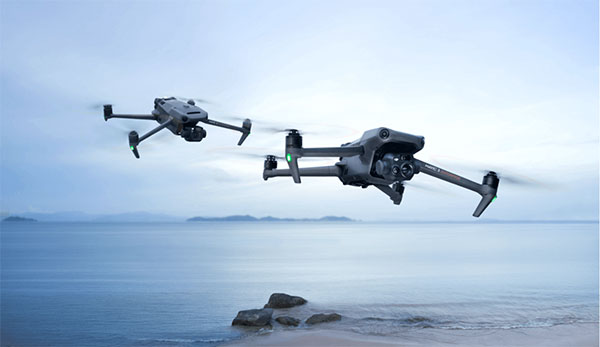
    The DJI Mavic 3E and DJI Mavic 3T are compact drones designed to provide professional users with safe and efficient aerial technology. Both drones are based on DJI’s flagship Mavic 3 series and have been designed to operate in a vast array of commercial missions.

    Portable and compact, the drones can be carried in one hand and deployed at a moment’s notice. Flight time is 45 minutes.

    Surveying tools. Both models have a real-time kinematic (RTK) module that enables surveying professionals to achieve centimeter-level accuracy with support for network RTK, custom network RTK services, and the D-RTK 2 Mobile Station.

    The D-RTK 2 Mobile Station is DJI’s upgraded high-precision GNSS receiver that supports all major global satellite navigation systems, providing real-time differential corrections.

    Safety Features. The Mavic 3 Enterprise series has improved obstacle sensing and navigation systems, including DJI AirSense, which receives ADS-B signals from traditional aircraft in the area to warn drone pilots of other air traffic nearby. The new improved DJI APAS system 5.0 for obstacle sensing with zero blind spots is supported by six omnidirectional fish-eye sensors.

    Cameras equipped. It integrates a 20-MP wide-angle camera with a 4/3 CMOS sensor with large 3.3 μm pixels that, together with Intelligent Low-Light Mode, offer significantly improved performance in dim conditions. Its powerful up-to-56x hybrid zoom camera has an equivalent focal length of 162mm for 12MP images. A mechanical shutter prevents motion blur and supports rapid 0.7-second interval shooting.

    Photo: DJI
    Photo: DJI

    The DJI Mavic 3E enables efficient mapping and surveying missions without the need for ground control points. Other fields that could use the drone include environmental and wildlife protection, construction, surveying, energy and public safety.

    The DJI Mavic 3T is engineered for aerial operations in firefighting, search and rescue, inspections and night missions. It has the same tele camera as Mavic 3E, a 48 MP camera with a 1/2” CMOS sensor, and a thermal camera with a Display Field of View (DFOV) of 61° and an equivalent focal length of 40mm with 640 × 512 px resolution.

    The Mavic 3T’s thermal camera supports point and area temperature measurement, high temperature alerts, color palettes, and isotherms to help professionals find hot spots and make quick decisions. With a simultaneous split-screen zoom, the Mavic 3T’s thermal and zoom cameras support 28× continuous side-by-side digital zoom for easy comparisons.

    Image transmission. With a maximum control range of 15 km, DJI O3 Enterprise Transmission enables the Mavic 3 Enterprise drones to fly further and transmit signals with higher stability, offering pilots greater peace of mind during flight. It provides a high frame rate live feed at 1080p/30 fps.

  • NGS will soon compute third multi-year CORS solution

    NGS will soon compute third multi-year CORS solution

    On Aug. 5, the National Geodetic Survey (NGS) stated it will be updating the NOAA CORS to be aligned with the latest International Terrestrial Reference frame, ITRF2020 (see below). As stated in the announcement, NGS will soon compute a third multi-year continuously operating reference station (CORS) solution, MYCS3.

    The last multi-year CORS solution, MYCS2, was performed by NGS in 2019. I discussed the MYCS2 in my February 2019 and April 2019 columns. This new multi-year CORS solution will be important to the 2022 modernized National Spatial Reference System (NSRS), because NGS will establish a strict mathematical relationship between the 2022 NSRS frames and the ITRF2020 frame. This will allow direct access to the NSRS (NOAA Technical Report NOS NGS 67).

    NGS Aligns National System to Global Reference Frame

    August 5, 2022

    The International Global Navigation Satellite System (GNSS) Service, which provides GNSS data products globally, recently released a new GNSS-only version of the International Terrestrial Reference Frame. This provides GNSS users access to the reference frame through coordinate functions for a global set of reference stations. In response, NGS will soon compute the multi-year Continuously Operating Reference Station (CORS) Solution 3, which will modernize the National Spatial Reference System. Aligning the National Spatial Reference System with the updated global reference frame will allow greater access for the global community of scientists, educators, and commercial users of location science.

    For more information, contact: Phillip McFarland

    As in the past, the multi-year CORS solution will mean that the NOAA CORS coordinates will be updated to be consistent with the latest International Terrestrial Reference Frame of 2020 (ITRF2020). The International GNSS Service provides information about its GNSS products and services. Readers can find information on the latest International Terrestrial Reference Frame 2020 here. This column will provide basic information on the ITRF2020. Please note: NGS stated that it will soon start computing the third multi-year CORS solution, but — as of October — all NOAA CORS coordinates are still based on MYCS2 and provide coordinates in ITRF2014 epoch 2010.00 and NAD 83 (2011, MA11, PA11) epoch 2010.00. As in the past, NGS will provide advance notice before publishing the results of its third multi-year CORS solution.

    A document on the ITRF website stated the ITRF2020 is expected to be an improved solution compared to the previous solution, ITRF2014. It listed several innovations introduced in the ITRF2020 processing.

    Description from ITRF2020 Document

    ITRF2020 is the new realization of the International Terrestrial Reference System. Following the procedure already used for previous ITRF solutions, the ITRF2020 uses as input data time series of station positions and Earth Orientation Parameters (EOPs) provided by the Technique Centers of the four space geodetic techniques (VLBI, SLR, GNSS and DORIS), as well as local ties at colocation sites. Based on completely reprocessed solutions of the four techniques, the ITRF2020 is expected to be an improved solution compared to ITF2014. A number of innovations were introduced in the ITRF2020 processing, including:

    • The time series of the four techniques were stacked all together, adding local ties and equating station velocities and seasonal signals at colocation sites;
    • Annual and semi-annual terms were estimated for stations of the 4 techniques with sufficient time spans;
    • Post-Seismic Deformation (PSD) models for stations subject to major earthquakes were determined by fitting GNSS/IGS data. The PSD models were then applied to the 3 other technique time series at earthquake colocation sites.

    The box below provides a good summary of the International Reference Frame and why it’s important to the scientific community as well as the surveying and mapping community. Readers can download the article from the June 2022 International GNSS Service Issue 4 newsletter. Users also can sign up to receive notices and newsletters from the International GNSS Service.

    ITRF2020: A new release of the International Terrestrial Reference Frame By Zuheir Altamimi

    What is the current rate of sea level rise in different regions of the globe? How does our Earth deform under the effect of plate tectonics, seismic phenomena, or the melting of ice caps? How the Earth’s center of mass is varying? How to determine the position of a point on the surface of a constantly deforming Earth and compare it to positions estimated decades apart? The answers to these fundamental questions for understanding the dynamics of our planet require the availability of a global, long-term stable terrestrial reference frame, but preferably a standard reference so to ensure interoperability and consistency of various measurements collected by sensors on the ground, or via artificial satellites. The International Terrestrial Reference Frame (ITRF) is the standard reference recommended by a number of international scientific organizations, including the International Union of Geodesy and Geophysics (IUGG) and the International Association of Geodesy (IAG) for earth science, satellite navigation and operational geodesy applications. The ITRF is an international effort that is built on the investments of space and mapping agencies, universities and research groups in operating geodetic observatories, archiving and analyzing the collected geodetic observations to derive not only the ITRF, but also critical geodetic products for science and society.

    The ITRF integrates and unifies technique-specific reference frames provided by the four IAG’s international services of space geodetic technique (DORIS/IDS, GNSS/IGS, SLR/ILRS, VLBI/ IVS). It is supplied to the users in the form of temporal coordinates of more than 1500 stations, Earth Orientation Parameters, as well as parametric functions describing nonlinear station motions: seasonal signals due to mainly loading effects and post-seismic deformations for sites subject to major earthquakes. It is necessary to regularly update the ITRF (approximately every 5 years) in order to benefit from continuous observations so to improve its accuracy, considering station position temporal variations due to geophysical phenomena.

    The ITRF is maintained by a research group at IGN-France and IPGP (Institut de Physique de Globe de Paris), and whose new release called ITRF2020 was published on April 15 and accessible here: https://itrf.ign.fr/en/solutions/ITRF2020. The ITRF2020 brings significant improvements compared to previous achievements: it confirms the estimate of the position of the center of mass of the Earth as it was determined in 2016, but also provides its seasonal variations; it improves the accuracy of the scale of the frame at the millimeter level, which represents a gain in precision of a factor of 8 on the measurement of the size of the Earth (compared to that determined in 2016); it provides a precise quantification of co- and post-seismic displacements caused by devastating earthquakes, such as that of Sumatra in 2004, Chile in 2010 and Japan in 2011. The IAG Services rely on the ITRF to align their geodetic products to it, and therefore disseminate it widely among the various users. In particular, using the IGS products, such as the orbits, allows a universal access in space and time to the ITRF.

    As stated in the article by Zuheir Altamimi, ITRF2020 involves IAG’s international services of four space geodetic techniques: DORIS/IDS, GNSS/IGS, SLR/ILRS, VLBI/ IVS. Computing an International Terrestrial Frame is very complex and requires analyses of difference types of geodetic and geophysical data. It is beyond the scope of this column, but online is more detailed technical information.

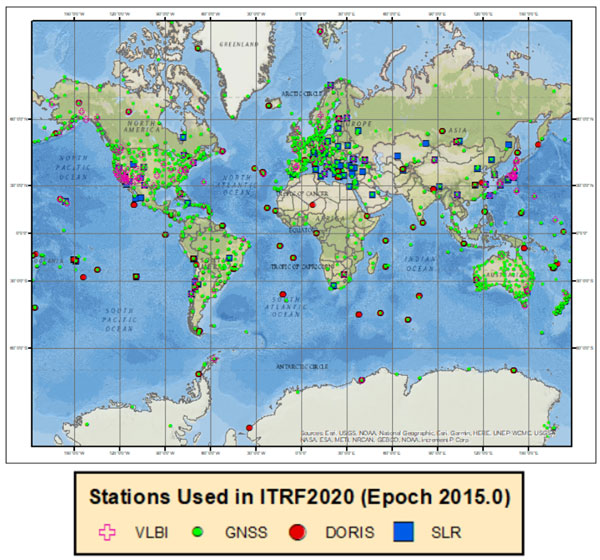
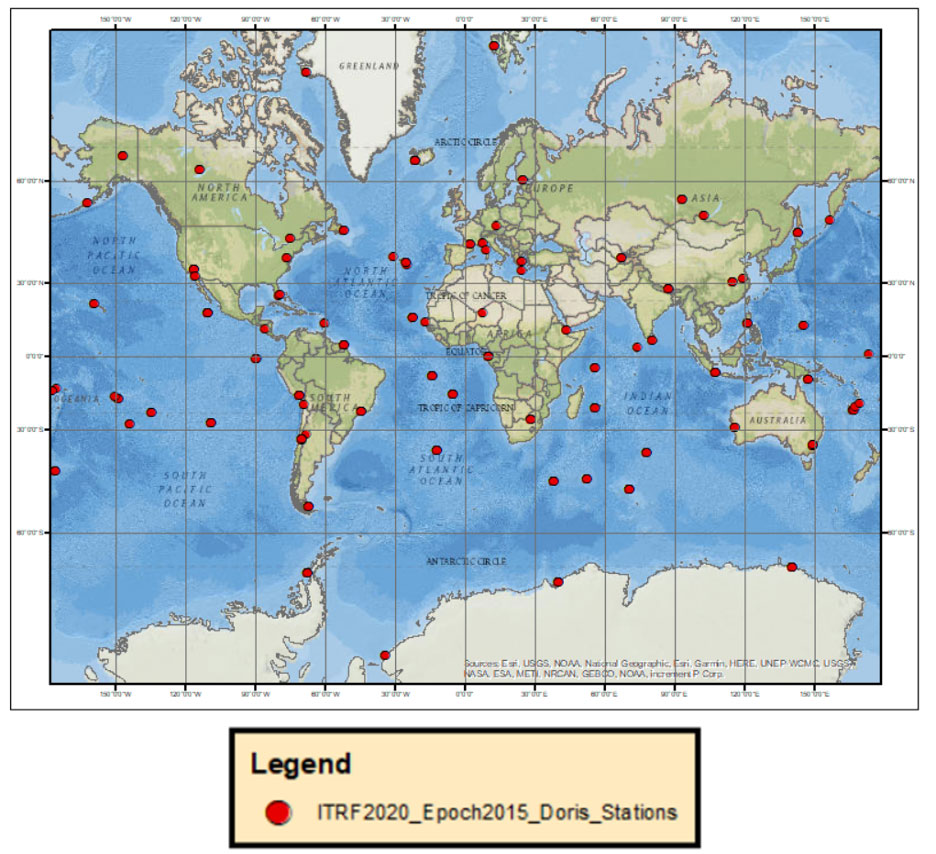
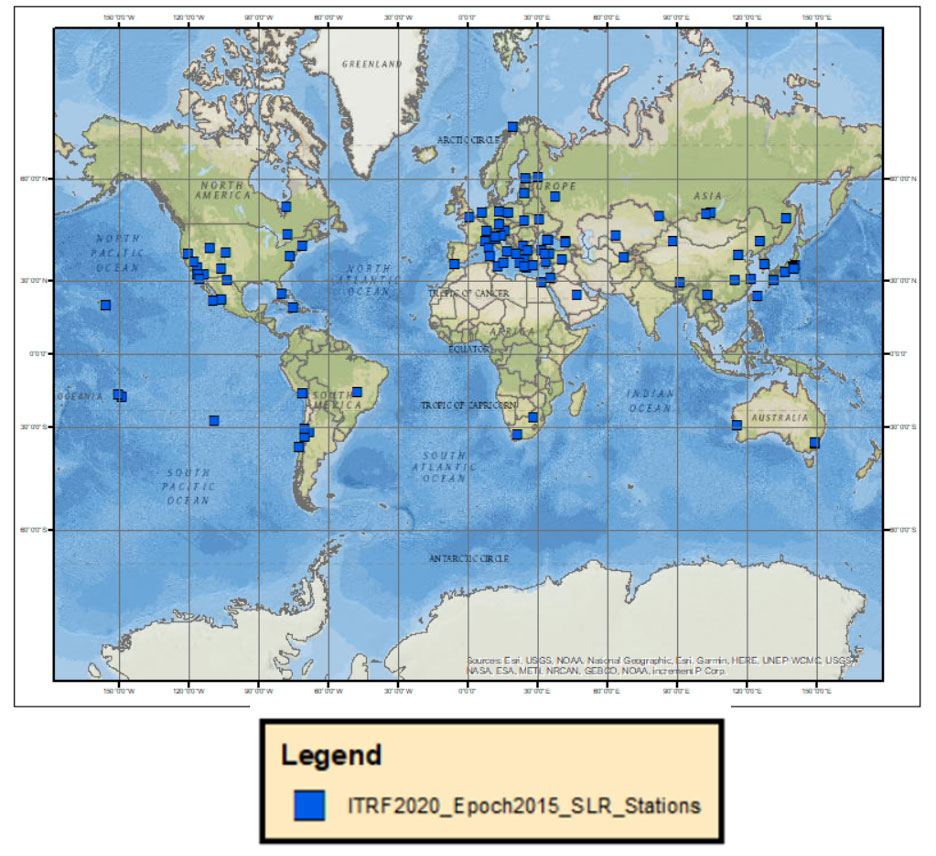
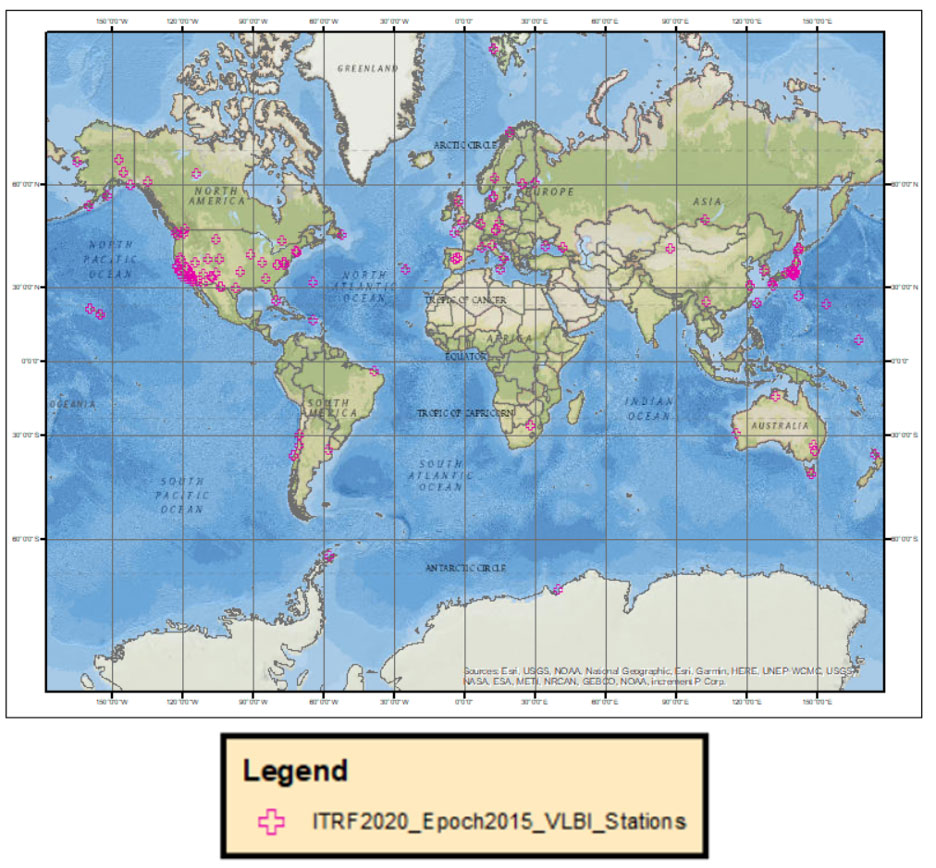
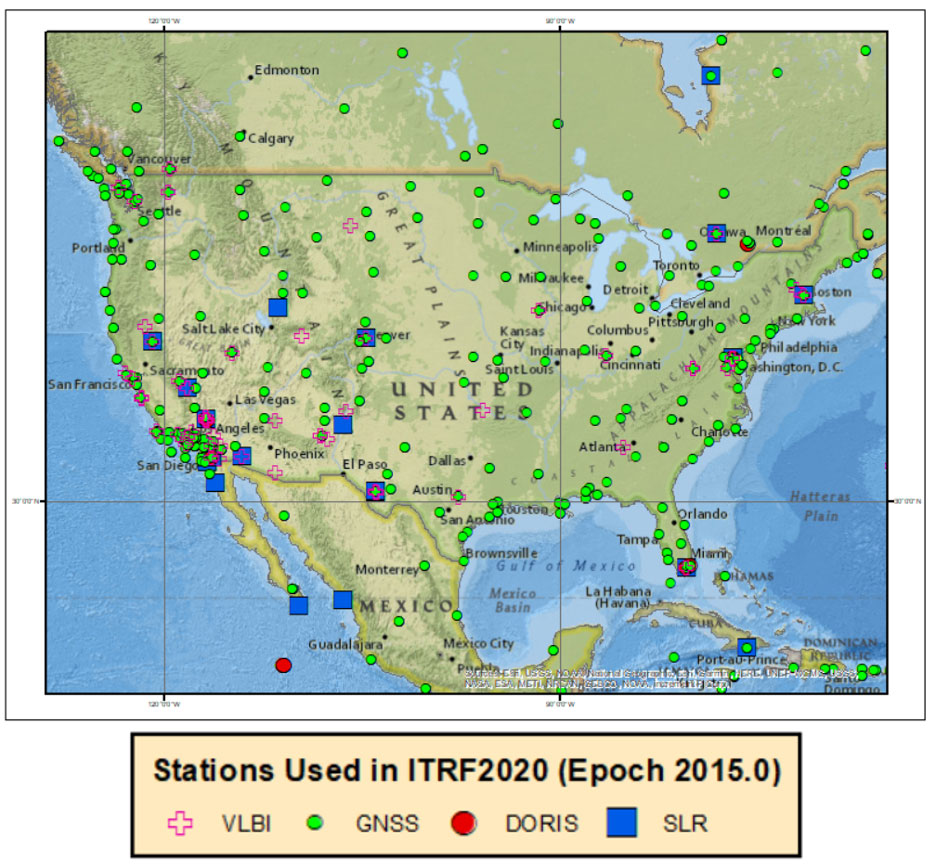
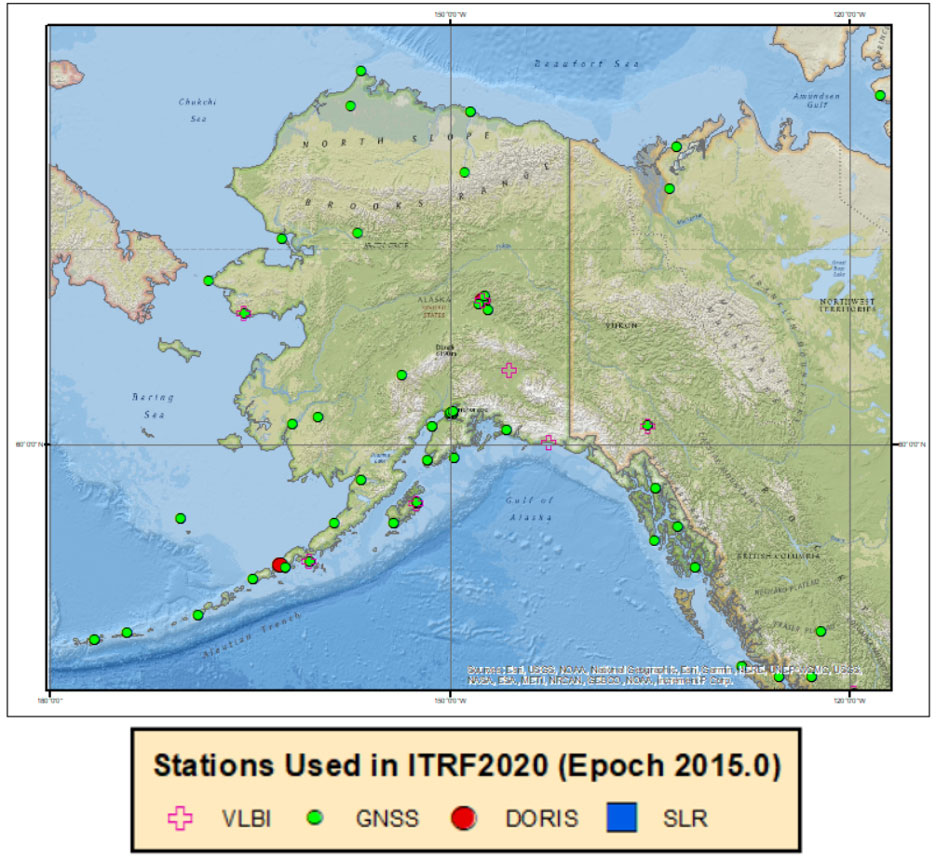
    For this column, I downloaded the station lists from the four space geodetic techniques and provided a few plots that depict the location and velocities of these sites. The box below depicts the location of the space geodetic techniques around the world. As indicated in the plot, some locations have more than one technique collocated at the same site.

    Plot of the Four Different Space Geodetic Techniques

    Image: David Zilkoski
    Image: Dave Zilkoski

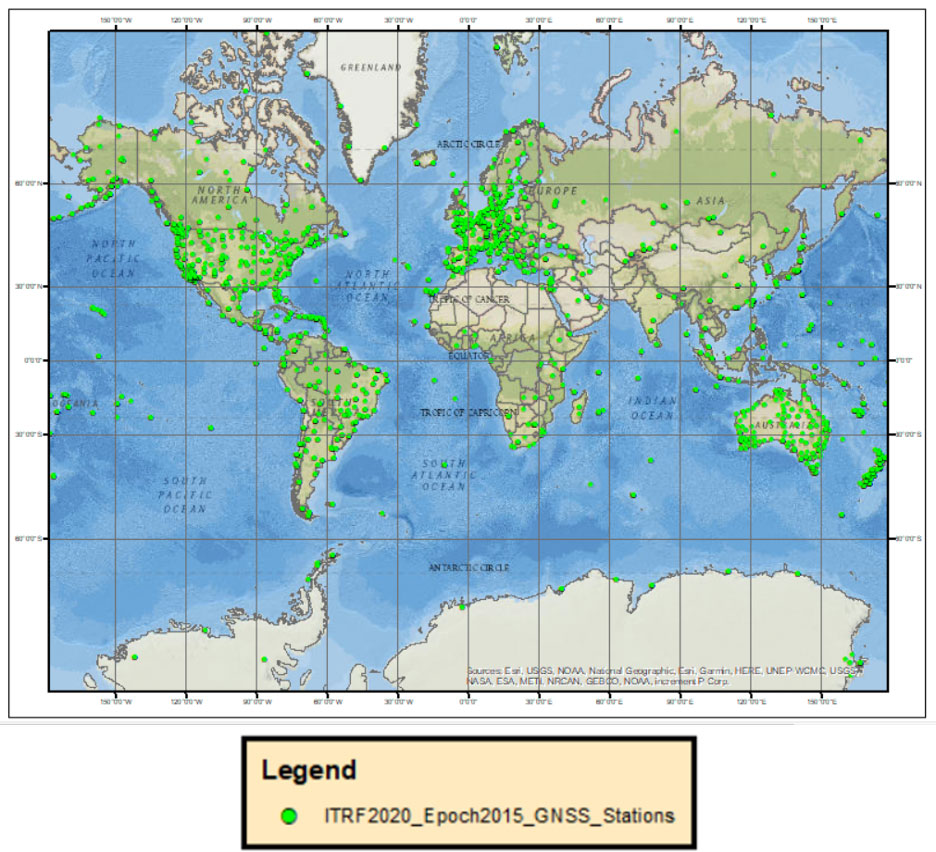
    The following plots depict the locations using each space geodetic techniques: GNSS sites, DORIS sites, SLR sites and VLBI sites.

    Plot of GNSS Sites

    Image: David Zilkoski
    Image: Dave Zilkoski


    Plot of DORIS Sites

    Image: David Zilkoski
    Image: Dave Zilkoski

    Plot of SLR Sites

    Image: Dave Zilkoski
    Image: Dave Zilkoski

    Plot of VLBI Sites

    Image: Dave Zilkoski
    Image: Dave Zilkoski

    The box below shows the location of the techniques in the conterminous United States.

    Plot of the Four Different Space Geodetic Techniques in the CONUS

    Image: Dave Zilkoski
    Image: Dave Zilkoski

    The plot below depicts the sites in the state of Alaska.

    Plot of the Four Different Space Geodetic Techniques in the Alaska

    Image: Dave Zilkoski
    Image: Dave Zilkoski

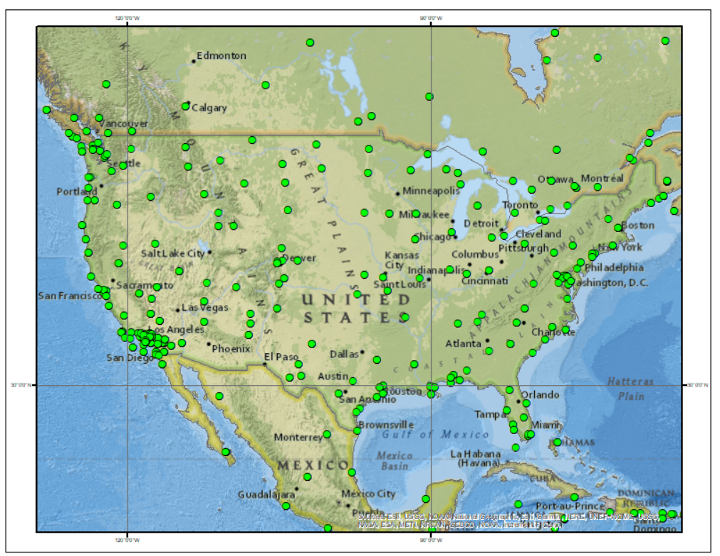
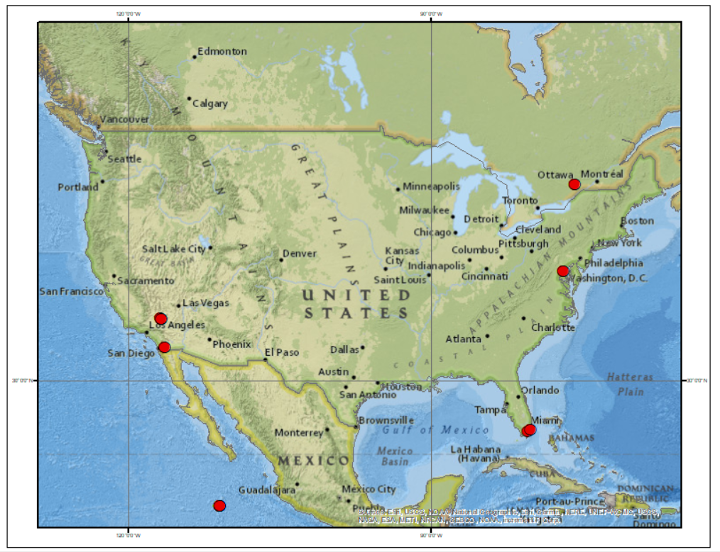
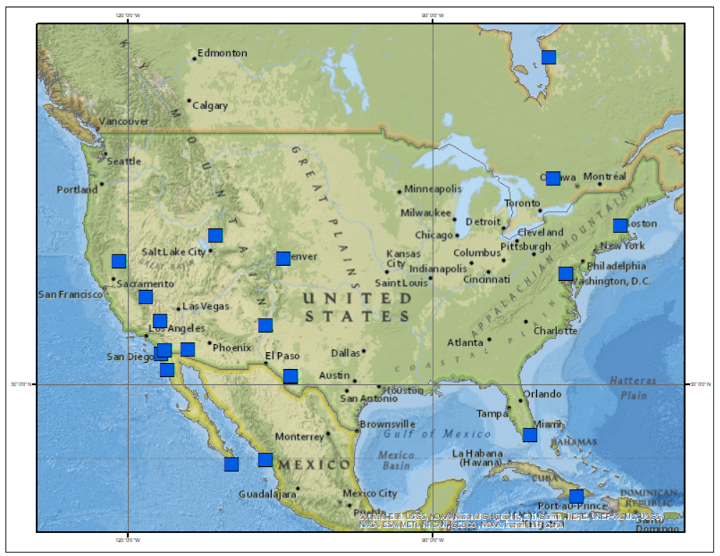
    The images below depict each of the four space geodetic techniques in the conterminous United States.

    Plots of the Space Geodetic Techniques by Technique in the CONUS

    Image: Dave Zilkoski
    Plot of GNSS Sites in CONUS Image: Dave Zilkoski
    Image: Dave Zilkoski
    Plot of DORIS Sites in CONUS (Image: Dave Zilkoski)
    Image: Dave Zilkoski
    Plot of SLR Sites in CONUS (Image: Dave Zilkoski)
    Image: Dave Zilkoski
    Plot of VLBI Sites in CONUS (Image: Dave Zilkoski)

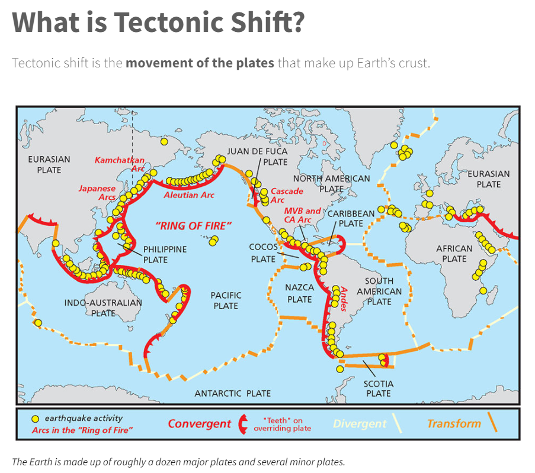
    Altamimi’s article on the ITRF2020 stated it is “necessary to regularly update the ITRF (approximately every 5 years) to account for station position temporal variations due to geophysical phenomena.” My February 2022 column discussed the tectonic plates and why is it necessary to account for movement in a geodetic reference frame. As I stated then, coordinates basically change because the Earth’s surface is moving due to the movement of major tectonic plates. See the box titled “What is Tectonic Shift?” for information about why it is called plate movement or tectonic shift. The world’s geodesists understand this and are attempting to manage the changing coordinates by providing a time-dependent component of the international terrestrial reference frame.

    Image: National Ocean Service Website
    Image: National Ocean Service website
    Image: National Ocean Service Website
    Image: National Ocean Service website

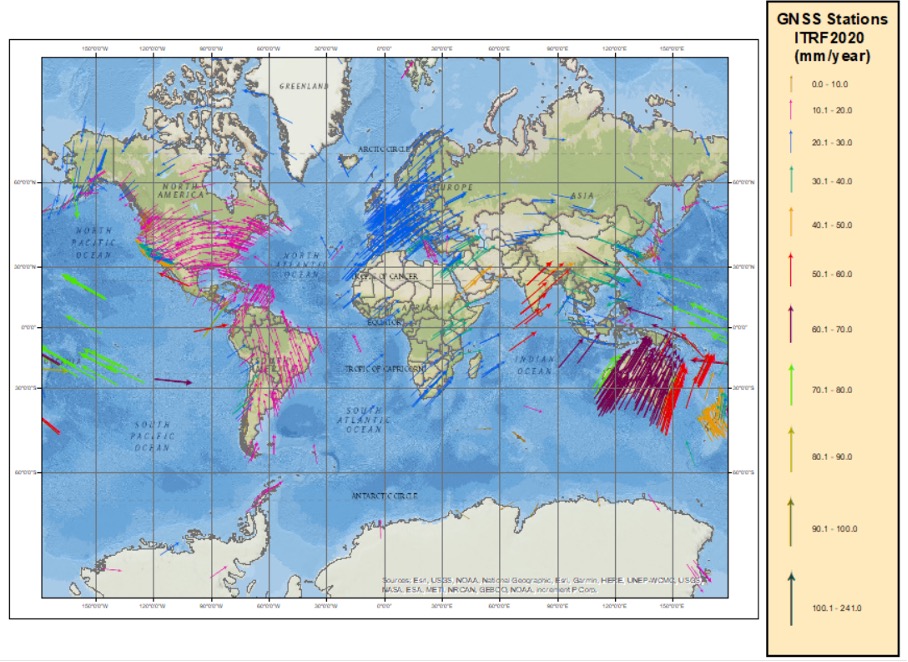
    The box below depicts the horizontal velocity based on the ITRF2020 velocities (downloaded on 08/12/2022).

    Plot of the Horizontal Velocity Vectors based on the ITRF2020 Velocities

    (Image: Dave Zilkoski)
    Image: Dave Zilkoski

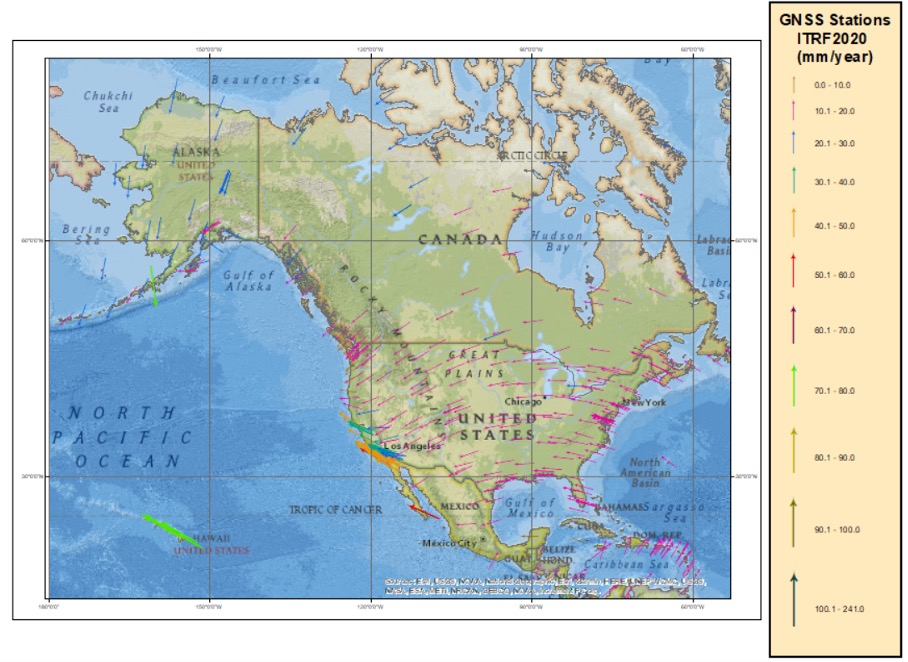
    The box below depicts the horizontal velocities in the North America. These vectors look very similar to the velocities reported in my February 2022 column.

    Plot of the Horizontal Velocity Vectors in North America based on the ITRF2020 Velocities

    Image: Dave Zilkoski
    Image: Dave Zilkoski

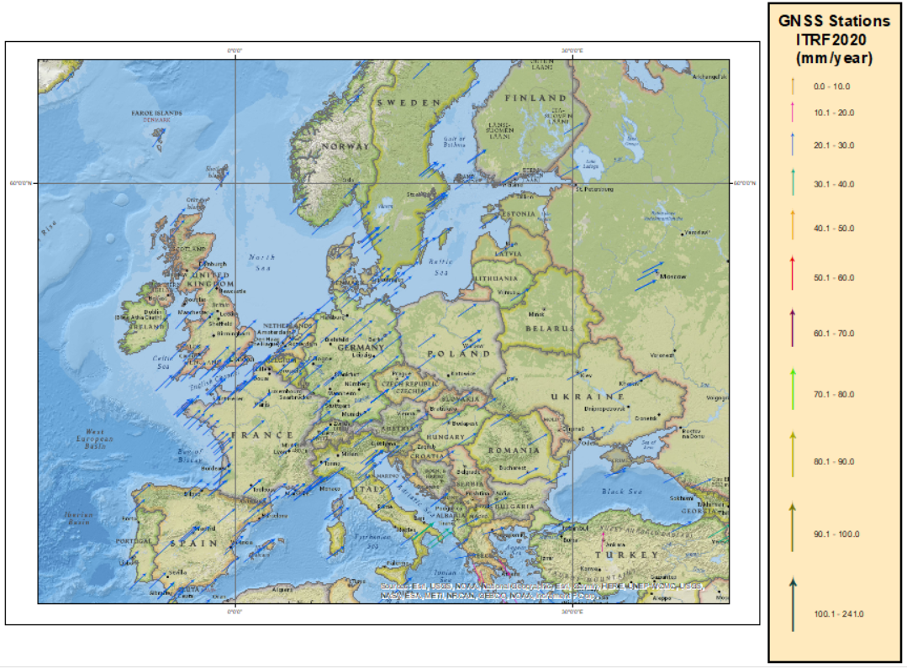
    For a comparison to North America vectors, the box below depicts the velocity vectors in Europe.

    Plot of the Horizontal Velocity Vectors in Europe based on the ITRF2020 Velocities

    Image: Dave Zilkoski
    Image: Dave Zilkoski

    They are similar in magnitude, but not in direction. Once again, looking at the map of tectonic plates, North America is located mostly on the North American plate and Europe is on the Eurasian plate.

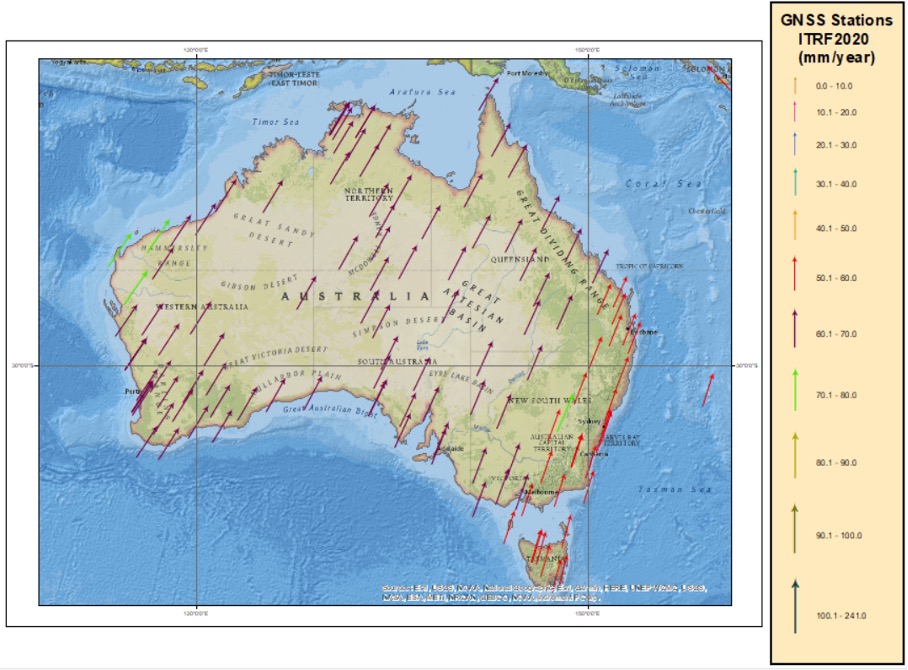
    Australia is on the Indo-Australian plate and has some fairly large horizontal velocities vectors. See the box below.

    Plot of the Horizontal Velocity Vectors in Australia based on the ITRF2020 Velocities

    Image: Dave Zilkoski
    Image: Dave Zilkoski

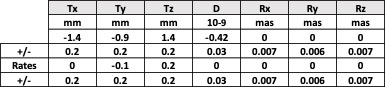
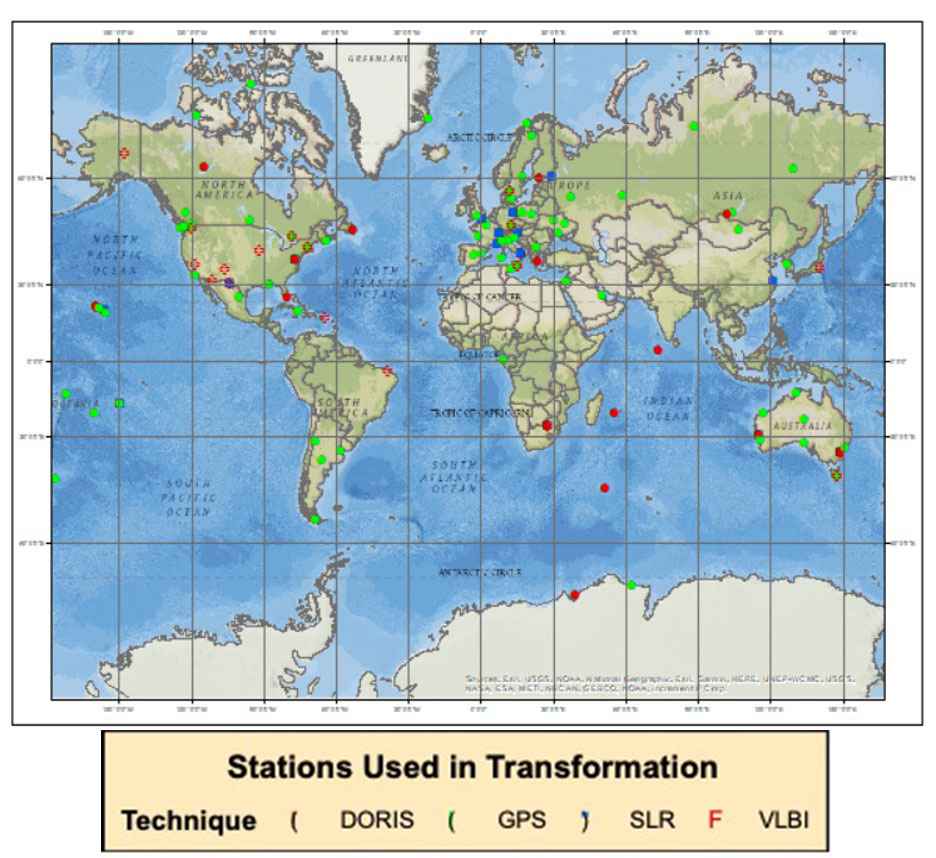
    So, what’s the difference between ITRF2014 and the new ITRF2020? The box below provides the 14 transformation parameters from ITRF2020 to ITRF2014. These transformation parameters have been estimated using 131 stations located at 105 sites. See the box “Plot of the Stations used in the Transformation Parameters from ITRF2020 to ITRF2014” for the location of these stations. Notice that the translation values in X,Y,Z are very small (<1.5 mm) between the two reference frames.

    Transformation Parameters from ITRF2020 to ITRF2014

    (https://itrf.ign.fr/en/solutions/ITRF2020)
    (https://itrf.ign.fr/en/solutions/ITRF2020)

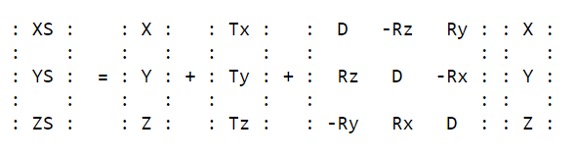
    Transformation parameters at epoch 2015.0 and their rates from ITRF2020 to ITRF2014 (ITRF2014 minus ITRF2020)

    (https://itrf.ign.fr/en/solutions/ITRF2020)
    (https://itrf.ign.fr/docs/solutions/itrf2020/Transfo-ITRF2020_TRFs.txt)

    X,Y,Z are the coordinates in ITRF2020, and XS,YS,ZS are the coordinates in ITRF2014.

    Plot of the Stations used in the Transformation Parameters from ITRF2020 to ITRF2014

    Image: Dave Zilkoski
    Image: Dave Zilkoski

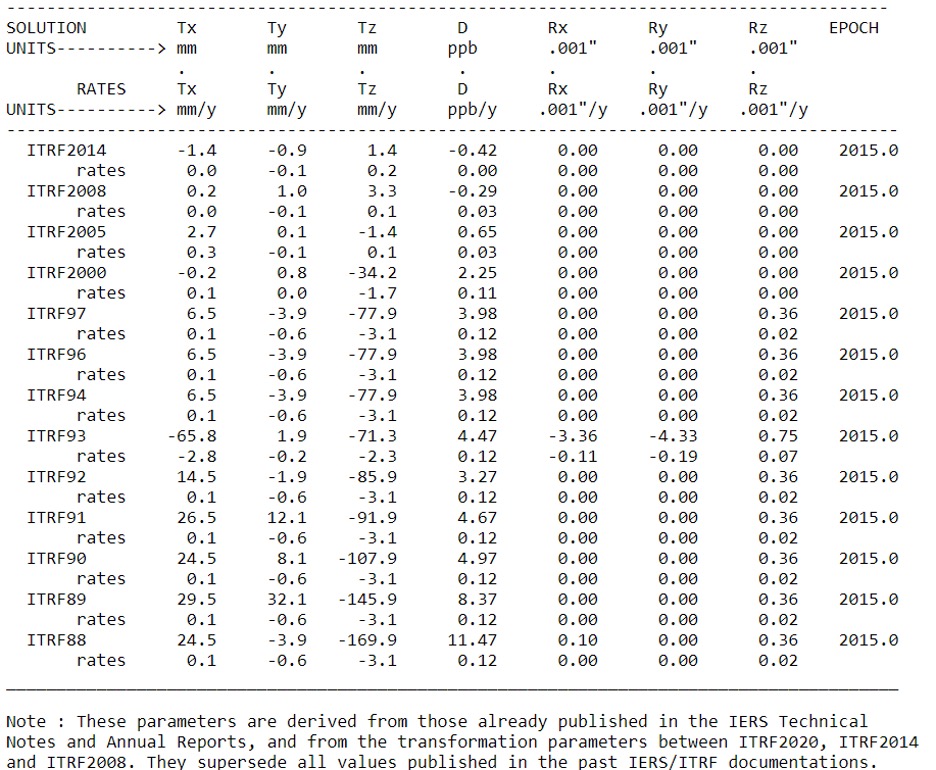
    The transformation parameters from ITRF2020 and past ITRFs are provided in the table below. As indicated in the table, most of the changes in X,Y and Z are very small since ITRF2005.

    Transformation Parameters from ITRF2020 to Past ITRFs

    (https://itrf.ign.fr/docs/solutions/itrf2020/Transfo-ITRF2020_TRFs.txt )
    (https://itrf.ign.fr/docs/solutions/itrf2020/Transfo-ITRF2020_TRFs.txt)

    As previously stated, the third multi-year CORS solution will be important to the new 2022 modernized National Spatial Reference System (NSRS) because NGS will establish a strict mathematical relationship between the 2022 NSRS frames and the ITRF2020 frame. This will allow direct access to the NSRS, according to NOAA Technical Report NOS NGS 67. Again, there will not be any changes to NGS’s NOAA CORS coordinates due to ITRF2020 until NGS completes its third multi-year CORS solution.

    Users can receive emails about the latest NGS News by signing up for NGS’s newsletters. These notices will highlight the release of new products, updates to existing services, progress reports for major projects, information about upcoming NGS-sponsored events, and job opportunities at NGS.

  • Finding your way with broadcast TV

    Finding your way with broadcast TV

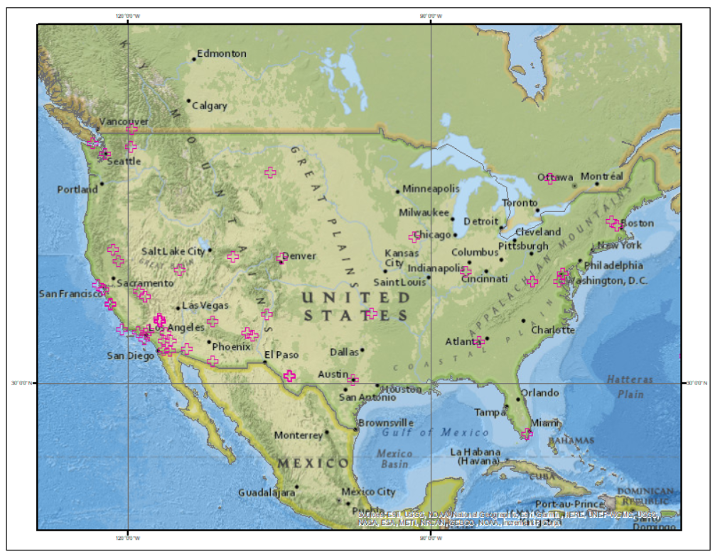
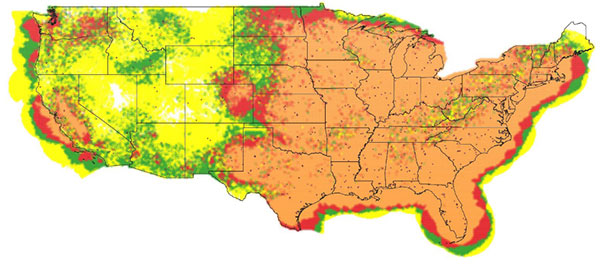
    CONUS full-power UHF TV stations in view: yellow (1—3 stations), green (4—6), red (7—10), orange (11 or more). (Image: NAB)
    Full-power UHF TV stations in view in the continental United States: yellow (1—3 stations), green (4—6), red (7—10), orange (11 or more). (Image: NAB)

    Over the years, we have seen several proposals to use television broadcasts for positioning, navigation, and timing (PNT). This idea was taken one step further in a paper by the staff of the National Association of Broadcasters (NAB). We talked with one of the authors, Robert Weller, NAB’s vice president for spectrum policy, to find out more.

    Goward. Bob, your paper calls the notional system the “Broadcast Positioning System” or “BPS.” What is new about your proposal? And what led you and your colleagues to develop this idea and publish the paper?

    Weller. Television broadcasters are transitioning to a new transmission standard, ATSC 3.0, that plays well with other industry protocols, has more robust operating points, stricter timing requirements, and is much more flexible. There are already more than 50 US markets with a station transmitting ATSC 3.0. Our paper began to analyze PNT in the context of ATSC 3.0 and confirmed that there was a good match. So, the idea of “broadcast positioning” was born.

    Goward. In general, how would BPS work?

    Weller. TV stations transmit from towers at known fixed locations. A TV station can transmit its precise location (geographic coordinates and antenna elevation) along with a time-stamp. For fixed receivers using the timing service, only one TV signal is required. Receivers would know their location a priori and would simply calculate their distance from the TV station and use that distance to determine the corresponding time that it takes for the signal to travel from the TV transmitting antenna. That time difference is then added to the received time-stamp to determine the present time at the receiver.

    Both fixed and mobile users could access positioning and timing services when at least three TV stations are within range.

    Goward. GPS and other GNSS are ubiquitous. What advantages do you see BPS having over space-based navigation systems?

    Weller. BPS is not intended to replace GPS. BPS can provide an independent timing and/or position determination, which can provide confidence and help detect spoofing or other problems with GPS. BPS also has the advantage of high power and strong signal levels. Most UHF television stations radiate 1 megawatt of power, which does a good job penetrating buildings and is difficult to jam or spoof.

    Goward. There have been many proposals for terrestrial systems to complement GPS. In general, what advantages would implementing BPS have over other non-space approaches?

    Weller. There are several advantages. The cost to deploy will be less since the broadcast infrastructure is already in place. Also, because of our high power, the number of nodes necessary is fairly small. I’ll add that TV stations are built to operate 24/7, so most of them are fairly “hard” with back-up power and redundant transmitters. Additionally, the modulation and coding we propose for BPS is intended to provide service well above the noise floor, making it quite robust. Finally, low-cost receivers that are used in televisions can be used to decode the BPS information.

    Goward. Your paper says that using the television stations we have today, geographically about 85% of the contiguous United States by land area would be able to get PNT services from BPS. The number is 99% for just timing services. Do you have any thoughts about those not in range for services?

    Weller. Those percentages were intended to be conservative and only considered full-power UHF TV stations. There are also hundreds of VHF stations and thousands of low-power TV stations. If you include those stations, the coverage percentages are even higher. It’s certainly possible to add more stations if needed to reach the most remote and unpopulated parts of the United States.

    Goward. What about user equipment? Have you done any work in that area? How small do you think receivers could be eventually?

    Weller. There are compact GPS and Loran receivers out there, and the technology for BPS isn’t much different. Some Korean companies have already built very small ATSC 3.0 receivers to carry RTK corrections to GPS for use in drones. There are also already ATSC 3.0 USB receivers that weigh less than an ounce.

    Goward. Are there other services that BPS could provide?

    Weller. BPS can be one element of a PNT system-of-systems that also improves other PNT services. In my opinion, the most valuable service BPS can provide is an alternative reference for critical infrastructure if GPS is compromised. However, BPS would occupy a tiny fraction of ATSC 3.0 signal capacity. So, there could be additional services such as transmitting ephemeris data for expedited GPS acquisition, RTK data for improved PNT accuracy, or even map information.

    Goward. Have you thought about what you would be using as a time source?

    Weller. Most TV stations already have GPS, but since the point of BPS is to provide redundancy and resilience to GPS, we’re looking at cesium clocks, optical fiber, and eLoran as possibilities.

    Goward. NAB is a trade association. How do you see this project benefiting your members?

    Weller. This project affirms the public service mission of broadcasters as well as our designation as critical infrastructure. If broadcasters are compensated for the equipment and resources required for deploying and operating BPS as a public service, I expect high participation and user adoption.

    Goward. Where do you think you and your colleagues will take the project from here?

    Weller. We’re working with possible users to determine their requirements while also trying to identify funding sources to enable the development. We hope to build prototypes and launch market trials as next steps towards commercialization.

  • Continuous evolution: What is new with GNSS receivers?

    Continuous evolution: What is new with GNSS receivers?

    GNSS receivers face the same old challenges (extremely weak received signal, orbit and satellite clock errors, ionospheric and tropospheric delays, multipath, dilution of precision, urban canyons, etc.) and new ones (increased interference). However, compared with just a few years ago, they benefit from new signals, many more satellites, a panoply of options for corrections, and improved integration with inertial navigation systems (INS).

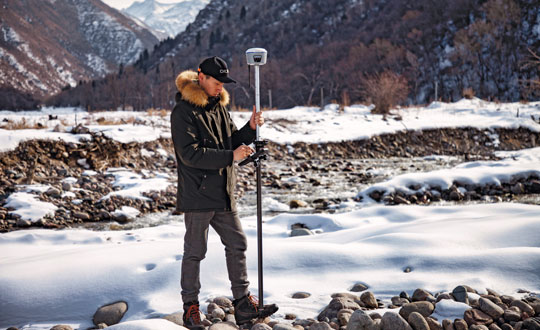
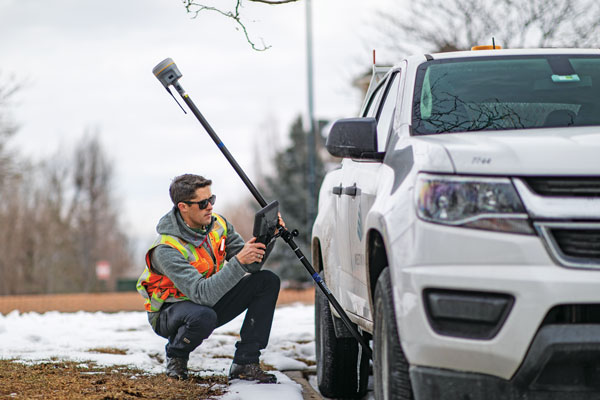
    For example, pole-tilt compensation is quickly becoming standard. This feature enables users to locate dangerous or hard-to-reach points by measuring them at an angle with just the tip of the pole to which the receiver is attached.

    Pole-tilt compensation also makes surveying and mapping easier by removing, in many situations, the need to use total stations or offsets. Together with improvements in work processes, this makes GNSS receivers more user friendly. This is particularly welcome now that more surveyors are retiring than there are new surveyors entering the profession.

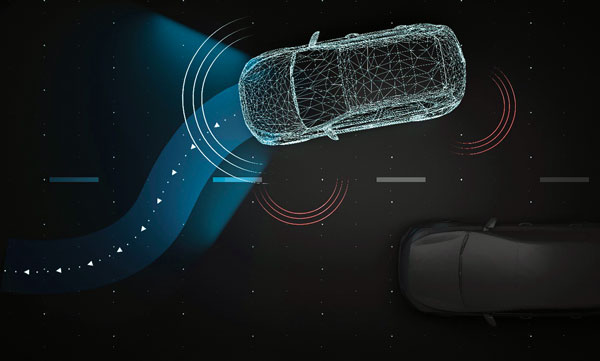
    The greater accuracy of GNSS receivers enabled by the increase in the number and quality of satellites, signals, corrections services and integration of GNSS with other sensors is also increasing the number of use cases, especially at the high end of the accuracy requirements, such as lane-level vehicle navigation. (Next month’s cover story will center on this year’s Google Smartphone Decimeter Challenge contest, in which competing teams aim to bring smartphone location down to the decimeter or even centimeter resolution using raw location measurements from Android smartphones. This could enable services that require lane-level accuracy, such as estimated time of arrival when using a high-occupancy vehicle lane.)

    This month’s cover story highlights what has changed “inside the box” to improve the accuracy and resilience of GNSS receivers for surveying, mapping and a variety of other applications. Read the success stories from five different companies below.

    Swift Navigation: Driving safety for consumers

    CHC Navigation: Making receivers user-friendly

    Trimble: Positioning engine optimized for fusion

    u-blox: Disruption leads to wide adoption

    Septentrio’s Stellar 2022

    Testing positioning algorithms with Kaggle

    Photo: CHC Navigation
    Photo: CHC Navigation
  • Septentrio’s Stellar 2022

    Septentrio’s Stellar 2022

    Receiver maker Septentrio, based in Leuven, Belgium, has made a series of announcements this year that push the industry forward, from updating existing receivers to accepting new services to launching new product lines.

    Head of the CLAS

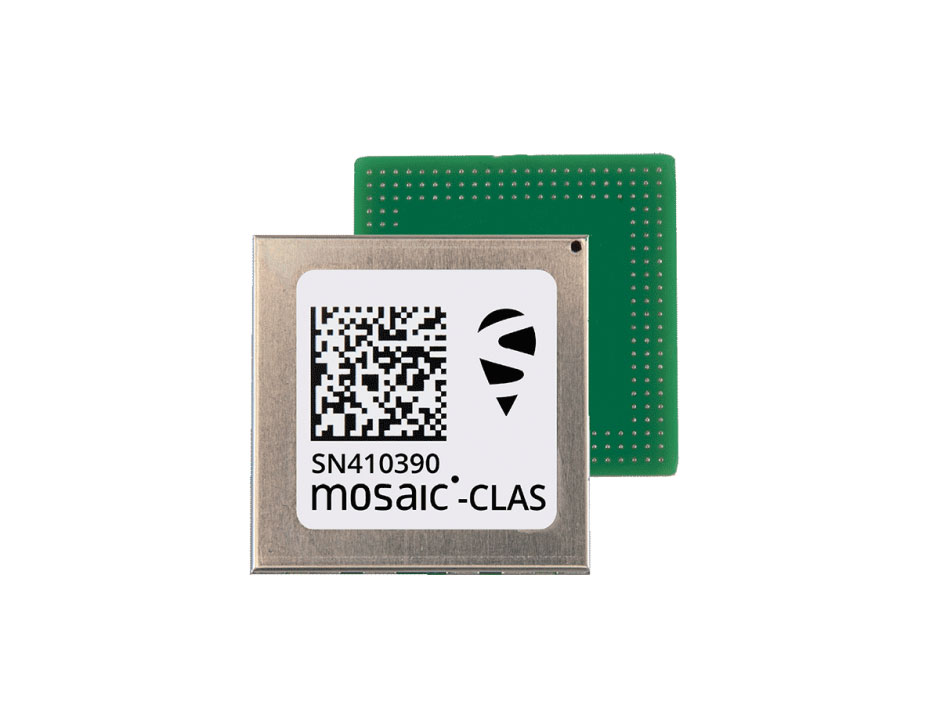
    In March, the company launched three new products that support Japan’s high-accuracy Centimeter Level Augmentation Service (CLAS). CLAS, which receives the L6 signal, transmits high-accuracy corrections from Japan’s QZSS constellation. The technology was developed in close cooperation with CORE, a leading integrator of high-accuracy positioning technology and services in Japan.

    Photo: Septentrio
    Photo: Septentrio

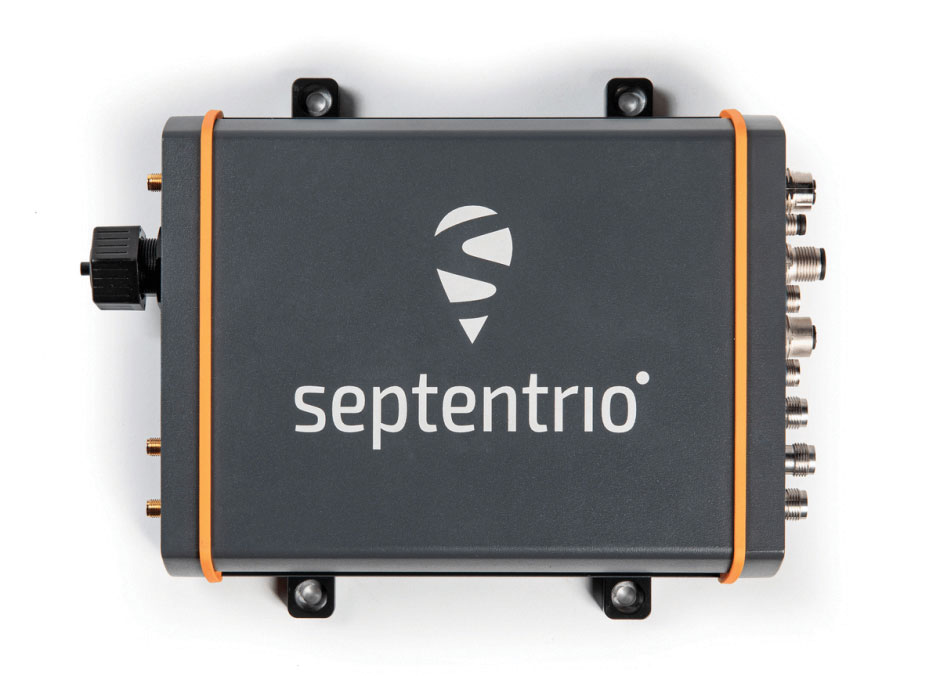
    Septentrio now offers the mosaic-CLAS receiver for high-volume industrial applications; the AsteRx-m3 CLAS that combines PPP-RTK CLAS with dual-antenna heading functionality; and the AsteRx SB3 CLAS in a ruggedized IP68 enclosure to protect it in harsh environments.

    Septentrio is simultaneously offering various receiver types to the Japanese market ensuring an optimal match between products and customer needs in various applications including robotics, precision agriculture, construction, machine control and UAV.

    Stopping the Spoofs

    Following the CLAS upgrade, the mosaic line received another boost in April, when Septentrio announced Open Service Navigation Message Authentication (OSNMA) functionality. OSNMA offers end-to-end authentication on Galileo’s civilian signals, protecting receivers from OSNMA attacks.

    For the past two years, Septentrio has been working closely with the European Space Agency (ESA) during the test phases of OSNMA deployment. The know-how gained during this period allowed Septentrio to be one of the first to market with this advanced security feature.

    OSNMA’s anti-spoofing capability complements Septentrio’s Advanced Interference Mitigation (AIM+) technology and further strengthens the overall security of Septentrio GNSS receivers, making them suitable for assured PNT solutions as well as critical infrastructure, such as 5G network synchronization.

    Vertical Markets

    Machine Control. In April, Septentrio launched the AsteRx-U3 ruggedized GNSS receiver, successor to the AsteRx-U for construction, mining and other machine control applications. The new receiver combines Septentrio’s latest triple-band precise positioning GNSS core with extended wireless communication features including Wi-Fi, UHF and 4G LTE. The versatile connectivity features of this receiver make it easy to fit it into any control system and enable simple and cost-effective overall design.

    Photo: Septentrio
    Photo: Septentrio

    Unmanned Aerial Vehicles (UAVs). Also in April, Septentrio is collaborating with MicroPilot, maker of professional UAV autopilots. Septentrio receivers, including the small form factor mosaic modules, as well as the OEM board AsteRx-m3, will support seamless integration of positioning and orientation into MicroPilot’s autopilot ecosystem. MicroPilot chose Septentrio GNSS receivers for their resilience to radio interference such as jamming and spoofing, as well as security and robustness with high-accuracy real-time kinematic (RTK) positioning.

    Marine. In May, Septentrio introduced the housed AsteRx-U3 Marine and the OEM board AsteRx-m3 Fg, two receivers for dredging, marine construction and offshore applications. Both offer accurate positioning near shore and offshore via centimeter-level real-time kinematic (RTK) or the built-in Fugro precise point positioning (PPP) sub-decimeter subscription service, delivered either over NTRIP internet or over L-band satellite.

    Corrections delivered over L-band allow dredging, bathymetry or marine construction projects even in areas where there is no internet service. The AsteRx-U3 Marine receiver, enclosed in an IP68-rated housing, offers a dedicated L-band demodulator with a separate L-band RF input, which allows for the use of dedicated antennas for excellent reception of L-band signals even at high latitudes.

  • u-blox: Disruption leads to wide adoption

    u-blox: Disruption leads to wide adoption

    An interview with Markus Uster, head of product center positioning at u-blox about recent GNSS receiver innovations.


    Uster
    Uster

    What was the most significant technical innovation in your GNSS receivers in the past five years?

    The u-blox F9, launched in 2018, is our robust and versatile high-precision positioning technology platform. It was the first receiver to enable multi-band high-precision positioning solutions for mass-market industrial and automotive applications — and remains the benchmark for the industry today.

    The platform combines multi-constellation (continuous reception of four satellite constellations) GNSS technology with dead reckoning and high-precision algorithms. It is also compatible with a variety of GNSS correction data services to achieve positioning accuracy down to the centimeter level.

    The u-blox F9 platform is leading the next generation of high-precision navigation with its augmented reality, unmanned vehicles and various machine automation applications. It has since been integrated into a selection of modules catering to a wide range of applications.

    What has it enabled users to do that they could not do before?

    The u-blox F9 is a widely adopted multi-band GNSS platform for automotive and industrial applications. (Photo: u-blox)
    The u-blox F9 is a widely adopted multi-band GNSS platform for automotive and industrial applications. (Photo: u-blox)

    In a nutshell, the u-blox F9 brought high-precision positioning to the mass market. The demand for scalable high-precision technology is growing rapidly, as evident in the automotive world with next-generation advanced driver-assistance systems (ADAS) and in robotics with applications such as UAVs and robotic lawnmowers. However, due to the complexity, size, power and cost restrictions of existing high-precision solutions, until now it has been difficult to meet the demands of these markets.

    u-blox developed the u-blox F9 platform by building on the success of our NEO-M8P high-precision GNSS module series and drawing on our extensive experience in GNSS positioning technologies, including dead reckoning, multi-band, real-time kinematic (RTK) and GNSS correction services. The platform delivers the next level of scalable GNSS high-precision technology and shows how u-blox is consistently addressing challenges and driving the GNSS technology evolution.

    What is a good example of this?

    Integration of the u-blox F9 platform into various applications has proven quite successful in a diverse range of use cases. In the industrial realm, u-blox F9 technology enables mass adoption of commercial unmanned vehicle applications. One example is precision agriculture, where high-precision positioning cost-effectively enables vehicle guidance solutions to improve pass-to-pass accuracy resulting in improved crop yield and reduced consumption of pesticides, fertilizer and seeds. The u-blox F9 modules also paved the way for autonomous driving, including lane-level navigation for heads-up displays and vehicular infotainment systems, a prerequisite for highly automated and fully autonomous vehicles.

  • Trimble: Positioning engine optimized for fusion

    Trimble: Positioning engine optimized for fusion

    An interview with Chris Trevillian, director of product management, geospatial GNSS at Trimble about recent GNSS receiver innovations.


    Trevillian
    Trevillian

    What was the most significant technical innovation in your GNSS receivers in the past five years?

    In 2019, Trimble broke ground with Trimble ProPoint, the fifth generation high-precision positioning engine, engineered to provide position and orientation data from the fusion of GNSS signals, globally accessible high-accuracy correction services, and measurement data from a variety of sensors.

    When Trimble launched ProPoint signal processing with the Trimble R12 GNSS receiver, head-to-head testing with the Trimble R10-2 in challenging GNSS environments (near canopy and built environment) showed the R12 performed 30% better across a variety of factors, including time to achieve survey precision levels, position accuracy and measurement reliability.

    In September 2020, Trimble announced the Trimble R12i GNSS receiver. It incorporates tilt compensation based on an IMU using Trimble TIP technology, which enables points to be measured or staked out while the survey rod is tilted. This empowers land surveyors to focus on the job at hand and complete work faster and more accurately.

    What has it enabled users to do that they could not do before?

    Tilt-pole compensation enables measurements otherwise dangerous, difficult or impossible. Photo: Trimble
    Tilt-pole compensation enables measurements otherwise dangerous, difficult or impossible. Photo: Trimble

    ProPoint provides new levels of reliability and productivity. In addition, the ProPoint engine is a key enabler of the new TIP technology.

    The combination of ProPoint and TIP in the Trimble R12i allows users to accurately mark and measure points in areas previously inaccessible for GNSS rovers, such as building corners, or hazardous situations, such as the edge of an open excavation. The R12i also features real-time automatic inertial navigation system (INS) integrity monitoring. This system allows users to detect and correct for IMU biases introduced by use over time, temperature or physical shocks, helping ensure measurement quality and integrity for the life of the receiver. The combination of ProPoint and TIP technology improves accuracy, increases availability, provides better integrity and enhances constellation support.

    Available on Trimble products utilizing Maxwell 7 technology, ProPoint leverages the latest developments in GNSS signal infrastructure and Trimble’s high-precision receiver hardware to deliver improved positioning performance in challenging environments. It also contains dynamic models of specific application movements, allowing it to filter out unexpected dynamic movements for improved accuracy.

    What is a good example of this?

    Benchmark Surveys, a small firm in Southwest England, wanted to test the R12i’s capabilities on a narrow road between an industrial park and Exeter Airport lined with high hedges, thick tangled foliage and large trees. The road-widening project, which required surveying 10 meters on either side of the road, would have been a challenge for any combination of surveying equipment. James Richards, Land, Utility and Measured Building Surveyor with Benchmark Surveys, told us the R12i was able to fix and gather points “in places not accessible by other GNSS kits we’ve used.” He said, “With the tilt compensation, we could reach under the edge of hedges and shrubs, up against buildings and walls, and safely out into the road.”

  • New UAV uses: Flying air taxis and detecting landmines

    New UAV uses: Flying air taxis and detecting landmines

    Funding continues to flow into companies developing and testing electric vertical-takeoff-and-landing (eVTOL) drones — both piloted and unpiloted. Plus, the potential for clearing landmines using drones is being investigated by a team at Oklahoma State University.

    Air taxis advance with funding

    In early September, United Airlines committed to a $15 million investment in Eve Air Mobility, giving the air taxi industry another shot in the arm. The deal includes a conditional purchase of 200 and an additional 200 in options for Eve’s semi-autonomous four-passenger eVTOL aircraft. The investment is one of United’s efforts toward its goal of net zero carbon emissions by 2050.

    Eve Air Mobility is partnered with Embraer, the Brazilian aircraft manufacturer guiding Eve’s path to first eVTOL aircraft certification under the National Civil Aviation Agency of Brazil (ANAC). Subsequent approval by the U.S. Federal Aviation Administration (FAA) and the European Union Aviation Safety Agency (EASA) would then be based on the Brazilian ANAC certification program, following in the path of U.S. and European approvals of the Embraer EMB/ERJ series of passenger aircraft.

    The Eve eVTOL air taxi. (Image: Eve Air Mobility)
    The Eve eVTOL air taxi. (Image: Eve Air Mobility)

    Eve and parent Embraer also have announced a deal with BAE Systems to design an eVTOL aircraft for military and security applications. The technical details of the UAV/aircraft have been kept carefully under wraps, save for the visible use of eight lift rotors and two ducted fans for forward flight. Flight management computers, guidance, air-data, altitude sensors and high-integrity communications would likely be included in the avionics suite.

    Meanwhile, United’s prior investment in Archer Aviation and its Maker eVTOL appears to be supporting the Maker’s progress along the road to civil certification. Maker flight tests so far have apparently been limited to vertical flight; its multiple lift and tilt-rotor design has yet to be tested in transition to forward flight.

    The Maker eVTOL air taxi. (Image: Archer Aviation)
    The Maker eVTOL air taxi. (Image: Archer Aviation)

    Nevertheless, more information appears to be available on the configuration of the Maker eVTOL.  The company’s approach is to demonstrate early on that safety is a major driver for the design, with significant redundancy in the vehicle’s systems. The Maker has four flight-control computers, plus redundant control and navigation with inertial navigation, GNSS and above-ground-level (AGL) sensors, both radar and laser altimeters. Redundant communication links between sensors, flight-control computers and actuators combine to provide another level of design safety. The vehicle has six lift rotors at the back of the wing, plus an additional six main tilt-rotor lift and thrust rotors — another significant contribution to redundancy.

    In January 2021, Archer said that United Airlines ordered 200 Maker aircraft for $1 billion with an option for more aircraft worth $500 million. Archer also just got another healthy financial injection in August with United’s pre-delivery commitment of $10 million for 100 Maker-type aircraft.

    There are numerous eVTOL builders around the world. Several of note include Boeing/Wisk (U.S. and New Zealand), Joby (U.S.), Vertical Aerospace (UK), Ehang (China), Airbus (France), Lilium and Velocopter (both Germany) and Beta (U.S.).


    Drones help detect landmines

    Its difficult to imagine the extent of the problem, but there are many, many areas of the world where landmines are a major hazard to civilian life. Eventually, wars move on or die out, with not only towns and infrastructure destroyed, but significant left-over hazards to reclaiming territory once occupied by the aggressors.

    Landmines come in many flavors, but most are deadly and most kill or maim innocent people coming across them. Unexploded bombs, mortar shells and the like also can kill and hurt people, especially children. Apparently, 50 to 60 countries around the world have areas where landmines or unexploded ordnance pose a threat to civilians.

    The good news is that several organizations around the world have been using drones to survey areas suspected of being mined. The organizations send drones equipped with magnetic detection sensors a few inches above the ground. The drones geotag mine locations, and those locations go into an area database. Then another drone is sent to drop a detonator on the mine location, with the mine later exploded from a distance.

    An investigative team at Oklahoma State University is making an effort to train a drone-based machine-learning system to recognize various types of landmines and explosive ordinance. While the system isn’t aimed at detecting mines without human participation, it’s expected that drone recognition of mines could greatly improve current efforts to remove landmines, and quicken the pace at which the world can get rid of this plague of hidden explosives.

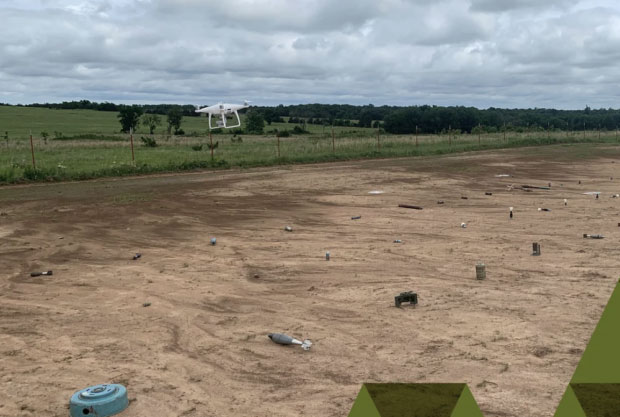
    A drone flies over a grid showing 50 types of ordinance. (Photo: Oklahoma State University)
    A drone flies over a grid showing 50 types of ordinance. (Photo: Oklahoma State University)

    The research team is working in an area they have set up with inert mines of many types to train the drones to recognize the specific type of device and geotag the location. This isn’t artificial intelligence as such; it’s using drones to find an object and geotag it, while the network to which the drone is connected recognizes from the sensor data what type of mine the drone has found.

    In the research phase, the team is feeding data into the network on lots of different types of mines and munitions,  providing the network with a model for each type of ordinance and eventually enabling device recognition in the field.

    _________________________________________________________________________

    To sum up, the rush for air taxis to become a ubiquitous resource for city travel still wends its way through the civilian twists and turns leading to civilian certification for use, with many outfits working hard to build flying testbeds and investors funding their efforts.

    Finding novel drone-assisted ways to clear the millions of landmines left over in wartorn countries is becoming a higher priority — notwithstanding Princess Diana’s efforts to draw attention to the suffering and death from landmines several decades ago. Let’s hope this goes somewhere soon.

    Tony Murfin
    GNSS Aerospace

  • Opinion: FCC must protect the environment and assign Ligado different frequencies

    Opinion: FCC must protect the environment and assign Ligado different frequencies

    Precautionary principle: The principle that the introduction of a new product or process whose ultimate effects are disputed or unknown should be resisted.” — Oxford Languages

    Photo: U.S. Fish and Wildlife Service
    Photo: U.S. Fish and Wildlife Service

    The Arctic National Wildlife Refuge spans almost 20 million acres. It is home to a vast array of wildlife from tiny pollinating flies to giant grizzly and polar bears.

    It also has oil. Lots of oil.

    Getting that oil out of the ground and to market would create jobs and benefit commerce. It would also harm the environment. Some wildlife would suffer.

    Many argue the long-term harms of drilling outweigh the short-term benefits. The Biden administration agrees and has banned drilling to protect the refuge’s environment and wildlife.

    The administration has taken a similarly conservative approach to preserving the spectrum environment for satellites.

    Like the previous administration, it has urged the Federal Communications Commission (FCC) to not allow Ligado Networks’ use of frequencies adjacent to spectrum assigned to GPS and Iridium Communications. The concern is that Ligado’s more powerful transmissions will harm some existing users.

    A recent report by the National Academies of Sciences, Engineering and Medicine validated that concern. As is the case with many complex environmental issues, the total number of impacted individuals, and the total negative impact to the nation, are unknown. They may be unknowable.

    As an independent agency, the FCC gets recommendations from, but does not report to, the administration. To date it has not been swayed by formal appeals from the executive branch, nor by those from numerous industry and non-profit groups, to rescind its decision allowing Ligado to operate.

    Like other agencies making environmental decisions, the commission should use the “precautionary principle” when thinking about new uses and users. It is a well-recognized and systematic method of linking science and public policy.

    More than “better safe than sorry,” the precautionary principle has four major tenets:

    • increasing public participation in decision making
    • shifting the burden of proof to the proponents of an activity
    • taking preventive action in the face of uncertainty
    • exploring a wide range of alternatives to possibly harmful actions.

    The first three of these were part of the FCC’s process in its Ligado decision, though critics of the outcome might question how rigorously each was applied:

    • Hundreds of public comments were received before the order was issued.
      • Critics note that opposition to the FCC’s eventual course of action was expressed by stakeholders across a very a broad spectrum of society.
    • The applicant, Ligado, was required to bear the burden of proof.
      • However, as the National Academies report says, different assumptions in Ligado’s analysis led it to an entirely different conclusion from studies done by the Department of Transportation.
    • The FCC order allowing Ligado to operate includes “preventative actions.”
      • Yet many see these preventative measures as unworkable window dressing. In the staid and reserved phrasing of the National Academies report, they “may in some cases not be practicable within operationally relevant time and financial parameters.”

    Regardless of the virtues or sins of its process to date, the FCC’s path forward must hinge on the final tenant of the precautionary principle: “Exploring a wide range of alternatives in the face of uncertainty.”

    The most obvious, simplest, and straightforward of these alternatives is for the FCC to assign Ligado different frequencies, ones more distant from those used by space-based applications.

    Admittedly, this path is only “simple and straightforward” in concept. It will require restarting the frequency allocation process nearly from the beginning, detailed analyses, complex negotiations, and difficult decisions.

    Yet the current situation means certain harm to an unknown but significant number of GPS and Iridium users. Harm that could, in some instances, be severe. Even life-threatening.

    It also means harm for Ligado. As things stand now, the company will always be under a cloud in the minds of federal officials and other GPS and Iridium users. Ligado will also undoubtedly be blamed for a variety of problems not of its doing from solar weather to criminal jamming. And a significant mishap related to company-caused interference could cause it extreme harm. Perhaps even bringing about Ligado’s demise.

    The radio frequency spectrum is a limited and critical national resource. The FCC’s desire to use it to best advantage is necessary and appropriate. This, however, requires great care to safeguard the overall environment and existing users.

    Resolving the “Ligado issue” will require creativity and a departure from the adversarial approach that has characterized the FCC process to date. Let’s hope that as the commission reconsiders the issue, it finds a way for everyone to come out ahead.


    Dana A. Goward is president of the Resilient Navigation and Timing Foundation.