Tag: European Space Agency

  • November’s Galileo satellites arrive at Europe’s spaceport

    November’s Galileo satellites arrive at Europe’s spaceport

    One of four Galileo satellites being unloaded from its 747 after arriving at Cayenne–Félix Eboué Airport in French Guiana on Sept. 6. The satellites were then transported to Europe's Spaceport.
    One of four Galileo satellites being unloaded from its 747 after arriving at Cayenne–Félix Eboué Airport in French Guiana on Sept. 6. The satellites were then transported to Europe’s Spaceport.

    News from the European Space Agency


    A transatlantic flight delivered four Galileo satellites to French Guiana on Tuesday, in preparation for a shared launch this November by Ariane 5 — the first for Europe’s satnav constellation.

    The satellites’ odyssey began the previous day, when they left ESA’s technical center in Noordwijk, the Netherlands, where every Galileo satellite is tested.

    Each satellite was placed into protective containers before leaving the cleanroom environment of the test facility. These containers incorporate sophisticated environmental control, satellite monitoring systems and shock absorbers.

    Four Galileo satellites leaving ESA's technical centre in the Netherlands on Sept. 5, destined for Europe's Spaceport in French Guiana for a scheduled November launch.
    Four Galileo satellites leaving ESA’s technical centre in the Netherlands on Sept. 5, destined for Europe’s Spaceport in French Guiana for a scheduled November launch. (Photo: ESA)

    They were then driven by separate lorries to Luxembourg Findel Airport. On Tuesday morning they were flown by 747 aircraft to Cayenne–Félix Eboué Airport in French Guiana, touching down around 10:30 local time.

    They were taken to the S1A payload preparation building of the Guiana Space Centre, to be unboxed the following day.

    The building will remain their home as their launch campaign begins. The first activity is a ‘fit check’ with the dispenser that will release them into orbit from the rocket’s upper stage.

    The modified Ariane 5 that will carry the four Galileos into orbit arrived in French Guiana a fortnight ago.

    Elements of Galileo's specially customised Ariane 5 were unloaded from the MN Colibriroll-on/roll-off ship at French Guiana’s Pariacabo Port on Aug. 22.
    Elements of Galileo’s specially customised Ariane 5 were unloaded from the MN Colibriroll-on/roll-off ship at French Guiana’s Pariacabo Port on Aug. 22. (Photo: ESA)

    In development since 2012, this new variant has evolved from the Ariane 5 used to place ESA’s 20 tonne supply ferry for the International Space Station into low orbit.

    This new version will carry a lighter payload — four fully fuelled 738 kg Galileo satellites plus their dispenser — but must take it up to the much higher altitude of 23,222 km.

    November’s launch is a major step up for Galileo. The 14 Galileo satellites already in orbit have been launched two at a time, by Soyuz from French Guiana.

    Four Galileo satellites left ESA's technical centre in the Netherlands on Sept. 6, destined for Europe's Spaceport in French Guiana, scheduled for a November launch.
    Four Galileo satellites left ESA’s technical centre in the Netherlands on Sept. 6, destined for Europe’s Spaceport in French Guiana, scheduled for a November launch. (Photo: ESA)

    Having 18 satellites in orbit should enable initial Galileo operational services to begin, a decision that will be taken by the European Commission, the system’s owner.

    Two more Galileo launches by Ariane 5 are due in the next two years.

  • What the ‘Brexit’ vote means for EU space programmes, Galileo

    What the ‘Brexit’ vote means for EU space programmes, Galileo

    A Kingdom Divided: Whither EU Space Programmes?

    Brexit-WGood grief, it has been a wild week or two. I was hoping that I wouldn’t need to talk about the incredible, excruciating UK referendum on European Union membership, but as the result has gone to the “leave” campaign, I feel obliged to pick over the wreckage.

    What does a UK exit from the EU mean for EU space programmes and Galileo in particular?

    First: UK involvement in the European Space Agency (ESA) should be unaffected by the exit of the UK from the European Union as this is a separate institution. However, one could argue that non-membership of the EU might diminish its voice and could require a higher financial contribution.

    Bids for the next Galileo satellite purchase contracts are due to be submitted in mid-July, and the European Commission has indicated that it will consider them purely on commercial terms. This is good news for the OHB System and Surrey Satellite Technology Limited (SSTL) consortium. And also for the Commission. If I were a betting man, I’d still wager the house on the incumbent consortium winning the contract to provide the remaining satellites required to provide a sustainable, 24/7 operational constellation for 1st generation Galileo. There would, in my opinion, be an unwarranted technical risk in doing anything else.

    However, for the next generation it is open season of course.

    Jewel in the Crown at Risk. But the real worry must be the Public Regulated Service (PRS). This is the unique feature of Galileo that is of great interest to civil and military authorities in Europe and beyond, due to its more robust encrypted signal and its potential anti-jamming and spoofing characteristics. Currently PRS will only available to EU Member States. In fact access to a PRS workshop at the European Space Solutions event (see below) was strictly “EU citizens only.” However, other countries, including the US and Norway, have indicated that they would love to be able to use it as well. No final decision on this has yet been made.

    The loss of the automatic right to access PRS would be damaging to the UK, and potentially to the full Galileo deployment timetable, as the country is currently host to the back-up Galileo Security Monitoring Centre (GSMC) — an essential part of PRS infrastructure — and I cannot see any part of the PRS infrastructure being left in a non EU Member State. PRS has been described as the “jewel in the Galileo crown,” but if the centre must be relocated then deployment of the full service could be delayed.

    In addition, the UK involvement in research and innovation activities around PRS may well be curtailed, even if other work on Galileo projects is not.

    The UK has been a leader in developing PRS applications. For example, Mark Dumville and colleagues at Nottingham Scientific Limited (NSL) have recently provided some very impressive demonstrations of cloud-based PRS applications including the first demonstration of the implementation of PRS authentication for an offender tag that was demonstrated using live Galileo (and GPS) signals. The demonstration provided real-time authentication flag generation, release and delivery to users. A second demonstration used cloud-based PRS in a proof-of-concept remote unattended, timing station where the primary user requirement was 100% confidence for the validity of signal. And a third demonstration illustrated the use of cloud-based PRS on a drone. “For users, demonstration of accreditation is key,” said Dumville when describing these results at the European Space Solutions event.

    Personally as a British citizen, and one who has spent the last 15 years in and out of the Brussels bubble, I see the EU referendum result as a national tragedy of epic proportions; and one that has been a long time in the making. Many global commentators are saying the UK has shot itself in the foot; sadly, in my opinion, it is much, much worse than that.

    United Europe

    The referendum news has certainly put a dampener on what I was hoping to be an optimistic, forward-looking article following the European Space Solution event in The Hague at the end of May. This was the fourth European Space Solutions conference and exhibition, attracting a large, global audience of policy-makers and industry players.

    At a press briefing just before the event kicked off on 30 May, and after an informal EU competitiveness ministerial council, Dutch minister for Economic Affairs Henk Kamp spoke about the ideas behind the forthcoming EU Space Policy. The policy, which should appear in the autumn/ fall, aims to elaborate a single and coherent European space strategy that will be the foundation of space programmes up to 2030.

    The policy will look to achieve three clear objectives:

    • to develop a strategy to ensure Europe maintains a strong and globally competitive space sector both upstream and in terms of use of data from space;
    • ensure independent access for Europe to space;
    • and maintain and upgrade the existing European space infrastructure — namely Galileo and Copernicus.

    Growth Vectors. Elżbieta Bieńkowska, the European Commissioner with responsibility for EU space programmes, indicated that the space policy would provide a “Coherent space vision for decades to come” and would be subject to public consultation. She was looking for “Maximum return on current programmes … and to respond to emerging needs in areas such as climate and security sectors.” The strategy will consider space-enabled solutions to societal challenges and as vectors for growth.

    She mentioned more than once that she is looking for long-term sustainability for the sector: a space sector that is able to adapt to disruptive technologies and maintain its competitive edge. My interpretation of this is that public money (from Europe) may not be as plentiful as previously, and the Commission will be looking for greater leverage of its tax Euros — that is, the private sector will need to invest more.

    Lowri Evans, Director-General for Internal Market, Industry, Entrepreneurship and SMEs, at the European Commission took up this theme. She saw huge opportunities as the cost of entry to the sector diminished, however private investment was still a problem. There was not enough in the EU and this must change. The Commission is aiming to create an environment for successful investment, she claimed.

    Jan Worner, the very positive Director-General of ESA said that “Space was indispensable” as an instrument for economic growth. It was also fascinating and inspiring. He felt it was also important that the different players in the EU space scene are working together for a “United Space in Europe.”

    The conference was also the venue for the official signing of the agreement for the future Galileo Reference Centre (GRC) that is to be established at Noordwijk in The Netherlands. The centre will play a crucial role in independently monitoring and reporting on Galileo’s performance and the quality of the system’s signal in space.

    Dual-Use Debate

    PRS was also a major talking point at the European Space Solution’s panel on ‘Space and Security.’ Despite the fact that Galileo is marketed as a civil controlled GNSS, “dual use” is becoming a potentially divisive area for debate. Marian-Jean Marinescu, MEP said there was a need for a common European defence and security strategy that includes securing all elements of the space value chain.

    Rini Goos from the European Defence Agency (EDA) said that the EU needed space systems to be able to “intervene successfully” and that space strategy needed to support Member State defence capabilities. This meant that the next generation of EU space systems must have dual-use capability. NATO is entrusted with external defence of the EU, but the Commission also needs to be able to provide defence, not just consume it, he concluded.

    Current Chairman of the Galileo Security Accreditation Board is a UK citizen – Jeremy Blyth. He said: “Space and Security, Security and Space. Whichever way we say it what is clear is that the two are inextricably linked together.” He believes that to ensure security it must be there “designed in from the beginning.” Security is an enabler, rather than a barrier, he claimed.

    He also believes that PRS gives the EU a real and competitive edge in secure positioning. However he indicated that there is a need to think deeply and have a rational debate about dual-use systems and in particular about the interface between civil and military use.

    Clearly there is a growing tension with regard to overtly military use of Galileo both now and in future generations of the system. Although a largely philosophical debate, given who in reality will be controlling and using PRS within many Member States, many European and national policy makers will want to retain the “purity” of Galileo as a global positioning system under fully civilian control.

    PRS Workshop

    Security was also a key feature of the PRS workshop organised by the Netherlands EU Presidency towards the end of European Space Solutions. Ger Nieuwpoort, Director of the Netherlands Space Office (NSO) reminded the audience that “For civil authorities, PRS provides the same level of security for Member States as the military in GPS.” While Christoph Kautz from the Commission said that the “Rationale for PRS was threats and user needs: better availability, high continuity, authentication, access control, exclusivity.”

    PRS offers defence in depth with a robust signal in space providing higher protection plus strong encryption on ranging codes, and the navigation and service messages. And the access to the technology is highly restricted.

    However some issues still need to be resolved. Bart Banning of the Netherlands Institute of Navigation asked ‘How will we use PRS?’ In terms of its use for protecting critical infrastructure, what if the owner of the infrastructure was a private company? Should it be granted access to PRS or have to make do with the Galileo Commercial Service aka PRS-lite?

    He also pointed out that PRS was no more protected against jamming than any other GNSS. And, currently, it was “not good for in-building, underground, or underwater.”

    He thought PRS could be a great time provider, but probably also need ground transmission, possibly via legacy radio towers. However, he saw the “killer app” for PRS being asset tracking of, for example, diamonds, VIPs or prisoners. He also agreed that for many EU countries the ministry of defence will be overseeing PRS services. “PRS is a good and unique addition to GNSS — but not the answer to all our needs.”

    Banning also highlighted the issue of commercial companies looking to buy LORAN / e-LORAN sites in Europe to provide a commercial service to back up GNSS. After the recent GPS timing glitch he said that the “timing community” had woken up to the vulnerability of their operations.

    Geospatial

    On a different tack, from 23–26 May the eighth edition of the Geospatial World Forum [www.geospatialworldforum.org] took place in Rotterdam, attracting professionals from the surveying and geoinformatic systems (GIS) sectors. I attended the event on 24 May and took part in a workshop that looked at the benefits of Galileo and EGNOS in geospatial applications in the context of the imminent launch of Galileo initial services.

    An industry survey undertaken by the GSA indicates that already more than 80% of GNSS receivers for surveying and mapping use are EGNOS-enabled, while 77% of geospatial reference network providers have enough information to upgrade Galileo and will be ready to provide a service by 2017. All good news. On the less positive side, more than 60% of professional surveyors did not know about EGNOS!

    The workshop also talked up the potential for synergies between Galileo GNSS and Copernicus Earth Observation (EO) systems — a topic of immense interest at the European Space Solutions as well. Hans Dufourmont from the European Environment Agency (EEA) highlighted the use of GNSS to track animal species and monitor migration paths when considering development opportunities. He saw a huge potential for synergies between geopositioning and surface imaging going forward.

    Maurice Barbieri, President of the Council of European Geodetic Surveyors (CLGE) also saw a “clear role for Galileo” in the surveying community with its potential ability to meet centimetre accuracy requirements much more than for EGNOS. He also speculated about the value of establishing a European Geoinformatic Agency that might coordinate the provision of European GNSS and EO data. He felt the private business community would appreciate such simplification.

    One presentation that caught my eye was from Laura van de Vyvere of M3 Systems in Belgium. She won the first-ever European Young Surveyor Prize with a paper taken from her Master’s thesis. The presentation addressed an innovative use of Galileo’s unique signal in space that is carried on four frequencies in the Open Service. Her work showed that the four frequencies enabled more precise phase measurements than with GPS so cycle slip is easier to detect and positioning data and reliability can be improved especially in harsh ionospheric conditions. The algorithm she developed could enable affordable multi-frequency receivers for mass-market applications, she claimed. An interesting idea.

    A bientôt, as they say in these parts.


  • Four-satellite Galileo Ariane 5 dispenser in place

    Four-satellite Galileo Ariane 5 dispenser in place

    News from the European Space Agency (ESA)

    A four-satellite dispenser for Galileo's Ariane 5 is shown during shaker testing at Airbus Defence and Space near Bordeaux, France. The dispenser has had four Galileo engineering models attached to it for test purposes. Copyright: ESA
    A four-satellite dispenser for Galileo’s Ariane 5 is shown during shaker testing at Airbus Defence and Space near Bordeaux, France. The dispenser has had four Galileo engineering models attached to it for test purposes.
    Copyright: ESA

    Following rigorous testing in France and Germany, a new type of dispenser designed to carry four navigation satellites into orbit at once is now in French Guiana, in place for Galileo’s first Ariane 5 launch later this year.

    The dispenser is an essential element of launch success, with a double role to play. It first must hold the quartet of satellites securely in place during the stresses of liftoff, and then the nearly four-hour long flight to medium-Earth orbit.

    Then, once the Ariane 5 EPS upper stage reaches its target altitude of 23,222 kilometers , the dispenser will release the four Galileo satellites using a pyrotechnic release system triggered by separate igniters, each one firing half a second after the other.

    The separated satellites are then pushed away from the dispenser in separate directions using a spring-based distancing system.

    The 447-kilogram dispenser, designed by Airbus Defence and Space, must support a satellite mass of 738 kilograms each – nearly three tons total.

    Made from a combination of metal and composite materials for maximum stiffness, the dispenser has undergone very comprehensive testing at Airbus Defence and Space near Bordeaux, France, and the IABG testing centre in Ottobrunn, Germany – using both Galileo engineering models and an actual flight satellite, including fit, shock and separation testing.

    A four-satellite dispenser for Ariane 5 Galileo launches with engineering models attached for test purposes. Copyright: CNES/ESA
    A four-satellite dispenser for Ariane 5 Galileo launches with engineering models attached for test purposes.
    Copyright: CNES/ESA

    The test campaign met all objectives, reports the ESA, confirming the behavior performs as predicted, after which the dispenser was shipped to Europe’s Spaceport in French Guiana.

    This fall, four Galileo satellites will be launched together for the very first time on a specially customized launcher — the Ariane 5 ES Galileo.

    In development since 2012, the new launcher variant has evolved from the Ariane 5 ES (Evolution Storable), used to place ESA’s 20,000-kilogram ATV supply vehicle into low-Earth orbit.

    This launder has to carry a lower mass payload – four fully fuelled 738-kilogram Galileo satellites plus their supporting dispenser – but needs to take it up to the much higher altitude of medium-Earth orbit, approximately 23,222 kilometers up.

    The target orbit is actually 300 kilometers below the Galileo constellation’s final working altitude, which leaves the Ariane’s EPS upper stage in a stable “graveyard orbit,” while the quartet of Galileos maneuver themselves up to their final set height.

    Once the Ariane 5 ES Galileo flight is complete, there should be 18 Galileo satellites in orbit.

  • Galileo 13 and 14 satellites ready for Tuesday launch

    Galileo 13 and 14 satellites ready for Tuesday launch

    Galileos 13 and 14 are scheduled to lift off at 08:48:43 GMT (05:48:43 local time, 10:48:43 CEST) on May 24 from Europe’s Spaceport in French Guiana atop a Soyuz launcher.

    The first three stages of the Soyuz rocket take the Galileo satellites and their Fregat upper stage into low orbit nine minutes after liftoff. Then the reignitable Fregat, as much a spacecraft as a rocket stage, takes over the task of hauling the satellites higher through a pair of burns.

    The satellites will be released in opposite directions by their dispenser once they reach their target 22,522-kilometer-altitude orbit 3 hours and 48 minutes after launch.

    On Wednesday, May 18, Europe’s latest Galileo satellites were placed atop their upper stage then enclosed within their protective rocket fairing. The encapsulation took place inside the Spaceport’s cleanroom, as a two-piece Soyuz fairing was closed around the satellites, attached to their carrier atop the Fregat upper stage.

    Europe's 13th and 14th Galileo satellites being encapsulated inside their launcher fairing. (Photo: ESA)
    Europe’s 13th and 14th Galileo satellites being encapsulated inside their launcher fairing. (Photo: ESA)

    The satellites had been installed on Fregat the previous day. This versatile upper stage will haul them the bulk of the way to their target 23,500-kilometer-altitude orbit.

    The sealed satellites, dispenser and upper stage are collectively known as the “upper composite.” Today, the plan is to roll out the first three stages of Galileo’s Soyuz to the launchpad, ready for mating with this upper composite.

    This will be the seventh Galileo launch, set to bring the number of satellites in space up to 14. Four more Galileos are planned to take flight in the autumn, launched for the first time on a customized Ariane 5 to bring the total number of satellites in the constellation to 18.

    Watch the launch live here. Streaming begins at 08:28 GMT (10:28 CEST) on 24  May for the liftoff, then resumes at 12:23 GMT (14:23 CEST) to cover the satellites’ separation.

    For other upcoming GNSS satellite launches, see this page.

    Early Operations Phase. According to the European Space Agency (ESA), a combined team of specialists is conducting final training at ESA’s ESOC mission control centre to prepare for the launch.

    The team comprises over 40 experts drawn from ESA and from France’s CNES space agency, supported by additional specialists at both agencies in areas such as flight dynamics and ground stations.

    Within the combined flight control team, each position is paired with its counterpart from the other agency and mixed CNESOC shifts will rotate to conduct operations around the clock.

    The same team conducts all the Galileo early operations alternately from ESOC and from the CNES control centre in Toulouse, France.

    By launch day, the teams will have completed a demanding series of joint simulation training sessions at ESOC, complemented by more specific training conducted separately at each control centre. Joint sessions are especially important to develop team bonds “on-console” — so individuals get to know who will be working beside them and can foster one-on-one teamwork and mutual support.

    Three Flight Operations Directors and three Spacecraft Operations Managers will work together with their teams in each of three shifts during the nine-day early operations phase. From left: Hélène Cottet (CNES), Remi Lapeyre (CNES), Liviu Stefanov (ESA), Christelle Crozat (ESA), Thomas Cowell (ESA) and Hervé Côme (ESA).
    Three Flight Operations Directors and three Spacecraft Operations Managers will work together with their teams in each of three shifts during the nine-day early operations phase. From left: Hélène Cottet (CNES), Remi Lapeyre (CNES), Liviu Stefanov (ESA), Christelle Crozat (ESA), Thomas Cowell (ESA) and Hervé Côme (ESA).


  • Galileo satellites 13 and 14 prepare for launch

    Another pair of Galileo navigation satellites is scheduled for launch by a Soyuz rocket on May 24 from Europe’s Spaceport in French Guiana, bringing the Galileo system a step closer to operational use.

    This video gives an overview of Galileo and shows Galileo 13 and 14 in preparation in Kourou. It includes an interview with Paul Verhoef, ESA director of the Galileo Programme and navigation-related activities.

    The European Commission asked the European Space Agency (ESA) to speed up the deployment of the constellation and to increase it’s robustness for delivering initial services, according to ESA.

    A total of 12 satellites has been deployed into orbit during the last four years — six in the last year alone.

    Learn more about the launch here.

  • ESA to host 2016 Summer School on GNSS at JRC

    ESA-summer-school-group-f
    Photo: ESA

    The European Space Agency (ESA) will host its Summer School on GNSS program for students July 18–29 at the European Commission Joint Research Centre (JRC) in Ispra, Varese, Italy.

    The 11-day event is open to graduate students that have studied more than three years; Ph.D. students and postdoctoral researchers younger than 35 years old; and young engineers and professionals in the industry who are less than 35 years old.

    Participants will learn a comprehensive overview of satellite navigation, starting from the GNSS system, its signals, the processing of the observations in a receiver and determining the position-navigation-time solution. They will be able to work hands-on in JRC labs and attend lectures on intellectual property rights, patents, business insights and the future of satellite systems.

    There also will be a comprehensive group project, where participants will use their innovative ideas to develop a product or service and create a business plan, technical realization and marketing of that product or service.

    Lectures, exercises and lab work will be given by internationally renowned scientists and specialists.

  • USGS partners with European Space Agency on Copernicus Earth data

    The Sentinel satellites developed by ESA are designed to meet the operational needs of the Copernicus program. (ESA illustration)
    The Sentinel satellites developed by ESA are designed to meet the operational needs of the Copernicus program. (ESA illustration)

    The U.S. Geological Survey (USGS) and the European Space Agency (ESA) have established a partnership to enable USGS storage and redistribution of Earth observation data acquired by Copernicus program satellites.

    The ESA-USGS collaboration will serve scientific and commercial customers interested in the current conditions of forests, crops and water bodies across large regions and in the longer term environmental condition of the Earth. Data acquired by the European Union’s Sentinel-2A satellite launched in June 2015 are highly complementary to data acquired by USGS/NASA Landsat satellites since 1972.

    “Landsat and Sentinel data will weave together very effectively,” said Virginia Burkett, USGS Associate Director for Climate and Land Use Change. “Adding the image recurrence of two Sentinel-2 satellites to Landsats 7 and 8 will increase repeat multispectral coverage of the Earth’s land areas to every 3 to 4 days. With more frequent views of the Earth, we will significantly improve our ability to see and understand changes taking place across the global landscape.”

    The agreement is part of a broader understanding between the European Union and three U.S. federal science agencies — NASA, the National Oceanic and Atmospheric Administration (NOAA), and USGS — that was signed in October 2015. All parties are committed to the principle of full, free and open access to Earth observation satellite data produced by the European Union’s Sentinel program and by the respective U.S. agencies. An ESA article further describes the cross-Atlantic collaboration.

    “Free and open access to Landsat and Sentinel-2 data together will create remarkable economic and scientific benefits for people around the globe,” said Suzette Kimball, director of the U.S. Geological Survey. “At the outset of our partnership we can only imagine the synergies between our two perspectives from space. But I’m confident that the final product of our partnership will be an enriched knowledge of our planet.”

    Sentinel data are available at no cost from the Copernicus Scientific Data Hub. Additionally, in order to expedite data delivery around the globe, users may also download both Sentinel-2 and Landsat data at no charge in a familiar digital environment from USGS access systems such as EarthExplorer.

    Right now, only selected Sentinel data are available from the USGS in an early testing phase. Timely access to all Sentinel data will follow as the procedures for data transfer, user access and data delivery continue to be optimized at the USGS Earth Resources Observation and Science (EROS) Center.

    The MultiSpectral Instrument (MSI) sensor on board Sentinel 2A acquires 13 spectral bands that parallel and contrast to data acquired by the USGS Landsat 8 Operational Land Imager (OLI) and Landsat 7 Enhanced Thematic Mapper Plus (ETM+). Unlike the Sentinel-2 satellites, Landsat satellites also include a capability to collect thermal infrared data which is used in a variety of water and agricultural monitoring applications. NASA has published an online comparison of Sentinel-2A and Landsat bandwidths.

    For technical details such as data availability, geographic coverage, acquisition frequency and resolution, visit the Copernicus and Landsat websites.

    The Landsat program is a joint effort of USGS and NASA. First launched by NASA in 1972, the Landsat series of satellites has produced the longest, continuous record of Earth’s land surface as seen from space. Landsat data were made available to all users free of charge by the U.S. Department of the Interior and USGS in 2008.

  • ESA to research monitoring of ground hazards affecting transportation

    ESA to research monitoring of ground hazards affecting transportation

    Operators of UK transport networks will be the first to benefit from Live Land, a satellite-based land monitoring system developed through the European Space Agency (ESA).

    Transport operators across the UK face significant challenges in monitoring and detecting landslides and subsidence across their networks. Geological hazards in the vicinity of roads and railways can disrupt business and communities.

    The Live Land demonstration project will help to assess and monitor high-risk areas by providing more information on geological hazards along rail and road networks using integrated data from GNSS and Earth observation satellites.

    CGG GeoConsulting‘s NPA Satellite Mapping group has been awarded a contract to lead the Live Land project, sponsored by the ESA within its Integrated Applications Program (IAP). Over the next two years, the Live Land consortium will develop a number of products for two prominent Scottish transport operators, Network Rail (Scotland) and Transport Scotland.

    Once successfully demonstrated in Scotland and regions of England, Live Land is expected to expand across the UK and continental Europe as the project team engages with other transport operators who could benefit from the new information that will be available on geohazards.

    The Live Land demonstration project is the follow-on of a previous ESA IAP feasibility study concluded in 2014 and draws on expertise from a team of internationally respected authorities in their respective fields:

    Live Land is a satellite-based land monitoring system developed under ESA’s ARTES Integrated Applications Promotions programme. It offers transport operators increased information on geological hazards, such as landslides and subsidence that affect assets. (Photo: ritish Geological Survey NERC)
    Live Land offers transport operators increased information on geological hazards, such as landslides and subsidence. (Photo: ritish Geological Survey NERC)

    How it works

    Radar images from Europe’s Sentinel-1A observation satellite detect surface motion changes with millimeter precision. This is complemented with data from satnav receivers and sensors installed for in-situ monitoring in specific locations. This space-based information is combined with knowledge about the geology of the area and weather forecasts. For example, an area of steep slopes and wet soil that is expecting heavy rainfall is at a higher risk of a landslide.

    Furnished with such knowledge, transport operators can assess the risks and improve their planning and response to incidents.

    “Live Land integrates data collected from different sources to assess and monitor potential geological threats for transport operators,” said ESA’s Roberta Mugellesi. “Combining space-based data increases the confidence in risk assessment and predictions.”

    NPA Satellite Mapping

    The NPA Satellite Mapping consultancy derives geospatial intelligence from satellite imagery. Its mapping solutions are used around the world by a client base ranging from oil and gas operators to transport asset owners to maximize operational insight and minimize risk. The company has considerable experience in geohazard research projects for ESA and European Commission, and, with its expertise in satellite InSAR (surface deformation) mapping, is optimally placed to coordinate and bring to market the unique monitoring solutions that will be developed within the Live Land project.

    The services are expected to range from regional geological hazard susceptibility and activity datasets that exploit satellite InSAR measurements, to hazard forecasting models using geological and meteorological data, and the development of cost-effective, multi-sensor devices (GNSS receiver and inertial sensors) for in-situ monitoring.

    “Live Land will initially play a crucial role in helping to better understand, monitor and forecast geological hazards across the UK’s road and rail networks,” said Claire Roberts, Live Land project manager and remote sensing consultant with NPA Satellite Mapping. “The developments targeted in the project are ambitious but necessary given the scale of the issues we want to address.”

  • Septentrio reference station receivers now shipping to UNAVCO

    Septentrio reference station receivers now shipping to UNAVCO

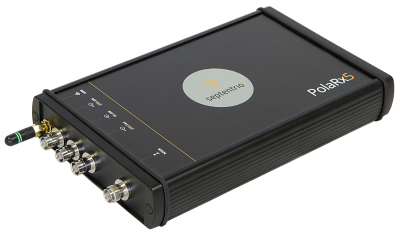
    Septentrio has started shipments to UNAVCO of its all new multi-frequency PolaRx5 reference receiver. This follows the 2015 announcement by UNAVCO that Septentrio was selected at the Geodesy Advancing Geosciences EarthScope (GAGE) Facility preferred vendor for next-generation GNSS reference station products.

    The Septentrio PolaRx5 GNSS receiver.
    The Septentrio PolaRx5 GNSS receiver.

    The PolaRx5 incorporates Septentrio’s most advanced multi-frequency GNSS engine, with support for all major satellite signals including GPS, GLONASS, Galileo and BeiDou, as well as the regional QZSS and IRNSS satellite systems.

    According to the UNAVCO GNSS Receiver Preferred Vendor RFP Evaluation Report, Septentrio consistently ranks highest in many areas of measurement quality and interference mitigation of the instruments tested. Moreover, the PolaRx5 offers low power consumption for its multi-constellation, multi-frequency GNSS reference receiver, operating on less than 2 Watts when receiving GPS and GLONASS satellite signals.

    “At UNAVCO, we are excited about the selection of the PolaRx5 for enhancement of the EarthScope Plate Boundary Observatory, the international standard for geodetic networks,” said M. Meghan Miller, president of UNAVCO. “We will work with Septentrio to modernize UNAVCO GPS networks, and explore the science innovation and broader applications that are possible in the rapidly evolving GNSS era.”

    UNAVCO is a non-profit university-governed consortium that facilitates geosciences research and education using geodesy. UNAVCO operates the GAGE Facility for the National Science Foundation with additional core support from NASA. The GAGE Facility includes more than 2,000 continuously operating GPS/GNSS reference stations around the world.

    UNAVCO-supported networks include EarthScope’s Plate Boundary Observatory (PBO), the Continuously Operating Caribbean GPS Observational Network (COCONet), the Trans-Boundary Land and Atmosphere Long-Term Observational and Collaboration Network (TLALOCNet) and the Polar Earth Observational Network (POLENet).

    Septentrio’s close cooperation with UNAVCO continues a tradition of partnering with leading scientific institutions and agencies that require high-performance GNSS technology in challenging environments. Septentrio partners include the European Space Agency (ESA) and the European GNSS Agency (GSA).

    “These deliveries mark a huge step in the modernization program for UNAVCO and UNAVCO partner networks around the globe,” said Neil Vancans, vice president of Septentrio Americas. “The use of new satellite technology will be the foundation for greater understanding of our planet. The entire Septentrio team is proud to be a part of this pivotal program.”

  • Galileo constellation now 12 after Thursday’s launch

    Galileo constellation now 12 after Thursday’s launch

    News from the European Space Agency

    The pace of deploying Europe’s own satellite navigation system continued to increase with today’s launch of the latest pair of Galileo satellites, doubling the number of satellites in space within nine months.

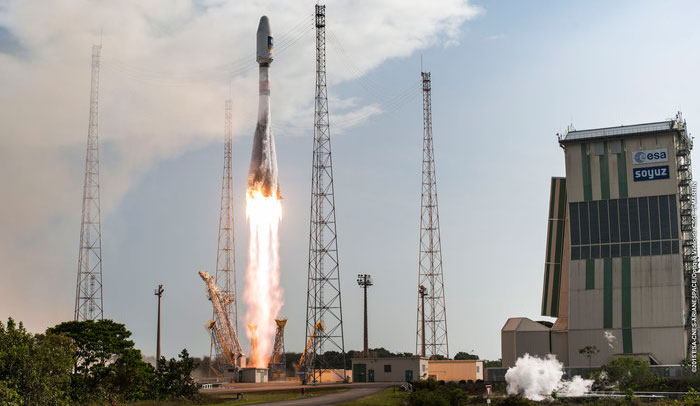
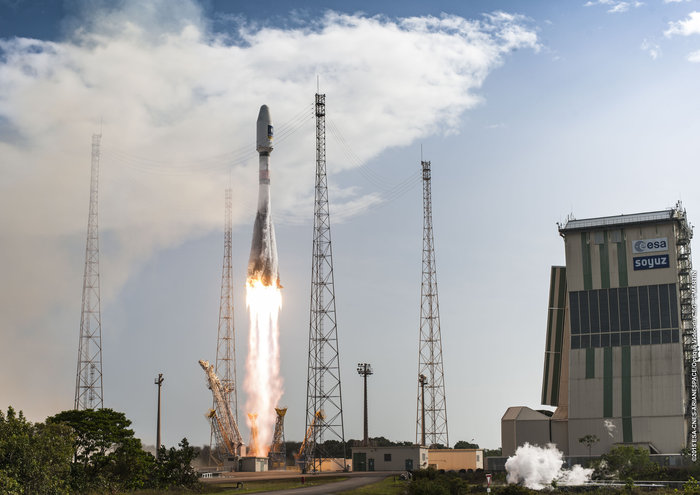
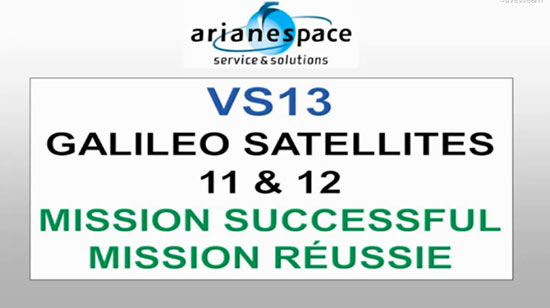
    Galileo 11 and 12 lifted off together at 11:51 GMT (12:51 CET, 08:51 local time) atop a Soyuz rocket from French Guiana.

    This sixth Galileo launch was a textbook operation: all Soyuz stages performed as planned, culminating in the Fregat upper stage deploying the twin satellites into orbit close to 23,500 km altitude, around 3 hours and 48 minutes after liftoff.

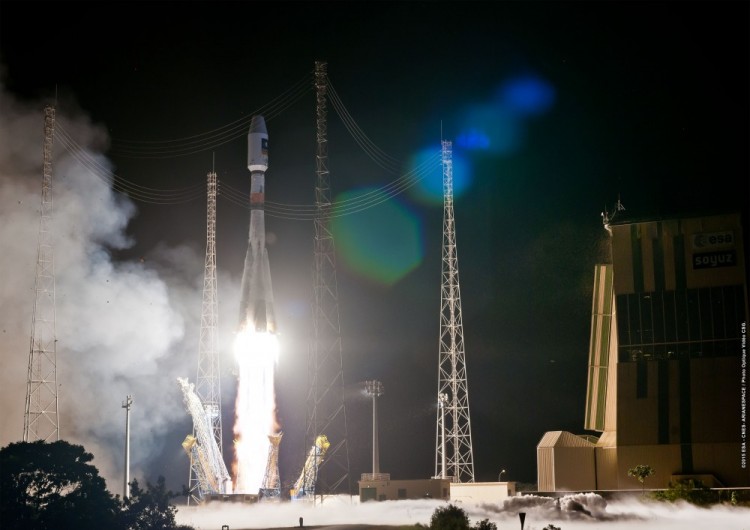
    Liftoff of Galileo satellites 11 and 12 aboard Soyuz VS13 took place at 11:51 GMT on Dec. 17, 2015.
    Liftoff of Galileo satellites 11 and 12 aboard Soyuz VS13 took place at 11:51 GMT on Dec. 17, 2015. (Photo: ESA)

    “With today’s launch, Europe has doubled the number of its Galileo satellites in orbit in just nine months,” commented Jan Woerner, director general of ESA.

    “Along with the ground stations put in place around the globe, this brings Galileo’s completion within reach. Initial Galileo services are scheduled to begin within next year, which proves the importance of this wise investment.”

    “The excellent performance of these satellites, as measured on the ground, allows Europe to join the club of the worldwide providers of satellite navigation services,” noted Didier Faivre, ESA’s Director of Galileo and Navigation-related Activities.

    “Production, testing and launch of the remaining satellites are now proceeding on a steady basis according to plan.

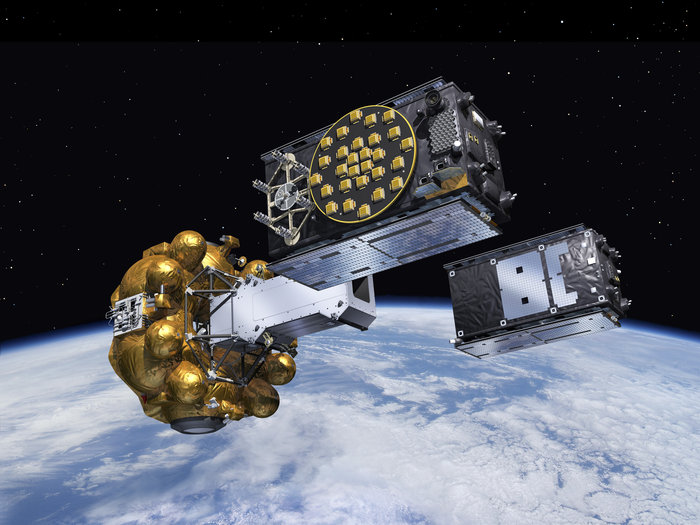
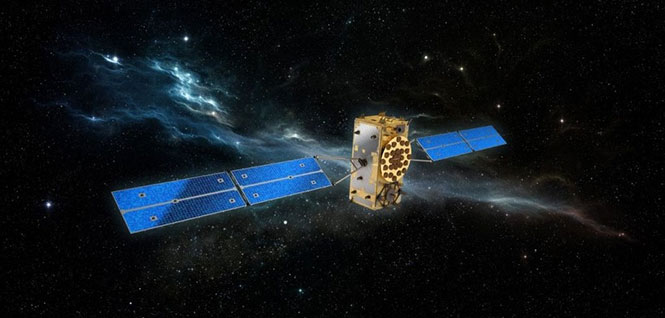
    The Fregat upper stage flew the latest two Galileo satellites most of the way up to medium-Earth orbit before they finally separated. (Artist's concept, courtesy of ESA).
    The Fregat upper stage flew the latest two Galileo satellites most of the way up to medium-Earth orbit before they finally separated. (Artist’s concept, courtesy of ESA).

    “Then, after the summer break in 2016, the tempo of deployment will increase further with the first of three customised Ariane 5 launchers that will carry four rather than two satellites into orbit each time.”

    This month will see the 10th anniversary of the launch of Europe’s very first navigation satellite: GIOVE-A, on Dece. 28, 2005. It secured the frequencies set aside for Galileo, gathered data on the medium-altitude orbit environment and flight-tested hardware for the working system.

    Watch the launch here:

    ESA declares success.
    Arianespace declares success.
  • ESA declares Galileo 7 and 8 fully operational

    ESA declares Galileo 7 and 8 fully operational

    News from the European Space Agency

    Having completed their rigorous checks in space, two more of Europe’s Galileo satellites are now fully operational, broadcasting navigation signals and relaying search and rescue messages from across the globe.

    Galileo 7 and 8 were launched on March 27 from Europe’s Spaceport in French Guiana. Once the satellites were nursed to life in orbit, their navigation payloads underwent a lengthy test campaign.

    This involved assessing that the satellites themselves were performing as planned and meshing with the worldwide Galileo ground network.

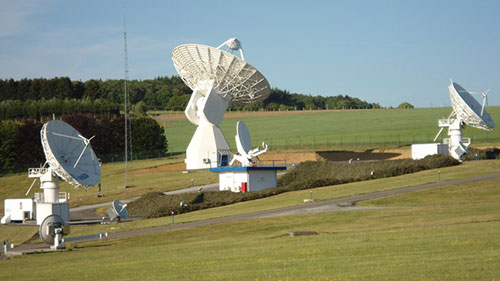
    Galileo's 20-m IOT L-band antenna is the largest dish at ESA's Redu ground station.
    Galileo’s 20-m IOT L-band antenna is the largest dish at ESA’s Redu ground station.

    The satellites’ secondary search and rescue payloads were also put to the test, picking up and relaying UHF signals from distress beacons as part of the international Cospas–Sarsat system.

    Radio-frequency measurements were made from ESA’s Redu centre in Belgium. The site boasts a 20 m-diameter dish to analyse Galileo signals in great detail. Last but not least, security testing has ensured that Galileo’s Public Regulated Service – a maximum precision service restricted to authorised users – is as secure as required.

    “These latest two operational Galileos are the third and the fourth Full Operational Capability satellites,” said David Sanchez-Cabezudo, ESA’s Galileo In-Orbit Test Manager.

    “These are the versions that will make up the bulk of the Galileo constellation in space, with 16 satellites still to be launched.

    “The checks carried out from the Galileo Control Centres in Oberpfaffenhofen in Germany and Fucino in Italy, as well as from Redu, prove the performance of these two satellites is excellent for navigation purposes.

    “New onboard features such as seamlessly swapping between the different atomic clocks – a unique feature in global satnav systems – has been verified, which translates into more robust navigation services.”

    Soyuz launches Galileo 9 and 10 into orbit on Sept.10. (Credit: Arianespace)
    Liftoff of Soyuz ST-B flight VS11 carrying Galileo satellites 7 and 8, March 27 at 22:46 GMT, from Europe’s Spaceport in French Guiana.

    The first pair of full satellites was placed in incorrect orbits in 2014 by a malfunction of their Soyuz launcher’s upper stage, but the elongated orbits have since been modified so that the navigation payloads can perform as planned. The European Commission is set to make a decision on whether they will be employed as part of the Galileo constellation.

    The second pair, launched in March, was inserted into the correct orbits. September’s third pair, also in the correct orbits and undergoing payload testing, should enter service early next year.

    The latest twins have arrived in French Guiana, aiming for a Soyuz launch on Dec. 17. The intention is to have those satellites ready to enter the operational constellation by next spring.

  • Verhoef named Galileo director by ESA Council

    Verhoef named Galileo director by ESA Council

    Paul Verhoef
    Paul Verhoef

    The European Space Agency (ESA) has named Paul Verhoef its new Director of Galileo Programme and Navigation-Related Activities. Verhoef, former coordinator for Galileo activities with the European Commission, was named as one member of a new senior leadership team after a special meeting of the ESA Council in Paris on Nov. 21.

    At the weekend meeting, the agency selected several new managers for key positions. The new leadership team is expected to start work in early 2016.

    Space Applications

    • Director of Telecommunications and Integrated Applications (D/TIA), Magali Vaissiere
    • Director of Galileo Programme and Navigation-Related Activities (D/NAV), Paul Verhoef

    Science and Exploration

    • Director of Science (D/SCI), Alvaro Giménez Cañete
    • Director of Human Spaceflight and Robotic Exploration Programmes (D/HRE), David Parker

    Space Technology and Operations

    • Director of Technical and Quality Management (D/TEC), Franco Ongaro
    • Director of Operations (D/OPS), Rolf Densing

    Administration

    • Director of Internal Services: Human Resources, Facility Management, Finance and Controlling, Information Technology (D/HIF), Jean Max Puech
    • Director of Industry, Procurement and Legal Services (D/IPL), Eric Morel de Westgaver