Tag: GIS

  • Blue Marble Releases Fully Managed Version of GeoCalc SDK

    Blue Marble Geographics announced the release of a fully managed .NET version of the GeoCalc 6.6 software development kit (SDK). Now .NET developers can get all of the accuracy and power of the GeoCalc toolkit in a fullyGeoCalcVS managed .NET control. Blue Marble’s geospatial data manipulation, visualization and conversion solutions are used worldwide by thousands of GIS analysts at software, oil and gas, mining, civil engineering, surveying, and technology companies, as well as governmental and university organizations.

    According to the announcement, GeoCalc is a fully object-oriented class library for software developers. Available on a number of platforms, not only does it support a massive amount of geodetic objects out of the box but the tool also has a direct connection to the OGP’s EPSG Geodetic Parameter web registry. This allows you to directly update your EPSG definitions whenever you need it and to supplement our already huge database with even more objects for coordinate transformation. Blue Marble’s geodetic toolbox leverages an XML data source, enabling secure and powerful data transformation management through interfaces and logic that allow you to lock down your datasource via password protection. The toolkit includes a variety of tools for improving data quality management from a development level allowing the software developer to work with the survey expert to provide powerful coordinate transformation software. With the release of the fully managed .NET platform, developers now can get all of the accuracy and power of the GeoCalc toolkit in a fully managed .NET control.

    “This fully managed version of GeoCalc has come about from working closely with a number of our developer customers over the past year,” stated Blue Marble President Patrick Cunningham “We’re pleased to make powerful, reliable coordinate transformation available for any software environment and happy to assist our customers at the same time. When we say customer driven development, we mean it.”

    The company reports that the GeoCalc fully managed SDK is built on Microsoft’s 4.0 .NET architecture. This means all of the memory management details are handled entirely by the .NET virtual machine and the CLR (Common Language Runtime). Using this standard Windows framework increases security, performance, and usability for anyone working inside the latest Microsoft development environments. This new version of GeoCalc streamlines the development process as 32 and 64 bit compatibility issues are handled entirely by Visual Studio, and the new code base means only one application needs to be delivered for both environments. The single DLL redistributable framework makes windows deployment much easier in many cases, lowering development costs and speeding up time to market.

  • Hexagon Will Propose to Acquire Veripos in Public Voluntary Offer

    Hexagon has announced it will offer NOK 28 in cash per share in positioning company Veripos in a public voluntary offer: Hexagon_logo

    • Hexagon will make a voluntary offer of NOK 28 in cash per share of Veripos, a company listed on the Oslo Stock Exchange
    • The voluntary offer represents a premium of 44 per cent to Veripos’ volume weighed average stock price during the three month period up to and including 11 October 2013
    • The offer will require acceptance from shareholders representing a minimum of 90 per cent of the Veripos share capital and voting rights, and certain other customary conditions for public voluntary offers
    • A five=week offer acceptance period will start shortly following the approval of an offer document by the Oslo Stock Exchange

    According to the announcement, the Board of Directors of Hexagon AB has decided that Hexagon, directly or through a wholly owned subsidiary, will present to the shareholders of Veripos Inc., a voluntary offer of NOK 28 in cash per share for all outstanding shares of Veripos.

    The offer price represents a premium of 21.7 per cent to the last traded price for Veripos of NOK 23, and a premium of 28.1 per cent, 43.6 per cent, 47.8 per cent and 46.3 per cent to the volume weighted average share prices (source: Bloomberg) for the one, three, six and twelve month periods, respectively, that ended on October 11.

    On September 30, Hexagon contacted the Board of Directors of Veripos with a proposal of Hexagon making a voluntary offer of NOK 28 for all of the outstanding shares of Veripos, subject to due diligence and certain other conditions. On October 4, Veripos and Hexagon entered into a due diligence agreement where Hexagon was granted access to conduct a limited due diligence review on an exclusive basis. Such due diligence was concluded to Hexagon’s satisfaction on October 12.

    Ola Rollén, President and Chief Executive Officer of Hexagon, said, “It is a good strategic fit between Hexagon and Veripos where Hexagon will provide, state of the art, positioning technology to Veripos as well as future growth via Hexagon’s onshore markets. Veripos has, in turn, built up a strong position in the offshore market and has world class infrastructure that Hexagon can leverage on immediately after an acquisition rather than building such infrastructure in-house.”

    The offer will not be subject to any financing conditions. Hexagon’s preliminary assessment is that the offer will not be subject to any competition approval. The complete details of the offer, including all terms and conditions, will be contained in an offer document pursuant to chapter 6 of the Norwegian Securities Trading Act.

    Hexagon has filed the offer document for review and approval with the Oslo Stock Exchange and the offer document will be sent to Veripos’ shareholders as soon as it has been approved. The acceptance period for the pffer will be five weeks from the date of the offer document being released, unless extended by Hexagon. The acceptance period may be extended, one or several times, provided however that the maximum acceptance period may not exceed 10 weeks.

    As will be further detailed and specified in the offer document, the completion of the offer will be subject to the following conditions being satisfied or waived by Hexagon:

    • The offer has been accepted by shareholders representing more than 90 per cent on a fully diluted basis of the share capital and voting rights to which the offer relates;
    • Approvals from public authorities;
    • No material adverse change up until the settlement of the offer;
    • Conduct of business in the ordinary course and in accordance with applicable laws, regulations and decisions of any governmental body; and
    • Other customary conditions to be specified in the offer document.

    While the offer will be subject to a completion condition of more than 90 per cent acceptance, Hexagon will retain its full right to amend or waive such condition, and hereunder also to make a compulsory acquisition of any remaining shares, subsequently to the offer, through the implementation of a so called “long-form merger” under the Cayman Company Act should the acceptance of the Offer be equivalent to more than two-thirds of the outstanding share capital and voting rights on a fully diluted basis.

    The Offer will not be made in any jurisdiction in which the making of the Offer would not be in compliance with the laws of such jurisdiction. The Offer will be made to U.S. shareholders in Veripos. This notification does not in itself constitute an offer. The Offer will only be made on the basis of the Offer Document and can only be accepted pursuant to the terms of such document.

  • Esri Publishes Interactive Map: Which Cities Could Be Most Affected by the Federal Government Shutdown?

    Esri published an interactive map that allows viewers to explore the top 10 metropolitan areas that could be impacted by the government shutdown based on the percentage of wages that goes to federal employees, according to Trulia.com. Click here to experience the interactive map.

    GIS_Shutdown

    Photo: Esri

  • Altus Positioning Introduces GIS-1 for Data Collection

    Altus Positioning Introduces GIS-1 for Data Collection

    Photo: Altus Positioning Systems
    Photo: Altus Positioning Systems

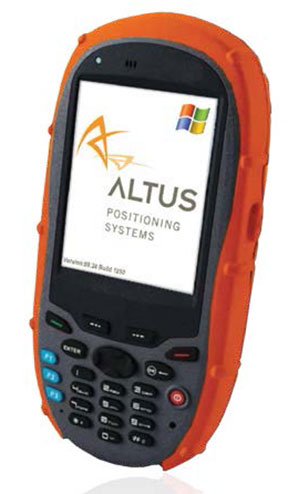
    Altus Positioning Systems is expanding its line of GNSS surveying products with the introduction of the GIS-1, a versatile personal digital assistant (PDA) for data collection and geolocation.

    The GIS-1 is a powerful PDA that integrates modern wireless technologies on a rugged Windows Mobile platform for effective portable computing for mobile survey applications. It can be used as a data collection device with Altus’ APS-series GNSS survey instruments, providing up to eight hours of operation time in the field between charges. In addition, the unit’s built-in L-1 GPS receiver and 3.2 megapixel camera can be used for navigation and GIS applications. It can even be used as a smartphone.

    “The GIS-1 is a versatile tool for surveyors and GIS professionals,” said Neil Vancans, president of Altus Positioning Systems. “With the Windows  Mobile operating system, it supports a wide range of software applications for data collection. By itself, the GIS-1 is a convenient low-cost GPS navigation device with 2.5-meter accuracy.”

    “It’s ideal for GIS work,” Vancans added. “The user can quickly and easily locate assets with 2.5-meter accuracy with the GIS-1, then switch to the APS-3 for more precise RTK work if needed.”

    The GIS-1 supports a wide range of wireless options, including Wi-Fi, Bluetooth and a Tri-Band GSM/GPRS/EDGE/HSPA cellular modem.

  • DirectMail.com to Launch GeoInsight at DMA 2013

    DirectMail.com will launch GeoInsight, the firm’s advanced marketing intelligence and data sourcing tool, at DMA 2013. DirectMail.com will demonstrate GeoInsight’s capabilities at the Direct Marketing Association conference in Chicago on October 13–15.

    According to DirectMail.com, GeoInsight puts powerful, easy-to-use database analytics capabilities into marketers’ hands. Based on a web-based map interface, GeoInsight provides the following functionality:

    • The combined power of enterprise-level, location-based data analytics and real-time, customer-rich profile information,
    • Instant analysis of markets, customers and prospects, yielding visual and quantitative displays of geographic concentrations and lifestyle and purchasing characteristics, and
    • A new level of selectivity and precision in targeting prospects and engaging existing customers by combining a marketer’s existing database with GeoInsight’s location-based, data-mining and modeling information.

    The GeoInsight tool features enhancements such as:

    • A data visualization engine that allows customized reporting based on relevant data points,
    • Thematic map overlays, using either client data or enhanced consumer data,
    • Access to digital behavior insights, enabling better cross-channel marketing and timing,
    • Targeted segmentation and messaging strategy models, and
    • Analysis of client files based on customer transactional or summarized data.

    “DMA 2013, the global event for data-driven marketers, is the ideal venue for launching GeoInsight,” said Joe Leger, vice president of Data and Analytics, DirectMail.com. “Marketers who understand data’s power to transform a brand and a business will be amazed by how this innovative marketing intelligence and data sourcing tool brings a whole new level of selectivity and precision to the task of targeting prospects and engaging current customers. With GeoInsight’s revelations about customer behaviors and lifestyles, their ability to increase market share — and do so with greater return on marketing investment — will be facilitated.”

  • Tuck Mapping Integrates Leica RCD30 Camera with Applanix POSTrack

    Bell-LongRanger-O

    Leica Geosystems Inc. today announced that Tuck Mapping Solutions Inc. has completed the first integration of a Leica RCD30 airborne camera with the Applanix POSTrack system. With technical support from Leica Geosystems and Applanix, Tuck Mapping contracted Lead’Air Inc. of Kissimmee, Florida, to perform most of the software upgrades and new cabling required to integrate the Leica digital camera with the POSTrack all-in-one GNSS-aided inertial direct georeferencing and flight management system.

    The Leica RCD30 is a true metric camera built for mapping. Introduced by Leica Geosystems as a digital follow-on to its RC30 film cameras, the RCD30 is a medium-format digital imaging system developed for a variety of photogrammetric and remote sensing applications. The 60 MP single-camera-head design delivers co-registered, multispectral imagery in the Red, Green, Blue and Near IR portions of the spectrum. The sleek modular design allows the camera to fit easily in aircraft previously outfitted with film cameras, and the RCD30 integrates with many LiDAR sensors, including the Leica ALS series.

    For the many current owners of the POSTrack system, the availability of integration by Lead’Air makes the Leica RCD30 a more affordable and attractive choice among medium-format digital cameras. When buying a new Leica RCD30, POSTrack owners do not have to purchase the Leica flight management system, train flight crews in the use of multiple interfaces, and install redundant equipment in their aircraft.

    “The integrated systems enable our flight crews to operate the Leica RCD30 and a third-party LiDAR sensor with a single flight management interface,” said Tuck Mapping President, Bobby Tuck. “In addition, POSTrack collects the GNSS location and Inertial Measurement Unit (IMU) attitude data needed to georeference the imagery and LiDAR data sets.”

    Based in Big Stone Gap, Virginia, Tuck Mapping is a photogrammetric services and aerial mapping firm with a reputation for engineering innovative solutions related to geospatial data collection. Tuck was among the first aerial mappers to use a helicopter for LiDAR scanning operations, and more than a decade ago the firm took the lead in successfully integrating an airborne camera and LiDAR sensor for simultaneous collection. Tuck Mapping owns four POSTrack systems, three helicopters, two fixed-wing airplanes, and state-of-the-art airborne cameras and laser scanners.

    “Bobby Tuck deserves credit for driving the integration of the Leica RCD30 with the POSTrack system,” said Jean Gardiner, General Manager of Leica Geospatial Solutions. “From a business perspective, Leica believes that supporting the compatibility of our products with other manufacturers’ products is an integral part of providing solutions to our clients.”

    “This joint integration project exemplifies the maturity of Leica and Applanix,” said Joe Hutton, Applanix Director of Inertial Technology and Airborne Products. “It’s a natural progression of good customer support.”

    Jointly developed by Applanix and Track’Air, the POSTrack product integrates the Applanix POS AV direct georeferencing technology, utilizing GNSS and IMU components, with the XTRACK Flight Management System software from Track’Air into a single, compact package. POSTrack provides direct georeferencing for airborne mapping sensors, mission planning, real-time sensor control and pilot guidance.

    Lead’Air, a subsidiary of Track’Air, specializes in integrating the Track’Air flight management systems with any airborne camera or LiDAR sensor. Now that the first Leica RCD30/POSTrack integration has been completed for Tuck Mapping, Lead’Air offers this integration as a commercially available service.

  • Trimble Introduces Integrated Camera Roving System for High-Accuracy Positioning from Digital Images

    Trimble has introduced the Trimble V10 Imaging Rover, an integrated camera system that precisely captures 360 degree digital panoramic images for visual documentation and measurement. The Trimble V10 Imaging Rover enables professionals in a broad range of industries—including survey, GIS, engineering, and oil & gas—to quickly capture rich, complete data of their surrounding environment. In the office, users can take measurements and create comprehensive deliverables using Trimble Business Center office software.

    According to the announcement, the Trimble V10 with Trimble VISION technology, leverages calibrated imaging sensors allowing digital images to be captured directly from the range pole. Twelve calibrated cameras—seven panoramic and five downward-looking—integrated in the Trimble V10 provide complete site visualization and documentation with a 60 MP panoramic image that can be used to make photogrammetric measurements.

    Easy to use with one button operation, the Trimble V10 enables geospatial professionals to perform work where there are many features to collect or where features are complex or difficult to capture, such as oil and gas industrial facilities, and capture increased amounts of data in less time. Trimble Access field software running on the Trimble Tablet Rugged PC offers a simple and intuitive process to capture and review images and store observations.

    The solution works standalone or can be seamlessly integrated with the Trimble R10 GNSS receiver and Trimble S-series total stations such as the VX, S8 and S6 so that panoramic images can easily be captured along with high-accuracy positions for an accurate geospatial dataset. Combined with the Trimble Tablet and Trimble Access field software, the Trimble V10 collects visual documentation of the jobsite with corresponding positioning information for subsequent office measurement.

    To quickly generate traditional and innovative deliverables, Trimble Business Center provides intuitive close-range photogrammetry tools to efficiently extract survey grade measurements from the Trimble V10 images. The rich image data can also be later mined to satisfy new customer requests, saving time and reducing the need for revisits to the job site.

    “The Trimble V10 Imaging Rover ushers in a new era for geospatial data capture—positions from pictures,” said Phil Sawarynski, business area director of Imaging Solutions for Trimble’s Geospatial Division. “The capability to easily integrate panoramic images into traditional datasets and take measurements from those images sets a new standard for positioning applications.”

  • Trimble Launches New Geospatial Solutions for Aerial Imaging

    Trimble announced today new additions to its aerial imaging portfolio — the Trimble AX60, a new airborne LIDAR system; and an updated version of its Inpho processing software.

    The announcement was made today at Intergeo 2013, being held this week in Essen, Germany.

    The Trimble AX60.
    The Trimble AX60.

    The Trimble AX60 is a versatile system that can be operated at up to 15,500 feet above ground level (AGL), which meets the requirements for aerial survey projects such as wide area mapping, corridor mapping and remote sensing. Together with integrated flight planning and analysis software tools, the platform has been specifically designed as end-to-end solution that provides enhanced mission flexibility, rapid and efficient point cloud capture, excellent resolution, in-service reliability and high-productivity workflows. The Trimble AX60 can be installed on either fixed wing or rotary aircraft.

    The AX60 has a 400-kHz laser pulse repetition rate (PRR) with a single channel downward-looking laser. An optional, fully calibrated 80-megapixel camera with forward motion compensation can be added. The camera is integrated into the sensor head package and harmonized with the laser system so that it does not need re-calibration each time the solution is fitted to an aircraft. Another key feature is Trimble’s rotating polygon mirror technology for beam deflection that can allow survey missions to be completed faster. This technology provides higher accuracy and a uniform distribution of laser points across the entire field-of-view to widen the usable swath width. Operators can reduce track overlap or duplication, or fly at higher altitudes to achieve a given resolution. Together with a high precision positioning system, integral power supplies, and an in-flight monitoring tool, the Trimble AX60 can allow operators to lower the complexity of airborne LIDAR surveys while increasing the quality of the output.

    “The performance, operational flexibility and reliability of the Trimble AX60 make it an ideal solution for aerial survey companies,” said Phil Sawarynski, business area director of Imaging Solutions for Trimble’s Geospatial Division. “In addition, the Trimble AX60 has been designed as a true end-to-end solution, which includes field-proven Trimble flight planning software and Trimble Inpho analysis software. Since the hardware and software are all supplied by Trimble, operators can have confidence that the complete solution works together seamlessly, and that the flight planning and post-mission analysis suites can enable them to provide a high quality service to their customers.”

    In conjunction with the new airborne laser scanner launch, Trimble also announced its Inpho version 5.6 processing software suite. Version 5.6 now includes the UASMaster module, which has been designed for the complete processing of data acquired by remote piloted aircraft systems (RPAS/UAS). The module georeferences RPAS/UAS images and generates point clouds and othophoto mosaics that allow users to create high quality deliverables for CAD and GIS applications. The UASMaster module is fully compatible with Inpho photogrammetric software modules.

    The Trimble AX60 solution is expected to be available in the first quarter of 2014 through Trimble’s Geospatial Division distribution network. The Inpho version 5.6 and UASMaster is expected to be available in the fourth quarter of 2013.

  • Topcon Announces Expanded Features, Connectivity Options with Magnet v2.0

    Topcon Positioning Group announces a multitude of new features and enhanced functionality to the entire Magnet suite of connected workflow software. The Magnet suite includes solutions for the field personnel, the office designers and managing supervisors.

    The release of Magnet v2.0, a Topcon enterprise solution for the geomatics industry, provides more than 30 substantial additions or upgrades to the Enterprise, Field and Office packages. Enterprise is a cloud service designed for the supervising manager that connects the Field and Office products and provides a collaborative web-based interface to company data. Cloud-based collaboration and real-time data exchange makes Magnet a productivity enhancing solution for virtually any operation.

    Magnet v2.0 is now available.
    Magnet v2.0 is now available.

    “Magnet is the industry leader in cloud computing and real-time data exchange,” said Jason Hallett, Topcon vice president for software product management. “Now with v2.0, the total product suite has been elevated to a new level. Not only does Magnet allow for real-time collaboration between the project manager, job foreman, job site crews, office personnel, engineers and consultants, it also introduces myriad new features that will increase productivity in every aspect of every job.”

    Key new developments are expanded functionality for BIM and GIS applications.  Magnet v2.0 now has customized packages designed for building layout and high accuracy GIS application.

    A unique new feature is Hybrid Positioning technology, available in the Magnet Field solution package. It provides the option to simultaneously connect to GNSS signals and robotic measurements on a single rover pole. “This is a powerful feature that is easily managed in Magnet,” Hallett said.

    “Topcon continues to bring efficiencies in productivity by providing the ability to maintain simultaneous connections to a robot and a GPS rover when using the Hybrid Positioning module.”

    Other key features available to enhance data workflow and automation include:

    • AutoCAD 360 cloud surfing: Allows user to visualize, edit and share field projects with non-Magnet users.
    • AutoCAD Civil 3D support: Single-click ability to convert 3D line work generated in Magnet to DWG and launch seamlessly in AutoCAD Civil 3D for review or continued design, and vice versa.
    • Real-time sessions: An office user can log in and connect to any active project, select a field crew and view the field activity and data in real timeMagnet Field-enabled rovers to work from a single cellular-enabled RTK base.
    • Asset manager: Ability to show all active field assets (crews and equipment) in Map View with satellite image background.
    • Third-party file format support: Enlarged library of supported file formats of all major positioning equipment providers, and third-party vendors to Magnet.

    “With Magnet a company can manage its positioning data and field information to ensure maximum efficiency in all facets of each project. The exciting new BIM and GIS features makes it the most productive workflow solution for almost every precise positioning and mapping professional,” Hallett said.

    Magnet v2.0 is available for use with Topcon and Sokkia instruments and is available through subscription service so the user has continuous access to the latest features. Magnet Field and Office products can also be purchased for stand-alone use.

  • Arithmetica to Launch Pointfuse Modeling Engine at Intergeo

    A vector model displayed in orthographic projection.
    A vector model displayed in orthographic projection.

    Arithmetica will be demonstrating Pointfuse at Intergeo, which is being held this week in Essen, Germany.

    Pointfuse is a powerful modeling engine that has been created to give professionals a fast, precise and flexible way of turning vast point cloud data sets (whether derived from LIDAR or photogrammetry) into high-fidelity vector models, the company said.

    Replacing painstaking and costly manual modeling, Pointfuse uses advanced techniques at the interface of mathematical optimization and computational statistics to automatically and rapidly convert point clouds into accurate vector models that can then be manipulated using any industry-standard CAD system.

    Pointfuse is fully mobile compatible, and can process data from mobile scanners as easily and quickly as from terrestrial or airborne systems. Results can be output and used on standard handheld mobile devices, making it  useful for creating and viewing highly detailed models in the field.

    A point cloud image of a motorway with crash barriers extracted and highlighted by Pointfuse. Data courtesy of Blom Aerofilms Ltd.
    A point cloud image of a motorway with crash barriers extracted and highlighted by Pointfuse. Data courtesy of Blom Aerofilms Ltd.

    The software will also fully automate extraction of features from point cloud data, allowing the intelligent recognition, measurement and cataloguing of objects and built environments, and other forms of extracted knowledge.

    George Skrobanski, chief technical officer of Arithmetica, explains the significance of this development. “Achieving the automatic extraction of features from point cloud data has been the Holy Grail for the industry. Pointfuse uses its proprietary technology to provide true automation and we believe this changes the game.”

    At Intergeo, learn more at Arithmetica’s booth (Hall: 3 – Booth: D3.046).

  • Orbit GT Showcases Clearance Checker for Mobile Mapping at Intergeo

    Orbit-GT_Clearance-Checker-for-Mobile-Mapping

    Orbit GeoSpatial Technologies will be presenting the Clearance Checker for Mobile Mapping at this year’s Intergeo, being held this week in Essen, Germany.

    “The Clearance Checker is an automatic detection tool that uses any mobile mapping lidar data to check clearances in height and width over any designated trajectory,” said Peter Bonne, vice president of business development and senior product manager at Orbit GT. “With the Clearance Checker, a vehicle contour of any designed size, is virtually driven through the point cloud over a chosen trajectory. Any collision or near-collision is automatically detected and listed for reporting, interpretation and subsequent actions. This tool is a must have for all rail- or tramway exploitation, oversize transport planning, and indeed every road and railroad maintenance or improvement project. This tool is an add-on to the Mobile Mapping Asset Inventory solution and is the first in a range of automated and semi-automated detection tools to be made available in shortly.”

  • GIS 2go for Offline Maps to Be Demonstrated at Intergeo

    Disy_GIS2go_3_Tablet_Anzeige-Intergeo

    Disy Informationssysteme GmbH will present GIS 2go at Intergeo 2013, being held this week in Essen, Germany. GIS 2go transfers maps from ArcGIS Desktop to an iPad or Android tablet. With the associated app, users can access their own maps without a network connection while they are on the road.

    Intergeo is the world’s largest conference and trade fair for geodesy, geoinformation and land management. From October 8-10, visitors to stand D1.045 in hall 1 can experience GIS 2go live and meet with experts and developers in person.

    GIS 2go allows maps to be taken along with the user, from Esri’s ArcGIS Desktop to a tablet (iPad or Android). With the GIS 2go Add-in, the data selection, the map export and the re-import are controlled via the cloud in ArcGIS Desktop. On the tablet, the “Cadenza Mobile GIS 2go App” allows access to the maps with all feature data — be it with or without a network connection. Even graphic notes and media created on the go are taken over into ArcGIS Desktop.

    On the tablet, users can move interactively on the map; display feature attributes; add points, lines and areas with the graphic notebook; or track via GPS; augment the map with photos and audio/video clips or simply use text to comment on it. The information recorded remotely will be imported later into ArcGIS Desktop and taken over into the data storage.