Tag: GIS

  • JRC 3D Reconstructor for UAV Integration Displayed at Intergeo

    In step with the path of the latest technologies in three dimensional laser scanning and photogrammetry, Gexcel Srl has released the new version of JRC 3D Reconstructor 2.9.1 with a special focus on UAV and drone platforms.

    Gexcel Srl is attending Intergeo, taking place this week in Essen, Germany. Gexcel is using the event to introduce new 3D software tools and solutions focusing on the most recent release of the JRC 3D Reconstructor software for Unmanned Aerial Vehicle (UAV) and drone platforms.

    UAVs and drones can quickly and cheaply capture georeferenced high-resolution images, Gexcel said. Third-party software typically produces GeoTIFF global images and 3D point clouds of the investigated area. These ingredients can be easily managed in JRC 3D Reconstructor to merge the GeoTIFF global image color over the point cloud and produce a 3D HR texturized point cloud and 3D HR texturized mesh models, Gexcel said.

    Using JRC 3D Reconstructor, all the volume calculations, cross sections, cut and fill, crests and toes, and isolines can be created with a greater accuracy, because of real color state processing. This new feature emphasizes the importance that JRC 3D Reconstructor gives to the color information. It is considered as a most powerful tool for detailed geotechnical and geological investigations.

    For a video, go to https://vimeo.com/75386387.

    Gexcel Srl also announced the launch of its new Point Cloud Streaming Service based on a web application. The service allows to upload point clouds generated using Gexcel R3 or the new Gexcel R3 streaming software to a remote server. Gexcel R3 can import data directly from the most common point cloud data formats, E57 included. Massive point clouds loaded in the service servers can be visualized and navigated in Chrome or Firefox using a standard 64-bit PC.

    The service is designed to improve the ability of users to visualize the results of 3D laser scanning surveys with collaborators, clients and web community. The 3D point clouds can be also customized to include proprietary company logos and project banners.

  • Bluesky Announces International Expansion at Intergeo 2013

    Bluesky_Intergeo_WUsing an airborne mapping system, aerial surveying company Bluesky is expanding its international operations. The integrated system, developed by Optech, includes a LiDAR and fully integrated thermal sensor and high-resolution camera.

    Bluesky is exhibiting at Intergeo 2013, being held this week in Essen, Germany.

    Already proven in the UK the system, thought to be a world first, has already been successfully deployed in Northern Europe with additional projects proposed in Central Europe and the Middle East. The Bluesky system combines the Orion M300 LiDAR, CS-LW640 Long Wave Infrared thermal sensor and a CS-10000 RGB camera.

    “The integrated Optech system has been very successfully used for many projects in the UK and the results have provided our customers with the highest quality data as well as economic advantages due to the simultaneous capture of multiple data types,” commented Rachel Tidmarsh, Managing Director of Bluesky International. “We are now in a position to offer these advantages to potential customers around the world.”

    “Bluesky is the perfect example of an organization with the talent and vision to take full advantage of the unique capabilities of the latest Optech sensors. In addition, we are pleased that the ultra-compact and modular design of the system has made it portable and easy to install for them, further supporting Bluesky in their ambitious plans to expand their operations beyond the UK,” added Bill Sharp, Marketing Manager at Optech, Inc.

    The Optech solution used by Bluesky includes an Orion M300 LiDAR (Light Imaging Detection and Ranging) system; which uses aircraft mounted lasers to accurately determine the distance between the sensor and the ground or other targets such as buildings and vegetation. Specifically designed to offer a cost effective, high performance solution at mid altitudes, the Orion M300 is ideally suited for applications such as infrastructure modelling and environmental monitoring, including flood risk analysis and forestry management.

    The Optech CS-LW640 sensor records thermal infrared measurements and has already generated impressive results for recent projects. In upcoming projects it will be used for identifying heat loss from buildings, pipeline monitoring and forestry analysis. Like the CS-10000, it can be used simultaneously with the LiDAR or independently to fit the end user requirements. In addition to capturing thermal images of the target sites, the CS-LW640 camera can be mounted simultaneously with the other two sensors, providing customers with a wealth of coincident information for their area of interest; a complete solution, including highly efficient automated data processing, resulting in substantial acquisition savings.

  • iPhone App Lets Users See Imaging Satellites

    Orbit Logic announced that their SpyMeSat iPhone app is now available on the Apple App Store. The SpyMeSat app provides notifications when imaging satellites are overhead and may be taking your picture. A dynamic map shows orbit tracks and the location of satellites with upcoming passes over the user-specified location.

    SpyMeSat iPhone App
    SpyMeSat iPhone App

    According to the announcement, this is Orbit Logic’s first app targeted for consumers outside their standard customer base in the aerospace, defense, and government intelligence communities.

    “This app is for everyone.” said Alex Herz, president of Orbit Logic. “Whenever I talk to people outside the aerospace industry about what I do they have so many questions. I realized there was a place for an app to provide information, education and awareness about imaging satellites to a wider audience. And it’s fun for aerospace industry insiders too!”

    The SpyMeSat app uses NORAD orbit data published online by www.celestrak.com and available public information about commercial and international imaging satellites to compute and dynamically display satellite overflights and imaging pass information. The app user can drill down to see additional details about each imaging opportunity, and the app provides a page describing each satellite for those who want to learn more.

    SpyMeSat users can configure the app to enable or disable individual satellites, change the location of interest, enable or disable various notification options, and specify the resolution limit for computed passes. Orbit Logic can create custom SpyMeSat solutions for any constellation of satellites. With a custom SpyMeSat solution, authorized users can make satellite tasking requests directly from the mobile device.

  • Nexteq Navigation Launches New Version of NexGeo GIS Software Suite

    Nexteq Navigation Launches New Version of NexGeo GIS Software Suite

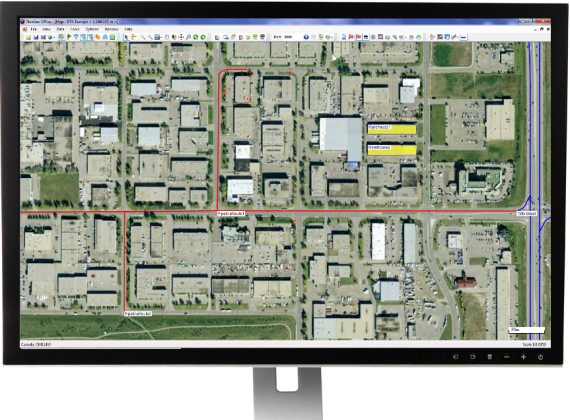
    Nexteq's NexGeo Office.
    Nexteq’s NexGeo Office.

    Nexteq Navigation has officially released the next version (V2.0) of its GIS data collection suite, NexGeo. The suite consists of a mobile application for GNSS handhelds to collect and organize GIS data, as well as a desktop application used to customize and organize projects, manage field crews, and integrate with other data formats.

    NexGeo aims to provide a complete solution, from augmenting accuracy to a user-friendly, efficient data-collection tool. An improved user interface provides seamless access to Nexteq’s positioning algorithms, notably in the PPP field, including SBAS-based Freedom algorithm, Internet-based i-PPP global services, and traditional RTK, all available in the field as well as post processed where necessary.

    The latest version of the software contains a slew of improvements and new features, Nexteq Navigation said. NexGeo Mobile on the handheld is redesigned to provide intuitive shortcuts to the software’s main functions directly on the dashboard, simultaneously presenting a panoramic view of working mode, data quality, and handheld status. Improvements of NexGeo Mobile include pausing and resuming features, quick navigation to preset waypoints with compass or map view, offset feature collection using data from a laser rangefinder, and enhanced options of Feature Cloning, Filtering, and Updating.

    When managing projects, post processing the data and tracking the field operation in NexGeo Office, the new interface, including comparison and review tools to customize results, significantly improve the capability of project management and post data analysis. A new coordinate system manager offers an easy way to set up customized coordinate systems.

    Besides all the functional changes made to NexGeo, the software suite has received a complete interface overhaul, as well as improvements to loading times and performance. Experienced users will remain at home with the NexGeo feel, as the backbone of  the software suite has not changed. All existing projects are compatible with the new versions.

    In keeping with Nexteq’s commitment, NexGeo v2.0 is available for free download for all existing authorized clients. For users interested in trying out the NexGeo experience, demonstrations can be provided by contacting [email protected].

  • ikeGPS Announces Kickstarter Fundraising for Smartphone Laser Measurement and Augmented Reality Accessory

    ikeGPS announced a Kickstarter fundraising effort for a smartphone laser measurement and augmented reality accessory named Spike.

    According to the announcement, with Spike you can measure, map, 3D model (and share) any object up to 600 feet away by taking a snapshot on your smartphone.

    3d measurement and AR

    The company reports that Spike’s precision enables the development of immersive laser-based smartphone apps, delivering deeply textured 3D modeling and location experiences. Its laser accuracy makes Augmented Reality (AR) experiences real. Not just because Spike enables AR apps to be incredibly precise and relevant to a user for the very first time, but also because it empowers anyone to develop and experience them on their smartphone.

    measure and share

    The fully specified API will enable software engineers to develop immersive AR applications. By embedding specialist ikeTools into the application, or building an application over the data stream from the calibrated laser camera, Spike will give applications long range accuracy and depth perception.

    According to Spike’s Kickstarter webpage, the project will be funded if $100,000 is reached by October 29, 2013. As of October 2, 2013, funding was at $74,282

  • Amtrak Teams with Google to Create Interactive Train Locator Map

    Amtrak introduces an interactive way to see where trains are and when they are expected to arrive, including information on stations nation-wide, all through a new interactive train locator map built on the easy-to-use, familiar Google Maps interface. The new train location tracking system, available at Amtrak.com, provides near real-time train status of more than 300 daily trains, estimates of arrival times and station information — all in the context of the Amtrak national system map. Checking on train status is the second most popular action on Amtrak.com, just after purchasing tickets.

    Amtrak
    Source: Amtrak
    http://www.amtrak.com/train-routes

    According to the announcement, in addition to helping passengers plan travel, this new travel resource is an excellent tool for those planning the arrival or departure of family and friends. Users can search for information by train number or name, city name and station name or code.

    “This tool creates a new platform for sharing information with our customers, and Amtrak will continue to add helpful layers onto this map such as local travel and tourist information to provide passengers a one-stop location for all their travel needs,” said Amtrak Chief Marketing and Sales Officer Matt Hardison. “This map joins several recent technology-related offerings that have improved the customer experience and changed how Amtrak does business, ultimately changing and enhancing the way customers travel with us.”

    Amtrak reports that  information provided in the map is aggregated data collected from GPS units on each operating train and other automated systems. The data is transmitted to Google’s cloud, and then transferred to the map. The new tracking system joins several recent technology advancements at Amtrak including expanded and improved Wi-Fi, eTicketing and mobile phone apps. In addition to working with Google to advance new systems for our customers, Amtrak has partnered with other major industry-leading brands, such as Apple and AT&T, to improve the amenities and services provided to passengers.

  • Compass4Colorado Offers GIS Info to Aid Colorado Flood Recovery

    Compass4ColoradoLogoThe Compass family of geospatial companies has established Compass4Colorado, a collaborative effort to make high-tech GIS and mapping capabilities available at no or low cost to organizations involved in the recovery activities related to the devastating Colorado floods. Free flood-mapping webinars and workshops will be offered starting in October.

    Compass4Colorado offers mapping software, integration services, training and expertise at no charge and equipment rentals at significantly reduced rates to public- and private-sector organizations engaged in flood assessment and recovery. The Compass4Colorado campaign will remain active through March 31, 2014, with support from four additional Colorado companies – Trimble Navigation of Westminster, Laser Technology of Centennial, DigitalGlobe of Longmont, GeoSpatial Experts of Thornton – and Esri of Redlands, California.

    “Companies, utilities, and government agencies across Colorado and Nebraska are faced with assessing the full extent of flood damage as recovery begins,” said W. Brant Howard, Founder and Chairman of CompassTools. “We believe that geospatial technologies, especially mobile field data collection, can help this assessment phase proceed more quickly and accurately so the impacted communities can rebuild sooner.”

    Before the flood waters had begun to recede, the Compass companies were taking urgent calls from local municipalities and utilities that needed to survey high-water lines, delineate inundation zones, and photo-map damaged assets. CompassTools found that many organizations requesting assistance with assessment activities had some in-house GPS or GIS capabilities, but they required software upgrades, equipment integration or personnel training to deploy them effectively.

    “If a Colorado or Nebraska organization in the flood-affected areas doesn’t have GPS or GIS mapping capability, we will make sure they get it,” said Howard. “If they already have the technology, we’re going to make sure they can use it.”

    The Compass family of companies, CompassTools, CompassCom and CompassData, are authorized distributors of products and services for Trimble, Laser Technology, DigitalGlobe, GeoSpatial Experts, and Silver Business Partners of Esri.

    With support from these organizations, Compass4Colorado includes, but is not limited to, the following offerings at no charge:

    • Webinar (Oct. 7) and workshops (Oct. 17/Nov. 12) dedicated to field data collection techniques to support assessment and recovery efforts
    • One-year subscription with configuration service for Trimble Terraflex mobile data collection software
    • Configuration of TrimbleConnect for water/waste water inspection leveraging Esri ArcGIS Server
    • Integration of Laser Technology laser rangefinders into GPS data collection workflow
    • Integration of FEMA inspection workflow on mobile devices
    • Esri ArcPad and ArcMobile configuration and support
    • Three-month subscription to GeoSpatial Experts GeoJot+ photo-mapping application
    • Ground control points to support CompassData processing of DigitalGlobe flood imagery

    In addition, Compass4Colorado will offer reduced rates on the following:

    • Trimble GPS and Laser Technology laser range finder equipment
    • Field inspection and assessment services
    • Precision orthorectified DigitalGlobe imagery

    For a complete listing of all Compass4Colorado offerings and terms, visit www.Compass4Colorado.com.

  • IndoorAtlas Announces Geomagnetic Indoor Positioning Service

    IndoorAtlas announced the public launch of its geomagnetic indoor positioning service. This service opens up unprecedented possibilities for businesses in the realm of enhanced customer experience, and will be available from now through December at no cost via the company’s website: www.indooratlas.com.

    According to the announcement, IndoorAtlas pioneers geomagnetic indoor positioning, which works just like GPS in places where GPS does not work. A compass in a smartphone detects magnetic field anomalies caused by steel parts within buildings that IndoorAtlas’ patented technology captures to create unique magnetic “fingerprints” for positioning. When used in a retail setting, it allows shoppers to locate products right down to the specific sections at the aisle-level.

    “We are set to disrupt the retail market by finally bridging the gap between mobile and in-store experiences,” said Professor Janne Haverinen, PhD, CEO, IndoorAtlas. “Consumers are always looking for that personalized, in-the-moment shopping experience. Businesses, as such, seek the quintessential technology that can successfully converge mobile advertising with indoor positioning. They will be amazed at what this technology can do to drive engagement and increase sales.”

    Nitesh Patel, director of wireless media strategies, Strategy Analytics pointed out, “IndoorAtlas’ solution is clearly distinct from current Wi-Fi- and Bluetooth-based indoor locations services. It enables venue owners to leverage existing smartphone technology without investing in Wi-Fi or Bluetooth.”

    The company reports that no additional man-made infrastructure is required and that IndoorAtlas’ solution alone presents cost savings that could add up to over $100,000 per store each year. “IndoorAtlas is enabling the holy grail of location-based advertising. Its indoor positioning accuracy is exactly what the retail industry has been waiting for, for a very long time. Combined with the ensuing capital savings, the possibilities presented in the area of targeted advertising are significant,” commented Asif Khan, president of the Location Based Marketing Association.

    Key benefits of IndoorAtlas include:

    ● Product Search: By keying in the product they are looking for, users will be able to pinpoint a product’s exact location within an establishment.
    ● Wayfinding: Knowing where the products are may not be enough. In this case, IndoorAtlas’ blue dot positioning shows consumers how to get to exact aisles. This feature provides astonishing accuracy level of 10 feet or less, which no other solution can do today without significant investments in infrastructures.
    ● Product Proximity Advertising (opt-in feature): Based on where consumers are located within an indoor space, IndoorAtlas intuitively bubbles up related deals, advertisements and recommendations on users’ smartphones or tablet screens. This empowers consumers to find the best value and products for their needs.

    In a previous IndoorAtlas pilot conducted with Finnish supermarket chain Prisma early this year, the store reported an increase in sales revenue of approximately 10%, which is directly attributable to the Product Proximity Advertising feature. Businesses utilizing IndoorAtlas can expect to enjoy greater cost-savings as well as an opportunity to raise the bar for customer experience, which results in increased sales.

  • Leica Zeno GG03 SmartAntenna for GIS Asset Collection Earns IP68 Certification

    Leica Zeno GG03 SmartAntenna for GIS Asset Collection Earns IP68 Certification

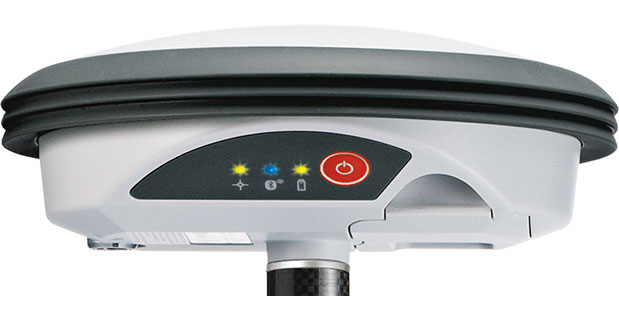
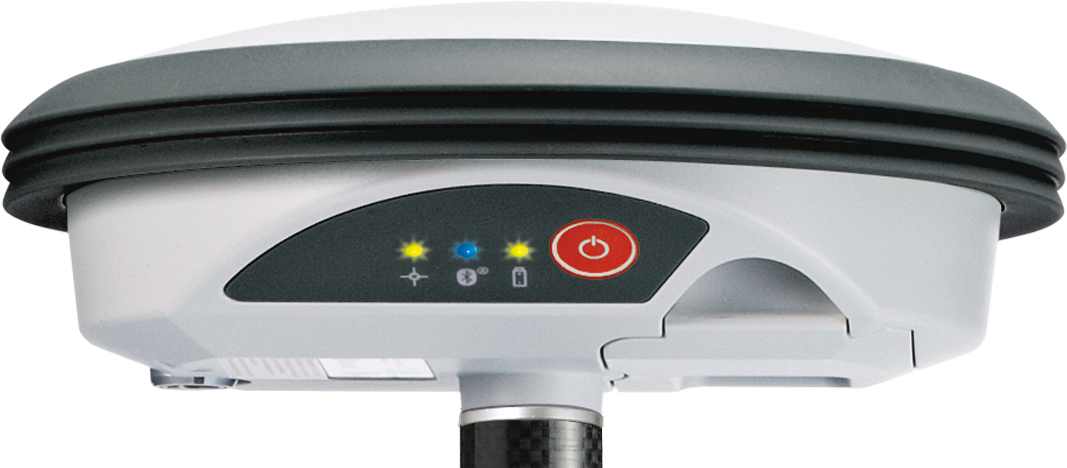
    Photo: Leica Zeno GG03 SmartAntennaWith its recent Ingress Protection (IP) certification, the Leica Zeno GG03 SmartAntenna is now an IP68-certified SmartAntenna for GIS applications. IP68 represents the top rating for protection against dust, moisture and water. Meeting the tough standards for Ingress Protection (IP) makes the Leica Zeno GG03 a rugged GNSS SmartAntenna for GIS asset collection and management tasks.

    The upgradable Leica Zeno GG03 SmartAntenna is designed for organizations that require a compact and lightweight device for accurate and reliable positioning. The robust design of the Zeno GG03 brings further advantages when collecting GIS assets by offering reliable and rugged operation in extreme environments, even after continued exposure to water and dust.

    “The Leica Zeno GIS series is used all over the world in the most demanding environments,” said Product Manager Johannes Hotz. “The IP68 rating further underlines the quality and robustness of the Leica Zeno GG03. The industry-leading GNSS performance and an unmatched ultra-rugged design is a big win for our customers in the field.”

  • Call for Papers Now Open for 2014 Esri UC

    Esri announced it is now accepting user presentations for the 2014 Esri International User Conference, July 14–18, in San Diego, CA. Each year, the Esri UC features more than 900 user presentations ranging from technical best practices and success stories to discussions about cutting-edge research and the future of geospatial technology. Presenters can choose from more than 90 topics that cover 26 industries.

    Abstract submissions are due by November 1. For more information and to submit an abstract, visit www.esri.com/uc.

  • Esri Press Releases 5th Edition of Thinking About GIS: Geographic Information System Planning for Managers

    Esri Press has released the fifth edition ofThinking About GIS: Geographic Information System Planning for Managers. This seminal book on planning and implementing a geographic information system (GIS) is authored by Dr. Roger Tomlinson, widely recognized as “the father of GIS.”

    roger-tomlinsons-thinking-about-gis-fifth-edition-now-available-sm

    According to the announcement, the fifth edition has been updated with new resources including case studies, tips, and terminology definitions that reflect the latest advances in GIS technology and information. The accompanying DVD includes examples and templates, exercises, and videos of the seminar Planning and Managing a GIS from the 2012 Esri International User Conference.

    Drawing from decades of Tomlinson’s consulting experience and worldwide GIS seminars, this new edition bridges the communication gap between the senior managers who oversee information technology systems and the technical specialists who design and implement the systems. The book provides a common ground for both groups so that each clearly understands the methodology needed to implement and maintain an effective GIS.

    “Successful GIS implementation depends on a well-thought-out and executed plan,” says Esri president Jack Dangermond. “If you follow the methodology presented in this book, you will be on the track to success. I hope that you find Roger Tomlinson’s work as informative and beneficial as my colleagues and I have.”

    Tomlinson created the first computerized geographic information system in the 1960s while working for the Canadian government. He is a former chairman of the International Geographical Union GIS Commission, a past president of the Canadian Association of Geographers, and the second-ever recipient of the prestigious Alexander Graham Bell Award from the National Geographic Society.

    Thinking About GIS: Geographic Information System Planning for Managers, Fifth Edition (ISBN: 9781589483484, 280 pages, US$54.95), is available at online retailers worldwide, at esri.com/esripress, or by calling 1-800-447-9778. Outside the United States, visit esri.com/esripressorders for complete ordering options, or visit esri.com/distributors to contact your local Esri distributor. Interested retailers can contact Esri Press book distributor Ingram Publisher Services.

  • BioDigital Announces $4M Funding to Create a 3D Model of the Human Body

    BioDigital, Inc. announced they’ve received $4MM in Series A funding led by FirstMark Capital with participation from the NYU Venture Fund and a number of prominent angel investors.

    According to the announcement, BioDigital has been pioneering the use of 3D technology to simplify health concepts for a decade.  Regardless of the customer the underlying problem remained the same: traditional methods of communicating health information were no longer adequate. Furthermore, the consumer appetite for information is unprecedented, but the format its delivered in is hard to digest. 3D technology has already changed the face of games, movies and with geo-browsers like Google Earth the way we navigate our planet, but nowhere does 3D make more sense than in representing the human body. The body is a dynamic, complex system and understanding it using text and static 2D illustration is inherently flawed. BioDigital has been fortunate over the last decade to provide innovative solutions to this problem to a range of healthcare customers such as hospitals, medical schools, device and pharma.

    BioDigital_human-showcase

    Two years ago, BioDigital reports that it saw some profound changes happening in the development of the Web. For the first time, as part of the HTML5 spec,  3D would be natively supported in browsers. Cloud and API based businesses also emerged. BioDigital opines that technology is clearly entering a new phase of the web: a services oriented model which leverages rich interactive media as a better means of conveying information. BioDigital reports these trends inspired it to take its IP  built over the years and create the definitive place for immersive health content on the Web, which is called the BioDigital Human Platform.

    BioDigital reports that since its launch 12 months ago, the Human has exceeded expectations. More than one million members have joined across an array of use cases. Students from over 2500 schools are using it to learn anatomy; consumers are using it to understand and share everything from fitness to health conditions; healthcare providers are now introducing it within their clinics to better communicate with their patients.

    Building the first true 3D virtual body platform that finally allows people to see what’s happening below our skin is a massive undertaking, according to the company blog. BioDigital says the investment will allow it to accelerate the development of features and API functionality requested by its users while furthering its mission to make health and human body understandable to everyone.