Tag: GMV

  • Spanish Navy tests Seeker UAS in demanding exercise

    Spanish Navy tests Seeker UAS in demanding exercise

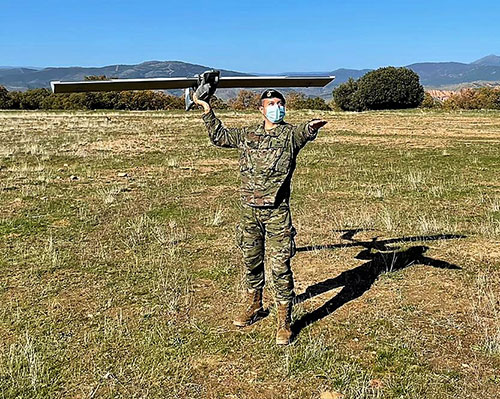
    The Seeker UAS proved itself a vital asset in a recent exercise for the Spanish Navy. The UAS, developed by GMV and Spanish technology company Aurea Avionics, was used for intelligence gathering through threat identification, tracking vehicles and other targets, and assessing terrain, routes and settlements.

    The Marine Infantry Brigade (BRIMAR), part of the Tercio de Armada de Infantería de Marina (Marine Infantry Protection Force), deployed the Seeker Dec. 9-13 at the San Gregorio national training center in Zaragoza during an exercise known as FTX-BRIMAR 21.

    In the demanding live-fire exercises, the BRIMAR troops were able to take full advantage of the Seeker’s autonomy and range to conduct operations from advantageous locations — even in adverse weather conditions, with surface winds exceeding 40 knots — and to arrange autonomous takeoffs and landings in conditions providing little to zero visibility, including night flights.
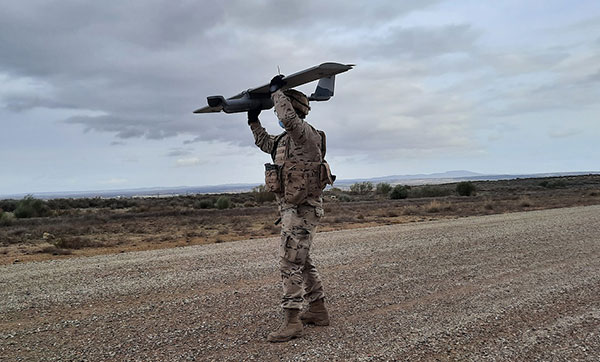
    Photo: GMV
    Photo: GMV

    Despite the complex environment, the Seeker UAS was able to deploy smoothly and enabled the BRIMAR to locate targets both day and night thanks to its dual payload, complete with both a thermal and visible light camera. This contributed to the success of the exercises.

    During the exercises, the Seeker UAS processed available data sources to supplement the video with information of use to all deployed troops, not just the system operators: the video and data generated was distributed in real time to the BRIMAR control station using VidStream, a secure, high-quality, latency-free video and data transmission system. This was done using the new RF-7800H-MP radios from L3Harris, which are natively integrated into VidStream. With this setup, the Seeker UAS was the only system to relay video from its ground position to the control station.
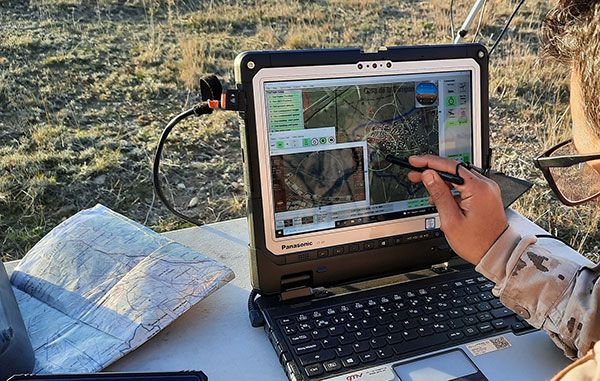
    Photo: GMV
    Photo: GMV

    The Seeker system was involved in the exercises under the RAPAZ program led by the Subdirectorate-General for Planning, Technology and Innovation, which reports to Spain’s Directorate General of Weapons and Material.

    The Seeker UAS is in the Class I Mini segment for defense. It has endurance of 90 minutes, a range of 15 km and a weight of 3.5 kg. Both the Spanish Navy and the Spanish Army received the first Seeker UAS units to reinforce the intelligence, surveillance and reconnaissance capabilities of the elite Marine Infantry Protection Force and the Spanish Army’s elite Almogávares VI Paratrooper Brigade.
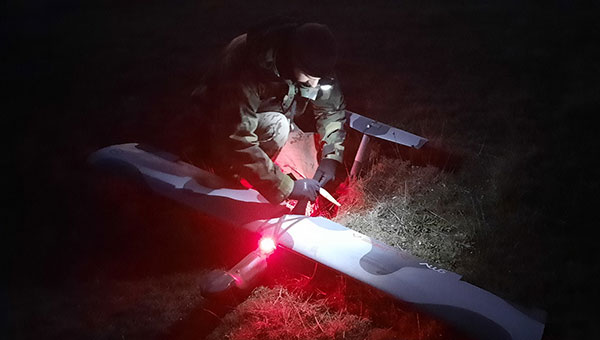
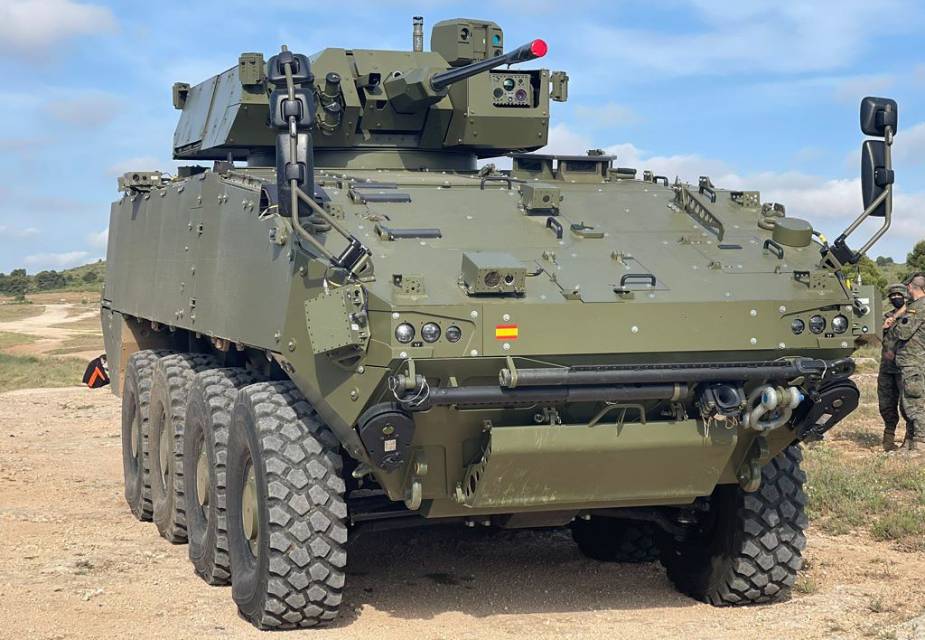
    Photo: GMV
    Photo: GMV
  • GMV begins production of navigation system for Spanish army

    GMV begins production of navigation system for Spanish army

    Photo: GMV
    Photo: GMV

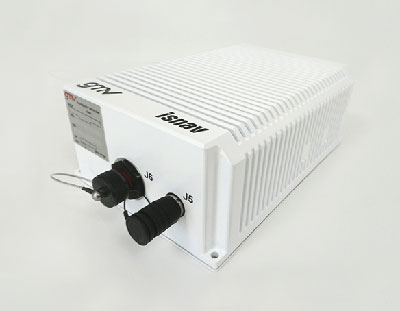
    GMV will supply its advanced navigation and timing solution to the Spanish Army, providing positioning information on armored vehicles with or without GNSS signals.

    The 8×8 Dragón wheeled combat vehicle (WCV, or VCR in Spanish) will use GMV’s ISNAV system. GMV signed a contract with TESS Defence in August 2020 for €2.1 billion. The contract will equip 240 Dragóns with ISNAVs. GMV plans to produce the ISNAV units at its manufacturing facilities in Tres Cantos, which opened in 2019. The first units will be delivered in the fourth quarter of 2023.

    The ISNAV system was developed by GMV as part of the VCR 8×8 Technology Program. It meets the demanding requirements of the program and has successfully passed both the mission system integration tests, and the functional tests installed on several demonstration units.

    The ISNAV was designed to be modular equipment that can be adapted to various vehicle configurations, sensors and receivers. It includes the option of including Galileo PRS to provide advanced PNT (positioning, navigation and timing) capabilities, making it possible to determine the position of the vehicle in all kinds of scenarios, including scenarios without a GNSS signal.

    Photo: Spanish Ministry of Defence
    Photo: Spanish Ministry of Defence
  • Spirent offers test capability for Galileo HAS

    Spirent offers test capability for Galileo HAS

    Galileo Control Centre in Oberpfaffenhofen, Germany. (Photo: ESA)
    Galileo Control Centre in Oberpfaffenhofen, Germany.   (Photo: ESA)

    Spirent Communications plc has launched a commercially available simulation test solution for the Galileo High Accuracy Service (HAS), via a beta interface implementation based on HAS ICD version 1.2. During the development of the solution, Spirent collaborated with GMV, a leader in cutting-edge GNSS high-accuracy technologies.

    Galileo HAS will provide free-of-charge high-accuracy Precise Point Positioning corrections through the Galileo E6-B signal, with accuracy under two decimeters, offering real-time improved user positioning performance. Developers need to be able to test their devices against this new service to ensure they can optimally capture the emerging capability when it becomes available. By integrating HAS simulation and capabilities, Spirent’s latest simulation solution enables customers to utilize and incorporate Galileo HAS as early as possible.

    In February 2021, the European Union Agency for the Space Programme (EUSPA) awarded GMV with the contract for the implementation of the Galileo High Accuracy Data Generator (HADG), which will be the facility in charge of generating the high-accuracy corrections data to enable the provision of HAS. Spirent’s collaboration with GMV will prove a key element in the early adoption of the service.

    “The high accuracy, feature richness and flexibility of Spirent’s simulator platforms provides an ideal foundation for the testing of innovative new Galileo services such as our recent Galileo HAS capability,” said David Calle, section head of advanced GNSS services at GMV’s aerospace sector.

    “The high level of expertise and in-depth understanding of Galileo HAS within GMV provided important guidance as we implemented HAS on our simulation platform,” said Jan Ackermann, Spirent’s director of product line management. “This enabled us to again be the first in the industry to offer a commercial solution to simulate and test these important new capabilities.”

  • Galileo Control Segment upgrade ready for next launch

    Galileo Control Segment upgrade ready for next launch

    Galileo Control Centre in Oberpfaffenhofen, Germany. (Photo: ESA)
    Galileo Control Centre in Oberpfaffenhofen, Germany. (Photo: ESA)

    News from the European Space Agency (ESA)

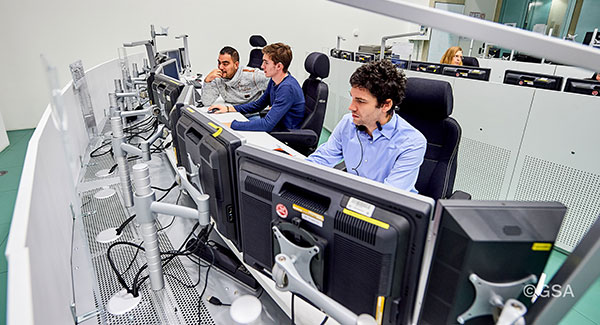
    The 11th launch of Galileo satellites, planned for Dec. 1, marks an important program milestone. With an upgrade of the Galileo Control Segment (GCS), this will be the first launch where the satellites’ first steps into space will be overseen from the Galileo Control Centre in Oberpfaffenhofen, Germany.

    Up until now, the Launch and Early Operations Phase (LEOP) of Galileo satellites has been overseen from an external mission control site — either ESA’s ESOC control centre in Darmstadt, Germany, or French space agency CNES’s site in Toulouse, France.

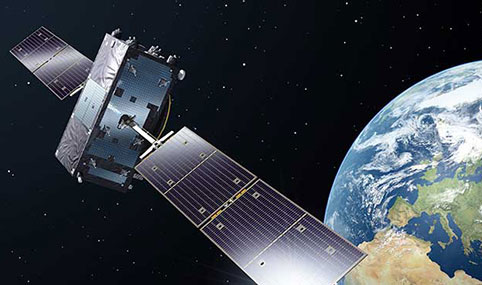
    The demanding upgrade of the GCS to Version 3.0 was performed by an industrial consortium led by GMV in Spain. The control segment encompasses the two Galileo Control Centres in Oberpfaffenhofen in Germany and Fucino in Italy, as well as six Telemetry, Tracking and Control (TT&C) ground stations used to monitor and command the 26 Galileo satellites in orbit.

    As well as increasing overall reliability and cybersecurity, the new upgrade opens the way to significant expansion of the Galileo constellation, enabling oversight of up to 38 satellites.

    Over the last three years, a complete technological refresh of the GCS software and hardware was done, including porting of software modules corresponding to several million lines of code, the deployment of equipment at many Galileo sites, and the execution of a rigorous level of testing throughout all elements comprising the system.

    Commencing in mid-2018, the upgrade had to contend with the worldwide COVID-19 pandemic midway through its lifetime, but the team pushed on to conclude at the end of July. Since Aug. 4, it has been used to nominally operate all the satellites in the constellation.

    The project was overseen by ESA in its System Prime role managing Galileo’s design, development, qualification and deployment of future upgrades on behalf of the European Commission, Galileo’s owner.

  • GMV awarded contract for Galileo HAS data generator

    GMV awarded contract for Galileo HAS data generator

    Image: EUSPA
    Image: EUSPA

    GMV has been awarded a contract for the implementation of the Galileo High Accuracy data generator (HADG), which will be the facility in charge of generating the high-accuracy corrections data to enable the provision of the Galileo High Accuracy Service (HAS).

    The contract was awarded by the European Union Agency for the Space Programme (EUSPA).

    HADG will ensure the continuous provision of HAS data with a proper rate, accuracy, availability, continuity and latency. The data will encompass orbit and clock corrections, biases, quality indicators and service parameters.

    The HADG contract addresses a key infrastructure development of the Galileo program. The Galileo HAS, together with the Open Service Authentication (OSNMA) and the Commercial Authentication Service (CAS), is one of Galileo’s stand-out services, setting it apart from GPS or GLONASS.

    The HAS will be an open-access service based on the provision of high-accuracy corrections transmitted in the Galileo E6-B signal (E6, data component), at a rate of 448 bps per Galileo satellite connected to an uplink station. The data retrieved by the user from the different satellites offering the HAS will be reconstructed, allowing the user to achieve an improved positioning performance.

    As the project’s leader, GMV will be responsible for core project activities such as the provision of the algorithms for the computation of the high-accuracy corrections, which rely on GMV’s MagicPPP software suite for precise point positioning. GMV is supported by SIDERTIA in the area of cybersecurity.

    The specification , design  and development phases have already been completed, and the project is progressing toward qualification of the system that will enable the execution of the necessary validation activities prior to the HAS initial service declaration, which is expected in 2022.

    GMV presented the first version of MagicGNSS in 2008.

  • GMV supplies a Galileo second-generation RF constellation simulator

    GMV supplies a Galileo second-generation RF constellation simulator

    Image: ESA
    Image: ESA

    The European Space Agency has selected GMV to supply the radio-frequency constellation simulator (RFCS) for the Galileo second generation (G2G) program.

    According to GMV, this is the multinational’s largest contract in Portugal.

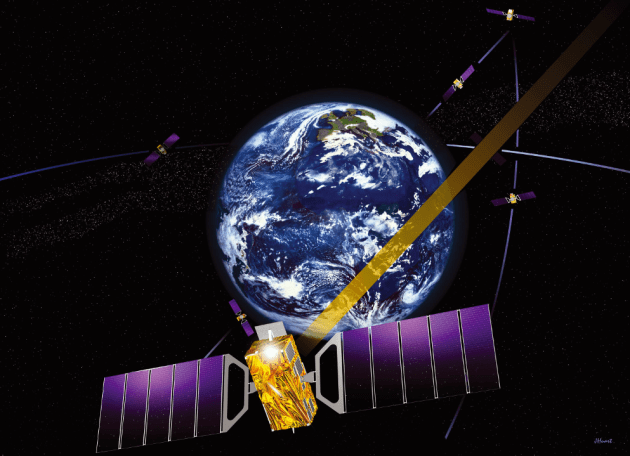
    From Portugal, GMV will lead a consortium to supply an RFCS covering both the first and second Galileo generations. The Galileo first generation (G1G), running since December 2016, consists of space infrastructure (26 satellites to date) and ground infrastructure.

    Under the G2G RFCS contract, GMV teams in Portugal and Spain — partnering with Orolia and Tecobit — will develop an RFCS covering both Galileo generations as well as Galileo Open Service and Public Regulated Service (PRS). The RFCS will simulate the progressive deployment of the G2G with its new signals and will be key to supporting development of G2G infrastructure and testing of experimental user receivers.

    The G2G aims to phase in new services, improve existing services, and boost system robustness. It also will enhance security while cutting operating and maintenance costs.

    The RFCS will cover user characteristics such as dynamic behavior, signal impairments such as multipath and interference but also solution hybridization (for example, inertial sensors) and signal distortions. It will be designed to guarantee flexibility, configurability, modularity and scalability, as well as segregation of need-to-know information. For this purpose, the RFCS will be built with consumer-off-the-shelf products and follow a software-defined radio approach.

    The project is closely linked with other PRS activities within GMV, identified as strategic for the maintenance of GMV’s European leadership position in the Galileo program.

  • GMV takes part in European GEODE military project

    GMV takes part in European GEODE military project

    Photo:Spain-based GMV is taking responsibility for integration of the GNSS/PRS receiver system for the European Union’s (EU’s) GEODE project.

    GEODE (GalilEO for EU DEfence) is the biggest Galileo application development project ever launched and a crucial and decisive step towards the development of the Galileo Galileo PRS (PRS) military user segment. GEODE is and one of the most ambitious defense cooperation projects launched under the umbrella of the European Commission’s European Defence Industrial Development Programme (EDIDP).

    Co-financed by Belgium, Germany, Italy, France and Spain, GEODE is supported by the EU with a grant of about 44 million Euros.

    GMV, part of the Spanish industrial team, will develop the GNSS/PRS receiver’s signal-processing, navigation and timing functions. GMV also participated in the Feb. 8 GEODE kick-off meeting.

    GEODE aims to boost the EU industry’s competitiveness in the highly strategic domain of military positioning, navigation, timing and synchronization (PNT) and to endow EU military forces with Galileo PRS capacity. The project will be implemented by a consortium of 30 undertakings from 14 EU countries.

    The Spanish industrial team made up by GMV, Indra and Tecnobit, takes on first-level responsibility for the complete development of the solution for naval military platforms (GNSS/PRS receiver with security module and CRPA antenna). GMV is responsible for the integration of the GNSS/PRS receiver system and, in particular, for the development of all the receiver’s signal-processing, navigation and timing functions.

    GEODE will provide the EU Industry with an even playing field in the Defense PNT market, where military GPS’s essentialness at the moment ensures U.S. industry’s supremacy. It will also reinforce EU military capability and autonomy and maximize the benefits of the Galileo program by promoting take-up of its crucial PRS service.

    Following an initial specification and standardization phase, the project will then prototype, test and qualify all the elements of a complete PRS solution:

    • PRS security modules
    • PRS receivers
    • GPS/Galileo PRS compatible controlled radiation pattern antennas (CRPAs)
    • A common and standardized test environment.

    A PRS solution for spacecraft will be also designed and prototyped. Complementarily, a PRS infrastructure will be developed to ensure the availability of the security assets necessary for operational testing.

    Military operational field testing will be organized on military naval and land platforms, RPAS, and a timing and synchronization system.

    GEODE will boost the EU industry competitiveness in the highly strategic domain of military positioning, timing and synchronization, it will foster the equipment of EU Member States’ military forces with the Galileo PRS capability, essential to reinforce their interoperability and autonomy. It also will facilitate access to complex security certified technologies and make them affordable through means of standardization and by creating the necessary critical mass.

  • Spanish elite units first to receive GMV Seeker drones

    Spanish elite units first to receive GMV Seeker drones

    Photo: Spanish Armed Forces/GMV
    Photo: Spanish Armed Forces/GMV

    The Spanish Army and Navy have received the first Seeker Remotely Piloted Aircraft Systems (RPAS) from GMV and Aurea Avionics. The unmanned aircraft is designed to boost the intelligence, surveillance and reconnaissance capabilities of two elite forces, the Spanish Army’s 6th Almogávares Paratroopers Brigade and the Marine Infantry Protection Force.

    Seeker has a 90-minute endurance and 15-km range, and weighs 3.5 kg. The UAV’s design and manufacture in Spain proved crucial during the COVID-19 epidemic, with the manufacture, test flights and delivery of the aircraft all performed within the project deadlines.

    In the final phase of the project, intensive training courses took place on the Madrid site of Aurea Avionics and the Los Alijares Firing and Maneuvering Range (CMT) of Toledo. There, future Seeker users put the RPAS through its paces with mission simulations, engaged in vehicle-tracking exercises and learned about  its theoretical and practical uses.

    Seeker will provide BRIPAC (Paratrooper Brigade) and BRIMAR (Marine Infantry Brigade) with real-time thermal-infrared and visible-spectrum video, augmented by metadata that can be mined by the operators and remotely by the command-and-control centers.

    New digitized ground-station architecture makes Seeker compatible with NATO’s standard command centers. This means any allied force will be able to integrate the aircraft into its fleet and command centers, ensuring joint operability between all troops and systems.

    The RPAS is financed by the Subdirectorate General of Planning, Technology and Innovation of the Directorate General of Armaments and Material.

  • ESA chooses GMV as 1 of 3 contractors for new phase of Galileo ground station

    ESA chooses GMV as 1 of 3 contractors for new phase of Galileo ground station

    The Galileo Second Generation will phase in of new services, improve existing services and increase security

    The technology multinational GMV is playing a key role in the Galileo Second Generation (G2G) ground segment.

    G2G’s main objectives are to phase in new services, improve existing services, and boost system robustness and security while cutting both operating and maintenance costs, to cement Galileo’s position as one the future’s top GNSS.

    Three phases. G2G is divided into several phases. In the first, led by the European Space Agency (ESA), mission requirements were defined at system level. This was followed by a preparation phase, then an implementation phase.

    As well as priming several mission-requirement projects, GMV, since 2018, has been heading one of the consortia working on G2G’s complete ground segment during the preparation phase.

    Within the preparation phase — shortly before the start of the COVID lockdown — ESA announced the successful end of the first phase before launching a bid invitation for the second phase as the prelude to G2G implementation.

    Although publication of the bid invitation for this phase was eventually pushed back until mid-June, GMV never broke off its G2G activities. In recent months GMV has brought new recruitments and partners into the project team while also working on new ideas and kicking off some project activities.

    Team members have attended various skills-training courses, some of them gaining certification under SAFe 5 Agilist. During these months, GMV has also been working under new pandemic circumstances with teleworking, virtual meetings and new toolboxes.

    First Generation. Galileo First Generation (G1G), running since December 2016, consists of space infrastructure (26 satellites to date) and ground infrastructure. Galileo is now providing 20-cm-precision positioning, navigation and timing services for over 400 million users around the world.

    The worldwide Galileo ground segment includes two control centers (Italy and Germany) as well as various tracking, uplink and sensor stations and monitoring and test centers. (Image: ESA)
    The worldwide Galileo ground segment includes two control centers (Italy and Germany) as well as various tracking, uplink and sensor stations and monitoring and test centers. (Image: ESA)
  • GMV NSL launched: GMV merges UK company with Nottingham Scientific

    GMV NSL launched: GMV merges UK company with Nottingham Scientific

    GMV-NSL logoGMV Innovating Solutions Limited — the U.K. aerospace company belonging to the Spanish technology multinational GMV — has signed a merger agreement with Nottingham Scientific Limited (NSL).

    GMV trades in the aerospace, defense, ICT and intelligent transportation systems markets, while NSL is a U.K. leader in satellite navigation and critical applications.

    After the agreement, GMV becomes sole shareholder of NSL and sets up the company GMV NSL, to be integrated seamlessly into GMV’s set of companies. NSL was founded in 1998 by Vidal Ashkenazi, a former member of GPS World’s Editorial Advisory Board.

    Headshot: Vidal Ashkenazi
    Vidal Ashkenazi

    In 2013, as part of its international expansion, GMV rolled out a business development strategy in the U.K. This involved setting up a new company, which came on stream in late 2014 to join the suite of companies and offices in Spain, USA, Germany, France, Poland, Portugal, Romania, The Netherlands, Malaysia and Colombia.

    Working from its Harwell innovation center in Oxfordshire, GMV’s main U.K. business is Earth observation, space debris tracking, mission planning, flight dynamics, navigation, autonomy and robotics. Its principal clients include the European Space Agency (ESA) and the European Commission (EC), as well as U.K.’s space agency (UKSA), the Defence Science and Technology Laboratory (DSTL), Innovate UK, ASUK, Satellite applications Catapult and the Science Technology Facility Council (STFC).

    Set up in 1998 and with a solid and acknowledged track record in high-tech projects, NSL is a U.K.-based SME specializing in satellite navigation and critical applications. From its Nottingham head office in the East Midlands, NSL offers GNSS-based services, systems, solutions and intellectual property, helping to ensure that navigation and positioning are precise and reliable, secure and protected, resistant and robust. NSL’s major clients include UK Space Agency, ESA, U.K. Government departments, QinetiQ, Inmarsat, and the European Commission.

    GMV NSL, 80 strong, will be integrated into GMV’s set of companies, which closed 2019 with a staff of 2,176 and a turnover of more than €236 million. Membership of the GMV powerhouse will enable GMV NSL to rise to even greater challenges and tap into the opportunities offered by the U.K. market, especially the space market, not only in satellite navigation and in critical applications, but also in Earth observation, telecommunications and new technologies, with the overarching aim of winning pole position in Britain’s space sector.

    Jesús B. Serrano, GMV CEO (Photo: GMV)
    Jesús B. Serrano, GMV CEO (Photo: GMV)

    “This merger will enable the resultant firm to tap into significant commercial, technological and operational synergies, boosting GMV NSL’s rate of growth and winning it a place in the space programs of both the U.K. and Europe as a whole,” said Jesús B. Serrano, GMV CEO.

    “In our different ways, GMV and NSL are regarded as world leading space companies and this agreement will expand our capabilities and capacity enabling us to successfully tackle even greater challenges and consolidate GMV NSL’s position as the benchmark space company,” Mark Dumville, co-founder and director of NSL, added.

    The sheer quality of both teams and the like-mindedness of GMV and NSL on company values, heritage, technological excellence and client satisfaction were all deal clinchers in this merger agreement.

  • GMV leads development of ESA COVID-19 Space Hunting Platform

    GMV leads development of ESA COVID-19 Space Hunting Platform

    GMV will search using artificial intelligence for any correlations between COVID-19 spread and environmental parameters.

    Image: ESA
    Image: ESA

    The European Space Agency (ESA) has launched an internal initiative to cull ideas for supporting its member states in the study and analysis of the COVID-19 pandemic. Under this initiative, an idea from the Galileo Navigation Science Office has been selected.

    The COVID-19 Space Hunting Platform is designed to facilitate access to and processing of existing COVID-19 databases for epidemiological studies, topping them up with data from ESA’s Earth observation satellites.

    The project will use artificial intelligence to look for correlations between COVID-19 spread and environmental parameters, such as humidity and temperature.

    The aim is to help researchers generate products and statistics that might be useful for decision-making purposes in terms of protection measures and lockdown, while also vetting the efficiency of the measures taken.

    Development of the COVID-19 Space Hunting Platform will be primed by the technology multinational GMV. The Universidad Politécnica de Valencia will also be taking part, with support for processing, data analysis and interaction with diverse epidemiological research groups. The university has defined a mathematical COVID-19 transmission model and has been publishing periodical updates and forecasts of its trend in Spain.

    In the medium term, the COVID-19 Space Hunting Platform could help in setting up a collaborative COVID-19 website for scientists to analyze existing data more efficiently, benefiting also from ESA’s data-processing software packages.

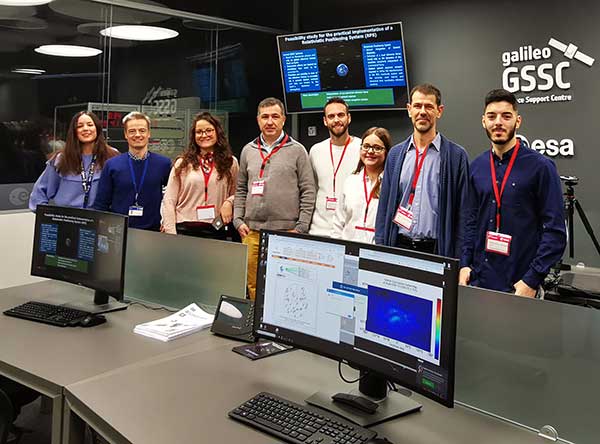
    The GSSC team will lead the program. (Photo: ESA)
    The GSSC team will lead the program. (Photo: ESA)

    The project will be carried out around the GNSS Science Support Centre (GSSC) platform, which hosts and indexes COVID-19 data. The three-month process will analyze public COVID-19 data and make this information available to the science community. This will lead to a first version with basic pandemic-propagation algorithms, updated thereafter to ensure the information is always precise and up to date.

  • GMV to help develop unmanned ground vehicle for European defense

    GMV to help develop unmanned ground vehicle for European defense

    GMV will take charge of the command and control and C4ISR interoperability system under the Integrated Modular Unmanned Ground System (iMUGS).

    The European Commission’s European Defence Industrial Development Programme (EDIDP) has assigned 30.6 million euros to the iMUGS project for the development of an unmanned ground system. This makes it one of the European Commission’s biggest defense investments to date.

    The Integrated Modular Unmanned Ground System (iMUGS) project will be carried out by a consortium primed by Milrem Robotics, with another 11 high-tech defense firms, including the technology multinational GMV.

    The common development of this vehicle will build from Milrem Robotics’s previous program called THEMis, with the addition of various mission systems and autonomy solutions.

    The aim is to develop a valid scalable architecture applicable to both manned and unmanned vehicles, with the idea of standardizing Europe’s ground and air systems and its command-and-control and communications systems, sensors, payloads and autonomy algorithms.

    The system will consist of a robust and modular ground vehicle fitted with an electronic-warfare-resistant command, control and communications system and secure autonomous mobility software to allow the operator to control many different ground and air platforms securely and simultaneously.

    iMUGS will include several components:

    • system cybersecurity
    • autonomous mobility
    • advanced communications systems and further driving-related developments
    • manned-unmanned teaming (MUT) including swarms.

    iMUGS will enable European countries to use unmanned vehicles with logistics and ISR functions, trimming the load and increasing troop security.

    With this joint initiative, the European Defence Fund meets member states’ requirements and draws on the skills of Europe’s industry to boost defense capabilities and strategic autonomy.

    European Defence Industrial Development Programme (EDIDP)

    The European Defence Industrial Development Programme (EDIDP) is the first initiative of the European Union’s 2019 and 2020 defense research window of capabilities. Announced on June 7, 2017, EDIDP can be considered the “preparatory action” of defense research to prove the feasibility of a joint defense-capability development and procurement program.

    EDIDP’s aim is to drive the European Union’s strategic autonomy and cooperation between member states, making it possible for armed forces to carry out high level operations, with special attention to intelligence, secure communications and cybernetics.

    Under the EDIDP 2019-2020 program, GMV is participating in the iMUGS, GEODE, ESC2 and PANDORA projects.

    GMV‘s iMUGS role

    GMV will be coordinator of the command and control and C4ISR interoperability subproject. GMV is bringing to the table experience in C2 ground systems and JISR (joint intelligence, surveillance and reconnaissance interoperability).

    The overall aim is to develop the C2ISR tactical component for planning and carrying out joint manned and unmanned systems operations, using and distributing sensor data from the unmanned ground vehicle.

    JISR interoperability synchronizes and integrates the planning and operation of all information-obtaining capacities with operation and processing capacities, sending on the resulting information to the assigned person at the right time in the right form and in direct support of present and future operations.

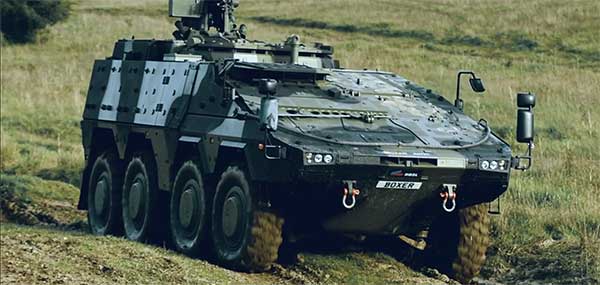
    The Boxer Mechanised Infantry Vehicle (MIV) is used by many allied forces. (Photo: UK Ministry of Defence
    The Boxer Mechanised Infantry Vehicle (MIV) is used by many allied forces. (Photo: U.K. Ministry of Defence)

    The C2 command and control subsystem will be fitted in a Boxer 8 x 8 vehicle for manned-unmanned teaming (MUT) coordination tests.

    GMV’s participation in iMUGS is based on its experience in C2 ground systems, dismounted soldier C2 systems and JISR interoperability, areas where GMV is one of the leading companies in Europe. GMV is a supplier of Artillery and Dismounted Soldier Command and Control Systems for the Spanish MoD.

    Since 2016 it has been responsible for maintenance and upgrading of the EUCCIS C2 system of the European External Action Service (EEAS).