Tag: GNSS

  • GLONASS Gone . . . Then Back

    GLONASS Gone . . . Then Back

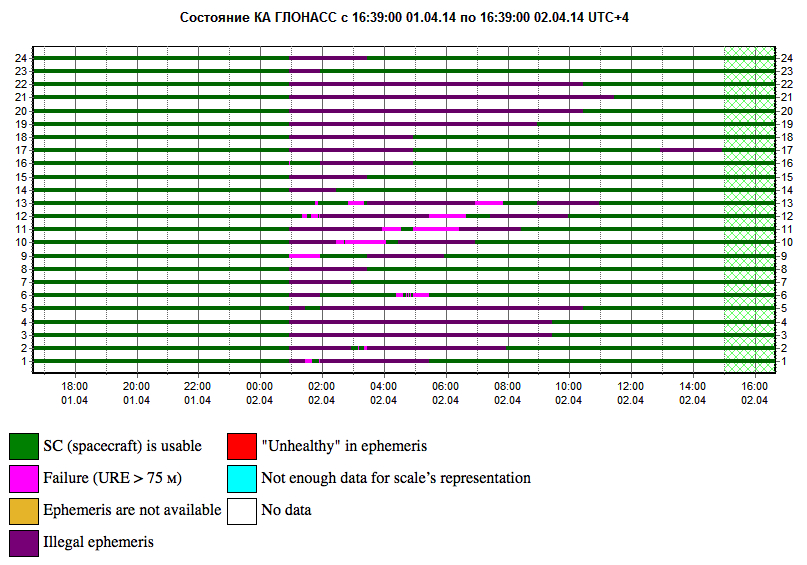
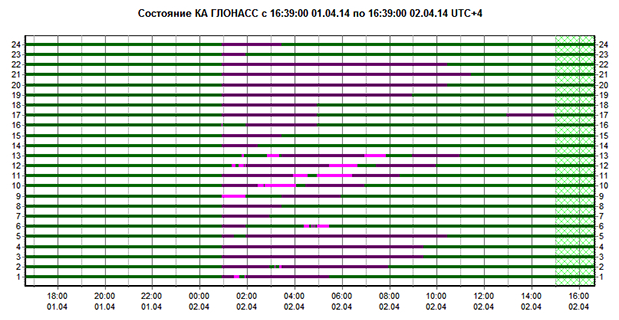
    In an unprecedented total disruption of a fully operational GNSS constellation, all satellites in the Russian GLONASS broadcast corrupt information for 11 hours, from just past midnight until noon Russian time (UTC+4), on April 2 (or 5 p.m. on April 1 to 4 a.m. April 2, U.S. Eastern time). This rendered the system completely unusable to all worldwide GLONASS receivers. Full and correct service has now been restored.

    “Bad ephemerides were uploaded to satellites. Those bad ephemerides became active at 1:00 am Moscow time,” reported one knowledgeable source. For every GNSS in orbit, the navigation messages include ephemeris data, used to calculate the position of each satellite in orbit, and information about the time and status of the entire satellite constellation (almanac); this data is processed by user receivers on the ground to compute their precise position.

    According to another source, a GLONASS fix could not take effect until each satellite in turn passed back over  control stations in the Northern Hemisphere to be reset, thus taking nearly 12 hours.

    During the outage, CEO Neil Vancans of Altus Positioning Systems reported “We are currently experiencing calls from customers all over the world who are experiencing GLONASS ‘outages’ and we have advised customers to switch GLONASS tracking off on our receivers. We don’t have any better information on when normal service is likely to resume from GLONASS satellites. If you do, let me know!”

    Such a — possibly human, possibly computer-generated — error could conceivably occur with GPS, Galileo, or BeiDou. “Another reason to have backups,” mused Richard Langley of the University of New Brunswick. “And not just other GNSS.”

    A recent plot shows all satellites restored to normal service:

    Current plot from the Roscosmos GLONASS Information-Analytical Centre. Things are almost back to normal this morning.
    Current plot from the Roscosmos GLONASS Information-Analytical Centre. Things are almost back to normal this morning.


  • GNSS Future Glimpsed at Summit in Munich

    The Munich Satellite Navigation Summit annually gathers people involved with GNSS from around the world to report on current status and progress of the multiple systems. It is a high-level briefing of significant global importance. Of course Europe, Germany, Bavaria, and the European GNSS industry, now recognized around the world, all take the opportunity to present their capabilities and successes.

    This year’s Summit covered a lot of ground, and I’ve tried to do it justice in this column. For an overview, here are the main topics covered in what follows:

    • Opening Plenary
    • Constellation Updates
    • Regional and Augmentation Updates
    • Bavarian Highlights
    • GNSS Interference
    • Legal impacts of Personal Privacy Devices (PPDs)
    • Precise Point Positioning (PPP)
    • Future of GNSS in the User Segment

    I used to spend quite a lot of time in Munich working on a multi-national, multi-role fighter aircraft program, so returning for this year’s Summit stirred some good memories for me.

    Held in the opulent Residenz Muenchen, the conference derives a special atmosphere from these historic surroundings, some dating back to 1385.  The former royal palace of Bavarian monarchs, the labyrinthine palace has ten courtyards and 130 rooms. Overall, this is a delightful setting.

    Regional Flavor. Munich is in the southern German state of Bavaria, and Bavaria has taken a real interest in the promotion and success of Galileo; witness the expansive Bavarian booth at recent European and North American GNSS conferences, and the siting of a Galileo control center in Oberpfaffenhoffen, once a sleepy village in the Bavarian countryside 20 kilometers outside Munich, but now a significant high-tech research center with many aerospace facilities. Germany has of course been one of the lead nations funding Galileo from its inception.

    Opening Plenary: A View from the Top

    The host of the Summit is actually the University of the German Federal Army in Munich, and we received a warm welcome from two leading professors – Dr. Eissfeller and Dr. Niehuss, the president.

    The theme of the Summit is to move from implementation to utilization, and in typical European form, all parties were looking to shower potential users with funded solutions to problems of which users are not yet aware — so users clearly need government-provided education, pilot projects, and funding. Not exactly a North American concept, where we tend to encourage users to buy our innovative stuff by demonstrating how it can save them money or earn them more revenue. But there’s a city called Rome over here . . .

    The opening plenary session covered GNSS, Earth Observation (EO) and Telecommunications — an extensive mandate — with a panel headed by Ilse Aigner, Bavarian State Minister of Economic Affairs and Media, Energy and Technology, an equally extensive portfolio, even for a state-certified engineer who used to work for Eurocopter.

    The European Commission, the European Space Agency (ESA), the German Aerospace Agency (DLR), the European GNSS Agency (GSA), and leading manufacturers Airbus, OHB (providers of the Galileo full-operational capability (FOC) satellites), and Telespazio were also represented. The Minister did indeed associate with and praise the local area, claimed 1,000 jobs created related to Galileo through an incubation center at Oberpfaffenhofen, and declared whole-hearted Bavarian support for satellite navigation.

    Among important matters mentioned by the plenary panel:

    • an €11 billion budget for Galileo/EGNOS and Copernicus (an EO project) under the Horizon 2020 program;
    • an intent to declare Early Service for Galileo before the end of this year with two or three dual Galileo satellite launches.

    Two Launches this Year. The first two FOC (production) SVs should go to the European launch center in Kourou in April in preparation for launch around June.  I heard in a corridor that launches may be planned for June, October and December, but an EU spokesman later said that there would only be two launches this year. OHB now has the contract to build 22 FOC Galileo SVs, each with a design life of 14 years, and they are bullish on their ability to deliver on time and budget.

    Constellation Updates

    • GPS. An estimated 2 billion GPS receivers are in use, and there may be ~10 billion by 2020. A return-on-investment (RoI) analysis is currently underway, but a rough guess is that costs are in the tens of $Billions, while annual returns are of the order of $60–100B/year. Another IIF satellite (SV) launched last month brought the total to 5 SVs transmitting L1, L2C, and L5 – with 7 more to come, and multiple launches are expected this year. There are 30 operational SVs on orbit. Signal performance significantly exceeds the specs, and consistent, dependable performance has been provided for more than 20 years.
    • Galileo. First fix achieved 12 March, 2013 with four SVs, two (maybe three?) launches of two SVs each planned for 2014 & early operational capability to be declared by end of this year. €7B funding provisioned for 2014-2020, 16-24 operational ground stations, Commercial Service (CS) planned by 2016 (more on this later), and a long-term evolution plan is being worked up during this year.
    • BeiDou. 14 SVs are on orbit: 5 geosynchronous orbit (GEO), 4 mid-Earth orbit (MEO) similar to GPS and other GNSS birds, and 5 inclined geosynchronous orbit (IGSO), together providing dual-frequency services. 30 total SVs are planned, and the intent is to provide open, compatible, interoperable signals with other GNSS, free of charge. There was not much other news to report, other than China intends to invest significantly in BeiDou to keep improving services.
    • GLONASS.  Russian delegates were notably absent, and there was much speculation that they declined to attend due to the Crimean situation. One U.S. delegate even inferred that they were ‘un-invited.’
    • United Nations ICG. Nine nations and the European Union = International Committee on GNSS (ICG), with 20 other associate and observer states.  Activities include GNSS compatibility/interoperability, GNSS enhancements, information sharing, and reference frames, timing & applications – lots of upcoming meetings and activities (see associated story).

    Regional & Augmentation Updates

    • WAAS (the U.S. Wide Area Augmentation System). Phase IV is underway with GEO replenishment begun, introduction of L5 to replace L2, and replacement of obsolete component parts. 100 GIII receivers were ordered with L1/L2C and L5 capability for delivery by September this year– and have capacity to also add Galileo. GIII receivers have already been fielded in six locations as part of initial integration testing. The Safety computer will also be upgraded starting this year.  3,912 LP/LPV approaches have been approved, of which 3,379 LPVs serve 1,667 Airports.
      GBAS CAT I is progressing with four US airport installations, system design approval began in January this year, and United Airlines has begun equipping more than 90 B737/B787 for GPS approach and landing. Alternative Positioning, Navigation and Timing (APNT) investigations are underway (as a backup to GPS) with a hybrid DME-pseudolite configuration currently favored. Stanford University subsequently presented this and other concepts.
    • EGNOS (the European Geostationary Navigation Overlay Service).  €1.58B budget approved, EGNOS V3 evolution is underway – introduction of L1/L5 and GEO (SES 5 and Astra 5B) replenishment, a requirement to expand East and West and to the North to provide full coverage to all EU States.There are ~100 EGNOS LPV approaches approved, this year it is hoped to add 150 more.
    • QZSS (Japan’s Quasi-Zenith Satellite System). Operational concept has been proven with 1st IGSO SV (Michibiki), so Japan is moving forward quickly to add another 3 SVs  (3xIGSO and 1xGEO) and ultimately would like to have a total of seven SVs in orbit providing QZSS services. L1/L1C/L2C/L5 signals are identical to GPS and L1s/L5s are augmentation signals, while L6 is proposed to be similar to Galileo E6, providing cm level PPP type service. QZSS essentially is intended to provide higher-elevation satellites to improve urban navigation in dense cities.
    • IRNSS (Indian Regional Navigation Satellite System).  Coverage extends 1500 kilometers beyond India’s land area, target is <20m accuracy, signals are in L5 and S band and can be used independently or in dual frequency combinations. A 2nd IRNSS-1B GEO satellite is scheduled to launch on April 4th.
    • GAGAN The Indian SBAS was commissioned and certified in February this year with a number of ground stations, redundant uplinks and two on-orbit GSAT 8 & 10 GEOs. Gagan is now qualified to provide RNP0.1 (navigation accuracy to 0.1 miles).

    Bavarian Highlights

    A collection of examples of Bavarian GNSS innovations followed in a very interesting session led off by an overview of Business Incubation Centers and their collaboration with government agencies and research centers. Small business start-ups are encouraged to apply during four annual time-slots, and receive two years’ incubation support and cash incentives.  This has lead to 81 new ventures and has apparently been the source of the 1,000 new jobs mentioned by the Minister of Economic Affairs.

    The annual European Satellite Navigation Competition and Galileo Masters competition have also generated a large number of ideas and concepts (8,000), some of which have found support through this incubation process.

    Airbus Defence gave a short overview of the testing work they accomplished in supporting the first Galileo fix. The company fix has prepared several vehicle test platforms, ready to take the next phase of Galileo testing to the streets in realistic, real-world environments.

    DLR provided insights into a number of their activities, namely: Iono mapping; signal distortion; multipath; jammer mitigation – adaptive antenna and processing; GNSS repeaters – how they can become unintentional jammers; spoofer and multipath investigations; antenna designs; GNSS evolution – maser and clock combination benefits.

    IFEN provided information on the activities at the GATE ground-based pseudolite range, which has enabled realistic outdoors testing of Galileo receivers, well in advance of signals from orbiting satellites. Recent testing has now been able to include the four operating Galileo SVs on orbit with GATE pseudolite signals. GATE will continue to evolve over the next few years to keep up as more Galileo orbital signals come on-line.

    Fraunhofer presented information on their 40-channel GPS/Galileo/GLONASS chip-receiver, claiming 1m accuracy, low-cost, robust reliable position solution, small form-factor and low-power. Following PRS test-bed development efforts, Fraunhofer has now received a contract to also deliver 20 pre-operational Galileo PRS receivers for use in initial pilot projects.

    GNSS Interference

    Vidal Ashkenazi, in his inimitable form, led a panel discussion on interference, jamming (in particular personal privacy devices (PPD)) and spoofing, and coaxed his panel members to provide a quantity of information on what’s being done, mitigation capabilities and potential enforcement. Unlike all the other sessions, panel members did not use presentations, instead responding to some wide-ranging questions on the subject from the session chair.

    David Turner, representing the U.S. Department of State, indicated that the ICG will meet shortly in Geneva hosted by the International Telecommunication Union (ITU) to focus on interference, jamming and mitigation. The recourse that nations have for use of PPDs by their people is the law — jammers are illegal, sale and purchase of them is illegal — however internet sales are very difficult to police. So detection and mitigation are required to find and shut them down. Dave’s presentation on the GPS.gov website indicates that the ICG is working on an education program for States to inform about GNSS sensitivity to interference and the threat to critical infrastructure if they are allowed to operate. The ICG also has a task force on detection, reporting and systems development.

    The Indian Space Research Organization (ISRO) indicated that PPD jammers in India are restricted but permitted for gatherings such as at churches where personal safety may be an issue. Ground-based detection is needed and stronger legal protection which may well prohibit use of PPDs altogether.

    Japan Aerospace Exploration Agency (JAXA) indicated that they are working on ‘signal proofing’ for QZSS.

    BeiDou said that they are building a monitor network in China which will detect jamming.

    There was a general discussion on whether receiver manufacturers should be mandated to make receivers which are resilient to jamming. Many thought that there have already been significant advances in the direction by manufacturers. The normal approach would be to develop requirements with industry, agency and user inputs, publish them and call up the requirements in equipment specifications. In the United States, the Department of Homeland Security is seeking an approach to detection and location.

    Legal impacts of Personal Privacy Devices (PPDs)

    While the audience may have had high hopes that the ‘Legal Eagles’ could come up with some magic prevention and prosecution solution, the next session was more of a legal background briefing, without any concrete conclusions (quite similar to other discussions I’ve had with some lawyers in the past, actually).

    The first briefing was from the European Commission/European Union who indicated that the EU doesn’t own the frequency rights to Galileo (uh-oh). They have to operate through a member state, which gets the rights through the International Telecommunication Union (ITU) and then licenses use to the EU – the bottom line being that EU enforcement of jamming protection laws maybe be difficult, as the legal framework only exists at the national level for each State. The EU is trying to get recognition under another class of ITU membership.

    EU regulations were presented, stating that GNSS re-transmitters can only be operated legally by governments or government contractors. Or can be used indoors for indoor navigation, but only for emergency services at fixed sites which are pre-approved. Pseudolites can only be operated indoors,and there should be no interference to other systems. Jammers are forbidden and cannot be placed on the market for sale. 

    Eurocontrol had a lot to say about the impact on aviation navigation infrastructure and receivers on aircraft. Existing ground nav aids have limitations, the world-wide equipment infrastructure is becoming quite old, aviation has generally moved away to GNSS and inertial based navigation, and uses ground navaids as backup. There is a conflict between regulating GNSS heavily for aviation and how people want to use it in the commercial world. We may have to consider a trade-off between heavily restricted GNSS operations, and wide open commercial GNSS applications.

    David Sobel from Electronic Frontier Foundation in the United States presented the contrary case for individual privacy. His argument is that sale of tracking devices is unregulated and can readily be purchased, so people may presumably use them to track others, thereby infringing their privacy. So why shouldn’t people be able to ‘defend their privacy’ by use of PPDs?

    Say an employer insists that a vehicle you are driving have a tracking device so he knows where you are, isn’t the driver also justified in trying to protect his privacy? Since U.S. police can no longer place tracking equipment on suspect vehicles without a warrant, tracking appears to be down to private individuals or companies, who it would appear, have the legal ability to attach tracking devices under most circumstances. So the argument goes that if people have a legitimate concern about privacy, there should be acceptable provisions to allow them to disrupt tracking.

    If there is a service such as road tolling, there is an incentive for people to avoid these costs. So systems should be robust enough to avoid disruption. Enforcement is a problem. Should police chase people they suspect have jammers, or should they rather chase criminals or help and protect citizens? Mitigation systems need testing, so to test these systems there has to be jamming transmission, which needs to be controlled and regulated. Restricting the import of bad devices into a country might be desired, but the manufacturing countries don’t tend to want to restrict exports, as exports help their economy. Again, the argument seems to be that of personal privacy over potential risks and damages to society.

    No solutions, but a healthy discussion of views from a legal perspective.

    Precise Point Positioning (PPP)

    The group discussing PPP options consisted of the GSA (charged with exploitation of Galileo services), several principal industry service providers of PPP, and the Federal agency which provides PPP-like services in Germany.

    The GSA presented its ideas concerning the provision of high-accuracy PPP corrections over the Galileo E6 signal – the so called Commercial Service (CS). The intent however would not be to disrupt the commercial market-place. Nevertheless, GSA is proposing a public-funded service  to be sold to users within a market that is already well served by commercial worldwide service providers who charge users for cm-level PPP service.

    While Trimble made a polite presentation on the many levels of capabilities of their TerraSat services, as did Veripos and to some extent Fugro, it was clear that the commercial providers are not eager to find competition in their market from a government entity. NovAtel also chimed in on this conflict as it will be involved in Veripos/TerraStar, following the acquisition of the latter by Hexagon, which also owns the former. Fugro appeared to be interested in acquiring rights to distribute CS on behalf of GSA.

    The German Federal agency promoted open data, source and standards from the IGS network to which they contribute: IGS is supported by numerous national agencies around the world. Orbit and Clock PPP service is available 24/7 from multiple sources. However, the service is offered on a best-efforts basis without a service guarantee and cannot achieve the accuracies or convergence times of commercial services.

    I talked subsequently with Michael Ritter, CEO of NovAtel to learn the background to the Veripos/TerraStar acquisition. It is clear that providing PPP services means added-value to NovAtel when it sells receivers with PPP capability, so it will quickly discontinue offering Omnistar subscriptions and will launch ‘NovAtel Correct’ shortly, offering Veripos (marine) and TerraStar (land) PPP subscription services. NovAtel is making significant inroads in the agriculture segment and sees PPP service as an essential element of this and other businesses. The acquisition was worth something on the order of $200 million, so there is a vested interest in making these services pay, and discouraging GSA entry into this market. Veripos will continue supplying other GNSS OEM receiver manufacturers — notably Septentrio — who use TerraStar services, now adding NovAtel, and potentially another major GNSS manufacturer.

    Future of GNSS in User Segment

    Chaired by Greg Turetzky of Intel, this session opened the third day of the Summit. The presenters offered their concepts for current and future GNSS equipment and systems.

    Stanford University outlined its work with the U.S. Federal Aviation Administratin (FAA) on an alternate PNT system to be used as a back-up to GNSS. It used to be that GNSS systems were designed to overcome ‘space-weather’ effects and faults in equipment design or manufacture. Nowadays there are ‘bad-guys’ out there and we need to ‘protect, toughen and augment’ these systems. Antennas can be built which impart a specific signature to the signals they transmit, and this may aid in finding and prosecuting the bad guys, but the main focus of work is development of a hybrid system using Distance Measuring Equipment (DME) and a pseudolite.

    Tests have demonstrated good performance and these prototype efforts could lead to aviation requirements (MOPS) development by 2018 and deployment by 2020.

    Septentrio has been involved in Galileo since it began and was the first company with Galileo receivers. Nowadays it fields receivers in multiple commercial applications including machine control, maritime, aviation, automation, and measurement, delivering accuracies from a meter down to a centimeter. It will add E6 to the AsteRx family of multiple-channel, multi-frequency, multi-constellation receivers, has developed a number of hardware and software mitigation techniques to combat jamming, interference and multipath, and integrate receivers with inertial units for aiding.

    Furuno is interested in resilient PNT for marine applications, and has examined the use of eLoran as an alternative to GPS, but has moved towards a system of radar beacons that detect radar pulses from passing ships and transmit their position, enabling position determination. In tests, accuracies of around 2 meters have been obtained with two beacons.

    Quascom adds ‘firewalls’ inside receivers which ‘toughen’ the processing and prevent distortion of position information. It believes this will be necessary until authentication can be added into the GNSS system itself, so that any data received is validated and is known to be good.

    Chris Rizos from the University of New South Wales, Australia drew attention to the ‘holes’ that exist in GNSS and reviewed a number of possible ‘band-aid’ fixes, such as WiFi especially for indoor location. However his solution seems to be to establish terrestrial networks transmitting GNSS-like signals.

    Eurocontrol indicated that aircraft currently use inertial and DME extensively as a back-up to GNSS navigation. By 2030 there will be multiple constellations, and dual-frequency use should become commonplace in aviation, so GNSS navigation should be much more robust. Aircraft approaches are required to be in conformance with Required Navigation Performance (RNP), so would it be possible to develop RNP procedures for DME and Inertial to be used as back-up during approaches in the event GNSS is disrupted?

    To conclude the session, Airbus provided a ‘starter-course’ overview on inertial systems – how they work, the range of different types available, what they can achieve, costs, strengths and weaknesses and integration with GNSS.

    The Summit continued with subsequent sessions on: space technologies and users; GNSS monitoring of Earth and disaster management; Copernicus – Earth Observation; GNSS Education. Unfortunately neither the space available here nor my deadline allowed me to attend these equally interesting presentations.

    manufacturers’ exhibit area at the Summit   fits into a couple of corridors near the main Hall, around 20 booths. I talked with several of the manufacturers, including Spirent who has launched its latest GSS9000 multi-frequency-constellation simulator, with a four-fold increase in system iteration rate over the previous model. Exhibitors appeared to be pleased to be at the Summit and the level of interest shown by the attendees.

    As this year’s Munich Summit concludes, where does it leave us? We’ve learned some new things about several GNSS topics and heard some interesting new concepts. Europe appears to be now focused on users and applications, to ensure there is market growth and use of Galileo.

    What stands out for me is the contrast between how European governments go about GNSS and how North America and the commercial world does the same thing without as much direct influence. This is nothing new of course, it is simply the European way.

    ——————–

    Tony Murfin is GPS World’s contributing editor for the Professional OEM e-newsletter.
     

  • EGNOS, European Superiority, and the Need to Get ‘Very, Very Busy’

    The European GNSS scene received an early Easter present with the successful launch of two new-generation transponders for the European Geostationary Navigation Overlay Service (EGNOS) satellite-based augmentation system (SBAS). The two geostationary transponders, GEO-2, rose on board the SES ASTRA 5B satellite from the European Space Port in Kourou, French Guiana, on March 22 via an Ariane 5 lifter. The new transponders will provide higher accuracy positioning signals to those citizens and professionals using EGNOS enabled receivers.

    Together with the previous transponder replenishment on the SES-5 satellite launched in July 2012, GEO-2 will ensure the continuity and quality of the EGNOS open service and safety-of-life services for the next 15 years. Once validated in orbit, the signals will be introduced in current EGNOS operations and will support the new EGNOS generation (EGNOS V3). EGNOS V3 will provide dual-frequency signals on L1 and L5 bands and augment both GPS and Galileo constellations as part of the Multi-Constellations Regional System (MRS) concept.

    EGNOS is currently made up of transponders on board three geostationary satellites (Artemis, Inmarsat 3F2, Inmarsat 4F2), and an interconnected ground network of forty positioning stations and four control centres which cover most of the territory of the European Union. The ASTRA 5B payload for EGNOS will essentially extend transponder capacity and geographical reach over Eastern Europe and neighbouring potential markets.

    Europe’s first venture into satellite navigation, EGNOS represents a major stepping-stone towards Galileo. EGNOS improves the accuracy of GPS by providing a positioning accuracy to within three metres together with system integrity messages. The system offers three services: an Open Service that is free of charge; a Safety-of-life Service (SoL) that was certified for civil aviation in 2011; and a Commercial Service – the EGNOS Data Access Service (EDAS) that disseminates EGNOS data in real time.

    Since the beginning of 2014 the European GNSS Agency (GSA) has been responsible for the operation and service provision of EGNOS. “The successful launch is an important achievement in view of the enhanced performance that EGNOS will provide both today and in the future,” said Carlo des Dorides, GSA executive director.

    EGNOS Extension

    Future extension of EGNOS was discussed at the recent Munich Satellite Summit (see below and other articles in this issue of EAGER).

    While GSA is now EGNOS exploitation manager, the European Commission is responsible for the overall programme, said Ignacio Alcantarilla Medina, deputy EGNOS project manger at the Commission. With medium-term finances for the service secured, through a budget of € 1,580 million for the period 2014 to 2021, the main aim for service extension was to ensure complete coverage of all EU territories.

    “Coverage of Member States is the priority; that is what budget is for,” said Alcantarilla Medina. This essentially means reinforcing coverage in the east of Europe and extreme north and overall increase robustness.

    Currently (March 2014) there are 100 EGNOS-enabled LPV procedures for the civil air space published in Europe. During 2014 a further 150 LPV procedures should be completed, he stated.

    Once all EU territory is adequately served, then further extension might be possible. International projects in terms of demonstration were being undertaken under the European Commission’s FP7 and Horizon 2020 research programmes and funding for international extensions could come from third party or Commission sponsored development funding.

    Interestingly, in the light of recent political events, funding for extension of EGNOS to the Ukraine has already been allocated in the European Commission’s budget by DG Development. Other countries could benefit from this type of funding or from other international development aid. An ambitious flight test campaign over Moldova, Poland, Romania, and Ukraine was carried out in the second quarter of 2013 under the auspices of the EGNOS Extension to Eastern Europe: Applications (EEGS2) project. Full demonstration of EGNOS performances and capabilities was performed flying Instrument Landing System (ILS) overlay procedures and by providing real guidance to the pilots during final approach. In total, 19 flight trials were performed between April and June 2013.

    European Showcase at Munich Summit

    Perhaps the good EGNOS news created the warm glow bathing the Munich Satellite Summit in late March. While input arrived from all parts of the world and all major satellite navigation programmes — except Russia and GLONASS — the majority of the discussions focused on the European programmes, Galileo/EGNOS and Copernicus/Earth Observation, and thus by extension on European technological accomplishment.

    Matthias Petschke, Director of EU Satellite Navigation Programmes at the European Commission proclaimed: “Galileo is a reality. We are on track again!” But he stressed that infrastructure does not automatically generate services, and the focus must now be on service provision. On integration, Petschke emphasised that in most cases services meant applications, and few current applications relied on only one source of data. This meant it was not a question of “whether” for integration, but “what else” can be gained from integration of data.

    The big challenge is to transform space infrastructure into commercial service platforms that provide clear benefits to users and society. The introduction of Galileo Early Services, possibly as early as Q4 2014, would herald this move to service platforms and that was when Europe needed to “get very, very busy.”

    Galileo Boasts of Superiority. The plenary audience heard repeated statements from leading European figures on the ‘superiority’ of the Galileo system over current GPS satellites. The grinding of teeth from the various U.S. delegates was almost audible on some occasions but, in the spirit of world peace, they deigned to publicly challenge such statements.

    Typical was Jean-Jacques Dordain, director-general of ESA, who proclaimed Galileo as a success with technologies much better than GPS. Although he did concede that with 22 satellites still to launch this “was not the end of the process – but a real good start.”

    Evert Dudok of Airbus Defence and Space stated, “To develop from scratch a system significantly better than GPS is not easy, but we are creating the best system.” A number of delegates supported this, indicating Galileo’s better-quality code and phase measurement signals that were particularly important for higher-accuracy applications. The excellent, over-specification performance of the initial four in-orbit satellites was often quoted.

    From a commercial point of view, Carlo des Dorides of the GSA claimed that effectively the European Union already had a 25 percent share of the sat nav market and that one-third of the existing global receiver base was already Galileo compatible. He saw a great future for the system.

    “Galileo is unique compared to other GNSS due to its civil nature,” said des Dorides. And the user was at centre of the system’s evolution, with developments in Galileo moving from technology push to demand pull. The clear role of GSA was to ensure that both Galileo and EGNOS delivered the valuable services they are designed to deliver.

    Galileo’s public regulated service (PRS) should be a key factor in growing market share in secure civilian applications with its enhanced ability to counter intentional and unintentional signal interference – another main topic of the Summit. In a dedicated session on combating interference, the introduction of a ‘PRS-lite’ authentification signal on the Galileo open service was mooted, which could be a very interesting development.

    The absence of any Russian input to the Munich SatNav Summit — save for a small pile of the unexpectedly glossy GLONASS Herald publication outside the registration hall — brought the chill of geopolitics into the usually apolitical space arena.

    Does Augmentation Have a Future?

    Another interesting question raised at the Summit – given the near-future fact of four compatible GNSS constellations on station – was whether there will be a role for augmentation systems such as EGNOS and WAAS?

    Deborah Lawrence of the FAA was clear that her organisation was working to take advantage of the multi-constellation future and that the role of SBAS might change, but that the FAA is already looking towards what the requirements for SBAS in 2040 might be.

    European Commission spokespersons agreed with the need for multi-constellation, globally interoperable SBAS for the foreseeable future, not least because the currently installed receiver base in the aviation sector would likely have a 20-year replacement horizon.______________

    Tim Reynolds is director of Inta Communication Ltd. and a long-term Brussels observer writing on many aspects of European government policy and implementation for a range of clients and publications. The material presented here was first prepared in a somewhat different form for the GSA.
       He is the contributing editor for GPS World’s new quarterly e-newsletter, EAGER: the European GNSS and Earth Observation Report. Subscribe free at env-gpsworld-integration.kinsta.cloud/subscribe.

  • GNSS and Radio Astronomical Observations

    An alternative tool for detecting underground nuclear explosions?

    By Dorota A. Grejner-Brzezinska, Jihye Park, Joseph Helmboldt,  Ralph R. B. von Frese, Thomas Wilson, and Jade Morton

    Well-concealed underground nuclear explosions may go undetected by International Monitoring System sensors. An independent technique of detection and verification may be offered by GPS-based analysis of local traveling ionospheric disturbances excited by an explosion. Most of the work to date has been at the research demonstration stage; however, operational capability is possible, based on the worldwide GPS network of permanently tracking receivers. This article discusses a case study of detecting underground nuclear explosions using observations from GPS tracking stations and the Very Large Array radio telescope in New Mexico.

    More than 2,000 nuclear tests were carried out between 1945 and 1996, when the Comprehensive Nuclear Test Ban Treaty was adopted by the United Nations General Assembly. Signatory countries and the number of tests conducted by each country are the United States (1000+), the Soviet Union (700+), France (200+), the United Kingdom, and China (45 each). Three countries have broken the de facto moratorium and tested nuclear weapons since 1996: India and Pakistan in 1998 (two tests each), and the Democratic People’s Republic of Korea (DPRK) in 2006 and 2009, and most recently, in 2013.

    To date, 183 countries have signed the treaty. Of those, 159 countries have also ratified the treaty, including three nuclear weapon states: France, the Russian Federation, and the United Kingdom. However, before the treaty can enter into force, 44 specific nuclear-technology-holder countries must sign and ratify. Of these, India, North Korea and Pakistan have yet to sign the CTBT, and China, Egypt, Iran, Israel, and the United States have not ratified it.

    The treaty has a unique and comprehensive verification regime to make sure that no nuclear explosion goes undetected. The primary components of the regime are:

    • The International Monitoring System: The IMS includes 337 facilities (85 percent completed to date) worldwide to monitor for signs of any nuclear explosions.
    • International Data Center: The IDC processes and analyzes data registered at IMS stations and produces data bulletins.
    • Global Communications Infrastructure: This transmits IMS data to the IDC, and transmits data bulletins and raw IMS data from IDC to member states.
    • Consultation and Clarification: If a member state feels that data collected imply a nuclear explosion, this process can be undertaken to resolve and clarify the matter.
    • On-Site Inspection: OSI is regarded as the final verification measure under the treaty.
    • Confidence-Building Measures: These are voluntary actions. For example, a member state will notifying CTBTO when there will be large detonations, such as a chemical explosion or a mining blast.

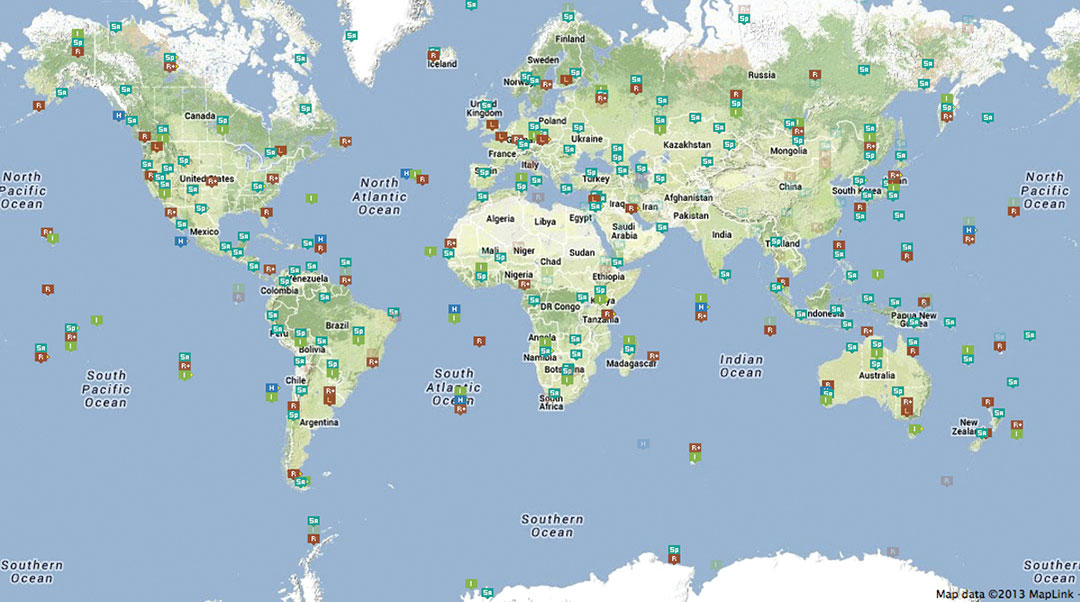
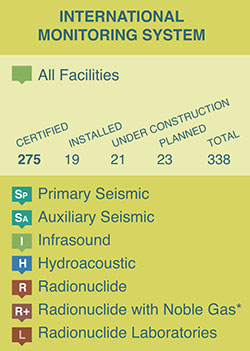
    The IMS (see Figure 1) uses the following state-of-the-art technologies. Numbers given reflect the target configuration:

    • Seismic: Fifty primary and 120 auxiliary seismic stations monitor shockwaves in the Earth. The vast majority of these shockwaves — many thousands every year — are caused by earthquakes. But man-made explosions such as mine explosions or the North Korean nuclear tests in 2006, 2009, and 2013 are also detected.
    • Hydroacoustic: As sound waves from explosions can travel extremely far underwater, 11 hydroacoustic stations “listen” for sound waves in the Earth oceans.
    • Infrasound: Sixty stations on the surface of the Earth can detect ultra-low-frequency sound waves that are inaudible to the human ear, which are released by large explosions.
    • Radionuclide: Eighty stations measure the atmosphere for radioactive particles; 40 of them can also detect the presence of noble gas.
    Figure 1. The International Monitoring System (IMS): worldwide facilities grouped by detection technologies used.
    Figure 1. The International Monitoring System (IMS): worldwide facilities grouped by detection technologies used.

    legend-W

    Only the radionuclide measurements can give an unquestionable indication as to whether an explosion detected by the other methods was actually nuclear or not. The observing stations are supported by 16 radionuclide laboratories.

    Since radionuclide detection method provides the ultimate verification as far as the type of blast goes, it should be mentioned that while the 2006 North Korean event (yield of less than a kiloton) was detected by the IMS stations in more than 20 different sites within two hours of detonation, and both seismic signal and radioactive material were detected, the 2009 event (yield of a few kilotons) was detected by 61 IMS stations; seismic and infrasound signals were detected, but no radioactive material was picked up by the radionuclide stations. Seismic signal was consistent with a nuclear test, but there was no “ultimate” proof by the radionuclide method.

    Thus, well-concealed underground nuclear explosions (UNEs) may be undetected by some of the IMS sensors (such as the  radionuclide network). This raises a question: Is there any other technology that is readily available that can detect and discriminate various types of blasts, particularly those of nuclear type? Recent experiments have shown that an independent technique of detection and verification may be offered by GPS-based analysis of local traveling ionospheric disturbances (TIDs) excited by an explosion.

    GNSS-Based Detection

    Atmospheric effects from mostly atmospheric nuclear explosions have been studied since the 1960s.The ionospheric delay in GNSS signals observed by the ground stations can be processed into total electron content (TEC), which is the total number of electrons along the GNSS signal’s path between the satellite and the receiver on the ground. The TEC derived from the slant signal path, referred to as the slant TEC (STEC), can be observed and analyzed to identify disturbances associated with the underground nuclear explosion.
    STEC signature (in spectral and/or spatial-temporal domains) can be analyzed to detect local traveling ionospheric disturbances (TID).

    TID can be excited by acoustic gravity waves from a point source, such as surface or underground explosions, geomagnetic storms, tsunamis, and tropical storms. TIDs can be classified as Large-Scale TID (LSTID) and Medium-Scale TID (MSTID) based on their periods regardless of the generation mechanism. The periods of LSTIDs generally range between 30–60 minutes to several hours, and those of MSTIDs range from 10 to 40 or even 60 minutes. LSTIDs mostly occur from geophysical events, such as geomagnetic storms, which can be indicated by global Kp indices, while MSTIDs are genrally not related to any high score Kp indices. An underground nuclear explosion can result in an MSTID.

    TIDs are generated either by internal gravity wave (IGW) or by acoustic gravity wave (AGW). The collisional interaction between the neutral and charged components cause ionospheric responses. The experimental results indicate IGWs can change the ozone concentration in the atmosphere. In the ionosphere, the motion of the neutral gas in the AGW sets the ionospheric plasma into motion.

    The AGW changes the iso-ionic contours, resulting in a traveling ionospheric disturbance.

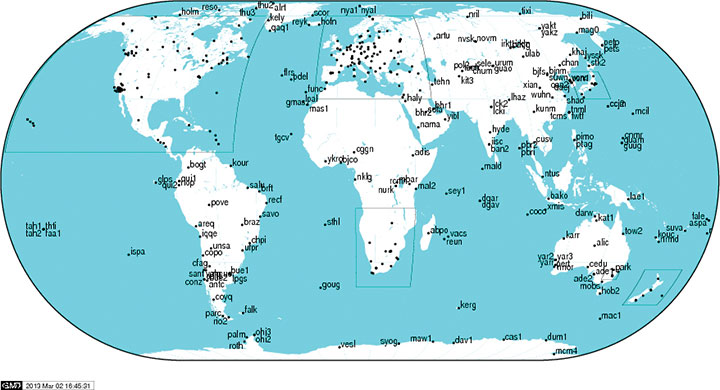
    The past 10–15 years has resulted in a significant body of research, and eventually a practical application, with worldwide coverage, of GPS-based ionosphere monitoring. A significant number of International GNSS Service (IGS) permanent GNSS tracking stations (see Figure 2) form a powerful scientific tool capable of near real-time monitoring and detection of various ionospheric anomalies, such as those originating from the underground nuclear explosions (UNEs).

    Figure 2. The IGS global tracking network of 439 stations.
    Figure 2. The IGS global tracking network of 439 stations.

    The network is capable of continuously monitoring global ionospheric behavior based on ionospheric delays in the GNSS signals. The GNSS signals are readily accessible anywhere on Earth at a temporal resolution ranging from about 30 seconds up to less than 1 second.

    A powerful means to isolate and relate disturbances observed in TEC measurements from different receiver-satellite paths is to analyze the spectral coherence of the disturbances. However, in our algorithms, we emphasize the spatial and temporal relationship among the TEC observations. Spatial and temporal fluctuations in TEC are indicative of the dynamics of the ionosphere, and thus help in mapping TIDs excited by acoustic-gravity waves from point sources, as well as by geomagnetic storms, tropical storms, earthquakes, tsunamis, volcanic explosions, and other effects.

    Methodology of UNE Detection

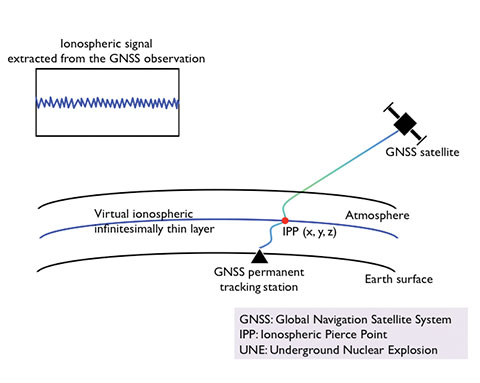
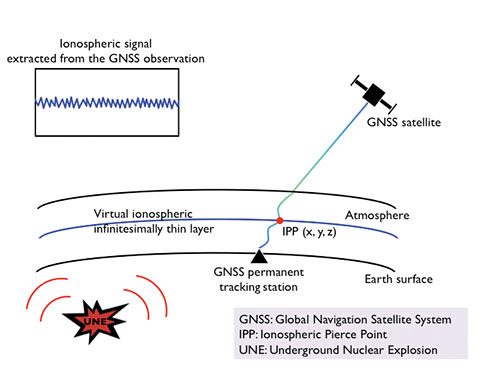
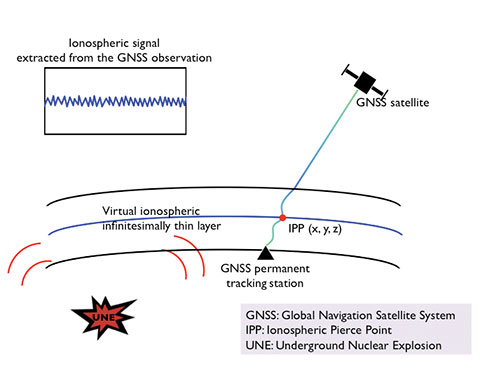
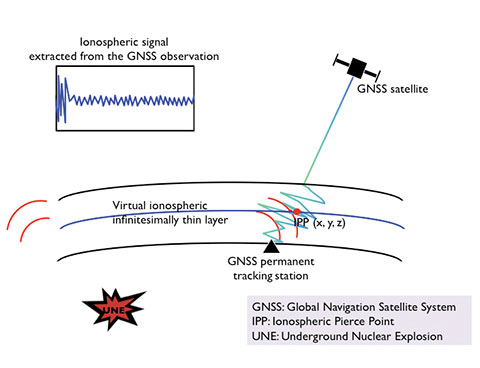
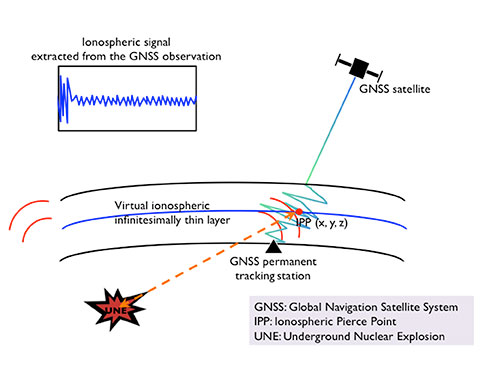
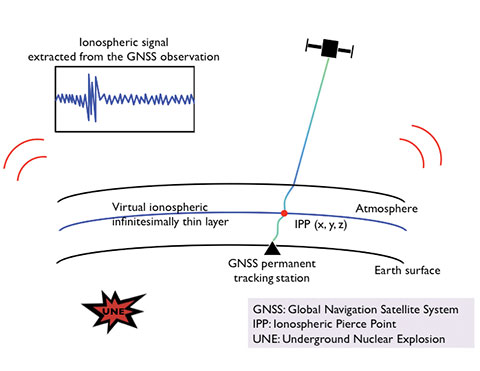
    Figure 3 illustrates the concept of the generation of the acoustic gravity wave by a UNE event, and its propagation through the ionosphere that results in a traveling ionospheric disturbance (TID). The primary points of our approach are: (1) STEC is calculated from dual-frequency GPS carrier phase data, (2) after eliminating the main trend in STEC by taking the numerical third order horizontal 3-point derivatives, the TIDs are isolated, (3) we assume an array signature of the TID waves, (4) we assume constant radial propagation velocity, vT, using an apparent velocity, vi, of the TID at the ith observing GNSS station, (5) since the TID’s velocity is strongly affected by the ionospheric wind velocity components, vN and vE, in the north and east directions, respectively, the unknown parameters,vT, vN, and vE, can be estimated relative to the point source epicenter, and (6) if more than six GNSS stations in good geometry observe the TID in GNSS signals, the coordinates of the epicenter can also be estimated.

    Figure 3a. Pictorial representation of the scenario describing a GNSS station tracking a satellite and the ionospheric signal (3-point STEC derivative); not to scale.
    Figure 3a. Pictorial representation of the scenario describing a GNSS station tracking a satellite and the ionospheric signal (3-point STEC derivative); not to scale.
    Figure 3b. The scenario describing a GNSS station tracking a satellite and the ionospheric signal and a point source (e.g., UNE) that generates acoustic gravity waves; not to scale.
    Figure 3b. The scenario describing a GNSS station tracking a satellite and the ionospheric signal and a point source (e.g., UNE) that generates acoustic gravity waves; not to scale.
    Figure 3c. The scenario describing a GNSS station tracking a satellite and the ionospheric signal, and the propagation of the acoustic gravity waves generated by a point source (e.g., UNE); not to scale.
    Figure 3c. The scenario describing a GNSS station tracking a satellite and the ionospheric signal, and the propagation of the acoustic gravity waves generated by a point source (e.g., UNE); not to scale.
    Figure 3d. The scenario describing a GNSS station tracking a satellite and the ionospheric signal, at the epoch when the GNSS signal is affected by the propagation of the acoustic gravity waves generated by a point source (e.g., UNE); not to scale.
    Figure 3d. The scenario describing a GNSS station tracking a satellite and the ionospheric signal, at the epoch when the GNSS signal is affected by the propagation of the acoustic gravity waves generated by a point source (e.g., UNE); not to scale.
    Figure 3e. Same as 3D, indicating that the geometry between GNSS station, the satellite and the IPP can be recovered and used for locating the point source; multiple GNSS stations are needed to find the point source location and the the velocity components of TID and ionospheric winds; not to scale.
    Figure 3e. Same as 3D, indicating that the geometry between GNSS station, the satellite and the IPP can be recovered and used for locating the point source; multiple GNSS stations are needed to find the point source location and the the velocity components of TID and ionospheric winds; not to scale.
    Figure 3f. Same as 3D, after the TID wave passed the line of sight between the GNSS stations and the satellite; not to scale.
    Figure 3f. Same as 3D, after the TID wave passed the line of sight between the GNSS stations and the satellite; not to scale.

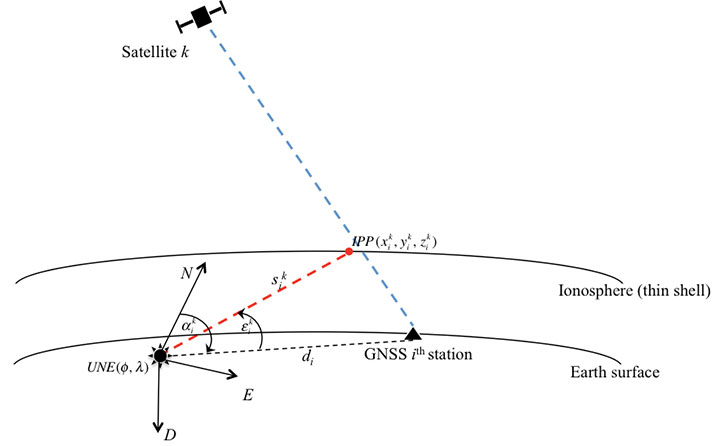
    Figure 4 illustrates the geometry of detection of the point source epicenter. Determination of the epicenter of the point source that induced TIDs can be achieved by trilateration, similarly to GPS positioning concept. The TIDs, generated at the point source, propagate at certain speed, and are detected by multiple GPS stations.

    The initial assumption in our work was to use a constant propagation velocity of a TID. By observing the time of TID arrival at the ionospheric pierce point (IPP), the travel distance from the epicenter to the IPP of the GPS station that detected a TID (which is the slant distance from the ith station and the kth satellite) can be derived using a relationship with the propagation velocity. In this study, we defined a thin shell in the ionosphere F layer, 300 kilometers above the surface, and computed the IPP location for each GPS signal at the corresponding time epoch of TID detection.

    Figure 4 Geometry of point source detection based on TID signals detected at the IPP of GPS station, i, with GPS satellite k. Unknown: coordinates of the point source, ( ф, λ ); three components of TID velocity vT, vN, and vE ; Observations: coordinates of IPP, (xik, yik, zik) and the corresponding time epoch to TID arrival at IPP, tik; Related terms: slant distance between IPP and UNE, sik; horizontal distance between the point source epicenter and the GPS station coordinates, di; azimuth and the elevation angle of IPP as seen from the UNE, αjk and εjk , respectively.
    Figure 4. Geometry of point source detection based on TID signals detected at the IPP of GPS station, i, with GPS satellite k. Unknown: coordinates of the point source, ( ф, λ ); three components of TID velocity vT, vN, and vE ; Observations: coordinates of IPP, (xik, yik, zik) and the corresponding time epoch to TID arrival at IPP, tik; Related terms: slant distance between IPP and UNE, sik; horizontal distance between the point source epicenter and the GPS station coordinates, di; azimuth and the elevation angle of IPP as seen from the UNE, αjk and εjk , respectively.

    Very Large Array (VLA)

    In addition to GNSS-based method of ionosphere monitoring, there are other more conventional techniques, for example, ground-based ionosondes, high-frequency radars, Doppler radar systems, dual-frequency altimeter, and radio telescopes. In our research, we studied the ionospheric detection of UNEs using GPS and the Very Large Array (VLA) radio telescope.

    The VLA is a world-class UHF/VHF interferometer 50 miles west of Socorro, New Mexico. It consists of 27 dishes in a Y-shaped configuration, each one 25 meters in diameter, cycled through four configurations (A, B, C, D) spanning 36, 11, 3.4, and 1 kilometers, respectively. The instrument measures correlations between signals from pairs of antennas, used to reconstruct images of the sky equivalent to using a much larger single telescope. While conducting these observations, the VLA provides 27 parallel lines of sight through the ionosphere toward cosmic sources.

    Past studies have shown that interferometric radio telescopes like the VLA can be powerful tools for characterizing ionospheric fluctuations over a wide range of amplitudes and scales. We used these new VLA-based techniques and a GPS-based approach to investigate the signature of a TID originated by a UNE jointly observed by both GPS and the VLA. For this case study, we selected one of the 1992 U.S. UNEs for which simultaneous GPS and VLA data were available.

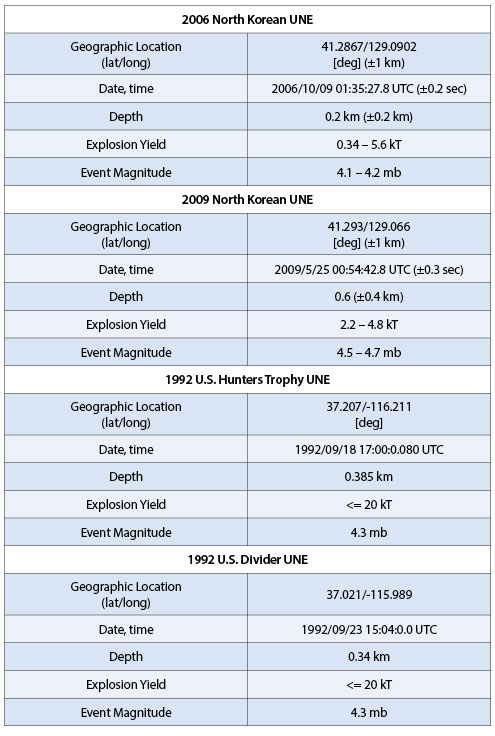
    Table 1. Characteristics of the analyzed events (UNEs).
    Table 1. Characteristics of the analyzed events (UNEs).

    Experimental Results

    We summarize here the test studies performed by the OSU group in collaboration with Miami University and the U.S. Naval Research Laboratory on detection and discrimination of TIDs resulting from UNEs using the GNSS-based and VLA-based techniques. Table 1 lists the UNE events that have been analyzed to date. As of March 2013, the results of the 2013 North Korean UNE were not fully completed, so they are not included here.

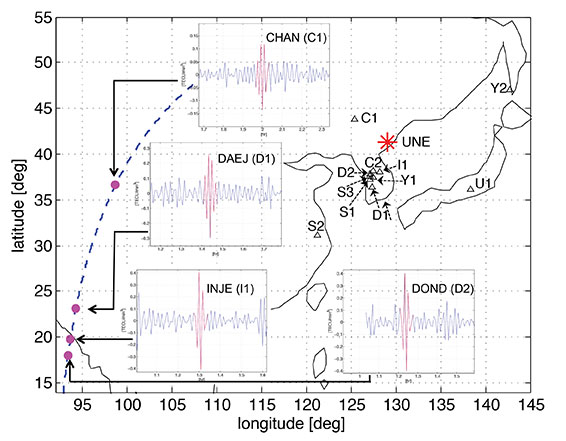
    In the 2006 and 2009 North Korean UNE experiments, STEC data from six and 11 nearby GNSS stations, respectively, were used. Within about 23 minutes to a few hours since the explosion, the GNSS stations detected the TIDs, whose arrival time for each station formulated the linear model with respect to the distance to the station. TIDs were observed to propagate with speeds of roughly 150–400 m/s at stations about 365 km to 1330 km from the explosion site. Considering the ionospheric wind effect, the wind-adjusted TIDs located the UNE to within about 2.7 km of its seismically determined epicenter (for the 2009 event; no epicenter location was performed for the 2006 event due to insufficient data). The coordinates estimated by our algorithm are comparable to the seismically determined epicenter, with the accuracy close to the seismic method itself. It is important to note that the accuracy of the proposed method is likely to improve if the stations in better geometry are used and more signals affected by a TID can be observed. An example geometry of UNE detection is shown in Figure 5.

    Figure 5 Locations of the underground nuclear explosion (UNE) in 2009 and GNSS stations C1 (CHAN), C2 (CHLW), D1 (DAEJ), D2 (DOND), I1 (INJE), S1 (SUWN), S2 (SHAO), S3 (SOUL), U1 (USUD), Y1 (YANP), Y2 (YSSK) on the coastline map around Korea, China, and Japan. The TID waves are highlighted for stations C1, D1, D2, I1. The bold dashed line indicates the ground track for satellite PRN 26 with dots that indicating the arrival times of the TIDs at their IPPs. All time labels in the figure are in UTC.
    Figure 5. Locations of the underground nuclear explosion (UNE) in 2009 and GNSS stations C1 (CHAN), C2 (CHLW), D1 (DAEJ), D2 (DOND), I1 (INJE), S1 (SUWN), S2 (SHAO), S3 (SOUL), U1 (USUD), Y1 (YANP), Y2 (YSSK) on the coastline map around Korea, China, and Japan. The TID waves are highlighted for stations C1, D1, D2, I1. The bold dashed line indicates the ground track for satellite PRN 26 with dots that indicating the arrival times of the TIDs at their IPPs. All time labels in the figure are in UTC.

    For the Hunters Trophy and the Divider UNE tests, the array signature of TIDs at the vicinity of GPS stations was observed for each event. By applying the first-order polynomial model to compute the approximate velocity of TID propagation for each UNE, the data points — that is the TID observations — were fit to the model within the 95 percent confidence interval, resulting in the propagation velocities of 570 m/s and 740 m/s for the Hunters Trophy and the Divider, respectively.

    The VLA has observing bands between 1 and 50 GHz, and prior to 2008 had a separate VHF system with two bands centered at 74 and 330  MHz. A new wider-band VHF system is currently being commissioned. The VHF bands and L-band (1.4 GHz) are significantly affected by the ionosphere in a similar way as the GPS signal. In this study, we used VLA observations at L-band of ionospheric fluctuations as an independent verification of the earlier developed method based on the GNSS TID detection for UNE location and discrimination from TIDs generated by other types of point sources.

    The VLA, operated as an interfer-ometer, measures the correlation of complex voltages from each unique pair of antennas (baselines), to produce what are referred to as visibilities. Each antenna is pointed at the same cosmic source; however, due to spatial separation, each antenna’s line of sight passes through a different part of the ionosphere. Consequently, the measured visibilities include an extra phase term due to the difference in ionospheric delays, which translates to distortions in the image made with the visibilities. This extra phase term is proportional to the difference in STEC along the lines of sight of the two telescopes that form a baseline. Thus, the interferometer is sensitive to the STEC gradient rather than STEC itself, which renders it capable of sensing both temporal and spatial fluctuations in STEC.

    The spectral analysis was performed on the STEC gradients recovered from each baseline that observed the Hunters Trophy event. Briefly, a time series of the two-dimensional STEC gradient is computed at each antenna. Then, a three-dimensional Fourier transform is performed, one temporal and two spatial, over the array and within a given time period (here ~15 minutes). The resulting power spectrum then yields information about the size, direction, and speed of any detected wavelike disturbances within the STEC gradient data.

    Roughly 20 to 25 minutes after the UNE, total fluctuation power increased dramatically (by a factor of about 5×10³).  At this time, the signature of waves moving nearly perpendicular to the direction from Hunters Trophy (toward the northeast and southwest) was observed using the three-dimensional spectral analysis technique. These fluctuations had wavelengths of about 2 km and inferred speeds of 2-8 m s-1. This implies that they are likely due to small-scale distortions moving along the wavefront, not visible with GPS. Assuming that these waves are associated with the arrival of disturbances associated with the Hunters Trophy event, a propagation speed of 570–710 m/s was calculated, which is consistent with the GPS results detailed above.

    In addition, a TID, possibly induced by the February 12, 2013, North Korean UNE, was also detected using the nearby IGS stations, by the detection algorithm referred to earlier. Eleven TID waves were found from ten IGS stations, which were located in South Korea, Japan, and Russia. Due to the weakness of the geometry, the epicenter and the ionospheric wind velocity were not determined at this point. The apparent velocity of TID was roughly about 330–800 m/s, and was calculated using the arrival time of the TID after the UNE epoch and the slant distance between the corresponding IPP and the epicenter. The reported explosion yield was bigger, compared to the 2009 North Korean UNE, which possibly affected the propagation velocity by releasing a stronger energy. However, more in-depth investigation of this event and the corresponding GPS data is required.

    Conclusions

    Research shows that UNEs disturb the ionosphere, which results in TIDs that can be detected by GNSS permanent tracking stations as well as the VLA. We have summarized several GNSS-based TID detections induced by various UNEs, and verified the GNSS-based technique independently by a VLA-based method using the 1992 U.S. UNE, Hunters Trophy. It should be noted that VLA observation was not available during the time of the Divider UNE test; hence, only the Hunters Trophy was jointly detected by GPS and the VLA. Our  studies performed to date suggest that the global availability of GNSS tracking networks may offer a future UNE detection method, which could complement the International Monitoring System (IMS).

    We have also shown that radio-frequency arrays like the VLA may also be a useful asset for not only detecting UNEs, but for obtaining a better understanding of the structure of the ionospheric waves generated by these explosions. The next generation of HV/VHF telescopes being developed (such as the Lower Frequency Array in the Netherlands, the Long Wavelength Array in New Mexico, the Murchison Widefield Array in Australia) utilize arrays of dipole antennas, which are much cheaper to build and operate and are potentially portable.

    It is conceivable that a series of relatively economical and relocatable arrays consisting of these types of dipoles could provide another valuable supplement to the current IMS in the future, particularly for low-yield UNEs that may not be detectable with GPS.

    Acknowledgment

    This article is based on a paper presented at the Institute of Navigation Pacific PNT Conference held April 22–25, 2013, in Honolulu, Hawaii.


    Dorota A. Grejner-Brzezinska is a professor and chair, Department of Civil, Environmental and Geodetic Engineering, and director of the Satellite Positioning and Inertial Navigation (SPIN) Laboratory at The Ohio State University.

    Jihye Park recently completed her Ph.D. in Geodetic Science program at The Ohio State University. She obtained her B.A. and M.S degrees in Geoinformatics from The University of Seoul, South Korea.

    Joseph Helmboldt is a radio astronomer within the Remote Sensing Division of the U.S. Naval Research Laboratory.

    Ralph R.B. von Frese is a professor in the Division of Earth and Planetary Sciences of the School of Earth Sciences at Ohio State University.

    Thomas Wilson is a radio astronomer within the Remote Sensing Division of the U.S. Naval Research Laboratory.

    Yu (Jade) Morton is a professor in the Department of Electrical and Computer Engineering at Miami University.

  • Designing for the Future: Signal Simulation for Expanding GNSS

    Sponsored by: Hemisphere
    Broadcast Date: Thursday, May 16, 2013
    Moderator: Alan Cameron, Editor & Publisher, GPS World
    Speakers: Mark Sampson, LabSat Product Manager, RaceLogic; John Fischer, Chief Technology Officer, Spectracom; Markus Lörner, Product Manager, Rohde & Schwarz; Steve Hickling, Lead Product Manager, Spirent Communications; Mark Wilson, Vice President of Sales, IfEN GmbH

    Simulation and testing experts offer key technical insights on the intricacies and importance of product and signal testing, whether by simulator, record-and-replay, or in the field, in the increasingly complex environment of multiple modernizing and expanding GNSS signals, from GPS III to BeiDou, with Galileo coming on strong and GLONASS a perennial standby.

  • GNSS Constellation Update

    Original Broadcast Date: 10/25/12

    Summary: This month, a new GPS satellite was launched, India launched a new SBAS satellite, and two Galileo satellites are scheduled to launch. Last month, China launched two more BeiDou satellites. There’s a lot of activity of the satellite navigation industry. In the webinar, I will discuss what these new developments mean to the surveying/mapping user, as well as other current events.

    Speaker:
    Eric Gakstatter
    Contributing editor for survey and GIS

  • Four Galileo Birds Sighted over Asia

    Four Galileo Birds Sighted over Asia

    Scientists in Hanoi, Vietnam, send word that on March 27 the four Galileo in-orbit validation satellites were visible at the same time in the sky over that Southeast Asian country for nearly two hours (from 2:15 to 4:00 GMT) while transmitting a valid navigation message. The research team of the NAVIS Centre at Hanoi University of Science and Technology (HUST) successfully computed what they claim is the first Galileo-only position fix in Asia.

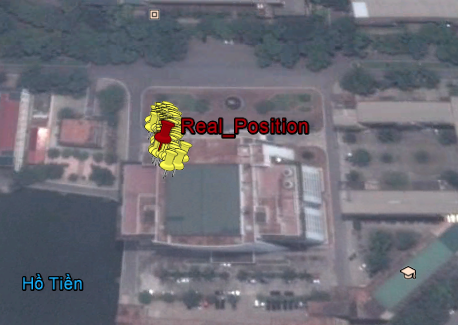
    Figure 1 depicts the obtained positions are depicted on top of the roof of the NAVIS Centre, where the antenna used to receive the signals is located (latitude = 21°00’16.69” N, Longitude = 105°50’37.90” E, height = 35,2 meters).

        Figure 1. Positions obtained by only Galileo E1 Open Service (the antenna is located at the roof of the Ta Quang Buu library building inside HUST campus)
    Figure 1. Positions obtained by only Galileo E1 Open Service (the antenna is located at the roof of the Ta Quang Buu library building inside HUST campus)

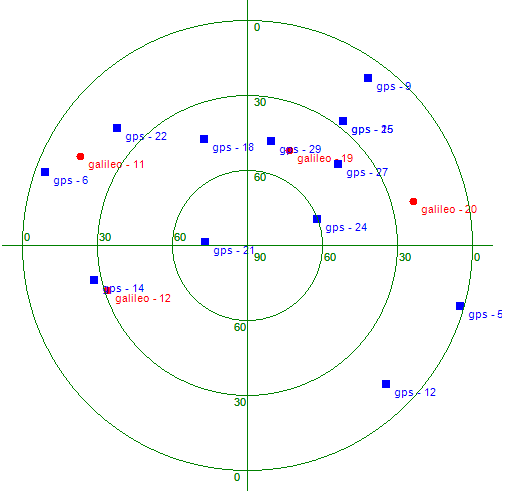
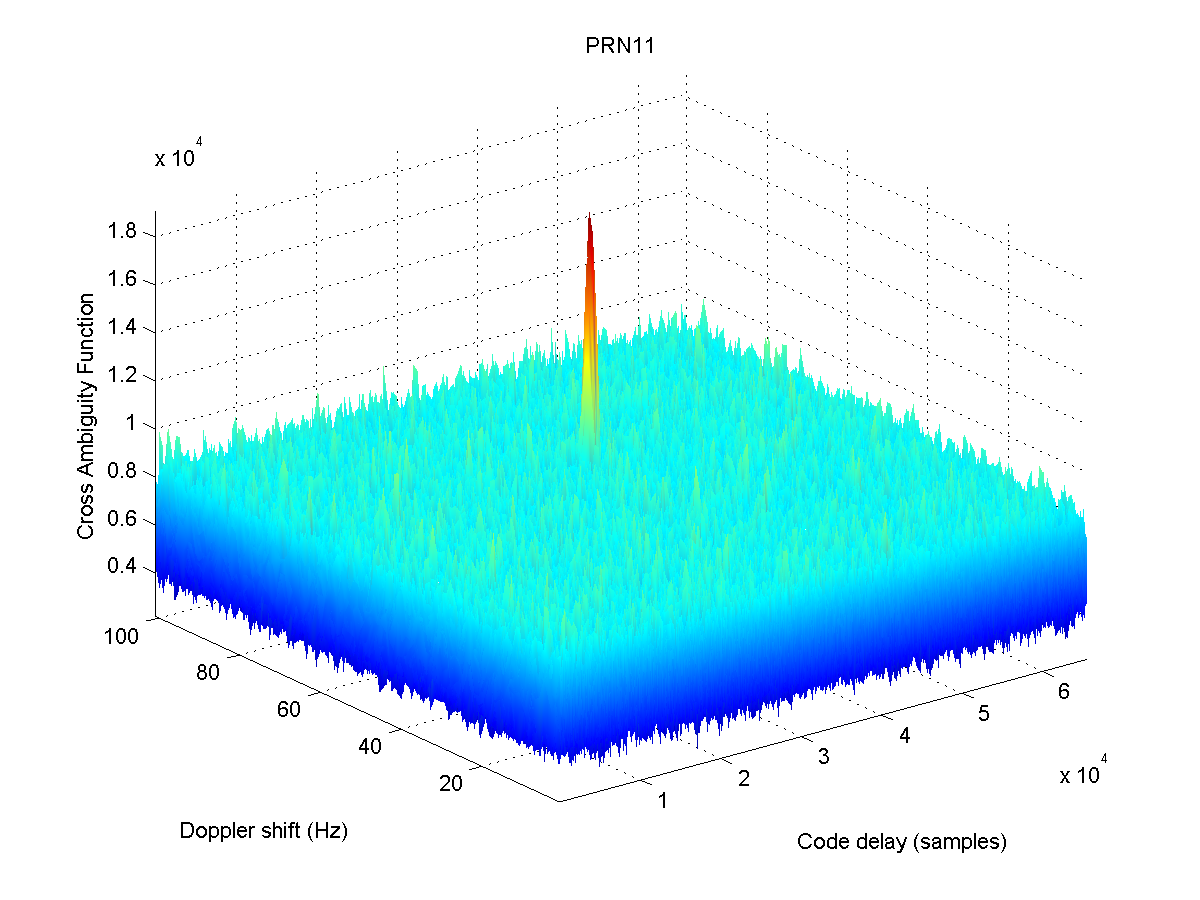
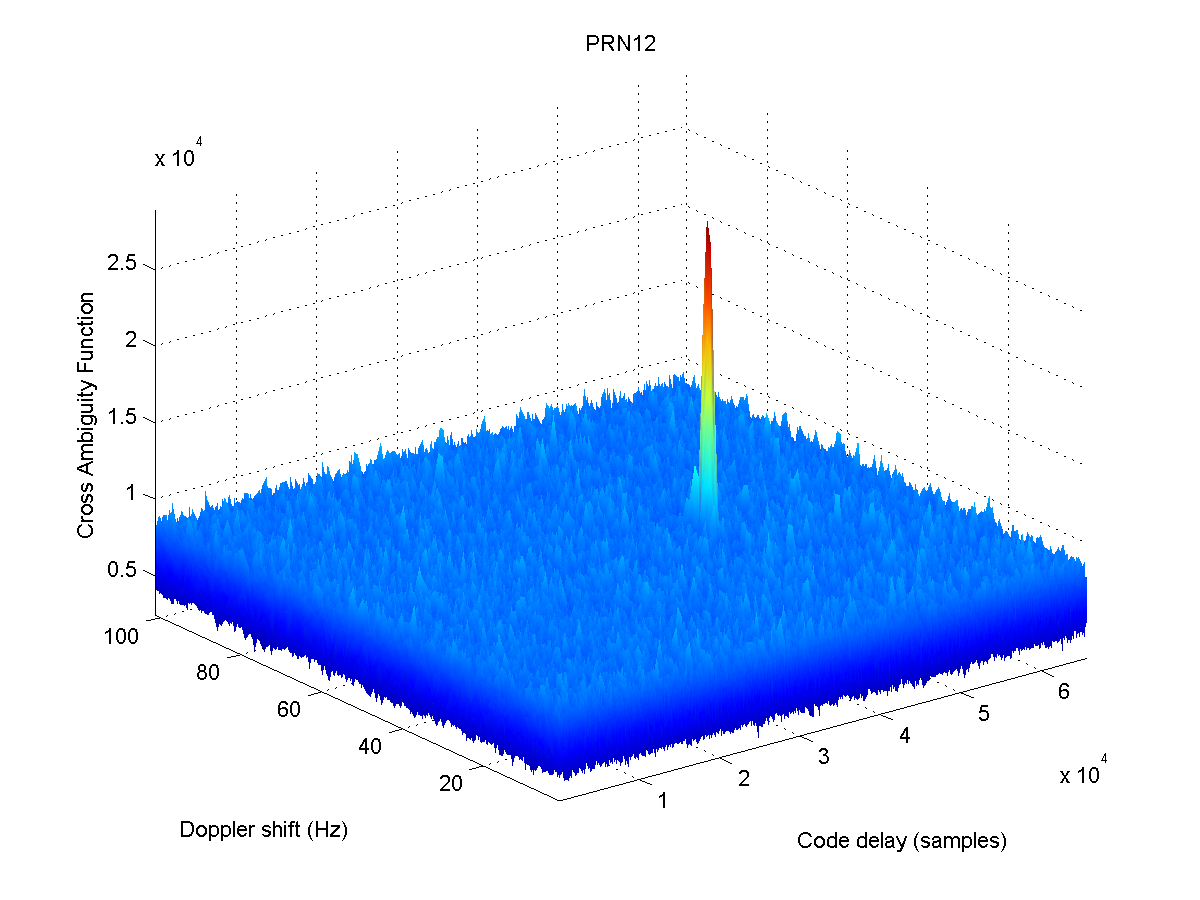
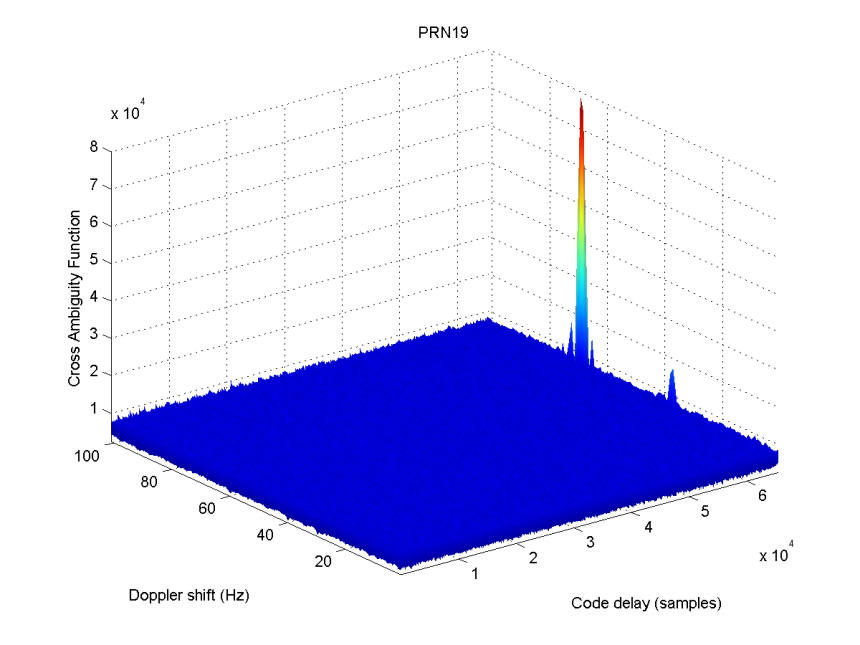
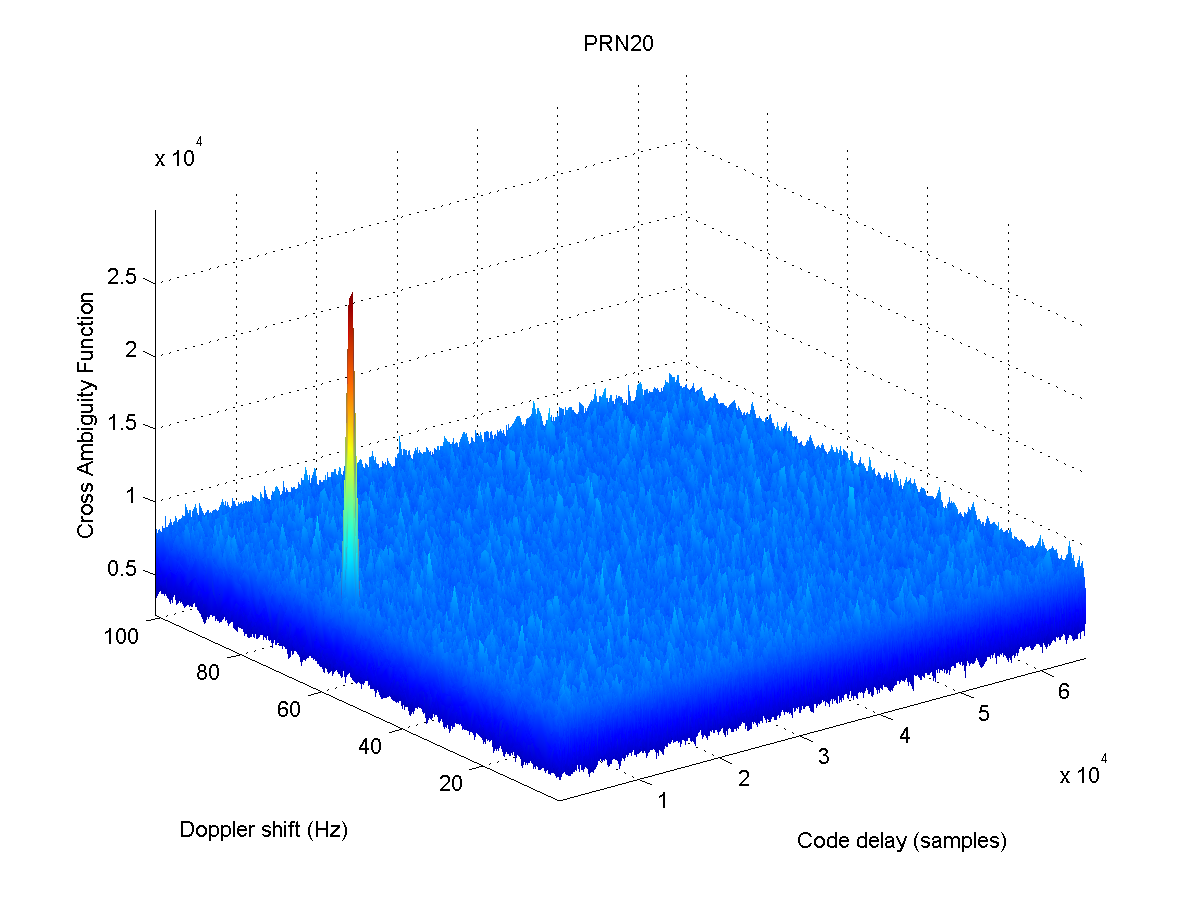
    Figure 2 shows the positions of the four Galileo satellites and of 12 GPS satellites at time of acquisition, while Figure 3 reports the acquisition results of the four Galileo IOV satellites.

        Figure 2. Skyplot of the satellites of the GPS and Galileo systems at the time of the campaign. The Galileo satellites are PFM (PRN11), FM2 (PRN12), FM3 (PRN19), and FM4 (PRN20).
    Figure 2. Skyplot of the satellites of the GPS and Galileo systems at the time of the campaign. The Galileo satellites are PFM (PRN11), FM2 (PRN12), FM3 (PRN19), and FM4 (PRN20).
    Figure 3. Acquisition results of the four Galileo IOV satellites
    Figure 3. Acquisition results of the four Galileo IOV satellites: PRN 11.
    Figure 3. Acquisition results of the four Galileo IOV satellites
    Figure 3. Acquisition results of the four Galileo IOV satellites: PRN12.
    Figure 3. Acquisition results of the four Galileo IOV satellites
    Figure 3. Acquisition results of the four Galileo IOV satellites: PRN19.
    Figure 3. Acquisition results of the four Galileo IOV satellites
    Figure 3. Acquisition results of the four Galileo IOV satellites: PRN20.

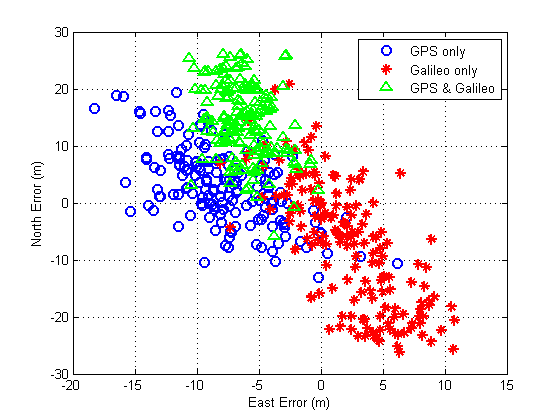
    Comparison of the position computed using only Galileo, only GPS or both systems together is also presented in Figure 4. It should be noted that during the campaign, the data demodulation process reports that the Galileo system announces the “navigation data valid” status for PFM and FM3, meanwhile the “working without guarantee” for FM2 and FM4.

    Figure 4. Position computed when using GPS only, Galileo only, or GPS+Galileo
    Figure 4. Position computed when using GPS only, Galileo only, or GPS+Galileo

    The NAVIS Centre, located at the Hanoi University of Science and Technology in Hanoi, Vietnam, was established with a project co-funded by the European Union and collaborates with European and Asian partners on research and development of satellite navigation technology in Southeast Asia. This report was made by Dr. Ta Hai Tung, director of the NAVIS Centre, and Prof. Gustavo Belforte, co-director.

  • Septentrio Makes Galileo and Four-Constellation Position Fixes

    Septentrio Makes Galileo and Four-Constellation Position Fixes

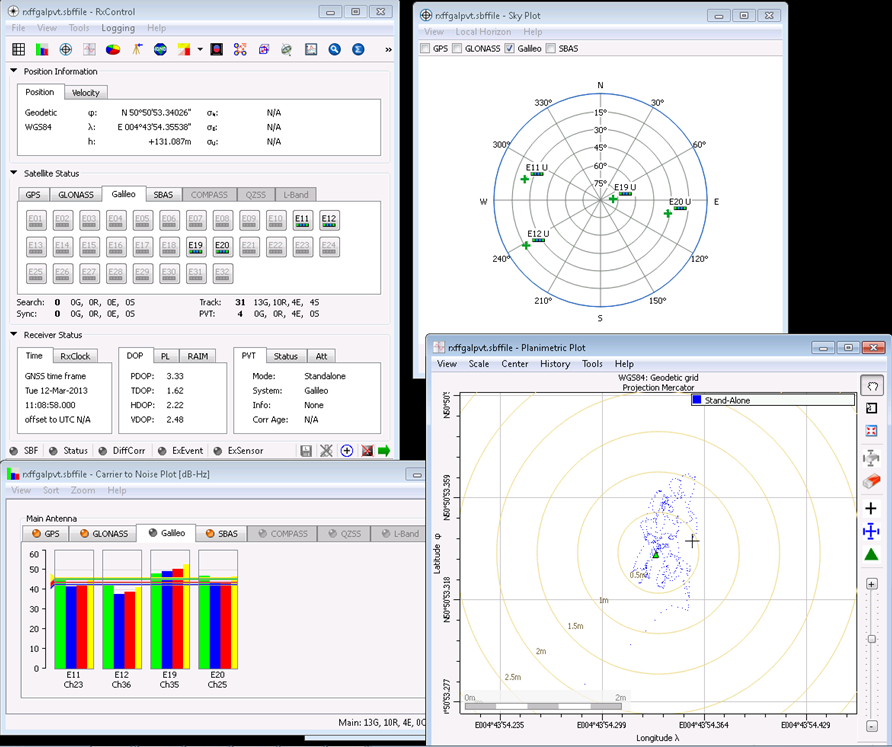
    Septentrio became the first receiver manufacturer to report an autonomous real-time position calculation using Galileo IOV satellites, with its own standard commercial receiver. The company based in Leuven, Belgium announced on March 12 that it performed a first autonomous real-time Galileo position, velocity, and timing (PVT) calculation, based on live Interface Control Document (ICD)-compliant Galileo messages from the four Galileo in-orbit validation (IOV) satellites.

    Galileo-PVT

    The standalone position was calculated from in-orbit navigation messages using a standard PolaRx4 GNSS receiver equipped with commercially released firmware.

    This achievement followed another recent Septentrio milestone; the announcement of a first GPS+Glonass+BeiDou PVT less than two weeks after the BeiDou2 ICD publication in December — and it was itself followed by a Septentrio release stating performance of what it believes to be the first 4-constellation PVT performed by a standard commercial receiver.

    4-constellation_PVT

    “On Tuesday 12-Mar-2013 at approximately 10:35 UTC we included three Galileo IOV satellites (E12, E19 & E20) in a multi-constellation PVT. The 3D-position fix happened shortly after it was brought to Septentrio’s attention that the Galileo IOV satellites were transmitting, for the first time ever, a fully usable navigation message as part of an ESA experiment.

    “This ability to rapidly incorporate new constellations demonstrates the flexibility of the architecture of Septentrio receivers,” the company statement continued.

    “We are delighted that Septentrio receivers are amongst the first to witness the readiness of the Galileo navigation message to perform a position fix from in orbit signals,” commented Peter Grognard, Septentrio’s founder and CEO. “Septentrio has been involved since 2003 in all major milestones that pave the way for the European constellation genesis.”

  • Septentrio Demonstrates BeiDou+GPS+GLONASS Positioning

    Septentrio announced on January 7 that it has successfully implemented BeiDou support in the company’s high-precision receiver software, taking advantage of the recent official release of BeiDou’s Interface Control Document (ICD) to including the Chinese satellite navigation signals into its position-velocity-time (PVT) solution.

    According to the Belgian GNSS receiver manufacturer, its engineers “are currently processing further data sets to finalize the implementation of full BeiDou support. Although the BeiDou constellation is still being deployed, the data analysis already shows promising results.”

    The top panel of Figure 1 compares the height from a stand-alone solution of GPS-only with a GPS+GLONASS solution and a third (in light blue) including BeiDou. “The value added by BeiDou is more than what was expected from a constellation that is still being deployed,” according to Septentrio business development manager Laurent Le Thuaut. “Although the solution is not aided by differential corrections, the position shows an increase in accuracy when sufficient BeiDou satellites are included.”

    The bottom panel of Figure 1 shows that, even with the current BeiDou constellation (15 satellites total, of which five are geostationary over China, five in full mid-Earth orbit similar to GPS and GLONASS, and five in inclined geosynchronous orbit over Asia), the total number of satellites used over the European region reached 26 for a short moment.

    Figure 2 shows the L1 pseudorange residuals for all constellations individually. This comparison highlights the advantage of the GPS constellation, which builds on two decades of real-time orbit prediction. The BeiDou orbits are “quite accurate for a relatively young constellation, but show typical meter-level jumps when ephemerides are updated,” according to Septentrio.

    Septentrio says that the new feature will soon become available on selected company platforms. Users of its multi-constellation receivers will then benefit from improvements in urban availability and signal integrity, thanks to the augmented signal coverage.

  • Compass ICD Rumored Again

    A GNSS industry representative stationed in Shanghai, China sent this message recently to a U.S. colleague: “Latest unofficial news said that the Compass Interface Control Document (ICD) will be released on 27th this month,  and will be available on the internet on 28th.”

    Such rumors have floated before, in late 2010, and again in late 2011.  As the U.S. colleague noted in passing on this light intelligence, “There was a lot of hand-wringing at ICG [Seventh Meeting of the International Committee on Global Navigation Satellite Systems (ICG), organized by the Government of China, Beijing, China, 5 – 9 November 2012] around the Chinese keeping their promise for 2012 release of the ICD.  Maybe they are just going to slip it under the wire.”

    In an October, 2011 newsletter column, the GPS World editor wrote: “The long-awaited signal interface control document (ICD) for China’s growing GNSS will appear this month, according to representatives of the system who spoke in a “Compass: Progress, Status, and Future Outlook” workshop as part of ION GNSS and the CGSIC meetings in Portland in September [2011].

    “The ICD has been rumored to be available previously to receiver manufacturers within China, creating some disgruntlement among companies outside the country. One of the workshop panelists affirmed that GPS/Compass chips and receivers are being actively developed by many Chinese manufacturers and research institutes.”


  • Indoor Navigation


    Original Broadcast Date: 12/13/12

    Summary: This is the next frontier for personal and machine navigation — and many are out there now, working diligently on it.  In just one example, a new chip fuses input from several sensors, using the best combination at any given time to maximize coverage and accuracy while keeping power draw to a minimum. This produces continuous position availability in indoor environments, as demonstrated by performance measurements in real-world test environments.

    The senior product manager responsible for this development joins us to talk about the inner workings and the outer manifestations of this new solution.

    Speakers:

    J. Blake Bullock

    J. Blake Bullock, GNSS and indoor positioning, Samsung
    J. Blake Bullock was senior product manager responsible for CSR’s next generation of GNSS solutions. He is now at Samsung System LSI Business and is responsible for GNSS and indoor positioning solutions. He holds a M.Sc. degree in geomatics engineering from the University of Calgary, an MBA from Arizona State University, and several patents in LBS and navigation.

    manikantanManikantan Parameswaran, Senior Application Specialist, Spirent
    Manikantan Parameswaranis currently a Senior Application Specialist for Spirent’s 8100-Location test product segment. Manikantan initially joined Spirent in 2006 as a development engineer and has worked on a variety of different A-GPS protocols and technologies. He holds a B.S in Computer Engineering from Drexel University, Pennsylvania, USA.


    chrisgatesChris Gates, VP Corporate Strategy, NextNav
    With more than 15 years of experience in finance and telecommunications, Gates joined NextNav from SkyTerra Communications, an integrated satellite-terrestrial communications company where he served as VP — Strategy; extensive experience in wireless and wireline communications; he began his career with Chase Securities in their M&A group. Christian holds a Bachelor of Arts from Dartmouth College.

    Dave HuntingfordDave Huntingford, Director of Product Management, Location Products, CSR
    A 15 year veteran of the location business, Dave is responsible for the location product portfolio at CSR and its expansion into GNSS, Wireless Hybrid and MEMS motion capabilities. Previously he served with SiRF and Motorola GPS. He holds a B.S from University of Hertfordshire, UK.


    Moderator:
    Alan Cameron, Editor & Publisher, GPS World

  • The System: Fly the Pilotless Skies: UAS and UAV


    Unmanned aerial vehicles and civil aircraft may co-habit the airspace after September 2015.

     As the U.S. Federal Aviation Administration (FAA) moves ahead with plans for unmanned aerial systems/vehicles (UAS/UAV) to have regular access to U.S. airspace by 2015, it has encountered several barriers. For UAVs to be treated like manned aircraft, their systems likley need to be qualified to the same standards as civil avioncs. This is a challenge, as each UAS has largely unique systems. UAS equipment standards are emerging, but threats to GNSS abound, requiring defense/mitigation.

    Demand for UAS has produced many different types flying in a range of applications. With no apparent standard avionics fit or uniform safety standards, each UAS type is basically configured for specific tasks. Commercial UAS applications continue to emerge, and major market growth is anticipated. One forecast indicates that the UAS market could reach $7.26 billion this year alone. The promise of new and better ways to reduce costs, improve safety, and increase operational efficiency feeds market expansion.

    However, in the United States the FAA currently requires each UAS commercial project desiring access to controlled airspace to obtain an FAA-approved Certificate of Authorization. While the FAA has made efforts to speed up approvals, this process slowed widespread commercial adoption of UAS. Nevertheless, opportunities abound in pipeline and transmission line inspection, crop spraying, law enforcement, security, and surveillance, survey/mapping, remote area mail delivery, and hundreds of other applications. The FAA may have felt some pressure to move forward, because Congress has put in place the Modernization and Reform Act of 2012, which calls on the FAA to fully integrate unmanned systems, including those for commercial use, into the national airspace by September 2015.

    UAS in the NAS. Meanwhile, a project called the Unmanned Aircraft Systems Integration in the National Airspace System (UAS in the NAS), undertaken by NASA’s Dryden Flight Research Center, seeks to reduce technical barriers related to safety and operational challenges associated with enabling routine UAS access to the NAS.

    Europe has also launched a study on the integration of UAS in non-segregated airspace for the future Single European Sky. The ICONUS study will be carried out by a consortium within the European air traffic management program called Single European Sky ATM Research Programme (SESAR). The study will drive the definition of the requirements, capabilities, and equipment which UAS will need to operate safely and efficiently in the coming European SESAR environment.

    The U.S. RTCA SC-203 committee is drafting UAS operational requirements, and there has been significant progress towards publishing Minimum Aviation Performance Standards (MASPS), including requirements for navigation. Europe has similar activities underway aimed at improving UAS access to its airspace.

    MOPS. The big picture is that requirements for unmanned aircraft are being brought into conformance with the standards applied to the performance and behavior of manned aircraft. Navigation requirements for UAS are expected to specify that systems will need to be qualified to Minimum Operational Performance Standards (MOPS). This means that on-board electronics, including GNSS systems, will probably need to be FAA Technical Standard Orders (TSO) qualified, just as they are now for manned aircraft.

    Why do we need to investigate certified avionics now? In the scheme of avionics, more than two years breathing space to certify UAS avionics systems is not a long time, not at all, until the September 2015 deadline. FAA airborne software and hardware qualification will take much time and effort to implement, and re-configuration of systems, interfaces, and operating procedures may take even longer.

    For Manufacturers. UAS makers have the option to move forward in stages. For instance, by selecting a few existing airborne-qualified OEM avionics, they could minimize the internal effort to comply. As the first UAS with certified avionics emerge, they will probably get good support from FAA to adopt U.S. operating rules for the NAS. Embedding an existing certified GPS receiver in UAS avionics will reduce the internal work needed and allow more effort for developing commercial market opportunities that look to quickly adopt UAS.

    Meanwhile, efforts are in full swing to change the U.S. and European navigation landscapes over the next few years. So it would be better to be ready with a capable GNSS receiver that is already built to meet the challenges of NextGen and SESAR.

    GPS III and Galileo. The L5 civil GPS frequency may be operational around the time that UAS unrestricted access becomes possible. GPS L1/L5 dual-frequency operations will enable higher navigation accuracy, reliablity, and integrity. The FAA is already developing NextGen WAAS to include L5, and revisions to the GPS MOPS to include L5 should begin shortly, in time for a usable GPS L5 constellation in 2015/2016. The FAA is already preparing for L5 avionics, and industry investigative work is underway. Its possible that GPS L1/L5 may meet the accuracy and integrity requirements for CAT II/III automated landings. In Europe, Eurocae work is expected to gain momentum for the Galileo E1/E5a MOPS as the Galileo satellite navigation system becomes operational.

    The new GNSS environment also includes WAAS/SBAS precision approach (localizer performance with vertical guidance, or LPV) capability: LPV is available now in the United States and will soon be in wider operation in Europe. Automatic Dependendant Surveillance (ADS-B) is rolling out in the United States and around the world. ADS-B is being mandated within the U.S. NAS as the means for air-traffic control to track all aircraft, so UAS avionics will need to include certified ADS-B Out capability.

    In one commercial instance, the Septentrio AiRx2 receiver comes out of the box as a certified L1 GPS with ADS-B and WAAS LVP, but is also ready for GPS L5 and Galileo E1/E5a.

    Even as greater steps forward enhance how GNSS is used in this wider definition of aviation that will soon include UAS, a team at the University of Texas demonstrated how a UAV could be maliciously side-tracked (see article on page 30 of this issue) —  reminiscent of the Iranian downing of a U.S. surveillance drone in December 2011.

    Admittedly the GPS on the vehicle in the UT test was not a qualified airborne receiver, but how could this happen when there was also an inertial sensor and a radio-altimeter on the UAV? A good question, which UAV manufacturers will need to consider when they implement their on-board Kalman filters, knowing that spoofing is now an additional threat to parry.

    Couldn’t we detect that high-power RF spoofing signal at the front-end of the GPS receiver? Even if only to tell the on-board systems that there could be hazardous misleading information about? Or run separate GPS and GPS/inertial position solutions, detect significant divergence, and set the same warning flag? And multi-constellation, multi-frequency receivers, and even controlled radiation pattern antennas — all things to investigate.  More work for the aviation receiver guys who labor tirelessly to improve GNSS integrity.

    Of course if you hijack a UAV with a high-power spoofer, you are also spoofing civil transports operating in the same airspace, so now there is the potential to trigger a Federal investigation. It will probably be easier to detect this stuff with moving airborne sensors rather than the fixed ground equipment used to find jammers on trucks at Newark airport, and lots of pilots likely providing real-time location information on radios if their GPS goes even a little haywire. All would help to quickly locate and shut down any spoofer. Nevertheless, it’s a threat to be mitigated.

    Fatal Crash. In South Korea, the effects of intermittent North Korean jamming of GPS to disrupt seal, land, and air navigation in the South may have contributed to the recent fatal crash of a Schiebel Camcopter S-100 drone, a 150-kilogram rotorcraft capable of 220 km/h flight. It should have coped with loss of GPS as the Camcopter has multiple inertial measurement units that allow safe operation and recovery in the absence of GPS signals. Emergency procedures to ensure a safe recovery in such a situation do not appear to have been correctly and adequately followed, manufacturer Schiebel alleges.

    NovAtel may have found one way to help mitigate spoofing on UAVs; the company released a combined civil/SAASM GPS receiver, the OEM625S, aimed specifically at UAVs. Granted, the idea is to add SAASM anti-spoofing capability to a number of UAVs which currently use NovAtel commercial receivers, mostly in military systems. That may be motivated by the desire to avoid further Iranian incidents!

    BAE Systems has been thinking of giving GPS a back-up for just those situations where jamming or even spoofing is detected. BAE’s Navigation via Signals of Opportunity (NAVSOP) system was just announced at the Farnborough air show in the UK and is still in research phase, but looks extremely promising. It interrogates the radio environment for the ID and signal strength of local digital TV and radio signals, plus air traffic control radars, with finer grained adjustments coming from cellphone masts and Wi-Fi routers. Mapping the location of all these sources might be quite an undertaking, and given that these are all non-safety-of-life commercial signals, the sources are subject to the vagaries of power outages, regular maintenance, and breakdowns. Nevertheless, with such a multitude of signals, NAVSOP could well turn out to be a viable back-up for GNSS.

    So, shared access to civil airspace, wider applications in commercial operations, and changes in equipment qualification, along with potential solutions for GNSS jamming and spoofing: lots to consider for the UAS industry.


    Taking It to the House

    U.S. House of Representatives Committee on Homeland Security; Subcommittee on Oversight, Investigations, and Management; Hearing, July 19, 2012:  Using Unmanned Aerial Systems Within the Homeland: Security Game Changer?

    Testimony by Todd E. Humphreys, Ph.D.; Assistant Professor, Cockrell School of Engineering, The University of Texas at Austin. [Excerpted. Prof. Humphreys is a co-author of the article “Drone Hack” in the August issue of GPS World.]

    The vulnerability of civil GPS to spoofing has serious implications for civil unmanned aerial vehicles (UAVs), as was recently illustrated by a dramatic remote hijacking of a UAV at White Sands Missile Range.

    Hacking a UAV by GPS spoofing is but one expression of a larger problem: insecure civil GPS technology has over the last two decades been absorbed deeply into critical systems within our national infrastructure. Besides UAVs, civil GPS spoofing also presents a danger to manned aircraft, maritime craft, communications systems, banking and finance institutions, and the national power grid.

    Constructing from scratch a sophisticated GPS spoofer like the one developed by the University of Texas is not easy. It is not within the capability of the average person on the street, or even the average Anonymous hacker. But the emerging tools of software-defined radio and the availability of GPS signal simulators are putting spoofers within reach of ordinary malefactors.

    There is no quick, easy, and cheap fix for the civil GPS spoofing problem. What is more, not even the most effective GPS spoofing defenses are foolproof. But reasonable, cost-effective spoofing defenses exist which, if implemented, will make successful spoofing much harder.

    I recommend that for non-recreational operation in the national airspace civil UAVs exceeding 18 lbs be required to employ navigation systems that are spoof-resistant.

    More broadly, I recommend that GPS-based timing or navigation systems having a non-trivial role in systems designated by DHS as national critical infrastructure be required to be spoof-resistant.

    Finally, I recommend that the DHS commit to funding development and implementation of a cryptographic authentication signature in one of the existing or forthcoming civil GPS signals.

    Complete testimony (PDF) covers:

    • The potential vulnerabilities of U.S. national transportation, communications, banking and finance, and energy distribution infrastructure;
    • What does it take to build a spoofer? Buy a spoofer?
    • Range and required knowledge of target.
    • Fixing the problem:

    •    Jamming-to-noise sensing defense;
    •    Defense based on SSSC or NMA on WAAS signals;
    •    Multi-system multi-grequency defense;
    •    Single-antenna defense;
    •    Defense based on spread-spectrum security codes on L1C;
    •    Defense based on navigation message authentication on L1C, L2C, or L5;
    •    Correlation prole anomaly defense;
    •    Multi-antenna defense;
    •    Defense based on cross-correlation with military signals.