Tag: Leica Geosystems

  • Leica Releases Viva GNSS Unlimited Series

    Leica Releases Viva GNSS Unlimited Series

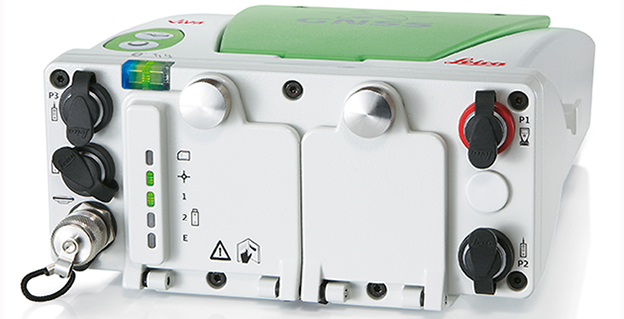
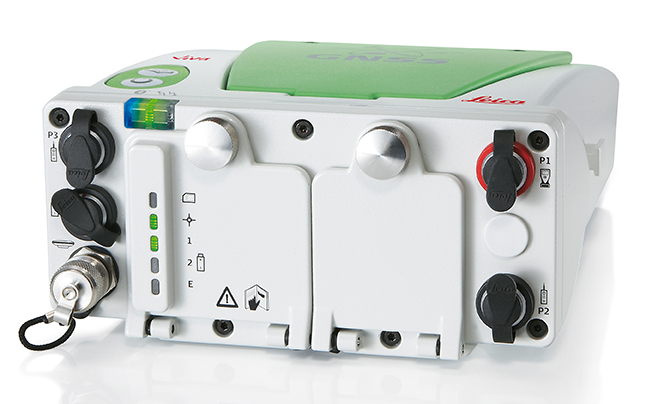
    Leica_Viva_GS100-W
    Leica Viva GS100

    The Leica Viva GNSS Unlimited Series, available in August, will allow customers to make a safe investment with future-proof GNSS receivers and smart antennas, Leica Geosystems said in announcing the new series. With a flexible design, the Viva GNSS sensors can be upgraded for maximum performance whenever needed.

    The Leica Viva GNSS range fully supports the Chinese BeiDou navigation system. It can even provide BeiDou-only and GLONASS-only high-precision positioning. The unlimited series includes a future upgrade to a GNSS board with more than 500 channels and will serve users’ needs beyond 2020, the company said. Outages of real-time kinematic (RTK) communication links are bridged for up to 10 minutes with SmartLink to increase centimeter position availability in areas where RTK communications links are unstable.
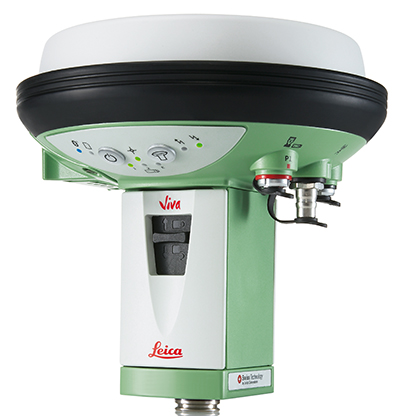
    Leica Viva GS15
    Leica Viva GS15

    The Leica Viva GNSS Unlimited Series can be upgraded to the full range of GNSS signals. The sensors’ future-proof design is equipped for GNSS modernization, providing users with confidence in their investment. The series embraces the future-proof concept by including an upgrade to a GNSS board with more than 500 channels. To fully guarantee future proof GNSS, board exchanges are inevitable because any likely modifications in GNSS signals require a new GNSS ASIC (Application Specific Integrated Circuit).

    Leica SmartTrack technology guarantees accurate signal tracking, while SmartCheck technology evaluates and verifies RTK measurements to ensure reliable results. Both SmartTrack and SmartCheck technologies have been extended to support the BeiDou GNSS. BeiDou reached full operational regional capability in 2012 and has a total of 14 satellites. Leica Viva GNSS also supports features like BeiDou-only and GLONASS-only positioning to accommodate governmental regulations.

    In addition, Leica Geosystems now offers SmartLink, a correction service delivered via satellite for uninterrupted centimeter positioning in areas where RTK communication links are unstable.
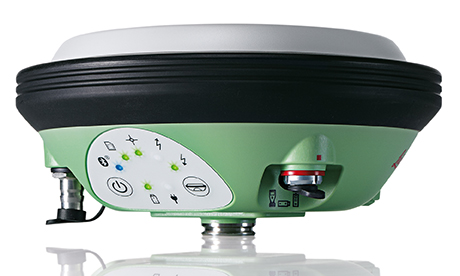
    Leica Viva GS14
    Leica Viva GS14

    All Leica Viva GNSS products exceed the toughest environmental specifications, going beyond industrial standards such as IP68. This ensures flawless performance even in the most challenging environments. Applications for the range include construction and field surveying, mining, seismic work in dense forest, desert or mountains, as well as demanding work in extreme heat at 65°C (149 °F) or at extreme latitudes at -30°C (-22 °F). Premium precision and attention to detail ensure that the Leica Viva GNSS products can be trusted throughout the complete product lifetime.

    Leica Viva offers a complete range of unlimited GNSS and TPS solutions made with Swiss precision, combining the highest accuracy with maximum versatility and optimized data flow. Leica Viva solutions include Active Customer Care (ACC) with an expansive organization of knowledgeable professionals to provide valuable support, training and service whenever needed. Combined with innovative services such as online support in the field with Leica Active Assist and an instant data exchange between field and office with Leica Exchange, Leica Viva enables continuous productivity.


    Webinar on Multi-GNSS OEM

    Thursday, June 5
    10 a.m. PT / 1 p.m. ET / 5 p.m. GMT

    GPS World’s upcoming webinar features an expert panel with informed viewpoints from GNSS high-precision and mass-market manufacturing, signal simulation, and alternative PNT providers. Registration is free.
  • Intuicom Announces Next-Generation RTK Bridge-X with Wi-Fi

    Intuicom Announces Next-Generation RTK Bridge-X with Wi-Fi

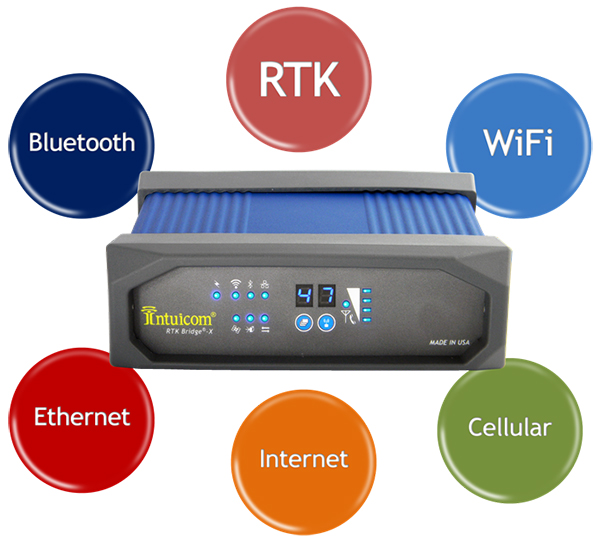
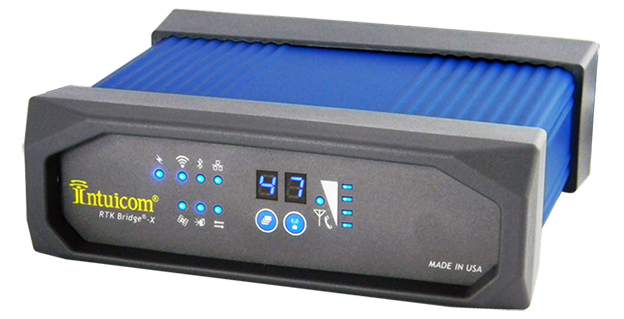
    Intuicom RTK Bridge-X.
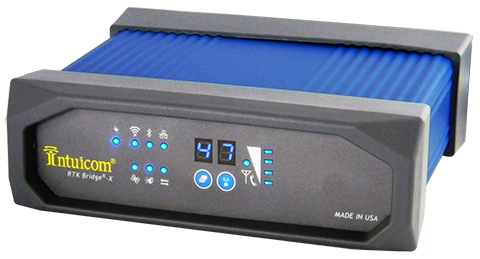
    Intuicom RTK Bridge-X.

    Intuicom, Inc., a wireless data solutions provider for the survey, machine control and precision agriculture industries, has added to its line of RTK Bridge solutions with the Intuicom RTK Bridge-X.

    Along with providing reliable access to RTK corrections, the RTK Bridge-X features a Wi-Fi hotspot. Users can connect other Wi-Fi devices such as laptops, tablets and smartphones and access the Internet via the RTK Bridge-X’s cellular connection. Also new with the RTK Bridge-X is cable-free configuration. Configuration can now be accomplished through a wireless connection using any web browser.

    Users can then access email, send files, and perform other Internet-based tasks using the connection provided by the RTK Bridge-X. With new Remote Access, the RTK Bridge-X can be reached over the Internet from anywhere.

    The RTK Bridge-X also comes with internal GPS. Users can choose between an internal license-free 900-MHz radio, industry-standard UHF radio, or no radio.

    Other improvements include a real-time cellular signal strength indicator on the re-designed front panel, as well as an Ethernet port that can be used for configuration or Internet connectivity. A numerical LED display now shows which of the four configurable profiles is active as well as which radio channel is selected. Bluetooth connections are also supported.

    Like all Intuicom Bridge Products, The RTK Bridge-X is designed for easy setup and operation and is compatible with all major cellular carriers and equipment manufacturers including Leica Geosystems, Trimble, and others.

    RTK-Bridge-X-and-buttons-W

  • Leica Offers Next-Generation Mobile Mapping Platform, Pegasus:Two

    Leica Offers Next-Generation Mobile Mapping Platform, Pegasus:Two

    PegasusTwo_application-W
    photo: Leica

    Leica Geosystems has introduced its next generation vehicle-independent mobile mapping platform, the Pegasus:Two. By calibrating imagery and LiDAR point cloud data, the Pegasus:Two delivers highly accurate and economical geospatial data in a 360° spherical view while providing two methods for extracting data — either through LiDAR or via photogrammetry.

    With its enhanced sensor platform using six horizontal cameras, plus an optional rear camera and a skyward view camera, a single high-speed LiDAR sensor, and an external output for an additional sensor, the Pegasus:Two enables unlimited mobile mapping applications, from pavement analysis to geo-referencing railways systems, now possible within the same platform, the company said.

    From hardware to post-processing, Pegasus:Two allows economic data collection by balancing the largest pixel to sensor ratio on the market (5.5 x 5.5 µm), delivering extremely high image resolution, in a 4-MB camera and using a single low-noise, high-speed profiler. Users can download data via Wi-Fi or wired Ethernet, or even faster by using the latest USB3 interface, by means of a multi-core, industrial PC with 1-TB storage and a solid state drive, enabling longer missions. An optional rotation mount, designed specifically for the Leica ScanStation P20, also makes mounting the terrestrial scanner upside down or right side up while also enabling left or right rotation.

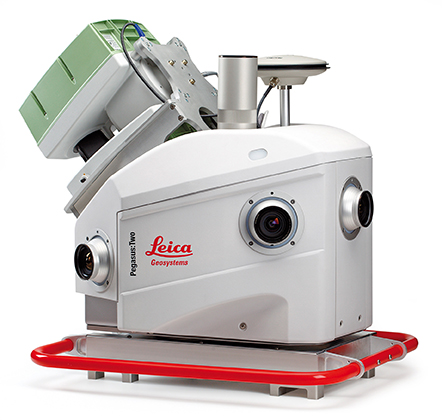
    The Pegasus:Two in its new streamlined housing with aerodynamic design.
    The Pegasus:Two in its new streamlined housing with aerodynamic design.

    Expanding on the success of Leica Geosystems’ mobile mapping software, the latest software now offers semi-automatic object extraction features, which enable easy-to-use two-click GIS metadata extraction or calculation of distances on-the-fly directly into ArcGIS for Desktop software.

    Leica Geosystems also introduces an external timing output and trigger signal for use with a variety of additional sensors, from a thermal camera, to ground penetrating radar, sonar, or even a pollution monitor. The External Trigger feature synchronizes time stamping and coordinates user data with one simple click, making 3D mobile mapping very user-friendly.

    Urban canyons. Equipped with the NovAtel’s ProPak6 high-precision receiver for the most demanding city or rugged environments, the Pegasus:Two offers users a truly global system. It is a future-proof investment that tracks signals of all available constellations, GPS, GLONASS, Galileo and BeiDou as well as L-band, SBAS, and QZSS band coverage to ensure the best signal even when moving through urban canyons. The system provides a low noise, 200hz Inertial Measurement Unit for tracking the vehicle path thereby ensuring data is positioned accurately.

    Aerodynamic design. The Leica Pegasus:Two mobile mapping system now comes with a new streamlined and compact look and continues to fit in only two travel cases. A convenient handle surrounding the unit enables easy mounting on and off your vehicles. The Pegasus:Two is a vehicle-independent system with a rechargeable 11 hour battery, and can be used on any moving platform.

    “The Leica Pegasus:Two platform is a unique complete solution,” said Stuart Woods, vice president for Leica Geosystems Geospatial Division. “By providing software and hardware designed to seamlessly work together, users not only receive the latest in mobile mapping technology but also optimal performance and faster workflows. By keeping the platform vehicle independent and adding new sensor options, we encourage our customers to find new ways, to try out different sensors, new revenue models, and new places to measure. ”

    Along with the Pegasus:Two, the advanced prototype, Pegasus:T2, a trolley based mobile system weighing less than 20 kilograms will also be on display at the HxGN LIVE 2014 Conference in Las Vegas.

  • Leica Geosystems Offers CC55 Controller

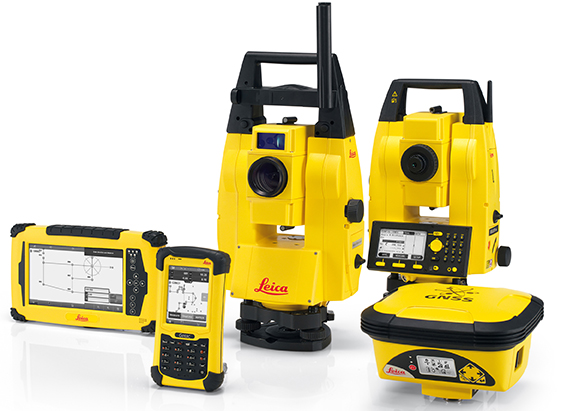
    The Leica iCON CC55 controller is part of the Leica iCON portfolio.
    The Leica iCON CC55 controller is part of the Leica iCON portfolio.

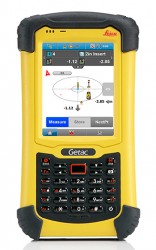
    Leica_ICON_CC55_with_screen-WLeica Geosystems now offers the Leica iCON CC55 controller, a versatile and rugged PDA with a 3.5-inch color display, as part of its iCON construction portfolio. The handheld controls Leica iCON sensors, runs the iCONstruct field software, and has a QuadraClear sunlight readable display and a fast 1-GHz processor.

    The smaller Leica iCON CC55 handheld controller, as well as the seven-inch Tablet PC Leica iCON CC65/66 field controller, are both fully integrated into Leica Geosystems’ iCON portfolio of hardware and software solutions. It runs the Leica iCON build or site software to display and connect measured points for as-built data capturing or to lay out points and construction lines directly from the digital construction plan. The controller provides flexible options for data communication and an extensive data storage.

    Leica_iCON_CC55_application-WThe Leica iCON CC55 can be used to control the Leica iCON robot total stations, enabling one-person operation, saving time and increasing productivity for construction layout tasks and as-built checks, the company said. The optional Long-Range Bluetooth allows communication with the iCON robot 50 at distances of more than 350 m/1150 feet. Alternatively, the iCON CC55 can be used as a data logger with the Leica Builder manual total station. Together with the versatile Leica iCON gps 60 SmartAntenna, the iCON CC55 creates a compact and light-weight GPS rover system.

    The iCON CC55 runs the state-of-the-art Windows Embedded Handheld 6.5 operating system and comes with 256MB NAND Flash memory and 8 GB of extended storage, enabling extensive data process and storage capacity. An internal WLAN module and Long-Range Bluetooth offer users impressive distance communication, the company said, and the longer life 5.6Ah battery lets users easily complete a full day’s work. The iCON CC55 also comes equipped with a 5-MP camera so users can document their construction projects.


  • Leica Camera Integrates u-blox GPS into M-System Series

    Swiss-based u-blox has been chosen by Leica Camera as provider of GPS technology for its premium M-System camera and accessory series.

    Leica, which makes high-end and professional cameras, has integrated u-blox’ NEO GPS module into its new Multifunctional Handgrip M. The geotagging feature injects location data directly into each photo’s Exif header (Exchangeable image file format), allowing photos to be filed and retrieved according to where they were taken. The accessory is compatible with the new flagship Leica-M rangefinder digital camera series.

    The Multifunction Handgrip M connects directly to a computer via an integrated USB socket, allowing full remote control of the camera and image access using the Leica Image Shuttle software package. The handgrip also facilitates the safe and steady handling of the camera, particularly when shooting with heavier telephoto lenses.

    The handgrip’s features include a supplementary flash connector, a socket for an external power supply, and a sync socket for studio flash systems. An optional supplementary power source is also available.

    “Leica focuses on providing the highest quality photographic equipment on the market,” said Stefan Daniel, director of product management at Leica Camera.“When a customer purchases a Leica, they realize they are making an investment in a robust, high-performance camera that delivers outstanding results. To meet these expectations, we design with only the best mechanics, optics and electronics. For global positioning, we chose u-blox.”

    “We are proud to have been selected for our GPS technology by such a prestigious brand as Leica,” said Jochen Steinhauer, u-blox sales manager. “When you pick up a Leica camera, you immediately see and feel the high quality of every component. It is designed for perfection, a philosophy that u-blox also follows in our design of the world’s highest-quality global positioning modules.”


  • Microsurvey Introduces Three Software Versions for the Leica Nova MS-50

    Microsurvey Introduces Three Software Versions for the Leica Nova MS-50

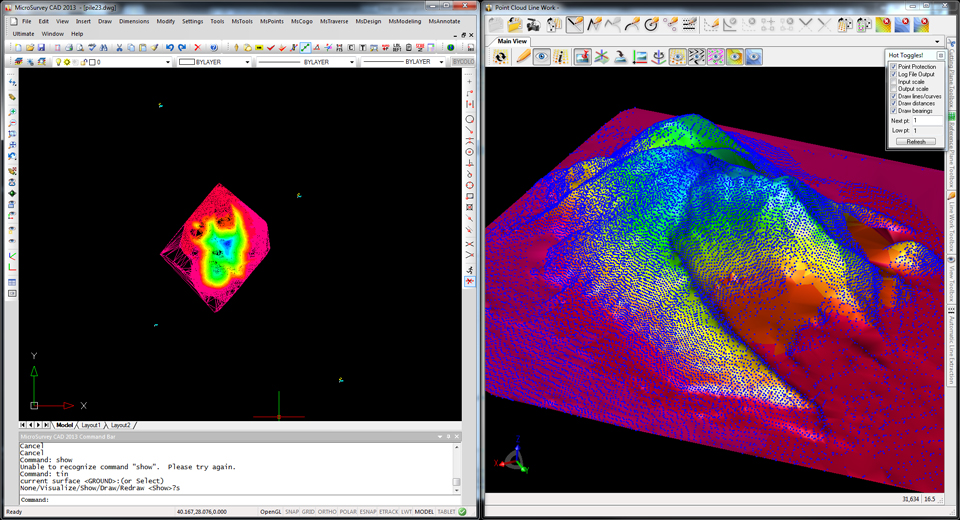
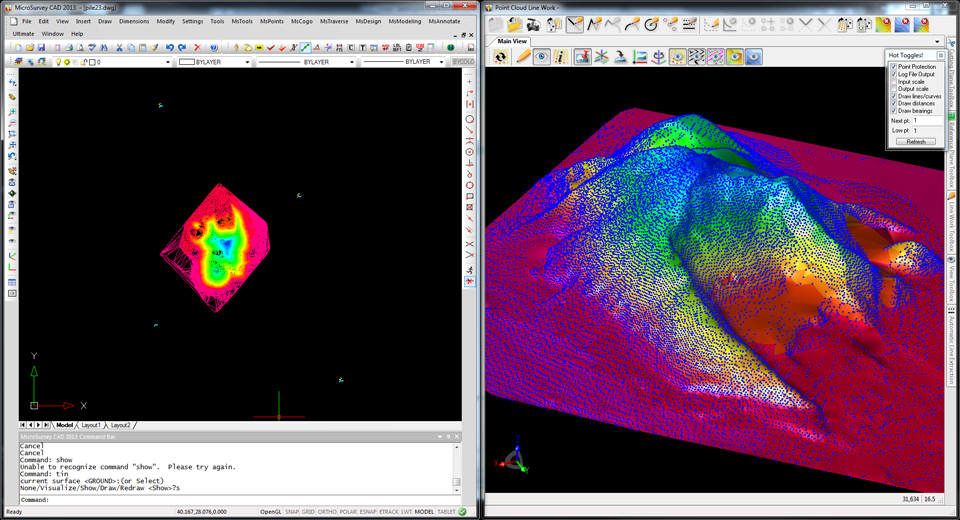
    MicroSurvey, the maker of MicroSurvey CAD and the MapScenes System, announces the release of three new software versions optimized to make full use of datasets from the new Leica Nova MS50 MultiStation. MicroSurvey CAD Ultimate 2013, MicroSurvey CAD Studio 2013 and MapScenes PointCloud 2013 provide complete point cloud and Leica Nova MS50 support in an intuitive interface that allows users to quickly and easily integrate 3D point cloud data into their workflows.

    microsurveycad-screenshot
    Photo: MicroSurvey

    MicroSurvey CAD Ultimate 2013, the desktop survey and design software solution for surveyors, contractors and engineers, provides a familiar field-to-finish CAD survey solution with the Leica Nova MS50 MultiStation. With just a few clicks, users can easily import datasets from the Leica Nova MS50 complete with all TPS measurements, pictures, points and scan data. For users who need to enhance their data visualizations with fly-through movies and animations, MicroSurvey CAD Studio 2013 includes all the functionality of MicroSurvey CAD Ultimate plus a powerful animation module capable of creating stunning movies.

    MapScenes 2013, drafting, point cloud data visualization and animation tool for forensic investigators, accident scene reconstructionists and other public safety professionals, now includes the ability to take advantage of the rich 3D datasets captured by the Leica Nova MS50 MultiStation. MapScenes 2013 lets the user quickly and easily draw in the point cloud view for extremely fast, accurate linework as well as use the scan data from the Leica Nova MS50 in animations for accurate and compelling reconstructions.

    MicroSurvey CAD Ultimate 2013, MicroSurvey CAD Studio 2013 and MapScenes 2013 are available as optional software packages with the Leica Nova MS50 MultiStation. For more information, visit www.microsurvey.com or www.mapscenes.com.

  • Leica Geosystems Launches Mobile Mapping Solution Pegasus:One

    Leica Geosystems Launches Mobile Mapping Solution Pegasus:One

    Leica_PegasusOne_web-o
    Photo: Leica Geosystems

    Leica Geosystems has launched Pegasus:One, a flexible, mobile mapping platform that offers an intuitive mobile mapping solution for professionals. Pegasus:One allows service providers to use their existing terrestrial scanner in profiler mode for mobile mapping. Pegasus:One is vehicle independent and comes self-contained in two Pelican cases, enabling users to fly in, map, and fly out.

    The Leica Pegasus:One mobile mapping software platform, ArcGDS, draws on synergies resulting from Leica Geosystems’ recent acquisition of Geosoft S.r.l. and is a complete solution from data acquisition to post-processing to database, Leica Geosystems said. It offers users immediate access to their imagery and point cloud data together in the same GUI. Users navigate visually through their images, clicking in their street views, and can add GIS metadata or calculate distances on the fly. Both the imagery and point cloud are calibrated together, so clicking in one immediately provides access to the data in the other.

    With nearly 1 billion stop signs and 3.9 million miles of public road in the United States alone, transportation-related asset management provides substantial opportunities, Leica Geosystems said. Additionally, the introduction of new driver assisted technology for cars is putting tremendous pressure on transportation departments to document their highway systems to enable this technology to work successfully. The Leica Pegasus:One provides a solution for both applications.

    In the United States, more than 700 thousand billboards exist with new laws limiting the total number of billboards allowed and their placement. Ensuring compliance will generate revenue for states and municipalities around billboard placement, and is now cost effective with the Leica Pegasus:One platform – by simply driving by, Leica Geosystems said.

    “Leica Pegasus:One is an enabling product,” said Stuart Woods, vice president for Leica Geosystems’ Geospatial Division. “By providing a single integrated solution and by making our customers’ scanners mobile, we enable our customers to be more efficient.”

    In situations where users want or can only afford to capture images, Leica offers an image-only system without a scanner. This provides the same calibrated camera and leverages photogrammetry software to calculate distances from the images – ideal for GIS applications. No longer is the only option a “video recorder on wheels” — now images can be used for distance calculations, Leica Geosystems said.

  • Leica GeoMos Scanning Works with MS50 for Deformation Monitoring

    Leica GeoMos Scanning Works with MS50 for Deformation Monitoring

    Newly released Leica GeoMoS 6.0 software includes automatic scanning and deformation analysis integrating the new Leica Nova MS50 MultiStation to scan areas of inaccessible manmade and natural structures. The monitoring data is also processed automatically with the new n.Vec technology implemented by Leica Geosystems. Color-coded, visualized 3D deformation clouds enable easy analysis and interpretation of movements so users can make the right decisions to rectify static problems or protect peoples’ lives.

    Leica Geosystems announced version 6.0 at a media event held during the HXGN Live conference in Las Vegas today.

    Leica GeoMoS Scanning is an automatic scanning solution fully integrated into Leica GeoMoS Monitoring Solution. This ensures fast integration with existing Leica GeoMoS projects and an easy start for new users, Leica said. In addition to total stations, GNSS, tilt and geotechnical sensors, highly detailed scanning can now be added to the automated measurement cycle. The new scanning module is easy to configure and provides the complete workflow for automatic acquisition and processing of the data to visualize deformations and to notify key personnel in the case of an event. With Leica GeoMoS Web, the data can be accessed anywhere at any time.

    Leica GeoMoS 6.0 enhances conventional monitoring methods with automatic scanning of surfaces with the Leica Nova MS50 MultiStation. Used for inaccessible places or locations where prisms cannot be installed, e.g. a road cover, a roof, a pipeline or a natural structure, Leica GeoMoS real-time scanning solution monitors any deformation and makes sure that no movement is undetected. The big advantage of using the Leica Nova MS50 MultiStation is that it combines laser scanning and prism monitoring, and therefore the measurements to stable control points guarantee highly accurate setup corrections, including orientation and translations. Additional imaging functionality complements the set by providing yet another information source for better deformation analysis. The implemented scan wizard allows the image-assisted definition of scan areas using different parameter settings and different scan result types. Once defined, the scan area can be scanned manually and via the automatic measurement cycle.

    Leica GeoMoS 6.0 enhances conventional monitoring methods with automatic scanning of surfaces with the Leica Nova MS50 MultiStation.
    Leica GeoMoS 6.0 enhances conventional monitoring methods with automatic scanning of surfaces with the Leica Nova MS50 MultiStation.

    The new scanning feature uses all current automatic functionalities such as automatic measurement cycle scheduling, real-time notification via e.g. SMS/email, automatic limit level check, etc. In addition, the embedded point cloud and image viewer assures powerful 3D visualization of all results using color-coded deformation clouds with a fully traceable history of deformations of the scanned area.

    The new n.Vec technology in Leica GeoMoS 6.0 provides automatic scan cloud processing to deliver the real-time information about deformations. The data can quickly and easily be interpreted for informed decisions. Leica Geosystems’ unique n.Vec processing technology uses normal vectors to determine movements in man-made and natural structures through color-coded deformation maps. The deformation maps are created by comparing normal vectors from a reference epoch and the current epoch. To ensure maximum deformation interpretation quality, in an iterative and fully automatic procedure, n.Vec removes non-surface related scan artifacts to ensure uncontaminated surfaces and hence correct normal vectors.


  • Leica Announces Nova Measurement System at HXGN Live

    Leica Announces Nova Measurement System at HXGN Live

    Leica-Nova-MS50-plant
    Photo : Leica Nova
    The Leica media event at HXGN Live Conference in Las Vegas. Photo : Leica Nova
    The Leica media event at HXGN Live Conference in Las Vegas. Photo : Leica Nova

    At a media event held during the HXGN Live Conference in Las Vegas today, Leica Geosystems introduced several new products. The highlight of the event was presentation of Leica Nova and the Leica Nova MS50 MultiStation.

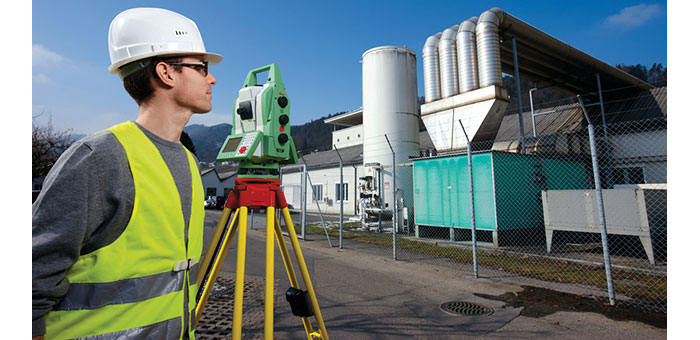
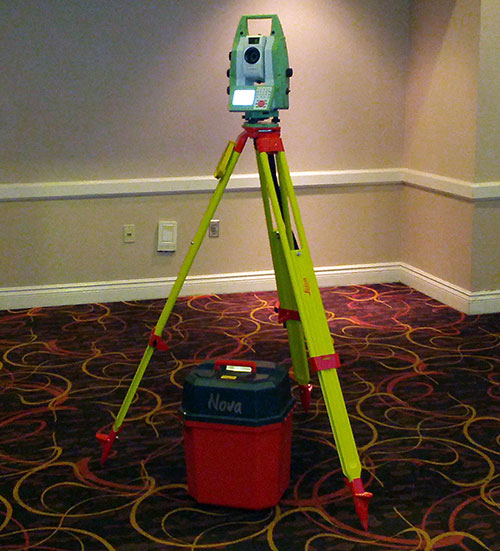
    The Leica Nova measurement solution is designed to provide users with a complete and seamless workflow, Leica Geosystems said. It integrates advanced measurement technology, modern and intuitive field software, intelligent office software, and Leica’s services to give users the ability to make faster, smarter decisions, across a range of applications. The flagship of the new solution is the Leica Nova MS50 MultiStation, which combines scanning, total station, imaging and GNSS positioning in one instrument to deliver fast and reliable results.

    Leica Nova uses advanced measuring technology that provides accuracy and quality, yet is easy to use for an unprecedented range of applications, Leica said. The Leica Nova solution covers the complete process from capturing and visualizing data, to creating intelligent deliverables that shape the world. Whether users measure objects on a construction site, quickly calculate volumes, monitor a dam or a bridge, capture an accident scene with digital imaging or scan a façade, Leica Nova integrates all these capabilities in one compact, flexible solution.

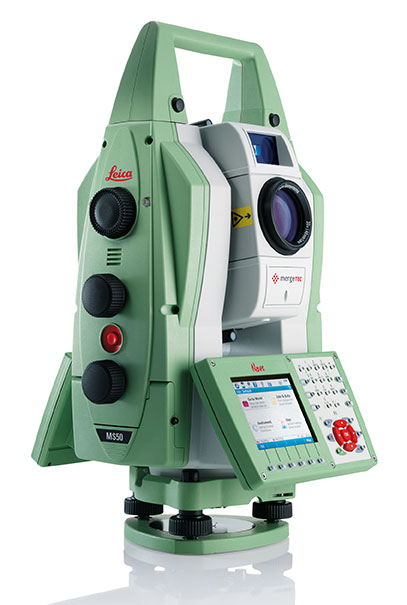
    The Leica Nova MS50 MultiStation. Photo : Leica Nova
    The Leica Nova MS50 MultiStation. Photo : Leica Nova

    The Leica Nova MS50 MultiStation combines every significant measuring technology in one device for the first time, Leica said. Precision 3D scanning, extensive and precise total station capabilities, digital imagery and GNSS connectivity are brought together in the multistation. The new mergeTEC technology fuses hardware capabilities with comprehensive data-management solutions. Images are synchronized with scans, and scans are tied into total station measurements, making it easy to manage complex 3D data, Leica said.

    The Leica Nova MS50 integrates 3D point cloud measurements into regular survey workflows. Users can collect and visualize their topographic survey data with detailed high-precision scans. They save time by computing results and verifying the integrity and completeness of data immediately in the field, avoiding costly reworking or returns. Ultimately, users benefit from better decisions with richer and more detailed data.

    Also part of the innovative new Leica Nova solution are the Leica Nova TS50 high-precision total station and Nova TM50 monitoring station.

    The Leica Nova TS50 high-precision total station has 0.5-inch angular accuracy and an optimum combination of angle and distance measuring. Integrated overview and telescope cameras with fatigue-reducing autofocus document the scene with high-quality photogrammetric images using the latest SmartWorx on-board software.

    The Leica Nova MS50. Photo : Leica Nova
    The Leica Nova MS50. Photo : Leica Nova

    The user sees on the remote control display exactly what the Leica Nova TS50 sees, allowing for easy one-person data capture. The Leica Nova TS50 allows full control through “tap and turn” without the need to go to the instrument and back again. The 20-Hz live video stream can be combined with a graphical overlay for cost-effective recording with immediate clarification of ambiguous situations. Together with the benefits of GNSS connectivity, the Leica Nova TS50 offers complete versatility by delivering reliable results, Leica said.

    For critical monitoring tasks, the new Leica Nova TM50 monitoring station provides the highest angle accuracy and offers short measurement cycles through high speed Piezo drives and a fast, highly accurate EDM. The Leica Nova TM50 includes 0.5″ angular accuracy and can measure up to 3’000 meters, which makes it the ideal sensor for monitoring tasks in mines, landslides, etc. For additional documentation, the monitoring sensor includes an overview camera and a telescope camera with 30x magnification and autofocus. The Leica Nova TM50 meets the challenge of 24-hour-a-day, 7-days-a-week monitoring applications. The Leica Nova TS50/TM50 instruments are IP65 rated and designed to withstand the roughest use in the most severe environments.

    Leica GeoMoS 6.0 enhances conventional monitoring methods with automatic scanning of surfaces with the Leica Nova MS50 MultiStation. Photo : Leica Nova
    Leica GeoMoS 6.0 enhances conventional monitoring methods with automatic scanning of surfaces with the Leica Nova MS50 MultiStation. Photo : Leica Nova

    The Leica software portfolio includes the following:

    • With the new Leica Infinity software, users can seamlessly manage, visualize, process and georeference combined total station, imaging and scanning data from the Leica Nova MS50 MultiStation and other Leica Geosystems sensors.
    • For AutoCAD users who have never before worked with rich point clouds or 3D datasets, the new Leica MultiWorx for AutoCAD plug-in software offers a simple way to integrate point cloud processing into existing workflows.
    • Leica Cyclone and Leica GeoMoS as well as numerous other software packages from partners such as MicroSurvey and Listech can also be integrated into the workflow to meet specific needs.

    Here is a video of the Leica Nova MS50.

  • Locata Tests Lead to Air Force Contract for Non-GPS Positioning System

    Locata Corporation today announced the U.S. Air Force (USAF) has signed a sole-source, multi-year, multi-million dollar contract to install the U.S. military’s first revolutionary ground-based LocataNet positioning system at the White Sands Missile Range in New Mexico. The USAF will field Locata’s new technology for extremely accurate “reference truth” positioning across a vast area of White Sands when GPS is being completely jammed.

    In a recent USAF technical report, the need for a new non-GPS based positioning capability was described by the 746th Test Squadron as the key component for “the realization of the new ‘gold standard truth system’ for the increasingly demanding test and evaluation of future navigation systems for the U.S. Department of Defense.” Locata is the new technology now contracted to enable this capability for the USAF’s future truth reference, the Ultra High-Accuracy Reference System (UHARS).

    The report documented extensive testing of Locata’s new capabilities when a LocataNet covering 1,350 square miles (3,500 square kms) was first deployed at White Sands. The USAF and the 746th Test Squadron proved a LocataNet can accurately position USAF aircraft over a large area when GPS is denied. Locata delivered accurate independent positioning as good as, or better than, the USAF’s current CIGTF Reference System (CRS). The Locata non-GPS based positioning capability is core to the UHARS that will now replace the CRS in 2014.

    After the exhaustive aircraft testing, the USAF concluded that the Locata system had not only met the extremely demanding contractual tracking and positioning requirements, but actually exceeded them on many points. Some of the milestones documented and confirmed by the USAF included:

    • The USAF report documented LocataNet position accuracy of 2.5 inches (6cm) horizontally and 6 inches (15 cm) vertically – about the size of a dollar bill – for aircraft flying at a distance of 30 miles (50km) at up to 350 mph (550 km/hr) at 25,000 feet, without GPS.
    • Throughout the period of the testing, the entire White Sands network achieved nanosecond-accurate synchronization within several minutes of the LocataNet being activated, and remained synchronized even during severe weather until turned off at the end of each test.
    • The USAF tests showed that a stock standard Locata transmitter – the same unit used in commercial applications like mining – could have an amplifier attached to easily boost signals for long-range reception. By attaching a simple, inexpensive 10 watt amplifier, the USAF proved that Locata signals could be acquired and tracked by aircraft at distances of up to 60 miles (100 km). Longer distances could be enabled by attaching higher-powered amplifiers.
    • Before to the White Sands flight trials, commercial Locata systems had only been used to position ground-based vehicles, such as cars, trucks, bulldozers and drill rigs in local areas. For the USAF tests, however, the Locata system needed to function under dynamic aircraft operating maneuvers, including banking, angular and linear accelerations, airspeeds up to 300 knots (560 km/hr), and altitudes up to 30,000 feet above sea level. The required aircraft performance was verified in the real-world testing.
    • The USAF required Locata to design, prototype and then deliver aircraft-certified antennas for use on both the Locata ground-based transmitters and the USAF aircraft. Locata worked with Cooper Antennas Ltd. of Marlow in Buckinghamshire, United Kingdom, to produce an aircraft-certified version of Locata’s new quadrifilar helix antenna design. The Cooper manufactured antennas were used throughout the tests with excellent results, and confirmed Locata’s research and analysis.

    “Locata Corp delivered a LocataNet for use in our October 2011 technical demonstration on White Sands Missile Range that provided time and position truth, independent of GPS, that was better than 18 cm (6 inches) per axis while flying at 15,000 and 20,000 foot above mean sea level profiles,” said Christopher Morin, technical director for the 746 Test Squadron. “The solutions provided by the LocataNet were within the accuracy tolerance of the squadron’s CIGTF Reference System and met our threshold objectives. Further analysis has shown that if we optimize the LocataNet deployment, characterize its errors and tightly couple its range and carrier-phase measurements with the other GPS and inertial components on the UHARS pallet into the UHARS solution post-processing software, I am confident we will be able to meet our 5-cm (2-inch) per axis truth reference objective. I am very pleased with the LocataNet’s demonstrated ability to produce an accurate, dynamic truth reference from the relatively static implementation they had already deployed in the mining industry.”

    “Locata products developed and sold by important commercial partners like Hexagon and Leica Geosystems have already shown our new technology is a game-changer for positioning over industrial-sized areas,” said Nunzio Gambale, CEO and co-founder of Locata. “However, proving Locata can provide the USAF with centimeter-accurate non-GPS positioning over a vast military area when GPS is jammed instantly elevates our technology achievements into a completely new league. It’s important to grasp the scale of what we’ve done here. The 2,500 square mile LocataNet at White Sands will be 74 times the size of Manhattan Island. It must be clear, our ability to deliver centimeter-level (inch-level) positioning over an area that large, without using GPS satellites, is both unique and totally revolutionary. No one else on Earth can do this. Many valuable industrial and consumer apps will now be built around our amazing inventions, created by Locata’s co-founder David Small and our brilliant engineers.”

    “This contract makes it clear you are witnessing the arrival of one of the most important technology developments for the future of the entire positioning industry,” Gambale declared.

    Under this new contract Locata will provide the USAF with Locata receivers and LocataLite transmitters to blanket 2,500 square miles (6,500 sq km) of the White Sands Range. Locata will also:

    a)     deliver extended hardware warranty, along with ongoing Locata software and firmware upgrades, through to the year 2025;

    b)     supply multi-year support for the installation, fielding and testing of Locata networks; and

    c)     provide long-term consultation and expert technical advice to ensure optimal operational performance of the USAF’s fielded LocataNet systems.

  • Leica Geosystems Introduces Viva GS14 GNSS Receiver

    Leica Viva SmartStation GS14

    Leica Geosystems has announced the release of the Leica Viva GS14 GNSS receiver. The GS14 is designed to be the best-price performance GNSS receiver in its class. The built-in GSM and UHF radio, internal memory and IP68 protection fully equips a user for nearly any measuring task, providing a reliable, revenue-generating production unit, the company said.

    When combined with the Leica Viva GNSS RTK, the GS14 creates a tightly integrated GNSS system ensuring the highest degree of flexibility, quality and reliability, Leica Geosystems said.

    The compact Leica Viva GS14 offers comfort in the field and a variety of setups and operating options, the company said. The Viva GS14 can be used as a light-weight rover and as a base station. The Leica Viva GS14 further enhances the Leica Viva series by offering a complete range of GNSS and total station solutions combining precision with maximum versatility. Users gain speed and efficiency by reducing the number of setups and control points with the unique SmartStation, and the versatile SmartPole allows instant switching between GNSS and TPS with a simple icon tap, Leica Geosystems said. The system exceeds specifications going beyond industrial standards. Moreover, the temperature range from -40°C to +65 °C ensures a flawless performance even in most challenging working environments.

    With  Leica Geosystems’ SmartTrack and SmartCheck technology integrated, the Leica Viva GS14 tracks signals with the highest quality and constantly evaluates and verifies the RTK solution to ensure the most reliable RTK positions. Together with the innovative Leica xRTK technology, positions are delivered in difficult GNSS environments. The Leica Viva GS14 also is ready for future satellite signals.

    The Leica Viva GS14 is available this month. Ordering information can be obtained from authorized Leica Geosystems representative.

  • Leica Geosystems Opens Online Store

    Leica Geosystems Inc. has announced the launch of the e-commerce site for Leica Geosystems Solutions Centers. The grand opening of the Leica Geosystems Solutions Center is marked by an unprecedented online-only promotion.

    Providing 24/7 personalized access to the products essential to the surveying, engineering, and construction industries, the site is a resource for more than purchases. It also enables customers to compare thousands of products based on features, shipping options and availability, and to create wish lists.

    The Leica Geosystems Solutions Centers e-commerce site offers a range of supplies, accessories and rentals, from paint and flagging, safety supplies, total stations and GPS systems for surveying, construction lasers and building layout systems. Relevant products and pricing are presented based on each customer’s unique profile, and subscription and quick-order capabilities make it easy to reorder frequently needed products.

    “We are committed to continually delivering value to our customers, and it is exciting to respond to customer needs by bringing this e-commerce site to the market,” said Mike Strom, general manager, Solutions Centers for Leica Geosystems. “Our customers are busy, and they often need to place orders outside of standard business hours. Our new e-commerce website provides customers a more convenient way to buy from us, and we will be offering online-only promotions on a regular basis — similar to the tremendous grand opening deals — so it’s easier than ever for customers to begin reaping the benefits of Leica Geosystems solutions.”

    The Leica Geosystems Solutions Center is factory-owned and operated, which guarantees that customers will receive the quality products and service expected from Leica Geosystems, the company said. Additionally, because support is critical at every step of the way, even during the purchase process, the site features multiple avenues to online support: customers get answers from factory-trained experts.