Tag: Orolia

  • Orolia to supply clocks for 12 more Galileo satellites

    Orolia to supply clocks for 12 more Galileo satellites

    Orolia’s atomic clock solutions have been selected for the Galileo Global Navigation Satellite System (GNSS) under contracts totaling 26 million euros for an additional 12 Galileo satellites.

    This latest initiative builds on Orolia’s long-standing role in providing precise timing technology for satellite programs, including Galileo.

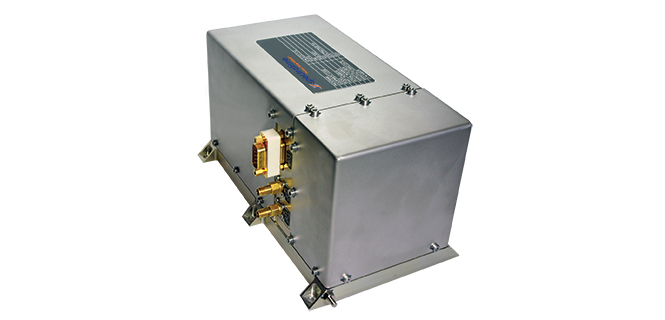
    Each satellite will carry two rubidium atomic clocks and two passive hydrogen masers, considered the most stable clock in the world. Under these contracts, Orolia will supply its Spectratime Rubidium Atomic Frequency Standard and its passive hydrogen masers physics package.

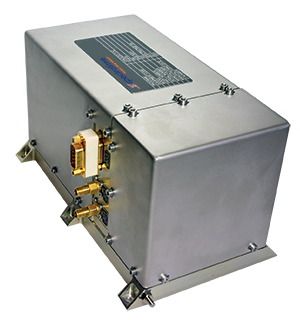
    Orolia's Space Rubidium Atomic Frequency Standard. (Photo: Orolia)
    Orolia’s Space Rubidium Atomic Frequency Standard. (Photo: Orolia)

    “We’re honored to continue supporting the European Commission with precise timing for Galileo,” said Orolia CEO Jean-Yves Courtois. “These new contracts further emphasize Orolia’s position as the world’s leading provider of resilient positioning, timing and navigation (PNT) solutions.”

    In addition to serving as Europe’s independent PNT source, Galileo can also serve as a secondary signal source for systems such as GPS, GLONASS or BeiDou in the event of service disruption. Galileo’s quadruple clock redundancy designed into each satellite ensures that even if a failure occurs, overall system performance will not be compromised.

    More than 150 Orolia Spectratime atomic clocks are flying to support Galileo, IRNSS, BeiDou, GAIA and other missions, some for more than 10 years. Orolia provides the expertise necessary to design solutions for highly reliable space applications.

    Orolia is a designer and manufacturer of a full range of high-performance, low-cost GNSS synchronized crystal solutions, rubidium and maser sources, smart integrated GNSS reference clocks, rugged PNT devices, GNSS simulation and clock testing systems. Orolia’s PNT solutions support a variety of critical applications including defense, government, space, maritime, enterprise networks, aviation and telecommunications.

  • McMurdo wins $34M U.S. Army contract for warfighter locators

    The U.S. Army has awarded to Orolia subsidiary McMurdo a $33,986,800 contract to manufacture Personnel Recovery Devices (PRD) for warfighters. The contract is for indefinite-delivery/indefinite-quantity, with an estimated completion date of March 6, 2022.

    The PRD is a dual-mode, MIL-SPEC locator beacon that will be integrated into the Army’s Personnel Recovery Support System (PRSS). It will be capable of transmitting both open and secure signals to alert and notify that a soldier has become isolated, missing, detained or captured.

    The positioning device will optimize a successful rescue operation for soldiers in a distress situation through secure enhanced capabilities. It has been designed to meet military standards and specifications, and has improved accuracy, decreased size, weight and power (SWaP) requirements.

    “We are extremely proud and honored to have been selected by the US Army as the provider of this critical positioning device for the safety of U.S. warfighters,” said Jean-Yves Courtois, CEO of Orolia. “Easy to incorporate into Personnel Recovery operations, the PRD is based on Orolia’s new rugged and small PNT platform dedicated to dismounted soldier Assured PNT applications.”

    “This award, which follows the 2016 contract from the U.S. Coast Guard to produce 16,000 FastFind 220 personal locator beacons, is a testimony to Orolia’s world leadership in Resilient Positioning, Navigation and Timing,” he said.

    The Personnel Recovery Support System Personnel Recovery Device contract was awarded by the U.S. Army Contracting Command, Aberdeen Proving Ground, Maryland, on behalf of the Army Air Warrior Product Management Office at Redstone Arsenal in Huntsville, Alabama.

  • Orolia to acquire Talen-X to enhance Assured PNT offerings

    Orolia to acquire Talen-X to enhance Assured PNT offerings

    Orolia, a resilient positioning, navigation and timing (PNT) company, has entered into a definitive agreement to acquire Talen-X.

    Talen-X is a U.S. technology innovator with the ability to characterize, enhance and implement advanced techniques and products to solve real-world GNSS vulnerability problems. It has expertise in GPS/GNSS performance, requirements, testing, integration and threat mitigation.

    Orolia has completed 10 acquisitions since 2007, including Spectracom, Spectratime and McMurdo brands. The transaction is subject to customary closing conditions and approvals required by the U.S. Defense Security Service (DSS) and the Committee on Foreign Investment in the United States (CFIUS).

    Through this acquisition, Orolia said it will significantly enhance Assured PNT capabilities across the global company’s portfolio to support mission-critical applications. The additional resources also strengthen Orolia’s commitment to serving the U.S. government, with further expansion of domestic capabilities and a greater U.S. footprint. Toward that end, the companies will reinforce their commercial cooperation to maximize market awareness and access.

    “Military personnel know that accurate and trusted time and position information is a critical enabler for almost all warfighting functions and systems,” said Orolia CEO Jean-Yves Courtois. “Reliable PNT data are critical for communications, sensors, network synchronization, situational awareness, command and control or search and rescue missions. This acquisition reinforces Orolia’s position as a major supplier of Assured PNT technology and enhances our ability to offer unique end-to-end solutions.”

    Talen-X has extensive technology integration and PNT engineering resources that will enable Orolia to rapidly develop and offer new, superior products and services to the U.S. market.

    “Our culture of innovation, together with our demonstrated testing capabilities, will complement Orolia’s global technology expertise and significantly enhance the reliability, performance and safety of military operations,” said Tim Erbes, CTO of Talen-X.

    Key terms of the transaction were not disclosed.

  • 2018 Simulator Buyers Guide

    2018 Simulator Buyers Guide

    GPS World’s 7th annual Simulator Buyers Guide features tools, devices and software from leading providers.


    CAST NAVIGATION IFEN GMBH JACKSON LABS TECHNOLOGY INC.
    RACELOGIC SKYDEL SPIRENT FEDERAL SYSTEMS
    SYNTONY GNSS TALEN-X OROLIA/SPECTRACOM

    CAST NAVIGATION

    CAST-5000 GPS wavefront generator
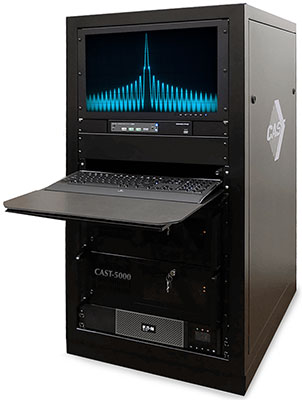
    The CAST-5000 produces a single coherent wavefront of GPS RF signals to provide repeatable testing in the laboratory environment or anechoic chamber. The basic system generates four independent, coherent simulations that reference a single point and is upgradeable to support seven elements for CRPA testing. With an intercard carrier- phase error of less than 1 millimeter, the CAST-5000 is extremely accurate.

    The system generates a wavefront of GPS when its GPS RF generator cards are operated in a ganged configuration. Each generator card provides a set of GPS satellites coherent with the overall configuration. Several RF generator cards may be utilized together, ensuring phase coherence among the bank of signal generator cards.

    The CAST-5000 Controlled Reception Pattern Antenna (CRPA) tester allows a full end-to-end test of the antenna system. The CRPA antenna, antenna electronics and the GPS receiver can be tested as a unit with or without radiating signals.

    Features

    • Generates single coherent wavefront of GPS
    • 6-DOF motion generation capability
    • Complete SV constellation editing
    • Post-mission processing via ICD-GPS-150/153
    • Differential/relative navigation
    • Antenna pattern modeling
    • Waypoint navigation
    • RAIM events
    • Multipath modeling
    • Spoofer simulation
    • Satellite clock errors
    • External trajectory input
    • External ephemeris and almanac
    • Several iono and tropo models
    • Modifiable navigation message
    • Modeled selective availability
    • Time-tagged satellite events
    • Selectable host vehicle parameters

    www.castnav.com
    Phone: 978 858-0130
    Email: [email protected]


    IFEN GMBH

    NCS Titan and NavX-NCS Essential Simulators

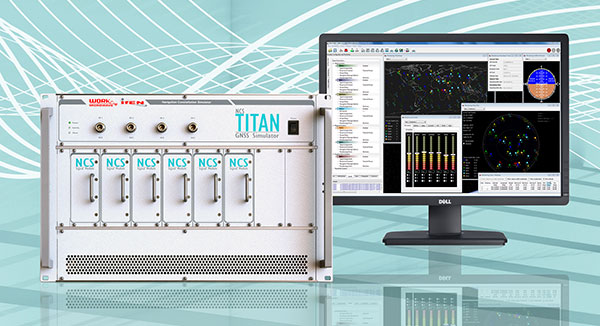
    NCS TITAN GNSS Simulator
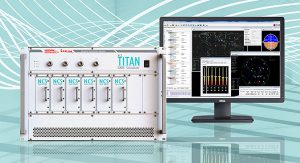
    The NCS TITAN GNSS simulator is a leading-edge satellite navigation testing and R&D solution. It is fully capable of multi-constellation and multi-frequency simulation for a wide range of GNSS applications. The NCS TITAN GNSS simulator consists of the TITAN RF signal generation unit and NCS Control Center navigation simulation software (on MS Windows and Linux OS).

    The NCS TITAN is flexible and offers exceptional performance. With up to 256 channels and up to 4 RF outputs per chassis, the extra complexity and cost of using additional signal generators or intricate architectures involving several hardware boxes is minimized. For customers with advanced simulation needs, several TITAN units can be combined (CRPA testing with 8, 12 or 16 RF outputs at several frequencies simultaneously).

    The NCS TITAN GNSS simulator provides all current and future signals for GPS, GLONASS, Galileo, BeiDou, NavIC/IRNSS, QZSS, SBAS L1 and L5 in one box. All signals are available using a flexible licensing scheme.

    NavX-NCS Essential Simulator

    The NavX-NCS Essential is an easy-to-use multi-constellation GNSS simulator focused on R&D, system integration and production testing for single-frequency applications such as consumer, automotive and location-based services (LBS) applications.
    The NavX-NCS Essential provides unique capabilities, including emulating various vehicle motion sensors for today’s multi-sensor vehicle navigation systems. It offers integration with Google Earth (for accurate trajectory visualization), superior high-dynamic range (for indoor and urban canyon simulation) and Assisted-GPS (A-GNSS) performance test case support.

    www.ifen.com
    Email: [email protected]
    Phone: +49 8121 223820


    JACKSON LABS TECHNOLOGY INC.

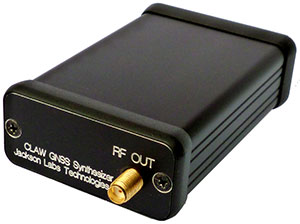
    CLAW 18-channel real-time GPS simulator for manufacturing testing, laboratory and desktop simulation applications
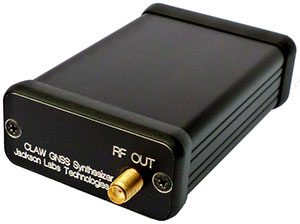
    The CLAW simulator operates as a fully stand-alone simulator with multipath simulation capability, external real-time NMEA to GPS-RF transcoding capability, sub 5-ns UTC time-encoding accuracy. It can work either from internally stored motion files, a fixed-position, externally applied NMEA stimulus input, or controlled via a Jackson Labs Windows application. The CLAW allows comprehensive scenarios to be set up inACKcluding uploading of custom almanac and ephemerides via RINEX import, and full control of simulation time and date making it easy to simulate GPS events such as leap seconds and week 1023 rollover events. The highly accurate simulator can be used as an embedded module to transcode modern GNSS or inertial navigation system (INS) position, navigation and timing signals including SAASM and M-code into legacy GPS RF signals. This capability allows retrofitting any existing legacy GPS receiver to the latest Assured-PNT capability. It can also be used as a GPS firewall to automatically detect and mitigate spoofing and jamming events.

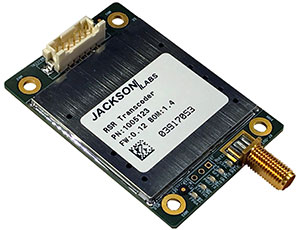
    RSR transcoder GPS simulator for retrofitting existing legacy GPS equipment to any GNSS, INS and atomic holdover capability
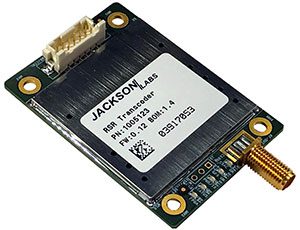
    The size of a postage stamp, the RSR Transcoder is based on the Jackson Labs CLAW simulator technology and is designed to be integrated into systems requiring retrofit of existing GPS legacy equipment with INS and atomic clock holdover capability, as well as the latest GNSS capability such as Galileo, GLONASS, BeiDou, SAASM, M-code and CSAC technology. Because the RSR Transcoder is fully self-contained, it also can work as a generic stand-alone GPS simulator for manufacturing environments or laboratory use. It is compatible with various external MIL-STD GPS receivers for glueless integration into existing vehicles by replacing the existing GPS antenna with the RSR Transcoder connected to an external GNSS receiver and optional high-performance INS. The RSR Transcoders ability to convert latest-generation GNSS receiver NMEA information into legacy GPS RF signals can also be used to upgrade low-performance legacy GPS receivers with modern –167 dBm and SBAS tracking capability for indoor reception and increased PNT accuracy in challenged environments.

    Said Jackson, (702) 233-1334
    www.jackson-labs.com


    RACELOGIC

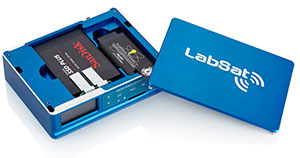
    LabSat 3 Wideband
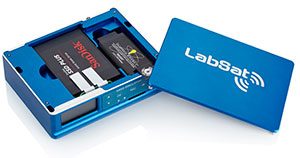
    LabSat is a cost-effective and intuitive GNSS simulator.

    New to the LabSat range of GNSS record and replay devices is LabSat 3 Wideband, which continues with the established reliability, cost-effectiveness, and simplicity of operation that are the benchmarks of the LabSat system.

    A recording bandwidth of 56 MHz allows for the capture of a very wide range of live-sky satellite signals:

    • GPS: L1 / L2 / L5
    • GLONASS: L1 / L2 / L3
    • BeiDou: B1 / B2 / B3
    • QZSS: L1 / L2 / L5
    • Galileo: E1 / E1a / E5a / E5b / E6
    • IRNSS: L5
    • SBAS: WAAS / EGNOS / GAGAN / MSAS / SDCMx

    Depending on the desired bandwidth, recording resolution can be set to 2, 4, or 6 bit. Check out the GNSS frequency guide on the LabSat website — labsat.co.uk — to see exactly which signals can be recorded and at which resolution.

    Even with this greatly increased capacity over the original LabSat 3, the new simulator remains extremely easy to use: one-touch recording, no connection to PC required, battery powered for up to two hours, and with a removable 1-TB solid-state hard drive that can be replaced in no time, the LabSat 3 Wideband is convenient to use. It measures a compact 167 x 128 x 46 millimeters and weighs 1.2 kilograms.

    The LabSat 3 Wideband can now be controlled via a web browser. Easily accessed via the Ethernet connection, the HTML interface graphically displays bandwidth, center frequency and signal capture.

    An online demonstration of this is also available on the LabSat website.

    www.labsat.co.uk
    Phone: +44 (0)1280 823803


    SKYDEL

    SDX: Software-Defined GNSS Simulator
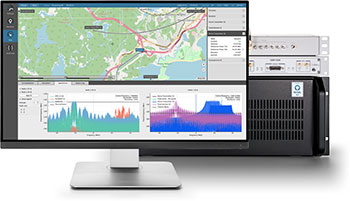
    SDX uses GPU-accelerated computing and software-defined radios (SDR) to create an advanced and fully-featured GNSS simulator. SDX is available as a complete turnkey system or software only, from simple test benches to 32 RF outputs test systems. The software-defined approach offers many benefits:

    • COTS hardware offers economies of scale and eliminates dependency upon dedicated hardware platforms
    • Generic hardware enables users to repurpose their equipment for different projects.
    • Uncompromised performance with high dynamics and accuracy
    • Record user interactions and export them as scripts to automate complex use cases intuitively. The export feature reduces the learning curve for advanced concepts
    • Advanced signal customization (signal signature, private encryption, etc.)

    SDX key features

    SDX is ideal for design and validation of GNSS receivers, complex integration, academic research, NAVWAR and test engineering. Applications include radiated emissions testing in anechoic chambers, CRPA testing, receiver testing under interference (jamming and spoofing), aerospace and automotive scenarios, RTK and more. Skydel engineering and research teams offer direct support to clients to ensure prompt deployment and integration, or to review advanced customization requirements.

    • Multi-constellation (GPS, GLONASS, Galileo, BeiDou, SBAS), multi-frequency (upper and lower L-band) support
    • Selectable RF, IF frequency and IQ File Data
    • Encrypted GPS codes
    • Fully-integrated jammers (static or moving) with more than 120-dB jamming-to-signal ratio
    • Multipath
    • Additive pseudorange ramps
    • Message modification and corruption
    • 1000-Hz update rate and high dynamics
    • Space (LEO-GEO), air and ground vehicle with 6DoF trajectories
    • Hardware-in-the-loop (HIL) integration
    • Raw data logging
    • Real-time receiver deviation analysis
    • Powerful and simple API
    • On-the-fly reconfiguration
    • Multiple simulator synchronization


    SPIRENT FEDERAL SYSTEMS

    GSS9000, CRPA Test System, GSS6450, GSS200D
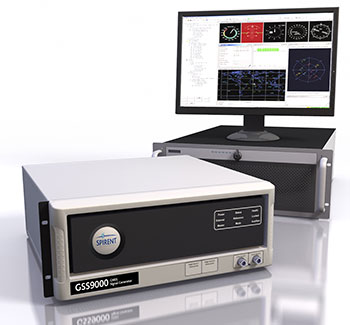
    Spirent Federal provides test equipment that covers all applications, including research and development, integration/verification and production testing.

    GSS9000

    The Spirent GSS9000 Multi-Frequency, Multi-GNSS RF Constellation Simulator can simulate signals from all GNSS
and regional navigation systems. The GSS9000 offers a four-fold increase
in RF signal iteration rate (SIR) over Spirent’s GSS8000 simulator. The GSS9000 SIR is 1000 Hz (1 ms), enabling higher dynamic simulations with more accuracy and fidelity. It includes support for restricted and classified signals as well as advanced capabilities for ultra-high dynamics. Users can evaluate the resilience of navigation systems to interference and spoofing attacks, and have the flexibility to reconfigure constellations, channels and frequencies between test runs or test cases.

    CRPA test system

    Spirent’s Controlled Reception Pattern Antenna (CRPA) Test System generates both GNSS and interference signals. Users can control multiple antenna elements. Null-steering and space/time adaptive CRPA testing are both supported by this comprehensive approach.

    GSS6450

    The GSS6450 RF Record Playback System (RPS) takes RF recording and playback systems to a new level of performance and flexibility, while being housed in a small (8.5 x 7.8 x 3 inch) portable case. The GSS6450 can record any GNSS signals currently available with bit depths up to 16 bits (I&Q) and bandwidths of up to 50 MHz. The flexible product structure allows the system complexity to grow with the user’s testing needs.

    GSS200D

    The GSS200D is an end-to-end solution that builds up a complete picture of interference activity at the site of interest. It continuously monitors the GNSS frequency bands for interference, and then captures them for analysis. The GSS200D supports multi-frequency applications.

    Jeff Martin, [email protected]
    Kalani Needham, [email protected]
    Tyson Gurney, [email protected]

    Spirent Federal Systems
    1402 W. State Rd.
    Pleasant Grove, UT 84062

    www.spirentfederal.com
    [email protected]
    phone: 801-785-1448
    fax: 801-785-1294


    SYNTONY GNSS

    CONSTELLATOR, ECHO
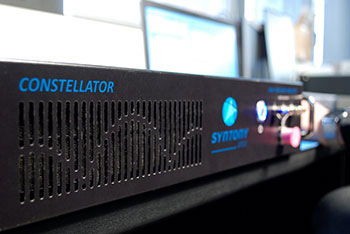
    Constellator is a high-end GNSS simulator capable of supporting all constellation signals available today and tomorrow and providing a high level of service: standalone mode (on ground and in space), hardware-in-the-loop mode with very small latency and high internal frequency update (1 kHz), multi-frequency, up to 200 channels, all typical synchronization interfaces, and the ability to generate any additional signal for realistic simulation (jamming, spoofing, multipath, etc.).

    The Constellator product is available in different ranges, from an entry-level unit supporting L1C/A up to a six-signal-frequencies/200 channels rack, supporting the most demanding configurations.

    Constellator is used extensively in the aeronautic, space and defense industries, where the requirements are highly demanding. Constellator has been carefully evaluated and selected by major industrial companies and agencies worldwide, and is used to test aircraft receivers, spacecraft, launchers and similar systems for defense and armies. Particularly in the space domain, Constellator implements the most accurate models (earth gravity, drag, etc.) needed to achieve “meter-precision” in standalone mode around a complete orbit.

    Constellator is based on modern, powerful software-defined radio (SDR) systems, which make it capable of extreme adaptability and upgradeability after purchase, even without any hardware upgrade. Though a high-end simulator, it is cost-effective because of its software-based architecture; instead of requiring one RF stage per signal, it requires just one per frequency band used.

    The Echo Record and Playback unit allows users to record real-life signals and environments and replay them in the laboratory, which is always more realistic than any simulation.

    Echo is typically used to replay predefined complex and very long realistic scenarios, avoiding the need to use costly satellite simulators for long-run tests or for production tests.

    Echo offers three RF channels of 100-Mhz bandwidth each, 16 bits I, 16 bits Q, and more than 10 hours of record and replay duration. As such, it is high-end record/replay equipment, offering high-end replay fidelity.

    www.syntony-gnss.com
    Email: François Goudenove, chief sales officer, [email protected] (ask François for the contacts of distributors in the U.S., Europe, India, China, South Korea, Japan.)
    Phone: +33.5.81.319.919


    TALEN-X

    BroadSim and PANACEA
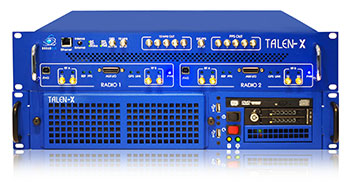
    BroadSimSoftware-defined GNSS simulator

    • Intuitive control using Skydel’s SDX software interface
    • Model true and spoofed signals
    • Generate high-fidelity jamming and interference signals
    • Utilize 4 RF outputs with multiple simultaneous constellations
    • Generate and simulate multiple signal types
    • GPS: L1 (C, C/A, P, Y, AES-M), L2 (C, P, Y, AES-M), L5
    • GLONASS: G1, G2
    • Galileo: E1, E5a/b
    • BeiDou: B1, B2
    • SBAS

    PANACEA

    Autonomous PNT performance and vulnerability test suite

    • Simultaneously control, collect and analyze data from up to 32 units under test (UUT) in real time
    • Compatible with 100+ different receiver brands
    • Manages receiver communication, standardizes output for easy post-test analysis
    • Time synchronization to live-sky
    • Simulate dynamic scenarios with parameters such as jamming patterns, motions, power loss, delays and more

    www.talen-x.com
    Email: [email protected]

    OROLIA/SPECTRACOM

    All constellations, all frequencies
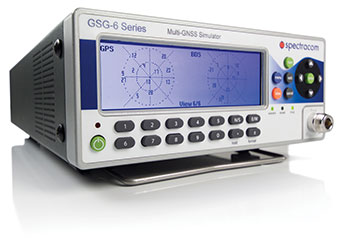
    For users responsible for mission-critical positioning, navigation and timing (PNT) applications, the Spectracom GSG series of GPS/GNSS simulators is an essential tool to evaluate risk of jamming, spoofing or other threats.

    Spectracom GSG-5/6 series simulators are an easy-to-use and feature-rich way to harden GPS-based systems without the limitations of testing from “live sky” signals. The Spectracom platform approach allows users to buy only what they need today and upgrade later. The adaptability of the GNSS RF generation platform can extend to applications for intelligent repeating.

    Test solutions

    • Position accuracy and dynamic range/sensitivity
    • Simulate movements/trajectories anywhere on or above Earth
    • Sensitivity to GPS impairments: loss of satellites, multipath, atmospheric conditions, interference, jamming and spoofing
    • Conducted or over-the-air RF
    • GPS time-transfer accuracy
    • Effect of leap-second transition
    • Multi-constellation testing
    • Modernization signals/frequencies
    • Keyless military SAASM, dual-frequency and survey-grade receiver testing
    • Application packages for RTK, CRPA (controlled radiation pattern antennas)
    • Hardware-in-the-loop integration
    • Test solutions for eCall and ERA-GLONASS

    Infrastructure possibilities

    • Zone-based indoor location (intelligent repeating)
    • Pseudolite applications

    The GSG-6 Series 64-channel multi-frequency, advanced GNSS simulator is powerful enough for any cutting-edge test program. GPS, GLONASS, Galileo, Beidou, QZSS and NAVIC (IRNSS) signals are available across multiple frequencies. It is designed for military, research and professional applications.

    The GSG-5 Series 16-channel multi-constellation L1-band GNSS simulator is designed for commercial development/integration programs. For users developing commercial products with GNSS capability, the GSG-5 will shorten test programs with confidence.

    The GSG-51 single-channel signal generator is designed for one purpose — fast, simple go/no-go manufacturing test and validation, ensuring the manufacturing line is operating at full capacity with confidence in quality.

    spectracom.com
    E-mail: [email protected]
    Phone: +1-585-321-5800
  • Orolia GPS/GNSS passive anti-jam antenna offers horizon blocking

    Orolia GPS/GNSS passive anti-jam antenna offers horizon blocking

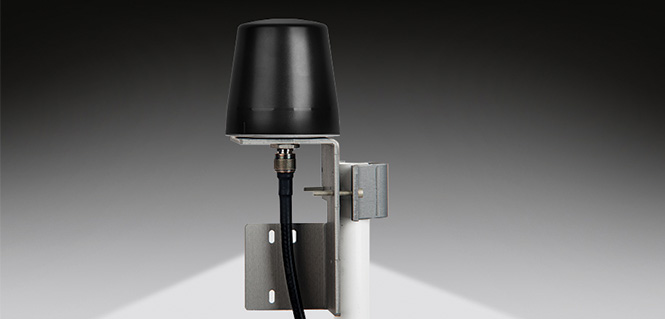
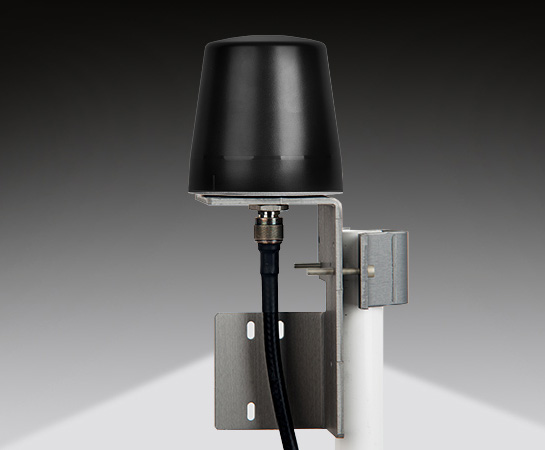
    Model 8230AJ antenna from Spectracom

    Designed primarily for applications such as homeland security, Spectracom’s 8230AJ antenna provides protection in high-interference environments where additional resilience is needed, such as communications networks, financial systems and power grids, the company said.

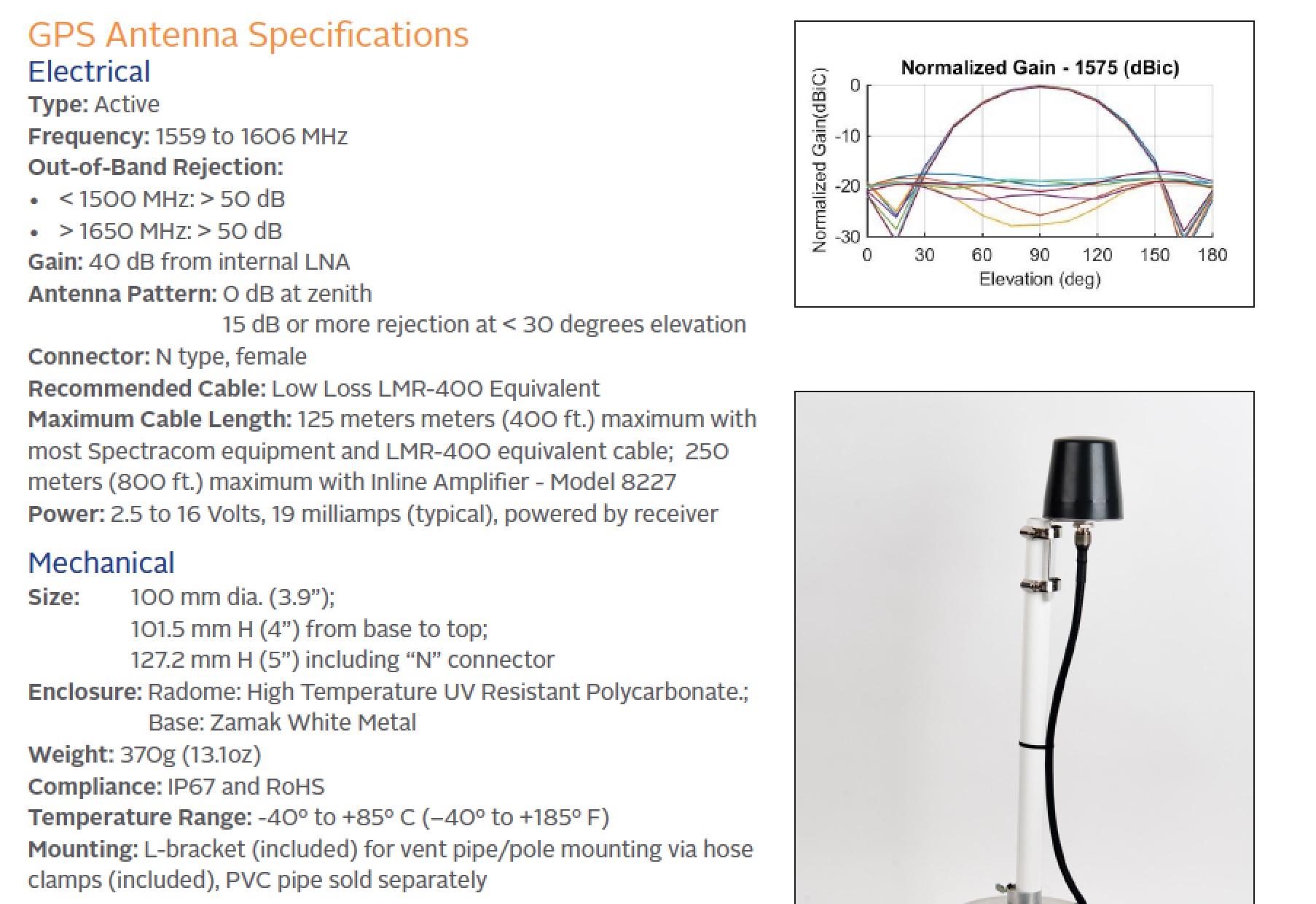
    Orolia, through its Spectracom brand, said the antenna, Model 8230AJ, is a drop-in replacement for the company’s Model 8230. Its conical antenna pattern rejects interference from the horizon and is simple to mount using the same pipe supports, without new cabling. All that is required is a new bracket.

    “Model 8230AJ is a high gain (40 dB) GNSS outdoor antenna covering GPS L1, GLONASS L1, BeiDou B1, Galileo E1, and QZSS L1,” said David Sohn, product manager at Spectracom. “It uses a three-stage low noise amplifier, a mid-section SAW, and a tight pre-filter to protect against saturation by high level sub-harmonics and L-band signals. It is designed especially for harsh environments, is IP67 rated, and improves resilience and protects against jamming and spoofing.”

    According to the company, the AJ antenna rejects signals for the lower elevation angles – where most interference comes from – and only receives signals from the higher elevation angles where the satellites are. While this reduces the number of satellites the receiver will see, for timing applications only a few satellites are needed. Moreover, with multi-constellation receivers, an increasing number of satellites are available.

    With the increasing prevalence of jamming and spoofing, industries with critical infrastructure must take measures against interference.  GPS and GNSS in general have well-known vulnerabilities and limitations that require protection and mitigation: the signals are easily disrupted by unintentional interference from radio transmitters, they are extremely weak, cannot penetrate buildings and can easily be jammed, and civilian signals are not encrypted and can easily be spoofed.

    The new anti-jam outdoor antenna is appropriate for anyone who uses a time server, including Spectracom customers who own a SecureSync, VersaSync or Netclock, according to the company.

    Image: Spectracom
    Image: Spectracom
  • Orolia’s VersaPNT helps soldiers navigate battlefields without GPS

    Orolia’s VersaPNT helps soldiers navigate battlefields without GPS

    Orolia, through its Spectracom brand, has launched VersaPNT. VersaPNT provides virtually failsafe battlefield navigation, even in GPS-denied environments, to protect critical networks with Assured PNT technology, the company said.

    The new, ground, air or sea vehicle-mounted solution is designed for military environments, with a ruggedized, compact, low-power and lightweight form factor.

    Today, military vehicles are portable networks, providing seamless connections with U.S. headquarters, regional command posts and individual soldiers. Remote areas are challenging environments for military networks, and enemy forces are jamming, spoofing and disrupting operations.

    “VersaPNT provides continuous mission assurance and C4ISR support, even in hostile environments,” said Rohit Braggs, Orolia vice president, PNT networks and sources. “This innovative technology solution protects critical networks for complex military and homeland security land, air and sea operations.”

    Every minute counts on the battlefield, and VersaPNT provides critical decision support with real-time situational awareness to facilitate a rapid response, according to the company. This lifesaving technology can also help keep soldiers and civilians out of harm’s way, while ensuring continuous tracking of friendly and enemy forces.

    VersaPNT provides essential command and control, navigation, communication and electronic intelligence support for U.S. and allied military, homeland security, first responder, civilian agency, special operations and intelligence missions.

    Demonstrations are available at the AUSA Annual Meeting, Orolia Booth #2944.

  • Expert Opinions: Ensuring full utility while evolving GNSS

    Q: How can the safety, security, and full utility of GNSS applications be ensured while evolving to the best and most efficient use of limited and extremely valuable electromagnetic spectrum?

    Mitch Narins, principal consultant, Strategic Synergies, LLC

    A: (1) Agree that “No electromagnetic spectrum use will be approved, now or in the future, that impacts GNSS PNT users.” – a common mission statement essential to establishing trust!

    (2) Determine how best to migrate today’s GNSS PNT users to be more resilient to both interference and planned future adjacent band services.

    (3) Provide detailed architectures, network layouts, and implementation plans for rollout of new adjacent band services compliant with (1) and supportive of (2).


    John Fischer, VP, Advanced R&D, Orolia/Spectracom

    A: We cannot ignore fielded legacy systems, but neither can we chain ourselves to old technology and hinder progress.

    Spectrum usage cannot be solved by less regulation, but it can be with innovative regulatory ideas adhering to minimalist principles. For example, would a “cash for clunkers” program work to eliminate weak receivers from the field to enable more efficient spectrum use?

    This is one of those situations where government involvement can spur an innovative solution.

  • Orolia enhances Spectracom GPS threat mitigation with Talen-X

    Orolia has taken the next integration steps with its Spectracom line of resilient PNT products, which will enable clients to take full advantage of Talen-X’s BroadShield Interference and Spoofing Detection technology.

    The announcement follows up on news of the recent Talen-X strategic alliance.

    Orolia’s Spectracom and Talen-X have aligned hardware and software development efforts to jointly develop, market and sell an advanced PNT solution. The goal is to combine the strengths of Spectracom’s resilient PNT products with Talen-X’s interference and spoofing detection suite (BroadShield).

    In addition, under the alliance, Orolia will manufacture SecureSync precise time and frequency references with BroadShield integrated for Talen-X in its Rochester, New York, facility.

    Oriola-Spectracom-logo
    Logo: Orolia Spectracom

    Many mission critical defense, government and commercial operations require highly accurate and reliable PNT data but often rely on signals from GPS/GNSS satellites that are increasingly susceptible to interference or jamming. The Talen-X BroadShield technology is a fully integrated software option available within Spectracom SecureSync.

    Working with standard SecureSync GPS/GNSS receivers, BroadShield uses its unique software algorithms to detect anomalies in the GPS signal, including unintentional interference and malicious attacks. Armed with feedback from BroadShield detected anomalies, the integrated solution provides notification, alarming and automatic disabling of GPS/GNSS synchronization.

    At the same time, BroadShield interference and spoofing detection technology enhances the resilient PNT capabilities of the best-selling Spectracom SecureSync line of time and frequency reference systems. BroadShield achieves this by ensuring mission critical applications receive reliable, accurate and precise time and frequency information in a variety of challenging environments.

    In addition, Spectracom SecureSync will take full advantage of Talen-X’s BroadShield algorithms, which are known for meeting the requirements for critical infrastructure published by the U.S. Department of Homeland Security (DHS).

    Beyond complying with DHS best practices, Talen-X has further enhanced the BroadShield algorithms to go beyond detecting threats. With this enhancement, Spectracom SecureSync operators have detailed threat characteristics, real-time situational awareness and recorded data for pos-event forensic analysis.

    “This synchronized solution is designed to meet both government and commercial requirements by improving the protection of GPS/GNSS based critical infrastructure systems against emerging GPS/GNSS threats,” said Greg Gerten, Talen-X CEO. “Talen-X’s interference and spoofing detection algorithms have been successfully supporting the U.S. Department of Defense (DoD) in Navigation Warfare (NAVWAR) testing for over six years, and are ready to be leveraged to protect civil communities as well.”

    “Orolia is focused on providing Resilient PNT solutions, combining and layering technology in innovative ways that help our customers meet their mission goals,” said  John Fischer, Orolia’s V.P. of Advanced R&D. “This new capability from Talen-X augments our systems with a unique ability to detect and mitigate emerging GPS and GNSS threats more effectively.”

    For more, visit Spectracom.com’s BroadShield information page.

  • PNT Roundup: Iridium constellation provides low-Earth orbit satnav service

    PNT Roundup: Iridium constellation provides low-Earth orbit satnav service

    Iridium satellite. (Image: Iridium)
    Iridium satellite. (Image: Iridium)

    A strategic alliance announced on Dec. 15 between Orolia and Satelles includes product development and go-to-market activities of positioning, navigation and timing (PNT) solutions provided by the Iridium satellite constellation, independent of GPS/GNSS signals. The companies intend to provide PNT solutions to military, defense, government and commercial customers worldwide.

    Orolia, the parent of GNSS-active companies Spectracom and Spectratime, among others, has formed a strategic alliance, including an equity investment, with Satelles Inc. to develop, market and sell PNT solutions based on Satelles’ satellite time and location (STL) signal technology.

    STL is a unique space-based PNT technology that provides location and timing data independent from traditional GPS and other GNSS satellite signals. By using STL, Orolia’s Spectracom and McMurdo solutions will, according to the company, be less susceptible to vulnerabilities such as spoofing, interference and jamming that are associated with GPS/GNSS.

    Based on the low-Earth orbit (LEO) Iridium satellite constellation, STL signals are up to 1,000 times stronger than GPS/GNSS; this signal strength, due in part to the constellation’s closer proximity to users, helps to prevent jamming and enables signal reach into buildings and other difficult locations. STL’s additional cryptographic security also ensures performance, productivity and security.

    For further background on Iridium, see GPS World’s June 2016 Defense PNT column, “Iridium and GPS revisited: A new PNT solution on the horizon?” Projected applications and use cases include energy/utility grids, enterprise data networks including financial systems, maritime/aviation navigation, fleet/asset tracking management, search and rescue, and data center management.

    Many highly sensitive military, defense, government and commercial applications and operations require accurate and reliable PNT data. Today, these applications rely on signals from GPS/GNSS satellites. There are instances, however, where GPS/GNSS signal strength and security are not sufficient and prone to signal disruption. For these cases, the companies jointly state, STL can be used as a secure signal of opportunity to complement GPS/GNSS, making the applications more accurate and secure, and less prone to interference and attack.

    “There is a growing need for precise and robust positioning, navigation and timing information especially in business-critical, high-risk and life-saving operations,” said Jean-Yves Courtois, Orolia CEO. “By augmenting Orolia’s GPS/GNSS-based solutions with Satelles’ STL technology, we will have the industry’s first essentially fail-safe, resilient PNT solution. This breakthrough offering will be ideal for mission-critical applications in which the smallest discrepancy in PNT data accuracy, availability and stability can produce a network outage, a system crash or a loss of life.”

    Signal strength, availability

    The technical advantages provided by adding ranging satellites in low-Earth orbit (LEO) to the GNSS satellites in medium-Earth orbit (MEO) were explored in a 2012 Institute of Navigation paper by Per Enge, Bert Ferrell, David Whelan, Greg Gutt and David Lawrence. GPS World plans to publish an updated version of that paper, with key new material on current STL performance statistics, in an upcoming issue.

    Briefly, the paper concluded that “Due to their proximity, signals received from LEO are approximately 30 dB stronger than the signals from MEO. Indeed, we show data collected inside an industrial-strength metal storage container. The power of a LEO signal received inside the container is approximately equal to the power of a GPS signal received under the open sky. On the other hand, LEO proximity also dictates that only a few Iridium satellites are in view of the ground-based user. We show typical examples where six to 11 GPS satellites are joined by one or two LEO satellites.”

    The authors then examine the effect of the swift mean motion of LEO satellites, analyzing the ability to whiten multipath based on the rapid motion of the line-of-sight vectors from the user to the LEO satellites. In sharp contrast to MEO, the LEO satellites attenuate errors due to multipath solely based on satellite motion, and do not require user motion. They also analyze Doppler-based positioningvusing the rapid mean motion of the LEO satellites. The Doppler shift projects onto the line-of-sight vectors from the user to the LEO satellites. Over 100 or 200 seconds, this projection is a sharp function of the user location, and this connection enables Doppler-based positioning similar to the Transit satellite system. The authors’ analysis shows that position accuracies of 5 meters can be based on noncoherent code tracking of the LEO plus GPS signals.

    This paper also discusses the broadcast of UTC time to sites with known locations, describing experimental results with absolute time accuracies of one microsecond. The broadcast of high-accuracy frequency from LEO would enable a high-accuracy hot clock to replace the relatively low-quality oscillator in GNSS receivers, allowing longer coherent and non-coherent averaging times and improving the sensitivity of GNSS receivers by several decibels. Many other navigation applications would benefit from one LEO satellite in view, the authors assert.

    Market view from operator’s CEO

    “We are a manufacturer and integrator of timing equipment,” Orolia CEO Jean-Yves Courtois told GPS World. Orolia is the parent company of GPS/GNSS product and service providers Spectracom, McMurdo and Spectratime. “This new STL service is not fully commercialized yet, but it’s operational and it can be tested. Receivers are available and can be integrated into our equipment.

    “The timing signal is very accurate and close enough to GPS for most timing applications, although the positioning accuracy is lower than what GPS users are accustomed to. It is an augmentation for timing primarily, and secondarily for positioning,” Courtois continued.

    “In terms of timing accuracy, it provides on the order of tenths of microseconds in accuracy, and this covers a lot of timing applications. This is an ideal timing backup or augmentation of GPS. In positioning it’s closer to 50 meters or more, much better for fixed objects than for mobile objects. The faster the vehicle, the lower the positioning accuracy. It’s not directly usable for GPS applications that require a few meters’ accuracy, but it can be associated with inertial navigation for much better results.

    “The STL signal penetrates buildings well, it has unique features, and it performs at a high level. The signal is encrypted, so you have to subscribe to a service to receive a key, allowing access to the signal. Applications are developing based on equipment that will be STL-enabled. For the user it will be transparent. The user will have a different antenna.

    “We are also active in tracking and emergency location devices, where this is also of interest. It has some authentication capability, to guarantee that the person who accesses the signal is in the location that he pretends to be.

    “For customers to be able to use this service, there is some integration work to be done, some dedicated STL receivers to integrate into our current hardware set up, and software modifications. We are ready to work with government and defense organizations and other new clients. Our basic interest is to add some robustness to our equipment for our current customers, and then of course to develop new customers worldwide.”


    Grab It’n’Go Drive-By Shopping

    Four years ago, retail giant Amazon, a leader in the elimination of human interaction, started to explore what shopping would look like if you could walk into a store, grab what you want, and leave. In early December, the company rolled out its new vision: Amazon Go.

    Currently in private beta testing in Seattle and scheduled to open to the public in early 2017, the system employs a fusion of sensor technologies including RFID to detect when a shopper takes an item from the shelf, sync the data to the shopper’s handheld device, sense when the shopper leaves the store area, then charge all collected items to the shopper’s Amazon account. No muss, no fuss.

    The company is keeping a tight lid on exactly how its system works, but earlier patent filings give some description of the confluence of sensor data.

    “In some implementations, data from other input devices may be used to assist in determining the identity of items picked and/or placed in inventory locations. For example, if it is determined that an item is placed into an inventory location, in addition to image analysis, a weight of the item may be determined based on data received from a scale, pressure sensor, load cell, etc., located at the inventory location. … By combining multiple inputs, a higher confidence score can be generated increasing the probability that the identified item matches the item actually picked from the inventory location and/or placed at the inventory location.”

  • New defense signals offered, new defense editor sought

    New defense signals offered, new defense editor sought

    Two important new signals — or rather, one signal and one group of signals — became available for military users worldwide last week. Satelles made an exciting announcement of what amounts to a new dimension in satnav: a whole new constellation in low-Earth orbit, bringing global coverage and most critically, a signal strength hitherto unknown to GNSS users. The satellite time and location (STL) has primary application in the timing realm, which is vital in many applications.

    Higher in the sky, Europe’s GNSS satellites constituting the Galileo system officially began offering their services, and the multiple frequencies available here mean robustness, greater availability in obstructed environments, and — some say, though this is controversial — greater positioning accuracy, largely through more precise timing onboard.

    Meanwhile, GPS World seeks a new defense editor for this column, and adopting the concept of “promoting from within,” now turns to its readership for interested parties to volunteer.

    A New SatNav That’s Not GNSS

    A strategic alliance announced on Dec. 15 between companies Orolia and Satelles includes will provide positioning, navigation and timing (PNT) solutions provided by the Iridium satellite constellation, independent of GPS/GNSS signals. The companies intend to provide PNT solutions to military, defense, government and commercial customers worldwide. Their new satellite timing and location (STL) service can supply much-needed robustness to GPS-dependent operations.

    Orolia, the parent of GNSS-active companies Spectracomm, McMurdo, and  Spectratime, has extensive experience in the defense realm. The company says it is #1 worldwide in the manufacture of military beacons outside the U.S. with a 60% market share, and #2 within the U.S., and that it is the first-ranked provider of Medium-altitude Earth Orbit Search and Rescue system (MEOSAR) worldwide.  In partnership with Satelles, it will provide the STL service independent from traditional GPS and other GNSS satellite signals. STL is reported to be less susceptible to vulnerabilities such as spoofing, interference and jamming that are associated with GPS/GNSS — and the stronger signal penetrates buildings where GPS/GNSS cannot reach.

    Iridium satellite, courtesy Iridium.

    Iridium satellite, courtesy Iridium.

    Based on the low-Earth orbit (LEO) Iridium satellite constellation, STL signals are up to 1,000 times stronger than GPS/GNSS; this signal strength, due in part to the constellation’s closer proximity to users, helps to prevent jamming and enables signal reach into buildings and other difficult locations. STL’s additional cryptographic security also enhances performance, productivity and security.

    For further background on Iridium, see the June 2016 Defense PNT column by Don Jewell,“Iridium and GPS revisited: A new PNT solution on the horizon?

    Projected key applications and use cases include energy/utility grids, enterprise data networks including financial systems, maritime/aviation navigation, fleet/asset tracking management, search and rescue and data center management.

    “The timing signal is very accurate and close enough to GPS for most timing applications, although the positioning accuracy is lower than what GPS users are used to,” said Orolia CTO Jean-Yves Courtois. “It is an augmentation for timing primarily, and secondarily for positioning.”

    “In terms of timing accuracy, it provides on the order of tenths of microseconds in accuracy, and this covers a lot of timing applications, very familiar to us and to our customers. This is an ideal timing backup or augmentation of GPS. As number 2 worldwide in high-precision timing, we know this market and its applications very well.”

    “In positioning it’s closer to fifty meters or more. Much better for fixed objects than for mobile objects. The more mobile, the faster the vehicle, then the lower the positioning accuracy. It’s not directly usable for GPS applications that require a few meters accuracy, but it can be associated with inertial navigation for much better results.”

    “The signal is encrypted, so you have to subscribe to a service to receive a key, allowing access to the signal. Applications are developing based on equipment that will be STL-enabled. For the user it will be transparent. The user will have a different antenna.”

    “We are also active in tracking and emergency location devices, where this is also of interest. It has some authentication capability, to guarantee that the person who accesses the signal is in the location that he pretends to be.”

    Galileo, live at last!

    Also on Dec. 15, the European Commission issued the Galileo Initial Services Declaration. The Declaration of Initial Services means that the Galileo satellites and ground infrastructure are now operationally ready. These signals will be highly accurate but not available all the time, since the constellation is not yet complete and users cannot always count on four satellites being visible at one time at all points on the Earth.

    Galileo has a significant role to play in military operations. It adds multiple frequencies to the GNSS palette, important for resistance to jamming. It adds satellites, and will add more in the new future, very important for signal availability.  And its Public Regulated Service (PRS) is specifically designed with special features for security, defense and military operations.

    I attended a GNSS Symposium recently in Australia where an academic expert repeated the oft-made assertion that Galileo is the only GNSS that is civil-designed and civil-controlled. At which point an industry expert leaned over, grabbed the microphone and growled “Yeah, right.”

    No matter how you look at it, Galileo add important benefits to GPS for  the suitably equipped warfighter.

    This Newsletter Enters a New Era

    Beginning in January 2017, this Defense PNT newsletter will combine with our GeoIntelligence Insider e-newsletter to offer broad coverage of both hardware and software matters, driven by GPS/GNSS, and enhancing the capabilities of security, defense, military and other government forces. Readers of both newsletters will receive the new combined edition as a matter of course.

    Many readers will know of  the recent passing of Don Jewell, the longtime editor of Defense PNT.  We must soldier on, and GPS World hereby extends an invitation to readers of this newsletter — many of whom, we know, are military experts in your own right — who may wish to volunteer to fill Don’s position.  Please write to [email protected] to request details, and please provide a brief outline of your background and experience.

    Until next time,

    Happy Navigating.

  • New SatNav offerings come to market via STL service

    Pursuant to a recent announcement of new PNT solutions independent of GPS/GNSS signals, provided via the Iridium constellation, GPS World talked with Jean-Yves Courtois, CEO of Orolia. Orolia has partnered with Satelles to bring new PNT products and services to the global market, with a focus on military, and defense, government and commercial customers worldwide.

    Jean-Yves Courtois, CEO of Orolia
    Jean-Yves Courtois, CEO of Orolia.

    “We are a manufacturer and integrator of timing equipment,” Courtois said. Orolia is the parent company of GPS/GNSS product and service providers Spectracom, McMurdo and Spectratime. “This new STL service is not fully commercialized yet, but it’s operational and it can be tested. Receivers are available and can be integrated into our equipment.

    “The timing signal is very accurate and close enough to GPS for most timing applications, although the positioning accuracy is lower than what GPS users are used to. It is an augmentation for timing primarily, and secondarily for positioning.

    “In terms of timing accuracy, it provides on the order of tenths of microseconds in accuracy, and this covers a lot of timing applications, very familiar to us and to our customers. This is an ideal timing backup or augmentation of GPS. As number 2 worldwide in high-precision timing, we know this market and its applications very well.”

    The STL signal strength is much greater than GNSS because the LEO satellites are much closer. (slide courtesy Satelles)
    The STL signal strength is much greater than GNSS because the LEO satellites are much closer. (slide courtesy Satelles)

    Because the signal providing the satellite time and location (STL) service emanates from low-Earth orbit (LEO) satellites, its strength is much greater than GPS and other GNSS signals. Among its key characteristics: it gets good reception inside buildings and beneath other obstructions.

    “The STL signal works very well,” Courtois continued. “We were surprised. Satelles is very conservative in their statements, and we got better results than they promised in our tests. They under-promised and over-delivered. It penetrates buildings well, it has unique features and it performs at a high level. So we decided to invest in it. All our engineers are excited about it!

    “In positioning it’s closer to fifty meters or more. Much better for fixed objects than for mobile objects. The more mobile, the faster the vehicle, then the lower the positioning accuracy. It’s not directly usable for GPS applications that require a few meters accuracy, but it can be associated with inertial navigation for much better results.

    “The signal is encrypted, so you have to subscribe to a service to receive a key, allowing access to the signal.

    “Applications are developing based on equipment that will be STL-enabled. For the user it will be transparent. The user will have a different antenna.

    “We are also active in tracking and emergency location devices, where this is also of interest. It has some authentication capability, to guarantee that the person who accesses the signal is in the location that he pretends to be.”

    “For customers to be able to use this service, there is some integration work to be done, some dedicated STL receivers to integrate into our current hardware set up, and software modifications. Our engineers are ready, we are all ready to work with government and defense organizations and other new clients.”

    “Our basic interest is to add some robustness to our equipment for our current customers, and then of course to develop new customers worldwide.”


  • Orolia fortifies resilient PNT with Satelles satellite time and location signal

    Orolia fortifies resilient PNT with Satelles satellite time and location signal

    A strategic alliance announced on Dec. 15 between Orolia and Satelles includes product development and go-to-market activities of positioning, navigation and timing (PNT) solutions provided by the Iridium satellite constellation, independent of GPS/GNSS signals. The companies intend to provide PNT solutions to military, defense, government and commercial customers worldwide.

    Orolia, the parent of GNSS-active companies Spectracom and Spectratime, among others, announced that it has formed a strategic alliance, including an equity investment with Satelles Inc. to develop, market and sell PNT solutions based on Satelles’ satellite time and location (STL) signal technology. STL is a unique space-based PNT technology that provides location and timing data independent from traditional GPS and other GNSS satellite signals. By using STL, Orolia’s Spectracom and McMurdo solutions will, according to the company, be less susceptible to vulnerabilities such as spoofing, interference and jamming that are associated with GPS/GNSS.

    Iridium satellite, courtesy Iridium.
    Iridium satellite, courtesy Iridium.

    Based on the low-Earth orbit (LEO) Iridium satellite constellation, STL signals are up to 1,000 times stronger than GPS/GNSS; this signal strength, due in part to the constellation’s closer proximity to users, helps to prevent jamming and enables signal reach into buildings and other difficult locations. STL’s additional cryptographic security also ensures performance, productivity and security.

    For further background on Iridium, see “Iridium and GPS revisited: A new PNT solution on the horizon?“, the June 2016 Defense PNT column by Don Jewell.

    Projected key applications and use cases include energy/utility grids, enterprise data networks including financial systems, maritime/aviation navigation, fleet/asset tracking management, search and rescue and data center management. Further details on planned projects and products of the Orolia-Satelles partnership will be posted to this site in a follow-up story in coming days.

    Many highly sensitive military, defense, government and commercial applications and operations require accurate and reliable PNT data. Today, these applications rely on signals from GPS/GNSS satellites. There are instances, however, where GPS/GNSS signal strength and security are not sufficient and prone to signal disruption. For these cases, the companies jointly state, STL can be used as a secure signal of opportunity to complement GPS/GNSS, making the applications more accurate and secure and less prone to interference and attack.

    “In today’s increasingly dynamic and mobile world, there is a growing need for precise and robust positioning, navigation and timing information especially in business-critical, high risk and life-saving operations,” said Jean-Yves Courtois, Orolia CEO. “By augmenting Orolia’s market-leading GPS/GNSS-based solutions with Satelles’ STL technology, we will have the industry’s first essentially fail-safe, resilient PNT solution. This breakthrough offering will be ideal for mission critical applications in which the smallest of discrepancies in PNT data accuracy, availability and stability can result in a network outage, a system crash or a loss of life.”

    “Satelles’ pioneering role in STL technology is a perfect fit with Orolia’s proven Resilient PNT strategy,” said Michael O’Connor, Satelles CEO. “We look forward to working together to introduce new products and solutions that will provide our customers with the utmost confidence that their positioning, navigation and timing data is accurate, secure and accessible.”