Tag: product showcase

  • Launchpad: Simulate signals from GNS, regional navigation

    Launchpad: Simulate signals from GNS, regional navigation

    Constellation Simulator

    Simulate signals from all GNSS and regional navigation

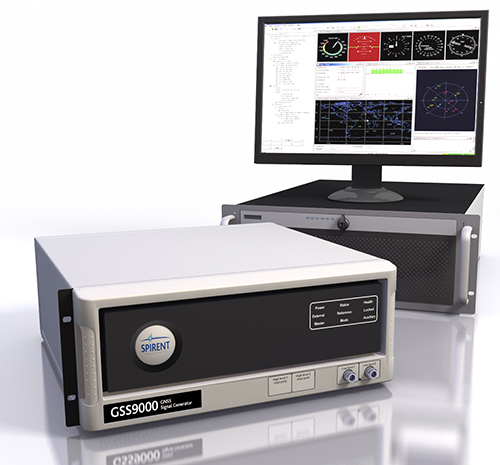
    Spirent's GSS9000 constellation simulator.
    Spirent’s GSS9000 constellation simulator.

    The Spirent GSS9000 Multi-Frequency, Multi-GNSS RF Constellation Simulator can simulate signals from all GNSS and regional navigation. It offers a four-fold increase in RF signal iteration rate (SIR) over Spirent’s GSS8000 simulator.

    The GSS9000 SIR is 1000 Hz (1 ms), enabling higher dynamic simulations with more accuracy and fidelity. It includes support for restricted and classified signals from the GPS and Galileo systems, as well as advanced capabilities for ultra-high dynamics. It can evaluate resilience of navigation systems to interference and spoofing attacks, and has the flexibility to reconfigure constellations, channels, and frequencies between test runs or test cases.

    Hardware changes can be made in the field, supported by the new on-board calibrator module. The GSS9000 is extensible and can support the widest range of carriers, ranging codes, and data streams for the Galileo, GPS, GLONASS and BeiDou systems, as well as regional/augmentation systems. Multi-antenna/multi-vehicle simulation for differential-GNSS and attitude determination, and interference/jamming and spoofing testing are also supported.

    GSS9000 Attributes

    • 1000-Hz simulation iteration rate (SIR) and hardware update rate (HUR) enabling real-time remote control and trajectory delivery with extremely low latency and simulation of ultra-high dynamic motion
    • 160 channels plus 640 embedded multipath channels across 10 independent frequencies in one chassis
    • Single RF version and dual RF version for differential GNSS and multi-vehicle simulation
    • 0.3 mm RMS pseudorange accuracy, 120,000 m/s relative velocity
    • Highly flexible configurations selectable via a “cabinet” of license keys
    • Complete portability of Spirent SimGEN scenarios
    • In-field upgradeability
    • Future-proofed for all advances in GNSS technology

    Spirent Federalwww.spirentfederal.com


  • Launchpad: Positioning engine incorporates TerraStar correction data

    Launchpad: Positioning engine incorporates TerraStar correction data

    NovAtel CORRECT with PPP
    NovAtel CORRECT with PPP.

    NovAtel CORRECT is the core positioning engine on NovAtel GNSS receivers, incorporating corrections from a variety of sources to provide the position solution suitable for a variety of applications.

    NovAtel CORRECT with PPP utilizes correction data from TerraStar. GNSS satellite clock and orbit correction data from the TerraStar network is delivered directly to the NovAtel receiver where it is combined with NovAtel CORRECT algorithms to offer two levels of positioning accuracy: TerraStar-C for 5-centimeter-level positioning with instant reconvergence after short GNSS outages, and TerraStar-L with horizontal position accuracy of 50 centimeters.

    The TerraStar network provides continuous satellite coverage worldwide, with 80 GNSS reference stations located around the globe. Three widely distributed Network Control Centers deliver data over seven independent satellite beams. This fully redundant system means TerraStar offers an extremely robust, reliable correction service users can rely on 24/7.

    Benefits of Novatel CORRECT with PPP

    • Elimination of base station and communications equipment, simplifying equipment needs
    • Same performance anywhere on Earth
    • Robust performance in variable conditions
    • Corrections delivered direct to the end user

    NovAtel, novatel.com/terrastar

  • Launchpad: GNSS simulator developed with JAXA

    The Replicator by IP Solutions  is a multi-frequency, multi-system GNSS simulator for advanced research and development, equipment testing and education. It can also function as a recording, playback and signal analysis instrument.

    IP Solutions is exhibiting this week at ION GNSS+, in Portland, Oregon.

    The Replicator is the result of a collaboration with the Japan Aerospace Exploration Agency (JAXA).

    mfr3-ipsolutions-replicator-wComponents include the Simceiver hardware device, the ReGen control software for real-time simulation, Streamer control software for recording and playback, and ARAMIS software receiver for signal analysis.

    The 24-channel Replicator provides real-time generation of GNSS signals, recording and playback of dual-frequency GNSS RF signals, and GNSS RF signal analysis with JAXA COSMODE ionospheric scintillation monitor.

    The Replicator offers real-time simulation of dual-frequency GPS, GLONASS, BeiDou or GPS+GLONASS, GPS+BeiDou, GPS+Galileo signals.

    Comprehensive simulation models include atmosphere, multipath, and more. Also available is signal analysis based on JAXA COSMODE ionospheric scintillation monitor.

    Two or more units can be used to simulate, record and playback more signals at the same time. Simulated and recorded signals can be stored in digitized format, analyzed by a MATLAB software receiver and played back as RF at any time.

    Replicator Advantages

    • User defined models with ANSI C API
    • Real-time simulation
    • Record and playback
    • GNSS signal analysis
    • Upgradable to more features , signals and frequencies for the difference in price.

    IP-Solutions, www.ip-solutions.jp

  • Launchpad: Dynamic testing before flight

    Launchpad: Dynamic testing before flight

    GNSS/INS Integration Testing

    Dynamic testing before flight

    The CAST-3000 simulator from CAST Navigation.
    The CAST-3000 simulator from CAST Navigation.

    The CAST-3000 fully supports integration testing of GNSS/INS navigation systems where the inertial sensor and GNSS receiver are either tightly or ultra-tightly coupled. It produces GPS RF signals coincident with simulated IMU sensor data that provide dynamic testing in the laboratory environment for military and government applications.

    The proprietary laboratory test interfaces to inertial navigation products of both Honeywell and Northrop Grumman are incorporated with high-performance fighter aircraft and munition dynamics. The CAST-3000 simulates dynamics for both the GNSS and INS portions of EGI (embedded GNSS-inertial navigation) systems in a coordinated and coherent way so that the GNSS and INS navigation solutions do not diverge, and the blended solution is precisely what it would be in the real world. This is accomplished by simulating both the GNSS and INS inputs.

    The military and government labs that the CAST-3000 supports have strict requirements for dynamic ground testing of navigation systems before flight testing. The simulator must explore performance of both GNSS and INS aspects of the EGI for modeling IMU drift rates in GPS jamming environments.

    CAST-3000 Features

    • Strapdown IMU measurement data synchronized with GPS RF data provided to the navigation system under test.
    • Mature avionic sensor simulation barometric altimeter model.
    • High-rate inertial measurements with very high degree of fidelity to support testing of high performance coupled systems.
    • Simulates sensors to provide the fully coordinated, dynamic vertical channel aiding needed to maintain Kalman filter stability of the navigation system. Includes years of development and refinement of the precise GNSS/INS synchronization capability needed for simulation of aircraft dynamics.
    • A dynamic, precisely coordinated simulation of numerous navigation signals to a tightly coupled or ultra-tightly coupled GNSS/INS navigation system.

    CAST Navigation, www.castnav.com

  • IFEN launches cost-effective NCS TITAN GNSS simulator

    IFEN launches cost-effective NCS TITAN GNSS simulator

    IFEN GmbH has launched its new NCS Titan GNSS simulator. The NCS Titan has up to 256 channels (and 1024 multipath channels) and up to 4 RF outputs per chassis, providing flexibility and outstanding performance, according to IFEN.

    The extra complexity and cost of using multiple signal generators is avoided, improving reliability without compromising on functionality, IFEN said in a news release.

    The innovative design of the NCS Titan allows users configure channels for any GNSS signals and allocate those channels to any of the RF outputs fitted. This flexibility enables the same simulator hardware to be used for an extensive range of tests, for all types of GNSS applications.

    The NCS Titan GNSS simulator by IFEN.
    The NCS Titan GNSS simulator by IFEN.

    The NCS Titan sets new standards in the field of GNSS Simulation, in terms of fidelity, accuracy, dynamics, iteration rates and reliability, the company said.

    “The launch of our brand new NCS Titan GNSS Simulator represents another milestone for our NCS GNSS simulator products,” explained Günter Heinrichs, head of customer applications. “This shows clearly once again our commitment to ongoing product enhancement and dedication to providing our customers with best GNSS test equipment on the market.”

    The NCS TITAN GNSS Simulator has been developed in cooperation with WORK Microwave GmbH, Germany.

  • Epson, DJI partner on AR smart glasses for piloting UAVs

    Epson, DJI partner on AR smart glasses for piloting UAVs

    epson-uav-smartglasses-pilot-wEpson, providers of the Moverio augmented reality (AR) smart eyewear platform, is partnering with DJI, maker of unmanned aerial vehicles (UAVs).

    The companies are creating new solutions for the Epson Moverio smart glasses and DJI’s suite of products and software development kit (SDK) that enhance the safety, productivity and capabilities of UAVs for both hobbyists and professionals.

    As one of the first initiatives of the partnership, DJI will optimize the DJI GO app for the Epson Moverio BT-300 AR smart glasses, shipping late Q4.

    With the app and the Moverio glasses, drone pilots will be able to see crystal clear, transparent first-person views (FPV) from the drone camera while simultaneously maintaining their line of sight with their aircraft. The DJI GO app works with the DJI Phantom, Inspire and Matrice series flying platforms as well as the Osmo handheld gimbal and camera.

    The two companies will co-market the Moverio BT-300 as a compatible DJI accessory. The Epson smart glasses will be available for purchase on DJI.com while the DJI GO app will be available for download from the Moverio Apps Market.

    https://www.youtube.com/watch?v=TJNJOw34p_o

    The Epson/DJI partnership arrives as newly streamlined FAA regulations for UAVs have taken effect, making it easier for businesses to expand the use of drones for a variety of aerial photography and videography purposes. Construction, real estate, insurance, agriculture, emergency response, conservation, academic research, film and video production and numerous other fields that benefit from UAVs have embraced the relaxed rules. However, the FAA has maintained the rule that UAVs must remain within the visual line-of-sight (VLOS) of the remote pilot, reinforcing the relevance of the Epson and DJI partnership.

    “The Moverio BT-300 marks an impressive advance in performance for the platform and will make flying and filming safer and help users stay in compliance with federal regulations,” said Michael Perry, director of strategic partnerships, DJI. “We are excited to see the incredible applications that can be built with the BT-300 and the recently relaunched DJI SDK — the possibilities truly are endless.”

    DJI maintains a 70 percent market share of the $2 billion consumer drone market, and its aerial platforms are used by two­-thirds of businesses approved by the FAA to operate commercially. More than 600,000 UAVs are expected to be in use in 2017.

    epson-uav-smartglasses-w“We believe this partnership with DJI will revolutionize how UAV pilots operate their aircraft in this fast-growing industry, now and into the future,” said Eric Mizufuka, product manager, New Ventures for Epson America. “In addition to validating Epson’s investment in its Moverio line, this is the first time AR smart glasses will be widely available for a mass-market consumer application, marking an historic milestone in the evolution of the category.”

    In addition to making drone piloting safer, the goals of the partnership include providing pilots and film-makers with new AR tools for enhanced productivity when using a UAV. Epson and DJI will also work together to create entirely new experiences for the fast-growing number of UAV hobbyists and businesses, as well as conduct joint sales and marketing efforts worldwide.

    Launching its first-generation smart glasses in 2011, the Epson Moverio BT-300 represent the world’s lightest binocular, transparent smart glasses with an OLED display. Combining breakthrough silicon-based OLED digital display technology and Android OS 5.1, the Moverio BT-300 enables truly transparent mobile AR experiences.

    The Epson Moverio BT-300 will be available in late Q4 and may be pre-ordered at Epson.com/Moverio. Epson will be demonstrating the DJI GO app on the Moverio BT-300 in booth No. 81 at InterDrone 2016, which is being held Sept. 7-9 in Las Vegas, Nevada.
  • GPS Lite: Keeping tabs on cargo at the port

    GPS Lite: Keeping tabs on cargo at the port

    Cargo that comes into the Rotterdam, The Netherlands, shipping port could very well be guided by a new GPS system.

    APM Terminals Rotterdam operates at the important European gateway with a fleet of more than 70 straddle carriers. The straddle carriers have been equipped with GPS Lite, made by U.K.-based International Terminal Solutions (ITS).

    GPS Lite tracks the straddle carriers.(Photo: ITS)
    GPS Lite tracks the straddle carriers.(Photo: ITS)

    GPS Lite, the latest version of ITS’s G-POS GPS tracking system, provides real-time visibility so that valuable resources aren’t wasted hunting for or handling misplaced containers.

    Testing. To ensure the new system was rolled out smoothly and provided the required reliability and accuracy, extensive tests were done on two straddle carriers.

    Following the success of these tests, the system was rolled out in phases to the rest of the fleet.

    APM Terminals Rotterdam uses the COSMOS Terminal Operating System. For COSMOS users, G-POS connects to the radio data terminal on each straddle carrier in the same way as the legacy system it replaced.

    It is fully compliant with COSMOS interface specifications and uses the same cable connections to make the system swap compatible.

    Rotterdam port: A straddle carrier is in the foreground. (Photo: APM Terminals Rotterdam)
    Rotterdam port: A straddle carrier is in the foreground. (Photo: APM Terminals Rotterdam)

    ITS can provide a range of GPS accuracy options wih G-POS, depending on customer needs. Accuracy can range from 2 centimeters up to 0.7 meters, with various types of differential GPS correction methods used.

    G-POS provides automated, real-time, error-free data, enabling a live accurate database to improve storage and retrieval decisions, and to optimize equipment use.

  • Red Hen’s modular defense kits capture first-person views

    Red Hen’s modular defense kits capture first-person views

    THISR modular kits provide the tools needed to capture the first-person view on the battlefield. (Photo: Bruce Donaldson, THISR team leader, Red Hen Systems)
    THISR modular kits provide the tools needed to capture the first-person view on the battlefield.
    (Photo: Bruce Donaldson, THISR team leader, Red Hen Systems)

    The Tactical Handheld Intelligence Surveillance Reconnaissance (THISR) by Red Hen Systems is an advanced intelligence, surveillance and reconnaissance (ISR) asset providing a real-time solution to operators and mission teams.

    The modular kits provide the tools needed to capture the first-person view on the battlefield. The THISR is a custom integration of cameras, a laser rangefinder, GPS unit and software linked through Red Hen System’s VMS-333 mapping system.

    THISR is the integration of three core collection technologies:

    • Random Access Full Motion Video (RAFMV) with mapping integration
    • 360° immersive rendering
    • light UAV/UAS

    Together, all three technologies provide critical information to the operator for use in planning superior missions, enhancing situational awareness and protecting forces, the company said.

    The kits offer near-real-time dissemination and surveillance, and can be integrated with other technologies.

    The THISR options.
    The THISR options.

    Mapping system. The VMS-333 encodes multiple geo-referenced sensor metadata records into a single data stream and combines this metadata with photographic and video imagery. Data multiplexing capabilities are available for two different mission types–nadir and oblique ground observation missions.

    The nadir mission provides an automated process to create a seamless orthogonal geo-referenced photographic mosaic of the entire flight path that can be used to produce 3D terrain models of the ground below.

    The oblique mission provides the functionality to take at-will photographs of ground-based areas of interest from a handheld SLR camera, and geo-reference these photographs with the location of the ground target using coupled laser range finder technology.

  • Satlab Geosolutions’ RTK Handheld uses tablet or phone as display

    Satlab_SLC3Swedish-based survey and GIS equipment maker Satlab Geosolutions is offering a multi-purpose handheld that sends centimeter-level NMEA position data to the user’s tablet or smartphone.

    The SLC RTK handheld brings professional high-precision positioning in a new design concept with Bluetooth connectivity for Android, Windows and iOS Bluetooth low-energy (BLE) smart devices, according to the company.

    Alternatively, it can be used as a fixed sensor for any compatible NMEA driven positioning application.

    The design includes a mounting plate to attach the user’s tablet device so it acts as the SLC’s display. Connectivity also is available via a USB/RS232 port. With a built-in wireless modem and optional remote antenna and pole- or fixed-mount accessories, the SLC can be configured as a sensor for machine control or other mobile applications.

    SLC is flexible — it can be paired with data-collection software running on Windows, Android or iOS BLE with compatible applications. Its RTK positioning information can be used in numerous markets including land surveying, high-accuracy GIS, web-based facility management, utilities, pipelines, precise farming, hydrography, geophysics or aeronautics. With 32-GB internal memory, the SLC is also able to record RAW data to be used for post-processed applications.

    The SLC has a built-in lithium ion battery and GNSS antenna for up to 12 hours of portable operation. It includes a Telit 3.5G GSM modem for operation as an RTK base or rover, transmitting or receiving corrections from NTRIP networks or via Satlab’s free Internet RTK service. Satlab Internet RTK allows users to stream corrections via IP to any of three Satlab servers around the world; any Satlab rover device can then connect to that same IP connection to receive full GNSS constellation corrections.

    “Our new Scandinavian-designed SLC handheld is a different concept, offering RTK centimeter-level positioning at an incredible price in a flexible form factor,” commented Bjorn Agardh, CEO of Satlab. “With our simple SLC Toolbox software utility, users set up the SLC once, and it remains configured every time it’s used.”

    The SLC comes in two configurations: as a handheld in a soft case with two tablet/panel mounting plates and a charging USB cable; or bundled with external geodetic antenna, cable and pole mount.

  • Harxon antenna aimed at marine positioning

    Harxon antenna aimed at marine positioning

    Harxon has released a utility beacon antenna — HX-CS7615A — to professionally solve marine satellite positioning challenges.

    The HX-CS7615A supports GPS L1/L2, GLONASS L1/L2 BDS B1/B2/B3 and beacon frequencies (282.6 to 326 KHz), which greatly overcomes the defects of long-distance transmission limits, the company said. In addition, combining wide frequencies in one antenna makes the new device more cost effective.

    Inside, a multipath rejection board significantly eliminates measurement error, Harxon said. The phase center of the antenna remains constant as the azimuth and elevation angle of the satellites change.

    The HX-CS7615A Harxon marine antenna.
    The HX-CS7615A Harxon marine antenna.

    The HX-CS7615A is designed with high gain and wide beam width. It is test approved — even in some severe blocking situations, its reception remains stable.

    A specialized antenna made for rugged environments, the HX-CS7615A beacon antenna is sealed against water and dust, is salt and fog resistant, and operates in extreme weather conditions.

  • Free Landsat Viewer brings Earth into focus

    A free web tool has been launched for browsing satellite imagery from Landsat 8 — the Landsat Viewer. The tool was created by the start-up company Eos Data Analytics.

    EOS Data Analytics is an automatic cloud-based GIS analysis service. It uses a combination of satellite imagery, geospatial data, customer workflow information and consumer behavior principles to create deep, comprehensive GIS analysis.

    The Landsat Viewer is based on a huge open data archive, Landsat on AWS. It can generate common indices on-the-fly, and users are able to download the selected bands.

    Here are a few sample images using the new viewer:

    The North Sea water surface looks like a deep universe with a myriad of stars (pan sharpen RGB):

    NorthSea-galaxy-LandsatViewer

    “Pacmans” in Saudi Arabia.

    Pacman-Saudi-LandsatViewer

    Every time a user chooses the scene, zooms in/out or changes the bands, the image in the browser is generated on the fly from the raw data stored in the cloud. In the same way, it is delivered to the browsers on tablets and smartphones.

    Learn more on the company’s blog.

  • NovAtel releases 2 triple-frequency marine GNSS antennas

    NovAtel releases 2 triple-frequency marine GNSS antennas

    NovAtel-ATEX-antennaNovAtel Inc. has introduced the GPS-713-GGG-N and GPS-713-GGGL-N ATEX-qualified triple-frequency GNSS antennas with an Inmarsat rejection filter.

    Based on the company’s pinwheel technology, the antennas offer multi-constellation reception of L1, L2 and L5 GPS; L1, L2 and L3 GLONASS; B1 and B2 BeiDou; as well as E1 and E5 a/b Galileo frequencies.

    The GPS-713-GGGL-N also supports L-Band from 1525 to 1560 megahertz. The same antenna can be used for GPS-only, dual or triple constellation applications, resulting in increased flexibility and reduced equipment costs, the company said in a news release.

    The phase center of the antennas remain constant as the azimuth and elevation angle of the satellites change. Signal reception is unaffected by the rotation of the antenna or satellite elevation, according to NovAtel. With the phase center in the same location for the GNSS signals, and with minimal phase center variation between antennas, the antenna is suitable for baselines of any length.

    The rugged antenna is enclosed in a durable, waterproof housing and meets MIL-STD-810G for vibration, corrosive environment and salt fog, NovAtel says. The GPS-713-GGG-N and GPS-713-GGGL-N are similar in form factor to our other high performance GPS-700 series antennas, and bth antennas meet IEC60945 specifications.

    The two antennas deliver choke-ring level antenna performance, but without the size and weight, NovAtel said. Both antennas provide enhanced Inmarsat interference rejection, which allows tracking of GNSS signals in the presence of high-powered Inmarsat transmitters that are typically found on marine vessels.