Tag: product showcase

  • Verizon Expands Asset Tracking Portfolio with Networkfleet Asset Guard

    Verizon Enterprise Solutions today announced the expansion of its asset- tracking capabilities, with the introduction of Verizon Networkfleet Asset Guard. Designed to fit seamlessly on Verizon’s existing Networkfleet vehicle tracking solution, Networkfleet Asset Guard runs on the Verizon Wireless network for fixed and moveable fleets such as trailers, yellow iron machines and generators.

    A lightweight device with a built-in wireless antenna that easily attaches to a piece of equipment for wireless tracking, Verizon Networkfleet Asset Guard includes a long-lasting battery that allows for reliable location tracking over multiple years. Using Networkfleet’s online application, business owners can track assets alongside fleet vehicles to determine exact GPS locations. Reports and alerts show if and when an asset has been moved, which asset is closest to a particular location or landmark and when assets are moved outside of a predetermined virtual perimeter, or geofence.

    “It is becoming more critical for businesses and other organizations to track all of their vital assets, including equipment and vehicles, to help maintain security and operational efficiency,” said Erik Goldman, group president, Verizon Telematics. “With Networkfleet Asset Guard, businesses and government agencies can easily locate their fleet assets and together with our other Networkfleet solutions make sure they are being used properly and efficiently. The combination of Asset Guard’s long battery life coupled with the variety of reports and alerts will help public- and private-sector organizations improve equipment utilization, better manage fleet operations and control costs.”

  • NovAtel Launches Correct OEM Positioning Solution

    NovAtel Launches Correct OEM Positioning Solution

    NovAtel Correct.
    NovAtel Correct.

    NovAtel, Inc., OEM provider of high-precision GNSS positioning products, has launched its NovAtel Correct positioning technology. NovAtel Correct optimally combines data from multiple GNSS satellite constellations with corrections from a variety of sources, to deliver the best position solution possible.

    NovAtel Correct provides integrators with the opportunity to choose pricing and subscription options that best match their OEM business objectives. Delivery of correction data is available via satellite or Internet, depending on the requirements of the application. With NovAtel in control of the entire positioning solution, future innovation including seamless integration with all positioning modes and correction types is assured.

    Designed for NovAtel’s OEM6 high-precision receivers, the NovAtel Correct precise point positioning (PPP) solution delivers decimeter-level accuracy worldwide. L-band delivered PPP corrections from TerraStar are supported by NovAtel Correct without users having to add base-station infrastructure. Developers of land, airborne and near shore applications can purchase subscriptions to TerraStar’s correction service directly through NovAtel.

    “For a number of reasons, many of our customers have been eager for an end-to-end NovAtel OEM positioning service,” said Jason Hamilton, VP, Marketing for NovAtel. “NovAtel Correct rounds out our product and service offering and gives customers one-stop shopping for receivers, antennas and correction services.”

    Satellite and NTRIP-based solutions will be available for OEM6 products in Q1 2014 for all applications requiring decimetre-level positioning.

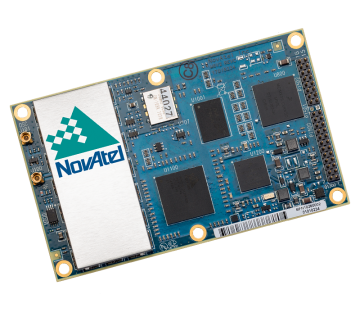
    NovAtel OEM628 triple-frequency +  L-Band GNSS receiver.
    NovAtel OEM628 triple-frequency + L-Band GNSS receiver.
  • GPSTrackIt.com Adds Hard Turns to Driver Safety Alerts

    GPSTrackIt.com has introduced a new Driver Safety Alert that tracks hard turns. Driver Safety Alerts already track and report driving behaviors like rapid acceleration, hard braking, and seatbelt usage. GPSTrackIt engineers have now added the ability to identify “hard turns” to the alert list.

    Driver Safety Alerts are used by businesses across the country to help dispatchers and managers understand how drivers are doing in the field.  Businesses ranging from small-to-medium sized service companies to large transportation companies with fleets of hundreds of vehicles are able to help drivers understand the importance of safe driving behaviors.

    “Drivers represent their employers to the public,” said Eddie Bermudez, GPSTrackit.com’s product development manager.  “A vehicle that is driven badly or, more to the point, dangerously, does not reflect well on that employer.  These alerts notify managers and dispatchers via email or SMS text messages when their drivers are driving in a potentially aggressive manner.”

    Rapid acceleration and hard braking are indicators of bad driving behaviors that also impact a vehicle’s mileage.  Seat belt alerts indicate that the vehicle is moving while the driver’s seat belt is unfastened.  Statistics show that wearing a seatbelt dramatically reduces deaths and injuries from collisions.

    “Hard turns are another driving behavior that puts the driver and vehicle at additional risk,” continued Bermudez.  “It also puts additional wear on a vehicle.  We were able to utilize the accelerometer and gyroscope technologies built into the GPS tracking devices in a similar manner to the hard braking alert.”

    According to the National Transportation Highway Safety Administration’s 2008 report to Congress, “National Motor Vehicle Causation Crash Survey,” about 36 percent of vehicles involved in collisions were turning or crossing at intersections just prior to the crashes.

    “When we’re making a turn, we become more vulnerable,” added Bermudez. “Clearly in a left turn situation you’re putting your vehicle in the path of oncoming traffic.  But right turns can be hazardous as well to both pedestrians and drivers. Turn too soon and you clip the curb, which doesn’t do much for your wheel alignment.  Turn too late and you could end up making a wide turn.  If the device on the vehicle transmits a hard turn event, Fleet Manager checks if an alert is configured for that vehicle.  If so, it sends the time, date, and location information to the email and/or text recipients.”

  • Altus Makes Available Juniper Archer 2 Field Computer with APS-3 Receiver

    Altus Makes Available Juniper Archer 2 Field Computer with APS-3 Receiver

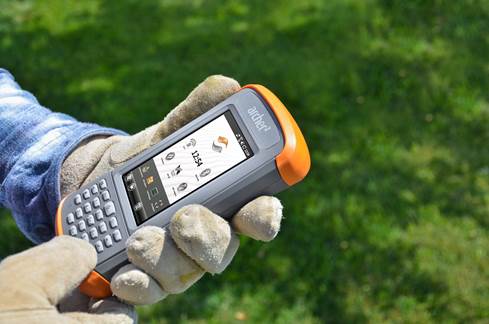
    Archer-2

    Altus Positioning Systems has announced the availability of the new Juniper Archer 2 field computer packaged with Altus’ APS-3 GNSS RTK receiver.

    “When paired with the performance, portability and flexibility of the APS-3, the new Archer 2 provides an unbeatable value proposition,” said Neil Vancans, president of Altus Positioning Systems. “This dynamic duo will allow surveyors to improve productivity by capturing data faster and staying in the field longer.”

    The Archer 2 is a powerful handheld computer with an IP68 certification and MIL-STD-810G compliance, and operates between -30 to +60 degrees C. It features a 1.0 GHz processor, 512 MB RAM and 8 GB flash storage. This second-generation instrument introduces an impressive line-up of new features, including the exclusive IllumiView brilliant display that overpowers the brightest sunlight, custom Overtime Technology intelligent Li-Ion battery yielding over 20 hours service between charges, and a glove-friendly capacitive touchscreen and keypad. As a successor to the popular Archer Field PC, the Archer 2 builds upon a  reputation of quality, adding big improvements and new features, Altus Positioning said. Like Juniper Systems’ other rugged handhelds, the Archer 2 is made to take a beating.

    The APS-3 has won accolades from surveyors for its accuracy, reliability and ease of use in the field. The 136-channel GPS/GLONASS RTK receiver includes an integrated quad-band GSM/GPRS modem, digital 406-470 MHz UHF transceiver and wireless Bluetooth connectivity. The flexible architecture allows the same device to be used either as a rover or base station. A popular feature is the dual hot-swappable Li-Ion batteries that allow field work to continue without interruption to change batteries.

    “We are excited to get the Archer 2 into the hands of our customers,” said Julie Johns, Project Manager at Juniper Systems. “We have designed the Archer 2 according to our customers’ needs, and we are very happy with how the final product has turned out. It feels great to send another new product out the door that we can be proud of.”

  • Linx Releases RM Series GPS Module for Economical Positioning

    Linx Releases RM Series GPS Module for Economical Positioning

    Photo: Linx Technologies Linx Technologies announces its launch of the high-performance, low-cost RM GPS receiver modules. Using the built-in MediaTek MT3337 chipset, the RM module can simultaneously acquire on 66 channels and track on up to 22 channels, providing standard NMEA data messages through a UART interface. A simple serial command set can be used to configure optional features.

    According to the company, the RM receiver module is a cost-effective GPS solution that offers no-frills, basic operation in a compact 15 x 13 millimeter package. The MediaTek MT3337-based RM Series is self-contained and only requires an antenna. It powers up and outputs position data without any software set-up or configuration, making the RM Series easy to integrate, the company said.

    The company also recently released the FM receiver module.

    The receiver operates down to 3.0 volts and has a low tracking current of 12mA. The module has built-in receiver duty cycling that can be configured to periodically turn off the module for added power savings. This low-power consumption helps maximize runtimes in battery powered applications, such as consumer recreational positioning, marine, location and tracking, cargo tracking, and other asset monitoring systems.

    In addition, the available GPS Master Development System connects a RM Series Evaluation Module to a prototyping board with a color display that shows coordinates, a speedometer and compass for mobile evaluation. A USB interface allows simple viewing of satellite data and Internet mapping, as well as custom software application development.

  • Connor-Winfield Offers GPS-Disciplined Clock

    Connor-Winfield Offers GPS-Disciplined Clock

    Connor-Winfield-FTS500-W
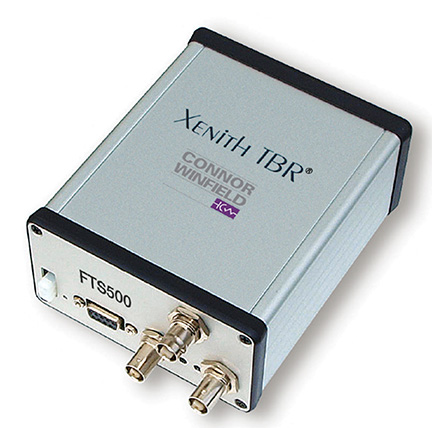
    The FTS500 Xenith TBR

    The FTS500 Xenith TBR (Time Base Reference) by Connor-Winfield is designed for DVB/DAB, wireless communications, time-stamping, or any other timing vital application.

    The Xenith TBR module is a GPS-driven, mixed-signal phase lock loop, providing a 1PPS CMOS output and generating a 10-MHz SINE output from an intrinsically low jitter voltage controlled crystal oscillator (VCXO). The 10-MHz output is disciplined from an on-board GPS receiver, which drives the long-term frequency stability. Its on-board CW25 timing GPS receiver along with a dual-oven system provides the highest quality timing and synchronization signals combined with superb hold-over characteristics. The unit is housed in a 106 x 125 x 56 millimeter strong aluminum enclosure.

  • GPS Sensor

    GPS Sensor

    CW46S-ConnorWinfield-W
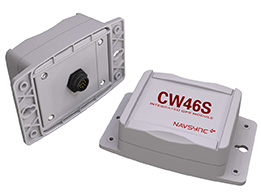
    The CW46S GPS sensor by NavSync.

    The CW46S GPS sensor by NavSync is a fully integrated module that includes a CW25 GPS receiver, DC/DC converter, RS232 or RS422 interface options, and active GPS antenna housed in a small weatherproof (IP67-rated) enclosure.
    When mounted with a good sky view, the CW46S receiver can provide high-quality timing and synchronization. The 1 pulse per second (PPS) timing signal can provide accuracies to within 30nS RMS of Coordinated Universal Time (UTC).

    The 1PPS is transmitted via RS422 signal format; this two-wire method allows the pulse to be transmitted with cable lengths exceeding 100 meters.

    The CW46S utilizes the CW25­TIM GPS receiver, which allows the CW46S to act as a complete timing module capable of outputting a GPS-disciplined 10-MHz frequency.

  • Astrium Partners with Analytics Specialist IHS on Geo-Information

    Astrium has announced that the geo-information activities of Astrium Services have entered into a partnership agreement with IHS, a source of defense and security information, to deliver satellite imagery and services for intelligence analysis and reporting.

    Leveraging this partnership will enable IHS to provide new insights and even more up-to-date and detailed information, meeting demand for fused intelligence sources to tap easily accessed information, Astrium said. Geospatial data plays a critical role in developing intelligence, formulating strategic policy and driving operational interventions.

    Astrium Services brings to IHS the capability to deliver imagery and defense-oriented services based on unique access to the only multi-resolution imaging satellite. Astrium’s offering has been specifically developed to support  high-currency requirements, including the varied challenges faced by military and intelligence agencies.

    Under the agreement, Astrium Services will provide newly acquired imagery from its Pléiades, SPOT and TerraSAR-X satellites for use as primary sources and fusion with open source information, for actionable intelligence. It will also provide access to the GO Monitor service, which delivers reliable surveillance and change information anywhere on Earth.

    By fusing IHS insight with Astrium Services imagery, IHS analysts will be able to deliver broader contextual analysis and more granular insight to meet the needs of business and national security professionals, Astrium said.

    With more than 100 years of history as Jane’s, IHS has a reputation built on products such as IHS Jane’s Fighting Ships, IHS Jane’s All the World’s Aircraft and IHS Jane’s Defence Weekly.

  • FM Series GPS Receiver Module Brings High-Position Accuracy in Small Package

    FM Series GPS Receiver Module Brings High-Position Accuracy in Small Package

    Photo: Linx Technologies
    Photo: Linx Technologies

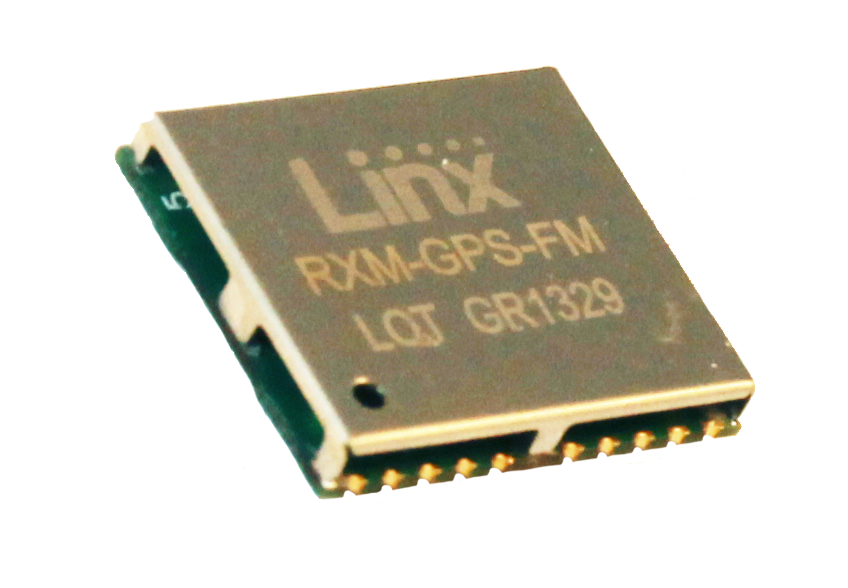
    Linx Technologies announces its launch of the self-contained, high-performance FM GPS receiver modules. At 15 x 13 millimeters in size, the MediaTek MT3339-based FM Series gives the module fast lock times and high position accuracy even at low signal levels, the company said.

    The module’s very low power consumption helps maximize run times in battery powered applications, such as positioning and navigation, location tracking, marine, and asset management, according to Linx Technologies.

    Using the built-in MediaTek MT3339 chipset, The FM module can simultaneously acquire on 66 channels and track on up to 22 channels, providing standard NMEA data messages through a UART interface. A simple serial command set can be used to configure optional features.

    The GPS receiver is completely self-contained and only requires an antenna. It powers up and outputs position data without any software set-up or configuration. As a result, the FM Series is easy to integrate, the company said.

    With built-in hybrid ephemeris prediction technology, the FM Series predicts satellite positions for up to three days and delivers start times of less than 15 seconds under most conditions.

    In addition, the available GPS Master Development System connects a FM Series Evaluation Module to a prototyping board with a color display that shows coordinates, speedometer and compass for mobile evaluation. A USB interface allows simple viewing of satellite data and Internet mapping, as well as custom software application development.

  • Applanix Adds High-Performance POS Systems to Air and Land Portfolios

    Applanix Adds High-Performance POS Systems to Air and Land Portfolios

    Photo: Applanix
    Photo: Applanix

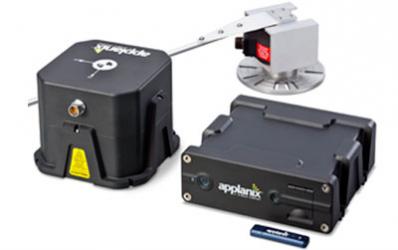
    Applanix, a mobile mapping and positioning company, has introduced new versions of its positioning and orientation systems for airborne and land-based mapping — the POS AV 610 and POS LV 610.  Delivering the same industry-leading performance as previous versions of POS AV and LV, the new systems use next-generation commercial inertial technologies that are offered globally.

    Applanix POS AV and LV products integrate precision GNSS with advanced inertial technology (accelerometers and gyroscopes) to provide uninterrupted measurements of the position, roll, pitch and true heading of moving vehicles.  Geospatial projects using POS can be completed more efficiently, effectively and economically. The POS AV 610 and POS LV 610 offer new advantages to customers:

    • Global availability: commercial technology.
    • Smaller and lighter: achieved by integrating a new state-of-the-art FOG (Fiber Optic Gyro) based Inertial Measurement Unit (IMU).
    • Exceptional performance with Applanix SmartCalTM software:  SmartCal is a new compensation technology designed to achieve unrivalled performance from IMUs manufactured specifically for mobile mapping applications.
    • Cost efficiency: exceptional accuracy, even in demanding conditions, at unprecedented price points.

    POS LV 610 and AV 610 are also available to systems integrators in the form of an OEM board set called the Trimble AP60. The Trimble AP is a series of embedded GNSS-Inertial OEM boards that provide both continuous mobile positioning in poor signal environments and high-accuracy direct georeferencing of imaging sensors.  The AP series is ideal for a variety of commercial mobile positioning and orientation applications including airborne and terrestrial mapping and guidance for unmanned vehicles.

    “The latest versions of POS LV and POS AV take Applanix’ state-of-the-art positioning technologies worldwide for land and air applications,” said Steve Woolven, President of Applanix. “Wherever mobile mappers operate, the new POS technology provides users with  accurate, reliable and robust position and orientation solutions.”

    POS AV 610, POS LV 610 and Trimble AP60 are available now through the Applanix sales network.

  • Altus Positioning Introduces GIS-1 for Data Collection

    Altus Positioning Introduces GIS-1 for Data Collection

    Photo: Altus Positioning Systems
    Photo: Altus Positioning Systems

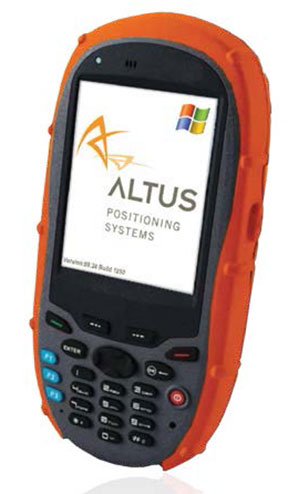
    Altus Positioning Systems is expanding its line of GNSS surveying products with the introduction of the GIS-1, a versatile personal digital assistant (PDA) for data collection and geolocation.

    The GIS-1 is a powerful PDA that integrates modern wireless technologies on a rugged Windows Mobile platform for effective portable computing for mobile survey applications. It can be used as a data collection device with Altus’ APS-series GNSS survey instruments, providing up to eight hours of operation time in the field between charges. In addition, the unit’s built-in L-1 GPS receiver and 3.2 megapixel camera can be used for navigation and GIS applications. It can even be used as a smartphone.

    “The GIS-1 is a versatile tool for surveyors and GIS professionals,” said Neil Vancans, president of Altus Positioning Systems. “With the Windows  Mobile operating system, it supports a wide range of software applications for data collection. By itself, the GIS-1 is a convenient low-cost GPS navigation device with 2.5-meter accuracy.”

    “It’s ideal for GIS work,” Vancans added. “The user can quickly and easily locate assets with 2.5-meter accuracy with the GIS-1, then switch to the APS-3 for more precise RTK work if needed.”

    The GIS-1 supports a wide range of wireless options, including Wi-Fi, Bluetooth and a Tri-Band GSM/GPRS/EDGE/HSPA cellular modem.

  • Antenna Module for Embedded LBS Receivers

    Photo: Parsec PTA
    Photo: Parsec PTA

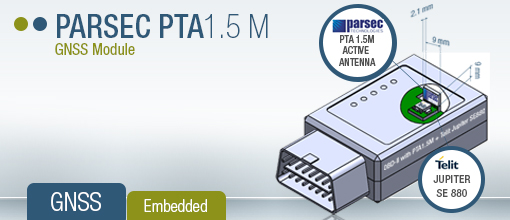
    The Parsec PTA and PT active and passive antenna modules integrate seamlessly with the Telit Jupiter SE880 GPS receiver for market leading location aware applications in performance and miniaturization.

    The PTA/PT family delivers best-in-class linearity in the third-order-intercept point (IP3), the measure of a receiver’s critical ability to differentiate signal from noise. All PTA and PT antenna modules are based on Parsec’s family of low noise amplifier (LNA) integrated circuits (ICs).

    The antennas are designed for embedded LBS receivers requiring good user experience that operate with obstructed view of orbiting satellites. The PTA1.5M improves GNSS receiver sensitivity to offset high path loss, improves immunity to receiver descending caused by close proximity radio transceivers, and mitigate the effects of interference from radio mixing products.

    To learn more, visit the Parsec website.