Tag: product showcase

  • Topcon Announces Haul Truck System, DS-200 Upgrade at CONEXPO

    Topcon Positioning Group has made several product and service announcements at CONEXPO-CON/AGG, being held this week in Las Vegas.

    Haul Truck System. The HT-30 haul truck module for Sitelink3D features a small, portable GPS-enabled control box that mounts into the truck cab. As the truck is loaded, data about the load is input, such as material type, driver, and quantity. The load is then integrated into Sitelink3D and can be tracked for scheduling, rerouted if needed elsewhere, and recorded once delivery is made.

    Whether the material is fill dirt, removal of overburden, select material, base course or even asphalt, HT-30 can be quickly plugged in so management and reporting can be maintained in real-time. For more information on the HT-30 or Sitelink3D, visit topconpositioning.com.

    Topcon DS-200.  Topcon has added the DS-200 with XPointing technology to its DS line of total stations in the North American market. XPointing technology allows the DS-200 to lock on to prisms quickly, even in dim or dark conditions, Topcon said.

    The DS-200 can be configured for interaction with Topcon’s RC5 remote system, which allows users up to 1000 feet (300 meters) away to easily perform a QuickLock with a push of a button, Topcon said.

    As a Hybrid Positioning capable total station, the DS-200 offers the use of both GNSS positioning and optical positioning technology designed to increase field efficiency. The system can become fully robotic with Hybrid Positioning technology, which can allow shots to measured with a GNSS receiver when the line-of-sight is blocked.

    Standard additional features of the DS series include LongLink communications, TSshield security and maintenance technology, MAGNET integrated software onboard, and rugged water-resistant IP65 construction.

    Enterprise Solutions. Topcon Positioning Group also announced a new workflow management system designed to connect all sites, all data, crews and equipment. Topcon Enterprise Solutions offers constant communication, data sharing, scheduling, updating, supporting, and accurate productivity data in real-time, no matter where the job or the office is located.

    Cloud-based Topcon Enterprise Solutions provides seamless connectivity from any office or remote user, to any site, to each enabled machine and field crew, throughout the entire project life cycle, Topcon said.

    Topcon_Enterprise_SolutionsThe system is designed to allow users quicker accessibility and management of increasing volumes of data, thereby exponentially increasing a company’s efficiency. Integrating data in a cloud-based environment from Topcon software services like Sitelink3D or MAGNET allows users to make time-sensitive decisions faster.

    The system can also be deployed to key partners of the company, such as engineers and sub-contractors, enabling instant updating of job files, material volumes and equipment schedules instantly with assured accuracy.

    In addition to site and data management, Enterprise Solutions includes the option to activate a corporate Topcon TotalCare account, providing immediate access to online training and technical support for virtually all Topcon products.


  • GammaTech Offers 15.6-Inch Semi-Rugged Notebook

    GammaTech_S15H_Side_LR.jpg

    GammaTech Computer Corp., an international manufacturer and supplier of notebook and tablet computers, has added the S15H: a 15.6-inch semi-rugged Durabook notebook with high-definition resolution that takes full advantage of the Intel Haswell CPU. The S15H is designed for rugged applications and environments.

    “The S15H was designed to fill a need for a 15-inch monitor in the marketplace,” said Paul Kim, GammaTech vice president of marketing. “Many companies and organizations have legacy software programs that were designed for 15-inch monitors with no way to run them. The S15H provides a solution to this problem, while eliminating the need and expense of modifying how legacy systems display.”

    The S15H notebook’s full high-definition (1920 x 1080 resolution) 15.6-inch LED display with Intel compliant high-definition stereo audio, built-in microphone, and Intel integrated graphics controller, plus nVidia Optimus technology ensures incredible image detail and crisp reproduction, even for the most graphic-intense situations, including 3D, GammaTech said.

    Replacing Intel’s Ivy Bridge, the Haswell CPU is the first SoCs that is made specifically to take advantage of Intel’s 22nm process technology. It features a new core, new graphics, and substantial changes to the platform in terms of memory and power delivery as well as power management. That means consumers or businesses using the GammaTech S15H notebook can expect faster computing and graphics, and longer battery life in a sleek form factor, GammaTech said.

    The use of a USB 3.0 connector allows the S15H notebook to transfer data very fast, GammaTech said. With a “SuperSpeed” transfer mode, USB 3.0 is capable of transferring data at up to 5Gbit/sec., more than 10 times as fast as the 480 Mbit/sec. top speed of USB 2.0. Plus, with its increased bandwidth, USB 3.0 is able to use two unidirectional data paths: one for receiving data, the other for transmitting. It is also backwards compatible with USB 2.0 devices.

    The Durabook S15H notebook has a magnesium alloy case 20 times stronger than ABS plastic. The unit is tested to military standard 810G for drop and shock resistance. Its keyboard, buttons and indicators are spill resistant. Its flexible HDD cable design absorbs shock from drops, providing protection for important data, while anti-shock mounting technology around the LCD helps protect the display from accidental damage.

    Other rugged features include an exclusive optical disk-tray lock that prevents unintentional tray eject from drop and vibration; double-protection smart battery circuitry, which prevents damage caused by current or voltage surges and overheating; and smart battery calibration that helps fight the loss of battery capacity after repeated charge-discharge cycles.

    The Durabook S15H notebook comes with an Intel 4th Generation iCore CPU M series with Intel HM86 chipset. Two dual-channel DDR III SODIMM slots provide 2, 4, 8, or 16GB of memory. An internal optical media device accommodates a DVD super-multi drive (DVD-R/CD-RW/DVD-RW/DVD+RW_DL/DVD-RAM).

    The S15H notebook can be used virtually anywhere thanks to wireless communications such as integrated 10/100/1000 Mbps Ethernet, an Intel Mini-Express wireless LAN network connection, and Bluetooth 2.1 + EDR. A WWAN 3G module is also available. The SIM card is secured behind a security-screwed door.

    System security is provided by internal TPM 1.2 data security protection, as well as a Kensington lock connector and both administrator and boot password control.

  • National Atlas and Map to Merge into One Source

    USGS_National_Map-O

    During this year, National Atlas of the United States and The National Map will transition into a combined single source for geospatial and cartographic information. This transformation is projected to streamline access to maps, data and information from the USGS National Geospatial Program (NGP). The move will prioritize the the agency’s civilian mapping role and consolidate core investments, the agency said.

    The USGS will continue its long history of providing topographic maps, geospatial data and other geographic information by offering a range of scales and layers of geospatial information on The National Map Viewer and through US Topo maps. As a result of the conversion to an integrated single source for geospatial and cartographic information, nationalatlas.gov will be removed from service on September 30, 2014.

    USGS_National_Map-T“We recognize how important it is for citizens to have access to the cartographic and geographic information of our nation. We are committed to providing that access through nationalmap.gov,” said Mark DeMulder, NGP director.

    “We value the National Atlas customers and stakeholders and want to make this transition as easy as possible,” explained Jay Donnelly, the National Atlas Program Manager. “We will post updates to The National Map and National Atlas Websites as this transition unfolds, including information on the future availability of the products and services currently delivered by nationalatlas.gov.”

    Further information is available at http://nationalatlas.gov/transitionfaq.html.

  • u-blox GNSS Antenna Module Supports All Satellites

    u-blox GNSS Antenna Module Supports All Satellites

    The u-blox CAM-M8Q.
    The u-blox CAM-M8Q.

    u‑blox has introduced the CAM-M8Q GPS/GLONASS/BeiDou/QZSS antenna module. The module integrates a u-blox M8 satellite receiver IC plus SAW filter, LNA, TCXO, RTC, passives and a pre-tuned GNSS chip antenna in an ultra-small 9.6 x 14.0 x 1.95 mm package. The new module requires only a power source for reliable and accurate satellite positioning anywhere in the world.

    Combining low power consumption with high-sensitivity, high jamming immunity and concurrent GNSS operation (GPS/GLONASS, GPS/BeiDou, or GLONASS/BeiDou) the surface-mount CAM-M8Q provides a drop-in solution for satellite positioning in an ultra-small form factor, u-blox said.

    “Our u-blox CAM-M8Q is perfect for customers designing highly compact products who want to speed up product development while freeing resources for core activities,” explains Thomas Nigg, vice president of product marketing at u-blox. “The CAM-M8Q is a pre-tuned, performance and cost optimized module providing satellite positioning on an extremely small footprint. It is literally an ‘instant’ positioning solution.”

    The u-blox CAM-M8Q module is designed for a wide range of applications such as personal locators, handheld navigators, and wearable electronics as well as vehicle telematics systems used for emergency call, anti-theft, insurance and road pricing. Consistent omni-directional antenna performance helps ensure excellent performance regardless of module orientation.

    In addition, the CAM-M8Q allows the internal chip antenna to be used as a backup antenna if the design incorporates an external antenna. This benefits companies where there is a risk that the primary external antenna may malfunction or suffer damage, for example in vehicle tracking systems where damage is possible to the external antenna.

    The CAM-M8Q module uses the latest u-blox M8 GNSS receiver chip qualified according to AEC-Q100 and is manufactured in ISO/TS 16949 certified sites. Qualification tests are performed as stipulated in the ISO16750 standard: “Road vehicles – Environmental conditions and testing for electrical and electronic equipment.”

    The CAM‑M8Q is form-factor compatible to predecessor modules UC530 and UC530M, allowing the upgrade of existing designs with minimal effort.

  • Topcon Releases Unmanned Aerial Positioning System

    Topcon Releases Unmanned Aerial Positioning System

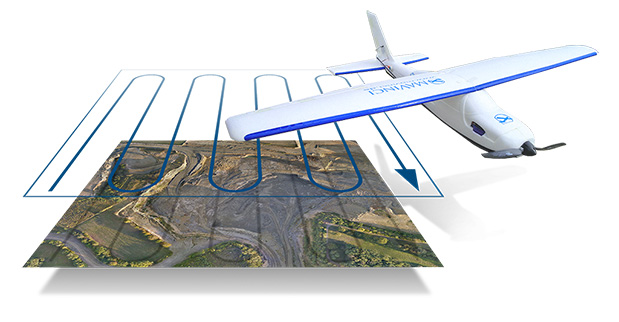
    Mavinci_Phase_1Topcon Positioning Group has released and made available in Europe the Topcon SIRIUS PRO powered by MAVinci, an Unmanned Aerial System (UAS) designed to produce the most accurate solutions for automated mapping of construction sites, pipelines, disaster areas, mines, quarries and myriad sites without regard to terrain.

    During October 2013, Topcon Europe Positioning (TEP) entered into a strategic partnership with UAS provider MAVinci GmbH. The result of that partnership is the release of the fixed-wing UAS Topcon SIRIUS PRO powered by MAVinci.

    “We are excited to announce our distribution agreement with Topcon. This partnership is the ideal expansion of our global distribution network,” Johanna Claussen, CEO at MAVinci GmbH said. “The simple operation of our UAS from flight planning to the final orthophoto and DEM (Digital Elevation Model), allows flexible use in highly demanding environments. Its flexible assisted auto-pilot landing mode enables navigation around any unforeseen obstacles.”

    Based in St. Leon Rot, Germany, MAVinci is a aerial surveying company specializing in the development of UAS technology.

    “By adding Topcon’s RTK solutions to the UAS and ground control station, the SIRIUS PRO is the first commercially available UAS that can reach 5-cm accuracy without the need for ground control points,” said Sander Jongeleen, mobile mapping product manager for Topcon Positioning Group. “This leads to an enormous reduction of operational cost and allows mapping of areas that are not easily accessible with high accuracy.”

    The SIRIUS PRO is a fixed-wing UAS capable of producing high quality and pre-positioned aerial photography without the need of extensive ground control that is required by competitive products. Key features include:

    • Work in mountain areas — Flight plan adapts to elevation model
    • Cover areas that require multiple flights — Flight plan automatically splits and rejoins for post processing
    • Simple hand launch
    • Land in areas where automatic landing is impossible with assisted auto-pilot mode
    • Fly in all weather conditions — wind up to 50 km/h, temperature range of -20º C to 45º C and rain.
  • Hexagon Acquires Drone-Maker Aibotix

    Hexagon Acquires Drone-Maker Aibotix

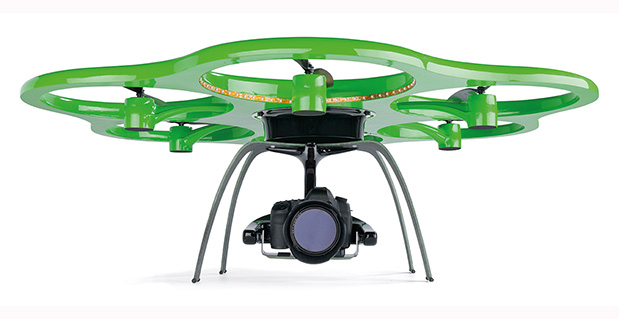
    The Aibotix X6 unmanned aerial vehicle is designed  to deliver up-to-date geospatial information from hard-to-reach areas.
    The Aibotix X6 unmanned aerial vehicle is designed to deliver up-to-date geospatial information from hard-to-reach areas.

    Hexagon, a global provider of design, measurement and visualization solutions, has acquired Aibotix, a manufacturer of intelligent multicopter systems for high-efficiency aerial applications.

    Headquartered in Kassel, Germany, Aibotix is the maker of Aibot X6, a new generation of vertical takeoff and landing unmanned aerial vehicle (UAV). Intelligent, autonomous and safe, the multi-rotor platform is designed to suit the needs of customers in the industrial inspection, aerial mapping, surveying, utility and security markets, Hexagon said.

    UAV-based solutions are ideal for delivering up-to-date geospatial information and aiding in hard to reach areas – such as difficult infrastructure inspections of power lines, bridges and dams to locally focused mapping tasks of buildings or any vertical structure. They are quickly becoming a viable tool for key market segments that require application-specific solutions; where the UAV becomes an integral part of the workflow process, delivering essential pieces of information that drive actionable intelligence.

    “The Aibotix acquisition is an important addition to Hexagon’s photogrammetric and mapping technologies portfolio,” said Hexagon President and CEO Ola Rollén. “The growing number of applications for UAV-based solutions offers huge growth potential, especially in areas that require frequent and local updates such as smart city applications, dynamic GIS, and emergency response.”

  • Handheld Launches Nautiz X4 Rugged Computer for Mobile Workers

    Handheld Launches Nautiz X4 Rugged Computer for Mobile Workers

    Handheld-Nautiz-X4-rugged-IP65-W
    photo: Nautiz X4

    Handheld Group, a manufacturer of rugged mobile computers and smartphones, has launched the Nautiz X4 rugged handheld. The Nautiz X4 is a multipurpose compact handheld computer built for the mobile worker. It enables efficient and reliable data collection in the toughest environments, the company said.

    The Nautiz X4 is a compact and lightweight rugged handheld computer that is optimized for efficient field data collection. It has been designed and developed specifically for mobile workers in tough environments in industries such as warehousing, logistics, transportation, utility, field service, security and public safety.

    The Nautiz X4 rugged handheld computer has an integrated u-blox GPS receiver that provides professional-grade navigation functionality. It also offers multiple connectivity options, such as high-powered 3G and excellent Wi-Fi capability, the company said. It has a high-speed 1-GHz processor, 512 MB of RAM and 1 GB of flash memory. It runs Windows Embedded Handheld 6.5.

    Measuring 156 x 74 x 25.5 millimeters (6.1 x 2.9 x 1.0 inches) and weighing 330 grams (11.6 ounces), the Nautiz X4 is an ergonomic work tool and one of the thinnest and lightest handheld computers in the rugged-device sector, the company said. It features a high-brightness, sunlight-readable resistive touchscreen for reliable computing in challenging worksite environments, and comes with either a high-performance 1D laser scanner or a 2D imager for fast, accurate scanning and barcoding tasks. The device also features a 5-MP camera with auto focus and LED Flash.

    The Nautiz X4 has an IP65 Ingress Protection rating, which means that it is impervious to dust and highly resistant to water — the unit can be used in dusty work environments as well as in heavy rain, and can be rinsed off if dirty. It also meets stringent MIL-STD-810G military test standards for overall durability and resistance to humidity, shock, vibration, drops, salt and extreme temperatures.

    “Mobile data collection is performed in warehouses as well as outdoors, in all kinds of weather and for long work hours. It may be cold and it may rain or snow. So the field worker needs a computing tool that can not only handle adverse weather conditions, but is also ergonomic and user-friendly,” said Jerker Hellström, CEO of Handheld Group. “For this, we are proud to introduce the Nautiz X4, a new rugged handheld computer that merges ultimate mobility with true field functionality in a handy package and at a very attractive price. We are confident that the Nautiz X4 will be the obvious choice for mobile workers in a wide range of industries.”


  • USGS Releases First-Ever National Map of Wind Turbines

    Wind generates electricity by turning the blades of turbines. Individual turbines can range in height from several dozen to several hundred meters tall, with blade lengths measuring several dozen meters. Image credit: USGS
    Wind generates electricity by turning the blades of turbines. Individual turbines can range in height from several dozen to several hundred meters tall, with blade lengths measuring several dozen meters. Image credit: USGS

    Wind energy is one of the fastest-growing sectors of renewable energy in the United States.  About 3% of the total electricity in the United States was generated by wind turbines in 2012 (according to the U.S. Energy Information Administration), which is equivalent to the annual electricity use for about 12 million households. The amount of electricity generated by wind has increased from about 6 billion kilowatt hours (kwh) in 2000 to 140 billion kwh in 2012.

    In response to the Department of Interior’s Powering Our Future initiative, the U.S. Geological Survey (USGS) has begun investigating how to assess the impacts of wind energy development on wildlife at a national scale.

    Assessment Experience

    The USGS has extensive experience assessing energy resources, and it’s that expertise that makes the USGS qualified to assess nationwide impacts of wind energy development. One of the major reasons behind the success of USGS energy resource assessments is the scientifically robust methodology that underpins them.

    USGS energy resource assessment methodologies are publicly available and are technically peer reviewed externally, and just as importantly, are used consistently in every assessment. That means that a USGS oil and gas assessment in Alaska provides comparable information to a USGS oil and gas assessment in Texas, or that a USGS geothermal assessment in California is comparable to a USGS geothermal assessment in Nevada.

    A Different Kind of Assessment

    USGS has recently undertaken a project to develop a methodology for assessing wind energy impacts on wildlife at a national scale. This research is different from previous USGS energy assessments. Instead of looking at technically recoverable resources of oil, gas, geothermal or coal, or even technically accessible storage areas for carbon sequestration, the USGS is developing a method for determining the impacts of a type of energy production. This work will merge the experience the USGS has creating assessment methodologies with its expertise in wildlife ecology and wind-wildlife research, as well as in land change science.

    Wind turbines are often grouped together in facilities to maximize electricity-generating capacity. This image shows a wind farm on BLM land in California. Image credit: BLM
    Wind turbines are often grouped together in facilities to maximize electricity-generating capacity. This image shows a wind farm on BLM land in California. Image credit: BLM

    Wind energy can impact both wildlife and their habitats. Wildlife impacts include potential bird and bat mortality from collisions with turbine blades, and in some cases, species avoidance of habitat near turbines. Habitat impacts include the turbine pads in addition to service roads, transmission lines, substations, meteorological towers, and other structures associated with wind energy siting, generation, and transmission.

    Turbine Locations

    The first step in understanding the impact of wind energy development is to determine where the wind turbines are located. Prior to this study, there was no publicly available national-level data set of wind turbines. There were maps that showed turbines locations in a few states, and there were national-level maps that showed wind power facilities, but not individual turbines, or information about  those turbines, such as height, blade length, or energy producing capacity.

    A screenshot of the USGS WindFarm Mapping Application, which allows users to access the more than 47,000 individual wind turbines contained within the national wind turbine database. This view shows facilities in Southern California, color-coded for their wind-generating capacity. The red and yellow turbines have a higher electricity-generating capacity than the green and blue turbines do.
    A screenshot of the USGS WindFarm Mapping Application, which allows users to access the more than 47,000 individual wind turbines contained within the national wind turbine database. This view shows facilities in Southern California, color-coded for their wind-generating capacity. The red and yellow turbines have a higher electricity-generating capacity than the green and blue turbines do.

    To remedy the lack of information, the USGS created this publicly available national dataset and interactive mapping application of wind turbines. This dataset is built with publicly available data, as well as searching for and identifying individual wind turbines using satellite imagery. The locations of all wind turbines, including the publicly available datasets, were visually verified with high-resolution remote imagery to within plus or minus 10 meters.

    Knowing the location of individual turbines, as well as information such as the make, model, height, area of the turbine blades, and capacity creates new opportunities for research, and important information for land and resource management. For example, turbine-level data will improve scientists’ ability to study wildlife collisions, the wakes causes by wind turbines, the interaction between wind turbines and ground based radar, and how wind energy facilities overlap with migratory flyways.

    Next Steps

    In addition to the value this powerful tool has to Federal and State land managers, non-governmental organizations, the energy industry, scientists, and the public, it will be a useful component in the methodology that the USGS is developing for assessing wind energy impacts. The USGS is bringing together scientists with expertise in landscape-level science, wildlife biology, and other associated disciplines to create the methodology. Once developed, the methodology will be externally peer-reviewed and tested with pilot-level data projects. Once peer reviewed, the revised methodology will be published for others to understand and use.

  • McMurdo Group Offers Suite of Automatic ID Systems for Boating

    McMurdo Group Offers Suite of Automatic ID Systems for Boating

    McMurdo
    Boatracs, Kannad, McMurdo and TSi have combined to form McMurdo Group, a single-vendor provider of end-to-end search and rescue, maritime domain awareness solutions.

    McMurdo Group has announced a suite of Automatic Identification System (AIS) survival solutions for enhanced collision avoidance and man overboard (MOB) response in the U.S. recreational boating market. The offerings include AIS beacons, transponders, receivers and software.

    AIS is an automatic tracking system used on boats and ships that identifies and tracks nearby AIS-equipped vessels and devices to help avoid collisions. AIS transponders send and receive critical navigation information – such as vessel identification numbers, vessel type, position, course and speed – and graphically display a map of the surrounding vessels and area. AIS receivers are often used in conjunction with AIS-capable computer software for similar tracking and monitoring purposes.

    In the event a person with an AIS MOB beacon falls overboard, an AIS signal from the beacon is activated. This signal is then sent to AIS receiving devices where the location of the individual in the water can be pinpointed using GPS positioning and presented on graphical chart maps.

    The Smartfind M5 has an on-screen beacon location indicator and audible alarm that is triggered to accelerate rescue efforts. It also has a “buddy list” feature that can identify the specific individual needing MOB assistance. For larger fleets, the McMurdo Group AIS Alarm Notification System extends graphical mapping, alarm notification and messaging capabilities to shoreside fleet management operators.

    The McMurdo Group AIS product suite includes the following:

    • AIS Search and Rescue Transponders (SART) or Beacons
      • Smartfind S5 – a compact, lightweight, waterproof (to 10 meters) AIS SART with high-visibility buoyant carry-off bag ideal for use on life rafts or survival crafts.
      • Smartfind S10 – a personal, waterproof (to 60 meters) AIS Man Overboard (MOB) device with built-in flashing light and used by individuals or as an additional device to complement a yacht’s on-board flare pack.
      • Smartfind S20 – a compact AIS MOB device with integrated light for use in a lifejacket.
    • AIS Transponders and Receivers
      • Smartfind M5 AIS Class A Transponder – the industry’s first AIS Class A transponder with color display and AIS MOB and AIS SART alarm with crew list functionality to aid in MOB recovery.
      • Smartfind M10 AIS Class B Transponder – typically used for smaller vessels, charter boat operators or where the additional features of an AIS Class A transponder are not required (includes an a 30 day data logger).
      • Smartfind M15 AIS Receiver – economical AIS receiver for all recreational  vessels.
    • AIS Software
      • PC Viewer – Graphical software package ideal for individual vessel operators (included with the Smartfind M5, M10 and Smartfind M15 products).
      • AIS Alarm Notification System  – Vessel Monitoring System with integrated AIS MOB Alerts and Messaging typically used for ship-to-shore communications.
  • Jackson Labs Delivers Low Phase-Noise Frequency and Timing Reference

    Jackson Labs Delivers Low Phase-Noise Frequency and Timing Reference

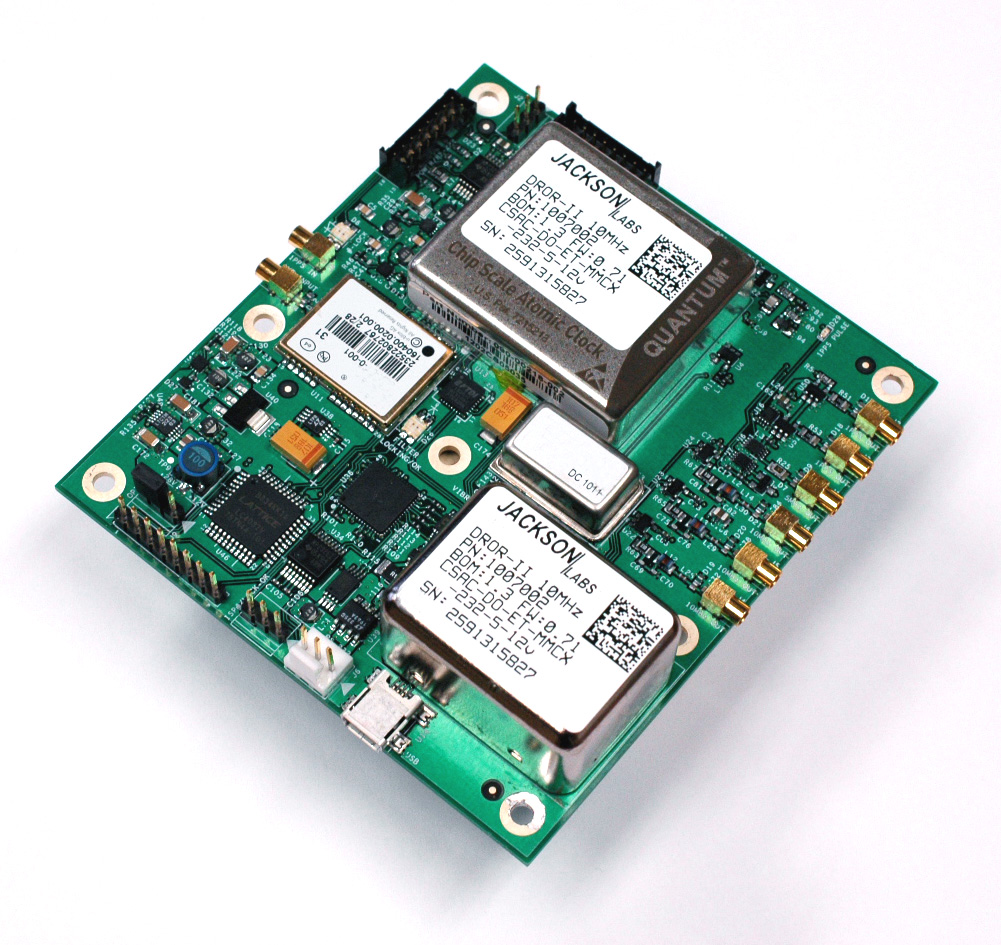
    The DROR-II by Jackson Labs.
    The DROR-II by Jackson Labs.

    Jackson Labs Technologies, Inc., a designer and manufacturer of GPS, timing and frequency equipment, is offering the DROR-II, a 10-MHz/5-MHz/1-PPS GPS-Disciplined Atomic Frequency and Timing Reference (GPSDO).

    The DROR-II is a ruggedized frequency and timing reference with a Cesium Vapor Atomic Oscillator followed by a precision SC-cut Crystal Double-Oven Oscillator and an actively vibration-compensated VCXO oscillator, with specific emphasis on ultra low phase noise performance under extreme vibration and acceleration such as could be encountered in aircraft, tracked vehicles, and wheeled vehicles.

    The DROR-II unit is optimized for operation in high-vibration and high-acceleration environments that require ultra-low phase noise performance and high frequency stability under extreme conditions. The DROR-II combines the strengths of three different on-board oscillators to provide an overall performance that has not been achievable with legacy products, at a steady-state power consumption of less than 3.85W, the company said.

    The DROR-II uses a GPS receiver to provide long-term phase and frequency accuracy of the built-in CSAC atomic oscillator which is followed by an SC-cut, Double Oven OCXO (DOCXO) for very high short-term stability and low phase noise, which is itself followed by a three-axis electronically vibration-compensated crystal oscillator for ultra-low-noise under high vibration. Using these four signal sources cascaded to each other allows unmatched Phase Noise and Short Term Stability (ADEV) while also providing long-term atomic holdover, very fast warmup, and long-term phase-lock to UTC. Short term stability of 1E-012 (1ppt), and phase noise floors of -162dBc/Hz are achieved. Frequency stability over 24 hours is better than 5E-013 (0.5ppt) typically when locked to GPS.

    The DROR-II supplies three isolated 10-MHz Sine Wave outputs, two CMOS 1PPS, and one 5-MHz output that is phase-synchronized to UTC via the internal GPS receiver. DROR-II contains a 50-channel WAAS/EGNOS/MSAS-enabled GPS receiver that provides support for avionics systems through integrated three-axis gyro-accelerometers and a -160-dBm GPS tracking capability. DROR-II power requirements are less than 3.85W steady-state, and only a single supply of between 11.0V to 32V is required. Support for an external LCD display is standard.

    The unit can be monitored and controlled by an RS-232 port or a USB port via industry standard SCPI-99 Commands (GPIB commands), and is capable of generating numerous NMEA-0183 output sentences for easy integration into existing infrastructure. The DROR-II can be ordered with various OCXO options and with different temperature ranges.

  • LizardTech Launches Express Server 9 Image-Delivery Software

    LizardTech, a provider of software solutions for managing and distributing geospatial content, has launched Express Server 9 software. Express Server is am image-delivery software for compressed raster imagery, including multispectral imagery. It uses patented technology to reduce storage costs, decrease image loading times and handle thousands of image requests without sacrificing visual quality, LizardTech said.

    The latest version of Express Server comes equipped with the ExpressZip web application for exporting imagery straight from the web browser. Now, users can view all of their collections and query by location, by keyword, by projection, and more. If users need to take their imagery on the go, they can use the built-in selection tools to export their regions of interest. The entire ExpressZip application is open source and completely customizable.

    “Express Server is the fastest, most stable, and easiest way to distribute compressed, high-resolution raster imagery via standard protocols,” said Jon Skiffington, director of product management. “And now with ExpressZip, our customers will be able to access all of their collections in one place and export imagery straight from the web browser.”

    In addition, the improved upgrade functionality automates the process of migrating all image catalogs so users don’t need to manually update thousands of catalogs when installing a new version of Express Server. There’s no need to recreate existing image catalogs; instead, administrators just point Express Server to the existing catalog database and click Upgrade.

    Both the ExpressZip application and the improved upgrade process mark a continuation in LizardTech’s commitment to creating accessible and easy-to-use software. Other easy-to-use features from recent releases include the Express Server Manager, a simple web interface for configuring and managing Express Server, and the free 30-day Express Server trial.

  • Samsung Connects Fans with Sochi Olympic Games App

    Samsung Connects Fans with Sochi Olympic Games App

    Olympics-Wow-Curling
    screenshot: Wireless Olympic Works (WOW)

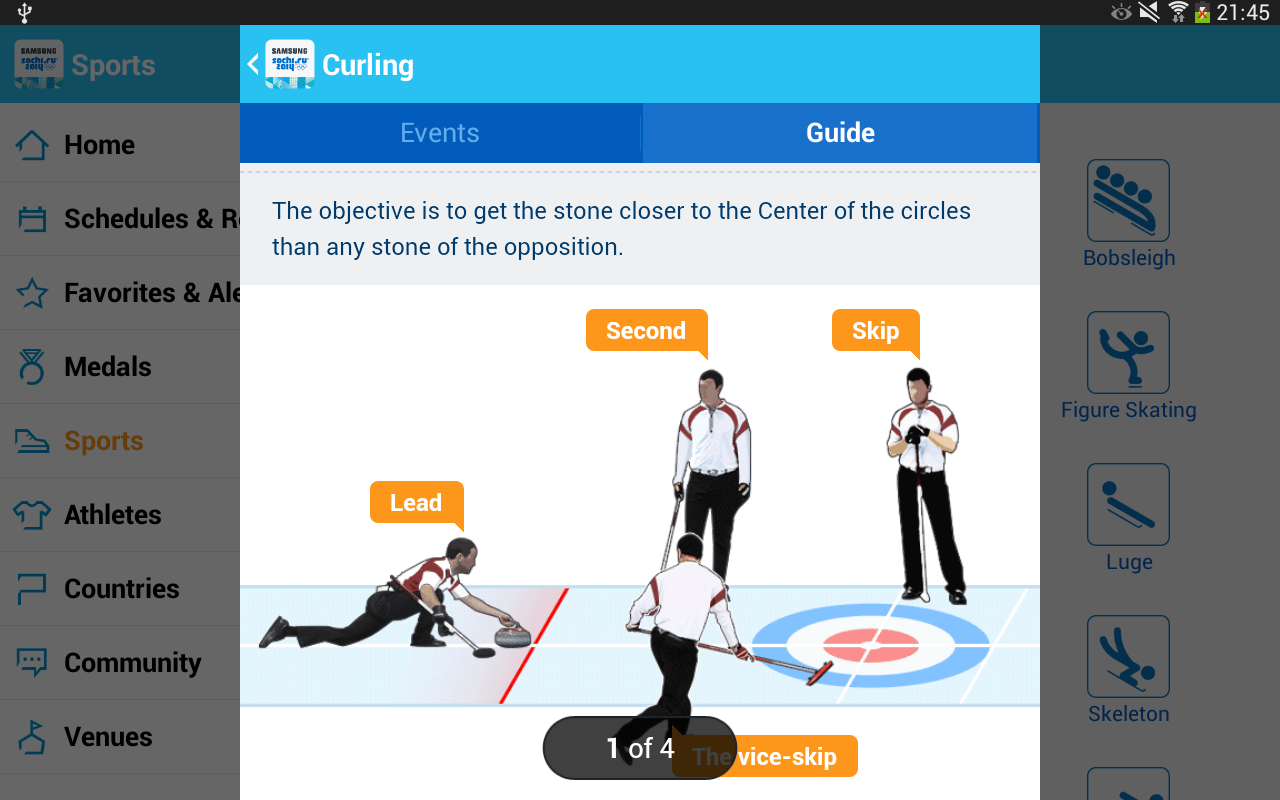
    The Sochi 2014 Olympic Winter Games mobile app, Wireless Olympic Works (WOW), turns the world’s Android devices into mobile sports stations that fans can use to personalize their own Olympic Winter Games experience, according to maker Samsung Electronics.

    The XXII Olympic Winter Games, held in Sochi, Russia, run February 7-21.

    Fans attending the Olympic Winter Games in Sochi will have access to a location-based Olympic Winter Games venue guide through the Samsung WOW technology. The guide offers Olympic venue information and navigation services so visitors can feel truly integrated into the Olympic Winter Games experience on the ground, Samsung said.

    Samsung’s Public WOW app also provides sports fans with real-time access to event schedules, latest reports on results, medal standings and Olympic records. Public WOW is an extension of Samsung’s custom WOW for the Olympic Family, which is a wireless communications platform developed to ensure smarter communications and smoother, wireless operations of the Olympic Winter Games by offering news and information about the games to officials and staffs.

    “Samsung is offering fans around the world the most direct access to Sochi 2014 Olympic Winter Games and allowing them to design and personalize their experience in ways that are most relevant to their interests and passions,” said WS Lee, senior vice president of New Business Development, Mobile Communications Division at Samsung Electronics. “Our dedicated teams are hard at work year-round to ensure that the WOW technology is ready for use throughout the Games, both for consumers looking for the ultimate Olympic Winter Games experience, and for the Olympic Family utilizing our technology to support Games-time operations.”

    All Android users worldwide can download Samsung’s Public WOW app via the Samsung App store and Google Play.

    Components of the Samsung WOW app allow fans to design their own Olympic Winter Games experience in the following ways:

    Personalize an Olympic Winter Games updates plan. highly personalized, live Games-time updates ranging from medal counts to big moments that can be pushed to users’ phones in real time. A new cheering service will allow fans to send cheers to support their favorite athletes and countries.

    Share celebrations with social network features. Users can upload text and images instantly to share with other WOW app users and with their social networks, creating a global community around shared interests in the Olympic Winter Games and winter sports. Languages supported for the Public WOW app include Chinese, English, French, German, Korean, Russian and Spanish.

    Learn about Olympic sports with an interactive, visual guide. The app offers information on all 15 winter sports at Sochi 2014 through a highly visual and engaging graphic user interface. A Visual Sports Guide will provide tutorials on each sport, including rules, equipment details and many other points of interest bring people closer to the excitement of the Olympic Winter Games.

    “With its advanced technology in wireless communications, Samsung has played an essential role in the successful operation of the Olympic Winter Games. We believe the WOW app for Sochi 2014 will once again benefit the Games with more efficient and faster communications for the Olympic Family as well as fans around the world” said Timo Lumme, managing director, IOC TMS.

    As part of the “Samsung Smart Olympic Games Initiative,” Samsung will provide around 18,000 mobile devices to the Olympic Family, including executives, staff, and officials from the IOC, National Olympic Committees and organizing committees in Sochi. They will be connected to Samsung’s WOW service which will provide essential, up-to-date Games Time data and connectivity that is crucial to the Olympic Winter Games operation.

    The Samsung WOW service was first launched during the Athens 2004 Olympic Games for the Olympic Family and has since evolved into a must-have resource for officials, attendees and fans worldwide.

    Samsung began its Olympic Games involvement as a local sponsor of the Seoul 1988 Olympic Games. Beginning with the Nagano 1998 Olympic Winter Games, the company extended its commitment to the Olympic Movement as the Worldwide Olympic Partner in the Wireless Communications Equipment category, providing its proprietary wireless communications platform, called Wireless Olympic Works (WOW), and mobile phones. These mobile phone technologies provide the Olympic Family with real-time, user location-based information service and interactive communications. Samsung’s commitment as a Worldwide Olympic Partner continues through to Rio 2016.