Tag: satellite launch

  • Galileo satellites given green light for launch

    Galileo satellites given green light for launch

    The Launch Readiness Review on Nov. 26 confirmed that the satellites, the supporting ground installations, and the early operations facilities and teams are ready for lift-off on the early hours of Thursday morning, central European time.


    UPDATE: Arianespace has postponed today’s launch and is now targeting launch on Friday (Dec. 3). Liftoff is set for Dec. 3 at 7:23 p.m. EST (0023 GMT).


    Galileo satellites 27 and 28 are scheduled to be launched by a Soyuz launcher from Europe’s Spaceport in French Guiana on Dec. 2 at 01:31 CET (Dec. 1 at 21:31:27 local Kourou time).

    These satellites are the first of Batch 3, comprising 12 additional first-generation Galileo satellites commissioned in 2017 to bring the constellation to full operational capability. They will be used to further expand the constellation up to 38 satellites and act as backups and spares for satellites that reach their end-of-life.

    Follow the launch live on ESA Web TV Two starting at 0104 CET.

    “Friday’s Launch Readiness Review confirmed that the first two satellites in this final batch of 12 Galileo first-generation satellites, are good to go, provided no external circumstances come up between now and the night of 1-2 December,” said Bastiaan Willemse, ESA’s Galileo Satellite manager, from Europe’s Spaceport in Kourou, French Guiana. “Meanwhile the preparation for the launch campaign of the next two satellites has already started.”

    The Launch Readiness Review is an ESA-led review with participation of the satellite manufacturer OHB, the launch service provider Arianespace, the Galileo operator SpaceOpal, the EU Space Programme Agency (EUSPA) and the European Commission, as well as the programme’s Security Accreditation Board.

    Friday’s review was the last before the Arianespace-led RAL (Revue d’Aptitude de Lancement) takes place next week when the latest status of the launcher, the launch facilities and site, the global launch tracking facilities, the satellites and supporting ground infrastructure will be reviewed, most likely resulting in approval for launch countdown.

    The satellites arrived in French Guiana in early October, kicking off a busy launch campaign, including initial dispenser fit checks and the filling with the hydrazine fuel that will be used to maneuver them during their 12 years of working life.
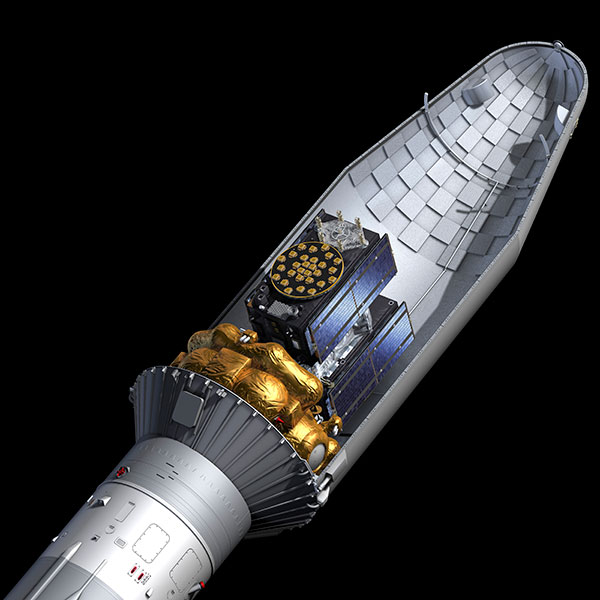
    Galileos 27-28 seen atop their gold-wrapped Fregat upper stage within their Soyuz launcher fairing. (Photo: ESA)
    Galileos 27-28 seen atop their gold-wrapped Fregat upper stage within their Soyuz launcher fairing. (Photo: ESA)

    The two satellites will add to the 26 satellites of the Galileo constellation already in orbit and delivering Initial Services around the globe.

    This week’s lift-off will be the 11th Galileo launch in 10 years. Two further launches are planned for next year, to allow Galileo to reach Full Operational Capability in its delivery of services, to be followed by the launches of the rest of the Batch 3 satellites — all undergoing final integration at OHB facilities in Bremen and on-ground verification testing at ESA’s ESTEC Test Centre in the Netherlands.

    In parallel to Batch 3’s completion of Galileo First Generation deployment, the new Galileo Second Generation satellites, featuring enhanced navigation signals and capabilities, are already in development with their deployment expected to begin by 2024.
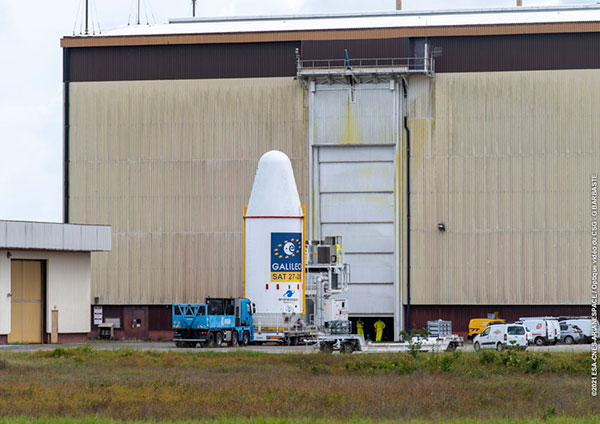
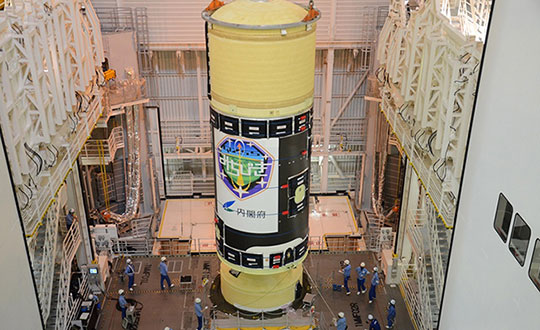
    The combined upper composite for the Galileo launch being transported to the other three stages of the Soyuz at the launch site. (Photo: ESA)

    The combined upper composite for the Galileo launch being transported to the other three stages of the Soyuz at the launch site. (Photo: ESA)
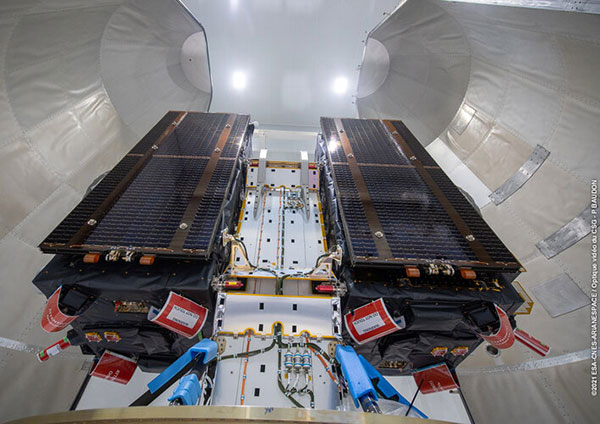
    Galileos 27 and 28 are secured to the dispenser that holds them in place during launch. (Photo: ESA)
    Galileos 27 and 28 are secured to the dispenser that holds them in place during launch. (Photo: ESA)
    The two Galileo satellites attached to the dispenser on which they will ride to orbit. (Photo: ESA)
    The two Galileo satellites attached to the dispenser on which they will ride to orbit. (Photo: ESA)
  • QZSS successor satellite set to launch Tuesday

    QZSS successor satellite set to launch Tuesday

    UPDATE: Because of bad weather, the launch is now scheduled for Oct. 26 (Oct. 25, 18:45 p.m. PT).


    A successor to the first Quasi-Zenith Satellite System (QZSS) satellite is planned for launch from the Tanegashima Space Center on Monday, Oct. 25, from 11 a.m. to 12 p.m. Japan Standard Time (2-3 a.m. UTC).

    Michibiki Unit 1 was launched on Sept. 11, 2010, and entered its quasi-zenith orbit 10 days later. QZSS began service in November 2018 with four satellites. The Japan Aerospace Exploration Agency (JAXA) plans to have seven satellites aloft by 2023.

    The satellite, designated QZS-1R, will be carried aboard H-IIA rocket No. 44. The QZSS launch will be streamed live. The broadcast program will begin at 10:35 a.m. JST.

    Local launch times

    Houston: Sunday, October 24, 21:00
    New York: Sunday, October 24, 22:00
    London: Monday, October 25, 03:00
    UAE: Monday, October 25, 06:00
    Singapore: Monday, October 25, 10:00

    More information on the launch is available at the QZSS site and rocket maker Mitubishi Heavy Industries site.

    To follow upcoming GNSS satellite launches, see our launch table, provided by Innovation editor Richard Langley.

    H-IIA Launch Vehicle No. 44 at the Yoshinobu Vehicle Assembly Building, JAXA Tanegashima Space Center. in preparation for launch of the successor to the Michibiki Unit 1 on Oct. 25. (Photo: MHI)
    H-IIA Launch Vehicle No. 44 at the Yoshinobu Vehicle Assembly Building, JAXA Tanegashima Space Center. in preparation for launch of the successor to the Michibiki Unit 1 on Oct. 25. (Photo: MHI)

    Shinichi Nakasuka, professor at the University of Tokyo Graduate School of Engineering and member of the Cabinet Office Space Policy Committee, released the following statement about the upcoming launch.

    “Three years after the full operation of the four-machine Michibiki started in 2018, as the chairman of the Quasi-Zenith Satellite System Business Promotion Committee of the Cabinet Office, we strive to ensure the reliable operation and expansion of the use of this world-class system.

    “I feel that high-precision positioning and two-way communication services in the event of a disaster, which cannot be achieved by GPS alone, are gradually taking root as social infrastructure. In modern society, the provision of highly accurate position and time is exactly the infrastructure that is indispensable as the ‘nerve network’ of society.

    “To make that more reliable, the successor to the first machine, which pioneered this system, is about to be launched. We pray for the success of the launch and satellite operation, and hope that the Quasi-Zenith Satellite System will become more and more established in society, and that many people will be able to use this system for various purposes, including business.”

  • Japan’s QZSS constellation to receive replacement satellite

    Japan’s QZSS constellation to receive replacement satellite

    The successor to the first quasi-zenith satellite, dubbed Michibiki, is expected to launch this year.

    Michibiki was launched by the Japan Aerospace Exploration Agency (JAXA) in September 2010 and was transferred to the Cabinet Office in 2017. The replacement satellite is now undergoing prototype testing at the satellite manufacturer’s facility  (Mitsubishi Electric Co. Ltd. Kamakura Seisakusho) in Kanagawa. 

    The tests will confirm performance of the replacement satellite before it is put into service. It is undergoing acousitic, vibration and thermal vacuum tests to ensure it will remain functional after launch and in space. 

    After testing, the satellite will be transported to the Tanegashima Space Center for launch, which is expected to take place later this year.

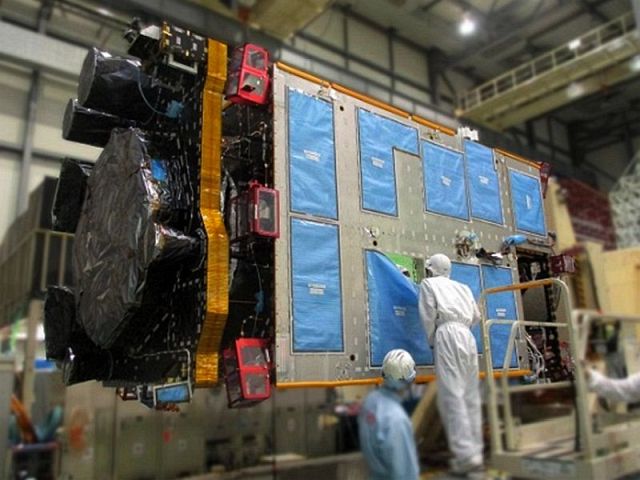
    Replacement for Michibiki: The L-band antenna that transmits the positioning signal is mounted on the Earth-oriented left side. (Photo: JAXA)
    Replacement for Michibiki: The L-band antenna that transmits the positioning signal is mounted on the Earth-oriented left side. (Photo: JAXA)

    Though built to succeed the first QZSS satellite, the replacement is based on the second and fourth satellites

    Main specifications of the successor to the first satellite and other satellites:

    item First machine Units 2 and 4 Unit 3 Successor to the first machine
    Orbit Quasi-zenith Quasi-zenith Rest Quasi-zenith
    Positioning signal L1-C / A,
    L1C, L1S,
    L2C, L5, L6
    L1-C / A, L1C,
    L1S, L2C,
    L5, L5S, L6
    L1-C / A, L1C,
    L1S, L1Sb, L2C,
    L5, L5S, L6
    L1-C / A
    (L1-C / B (* 1)),
    L1C, L1S, L2C,
    L5, L5S, L6
    L band antenna Helical method
    (* 2)
    Helical method
    (* 2)
    Patch method
    (* 3)
    Patch method
    (* 3)
    Generated power 5.3kW 6.3kW 6.3kW 6.3kW
    mass About 4t About 4t About 4.7t About 4t
    Design life 10 years or more Over 15 years Over 15 years Over 15 years
    Launch year 2010 2017 2017 2021
    (planned)
    Launch
    rocket
    H2A202 H2A202 H2A204 H2A202
    (* 1) Signal transmitted by BOC (Binary Offset Carrier) modulation of L1-C / A code
    (* 2) Antenna with spiral antenna elements arranged
    (* 3) Antenna with planar antenna elements arranged

    .


  • GPS III SV-05 encapsulated ahead of June 17 launch

    GPS III SV-05 encapsulated ahead of June 17 launch

    The fifth GPS III satellite was encapsulated within a SpaceX payload fairing on June 9 in preparation for its June 17 launch.

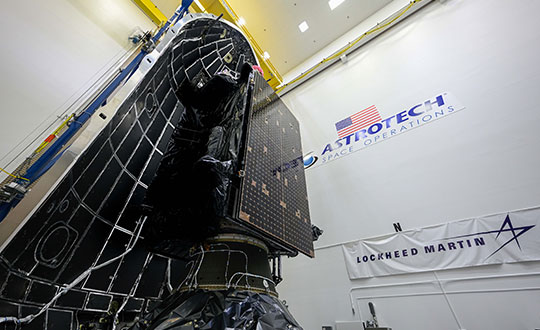
    The U.S. Space Force’s Space and Missile Systems Center’s Lockheed Martin-built GPS III Space Vehicle 05 satellite was encapsulated within a SpaceX payload fairing at Astrotech Space Operations Florida facility on June 9 in preparation for launch, scheduled for June 17 from Cape Canaveral Space Force Station.

    The 15-minute launch window opens 12:09 p.m. EDT. If SpaceX provides a live feed to view the launch, it will be available here.

    Encapsulation of the satellite within the payload fairing protects the satellite from the impact of dynamic pressure and aerodynamic heating during its harrowing journey through the earth’s atmosphere, and supports the ability to communicate with the satellite until separation from the launch vehicle on orbit.

    “The GPS III program continues to make strides in modernizing the GPS constellation for the United States Space Force, maintaining the ‘gold standard’ for position, navigation and timing,” said Col. Edward Byrne, Medium Earth Orbit Space Systems division chief, “SV05 is not only the first-ever USSF satellite launched on a previously flown booster, but also is the 24th military-code (M-xode) satellite introduced to our constellation, the last needed to bring M-code to full operational capability.”

    GPS III SV05 will join the current 31-satellite operational constellation to continue to provide the gold standard in positioning, navigation and timing services for more than four billion users worldwide.

    The Space and Missile Systems Center, located at Los Angeles Air Force Base in El Segundo, California, is the U.S. Space Force’s center of acquisition excellence for acquiring and developing military space systems. Its portfolio includes the development of advanced space and launch capability and systems, global navigation satellite systems, military satellite communications, defense meteorological satellites, space launch and range systems, satellite control networks, space-based infrared systems, and space situational awareness capabilities.

    GPS III SV05 is encapsulated within a SpaceX payload fairing at Astrotech Space Operations Florida in preparation for its June 17 launch. (Photo: Lockheed Martin)
    GPS III SV05 is encapsulated within a SpaceX payload fairing at Astrotech Space Operations Florida in preparation for its June 17 launch. (Photo: Lockheed Martin)


  • GPS III SV05 arrives in Florida for June launch

    GPS III SV05 arrives in Florida for June launch

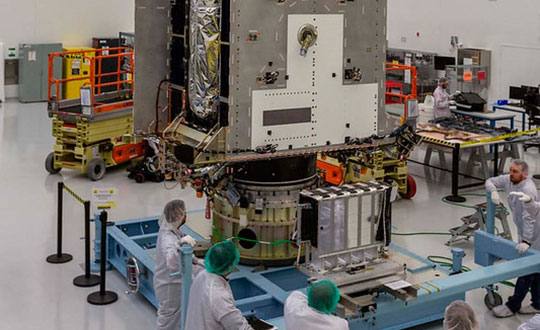
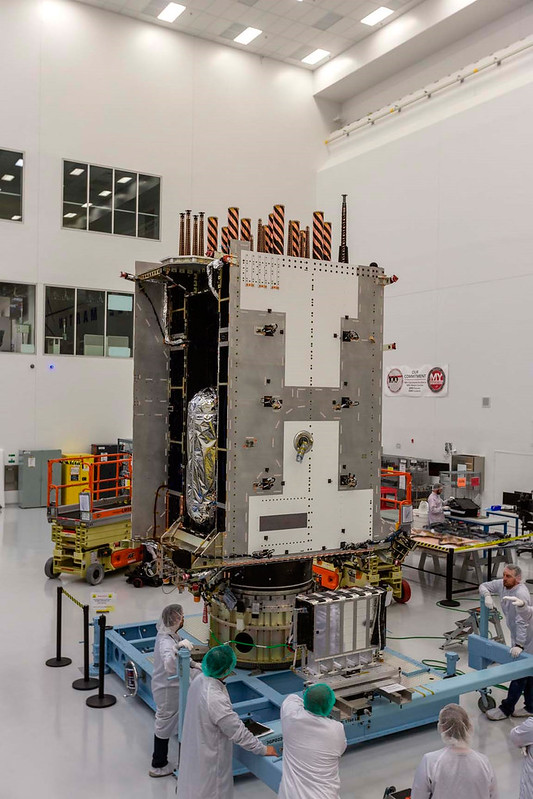
    GPS III SV05, now in Florida, is shown fully integrated at Lockheed Martin's production facility in Colorado. (Photo: Lockheed Martin)
    GPS III SV05, now in Florida, is shown fully integrated at Lockheed Martin’s production facility in Colorado. (Photo: Lockheed Martin)

    The U.S. Space Force’s Space and Missile Systems Center successfully delivered the fifth GPS III satellite to Cape Canaveral Space Force Station, Florida, on April 6.

    GPS III Space Vehicle (SV) 05 was transported from the Lockheed Martin facility in Waterton, Colorado, to the Space Coast Regional Airport in Titusville, Florida, by a C-17 Globemaster III crew from Joint Base Lewis-McChord, Washington. Lockheed Martin is the contractor for construction of the GPS III satellites.

    Now that the satellite has arrived at the Astrotech Space Operations facility, the latest addition to the GPS constellation modernization effort will begin final testing and checkout before the launch. While at Astrotech, it will undergo final post-ship functional testing, be fueled with onboard propellant, and then be encapsulated for launch.

    Once these tasks are accomplished, SV05 will be horizontally integrated with the first-ever SpaceX Falcon 9 launch vehicle to be reflown for a National Security Space Launch (NSSL) mission.

    “SV05 is the third GPS III satellite shipped to the Cape in the last 14 months and marks a key step to our larger goal of GPS constellation modernization,” said Col. Edward Byrne, SMC’s Space Production Corps Medium Earth Orbit Space Systems Division chief. “As the fourth GPS III launch campaign with SpaceX, this NSSL mission is historic both for the first reflight of a Falcon 9 rocket and for being the 24th military-code (M-code) satellite introduced to our constellation, the last needed to bring M-code to full operational capability.”

    Slated to launch in June, GPS III SV05 will join the operational constellation of 31 GPS satellites, delivering enhanced performance and accuracy through a variety of improvements.

    Improvements include increased signal protection, L1C signal interoperability, and the newest civilian signal, L5. As a crucial technological foundation for internet, financial, transportation and agricultural operations, GPS delivers the gold standard in positioning, navigation and timing services supporting U.S. and allied operations worldwide.

    The U.S. Space Force’s Space and Missile Systems Center, located at the Los Angeles Air Force Base in El Segundo, California, is the center of excellence for acquiring and developing military space systems. SMC’s portfolio includes space launch, global positioning systems, military satellite communications, a meteorological satellite control network, range systems, space-based infrared systems, and space situational awareness capabilities.

  • Fourth GPS III satellite successfully launched

    Fourth GPS III satellite successfully launched

    UPDATE:  The U.S. Space Force, Space and Missile Systems Center (SMC) and its mission partners successfully launched the fourth GPS III satellite at 6:24 p.m. EST Nov. 5 from Space Launch Complex 40 at Cape Canaveral Air Force Station, Florida.

    The Lockheed Martin-built satellite was carried to orbit aboard a Space Exploration Technologies Corporation (SpaceX) Falcon 9 launch vehicle.

    “The launch of GPS III SV04 is a testament to SMC’s ability to rapidly and safely deliver new capabilities on orbit,” said Cordell DeLaPena, Air Force program executive officer for SMC’s Space Production Corps. “At SMC, we are proud to deliver our fourth GPS III satellite and will continue to operate at an accelerated pace to enhance the capabilities of the billions of users worldwide.”

    “I’m proud of my team’s 83rd successful National Security Space Launch and look forward to our future missions with SpaceX,” said Col. Robert Bongiovi, SMC’s Launch Enterprise director. “Ultimately, our ability to embrace innovation with our launch providers advances warfighter’s capabilities while lowering costs to the U.S. Government and its taxpayers.”

    GPS III SV04 separated from its upper stage approximately 90 minutes after launch. Engineers and operators at Lockheed Martin’s Waterton Facility will now begin on-orbit checkout and tests, which are estimated to complete in approximately one month. Operational use is expected to begin in a few months.

    “The GPS III program continues to make strides in modernizing the GPS constellation for the U. S. Space Force while maintaining the gold standard for position, navigation and timing,” said Col. Edward Byrne, Medium Earth Orbit Space Systems Division chief.

    GPS III SV04 will join the current GPS constellation comprised of 31-operational spacecraft. GPS III, the newest generation of GPS satellites, brings new capabilities to users, including three times greater accuracy and up to eight times improved anti-jamming capabilities.

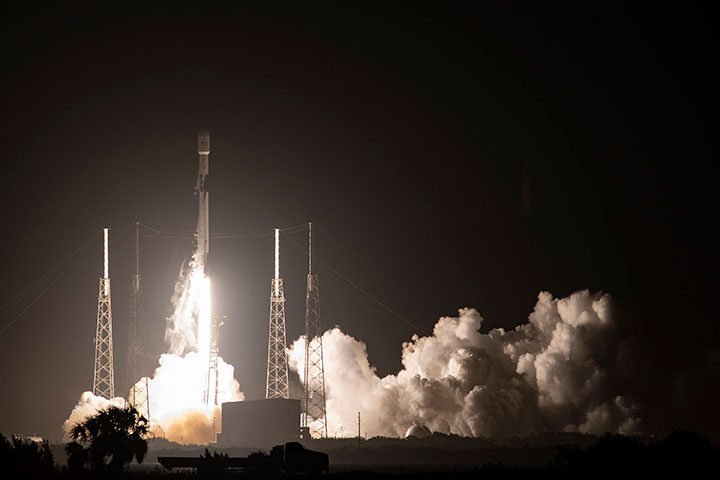
    A Falcon 9 carrying GPS III SV04 lifts off from Cape Canaveral Air Force Station, Florida, Nov 5. (Photo: SpaceX via USAF)
    A Falcon 9 carrying GPS III SV04 lifts off from Cape Canaveral Air Force Station, Florida, Nov 5. (Photo: SpaceX via USAF)

    GPS constellation status

    According to the U.S. Space Force Second Space Operations Squadron (2 SOPS), the satellite is designated  SVN-77/PRN-14 in the GPS almanac. GPS III SV04 (SVN-77/PRN-14) will replace SVN-44/PRN-28 in the B plane at slot 03. 2 SOPS will issue a Launch NANU after on-orbit checkout when control of SVN-77 is transferred from Lockheed Martin to 2 SOPS for insertion into the GPS control segment.

    GPS III SV-2 (SVN 75), launched Aug. 22, 2019, replaced SVN 45/PRN-21 at D3 and was set healthy on April 1, 2020. As a result, SVN 45 is being re-phased from D3 to D2F replacing SVN 46/PRN 11 and will arrive sometime in November of this year. SVN 46 will be taken out of the operational constellation before the January 2021 launch of GPS III SV05 (SVN-78) and sent to Launch, Anomaly, Resolution, and Disposal Operations (LADO), making PRN-11 available.

    GPS III SV-03 (SVN 76, PRN-23) launched June 30, 2020, and was set operational and healthy on October 1.

    SVN-46, launched October 7, 1999, has been an “iron bird” workhorse in the D-plane and has successfully served the world’s GPS users for more than 20 years, 12 years past its designed service life. It outlasted (and in many cases, outperformed) many of its peers on-orbit, testament to quality engineering and the diligent efforts of the men and women of the U.S. Air Force.

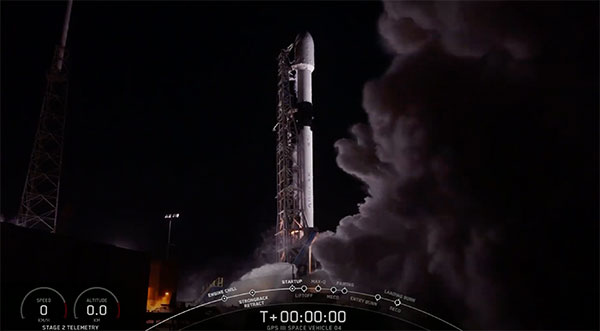
    Screenshot: SpaceX
    Screenshot: SpaceX

    The fourth GPS III satellite (GPS III SV04) is scheduled to launch today at 06:24 p.m. EST (~15 minute launch window) from Cape Canaveral Air Force Station, Florida, on a SpaceX Falcon 9 rocket. The new launch window follows an aborted launch with two seconds to go on Oct. 2.

    The launch can be viewed on this live feed.

    Built by Lockheed Martin, GPS III satellites are designed to help the U.S. Space Force modernize the current GPS constellation with new technology and advanced capabilities. GPS III provides three times greater accuracy and up to eight times improved anti-jamming power over satellites in the current constellation. GPS III also adds a new L1C civil signal compatible with Europe’s Galileo global navigation satellite system, which will provide greater civil user connectivity in the future.

    After adding GPS III SV04, the four GPS III satellites on orbit will represent about 12 percent of the 31 satellites in the GPS constellation.

    GPS III SV04 is the 23rd M-code-enabled satellite in the constellation, only one short now of the 24 needed for global coverage. M-code is a more-secure, harder-to-jam or spoof signal invaluable to U.S. and allied military forces.

    GPS III SV03, which lifted off from the Cape on June 30, was set operational on Oct. 1. The next satellite — GPS III SV05 — was declared  “Available for Launch” in May 2020. The satellite is now waiting to be called up for a launch date in 2021. Five more GPS III satellites are in production, three of which are fully assembled and in testing.

    Lockheed Martin is also under contract to build up to 22 additional GPS III Follow On (GPS IIIF) satellites, which add additional technology and advanced capabilities to this warfighting system, including a new Regional Military Protection Capability, which will increase anti-jam support in theater to ensure U.S. and allied forces cannot be denied access to GPS in hostile environments; an accuracy-enhancing laser retroreflector array; a fully digital navigation payload; and a new search and rescue payload.

    In July, the Space Force declared that the GPS IIIF program had fulfilled Milestone C, which means the start of the production phase. Lockheed Martin has introduced augmented reality tools into the GPS IIIF production process to drive even-greater efficiency into the production process.

    Continued investment in GPS is important. Besides the military applications, the U.S. economic benefit of GPS is estimated to be over $300 billion per year and $1.4 trillion since inception.

  • New launch window set for GPS III SV04

    New launch window set for GPS III SV04

    After an aborted launch with two seconds to go, the fourth GPS III satellite is now planned to launch on Nov. 5.

    The first launch attempt on Oct. 2 from Cape Canaveral was halted due to an “unexpected pressure rise in the turbomachinery gas generator,” said SpaceX CEO Elon Musk on Twitter, referring to a part in the rocket’s Merlin engines.

    SpaceX test-fired the Falcon 9 rocket for the GPS mission on Saturday at 7 p.m. on pad 40 at Cape Canaveral Air Force Station to verify that corrective actions have resolved the issue, according to SpaceX and reported by SpaceFlightNow. The fourth GPS III satellite was not aboard during the test.

    GPS III SV04 first rolled out to Cape Canaveral’s Space Launch Complex 40 on Sept. 27. The satellite was originally scheduled for launch Sept. 30, then Oct. 1, but that launch was delayed because of a “traffic jam” at the launchpad caused by launch delays of other rockets.

    The satellite was almost launched at 9:43 p.m. EDT on Oct. 2 until the launch was stopped at T– 2 seconds.

    The Lockheed Martin-built GPS III SV04 will be launched aboard a SpaceX Falcon 9 rocket — the third National Security Space Launch (NSSL) mission on a Falcon 9 rocket, the second U.S. Space Force (USSF) first-stage booster recovery, and the sixth USSF launch.

    A live feed will begin 20 minutes before the launch and conclude approximately 45 minutes afterward. A simulcast of the broadcast can be viewed at www.spacex.com.

    GPS III SV04 will be launched to augment the current GPS constellation comprised of 31 operational spacecraft. GPS satellites operate in Medium Earth Orbit (MEO) at an altitude of approximately 20,200 km (12,550 miles) in six orbital planes. Each satellite circles the earth twice per day.

    GPS III brings new capabilities to users such as the new L1C civilian signal, which opens the window for future interoperability with international satellite navigation systems.

    GPS III SV04 rests atop a Falcon 9 rocket, waiting to be sent into orbit. (Photo: SpaceX)
    GPS III SV04 rests atop a Falcon 9 rocket, waiting to be sent into orbit. (Photo: SpaceX)
  • Russia adds to GLONASS constellation with latest launch

    Russia adds to GLONASS constellation with latest launch

    Russia launched a new-generation Glonass-K satellite, number 15, into orbit Oct. 25. Unlike its Glonass-M predecessors, Glonass-K satellites carry two types of navigation signals — frequency-separated and code-separated. The satellites emit additional code-division L2 navigation signals.

    In addition to their main functions, Glonass-K satellites will transmit information from the Cospas-Sarsat international search-and-rescue system. Additional Glonass-K satellites are in production at ISS Reshetnev, all with a domestic electronic component base.

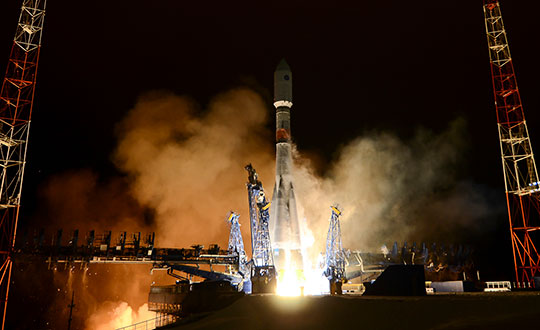
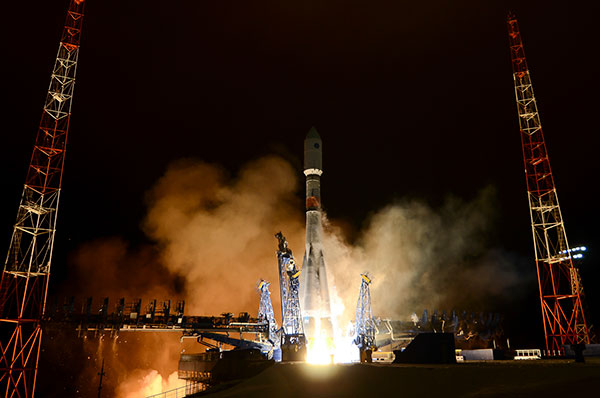
    Russia’s Aerospace Forces (VKS) Space Forces launched the satellite aboard a Soyuz-2 rocket from the Plesetsk cosmodrome in the Arkhangelsk region. The launch of the carrier rocket and the maneuvering of the spacecraft into the orbit took place under normal operating conditions, according to Roscosmos.

    Two minutes after the launch, the ground-based automated control complex of the Titov Main Testing Space Center acquired the Soyuz-2. On schedule, the Glonass-K satellite was injected into the target orbit by the Fregat upper stage and taken over by the ground-based facilities of the VKS Space Forces.

    Photo: Roscosmos
    Photo: Roscosmos

    A stable telemetric connection has been established and maintained with spacecraft. The onboard systems of the Glonass-K spacecraft are operating normally.

    GLONASS consists of 28 spacecraft, with 24 active, two in reserve, and one Glonass-K undergoing flight tests. Another spacecraft is temporarily out for maintenance.

    Glonass-M satellites form the basis of the system’s orbital grouping. Replacing the orbital constellation with Glonass-K spacecraft will ensure the stable operation of the Russian navigation system and increase the accuracy of its navigation determinations up to tens of centimeters.

    According to Roscosmos, Glonass-K spacecraft are constructed in an unpressurized design, have a guaranteed period of active existence in orbit increased to 10 years, reduced energy consumption, and significantly lower weight.

    Photo: Roscosmos
    Photo: Roscosmos
  • Aborted launch of GPS III SV04 results in hardware analysis

    Aborted launch of GPS III SV04 results in hardware analysis

    The aborted launch of the fourth GPS III satellite has sparked an investigation into the SpaceX Falcon 9’s Merlin engine. With only two seconds before launch, SpaceX stopped the scheduled launch of the fourth GPS III satellite on Oct. 2.

    Tim Dunn of NASA’s Launch Services Program said at an Oct. 16 briefing that the engines had undergone significant testing since the GPS III launch scrub, including taking the Merlin engines from that rocket back to SpaceX’s McGregor, Texas, test site for further study, reports SpaceNews.com. That investigation has involved NASA and Space Force personnel working with SpaceX.

    While the GPS III launch has not been rescheduled, Dunn said that the NASA and SpaceX personnel have learned much, with implications involving the rocket hardware.

    GPS III SV04 rests atop a Falcon 9 rocket, waiting to be sent into orbit. (Photo: SpaceX)
    GPS III SV04 rests atop a Falcon 9 rocket, waiting to be sent into orbit. (Photo: SpaceX)
  • GPS III launch aborted with 2 seconds to spare

    GPS III launch aborted with 2 seconds to spare

    UPDATE (Oct. 5): Elon Musk, SpaceX founder and CEO, said a Falcon 9 launch was halted Friday night due to an “unexpected pressure rise in the turbomachinery gas generator,” referring to a part in the rocket’s Merlin engines, reports SpaceflightNow.

    SpaceX has not yet set a new launch date. Another planned launch, for a Starlink satellite, was also aborted.


    UPDATE (Oct. 3): Only two seconds before launch, SpaceX aborted the scheduled launch of the fourth GPS III satellite on Oct. 2. SpaceX has not yet announced a new launch window, or stated the reason for the cancellation.

    One Twitter user responded with video of the launch up to the moment it was cancelled.


    (Oct. 1) The U.S. Space Force’s newest GPS III satellite, Space Vehicle 04 (GPS III SV04), rolled out to Cape Canaveral’s Space Launch Complex 40 on Sept. 27. Originally scheduled for launch Sept. 30, then Oct. 1, the satellite is now slated to launch 9:43 p.m. EDT on Oct. 2 (01:43 a.m. UTC on Oct. 3).

    The launch was delayed because of a “traffic jam” at the launchpad. According to Spaceflight Now, SpaceX initially rescheduled the GPS launch for Wednesday night after a Delta 4 launch was delayed to Tuesday. After the Delta 4-Heavy’s scrub Tuesday, SpaceX announced the GPS launch would be pushed back to Friday, when there is a 15-minute launch window available opening at 9:43 p.m. EDT (0143 GMT Saturday, Oct. 3).

    The Lockheed Martin-built GPS III SV04 is scheduled to launch aboard a SpaceX Falcon 9 rocket — the third National Security Space Launch (NSSL) mission on a Falcon 9 rocket, the second U.S. Space Force (USSF) first-stage booster recovery, and the sixth USSF launch on Sept. 30. The 15-minute launch window opens at 9:51 p.m. EDT. A live feed will begin 20 minutes before the launch and conclude approximately 45 minutes afterward. A simulcast of the broadcast can be viewed at www.spacex.com.

    “The GPS III program office in partnership with our contract teammates continue to push the envelope on the capabilities they deliver to users, both civil and military around the globe. Our latest GPS III satellites’ nearly 70 percent digital payload provides the U. S. Space Force with greater operational flexibility and cutting edge capabilities while continuing to support legacy users,” said Cordell DeLaPena, Air Force program executive officer for SMC’s Space Production Corps.

    GPS III SV04 will be launched to augment the current GPS constellation comprised of 31 operational spacecraft. GPS satellites operate in Medium Earth Orbit (MEO) at an altitude of approximately 20,200 km (12,550 miles) in six orbital planes. Each satellite circles the earth twice per day. GPS is the premier space-based provider of positioning, navigation, and timing services for more than four billion users worldwide. This latest generation of GPS satellite boasts a 15-year design life — 25 percent longer than the previous generation of GPS satellites on orbit.

    GPS III brings new capabilities to users such as the new L1C civilian signal, which opens the window for future interoperability with international satellite navigation systems.

    “Our GPS III team is excited to be here once again. Less than 3 months ago, we successfully launched GPS III SV03. Since then, the team has successfully delivered the satellite to its final orbit, performed on-orbit testing and delivered the satellite to operations, while executing a mature satellite production line. I can’t be more proud of everyone involved in this mission,” said Col. Edward Byrne, Medium Earth Orbit Space Systems Division chief. “The launch of GPS III SV04 will continue to modernize our GPS constellation by increasing our capabilities with advanced features for both our civil and military users across the world.”

    A Falcon 9 with GPS III SV 04 encapsulated inside the payload fairing the stands vertical on the pad at Cape Canaveral’s Space Launch Complex 40 in preparation for launch. (Photo: USAF/SpaceX)
    A Falcon 9 with GPS III SV 04 encapsulated inside the payload fairing the stands vertical on the pad at Cape Canaveral’s Space Launch Complex 40 in preparation for launch. (Photo: USAF/SpaceX)
  • GPS III Space Vehicle 04 safely arrives in Florida

    GPS III Space Vehicle 04 safely arrives in Florida

    The U.S. Space Force Space and Missile Systems Center on July 14 delivered the fourth GPS III satellite to Cape Canaveral Air Force Station, Florida. The satellite is scheduled for launch on Sept. 30.

    GPS III Space Vehicle (SV) 04 was safely transported from the Lockheed Martin facility in Waterton, Colorado to Space Coast Regional Airport in Titusville, Florida. The satellite was carried aboard a C-17 Globemaster III originating from Joint Base Lewis-McChord, Washington.

    The fourth GPS III satellite arrived at Cape Canaveral July 14 for launch on Sept. 30. (Photo: USAF)
    The fourth GPS III satellite arrived at Cape Canaveral July 14 for launch on Sept. 30. (Photo: USAF)

    The delivery of GPS III SV04 starts the clock for final testing and checkout prior to launch. The satellite will be processed at the Astrotech Space Operations facility in Florida to ensure the full functionality of the satellite, prepare the satellite for propellant loading, and encapsulate the satellite in its protective fairing. At the completion of these activities, the satellite will be horizontally integrated with the SpaceX Falcon 9 launch vehicle.

    “The shipment of the fourth GPS III satellite was successfully conducted just two weeks after the launch of our GPS III-SV03 satellite. This operation is a remarkable achievement and testament to the hard work of the entire GPS team members from all across the country,” said Col. Edward Byrne, SMC’s Medium Earth Orbit Space Systems Division chief. “The delivery of SV04 marks the start of our third GPS III launch campaign on a SpaceX Falcon 9 rocket and brings us another step closer in advancing the GPS constellation with more capable satellites.”

    GPS III SV04 is slated to launch in September. Once on-orbit, it will join the operational constellation of 31 GPS satellites, delivering enhanced resiliency, better accuracy, and advanced anti-jam capabilities.


  • Readiness confirmed for July 31 WAAS satellite launch

    Readiness confirmed for July 31 WAAS satellite launch

    Logo: Arianspace

    Approval is given for Arianespace’s Ariane 5 flight on July 31

    Arianespace’s fifth mission of 2020 has been given the green light for liftoff following a July 29 launch readiness review conducted at the Spaceport in French Guiana.

    The launch will deliver the Intelsat Galaxy 30 (G-30) satellite into orbit. G-30 will become part of the  Wide Area Augmentation System (WAAS), the air navigation aid developed by the U.S. Federal Aviation Administration to augment GPS and GNSS.

    Besides G-30, the Ariane 5 launch vehicle will also carry the Mission Extension Vehicle-2 (MEV-2) and BSAT-4b. All satellites are flight-ready, along with the Spaceport’s infrastructure and the network of downrange tracking stations.

    With approval granted, Ariane 5 also is cleared for rollout on July 30 from its Final Assembly Building to the ELA-3 launch zone. Liftoff will occur on July 31 during a 46-minute launch window opening at 6:30 p.m. local time in French Guiana. To watch the launch live, visit the Arianespace website.

    Ariane 5 will deliver a total payload lift performance of approximately 10,468 kg. on the mission to geostationary transfer orbit (GTO), which is designated Flight VA253. This total factors in the three passengers, plus the workhorse vehicle’s multi-payload deployment system and integration hardware.

    G-30 and MEV-2 — both produced by Northrop Grumman to serve the operational needs of Intelsat — are stacked together in the upper position of Ariane 5’s payload configuration. G-30 will be deployed first during the 47-minute flight sequence, followed by MEV-2.

    To be released last as the mission’s lower passenger, BSAT-4b is being launched by Arianespace as part of a turnkey contract between the Japanese operator B-SAT and the satellite manufacturer, Maxar.