Tag: Topcon

  • Launchpad: Cyber attack prevention, autonomous vans

    A roundup of recent products in the GNSS and inertial positioning industry from the August 2018 issue of  GPS World magazine.

    OEM

    IP Solution

    With multi-constellation GNSS for internet of things (IOT) devices

    The Dragonfly NB2 is a highly integrated and modular IP (internet protocol) solution optimized for Cat-NB2 (3GPP Release 14 eNB-IoT) that can seamlessly be incorporated into chips and modules by the multitude of companies looking to address the large and fast-growing cellular IoT space. GNSS hardware package. For customers developing NB-IoT products that also require GNSS capabilities, Ceva-Dragonfly NB2 includes a new power-optimized GNSS hardware package, with GNSS RF receiver and multi-constellation digital front-end. The GNSS package speeds up both acquisition and tracking tasks by up to 8 times compared to Ceva-Dragonfly NB1, enabling a host of popular NB-IoT use cases, including people, livestock and asset tracking and geofencing.

    CEVA, ceva-dsp.com

    Time clock system

    Provides timing accuracy and stability when GNSS signal is lost
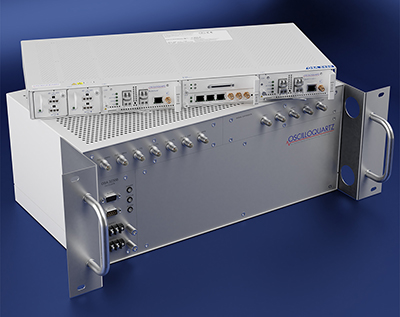
    Photo: Oscilloquartz
    Photo: Oscilloquartz

    Oscilloquartz has launched its enhanced primary reference time clock (ePRTC) system to enable a high level of timing accuracy and stability, even when the GNSS signal is lost. The system provides a timing source for mission-critical transport systems, such as utility networks, government infrastructure and radio access networks, and provides the strict synchronization needed for LTE-A and 5G applications. Featuring the OSA 3230B ePRC atomic cesium clock connected to an Oscilloquartz clock combiner and grandmaster, the new solution offers the extremely stable frequency of a cesium clock with the UTC-traceable signal provided by GNSS. When combined with the OSA 5430, the OSA ePRTC system provides full hardware redundancy and multiple fan-out options including PTP over 10 Gbit/s.

    Oscilloquartz, oscilloquartz.com

    Antenna receiver modules

    compatible with GPS, GLONASS, Beidou and Galileo
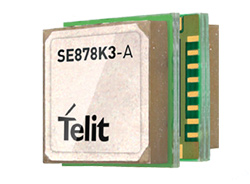
    Photo: Telit
    Photo: Telit

    The SE878Kx-A series of GPS and GNSS integrated antenna receiver modules offer high performance, maximum reliability and low power consumption for consumer and business applications. The SE878K3-A and SE878K7-A are compatible with GPS, GLONASS, Beidou and Galileo and also enable device vendors to develop quickly and cost-effectively location-based IoT solutions for use in virtually any country worldwide. The SE878Kx-A series supports dual internal-external antennas to ensure connectivity when one is broken or compromised, along with a SAW filter to maximize jamming immunity. The modules are designed for mission-critical applications and other use cases where reliability is key, such as alarms, stolen cars or high-end asset tracking. The series also provides seamless integration with Telit’s cellular modules, including eCall/ERA-GLONASS compliant solutions.

    Telit, telit.com

    IoT Board

    Has Built-in GNSS Receiver
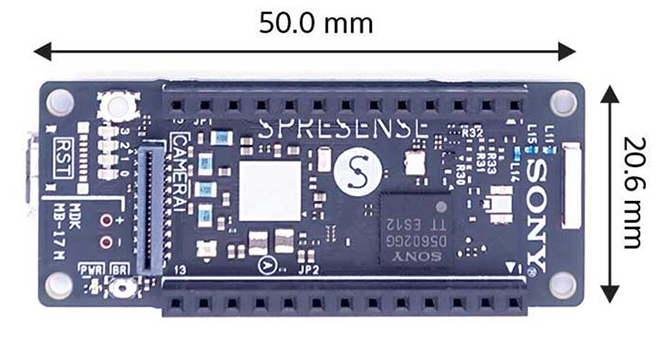
    The Spresence main board by Sony. (Image: Sony)
    The Spresence main board by Sony. (Image: Sony)

    The Spresence main and extension boards are designed for internet of things (IoT) applications. The main board uses a multi-CPU structure equipped with Sony’s GNSS receiver (GPS+GLONASS) and high-resolution audio codec. A variety of systems for applications such as drones and other IoT devices can be built by combining the boards and developing the relevant applications. The boards’ software and hardware is available via open platform, allowing for a wide range of developmental possibilities. The main board can be used to control a drone using GPS positioning and a high-performance processor, voice-controlled smart speakers and low-power consumption sensing cameras. It also can be combined with sensors for use in systems that detect errors in production lines on the factory floor.

    Sony Corporation, sony.net

    SURVEY & MAPPING

    Field controller

    Designed for geopositioning, construction and mapping
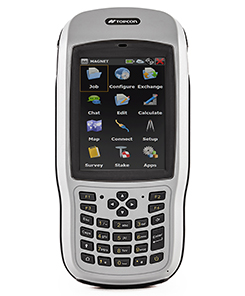
    Photo: Topcon
    Photo: Topcon

    The T-18 handheld controller has a 3.7-inch sunlight-readable display, a 1-GHz processor and 1 GB of internal storage. For field data collection using Topcon’s MAGNET software, the T-18 offers a durable ergonomic solution with fast processing, excellent connectivity and a long (10-hour) battery life. It has a 3.5G cellular modem for connectivity with Topcon MAGNET solutions for sending and receiving data to the cloud company account. The modem also can be used for real-time kinematic (RTK) correction services. Other features include Bluetooth and an IP65 rating for dust and water protection in demanding job-site conditions.

    Topcon Positioning Group, global.topcon.com

    Android application

    Created for SXblue receivers
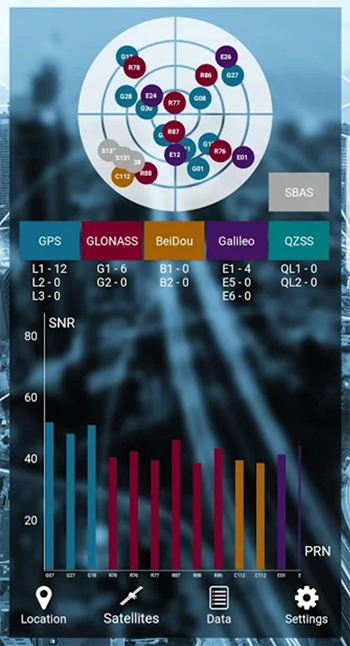
    Image: SXblue
    Image: SXblue

    The SXblue ToolBox is an Android application for SXblue GNSS receivers, enabling users to view and analyze the position data and metadata related to its location. The user can send commands that enable or disable some features, including systems in use, mask angle or differential angle, and constellation in use, including GPS, GLONASS, Galileo, BeiDou and SBAS. The SXblue ToolBox is also an NTRIP client capable of connecting to a NTRIP server for real-time kinematic (RTK) corrections, allowing the receiver to issue very accurate location information. The application can record, save and transfer raw data from the GNSS receiver, allowing post-processing on computers for surveying and geomatics professionals.The toolbox has been developed with special consideration for modern mobile devices and attention to user and dealer feedback. It includes a series of configurable audible and visual alarms for determining the thresholds of the information provided by the SXblue GNSS receiver.

    SXblue, sxbluegps.com

    Laser scanner

    Creates 3D models in the field
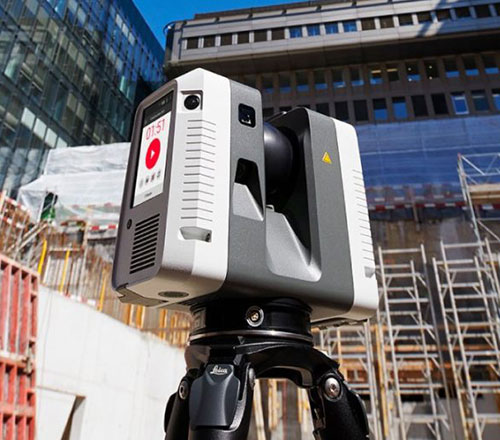
    Leica RTC360 laser scanner. (Photo: Hexagon)
    Leica RTC360 laser scanner. (Photo: Hexagon)

    The Leica RTC360 laser scanner is equipped with edge computing technology to enable fast and accurate creation of 3D models in the field. It combines high-performance laser scanning, edge computing and mobile app technologies to preregister captured scans quickly and accurately. With the push of a button, two million points per second of high dynamic range imagery can be captured to create a full-dome scan in under two minutes. It features a visual inertial system that automatically tracks movements between setup positions. The scans captured can be combined and preregistered on a mobile device, where they can be viewed and augmented with information tags.

    Hexagon, hexagon.com

    Indoor software

    Location technology allows users to see rooms, gates and offices
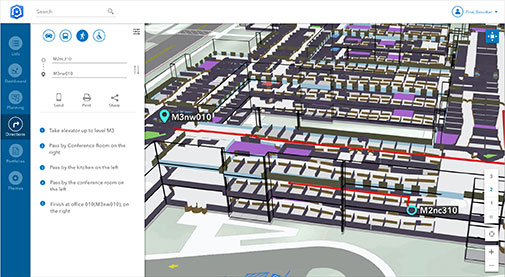
    Screenshot: Esri
    Screenshot: Esri

    ArcGIS Indoors is designed to enable interactive indoor mapping of corporate facilities, retail and commercial locations, airports, hospitals, event venues, universities and more. The solution applies the latest location technology to allow users to see and share where assets, rooms, departure gates and offices are located. It uses data streams, real-time processing and location intelligence tools to help businesses and other organizations understand how to better coordinate space and other resources with their facilities and campuses. Insights from sensor networks deliver real-time information to managers and executives through interactive dashboards, while visitors and employees can find useful information about the buildings they occupy. The solution also allows users to quickly access and explore critical business information, such as the location and status of fire extinguishers and their last inspection dates.

    Esri, esri.com

    TRANSPORTATION

    Automotive-grade inertial sensor

    Meets demands for continuous, accurate vehicle location
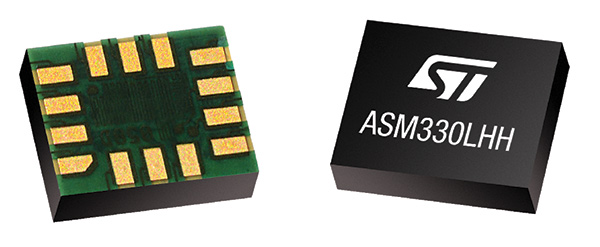
    The ASM330LHH module. (Photo: STMicroelectronics)
    The ASM330LHH module. (Photo: STMicroelectronics)

    The automotive-grade ASM330LHH six-axis inertial sensor is designed for super-high-resolution motion tracking in advanced vehicle navigation and telematics applications. It lets advanced dead-reckoning algorithms calculate precise position from sensor data if satellite signals are blocked, such as in urban canyons, tunnels, covered roadways, parking garages or dense forests. Its advanced, low-noise, temperature-stable design enables dependable telematics services such as e-tolling, tele-diagnostics and e-Call assistance. Precision inertial data in six axes also meets the needs of advanced automated-driving systems. Automotive component manufacturer Magneti Marelli has selected the ASM330LHH for advanced telematics systems, to be fitted as original equipment by global automotive groups in upcoming vehicle ranges.

    STMicroelectronics, st.com

    Traffic alerts app

    Near real-time data for smarter cities
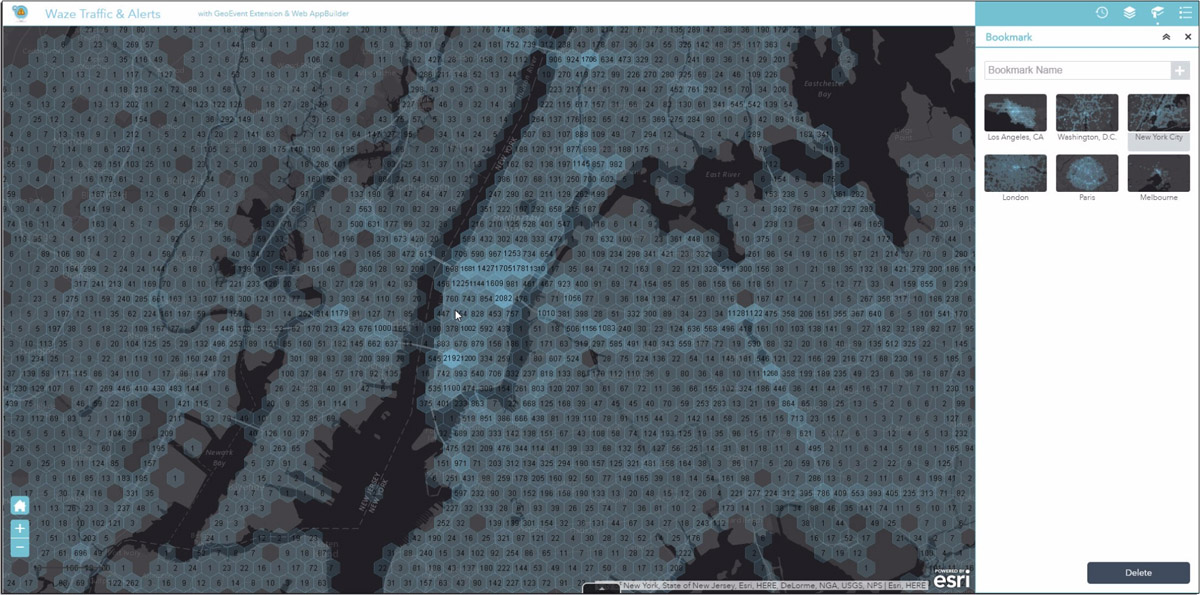
    Esri and Waze smart cities partnership grows. (Image: Esri)
    Esri and Waze smart cities partnership grows. (Image: Esri)

    The free crowdsourced traffic and navigation app Waze is now fully supported by ArcGIS Online, where its live feed of mapped traffic alerts and other information, such as accidents, congestion and street damage, can be used in applications in minutes. Waze Live Alerts, available in ArcGIS Marketplace, is free to members of the Waze Connected Citizens Program. The program, a two-way sharing of publicly available traffic and road condition information, offers governments a stream of data, constantly updated in real time. This enables personnel to make data-driven infrastructure decisions and improves the efficiency of incident response.
    Traffic engineers can use the data to analyze problems on the road and create targeted solutions.

    Waze, waze.com; Esri, esri.com

    Connected car software

    Open-source platform for autonomous delivery and other iot

    The AGL platform provides Mercedes-Benz Vans with the ability to create autonomous delivery robots. (Image: Daimler)
    The AGL platform provides Mercedes-Benz Vans with the ability to create autonomous delivery robots. (Image: Daimler)

    Automotive Grade Linux (AGL) is a collaborative cross-industry effort to develop an open platform for the connected car. Mercedes-Benz vans are using AGL as a foundation for a new onboard operating system for its commercial vehicles. The Mercedes-Benz “adVANce” initiative focuses on connectivity and internet of things (IoT) applications, innovative hardware solutions, new on-demand mobility and rental concepts, and fleet management solutions. The AGL platform provides Mercedes-Benz Vans with the flexibility to rapidly create tailored solutions for customers, including adding and connecting any kind of IoT component to the vehicle, such as sensors, automation controls and actuators. The new AGL-based operating system will debut on various Mercedes-Benz Vans prototype projects later this year.

    Linux Foundation, linuxfoundation.org; Mercedes-Benz, daimler.com

    Vehicle security

    Protects against ransomware

    Image: iStock/hanibaram
    Image: iStock/hanibaram

    eCyber is an integrated hardware-software product that protects vehicles against ransomware and other cyber-attacks. It can be installed in a vehicle by authorized parties, such as vehicle importers and fleet managers, in the aftermarket stage after the vehicle has left the factory, as well as by the OEM itself during manufacture. eCyber, a combined hardware and software solution in a compact box, is installed between the vehicle’s external communications device and the vehicle’s CAN (Controller Area Network) bus. It provides a secure gateway for outside communications to the CAN bus, allowing only communications with predefined parameters and values to go through. It blocks any unrecognized communications to and from the CAN bus, so no malicious digital communications can disrupt vehicle function.

    ERM Advanced Telematics, ermtelematics.com

    UAV

    Aerial camera

    With fast medium-format imaging sensor
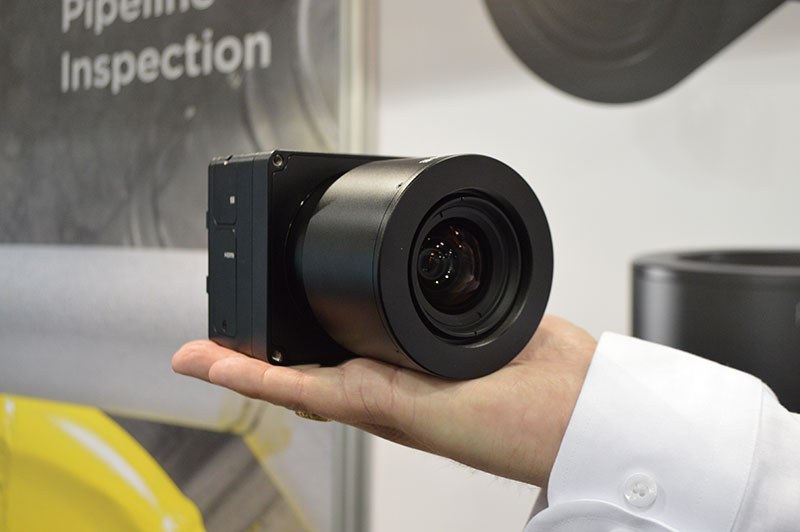
    Photo: GPS World
    Photo: GPS World

    Engineered for UAV-imaging missions, the iXM 100MP is a high-productivity metric camera with a range of high-resolution lenses. It is ready for integration with various UAV platforms, including Phase One’s DJI Matrice 600 Pro. The camera incorporates a medium-format sensor with backside-illumination technology, enabling high light sensitivity and extended dynamic range. Phase One also offers four new RSM lenses — with focal lengths ranging from 35mm to 150mm — to fit the new sensor’s 3.76 μm pixel size and 33 x 44 mm frame size. The lenses are available with either fixed-focus or motorized-focus functionality. The fixed-focus 35mm and 80mm lenses are especially suitable for surveying applications.

    Phase One Industrial, industrial.phaseone.com

    Authorization platform

    For quick approval of flights over controlled airspace
    Screenshot: Skyward
    Screenshot: Skyward

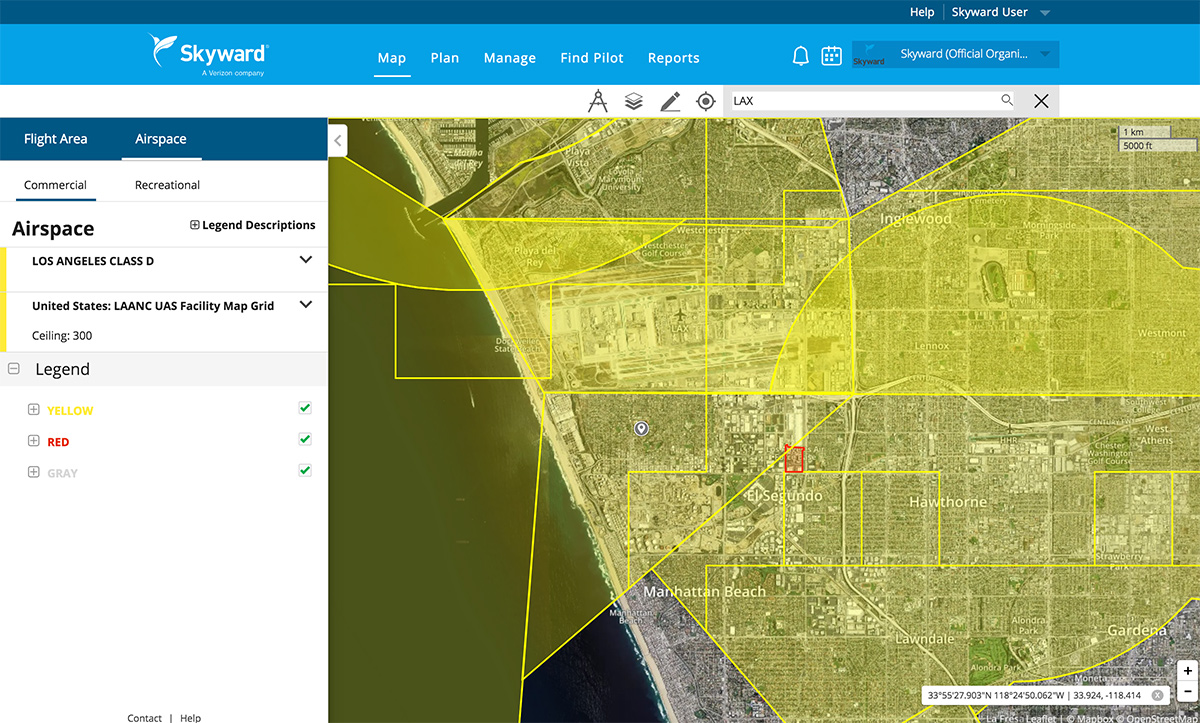
    Commercial drone operators in California and Hawaii — as well as a few areas in Nevada, Utah and Arizona — can get quickly authorized to fly in controlled airspace using the LAANC (Low Altitude Airspace Notification Capability) platform. Skyward is an FAA-approved airspace vendor. With Skyward, pilots with a Part 107 license can get permission to fly in regulated airspace in seconds compared to manual authorizations that can take months. This makes it significantly easier for businesses of all sizes, particularly in the construction and warehousing industries, to manage a fleet of drones to access valuable, cost-saving data. Skyward’s LAANC expansion includes airspace in the busy metro areas of Los Angeles, the Bay Area, San Diego, Las Vegas and more than 50 smaller air markets.

    Skyward, skyward.io

  • GNSS receiver, drone developments from AUVSI Xponential 2018

    GNSS receiver, drone developments from AUVSI Xponential 2018

    As the dust from this year’s AUVSI Xponential show, which took place May 1-4 in Denver, begins to settle, we complete the overview we began last month and wrap up our coverage of the show.

    Septentrio

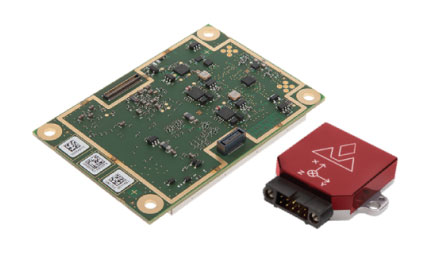
    Septentrio introduced its AsteRx-i V product series of integrated GNSS/inertial receivers, based on the Septentrio m2 GPS/GLONASS/Galileo/BeiDou/QZSS/SBAS receiver and a high-end VectorNav MEMS IMU. Providing:

    • AsteRx-i V receiver & IMU. (Photo: Septentrio)
      AsteRx-i V receiver & IMU. (Photo: Septentrio)

      Reliable, accurate IMU-enhanced GNSS positioning down to the cm level

    • Full attitude — heading pitch and roll
    • Lightweight, low power <50 grams, typically 1.5 W — suitable for UAV applications
    • AIM+ interference monitoring and mitigation system
    • High update rate, low-latency positioning and attitude

    Also introduced at the show was the AsteRx SB, a packaged version of the m2 receiver with multiple interfaces and Bluetooth wireless, targeted at machine control and other sensor fusion applications.


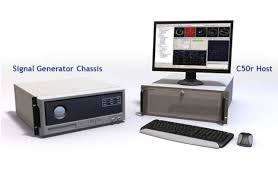
    GSS9000 Simulator. (Image: Spirent)
    GSS9000 Simulator. (Image: Spirent)

    Spirent Federal

    Spirent offered a demo of its “flagship” GSS9000 simulator at the show — with capability to generate all constellations, all frequencies, plus L-band signals. Kalani Needham (director of sales) also mentioned the company’s sim-MNSA program with Rockwell Collins, aimed at providing support for M-code for the GNSS simulation market.


    DJI

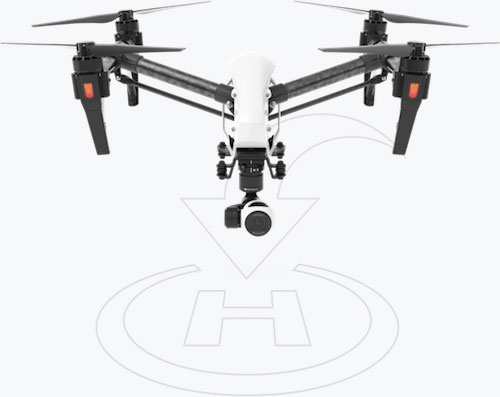
    Inspire drone. (Image: DJI)
    Inspire drone. (Image: DJI)

    As usual, the DJI booth was extremely busy — with a demo area almost continuously flying each of the most popular DJI drones. What I learnt from my visit was that 70 percent of sales are recreational, and the balance is commercial. With quadcopters for hobbyists, using replaceable parts, auto-flight systems and data links, DJI was virtually the first drone manufacturer to market, and still one of the most successful. The Phantom now carries gimbal-mounted cameras and is finding lots of applications with business, academics and government agencies, including first adopters like the film and TV industry.

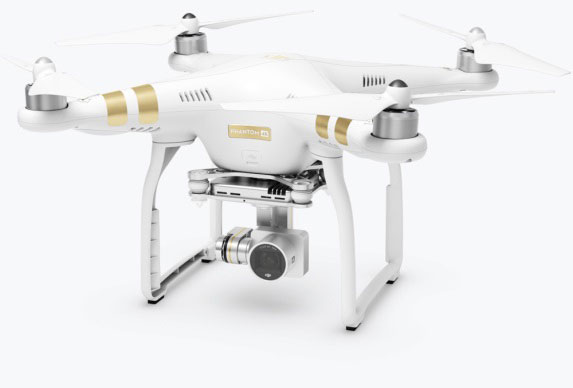
    Phantom 3 drone. (Image: DJI)
    Phantom 3 drone. (Image: DJI)

    DJI drones have weather resistant bodies, strong blades, swap-out easy-charge batteries, and ADS-B, RTK and heading capabilities. Set-up in the field is simple, with an SDK for lab developers, multi-spectral cameras for applications such as crop growth monitoring, real-time data available through the control uplink and infrared/visible slant-range outputs.

    DJI’s approach is to keep ahead of the competition by adding more and more technology over time, and the company clearly has the sales volume to support this strategy.


    CyPhy Works

    PARC tethered drone system. (Photo: Tony Murfin)
    PARC tethered drone system. (Photo: Tony Murfin)

    CyPhy Works makes and promotes tethered drones — enabling very long endurance reconnaissance/forward observation/inspection/communications. The company got into this specific drone niche because it found customers who couldn’t live with short duration battery-restricted drone operations.

    For ground forces, having a real-time video overview from higher altitude is of great benefit; similarly, they’re of great use for disaster recovery efforts, such as in the aftermath of hurricane Harvey in Texas. And if you add a Wi-Fi transducer working through one of two payload ports on its PARC (persistent aerial reconnaissance and communications) platform, you can also reconnect survivors and provide a comms network for first responders.


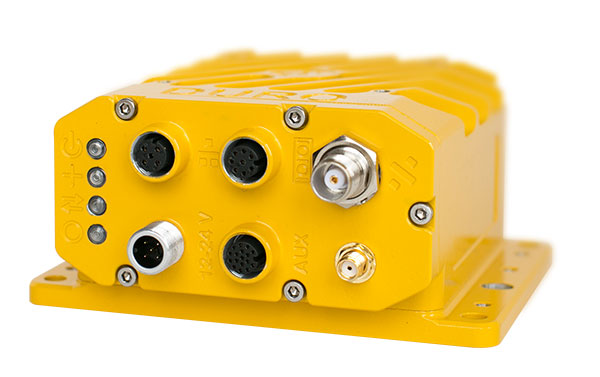
    Ruggedized Duro receiver. (Image: Swift Navigation)
    Ruggedized Duro receiver. (Image: Swift Navigation)

    Swift Navigation

    Swift is a relatively new GNSS receiver manufacturer, and its Piksi Multi receiver has a lot to do to catch up technically with the products offered by the predominant players in the market. So its approach is to use rock-bottom pricing for almost all of their offerings. Currently, the Piksi has only GPS L1/L2 and GLONASS L1/L2 plus SBAS, but Galileo and BeiDou are promised for later this year.

    The new Swift capability launched at the show is Skylark, a cloud-based, hybrid PPP/RTK network currently testing in around six U.S. areas and planned for national and even worldwide coverage sometime in the future. Skylark is apparently cellular, with a large number of base sites, each equipped with a Swift Duro receiver. With a target subscription price of only $495 per year, this could be a popular GNSS assistance service, provided you use compatible Swift receivers in your application.

    Swift is targeting automotive applications, and has a San Jose trial underway with Voyage at a retirement community — residents call for a self-driving taxi using a cell-phone app, and get transport anywhere in the 4,000-strong community. A similar trial at the Villages in Florida (125,000 residents and 750 miles of roads) is also apparently getting underway.


    Hemisphere GNSS

    Vector 500 Smart Antenna. (Photo: Hemisphere GNSS)
    Vector 500 Smart Antenna. (Photo: Hemisphere GNSS)

    Hemisphere GNSS was also at the show with its line of GNSS receiver solutions for UAVs, Atlas Correction Service and a new V500 Heading/Smart Antenna.

    The Vector V500 is an all-in-one multi- frequency, multi-GNSS smart antenna that provides RTK-level position and precise heading. The latest generation of Hemisphere’s heading antennas now appears with an integrated GNSS receiver and a rugged design sealed for the harshest environments — a design that has evolved over many years. It takes a great deal of sweat and tears to get to a reliable weather-hardened product, and Hemisphere has no doubt incorporated a lot of experience into this latest product.

    Atlas corrections are derived from public JPL data and are supplied worldwide over Inmarsat L-band satellite transmissions.


    Harxon Corporation

    D-Helix antenna. (Photo: Harxon)
    D-Helix antenna. (Photo: Harxon)

    Harxon’s D-Helix antenna got lots of attention at its booth, as did the OEM frequency-hopping transceiver. The D-Helix antenna supports GPS, Galileo, BeiDou and GLONASS, as well as L-band signal reception. With low wind resistance and ruggedized IP67 protection, this antenna appeared to be very popular at the show for UAV applications.

    The frequency-hopping OEM transceiver works over 840-900 MHz and weighs in at only 5 grams. With anti-jamming and wide signal capability, this miniature device is designed for complex data-intensive applications. In full duplex mode, secure data transmissions are possible over long distances with low latency. The popularity for this transceiver at the show might be connected with a recent FAA proposed rule that would require transmission of a drone’s registration ID for remote identification.


    More

    Other neat products and applications the GPS World team came across at the show included:

    • Topcon’s B111 multi-constellation GNSS receiver and the Topcon-distributed Sirius Pro fixed-wing UAV and Intel Falcon 8+ quadcopter;
    • the Rockwell Collins aviation Flight Management System, which is apparently being incorporated into the General Atomics commercial Flight Guardian system;
    • Northrop Grumman’s project, which is tracking polar bears with UAVs in Northern Canada on behalf of the San Diego Zoo;
    • the senseFly eBee series of drones with automated mapping capability and a BVLOS (beyond visual line of sight) trial in Canada with in-flight data — more on this later.


    GPS World will bring you a special UAV supplement later in the year, and we will carry more news and details on selected manufacturers and applications within this exciting and ever-expanding drone industry.

  • Topcon’s new data controller offers better speed and power

    Topcon’s new data controller offers better speed and power

    Topcon Positioning Group has introduced the T-18 handheld controller, which is designed to drive geopositioning, construction, mapping and vertical construction applications.

    The controller includes a 3.7-inch sunlight-readable display with a 1-GHz processor, 1 GB of internal storage and up to 10 hours of battery life, the company said.

    For data collection using Topcon’s MAGNET Field software, the T-18 controller offers a durable ergonomic solution with fast processing, a large screen, excellent connectivity and a long battery life.

    Topcon MAGNET Field software offers a complete field solution for geopositioning professionals, enabling users to collect survey mapping data and perform construction and road layout using total stations, levels and GNSS receivers.

    The T-18 features a 3.5G cellular modem for connectivity with Topcon MAGNET solutions for sending and receiving data to the cloud company account.

    “The cellular option makes it easy to communicate with field crews when projects need to be changed or if important data is required back in the office. Additionally, the modem can be used for RTK (real-time kinematic) correction services,” Kerwin said.

    Other key features include standard Bluetooth and Wi-Fi connectivity, as well as an IP65 rating for dust and water protection in demanding job site conditions.

  • Topcon announces payload updates at Xponential 2018

    Topcon Positioning Group’s Dave Henderson explains how Topcon’s products are integrated in Intel’s Sirius Pro fixed-wing UAV and Falcon 8+ drone at Xponential 2018 in Denver. Henderson also gives an overview of the new Topcon payloads that will be available for the Falcon 8+.

  • Topcon’s new laser designed for construction projects

    Topcon-RL-H5 series-WTopcon Positioning Group has added a new laser series to its RL-H line of self-leveling rotating lasers.

    The RL-H5 series is designed for high-accuracy and long working range in laser applications for grading, excavating and general construction projects. The new offering includes instruments to support diverse jobsite demands.

    Lasers in the series include options in working range of up to 800 meters and up to 100 hours of battery life. The RL-H5A with ±1.5 mm at 30 m horizontal accuracy will be available in the Americas, Europe and Oceania. An additional option, the RL-H5B, with ±3 mm at 30-m horizontal accuracy, will be available in the United States and Oceania.

    RL-H5 series-closeup-W“The RL-H5 builds on what Topcon has been bringing to the market for years and pushes the contractor’s productivity capabilities to the next level. It is another example of our commitment to The Intersection of Infrastructure and Technology, the point at which construction productivity can be improved by applying advanced positioning technology,” he said.

    The series is covered by the five-year guarantee on Topcon manufactured lasers.

  • Topcon, Bentley Systems kick off Constructioneering Academy

    Topcon Positioning Group and Bentley Systems announced the kick-off date of their collaborative Constructioneering Academy initiative. The first session is scheduled for Feb. 13 in Livermore, California.

    Topcon and Bentley have joined efforts to provide opportunities designed to allow construction industry professionals to learn best practices in constructioneering, a process of managing and integrating survey, engineering and construction data, to streamline construction workflows and improve project delivery.

    “The courses are designed in a dialogue format to allow Topcon and Bentley personnel to interact directly with attendees to cater the experience for their specific questions and demands,” said Ron Oberlander, senior director of Topcon Professional Services. “The future of construction automation continues to move forward with constructioneering digital workflows, which make the work of surveyors, engineers, and construction professionals automated, continuous, and continuously more valuable, throughout project lifecycles and beyond completion.”

    “Topcon and Bentley’s federated constructioneering technologies enable firms to gain unprecedented digital visibility and insights into their project outcomes, as compared to traditional construction workflows. Attendees of our Constructioneering Academy will learn how their organizations can improve project delivery by leveraging constructioneering technology, methods, and best practices to execute their projects more efficiently, monitor construction performance and progress, and reduce project costs,” said Vinayak Trivedi, Bentley Institute vice president.

    The Constructioneering Academy will continue with additional sessions throughout learning centers located worldwide designed to reach industry professionals with hands-on training in real-world scenarios and workflows.

    To register, visit constructioneering.com.

  • Topcon features latest software at Intergeo 2017

    Topcon Positioning Systems’ Scott Langbein discusses the company’s Magnet Collage software at Intergeo 2017, which took place Sept. 26-28 in Berlin, Germany. According to the company, Magnet Collage provides data processing of otherwise disparate data sets into one 3D environment that can accommodate laser scanner, mobile scanning and mapping, road resurfacing scanners and photogrammetric point clouds.

  • Topcon announces connectivity enhancements with Bentley Systems

    Topcon Positioning Group announces advances in its direct communication between the Bentley Systems design applications and the Topcon suite of software solutions with the release of MAGNET 4.3.1.

    The MAGNET Enterprise Data Manager is designed to allow operators to directly access Bentley ProjectWise data with MAGNET Field, MAGNET Office or MAGNET Enterprise applications.

    “The updates are part of our commitment to working with third-party software applications, such as the Bentley offering, to provide efficient data exchange and a seamless workflow environment,” said Jason Hallett, Topcon vice president of global product management. “When connected to MAGNET Enterprise from MAGNET Field, you can directly upload and download data from ProjectWise, allowing surveyors or machine control model-builders upload or download iModels or other project file types.”

    The integration is designed to simplify data transfer from design to field, with the unique ability to read and import only the data users need for their projects.

    “It builds upon our industry-first ability to offer ‘round trip’ iModels — sending them directly to field operators who can use and update them directly on the jobs site, and then send the updated iModels from the field back to Bentley ProjectWise,” Hallett said.

  • Topcon upgrades SmoothRide road data-collection software

    Topcon Positioning Group is updating its data-collection software for the SmoothRide resurfacing workflow solution. RD-M1 Collect 2.0 includes updates designed to facilitate and optimize mapping of road conditions.

    Topcon is exhibiting at Intergeo 2017 in Hall 2.1, Booth A2.008, and in Hall FG, Booth 005. Intergeo takes place Sept. 26-28 in Berlin, Germany.

    The improvements feature an improved interface that is designed to simplify setup and automatically detect the position of the wheel sensor during data collection, the company said.

    An RD-M1 Collect 2.0 graphical interface status bar indicates the optimum speed for collecting road information based on project requirements, helping the software deliver the best results for the project.

    Memos is a new feature designed to allow operators to create balloons with messages on the map while collecting data that also can be made visible in the processing software, enabling specific site conditions to be noted for future reference.

    The new Manage Runs feature is designed to enable operation without necessitating Windows explorer to be open.

    Large buttons make using a tablet or laptop with touchscreen easy. Operators can copy data collections to a USB drive, delete them from the hard drive, and add or remove them from the manager.

    The RD-M1 Collect 2.0 new Plan Route feature allows for the import of kml files of predetermined routes, designed to ensure nothing is missed on the drive.

    Using the new map downloader, operators can have all map details visible while collecting data, without an internet connection. Overlapping locations can be managed by creating areas where predefined overlaps are required for the project.

  • Sokkia GNSS receivers now integrated with TerraGo Magic

    Sokkia GNSS receivers now integrated with TerraGo Magic

    GCX3

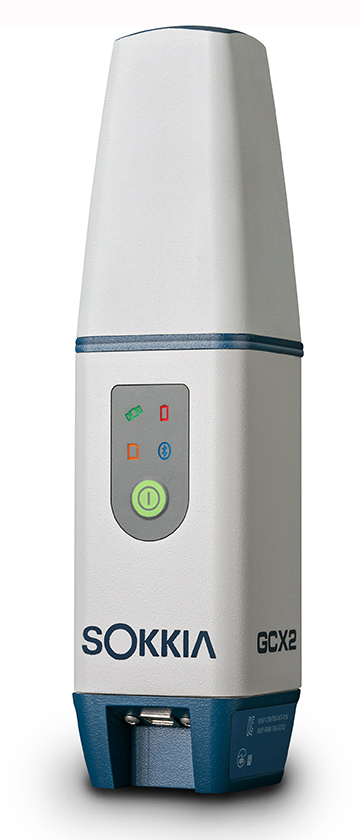
    TerraGo Magic now offers advanced integration and support for the Sokkia line of GNSS receivers, including the new GCX3.

    TerraGo Magic is a zero-code platform-as-a-service that enables customers to build their own custom mobile apps without writing any code by choosing from a menu of available, field-tested features.

    Featuring advanced constellation tracking and longer range base to rover communication, the GCX3 offers lightweight, compact and ergonomic benefits — along with centimeter-accurate positioning — now with expanded satellite tracking capabilities.

    “The GCX3 features the new second generation POST2 integrated antenna – adding BeiDou, Galileo, SBAS, QZSS, and GAGAN satellite tracking in addition to GPS and GLONASS to provide users with the best positioning availability,” said Jason Tuck, branch manager at Topcon Solutions. “With TerraGo Magic, users can build their fully customized apps, tailored for their specific industry requirements and capture high-precision data in real-time from the receiver.”

    “TerraGo Magic custom apps combined with the Sokkia GCX3 receiver is a superior solution for our partners and customers in utility, energy and other industries that require high-accuracy data collection,” said John Timar, vice president of worldwide sales at TerraGo. “Our integration makes it possible to capture the full fidelity and GPS data record with a user experience and modern mobile features unmatched by legacy GPS data collectors.”

  • Firm’s UAS experts provide runway data to Atlanta Airport

    Consulting firm Michael Baker International has partnered with the Hartsfield-Jackson Atlanta International Airport (ATL) to use unmanned aerial systems (UAS) to inspect runway conditions.

    The mission’s use of drones on the airfield of an international airport in the United States during daily airport operations is a first, according to the company.

    Michael Baker is partnering with ATL on a pavement evaluation project and identified an opportunity for the innovative use of UAS to collect information on the condition of the runway pavement. This method provides a large amount of data for the teams to analyze and can help document the runway for future rehabilitation and improvement decisions.

    It also presents a time and cost savings for the airport as it would take less than half the time to complete compared to the traditional approach of manually photographing the physical condition of the runway, which can take more than four hours.

    The Michael Baker UAS team used a Topcon Falcon 8 aircraft to conduct the drone flight in mid-March and surveyed more than 3,000 linear feet of runway. The mission was conducted on the international Runway 9L/27R and was completed in less than 20 minutes, gathering approximately 630 photos of the airfield. This runway, the longest at the airport at 12,390 feet, typically carries the heaviest aircrafts, which cause the most pavement damage and safety concerns.

    “Michael Baker and the Hartsfield-Jackson Atlanta International Airport have had a strong relationship for more than 14 years, collaborating on innovative and effective projects,” said Quintin Watkins, aviation program manager in Michael Baker’s Norcross, Georgia, office. “This was a great opportunity for our experts in geographic information systems to assist the airport with a unique challenge. The information we successfully gathered during this flight will give the airport valuable insight on the ongoing safety and maintenance of the airfield. We hope to find ways to conduct similar missions with the airport in the future.”

    To plan for the project, Michael Baker obtained approval from the Federal Aviation Administration (FAA) to conduct UAS operations in Class B airspace at ATL. The FAA waiver is active for four months and requires the airport to be in a west flow condition, to establish two-way radio contact and to close the runway at the time of the flight.

    During this and future missions, the team can generate contours, orthomosiac imagery, RGB 3-D textured mesh and a digital terrain model (DTM). This data can then be analyzed by the Michael Baker and airport teams using engineering software such as Autodesk, Esri and Bentley, and can help determine future needs to improve and maintain the runway conditions.

    Earlier this year, ATL also conducted a drone flight over its parking deck to identify areas for reconstruction. ATL, known as the world’s busiest airport, serves more than 104 million passengers annually and offers nonstop service to more than 150 domestic and nearly 70 international destinations.

  • Topcon’s new GNSS receiver boards have expanded constellation tracking

    Topcon’s new GNSS receiver boards have expanded constellation tracking

    Topcon Positioning Group has launched two new full constellation GNSS receivers for the original equipment manufacturer (OEM) market. The new B111 and B125 boards are designed for use with a broad range of positioning applications.

    Topcon_B125_Receiver-WThe boards utilize the GPS, GLONASS, BeiDou and Galileo constellations with the B111 tracking signals in the L1 and L2 frequency band, while the B125 adds signals in the L5 band. Both boards are designed to provide scalable positioning from sub-meter DGPS positioning to sub-centimeter RTK positioning.

    “The new boards both include 226-channel Vanguard Technology with Universal Tracking Channels, for reliable ‘all-in-view’ and ‘future-proof’ tracking,” said Jason Hallett, vice president of Topcon global product management. “The addition of BeiDou and Galileo constellation tracking along with GPS, GLONASS, SBAS and QZSS functionality ensures the boards provide the best performance available.

    “The dual-frequency B111 board has very low-power consumption and flexible communication interfaces, making it easy for OEMs to integrate the compact board into any precise positioning application, reducing their time to market,” Hallett said. “The B111 is also form, fit and function compatible with its predecessor, the B110, allowing a plug-and-play upgrade option to track BeiDou and Galileo.”

    The board also includes an SD-card interface designed to provide quick and easy support for datalogging in addition to Quartz Lock Loop technology for superior GNSS tracking in high-vibration environments.

    “The B125 board offers Ethernet connectivity for options for advanced OEM integration,” Hallett said.