Blog

  • VectorNav to Supply VN-200 GPS/INS to Troll Systems

    VectorNav to Supply VN-200 GPS/INS to Troll Systems


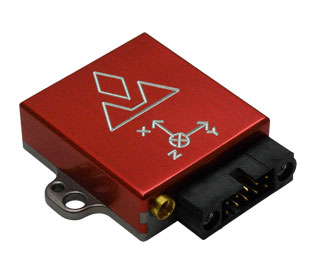
    Vector Technologies VN-200
    VectorNav Technologies VN-200.

    VectorNav Technologies, a provider of inertial navigation solutions for the industrial and military markets, announced Tuesday that it will supply its VN-200 GPS-aided inertial navigation system (GPS/INS) for use in Troll Systems’ SkyLink MINI II directional antennas. The next-generation version of the SkyLink antenna provides Troll Systems’ customers with a lower-cost and easier to integrate update to its existing SkyLink antenna solution, the company said.

    VectorNav made the announcement at AUVSI’s Unmanned Systems North America 2013 Conference, August 12-15, in Washington, D.C., where both companies are exhibiting.

    About the size of a postage stamp, VectorNav’s VN-200 is a calibrated MEMS-based GPS/INS that provides a coupled position, velocity, and attitude solution suitable for a wide range of static and dynamic operating conditions. The VN-200 incorporates an onboard high sensitivity 50-channel u-blox GPS module. The microprocessor runs an aerospace-grade Kalman filter algorithm at a rate of up to 200 hertz and provides accuracies better than 0.25 degrees in pitch and roll and 0.75 degrees in heading. The upgraded version of Troll Systems’ SkyLink MINI II antenna features a deeply embedded, surface mount VN-200 GPS/INS module that delivers control and stabilization for the gimbaled antenna system.

    The only airborne directional antennas to pass DO-160 testing, Troll Systems’ SkyLink antennas are compact, lightweight and steerable airborne tracking antennas that equip its users with an industry leading air-to-ground data-link solution. The upgraded SkyLink antenna system featuring the VN-200 GPS/INS enables Troll’s customers to eliminate the need for external hardware or GPS input, reducing the cost of installation and the need to certify or calibrate external positioning devices.

    The performance of the VN-200 GPS/INS enabled the upgraded antenna system to maintain the high degree of accuracy required to replace the existing SkyLink navigation system, which was comprised of a Quartz MEMS-based attitude heading reference system (AHRS) and high-end GPS receiver, VectorNav said. Several rounds of ground and air testing and qualification with engineers from both teams demonstrated the capacity of the miniature MEMS-based GPS/INS solution to provide high performance in high dynamic conditions and when subjected to high-frequency vibration. VectorNav worked closely with Troll Systems to implement several features to add to the robustness of the solution, including an embedded magnetic hard and soft iron calibration routine and dynamic start-up routine.

    “We are very pleased to be working with Troll Systems on their SkyLink line of antennas, which represent the gold standard for directional antennas in the industry,” said John Brashear, VectorNav’s President. “We are also proud to demonstrate the capacity of our VN-200 GPS/INS to provide a solution comparable to much higher-end systems and for an application that has very demanding and sophisticated navigation and control requirements.”

  • Bliley Offers Oven-Controlled Crystal Oscillators

    Bliley Offers Oven-Controlled Crystal Oscillators

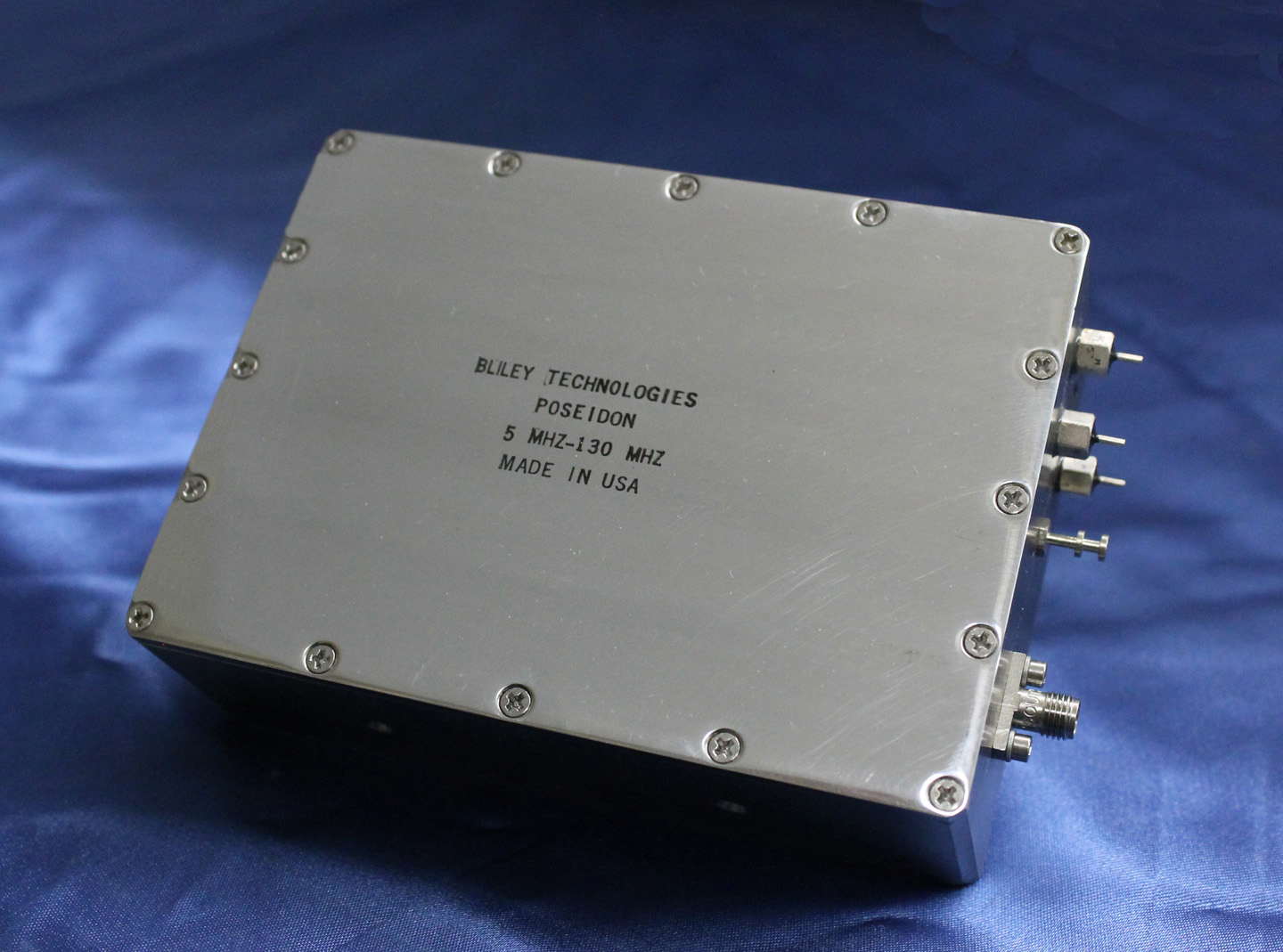
    Photo: Bliley

    The rugged Poseidon Series of OCXOs by Bliley features unparalleled phase noise performance in a modular type sealed package. It is a customizable frequency range product specifically designed for vibration-prone environments where dynamic phase noise performance is paramount. Applications include ground mobile, airborne, and shipboard environments.

    Features include typical acceleration sensitivity of <2e-11/g, excellent FvT performance, frequency range of 5 MHz to 130 MHz, ultra-low static and dynamic phase noise, and excellent long-term aging.

  • Panasonic Offers Durable Antennas for Wireless

    Panasonic Offers Durable Antennas for Wireless

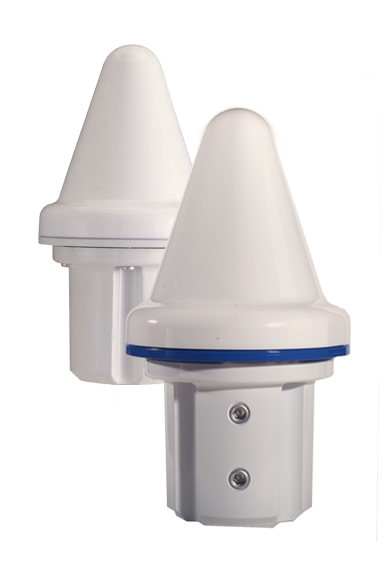
    The VIC100 Series antenna by Panasonic

    The VIC100 Series antenna by Panasonic is an active L1 GPS antenna designed for timing and synchronization. It offers immunity to noise and interference, and secure performance by attenuating noise and interference near the GPS L1 frequency through triple-filtering design.

    The VIC100 Series is housed in a waterproof enclosure designed for excellent performance under severe environmental conditions. Its shape prevents accumulation of snow and ice, eliminating problems with bird perching and enhanced immunity to lightning surge.

  • Frontline Offers GNSS Emulator

    Frontline Offers GNSS Emulator

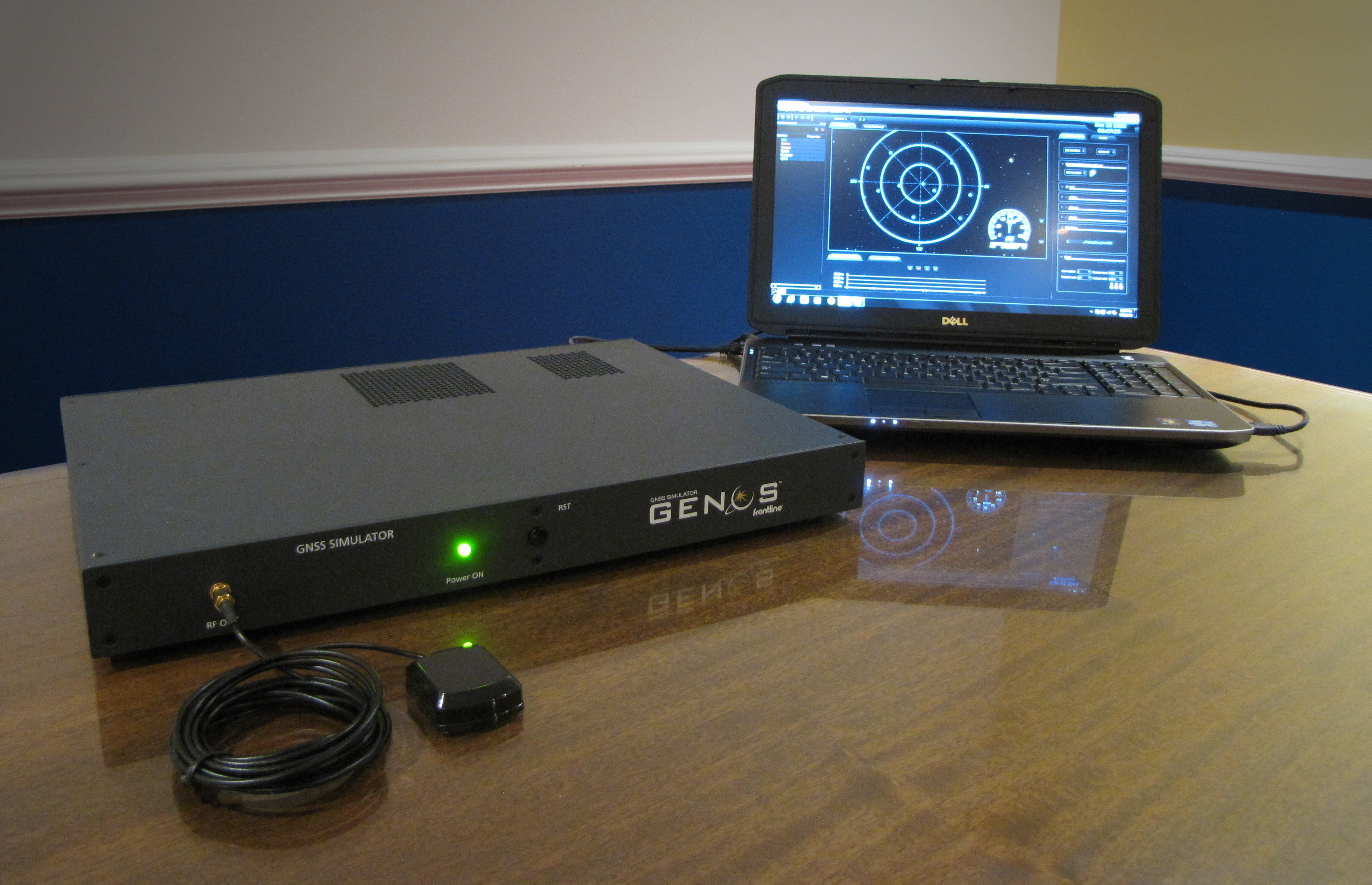
    Photo: Frontline Test Equipment Frontline Test Equipment is now offering the Genos GNSS Simulator, a high-dynamic, flexible signal emulator for testing satellite navigation functionality. It is able to emulate satellite signals visible to GNSS receivers for any location around the world, including GPS, Galileo, GLONASS, Beidou, and SBAS (WAAS and EGNOS) signals.

    The simulator helps the user evaluate the performance and characteristics of a GNSS receiver, including time to first fix, acquisition sensitivity, tracking sensitivity, and location accuracy. Also, Genos provides scripting options for creating test configurations that start, stop, raise, and lower attenuation and simulate the various dynamics indicative of cars, airplanes, pedestrians, and other modes of transportation and movement. These customized test configurations can be defined using the Genos user interface or through a script file.

  • Septentrio’s GNSS Heading Receiver Integrates with Tethered Aerostat Systems

    Septentrio’s GNSS Heading Receiver Integrates with Tethered Aerostat Systems

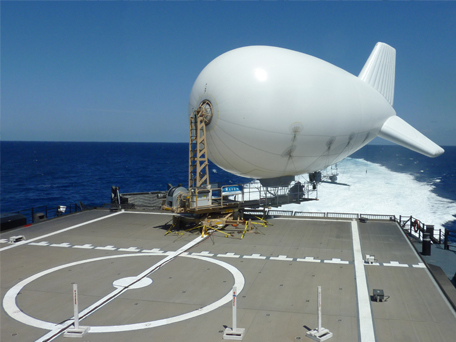
    Raven Aerostar has integrated Septentrio's AsteRX2eH into its tethered aerostat system.
    Raven Aerostar has integrated Septentrio’s AsteRX2eH into its tethered aerostat system.

    Septentrio announced today that Raven Aerostar, a manufacturer of Lighter-Than-Air (LTA) platforms, has successfully integrated Septentrio’s AsteRx2eH, a single-board dual-antenna GPS/GLONASS heading receiver, into its tethered aerostat systems.

    Raven Aerostar recently completed a maritime persistent surveillance solution demonstration, deploying a TIF-25K aerostat system aboard the High-Speed Vessel — SWIFT (HSV-2), during which the AsteRx2eH performed remarkably, according to the companies. Integrating the single-board AsteRx2eH dual-antenna receiver to replace a solution based on two separate GNSS receivers allowed Raven Aerostar to achieve a reliable and accurate heading solution while also decreasing deployment time and total cost of GNSS sensors.

    The AsteRx2eH provides a compact and low-power solution for precise positioning combined with accurate heading information, produced at a high output rate. The tracking of both GLONASS and GPS satellites allows the receiver to improve the availability and robustness of a solution in challenging environments.

    The AsteRx2eH is a globally acclaimed OEM solution with field proven performance for land, marine and aerial applications, Septentrio said. It is used onboard helicopters and aerostats during stabilized flights hovering at low dynamics, where inertial sensors cannot easily provide a drift free solution. Another application is delivering reliable heading information for driverless ground vehicles, even at very low speeds.

    “From its user interface to its accuracy and durability, Septentrio’s AsteRx2eH receiver has proven to be an exceptionally stable system,” commented Patrick Lokken, Engineering Technician at Raven Aerostar. “We have integrated the AsteRx2eH into our lighter-than-air applications in multiple environments including desert and maritime, and have yet to see it falter.”

  • Accord Debuts NexNav GPS Tech at AUVSI Convention

    Accord Technology, maker of NexNav products, is debuting its capabilities for enabling fully FAA compliant GPS for Detect and Avoid at the AUVSI Unmanned Systems annual convention, being held in Washington D.C. August 12-15.

    Known for its certified, U.S. FAA ADS-B fully compliant GPS WAAS/SBAS sensors and receivers for NextGen solutions in the airline, business and general aviation industries, NexNav products include OEM circuit-card assembly receivers the size of a credit card as well as line replaceable sensor units.

    This is the company’s first time exhibiting at the AUVSI conference.

    “We are excited to be exhibiting at this show and I believe our NexNav products will fill a niche that the unmanned aircraft need,” commented Hal Adams, Chief Operating Officer for Accord Technology, LLC. “Our NexNav product already meets FAA requirements and us currently flying on many manned platforms as well as on EU UAS platforms now. I look forward to talking with attendees about the Detect and Avoid GPS solution NexNav can provide them.”

    Accord Technology received TSO-C145c for its NexNav mini in 2010, and fully qualified as GPS source per the U.S. FAA ADS-B Advisory Circular 20-165. The NexNav mini GPS technology was the first GPS WAAS sensor to be authorized U.S. FAA TSO-C145c WAAS Class Beta-1 ONLY. It is a market-breaking hybrid of automotive technology and aviation requirements providing an affordable solution for ADS-B GPS source, Accord said.

  • TerraStar GNSS Establishes Base at Nottingham University’s GRACE Facility

    TerraStar GNSS, a supplier of precision positioning services for land and near-shore applications, has established a base at Nottingham University’s GNSS Research and Applications Centre of Excellence (GRACE). GRACE operates operates under the auspices of its Institute of Engineering Surveying & Space Geodesy (IESSG).

    TerraStar GNSS maintains and controls a worldwide network of more than 80 GPS and GLONASS DGNSS reference stations and associated control centers on behalf of a diverse range of users. Under the collaborative venture, TerraStar GNSS will contribute and have access to GRACE’s support facilities. These include customized incubation units, project offices, state-of-the-art test equipment, secure research and development laboratories, and dedicated training suites.

    Expected projects include joint research and development of new GNSS-type solutions, in addition to provision of support for continued commercial exploitation of academic research endeavors. Also available will be mutual access to general geospatial expertise consistent with TerraStar GNSS’ present capability of providing year-round meter and decimeter-levels of precision for both land and aerial survey applications using software and a series of advanced purpose-designed integrated receivers.

    Headed by General Manager Gary Wilcock, TerraStar GNSS’s new base facilities are at Office A03, The Nottingham Geospatial Building, University of Nottingham Innovation Park, Triumph Road, Nottingham NG7 2TU, UK.

  • HERE Delivers Precise Indoor Location Content to Qualcomm

    HERE announced that it will make available its indoor Venue Maps to Qualcomm Atheros, Inc., a subsidiary of Qualcomm Incorporated. Leveraging indoor map data from HERE that is tightly coupled to the core indoor positioning engine will help Qualcomm IZat location technologies deliver more precise positioning (within 3-5 meters) to mobile devices inside buildings. Improving the overall indoor location experience for consumers, this combination is expected to accelerate the development and use of compelling location-based experiences as well as promotions in shopping malls, transportation hubs and entertainment venues around the globe.

    “In our quest to deliver location awareness everywhere, Qualcomm Atheros is propagating indoor location capabilities to ensure the best possible experiences in a wide variety of places,” said Cormac Conroy, vice president of the mobile, computing and location business unit at Qualcomm Atheros. “Our collaboration with HERE complements the capabilities of our IZat location platform to deliver the exceptional accuracy that is required for businesses and app developers looking for ways to reach mobile consumers and create additional revenue opportunities from location-based services.”

    HERE_indoor_maps

    To map buildings, HERE reports that mapmakers visit venues from airports to zoos to sports complexes, museums and other facilities around the world to ensure map data is precise and no detail is forgotten. They collect building floor plans and then validate against the real world which includes double-checking the names of points of interest and ensuring that rich features such as ATM machines, restrooms and escalators are included.

    “Indoor spaces are among the new frontiers in mapping and HERE is uniquely positioned to bring its global leadership in outdoor mapping to inside venues,” said Cliff Fox, senior vice president of Location Content at HERE. “Not only have we been the first to map some of the most recognized buildings in the world, but we also offer the world’s broadest coverage of indoor spaces with currently more than 9,000 venues consisting of 50,000 unique buildings mapped in 69 countries. With our continuously expanding reach in coverage and focus on efforts to improve accuracy, we can support Qualcomm Atheros in its quest to provide access to accurate location information and services to consumers as they move about venues.”

    Venue Maps complement Qualcomm Atheros’ end-to-end IZat indoor positioning capabilities to deliver always-on location awareness to mobile devices in more places. IZat is comprised of Qualcomm Atheros’ broad technology portfolio, including cellular, global navigation satellite system (GNSS), Wi-Fi, sensor and cloud-based assistance solutions, as well as its widely deployed location core, already found in more than one billion devices on mobile networks worldwide.

  • Metaio & Audi AG Release Interactive Augmented Reality Manual for Audi A3

    Metaio and AUDI AG announced the release of the Audi A3 eKurzinfo augmented reality mobile application, available for free download on iOS devices.

    The new app can recognize over 300 individual elements of the Audi A3 – from the insignia on the windshield wipers and entertainment system to actual engine components under the hood – in order to return relevant how-to information or even virtual overlays of maintenance instructions animated in real-time 3-D. Metaio’s cloud-based architecture pushes digital information directly to the device, meaning the user will never have to update the app.

    According to the announcement, the new design of the Audi A3 eKurzinfo app brings the most intuitive user experience with it: using Metaio’s latest 2-D and 3-D augmented reality tracking technology, the user positions the camera of the mobile device directly over individual vehicle elements, instantly detecting and returning information on the desired subject. For example, after scanning the engine compartment, the app would return information with an animated overlay showing how to locate the engine coolant and refill it to the appropriate level.

    In the future, Metaio sees visualization technology decreasing the need for lengthy, costly and complex user manuals. Car owners should be able to access information instantly and directly from the car itself.

    “After the remarkable success of the first version of the eKurzinfo application, we are delighted to continue our partnership with the Audi AG. We see enormous potential in the field of interactive service applications. In the future it will be possible to automatically retrieve the specific information relevant in a certain situation”, Dr. Thomas Alt, CEO of Metaio.

    The Audi eKurzinfo app is available in English, German and Japanese.

  • Topcon Announces Upgrade to Reference Station Network Software

    Topcon Announces Upgrade to Reference Station Network Software

    Photo: Topcon

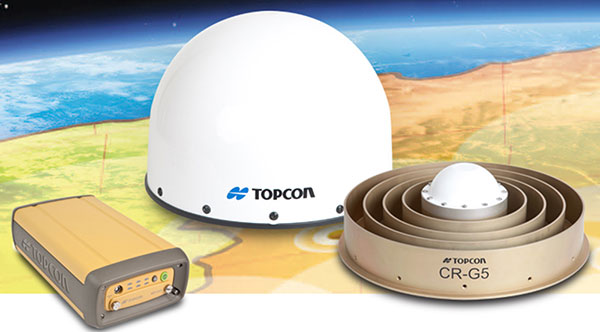
    Topcon Positioning Group announces new reference station network software — TopNET+ v10 — bringing new features and functionality to the TopNET+ reference station software suite.

    Topcon’s TopNET+ software is a scalable solution supporting everything from a single CORS station to multiple CORS sites covering a large geographical area. Users of a TopNET+ reference network get GNSS RTK correction data generated using information from all reference stations in a network. This feature allows regional use of RTK while providing data that is specific for each local rover, Topcon said.

    New features available in the latest TopNET+ v10 include:

    • Custom sub-networks based on a rover’s position within a larger regional network, which better supports the network RTK rover to local field conditions;
    • RINEX (Receiver Independent Exchange Format) shop with expanded data management functionality for conversion of data from Topcon and third party reference stations connected to the network;
    • Background maps and BING Maps allow multiple perspectives of the network orientation and regional surroundings;
    • Expanded network RTK engine logging providing detailed metrics of TopNET+ results.

    “This upgrade of TopNET+ software provides increased capabilities and a more visual and detailed presentation of network status to the users of Topcon networks,” said Tom Morris, TPS senior product development manager. “Users will have a customized solution better adapted to local conditions and a better view into the hard processing and statistics being generated in TopNET+.”

  • Microsemi Unveils Timing Devices for Wireless Infrastructure

    Microsemi Corporation, provider of semiconductor solutions differentiated by power, security, reliability and performance, today announced the highest density family of single-chip timing card devices with support for both Synchronous Ethernet (SyncE) and IEEE 1588-2008 packet networks including 4G and LTE applications. The highly integrated ZL30361, ZL30362 and ZL30363 provide all of the key elements required for wireless network synchronization including support for phase and frequency. The devices are available today and are currently being designed into wireless backhaul products where phase synchronization performance is crucial.

    Microsemi’s new timing devices provide the high flexibility, small footprint (13mm x 13mm) and low cost compared to alternative solutions. Key features include the availability of up to four independent timing channels; each channel can be configured to support any electrical or packet mode of operation. This allows for the simultaneous support for GPS, SyncE and IEEE1588-2008 timing. As a result, these devices can be used to enhance or to replace GPS timing in wireless infrastructure at a lower cost.

    “Our new SyncE/IEEE1588 solutions provide customers with a highly compelling value proposition and very flexible architecture as evidenced by several product design-ins already in development by leading telecom companies,” said Maamoun Seido, vice president of Microsemi’s Timing Products group. “These offerings are indicative of the innovative products that have made us the No. 1 provider of network timing semiconductor solutions globally, and the new products in our pipeline will help solidify our leadership position.”

    SyncE and IEEE 1588-2008 technologies allow carriers to improve synchronization and performance in packet-switching networks including the fast-growing 4G and LTE segment, which, according to a report from market research firm Infonetics, is rising from $8 billion in 2012 to a forecasted $17 billion in 2016.

  • Real-Time 3D Models

    The Penultimate Visualization System?

    By Art Kalinski, GISP

    Last month we looked at old and new providers of oblique imagery.  I mentioned what a strong proponent I am of oblique imagery because it’s such a powerful visualization tool, easily comprehended by non-GIS users. My experience with police, firefighters and the Atlanta Regional Commission demonstrate that many first responders and politicians have difficulty reading blueprints, technical drawings or maps, but can visualize an area of interest much faster with oblique imagery.

    Jack Maguire, a colleague and GIS Manager for Lexington County South Carolina, coined a very descriptive phrase. He said that most non-GIS people have “map blindness,” in that they have difficulty comprehending maps even if merged with ortho imagery. However, those same users will have no difficulty getting oriented viewing an oblique image. (See my July article for a more detailed explanation). That’s why both Google Earth and MS Bing now include oblique views and even some interactive 3D models for a growing number of urban areas.

    Most oblique imagery data sets are generally limited to four cardinal directions along with an ortho view. That’s why I believe 3D models are a notch above, because they offer infinitely adjustable oblique views for even better visualization. It’s the oblique views that are the key attraction of 3D models. If you observe someone using an interactive 3D model, they almost always look at multiple oblique views. I’ve never seen a 3D model user navigate to the ortho view and stay there as they navigate around a city.

    PLW Modelworks

    There are many ways to create 3D models, ranging from manually produced models using CAD/CAM/BIM/GIS programs to fast simple 3D modeling tools such as Google Sketch Up. Over the years there have been many vendors in the business of building 3D models, some extremely detailed and sophisticated. In my opinion the best 3D models being produced are from PLW Modelworks.  Their models are very detailed, photo realistic and photo accurate. There is a precision and “correctness” to their models that is missing from many other models I’ve seen.

    Most of their models are built from measurements taken directly from Pictometry metric oblique imagery. The same oblique imagery is then “draped” on each building face resulting in 3D models that are true to life and fully measurable, including length, width, height and even angular measurements from one building roof to another. This YouTube video will give you an appreciation for their models.

    One aspect of PLW models important to first responders and military operators is that no part of any building in their models is cloned, textured or faked. The buildings are draped with the actual building image. If all or part of a building is occluded, then the PLW people indicate that as a black “no-data” area that looks like a black shadow. That way operators know that any window or door that is visible on a building is actually there and measurable.

    Street Factory

    A recent addition to 3D modeling is Street Factory by Astrium Services, which does automated 3D models as complex TINs built from existing oblique imagery. The process is advertised as photogrammetrically corrected for high accuracy with a quick turn-around in the range of several hours. Unlike PLW models where each building is a separate object in the database, Street Factory models are one continuous surface requiring extra processing tools to extract individual buildings/features and link to attributes. See the brochure for additional information. I hope to personally see their system and products soon and will let you know what I learn and observe.

    Although PLW and Street Factory models are the state of the art, there are some limitations. It does take time to build the models ranging from hours to weeks if the area is large and complex. If new imagery has to be captured, the aerial flights can add significantly more time to the entire process. So, for my GIS budget, the ultimate “holy grail” of visualization would be accurate, high resolution, full color, interactive and measurable 3D models that are easy to produce and close to real time.

    Well, hang on to your surveyor’s helmet; that time has arrived.

    Ball Aerospace FLASH LiDAR

    For several years, I’ve observed refinements of a technology developed by Ball Aerospace called FLASH LiDAR. Simply put, Ball Aerospace created the ability to capture continuous rapid multiple LiDAR images/point clouds merged with continuous high-resolution optical images to create full-color 3D models in real time. Yes, real-time full motion video resulting in interactive geo-referenced metric 3D models.

    Shown here are screen shots of the system software showing the LiDAR data colored by height, the optical image captured at the same time, and the resultant full-color 3D model of the merged data in real time.

    The first time I saw the system was at GEOINT 2010 where the Ball engineers had their FLASH LiDAR running in sync with a video camera creating continuous 3D fused images. That first demonstration was somewhat crude but I could see the significant potential. They’ve continued to refine the system to a point where the models now look extremely good. This is one technology that needs to be viewed as video clips which you can access through the Ball Aerospace website.

    Since the capture process is fully automated, complexity is not an issue as both simple buildings and complex trees are modeled at the same speed. Since the resultant 3D model is assembled from multiple views, trees look like trees and not like bushes. Additionally, since the very accurate LiDAR point cloud is an intrinsic part of the capture process, relative and real positional accuracy suitable for targeting is continuously maintained. Another benefit of the integrated system design is that mounting the camera pod is not complex nor does the aircraft have to be modified. Installation is quick and easy on large or small fixed-wing aircraft and helicopters.

    The optical sensor can be a RGB, IR, low light, night vision or multi-spectral cameras. The resultant models can be down-linked to ground computers or hand held devices for real-time viewing and analysis.

    According to Roy Nelson, Ball’s Senior Advanced Systems manager, FLASH LiDAR is tailor made for time critical 3D mapping for critical missions, enhanced situational awareness, battlefield characterization, tactical mission planning and improved targeting. For emergency responders it can help with disaster response planning and event forensics. Roy also cited a discussion he had with an EOC manager who indicated that the real-time models could be a valuable tool to communicate with the public via television, kiosks or the Internet. Since the real time 3D/oblique images are easily comprehended by the public, he could show the actual progress of a fire or flood and communicate to the public evacuation needs and routes.

    The Future

    So, what will be the ultimate word in visualization? I saw two possibilities at recent GEOINT conferences. First, immersive virtual reality and augmented reality keep improving and are making deep inroads in many different applications. Second, Zebra Imaging, producers of compelling 3D holograms, may eventually have the real “killer” visualization product. Their ZScape holographic motion displays are full motion holographic 3D video displays that are still in the early stages of development. I can easily imagine where this Star Wars technology will be in five years when combined with real-time full motion 3D models.