Blog

  • Two Active GLONASS Satellites Could Cause Users Difficulties

    On day 53 (February 22) around 09:15 GPS Time, GLONASS 743 began transmitting on frequency channel 6 using almanac slot 8 (R08). It should replace GLONASS 701K (801) transmitting on frequency channel -5, previously using almanac slot 8. However, GLONASS 701K was not immediately switched off and/or did not switch slot numbers and continued to transmit on frequency channel -5 for several days, continuously identifying itself as a slot 8 satellite.

    While most receivers were just tracking GLONASS 743, some tracked both GLONASS 743 and 701K. While 701K was not in the broadcast almanac, it was transmitting ephemeris records identifying itself as a satellite in slot 8. The net result was that RINEX observation files from certain stations had a mixture of GLONASS 743 and 701K data, with no indication of which satellite was which. Of course, one could use expected Doppler shift and/or code/carrier rate of change to figure out which data records correspond to which satellite.

    Furthermore, the GLONASS navigation files from certain stations contained a mixture of ephemeris records from GLONASS 743 and 701K. For day 54, for example, GLONASS navigation files for 146 (non-MGEX) stations were available at CDDIS. A number of these did not contain any R08 entries, presumably because the corresponding receivers were set to not track unhealthy satellites. Some of the files contained R08 ephemeris records from earlier dates. These were ignored.

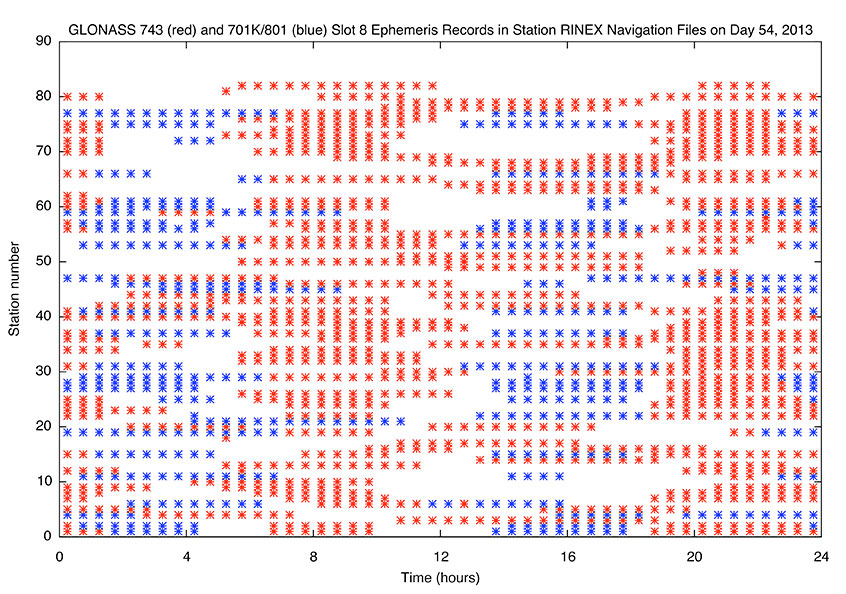
    This left 82 files containing either GLONASS 701K and/or 743 ephemeris records for day 54. These files were parsed to determine, for each file, for which times ephemeris records were available for which satellites. The results are summarized in the following plot (PDF available):

    glonass_slot8_in_nav_files_054_2013
    Results of Glonass

    The station numbers correspond to those in this table.

    The navigation files from 29 stations contain both GLONASS 701K and 743 records. It seems that JAVAD GNSS and Topcon receivers were primarily affected.

    Note that the CDDIS brdc***0.13g files on affected days have a mixture of GLONASS 743 and 701K ephemeris records, but at any one epoch, only one satellite is represented.

    Files from days 53 through 56 are affected.

    It appears that GLONASS 701K stopped identifying itself as a slot 8 satellite after about 15:15 GPS Time on day 56 and was not subsequently tracked by any station supplying data files to CDDIS.

    See also IGSMail-6734, “Irregular GLONASS constellation change (for R08).

  • BYO What?

    Every time I see a headline or read an article concerning BYOD (Bring Your Own Device) from a government source, where that source details only the risk associated with BYOD, especially where GPS/PNT (position, navigation and timing) is concerned, I am incredulous. Consider these recent BYOD headlines:

    • BYOD – Disaster Waiting for Government Networks
    • BYOD – Bring Your Own Disaster to the Government Enterprise
    • BYOD – Are the Military Networks Ready?
    • BYOD – Bring Your Own Destruction
    • BYOD – A Huge Security Risk?
    • BYOD – A Smart Choice or a Cyber Disaster?

    Historical Perspective

    The naiveté of the authors that penned these stories astounds me, as frankly they are out of step with the times by about 2,000 years. BYOD and the military go hand in hand. During Roman times, except for conscripts or slaves, Roman soldiers were expected to furnish their own supplies, their own weapons, their own horses and their own support. Often they brought their own slaves/servants to care for them in camp. In our (U.S.) Revolutionary War, many of the ragtag regiments were formed from state volunteers and local militias who were commanded by officers who, having paid for their commissions, supported the soldiers they brought to the fight, with food and uniforms; many were even expected to bring their own weapons and ammunition. The same applies to our (U.S.) Civil War, the War Between the States or the War of Northern Aggression, as my Southern colleagues are wont to constantly remind me.

    Since warfare began, warfighters have supplied their own equipment (BYOD), and today’s warfighters are no different, especially when it comes to personal electronic equipment, even though antiquated DoD (Department of Defense) regulations frown on such behavior. Hopefully you can see where I am going with this, especially as it relates to GPS/PNT user equipment. Unfortunately, DoD regulations also specify our warfighters in all services must utilize the government-supplied GPS equipment known as MUE (Military User Equipment), and even specifies the consequences of not adhering to that inane policy. Consequently, warfighters generally have the GPS MUE readily available if it is embedded, thereby avoiding the horrendous user interface, but they invariably also have their own personal GPS/PNT devices close at hand.

    These BYO-GPS-D are, without a doubt, more useful, certainly more user friendly, and actually provide a modicum of situational awareness, with such incredible features as actual moving color maps, annotated roads and rivers, up-to-date geographical features and even voice guided navigation — all features not available on the GPS MUE as a stand-alone unit today. Some PNT devices answer verbal inquiries from their users. Can you say, “Hi Siri, where am I?”

    Fast Forward: First Gulf War

    Consider the first Gulf War in 1990, which in GPS lore is touted in military aviation circles as the turning point for GPS transitioning from just another en route navigation system to a weapons systems multiplier and situational awareness tool that made believers of even the most jaded fighter pilots and land warriors. Suddenly fighter pilots and weapons systems operators were scoring “shacks” or direct hits on targets, on every sortie. Instead of using four bombs to hit one target, four bombs now equaled a direct hit on four targets — a phenomenal increase in accuracy, with minimal collateral damage, all due to the Global Positioning System.

    For land warriors, the famous “left hook” strategy, employed during the midst of a major, once-a-decade sandstorm that placed American warriors behind the Iraqi forces occupying Kuwait, was widely credited with bringing the ground war to a close in just four days, and it could never have been accomplished without GPS. However, the part of this story that often gets misinterpreted is the sudden appearance of BYOD GPS devices during that extremely short duration conflict (August 2, 1990, until February 28, 1991).

    Newspapers and military magazines carried numerous pictures of commercial/civil GPS devices taped to military vehicle windshields, windows on ships bridges, in fighter cockpits, inside tanks and fighting vehicles — and of course carried by individual warfighters, despite regulations to the contrary.

    I Don’t Know Where It Came From Sir…It Just Magically Appeared!

    What we tend to overlook is that these BYOD or personal PNT devices, despite warfighter protestations to the contrary (“Methinks thou dost protest too much…”) did not just appear overnight. Warfighters carried them in flight-suit pockets and briefcases for years. They saw minimal use, and then the U.S. decided to fight a war on and over a featureless desert. And I can confirm first-hand that navigating over a featureless desert without any external navigation aids is particularly troublesome. No landmarks, no ground-based navigation aids, no radar returns, and frequent sandstorms that obscure everything in sight and radically change the landscape make life a real challenge for warfighters prosecuting a war. Navigation in this environment is challenging at the best of times; add the fog of war and it becomes a nightmare. General William Tecumseh Sherman said “War is hell!” and while it can certainly never be a walk in the park, add GPS and precise navigation along with precision targeting/bombing becomes infinitely doable.

    Personal Experience

    I sat in my first aircraft cockpit and took my first flight more than 50 years ago. Contrary to popular belief, neither Orville or Wilbur Wright were my first flight instructors, just close friends, but I did learn a great deal from Charles Lindberg. Seriously, I can tell you that in the “good ol’ days” an inordinate amount of airborne time was spent determining your position/location, airspeed, altitude and heading to your destination or next waypoint, often with wildly varying degrees of accuracy. Ask any aviator hailing from that era and they will tell you we really had to work at it. It was a constant struggle where IFR (Instrument Flight Rules) frequently equated to “I Fly Roads.” Certainly it was gratifying when it all worked out, but also extremely frustrating when it did not, and there was no alternative.

    Nature of the Beast

    Fighter pilots by nature tend to be vain and querulous creatures that by definition are the best at what they do. Did you ever meet one who wasn’t? Just ask them and they will be quick to tell you they are the best fighter pilot in the world, every one of them. And they hate to ask for directions or admit they are lost, male and female alike, hence the old adage, “You can always tell a fighter pilot, but you can’t tell them much.” Indeed, just ask any fighter pilot worth their wings and they will invoke the Daniel Boone response when asked about being lost. When asked if he had ever been lost, that great woodsman, statesman and explorer replied, “Lost? No I can truly say that I have never been lost… I was mighty bewildered once for about four days, but never lost.”

    Unfortunately pilots and/or navigators don’t have the luxury of pulling over and checking for moss on the south side of trees. But one glance at a GPS device in flight (it does not have to be an aviation-grade receiver) will tell you your current heading, time and desired heading to your next waypoint and final destination, speed along the ground, altitude, and of course current position down to a meter or better. This wonderful device leaves the intrepid aviator with time to concentrate on putting weapons on target, which, if they are also GPS guided, is almost a cinch.

    Now you understand why aviators were among the first warfighters to embrace BYO-GPS, and why they seemed to just “pop-up” during the first Gulf war. Today’s ultra modern jets, such as the F-22 and F-35, have built-in GPS/PNT systems with redundant inertial systems, Doppler systems, and of course radars that are all tightly integrated. Some smart weapons even have their own GPS and laser systems on board. But you can bet your next paycheck there is a backup civil/commercial battery-operated BYO-GPS in a flight-suit pocket or helmet bag, just in case, as fighter pilots also have a great sense of self-preservation.

    Warfighter GPS Equipment Database

    I have personally compiled a “Warfighter GPS Equipment Database” over the last 10 years, since we have been at war in Iraq and Afghanistan. The database is comprised of more than 8000 entries from warfighters from all services, U.S. and allies alike. Only 1 in 40 warfighters utilize issued GPS MUE as a stand-alone handheld device, but every single warfighter (that’s 100 percent, a rare event in statistics) in the database proudly possessed and freely spoke about their own personal BYO-GPS device, with the majority of them being various iterations of a Garmin device, with Trimble devices and iPhones coming in a close second and third; although the iPhone and other smartphones are rapidly gaining ground on all the PNT devices in theater. So the bottom line is when it comes to BYOD, GPS is alive and well and has been for the last 23+ years with no end in sight.

    BYOD Here to Stay

    While thousands of warfighters have written me to say, “I love my Garmin, Trimble, iPhone, etc.” I do not have a single letter or email saying I love my PLGR or DAGR (precision lightweight and defense advanced GPS receivers or MUE). However, I will and must caveat my BYOD position by stating, as I always do, that while the PLGR and DAGR are, in my opinion, woefully inadequate as handheld PNT devices, they are extremely functional and sometimes the best/only option warfighters currently have as an embedded device, especially in a GPS-denied environment. Anything that improves on the display, battery life and user interface of the current GPS MUE is to be applauded.

    So to be clear, I would never advise a warfighter not to utilize the GPS MUE issued to them, but would certainly encourage them to have a backup or two. Fortunately that encouragement is totally superfluous as I have yet to meet a warfighter who did not have at least one civil/commercial PNT receiver as a backup, even in the cockpit. During a recent visit to a local firefighting C-130 squadron, the navigator utilized the on-board, original equipment MAGR GPS unit, a Trimble unit, Velcroed to the navigation console, and two laptops with different independent GPS capabilities, such as color real-time moving map displays, and the navigator had a BYOD Garmin in his flight suit pocket. QED!

    BYOD is here to stay!

    Let’s embrace the technology of the 21st century, stop asking if our warfighters, government employees and government contractors should be allowed to use their own PNT, computer and communication devices, and begin incorporating the smartest and best devices in the world into our networks and enterprise infrastructures. For all the hype to the contrary, there really is no alternative.

    Until next time, don’t forget to BYOD and happy navigating!
     

  • Trimble Increases Functionality Across GNSS Survey Portfolio

    R10_studio_back_face_right
    Trimble

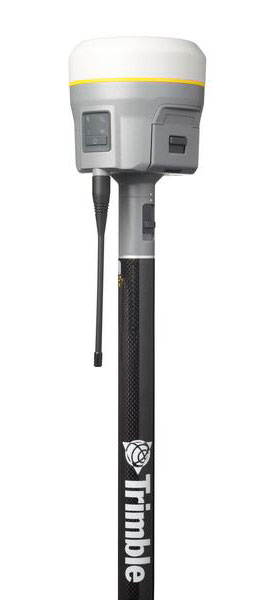
    Trimble announced today functionality updates to its integrated GNSS survey receiver portfolio, which includes the Trimble R4, Trimble R6, Trimble R8 GNSS systems and is rounded out by the recently released Trimble R10 GNSS System (pictured at right).

    The updates include increased satellite tracking and real-time kinematic (RTK) performance. These improvements modernize the integrated receiver portfolio to add functionality, flexibility and capability as well as more options for surveyors, Trimble said.

    “With the introduction of the next-generation Trimble R10 GNSS system, we felt it was an ideal opportunity to modernize the complete integrated receiver portfolio,” said Erik Arvesen, vice president of Trimble’s Survey Division. “The additional functionality in the Trimble R4, R6 and R8 provide surveyors with more capability, flexibility and additional receiver options to meet their ever-changing business needs.”

    Trimble R8 GNSS System. The Trimble R8 includes integrated Trimble Maxwell 6 ASICs offering 440 channels. Powered by Trimble 360 technology, the Trimble R8 provides consistent and reliable tracking of signals for all existing GNSS constellations and augmentation systems, including GPS, GLONASS, Galileo, BeiDou and QZSS. Using the Trimble R8, surveyors can connect directly to the controller, receive RTK network corrections and access the Internet via comprehensive communication options.

    Trimble R6 GNSS System. Featuring Trimble R-Track satellite tracking technology, a Trimble Maxwell 6 ASIC with 220 channels and support for all GPS and QZSS signals with GNSS upgrade options, the Trimble R6 provides surveyors with a completely scalable and flexible solution. The Trimble R6 supports GPS L1, L2, L2C, and L5 signals and QZSS as standard and offers upgrade options to support GLONASS, Galileo and BeiDou signals. The Trimble R6 delivers the accuracy and reliability required for precision surveying with superior tracking and RTK performance.

    Trimble R4 GNSS System. Designed for use with the new Trimble Slate Controller and Trimble Access field software, the Trimble R4 GNSS System provides a dedicated and reliable GNSS solution that is effective for both real-time and post-processed GNSS surveys. The Trimble R4 now supports GPS L1, L2, and L2C and QZSS signals as standard and also offers GLONASS, Galileo and BeiDou support upgrade options. The system includes Trimble R-Track technology and a Trimble Maxwell 6 ASIC with 220 channels.

    Trimble R10 GNSS System. The Trimble R10 GNSS system is the premier solution of the integrated survey receiver portfolio. Designed to increase  productivity, the Trimble R10 provides powerful functionality, including Trimble 360 receiver technology, precise position capture with Trimble SurePoint technology, the cutting-edge Trimble HD-GNSS processing engine and Trimble xFill bridging technology to “fill in” for RTK corrections in the event of temporary radio or Internet connection outages.

    The updated configurations of the Trimble R4, R6 and R8 as well as the Trimble R10 GNSS system are available now through Trimble’s Survey Distribution Channel.

  • Huawei Brings Connectivity to Vehicles with Telematics Solutions

    Huawei Brings Connectivity to Vehicles with Telematics Solutions

    Huawei, a global information and communications technology (ICT) solutions provider, unveiled a series of products heralding the company’s first foray into telematics solutions at the 2013 Mobile World Congress, being held this week in Barcelona, Spain.

    Huawei showcased its vehicle-compatible 3G and LTE communication modules, MU609T and ME909T, its 3G mobile hotspot, DA6810, and its 3G onboard diagnostic (OBD) box, DA3100. Huawei’s products for vehicles provide stable wireless solutions in diverse environments regardless of weather conditions, terrain, or reliability of power supply, providing new development opportunities for the automotive industry, and unsurpassed convenience for car owners.

    “Huawei is excited to welcome in an era of smart vehicles with the availability of products that integrate wireless communications and automotive electronic technologies,” said Kevin Liu, vice president, Mobile Broadband Division, Huawei Consumer Business Group. “Huawei’s telematic solutions are designed to enable cars and other transportation vehicles to exist in a seamless wireless mobile environment, so that users are truly able to enjoy the benefits brought about by ICT services.”

    The MU609T and ME909T are Huawei’s first 3G and LTE communication modules for vehicles. They are both pin-to-pin compatible, and cater specifically to the working enviroment temperature and power consumption of the automotive industry. The MU609T can support up to 14.4M under the HSPA+ network, and the ME909T can support up to 100Mbps under the LTE network. Both modules are pre-installed with GPS and eCall. In addition, the FOTA remote firmwire upgrade capability makes it possible to integrate new technologies into existing MU609T and ME909T modules. The strengths of MU609T and ME909T have been recognized by leading global car manufacturers, and will be integrated into the wireless communication systems of some of the world’s top vehicles in the near future, the company said.

    The DA6810 3G Wi-Fi Box creates 3G Wi-Fi hotspots in mobile environments to provide high-speed internet connectivity on-the-go. Once installed with the HUAWEI DA6810 3G Wi-Fi Box, a vehicle becomes interactive, high-tech and networked, providing owners with a high-speed internet and audio-visual entertainment experience, Huawei said.

    The DA3100 is an on-board diagnistics (OBD) data transferring system that enables insurance providers and fleet management companies to retrieve information such as location, vehicle conditions and driver habits. This in-car system transfers information in real time through a 3G network to the telematics service provider (TSP) platforms of various third-party entities. It also enables vehicle owners to activate the car horn, headlights and windows remotely via smartphone apps. The DA3100 is powerful yet easy to install, is not limited by geographical region or vehicles types, and can be activated upon installation, Huawei said.

  • Janam Announces 3G/4G Cellular Rugged Mobile Computer

    XT85.NAngle.left.RGB.MR-W
    Photo: Janam Technologies LLC

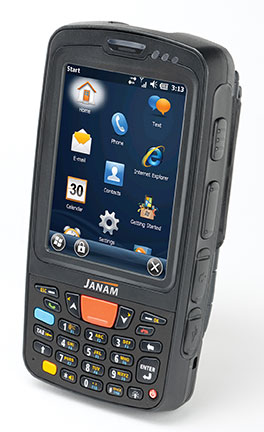
    Janam Technologies LLC, a provider of rugged mobile computers that scan barcodes and communicate wirelessly, today announced the release of its new XT85, a high-bandwidth wireless rugged mobile computer designed to support demanding enterprise applications in equally demanding outdoor environments.

    Janam’s XT85 offers a complete set of features that enterprises require in a rugged wireless wide area device, at a price point that makes extending enterprise mobility affordable, Janam said. It is equipped with high-sensitivity GPS with anti-jamming technology.

    The XT85 survives multiple 5-foot drops to concrete at temperature extremes (and 6-foot drops at room temperature), offers a 3.5-inch high-transmissivity display that maximizes outdoor readability while minimizing power consumption, offers advanced 4G-ready cellular network connectivity with five-band UMTS for global roaming, and is small and lightweight.

    “Purpose-built mobile computers must appeal to today’s information worker who expects a device that is small, light, fast and highly capable while also serving the business needs of the enterprise for whom the mobile worker is performing mission-critical tasks,” said Harry B. Lerner, CEO of Janam. “Janam’s XT85 is optimized to appeal to both constituencies. It’s much more than a smart phone. It’s a brilliant PDA.”

    In addition to 4G-ready UMTS/HSDPA/HSUPA/GSM wireless wide area network communication, the XT85 is equipped with 802.11 a/b/g/n WLAN with enterprise-grade security and Bluetooth.  It is available with the SE965HP laser engine from Motorola or Honeywell’s Adaptus Imaging technology. Purpose-built to accommodate the realities of work processes and environments, the XT85 is UL-certified for use in hazardous environments, sealed to IP65 standards and available with QWERTY or numeric keypads.

  • Magellan Debuts SmartGPS Apps for Apple and Android Mobile Devices

    Magellan SmartGPS App_iPhone
    screenshot: Magellan SmartGPS App

    Magellan has announced Magellan SmartGPS Apps for iOS and Android mobile devices.

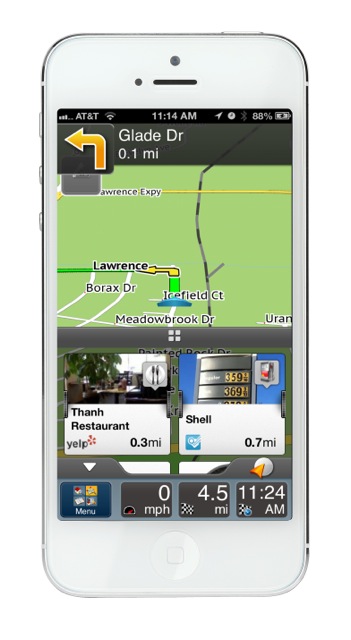
    Following the recent announcement of Magellan’s SmartGPS device, the free Magellan SmartGPS Apps for iOS and Android devices are the next key elements in Magellan’s Smart Ecosystem, a cloud platform that integrates social media and navigation content directly onto a navigation map, the company said. The SmartGPS Apps automatically deliver continually updating reviews and tips for local businesses from social media including Yelp, Foursquare, and other partners to create current, local and personalized driving and pedestrian experiences.

    The Magellan SmartGPS mobile apps display location-relevant information “squares” that graphically flip to show reviews, tips and offers from Yelp and Foursquare for nearby restaurants, stores and services. Users can then navigate to those locations directly from the SmartGPS App without needing to open an additional application or device. The cloud architecture enables new monetization of end users’ mobile search and navigation, and additional social media and content partners.

    “We architected the Smart Ecosystem to integrate with automotive infotainment and mobile network service platforms so users can enjoy a truly mobile, connected car experience now,” said Peggy Fong, president of MiTAC Digital Corporation. “SmartGPS mobile apps connect to the vehicle dash, allowing users to easily search social media and points-of-interest for destinations, and send the locations via Bluetooth or Wi-Fi to SmartGPS-enabled vehicle navigation systems.”

    Magellan’s free iOS and Android SmartGPS apps create a total-solution SmartGPS experience that is truly mobile. Magellan connects the smartphone to the vehicle dashboard, enabling location sync and sharing, hands-free operation and data connectivity. Users can pair their Magellan SmartGPS app with SmartGPS-enabled navigation systems. Using their SmartGPS App, SmartGPS enabled navigation system, or PC, users can search for a location, save the location in Magellan’s Smart Ecosystem cloud, and sync and share the location to any SmartGPS enabled device via Wi-Fi or Bluetooth.

    The free Magellan SmartGPS Apps will be available in North America this Spring, and in Europe this Summer, from iTunes and Google Play. Premium versions of both apps featuring spoken turn-by-turn navigation will also be available.

  • Air Force Awards Lockheed Martin Contracts for Next Set of GPS III Satellites

    The U.S. Air Force has awarded Lockheed Martin two fixed-price contracts totaling $120 million to procure long lead parts for the fifth, sixth, seventh and eighth next-generation GPS III satellites.

    The GPS III program will replace aging GPS satellites while improving capability to meet the evolving demands of military, commercial and civilian users. GPS III satellites will deliver better accuracy and improved anti-jamming power while enhancing the spacecraft’s design life and adding a new civil signal designed to be interoperable with international global navigation satellite systems, Lockheed Martin said.

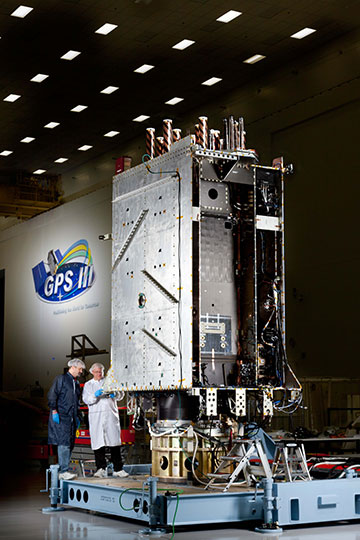
    Lockheed Martin engineers work on the full-sized prototype of the GPS III satellite in the company’s GPS Processing Facility (GPF) near Denver.
    Lockheed Martin engineers work on the full-sized prototype of the GPS III satellite in the company’s GPS Processing Facility near Denver. In November, the team completed thermal vacuum testing for the Navigation Payload Element of the GPS III Non-Flight Satellite Testbed.

    “The GPS III program was laid out at the very beginning to reduce risk early and facilitate affordable satellite production over the long term,” said Lt. Col. Todd Caldwell, the U.S. Air Force’s GPS III program manager. “This most recent award and our team’s ability to convert the contract structure to fixed price is a sign that we are on track to meet the affordability objectives and commitments we originally set out to achieve.”

    Incorporating lessons learned from previous GPS programs, the Air Force initiated a “back-to-basics” acquisition approach for GPS III. The strategy emphasizes early investments in rigorous systems engineering, industry-leading parts standards, and the development of a full-size GPS III satellite prototype to significantly reduce risk, improve production predictability, increase mission assurance and lower overall program costs. These investments early in the GPS III program are designed to prevent the types of engineering issues discovered on other programs late in the manufacturing process or even on orbit.

    “The Air Force’s back-to-basics acquisition strategy and the progress we have already made on our GPS III prototype gives us high confidence in our ability to perform efficient and affordable fixed-price satellite production going forward,” said Keoki Jackson, vice president of Lockheed Martin’s Navigation Systems mission area. “As our world becomes increasingly dependent on GPS technology, the new GPS III satellites will be a critical element of both our national and economic security, and we are committed to achieving mission success for the billions of military, commercial and civilian users worldwide.”

    Lockheed Martin is currently under contract for production of the first four GPS III satellites, and will now begin advanced procurement of long-lead components for the fifth, sixth, seventh and eighth satellites. The Air Force plans to purchase up to 32 GPS III satellites.

    The GPS III team is led by the Global Positioning Systems Directorate at the U.S. Air Force Space and Missile Systems Center. Lockheed Martin is the GPS III prime contractor with teammates ITT Exelis, General Dynamics, Infinity Systems Engineering, Honeywell, ATK and other subcontractors. Air Force Space Command’s 2nd Space Operations Squadron (2SOPS), based at Schriever Air Force Base, Colo., manages and operates the GPS constellation for both civil and military users.

  • Broadcom Introduces Femtocell Chip to Integrate RF and Baseband Modem

    Broadcom Corporation introduced at the Mobile World Congress a highly integrated digital baseband processor and RF transceiver designed for 3G femtocell residential access points, the BCM61630 systems on chip. The Mobile World Congress is being held in Barcelona, Spain, this week.

    The new devices integrate a multiband CMOS RF transceiver with GPS and full-time sniffing capability while maintaining software compatibility with all previous Broadcom WCDMA physical layer and backhauling interface architectures.

    With the new chips, mobile operator OEMs and ODMs have a powerful, low-cost, power efficient device to support small cell strategies and meet growing mobile traffic demands. Embedding a high-speed CPU and Broadcom’s Layer 1 modem and peripherals, these devices provide a complete low-power single-chip solution for residential and small enterprise 3G small cell deployments, the company said.

    “As on-the-go content consumption continues to drive traffic growth, mobile operators must meet consumers’ increasing demand for higher bandwidth without sacrificing quality of service,” said Greg Fischer, Broadcom’s vice president and general manager for Broadband Carrier Access. “Broadcom’s BCM61630 SoCs deliver a low-power, cost-efficient device for residential small cells to leverage existing mobile infrastructure and deliver faster data speeds through a smaller form factor.”

  • SIMcom Launches Modules at Mobile World Congress

    SIMCom Wireless Solutions Ltd. of Shanghai launched its first compact LGA 2G module SIM900E at Mobile World Congress 2013 today. The module’s small size and LGA encapsulation suit M2M applications of all sizes, especially satisfying requirements for slim, compact design, SIMcom said. The Mobile World Congress is being held in Barcelona, Spain, this week.

    With operations from 2002 to 2013, SIMCom has just celebrated its 10th anniversary. The company has developed into a global leader of wireless solutions with the integration of R&D, production, sales and after-sales services, and with products covering technologies such as GPS, GLONASS, GSM/GPRS, WCDMA/HSPA, TD-SCDMA, CDMA EVDO, SRD, and Wi-Fi. The products have been sold in more than 100 countries and regions, involving almost all M2M industries. With the celebration of its 10th anniversary, SIMCom also launched its first company magazine, SIMCom Inside.

    SIMCom launched its module series of 2G/3G, with the same size of 30 x 30 millimeters, including SIM928, SIM968, SIM5310 and more. Integrated with GSM/GPRS and GPS, the SIM928 module is a compact quad-Band GSM/GPRS-enabled module based on the PNX4851 platform. SIM968 is a combo module featuring quad-band GSM/GPRS and combining GLONASS technology for satellite navigation. SIM5310 is a low-cost 3G module that supports WCDMA 384Kbps and single frequency band 2100 MHz. In addition, SIMCom will also introduce the first LTE intelligent module SIM7290.

    The compact module SIM900E released today has an LGA encapsulation of 19.8 x 19.8 x 2.7 millimeters, and its LGA encapsulation is suitable for automatic assembly with SMT equipment, the company said. The configuration of four frequencies of GSM/GPRS — 850/900/1800/1900MHz — and wide temperature range of -40C to +85C is designed for global seamless coverage and various industrial application environments.

  • Ruckus Wireless Offers Wi-Fi Solutions for Rising Data Demands

    Ruckus Wireless, Inc. today outlined its SmartCell architecture for creating carrier class Wi-Fi networks to deal with the densification challenge sweeping the industry. Built on its SmartCell Architecture, Ruckus unveiled a wide range of new carrier-class Smart Wi-Fi products, including the Ruckus ZoneFlex 7782 family, which integrates a GPS receiver. The announcement came at the Mobile World Congress being held in Barcelona, Spain, this week.

    The rapid growth of mobile data services, driven by smartphones, laptops, and tablets has accelerated data-traffic growth to the point where macro cellular networks are no longer sufficient to meet subscriber demand in many high-density indoor and outdoor settings. While new macro cellular technology, such as long-term evolution (LTE), is being introduced to address this capacity crunch, it will provide only partial relief, as traffic volumes continue to grow faster than operators can economically add capacity, Ruckus said.

    Consequently, mobile operators are rapidly adopting Wi-Fi as an additional radio access network (RAN) option to augment mobile capacity. At the same time, fixed line carriers and multiple system operators (MSOs) are also deploying Wi-Fi for public access to enhance their service offerings, reduce subscriber churn and enter new markets such as managed enterprise wireless LAN (WLAN) services.

    For high-capacity outdoor environments, such as stadiums and other public venues, the Ruckus ZoneFlex 7782 outdoor AP Series is a family of four new, high-capacity Wi-Fi access points designed to give service providers unprecedented capacity and performance. With models supporting omni-directional antennas, 120º sectorized, and 30×30º narrow-beam coverage through integrated internal antennas as well as external antenna options, ZoneFlex 7782 APs offer a combination of high performance and flexibility in a sleek, low profile, light form factor essential for meeting the tight mechanical and aesthetic constraints of deployment outdoors, Ruckus said.

    Each Ruckus ZoneFlex 7982 AP is a dual-band, three stream (3×3:3) 802.11n access point enabled for high throughput approaching 900 Mbps. ZoneFlex 7782 APs with integrated antennas support Ruckus-patented BeamFlex adaptive antenna technology for greater signal gain and interference mitigation. Additionally, the Ruckus ZoneFlex 7782 family integrates a GPS receiver, allowing service providers to begin providing location-based services as well as continuous spectrum monitoring features.

  • Qualcomm Announces 4G LTE Advanced Connectivity Platform for Mobile Computing

    Qualcomm Technologies, Inc., has announced the industry’s first 4G LTE Advanced embedded data connectivity platform for mobile computing devices, including thin form factor laptops, tablets and convertibles. The technology, based on Qualcomm Technologies’ Gobi chipsets — the MDM9225 and MDM9625 — is the first embedded, mobile computing solution to support LTE carrier aggregation and LTE Category 4 with peak data rates of up to 150Mbps. The announcement came at the Mobile World Congress being held in Barcelona, Spain, this week.

    The Gobi MDM9x25 embedded platform includes an embedded GPS receiver with GLONASS support for enhanced asset tracking, turn-by-turn navigation and other location-based services.

    The introduction marks the arrival of Qualcomm Technologies’ third-generation 4G LTE embedded chip, extends Qualcomm Technologies’ modem technology leadership in mobile computing, and promises to deliver the fastest 3G and 4G LTE connections worldwide, while offering the broadest multi-region coverage via a single SKU solution, the company said. PC OEM customers can  select from embedded module vendors that support a range of Gobi chipsets, from 3G solutions with speeds up to 42Mbps to cutting-edge 4G LTE Advanced. Coupled with pay-as-you-go, no contract data plans, these products enable thinner, lighter and better connected mobile computing devices running leading operating systems such as iOS, Android, Windows 8 and Windows RT, and support a variety of modules for thin form factors, including PCI Express Mini Card, PCI Express M.2, and Land Grid Array.  Additionally, the Qualcomm RF360 Front End solution, providing expanded active band support integral to Qualcomm Technologies’ single SKU LTE World Mode solution will also be included.

    “Our broad portfolio of Gobi chipsets — including 3G 42Mbps, 4G LTE and 4G LTE Advanced — features industry-leading LTE multiband support for seamless connections to the fastest networks worldwide,” said Cristiano Amon, executive vice president of Qualcomm Technologies and co-president of Qualcomm Mobile Computing. “This latest addition can be easily implemented across enterprise, SMB and consumer industries allowing end users to download and stream rich HD content, access enterprise applications, share large files quickly and connect virtually wherever they are in the world.”

    Qualcomm Gobi MDM9x25 chipsets began sampling to module vendors last November and will enable commercial device launches in the second half of this calendar year.

  • CoPilot Brings GPS Navigation to Windows Phone 8

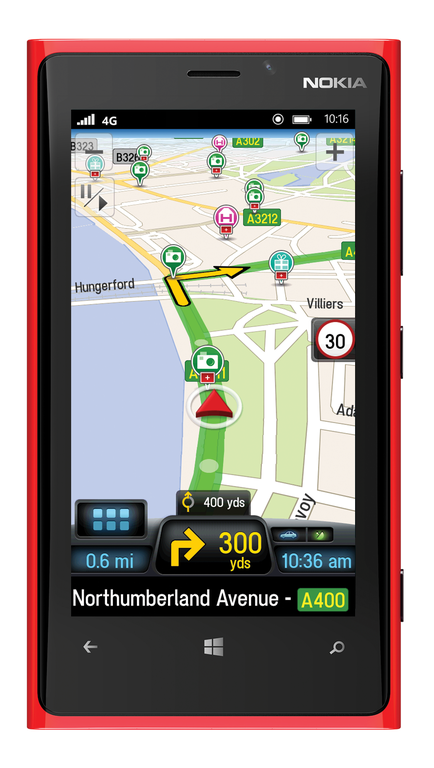
    lumia-920-copilot-ukALK Technologies, provider of navigation and GeoLogistics software, announced at the Mobile World Congress that its CoPilot GPS navigation apps for smartphones and tablets will be available for Windows Phone 8 and Windows 8. The Mobile World Congress is being held in Barcelona, Spain, this week.

    Designed as an alternative to traditional in-vehicle systems, the app provides voice-guided GPS navigation, with turn-by-turn guidance, comprehensive trip planning and automotive-grade street maps stored on-board the device for offline use. Integral real-time services include ActiveTraffic, Yelp, Wikipedia and Google Search to keep drivers fully informed on the road.

    “We’ve always been fans of Microsoft’s mobile solutions,” said David Quin, head of consumer applications at ALK Technologies. “CoPilot was originally developed for Microsoft’s Pocket PC and pioneered mobile navigation on Windows Mobile, so we are delighted to announce a new app for Windows Phone 8 and Windows 8. The Windows family of mobile devices is rapidly gaining momentum as an alternative to Android and iOS, and provides an ideal platform for us to deliver a full-featured and driver friendly CoPilot navigation experience.”

    “Windows Phone is backed by a vibrant app ecosystem with a variety of quality titles, like CoPilot, which help people enjoy a smartphone that is uniquely theirs,” said Todd Brix, general manager, Windows Phone Apps, Microsoft Corp. “CoPilot is a great example of the rich applications that people can enjoy on their Windows Phones.”

    CoPilot for Windows Phone 8 and Windows 8 provides a suite of advanced navigation features, including:

    • Clear, non-distracting 3D map views with lane arrows and signpost display.
    • ActiveTraffic, which calculates the fastest routes and accurate arrival times based on live traffic flow information.
    • CoPilot ClearTurn for navigating complex junctions.
    • On-screen speed limit indicator and excess speed warnings.
    • Advanced trip planning with a choice of three routes and drag-and-drop route editing.
    • Comprehensive local search with integrated Yelp, Wikipedia and Google.
    • Global map regions available to purchase and store on the device as required.

    CoPilot is expected to launch on the Windows Phone Store and Windows Store in summer 2013 with the following versions: CoPilot Premium, a paid app which includes turn-by-turn navigation and 12 months ActiveTraffic; CoPilot GPS, a free offline trip-planning and maps app with in-app purchase for turn-by turn navigation; and CoPilot Truck for truck-specific GPS navigation. Pricing will be in-line with existing CoPilot apps for iOS and Android.