Blog

  • INTERGEO 2012: Cloud Computing will Dominate the GIS Environment

    INTERGEO 2012, which is taking place October 9-12 in Hanover, Germany, announced the conference will show that the key topics at INTERGEO, such as capturing, processing, archiving and presenting data can be made available on an entirely new basis using cloud computing. Accessing geoinformation systems (GIS) via the cloud unlocks a whole new range of uses and makes them more accessible to new user groups who have found existing solutions too complex and ultimately too expensive.

    Otmar Didinger, President of the Rheinland-Pfalz Regional Authority for Surveying and Geoinformation, on how the cloud can benefit users: “It solves the issue of how they can access information without having to worry about where it is located.” Didinger cites WebAtlasDE. As part of this national pilot project, the Regional Surveying Authorities in Germany are providing access to their geodata. Merged into a single standardised national inventory, this geodata forms the basis of a web service. Similar to Google Maps, users surf a map that covers the whole of Germany and is based largely on the very latest official data, presented in a more professional format. Authorities, companies and citizens can access the store of geodata at WebAtlasDE (e.g. via www.geoportal.de) and combine it with their own information. This creates an excellent basis for making a whole range of decisions relating to everything from infrastructure management to sales campaigns.

    According to the announcement, Johannes Schöniger was the man responsible for the ambitious aim of making a high-performance IT system – a cloud solution – available in a short space of time. As Strategic Account Director Geoinformation Germany at Fujitsu Technology Solutions GmbH, he was certain of one thing in particular: “Cloud Computing is a pioneering and sustainable operator model. Just as with geoinformation, it’s no longer a question of whether or not we want cloud computing. Instead, we have to choose whether to actively engage with it and look to the future or not. If we do, we can ride the wave, if we don’t, it will come crashing down on us sooner or later.” Schöniger is in no doubt: “Cloud computing will dominate the GIS environment over the coming years.”

  • JPL Team Uses GPS for Tsunami Early Warning


    Led by Dr. Attila Komjathy, who received his Ph.D. from the University of New Brunswick in 1997, a team from NASA’s Jet Propulsion Laboratory has demonstrated a technique that has the potential to significantly improve tsunami monitoring and warning.

    The technique uses data from multiple Global Positioning System receivers on the ground to measure small perturbations in the ionosphere’s electron density caused by a tsunami.

    The changing sea level of a tsunami, even far from a coast, generates waves in the atmosphere that make it all the way up to the ionosphere, some 350 kilometres or so above the sea surface. Here, they disturb the electrons that affect the propagation of GPS signals. The disturbance is so small that ordinary GPS receivers do not notice the passage of the waves. However, with advanced software processing of the data collected by specialized receivers used, for example, by surveyors and geodesists, the waves can be visualized and used to track the progress of the tsunami.

    The JPL team has dramatically demonstrated their technique for the devastating tsunami associated with last year’s massive offshore Japanese earthquake. They used data from the more than 1,000 receivers of Japan’s permanent GPS monitoring network. The propagating ionospheric waves can be clearly seen in a video the team has posted to YouTube.

    The video can also be downloaded from the GGE website.

    An earlier report on NASA’s tsunami-detection work can be found here.

    NASA is investing in research to obtain real-time GPS measurements from around the world so that researchers can integrate this technology into a global tsunami warning system. Additional potential applications might include the remote sensing of ionospheric perturbations generated by other natural hazards such as earthquakes and volcanic eruptions and human-made events such as nuclear tests.

    Dr. Komjathy was one of the first to investigate the use of GPS signals to study the ionosphere. His pioneering Ph.D. research under Prof. Richard Langley was awarded a Gold Medal from the Governor General of Canada.

  • TomTom and Nike Launch New Range of the Nike+ Sportwatch

    TomTom and Nike Launch New Range of the Nike+ Sportwatch

    Photo: Nike

    TomTom and Nike today unveil a new range of the Nike+ Sportwatch, coinciding with the launch of a brand new Nike+ website www.nikeplus.com. The range includes several editions and color combinations, and introduces a starter product for those new to running.

    Whether they own an original or new edition, all Nike+ Sportwatch users can now access Nike’s intelligent measure of athletic ability, Nikefuel. This converts a runner’s mileage into universal units that measure movements in a wide variety of different sports. As a result, it’s easy for people to compare their performance against that of athletes in other sports, and share their achievements with friends, the companies said.

    “Our extended range of products will be very useful to those adding running into their exercise regime. And the new NikeFuel measurement brings added motivation, allowing people to share and compare their performance with friends in other sports,” says Corinne Vigreux, managing director, TomTom.

    The new Nike+ Sportwatch colors have been chosen to match Nike’s apparel and shoe ranges. They include black/anthracite, anthracite/blue glow, and high-impact volt green. The anthracite/blue glow edition is available as a starter product, priced at €149.

  • GeoEye to Receive Payment of $111 Million from the National Geospatial Intelligence Agency

    GeoEye, Inc. announced that it has successfully passed a major milestone for the development of the GeoEye-2 satellite under the EnhancedView program. GeoEye’s completion of this milestone triggers the $111 million cost-share payment from the National Geospatial-Intelligence Agency (NGA).

    GeoEye reports that this critical milestone demonstrates the company’s capabilities to meet all of the U.S. government’s EnhancedView program requirements, on time and under this firm-fixed-price contract.

    Matt O’Connell, GeoEye’s CEO and president, said, “This is a terrific achievement by our team and a great confirmation of our strong partnership with the NGA, especially during these uncertain economic times. We look forward to providing the NGA with the highest resolution color imagery from GeoEye-2, which will be an important long-term security asset to the DoD and the intelligence agencies of the United States.”
    “GeoEye-2, designed and built by Lockheed Martin Space Systems, includes market-leading technology features, such as robust tasking capabilities, faster imagery collection rates and a new state-of-the-art, ITT Exelis Geospatial Systems camera,” said Carl Alleyne, GeoEye’s vice president of Engineering.
  • Intergraph Showcases New Spatial Modeling Technology at Hexagon 2012

    At this week’s Hexagon 2012, Intergraph announced it is showcasing the exciting capabilities of ERDAS Imagine’s next-generation Spatial Modeler. This revolutionary technology provides a unique environment for the creation of solutions, combining ERDAS Imagine’s processing capabilities with the powerful vector analysis functionality of GeoMedia.


    According to the announcement, ERDAS Imagine’s existing spatial modeling capabilities enable you to graphically create models of complex raster imagery processing workflows. Those with less domain knowledge can easily execute the models to obtain the same accurate, reliable results as more expert users. By reducing training time and helping automate complicated workflows, the ability to process imagery using automated spatial models has become a quintessential feature for many customers.

    Integraph reports that the new spatial modeling framework expands this proven technology by providing full extensibility and true interoperability with other systems, enabling you to construct complete geoprocessing workflows. You can also enhance existing solutions with the spatial modeling technology, allowing you to add new types and operations, providing full extensibility.

    “Integrated within a new graphical user interface and extensible through third-party scripting environments such as Python, the next-generation spatial modeling capability will support desktop and on-demand enterprise geoprocessing,” said Mladen Stojic, Vice President – Geospatial, Intergraph. “With this new capability, GIS modeling with vector operators meets image processing with raster operators, all within one graphical environment. This is all based an open and commonly accepted scripting environment, brought to you by a single company.”

    The new spatial modeling framework offers the option of creating models graphically using drag-and-drop components or through widely used Python scripting. To learn more, please visit http://www.intergraph.com/geospatial

  • Intermap Introduces NEXTMap World 30

    Intermap announced the release of NEXTMap World 30, the first and only commercial 3D terrain product to provide seamless, void free coverage, with a 30 meter ground sampling distance, across the entire 150 million square kilometers of the Earth’s surface.

    According to the announcement, satellite images provide 2D datasets, which are not always sufficient for business planning purposes or government feasibility studies. Filling the void for accurate and reliable height data, Intermap’s NEXTMap World 30 offers the most comprehensive digital surface models for the entire world. The NEXTMap World 30 dataset can benefit planners in multiple industries including telecommunications, energy, agriculture, risk planning, water management, topographic mapping, military and a host of government services.

    Intermap reports the key benefits of NEXTMap World 30 include:

    • Accurate: NEXTMap World 30 aggregates data from ASTER, SRTM and GTOPO using worldwide control, combined with Intermap’s proprietary data fusion technology, to create the most seamless, void-filled and consistent dataset with accuracies starting at 5 meters.
    • Comprehensive: Other products available in the market offer up to only 30 percent of the Earth’s surface. With NEXTMap World 30, customers have available to them 100 percent coverage of the earth’s surface. The combination of photogrammetry, interferometry and LiDAR technologies provides the most detailed and current elevations of the entire Earth.
    • Affordable: NEXTMap World 30 pricing can be as low as $0.01 per square kilometer.
    • Updated: NEXTMap World 30 is regularly enhanced with the very latest and best elevation data. Under the NEXTMap Maintenance program, customers can enjoy regular NEXTMap World 30 updates automatically.
    • Flexible: NEXTMap World 30 is ideal for applications such as image orthorectification, line-of-sight calculations, feature extraction and topographic map development, flood risk management, infrastructure planning, precision farming, emergency response and 3D visualization.

    “The availability of Intermap’s NEXTMap World 30 product will have a tremendous impact on plantation planning and management,” said LF Lee, Managing Director, Agribusiness Publishing Sdn Bhd, in Malaysia. “In the plantation industry, for example, knowledge of land elevation and bare ground or terrain elevations is essential to identifying and screening out unsuitable areas initially; and for planning of infrastructures, land conservation measures and drainage requirements later on. Unfortunately, most developing countries—where plantation projects are usually located—only have access to topographic sheets with wide contour intervals of dubious reliability.”

    “Intermap’s new NEXTMap World 30 data will definitely fill the void for accurate and reliable height data,” said Perry Mandeville, President of PT Earthline in Jakarta, Indonesia. “With Asia growing so quickly, there is a need for quality 3D geospatial information that 2D satellite images cannot provide.”

    “NEXTMap World 30 is an excellent way for governments and commercial enterprises to cost-effectively perform their important elevation work,” said Todd Oseth, Intermap president and CEO. “We’re looking forward to bringing the benefits of NEXTMap World 30 to customers and partners everywhere.”


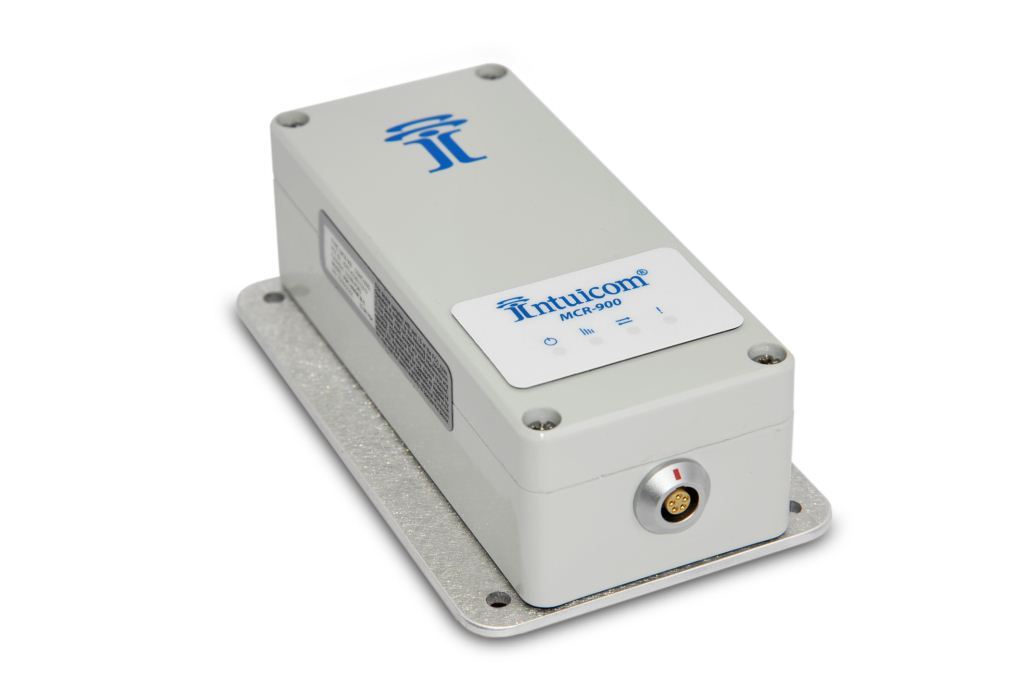
  • Intuicom Introduces Rugged MCR-900 900MHz Transceiver for RTK

    Photo: Intuicom Inc.

    Intuicom Inc. announced the MCR-900 to help increase productivity by extending the reach of wireless communications. Utilizing superior frequency hopping spread spectrum (FHSS) technology, the MCR-900 provides long-range data transport with continuous throughput of 115 Kbps. The MCR-900 offers the capability and flexibility to meet a variety of wireless networking challenges.

    According to the announcement, designed for broad functionality, the MCR- 900 offers the flexibility to serve in simple point to point communication or in more complex multipoint and IP-bridged networks. For example, when combined with the Intuicom RTK Bridge™-C, the MCR-900 provides a way to extend the reach of RTK corrections far beyond normal cellular coverage. This application will enable precision applications such as farming, survey, and construction that use GPS/GNSS-based RTK corrections to work in areas where it would otherwise be impossible.
    “The MCR-900 has been tested in the most extreme environments and continues to run day in and day out.  It fits in perfectly with our overall Machine Control portfolio at Leica Geosystems and we’re proud to offer it to our customers,” said Nick Guadagnoli, OEM Business Development Manager for Leica Geosystems Machine Control Division.
  • Location-Sharing App Glympse to Be Put in Mercedes A-Class

    Today from the Detroit Telematics Conference, location-sharing app maker Glympse announced it is teaming up with Mercedes-Benz to give users real-time location sharing in their cars by integrating Glympse into the new Mercedes-Benz A-Class.

    Drivers will be able to use the in-dash Mercedes DriveStyle to select a recipient, set a timer, and “send a Glympse” to anyone they choose. The recipient of the Glympse will receive a text or email link, which will show the driver’s real-time location on an interactive map.

    Consistent with Glympse’s approach to location sharing, when the timer expires, the location sharing will automatically stop. Because Glympse is a universal sharing solution, the recipient doesn’t require any special software or device, just a web browser.

    With its smart phone apps, Glympse shares location with others in real time. Users on iPhone, Android, Blackberry, and Windows phones can send a Glympse to others via email, SMS, Facebook, or Twitter. Now, that functionality is being integrated right into the A-Class.

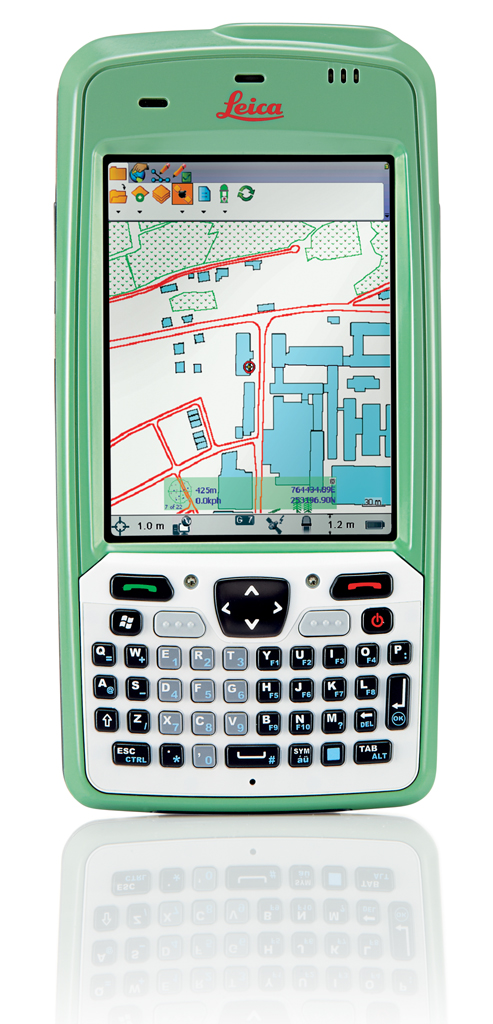
  • Leica Introduces Zeno 5 Rugged GPS Handheld

    Zeno 5 by Leica Geosystems.
    Zeno 5 by Leica Geosystems.

    Leica Geosystems announced a further enhancement to the Leica Zeno GIS family – the Leica Zeno 5, an entry-level, rugged PDA for organizations that require a durable compact device with integrated modem and high-sensitive GPS. The new Leica Zeno 5 supports field workers by combining a mobile phone with asset collection and management capabilities.

    Senior Product Manager Johannes Hotz comments ”Together with our Leica Zeno Field and Zeno Connect applications, the Zeno GIS family continues to grow and further addresses all mobile GIS market segments ranging from utilities and natural resources to municipalities”.

    The new Leica Zeno 5 provides a complete, integrated package of positioning, imaging and communications tools:

    • 48 channel, high-sensitivity GPS receiver (SirfStarIV)
    • GSM HSPA+ and CDMA with full phone capabilities, Wi-Fi and Bluetooth
    • Texas Instruments latest high performance processor, the Sitara 3715 (OMAP3) at 800 MHz
    • Large 3.7” full VGA transflective display
    • Windows Embedded Handheld 6.5.3 Operating System
    • Rechargeable and hot-swappable all-day battery (10 hours +)
    • Full range of interactive sensors including camera, digital compass, gyroscope, light sensor, proximity sensor and accelerometer

    “The new Leica Zeno 5 is the fastest and best equipped rugged PDA for a mobile user”, said Johannes Hotz. “Designed to be, at the same time, a mobile phone, GPS-enabled data collector and a controller for our out-standing Leica GG02 plus GNSS SmartAntenna. This new handheld will help users to get the maximum out of from their investment. Together with our Zeno Field application, the Zeno 5 provides an easy-to-use, streamlined GIS data collection and management solution. The Zeno Connect, as stand-alone application or SDK, enables our software partners to combine their industry specific solution with our high-accuracy data collection solutions”.

    According to the announcement, the Leica Zeno 5 is shock resistant, withstands a drop from to 1.8 m, and is protected against water and dust. The large 3.7 inch screen is optimized for sunlight readability and maintains exceptional clarity in outdoor conditions, including direct sunlight. Field workers can collect features and descriptive information using the in-built, high-sensitive GPS data, attach photos to the collected assets, and synchronize, with high-speed up- and download times, with the office using a single and compact device, all in a full working day without re-charging the Zeno 5.

  • More than 3,000 Industry Leaders Think Forward at Hexagon 2012

    Hexagon AB commenced its second annual international conference, Hexagon 2012, yesterday, welcoming more than 3 000 attendees. The conference, held 4-7 June at MGM Grand Hotel & Casino in Las Vegas, NV, USA, unites user communities from Intergraph, Leica Geosystems, Z/I Imaging, Hexagon Metrology and NovAtel.

    According to the annoucement, professionals from the geospatial, surveying, power and energy, construction, aerospace and defence, public safety and security, automotive and manufacturing industries, among others, were invited to attend the four-day event. Hexagon 2012 features more than 400 educational breakout sessions, hands-on training courses and visionary keynote presentations. In addition, the international conference includes previews of groundbreaking technologies, interactive technical demonstrations, technology certifications, compelling customer best practices and limitless networking opportunities. The Hexagon 2012 TechPark, which showcases products, solutions and sponsor exhibits, also includes a number of integrated technologies highlighting Hexagon’s synergistic portfolio.

    Hexagon announced it will stream President and CEO Ola Rollén’s keynote presentation, “Hexagon: Moving Businesses, Industries and the World Forward,” live today at 08:00 PDT. Rollén will speak about Hexagon’s charge to empower customers with actionable information to proactively address tomorrow’s challenges today. He will be joined on stage by Intergraph Process, Power & Marine (PP&M) President Gerhard Sallinger, Intergraph Security, Government & Infrastructure (SG&I) President John Graham, Hexagon Metrology President Norbert Hanke and Hexagon Geosystems President Juergen Dold, who will highlight stories describing how customers have employed Hexagon technologies to positively impact the global trends and changes facing the world. The presentation can be viewed at http://thinkforwardlive.hexagonconference.com.

    Hexagon also announced that Hexagon 2012 also marks the opening of the Hexagon Online Marketplace, Hexagon’s Internet-based store. The Hexagon Online Marketplace signifies the first ever Hexagon-level, direct-to-customer venture, and provides customers with a simplified method of purchasing select Hexagon products and services. The first phase of the online store includes Leica Geosystems’ GIS Mobile hardware and software; Intergraph PP&M’s Pipe & Pressure Vessel software; and Intergraph SG&I’s ERDAS Imagine products and training and GeoMedia®products, all of which are now available for purchase at www.hexagonmarket.com.

    “Hexagon and our family of brands have always strived to work more closely with our customers to help meet their industry challenges and needs,” said Rollén. “By uniting our customers and partners from across the globe and also providing them with easy access to our advanced technologies, we continue to provide them with the tools to move our industries and the world forward.”

  • Live Blogging from U.S. Joint Nav Conference

    Alan Cameron, publisher and editor, and Don Jewell, contributing editor for defense, will be blogging live from the 2012 JSDE/ION Joint Navigation Conference. The conference will be held June 12-15 in Colorado Springs, Colorado. Cameron and Jewell will be blogging twice a day with all the news from the defense-oriented conference.

    Among many other matters, we’ll be taking a close-up look at NovAtel’s and L-3’s new SAASM receiver. This is a classified piee of hardware, of course, but we should be able to glean some details on this and other new defense products and services being rolled out at the exhibit accompanying the conference.

    In addition, we’ll have a top-level view of the Warfighters’ Panel on June 15. A similar session was the undisputed highlight of the GPS Partnership Council in late April, and we expect more of the same here. GPS World columnist Don Jewell is organizing this panel.

    According to organizers, JNC 2012 will be the largest U.S. military navigation conference of the year with joint service and government participation. The event will focus on technical advances in positioning, navigation and timing (PNT) with emphasis on joint development, test and support of affordable PNT systems, logistics, and integration. From an operational perspective, the conference will also focus on advances in battlefield applications of GPS, critical strengths or weaknesses of fielded navigation devices, warfighter PNT requirements and solutions, and navigation warfare.

    Watch the home page Top Story for the blogs, beginning Tuesday, June 12.

  • Abaqus, 1Shop Wireless Launch myGeoTracking MRM Service for T-Mobile Business Customers

    Abaqus, Inc., developer of a device-neutral, cloud-based location and messaging platform, and 1Shop Wireless, national sales agent for T-Mobile USA, have teamed to provide the cloud-based myGeoTracking mobile workforce management service for T-Mobile customers.

    The Abaqus myGeoTracking platform provides a cloud-hosted solution that combines network-derived and phone-based GPS location information with fine-grained privacy control options, location-enhanced SMS, and a powerful rules engine to let companies quickly and easily manage their field-personnel and assets, the companies said. It does not require special devices or smartphones, expensive data plans, cumbersome applications, or software.

    Peter Giansante, director of Sales for 1Shop Wireless, called the service “an ideal device-neutral location-based-solution for companies that want to equip their employees with feature phones and smartphones, and want to avoid the deployment and training issues associated with mobile apps-based MRM services.”

    “Abaqus’myGeoTracking bizTeam service is a great fit for any field-force oriented T-Mobile customer that needs to deploy a mobile management solution,” said Gillian Foley, vice president of One Shop Wireless. “T-Mobile is constantly seeking innovative ways to meet customer demands. myGeoTracking fits the bill with its cloud-based approach that provides a lot of flexibility and choice to companies seeking a better way to affordably manage their mobile workforce.”

    Unlike smartphone-based applications that require special phones and client applications, the location-enhanced, SMS-based myGeoTracking mobile workforce management solution from Abaqus can locate any phone on a cellular network using either cell ID information, or a precise location using GPS inside the device. The platform provides fine-grained controls to the dispatcher or the employee in the field to pull or push location data using simple SMS commands.

    The myGeoTracking platform has a rich web API which can be used to integrate with a range of back-office Enterprise systems, the companies said. The service provides SMS-based messaging for team job status reports, and has a powerful rules engine that can use geofencing, time, device identity, workgroup, and other terms to integrate into a company’s mobile workflow needs on a day-to-day basis.

    • The myGeoTracking bizTeam service is an MRM solution which is completely cloud-based and does not require special GPS devices, special phones or any new software.
    • The myGeoTracking bizTeam MRM service can use any standard feature phone to send location and event information, and complies with USPS location standards.
    • The myGeoTracking bizTeam MRM service provides fine-grained privacy controls, which can be managed by the end-user from their mobile phones or from the web site
    • Location-enhanced SMS (myGeoText) lets mobile workers actively send the date, time, and location stamped status message from the field and trigger additional dispatch functions.
    • The myGeoTracking bizTeam MRM service provides geofencing, geo-corridors, and a variety of other events-based rules to enable easy integration of real-world alerts into a company’s workflow
    • The myGeoTracking bizTeam service provides rich reporting tools which can be exported to a company’s backoffice systems
    •  The myGeoTracking MRM bizTeam service provides an Enterprise SMS feature which lets customer’s enhance their dispatch and operations by messaging individuals, groups, or the whole company.
    •  The myGeoTracking Platform integrates with a range of back-office programs through a rich web API.

    “We’re thrilled to team up with 1Shop Wireless and T-Mobile to provide the myGeoTracking bizTeam service as a light MRM solution for small-to-medium business customers,” said Shailendra Jain, CEO/Founder or Abaqus, Inc. “We look forward to working with 1Shop Wireless and T-Mobile to grow the adoption of cloud-based location and messaging services with strong privacy controls, and help their customers achieve clear ROI and real bottom-line benefits from the service.”