Tag: Antenova

  • Launchpad: Lidar systems, PNT platforms and UAVs

    Launchpad: Lidar systems, PNT platforms and UAVs

    A roundup of recent products in the GNSS and inertial positioning industry from the February 2024 issue of GPS World magazine.


    SURVEYING & MAPPING
    ComNav Technology

    Handheld GIS Data Collection Solution
    For outdoor operations

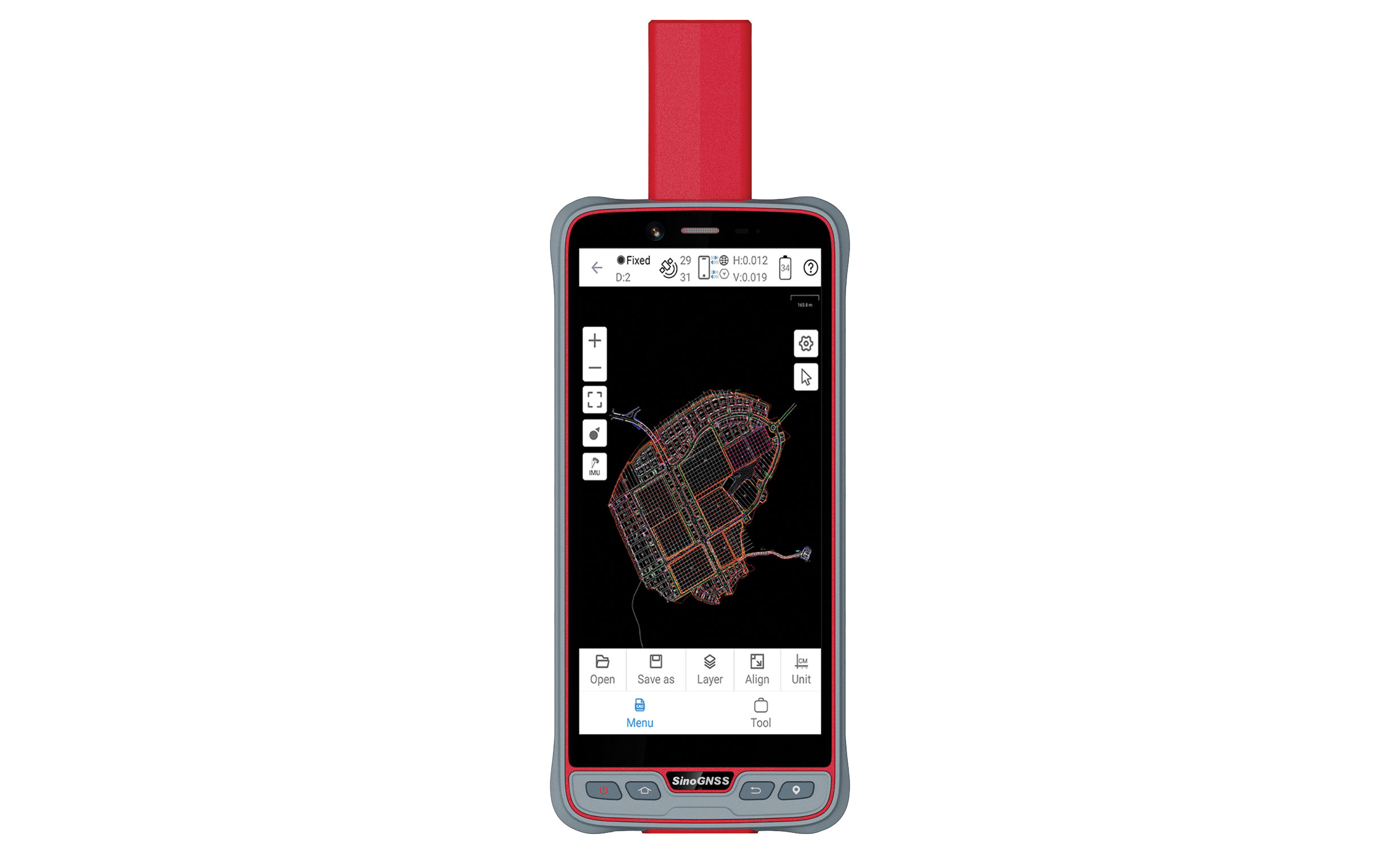
    The handheld P6H solution is designed for GIS data collection and outdoor operations. Featuring a GNSS high-precision positioning module, rugged IP67-rated design, and 6-inch sunlight-readable display, the P6H offers positioning accuracy in harsh environments.
    Equipped with a SinoGNSS self-developed high-precision K8 board and antenna, it can track all running and planned constellations with 1,590 channels, including GPS, BeiDou, GLONASS, Galileo, QZAA, IRNSS, and SBAS.

    The P6H offers users centimeter- or decimeter-level accuracy. Its IP67 rating protects against dust and water to enhance its efficiency and durability in tough environments.

    The device comes equipped with Survey Master and robust GIS functions, which allow users to take measurements of geographic elements and store the results as attribute data for subsequent analysis, calculation, and visualization. It also includes a mock location function for users to accurately share Survey Master’s position with P6H. The location data can then be accessed on a third-party GIS software.

    It is also compatible with common GIS software such as ArcGIS Collector, Mapit GIS, and QGIS. Additionally, the P6H features an 8-core 2.0 GHz processor, up to 128 GB of storage and up to 6 GB of RAM to offer users smooth software operation and efficient data processing.

    PH6, which features a high-precision GNSS module and antenna, also incorporates 4G LTE, Wi-Fi, and Bluetooth to improve its data transmission and sharing capabilities.

    ComNav Technology, comnavtech.com
    YellowScan

    Bathymetric Lidar System
    Maps underwater topography

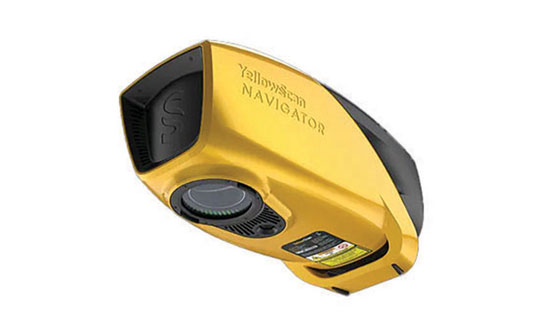
    YellowScan Navigator is a bathymetric lidar system designed for surveyors to map underwater topography in rivers, ponds, and coastal areas.

    The system features a laser scanner developed in-house over the course of five years and has been heavily tested to achieve optimal performance. The compact system can map waterbeds with a depth of up to 3 m and can reach a depth of 18 m in perfectly clear water conditions, according to the company. It can be flown up to 100 m above the water surface and provides measurements with an accuracy of 3 cm. Additionally, a camera is embedded for true-color data visualization.
    YellowScan, yellowscan.com

    DJI

    3D Model Editing Software
    For aerial surveying, transportation, and emergency responses

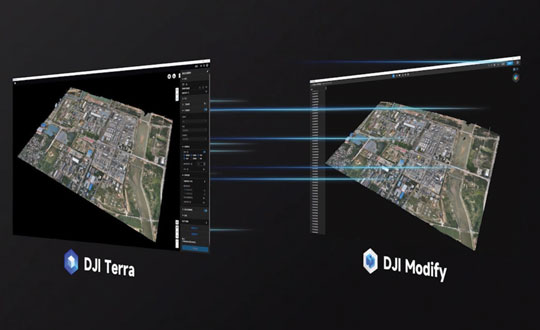
    DJI Modify is an intelligent 3D model editing software. It can be seamlessly integrated with DJI’s enterprise UAVs and 3D modeling and mapping software, DJI Terra. When integrated with these products, the software can be used for aerial surveying, transportation, and emergency responses.

    DJI Modify paired with DJI Terra offers users an end-to-end solution from modeling to model editing. Once DJI Modify has been enabled, DJI Terra files for model editing are automatically generated, including pre-identified objects and pre-processing of the model. It is designed to make repairing common 3D model defects seamless and efficient. As of early 2024, DJI Modify will only support repairing models built by DJI Terra.

    DJI Modify allows for model files to be quickly imported and exported to the DJI Terra and other third-party software. Its intelligent auto-repair editing supports flattening, editing textures, repairing water surfaces, removing floating parts, and filling holes. Edits can be made using one-click repairs or manually by selecting custom polygons, areas or meshes.

    The software’s smoother model display technology allows high- and low-quality models to be viewed and edited in a single interface. Changes made can be synchronized across both models and previewed immediately, which allows users to address model editing issues in real-time.

    DJI, store.dji.com


    OEM

    Oxford Technical Solutions (OxTS)

    GNSS/IMU
    Uninterrupted position, orientation, and dynamics

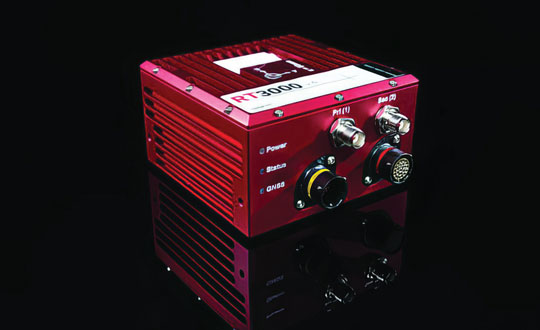
    RT3000 v4 GNSS inertial measurement unit (IMU) combines two survey-grade GNSS receivers with OxTS’ IMU10 inertial technology. The RT3000 v4 offers uninterrupted position, orientation and dynamics in challenging environments.

    The IMU will reach the desired specification within three minutes of low dynamic movements, which reduces the time and space required for high dynamic maneuvers before each data collection.

    Users can customize the INS with optional features and software integrations to create the ideal INS for individualized projects, including lidar surveying and mapping or positioning in GNSS-denied or challenged environments.

    Oxford Technical Solutions (OxTS), oxts.com
    SiLC Technologies

    Precision Lidar Technology
    Provides vision capabilities in challenging environments

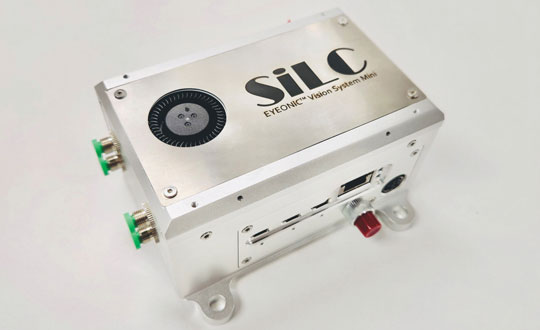
    The Eyeonic Vision System Mini (Eyeonic Mini) supports sub-millimeter resolution in a reduced size. The system integrates a full multi-channel FMCW lidar on a single silicone photonic chip and an integrated FMCW lidar system-on-chip (SoC).

    The Eyeonic Vision Chip combines crucial photonics functions into a coherent vision sensor. The system’s accuracy stems from a 4-channel FMCW LiDAR chip — supported by Indie Semiconductor Surya SoC technology — to provide robots with sub-millimeter depth precision from distances exceeding 10 m.

    The technology offers enhanced precision and can be used in automation, including warehouse logistics and artificial intelligence (AI) machine vision applications. Palletizing robots equipped with the Eyeonic Mini can view and interact with pallets, which aims to optimize package placement and truck loading with greater efficiency and safety.
    SiLC Technologies, silc.com

    SiTime Corporation

    PNT Platform
    Used in critical defense operations

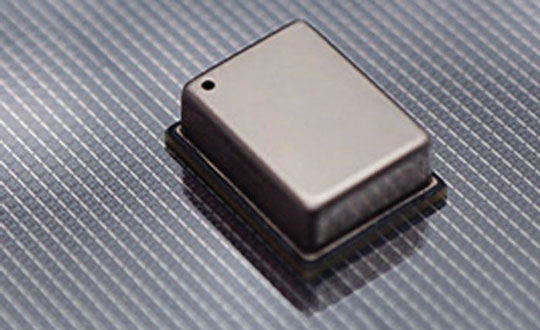
    The Endura Epoch Platform provides robust and resilient positioning, navigation, and timing (PNT) services critical in defense operations.
    The MEMS oven-controlled oscillator (OCXO) can boost the resilience of PNT systems and other equipment, including radars, field and airborne radios, satcom terminals, and avionics against spoofing, jamming and other disruptions in GPS signals.

    Based on the Epoch Platform, the Endura Epoch MEMS OCXOs are designed to meet the challenging shock and vibration conditions found in aerospace and defense. These devices are manufactured using semiconductor processes that deliver the reliability and quality expected from silicon devices. The same level of reliability cannot be achieved by quartz crystal OCXOs, specifically in extreme conditions.

    The Endura Epoch MEMS OCXOs, compared to quartz crystal OCXOs, includes various features and benefits, including programmable frequencies from 10 to 220 MHz; a 20,000 g shock survivability rating; up to 20 times better frequency stability over temperature; up to three times better Allan deviation, a measure of short-term frequency stability; surface-mountable, small footprint and low height 9.0 x 7.0 x 3.6 mm; low weight of 0.35 g; 420 mW steady state power.

    SiTime Corporation, sitime.com
    Murata

    IMU
    With an XYZ-axis gyroscope and accelerometer

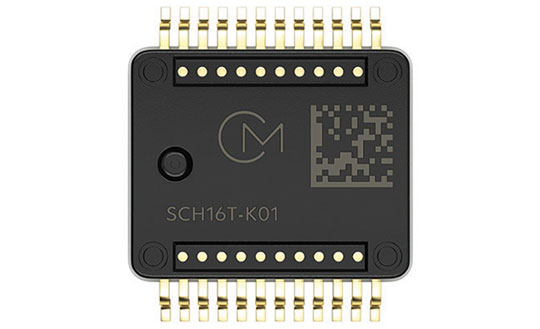
    The SCH16T-K01 is an inertial measurement unit (IMU) featuring a XYZ-axis gyroscope and a XYZ-axis accelerometer, for a total of six degrees of freedom.

    The SCH16T-K01 includes a sophisticated gyro with typical bias instability of 0.5 dph and up to 0.3 mdps/√Hz noise density. The accelerometer has a dynamic range of up to 26 g, which provides resistance against saturation and vibration.

    The component’s output is internally cross-axis compensated, which eliminates the need for extensive calibration. Through the integration of these features, the SCH16T-K01 can deliver accurate measurements in machine control and guidance without field calibrations.

    It is suited for industrial applications such as construction and agricultural machines, material handling equipment, marine instrumentation, robotics, and UAVs.
    Murata, murata.com

    ANELLO Photonics

    3-Axis Optical Gyroscope IMU
    For GPS-denied environments

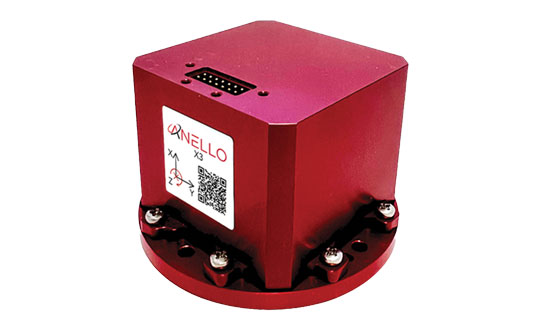
    The ANELLO X3, a 3-axis optical gyroscope inertial measurement unit (IMU), is designed for GPS-denied and challenging environments.

    The IMU leverages ANELLO SiPhOG (Silicon Photonics Optical Gyroscope) technology and serves as a light, low-power tri-axial optical gyroscope offering high accuracy, performance, and reliability for autonomous applications.

    The ANELLO X3 can be used in a variety of applications, including autonomous commercial and defense applications involving robots, UAVs, electric vertical take-off and landing (eVTOL) aircraft and various maritime and land vehicle applications, including high-accuracy surveying and mapping.

    ANELLO Photonics, anellophotonics.com


    MOBILE
    Septentrio

    Smart Antenna
    Centimeter-level RTK positioning

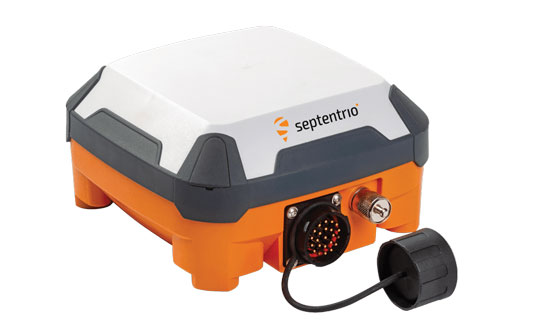
    The AntaRx smart antenna is designed for machine automation and control in construction, precision agriculture, and logistics. It is enclosed in a rugged and compact housing for simplified installation and can handle high levels of shocks and vibrations, making it ideal for harsh industrial environments such as construction and mining.

    The multi-frequency receiver offers centimeter-level real-time kinematic (RTK) positioning and can be used in inertial navigation system (INS) integration, dual antenna mode, and 4G cellular communication. It is available in several configurations, including as a GNSS smart antenna or a GNSS/INS smart antenna system and can be integrated as an inertial measurement unit (IMU).

    The receiver technology integrates the company’s GNSS+ algorithms, including advanced multipath mitigation, which offers uninterrupted operation in challenging conditions such as near high structures or machinery.
    Septentrio, septentrio.com

    SatLab Geosolutions

    Handheld Scanner
    With SLAM technology

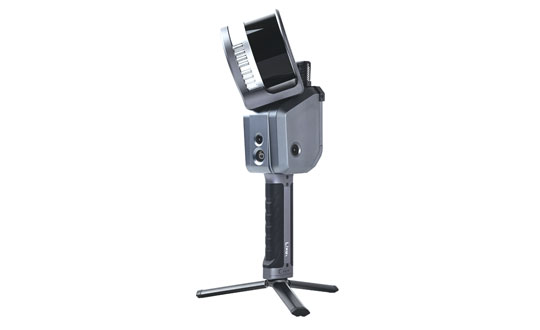
    The Lixel X1 is a powerful 3D scanner that combines lidar, visible-light and motion cameras, and high-precision inertial sensing using SatLab’s simultaneous localization and mapping (SLAM) technology.

    Data and scene reconstruction can be previewed in real time and can be exported immediately after scanning without the need for post-processing, which aims to simplify workflows and enhance efficiency.

    The system enables scans to be resumed from breakpoints, which allows surveys to be broken up into convenient segments. It provides up to 60 minutes of continuous operation and can be easily mounted to UAVs and other mobile mapping platforms.

    SatLab Geosolutions, satlab.com
    Antenova

    Ceramic Antenna
    For connectivity on L1 GNSS signals

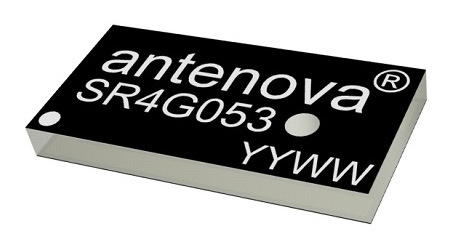
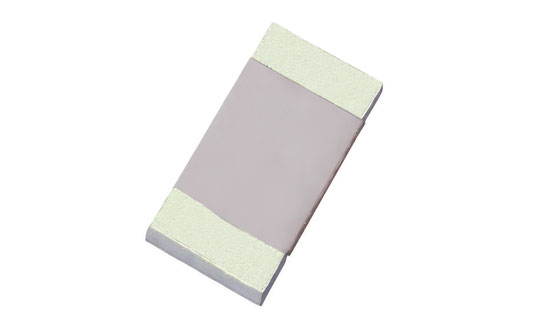
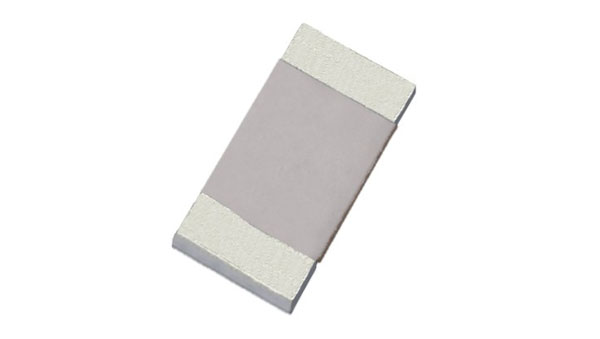
    Admotus is a surface-mount ceramic antenna designed for connectivity on L1 GNSS signals on all constellations, including GPS-L1 at 1575.42 MHz; GLONASS L1, 1602MHz; Galileo L1, 1575.42 MHz; BeiDou (B1); and QZSS. It offers comparable performance to a small patch antenna on a small ground plane.

    The ceramic antenna has an ultra-low profile measuring a mere 1.0 x 0.5 x 0.5 mm, requires 7 x 15 mm clearance area and offers improved performance on small PCB sizes.

    Admotus offers a peak gain of 0.9 dBi with an average gain of –2.6 dB and offers maximum return loss of –11.5 dB and a maximum VSWR of 1.8:1. A companion evaluation PCB is also available for internal analysis.

    It is suitable for all GNSS positioning applications in the L1 band (1559 – 1609 MHz) such as wearable devices for fitness and medical monitoring, small portable tracking devices used to track keys, pets, bikes, UAVs, agricultural robotics, and telematics devices.
    Antenova, antenova.com

    Juniper Systems

    Rugged Tablet
    For mobile field workers

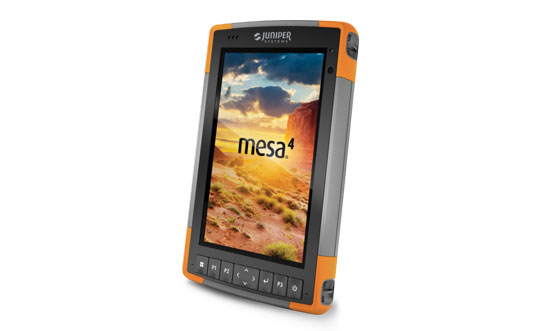
    The Mesa 4 Rugged Tablet features a 7-inch display and runs on Windows 11. It is designed to provide powerful rugged computing and data collection to mobile field workers.

    The Mesa 4 comes with a new Intel N200 processor. It offers up to three times the CPU performance of the Mesa 3 and has an increased RAM size and speed to enhance its processing power. Mesa 4 has an IP68 rating, MIL-STD-810H certification and ergonomic design for all-day carrying.

    Juniper Systems, junipersys.com


    UAV
    RuggON

    UAV Ground Control System
    On an 8-inch rugged tablet

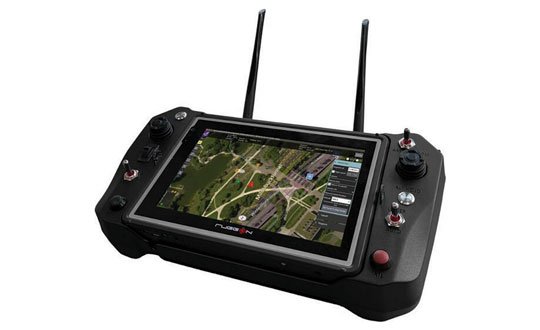
    The Ground Control System (GCS) for UAVs is centered around RuggON’s LUNA 3 8-inch rugged tablet. It is designed to provide real-time control, telemetry, and satellite positioning for connected UAVs.

    GCS is designed to provide users more control over a variety of UAVs by using the LUNA 3 rugged tablet, which has a large and high-definition screen to provide video feedback during operations. The system is also certified to provide GNSS positioning and tracking services.

    Featuring a low-latency video software decoder, GCS allows for real-time high-resolution video viewing and data collection. Engineered to withstand dust, shock, and water, the control system can withstand challenging environments.

    The LUNA 3 8-inch rugged tablet stands as a powerful and efficient model within its class, powered by an Intel Core i5 processor (1145G7E) with Intel Iris Xe graphics and the Windows operating system. Its sunlight-readable display supports night and stealth modes, which is cruicial for law enforcement and military applications. The tablet offers touchscreen functionality for enhanced operator convenience, complemented by ethernet and optional Wi-Fi 6, and 4G LTE connectivity.
    RuggON, rugon.com

    Aeromao

    VTOSL
    Bridging the gap between land and sea

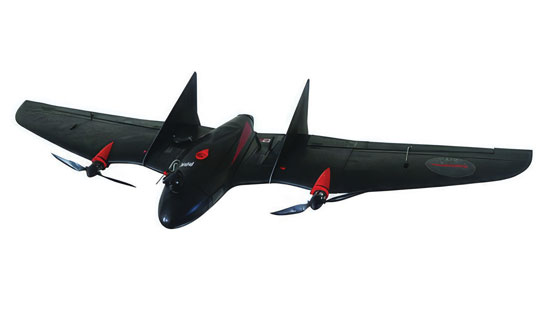
    The VT-Naut, vertical takeoff and short landing (VTOSL) is a versatile aerial solution designed for a variety of applications, including high-precision mapping and surveying for inspection, scouting, observation, and agriculture.

    The VT-Naut can land on water, which makes it ideal for shipboard or coastal operations, and opens new ways for users to collect and observe data. It has a long-range telemetry link of 30 km and a flight endurance of up to 90 minutes. Its compact and robust body design provides durability and resilience in harsh environments.

    The VT-Naut UAV system offers a cost-effective alternative to full VTOL platforms, particularly for users who require extensive surveying capabilities and have some flexibility in landing site selection. The system eliminates the extra costs associated with acquiring and operating a VTOL multirotor drone.
    Aeromao, aeromao.com

    Nearthlab

    Folding UAV
    For challenging environments

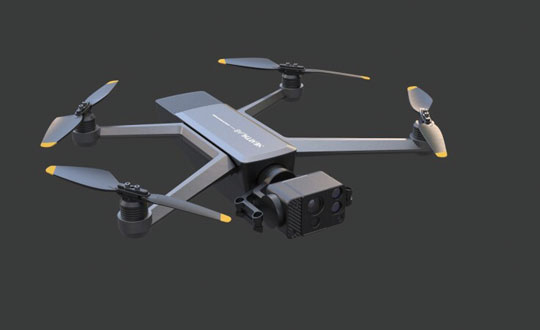
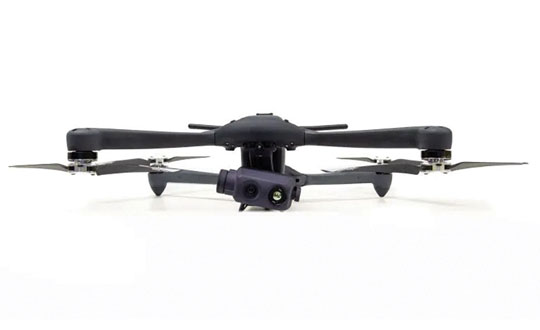
    The AIDrone UAV is designed for a variety of applications, from infrastructure inspections and renewables to defense and public safety.
    The UAV features a high-performance payload, fitted with a 64MP EO/IR camera mounted on a dual-axis gimbal that can support vertical rotation of up to 200°. AIDrone can spot millimeter-sized cracks and detect subtle temperature changes in challenging environments.

    AIDrone uses Nearthlab’s vision-based autonomous flight technology to operate autonomously — in zero-light and GPS-denied environments — both indoors and outdoors.

    It weighs around 4 lbs and has a foldable structure. AIDrone is designed for intelligence, surveillance, and reconnaissance (ISR) purposes, which makes it ideal for crisis management scenarios such as wildfire response and law enforcement.
    Nearthlab, nearthlab.com

    Krattworks

    ISR UAV
    With jamming resistant-radio

    The Ghost Dragon intelligence, surveillance, and reconnaissance (ISR) UAV offers higher resistance against jamming and spoofing. The UAV is equipped with a thermal and visual light camera and jamming-resistant radio. Its wide frequency hopping radio is used to provide a jamming-resistant video and telemetry link, which makes it difficult to detect the UAV and interfere with the mission.

    The Ghost Dragon ISR uses a dual-band GNSS module that operates on both L1 and L5 bands, which allows for flight operations even in challenging environments. The UAV can operate in radio silence mode in the presence of GNSS and store reconnaissance data on an encrypted SD card to view after the UAV has landed. The video and target location information streamed to the operator is also georeferenced.

    The UAV can be redirected, flown back to base, or handed to another operator at a different ground control station at any time.
    Krattworks, krattworks.com

  • Antenova releases L1 GNSS ceramic antenna

    Antenova releases L1 GNSS ceramic antenna

    Image: Antenova
    Image: Antenova

    Antenova, a UK-based manufacturer of IoT (Internet of Things) antennas and GNSS modules, has released the Admotus antenna, the latest addition to its product line of ceramic antennas.

    The Admotus is a surface-mount ceramic antenna designed for connectivity on L1 GNSS signals on all constellations, including GPS-L1 at 1575.42 MHz; GLONASS L1, 1602MHz; Galileo L1, 1575.42 MHz; BeiDou (B1); and QZSS. The compact antenna offers comparable performance to a small patch antenna on a small ground plane.

    The ceramic antenna has an ultra-low profile measuring a mere 1.0 x 0.5 x 0.5mm, requires 7.0 x 15mm clearance area and offers improved performance on small PCB sizes.

    It offers a peak gain of 0.9dBi with an average gain of –2.6dB and offers maximum return loss of –11.5dB and a maximum VSWR 1.8:1. A companion evaluation PCB is also available for internal analysis.

    The Admotus ceramic antenna is suitable for all GNSS positioning applications in the L1 band (1559 – 1609 MHz) such as wearable devices for fitness and medical monitoring, small portable tracking devices used to track keys, pets, bikes, UAVs, agricultural robotics and telematics devices.

  • Antenova adds Agosti antenna for scaled-down GNSS designs

    Antenova adds Agosti antenna for scaled-down GNSS designs

    Photo: Antenova
    Photo: Antenova

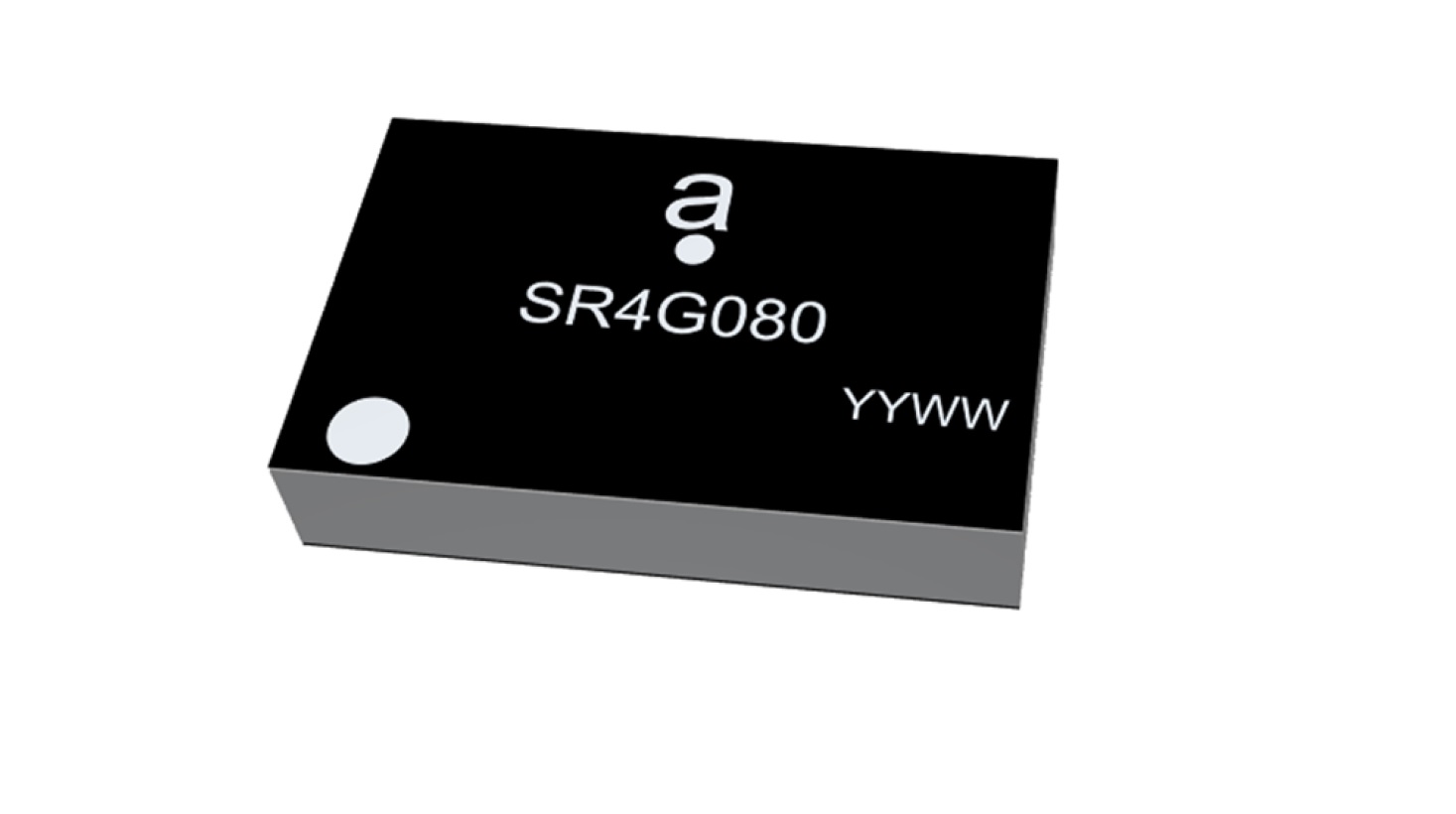
    Antenova Ltd. is adding a new offering to its range of miniature surface-mount-designed (SMD) antennas and modules for GNSS applications. The new antenna, Agosti (part number SR4G080), measures 9.0 x 5.8 x 1.7 mm and operates with exceptional efficiency in a reduced space on a corner of a printed circuit board (PCB).

    The key advantage of the Agosti antenna is its small ground-plane requirement. Most SMD antennas use the surface of the PCB around the antenna as a ground plane from which to radiate the signal — the ground-plane requirement, not the physical dimensions of the antenna, define the space it needs.

    Antenova’s radiated measurement results show Agosti operating well on small ground planes of 40 x 20 mm, 70 x 25 mm and 80 x 30 mm, making it a suitable choice for small form-factor designs, such as small wearable devices, trackers and on-board diagnostics (OBDs).

    Agosti is designed to integrate and co-exist with other antennas within the same device. OBDs and trackers often use 4G/LTE with A-GPS for fallback. The Agosti antenna has been tested with Antenova’s Pharoah antenna (part number SR4L073), which also has a very small ground-plane requirement. The two antennas have excellent isolation and can operate in close proximity to each other in a very small device without the 4G signal interfering with sensitive GNSS signals.

    “Small SMD antennas such as Agosti are an exciting alternative to the common delicate ceramic patch antennas used in GNSS designs,” said Michael Castle, product marketing manager, Antenova. “This is not just because the SMD antennas are significantly smaller. It is also because they provide omni-directional performance.

    “Patch antennas are typically 12 mm or 14 mm square, are heavier than SMD antennas, and need a much larger ground plane and keep-out area,” Castle said. “They also have to be placed in the center of a circuit board and only work well when they point at the sky. Antenova’s new generation of SMD antennas overcome all of these limitations and perform well regardless of position and orientation of the device.”

  • Antenova’s Raptor antenna pinpoints location to within centimeters

    Antenova’s Raptor antenna pinpoints location to within centimeters

    Photo: Antenova
    Photo: Antenova

    Antenova Ltd. has developed a new positioning antenna that it says can pinpoint a location to within centimeters in the GNSS bands. Antenova is a manufacturer of antennas and RF antenna modules for machine-to-machine and the internet of things.

    Antenova will be showing samples of the Raptor antenna at the Consumer Electronics Show, being held Jan. 8-11 in Las Vegas, in booth #2220 in the Westgate hall.

    The Raptor antenna utilizes the L2 1200-MHz satellite band that recently became available for civilian use.

    The addition of the L2 frequency band combines multi-band satellite signal reception and GNSS correction data. This helps to mitigate position errors, greatly improving accuracy, especially in urban areas, the company said.

    As well as improving tracking, the L2 band is beneficial for UAVs, drones, autonomous vehicles, agriculture, grid mapping and other emerging applications, Antenova added.

    The antenna is the latest addition to Antenova’s lamiiANT range of rigid FR4 antennas which are designed for easy insertion onto a printed circuit board (PCB).

    The antenna itself is very small. It is a GPS single-feed antenna in surface mount (SMD) form, measuring 16.0 x 8.0 x 1.6 millimeters, suitable for small PCBs within all kinds of small electronic devices.

    “This is an outstanding antenna, because it achieves the same precision as a much larger, heavier ceramic patch antenna, but in a very compact SMD part,” said Colin Newman, CEO of Antenova. “A ceramic antenna would need to be 35  x 35 millimeters to achieve a similar level of accuracy and performance.” Raptor is supplied in tape and reel for ease in high-volume manufacturing applications.

  • Antenova ships tiny GNSS active antenna module

    Antenova ships tiny GNSS active antenna module

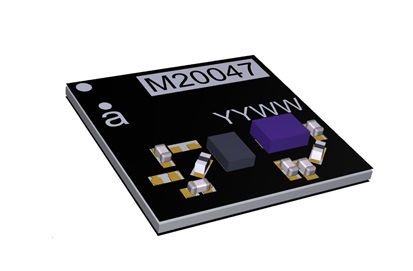
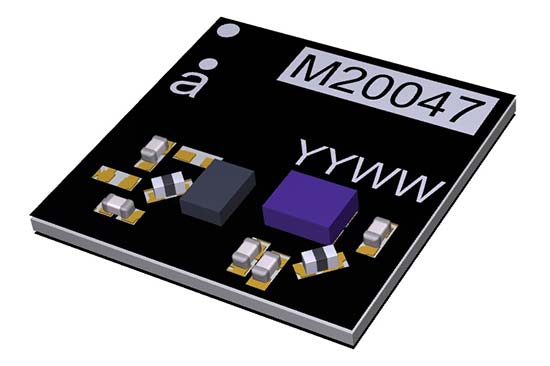
    Antenova is shipping its ultra-small GNSS active antenna module for tiny positioning devices, the RADIONOVA M20047-1. The antenna module includes a low noise amplifier (LNA) and surface acoustic wave (SAW) filter for better positioning from difficult locations.

    Antenova Ltd. is a manufacturer of antennas and RF antenna modules for connected devices and the internet of things.

    The RADIONOVA M20047-1 is designed for small consumer devices such as smartwatches. (Photo: Antenova)
    The RADIONOVA M20047-1 is designed for small consumer devices such as smartwatches. (Photo: Antenova)

    The RADIONOVA M20047-1 is an active antenna module for GNSS applications in the 1559-1609 MHz satellite bands using GPS, GLONASS, Galileo or BeiDou.

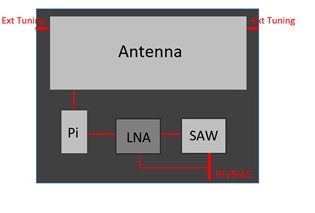
    The M20047-1 antenna module comprises an SMD antenna with built-in active components: an LNA filter and SAW to boost antenna performance — so designers will not need to add these — contained in a compact FR4 part with low power consumption, measuring 7.0 x 7.0 x 0.9 millimeters and weighing less than 2 grams.

    The onboard LNA and SAW filter act to boost the signal to the GNSS processor in environments where there is a restricted view of the sky or where line-of-sight to the horizon is difficult, the company said.

    Architecture of the Antenova antenna. (Image: Antenova)
    Architecture of the Antenova antenna. (Image: Antenova)

    Antenova has also added an external matching feature to compensate for any de-tuning of the antenna caused by proximity to other components, such as a plastic case or a battery.

    The clear-out area required by the antenna module is only 7.0  x 5.0 millimeters. This, with its tiny size, makes the M20047-1 suitable for small positioning devices where space on the PCB is tight, such as wearable devices, asset tracking devices, sports cameras and equipment and smartwatches.

    The M20047-1 is an alternative to Antenova’s Sinica antenna (part no. SR4G008), which Antenova also recommends for accurate positioning.

    The M20047-1 was first announced at the Consumer Electronics Show in Las Vegas in January.

    Antenova’s antennas are specifically designed for easy integration. The datasheet and evaluation kit for the M20047-1 are available from www.antenova.com. Antenova also provides full engineering support, antenna testing, tuning and integration for its customers.

  • Antenova compact antenna boosts GNSS signals

    Antenova Ltd., manufacturer of antennas and RF antenna modules, has launched a new compact, all-in-one active GNSS antenna, part number M20047-1, at the Consumer Electronics Show (CES) show, Jan. 9-12, in Las Vegas.

    The M20047-1 antenna adds another option to the company’s existing range of positioning antennas and modules.

    It operates in the 1559–1609 MHz bands, and offers designers a useful, space-saving option for small tracking devices.

    It’s key features are the active components, the built-in LNA and filter, which act to boost the signal to the GNSS processor in environments where there is a restricted view of the sky and line-of-sight to the horizon is difficult. With the LNA and filtering already built into the antenna, designers will not need to add them, and can save space on their PCB.

    The M20047-1 is a very low profile rigid FR4 antenna measuring 7.0 x 7.0 x 1.1 millimeters, making it suitable for use in small tracking devices. It is suitable for tracking all kinds of moving objects, telematics and wearable sports devices.

    The M20047-1 antenna is named Active Sinica and is an alternative to Antenova’s existing Sinica antenna, part no SR4G008, which is marketed for accurate positioning.

    Antenova’s antennas are specifically designed for easy integration; however, the company provides full engineering support to help customers with all aspects of antenna testing, tuning and integration.

  • Antenova introduces low-profile Robusta GNSS antenna

    Antenova Ltd. has launched the Robusta GNSS antenna for tracking applications and smart cities. The Robusta is a very low-profile antenna in a new patent design for metal surfaces.

    Antenova, manufacturer of antennas and RF antenna modules for M2M and the Internet of Things, launched the Robusta (part no. SR4G031) at the GSMA Mobile World Congress Americas show, held Sept. 12-14 in San Francisco.

    The antenna operates in the 1559-1609 MHz bands and is designed for tracking metal objects and smart city applications.

    The Reflector family is designed to answer to the challenge of operating on a metal surface or housing, where it is extremely difficult for an antenna to operate. The Reflector antennas use a patented new technology with two layers. The first layer is electrically isolated from the second layer to provide RF shielding to the second layer. This allows the antenna to radiate effectively in the direction pointing away from the base material.

    The Robusta antenna has two key features for discreet tracking. It is extremely low profile so it can be mounted onto a metal object such as a bicycle frame or concealed under a label. Being able to operate directly on a metal surface, it can be used on bicycles, motorcycles, vehicles, containers or other property that needs to be tracked and located accurately.

    The Robusta antenna is also a good choice for smart lighting and smart meters in smart city applications, where it can be fixed to metal fittings.

    The antenna is manufactured from rigid FR4 material and measures 23 x 16 x 1.7 millimeters high, and comes with 100-millimeter or 150-millimeter cable and IPEX MHF connector and an adhesive pad for easy integration into a device.

    Antenova provides resources on its website to help with integration.

  • Antenova reveals chip antennas for new NB-IoT standard

    Antenova reveals chip antennas for new NB-IoT standard

    Antenova's new NB-IoT antenna "Latona."
    Antenova’s new NB-IoT antenna “Latona.”

    Antenova Ltd., manufacturer of antennas and RF antenna modules for machine-to-machine and the Internet of Things (IoT), has developed a new antenna for the new narrow-band IoT (NB-IoT) standard that was ratified in 2016. The company showcased the antenna at Embedded World in Nuremberg in March.

    The antenna is small, measuring 20 x 11 x 1.6 mm, and is built to a novel design that allows it to perform well within a device while being easy to integrate onto a small printed circuit board (PCB).

    The new chip antenna in the company’s lamiiANT antenna family is named Latona (part no. SR4C033)

    Narrow-band IoT is the latest mobile broadband standard. It uses the 3GPP licensed network spectrum, which is secure and free from interference, and offers the combined advantages of low power, long range and the ability to penetrate walls and metal barriers.

    “Narrow Band IoT will be good for connecting devices in locations where the signal distance is in kilometers and for locations in basements and underground.” explains Antenova’s CEO, Colin Newman. “It could be the enabler for some of the IoT applications that are emerging that are not suited to the established telecoms networks, where the data throughput is quite low and infrequent. We see these antennas being used for smart metering, agricultural technologies, building automation and smart city applications with lighting, waste bins and parking spaces.”

    As with all of Antenova’s embedded antennas, the NB-IoT antennas are designed for quick and easy integration onto a host PCB.

    Samples of Latona areavailable to order. Antenova provides full design, testing and tuning services for customers who are adding wireless capabilities to their IoT devices and other electronic products.

  • Antenova’s Beltii miniature antenna designed for small PCBs in GNSS devices

    beltii-gnss-antennaAntenova Ltd., manufacturer of antennas and RF antenna modules for machine-to-machine (M2M) and the Internet of Things, is now offering Beltii (P/N SR4G013), an embedded antenna that measures 15.6 x 3.3 x 4.4 millimeters and operates with all satellite navigation constellations.

    The antenna has been designed to work over a very small ground plane on a small printed circuit board (PCB), where it can be placed in a corner position, and does not need any ground clearance.

    Beltii works with GPS, GLONASS, BeiDou and Galileo, and can add a positioning capability to any small, lightweight device at 1559-1609 MHz. It is suitable for wearable electronics, trackers, drones, navigation devices, and sports applications, the company said.

    It is the latest in Antenova’s lamiiANT range of antennas, which are manufactured from FR4 materials and use the latest in dielectric constant laminate substrates to construct smaller, more efficient antennas.

    “Beltii is a brand-new design using new materials. It beats the typical larger, ceramic patch antennas on all counts: it is smaller, more efficient, and performs better,” said Antenova CEO Colin Newman. “It is a great addition to our range of positioning antennas.”

    Beltii radiation pattern at 1557.42 MHz.
    Beltii radiation pattern at 1557.42 MHz.

    Because the performance of a wireless device depends on the performance of its antenna, and the performance of the antenna depends on how it is integrated into the PCB, Antenova’s antenna designers give the integration requirement top priority and design each antenna so that it can be integrated easily, and to perform well in situ within the device. Antenova calls this concept DFI, or Design For Integration.

    Antenova also provides detailed datasheets with advice on integrating the antenna, and offers the services of its engineering team to help customers and OEMs with antenna integration if required.

    Evaluation boards (P/N SR4G013-U1) are available with full details of all of Antenova’s embedded antennas.

  • Antenova offers flexible antennas for positioning

    Antenova Ltd., manufacturer of antennas and RF antenna modules for machine-to-machine (M2M) and the Internet of Things, is adding two new positioning antennas to its range of flexible FPC antennas.

    Bentoni is a positioning antenna for all of the global public satellite constellations: GPS, GLONASS, BeiDou and Galileo. It is designed to be used in trackers, portable devices, network components, drones and wearable electronics.

    Asper is a dual antenna with two separate antenna systems in a single form factor. It combines a 1559–1609 MHz antenna with a 2.4–2.5 GHz antenna in the same part for positioning applications with wireless connectivity as well. This antenna is suitable for sports cameras, trackers, dash cams, portable devices, network devices and wearable electronics.

    Both antennas offer high performance and maintain good isolation in situ within a device.

    Bentoni and Asper are the latest flexible FPC antennas in Antenova’s flexiiANT product range. They are supplied with an I-PEX MHF connector and a 1.13 mm RF cable in a choice of three lengths.  They can be folded to save space in operation within a device.

    Antenova’s antenna design team aims to create antennas that a product designer can integrate with the other circuits in a design in a convenient way, rather than designing a product to fit around the antenna. The aim of these antenna designs is plug and play simplicity — they are self-adhesive mounted so that they can easily be fixed inside an electronic device.

    Bentoni antenna and Asper antennas are available to order now.

  • Antenova’s latest modules add GNSS to consumer devices and wearables

    Antenova Ltd., manufacturer of antennas and RF antenna modules for machine-to-machine (M2M) and the Internet of Things, has released two new modules for GPS and GNSS. Both provide an easy drop-in receiver solution — a way to add a location capability to very small consumer devices.

    The two modules are similar, both measuring 9.0 x 9.0 x 1.8 millimeters, with low current consumption, making them suitable for smaller portable devices such as smartwatches, navigation devices, OBD II modules, asset tracking, personal safety, sports cameras and equipment. They are based on a MediaTek processor.

    The M10578-A2 module operates with GPS, with a 1-5 Hz update rate, and the M10578-A3 operates with GPS, GLONASS, BeiDou and Galileo with an update rate of 1-10 Hz.

    Antenova has added two features to enhance performance of the modules. An internal self-generated orbit prediction uses two GNSS systems simultaneously to give a faster time to fix, and a second high-quality low noise amplifier (LNA) boosts low-powered satellite signals.

    The new M10578 modules are the latest in Antenova’s Radionova series of fully optimized RF modules for wireless M2M and embedded devices. Both modules are pin compatible, offering easy integration and upgrade from GPS to GNSS; for the antenna function, Antenova offers the small Sinica SR4G008 GNSS antenna.

    The new modules are built on high-grade FR4 substrates with a high density, multi-layered design that places the critical RF functions in the best position for location finding and performance.

    The M10578-A2 and M10578-A3 are available to order now.

  • The Business — October 2015

    The Business section from the October 2015 GPS World. Download the PDF.

    Includes:

    • INTERGEO’s Massive Marketplace
    • Antenova GNSS Antenna Integration
    • What Mattered Most at CTIA Super Mobility Week
    • UAV, Survey Markets Key for Maxtena Growth
    • Broadcom’s New Chip for Internet of Things
    • Autonomous Vehicles, Drones Next Big Thing for u-blox
    • PCTEST Expands Antenna Testing Capabilities with Rohde & Schwarz
    • Spirent Robust Framework Evaluates Threats to GNSS