Author: Jesse Khalil

  • How OEM technology is enhancing precision applications

    How OEM technology is enhancing precision applications

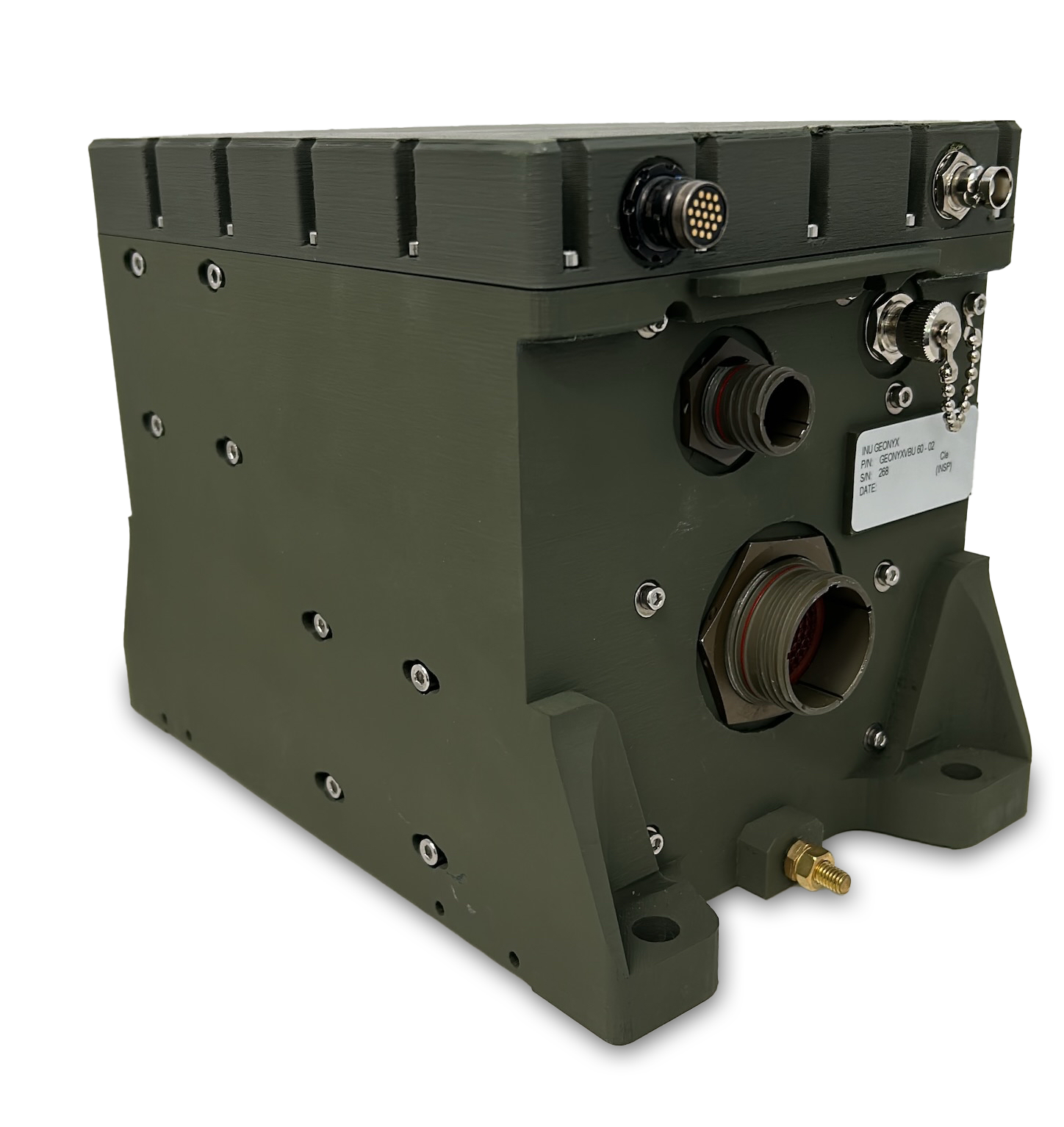
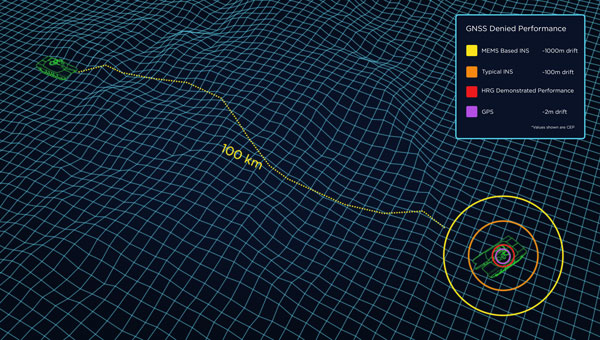
    When a vehicle passes through a GNSS-denied area, its navigation system might be thrown off and report an incorrect position. Conversely, INS is inherently subject to drift — the steady accumulation of errors — and therefore must be periodically re-initialized by an external source, such as GNSS. (Photo: Safran Federal Systems)
    When a vehicle passes through a GNSS-denied area, its navigation system might be thrown off and report an incorrect position. Conversely, INS is inherently subject to drift — the steady accumulation of errors — and therefore must be periodically re-initialized by an external source, such as GNSS. (Photo: Safran Federal Systems)

    The term “original equipment manufacturer”  (OEM) is widely used, yet vaguely described. In general, an OEM product is one that a company creates and sells to be integrated into systems made by other manufacturers.

    In the GNSS industry, the purchasers of OEM products typically are manufacturers of products that require precise positioning or navigation capabilities, from precision agriculture, to surveying and mapping, to UAV missions. Often, manufacturers integrate the OEM GNSS receivers with other sensors, such as inertial measurement units (IMUs) and lidar devices.

    A large portion of the OEM business goes unnoticed by the end users of the equipment that utilizes OEM components. These components, such as a guidance system, are often hidden from view, due to being housed under a hood or elsewhere deep within the system.

    In the following case studies, OEM products complement GNSS in air, land and marine applications. Safran Federal Systems’ INS for land vehicle navigation and Septentrio’s AIM+ anti-jamming and anti-spoofing technology tackle land and air-based defense applications, while an OxTS IMU is used in a coral reef restoration project to accurately record ship motion.

    Land vehicle navigation in GNSS-denied environments
    Safran Federal Systems

    Ground vehicles in defense operations often navigate in challenging environments where traditional GPS signals are contested or unreliable. This includes dense urban areas, heavily forested regions, or any areas where enemies employ electronic warfare to disrupt GPS signals. Having a robust navigation system that can provide both the vehicle’s location in real time as well as its precise orientation and direction/heading is crucial for defense applications. An inertial navigation system (INS) can provide reliable position and heading data for short periods of time or distances without the aid of GPS satellite signals, allowing vehicles to stay on course and maintain awareness of their location.

    Precise location and navigation capabilities are essential for mission planning, execution and coordination with other units. Inaccurate navigation can lead to mission failure, unintended engagements, or even friendly fire incidents.
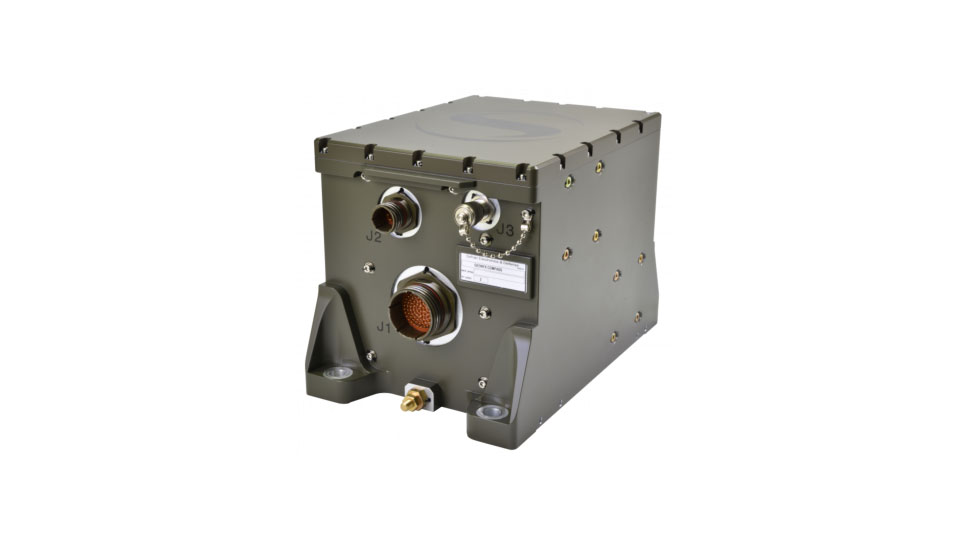
    Geonyx INS
    Geonyx INS

    Safran’s Solution

    Geonyx INS with incorporated M-Code capability
    Geonyx INS with incorporated M-Code capability

    Safran has developed the Geonyx INS, which provides route guidance in GNSS-denied environments. It incorporates hemispherical resonator gyroscope (HRG) technology and does not rely on external satellite signals for navigation and heading. Instead, it uses gyroscopes to detect changes in heading and accelerometers to detect changes in acceleration, then uses those data to calculate the vehicle’s position, orientation and velocity.

    The Geonyx will output coordinates of the vehicle’s current location as well as the data on its intended position to the vehicle’s battle management system (BMS). It can maintain an accuracy of a couple of meters after tens of miles of pure inertial navigation.

    Geonyx is a combat-proven INS solution for ground vehicles, augmenting battle management systems. It can achieve a heading accuracy as good as 0.5 mils thanks to Safran’s HRG Crystal technology. It has quick and flexible alignment, even in GNSS-denied environments.

    Safran is upgrading the Geonyx to incorporate M-Code capability. This enhancement offers a fully integrated solution to tackle the challenges of GPS-denied or spoofing environments, ensuring robust and reliable navigation even in the most demanding conditions.

    JammerTest in Bleik, Andøya, Norway. (Photo: David Jensen)
    JammerTest in Bleik, Andøya, Norway. (Photo: David Jensen)

    Resilient GNSS receiver
    Septentrio

    Around the world, there is an increasing demand for better resilience in positioning, navigation, and timing (PNT) systems. U.S. President Joe Biden has signed an executive order to enhance national resilience through PNT services. Geo-political tensions require a higher level of security for operations in areas of navigational warfare (NAVWAR) under contested GNSS conditions.

    In countries such as Finland, companies are seeking reliable receivers that can be connected in a network to identify sources of malicious interference. In numerous GNSS applications, such as reference networks, UAV surveillance, delivery and timing synchronization, the repercussions of PNT degradation or loss can be significant.

    Septentrio’s Solution

    Septentrio took part in the JammerTest 2023 event organized by the Norwegian government on the remote island of Andøya, where live interference testing was conducted in a controlled environment.

    While most of these test events are classified and their results cannot be shared publicly, the JammerTest represents one of the first public events of its kind where the sharing of results is encouraged.

    After five days of intensive testing in Norway, Septentrio’s AIM+ anti-jamming and anti-spoofing technology proved to work well under live interference conditions. Test results revealed that under real interference, receiver technology plays a key role, while antenna technology plays a supporting role. By testing the receiver under various types of spoofing attacks, it was shown that the best spoofing protection lies in having multiple anti-spoofing mechanisms working together.

    Detecting and Mitigating GNSS Jamming

    This test used a “cigarette lighter” jammer, which is commonly available for purchase online. It emits signals with power between 10 dBm and 15 dBm and can disrupt GPS L1 and L2 signals. Other jamming tests involved using jammers with signals 10 million times more powerful than GNSS signals.

    Over one day of intensive jamming tests, receivers with integrated AIM+ demonstrated 99.5% positioning availability under various forms of jamming from simple continuous narrow-band interference to the most complex wide-band transmissions.

    The Magic is in the Receiver

    For mission-critical applications, an anti-jam antenna can help achieve maximum resilience against RF interference. During the JammerTest, three receivers were tested under heavy multi-frequency wideband jamming in combination with antennas of varying sophistication. A receiver with a standard wideband helical antenna that did not have AIM+ anti-jamming technology immediately lost tracking of satellite signals during jamming. A receiver with the same antenna, but with AIM+, continued to track signals and deliver positioning. A receiver with AIM+ coupled with an anti-jam antenna displayed that the drop in signal quality is slightly less than with a standard antenna and the receiver continued to track signals and to deliver positioning.

    Tests with various anti-jam antennas showed an interference reduction of about 10 dB. While AIM+ plays a role in positioning availability under jamming, an antenna plays a supporting role and can improve the chances of getting positioning in cases where the jamming is still slightly stronger than the ability of the receiver to mitigate it. While anti-jam antennas can be effective in countering wide-band “white-noise” jamming, they are less effective for other types of jamming.

    Accurate and available PNT is key to successful industrial or critical operations in challenging environments. By regularly participating in live events such as the JammerTest, Septentrio anti-jamming and anti-spoofing technology is continuously being tested and improved to withstand the latest interference attacks. This technology also has been confirmed to be effective by users out in the field, who are using Septentrio receivers in places of malicious interference, such as near contested borders.

    Photo: Tunatura / iStock / Getty Images Plus / Getty Images
    Photo: Tunatura / iStock / Getty Images Plus / Getty Images

    INS Used for Coral Reef Restoration Project
    OxTS

    The Reef Restoration and Adaptation Program (RRAP) is an effort to help a significant ecosystem such as the Great Barrier Reef (GBR) survive climate change. Through its Cooling and Shading sub-program, RRAP’s goal is to determine whether localized cloud brightening — a technique that involves spraying droplets of sea salt into clouds to reflect sunlight and cool Earth — and/or fogging could be a temporary solution to alleviate stress on parts of the GBR during hot summer conditions, which might lead to bleaching.

    The Ordnance Survey team was tasked with consistently creating precisely georeferenced point clouds that could be utilized for identifying and classifying features. The GBR is a significant source of biogenic volatile organic compounds (BVOCs), which are likely to be impacted by ocean warming in potential climate change scenarios. In turn, these BVOC emissions can influence Earth’s radiation budget by contributing to the creation of secondary organic aerosols and cloud condensation nuclei, ultimately leading to cooling.

    Southern Cross University, an RRAP partner, sought an accurate method to record ship motion for this project. The team needed to measure various parameters such as velocity, acceleration, pitch/roll, angle rate, and ship heading. They approached Industrial Measurement Solutions (IMS) and OxTS to assist them in addressing this challenge. To achieve this accurately, they needed to integrate the measurements from their existing sonic anemometer, which records three-dimensional wind velocity, with the measurements from an IMU.

    OxTS Takes the Challenge

    Correcting wind speed for platform motion requires two high-resolution sensors to record data simultaneously: a sonic anemometer that records three-dimensional wind velocity, and an IMU that records the movement of the platform/ship. The sonic anemometer and the IMU are two very sensitive sensors, and many of the technology challenges the team faced involved setting them up correctly and getting them to work seamlessly together.

    Once the project team realized that they needed an IMU to measure the ship/platform motion, one of their collaborators at the time, Airborne Research Australia (ARA), suggested an OxTS xNAV650.

    After they had defined the project requirements, Southern Cross University contacted IMS who helped them navigate the commercial process.

    xNAV650 is a miniature INS that uses survey-grade dual-frequency GNSS receivers and custom MEMS IMU for centimeter-level position accuracy, precise orientation and true heading. It logs the navigation data on internal storage for downloading and viewing post-mission. It can be used in many applications, such as corridor mapping and precision agriculture.
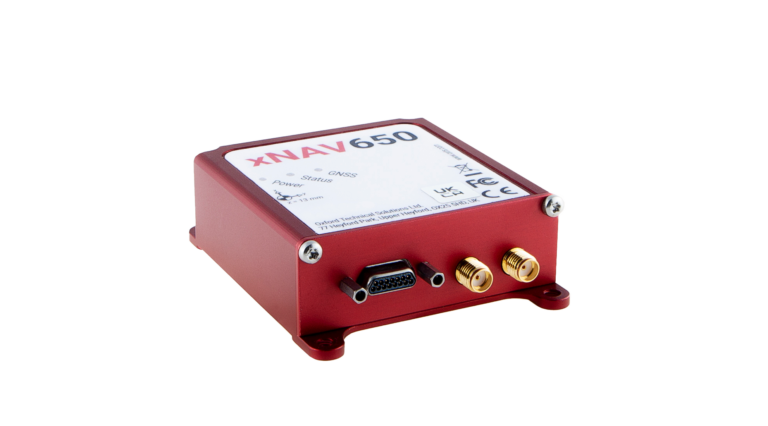
    OxTS xNAV650 Inertial Navigation System. (Photo: OxTS)
    OxTS xNAV650 Inertial Navigation System. (Photo: OxTS)

    IMU in Action

    The xNAV650’s IMU allowed Southern Cross University to accurately measure the motion of the ship. The IMU was configured to “displace output” to the location of the 3D wind measurement instrument — the sonic anemometer. This allowed the project team to record the movement of the instrument directly, thus avoiding any additional complicated processing steps. Additionally, the IMU was configured to output a 1 pulse per second (PPS) signal via serial connection. This allowed the project team to connect the IMU to the sonic anemometer’s data logger to sync the time between the two instruments. This was vital on such a rapidly moving platform.

    Once installed, the xNAV650 device was able to measure ship motion accurately and at high time resolution
    (100 Hz), which was complementary to the team’s wind velocity and BVOC measurements. The PPS output option allowed for simultaneous measurement/recording, which would have otherwise needed to be corrected in post-calibration and would likely not have been as accurate.

    “We managed to accurately record ship motion for the entire length of our second voyage,” said Liz Deschaseaux, RRAP’s research fellow on BVOC emissions. “The reliability and accuracy of the xNAV650 has had a real impact on our ability to collect meaningful data.”

  • Felt upgrades GIS platform

    Felt upgrades GIS platform

    Photo: Felt
    Photo: Felt

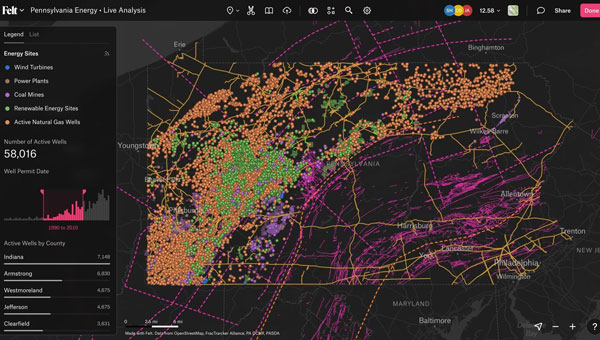
    Felt has introduced Felt 3.0, which includes new features and native database integrations to improve Geographic Information Systems (GIS) capabilities. The goal of Felt 3.0 is to make data more accessible and actionable for stakeholders. It provides modern GIS tools for teams to visualize, analyze and present important insights and map data relevant to their operations.

    The company released version 2.0 in November 2023, which introduced UI and spatial analysis tools. This was the first step towards allowing users to gather insights from geospatial data for recruiting, analytics, management and more. Now, with Felt 3.0, teams can connect their database directly to Felt and build interactive components and dashboards tailored to their specific workflow.

    Felt 3.0 allows users to directly connect Postgres/PostGIS and Snowflake databases and keep the data fresh with automated live data updates. Support for other third-party data sources, including Databricks, Amazon’s S3 and Redshift, Google’s BigQuery, and SpatioTemporal Asset Catalogs (STAC), will be available soon.

    Developers can also use Felt’s new API to reduce engineering time for custom geospatial app implementations. The API allows users to create and style elements and listen to map updates via webhooks, while providing a Python SDK for professionals to continue to work in their preferred tools.

  • SparkFun launches RTK evaluation kit

    SparkFun launches RTK evaluation kit

    Photo: SparkFun Electronics
    Photo: SparkFun Electronics

    SparkFun Electronics has introduced its real-time kinematics (RTK) evaluation kit (EVK). It serves as a development platform for fixed or mobile high-precision positioning and navigation needs. The RTK EVK comes with a range of options for prototyping, including L1+L2 RTK GNSS, with L-Band correction built-in if needed, running on an agile processor.

    It features custom open-source software pre-loaded with RTK Everywhere firmware. Users can configure the EVK as an RTK Base and push corrections to an NTRIP Caster or configure the EVK as an RTK Rover and use corrections delivered through WiFi or Bluetooth.

    The kit uses the dual-band (L1+L2) ZED-F9P GNSS receiver from u-blox. The integrated u-blox NEO-D9S offers L-Band reception and access to correction services such as PointPerfect. The u-blox LARA-R6001D provides global cellular connectivity.

    Zero-Touch RTK offers users a simple way to receive corrections. Users can register the device, plug it into Ethernet (PoE supported) or give it WiFi credentials for a hot spot and enable PointPerfect – no NTRIP credentials are required.

    The RTK EVK can be easily installed in a weatherproof enclosure with its custom extruded aluminum case with machined end panels and slotted flanges.

  • KrattWorks awarded $6M for GNSS-free navigation

    KrattWorks awarded $6M for GNSS-free navigation

    Photo: Krattworks
    Photo: Krattworks

    The European Defense Fund (EDF) and the Ministries of Defense of Estonia and Finland have awarded a $6 million investment to Project BadB, a consortium led by KrattWorks, an Estonian defense technology company. The project focuses on developing advanced navigation solutions for land and aerial vehicles that operate independently of GNSS.

    Project BadB aims to address the challenges posed by rapidly evolving electronic warfare technologies, such as radio jamming and GNSS spoofing. The project seeks to ensure reliable navigation for unmanned systems operating in contested environments, enhancing their operational effectiveness in active war zones and other critical areas.

    Specific objectives of the project include the development of weather-independent up-to-date satellite imagery maps for unmanned aerial and ground vehicles, a machine vision module, an image recognition system and a path planning system, based on sensor data, cross-platform data sharing and swarming.

    GIM Robotics will develop GNSS-denied navigation software for land vehicles, designed to resist and detect jamming and spoofing so vehicles can navigate accurately — even when GNSS signals are unavailable. The company’s technology allows land vehicles to maintain precise navigation using alternative data sources, such as satellite imagery and sensor integration.

    According to EDF, the project has gained attention among European defense and innovation leaders, who see it as solving a burning issue for the rapidly growing unmanned systems sector. The situation on the technology front has changed significantly in the past two years, as the sector faces new obstacles and opportunities each day.

    “We are witnessing an unprecedented fundamental change in the character of war, and our window of opportunity to ensure that we maintain an enduring competitive advantage is closing,” said General (ret) Mark Milley.

    GNSS-free navigation and geolocation also possess potential for civic use – such as in applications for critical infrastructure management, natural disaster mitigation and autonomous transportation systems.

    Project BadB was selected during the EDF 2023 Calls for Proposals, with a project duration of 24 months. The EDF aims to boost cooperation between companies and research entities to enhance European defense capabilities.

    For more information on Project BadB, visit the EDF Project Overview.

  • UAVOS launches gimbaled camera

    UAVOS launches gimbaled camera

    Photo: UAVOS
    Photo: UAVOS

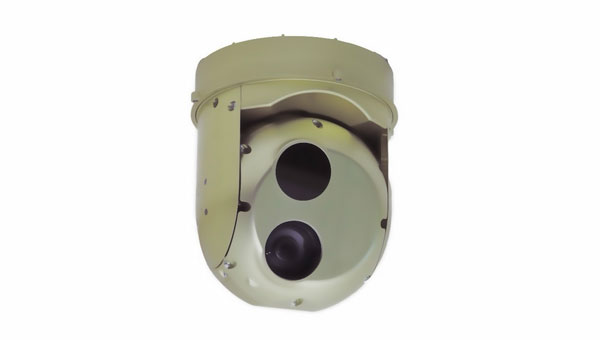
    UAVOS has launched Gimbal 155, a gimbaled camera designed for the UAV Survey Mission program. The GOS-155 meets UAV requirements for surveillance and rescue missions. Its optimized size, weight and power (SwaP) profile, advanced day and night ISR imaging, and embedded video processor make it ideal for any mid-sized UAV — vertical take off nd landing (VTOL) or winged. With its low weight of 1,8 kg, and 155 mm, UAV platforms can increase endurance without sacrificing optical performance.

    The GOS-155 two-axial gimbal is an EO/IR system, comprising a 30x optical zoom HD (1280×720) visible camera paired with a fixed focal length uncooled thermal LWIR (1280×1024) camera. This allows users to collect intricate visuals across visible and infrared spectrums.

    It includes embedded video processing with electronic stabilization and object tracking and can be integrated with external GPS/INS with real-time target location at 20 m across multiple environments, and around 5 m using UAVOS’ Ground Control Station software.

  • JNC 2024: VIAVI Solutions

    JNC 2024: VIAVI Solutions

    Said Jackson, vice president and general manager and Nino De Falcis, chief growth executive of VIAVI Solutions, highlight the company’s new line of secured time services to address GNSS vulnerabilities. Jackson and De Falcis also discuss the benefits of VIAVI’s new resilient positioning, navigation and timing (PNT) solution.

    Learn more about VIAVI’s new complementary PNT service.

    Read about VIAVI’s new resilient PNT solution.

  • Europe’s Ariane 6 takes flight

    Europe’s Ariane 6 takes flight

    Photo: ESA
    Photo: ESA

    Europe’s new heavy-lift rocket, Ariane 6, was launched into space from Europe’s Spaceport in French Guiana on July 9, 2024.

    Ariane 6 is the latest in Europe’s Ariane rocket series, taking over from Ariane 5. It features a modular and versatile design that can launch missions from low-Earth orbit (LEO) and out into deep space. Galileo Second Generation (G2) satellites are projected to join the constellation in 2026 with the Ariane 6 launcher. G2 satellites will use electric propulsion and host a more powerful navigation antenna, better atomic clocks and fully digital payloads.

    This inaugural flight, designated VA262, is a demonstration flight to test the capabilities of Ariane 6 in escaping Earth’s gravity and operating in space. It had several passengers on board. The next Ariane 6 is planned for launch this year on its first commercial flight under Arianespace as operator and launch service provider.

  • Saildrone, NOAA and Rutgers improve Hurricane Beryl monitoring

    Saildrone, NOAA and Rutgers improve Hurricane Beryl monitoring

    Photo: Saildrone and NOAA.
    Photo: Saildrone and NOAA.

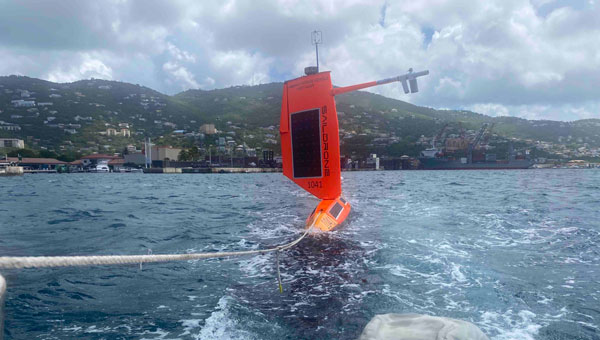
    As Hurricane Beryl moved across the Caribbean, the National Oceanic and Atmospheric Administration (NOAA) has partnered with Saildrone to deploy seven hurricane-tracking saildrones in strategic locations.  

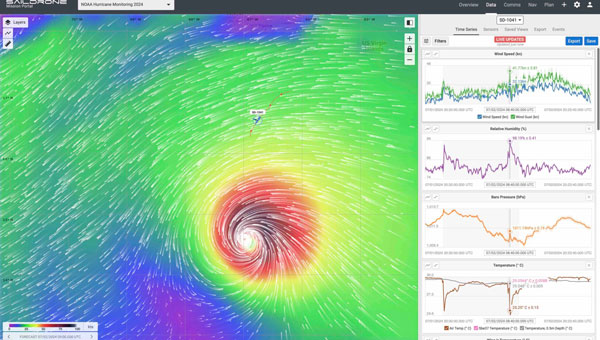
    These unmanned surface vessels (USVs) are equipped with a specialized “hurricane wing” to withstand extreme wind conditions. The USVs are gathering real-time data on key atmospheric and oceanic parameters such as wind speeds, wave heights, temperature, pressure and salinity​. 

    Hurricane Beryl 

    Hurricane Beryl impacted Jamaica, the Cayman Islands and the Yucatan Peninsula. Residents were urged to complete preparations to protect life and property as the storm progressed. 

    Two saildrones were deployed in the Gulf of Mexico, launched from St. Petersburg, Florida, and Port Aransas, Texas, and five more in the Atlantic Ocean and Caribbean Sea, launched from Jacksonville, Florida, and the U.S. Virgin Islands. These systems provide critical data to improve the understanding and prediction of tropical cyclone intensity changes, particularly rapid intensification — where hurricane wind speeds increase dramatically in a short period. 

    To enhance these efforts, Rutgers University deployed underwater gliders that work in tandem with saildrones. These gliders measure temperature and salinity at various depths, offering a detailed picture of the ocean’s conditions before, during and after a hurricane.  

    The collaboration aims to provide high-resolution, coordinated measurements from the ocean surface to the atmosphere, enhancing situational awareness for forecasters and improving the accuracy of hurricane intensity forecasts. 

    Advanced Technologies  

    Equipped with a “hurricane wing,” Saildrone’s USVs can collect continuous data in harsh storm conditions, providing real-time insights into the physical interactions between the ocean and atmosphere. Underwater gliders, deployed by Rutgers, aid in measuring subsurface ocean conditions, which are critical for understanding how variations in temperature and salinity affect hurricane strength. 

    The information gathered by these technologies is extremely valuable for enhancing predictive models, ultimately helping to improve disaster preparedness and response. The partnership between Saildrone, NOAA and Rutgers University represents a significant step forward in the use of uncrewed systems for environmental monitoring. 

    Photo: Saildrone and NOAA
    Photo: Saildrone and NOAA
  • Israeli air base identified as alleged source of GPS disruptions in Mideast

    Israeli air base identified as alleged source of GPS disruptions in Mideast

    Photo: Sauce Reques / Royalty-free / iStock / Getty Images Plus
    Photo: Sauce Reques / Royalty-free / iStock / Getty Images Plus

    Researchers from the University of Texas at Austin have identified an Israeli air base as a large source of widespread GPS disruptions affecting civilian airline navigation in the Middle East, reported The New York Times. 

    The spoofing disruptions involve the transmission of manipulated GPS signals, which can cause airplane instruments to misread their location. Lead researchers Todd Humphreys and Zach Clements stated they are “highly confident” that Ein Shemer Airfield in northern Israel is the source of these attacks. The Israeli military declined The New York Times request for comment. 

    The research team utilized data emitted by the spoofer and picked up by satellites in low-Earth orbit (LEO) to determine its location. They then confirmed their calculations using ground data collected in Israel.  

    Spoofing, along with GPS jamming, has significantly increased over the past three years, especially near war zones such as Ukraine and Gaza. In these areas, militaries interfere with navigation signals to redirect aerial attacks. 

    The Middle East has emerged as a hotspot for GPS spoofing, with The New York Times reporting that a separate analysis estimates more than 50,000 flights have been affected in the region in 2024 alone. Researchers from SkAI Data Services and the Zurich University of Applied Sciences, analyzeding data from the OpenSky Network and, found that these attacks have led pilots to mistakenly believe they were above airports in Beirut or Cairo. 

    Swiss International Air Lines told The New York TimesNYT that their flights are spoofed “almost every day over the Middle East.” 

    The issue extends beyond the region, with Estonia and other Baltic nations having blamed Russia for disrupting signals in their airspaces. Additionally, in April 2024, Finnair temporarily suspended flights to Tartu, Estonia, amid the rise of GPS jamming in the region affecting civilian air travel.  

    The attacks have not led to significant safety risks as pilots can use alternative navigation methods. However, they do raise concerns. 

    Jeremy Bennington, vice president of Spirent Communications, told The New York Times, “Losing GPS is not going to cause airplanes to fall out of the sky. But I also don’t want to deny the fact that we are removing layers of safety.” 

    The spoofing attacks may cause false alerts about planes being too close to the ground, leading to navigation confusion and possibly compromising flight safety. 

    As these disruptions continue to affect large areas far from active conflict zones, the aviation industry and international authorities are under increasing pressure to address this emerging threat to air travel security. 

  • Taoglas launches “patch-in-a-patch” antenna

    Taoglas launches “patch-in-a-patch” antenna

    Photo: Taoglas
    Photo: Taoglas

    Taoglas has unveiled Inception, a new GNSS L1/L5 ultra-low-profile “patch-in-a-patch” antenna. The HP5354.A offers dual-band stacked patch performance in a single 35 x 35 x 4mm form factor. This design integrates the second antenna within the first, eliminating the need for stacking parts and reducing the antenna height by 50%.

    The HP5354.A antenna features a passive, dual-feed surface mount design (SMD) designed to decrease weight and conserve horizontal space. This makes it suitable for GNSS applications requiring high precision and limited space. The antenna improves positioning accuracy from 3 m to 1.5 m while maintaining dual-band L1/L5 performance.

    With a passive peak gain of 2.61 dBi, the HP5354.A can be used for GPS L1/L5, BeiDou B1, Galileo E1, and GLONASS G1 operations. Its dual-feed design maintains circular polarization gain even when the antenna is de-tuned or requires in-situ tuning.

    It is ideal for applications such as asset tracking, smart agriculture, industrial tracking, commercial UAVs and autonomous vehicles. The HP5354.A uses Taoglas’ custom electro-ceramics formula, ensuring high-quality performance and seamless integration into devices requiring high-precision GNSS.

    Emerging GNSS bands such as L2, L5, L6, and L-band offer pathways to cleaner signals, improved gain and centimeter-level accuracy. This trend is crucial for global GNSS technologies, including GPS, GLONASS, Galileo, BeiDou, QZSS, IRNSS, and SBAS.

    With an ultra-low profile SMD, the antenna offers stack patch L1/L5 performance within a single-patch solution. It also maintains circular polarization gain with a dual-feed design.

    The Taoglas HC125A hybrid coupler can combine the dual feeds for the L1 patch, offering high RHCP gain and optimal axial ratio for upper constellations including GPS L1, BeiDou B1, Galileo E1 and GLONASS G1. The Taoglas TFM.100B L1/L5 front-end module can be incorporated into the device PCB, aiming to save valuable real estate and up to two years of complex design work, according to the company.

  • Eos Positioning Systems unveils high-accuracy GNSS receivers

    Eos Positioning Systems unveils high-accuracy GNSS receivers


    Photo: Eos Positioning Systems
    Photo: Eos Positioning Systems

    Eos Positioning Systems has released the Skadi Series product line. The Skadi Series consists of high-accuracy GNSS receivers designed to enhance field crews’ productivity, safety and flexibility.  

     Skadi Tilt Compensation allows users to capture data without needing to level their survey range pole. When activated on an RTK-enabled Skadi Series receiver, this feature allows users to rely on the receiver to correct errors caused by tilted range pole angles during data collection. 

    The Skadi Smart Handle introduces two additional features, powered by accurate lidar and MEMS sensor measurements. With the Skadi Smart Handle, users can activate an Invisible Range Pole to provide continuous elevation-to-the-ground measurements below the handheld Skadi receiver.  

    The receiver computes accurate elevation to the ground, regardless of its attitude (angle toward the ground). The Invisible Range Pole eliminates the need to carry a physical range pole and the requirement to enter an antenna height in a field data collection app while performing RTK-level accurate fieldwork.  

    The Skadi Smart Handle also includes an Extensible Virtual Range Pole. This feature extends the reach of the user’s Invisible Range Pole beyond the position they physically occupy. The Extensible Virtual Range Pole allows users to measure the location of assets on the ground or in trenches up to 7m (23 ft) away while retaining high accuracy.  

    The series adds four new GNSS receivers with integrated antennas to the Eos offerings: the Skadi 100, Skadi 200, Skadi 300 and Skadi Gold with accuracies ranging from submeter to centimeter. The Skadi 200, Skadi 300 and the Skadi Gold are RTK enabled and are available for purchase with Skadi Tilt Compensation and the Skadi Smart Handle. 

  • EASA updates advisory on navigation interference

    EASA updates advisory on navigation interference

    Photo: GPS IIIF
    Photo: GPS IIIF

    The European Union Aviation Safety Agency (EASA) has updated its Safety Information Bulletin (SIB) to address the growing number of GNSS outages and disruptions.  

    This updated advisory, SIB No. 2022-02R3, highlights the increasing sophistication and impact of GNSS jamming and spoofing, which have become significant concerns for aviation safety. 

    The bulletin is directed at competent authorities, Air Traffic Management/Air Navigation Services (ATM/ANS) providers, air operators, aircraft and equipment manufacturers and organizations involved in the design or production of ATM/ANS equipment. It aims to inform these stakeholders about the risks and necessary precautions related to GNSS interference. 

    Since February 2022, there has been a notable increase in GNSS jamming and spoofing, particularly in regions surrounding conflict zones and other sensitive areas such as the Mediterranean, Black Sea, Middle East, Baltic Sea and the Arctic, reports the EASA. These interferences can disrupt the accurate reception of GNSS signals, leading to various operational challenges for aircraft and ground systems. 

    Tackling jamming and spoofing  

    The bulletin addresses jamming and spoofing. Jamming involves intentional radio frequency interference that prevents GNSS receivers from receiving satellite signals, rendering the system ineffective or degraded, while spoofing involves broadcasting counterfeit satellite signals to deceive GNSS receivers, resulting in incorrect positioning, navigation and timing (PNT) data. Jamming typically results in immediate and noticeable effects, whereas spoofing is more difficult to detect and poses a higher safety risk. 

    Some symptoms of suspected GNSS spoofing include incoherence in navigation position, abnormal differences between ground speed and true airspeed, time and date shifts and spurious Terrain Awareness and Warning System (TAWS) alerts. These disruptions can lead to significant operational issues, such as re-routing or diversions, loss of Airborne Collision Avoidance System (ACAS) and misleading surveillance data. 

    EASA recommends several measures to reduce the risks associated with GNSS interference. These measures include establishing coordinated procedures between authorities, ATM/ANS providers and airspace users. The agency also suggests utilizing complementary PNT infrastructure and encourages users to implement a process to collect and report information on GNSS degradation. 

    Specific recommendations 

    For air operators:  

    • Train flight crews to recognize and respond to GNSS interferences. 
    • Promptly report any GNSS anomalies. 
    • Assess operational risks and maintain alternative navigation procedures. 

     For ATM/ANS providers:  

    • Establish monitoring and reporting processes for GNSS degradations. 
    • Ensure ground navigation infrastructure supports non-GNSS procedures. 
    • Provide navigation assistance and maintain communication coverage in case of GNSS jamming or spoofing. 

    For manufacturers:  

    • Assess the impact of GNSS interference on products and guide users. 
    • Support operators with instructions for managing GNSS-related issues. 

     Stakeholders are urged to implement the recommended measures to mitigate the impact of GNSS jamming and spoofing on aviation safety. 

    For further details, read the full EASA Safety Information Bulletin and visit the EASA website for updated information on affected regions.