onocoy has launched the onocoy real-time kinematic (RTK) service designed to offer positioning capabilities worldwide.
The service utilizes blockchain technology and a decentralized network of reference stations, offering users accurate correction data for applications requiring centimeter-level positioning. onocoy RTK offers global coverage with data quality controls in place to verify correction information before distribution.
According to onocoy, the service offers quick convergence times and high accuracy due to its dense network of reference stations. It outputs data in the standardized RTCM format for integration with various systems.
onocoy RTk targets industries such as agriculture, construction, mining, robotics and autonomous systems that require flexible and reliable high-precision positioning. onocoy says it is also developing business-to-business offerings, including access to station data and customized solutions.
With this launch, onocoy aims to expand access to RTK technology and advance high-precision positioning capabilities across sectors.
The Federal Communications Commission (FCC) has issued a public notice seeking comment on NextNav’s filing to reconfigure the Lower 900 MHz band (902 to 928 MHz band).
This action comes in response to NextNav’s April 2024 filing, which proposes a comprehensive restructuring of the band to enable the deployment of a 5G terrestrial positioning, navigation, and timing (PNT) network.
NextNav’s proposal aims to create a 5 MHz uplink in the 902-907 MHz band paired with a 10 MHz downlink in the 918-928 MHz segment. This reconfiguration is designed to complement and serve as a backup to GPS while also freeing up spectrum for 5G broadband services.
NextNav CEO Mariam Sorond said the spectrum band reconfiguration complements GPS to continue location mapping and tracking services and national security needs. “Our plan creates abundance from scarcity in this band by unleashing much-needed spectrum for wireless technology. These common-sense solutions can benefit consumers and our national interests at no cost to taxpayers,” Sorond said.
However, the FCC’s public notice raises several questions regarding the protection of incumbent users, including federal radiolocation systems, industrial, scientific, and medical (ISM) equipment, and unlicensed Part 15 devices. The Commission seeks input on how these existing operations would be safeguarded under NextNav’s proposal.
Comments are due Sept. 5, 2024. Following this comment period, the Commission will review the feedback to develop proposed rules for the potential reconfiguration of the Lower 900 MHz band.
AUKUS, the trilateral security partnership between Australia, the United Kingdom and the United States, deployed autonomous and artificial intelligence (AI)-enabled sensing systems during the Resilient and Autonomous Artificial Intelligence Technology (RAAIT) trials, showcasing advancements in their Pillar II advanced capabilities initiative.
The trials took place at multinational Project Convergence exercises hosted by the United States Army. Military personnel from the three AUKUS nations tested autonomous and AI-enabled sensing capabilities in a multi-domain battlespace—land, maritime, air, and cyber—that minimized the time between sensing enemy targets, deciding how to respond, and responding to the threat.
Once integrated into national platforms, these new sensing systems are designed to provide more reliable data, which can enable commanders to make optimal decisions and allow service members to respond more quickly to kinetic threats.
During the RAAIT exercise, a sophisticated plug-in for the Tactical Assault Kit (TAK) demonstrated impressive capabilities in enhancing military operations. This map-based software application allowed a UK RedKite UAV to dynamically detect opposing force locations by making real-time adjustments based on collected data. Simultaneously, a second UAV provided high-resolution imagery for confirmation. The integrated system seamlessly transmitted this critical information to the Tactical Operations Center (TOC), where a designated “AI officer” provided essential human oversight. Upon verification, the officer authorized an Australian XT-8 UAV to execute a simulated strike. The success of this TAK plug-in has prompted the U.S. Air Force Research Laboratory (AFRL) to plan its wider distribution, showcasing the potential for enhanced interoperability among AUKUS partners.
“It used to be that each nation used its own datasets to develop separate models and deploy those models on their own platforms. Under RAAIT, we’ve matured the AI pipeline, focusing on interchangeability and interoperability, which allows for any combinations of datasets, models, algorithms and platforms to be used across all three nations,” said Dr. Kimberly Sablon, the Principal Director of Trusted Artificial Intelligence and Autonomy in the Office of the Under Secretary of Defense for Research and Engineering.
Lessons learned at the RAAIT trials will be used for future training events. The AUKUS Artificial Intelligence and Autonomy (AIA) Working Group hopes to use these findings to develop an AIA ecosystem that will one day enable the three partner nations to share data for operational success in contested environments.
The President’s National Space-based Positioning, Navigation and Timing (PNT) Advisory Board has warned United States leaders that the nation is highly vulnerable to disruption of GPS services. Also, national PNT issues have not received sufficient priority and attention for the last 20 years, and no one is accountable for system performance.
The overwhelming majority of Allen’s message, though, dealt with GPS and U.S. PNT being vulnerable, the importance of PNT to the nation’s safety and security and the failure of the government to do the things it said it should and would do. It says:
“America’s continued over-reliance on GPS for PNT makes critical infrastructure and applications vulnerable to a variety of well-documented accidental, natural and malicious threats.
…our conclusion is that PNT, in general, and GPS, in particular, have not been accorded their rightful prominence in the national policy agenda.
Simply put, the Board believes that the 20-year-old framework for GPS governance and the current policy statements establish neither the priority that the system deserves nor sufficiently clear accountability for its performance.”
The reason for this was assessed to be that the leadership and governance structure established by 2004’s NSPD-39 and confirmed in 2021’s SPD-7 was not working.
Allen gave a recent policy document on critical infrastructure as an example. All critical infrastructure sectors use PNT, and most depend on it.
“These findings were reinforced just earlier this year by the release of the National Security Memorandum on Critical Infrastructure Security and Resilience (NSM-22, April 30, 2024). We were surprised to discover that GPS is nowhere mentioned in that important document.”
While not mentioned in the memo, PNT was also not mentioned in national cybersecurity documents issued last year. This is despite timing being essential to the operation of IT systems, and time and location data being key elements in many applications.
Allen’s memo also emphasized that the real issue is not about GPS, but overall national PNT capability. He went so far as to say, “Space Policy Directive 7 (SPD-7), U.S. Space-based PNT Policy, must be revisited and the term ‘space-based’ should be removed from its title” (emphasis added).
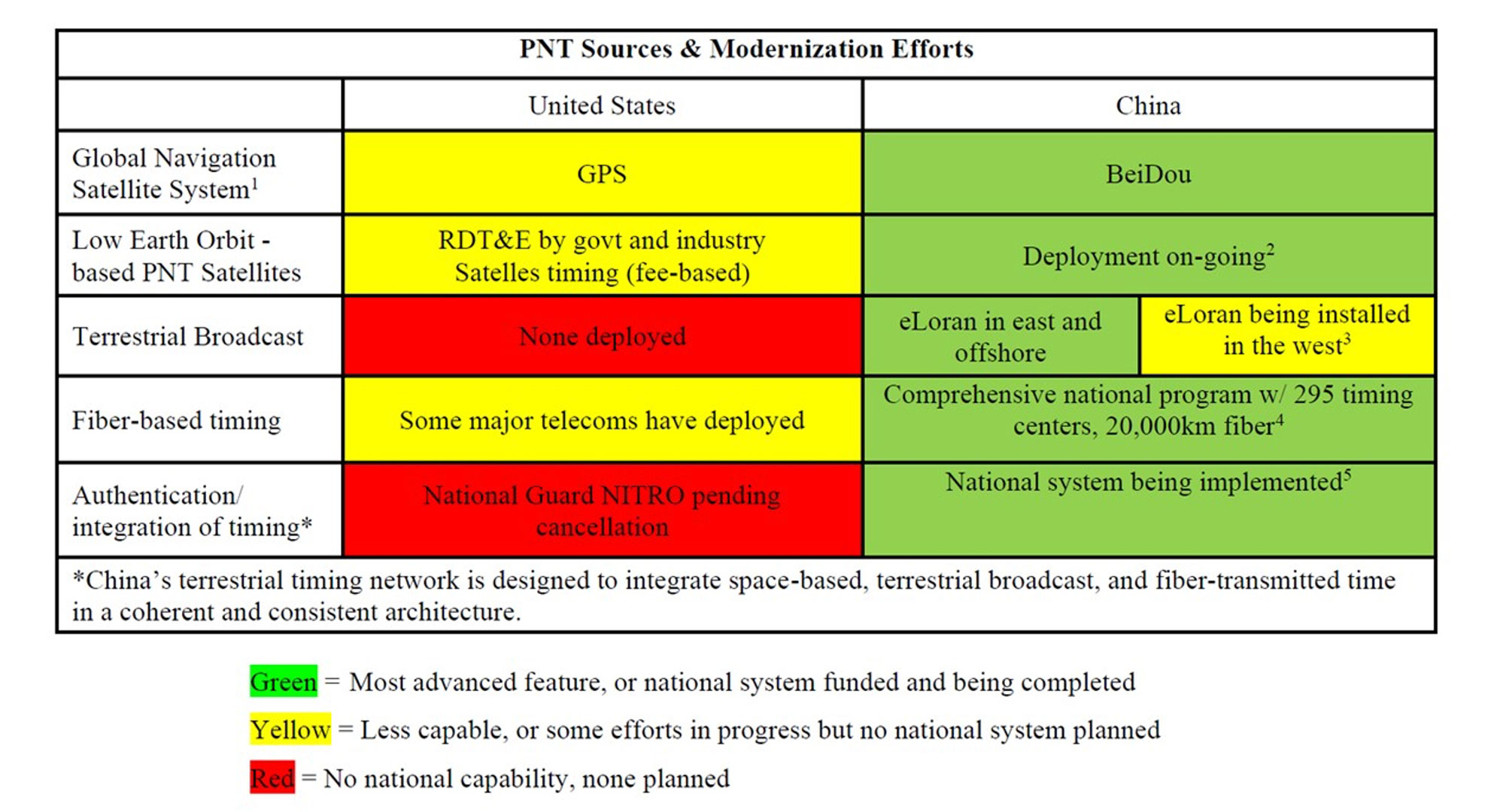
Reinforcing this message, the following table comparing U.S. and Chinese national PNT systems was included in the memo.
“The Board believes it is time to take a fresh look at our approach to PNT governance and establish a clear strategy for re-establishing an unquestioned position of leadership for the United States. To be successful, such a strategy requires a governance structure characterized by clearer authority and accountability. Ideally, the administration should propose legislation to Congress that would support this goal with a clear mandate (authorization) and resources (appropriations) adequate to the task.”
Direct the U.S. Space Force to establish a way for “good enough” monitoring of GPS L5 signals using existing capabilities and set L5 signals healthy subject to a “use at your own risk” caveat, just as is done with L2C today. We recommend establishing a deadline of September 2024.
Direct federal Chief Information Officers to acquire and install multifrequency dual-system (GPS-Galileo) receivers to complement GPS use. The Department of Transportation and the Department of Homeland Security should actively encourage critical infrastructure users to adopt multifrequency dual-system (GPS-Galileo) receivers.
Assign a lead agency and single individual with clear responsibility and authority for the end-to-end prompt detection, characterization, and removal of significant sources of interference to GNSS in the United States.
Allen’s memo comes on the heels of a similar warning to United States leaders about the nation’s vulnerability to GPS disruptions. On July 18, the
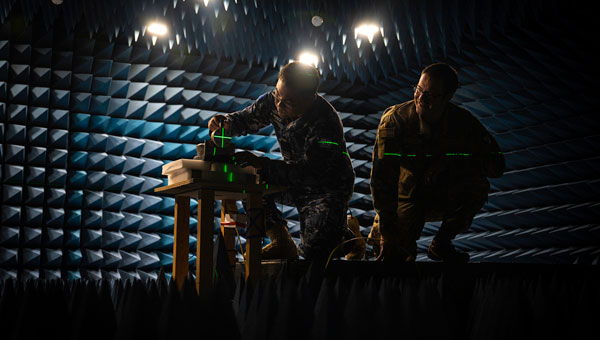
Personnel from the Australian Joint Precision Navigation and Timing Directorate, Joint Capabilities Group and Joint Navigation Warfare Center align GPS test equipment in the JNWC anechoic chamber at Kirtland Air Force Base, N.M., in preparation for a GPS resilience test April 15, 2024. This combined effort not only enhances GPS navigation resilience but also exemplifies the power of international cooperation in addressing security threats. As the world faces evolving challenges, partnerships like these remain essential for maintaining an edge in contested environments. (U.S. Air Force photo by Senior Airman Spencer Kanar)
The Australian Department of Defense has collaborated with the Joint Navigation Warfare Center (JNWC) to enhance the resilience of GPS devices in contested environments. The JNWC’s mission is to ensure positioning, navigation and timing (PNT) superiority for the Department of Defense and its partners. This joint effort aimed to test the performance of GPS devices under simulated jamming conditions.
Personnel from the Australian Joint Positioning, Navigation and Timing Directorate worked with JNWC experts to evaluate the Defense Advanced GPS Receiver (DAGR), a crucial device used by U.S. and allied forces for navigation across land, sea, and air. The testing took place in an anechoic chamber designed to replicate contested and limited GPS conditions, providing insights to improve the device’s resilience.
The JNWC, recognized for its expertise in navigation warfare, created optimal conditions for this assessment. The specialized chamber allowed them to test the DAGR’s performance in a jamming environment, generating data that can inform the device’s warfighting effectiveness. The team explored solutions such as antennas that enhance jamming resilience, and the findings will be shared with coalition partners to strengthen collective space resilience.
The collaboration serves as a model for international cooperation in addressing security threats, enhancing GPS navigation and timing resilience for allied forces.
For the fourth consecutive year, Saildrone and the National Oceanic and Atmospheric Administration (NOAA) are sailing a fleet of uncrewed surface vehicles (USVs) into hurricanes to better understand how these storms develop, track and intensify.
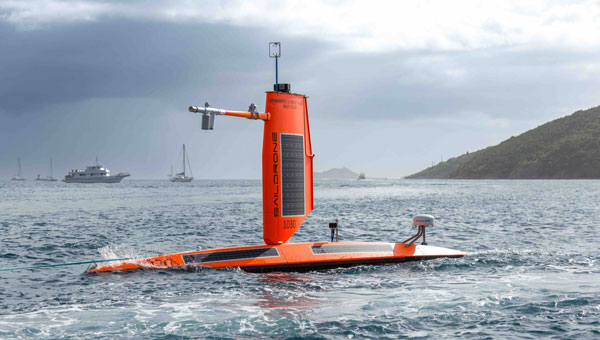
Saildrone Explorer USVs are 23 ft long and carry a payload of sensors to measure air, surface and water temperature as well as humidity, barometric pressure, wind speed and direction, salinity and wave height. To withstand major hurricane conditions—winds over 110 mph and waves that exceed 50 ft—they have a shorter and stronger “hurricane wing,” similar to a reefed sail on a sailboat.
Saildrone USVs sail autonomously along prescribed routes, which Saildrone Pilots define according to weather conditions and to meet mission objectives. Saildrone’s science partners in the mission at NOAA’s Atlantic Oceanographic & Meteorological Laboratory (AOML) and Pacific Marine Environmental Laboratory (PMEL) will work closely with Saildrone Mission Control to guide the saildrones into oncoming hurricanes.
As the final group of saildrones was readied for deployment, Tropical Storm Debby was forming in the Gulf of Mexico. Just days after SD-1057 was deployed, the USV sailed through the eye of Hurricane Debby hours before the storm made landfall in Florida. Powered solely by renewable wind and solar energy, the Saildrone fleet will stay at sea for the duration of the mission, which will last through October 2024.
My last newsletter highlighted the products on the National Geodetic Survey (NGS) Alpha Preliminary Products site. The alpha site provides products that individuals can use to better understand the products that will be distributed as part of the new, modernized National Spatial Reference System (NSRS).
This newsletter is going to highlight activities associated with the Transportation Research Board’s ADK70 Standing Committee on Geospatial Data Acquisition Technologies. This committee is concerned with applications of high-accuracy geospatial data acquisition technologies in support of the digital infrastructure for the design and construction of transportation facilities. Members have various backgrounds and expertise and are located in different regions of the United States.
The committee holds two meetings a year, one at the January TRB Annual Meeting held in Washington, D.C., and a summer meeting in different locations each year in late July.
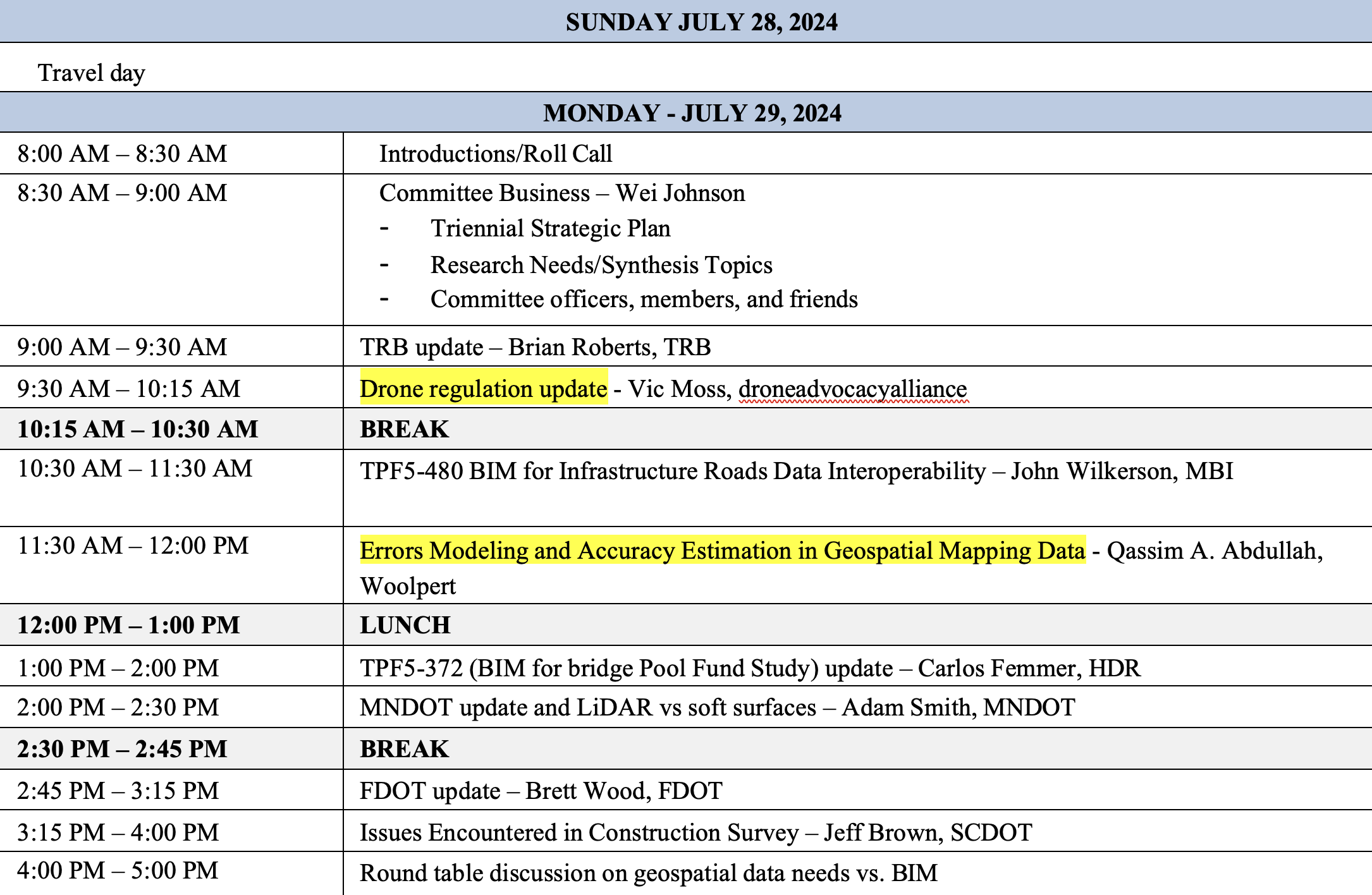
This year, the meeting of the Geospatial Acquisition Technologies in Design and Construction Summer Committee was held on July 29-31, 2024, in Washington, D.C. Topics included new technologies on data collection, modeling and plan delivery. There were updates from organizations such as the National Geodetic Survey, the Federal Highway Administration, the American Association of State Highway and Transportation Officials and various state departments of transportation on technology, standards, specifications and industry needs. See the agenda below.
I first got involved with this committee in 1999, when I worked for NGS. One may ask, why would a geodesist be interested in a committee that focuses on the design and construction of transportation facilities? In my opinion, this is an important committee that addresses geospatial issues that affect all users of geospatial data, not just state Department of Transportation (DOT) surveyors and engineers.
As anyone who has been reading my GPS World Survey Scene newsletters knows, I remind everyone that “geodesy is the foundation for all geospatial products and services.” As previously stated, this committee is concerned with applications of high-accuracy geospatial data acquisition; therefore, surveyors and geodesists must be involved to address issues associated with positioning. Anyone using or acquiring geospatial data should be interested in this committee’s activities.
During AKD70 summer workshop meetings, participants talk with technical experts about the latest advancements in geospatial data acquisition technologies. I would encourage anyone interested in high-accuracy geospatial data acquisition technologies to learn more about this TRB committee, which is currently chaired by Wei Johnson, South Carolina DOT.
Digital delivery geometric consistency concerns
One session at the meeting discussed concerns with digital delivery geometric consistency. We now live in a world where everything is digital. Today, most surveying and mapping instruments collect and generate data in digital format. This paradigm has affected how surveyors, geodesists, and engineers provide their products and services. So, what is the issue with digital delivery geometric consistency?
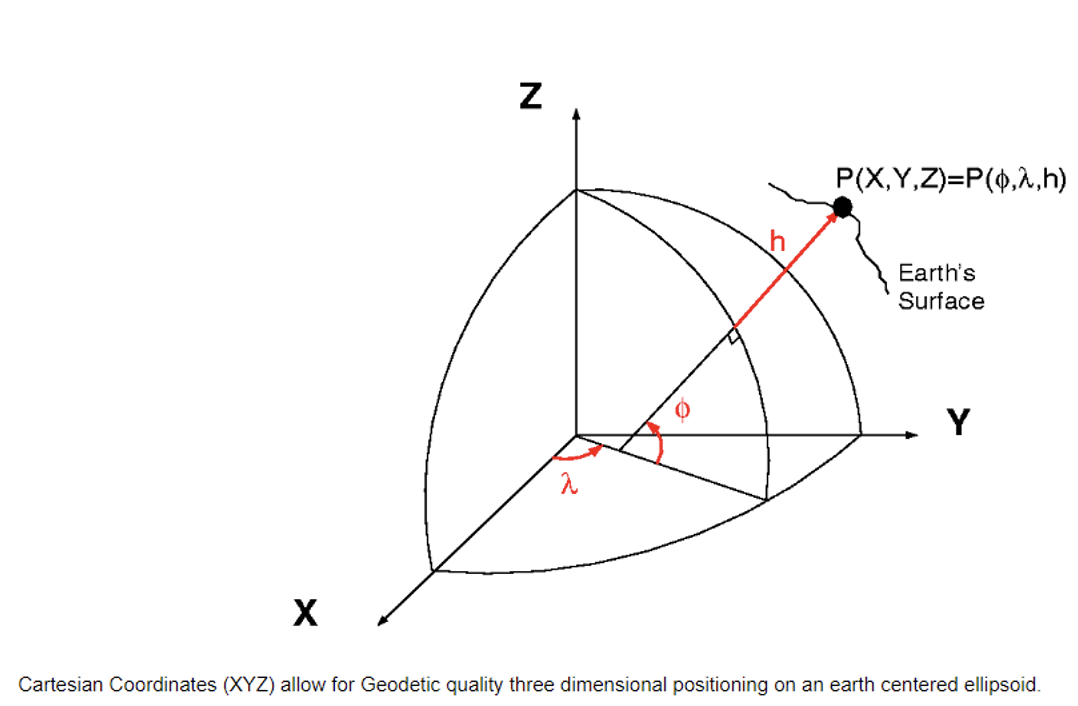
As I previously stated, I am a geodesist, so I think in geodetic coordinates (latitude, longitude, ellipsoid and orthometric height) or cartesian coordinates (X, Y and Z).
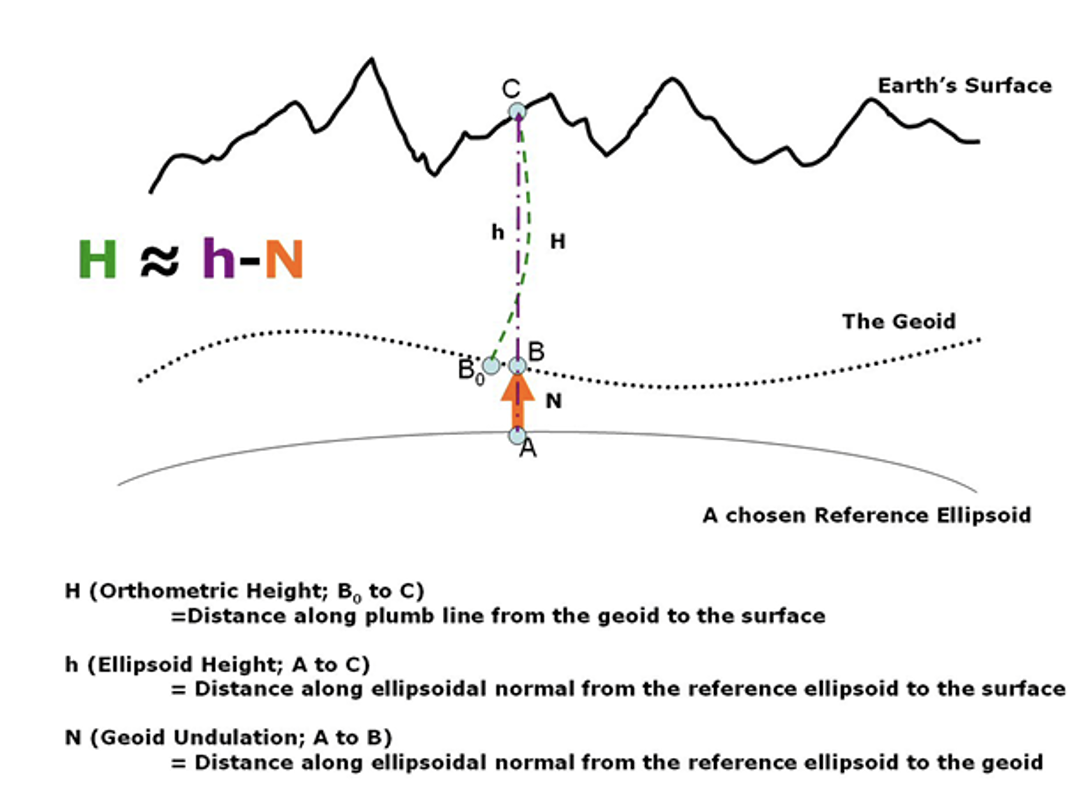
Three-Dimensional Positioning (XYZ). (Photo: NGS)Orthometric, Ellipsoid and Geoid Heights from NOAA Technical Memorandum NOS NGS 59. (Photo: NGS)
Looking at the diagram in the above image, I would like to highlight that the orthometric height is measured from the geoid along a curved line. The curved line is based on an infinite number of geopotential level surfaces that exist between the geoid, which is a geopotential surface, and the mark located on Earth’s surface. This is why gravity plays a part in determining the orthometric height of a mark.
This means that leveling height differences are not the same as ellipsoid height differences. To compute a GNSS-derived orthometric height, a geoid height is subtracted from the GNSS-derived ellipsoid height. This is only an approximation because of how the two heights are measured but, at this moment, it is accurate enough for surveying and mapping applications.
What about computing an ellipsoid height from an orthometric height? The ellipsoid height can be computed using the equation h = H + N (ellipsoid height = orthometric height + geoid height). Once you have an ellipsoid height, you can compute the X, Y, and Z coordinates of the mark. Orthometric heights derived from leveling data are one-dimensional (orthometric height only), whereas GNSS-derived coordinates are three-dimensional (XYZ or latitude, longitude, ellipsoid height). Therefore, to compute a cartesian coordinate (XYZ), from a leveling-derived height users must generate a latitude and longitude of the mark. It is important to use the appropriate geoid height and to record that information in a metadata file.
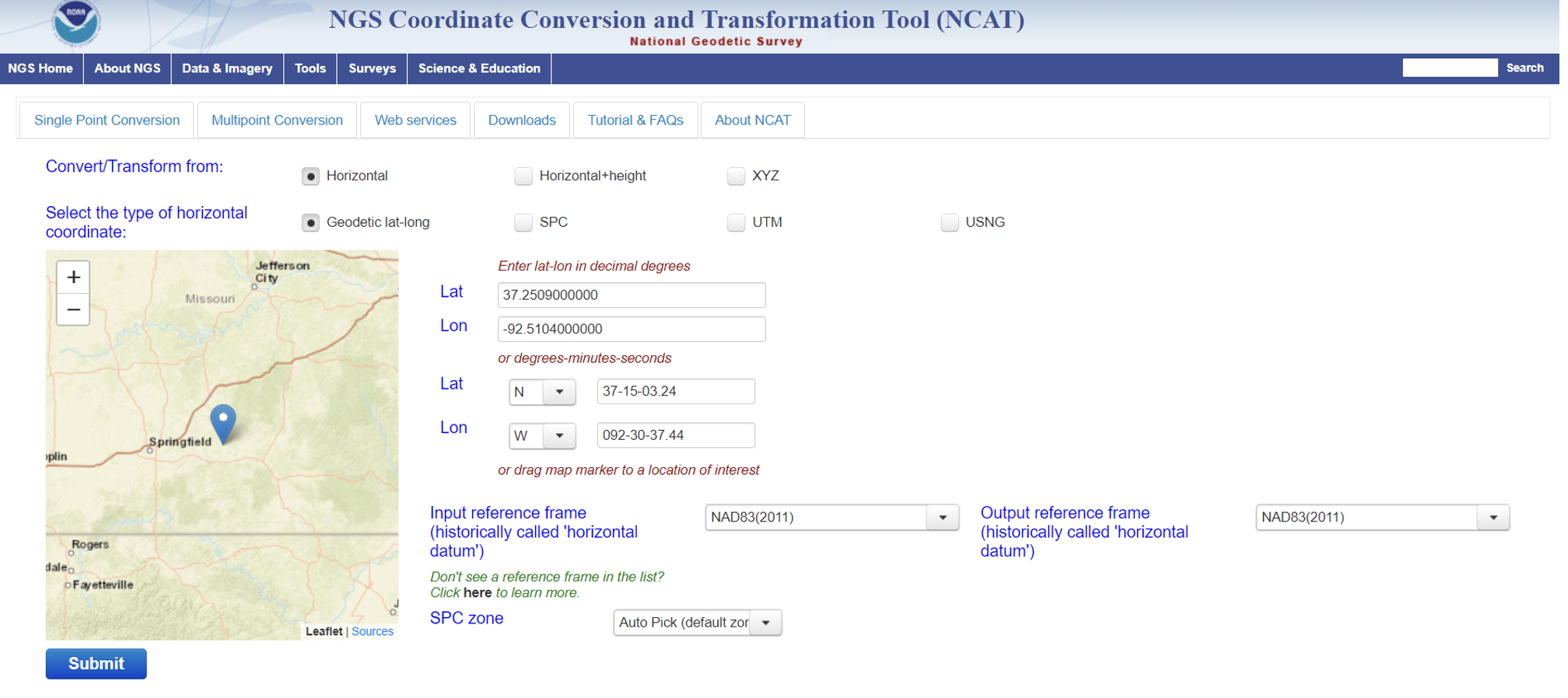
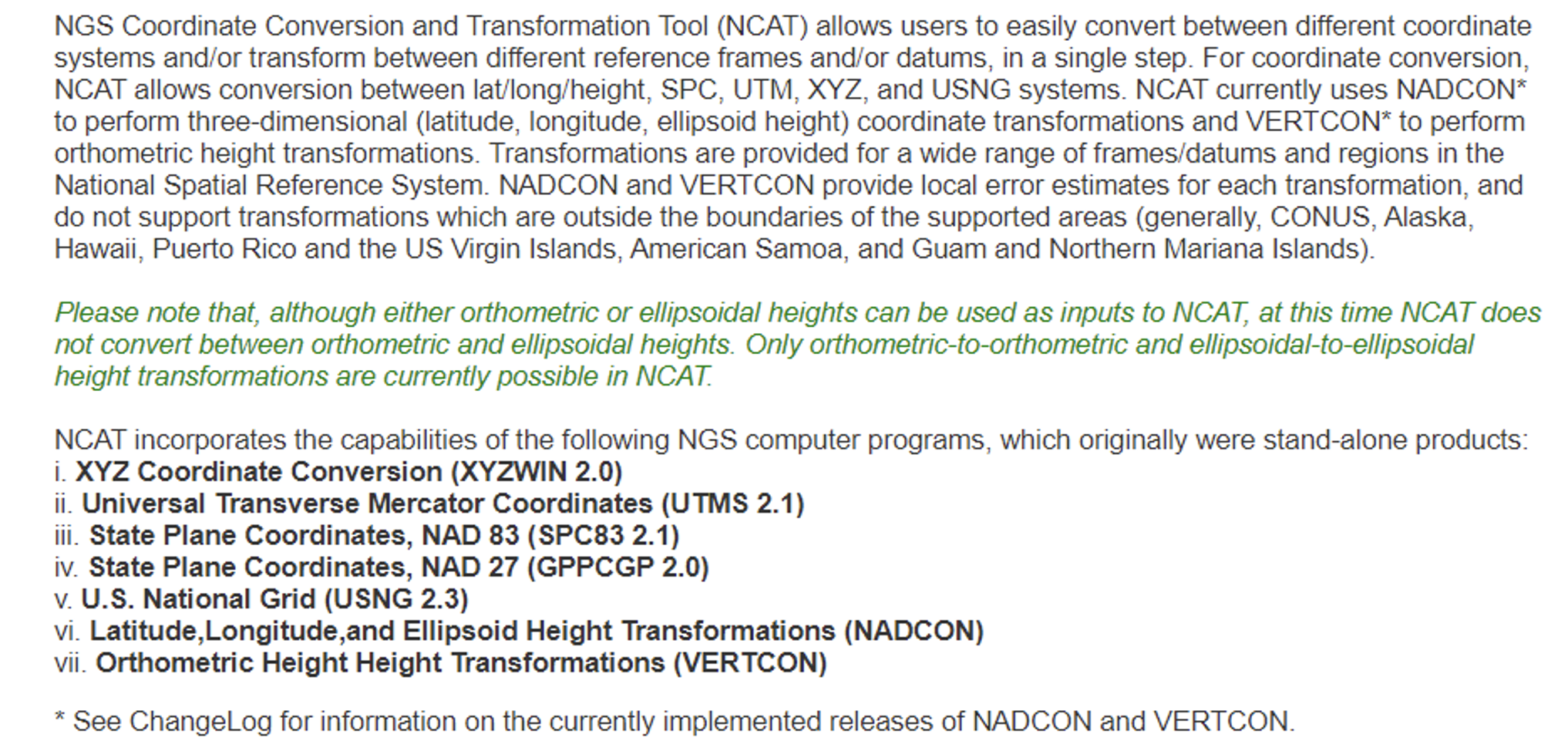
NGS has developed web-based applications to convert coordinates between different coordinate systems and transform between different reference frames and/or datums. See the box titled “NGS NCAT Web Tool.” I described the NCAT web tool in my October 2019 and September 2023GPS World newsletters.
NGS NCAT web tool. (Photo: NGS)Photo: NGS
So, from a geodesist’s point of view, there is no issue with digital delivery geometric consistency if the appropriate tools are correctly used to convert coordinates between different coordinate systems and transform them between different reference frames and/or datums. That said, unique coordinate systems may be used by engineers to create 2D and 3D as-built drawings, such as blueprints and models. This should not be a problem for developing a transformation model if the appropriate information is available.
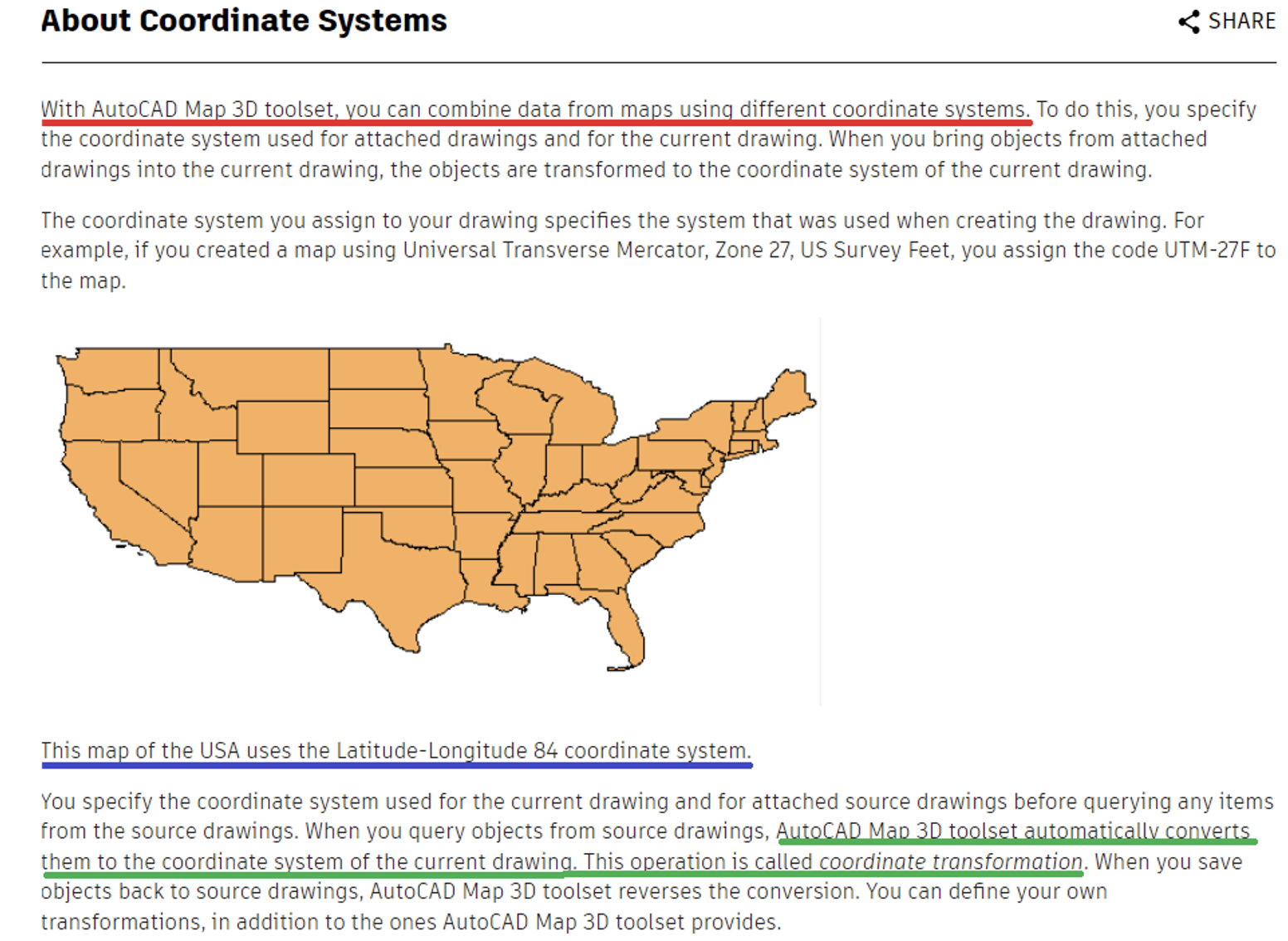
The AutoCAD Map 3D website states that users can combine data from maps using different coordinate systems (see the box titled “Excerpt from AutoCAD Map 3D Site”). The site states that “AutoCAD Map 3D toolset automatically converts them to the coordinate system of the current drawing.” This is an indication that CAD routines are working on handling different coordinate systems.
That said, users should make sure that the conversions and transformations are using the correct formulas and parameters. For example, I would like to know what defines the Latitude-Longitude 84 coordinate system that is highlighted in the box. I am not suggesting that anything is incorrect in the definition of the coordinate system. I am just saying that I do not know what the statement means; I would need more information before I can use the data.
Excerpt from AutoCAD Map 3D 2025 site.
That said, ESRI and Autodesk, two industry leaders, have created a partnership to integrate GIS and Building Information Models (BIM), which seeks to create an integrated and collaborative workflow that connects data sources. ESRI denotes this as ArcGIS GeoBIM.
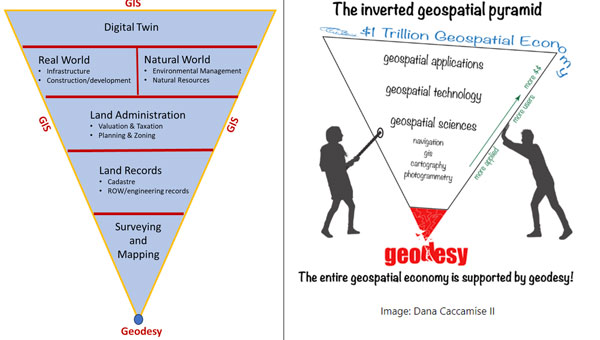
Representatives from ESRI and Autodesk participated in the meeting. During the meeting, Linda Foster, ESRI and President-Elect of the National Society of Professional Surveyors (NSPS), gave a presentation that included a discussion of the ArcGIS GeoBIM web-based tool. Linda highlighted how geodesy and surveying provide the foundation for Digital Twin products. Her presentation included a diagram that I have recreated below.
Notice that geodesy is at the base and digital twin is at the top of the inverted triangle. See the box titled “Geodesy Provides the Foundation for all Geospatial Products and Services.” The diagram is like the one I highlighted in my February 2022 GPS World Newsletter to emphasize the geodesy crisis. Both diagrams emphasize the importance of geodesy and surveying in creating geospatial products and services. It is encouraging to see that ESRI and Autodesk are working together to understand the needs of both communities. This will lead to the development of an improved system.
Image: Dave Zilkoski — based on Linda Foster’s presentation at the TRB AKD70 summer meeting on July 30, 2024.
From a geodesist’s viewpoint, there does not seem to be a problem with digital delivery geometric consistency. Of course, I know that it is not as simple as I am making it. I realize that the “devil is in the details,” which means that something that appears to be simple will identify issues that will have to be dealt with during development and implementation. During the meeting, it was announced that the TRB AKD70 Committee is developing a webinar titled “Resolving ambiguities between 3D virtual models and the real world” to make people aware of the issues.
Proposed Webinar
Proposed title: “Resolving ambiguities between 3D virtual models and the real world” Proposed description: The transportation industry is rapidly moving towards achieving digital product delivery and digital as-built objectives in the Civil Infrastructure sector. They are doing this by adopting a 100% end-to-end digital, asset-centric, interoperable data flow. However, the current methodologies being discussed use outdated concepts that rely on 2D/1D plans and profile/cross-section sheets as part of physical construction reality. These methodologies are not in line with current construction objectives, which require the use of Open BIM and Digital Twin concepts. Therefore, it’s crucial to address the current geospatial and geodesic ambiguity between the real world and BIM (virtual 3D models) to ensure a clear understanding of the proposed solution and its efficient implementation. This is especially important considering the industry’s reliance on Global Navigation Satellite System (GNSS) measurement methodologies. There is an imperative need to resolve this geospatial and geodesic ambiguity by adopting sound geodetic methodologies. The webinar will present the basic tenets of geodetic engineering from three points of view: the Department of Transportation (DOT) perspective, the digital product delivery perspective and the Survey/Geodesy perspective. Proposed purpose: To raise awareness among the DOT community, which is intent on achieving the 100% digital end-to-end asset-centric interoperable flow objectives, of the need to resolve the ambiguities between virtual 3D models and the real world.
I always learn something new at these meetings and continue to build new relationships expanding my professional network. These meetings are open to anyone, so I would encourage everyone to learn more about the TRB ADK70 Standing Committee on Geospatial Data Acquisition Technologies. Please contact Wei Johnson for more information about getting involved with the committee.
FlytBase and Pix4D have entered a strategic partnership, allowing FlytBase users to seamlessly upload their drone-captured data directly to the PIX4Dcloud online platform.
As automated UAV-docked operations become more prevalent, the volume and frequency of data collection have significantly increased. The partnership addresses this by offering users a way to conduct numerous daily missions and schedule them in advance from remote command centers.
Using FlytBase’s Pix4D Flink, users can now directly sync UAV-captured data from FlytBase to PIX4Dcloud, an online platform for aerial mapping, progress tracking and site documentation. PIX4Dcloud processes high-resolution images using photogrammetry algorithms, transforming them into accurate, georeferenced orthomosaics, 3D meshes, point clouds and elevation models. The platform can be used in construction monitoring, mapping and surveying applications.
In addition to the one-click integration, FlytBase offers the latest automation functionalities required for docked UAV operations, combined with flight safety and fleet management capabilities. It allows users to execute consistent UAV data collection operations while seamlessly integrating with beyond visual line of sight (BVLOS) hardware and software solutions, such as parachutes, detect-and-avoid systems, uncrewed traffic management and weather monitoring systems for safe operations.
Adhering to ISO 27001, SOC 2 Type II and GDPR standards, FlytBase ensures data protection through network firewalls and offers flexible deployment options to accommodate enterprise data privacy requirements.
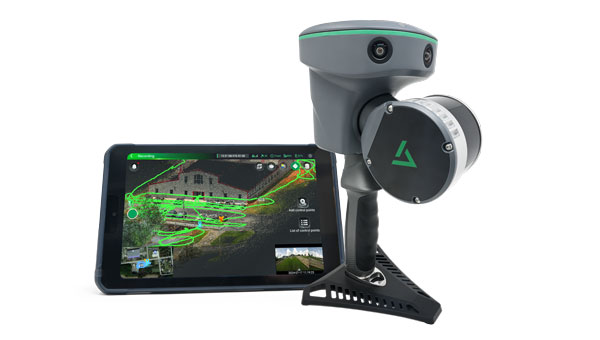
GeoCue has introduced the TrueView GO handheld mapping system, designed for reality capture and detailed 3D mapping. The system can be used for surveying, civil engineering, construction, urban planning and forestry.
The TrueView GO series includes the 16-channel 116S and the 32-channel 132S models and integrates GNSS real-time kinematics (RTK), survey-grade lidar scanning, cameras and visual SLAM technologies. These features allow users to create real-time digital twins in indoor or outdoor environments.
The series offers a comprehensive set of features ideal for handheld mapping. The device provides real-time SLAM capabilities, displaying georeferenced point clouds live on a tablet for instant adjustments and thorough coverage.
It can operate in areas with weakened or denied GNSS signals, making it suitable for indoor and urban surveys. The TrueView GO also enables remote measurement of inaccessible areas by collecting reference points from a distance. Its SLAM technology, when combined with RTK, allows for loop-free path planning, eliminating the need for traditional loop closure and overlap and reducing project completion time and distance when GNSS coverage is available.
The handheld mapping scanner features LP360 LAND. This geospatial software is specifically designed for processing handheld lidar and imagery data. LP360 LAND seeks to enhance data accuracy using robust QA/QC tools, 3D point cloud processing and visualization and capabilities such as SLAM, denoising, colorization, registration and classification.
LP360 LAND can handle diverse applications, including data classification, tree segmentation, volume calculation and export to BIM using both desktop and cloud environments.
ANELLO Photonics and Beamagine have entered a strategic partnership to enhance vehicle localization for automotive OEMs, HD mapping projects, municipalities and agricultural applications in GPS-challenged environments. This collaboration combines ANELLO’s photonic gyroscopes and navigation solutions with Beamagine’s lidar and vision technology to create a robust sensor fusion solution.
The partnership will integrate Beamagine‘s L3CAM lidar camera, which features sensor fusion capabilities and embedded AI perception processing, with ANELLO’s GNSS/INS system, which features optical gyroscope technology.
The system aims to significantly improve vehicle localization and offer reliable navigation and positioning in challenging conditions, including urban canyons, tunnels and other GPS-denied environments. It is designed for easy integration into existing autonomous vehicle platforms to offer enhanced localization capabilities for safer autonomous driving.
For automotive OEMs, it offers improved accuracy and reliability for autonomous driving applications. HD mapping projects and municipalities can benefit from precision in infrastructure maintenance and mapping tasks. For precision agriculture, users can gain more accurate positioning capabilities in orchards and other areas with limited GPS availability, improving various farming operations.
CACI International has been awarded a ten-year contract valued at up to $450 million to support the Joint Navigation Warfare Center (JNWC), an operational center of U.S. Space Forces and the Department of Defense’s (DOD) center of excellence for navigation warfare (NAVWAR).
Under this contract, CACI will provide 24/7 operations support, joint and operational planning, adversary positioning, navigation and timing (PNT) capability assessments and other tasks to enhance joint force, DOD combatant commander, interagency and allied NAVWAR requirements.
“Adversary PNT capabilities rapidly evolve, putting our warfighters and national security operations at risk around the world,” said John Mengucci, CACI president and CEO. “CACI’s experts comprehensively understand multi-domain PNT threats and advise combatant and joint force commanders on how to swiftly respond to NAVWAR threats and operational requirements.”
PNT is critical to U.S. national security and NAVWAR. This includes deliberate defensive and offensive actions to ensure and prevent PNT use through space, cyber and electronic warfare. The contract represents new work for CACI, with mission experts supporting global NAVWAR reach-back operations via the Joint NAVWAR Operations Center (JNOC). These experts will assist combatant commanders in operating in PNT-disrupted, denied and degraded areas by conducting operational field assessments, war gaming scenarios, modeling and simulating threats and more.
The Federal Aviation Administration (FAA) has authorized commercial UAV flights without visual observers in the Dallas-Fort Worth area, marking a significant milestone in U.S. aviation. This authorization has been granted to Zipline International and Wing Aviation, enabling them to conduct package delivery operations using UAVs while sharing airspace with conventional aircraft.
The UAVs remain separated from manned aircraft using unmanned aircraft system traffic management (UTM) technology, with rigorous FAA safety oversight. UTM services allow companies to share data and planned flight routes with other authorized airspace users, offering safe organization and management of UAV flights in shared airspace. All flights occur below 400 ft altitude and away from any crewed aircraft. The FAA expects initial flights using UTM services to begin in August 2024.
Typically, UAV operators must maintain visual line of sight with their aircraft. However, advancements in air traffic technology are paving the way for routine beyond visual line of sight (BVLOS) flights. This authorization is the first time the FAA has recognized a third party to safely manage drone-to-drone interactions, a significant step towards integrating UAVs into the National Airspace System.
The FAA is working on the Normalizing UAV BVLOS Notice of Proposed Rulemaking (NPRM), which aims to enable UAV operators to expand operations while maintaining high safety standards. The NPRM is expected to be released this year, following strong Congressional support in the recent FAA reauthorization.