Author: Jesse Khalil

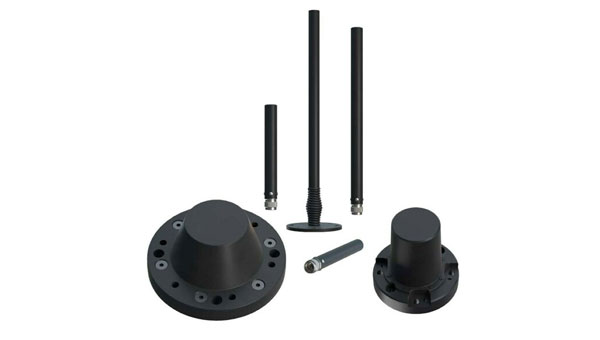
  • Fairview Microwave launches military-grade antennas

    Fairview Microwave launches military-grade antennas

    Image: Fairview Microwave
    Image: Fairview Microwave

    Fairview Microwave has launched its advanced military-grade antennas. The new products include ruggedized GPS, manpack omni and vehicle omni antennas designed for mission-critical applications such as vehicle navigation, personnel communications, vehicle communications, electronic warfare and jamming.

    The military-grade antennas meet MIL-STD-810 to offer durability while adhering to strict quality standards. The antennas are also compliant with the Trade Agreements Act (TAA), which makes them suitable for government and defense applications.

    Built to withstand tough conditions, these antennas feature heavy-duty construction and a rugged design for long-lasting performance in challenging environments. They are designed to perform in extreme weather conditions and on rough terrains.

    Its robust construction and NATO/U.S. standard mounting options aim to simplify integration into various setups during critical operations.

  • Trimble launches three new products

    Trimble launches three new products

    Trimble has released three new surveying and mapping products: SiteVision 5.0, TDC6 and Trimble Radio. All three products are available through Trimble Geospatial authorized distributors.

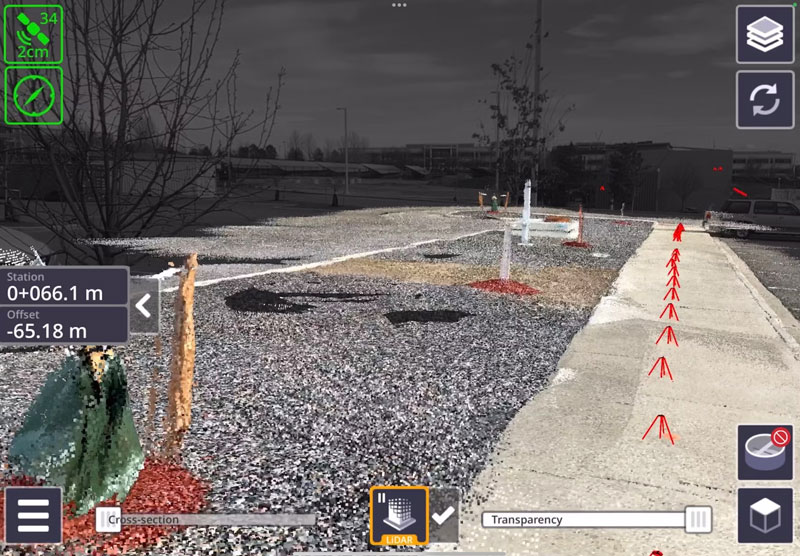
    Trimble SiteVision Software 5.0. (Image: Trimble)
    SiteVision Software 5.0. (Image: Trimble)

    SiteVision Software 5.0 is a high-accuracy outdoor augmented reality system, now with a 3D scan tool. The new 3D scan tool allows users to use lidar sensors available on some Apple Pro devices. The Trimble DA2 GNSS receiver is designed to capture point clouds efficiently and accurately with a single handheld solution.

    Users can visualize 3D scan data directly in the field with SiteVision’s augmented reality view. The software allows users to create as-builts of the job site on the go, measure and plan resource allocation, reduce scan times, supplement UAV data and more by combining scanning and precision in a mobile solution. The product aims to facilitate practical and accessible field-to-office workflows for surveyors, contractors and engineers.

    TDC6. (Image: Trimble)
    TDC6. (Image: Trimble)

    TDC6 is a handheld GNSS data collector designed for high-performance construction surveying.

    The device allows contractors to work with more complex data sets more effectively in the field, connect to the office for on-the-spot approvals, and quickly communicate changes to field crews.

    The small, rugged device offers integrated Wi-Fi and Bluetooth, built-in cameras and 5G compatibility in a lightweight, shock-, dust- and water-resistant package. The device integrates seamlessly with Trimble data collection applications, including Trimble TerraFlex GIS software and Trimble Access survey field software, as well as third-party apps such as Esri ArcGIS Field Maps.

    TDL450B radio. (Image: Trimble)
    TDL450B radio. (Image: Trimble)

    The TDL450B radio is a 450 MHz external radio with Bluetooth for transmitting, receiving and repeating GNSS corrections. It offers flexible configuration options and rugged reliability for efficient use of GNSS in various applications. Designed to support Trimble and third-party RTK base stations, this sophisticated radio modem puts Trimble’s newest data link technology in the hands of users on the job site. The TDL450B radio is an advanced, high-speed, wireless UGH data radio built to endure harsh conditions.


  • DTC, Inertial Labs collaborate on GNSS-denied UAV solution

    DTC, Inertial Labs collaborate on GNSS-denied UAV solution

    Photo:Domo Tactical Communications (DTC) and Inertial Labs have partnered to develop an integrated uncrewed systems solution for UAV manufacturers and end users. The new solution combines technologies from both companies to create a single navigation, command and control (C2), and intelligence, surveillance and reconnaissance (ISR) system.

    DTC’s Manet Mesh radio — with MeshUltra product family waveforms — aims to provide robust, high-bandwidth C2 and ISR links, which can allow uncrewed vehicles to operate successfully in hostile RF environments. By integrating Inertial Labs’ inertial navigation system (INS) and DTC’s Mesh-based RF ranging capability, those same vehicles are designed to operate when space-based positioning systems are unavailable due to jamming, spoofing or lack of sky view. The INS provides assured position, navigation and timing (APNT), and alternative navigation (ALTNAV) solutions directly to the uncrewed vehicle.

  • SimActive launches upgraded cloud capabilities

    SimActive launches upgraded cloud capabilities

    Image: SimActive
    Image: SimActive

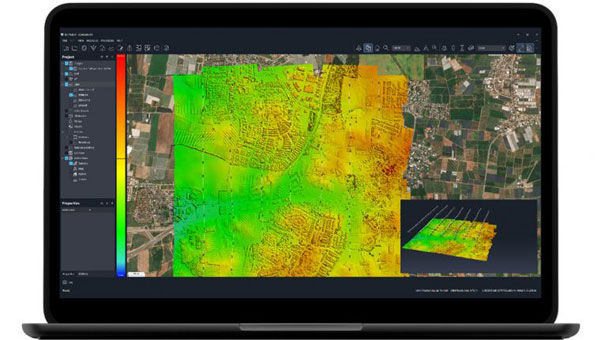
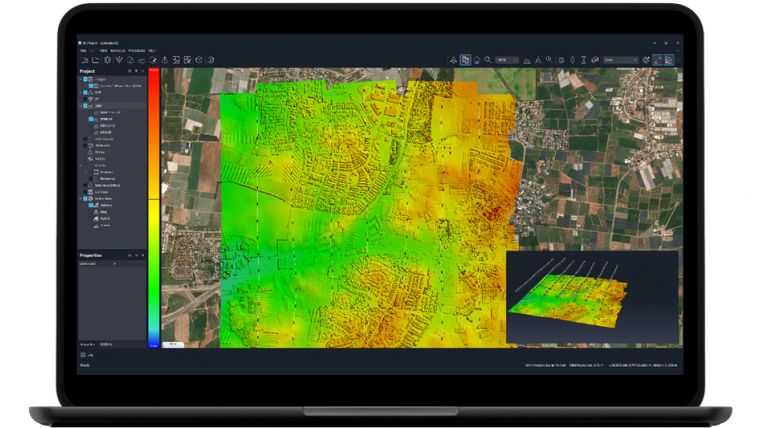
    SimActive has released upgraded cloud capabilities for its Correlator3D mapping software. With its distributed processing capabilities, Correlator3D allows users to scale their processing to match individual operational needs.

    With the upgrade, Correlator3D can process large mapping projects and deliver results from UAV, aircraft and satellite imagery. It features a software package – a patented, end-to-end photogrammetry solution — designed to generate high-quality geospatial data from a variety of sources, including satellite and aerial imagery and UAVs. The upgrade aims to improve the technology’s performance in diverse cloud scenarios.

    Correlator3D is designed to provide aerial triangulation (AT) and generate dense digital surface models (DSM), precise digital terrain models (DTM), point clouds, orthomosaics, 3D models and vectorized 3D features. By using GPU technology and multi-core CPUs, Correlator3D offers enhanced processing speed to support the rapid production of large datasets.

  • UAV Navigation-Grupo Oesía unveils GNSS-denied navigation kit

    UAV Navigation-Grupo Oesía unveils GNSS-denied navigation kit

    Image: UAV Navigation-Grupo Oesía
    Image: UAV Navigation-Grupo Oesía

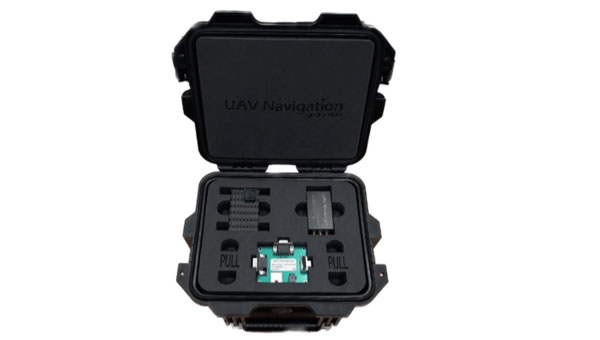
    UAV Navigation-Grupo Oesía has released its GNSS-denied navigation kit designed to offer navigation capabilities in challenging environments.

    The kit combines UAV Navigation’s attitude and heading reference system (AHRS), the POLAR-300, with its Visual Navigation System, the VNS01, designed to offer unmatched dead reckoning navigation capabilities with minimal drift.

    The technology offers users improved navigational accuracy, with error rates as low as 0-1% over covered distances. This is made possible by the kit’s visual-based technology, which allows for precise attitude and position estimation to stabilize flights in challenging conditions. The kit is equipped with advanced algorithms that can detect and counter sophisticated spoofing and jamming techniques to offer reliable and secure navigation, even in the face of potential signal disruptions.

    As technology advances and geopolitical challenges emerge, the demand for reliable and secure navigation for UAVs intensifies. Offering operational integrity in both the civil and defense sectors is paramount, especially with the rise of disruptive systems designed to interfere with radio-electronic navigation and communication.

  • DTC, Inertial Labs collaborate on GNSS-denied UAV solution

    DTC, Inertial Labs collaborate on GNSS-denied UAV solution

    Photo:Domo Tactical Communications (DTC) and Inertial Labs have partnered to develop an integrated uncrewed systems solution for UAV manufacturers and end users. The new solution combines technologies from both companies to create a single navigation, command and control (C2), and intelligence, surveillance and reconnaissance (ISR) system.

    DTC’s Manet Mesh radio — with MeshUltra product family waveforms — aims to provide robust, high-bandwidth C2 and ISR links, which can allow uncrewed vehicles to operate successfully in hostile RF environments. By integrating Inertial Labs’ inertial navigation system (INS) and DTC’s Mesh-based RF ranging capability, those same vehicles are designed to operate when space-based positioning systems are unavailable due to jamming, spoofing or lack of sky view. The INS provides assured position, navigation and timing (APNT), and alternative navigation (ALTNAV) solutions directly to the uncrewed vehicle.

  • US DOJ moves to dismiss Ligado lawsuit

    US DOJ moves to dismiss Ligado lawsuit

    The United States Department of Justice (DOJ) has filed to dismiss satellite communications firm Ligado Network’s October 2023 lawsuit against the federal government, arguing that the court does not have jurisdiction and the company’s claims have no legal basis.

    Ligado’s $40 billion suit alleged that officials at the U.S. Department of Defense (DOD) took “unlawful actions” to, in effect, improperly seize the firm’s L-band spectrum without compensation. Ligado was granted to build a 5G communications network by the Federal Communications Commission (FCC) in 2020.

    Ligado plans to use the L-band spectrum — normally used by satellites — to develop a wireless cell phone network. However, the DoD, and several other federal agencies, including the Department of Transportation (DOT), have expressed concerns that Ligado’s terrestrial operations could have harmful effects on GPS.

    According to Ligado, as long as the DOD continues to use the spectrum, Ligado will be unable to use it to launch its terrestrial communications services.

    The DOJ’s motion asserts that rather than the U.S. Federal Claims Court, the issue instead falls under the jurisdiction of the Federal Communications Act, which “established a comprehensive remedial scheme” for FCC licensing decisions.

    Secondly, the motion says Ligado’s complaint “fails to allege any authorized government actions that could give rise to takings liability, and instead, it contends that the government has been engaged in an unlawful effort to preclude Ligado from using its FCC license. These contentions necessarily preclude any takings liability.”

    The motion goes on to contest each of the Ligado suit’s four specific legal claims. The DOJ alleges, “Ligado fails to plead any plausible facts to support its purely speculative claim that the government has occupied its licensed spectrum. And its theory that the government required a spectrum ‘dead zone’ around the separate spectrum bands allocated for GPS use similarly fails because Ligado cannot identify any authorized government action that precluded it from actually using its modified license.”

    In response to the motion, Ligado provided a statement to Breaking Defense, reiterating its complaint that government officials deliberately deprived Ligado of its rightfully licensed property and must be held accountable.

    “This attack on an American business by the world’s most powerful institution is contrary to the rule of law and antithetical to the government’s years-long support for the deployment of 5G technology as a vital national priority,” the statement said. “We worked diligently and in good faith with government agencies to find a fair resolution but were left with no choice but to pursue litigation to defend our interests. We continue to stand firmly behind our complaint and will reply to the government’s motion in the appropriate forum.”
  • Geely expands satellite network for autonomous vehicles

    Geely expands satellite network for autonomous vehicles

    Image: Geely
    Image: Geely

    Geely, a Chinese automaker, has launched its second set of low-Earth orbit (LEO) satellites in its effort to enhance navigation capabilities for autonomous vehicles. The 11 satellites were launched from the Xichang Satellite Launch Center in Sichuan, China province.

    According to Geely, the company aims to have 72 satellites in orbit by 2025. The long-term goal is to establish a constellation of 240 satellites to create a comprehensive satellite network for various applications.

    Geely’s satellite network is designed to provide high-precision positioning support for autonomous vehicles. By using satellite technology, the company aims to enhance navigation accuracy to enhance safety and efficiency on the roads.

    The newly launched satellites are equipped with artificial intelligence (AI) remote sensing capabilities, which allows them to capture clear high-resolution imaging. With a resolution ranging from 3.2 ft to 16.4 ft, these satellites can provide valuable data and imagery for multiple applications, including surveillance, urban planning and infrastructure management.

    China’s satellite industry has seen a significant surge in commercial activities since the government allowed private investment in the space sector. With supportive policies and investments, numerous commercial companies, including Geely, have ventured into satellite manufacturing and launch vehicles.

  • Seen & heard: Mapping the melting arctic and India’s war on drugs

    Seen & heard: Mapping the melting arctic and India’s war on drugs

    “Seen & Heard” is a monthly feature of GPS World magazine, traveling the world to capture interesting and unusual news stories involving the GNSS/PNT industry.


    Mapping the melting Arctic

    Image: TT / iStock / Getty Images Plus / Getty Images
    Image: TT / iStock / Getty Images Plus / Getty Images

    According to the 2023 Arctic Report Card by the National Oceanic and Atmospheric Administration (NOAA), new records have been documented showing that human-induced warming of the atmosphere, ocean and land is creating adverse impacts on people, ecosystems and communities across the Arctic region. The report states the Arctic is experiencing a faster rate of warming than any other part of the world. Overall, it was the Arctic’s sixth-warmest year on record. Sea ice extent continued to decline, with the past 17 Septembers now registering as the lowest on record.


    GNSS enhances landslide monitoring in China

    Image: pananba / iStock / Getty Images Plus / Getty Images
    Image: pananba / iStock / Getty Images Plus / Getty Images

    Researchers from Chang’an University in China have developed a new method of tracking landslides. The team combined GNSS precise point positioning (PPP) techniques with a cumulative sum control chart (CUSUM) method. Conducted at the Tengqing landslide in Liupanshui, Guizhou Province, Southwest China, the study aims to enhance the precision in tracking the movements of the landslides and improve the overall reliability of the monitoring results.


    Crabs on the move

    Image: United States Geological Survey (USGS)
    Image: United States Geological Survey (USGS)

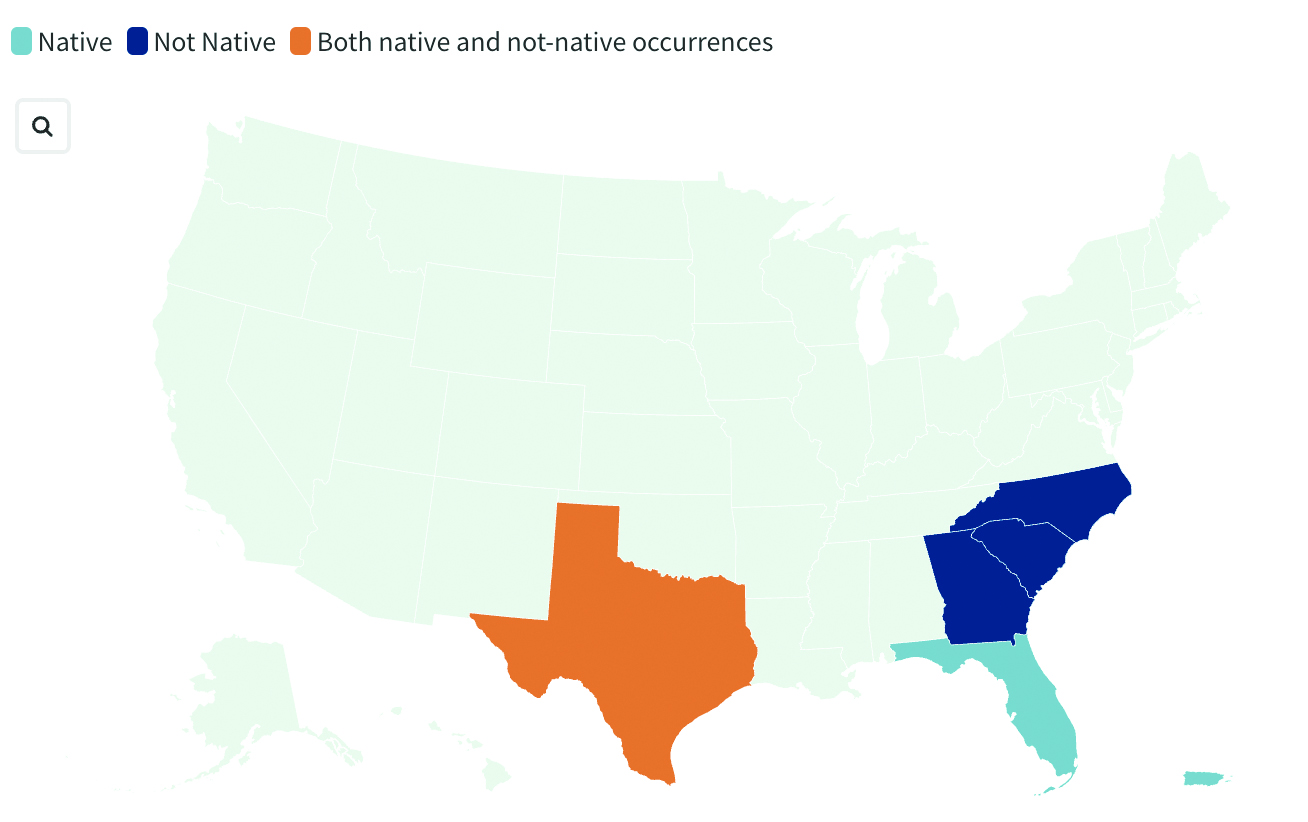
    Georgia officials are asking the public for help in spotting non-native blue land crabs as they appear to be moving north in recent years, according to data collected by the United States Geological Survey (USGS). According to USGS, it is unclear whether this movement is driven by humans or by the crabs themselves, or if the crabs are breeding in their non-native homes. Officials worry about the damage caused by the crabs’ burrowing behavior. While scientists learn about how the species interacts with its new environment, several states are asking residents to report sightings.


    India’s war on drugs

    Image: evandrorigon / E+ / Getty Images
    Image: evandrorigon / E+ / Getty Images

    India’s border security force (BSF) has said it is battling an unprecedented UAV “menace” infiltrating the border with Pakistan, fueling the drug crisis in the state of Punjab and raising serious security issues, reported The Guardian. UAVs have dropped weapons such as pistols and Chinese-made assault rifles, as well as consignments of opium and heroin believed to be from Afghanistan.

  • GPS OCX delays continue

    GPS OCX delays continue

    Image: iLexx/ iStock / Getty Images Plus/ Getty Images
    Image: iLexx/ iStock / Getty Images Plus/ Getty Images

    New GPS ground stations that are contracted by Raytheon Technologies to replace the current ground stations have been delayed until July 2025, the Pentagon’s testing office reported.

    The Next Generation Operational Control System (OCX) is facing a new delay of 16 months, according to the 2023 Annual Report of the Director of Operational Test & Evaluation (DOT&E).

    More than seven years behind schedule, the continuous delays have caused the U.S. Department of Defense (DOD) to go over its yearly budget and have sparked discussions as to future budget allocations for the U.S. Space Force (USSF) to continue to control and enhance the GPS constellation.

    “These delays increase the risk that U.S. and allied warfighters will be unable to conduct successful operations in future contested environments due to the lack of access to modernized GPS position, navigation, and timing (PNT) information,” the Pentagon’s testing office said in a statement.

    The M-Code can now be broadcast on 21 of the 31 GPS satellites in orbit. However, it is only available to a small number of military personnel due to both the OCX issue and a lack of radios and receivers equipped to access it.

    The Space Force has a Military GPS User Equipment (MGUE) program underway to develop new computer chip-carrying cards to retrofit existing platforms, such as aircraft and ships, so they can ingest M-code signals, as well as to develop a new handheld receiver. This effort has also experienced delays, according to a June 2023 report by the Government Accountability Office.

    The 2024 DOT&E report notes that because of the delays in the development of the MGUE receiver cards, the Army and Marine Corps are now buying commercially developed receivers capable of ingesting the M-Code for fielding with ground vehicles.

    Additionally, the DOT&E report cautions that because the OCX software is designed to be the basis for an upgraded system, OCX Block 3F, designed to control the planned next generation of GPS satellites called GPS IIIF, that effort also is likely to be delayed. The Space Force intends to launch the first GPS IIIF satellite in 2027.

  • Intecs combines GNSS and sensor data for train localization

    Intecs combines GNSS and sensor data for train localization

    Image: kojihirano/ iStock / Getty Images Plus/ Getty Images
    Image: kojihirano/ iStock / Getty Images Plus/ Getty Images

    Intecs, a hardware and software developer, is creating a multi-sensor, GNSS-based platform for obtaining absolute position of trains on rail lines. The system incorporates cameras that read QR codes installed in the area adjacent to the track. The system includes a robust, software-based, data fusion engine that combines GNSS and visual data to determine train position.

    The delay when a train loses its position can be significant and affect other vehicles on the rail lines. The Intecs system — assisted GNSS with imaging sensors for rail applications (AGIS4RAIL) — can correctly identify the position of a vehicle.

    Test campaign
    Numerous field tests have been conducted for the new system. One of the most critical sets of trials was carried out on an auto racing track. The trial involved a ground vehicle with GNSS antennas positioned on the roof and with cameras pointing to the side where QR code panels were set up at 10 m intervals. The vehicle was driven for 30 laps around the course under various conditions. AGIS4RAIL correctly identified the position of the vehicle at every lap, with the vehicle achieving a maximum speed of 35 km/h. The maximum estimated error was 4.76 m, which is in line with the target of 5 m.

    Imaging sensors help to reduce the negative impact of various local effects on positioning systems that rely solely on Global Navigation Satellite Systems (GNSS), such as multipath errors. The AGIS4RAIL system also offers protection against jamming and spoofing. Additionally, the QR-code landmarks can contain data to verify the authenticity of the landmark itself.

    Further testing continues and will soon include trials onboard operational trains in Italy, according to Intecs. The AGIS4RAIL project received funding under the European Space Agency’s Navigation Innovation and Support Program (NAVISP).

  • Questions that urgently need answers

    Questions that urgently need answers

    Image: enot-poloskun / iStock / Getty Images Plus / Getty Images
    Image: enot-poloskun / iStock / Getty Images Plus / Getty Images

    The Department of Defense (DOD) shoulders an enormous responsibility, perhaps one whose significance the world does not fully grasp: the sheer number of military, civil and commercial users, each with hundreds of unique use cases, that depend on the Global Positioning System (GPS).

    No other DOD-operated system serves such a diverse array of users and interests. From Special Operators to ship and tank drivers, pilots and operators, the military user base is expansive. Civil users include first responders, general aviators, and those supporting the international flying public, whose numbers are again setting records. Additionally, countless average people like you and me just “use it” in our daily lives without considering how it works. The ever-expanding commercial market consists of $1.7 trillion in 2023 dollars in economic benefits accruing to the U.S. economy alone, millions of jobs, and fierce global competition to produce the “best of the best” of the 6.5 billion user receivers in operation today.

    With these users and interests in mind, what does that mean for GPS’ future? It raises more questions than answers — about policy, governance, program execution and threats that urgently need to be addressed:

    • What indicators will determine whether the United States has met its policy goal to be the global leader in “service provision and the responsible use of global satellite navigation systems, including GPS and foreign systems?”
    • Building on this publication’s previous articles, what constitutes a “Gold Standard” in 2024? Which users determine this definition? How and when do foreign global navigation satellite systems’ capabilities factor into this definition?
    • What funding levels ensure the security, accuracy, availability and resilience of GPS? In Fiscal Year 2022, Congress provided more than $2 billion for DOD to procure and conduct research and development on GPS III and IIIF satellites, procure military user equipment, and upgrade the ground architecture. In 2022, the Department of Transportation received $22 million for GPS resiliency and $92 million for the Wide Area Augmentation System. Is this level of funding sufficient to bring innovative technologies to GPS?
    • Speaking of innovation, U.S. law directs DOD to “sustain and operate” GPS for military and civilian purposes. How can innovative GPS technologies contribute to “sustain and operate” missions?
    • Who should participate in decisions regarding the timing of GPS upgrades and satellite launches?
    • Where does the most accurate data on cyber and other threats to GPS satellites, ground stations, military and civil user equipment, and commercial receivers reside? Who evaluates that data to determine the overall risks to GPS? Should those risks be shared with all users? How quickly will the most severe risks be mitigated?
    • Do the Federal Communications Commission, the Department of Homeland Security, and the Department of State have sufficient resources to detect and prosecute illegal and irresponsible spoofing and jamming incidents in the United States and overseas?
    • What is the earliest date the much-anticipated L1C, L2C, and L5 signals can be operational?

    The GPS Innovation Alliance (GPSIA) believes the U.S. government does not have to shoulder such difficult and urgent questions alone. GPSIA looks forward to sharing insights while working with government agencies and the wider user community to answer these questions and put in place executable plans to address these challenges.