Author: Matteo Luccio

  • Celebrating Richard Langley as he contributes final column to GPS World

    Celebrating Richard Langley as he contributes final column to GPS World

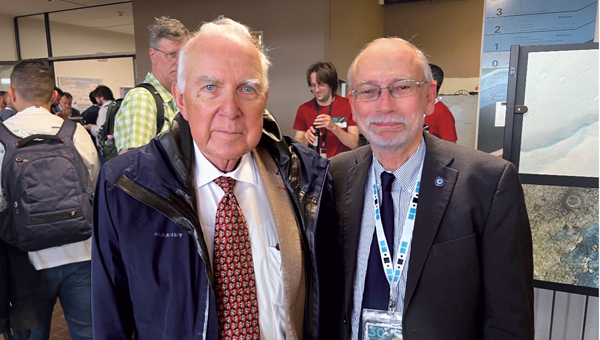
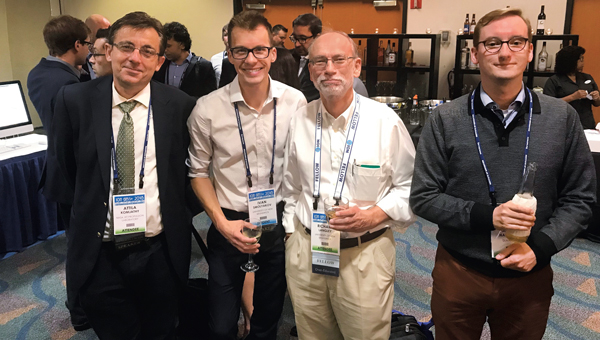
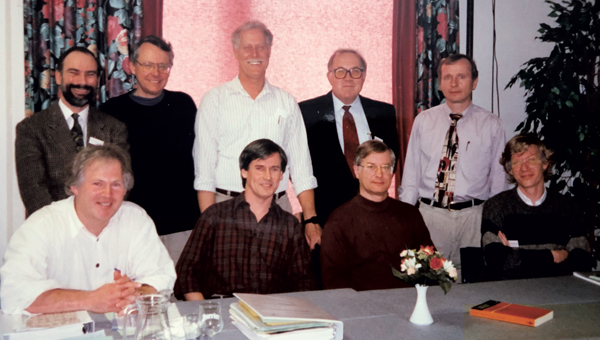
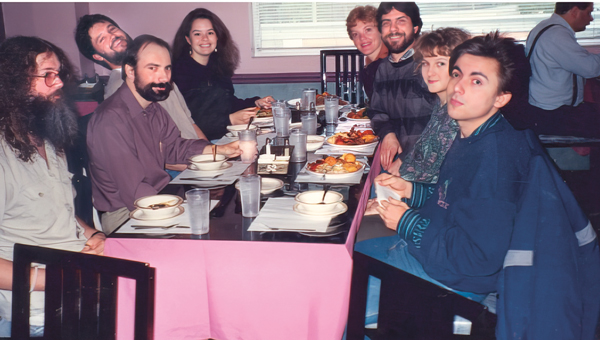
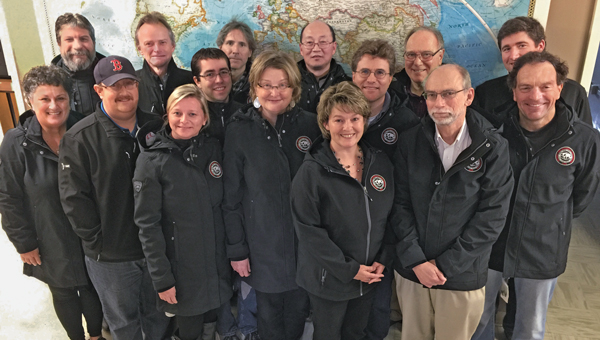
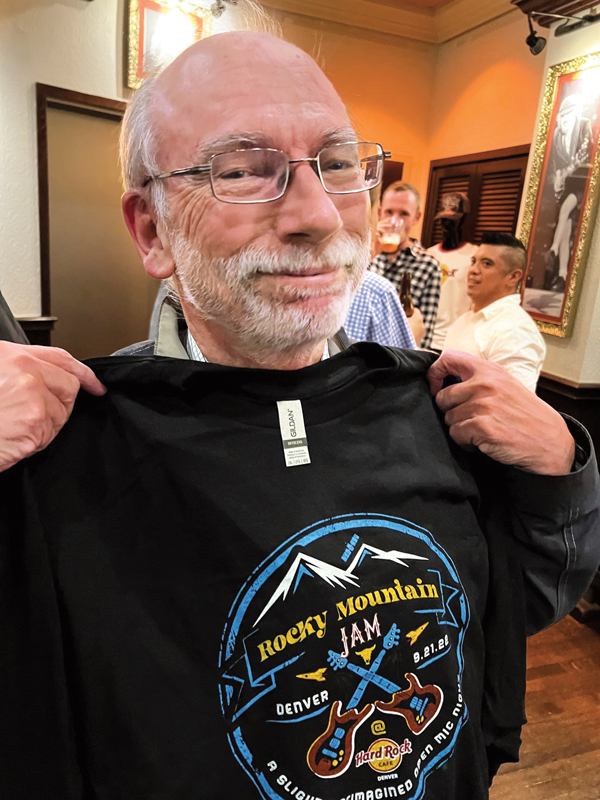
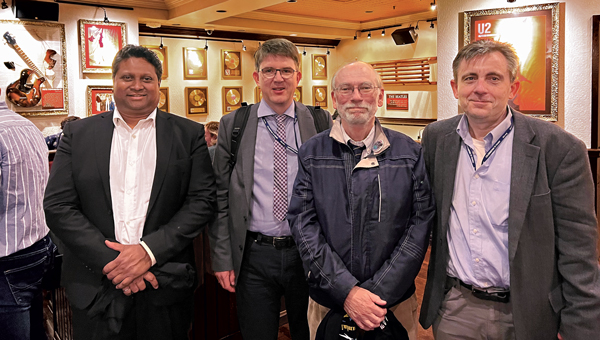
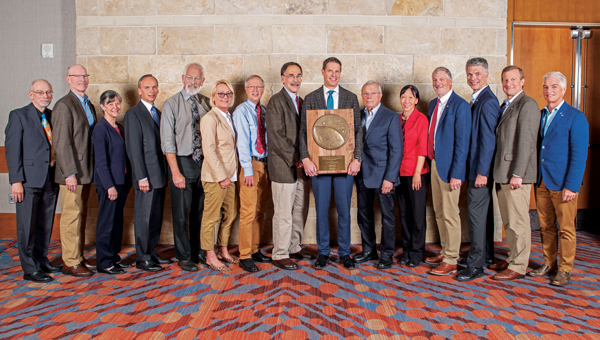
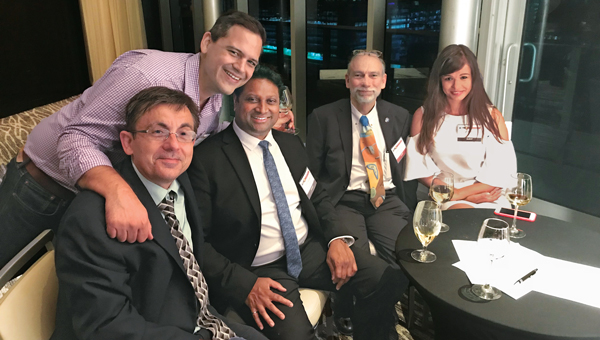
    The November 2024 issue of GPS World features Professor Richard Langley’s 300th and final “Innovation” column. His first one appeared in the January/February 1990 issue, the magazine’s very first. In celebration of Richard’s decades-long contribution to GPS / GNSS / PNT, we are publishing a selection of testimonials and photos (below) from some of his colleagues and friends, gathered by his former students Sunil Bisnath and Attila Komjathy.


    Recollection from 1990, Trinidad – University of the West Indies

    It was 1990, late into a — thankfully warm — night in Trinidad. I still remember that moment vividly — the sense of anticipation mixed with skepticism. A small group of us, undergraduates from the Land Surveying Department at the University of the West Indies, were standing outside in the middle of the night. We were waiting, eyes fixed on the sky, holding our breath for signals that were promised to come — signals that the foreign professor, Richard Langley, assured us would soon appear and change our lives forever. Back then, GPS satellites were in scarce supply. Only a few were up there, and getting a signal was not guaranteed. Richard’s confidence, however, was unwavering. He was convinced that this technology — this new way of understanding our position in the world — would revolutionize everything we knew about land surveying and navigation. That year was my last in Trinidad. I left with memories of those nights under the stars, waiting for those elusive signals that did eventually come. Over time, I’ve met Richard at numerous Institute of Navigation events, and like the GNSS constellations, we have continued to grow and evolve yet remain united by our passion for a technology that continues to grow beyond our wildest expectations. – Professor Allison Kealy, FRIN, GAICD Director, Innovative Planet Research Institute Professor, Civil Engineering Swinburne University of Technology


    I was introduced to Richard more than 15 years ago. I learned quickly that he is not only a man of renown earned by his overarching knowledge on almost all aspects of satellite navigation, but also a man of action. Not surprisingly and probably well known, he was one of the first researchers investigating and improving the Precise Point Positing (PPP) technique. It is less well known that he was also an early adopter of the PPPPP concept. When asked what the abbreviation stands for, Richard would answer with a twinkle in his eye: “Proper preparation prevents poor performance!” I had the honor of seeing Richard in action during a joint measurement campaign where we applied both concepts. We wanted to collect observations of the new Galileo test satellites GIOVE-A and -B to use them for precise positioning. It happened that they had favorable visibility during the ION GNSS conference in Savannah, Georgia, in September 2009. So, we mounted a bunch of equipment onto Richard’s rental car and off we went through the streets, after carefully making sure that the GIOVE satellite were actually visibile and reference product generation back home in Munich, Germany, and New Brunswick, Canada, was properly working. Richard was steering the automobile in rapid turns on the parking lot to get some serious phase wind-up effect going. I was so concentrated on the data logging that I did not even feel the urge to throw up. The measurement collection went well and the data ended up being used for a joint publication the following year, potentially one of the first papers jointly using GPS and GIOVE. PPP using the PPPPP rule — there you go! – André Hauschild, Ph.D., Researcher German Aerospace Center (DLR)


    I first knew of Richard Langley through his Innovation column in GPS World. It was largely through this column that I acquired my basic knowledge of GPS. The columns were always so clear and so well written. It was a time of rapid change — the Internet, rapid data transfer between sites, and many, many other challenges. I received a grant to fund the Westford Water Vapor Campaign, and along with Arthur Niell of Haystack Observatory, we set out borrowing as many receivers, radiometers, and radiosondes as we could. Thus began my first “international” phone call to Richard Langley (the University of New Brunswick is, of course, in a foreign country) asking him to borrow receivers. Richard, perhaps because he did his postdoc here at MIT, and spent many hours out at Haystack, was more than amenable. He not only lent us three receivers but also a foreign visitor, Pieter Toor from Delft, and Virgilio Mendes, one of his graduate students. From them I learned immeasurably about the troposphere and water vapor distribution. The Westford Water Vapor Experiment was an important series of measurements, that helped us realize the potential of GPS before it was fully recognized by the community. Later, I was invited to join Jack Klobuchar and the Canadian equivalent of the FAA to fly to the University of New Brunswick, where I met Attila Komjathy for the first time. Later I also came to know Sunil Bisnath. Richard Langley trained a remarkable set of students, many (if not most) of whom have gone on to stellar careers. – Anthea J. Coster, Ph.D., Assistant Director; Principal Research Scientist MIT Haystack Observatory


    Professor Richard Langley is truly one of the masters of the GNSS community. He has been the mainstay of knowledge, scholarly activity, and mentoring to scholars and students for decades. His friendly demeanor and wiliness to help out wherever he can, makes him a pleasure to talk to and collaborate with. I look forward to seeing Richard at ION technical conferences with that big smile on his face and observing his love for and devotion to the art and science of navigation. – Professor Chris G. Bartone, Ohio University


    Richard and I are of the same “vintage” (date/time: referring to the period when we ramped up our work and study activity) and “terroir” (space/environment: referring to discipline background, circumstances and opportunities). We were both educated as surveyors, we both became academics, and we both mastered the arcane applied science field of geodesy. Geodesy in the 1970-1980s was undergoing a revolution driven by advances of the Space Age, reflected in the increasing use of Earth-orbiting satellites for precise positioning, mapping, gravity field determination, sea surface mapping, and much more. Richard and I are of the generation of geodesists in the 1980s that recognized — before any other engineering or science discipline — that GPS was going to change our world in profound ways. We pioneered its use for geodetic surveying (at the sub-cm accuracy level) even before GPS was declared “fully operational” in the mid-1990s. We had more than a decade head-start in understanding the principles of differential GPS, of carrier phase-based static positioning, and of the system itself. It is a head-start that continues to this day. We developed the first university GPS courses, wrote the first textbooks, educated the first generation of GPS scientists, developed the first measurement processing software, and helped revolutionize the practice of navigation. Although GNSS is considered the most important geoscientific technology that we use today, precise GNSS-enabled positioning has impacted so many other professional, scientific and social applications. With the founding of GPS World’s “Innovation” column, Richard launched an amazing educational and industry outreach service. Those articles tracked the advances in GPS/GNSS technology and applications. While there are still some of our geodesy generation making contributions to their discipline, Richard has continued to promote GNSS for 35 years in a unique way, through his careful curation of “Innovation” column articles. They remain a joy to read. Richard, keep up this great service to the positioning, navigation and timing (PNT) community. – Professor Chris Rizos, President International Union of Geodesy & Geophysics (IUGG) School of Civil & Environmental Engineering UNSW Sydney Australia


    I have had the pleasure of knowing Richard since the mid 1980s, when we were part of the team that produced the first and highly successful book on GPS, namely the Guide to GPS Positioning. We have interacted regularly ever since. I have always appreciated reading Richard’s papers for their clarity, thoroughness and novel content. His Innovation column in GPS World for 35 years is now a GPS classic that post-graduate students and experts alike learn from and enjoy reading. Richard has deservedly received major awards for his numerous and outstanding work. Richard, I hope that we will continue to benefit from your contributions for years to come. – Professor Gérard Lachapelle, University of Calgary


    Despite being a highly respected leader in the field of PNT, Richard remains a humble human being. He sets a high standard for his work and is generous with his time to catch even the smallest errors in research papers. It has been a great pleasure to get to know him and to have the opportunity to work with and learn from him. He is an inspiration and a role model for me. – Professor Jade Morton, Ph.D., Helen and Hubert Croft Professor Ann and H.J. Smead Aerospace Engineering Sciences Department University of Colorado Boulder


    I have had the privilege of knowing Prof. Richard Langley for my entire career in PNT and have always been greatly impressed with his wealth of knowledge and research on high-precision applications of GPS. I first met him in the late 1980s at meetings of the Civil GPS Service Interface Committee (CGSIC) and the early Institute of Navigation conferences on GPS in Colorado Springs. When I joined the navigation team at the U.S. Department of Transportation as a young engineer in 1988, we all had copies of The Guide to GPS Positioning, that Prof. Langley co-authored with David Wells and that we greatly utilized! Since that time, I have enjoyed interfacing with Prof. Langley at ION conferences and serving with him on the ION Council. I have learned so much from his research, including his development of the UNB-RTK system and the study of atmospheric effects for the FAA Wide Area Augmentation System (WAAS), as well as the very informative articles he has published in GPS World! – Karen Van Dyke, Director, Positioning, Navigation, and Timing U.S. Department of Transportation


    The 35-year anniversary of Richard’s Innovation column in GPS World seems amazing, also recalling the recent 30-years celebration of the International GNSS Service (IGS), which to many of us seemed like an eternity. This is not surprising, however: from the Guide to GPS Positioning, co-authored by Richard (my first GPS handbook when I started learning about GPS in November 1989 at ICC, Barcelona); to the knowledge, motivation and empathy we have always enjoyed when meeting Richard in so many different workshops (ION, Beacon Satellite…) and collaborative works (e.g., IERS Conventions…). For him, this is normal. CONGRATULATIONS. – Professor Manuel Hernandez-Pajares, UPC-IonSAT, IEEC-CTE Head of the UPC-IonSAT Research Group, IGS Associate Analysis Center Department of Mathematics, Universitat Politècnica de Catalunya, Barcelona, Spain


    Professor Langley has been a vital contributor to the Institute of Navigation (ION) for four decades, serving in various volunteer and leadership capacities. In his most recent role, Richard has served as the Editor-in-Chief of NAVIGATION, The Journal of the Institute of Navigation, our esteemed peer-reviewed technical publication. Since taking on this role in 2020, he has expertly led a team of associate editors, guiding NAVIGATION through a transformative period as it transitioned from a traditional print publication to a fully open-access journal. Under his leadership, the journal has seen a remarkable increase in its impact factor, most recently rising to 3.1. Beyond his editorial work, his most important contribution lies in his mentorship. He has profoundly influenced the next generation of GNSS experts, nurturing countless graduate students through ION’s programs and initiatives while fostering their professional development. His dedication to education and commitment to innovation has enriched our community. We deeply value our ongoing collaboration with Richard. His unwavering commitment, expertise, and passion for GNSS and ION have made him an integral part of our organization. It is a privilege to work alongside such a dedicated professional. – Lisa Beaty, Executive Director Institute of Navigation


    Like many others, I look back to a long friendship with Richard, who’s always been a mentor and model for me. His sharp mind, paired with a distinct sense of very British humor makes each meeting with him a source of inspiration and memorable experience. From gentle spelling and grammar corrections in manuscripts to advice and leadership in GNSS-related projects, he always offers a helping hand, contributes in-depth knowledge and one or another personal anecdote. From him, I learned the “six P” rule: proper planning and preparation prevents poor performance. This unforgettable saying not only reflects the rigor Richard applies to his work, it also provided me a guideline that I’m now passing on to my own students. – Oliver Montenbruck, Ph.D. Head, GNSS Technology and Navigation Group German Aerospace Center (DLR)


    I would like to say, as someone who is not his direct advisee, I’ve always appreciated his avuncular spirit, mentorship, and encouraging guidance over the years. I join you in toasting to him and his successes in growing and connecting the navigation community over his many years of service, in addition to all his technical achievements and innovations. Cheers to Richard! – Professor Seebany Datta-Barua Illinois Institute of Technology


    Richard has been a highly respected leader in the GNSS community for more than 30 years, making his mark as a creative innovator, a mentor for generations of future leaders and contributors to the advancement of GNSS, and as an insightful and patient teacher. The well-worn copy of his Guide to GPS Positioning on my bookshelf has helped me and countless students quickly pick up the basics, while his cheerfully engaging series of “Innovation” columns in GPS World explored every feature, misconception, novel application, mystery, and intricacy of GNSS. And, he literally put Fredericton on the map for the GNSS community. – Penina Axelrad, Distinguished Professor University of Colorado


    When I became GPS World’s managing editor, in 2000, my exposure to GPS was limited to a few journal articles I had read as a graduate student in international security at MIT in the mid-1990s. Much of my education on the subject during the steep learning curve that followed came from Richard’s “Innovation” column. Also, as his liaison to the magazine, I was responsible for entering his many, meticulous edits to each column, which, at the time, he sent me by fax. Nearly a quarter century later, Innovation is still my favorite section in the magazine. I will miss it greatly.” – Matteo Luccio, Editor-in-Chief, GPS World


    Good memories of my collaborations with Richard span a long time to almost the operational beginnings of GPS. Examples range from our collaboration on the Handbook for GNSS to our shared lecturing at the “GPS for Geodesy” school, in Delft, 1996. I always experienced with admiration Richard’s encyclopedic knowledge and excellent lecturing and writing skills. The only one thing that I would have wished for is that Richard would have turned his excellent Innovation columns in GPS World into a book. That would have been a bestseller for sure. – Professor Peter Teunissen Delft University of Technology


    I first met Richard in 1982 while a postdoc at MIT about the time that he joined the faculty at the University of New Brunswick, after his postdoc in the same MIT department. After research in VLBI and SLR, he was one of the early pioneers in the development of GPS for precise positioning applications, with contributions in several areas, such as signal multipath and tropospheric refraction. We both taught at the International School of GPS for Geodesy in Delft, first in 1995, and contributed to the resulting monograph, GPS for Geodesy. I have a vivid memory of drinking beer with him in a bar in Delft after a long day at the school. – Professor Yehuda Bock Scripps Institute of Oceanography


    I first met Richard shortly after joining MIT as a Ph.D. student in 1979. He was a postdoctoral fellow for two years with MIT’s Department of Earth and Planetary Sciences, carrying out research in geodetic applications of lunar laser ranging and very long baseline interferometry after completing his Ph.D. at York University, Toronto. His research at MIT led to the discovery of a 50-day oscillation in atmospheric angular momentum and length of day determined from lunar laser ranging data. This work was published in 1981 in Nature. Richard has been publishing impactful papers on important topics since very early in his career. His contributions to GPS World’s “Innovation” column have followed that trend. – Professor Thomas Herring Massachusetts Institute of Technology


    I did not have tons of personal contact with Richard, but the contact I did have showed me that he was a man of very high standards, and it’s clear that his dedication to the field is enormous. The combination of high standards and selfless dedication is what moves us forward. He also attracted and produced a cadre of highly talented and successful researchers that continue to have an enormous impact on the field. These are great things! – Anthony J. Mannucci, Ph.D. Deputy Manager, Tracking System and Applications Section Jet Propulsion Laboratory


    Years ago when assembling material for my advanced GNSS signal processing course here at the University of Texas, I found that for several topics Richard’s “Innovation” column had just the discussion and analysis I was looking for my students to learn. His writing is unfailingly engaging and lucid! What a gift to the community his “Innovation” column has been! Richard is an amateur radio enthusiast. Many of the insights on radio in his columns are backed up by his practical experience with long-distance ham radio communications. He’s connected with people from continents away from his home base in New Brunswick. – Professor Todd E. Humphreys, Ashley H. Priddy Centennial Professorship in Engineering Dept. of Aerospace Engineering and Engineering Mechanics The University of Texas at Austin


    I first met Richard Langley in 1989 at what was my first ION Satellite Division meeting. It was a young-looking crowd, but we both could pass for young men then. I also met another young man by the name of Glen Gibbons who was circulating among the attendees to gauge interest in a trade magazine devoted to GPS that he was thinking of launching. GPS World played an important role in my career as a GPS engineer, particularly for its “Innovation” column, edited by Richard. His early columns (such as “Why is the GPS Signal So Complex?”) are classics of cogent writing and served as an inspiration to me when I tried my hand at writing about GPS. His skills as an editor, and his generosity to help a friend avoid embarrassing himself, proved even more helpful to me. My debt to Richard has grown over the years, and so has my admiration and affection for him. – Professor Pratap Misra, Professor of the Practice of Mechanical Engineering Tufts University


    When I googled “Richard Langley,” just for fun, I got multiple returns — among them “professional football player,” “state politician,” “actor,” “model maker” and I thought for a while that those are Richard’s other personalities that I didn’t know about. Well, a slight refinement of my search “Richard Langley, geodesy” got me what I was looking for — pages and pages on the accomplishments of the Richard Langley as one of the first scientists who recognized the great potential of GPS as a scientific and civilian tool and an everyday commodity, research publications that all GPS “insider wannabees” have read and memorized, and articles documenting his commitment to GPS World, especially its “Innovation” column — which has long been one of my favorite reads. I congratulate Richard on the 35th anniversary of this outstanding column! – Professor Dorota Grejner-Brzezinska, Vice-Chancellor for Research at University of Wisconsin-Madison


    Richard and I first met when I spent a post-doc year at the University of New Brunswick in 1983/84. The nucleus of the Bernese GPS software emerged from this visit. Richard and I became friends and stayed in contact after this visit. We met last time in Bern at the 2024 IGS Symposium commemorating 30 years of the International GNSS Service. What I admire most about Richard is his scientific breath and his at times artistic use of the English language — he announced his visit to Bern with the words “I will be there if I don’t ‘keel over’ between now and then.” – Professor Gerhard Beutler University of Bern


  • GNSS clocks prove to be invisible and indispensable

    GNSS clocks prove to be invisible and indispensable

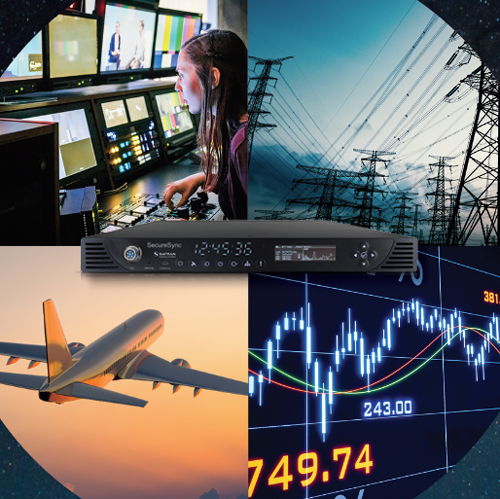
    Photo: Safran; Getty Images: JTSorrell / iStock / Getty Images Plus (background), TommL / E+ (tv), yangphoto / E+ (power grid), Torsten Asmus / iStock / Getty Images Plus (finance), Michal Krakowiak / E+ (plane)
    Photo: Safran; Getty Images: JTSorrell / iStock / Getty Images Plus (background), TommL / E+ (tv), yangphoto /
    E+ (power grid), Torsten Asmus / iStock / Getty Images Plus (finance), Michal Krakowiak / E+ (plane)

    In the early 19th century, as the sun moved across Britain from east to west, people set their clocks to local mean time, so that noon in Greenwich would occur about 16½ minutes before noon in Plymouth. Back then, travel on foot, by horse, or by coach was slow and inconvenient, so having to adjust their pocket watch, for the few who even had one, was the least of travelers’ concerns.

    However, with the advent of railway travel, keeping track of time differences became confusing and impractical. In 1845, Henry Booth, a railway businessman involved with the Liverpool and Manchester Railway, petitioned parliament for a “Uniformity of Time,” arguing that when “the great bell of St. Paul’s strikes ONE, simultaneously, every City clock and Village chime, from John of Groat’s to the Land’s End, strikes ONE, also.”

    In addition to rail travel, advances in industrialization and automation also increasingly required time standardization, synchronization, and optimization. With the advent of satellite navigation, the requirement for accurate time reached the order of nanoseconds, because a signal delay of one nanosecond corresponds to roughly one foot of distance on the ground. This is why atomic clocks were one of the enabling technologies for GPS.

    In turn, atomic clocks on GNSS satellites became the most convenient way to calibrate and synchronize local clocks on the ground and to meet the stringent timing requirements of financial institutions, communication and broadcast networks, power utilities, transportation networks, weather radars, and a variety of scientific, commercial, military and consumer systems. Even though computer networks use PTP and other synchronization protocols, they all ultimately tie back to GNSS timing receivers to synchronize them to a global clock. This has made GNSS timing receivers ubiquitous and indispensable. Yet, the T in PNT (positioning, navigation, and timing) is invisible to most people and often an afterthought even for many of us in the industry.

    I discussed some of the challenges of GNSS timing with representatives of five companies:

    • Mark Tommey, sales director, Precise Time and Frequency
    • Paul Skoog and Eric Colard, senior technical engineers of product marketing, Microchip, frequency and time systems business unit
    • Jeff Gao, GM of communications, enterprise and data centers, SiTime
    • Farrokh Farrokhi, founder and president, etherWhere
    • Beacham Still, director of business development and operations lead, SyncWorks

    For the full transcripts of my interviews for this article, visit here.

    Positioning vs. timing

    The first step in using GNSS signals for time synchronization is to process them to extract pseudoranges in the same way as for positioning — except that the signal from a single satellite is usually sufficient, because the position of the phase center of the receiver’s antenna is determined once and for all when it is installed.

    However, most timing applications require much more accurate timing than positioning applications. “In GPS, let’s say that position accuracy is one meter with a clear view of the sky,” said Farrokhi. “That translates to a few nanoseconds of error. To achieve that over, say, a 24-hour cycle requires much tighter jitter on the receiver. So, the challenge for a timing application is to do a much better job of removing sources of errors compared to positioning. In the past, a requirement of 20 ns jitter in timing may have been enough for many applications. However, as the communication systems’ bandwidth and throughput increase, the requirement for timing becomes more stringent. We must come up with new algorithms and new architectures to reduce jitter and improve accuracy.”

    Another difference is that most timing receivers — such as those in a cellular base station — are stationary and connected to an antenna with a clear view of the sky. “There are methods to extract and remove most uncertainties and inaccuracies,” said Farrokhi.

    “Since it’s not moving, many satellites feed into the equations that help you solve the math to get you very accurate timing,” said Skoog.

    ”Finally, most GNSS positioning applications don’t require holdover, while for GNSS timing “holdover is a universal requirement,” said Gao, “ranging from four hours, for an edge data center or a small facility, all the way to 24 hours for a large cluster of servers or, in some extreme cases, even 48 to 72 hours for deployment in or near a hostile environment, where you expect jamming and all those bad things to happen.”

    Accuracy requirements

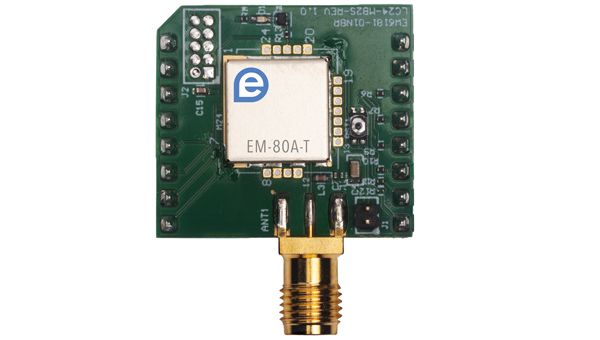
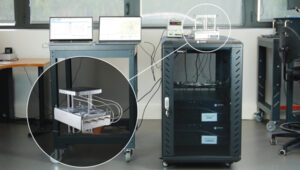
    etherWhere’s ew 6181 multi-GNSS timing receiver has a very low jitter across a wide range of temperatures.
    etherWhere’s ew 6181 multi-GNSS timing receiver has a very low jitter across a wide range of temperatures.

    The main critical applications for GNSS timing can be roughly grouped by the accuracy they require — but they are changing. “For example, for cellular systems up to 30 ns jitter used to be enough,” said Farrokhi.

    “As we move to 5G and 6G, this spec becomes tighter and tighter. We now must be below 5 ns for 6G. As we increase the bandwidth and must support higher throughput, we are more sensitive to timing inaccuracies.”

    “5G probably has the clearest requirement because you need 130 ns of relative time accuracy from one tower to another, mostly for handoff,” said Gao. “The accuracy requirements increase as you start to provide different services. For example, if different carriers want to aggregate some services, you start moving from 130 ns down to 65 ns, maybe even down to something more accurate.

    “Today, what’s driving the growth of our business is all in data centers and artificial intelligence (AI),” said Gao. “That ranges from traditional front-end server infrastructure and back-end AI workloads to edge data centers.” Timing requirements for data centers differ from those for other applications in terms of accuracy, reliability, and distribution to different locations, not all of which can have an antenna on the roof. “It’s a very interesting, multi-dimensional problem.”

    The requirements for financial services are defined in the United States by the Securities and Exchange Commission (SEC) and in Europe by the European Securities and Markets Authority (ESMA). To be legal, timing must have an audit trail all the way back to UTC and not diverge from it by more than 100 μs at the transaction level — the servers and the routers, said Gao.

    Additionally, in the United States, the Financial Industry Regulatory Authority (FINRA) requires financial institutions to be 50 ms to the National Institute of Standards and Technology (NIST). “That’s a hole so big you can drive a bus through it,” said Skoog. “However, if you want to trade on a stock exchange in Europe, you’re down to 100 µs. People typically will get a time server that will get them down to where they’re doing all their time stamping at better than a microsecond, but they put in a rubidium oscillator, so that if GPS goes away they can still finish that trading day and be better than 100 µs to UTC.”

    “For the bigger data centers there are no industry-wide standards,” said Gao. “Cloud service providers can each define their own requirements. What they care about is the window of time uncertainty: whether at the server level I have an error of 1 ms or 5 ms. You can go to 1 μs of error or down to 10 ns of error, each of which will enable you to provide a set of services. At 100 μs, for example, 99% of all your services are running. At 5 ms, you may have to start shutting down some services. More accurate time on the server also enables you to minimize the network traffic. So, conceptually, you can look at data center requirements anywhere from 5 ms all the way down to hundreds of nanoseconds, or even more accurate.”

    “Many markets have a lot in common, because they have communication networks,” said Colard. “For example, train and subway networks have communication networks very similar to those of telecoms. In the power industry, you have a communication network and a substation network. In the defense sector, you have confidential communication networks that are very similar to those from AT&T or Verizon. So, all these markets have the same requirements and the same features and challenges.”

    “Probably the number one reason why people put in a Stratum 1 NTP time server is to make sure that their log file time stamps are accurate,” said Skoog, “because that makes their network management systems more accurate and reliable.” However, accuracy is not the only concern. “The clocks are pretty accurate, but they connect to the network. All the network guys — the people who manage these networks — cannot plug this clock in until the security people give their stamp of approval.”

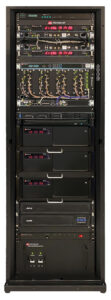
    Microchip Technology’s Precise Time Scale System (PTSS) is traceable to Universal Coordinated Time (UTC) and does not depend on GNSS.
    Microchip Technology’s Precise Time Scale System (PTSS) is traceable to Universal Coordinated Time (UTC) and does not depend on GNSS.

    Clocks and oscillators

    For all these accuracies, the key mechanism is GNSS timing. “In a typical data center,” said Gao, “you’re going to start with two grandmaster clocks, which are boxes that combine GNSS timing with locally accurate timing. That’s probably going to provide 5 ns to 10 ns of accuracy. More importantly, in addition to that, they have extremely good local oscillators that could be OCXOs, even some atomic clocks, that enable them to hold over if they lose GNSS timing for four, five hours, or 10 hours — up to 24 hours or 48 hours for a huge facility with many AI clusters.”

    Likewise, many financial services units don’t have GNSS antennas for every server, router and network card. “It just gets tremendously expensive to distribute the signal to each server,” said Gao, “because most of them are housed in huge warehouses that don’t have access to an antenna. They typically have a grandmaster clock.”

    “The GPS receiver itself is one product for all the segments that we sell into, but configured depending on how many timing outputs the customer wants and which frequency outputs,” said Tommey. “We also put a holdover oscillator into the unit that — if, for whatever reason, the GPS signal is lost — continues to provide valid time outputs for days, weeks, or even months.”

    “The advantage of GNSS is that over a long period of time it is extremely accurate,” said Gao. “The accuracy of an oscillator depends on how much holdover time you require. GNSS has a natural resolution of roughly 20 ns. At 5 ns, you start to rely on your local oscillator to do the next level filtering. For a base station or a core router, you need to get to 5 ns or better. So, you have GNSS native, you have an oscillator to do filtering to get a better accuracy and holdover, then you have network-based timing in a time scale of some sort.”

    “A data center, core network, or edge network never relies on a single source for timing,” said Gao. “GNSS is always viewed as extremely stable timing that everybody needs when you have access to the receiver and the antenna. Then you rely on the local oscillators and 1588 network timing as complementary technologies to ensure that you will always have timing all the time at a given accuracy.”

    Networks

    Increasingly, timing is distributed over a network. Some markets are more focused on Network Time Protocol (NTP), which has an accuracy of a few milliseconds, while others, such as telecoms, are more focused on Precision Time Protocol (PTP), which follows IEEE standard 1588 and is traceable all the way to a grand master somewhere. If someone just needs NTP, “it’s pretty easy to get 1 µs to 10 µs time accuracy between an NTP server and an NTP client,” said Skoog. “They may not even need 1 µs to 10 µs, but they’re going to take it if they get it, because log file correlation is very useful. Then when you get to PTP, it brings in a lot of hardware, time stamping and on-path assistance to get rid of some of that asymmetric delay. Now you’re down to sub-microseconds, and even approaching low nanoseconds. Then, if you must be down to 1 ns or something smaller, you’re into a 1 PPS application.”

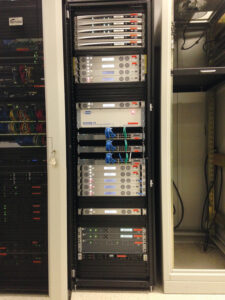
    PFT3207A GNSS receivers in 1+1 configuration with a ptf1207A redundancy switch to provide timing and frequency reference signals to sub-systems in a satellite Earth station installation.
    PFT3207A GNSS receivers in 1+1 configuration with a ptf1207A redundancy switch to provide timing and frequency reference signals to sub-systems in a satellite Earth station installation.

    Jamming and spoofing

    Any infrastructure that must always be in service requires redundancy and resiliency. “We build rubidiums, cesiums, hydrogen masers and so forth,” said Skoog. “For years, the cesium was the domain of the metrologist. Those days have passed. Sure, metrologists buy them. But you need a plan B for what you’re going to do if GPS goes away, so you can connect pretty much all our products to a cesium clock.”

    When it comes to the impact of jamming and spoofing on timing, perspectives vary substantially between companies. “We’ve only ever had one customer who thought they’d been jammed or spoofed,” said Tommey. “We honestly don’t see very much of that at all.” However, according to Still, in the United States, a common problem is the proliferation of personal GPS jammers. “You see this through people with corporate vehicles and a fear of being tracked — similar to the rise of VPNs. Our power distribution systems, our substations, our telco central offices are in the communities they serve.” The problem arises, for example, “at substations located next to truck stops, night clubs, bars, all the different places that folks might not want to have pop up on their corporately tracked vehicles.”

    Often, when network operators see anomalies on their GNSS-based timing systems, it is challenging for them to identify and effectively mitigate the source of that interference. “You can naturally go to the site and try to do audits, and there are tools to try to measure and monitor this,” said Still. “What is more common and practical for network operators is designing and deploying their GNSS networks with the expectation that they’re going to encounter some form of interference.”

    Current wars have spurred great interest in distribution of timing over optical networks, said Colard. “Close to Russia, China, Israel, any of the conflicts in the world, there have been attacks on these networks every day. Spoofing is the main concern that I’ve seen. Anti-spoofing or anti-jamming are not enough. You need to find alternate time references for when GPS fails for any reason, so it’s an architecture discussion. For example, assisted partial timing support (APTS) has been used for years. It connects to other PTP grandmasters in the network and provides PTP input while GPS is down. Another alternative is to rely less and less on GNSS in general.

    “The alternative to using GPS receivers everywhere is to limit them to very specific strategic points and distribute time over optical networks,” said Colard. “There are segments of hundreds of kilometers in many countries without any GPS receivers. There are also enhanced primary reference time clocks (ePRTCs), which are usually connected to GPS and cesium clocks for resiliency. Often, carriers now are not even using GPS there. They’re using metrology labs and the national time coming from NIST or similar national time agencies as the time reference, instead of GPS, to limit the use of GPS as much as possible across the network.”

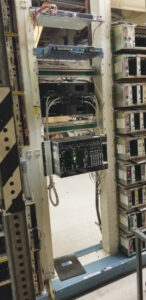
    A traditional GNSS-based clock for time-division multiplexing (TDM) services in a telecom’s central office.
    A traditional GNSS-based clock for time-division multiplexing (TDM) services in a telecom’s central office.

    Multipath

    As with the impact of jamming and spoofing, perspectives vary regarding the impact of multipath on timing. “We haven’t seen issues with multipath, except where users don’t do a good job of positioning their antenna or antennas,” said Tommey. Conversely, Gao said that “multipath is extremely relevant to timing. Let’s say, to give an extreme example, that you’re locking onto a single satellite. Depending on whether you have an unimpeded line of sight and no multipath or the signals are bouncing off a building, the difference could be 100 ns to 500 ns.”

    “Multipath might be a problem in a GPS antenna for timing, which usually sits on the roof,” said Skoog. “If you can keep this signal from reflecting up to the antenna in the first place with an adequate ground plane, that’s probably the singularly most effective thing you can do. I’ve been in GPS a long time. It used to be a very big deal. I never get asked about it anymore. It’s an old problem that’s sort of been solved.”

    Many people who have static antennas do not understand “that their sky view changes over the course of the year, and their visibility throughout the seasons and the winter solstice will be different than in the summer,” said Still.

    Transition

    The telecom industry is transitioning how it times and synchronizes networks from the time-division multiplexing (TDM) method that it has used for decades to IP and packet-based networks. “Particularly in TDM networks, the idea of UTC-traceable time of day was not really a focus until the advent of NTP, but ultimately it was all frequency synchronization,” said Still. “The idea was that if your network was in a frequency lock, and the phased alignment was good, your network would all drift together. So, TDM networks were also inherently synchronous, in a Synchronous Optical Networking (SONET) environment. You can distribute that frequency again throughout your network and pull it down from the overhead. By comparison, packet networks are inherently asynchronous, so it breaks the frequency chains that we’ve long relied on to distribute and synchronize our networks, and ultimately requires a new approach.

    “Modern networks and applications are increasingly reliant on precision time from GNSS-derived sources — high speed, low latency, high throughput, all being deployed to meet current and future needs,” said Still. This requires new sources of time, such as UTC-traceable time of day. Global networks and edge applications will all rely on time of day. “Not only are you trying to keep all your own networks synchronized, you must also have a relative accuracy to the rest of the world. So, some significant changes are taking place, particularly for engineers who have spent their whole career on TDM or SONET networks.”

    Now, Still said, “we can be more accurate using PTP on the edge than we can be with GPS. On the edge GPS now is an option. We keep those in place, distributed throughout the network, in case of bi-directional fiber cuts or losing some of the transport that we use to distribute precision timing, but you can be more accurate, more secure and more stable by using PTP than we can by relying on GPS.”

    Conclusions

    GNSS timing receivers are central to timing vast swaths of our industrial societies. Yet, as with positioning and navigation, growing concerns about jamming and spoofing are motivating some sectors to reduce their reliance on GNSS for timing and to develop alternative time references, including low-Earth orbit (LEO) satellites and eLoran. Meanwhile, many networks are transitioning to a new way of distributing timing.

  • JNC 2024: Safran Federal Systems

    JNC 2024: Safran Federal Systems

    At Joint Navigation Conference (JNC) 2024, GPS World Editor-in-Chief, Matteo Luccio, met with Jon Leombrone, executive vice president of navigation systems at Safran Federal Systems to discuss Safran’s latest assured positioning, navigation and timing (A-PNT) and simulator technology.

    Read more about the BroadSim Duo, Safran’s latest navigation warfare simulator.

    Check out the latest news from Safran Federal Systems.

  • First Fix: It’s time to give time its due

    First Fix: It’s time to give time its due

    Image: agsandrew/iStock/Getty Images Plus/Getty Images
    Image: agsandrew/iStock/Getty Images Plus/Getty Images

    Timing — the unglamorous yet essential T in PNT (positioning, navigation and timing) — has been called “the invisible utility.” In fact, it’s been a long time since we last put a GNSS-timing receiver on the cover. (Partly that’s because, like with simulators, it’s hard to come up with a visually compelling image that conveys the role of such a device.)

    From St. Augustine (“What, then, is time? If no one asks me, I know what it is. If I wish to explain it to him who asks, I do not know.”) to theoretical physicist Carlo Rovelli (who argues that time is “part of a complicated geometry woven together with the geometry of space”), time is both one of the greatest mysteries of nature and one of our most practical concerns. For satellite navigation, time is both essential to its functioning and a fabulous by-product. As David Wells and Alfred Kleusberg wrote in the first “Innovation” column, in the first issue of this magazine, “One of the by-products of getting an SPS [Standard Positioning Service] position fix is that a clock in the user’s receiver is automatically synchronized to clocks in the GPS satellites to an accuracy of one ten-millionth of a second. Therefore, any GPS receiver is a very accurate time distribution device.” (“GPS: A Multipurpose System,” January-February 1990.)

    As Richard Langley wrote in another early “Innovation” column, “Thanks to minute energy changes in individual atoms of cesium and rubidium, humankind possesses the ability to synchronize clocks anywhere in the world to better than 10 nanoseconds. But given this amazing ability to measure time, we still don’t know what time actually is.” (“Time, Clocks, and GPS,” November-December 1991.)

    I procrastinated the task of writing this editorial and now another aspect of time is here to impose its claim: our production deadline. So, just one anecdote and a final quote, and I will be done, just in time.
    The anecdote. A quarter century ago, during my first time around on this magazine’s staff, when Glen Gibbons was the group editorial director, Alan Cameron the senior editor, and I the managing editor, we had just one meeting a month, called “edit check,” a couple of days before the deadline to send each issue to the printer. We printed out all the pages, laid them down in order around a large conference room table, and walked around the table examining each one and making notes about small final corrections and revisions.

    Only one page routinely had a large empty area: It was the one for Glen’s monthly editorial, which he always finalized (wrote?) at the last possible moment. I once joked that it would be blown in at the printing plant like the magazine’s subscription cards. Well, as I finish this editorial, we are at T minus two days for the November issue. Enjoy it!

    Oh, and the final quote, again from Rovelli: “The events of the world do not form an orderly queue like the English. They crowd around chaotically like the Italians.”

  • Trimble’s R980 GNSS receiver enhances surveying applications

    Trimble’s R980 GNSS receiver enhances surveying applications

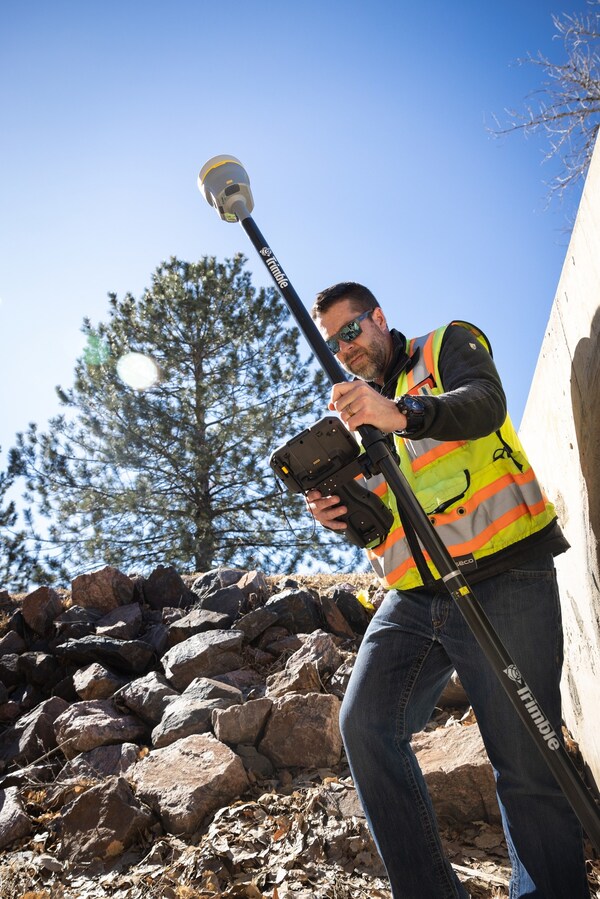
    GPS World Editor-in-Chief Matteo Luccio sat down with Anthony McClaren, product marketing manager of geospatial technologies at Trimble, to discuss Trimble’s new R980 GNSS receiver and its implications for the geospatial surveying industry.

    What’s your position?

    I am on the Trimble Geospatial Go to Market team. Product marketing managers are more customer-facing, while product managers are more engineering-facing. I’m based in Melbourne, Victoria, Australia, and I’ve worked at Trimble for almost two years, but I worked with Trimble equipment for 16 years before that for a dealership and for almost 20 years in the geospatial surveying industry. The rest of my team is based in our Westminster head office.

    What’s new about Trimble’s R980? What markets does it target?

    The Trimble R980 takes over from the R12i GNSS system as the flagship product in the Trimble GNSS receiver portfolio. New features include a communications update. The R12i had only a 450 MHz radio. The R980 also has a 900 MHz radio. That’s very beneficial for people who find themselves on large-scale construction sites where they use 900 MHz radios, particularly in North America. These radios are much easier to license than 450 MHz radios, which outweighs the disadvantage of having a shorter range.

    The R980 can be used as either a base station or a rover, correct?

    Yes. The R12i had a 3.5G modem. The R980 has a 4G LTE cellular modem. So, it’s a global cell modem and the 4G network across the globe is far more expansive than 3G or 5G. 4G LTE also offers enough data downloading for things like VRS and Trimble’s Internet Base Station Service (IBSS), a new feature in Trimble Access software that the R980 is also capable of using. IBSS is a user’s Network Transport of RTCM via Internet Protocol (NTRIP).

    So, you have a base station with a SIM card in the receiver. You start your base station as normal, and data is streamed to a Trimble data center. Then, you take your Rover, as we do today with a VRS survey. It has a SIM card, either in the receiver or in the controller, and you can connect directly to your base station via the Internet and stream your own corrections.

    It is particularly useful if you’re not in a VRS environment or if you want to get the range of using a cellular network instead of radio. It also means that you don’t have to consider where you’re going to put your repeater, such as on the top of a hill. You don’t have to worry about these sorts of things anymore, because we’re using the Internet to stream out corrections rather than a radio.

    You’re also uploading data to the office in real time.

    That’s handled separately, via Trimble Connect on your data collector. It’s transferring data directly to a project.

    This is your top-of-the-line, survey-grade receiver, right?

    Absolutely.

    In terms of cost and other considerations, for what other applications is it practical?

    We’re seeing a lot of our topline receivers being used in civil construction, transportation, infrastructure projects, and mining — because the Trimble receivers are tracking all the currently available satellite signals. It means that surveyors working in an open-cut mine can be at the bottom of the pit and still achieve survey-grade results because they’re tracking so many satellites. It is also used by the more traditional, everyday land surveyors who are out there walking the streets, because the R980 with Trimble ProPoint GNSS technology allows our users to measure in the most rugged GNSS environments, such as urban canyons.

    Speaking of walking down the street, the R980 is for either static deployment or slow-moving platforms, not for vehicles, right?

    Correct. The mobile mappers that we see on vehicles have very high-end inertial measurement units (IMUs) to provide heading, pitch and roll and use lidar or laser scanning to take the measurements. The R980 has an IMU to enable very accurate tilt compensation up to at least 30°.

    Looking at the broader trends in the industry, how do you see requirements changing? Of course, it depends on the market…

    One thing that doesn’t depend on the market — I have learned this since joining Trimble — is that globally a lot of the industry is facing the same issue, which is a massive shortage of surveyors to meet the demand for them. In Australia alone, I think we’re short about 2,400 surveyors for next year. So, it’s quite a significant number. Our customers on the ground are being asked to do a lot more with a lot less.

    So, Trimble’s goal with our products — whether it’s our top-of-the-line GNSS, total stations or something more entry level — is giving our customers the most productive equipment that we can so that they can do their jobs as quickly and efficiently as possible. That’s why we have such things as Trimble Connect.

    So, it’s not just about single point measurement anymore. It’s about using the ecosystem to be as efficient as possible. Once I’ve taken a measurement, what am I going to do with it? Beyond that, it’s in my data collector, which is using Trimble Connect to sync to the office, where I have Trimble Business Center software. So, the surveyors and the draftspeople at the office can start work on that straightaway and keep the guy in the field working.

    Concern keeps growing about spoofing and jamming, mostly for defense and life-critical applications. How do you see that affecting some of your civilian markets?

    Currently, in civilian applications, most of the jamming that we’re seeing is ad hoc and unintentional, not nefarious. For example, a truck driver who uses a consumer-grade jammer plugged into his 12-volt outlet so that his boss can’t track him. It’s unpredictable. I’ve also seen banks transmitting their data back to the head office near an antenna for a CORS site and jamming it.

    Trimble receivers have anti-spoofing and anti-jamming solutions. They deal with spoofing in a multi-layered way. Number one is rejection of spoof signals in the digital signal processing. Essentially, that means that a spoofed signal generally comes through with a higher correlation peak, because the transmitter is probably closer than a satellite 20,000 km away, so the receiver can isolate that signal and reject it from the positioning algorithm. Also, when it comes to spoofing and jamming, it tends to be a particular constellation and not a particular satellite. So, if you’re experiencing jamming or spoofing generally, it’s going to be all the GPS or Galileo constellation — not, say, satellite 32.

    Our survey-grade receivers use the Maxwell 7 technology, which can also cross-check orbital data from multiple sources. So, it’s detecting the orbital parameters transmitted by each satellite, and it can then check if any of those have changed unexpectedly, or if they fall outside of reasonable bounds, and exclude them.

    Are you utilizing any non-GNSS PNT sources, such as signals from LEO satellites?

    Not today. Is there a place for them in the future? Absolutely. Is Trimble aware of such things as Xona low-Earth orbit (LEO) satellites? Yes. Obviously, we would love to be using those, when they’re ready and when we have products ready.

    What about AI?

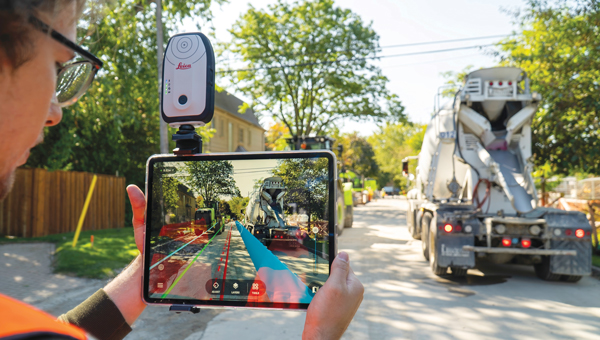
    AI is an interesting one. That’s obviously a hot topic, isn’t it? Today, we don’t necessarily use AI. When it comes to such products as the R980, we use mixed reality — where you have data overlaid by the camera in your controller and using your receiver and turning around, you can see your digital environment as well as your physical environment — but we are not using AI as such today. We overlay CAD data on what is physical, and it’s still three-dimensional. So, regardless of whether I turn this way or that, I can see my design in the real world.

  • GNSS clocks are invisible and indispensable: extended interviews

    GNSS clocks are invisible and indispensable: extended interviews

    GPS World Editor-in-Chief Matteo Luccio discussed the role and challenges of GNSS timing with Farrokh Farrokhi, founder and president of etherWhereBeacham Still, director of business development and operations lead at Syncworks; Paul Skoog and Eric Colard, senior technical engineers of product marketing, Microchip, frequency and time systems business unit; and Jeff Gao, GM of communications, enterprise and data centers, SiTime.

    etherWhere

    Farrokh Farrokhi, founder and president

    How is GNSS timing used?

    In addition to providing location, GNSS receivers have a built-in time synchronization mechanism. GNSS timing is used to provide the reference for many applications, such as cellular system base stations, server farms, power grid, and financial networks. It is also a source of timing for other systems that require synchronized operations. Examples of those systems are weather radars, distributed sensors and instruments that require synchronous measurement, In networks, we have PTP and other synchronization protocols, but everything goes back to reference GNSS receivers, because everything must synchronize to a global clock. Signal delays are becoming important because they create inaccuracy in the timing at the destination. The beauty of GNSS is that all these systems are synchronized to cesium clocks in the satellites and on Earth.

    What are the key challenges for accurate time?

    GPS signals have unavoidable imperfections. There are ionospheric and tropospheric delays that must be taken care of at the receiver to provide very accurate timing. The strength and quality of the received signal is also very important. To provide very accurate and robust timing, algorithms that run on these receivers must be very robust and must cope with all the sources of error. The timing pulse coming out of these receivers must be very accurate, so it has implications in both hardware design, algorithm design and how the system works.

    Are there error sources specific to timing that are not relevant for positioning?

    In timing applications, normally, we need to have much more accurate timing compared to position applications. In GPS, let’s say that position accuracy is one meter with a clear view of the sky. That translates to a few ns of error. To achieve that over, say, a 24-hour cycle, requires much tighter jitter on the receiver. So, the challenge for a timing application is to do a much better job in removing sources of errors compared to positioning.

    In the past, a requirement of 20 ns jitter in timing may have been enough for many applications. However, as cellular systems increase in bandwidth and throughput time, TDD systems require tighter timing, and the requirement for jitter becomes more and more stringent. We must come up with new algorithms and new architectures to reduce that jitter.

    Another difference is that timing receivers, in general, are stationary. They’re going to be sitting in a cabinet or on a rack somewhere with a fixed antenna.

    In timing applications, — for example in a cellular base station — GPS antenna has a good view of the sky at a fixed location, and so there are methods to extract and remove most of  those uncertainties and inaccuracies.

    Can you group the main critical applications by the accuracy they require? Would you say, for example, that financial transactions have a higher requirement than power distribution?

    Yes. For example, for cellular systems up to 30 ns jitter used to be enough. As we move to 5G and 6G, this spec becomes tighter and tighter. We now must be below 5 ns for 6G, as we increase the bandwidth and  need to support higher throughput, we are more sensitive to timing inaccuracies. For financial transactions, of course, the requirement is much tighter, so we have to be in the lower ns range, and that has its own challenges. But it’s still doable, especially because we’re going to have more and more GNSS satellites, LEO satellites, enhancements to existing GPS satellites and systems and more commercial satellite systems, so they all can contribute to the improvements in the accuracy of the GNSS time.

    When you have any kind of network — let’s say, a power grid — that you need to synchronize, is the solution nowadays to install many timing receivers, or would you be more likely to rely on fiberoptic cables?

    It depends on how much error the application can tolerate. For example, for power systems, you need fewer reference receivers that are locked to the satellites; then you can distribute timing using fiber or copper. When it comes to financial transactions, maybe that’s not enough, due to the fiber delays. So, different applications have different requirements.

    On what variables do timing receiver manufacturers compete?

    The most important parameter is accuracy and jitter. We must cover all different applications. Timing jitter must be reduced below 5 ns and even  below 1 ns for the applications that can utilize external corrections to the timing pulse. These are the key differentiators amongst vendors.

    One more challenge that we have been dealing with recently is resilience in timing. We must make sure that the timing systems are more robust , for examplein presence of GNSS jammer. During jamming events, we can resort to other resources for holdover. For example, one solution is to use Iridium satellites or other timing systems. In addition, there are LEO satellites that are being launched that could  provide secure and resilient timing for more sensitive applications. In generla, redundancy is an important factor. In the future, vendors need to integrate redundant systems as part of their solutions.

    What’s the typical drift for holdover during GNSS outages?

    The holdover depends on the accuracy of the reference clock. Reference clock accuracies range from a tiny fraction of a ppb to few ppm.   In more common commercial applications Rubidium, OCXO and MEMS clocks can provide clock accuracy in the order of 1ppb or lower. That amounts  to few micro seconds of drift over a day. On lower cost solutions where standard TCXOs in the range of 1ppm are utilized, this drift can go up to few milliseconds., So, it all depends on how much cost we can tolerate for each  solution.

    How much did the completion of Galileo and BeiDou improve timing?

    The availability, accuracy and reliability of those systems has contributed to the improvement in timing performance.  Specifically, Galileo has shown a better performance.. In addition, commercial PNT satellites are also going up — for example, Xona Space Systems — that could also improve timing and provide redundancy.

    If Galileo is better for timing than GPS, why not use only Galileo so as not to dilute your timing accuracy?

    That is correct. That is the responsibility of the timing algorithm  to selectively use a mix of GNSS constellations that provide more accurate timing. When there are more choices available, we always include that as part of our selection algorithms. As you mentioned, Galileo, and GPS are given a higher priority compared to less accurate ones.

    What is your company’s niche?

    We have one of the lowest jitter solutions in the market. We also have a low power solution that is being used for low power tracking applications. In addition, we offer a cloud solution that can be utilized to reduce the power consumption and improve performance for IOT tracking devices.

    Which applications or markets do you focus on the most?

    Cellular base stations and  server farms are the markets we focus on for our timing solutions. In addition, our low power geolocation solution has been used for IOT tracking solutions.


    Syncworks

    Beacham Still, director of business development and operations lead

    What does your company do?

    We are a 25-year partner of Microchip Frequency and Time Systems (formerly Microsemi / SYMMETRICOM), a long-time dominant player in the synchronization and timing space. So, we’re a leading value add reseller, engineering partner and implementation service team. We work actively with telcos, power utilities, transportation networks, and cable companies, as well as some different enterprise applications, to help address synchronization and timing issues, address some of the security and resiliency components that have become a focus in recent years, and ultimately help transition companies from the TDM frequency BITS synchronization that we’ve used for many years, to the gradual implementation of precision packet-based timing.

    I work directly with our customers to help understand their applicational vision, where their services might take them, how those requirements might be addressed, and ultimately, how we can ensure the critical need for timing is addressed and stable.

    How do the technical challenges differ between GNSS positioning and GNSS timing?

    Often the T in PNT is an afterthought. More generally, timing has been somewhat of an afterthought, particularly for something as mission-critical as it is. Positioning is often a very important application, and it can be detrimental for the user if something were to go wrong. But ultimately, timing is a highly critical component for network operation and stability of networks. The static nature of most timing receivers vs the mobile nature of positioning is a contrast. However, it’s a dynamic environment for navigation as you move through different regions and sectors. There certainly are evolving considerations towards where you’re located with static GPS, and particularly some of the risks I think we’ve seen from interference, both unintentional and intentional. They do have some susceptibility just because of their location. So, we can talk through how that evolves, or more over how that actually matriculates, is with your interaction with the general public, as well as with foreign state actors. But with the timing side of it, obviously the critical nature of it. additionally, I think the nature of that makes it more susceptible to prolonged jamming, spoofing, particularly through what we see in the United States, maybe being different than you would find in Eastern Europe or something where there are a lot more state-based actors and spoofing and jamming are a primary concern for us.

    To what challenge are you referring in the United States?

    We’re designing networks and understanding that, whether it be war zone or state-based actors, there’s very complex spoofing and manipulation that can occur in most frequently power environments, but really in the United States, one challenge for us is the proliferation of personal GPS jammers. You see this through people with corporate vehicles and a fear of being tracked — similar to the rise of VPNs. It’s federally illegal to operate a GPS jammer, but naturally you can buy them off Amazon and eBay, and so it’s one of those situations where it is legal to purchase and own but illegal to use. We see a rising proliferation of that, and ultimately how that impacts static GPS, as you can see, a consistent or maybe repeated incident.

    Our power distribution systems, our substations, our telco central offices are in the communities they serve. They’re static and they’re prone to what could be a repeated incident. So, we find this at substations located next to truck stops, night clubs, all the different places that you know, folks might not want to pop up on their corporately tracked vehicles. So, the rise in data has shined the light on people a little bit more, and they take different approaches to try to get around that. So, I think one part of static GPS is that it is susceptible, in a consistent manner, to its neighbors.

    How do you deal with that?

    The first challenge is understanding what is impacting the system. We tell people that we know a lot about GPS, but it’s not always a precise science, and it can be impacted by such things as solar flares or weird ionospheric conditions that may impact reception and understanding where the jamming is coming from. So, it’s not always straightforward. This can occur with RF interference from neighboring stray signals, anything that falls in the 1.5 MHz range, so often a challenge for operators when they see anomalies on their GNSS-based timing systems is understanding where that interference is coming from.

    You can naturally go to the site and try to do audits, and there are tools to try to measure and monitor this. What is more common and what is more practical for network operators is designing and deploying their GNSS networks with the expectation that they’re going to encounter some form of interference, whether that be intentional or unintentional, and so particularly in the modern geopolitical climate in which we live we’re working to design the networks with that intention.

    Meaning coupling them with oscillators for holdover?

    That’s how traditionally it’s been in the timing space. We’ve always had clocks with onboard oscillators that have a GNSS receiver, and ultimately, if they were to lose that reference to their satellite constellation, they would rely on their onboard hardware to maintain that time as long as they can. So, depending on the quality and the age of that oscillator, they’re going to be able to hold that for longer intervals. But even with a rubidium oscillator, typically the highest quality available, and in the time servers, you’re still maybe looking at three days of serviceable time. So, as the applications as the applications evolve and the requirements for accuracy become more stringent, it becomes more difficult to hold that time.

    With the advent of precision packet timing, we’re now able to do some reference redundancies, and we can talk through some of the resiliency architectures and strategies that people are putting in place. However, ultimately, we’re working to augment, supplement and provide redundant and resilient references through not only PTP-based inputs, but also the rise of what looks like to be a return of eLoran and some terrestrial-based signals, low Earth orbit satellites — anything that can be taken to reduce reliance on GNSS satellites to synchronize our systems.

    Is the multipath challenge any different for timing than it is for positioning?

    Ultimately, we’re relying on the same visibility and reception, and naturally that’s impacted by the deployment location and parameters of what you’re working to achieve. So, I won’t pretend to be a navigation expert, my proficiency is in the timing aspect of that, but I would say that we’re still largely affected by the same conditions. With static antennas, that doesn’t change for the most part. Urban canyons and certain other deployment scenarios do present a challenge. A tough thing for a lot of folks with static antennas is understanding that that sky view changes over the course of the year, and our visibility throughout the seasons and the winter solstice will be different than in the summer.

    For most of our operators, everything is always very much black and white as it comes to speeds and different kind of network architectures that they’re deploying, but ultimately GNSS is constantly evolving and changing based on things as obscure as solar flares and ionospheric conditions. It’s a challenge when you’re relying on such a weak signal coming from 12,000 miles above Earth’s surface and things are constantly evolving up there. So, that’s a challenge for operators. Not only using precision packet timing now as just a backup to GPS, it also allows us to deploy exclusively via GPS.

    Tell me more about the transition to precision packets.

    There’s significant change underway in how we time and synchronize networks. Throughout the telecom industry, we have the general transition from TDM to IP and packet-based networks. Particularly in TDM networks, the idea of UTC-traceable time of day was not really a focus until the advent of NTP, but ultimately it was all frequency synchronization. The idea was that as long as your network was in a frequency lock, and the phased alignment was good, your network would all drift together. So, TDM networks were also inherently synchronous, in a Synchronous Optical Networking (SONET) environment; you can distribute that frequency again throughout your network and pull it down from the overhead to be able to access that frequency. By comparison, packet networks are inherently asynchronous, so it breaks the frequency chains that we’ve long relied on to distribute and synchronize our networks, and ultimately requires a new approach.

    So, modern networks and applications are increasingly reliant on precision time from GNSS-derived sources — high speed, low latency, high throughput, all being deployed to meet current and future needs. Not, only is it a departure from the way we’ve distributed that sync, but we’re also requiring new sources of time, like UTC-traceable time of day. So, when we look at both the interconnectivity of global networks, and, moreover, what we see in edge applications, or the idea of distributing away from the core and hosting closer to the customer premise, all of those are going to be relying on time of day.

    So, we have a general migration from purely frequency synchronization to UTC-traceable time of day. That is the general evolution of this. Timing is critical, but it’s often an afterthought. It’s considered a means to an end, and often addressed either reactively or retroactively in a kind of break-fix mode. Maybe we take for granted how easily we distributed and accessed frequency and what it took to not only distribute that, but to maintain a serviceable level of accuracy on that. So, now, as we move to precision timing and time of day, we move into the ns range of accuracy. Not only are you trying to keep all your own networks synchronized, you must also have a relative accuracy to the rest of the world. So, some significant changes are taking place, particularly for engineers who have spent their whole career on TDM or SONET networks. It is a certainly a new approach.

    How do the timing requirements differ for different end user applications and industry sectors — for example, banking vs. power distribution?

    PTP (IEEE 1588) started as an industrial manufacturing protocol to synchronize high-speed presses and drills so that they would fire at the same time. It then came to telecom, with Telecom 2008 being the most common profile. So, you’ll see a PTP power profile, which is designed and intended specifically for smart grid and substation automation and virtualization. You have broadcast profiles. Depending on the medium or the transport technology that you’re using to distribute this time, there are different profiles inside of telecom to address them. In high frequency trading, there are competitive advantages for folks to have high levels of accuracy.

    For more critical infrastructure, it’s very much driven by not only new applicational evolutions — for instance, in substations, moving from an old fuse and relay to a virtualized protection scheme, their fault recognition and reconstruction of those things is becoming increasingly more advanced.

    All these things — again, whether through a competitive perspective or from a focus on security and resiliency — are requiring an increasingly stringent time reference. Through part of that, people have different motivations, obviously, from the critical infrastructure space, and now we would consider cable and home Internet, with the rise of people working from home, that that may be, it used to be considered just kind of power and light. Ultimately, you know, critical communications such as 911, or now e911 services, now it’s almost evolved to companies like Comcast or Charter Communications, some of the largest consolidated cable providers, are now a critical communication link for people.

    So, there are different motivations that drive different industries to invest. Transportation, for example, is a mix where, if you look at things like positive train control (PTC), there are some safety factors that play in there, but there also if you’re a metro or a customer-based rail line, you want to bring new broadband services and Wi Fi to improve your customer experience. So, it can be a mix of both a push and a pull. From the desire to increase your competitive offerings to increasing the resiliency and security with which critical services are offered.

    Would you say that the requirements are increasing and converging between these different industries? Are all of them transitioning to PTP? If so, will they all have the same accuracy?

    I would say yes, due to the flexibility of PTP, how it’s deployed for different applications, and your ability to translate it to different profiles. To use the example of a power company, they might be using telecom profiles in their transport network and PTP power profiles in their grid and their substations. So, the ability to move that telecom stuff around and translate it to PTP.

    That goes on in many industries, where you can begin to see a collapse of the product base into what would be considered previously just purely enterprise or low quality versus a big iron telecom box used for carrier services or critical applications. I do think you see a convergence of the technology and the solutions used.

    It depends on the criticality, or the motivation. If it’s a competitive-type thing that’s driven by the motivation of the companies, that will be a bit more push than the converse the inverse side of that being government-regulated utilities and communication companies, where they’re driven by many Homeland Security mandates.

    The technology — as far as the hardware, the protocols and the strategies we use to deliver high-precision timing — are converging. The question is, what are the motivations of each industry or enterprise? So, some of that is converging. Ultimately, timing is still somewhat of an afterthought, unless there’s a primary motivation. One challenge of that is people being reactive to those things. Ultimately, you do see some convergence of the technology, but some of the motivations and the thought process of the industries can differ based on what the driving factor for the investment and timing is.

    So, a table showing the different timing accuracy requirements of different sectors would be a bit misleading.

    Yes. Ultimately, each industry or vertical has different levels of legacy services. For instance, traditional wireline companies are making the transition, but they have a lot of legacy service to migrate. You’ll see this in a pseudo wire-type application or frequency reconstruction, doing your TDM services in an Ethernet environment. Many of these operators are trying to evolve their network. They’re having their eye on the horizon and  trying to plan and achieve deployment of new technologies, but they still have to account for the evolution of their old stuff and their installed base.

    By contrast, if you look at the emergence of precision timing and high frequency trading and finance — outside of some kind of enterprise NTP servers that they’ve used to roughly sync their domain controllers and their different IT applications — the introduction of PTP into finance is a rather new foray for them. So, they’re more financially motivated to try to get an edge. In comparison to a power utility, they move very slowly, because regardless of whether your phone and internet works, keeping the lights on is an absolute requirement. People have different obligations that they must account for when designing and implementing their networks, so it can vary.

    What is Syncwork’s niche in the industry?

    We are somewhat unique. Timing is a small niche corner of the industry. We specialize in helping our customers understand what could be considered an afterthought. We’re very good at helping customers analyze, understand and augment their systems. That goes with a lot of consultation and engineering services. This is a technology that does immense interop with other network elements. So, the testing of that and guaranteeing that these services will work as intended is often a drawn-out process. I like to think of timing as a network utility, no different than power and grounding, because if you were to lose timing there may as well be no power to the box.

    That is part of our process, and really being an ally to the customer as from the value-add perspective of not only the consultative side, but also assisting with the migration of old services from BITS clocks onto to the new precision timing platform. So, we’re well positioned as a trusted resource and experts and what may be a small, forgotten or undervalued part of the network.

    In which sectors do you specialize?

    Telecom, utilities, transportation, cable and enterprise, which could be anything from industrial manufacturing to finance or even military development and some of the labs and testing. We go into many labs as well.

    How do data centers fit in there?

    Data centers is an interesting area. You’re seeing a rise in timing-as-a-service in data centers, where data center companies — most notably folks such as Equinix — have invested heavily in their own timing. Previously, customers had their cage and their roof space where they hung their own antennas and run their own time servers. When you see all these antennas strung out next to each other on the roof, there certainly is a risk of an antenna shorting out and interfering with or jamming its peers. You have increased exposure to the elements and to lightning strikes. So, ultimately, many data center companies are following this same path where, not only are they beginning to host their PTP services and sell that as a service to their customers, rather than their customers implementing their own time servers, they’re also heavily invested in the backup and the kind of resiliency architectures that you might see in other critical infrastructure, such as power utilities. That often incorporates cesium atomic clocks, which is a mature, self-sufficient frequency reference that’s been long Used in TDM networks. It’s interesting, as you begin to incorporate cesium atomic clocks into PTP or precision packet networks and Ethernet deployments, you’re able to really distribute or almost share that. You can think of a cesium atomic clock as like a super-accurate oscillator. You would have a rubidium oscillator in your GPS clocks, they’re not actually maintaining time, per se. They’re working to hold a frequency lock that can then be used to discipline that time of day.

    So, a cesium therein can be used to create what we would call an enhanced primary reference time clock (EPRTC) architecture. The spec for that — and this is big in power utilities — is to be able to limit time error over three weeks to 100 nanoseconds. So, that’s a consideration now when moving from frequency to time. The question is not only whether you can keep everything in a phase lock and drifting together, but it’s interesting how you can use a mature technology in combination with emerging technologies, such as IEEE 1588, to really bring a new level of stability to the network.

    PTP can be used to distribute and share that extended holdover. So, power utilities, which are heavily invested in these EPRTC architectures, are preparing for “dark sky” incidents. So, they’re trying to prepare for worst case scenarios. Ultimately, through those investments, some of these utilities would be able to maintain 100 nanoseconds of time over a month-long, widespread GPS outage. Localized GPS interference is far more common, and we’re very fortunate that we haven’t seen a whole lot of malicious spoofing, or state-based acts like you would find in some of the Eastern European countries. For instance, Finland no longer really relies on GPS. They’ve moved to a terrestrial, PTP-based network.

    Now, with the proliferation in the improvements of PTP and packet networks, GPS is often a backup.  We can be more accurate using PTP on the edge than we can be with GPS. Time accuracy in these high-precision networks, and our ability to distribute and maintain that time, can be more accurate than the time difference between two GPS receivers at disparate locations. So, often GPS now is often an option. We keep those in place, distributed throughout the network, in case of bi-directional fiber cuts or losing some of the transport that we use to distribute precision timing, but you can be more accurate, more secure and more stable by using PTP than we can by relying on GPS.

    We know that GPS changed the world and proliferated so widely because it was such a revolutionary technology, but ultimately, now we’ve become very complacent to its security and its reliability. Now, we’re forced to shore that up and we can drive many business cases and additional benefits through the implementation of packets.


    Microchip

    Paul Skoog and Eric Colard, senior technical engineers of product marketing

    What is your role?

    PS: I’m a product manager. I manage network time servers and instrumentation products that output timing signals such as NTP, PTP, IRIG, 1PPS, and 10 megahertz. The products I manage have very broad applications.

    EC: I manage similar products, but I’m more focused on the telecom or communication side, while Paul is more focused on finance, power and other markets.

    What are the main differences in the technical challenges between GNSS positioning and GNSS timing?

    PS: The main difference is that a timing receiver, by and large, doesn’t move. Since it’s not moving, you can do an awful lot. You can have a lot of satellites that feed into the equations that help you solve the math to get you very accurate timing.

    Multipath these days is not as big a deal as it used to be, because these GPS receivers have so many correlators in them that they can figure it out correctly. Multipath might be a problem in a GPS antenna for timing, which usually sits on the roof. If you can keep this signal from reflecting up to the antenna in the first place with an adequate ground plane, that’s probably the singularly most effective thing you can do. I’ve been in GPS a long time. It used to be a very big deal. I never get asked about it anymore. It’s an old problem that’s sort of been solved.

    How do the timing requirements differ depending on the application or market?

    EC: Many of these markets have a lot of commonalities, because they have communication networks. For example, train and subway networks have communication networks very similar to those of telecoms. In the power industry, you have a communication network and a substation network. In the defense sector, you have confidential communication networks that are very similar to those from AT&T or Verizon. So, all these markets have the same requirements and the same features and challenges. Some markets are more focused on some protocols because of their needs. Some markets are more focused on NTP, for example, such as Paul’s products, which are probably the best in the world for NTP servers. Some other markets, such as telecoms, are more focused on Precision Time Protocol (PTP), which is used across all these segments. The accuracy requirements are also very different from market to market. So, in the telecom market, you can go now in the ns and ps while in other markets, you know, ms is enough. So, it’s really also a big, big difference there in terms of accuracy requirements.

    What is the common telecom aspect of these different networks?

    EC: For example, the same products can be deployed in communications for transportation and telecom, but they don’t focus on the same aspects. In the train or metro environment, they don’t necessarily use PTP to synchronize their environment, but they introduce SyncE. They used to have legacy signals and then upgraded to focus on SyncE. SyncE in telecom however is a no brainer. It’s been deployed for a long time, but in some of these other markets, it’s a big thing to upgrade their network to SyncE. They use grandmasters, the same as the telecom environment, but they focus on the SyncE need that they have.

    These grandmasters nowadays can be deployed for various needs, depending on the segment, but they use the same product. The benefits include resiliency and redundancy, which are common across critical infrastructure. If you’re an infrastructure that needs to be in service 24/7, you need redundancy and resiliency. How do you provide that in your grandmasters? It is a key aspect of the products that we build, for example. So, it’s not necessarily about the protocol, but it’s really about the box and the environment into which you’re deploying and making sure that they help in getting the service 24/7, even if GPS goes down, even if one unit goes down, even if a link goes down.

    So, a lot of that goes into the definition and the design of products that can be deployed across these segments, because all of them are critical infrastructure. You don’t want a train or your power or your cell phone to stop operating. So, it’s the same challenge, even if maybe the accuracy is different.

    PS: Your question also alluded to an application and a related timing requirement, right? If you’re a bank, you need to be this good, if you’re a power utility, you need to be that good. To a certain extent, some of that time accuracy requirement exists. But, you know, we move timing around in a couple of ways. We run it over a network. We also provide a one pulse per second (PPS) edge, or an extremely good 10 MHz sine wave for radar systems or satellite uplinks. However, more often time now moves over the network, and the irony is, the faster that network gets, the better the time accuracy you can achieve in moving time, because your asymmetric delays that cause time errors get smaller and smaller because your network is faster and faster. You did nothing for it from a clock standpoint.

    So, if someone says, “I just need NTP,” well, it’s pretty easy to get 1 microsecond to 10 microsecond time accuracy between an NTP server and an NTP client. They may not even need 1 microsecond to 10 microseconds, but they’re going to take it if they get it, because log file correlation is very useful. Then when you get to PTP, it brings in a lot of hardware, time stamping and on-path assistance to get rid of some of that asymmetric delay. Now you’re down to sub-microseconds, and even approaching low nanoseconds. Then, if you must be down to 1 nanosecond or something smaller, you’re into a one 1PPS application.

    One of Eric’s new clocks can get to sub-ns on PTP. You can say, “Who needs it?” Well, the Financial Industry Regulatory Authority (FINRA) requires you to be 50 milliseconds to NIST. That’s a hole so big you can drive an aircraft carrier through it. However, if you want to trade on a stock exchange in Europe, you’re down to 100 microseconds. People typically will get a time server that will get them down to where they’re doing all their time stamping at better than a microsecond, but they put in a rubidium oscillator, so that if GPS goes away — I mean, the cable could be disconnected — they can still finish that trading day and be better than 100 microseconds to UTC.

    So, they get a very accurate clock, and they put a rubidium oscillator in it, and they know they’ll get through the day if lightning hits the antenna, or whatever the case may be. So, it is a little hard to say, “Oh, you’re in this industry, therefore you need this particular timing.” Everyone gets what they get for their purposes. We just talked about accuracy, but there are three things that are important to everybody. That’s number two. Guess what number one is? Security.

    If I talk to any customer, accuracy, reliability or security will come up. Depending on who you are, it’ll be a combination of those. Today, these clocks are so accurate for most people — sure you’re going to get some high frequency trader would like to get picoseconds or even femtoseconds, right? There are a few people out there that care about that. In general, though, the clocks are pretty accurate, but they connect to the network. All the network guys — the people who manage these networks — cannot plug this clock in until the security people give their stamp of approval, period. That’s just the way it is. They go by the notion of zero trust and if you’re going to plug something into the network they first do penetration tests on it. They’re ruthless. You would think that they want to know how accurate it was. No, they believe you. It’s about security.

    What role do you play in that?

    PS: I do a lot of listening and learning from huge corporations on planet Earth that purchase our product. They beat the daylights out of it when it comes to penetration testing and security. Then they give us feedback and we make changes. Why don’t we publish that? You never want to publish something that someone found, because then all the bad guys will try to exploit it, right? So, with all our releases, we’re mitigating any common vulnerabilities and exposures (CVEs), and we keep hardening these products, because they have experts that beat on them from the outside. Then they log in as a legitimate admin and start beating on it from the inside to try to hack it. They’re brutal.

    EC: Security is a very broad concept. There’s the concept of attacking a particular device, like a timing device, but there’s also the topic of GPS itself. Is it a signal as a time reference that can be trusted? So, you know, anti-spoofing, anti-jamming. Because, basically, time into a grand master reference is coming from GPS most of the time. If it’s not trustable, then you need to find alternatives. So that’s a big topic of discussion and innovation in finding alternatives, you know, to GPS.

    Is it better to have GPS everywhere or to distribute time over optical networks?

    PS: That’s also part of the security discussion, because people are more and more aware that GPS sometimes is attacked as a signal.

    So, a table showing the accuracy requirements of different economic sectors would be a bit misleading, right?

    PS: A little bit. Probably the number one reason why people put in a Stratum 1 NTP time server is to make sure that their log file time stamps are accurate, because that makes their network management systems more accurate and reliable, so that they can resolve forensic diagnostic problems faster, because all those timestamps need to correlate. If they don’t correlate correctly, you’re not solving your problem. The government wants you to report all cyber security incidents. You turn your logs over to the government, and they want accurate timestamps, so they can sift through this stuff fast.

    On the positioning side of PNT, there is an increasing concern about jamming and spoofing. Is it the same for timing?

    EC: The world is becoming more and more unsafe. There are many wars out there, and in all those regions we’ve had much interest in distribution of timing over optical networks. Close to Russia, China, Israel, any many of the conflicts in the world, there have been attacks on these networks every day. Operators in the Middle East, for example, have cell phone networks that work only a few hours every day because they get jammed, so they need to find alternatives. This is also true in Northern Europe, Eastern Europe, and parts of Asia. We face it less in North America and that’s why here there’s less of that urgency.

    What does spoofing of timing look like? Has it begun to take place?

    EC: Spoofing is more important to operators now than jamming, because we know how to deal with jamming and it is easy to locate the source. Spoofing is the main concern that I’ve seen. For example, I was in Taiwan in May of this year, and the number one thing they want to know is how to detect spoofing. One form of spoofing is somebody who is acting as if it were GPS, but it’s not GPS. They want countermeasures to that and alternatives, because anti-spoofing or anti-jamming are not enough. You need to find alternate time references for when GPS fails for any reason, so it’s an architecture discussion. For example, assisted partial timing support (APTS) has been used for years. It connects to other PTP grandmasters in the network and provides PTP input while GPS is down. Another alternative is to rely less and less on GNSS in general, right? In North America, for example, one of the top three mobile operators was deploying GPS everywhere and using PTP as a backup. That was kind of the architecture when 5G came around. A few years ago, that whole strategy got reversed: PTP became the primary and GPS was used only in some situations.

    The alternative to using GPS receivers everywhere is to limit them to very specific strategic points and distribute time over optical networks. There are segments of hundreds of kilometers in many countries without any GPS receivers.

    There are also enhanced primary reference time clocks (ePRTCs), which are usually connected to GPS and cesium clocks for resiliency. Many times, carriers now are not even using GPS there. They’re using metrology labs and the national time coming from NIST or similar national time agencies as the time reference, instead of GPS, to limit the use of GPS as much as possible across the network. So, time distribution over networks is becoming more and more of a topic, especially when you own the network. That’s where there’s a big difference between North America and many other countries, in which the operators own their wireline network and control the distribution of time over the whole country. In the United States, there are many third-party backhaul operators. So, Verizon, ATT, and T Mobile don’t necessarily own the backhaul and cannot control how time goes from A to B and guarantee the accuracy across the country.

    Alternate forms of solutions include common view. In telecom and power, many of our customers are moving toward time distribution over optical networks to diminish reliance on GPS as a time reference.

    What are some of the challenges with that?

    EC: It’s a little bit tricky sometimes to deploy, because you may have to consider repeaters, amplifiers, filters or other types of devices. You must deal with calibration and with deployment considerations. It’s a network engineering exercise. However, the standards — such as the one for telecoms — are helping. They define which protocols must be used. About 30% of the units that we sell for grandmasters are sold into these optical distribution environments.

    PS: Have you heard of the jammer test in Norway?

    Yes.

    PS: We have technology that looks at the signals from space, analyzes their integrity and compares them to what you expect from the satellites to detect spoofing. Not everybody can back up their system with a terrestrial network. The people who know that they could be vulnerable buy that option from us. It’s either a hardware basedGNSS firewall or it’s a software option, like a clock that analyzes the GPS signal. If it detects GPS spoofing, It stops using GPS and switches to another time source, such as a holdover oscillator, or getting time terrestrially from another clock over the network.

    What is your company’s niche, compared to other timing receiver manufacturers?

    EC: Well, you know, some of the considerations include resilience. You know, building grandmasters with no fan, for example, because in timing, if you have a fan, it’s going to interfere with your oscillator — because certain oscillators speed up and slow down as a function of temperature change — and the oscillator is a big aspect of the holdover capabilities and the functioning of your grandmaster. So, having a fan or not having a fan is a big deal for resiliency and for accuracy and performance. And you know, fans are known to be causes of failures, right? So, we have a big architecture design exercise to avoid having fans in some of the grandmasters that we sell, especially in telecom. The second secret sauce, I would say, is our algorithms to meet accuracy in the telecom space, to go into ns and sub-ns that’s really very important in the in the evolution of these networks.

    We build these algorithms and our oscillators in-house. We also have external systems, such as cesiums and masers. So, we can provide the whole end-to-end solution without relying on other vendors. We know the quality of everything we build. The other piece is that we rely on Microchip devices inside our own products. That may seem like a detail, but the supply chain crisis is not too far in the in the past, and we face some of these issues using third party components. Now, we maximize the use of our own components inside our products to be more in control of what we can ship.

    PS: We sell a very accurate clock, called the SyncServer, to government, military, aerospace and enterprise entities. DOD buys many of these time servers because they are trying to solve the same problems as commercial enterprises. They have servers, and the time must be kept the same. The clocks also sell into radar systems, satellite uplinks, test ranges, and so forth. So, probably the three biggest attributes for the SyncServer product I manage is that they’re very accurate, very secure, and very flexible.

    We make it very easy for our customers to adapt this hardware product to their needs, so I suppose our niche is software configurable hardware. We are very software modular. The advantage is that we have a very competitive price for the product. If down the road, you go, “Oh, I want PTP,” it’s just a software option, because every SyncServer ever built has PTP-equipped hardware.


    SiTime

    Jeff Gao, GM of communications, enterprise and data centers

    What is your background and what do you do at SiTime?

    I’ve been with SiTime for 16 years. I started in 2008 as Director of Product Marketing for communications products. That was a time when SiTime was just coming out of the initial startup stage with the first generation of commercial products, so I was one of many people who came on board to take those products to market. It was very challenging. I showed our device to a customer who did not believe it was an oscillator because it was black and oscillators were usually in a shiny ceramic package.

    The performance of the oscillator back then was mostly for consumer devices or low-end CPU clocks. Sixteen years later, the performance of our devices has improved dramatically, to the point where it’s all about ultra stability. It’s all about position for applications such as GNSS, for location and timing as well as for time distribution and synchronization. My role now is to manage the data center, communication and enterprise business.

    Today, what’s driving the growth of our business is all in data centers and AI. That ranges from traditional hyper-scalers, their front-end traditional server infrastructure and back-end AI workloads, to edge data centers. There’s also definitely a portion of the 5G, as well as broadcasting and the power grid, but from a timing point of view, even for GNSS timing, the datacenter is becoming just as critical as the rest of the markets.

    What are the timing requirements for data centers? How do they differ from those for other applications?

    Conceptually, it comes down to a couple of things. One is the level of accuracy that they need to achieve. The second is reliability or redundancy, if you lose GNSS, how do I ensure the time accuracy until I recover my GNSS signa?. Then, how do I distribute GNSS timing into different locations? Not all locations can have an antenna on the roof. So, it’s actually a very interesting, multi-dimensional problem.

    5G probably has the clearest requirement because you need 130 ns of relative time accuracy from one tower to another. It’s used mostly for handoff because, in most of the world, everything is running off TDD systems, so you need that to manage the channels and do the handoffs right. The accuracy requirements increase as you start to provide different services. For example, if you want to do inter-carrier aggregation — meaning that, for example, Verizon and ATT want to use the same tower and the same radio and want to aggregate some services — you start moving from 130 ns down to 65 ns, maybe even down to something more accurate, and that’s all defined as part of 3GPP. This is a world where the need for [???] time accuracy is clearly spelled out by 3GPP or other industry standards.

    For financial services, it is defined by the SEC and by ESMA in Europe. More specifically, Government regulations for financial/banking enterprises have driven PTP adoption in the USA (via FINRA Rule 4590 and SEC Regulatory Notice 16-23) and Europe (via ESMA MiFID II requirements).There are two requirements to be legal: one is that the timing must have an audit trail all the way back to UTC. The second is a maximum divergence of 100 μs from UTC. Now, that’s at the transaction level — the servers and the routers. To guarantee that maximum error of 100 μs, what can the maximum time error be? Because everything adds up along the way, right?

    For the bigger data centers it is a little bit different, there are no industry-wide standards. Hyperscalers for example, Google, Meta, and Amazoncan each define their own requirements, in terms of the time sensitive services that they want to provide to their end customers. So, the thing they care about is the window of time uncertainty. If at the server level, I have a 5 ms error, or a 1 ms error. I can go to 1 μs of error, or I can go down to 10 ns of error, each of which will enable you to provide a set of services. So, at 100 μs, for example, 99% of all your services are running. At 5 ms, I may have to start shutting down some services. This is where it gets tricky, because each of them is defined a bit differently in terms of what services are available for which accuracy.

    The classic example has always been this: you’re in New York and you’re searching for an airline ticket from New York to Hong Kong, but there’s another person in Hong Kong searching for the same ticket. Those services must be synchronized so that you don’t have a contagion problem. You must guarantee a window of time uncertainty to avoid these kinds of problems.

    The other reason for that requirement is to avoid having to send a lot of transactions back and forth between servers. More accurate time on the server enables you to minimize the network traffic. So, conceptually, you can look at data center requirements anywhere from 5 ms all the way down to hundreds of ns, or even more accurate.

    For all these accuracies, the key mechanism is GNSS timing. In a typical data center, you’re going to start with two grandmasters. That’s probably going to provide 5 ns to 10 ns of accuracy. More importantly, in addition to that, they have extremely good local oscillators that could be, you know, OCXOs, even some atomic clocks, that enable them to hold over if they lose GNSS timing for four, five hours, or ten hours, for whatever reason — up to 24 hours or 48 hours for a huge facility with many  AI clusters.

    Financial services is very similar. Many financial services units don’t have GNSS antennas for every server, every router, every network card. It just gets tremendously expensive, Plus, beyond the cost of the hardware, distributing the signal all the way down to each server, because most of them are housed in huge warehouses that don’t have access to an antenna. They typically have a grandmaster clock. It’s a box that combines GNSS timing with locally accurate timing to provide the timing to the rest of the facility.

    When you must use fiber optics to distribute time, what error does that introduce?

    There are a couple of different ways to do this, and we see all of them. One is to use a physical medium, such as fiber, to distribute time from the grandmaster all the way down to the server level. The challenge is not thedelay itself, because you can calibrate for that. It’s the variability of the delay, because of such factors as temperature. So, that could go to in the ms range.

    In that scenario, we are now seeing two things. First, you have two or three GPS receivers per facility, and you pair them with highly accurate local clocks. So, you have fail over and you get your 5ns or even better accuracy. Then, you must design a physical distribution network. So, it’s not a single fiber all the way down to the server. You may have two or three layers of distribution, where the first chunk of the fiber goes into a time switch, where you have a very accurate local reference and try to calibrate out some of the delays. Then you have another layer do the same thing. Then maybe it’s two to three layers all the way down to the server level.

    Some people do it in a purely optical way. Often it is done optically, then back to electrical, then back to optical, meaning that you literally try to recover the timestamp, because it’s basically sending over a 1 PPS signal. You recover it, then convert into electrical, you do some adjustments to it, then you send it out again over optical. With that mechanism you can probably deliver it down to ns accuracy.

    Over what distances? Does it matter?

    A few kilometers, but it’s a cable distance. Now, how do you get an accuracy of 200 ns, 5 ns, or even 1 ns? This is where the electronics will come into play, where you must recalibrate the 1 PPS that’s coming in from your grandmaster or from your receiver, and take out, essentially the variations in temperature and distance that are caused by a physical media.

    Does GNSS timing pose different challenges from GNSS positioning? Many factors, such as tropospheric delay, apply equally to both.

    The challenges are exactly the same. Multipath is extremely relevant to timing. Let’s say, to give an extreme example, that you’re locking onto a single satellite. Depending on whether you have an unimpeded line of sight and no multipath or the signals are bouncing off a building, the difference could be 100 ns to 500 ns.

    Can you take care of that upfront, when you install the antenna?

    It’s easier when you have a huge data center under the open sky in the middle of Arkansas or Texas but significantly more challenging if you are in the middle of San Francisco. One use case we’ve seen is in India, where they try to provide fixed wireless access using 5G in combination with WiFi because it is more economical than  digging up the road and put in the fiber. So, the easiest way for them to do that is to put the aggregation box somewhere in the building where they have many client nodes and the connectivity is basically a 5G sub 6G or mmwave. To do that effectively, they will need to have accurate timing on the aggregation box, which, unfortunately, sometimes sits on a cell tower, which has clearance. Sometimes it’s just sitting on a building with higher buildings around it.

    So, multipath is a problem. We’re seeing exactly the same problems for timing. The one difference is that GNSS positioning applications for the most part don’t require holdover. Autonomous driving is still not at level four or five. It’s really just for navigation. For GNSS timing, on the other hand, holdover is a universal requirement, ranging from four hours, for an edge data center or a small facility, all the way to 24 hours for a hyperscaler, large cluster of servers, or in, some extreme cases, even 48 hours to 72 hours for deployment in or near a hostile environment, where you expect jamming and all those bad things to happen. So, the difference is that the holdover requirement is an absolute must in time.

    There are multiple redundancies as well, and they don’t necessarily get deployed all at the same time. If I look at a classic core network system, essentially you have three sources for timing. The advantage of GNSS is that over a long period of time it is extremely accurate. The accuracy of an oscillator depends on how much holdover time you require. GNSS has a natural resolution of roughly 20 ns. At 5 ns, you start to rely on your local oscillator to do the next level filtering. For a base station or a core router, you need to get to 5 ns or better. So, you have GNSS native, you have an oscillator to do filtering to get a better accuracy and holdover, then you have network-based timing in a time scale of some sort.

    Network time protocol (NTP), which is typically used in notebooks and traditional data centers, only gives you an accuracy of a few ms. In the telecom and data center worlds, everyone is moving over to precision time protocol (PTP), which follows IEEE standard 1588. It’s a network-based timing protocol, where the end node exchanges several protocols back and forth with an upstream node. In the exchange process, you figure out what the time is. It is traceable all the way to a grand master somewhere. So, from the point of view of a data center, a core network, or an edge network you never rely on a single source for timing.

    GNSS is always viewed as extremely stable timing that everybody needs when you have access to the receiver and the antenna. Then you rely on the local oscillators and 1588 network timing as complementary technologies to ensure that you will always have timing all the time at a given accuracy. My primary timing is always GNSS. If I lose my GNSS signal, I don’t go into holdover in the router. I go to my 1588. A sequence of events will happen in the system that allow you to move from one time source to another.

    What is your company’s niche in the market?

    SiTime is the only company in the world dedicated to all aspects of timing. Competitors don’t focus solely in this market. SiTime is also the only player that has a complete portfolio of precision timing components you need to build a complete system. If you look at a complete GNSS timing system, you will need ultra-stable oscillators, some sort of clock, and some software on top of it.

    What else distinguishes your company from the competition?

    Everything works great in the lab, right? Everyone is saying, “Hey, my solution delivers 5 ns with a 24-hour holdover,” until you put their box in a data center, with a lot of airflow and the heat being generated. Then, suddenly, those 5 ns become 1 ms and 24 hours shrink to 20 minutes.

    Our claim to fame is that we have designed our solution to ensure that we actually deliver the performance we claim we deliver in the real-world environment — whether the system is being subject to heat, airflow, rapid temperature changes, shocks, or vibrations, such as when a train goes by a cell tower. We want to ensure that our solution delivers the accuracy and the holdover in the conditions to which the systems is actually being subjected in real world operations.

    We can do that because the consistency of the MEMS behavior enables us to compensate with electronics that allow us to be much more resilient to environmental factors.


  • Mobile solutions: Higher accuracy blurs the lines between old product classes

    Mobile solutions: Higher accuracy blurs the lines between old product classes

    Photo: Leica Geosystems
    Photo: Leica Geosystems

    Do you remember the free-standing car navigation devices that were popular for a while, such as those made by Garmin and Magellan? Few people use them anymore because to find our way when driving, most of us use our smartphones instead.

    Smartphones now have a plethora of sensors, including inclinometers, accelerometers, magnetometers, barometers and light sensors. However, cost and size constraints (the insides of those small devices are so crowded!) limit the accuracy of smartphones’ GNSS receivers.

    Therefore, to accomplish professional mapping tasks, it is now increasingly common to pair a smartphone — which provides computing power, a display, motion sensors, a camera and Internet connectivity — with an external GNSS receiver and antenna.

    This and other changes in the industry make product categories long in use obsolete or, at least, less compelling. What is a mobile GNSS solution? Are the terms “mapping grade” and “resource grade” still useful? Who is using which devices for which tasks?

    I discussed these issues with Bernhard Richter, VP Geomatics at Leica Geosystems, which is part of Hexagon, and with Igor Vereninov, CEO of Emlid.

    — Matteo Luccio, Editor-in-Chief

    Leica Geosystems: Conversation with Bernhard Richter, VP Geomatics at Leica Geosystems, part of Hexagon

    We used to divide GNSS receivers into consumer grade, resource grade (for GIS data collection) and survey grade.

    Those lines don’t exist anymore to the same extent. Some of the lower-cost chipsets — which were originally built for mobile phones and Garmin devices and lower-accuracy stuff — can now provide higher accuracy. We call them industrial-grade chipsets. The need for UAVs, e-scooters, e-bikes, automotive applications, etc., triggered their development. They are coming closer to the premium boards — let’s call them the multi-frequency, multi-constellation receivers that were always built for real-time kinematic (RTK)-type applications.

    So, it’s the bottom that’s coming up.

    There is still a need for single frequency code-only chips on the one hand for the mass market and, on the other hand, for premium devices from companies such as NovAtel (part of Hexagon), Trimble, Hemisphere and Septentrio. There is a new tier, which we call industrial grade, from companies such as u-blox and Unicore, which come a bit closer to the premium segment.

    I’ve always thought of location-based services (LBS) as using consumers’ locations to connect them with retail and services. People use their smartphones to find the nearest coffeeshop, but what has not happened is coffeeshops saying, “Hey, I see that you are within 500 feet of our store. You should come in, because we’ll give you a discount.”

    In our field, we make money by providing decimeter- or centimeter-level solutions to our users for surveying, machine control, GIS, etc. When it comes to needing locations for other applications, such as retail, everything is already nicely integrated in smartphones, and consumers just utilize what is there.
    In order to get a better precision than the one provided by the cellphone, you need a small, extra GNSS device connected to the cell. Then, instead of using the position provided by the phone, the application will use that much better position. That trend will go on for quite a while. This is the change to what was standard in the last decade, when we built dedicated handheld controllers with fairly high-cost chipsets to enable GIS applications. These GIS devices seem to be disappearing. It’s either an Android or iOS-based phone or tablet, and now you add a hockey puck-type GNSS antenna. Then, you override or mock the position that is coming from the internal chipset on the phone, and the app uses that more precise position. That is the new standard for GIS, so to speak.

    Analogously, for a decade we had dedicated car navigation devices. They disappeared because our phones now do that.

    Exactly. Where we can really add is in providing that extra bit — not only hardware, but also software and services. Decades ago, we developed the HxGN SmartNet RTK service. Now, we also have HxGN SmartNetGlobal, which is both a terrestrial-based service and augmented by a satellite-based precise point positioning (PPP)-type service. Simple car navigation devices such as those by Garmin or dedicated GIS controllers have almost vanished. It’s always a smartphone or a tablet plus, if a centimeter-level solution is needed, an additional device.

    It does not make a lot of sense to fully integrate high-precision GNSS into these mobile devices, because the customer group who really needs a centimeter-type solution is too small, and it would put an extra burden on the engineering for the tablet or the smartphone. Nobody complains if you attach a device that weighs a few hundred grams. I also think that you shouldn’t integrate things that don’t belong together. The different components have different life cycles. A smartphone today is old when it’s 18 months old, right? But, with the volume that’s sold to customers needing high precision, we cannot renew the equipment every year.

    Are you talking about a smart antenna?

    Today, a GNSS chipset can be as small as a two-Euro coin. However, if you want to do high-precision GNSS, you still need a decent-sized antenna. So, you cannot go to a fingernail size with the antenna element. If you need a good amount of multi-pass mitigation in the analogue way, you need a beer coaster-sized ground plane. Now, typically, you also put in a MEMS-based inertial measurement unit (IMU), so that you do more than just the pure GNSS position — pitch, roll and yaw are important as well.

    Phones already have IMUs.

    It’s always a matter of what you want. Do you want five meters or one meter or sub-decimeter repeatable at high reliability? Then you need to add more, higher-value components, right? Also, if you just take what’s in an iPhone, it’s not so easy to calibrate those MEMS. Engineers could probably solve the problem, but precision is never the primary goal for a smartphone and would increase complexity.

    In addition, in an iPhone, you don’t really worry about aging of the components or whether they can survive a fall from 1.5 m. So, we look at the application and the environment in which the customers are using it, then we select the best components to really add value to, let’s say, the existing iPhone’s position.

    In September, we released a high-grade antenna about the size of an ice hockey puck with a very small and tightly integrated GNSS chipset and inertial measurement unit (IMU). Then, of course, we have our own processor to run our positioning engine. It brings in all the corrections that we can provide with our SmartNet service. So, we provide a centimeter solution and pitch, roll and yaw in the most compact form.

    Then the phone becomes just the interface.

    Yeah, the phone position gets mocked by the position, for example, from a FLX100 plus, and the app takes the better position.

    The app is the user’s interface with the puck.

    Yes, but the survey device — the “GNSS puck” together with the phone running the app — is only one element of what a typical GIS user needs. Most important are the data themselves and the cloud system that hosts them. The data are the key enablers. If you think of Esri, for example, their value is hosting the data, having the geospatial relationship between the data and enabling decision-making.

    The geospatial acquisition part became really easy and can even be done in a tilt-compensated way, so you don’t even need to level your survey pole. The surveyed points are typically automatically synchronized or uploaded to the cloud system. So, if you say that the phone is just the user interface, I kind of disagree.

    A utility technician using the Leica GS05 GNSS receiver for the surveying and utility industries, which Leica released in September. (Photo: Leica Geosystems)
    A utility technician using the Leica GS05 GNSS receiver for the surveying and utility industries, which Leica released in September. (Photo: Leica Geosystems)

    You’re collecting data and feeding them to the cloud, but they are also on the device to display.

    The data themselves are only stored inside the app or in the cloud and can be displayed. The GNSS device itself keeps streaming the position but nothing gets stored there.

    How much do you collaborate with ESRI, in terms of their application and the data?

    Jack Dangermond [Esri’s co-founder and president] once said, “portal to portal is key these days.” At Hexagon, we have our applications, our industries and our focus areas, and ESRI has its. To me, the way to be successful is to have systems that are compatible and portals that can talk to each other. So, to me, portal to portal is and will be key.

    You mean the portals in the cloud?

    Yes, they have an API interface and they can talk to each other. I’ll give you one concrete example. We have a product called the FLX100. It is a little puck, has a helix antenna, a receiver engine, but does not have a cellular phone integrated. We’re using the cellular connection of the user’s mobile phone. So, you connect the mobile phone to the FLX100.

    We have software called Zeno Mobile One that has an Esri interface. So, we can immediately synchronize everything we measure with ArcGIS Online and ArcEnterprise. This is how we developed our GIS asset collection software. We need an accurate position, of course, which we provide through the hardware that we sell with the FLX100 plus. It can also connect to any RTK service — but, ideally, we connect to our own SmartNet service. As soon as we collect an asset — such as a pipe, a fire hydrant or a manhole — the operator annotates it, “This is a manhole, this is a gas pipe, this is a water pipe,” whatever. Then, the data can be uploaded immediately, already in the right file structure, e.g. into an Esri environment.

    We can also run an Esri product, such as ArcGIS Field Maps, on the smartphone and still talk to our hardware. This is very interchangeable these days. If you’re not doing this, I think you limit yourself too much when it comes to data collection. We understand the whole workflow much better than in the past and can be open to certain services, such as Web Map Service (WMS) or Web Feature Services (WFS). You can download the map of your town, then download, let’s say, the entire public water system and load it into this map. Then you can make changes, add new pipes, etc. So, there are many services that enable you to add to an existing map.

    So, you’re using Esri’s APIs like anybody else.

    Theoretically, you’re right; we use those published interfaces. However, we are Esri Gold Partners, so we really work with Esri to make this happen. There are also open-source products, such as QGIS.

    What do you mean by “industrial-grade” receivers?

    UAVs doing high precision photogrammetry are one of the biggest market for RTK positioning. However, the highest-end boards from the likes of NovAtel (part of Hexagon) and Trimble are less often used in these applications nowadays. So, UAV manufacturers and operators switched to smaller, lower-cost chipsets. This is one area where this field developed. We are talking about hundreds of thousands of UAVs. So, it became a significant market.

    Also, today lawn mowers do not just follow random patterns on lawns. They start integrating those more high-precision chipsets. These days, they are more and more multi-frequency, multi-constellation.

    Who’s using something like the puck that you were describing earlier? It’s neither average consumers nor surveyors.

    It’s a very good question. We still need to differentiate between the high-precision geodetic market or the scientific market where highest reliability is needed and the GIS market where reliability is of lesser priority. In many cases, such as high multipath, foliage coverage and jamming — there are typically no anti-jamming tools on these lower-cost chipsets — there is a strong need for highest end GNSS cards and a significant difference. Nevertheless, the GIS market is still of significant market size.

    Every fiberoptic cable that’s being put underground these days in countries such as Germany, Austria and Italy must be mapped on the open trench. It would be quite costly for those companies who put the fiber optic cables into the ground to call a surveyor each time. So, they train their own technicians to do the job and need many handheld units. We have customers who need 100 crews equipped with the same GNSS equipment. That is the kind of customer group that needs this mid-tier of products.

    There are other markets for the mid-tier products, such as photogrammetry, which is coming back because of the improvements in digital cameras and the power of the processors in the field, and then everything with augmented reality. This customer group still needs some control points or RTK positions, but they typically don’t want to spend too much on highest precision equipment.

    What is new about the FLX100 plus?

    We integrate it into the world of mobile devices in a new way. It is a change from an integrated handheld controller to something that’s separated from the tablet or the smartphone. From an accuracy point of view — if we’re not talking about very challenging cases such as heavy foliage or multipath and 50 km baselines — the FLX100 plus is really good. I think we are at the level where we were with the highest-grade GNSS equipment in 2005 or 2010.

    At GPS World, we have used the term “mobile solutions” for a long time but, as the technology changes, it’s hard to use the same categories.

    The mid-tier and high-end premium will increasingly blur. So, there isn’t such a clear line anymore. The distinction will disappear, not the equipment itself, for those who want the highest reliability — such as surveyors, who typically earn their living by putting their stamp on a map or a plan and are liable for errors. These customers want the best possible also under very difficult conditions.

    Emlid: Conversation with Igor Vereninov, CEO at Emlid

    What does Emlid do? How large is it? Where is it based?

    We build high-precision RTK receivers and software for them. We are based in Budapest, Hungary, and we also have development offices in Belgrade, Serbia, as well as in Lisbon, Portugal. We are more than 100 people now. We are a diverse bunch, developing everything inhouse — including electronics, embedded software, mobile applications, cloud services and beautifully designed enclosures.

    Why did you start the company?

    I started the company with my co-founder out of my kitchen, 10 years ago. We started with the idea of making RTK more affordable. Back then, survey gear was very complicated, required a lot of training and was super expensive. We were maybe a bit arrogant, being just out of university, and we thought, “Yeah, we should definitely try to disrupt that.” We built super-affordable receivers, completely crowdfunded on Indiegogo, without any outside capital. Our personal money was very limited, so all the money we had in the company came from our future users.

    At that time, our receiver was just a board, but from there we saw so much interest and the orders started to flow. We realized, “Okay, this is going to be big, so we better build a fully recognized and waterproof device that surveyors can use in the field and is not just for DIY hackers and geeks.” That’s how it started.

    What came next?

    We first had the Reach receiver, which was the board, then the Reach RS, the Reach RS+, the Reach RS2 and the Reach RS2+. Now, we have our Reach RS3, which is super-popular worldwide. We’re now widely known, and our receivers are still very affordable, robust, easy to use and as accurate as any other receiver out there.

    To me, the term “mobile solutions” refers mostly to data collection for GIS, but these categories are very subjective. What are the key trends you see in the industry?

    A big industry trend is that more and more people inside companies are interacting with centimeter accuracy and with RTK. Previously, it was only surveyors, but now we are seeing that an increasing number of people in the field will have access to accuracy. We play a large part in this story because we democratized RTK and brought it to other professionals outside of surveying.

    Traditionally, we had RTK accuracy at one end of the spectrum, a GPS receiver inside your iPad or iPhone at the other end of the spectrum, and in between sub-meter devices, which traditionally occupied the GIS space. Now, customers and potential customers tell me that the sub-meter category is becoming less and less present and attractive. As the RTK technology becomes super accessible and affordable, all the consumers from the sub-meter space are shifting toward centimeter accuracy. Maybe they don’t really need it in the field, but they feel like …

    They might as well have it!

    Yes, why not just have it, right? It’s the same cost, so why not equip our field crews with centimeter accuracy? We now have easily accessible and affordable, or even free, correction networks. The devices themselves now cost less than $2,000 and are easy to use.

    That’s the kind of conversation we are having regularly with customers and potential customers. They’re saying, “Why not have it?” They want to upgrade the accuracy of their mobile mapping device — typically, an iPad. It’s not enough to be able to tell, for example, on which side of the pipeline the valve or junction box is. They really would be fine with 10 or 20 cm of accuracy, but then why not go to that 1 cm level?

    Another trend is using iPhones and high-precision GPS for site documentation. We now have deployments of hundreds of units in the field using a combination of an RTK GPS receiver with lidar and camera sensors inside consumer-grade devices, such as iPads or iPhone Pros, to document such things as accidents and construction progress — especially for large infrastructure projects, such as fiberoptic networks.

    Your Reach RX, for example, is an external device that talks to a tablet, right?

    Yes. We’re seeing the use of our receivers in combination with the sensors inside an iPhone to document objects with very high accuracy and with absolutely no training by the person doing the job. You really don’t need a trained person to do it. For example, an excavator operator — who is not typically doing any kind of mapping but is a professional in a different space — would be able to grab an iPhone with an external RTK receiver and map things with centimeter accuracy for reporting purposes.

    I find it very exciting that we’re able to use this mix of consumer-grade technology with RTK that is rapidly becoming very affordable. Together, they give us a platform that allows us to document things super-efficiently and bring it into the hands of more professionals. We are seeing more and more startups in that space as well.

    All your receivers are GNSS receivers, correct?

    Yes, everything that we make is all-constellation and multi-frequency GNSS.

    A surveyor using an Emlid mobile RTK network rover, a Reach RX, in an urban environment. (Photo: Emlid)
    A surveyor using an Emlid mobile RTK network rover, a Reach RX, in an urban environment. (Photo: Emlid)

    What are the main end-user applications for your devices?

    We sell a lot to land surveyors and to drone pilots. Many drone pilots are increasingly becoming surveyors, and many surveyors are increasingly becoming drone pilots. So, those two groups of people are moving toward each other, and we are happy to serve both. Our devices are very popular and are the standard for drone workflows. This is a big market for us. Also, construction and mobile scanning.

    What about utility companies mapping their assets?

    Yes, we work with businesses that need to manage some kind of infrastructure or a large collection of assets. Water companies are very big users. They have many undocumented areas and a lot of people working in the field. For them, it’s crucial to have an affordable system that they can put in the hands of untrained people. Also, fiber optic networks, gas pipelines and agricultural companies have similar demands.

    Today, a traditional RTK GNSS receiver costs at least $20,000. Our Reach RX is $2,000; our Reach RS3 with tilt compensation is $3,000. This completely changes the game. So, we are opening this field for professionals, for architects, for landscape designers, for agricultural applications. We’re seeing archeologists use it. These guys would have never bought a system for $20,000 or $30,000. Now that it’s $2,000 or $3,000, it’s a different story.

    What do you make specifically for GIS?

    We recently introduced the Reach RX MFI, which is certified for use with Apple devices. This Reach RX integrates natively with Esri’s ArcGIS Field Maps, the most common platform for GIS data collection workflows. It required certain hardware modifications to connect to iPhones natively and some integration work with Esri. It is another way in which our Reach RX receiver can be used. Every one of our Reach RX is now a Reach RX MFI.

    Tell me about the Pix4D.

    We have a kit that consists of two parts. The hardware part is our Reach RX centimeter-grade, survey RTK receiver. The software part is the PIX4Dcatch mobile app on an iPhone Pro or Pro Max, which has a lidar sensor and a very good camera. As a part of the kit, you receive a bracket to mount everything together, forming a unique system that is easy to use, accurate and affordable. It uses the lidar for scanning.

    And the sensors in the phone to determine its attitude …

    Yes, and the huge photogrammetry experience that Pix4D has. They’re using their full photogrammetry engine to process the pictures, along with the lidar from the iPhone and highly accurate GNSS, which allows them to stitch together essentially survey-grade models just using this simple set of equipment.
    I’m very excited about this technology being so accessible and easy to use.

  • First Fix: Spoofing’s insidious threat to airliners

    First Fix: Spoofing’s insidious threat to airliners

    On Sept. 1, 1983, Korean Air Lines flight KAL007, with 269 people on board, went 360 miles off course and strayed into prohibited airspace over one of the Soviet Union’s most sensitive military installations. The pilots, who had missed some radio calls and warning shots, were unaware. Then an air-to-air missile hit the plane.

    This tragic Cold War episode helped GPS technology spread from military to civilian use because President Ronald Reagan’s deputy press secretary, Larry Speakes, said that to help prevent a repeat of the tragedy, “the President has determined that the United States is prepared to make available to civilian aircraft the facilities of its Global Positioning System when it becomes operational in 1988.” Civilian use of GPS had been envisioned from the program’s beginning, but Reagan’s announcement now guaranteed the future availability of GPS to civilians. That, and later smartphones, spawned the development of the commercial and consumer GPS industry.

    More than 40 years later, however, civilian airliners are increasingly at risk of being shot down, as well as many other equally disastrous outcomes, due to spoofing and its percolating effects on many aircraft systems. GPS Spoofing: Final Report of the GPS Spoofing Workgroup, released on Sept. 6, reports a 500% increase in spoofing this year compared to last year, with an average now of 1,500 flights spoofed per day. Among the many dangers this poses, the report states that it has led to “aircraft entering other Flight Information Regions without clearance or authorization, which creates risk of misidentification and, in the extreme case, interception or shootdown.”

    The report, based in part on a questionnaire returned by nearly 2,000 pilots — 56% of them working for airlines and 72% captains — found that more than 90% of all crew members rated their concern as moderate or higher. The three most insidious aspects of spoofing for aircraft are that pilots may not be aware of it; that GNSS receivers may continue to yield incorrect positions long after the aircraft leaves the spoofing area; and that bad data from the GNSS receiver has “severe and cascading effects” on many other systems, including the flight management system, the Ground Proximity Warning System, Hybrid IRS, the aircraft clock, weather radar, CPDLC, ADS-B and ADS-C. Spoofing also affects air traffic control, which is inundated with requests for radar vectoring during and after spoofing.

    The report finds “an overall sense of complacency and muted interest across a broad section of the aviation industry.” Two of its many recommendations to mitigate the problem jumped out at me: synching a mechanical watch to a known source at dispatch “in preparation for aircraft clock failure” and positioning a handheld GPS receiver “low down in the cockpit such that it only has a direct line of sight to the highest elevation satellites,” which makes it possible “that it may not get jammed and spoofed as easily as the externally mounted antennas.”

    Why has it come to this? What will we do about it? You can read the report here.

  • JNC 2024: BAE Systems

    JNC 2024: BAE Systems

    At ION Joint Navigation Conference (JNC) 2024, Justin Wymore, weapons PNT customer requirements manager at BAE Systems talked with Matteo Luccio, GPS World editor-in-chief, about BAE Systems’ new NavStorm-M. NavStorm-M is designed for military applications and is the latest addition to the BAE Systems M-Code receiver product line.

    Read more about NavStorm-M.

    Catch up on the latest news from BAE Systems.

  • Receiver evolution yields new options

    Receiver evolution yields new options

    Photo: CHC Navigation
    Photo: CHC Navigation

    Change from one generation of GNSS receivers to the next is generally evolutionary, not revolutionary. As with other technologies, it follows a feedback loop between end-user requirements and technical advances. Additionally, GNSS receivers can now take advantage of four full GNSS constellations, two regional ones, and a plethora of corrections/augmentation services — and increasingly must be able to counter jamming and spoofing.

    To get the perspective of GNSS receiver manufacturers on these issues, I asked four questions to the following company representatives:

    For longer versions of their responses, as well as responses from additional companies, visit here.

    Question: What is currently the best way to take full advantage of the large number of GNSS satellites — four full constellations and two regional ones — and of the many corrections/augmentation services?

    Korsakissok: Many satellites in view means greater precision in urban areas, where the view of the sky is partially masked, better resilience to adversity (jamming, spoofing, constellation disruption) and, more generally, greater precision even with a clear view of the sky, thanks to local augmentations. Users working on autonomous vehicles are asking for these advantages, with the goal of achieving a certified and secured system. Technically, to have an optimal usage of this multiplicity of satellites and signals, a receiver should be able to make a fix, even with one or two satellites of each constellation in view, as we do at Syntony. Practically, because of the heritage, it is not so often the case: Many receivers, even today, make a position, velocity and time (PVT) calculation with GPS first and then use the other signals to improve it.

    Lopez: To fully leverage all GNSS constellations and regional systems, it is essential to utilize multi-constellation and multi-frequency receivers that significantly enhance accuracy and reliability. These advanced receivers not only improve performance by accessing a broader range of satellite signals but also ensure consistent positioning in challenging environments, such as urban areas with tall buildings or rural regions with obstructed views of the sky.

    Photo: Septentrio
    Septentrio’s antarx is a rugged GNSS/INS multi-frequency smart antenna. (Photo: Septentrio)

    Some GNSS manufacturers limit signal usage due to inadequate hardware that cannot track multiple signals and their desire to reduce costs (e.g., CPU power or the number of signal tracking components). Effectively tracking multiple signals and constellations necessitates a robust hardware architecture as well as efficient algorithms that can operate optimally in compact embedded systems to fully leverage all available signals in space. At Septentrio, we prioritize maximizing all available signals to deliver the best possible performance for users while ensuring that our solutions remain valuable and accessible for a variety of applications.

    Utilizing multiple GNSS signals not only enhances accuracy, availability, and reliability but also improves resilience and GNSS security, offering crucial protection against jamming and spoofing — issues that are becoming increasingly critical for many applications. Moreover, manufacturers must prioritize compatibility with various correction systems, which provide real-time data to improve positional accuracy further. Ensuring that receivers can seamlessly integrate with multiple correction services allows for smooth adoption across diverse market applications, catering to the unique needs of different industries.

    To meet market demand, Septentrio has developed the Agnostic Corrections program, enabling customers to select from a range of well-established and affordable correction services. This approach offers flexibility and access to key service providers in the industry. Since these services support various signals, the advantage of our receivers is key to accommodate the wide array of signals and format messages used by these correction services.

    At Septentrio, optimizing these elements is central to our vision and strategy for GNSS core technology. By focusing on performance, reliability, and compatibility, we aim to deliver innovative solutions that meet the evolving demands of the market while maintaining our commitment to excellence in GNSS technology. This strategic approach not only enhances the user experience but also positions Septentrio as a leader in the GNSS field.

    Wang: To fully benefit from commercial PPP corrections, receivers must be capable of receiving signals from all GNSS constellations and frequency bands, and support SBAS and L-band services. On the software side, optimizing GNSS satellite utilization involves feeding the navigation filter with a wide range of observations from each available constellation. This, combined with adaptive interference mitigation algorithms and receiver autonomous integrity monitoring (RAIM) techniques, can greatly enhance the robustness and resilience of GNSS solutions in challenging environments such as urban canyons, interference, and spoofing.

    Farrokhi: Regional services are categorized as augmentation systems. They are offered through both satellites and terrestrial systems. Satellite-based augmentation systems include but are not limited to SBAS, WAAS, AGNOS, MSAS, GAGAN, NavIC and QZSS. Terrestrial augmentation systems include but are not limited to GBAS, and GLS. Correction services include but are not limited to RTK and PPP.

    Supporting these regional and correction services along with multi-band support increases the complexity of the receiver hardware and associated firmware. It is important to note that not every application or use case requires all these different services. For instance, asset tracking utilizing battery-operated tags do not require correction services or L5 acquisition. Low-power operation and simplicity of the GNSS receiver is key to longevity of operation in such applications.

    The selection of correction service is highly dependent on the type of communication pipe supported by the hardware. For instance, L-band capability is required for satellite-based correction services, whereas LTE is needed for terrestrial based services.

    Ching: I think one of the best ways is to embrace all the available signals on hand. What that means is with the luxury of redundancy, the system can select the best signals to use into the position estimation algorithm. Our OEM7 uses multiple constellations (GPS, GLONASS, Galileo, BeiDou, QZSS and NavIC) and multiple frequency bands (L1, L2, L5 and E6).

    Q: Are the requirements for different end user applications — for example, surveying vs. fleet tracking — still very different or are they converging as capabilities increase?

    Cerber CRPA Receiver with four-channel antenna and Constellator CRPA simulator. (Photo: Syntony)
    Cerber CRPA Receiver with four-channel antenna and Constellator CRPA simulator. (Photo: Syntony)

    Korsakissok: In a way, everybody is benefiting from better precision year after year, using the standard open signals; related to that, we can say that the solution capabilities are converging. A bit. However, we do not see everybody converging toward a “high precision real-time PVT every time everywhere.” Bringing 20-cm precision to a truck-tracking application is nice, but nobody will ever want to pay for this, if it is not relevant for how they use the application. Conversely, for precision agriculture, precision mining and autonomous vehicles, it will always be required, and they will be able to pay for the precision, when associated with reliability, in order to achieve the targeted level of safety.

    Lopez: Although GNSS technology has evolved significantly in recent years due to the growing demand for accuracy across new applications, the requirements among different applications remain highly varied. Some may need centimeter-level precision, while others are satisfied with accuracy within 10 centimeters. Survey-grade applications still demand millimeter-level accuracy, while certain autonomous systems may only require 1 to 10 centimeters of precision. Additionally, the environments in which these applications operate vary, such as a surveyor working in unobstructed ground conditions versus a drone navigating through complex airspaces, where jamming, signal availability, and interference can affect performance.

    The increasing number of applications that rely on accuracy has resulted in diverse requirements across the board. This is why customers seek more flexible GNSS receivers to balance availability, accuracy, and reliability based on the specific use case. There’s a broad spectrum of needs — not only in GNSS performance (accuracy, time to fix, reliability) but also in security (anti-jamming, anti-spoofing, cybersecurity) and hardware design. For example, some users need compact solutions for small form-factor devices, while others prefer robust systems that can endure harsh environmental conditions. A surveyor, focused on achieving high accuracy, may not need the same GNSS resilience required by critical infrastructure or autonomous systems, where safety mechanisms are crucial.

    As more prosumer and innovative applications advance, their needs differ from those of industrial or critical-use cases. At Septentrio, we offer solutions that fill the gaps when lower-end options fall short, attracting customers dissatisfied with third-party products that fail to meet their needs. Septentrio also provides enclosure solutions with stringent environmental protection requirements, including water resistance, humidity control, vibration tolerance, and corrosion resistance.

    While GNSS technology continues to advance and become more sophisticated, we also see that the gap between different applications is narrowing. Fleet tracking, for instance, is beginning to benefit from more precise positioning and the ability to use multiple GNSS constellations for autonomy — features traditionally reserved for high-precision applications such as surveying. The cost of high-precision GNSS receivers is also decreasing, making advanced features more accessible across various industries.

    However, this increased autonomy introduces new demands, such as top performance and safety in complex environments, and seamless integration with sensor fusion and other ecosystems. Traditional GNSS receivers used for basic fleet tracking will not meet the needs of these advanced use cases, even if they remain part of the same vehicle or platform.

    In summary, despite a trend toward the convergence of GNSS capabilities that enhance accuracy, the core requirements of these applications remain distinct, challenging the industry to develop more universally applicable solutions.

    Wang: From our point of view, while GNSS performance is steadily improving, manufacturers still need to strike a balance among cost, accuracy, and availability to meet the diverse requirements of different user applications. In surveying, for example, accuracy is the top priority, while in transient control, integrity and availability are more critical. Although GNSS capabilities are increasing and some convergence of requirements is occurring, significant differences remain, necessitating careful design and optimization by manufacturers to address these varying needs.

    Farrokhi: The requirements for surveying, for instance, do not apply to the rest of the market. For surveying, extreme accuracy is a must, hence utilizing RTK services and the cost of the solution is usually high. On the other hand, asset tracking, for instance, can benefit from high sensitivity, low power, low cost and cloud processing to reduce power consumption in the asset tracking device.

    Generally speaking, the GNSS market falls into the following categories:

    • Low power, low cost — such as asset tracking
    • High precision — e.g., surveying and agriculture
    • High precision, with high reliability — such as ADAS
    • High speed, high G — in defense applications
    • Anti-jamming and anti-spoofing — such as in avionics and defense

    etherWhere’s next generation hardware solution enables the convergence of all these disparate applications onto one hardware platform by utilizing flexible software and cloud processing.

    Ching: Ultimately, regardless of applications, users want the reported positions that are accurate with trustworthy quality indicators. As capabilities increase, I expect more requirements to converge. For example, both surveying and fleet-tracking applications need to operate during ionospheric scintillations. Having a robust positioning solution in both applications is essential. Hexagon | NovAtel released updated firmware (versions 7.09.01 and 7.09.02) in April 2024 to increase ionospheric resilience.
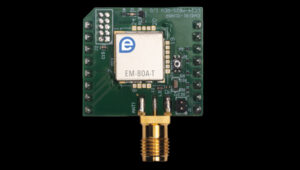
    Q: What is the best way to integrate complementary sources of PNT — such as LEO satellites and ground-based systems — into end user hardware and software, to maximize resilience during GNSS disruptions or outages?

    Korsakissok: Such integration will be eased for all the new sources that can be acquired with the same RF stages, meaning mostly L-band as of today. SBAS has paved the way and emits at the same carrier frequency as the classic GNSS. U.S. and European low-Earth orbit positioning, navigation and timing (LEO-PNT) projects have included such signals in L-bands, and other telecom constellations can also be used that way (Inmarsat, Iridium, etc.). Because of this, all these L-band extensions to classical GNSS will be the first in line on everybody’s roadmap. When C-band signals will be emitted by GNSS constellations, then telecom ones could also be easily integrated. However, that will take many years.

    Lopez: To enhance resilience during GNSS disruptions or outages, integrating a multi-layered approach with complementary sources of positioning, navigation, and timing (PNT), such as LEO satellites and ground-based systems, into end-user hardware and software is crucial. While GNSS technology will remain essential, the combination with other technologies such as inertial sensors and sensor fusion will become increasingly important as these solutions become more available.

    Although alternative PNT mechanisms can bolster resilience, the strengths and protections at the core of GNSS are vital for many applications, especially since GNSS manufacturers possess the expertise to address jamming and spoofing effectively. This layered security approach resembles the “onion model” in cybersecurity — adding more security layers enhances protection against disruptions.

    While LEO technology is advancing, its full value for PNT may take a few more years to materialize. In the meantime, other sensor technologies, such as inertial navigation systems (INS), already provide significant benefits in the absence of GNSS or in the most difficult conditions to GNSS.

    etherWhere’s EW6181 multi-GNSS receiver. (Photo: ehterWhere)
    etherWhere’s EW6181 multi-GNSS receiver. (Photo: ehterWhere)

    At Septentrio, we are committed to developing products that invest in sensor fusion technologies (GNSS/INS), and we actively participate in key LEO programs that promise substantial improvements in resilience and other PNT aspects, including GNSS corrections and enhanced multipath mitigation for optimal performance in challenging environments. We view this evolution as critical to our product roadmap and consider it a strategic priority for our company.

    Wang: The foundation of an effective positioning system is robust hardware that supports the integration of multiple PNT sources. Building on this multi-source signal base, a set of advanced algorithms is necessary to selectively use the signals and filter out interference, enabling the seamless fusion of these sources and achieving superior performance. Moreover, redundant and backup filters are crucial for maintaining the robustness of the positioning solution, particularly during GNSS disruptions or outages.

    Farrokhi: etherWhere’s next-generation solution supports LEO constellations such as Xona Space to enhance location tracking and provide resilience and redundancy. LEO satellites signal strength is higher than GNSS satellites due to their lower orbit and as such provide better link margin. The key to ubiquitous adoption is in a well-integrated single chip solution at lower power consumption.

    Ching: Complementary sources of PNT must be proven to provide a consistent improvement in positioning performance, beyond what GNSS alone can provide. For example, increasing availability is not helpful if the quality indicators cannot be trusted. The integration must be an overall benefit to the user, in terms of ease of use, positioning performance and reliability. Our team is already leading the market and working with key stakeholders and partners to provide PNT beyond GNSS as we announced in previous years.

    Q: What are the key innovations in your latest receiver or generation of receivers?

    Korsakissok: Syntony is well-known to have one of the first full SDR embedded receivers, working in multi-frequency and multi-constellation mode. Thanks to that, we were able to be the first to demonstrate the coupling with XONA, at ION GNSS in 2022, and have been chosen by the European Space Agency (ESA) for their own LEO PNT: Flexibility and ease of modification are the major advantage of full SDR, versus ASICS.
    Today, our SDR receiver is embedded in cars, trains, UAVs, launchers and satellites, but also in trucks for underground mining, together with our SubWAVE solution. Not to mention our CRPA version, which is capable of state-of-the-art anti-jamming level, completed by exclusive anti-spoofing mitigation, as we can compare, directly inside the receiver, the direction of arrival of all GNSS signals with the ephemeris, avoiding retaining and tracking the ones that are spoofed.

    Lopez: This year, Septentrio has achieved notable advancements in GNSS receiver technology by enhancing resilience against jamming and spoofing and by launching the AntaRx product line. It offers high-precision performance, a durable design, and versatility for industrial applications, such as construction and mining. With advanced anti-jamming and anti-spoofing across all products, plus the AntaRx — which is an all-in-one GNSS, antenna, and sensor fusion solution — we remain committed to delivering the most reliable positioning in the most challenging environments.

    Lopez: In response to evolving market demands and guided by our strategic vision, Septentrio has made significant advancements in GNSS receiver technology, focusing on two major pillars: resilience and performance.

    Resilience: Septentrio has established a reputation for providing robust GNSS solutions thanks to our AIM+ technology, and we remain committed to enhancing resilience across our product line. Our latest innovations have significantly improved our receivers’ ability to detect and mitigate spoofing attacks. These enhancements have been validated through rigorous testing, including recent GNSS jamming tests conducted in Norway (see Norway results here), as well as field applications where our receivers have successfully operated in contested environments, particularly within drone applications. This continued focus on resilience ensures that our customers can rely on our technology even in challenging conditions where signal integrity is paramount.

    AntaRx Product Portfolio: This year, we proudly launched the AntaRx product line, specifically designed to meet the rigorous demands of industrial applications such as construction, mining, and robotics. The AntaRx series offers a variety of configurations, including single-frequency, dual-frequency, and inertial variants (GNSS/INS), providing unparalleled flexibility for a wide range of use cases (see more about this product here).

    What sets the AntaRx apart is its exceptional high-precision GNSS performance combined with core reliability. This product line is compatible with various correction services, allowing users to achieve optimal accuracy regardless of their operational environment. Moreover, the AntaRx features advanced anti-jamming and anti-spoofing technologies, which are critical for ensuring the integrity of positioning data in areas where interference is prevalent.

    In addition to its technological innovations, the AntaRx is designed with ruggedness in mind. It is built to withstand harsh environmental conditions, making it suitable for deployment in demanding industries. The user-friendly interface simplifies operation and enhances the user experience, ensuring that both seasoned professionals and newcomers can easily integrate the technology into their workflows.

    Furthermore, the AntaRx incorporates sophisticated sensor fusion capabilities, combining GNSS with inertial data to enhance overall positioning accuracy and reliability. This integration is particularly beneficial in environments where GNSS signals may be obstructed or unreliable. The careful design of the AntaRx, which includes an integrated antenna and GNSS components, significantly improves multipath mitigation, further ensuring optimal performance even in challenging conditions.

    In summary, Septentrio’s commitment to innovation is evident in our latest GNSS receiver developments. By focusing on resilience and advanced capabilities, particularly with the launch of the AntaRx product line, we aim to provide our customers with the most reliable and high-performing GNSS solutions tailored to meet the diverse demands of various industries. As technology continues to evolve, we will remain dedicated to enhancing our products to meet the future challenges of positioning, navigation, and timing.

    Wang: Our newest product, the RS10, leverages cutting-edge technologies to achieve seamless integration of GNSS with SLAM, vision, and INS. This fusion has resulted in the RS10 delivering enhanced accuracy and reliability while providing an exceptionally efficient solution for the surveying and mapping industries. By combining these complementary technologies, we’ve made a significant leap forward in advancing the performance and capabilities to benefit geospatial professionals.

    Farrokhi: At etherWhere, we have innovated on multiple fronts to address different use cases.

    These innovations include:

    • AccuWhere Cloud to address the requirements for low-power, battery-operated asset trackers.
    • Hybrid Constellation to address the simultaneous processing of the four GNSS constellations along with LEO signals of opportunity (SOP) to provide resilience and redundancy.
    • ArrayNav adaptive multi-antenna system for anti-jamming applications such as avionics and also applications that require elimination of multipath such as autonomous driving.

    Ching: In addition to the latest firmware update announcement to combat ionospheric scintillation, Hexagon | NovAtel also rolled out the latest office software version (NovAtel Application Suite v 2.0) for providing the next-level GNSS interference monitoring insight to users to make informed decisions to maintain robust positioning. In parallel, NovAtel has been developing the functional safety positioning engine and correction services that meet ISO 26262 standard as we anticipate the automotive world not only needs a positioning solution that is accurate and resilient, but is also safe to use.

  • First Fix: So many questions

    First Fix: So many questions

    (Photo: Adam Smigielski/iStock / Getty Images Plus/Getty Images)
    (Photo: Adam Smigielski/iStock / Getty Images Plus/Getty Images)

    One of my favorite parts of this job — and, more generally, one of my favorite things to do in life — is to ask questions.

    Matteo Luccio
    Matteo Luccio

    For this magazine and to stay on top of the latest issues and trends in our industry, I ask questions to the members of our Editorial Advisory Board (EAB) for our EAB Q&A section, to representatives of GNSS/PNT companies for our cover stories, and to participants at conferences and trade shows.

    In my personal life, I ask questions to people I invite on sailing trips, to dinner parties and on hikes. When I am traveling or just about town, if I overhear somebody knowledgeable speak about an interesting topic — from quantum mechanics to French politics to Baroque music — chances are that I will say, “Excuse me. May I ask you a question?”

    So, here are a few of my current questions about GPS/GNSS/PNT. To make it clear that they are not in order of importance, I put them in alphabetical order.

    • How do the other three GNSS constellations benefit GPS users?
    • How is GPS faring in Congress? (On June 17, Dana Goward reported that Congress had refused the U.S. Space Force’s request to fund a program to make GPS more resilient by building and deploying small GPS satellites. Please note: I am looking for a knowledgeable “Washington correspondent” for GPS World, who could keep our readers updated on relevant developments in Congress and the executive branch.)
    • If the QZSS or NavIC regional systems became global, would that significantly improve GNSS? If so, how?
    • What are currently the most promising approaches to non-GNSS PNT for applications that do not require high accuracy?
    • What are the benefits of adding signals from even a few low-Earth orbit (LEO) satellites to a PNT solution?
    • What are the latest advancements in the scientific uses of GNSS signals, such as to develop models of the ionosphere or to test theories in fundamental physics, such as relativistic positioning?
    • What are the most promising approaches to pinpointing GNSS interference from LEO satellites?
    • What is the most promising approach to high-precision positioning with smartphones?
    • What is the status of the Chimera enhancement to the L1C signal? What benefits will it deliver?
    • What reforms in GPS governance would help accelerate modernization of the system?
    • When will M-code GPS user equipment be widely deployed to U.S. armed forces?
    • When will the Next Generation Operational Control System (OCX — the future version of the GPS control segment) become operational? What’s missing? What’s the holdup? (According to GPS.gov, the U.S. Space Force completed all 17 planned monitor station installations in July 2021.)
    • Which GNSS signals are cellphones in the U.S. legally allowed to use?

    I will pose some of these questions to our EAB over the next few months. If anybody else out there would like to chime in, please let me know.

  • First Fix: Global Glitch

    First Fix: Global Glitch

    From Hong Kong to Berlin, from Sydney to New York, the operations of hospitals, airlines, banks, and scores of other businesses and services were disrupted on July 19 due to a glitch in a software update issued by the cybersecurity firm CrowdStrike that affected computers using the Microsoft Windows operating system.

    The New York Times described it as “a stunning example of the global economy’s fragile dependence on certain software, and the cascading effect it can have when things go wrong.”

    Regular readers of this magazine, and of this column in particular, will know where I am going with this: like Windows, GPS — and, more broadly, GNSS — presents a single point of failure for many systems. That is, if GPS fails, it will stop those entire systems from working.

    Possible challenges and threats to GPS use include space weather; interference/jamming and/or spoofing of receivers; error or failure of satellites, monitoring, or control; and, in the most extreme case, an attack on satellites, monitoring, or control.

    The National Space-Based PNT Advisory Board continues to focus its efforts on its excellent PTA strategy: to protect (“prevent or remove conditions that degrade, distort, or deny GPS use”), toughen (“make GPS use more robust against challenges and threats”), and augment (“provision of GPS enhancements as well as provision and use of alternate [PNT] sources that complement, back up, or replace (partly or entirely) use of GPS”) civil uses of GPS. More on that soon.

    Meanwhile, others are urging we think of GNSS as only one of several complementary means to achieve the mission of positioning, navigation and timing (PNT) with accuracy, availability, integrity, continuity and coverage. For that perspective, see Mitch Narins’ piece. He writes that we should focus “on services that are not space-based, operate in different areas of the spectrum, are capable of higher power, and can be installed and evolved more quickly to mitigate emerging threats.”

    The European Space Agency’s recent PNT Vision 2035 paper, written by a panel of independent external PNT experts to advise next year’s ESA Ministerial Conference, summarizes European discussions on PNT in the past several years. In the words of Luis Mayo, the chair of the advisory committee that wrote the report, “there is more to PNT than satellite navigation.” While we must “sustain the existing satellite-based navigation systems,” he argues, we should also promote “the development of alternative independent PNT systems.” Read a short interview with Mayo by Dana Goward, starting on page 19.

    Yet other efforts integrate GNSS with different, independent techniques to create new synergies. One example is ESA’s Genesis multi-modal space mission, which aims to improve geodetic applications by collocating on board a single well-calibrated satellite the four space-based geodetic techniques: GNSS, very long baseline interferometry (VLBI), satellite laser ranging (SLR) and Doppler Orbitography and Radio-positioning Integrated by Satellite (DORIS).

    “This first-time collocation in space will establish precise and stable ties among these key techniques,” write the authors of this quarter’s “Innovation” column.