Author: Maddie Saines

  • WGIC announces executive board members and president for 2023-25

    WGIC announces executive board members and president for 2023-25

    Image: WGIC
    Image: WGIC

    The World Geospatial Industry Council (WGIC) at its annual general meeting announced the members of its board who will serve from May 2023 to April 2025. The board is comprised of 20 senior geospatial industry professionals drawn from WGIC’s patron, corporate and associate member companies. The board will provide strategic guidance to WGIC in pursuing its mission and achieving its programmatic goals during the next two years.

    WGIC Executive Board Members

    1. Theo Agelopoulos, Senior Director (Autodesk)
    2. Zubran Solaiman, Director (Bentley Systems)
    3. John Renard, President (Cyient)
    4. Bushra Zaman, Director (Deep Spatial)
    5. Elshan Musayev, EKM Global
    6. Dean Angelides, Corporate Director — international (Esri)
    7. Robert Hoddenbach, Global Director (Fugro)
    8. Jean-Francois Gauthier, Vice President (GHGSat)
    9. Adina Gillespie, Vice President (Hexagon)
    10. Steven Sawdon, Director (IIC Technologies)
    11. Paul Granito, Senior Vice President (Maxar Technologies)
    12. Harsh Govind, Principal Product Manager (Microsoft)
    13. Jayant Sharma, Senior Director (Oracle)
    14. Agnieszka Lukaszczyk, Vice President (Planet)
    15. James Van Rens, Senior Vice President (RIEGL International)
    16. Willy Govender, CEO (Terra Analytics)
    17. Marius Swanepoel, Director (TomTom)
    18. Bryn Fosburgh, Senior Vice President (Trimble)
    19. Joseph Seppi, Senior Vice President (Woolpert)
    20. Sanjay Kumar, CEO (Honorary Member) (Geospatial World)

    The bi-annual election for the office of WGIC president has witnessed a unanimous vote for Bryn Fosburgh, Senior Vice President, Trimble. Brian Nicholls, Vice President — Asia Pacific, Woolpert, was elected unopposed as the treasurer. To ensure business continuity, John Renard, President, Cyient — Europe, will continue as secretary general till April 2024.

    For more information, click here.

  • TRX Systems awarded military contract for PNT device

    TRX Systems awarded military contract for PNT device


    Image: TRX Systems 
    Image: TRX Systems

    TRX Systems has been awarded a $402 million, seven-year contract by the U.S. Army for the procurement of dismounted assured positioning, navigation, and timing system generation II systems and services (DAPS GEN II).

    The TRX Systems solution to be provided under the contract, TRX DAPS II, enables dismounted maneuver operations even where GPS is compromised or denied. TRX DAPS II provides assured positioning, navigation, and timing (PNT) to dismounted users by disseminating assured position and time to dependent devices in GPS-challenged environments.

    TRX DAPS II fuses inputs from M-code GPS, inertial sensors, and complementary PNT sources. It is a small, lightweight PNT device that supports both standalone operation and integration with the Nett Warrior ensemble. It can also distribute PNT information to a customized tactical watch.

    The TRX DAPS II solution employs a modular architecture and adheres to Army PNT interface standards, facilitating the addition of new PNT sensors as threats evolve.

    TRX DAPS II will be in production for the Army later this year.

  • Furuno to release multi-GNSS timing antenna

    Furuno to release multi-GNSS timing antenna

    Image: Furuno
    Image: Furuno

    Furuno will release a high-performance multi-GNSS timing antenna, the AU-500, in July. The antenna is suitable for time synchronization applications.

    The AU-500 supports all constellations in the L1 and L5 bands, including GPS, QZSS, GLONASS, Galileo, BeiDou, and NavIC. A built-in noise filter eliminates interference in the vicinity of 1.5 GHz caused by 4G/LTE mobile base stations as well as other radio waves that can adversely affect GNSS reception.

    The antenna is equipped with lightening protection and features a high-quality polymer radome that prevents snow accumulation. It is also waterproof and dustproof in compliance with IP67.

    The AU-500 achieves the best performance in time accuracy and robustness fundamental in critical infrastructure, when combined with Furuno’s GNSS receiver, GT-100.

    In addition to the AU-500, Furuno will also launch the AU-300, an L1 single-band antenna with the same level of performance as AU-500, except L5 signal reception.

  • Mapbox collaborates with Toyota and Lexus on in-vehicle navigation tech

    Mapbox collaborates with Toyota and Lexus on in-vehicle navigation tech

    Image: Mapbox
    Image: Mapbox

    Toyota and Lexus are now utilizing Mapbox‘s technology to deliver navigation features. Mapbox’s maps software development kit incorporates a map design that complements Toyota’s multimedia system, making turn-by-turn navigation intuitive for drivers.

    With Mapbox’s navigation technology, Toyota can push updates to the design to vehicles in real time, so that the driver’s experience continues to be up to date. As more vehicles hit the road with the next-generation multimedia system, drivers of those vehicles will benefit from utilizing more engaging and robust navigation software that can be updated in a manner similar to updates on their smartphone.

    Toyota’s designers are also able to modify the look and feel of the navigation experience via Mapbox Studio, enabling map design updates to be rolled out to all vehicles instantaneously.

  • ComNav releases dual-antenna heading receiver

    ComNav releases dual-antenna heading receiver


    Image: ComNav Technology
    Image: ComNav Technology

    ComNav Technology has launched the A200 dual antenna heading receiver. It is designed for precision agriculture, machine control, fleet management, robots and other applications.

    As a solution capable of real-time kinematic (RTK) heading, the A200 is equipped with a K823 GNSS module, which is a dual-antenna, dual-frequency and full-constellation OEM board that includes an inertial measurement unit (IMU) module. The A200 can track all existing and planned satellite systems, including GPS, BSD, GLONASS, Galileo, QZSS and SBAS, providing RTK-level position and precise heading to users. It also features 1,226 channels.

    The A200’s third generation IMU delivers fast initialization and ensures the output of heading during temporary GNSS signal loss. The built-in data link has low power consumption and a long working range. It can also be upgraded to a super-long-range data link module.

    The A200 now is available through ComNav Technology authorized local distributors or ComNav Technology directly.

  • Quantum Systems survey UAV now available at Position Partners

    Quantum Systems survey UAV now available at Position Partners


    Image: Position Partners
    Image: Position Partners

    Position Partners has announced the availability of Quantum-Systems’ Trinity Pro remotely piloted aircraft system for the Australian and New Zealand market.

    The Trinity Pro is a UAV designed to adapt to changing demands, provide additional connectivity, and accelerate decision-making. The UAV features Quantum-Skynode autopilot, which uses a Linux mission computer. This provides additional onboard computing power, increased internal storage, versatility, and interoperability.

    Included in the Trinity Pro system is Quantum-Systems’ proprietary operations software, QBase 3D, and a portfolio of industry workflow and software integrations. The Trinity Pro’s capabilities include planning functions for missions requiring take-off and landing at different locations, allowing for efficient and safe long corridor flights and beyond visual line of sight operations.

    The platform also incorporates advanced self-diagnostics to ensure safe operation.

    The Trinity Pro now includes an enhanced terrain-following system, which improves safety during operations. The UAV also features automatic wind simulation for crash avoidance in bad weather and a linear approach for landing.

    The Trinity Pro is equipped with a downfacing lidar scanner that provides highly accurate ground avoidance and landing control. It is protected against dust and water damage and features increased wind limits of up to 14 m/s in cruise mode and 11 m/s during hover.

  • Safran joins Eurodrone program

    Safran Landing Systems has signed a contract with Airbus Defense and Space to provide the wheels and brakes system work package for the Eurodrone program, which is designed to outfit France, Germany, Spain and Italy with a highly autonomous medium-altitude reconnaissance UAV.

    Safran Landing Systems was selected to design, develop, qualify and produce the work package and to supply the braking control module that will be developed by Safran Electronics and Defense, the company’s partner on this program.

    The contract comprises 60 shipsets.

    Safran Electronics and Defense has also claimed a contract from Leonardo to develop and supply the high-performance Euroflir 610 electro-optical (optronic) system for the program.

    Production of the first prototype will begin in 2024 with a first delivery planned by the end of the decade.

  • XPONENTIAL 2023: First day recap

    XPONENTIAL 2023: First day recap

    Attendees crowded the show floor during AUVSI XPONENTIAL day one.
    Attendees crowded the show floor during the first day of AUVSI XPONENTIAL 2023.

    AUVSI XPONENTIAL is underway in Denver, Colorado, at the Colorado Convention Center. After the first day of touring the XPO Hall of more than 600 exhibits and attending educational sessions lead by industry leaders and speakers, GPS World staff noticed a key theme: mitigating GNSS jamming and spoofing by advancing technology for UAVs.  

    Educational Sessions

    Photo:
    Franck Boynton, Vice President of NavTachGPS, highlighted Tallysman ‘s HC871SXF during his “Real World GPS/GNSS Protection from Start to Finish,” presentation.

    “Real World GPS/GNSS Protection from Start to Finish,” was presented by Franck Boynton, Vice President of NavTechGPS. He discussed why anti-jam equipment is needed and how to mitigate jamming. Boynton mentioned several anti-jam products, such as NovAtel’s OEM series product line, Septentrio’s AIM+, Tallysman’s HC871SXF and more.

    Additionally, GPS World contributing writer, Dana Goward, received a mention for his article regarding the GPS jamming incident on Jan 21, 2022, at Denver International Airport, which can be found here. Boynton also suggested checking out the RNT Foundation, which is a nonprofit, public benefit corporation that helps protect critical infrastructure by promoting resilient navigation and timing, of which Goward is the president and director.

    “The Importance of GNSS Security in UAV Applications,” featured a panel of speakers that included (from left to right) Captain Joe Burns, CEO of the Airo Group and member of the National Space-Based Positioning, Navigation and Timing Advisory Board, Jeff Horne, vice president of security at Skydio Abigail Smith, executive director of UAS security at the FAA, Gustavo Lopez, market access manager at Septentrio, and moderated by Michael Glutting, sales manager at Septentrio.
    “The Importance of GNSS Security in UAV Applications,” featured a panel of speakers that included (from left to right) Captain Joe Burns, CEO of the Airo Group and member of the National Space-Based Positioning, Navigation and Timing Advisory Board, Jeff Horne, vice president of security at Skydio Abigail Smith, executive director of UAS security at the FAA, Gustavo Lopez, market access manager at Septentrio, and moderated by Michael Glutting, sales manager at Septentrio.

    “The Importance of GNSS Security in UAV Applications,” featured a panel of speakers that included Abigail Smith, executive director of UAS security at the FAA, Captain Joe Burns, CEO of the Airo Group and member of the National Space-Based Positioning, Navigation and Timing Advisory Board, Gustavo Lopez, market access manager at Septentrio, Jeff Horne, vice president of security at Skydio, and moderated by Michael Glutting, sales manager at Septentrio. During the panel discussion, the speakers explained types of GPS interference, including jamming and spoofing, and the risk they pose to UAVs. The latest methods for strengthening both GNSS receivers and control units to design secure and robust UAVs was also discussed.

    Day-of highlights

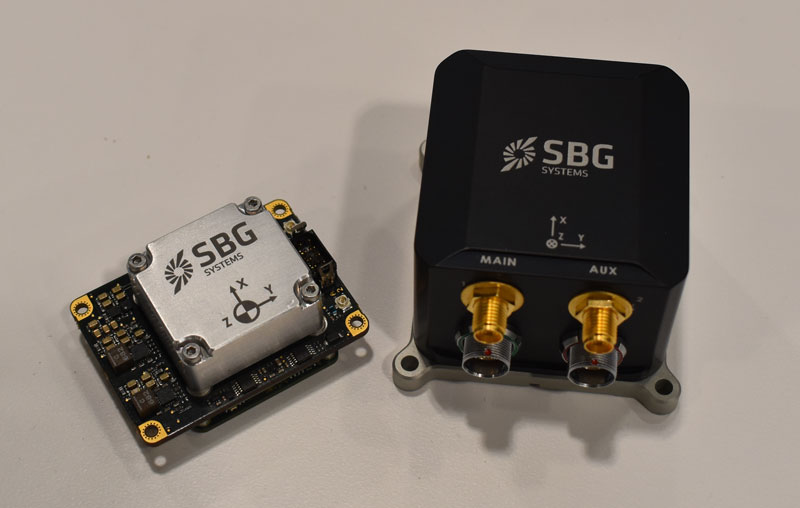
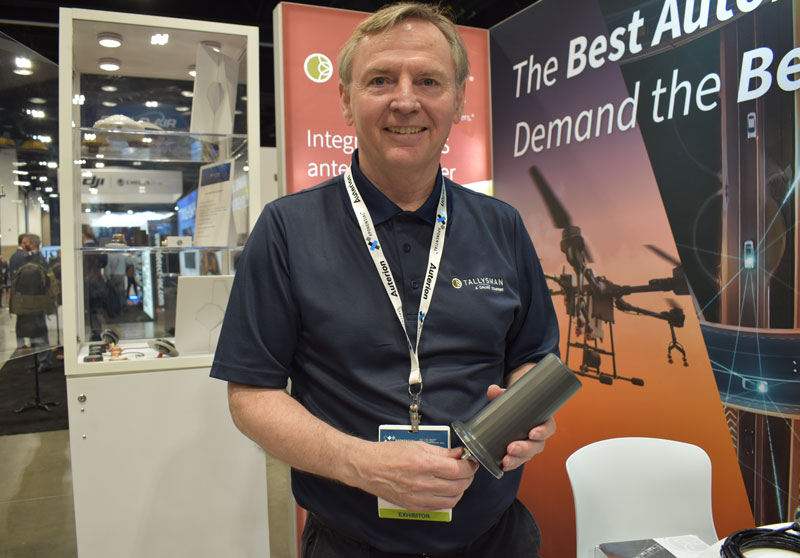
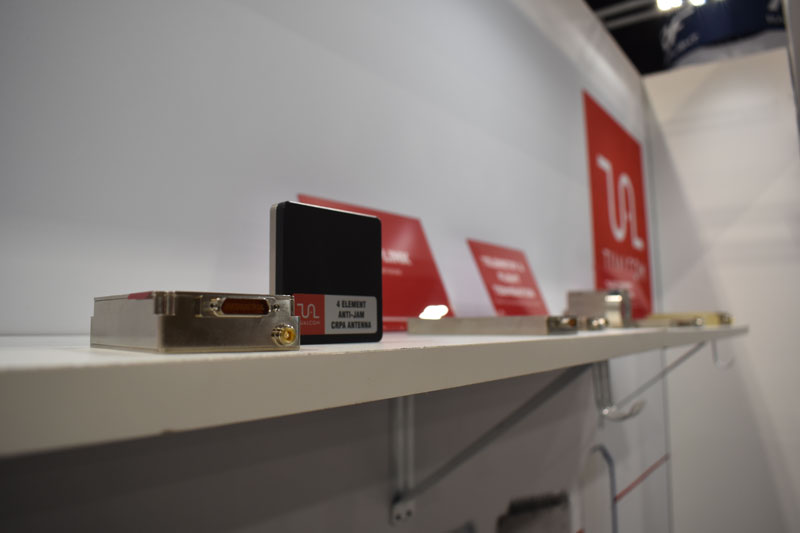
    Maddie Saines, managing editor, and Jesse Khalil, digital media specialist, had the opportunity to stop by several booths in the XPO Hall on the first day of XPONENTIAL. A few highlights from the day included speaking with Ahmet Salih Erdem, deputy general manager at Tualcom, getting an in-depth look at SBG Systems’ Quanta Mirco and Ekinox Micro with Yoann Plenet, head of product management, and getting a first-hand look into the newest products from Tallysman Wireless — such as SSL889XF — from Ken MacLeod, product manager for Tallysman.

    SBG System's Qunata Mirco and Ekinox Micro.
    SBG System’s Quanta Mirco and Ekinox Micro.
    Ken MacLeod, product manager for Tallysman, showcasing the SSL889XF.
    Ken MacLeod, product manager for Tallysman, showcasing the AJ977XF.
    Tualcom's booth at XPONENTIAL 2023 showcased new products such as ANTY, its GPS Anti-Jammer.
    Tualcom’s booth at XPONENTIAL 2023 showcased new products such as ANTY, its GPS anti-jamming device.
  • Percepto receives FAA waiver to scale shielded BVLOS commercial UAS operations

    Percepto receives FAA waiver to scale shielded BVLOS commercial UAS operations

    Percepto has received a waiver from the Federal Aviation Administration (FAA) that allows it to operate unmanned aerial systems (UAS) beyond visual line of sight (BVLOS) in shielded airspace — without humans onsite, and without ground-based or airborne detect and avoid (DAA) systems — for inspection and monitoring operations at critical and non-critical infrastructure sites nationwide.

    Under the waiver, low risk “shielded” BVLOS operations are authorized 200 ft above and around assets located on critical infrastructure sites. At non-critical infrastructure sites, shielded BVLOS operations are permitted 50 ft above and around the height of the tallest obstruction located within a half-mile radius of the site.

    The operations authorized under this approval build upon recommendations made by the UAS BVLOS Aviation Rulemaking Committee chartered by the FAA. The ARC recognized that shielded airspace near structures and other obstacles where crewed aircraft do not typically operate could be leveraged as a safety mitigation to support safe, scalable, and economically viable UAS BVLOS operations.

    The use of Percepto’s UAS to perform critical infrastructure inspections aims to improve worker safety and efficiency of operations by enabling inspections remotely from anywhere in the United States.

    Percepto is at XPONENTIAL May 9-11, at booth 3409.

  • Qualcomm and FlightOps collaborate on UAV tech for first responders

    Qualcomm and FlightOps collaborate on UAV tech for first responders


    Image: Qualcomm
    Image: Qualcomm

    FlightOps is collaborating with Qualcomm Technologies to develop UAV automation technology designed specifically for first responders. FlightOps has integrated its advanced UAV automation technology onto the Qualcomm Robotics RB5 platform — which has 5G connectivity, on-device artificial intelligence, and heterogeneous computing capabilities.

    The integration of FlightOps’ technology onto the Qualcomm Robotics RB5 will enable the platform to automate critical tasks such as flight planning, monitoring and data collection, enabling first responders to focus on the mission at hand.

    The technology is being showcased during XPONENTIAL May 9-11. FlightOps is at booth 4041.

    The live remote flights, operated from Denver and flown in San Diego, will demonstrate the capabilities of the integrated product and how it can be used to improve response times as well as enhance situational awareness during emergencies.

  • Harxon releases helix antenna series

    Harxon releases helix antenna series


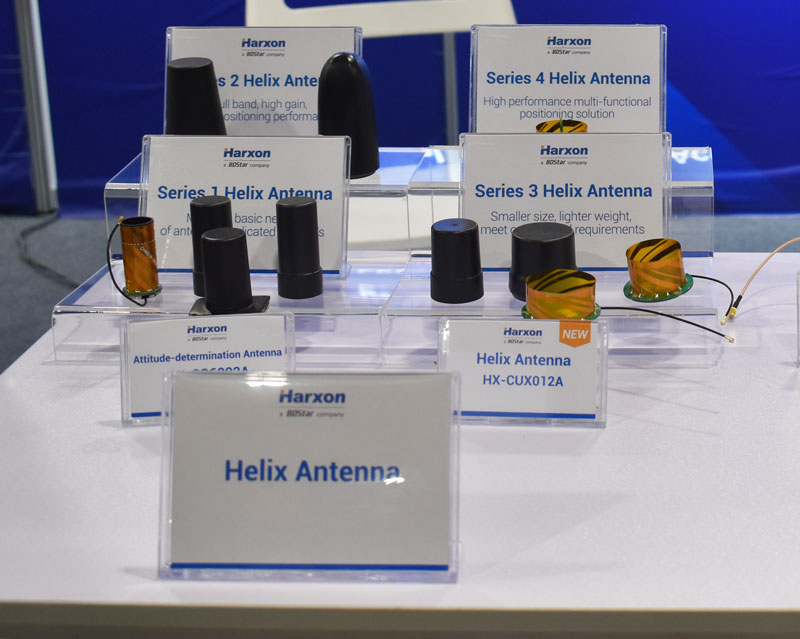
    The HX-CUX012A, HX-CUX005A, HX-CH7609A and HX-CHX600A antennas at Harxon's XPONENTIAL 2023 booth.
    The HX-CUX012A, HX-CUX005A, HX-CH7609A and HX-CHX600A antennas at Harxon’s XPONENTIAL 2023 booth.

    Harxon has added to its helix antenna family with a series of four devices that are suitable for unmanned system applications.

    HX-CUX012A is designed with extremely low profile, making it suitable for integration into UAVs, surveying and monitoring devices. It reduces the overall weight of applications, enables multipath mitigation and more.

    HX-CUX005A is a solution for integrated helix antenna applications. It is designed with the integration of a GNSS antenna and Bluetooth/WiFi antenna, enabling communication and navigation without mutual interference.

    HX-CH7609A is a low profile and small size housed helix antenna. It has comprehensive GNSS support including GPS, GLONASS, Galileo, BeiDou, as well as L-band correction services. HX-CH7609A features centimeter phase center repeatability and high gain at a low elevation. With signal filtering and multipath rejection, it provides reliable and stable GNSS signals.  

    HX-CHX600A is a high-performance helix antenna that receives GPS, Galileo, BeiDou, GLONASS, as well as L-band signals. With 4.2 dBi high gain, it provides suitable tracking performance at a low elevation angle. Its low noise figure design reduces transmission interference and improves signal quality. 


  • Start your engines: How F1 drivers use GPS

    Start your engines: How F1 drivers use GPS

    Credit: vvectors/iStock/Getty Images Plus/Getty Images
    Credit: vvectors/iStock/Getty Images Plus/Getty Images

    GPS plays a quiet, but integral role in Formula 1 (F1) racing. In a sport where split-second reactions are vital, GPS helps drivers and their teams to improve race to race and navigate tracks safely.

    GPS is used to determine the speed of the car, which is beneficial for such things as straight line aerodynamic testing. It also provides data as to how fast F1 cars accelerate, enabling drivers and their teams to predict how much power their competitors are producing on the track.

    The streaming of location data can be converted to telemetry, such as what track maps viewers see on F1 broadcasts, that can determine which driver in a head-to-head scenario was faster on each sector of the track. This data is then used to work out strengths and weaknesses of cars relative to each other.

    In addition, GPS plays a large role in creating a safe racing space.

    If a driver is slowing down to recharge a battery, make space for a hot lap, or cool down tires between runs, and another car is entering the track at full racing speed, this creates safety concerns. GPS receivers on the cars and radio links to transmit their positions are used to show where cars are on the track at any moment. Teams use this information to manage traffic during sessions such as qualifying races to improve overall track safety.

    The impact of losing live location data was seen at the 2023 Australian Grand Prix FP1 in late March. At the opening practice session, a red flag was flown due to loss of location data triggered by a glitch in the distribution of live tire information. This caused several near-misses on the track because drivers no longer received traffic advisory calls from their team, reported AutoSport.

    For more on using GPS in F1, check out the video below by WTF1.