Author: Maddie Saines

  • Honeywell AAM reference guide on vehicle certification

    Honeywell AAM reference guide on vehicle certification


    Image: Honeywell
    Image: Honeywell

    Honeywell has developed the advanced air mobility (AAM) industry’s first certification reference guide across key vehicle segments. Business and government leaders, engineers, media and any user with an interest in the future of flight can use the Honeywell State of UAS and UAM Certification Guide to help navigate and communicate the complexities of vehicle certification and operational approval across multiple vehicle segments.

    “We understand the challenges that professionals working in the advanced air mobility industry face as they look to navigate, track and ultimately comply with myriad developing regulations,” Jia Xu, chief technology officer, UAM and UAS, Honeywell Aerospace, said. “Because Honeywell provides certifiable, mission-critical systems that make AAM vehicles fly, it’s essential that we understand the certification landscape across all AAM segments. We initially developed this certification summary table as a quick reference for our own team; however, we quickly realized that the information here can benefit the wider industry. We intend to update this document regularly to help AAM companies keep pace with regulatory development.”

    Industry professionals can access the living document at the following link. The certification reference guide will summarize evolving Federal Aviation Administration and European Union Aviation Safety Agency rules across multiple AAM segments. It will also link to source documents that AAM professionals can reference to better understand detailed certification requirements.


  • Leica Geosystems advances autonomous mobile mapping

    Leica Geosystems advances autonomous mobile mapping


    Image: Leica Geosystems
    Image: Leica Geosystems

    Leica Geosystems, part of Hexagon, has released an addition to its Leica Pegasus TRK portfolio of mobile mapping solutions, the Leica Pegasus TRK100. The mobile mapping system is a geospatial solution built for large-scale infrastructure measurement and digital twin creation.

    The Pegasus TRK100 is small and light, making it easy to mount on any vehicle. The mobile mapping system features the same modular hardware approach that enables users to add more cameras to expand the range of use cases.

    Image: Leica Geosystems
    Image: Leica Geosystems

    With its advanced mapping capabilities, the Pegasus TRK100 enables GIS professionals to visualize and understand the location of assets to help make the right decisions, improve asset management, and support infrastructure building and maintenance. The Pegasus TRK100 combines artificial intelligence and a learning algorithm to enhance and optimize the clarity of points in post-processing for improved accuracy.

    The versatility of the Pegasus TRK100 suits a variety of applications in diverse industries, including telecommunications, utilities and road maintenance.

    “The Leica Pegasus TRK100 advances autonomy and artificial intelligence in mobile mapping, removing manual process steps and providing actionable insights for informed decision,” Christian Schäfer, business director mobile mapping at Leica Geosystems, said. “It empowers GIS professionals to create the maps they need, collect the information they require, and visualize the data in a way that immediately aids understanding.”

  • Tallysman releases HC871SXF GNSS helical antenna

    Tallysman releases HC871SXF GNSS helical antenna


    Credit: Tallysman Wireless
    Credit: Tallysman Wireless

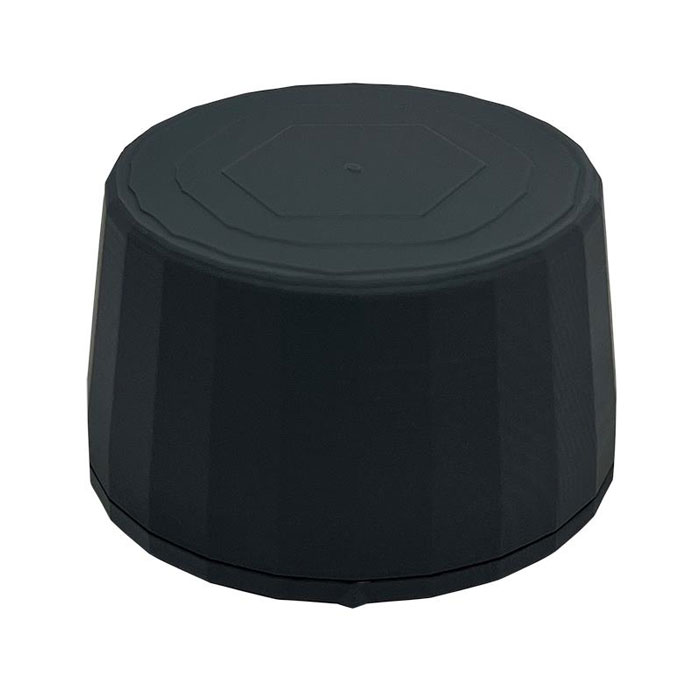
    Tallysman Wireless has released its dual-band low-profile helical GNSS antenna, the HC871SXF. It is designed for precise positioning, covering the GPS/QZSS-L1/L2, GLONASS-G1/G2, Galileo-E1, and BeiDou-B1 frequency bands, including the satellite-based augmentation system (SBAS) available in the region of operation — WAAS (North America), EGNOS (Europe), MSAS (Japan), or GAGAN(India).

    The HC871SXF has a precision-tuned, high-accuracy helical element that provides a suitable axial ratio and operates without a ground plane. These features make the HC871SXF suitable for lightweight, UAV navigation and a variety of precision applications.

    The HC871SXF low-profile helical antenna is approximately 10 mm shorter than the HC871 and provides the same performance. The antenna base has a male SMA connector. To facilitate installation, the base also has two threaded inserts and an O-ring to waterproof the SMA connection.

    The HC871SXF antenna also supports Tallysman’s eXtended Filtering (XF) technology.

  • OxTS releases INS for automation

    OxTS releases INS for automation

    Credit: OxTS
    Credit: OxTS

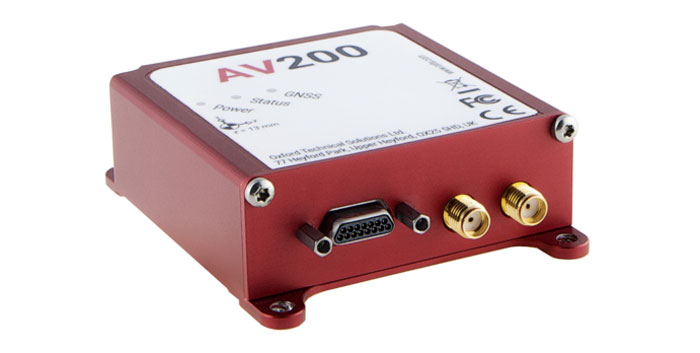
    OxTS has released the AV200, its inertial navigation system (INS) built for automation applications.

    The AV200 is designed to reliably give precise location data. It includes quad-constellation, dual-antenna, real-time kinematic (RTK) GNSS, to provide users with position data as well as its temperature-calibrated, multi-core inertial measurement unit. These technologies give the AV200 position accuracy within 0.05 m, heading accuracy of 0.2°, and velocity accuracy of 0.2 km/h.

    The AV200 is built using the same technology that is commonly used for NCAP test validation, which has become the preferred technology for OEMs globally to test vehicles in both test-track and real-world scenarios.

    The AV200 has also been built specifically to address the realities of the autonomy market.

    OxTS is at XPONENTIAL May 9-11, at booth 2148.

  • Singular XYZ launches GNSS receiver with network RTK rover

    Singular XYZ launches GNSS receiver with network RTK rover

    Singular XYZ has released the Sfaira One GNSS receiver. The portable size, centimeter-accurate receiver provides users with an entry-level network real time kinematic (RTK) rover.

    Sfaira One is equipped with a GNSS module with 1,408 channels for GPS, BDS, GLONASS, Galileo and QZSS tracking — providing centimeter positioning in harsh environments. It also features advanced RTK and an anti-interference algorithm.

    The GNSS receiver connects via Bluetooth and can be configured to conduct surveying tasks on a smartphone. Additionally, Sfaira One supports SingularPad and SingularSurv software and is also compatible with mainstream field survey or GIS software.

    Sfaira One is IP65 dustproof and waterproof, which makes the receiver suitable for all weather conditions. It has a 4,800 mAh battery life with 16 hours working time and type-C interface that can be charged on-the-go with power bank.

    The Sfaira One GNSS receivers are online at SingularXYZ’s website and are available now.

  • Trimble introduces RTX positioning solution for UAV deliveries

    Trimble introduces RTX positioning solution for UAV deliveries

    Image: Trimble
    Image: Trimble

    Trimble has released the PX-1 RTX for accurate and robust positioning and heading for commercial UAV delivery applications. This positioning solution enables UAV integration companies to add precise positioning capabilities so that operators can plan and execute takeoff, navigation and landing tasks as UAV delivery advances to take on more challenging operations.

    The PX-1 RTX leverages Trimble’s CenterPoint RTX corrections and small, high-performance GNSS-inertial hardware to provide real-time, centimeter-level positioning and accurate inertial-derived true heading measurements. This solution allows operators precise control of UAVs during takeoff and landing to tackle more demanding operations in tight or partially obstructed spaces.

    It also minimizes operational risks from poor sensor performance or magnetic interference by ensuring greater positioning redundancy, which is especially important as commercial UAV delivery operations venture into difficult urban and suburban environments.

    The Trimble PX-1 RTX solution is available through Trimble Applanix sales channels. For more information click here.

    The launch will be held at XPONENTIAL. Visit Trimble at Booth 1806 to learn more.

  • SBG Systems unveils miniature GNSS-aided inertial navigation solution

    SBG Systems unveils miniature GNSS-aided inertial navigation solution


    Image: SBG Systems
    Image: SBG Systems

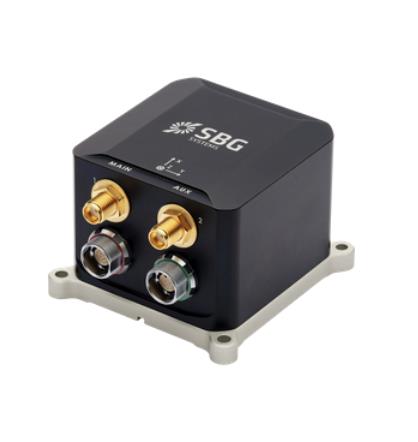
    SBG Systems has released the Ekinox Micro, a compact and rugged high-performance inertial navigation solution designed to deliver accuracy in challenging environments. Ekinox Micro combines a high-performance MEMS tactical inertial sensor with a quad-constellation, dual-antenna GNSS receiver, making it suitable for mission-critical applications.

    Ekinox Micro includes pre-configured motion profiles for land, air, and marine applications, enabling the sensor and algorithms to be tuned for maximum performance in any condition. The device is designed for ease of use and integration, with simple connectors, a web configuration interface, a datalogger, Ethernet connectivity, a PTP server, a REST API for configuration, and multiple input and output formats.

    Ekinox Micro is real-time kinematic (RTK) compatible and based on a tactical 0.8°/h class inertial measurement unit calibrated across the entire operating temperature range. It features accuracy roll/pitch of 0.015°, accuracy heading of 0.035°, and accuracy position of 1.2 m without any corrections or 1 cm in RTK.

  • Septentrio collaborates with Braemac on product distribution  

    Septentrio collaborates with Braemac on product distribution  

    Credit: Septentrio
    Credit: Septentrio

    Septentrio has signed a distribution partnership with Braemac for North America and Mexico. Braemac will distribute the full Septentrio portfolio including the compact mosaic module family, OEM boards, GNSS enclosures and GNSS/INS solutions for demanding industrial applications. 

    Braemac distributes electronic components in the North American market and offers GNSS antennas, wireless connectivity solutions and other products, which are complementary to the Septentrio portfolio. 

    Septentrio’s advanced GNSS chipset and proprietary algorithms provide consistent pinpoint accuracy for its receivers. The built-in advanced interference mitigation technology ensures resilience to GNSS jamming and spoofing, making Septentrio’s GNSS and GNSS/INS receivers a suitable positioning component in any robotic, UAV or machine control system. 

    Septentrio will be exhibiting at the AUVSI XPONENTIAL conference in Denver, Colorado, on May 9 -11 at booth 4912. On Tuesday May 9, GNSS experts from Septentrio as well as other UAV integrators will share their experience in the panel discussion about “The Importance of GNSS Security in UAV Applications 

  • Russia blames Ukraine for overnight UAV attack on the Kremlin

    Russia blames Ukraine for overnight UAV attack on the Kremlin

    Image: Screenshot of video posted by Reuters
    Image: Screenshot of video posted by Reuters

    On May 3, Russia claimed Ukraine had launched an overnight UAV attack on the Kremlin in an effort to assassinate President Vladimir Putin, reported multiple news sources including NBC News and Reuters. President Volodymyr Zelenskiy quickly denied any Ukrainian involvement.

    A video taken of the incident posted on social media shows two UAVs aimed at the Kremlin that were promptly shot down.

    A Ukrainian official stated the incident suggested Moscow was preparing a major terrorist provocation, reported Reuters. Putin’s office said Russia reserved the right to retaliate and that it regards the incident as a planned act of terrorism and an attempt on the president’s life.

    A Russian agency also stated Putin was not at the Kremlin at the time of the incident.

  • Tallysman releases GNSS helical antenna

    Tallysman releases GNSS helical antenna

    Credit: Tallysman Wireless
    Credit: Tallysman Wireless

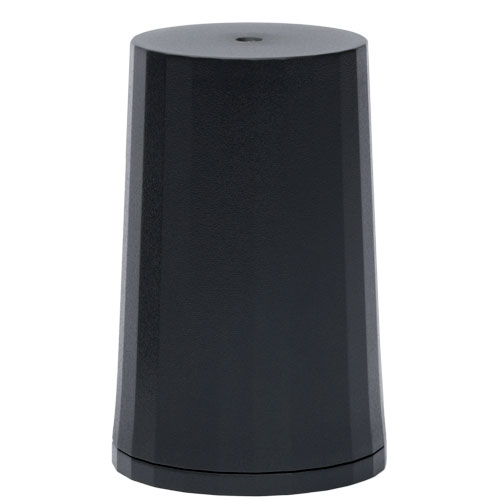
    Tallysman Wireless has released the HC990XF housed, full-band, helical GNSS antenna.

    The HC990XF helical antenna is designed for precise positioning, covering the GPS/QZSS L1/L2/L5, QZSS L6, GLONASS G1/G2/G3, Galileo E1/E5a/E5b/E6, BeiDou B1/B2a/B2b/B3, and NavIC L5 frequency bands. This includes the satellite-based augmentation system (SBAS) available in the region of operation as well as L-band correction services.

    The HC990XF has a base diameter of 64 mm, is 37 mm tall and weighs 45 g. Its precision-tuned helical element provides full GNSS band coverage, suitable gain and axial ratio, and a tight phase center. The antenna base has an SMA (male) connector, three screw holes for secure attachment and an O-ring to waterproof the antenna connector.

    The HC990XF helical design does not require a ground plane, making it a suitable antenna for UAV applications.

    The HC990XF antenna also supports Tallysman’s eXtended Filtering technology.

  • GPS World attending AUVSI XPONENTIAL

    GPS World attending AUVSI XPONENTIAL

    Credit: AUSVI
    Credit: AUVSI

    GPS World staff is attending AUVSI XPONENTIAL 2023.

    AUVSI XPONENTIAL, co-hosted by Messe Dusseldorf North America, will be held in Denver, Colorado, May 8-11. This year’s theme is “Building the Blueprint for Autonomy.” XPONENTIAL is also celebrating its 50-year anniversary.

    The event invites industry changemakers and end users to experience new technology that is solving real world problems such as safety and defense, energy and infrastructure, business, construction, health, and the environment. The convention features keynote speakers, panel presentations, educational programs, specialized workshops, networking opportunities, and an extensive exhibitor hall teaming with newly developed technology to preview, as well as co-located events.

    XPONENTIAL attracts more than 7,500 attendees each year, who attend more than 200 educational sessions as part of the full conference.

    For more information about XPONENTIAL visit xponential.org. To follow our live coverage, click here.

  • EU court dismisses Galileo satellite contract complaint

    EU court dismisses Galileo satellite contract complaint

    Credit: ESA
    Credit: ESA

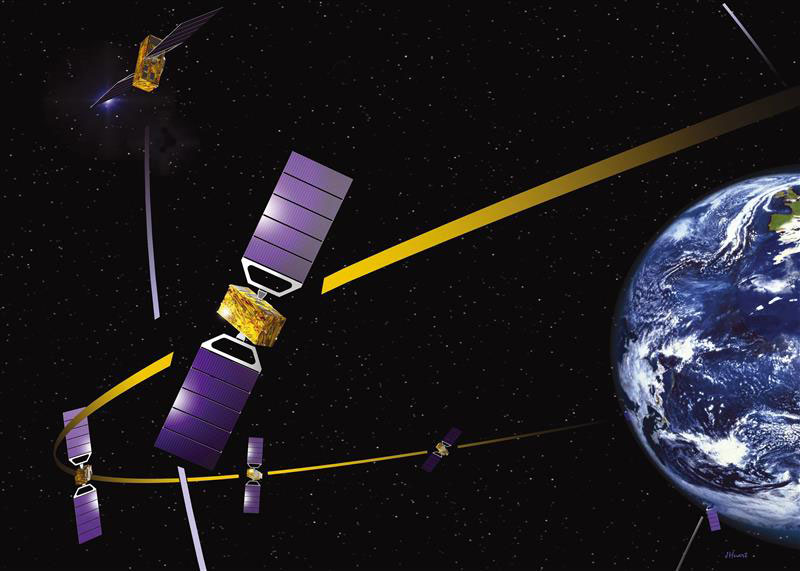
    On April 26, the European Union Court of Justice dismissed a complaint from OHB System regarding a contract awarded to Thales and Airbus to supply satellites for the Galileo program, reported Reuters. OHB System supplied most of Galileo’s operating satellites.

    In 2021, the European Commission rejected OHB System’s bid to supply the next-generation Galileo satellites and selected Airbus Defense and Space and Thales Alenia Space Italia. This follows a 2018 tender by the European Space Agency for next-generation Galileo satellites.

    OHB System requested the European Commission and the ESA suspend the tender after its former chief operating officer was hired by Airbus and to exclude Airbus from the tender. This was rejected in January 2021.