Author: GPS World Staff

  • PCTEL launches new member of GNSS antenna portfolio

    PCTEL SkyCompass Dual MIMO LTE AntennaPCTEL Inc. has launched a new antenna for high-speed rail, fleet and other transportation modes. The new SkyCompass Dual multiple input, multiple output (MIMO) Long Term Evolution (LTE) antenna is designed for high data-rate applications such as direct video feeds and broadband connectivity for commuters.

    The SkyCompass series comprises six new configurable antenna platforms, including single-band and multiband GNSS options that address the majority of rail and fleet management installation needs. The antenna features new ultra-ruggedized design and housing, outstanding electrical efficiency performance, high isolation between elements and pattern consistency.

    In addition, as wireless routers adopt MIMO, the antenna’s inherent MIMO capabilities protect a network’s investment in cellular and — more specifically — LTE installations.

    “MIMO and efficiency with optimized patterns enable high throughput in performance critical mobile applications for public safety, fleet and rail markets,” said Rishi Bharadwaj, vice president and general manager of PCTEL’s Connected Solutions. “PCTEL’s innovations continue to deliver high performance antennas in robust, easy-to-install housings.”

    The series is currently available to select OEM customers and will be generally available at the end of January 2016.

  • CES 2016: 3Plus launches smartwatch, connected wearables

    3Plus, a developer and manufacturer of smart wearable devices, will introduce four new connected products at CES 2016. The huge Consumer Electronics Show (CES) will be held in Las Vegas Jan. 6—9. The new 3Plus wearables line will be on display at CES 2016 in Tech West Sands Expo Booth  no. 72745, and the ShowStoppers press event on Jan. 6.

    From basic activity trackers to advanced smartwatches, all of the new 3Plus wearables track and record daily activity and sleep. They also use Bluetooth 4.0 to provide smartphone notifications such as calls, e-mails and text messages. They are compatible with both iOS and Android platforms and have corresponding mobile apps.

    “Today, a wristwatch is more than just a means to know what time it is and the day’s date,” remarked Jerry Galya, 3Plus vice president of sales. “Digital technology has taken wristwatches in a whole new direction and 3Plus is right at the forefront with many innovative technologies. Our newest wearables are available at a variety of affordable price points depending on what features you are interested in. From the most basic smartphone notifications and fitness tracking, to advanced heart rate monitoring and call answering, 3Plus offers it all.”

    The following 3Plus IoT wearables products will be introduced at CES 2016.

    3Plus Lite: This connected fitness wearable tracks steps taken, calories burned, distance traveled, duration of sleep and sleep cycles. It has daily life reminders such as when to wake up or take medicine. The 3Plus Lite features a power-efficient OLED display and has an IP67 rating, meaning it is totally protected against dust and water immersion up to three feet.

    3Plus Swipe HR: The 3Plus Swipe HR combines smartwatch with an activity tracker. It tracks steps, distance, and calories burned. It also keeps track of daily meals via MyFitnessPal, as well as sleep quality, including periods of deep sleep and restlessness. Other features include a 1.1-inch touchscreen display; heart-rate range alert; and automatic data sync to a smartphone without plugging in or pushing buttons, providing real-time access on a mobile app and notifications on the wrist.

    3Plus Touch Smartwatch: Activity tracking includes steps taken, calories burned, distance traveled, heart rate, quality of sleep, and sleep cycles. It even reminds the wearer when to take their medicine or when to eat. The OLED touchscreen display shows the time and date, and smartphone notifications including the name or number of incoming calls, with a built-in microphone for direct answering. Other features include a lightweight lithium-polymer battery with a two-week standby time.

    3Plus Time: The look of a traditional timepiece is coupled with digital capabilities. The dial of the 3Plus Time smartwatch measures time with big, bold Roman numeral hours, old-school hour and minute hands, and a digital OLED display for text, call and other smartphone notifications. Tracking activities include steps taken, calories burned, distance traveled, duration of sleep and deep-sleep time. It is available with a choice of a leather or stainless steel band.

  • Info Services Company Penton acquires TU-Automotive for IoT

    Penton announced at CES 2016 that it has acquired TU-Automotive, an event and digital information company serving the connected vehicle segment of the automotive tech market, from FC Business Intelligence. This acquisition positions Penton at the center of the industry’s most innovative and fast-growing segments: connected vehicles, mobility and autonomous driving.

    The single biggest opportunity facing the automotive industry is the shift of vehicles to connected mobility for communication, diagnostics and dataflow, autonomy and other intelligent systems. This shift is already gaining significant ground in the trucking industry with connected devices changing fuel efficiency, optimizing speed and brake usage. Gartner predicts that by 2020, more than 250 million vehicles will be connected globally, with the number of installed connectivity units in vehicles worldwide increasing by 67 percent and consumer spend on in-vehicle connectivity fully doubling.

    TU-Automotive delivers premiere events, networking, content and analysis on the current topics of connected vehicles, mobility, autonomous driving and the downstream implications to related industries. The company’s key assets include: 13 events including the world’s largest connected car and mobility event, TU-Automotive Detroit, plus flagship events TU-Automotive Europe, TU-Automotive Japan and The Consumer Telematics Show.

    In addition, TU-Automotive provides digital content, analysis, education and business intelligence through TU-Automotive’s communications hub. TU-Automotive plays a critical convening role for key players in this complex and fast moving segment, including Ford, General Motors, FCA, BMW, Mercedes-Benz, Facebook, IBM and Microsoft.

    TU-Automotive will become a part of the Penton Ground Transportation group, led by Vice President Sue Boehlke. The TU-Automotive assets are complementary with Penton’s existing transportation portfolio, which includes WardsAuto, FleetSeek, FleetOwner, Trailer Body Builders and American Trucker. Boehlke commented, “TU-Automotive offers the most respected, high profile platforms to expand Penton Ground Transportation’s reach beyond the United States into Europe, South America and Asia, with a core hub of operations in London. We look forward to TU-Automotive becoming part of the Penton family.”

    The acquisition also strengthens Penton’s planned launches around the Internet of Things (IoT) in 2016 across Penton. “IoT and connected devices are a major theme across Penton, impacting many of our industry sectors including ground transportation, aviation, agriculture, technology and electronics. Companies and factories that are connected are more productive and the implications for innovation through IoT are tremendous,” said David Kieselstein, Penton CEO. “In 2016 we are launching a major IoT initiative to help companies break down the complexity. From sensors and platforms to data and security issues, we’ll cover best practices to help businesses grappling with policy, strategy and implementation in the application of this new wave of technology.”

  • Analysis tools for biomass crops developed

    Genera Energy and PrecisionHawk have partnered to develop new analysis algorithms specific to improving the efficiency and quality of sustainable biomass crop production and distribution.

    The algorithms will convert raw aerial imagery collected by UAVs and satellites into an actionable report for biomass crop farmers.

    The tools will be publicly licensed for use in the DataMapper software platform.

    Within the DataMapper software platform, Genera will license the completed tools in the Algorithm Marketplace, DataMapper’s library of sophisticated algorithms for data analysis.

    The store automatically interprets data collected from a drone’s geographic information system during flight.

    The Genera algorithms will add to the currently available lineup of algorithms serving the agricultural industry such as assessing plant characteristics, identifying pests, and monitoring disease pressures.

    The first group of research tools to be developed under the new partnership will focus on lignocellulosic crops, core to Genera’s expertise.

  • Self-driving: Old hat for tractors

    Self-driving: Old hat for tractors

    Google and the big automakers might get the lion’s share of attention when it comes to autonomous road vehicles, but John Deere has been making self-driving tractors for more than 15 years.

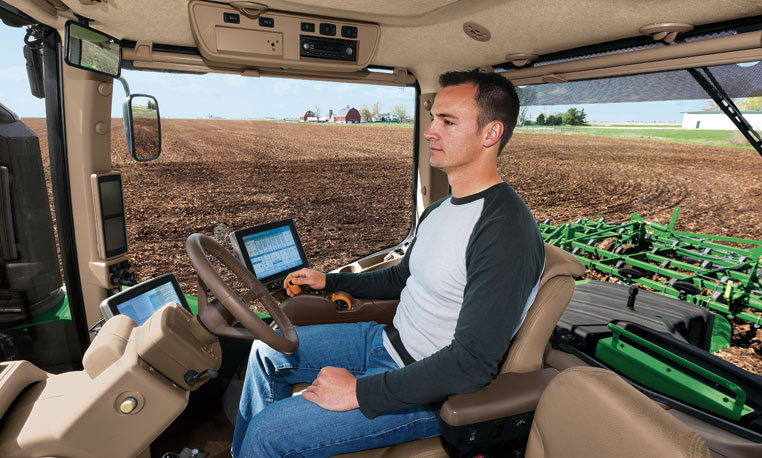
    Among them is the 9RX tractor, which can steer itself, freeing the farmer to focus on business. The 9RX, introduced in August, features an articulated steering system and an optional Active Command Steering (ACS), which improves maneuverability in the field and line-holding ability at transport speeds.

    Hands-free driving: Ag companies take the wheel. (Photo: John Deere).
    Hands-free driving: Ag companies take the wheel. (Photo: John Deere).

    Farmers don’t need to navigate other traffic, just make optimal use of fields. Before farmers began using GPS to plan routes, a few feet would get reworked in every row. With GPS-based auto-driving accurate down to the inch, missed spots and repetition are avoided, saving farmers time, fuel and money.

    With a tractor the only moving object in a vast acreage, collisions are highly unlikely. Still, a driver still needs to be at the tractor’s wheel. Unlike consumer vehicles being developed for autonomous operation on public roads, the tractors don’t have external sensors on all sides to prevent collisions. A fully autonomous tractor, which doesn’t require a driver, probably won’t hit the market before 2025, according to John Deere.

    Inside the cab, farmers can equip their tractors with a variety of modular systems that allow computers control over operations, starting with a basic satellite guidance system and a touchscreen interface. From there, an add-on lets the tractor make precise turns autonomously, and another uses radio base stations set up around fields to supplement navigational accuracy. Besides the high-tech features, cabs of the 9RX have luxury touches such as an integrated refrigerator and high-quality sound.

    Laser Navigation

    Other companies that offer auto-steering include Case IH and Autonomous Tractor Corporation.

    Case IH offers guidance and steering for use on tractors, such as its Magnum 340 Tractor. (Photo: Case IH)
    Case IH offers guidance and steering for use on tractors, such as its Magnum 340 Tractor. (Photo: Case IH)

    Case IH provides steering and guidance tools for tractors, combines and sprayers. Its AFS AccuGuide auto guidance enables repeatable accuracy down to sub-inch levels. AFS RowGuide works with AFS AccuGuide to provide accurate, hands-off steering for corn harvests. Two mechanical touch sensors mounted on the corn-head dividers sense row position and provide guidance input in concert with GPS.

    Autonomous Tractor bills itself as a non-GPS system without dead spots or signal interference. Instead, it uses a proprietary laser-radio navigation system (LRNS) for sub-inch positioning data, along with its own FieldSmart software that allows farmers to “train” the tractor without programming.

    Sonar systems provide full perimeter safety, and pan-tilt cameras communicate via cellular to allow the farmer to monitor progress and remotely resolve issues.

  • Defeating poachers with stealth

    Defeating poachers with stealth

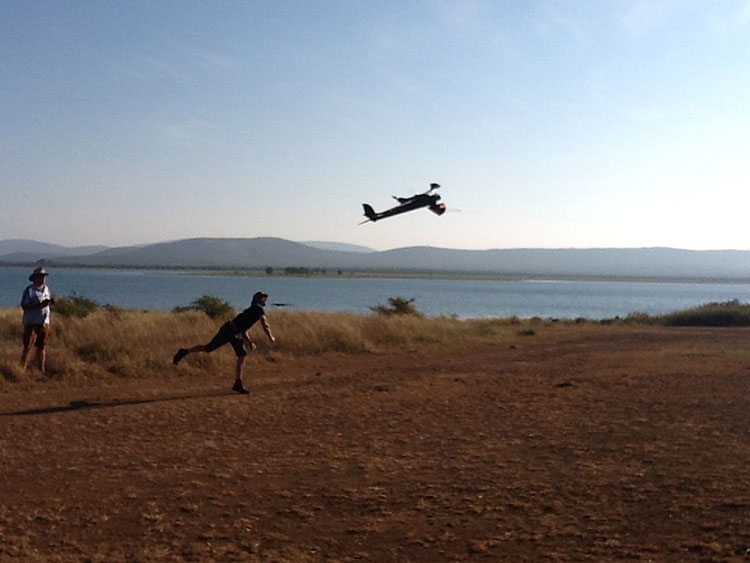
    Night and day: UAV patrols defend dwindling elephant and rhino populations.
    Night and day: UAV patrols defend dwindling elephant and rhino populations.

    To stem the staggering wildlife losses on the African continent from poaching, the Air Shepherd Campaign is employing a force of unmanned aerial vehicles (UAVs) equipped with GPS and infrared cameras.

    Teams on the ground, in close cooperation with wildlife reserve management organizations, use the UAVs and sophisticated predictive analysis to hunt the illegal hunters.

    More than 40,000 elephants were killed by poachers in Africa in 2014.The problem is similar for rhinoceros.

    Poachers operate at night, when park rangers equipped with conventional aircraft can’t fly. Air Shephard searches for poachers using predictive analysis to determine the behavior patterns of both animals and poachers. Small drones with cameras search likely areas — once poachers are identified, pre-positioned rangers can intercept the suspects.

    The hand-launched UAVs carry high-resolution cameras for both daylight and nighttime infrared scanning. At operating altitude, they can easily tell the difference between animals and humans, and transmit real-time geolocation information to the operating team on the ground. The UAVs fly for more than 1.5 hours; they are clean, stealthy and provide an eye-in-the-sky capability.

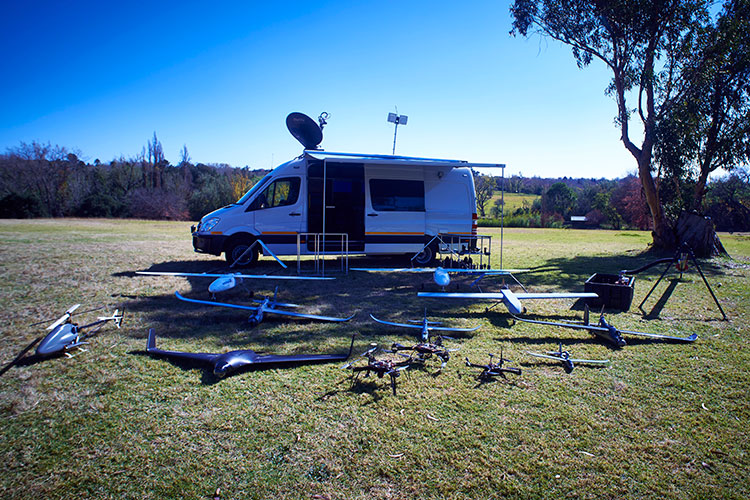
    UAV fleet deployed around an Air Shepard mobile operating center.
    UAV fleet deployed around an Air Shepard mobile operating center.

    The Charles A. and Anne Morrow Lindbergh Foundation, originator of the Air Shepherd Initiative, has partnered with a dedicated group in South Africa that, over the last two years, has flown more than 650 drone missions over one of the most sensitive rhino poaching areas in Africa. During that period, no rhinos were lost to poachers where the UAVs were flown.
    Once the process is proven, Air Shepherd expects it to be used in national parks and private reserves in South Africa and Botswana, then expand as funding increases to Namibia, Zambia, Tanzania, Gabon, Democratic Republic of the Congo, and eventually Asia.

    Learn more about the project at www.AirShepherd.org.

  • Volvo goes HERE


    Volvo Cars has chosen HERE to power connected navigation for the next-generation in-car control system for new and future Volvo models as part of a multi-year agreement between the two companies.

    Volvo’s in-car system, Sensus, offers customers a fully connected experience and incorporates advanced maps and services enabled by the HERE location cloud to provide drivers with smart guidance in and out of the car.

    The first model featuring the new Sensus system is the XC90, Volvo’s luxury SUV that started shipping earlier this year.


  • March’s Munich Summit to ‘Create a Global Village’

    “GNSS — Creating a Global Village” is the theme of the 2016 Munich Satellite Navigation Summit, taking place on March 1 – 3, 2016, at the famous Munich Residenz.

    The Munich Satellite Navigation Summit is a conference with global impact dealing with satellite navigation now and in the future. The one-of-a-kind convention of high-ranking worldwide speakers from industry, science and governments provides the participants with a broad overview and different perspectives on the latest developments in the field of GNSS. The historical location — the Residenz Muenchen — contributes to the unique character of this 3-day conference.

    The organizing Institute of Space Technology and Space Applications (ISTA) of the Universitaet der Bundeswehr Muenchen will invite experts from all over the world to talk about the impact of satellite navigation on global developments and different areas of life.

    The conference starts on March 1 with the Exhibition Opening and Champagne Reception at 16:30, followed by the Opening Plenary Panel at 17:15. Afterward, a reception will provide opportunities for high-level networking with experts from industry, science and government.

    The technical program of the Munich Satellite Navigation Summit includes plenary discussions and presents a concise update on the main activities in worldwide satellite navigation systems, in particular:

    • Implementation of the European satellite navigation system Galileo
    • Modernization of the US Global Positioning System (GPS IIF, GPS III)
    • Status and modernization of the Russian System GLONASS
    • Status of the Chinese System BeiDou
    • Update of regional and augmentation systems such as the Japanese QZSS and the Indian IRNSS
    • GNSS in the Southern Hemisphere and Equatorial Regions
    • Galileo Public Regulated Service (PRS)
    • Legal aspects in GNSS based timing
    • GNSS based agriculture and forestry
    • Autonomous driving
    • GNSS Authentication
    • Knowledge transfer and coordination between education, research and industry
    • GNSS and Sciences for Life
    • Trends and signal stability in the Multi-GNSS Hotspot East Asia 
The Summit is part of the efforts of the Bavarian government and the cluster on aerospace and satellite navigation to stimulate applications and services in this high-tech field.

    Register at www.munich-satellite-navigation-summit.org. 
If there are any questions, please contact:
+49-89-6004-3425 or e-mail to [email protected]

    The summit is part of the efforts of the Bavarian government and the cluster on aerospace and satellite navigation to stimulate applications and services in this high-tech field.

    Learn more on the summit’s website.

  • Expert Opinions: How many GNSS signals for a consumer-grade device?

    Expert Opinions: How many GNSS signals for a consumer-grade device?

    Question: What is the optimum number of GNSS signals to include/process in a consumer-grade PNT device?

    Mattos-philip
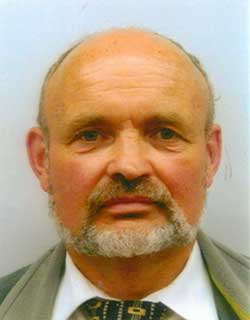
    Philip Mattos Receiver Designer Consultant

    A: A chip should support four signals, being GPS/GLONASS/Galileo/Beidou, but only process two of them — choice depending on region, geopolitical sensitivity, constellation availability — dropping to one to save power when satellite availability is good. Two constellations give enough satellites for accuracy and availability in obstructed environments. Which two depends on needs regarding cost, power and so on, GPS and Galileo being better in the future for less power, but GPS and GLONASS being better today.


    Greg Turetzky<br /> Principal Engineer<br /> Intel
    Greg Turetzky

    Principal Engineer

    Intel

    A: The receiver should be capable of processing sufficient signals to provide optimum performance in all expected use cases. This means it should be able to support all GNSS and augmentation systems to provide maximum robustness to blockages and interference. The management of receiver resources to accomplish that is highly dynamic on individual epochs and should be invisible to the user in consumer-grade devices. Optimizing tradeoff between performance, power and cost is where the secret sauce lies.


    Ruslan Budnik CEO SPIRIT Navigation
    Ruslan Budnik
    CEO
    SPIRIT Navigation

    A: Two constellations give reliable, fast cold start even after long overseas flights. There is room for improvement in challenging conditions, so application of three constellations is the saturation point. Choose the best combination in different parts of the globe. In Russia that should be GLONASS + 2, in China BeiDou + 2, in Europe Galileo plus two, GPS + QZSS + another one in Japan, and so on. Navigation chipmakers should support all operating satnav systems to offer the best combination, taking into account battery drain.

  • Sensoro’s beacon network reaches 110,000 units

    A huge network of iBeacon (Apple)and Eddystone (Google) devices has emerged in China, consisting of 110,000 units run and managed by Sensoro.

    The network spans 25 movie theatres, 16 airports, 39 high-end retail stores, 40 major tourist destinations, 200 universities, 260 high-speed trains, 1,500 Pizza Huts and 2,100 Chow Tai Fook (CTF) jewelry stores, among other locations.

    Sensoro was founded in July 2013 through the Microsoft Ventures Accelerator program for startups. Its goal is to construct a data network that integrates intelligent sensors (in this case, Bluetooth) and the mobile Internet.

    During the 2015 Chinese New Year in February, traffic at beacon-outfitted locations reached the hundreds of millions, according to a Sensoro blog. CTF’s use of the iBeacons generated 11 million dollars in revenue with a coupon conversion rate as high as 63 percent, far surpassing expectations, according to CTF’s 2015 earnings report. CTF has since deployed beacons in all 2,100 of its mainland China retail stores.

    Data gathered by Sensoro will allow retailers to target customers with increasing accuracy the longer the network is in use.

  • GPS-guided cruising now an option for truckers


    GPS-guided cruise control is now in production for new models of Kenworth long-haul trucks that have the Paccar MX-13 engine.

    By anticipating the terrain ahead using GPS, Kenworth Predictive Cruise Control delivers optimal fuel economy by ensuring the engine and transmission are in the most efficient operating mode.

    The system is available as a factory-installed option.

  • Army Gray Eagle conducts manned-unmanned exercise

    In August, U.S. Army Gray Eagle unmanned aircraft took part in manned-unmanned teaming exercises in South Korea, including streaming video and metadata to an AH-64 Apache helicopter while in flight.

    Exercise support was conducted from Kunsan Air Base, South Korea, and represent a milestone for the MQ-1C Gray Eagle, proving its ability to conduct operations in diverse weather condition, according to manufacturer General Atomics Aeronautical Systems (GA-ASI).

    During the exercise, the Gray Eagle UAS streamed video and metadata via a line-of-sight data link directly to the helicopter from extended distances. The Apache then retransmitted the imagery to a One System Remote Video Terminal (OSRVT), allowing field commanders within the Tactical Operations Center (TOC) to receive both live Gray Eagle streaming video and retransmitted video sent by the Apache. Once the Gray Eagle was airborne, U.S. ground forces passed contact reports and target coordinates to operators in the aircraft’s ground control station. The operators were then able to direct the Gray Eagle’s sensors to positively identify and track the targets.

    The Gray Eagle is used by the Army for reconnaissance, surveillance, communications, convoy protection, IED detection and precision weapons delivery.