Author: Tracy Cozzens

  • Auto-scanning total stations working on China’s expressways

    Spectra Precision‘s Focus 35 robotic total stations are helping build the world’s largest expressway network. For instance, the Focus 35, with its time-saving automatic scan template, is checking the cross-section quality of the twin Nan Kunshan tunnels for the new six-lane Shazhan S14 regional highway.

    Excavation under Nankun Mountain for the twin tunnels, each 4.1 kilometers (km) long and each capable of carrying three lanes of vehicular traffic, began in September 2016.

    In the current second phase of construction, the Focus 35 is being used to gather data that will be used to compare the as-built tunnels to the design specifications to determine what adjustments to the tunnel surfaces may need to be made.

    The Focus 35 was selected for the scanning work because it offers a streamlined and efficient workflow that yields significant time-savings, the company said. The workflow of a conventional total station requires time-consuming manual scanning followed by export to a separate post-processing function after which a DXF file is generated.

    The Focus 35, with its Trimble Access Tunnel software, saves significant time because it automatically scans and directly generates DXF reports for submission to the contractor to check over-break and under-break values, the company said.

    When completed, the new six-lane 800-km Shazhan highway will connect Shantou and Zhanjiang, two important coastal cities in southern Guangdong province. The contractor for the Nan Kunshan tunnels is ChangDa Highway Engineering Co. Ltd.

  • Eos and CartoPac partner to turn mobile devices into high-accuracy GNSS tools

    Eos and CartoPac partner to turn mobile devices into high-accuracy GNSS tools

    Eos Positioning Systems Inc. is partnering with enterprise mobile solutions provider CartoPac International to enable consumer smartphones and tablets to become professional-grade GNSS data collection and management devices for staking, inspections and more.

    Eos manufactures the Arrow receivers for any smartphone or tablet. CartoPac develops enterprise utility software, including a mobile solution for asset management and data collection.

    As utility and energy companies have begun to adapt smartphones as their primary data-collection devices, they have struggled to find integrated solutions that can tie the high-accuracy GNSS locations to their new and legacy assets. Their options were usually limited to onerous workflows of all-in-one handheld GPS devices or the hiring of specialized surveyors.

    Eos and CartoPac partnered to integrate the Arrow Series with CartoPac‘s mobile software. This allows CartoPac users to bring submeter and centimeter location into their asset-management solution on either iOS, Windows or Windows Mobile devices.

    One real-world example is the installation of an underground pipeline. A field user with CartoPac software and a high-accuracy Arrow receiver paired with an iPad was able to capture submeter asset data, scan the asset’s barcode, take photographs and populate the utility’s enterprise geodatabase in real time, the companies said.

    With the right mobile solution, field crews can also be dispatched in no time to the same asset location to respond to emergencies or perform routine work orders and inspections.

    “We saw our users struggling to get a good high-accuracy GPS solution within the iOS environment,” said Glenn Vlass, CartoPac co-founder and senior sales executive. “When you can say where an asset is spatially with such a degree of high confidence, that lowers your risk and improves your safety. Lower risk and improved safety are things every utility worker takes seriously.”

    Eos and CartoPac plan to expand their deployment of high-accuracy mobile asset management to more utilities facing similar needs.

  • The evolution of remote sensing platforms

    Drones and robots complement traditional platforms, delivering insights in unique use cases.

    Guest column by Mike Fuller

    Geographic surveys have changed in the last 150 years. What started with early film cameras strapped to hot air balloons, kites and homing pigeons has advanced — both in terms of sensors and the platforms on which they’re deployed. These innovations — which include drones and robots — are changing the way we can collect data, enabling us to gather greater detail and providing richer insights about the world around us.

    These nascent platforms are set to explode in popularity. The global market for remote sensing platforms will more than double in the next four years. It’s projected to reach more than $21 billion by 2022, driven in large part by use of drones, according to an October 2017 report from MarketsandMarkets.

    Despite the anticipated growth in drone and robot usage, they will not replace traditional remote sensing platforms such as airplanes, satellites and vehicles. The new technologies bring with them some limitations with regard to the number, size and weight of sensors they can carry, capture rates, area covered and and line-of-site restrictions.

    As a result, drones and robots will offer new capabilities that complement the traditional platforms and provide greater geographic detail, as well as the ability to be quickly deployed and constantly monitor areas where humans cannot routinely go.

    How far we’ve come

    To understand how far geographic information system (GIS) mapping and remote sensing technology has come, it’s important to consider how it started. Inventors in the 1800s relied on early film cameras and somewhat unreliable, imprecise airborne platforms — such as hot air balloons, pigeons and kites — to conduct land surveys and do surveillance.

    The introduction of a new kind of “bird” — the airplane — opened up new opportunities in the 1900s, supporting the use of more accurate aerial photography for reconnaissance and mapping.

    Satellite technology launched remote sensing into space in the 1970s, supporting the collection of detailed multispectral data that led to improved understanding of minerals, soils, urban growth, agriculture and other geographic features.

    Even though the technology has become more sophisticated, GIS professionals still leverage data from many of these historical platforms:

    • Manned aircraft – planes and helicopters
    • Satellites – high-resolution satellites and cubesats
    • Terrestrial – survey vehicles and handheld devices

    But — much like the impact of airplanes and satellites — we’re on the precipice of another significant milestone for remote sensing. Marked by use of burgeoning drone and robotic technology, this new technology will complement traditional platforms and deliver more insights than ever before possible.

    Rise of drones and robots

    Drones and robots are the newest remote sensing platforms catching the eye of the GIS community. Not only are they cool and cutting-edge, they open up a new class of use cases that were previously not possible with traditional aerial survey methods. They offer new opportunities to monitor remote areas, and their form factors and cost enables a higher frequency of data collection compared to aerial survey.

    Because of their unique features, users are envisioning how these platforms can be implemented for remote sensing in many fields, such as energy, oil and gas, aviation, forestry, transportation, emergency management, and natural resource preservation and restoration.

    When the frequency of data from these platforms is coupled with analytics and cloud infrastructure, it is possible to acquire, analyze and act in ways that were not possible before.

    Keep in mind, though, that each technology comes with trade-offs. Users should assess their goals, and weigh these factors, to determine if drones or robots will deliver the results they wish to achieve. Let’s take a closer look:

    Drones

    QuantumSpatial_sensor-uav-WDrones are capable of delivering ultra-high-resolution data, with ground sample distances (GSD) of 1 cm and accuracy of under 5 cm. However, accuracy is highly variable; it can vary based on the drone model, terrain and software used to process the collected data.

    The form factor of many drones also limits the ability to do multi-sensor flights. A drone typically can cover no more than a few square miles per day with a visible or multispectral camera, compared to manned aircraft that span hundred of thousands of acres a day carrying hyperspectral, lidar and orthophotography devices simultaneously.

    Because they can be deployed quickly, and on a daily basis, drones offer a cost-effective, practical approach for covering small areas compared to other aerial survey methods. But drone usage currently faces a significant impediment.

    Current regulations require operators to maintain sight of the devices during all flights. These line-of-site restrictions limit the distance a drone can go on each flight, and require operators to change locations multiple times for a single survey. As a result, frequent revisits can be labor intensive.

    Battery life also plays a role in the usability of drones. Most commercial drones can fly for only about 45 minutes, despite continued improvements in battery technology. Combined with the line-of-site restrictions, battery life impacts the amount of territory drones can cover. Most can handle only a few square or linear miles during each flight, making helicopters or airplanes better suited for projects that span hundred of miles or more.

    Despite some of the drawbacks, drones are proving ideal in many use cases — from damage assessment and power restoration after hurricanes to data collection for hydraulic modeling, stream restoration design and aquatic habitat assessment.

    For example, drones equipped with bathymetric and terrestrial laser scanning sensors are ideal for supporting riverine mapping applications. In these cases, drones offer an effective alternative when the waterway cannot be accessed, or it is too dangerous to use ground- or water-based survey methods for collecting channel geometry.

    Robots

    QuantumSpatial_sensor-lidar-robot-WRobotic platforms are flexible, enabling users to attach a variety of sensors, including thermal cameras, lidar and sniffers for natural gas or other hazardous material. They are rarely hampered by payload restrictions, like drones.

    And, with programming, robots can return to their chargers when their batteries dip below a certain threshold.

    Like drones, there are many potential applications for terrestrial remote sensing robots. One use is for precision agriculture to test soil, water and plant health.

    Many utilities are expressing serious interest, too, for robots. These robots can include onboard spectral, thermal and lidar sensors, precision navigation and hazard cameras to perform fine-scale spatial mapping and can acquire a wide array of data from electrical substations.

    In this scenario, the robotic platform could detect physical and spectral changes, identify objects, monitor corrosion, detect liquid and gas leaks, and conduct thermal monitoring. Using this model, utilities could track substation environments remotely, saving time associated with physical inspections and enabling earlier detection of potential problems.

    Systemwide approach required

    Traditional remote sensing platforms — airplanes, satellites and vehicles — will continue to play an important role in GIS mapping. Drones and robots give us new tools that will have a dramatic impact on the amount of detailed geographic information collected.

    For these new platforms to be used effectively as complements to traditional platforms, the industry must adopt a systems approach that takes into consideration a number of factors:

    • The end application
    • The sensors and acquisition protocol that will collect data at the precision required by the end application
    • The actionable analytics that need to be extracted from the data
    • How the data and insights integrate with the business processes used for decision making.

    By taking this approach, those who work in a variety of fields can gather the insights they need to do their jobs more effectively and efficiently, while leveraging the unique strengths offered by these emerging platforms.

  • MicroPilot, Trimble integrate GNSS into UAV autopilot

    MicroPilot, Trimble integrate GNSS into UAV autopilot

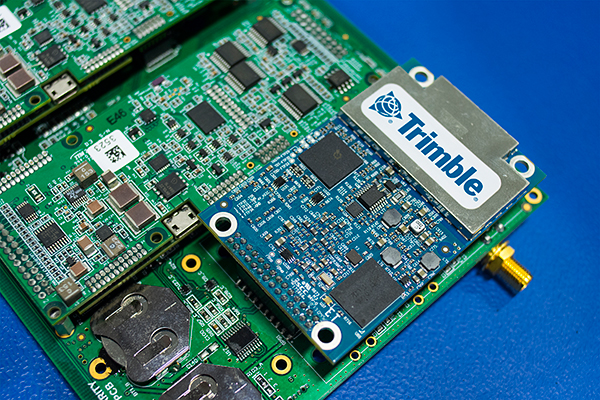
    MicroPilot Inc. has teamed with Trimble to integrate high-precision GNSS technology as part of its autopilot for guidance and control of unmanned aerial vehicles (UAVs).

    With centimeter-level, real-time kinematic (RTK) positioning capabilities, Trimble’s multi-constellation GNSS receivers are capable of tracking signals from GPS, GLONASS, Galileo and BeiDou, the company said. Trimble GNSS receivers are used in a wide variety of applications ranging from port automation and robotics to autonomous vehicle guidance.

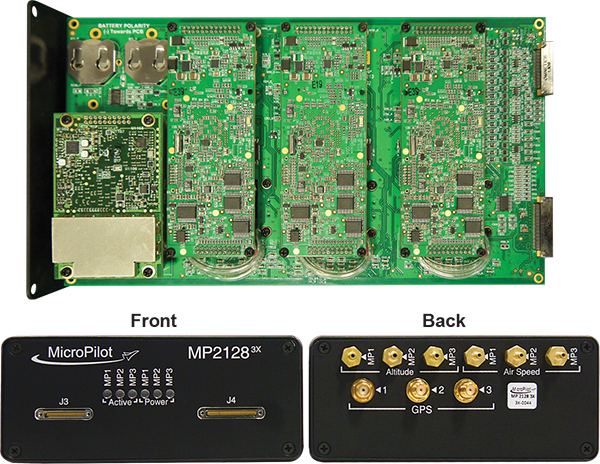
    MicroPilot develops and manufactures autopilots for UAVs, including the triple-redundant MP21283X. The company also provides support products that enable customers to use their development time as efficiently as possible and bring their products to market faster. These products include the trueHWIL2 UAV autopilot simulator and the XTENDERmp software development kit.

    The MP21283X UAV autopilot. (Image: Micropilot)

    Working closely with Trimble gives MicroPilot the ability to better leverage Trimble’s GNSS technologies. This access improves the ability of MicroPilot’s support team to assist customers with their product development, testing and operations. Trimble will benefit from MicroPilot’s extensive experience integrating guidance, navigation and control systems for a wide variety of UAV platforms, the companies said.

    “Reliable, robust and innovative GNSS solutions as well as strong technical support is key to bringing any UAV to market and our relationship with Trimble will allow MicroPilot to improve on our already industry-leading support,” said MicroPilot president Howard Loewen.

    “We are very pleased to be working closely with MicroPilot to provide high-precision GNSS for its UAV autopilot solutions,” said Joseph Carey, director of strategic initiatives for Trimble’s Integrated Technologies Division. “MicroPilot autopilot’s simple installation, configuration and customization capabilities allow UAV manufacturers to easily integrate reliable, state-of-the-art, professional guidance, navigation and controls to their aerial platforms.”

  • Sony’s new IoT board features built-in GNSS receiver

    Sony’s new IoT board features built-in GNSS receiver

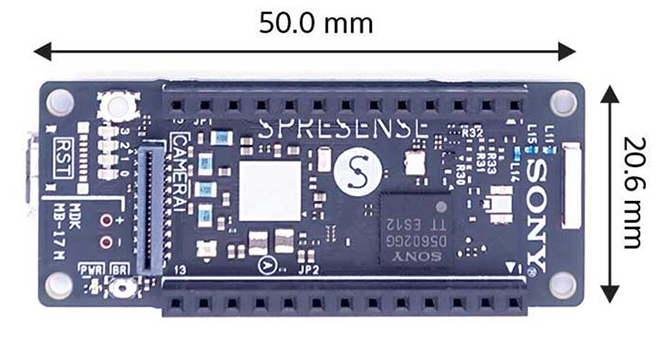
    The Spresence main board by Sony.

    Sony Corporation has developed two new products, the Spresence main and extension boards for internet of things (IoT) applications, equipped with a smart-sensing processor.

    The main board uses a multi-CPU structure equipped with Sony’s GNSS receiver (GPS+GLONASS) and high-res audio codec. A variety of systems for diverse applications — drones, smart speakers, sensing cameras and other IoT devices — can be built by combining the boards and developing the relevant applications.

    Technological information about the products’ software and hardware is publicly available via open platform, allowing for a wide range of developmental possibilities and further expanding the market.

    Positioning information and audio input/output functions are expected to become increasingly important in the expanding IoT market. The main board operates on low power and features a smart-sensing processor, with a built-in GNSS receiver and an audio codec that supports high-resolution audio sources. It employs a hexa-CPU, multi-core configuration that makes it easy for anyone to create high-performance, highly versatile applications.

    For example, the new board can be used to control a drone using GPS positioning technology and a high-performance processor, voice-controlled smart speakers, low-power consumption sensing cameras and other IoT devices. It can also be combined with various sensors for use in systems that detect errors in production lines on the factory floor.

    The IoT boards will be displayed at the Maker Faire Bay Area 2018 starting May 18 in San Mateo, California, and on Aug. 4-5 at the Maker Faire Tokyo 2018 in Tokyo, Japan.

    The new products go on sale July 31.

  • Galileo pair arrive at spaceport for July launch

    Galileo pair arrive at spaceport for July launch

    News from the European Space Agency

    The next two satellites in Europe’s Galileo satellite navigation system have arrived at Europe’s Spaceport in Kourou, French Guiana, ahead of their planned launch from the jungle space base in July.

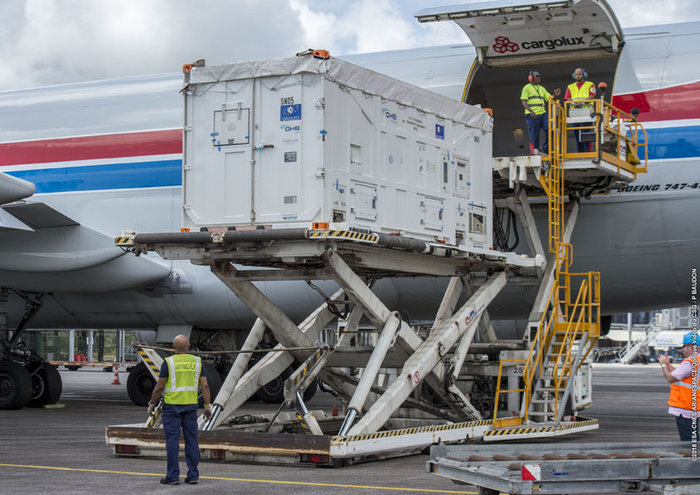
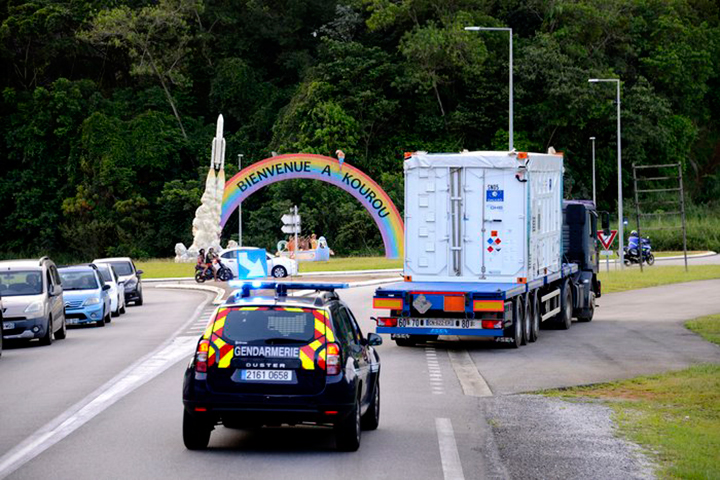
    Galileo satellites 23 and 24 left Luxembourg Airport on a Boeing 747 cargo jet on the morning of May 4, arriving at Cayenne – Félix Eboué Airport in French Guiana that evening.

    Arrival at the Felix Eboué airport on April 5, 2018. (Photo: ESA)
    Arrival at the Felix Eboué airport on April 5, 2018. (Photo: ESA)

    They were then unloaded, still in their protective air-conditioned containers, and transported by truck to the cleanroom environment of the preparation building within Europe’s Spaceport.

    This pair will be launched along with another two Galileo satellites, which are due to be transported to French Guiana later this month.

    The quartet will be launched together on a customized Ariane 5 on July 25.

    The Galileo System began Initial Services on Dec. 15, 2016, and a growing number of commercial devices are using Galileo today. Completion of the constellation should improve Galileo’s positioning accuracy further still.

    One of two Galileo satellites being driven by truck to the Guiana Space Centre inside its container. Galileo satellites 23 and 24 left Luxembourg Airport on a Boeing 747 cargo jet on the morning of May 4, arriving at Cayenne – Félix Eboué Airport in French Guiana that evening. (Photo: ESA)

    But Galileo satellites will continue to be launched into the future: a further 12 Galileo “Batch 3” satellites were ordered last June, supplementing the 26 built so far to provide further in-orbit spares, and replacements for the oldest Galileo satellites, first launched in 2011.

    A steady stream of orbital spares, ready to replace satellites reaching the end of their operational lives, is essential to ensure Galileo continues operating seamlessly.

    Looking further ahead, with the aim of keeping Galileo services as a permanent part of the European and global landscape, replacement satellites will be required by the middle of the next decade, offering improved performance and added features.

  • Trimble Business Center adds GNSS post-processing support

    Trimble has announced version 4.1 of Trimble Business Center office software that enables surveyors and geospatial professionals to simplify the creation of cadastral, GIS, infrastructure inspection and tunneling deliverables.

    With the version 4.1 update, GNSS field data from GIS receivers (including the Trimble Geo 7X) can now be post-processed within Trimble Business Center to achieve high-quality feature locations. This allows enterprise-level organizations the flexibility to integrate both GIS and survey data within the same project environment and then link the high-quality locations directly to their Esri geodatabase.

    Version 4.1 also provides seamless integration with Trimble Access 2018 field software to improve field-to-office productivity using new cloud-based data synchronization and workflow task management capabilities.

    Version 4.1 adds new cadastral capabilities including proportioning, map checking and CAD drafting tools that streamline the creation of survey plans, plots and survey engineering digital deliverables.

    For infrastructure inspection, construction as-built verification and volumetric applications, new projected surface tools enable professionals to analyze and compare data captured in the field against design. Point clouds from the Trimble SX10, Trimble VISION instruments, 3D laser scanners and unmanned aircraft system (UAS) platforms can be used for slope monitoring as well as to perform accurate volumetric, deformation and cut/fill analysis for retaining wall, dams and mining applications.

    A new optional Tunneling Module enables survey and engineering professionals to simplify their workflow and improve productivity to meet time-sensitive deadlines for tunnel construction projects. Tunnel designs can be created and exchanged with Trimble Access field software, enabling customers to easily stakeout tunnel elements in the field and quickly produce as-built analysis and reports in the office.

  • STMicroelectronics offers high-accuracy MEMS sensors

    STMicroelectronics is offering new high-stability MEMS sensors for the Industrial Internet of Things (IIoT).

    The new sensors, to be made available sometime this year, begin with the IIS3DHHC, a 3-axis accelerometer optimized for high measurement resolution and stability to ensure accuracy over time and temperature.

    The IIS3DHHC targets precision inclinometers in antenna-positioning mechanisms for communication systems, Structural Health Monitoring (SHM) equipment for keeping buildings and bridges safe, and stabilizers or levelers for a wide variety of industrial platforms.

    Its long-term accuracy and robustness are also suitable for high-sensitivity tilt and security sensors, as well as image stabilization in high-end digital still cameras (DSCs), the company said.

    STMicroelectronics also provides what it calls “product longevity” to assure long-term availability of components in industrial equipment.

    The IIS3DHHC has a full scale of ±2.5 g and is capable of providing the measured accelerations to the application through an SPI 4-wire digital interface.

    The sensing element is manufactured using a dedicated micromachining process developed by STMicroelectronics to produce inertial sensors and actuators on silicon wafers.

    The IC interface is manufactured using a CMOS process that allows a high level of integration to design a dedicated circuit which is trimmed to better match the characteristics of the sensing element.

    The IIS3DHHC is available in a high-performance (low-stress) ceramic cavity land grid array (CC LGA) package and can operate within a temperature range of -40 degrees Celsius to +85 degrees Celsius.

    Key Features of the IIS3DHHC

    • Included in the 10-year longevity program
    • 3-axis, ±2.5 g full-scale
    • Ultra-low noise performance: 45 µg/√Hz
    • Excellent stability over temperature (<0.4 mg/°C) and time
    • 16-bit data output
    • SPI 4-wire digital output interface
    • Embedded FIFO (depth 32 levels)
    • Embedded temperature sensor
    • 12-bit temperature data output
    • High shock survivability
    • Extended operating temperature range (-40 °C to +85 °C)
    • ECOPACK, RoHS and “Green” compliant

    “These high-quality industrial sensors leverage our investments in MEMS design and high-yield fabrication processes to deliver superior performance with low ownership costs for applications where the highest precision, repeatability and robustness are critical,” said Andrea Onetti, group VP and general manager, MEMS Sensors Division, STMicroelectronics. “We will continue to introduce new types of precision sensors for industrial applications in the coming months, covered by our 10-year longevity commitment, including combination sensors, specialized sensors and complete inertial modules.”

    The IIS3DHHC is in production now, in a high-quality 16-lead 5 mm x 5 mm x 1.7 mm ceramic LGA package, priced from $4.50 for orders of 1000 pieces.


  • Qianxun SI, u-blox plan to bring mass-market high-precision positioning to China

    Qianxun Spatial Intelligence Inc., a high-precision positioning service provider, and u-blox are joining forces to deliver high-precision positioning solutions to the Chinese market.

    By coordinating their product offerings, they seek to meet growing demand for increased positioning accuracy for mass-market applications. Some of the areas driving up demand for high-precision positioning services in China are internet of things (IoT) tracking devices such as those used on shared bikes, as well as automotive, UAV and robotic vehicle applications.

    u‑blox is bringing to the partnership its high-precision GNSS receivers. Its u‑blox F9 multi-band positioning platform uses integrated real-time kinematic (RTK) technology to process the high-precision positioning correction data provided by Qianxun SI, delivering down to centimeter-level positioning accuracy for wide-ranging applications. It enables even faster and more robust performance by leveraging a greater variety of GNSS signals.

    Two major advancements have enabled sub-meter-level positioning accuracy for mass-market applications. The first is modern GNSS correction services that constantly monitor GNSS signals to determine positioning errors caused, for example, by atmospheric distortions, and wirelessly transmit correction data to compensate for these errors to millions of GNSS devices. The second is a new generation of small, power-efficient, and affordable GNSS receivers that are able to use the correction data to achieve such high levels of accuracy.

    Qianxun SI, a high-precision positioning service provider, has already laid the groundwork for the large-scale expansion of high-precision positioning in the IoT era, the company said. Based on BeiDou, which is compatible with GPS, GLONASS and Galileo, Qianxun SI’s high-precision positioning service is built on the nationwide ONE Network, composed of more than 2,000 Continuously Operating Reference Stations (CORS) and using proprietary algorithms. It offers vehicles and other applications a range of 24/7 high-precision positioning services in most regions of the country.

    By the end of 2018, Qianxun SI’s dynamic centimeter-level service will cover the entire mainland of China, the company said.

    “We are delighted to cooperate with u-blox to provide users with high-precision positioning solutions that are user friendly and affordable,” said Jinpei Chen, CEO of Qianxun SI. “I believe our high-precision positioning technology is a key enabler of IoT development, and the cooperation with u‑blox will accelerate the go-to-market process of the technology in an extensive range of industrial and automotive market applications.”.

    “This collaboration is a genuine win-win for all involved in that it allows us to develop high-precision solutions that will foster innovation across markets,” said Thomas Seiler, CEO of u-blox. “Partnering with China’s leading GNSS correction service provider allows u-blox customers to bring cutting edge applications to the China market in the shortest possible time.”

  • Copernicus Sentinel-3B delivers first images

    News from the European Space Agency

    Less than two weeks after it was launched, the Copernicus Sentinel-3B satellite has delivered its first images of Earth. Exceeding expectations, this first set of images include the sunset over Antarctica, sea ice in the Arctic and a view of northern Europe.

    One of the Copernicus Sentinel-3B’s first images featured Greenland. Captured on May 7, 2018, at 13:20 GMT (15:20 CEST), the image shows sea ice swirled into eddies caused by the wind and ocean currents.  The image was taken by the satellite’s ocean and land colour Instrument, which features 21 distinct bands, a resolution of 300 m and a swath width of 1270 km. The instrument can be used to monitor aquatic biological productivity and marine pollution, and over land it can be used to monitor the health of vegetation. (Image: ESA)
    One of the Copernicus Sentinel-3B’s first images featured Greenland. Captured on May 7, 2018, at 13:20 GMT (15:20 CEST), the image shows sea ice swirled into eddies caused by the wind and ocean currents. The image was taken by the satellite’s ocean and land colour Instrument, which features 21 distinct bands, a resolution of 300 m and a swath width of 1270 km. The instrument can be used to monitor aquatic biological productivity and marine pollution, and over land it can be used to monitor the health of vegetation. (Image: ESA)

    The very first image, captured on May 7 at 10:33 GMT (12:33 CEST), shows the transition between day and night over the Weddell Sea in Antarctica. The satellite also captured swirls of sea ice off Greenland on the same day. Another in this first set of images offers a rare cloud-free view of northern Europe.

    They were taken by the satellite’s ocean and land colour instrument, which features 21 distinct bands, a resolution of 300 m and a swath width of 1270 km. The instrument can be used to monitor aquatic biological productivity and marine pollution, and over land it can be used to monitor the health of vegetation.

    Josef Aschbacher, ESA’s Director of Earth Observation Programmes, said, “The launch of Sentinel-3B completed the first batch of Sentinels that we are delivering for Copernicus.

    “We finished the launch and early orbit phase in a record time and we are now getting on with the task of commissioning the satellite for service.

    “These first images from the ocean and land colour instrument already show how the satellite is set to play its role in providing a stream of high-quality environmental data to improve lives, boost the economy and protect our world.”

    The Copernicus Sentinel-3B satellite captured this rare cloud-free view of Northern Europe on May 8, 2018, at 09:33 GMT (11:33 CEST). Features over land and water can been seen clearly such as different types of land cover, snow and also a plume of phytoplankton in the North Sea. The image was taken by the satellite’s ocean and land color Instrument. (Image: ESA)
    The Copernicus Sentinel-3B satellite captured this rare cloud-free view of Northern Europe on May 8, 2018, at 09:33 GMT (11:33 CEST). Features over land and water can been seen clearly such as different types of land cover, snow and also a plume of phytoplankton in the North Sea. The image was taken by the satellite’s ocean and land color Instrument. (Image: ESA)

    The Sentinel-3B satellite lifted off from Russia on 25 April and joins it identical twin, Sentinel-3A, in orbit. This pairing of satellites increases coverage and data delivery for the European Union’s Copernicus environment programme.

    As the workhorse mission for Copernicus, the two satellites carry the same suite of instruments to systematically measure Earth’s oceans, land, ice and atmosphere.

    Over oceans, it measures the temperature, colour and height of the sea surface as well as the thickness of sea ice. These measurements are used, for example, to monitor changes in Earth’s climate and for more hands-on applications such as for monitoring marine pollution.

    Over land, this innovative mission monitors wildfires, maps the way land is used, checks vegetation health and measures the height of rivers and lakes.

    European Commissioner for Internal Market, Industry, Entrepreneurship and SMEs Elzbieta Bienkowska, said, “This new satellite will deliver valuable images of how our oceans and land are changing.

    “This will not only speed up the response to natural disasters, but also create new business opportunities. Earth observation is a larger market than you would think – a driver for research discoveries, a provider of highly skilled jobs and a developer of innovative services and applications.”

    One of the Copernicus Sentinel-3B’s first images featured Greenland. Captured on May 7, 2018, at 13:20 GMT (15:20 CEST), the image shows sea ice swirled into eddies caused by the wind and ocean currents, and was taken by the satellite’s ocean and land color Instrument. (Image: ESA)
    One of the Copernicus Sentinel-3B’s first images featured Greenland. Captured on May 7, 2018, at 13:20 GMT (15:20 CEST), the image shows sea ice swirled into eddies caused by the wind and ocean currents, and was taken by the satellite’s ocean and land color Instrument. (Image: ESA)

    Bruno Berruti, ESA’s Sentinel-3 Project Manager, said, “We are extremely pleased to see these first images, which show that the satellite is in good health.

    “ESA will spend the next five months carefully calibrating the instruments and commissioning the satellite for service before it is handed over to Eumetsat for routine operations.”

    During this commission phase the two Sentinel-3 satellites will be flown in a tandem formation, separated by about 30 seconds.

    Sentinel-3B will then be phased to reach its final position – flying in the same orbit, but adjusted to be separated by 140° with respect to Sentinel-3A.

    Once commissioned, ESA will hand over satellite operations to Eumetsat. It will then be managed jointly, with ESA generating the land products and Eumetsat the marine products for application through the Copernicus services.

    Alain Ratier, Director-General of Eumetsat, added, “The Sentinel-3 constellation establishes the European backbone of a space-based, global ocean-monitoring system.

    “These first images are the first demonstration that Sentinel-3B will deliver on its promise to usher in a new era for operational oceanography and flow-on benefits for human safety, businesses and industry.

    “They will amplify the benefits of the Sentinel 3 mission for ocean forecasting and the blue economy.”

    Sentinel-3B is the seventh Sentinel satellite launched for Copernicus. Each mission carries different state-of-the-art technology to deliver a stream of complementary imagery and data to monitor the environment.

  • Mauritanian utility corridor being surveyed with SP60 GNSS receiver

    Mauritanian utility corridor being surveyed with SP60 GNSS receiver

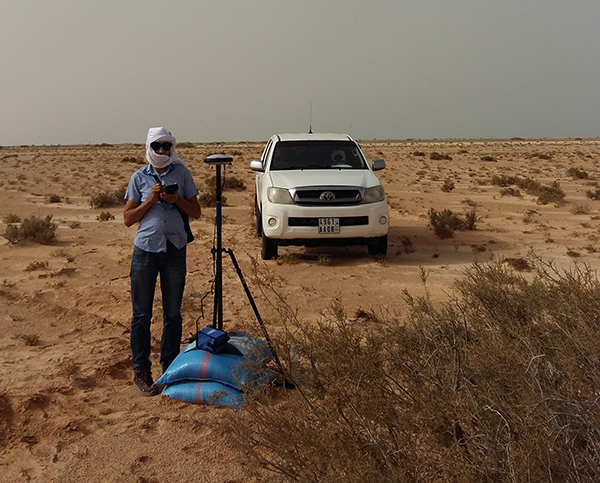
    The Spectra Precision SP60 GNSS receiver has been selected to perform survey work for construction of a new 450-kilometer electric power transmission corridor.

    Connecting Mauritania’s two largest cities, the capital Nouakchott and to the south Nouadhibou, the 225/90Kv transmission line parallels the Atlantic Ocean as it traverses the Sahara Desert.

    The Mauritanian Electricity Company, SOMELEC, through its contracting company, awarded the sub-contract for surveying the transmission line and infrastructure to ETAFAT, a geospatial data acquisition and processing firm.

    Difficult work conditions, including high heat (over 45 degrees Celsius) and the lack of existing control points were key factors in ETAFAT’s selection of the SP60 receiver. Because of the absence of existing benchmarks along the entire corridor, the SP60 RTX feature played a key role to ensure homogeneity in the coordinate reference frame between the two cities.

    The RTX technology leverages real-time data from a global tracking station network with innovative positioning and compression algorithms to compute and relay satellite orbit, satellite clock and other system adjustments, transmitted to the SP60 via satellite or IP to deliver real time high-accuracy corrections, even in remote locations, the company said.

    ETAFAT tested the SP60 data with RTX corrections and obtained consistently successful results. The geodetic survey was related to several ground control points (GCP) used in airborne survey. The measurement itself was conducted using two methods, dependently: the classical statistical method, and the RTK GNSS method. The SP60 met or exceeded the required +/- 15 cm order of accuracy.

    According to baseline processing and adjustment reports, the SP60 delivered superior results under all conditions, and it did especially well under typical high temperatures of the Sahara Desert. Initialization was well within 5 to 10 seconds for RTK survey with radio signal coverage inside a 5 km radius.

  • Swift’s latest Piksi Multi firmware release supports SBAS

    The Piksi Multi.

    Swift Navigation has issued a new ​​firmware ​​upgrade to ​​its ​​flagship ​​product ​​​Piksi Multi ​​GNSS ​​module.

    This marks the fifth major point release to Piksi Multi and is available free of charge to Swift customers. ​​The most recent provided GLONASS support, among other features.

    The firmware release also enhances Duro, the ruggedized version of the Piksi Multi receiver housed in a military-grade, weatherproof enclosure designed for long-term outdoor deployments.

    Duro – Piksi enclosure.

    Firmware Release 1.5 for Piksi Multi and Duro supports four regional Satellite Based Augmentation Systems (SBAS) — the United States-based Wide Area Augmentation Systems (WAAS), the pan-European Union-based European Geostationary Navigation Overlay Navigation System (EGNOS), the Japanese Multifunctional Transport Satellites (MTSAT) Satellite Augmentation System (MSAS) providing coverage for Japan and Australia and the GPS-Aided GEO Augmented Navigation (GAGAN) regional system operated by the Indian government.

    These four regional satellite systems are used to improve the overall performance of GNSS such as GPS and GLONASS, both of which are supported by Swift’s receivers.

    SBAS support is particularly relevant for Swift customers located in places where cell phone coverage is sparse or is not available, such as rural areas where precision agriculture operations are taking place or alternatively in marine locations, lakes, in-land waterways and up to approximately 100 miles off shore where cellular or internet coverage may not be feasible.

    Applications using SBAS do not require a local reference station, allowing rovers such as drones, combines and other agricultural equipment and marine vessels to benefit from satellite corrections accurate to a sub-meter, when centimeter-accuracy is not required and where internet or cell coverage is spotty or absent.

    Firmware ​​Version ​​1.5 ​​Enhanced Receiver Performance Highlights ​

    • SBAS Support — The ​​new ​​firmware ​​adds support for WAAS + EGNOS + MSAS + GAGAN regional satellite constellations and augments standard positioning performance for ​​GLONASS (G1/G2) + GPS (L1/L2C) for use with Swift Navigation products.
    • Acquisition Improvements — Firmware 1.5 allows Piksi Multi and Duro a faster time to first fix and once a signal has been acquired, improves accuracy and availability. Time to first RTK fix was improved by 21 seconds.
    • Standard Positioning Performance (SPP) Enhancements — Time to first SPP improved by 7 seconds.
    • Increased Satellite Count for RTK — Increased satellite count used in the RTK engine improves RTK performance in all environments, particularly those where skyview is partially obscured and/or rapidly changing.

    “The addition of four regional satellite constellations for our devices enhances reliability and improved position accuracy in challenging or remote environments where autonomous vehicles may have limited or no cell coverage. Essentially, SBAS provides a free corrections service, allowing our precision agriculture, marine and other customers to receive satellite corrections without a base station,” said Anthony Cole, Ph.D., director of the measurement and positioning team at Swift Navigation. “Being hardware-ready means that Piksi Multi and Duro users simply download the 1.5 firmware at no additional cost, to get the latest features and performance improvements.”