Author: Tracy Cozzens

  • Hemisphere GNSS offers Atlas-capable GNSS receiver for marine applications

    Hemisphere GNSS offers Atlas-capable GNSS receiver for marine applications

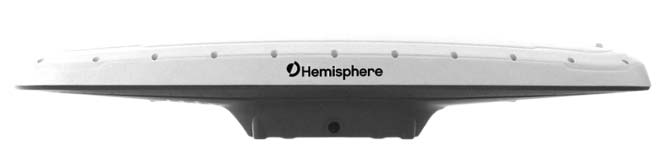
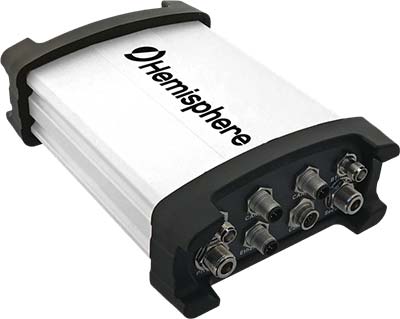
    Hemisphere GNSS has introduced the Vector V1000 GNSS receiver for precision marine applications. The V1000 provides high-accuracy heading, position, pitch, roll and heave data.

    The company made the announcement at the Oceanology International conference being held this week in London, U.K.

    The V1000 supports multi-frequency GPS, GLONASS, BeiDou, Galileo, QZSS and IRNSS (with future firmware upgrade and activation) for simultaneous satellite tracking. The receiver is powered by Hemisphere’s Athena real-time kinematic (RTK) engine and is Atlas L-band capable.

    The new V1000 is designed for professional marine applications, such as hydrographic and bathymetric surveys, dredging, oil platform positioning, buoys and other applications that demand the highest level 3D positioning accuracies. Based on Hemisphere’s Eclipse Vector technology, the V1000 uses the most accurate differential corrections including RTK and Atlas L-band.

    The V1000 is Hemisphere’s flagship receiver, with an integrated display, that can be conveniently installed near the operator. The two antennas can be installed at user-specified separation, providing valuable flexibility in terms of install locations and desired heading accuracy.

    The V1000 has heading accuracy of better than 0.01 degree when using a 10-meter antenna separation. With CAN, serial, Bluetooth, Wi-Fi and Ethernet support and flexible installation, the all-new rugged enclosure gives the V1000 the advantage of working reliably in harsh environments, the company said.

  • Esri FedGIS Conference showcases spatial analytics for government action

    Esri will be hosting the 21st annual Esri Federal GIS (FedGIS) Conference March 20-21 at the Walter E. Washington Center in Washington, D.C. All federal government agency workers are invited to join an anticipated audience of 3,000 attendees and share their experience in collaborating, innovating and connecting their work using spatial analytics technology.

    Esri founder and president Jack Dangermond will discuss how location intelligence can be used to derive a deeper understanding of complex issues through data, as well as how it enables collaboration to develop innovative solutions for government.

    He will be joined on the main stage by representatives from several leading organizations, including the following:

    • U.S. Department of Agriculture Animal and Plant Health Inspection Service (USDA APHIS) — “Protecting Plants and Animals to Feed Our Country and the World”
    • U.S. Department of Health & Human Services Office of Inspector General — “Fighting Fraud, Waste, and Abuse through Spatial Analytics”
    • American Red Cross — “Connecting and Helping Volunteers, Partners, and Citizens in Need”

    On Wednesday, March 21, Dangermond will lead a thought-provoking conversation with the Honorable Susan M. Gordon, principal deputy director of National Intelligence at the Office of the Director of National Intelligence on the importance of connecting intelligence agencies through spatial analytics.

    “It is always inspirational to attend this conference and hear how location intelligence has helped federal workers share information across agencies and connect to citizens,” said Jeff Peters, head of the national government sector at Esri. “Attendees will get a chance to hear directly from top government and technology leaders as they share their experiences collaborating, innovating, and connecting using spatial analytics.”

    The conference is the site for announcements about the innovative use of Esri’s ArcGIS platform in federal, state and local government. The latest enhancements to ArcGIS and ArcGIS Pro, along with updates on desktop and enterprise mobile app environments, will be shared.

    Other organizations will be providing use cases and best practices during workshops throughout the two days of the conference. Learn more at esri.com/events/federal.

  • New report predicts small drone threats to infantry units

    The emergence of inexpensive small unmanned aircraft systems (sUASs) has led to adversarial groups threatening deployed U.S. forces, especially infantry units, according to a new report.

    Although the U.S. Army and the U.S. Department of Defense (DOD) are developing tactics and systems to counter single sUASs, the report by the National Academies of Sciences, Engineering and Medicine emphasizes the need for developing countermeasures against multiple sUASs — organized in coordinated groups, swarms, and collaborative groups — that could be used much sooner than the Army anticipates.

    The committee that conducted the study developed a classified report that details its findings and recommendations, along with an unclassified public version that discusses key background issues.

    “Hobby drones are easy to buy, their performance is improving dramatically, and their cost has dropped significantly; now with millions of them around the world, they pose a growing threat to the U.S. warfighting forces if used for nefarious intents,” said Albert Sciarretta, president of CNS Technologies and chair of the committee. “The threats could be consumer items like hobby drones, modified consumer items such as could be assembled with online components, and customized ones, like built-from-scratch aircraft.”

    The committee that authored the report was asked by the U.S. Army to assess the threat from sUASs, especially when massed and operating collaboratively, examine the current capabilities of military units to counter them, assess related human performance issues, and identify technologies appropriate for short- and long-term science and technology investments by the Army.

    Readily available, high-performance, sUASs can be easily modified to carry lethal weapons, identify targets at long ranges, and conduct electronic warfare attacks. As the capabilities of hobby drones improve at a rapid pace, the added threat from coordinated groups, swarms and collaborative groups of sUASs will pose a substantial challenge to U.S. armed forces, the report says.

    “Modified hobby drones can be used to support conventional and unconventional attacks. For example, they can be fitted with external or embedded explosives designed to explode on contact,” added Sciarretta. “In addition, they can be used by adversaries to jam our radio frequency signals and to support their information operations. When these sUASs are combined in groups or swarms, their threat is significantly enhanced.”

    Countering sUASs first requires detection and identification, which is difficult because they are small, fly at low altitudes, can have highly irregular flight paths, and travel at a range of speeds, the report says. Moreover, a sUAS can also take advantage of the surrounding environment, for example, by concealing itself among trees or blending in with a flock of birds.

    Even after threats are identified, countering sUASs can be challenging, the report says. The Army and DOD have invested significantly in technologies in response to these threats, often focusing on detecting radio frequency transmissions of the sUASs or their operators.

    However, the report highlights that today’s consumer and customized sUASs increasingly can operate without radio frequency command-and-control links by using automated target recognition and tracking, obstacle avoidance, and other capabilities enabled by software.

    The study was sponsored by the U.S. Army.

    Copies of Counter-Unmanned Aircraft System (CUAS) Capability for Battalion-and-Below Operations are available from the National Academies Press or by calling 202-334-3313 or 1-800-624-6242.
  • USGIF extends partnership with DigitalGlobe Foundation

    USGIF’s 14 accredited collegiate programs granted DigitalGlobe imagery access

    The United States Geospatial Intelligence Foundation (USGIF) has furthered its partnership with the DigitalGlobe Foundation.

    Together, they will grant 14 schools under USGIF’s Collegiate GEOINT Accreditation Program access to DigitalGlobe’s satellite imagery archive and cloud-based service Basemap.

    USGIF-Accredited_Schools_generalThrough the agreement, students and faculty at USGIF’s 14 accredited schools will have DigitalGlobe imagery at their fingertips, with access to high-resolution, high-accuracy imagery and better answers to their research questions.

    USGIF’s Collegiate Accreditation Program prepares students with the necessary knowledge and skills for entering the professional geospatial intelligence (GEOINT) workforce.

    USGIF-accredited GEOINT programs include Fayetteville State University, George Mason University, James Madison University, Universidade Nova de Lisboa, Northeastern University, Pennsylvania State University, the University of Texas at Dallas, the University of Utah, the U.S. Air Force Academy, the University of Missouri of Columbia, the University of Redlands, the University of South Carolina, the University of Southern California and the U.S. Military Academy.

    “DigitalGlobe Foundation’s partnership with USGIF on promoting the geospatial tradecraft creates a force multiplier in our common objective to reach out to educational institutions worldwide,” said Kumar Navulur, DigitalGlobe Foundation president. “Under this partnership, students in USGIF-accredited academic institutions are now able to access DigitalGlobe’s vast library of processed global imagery.”

    “Imagery access helps faculty, researchers, and students map and analyze trends in infectious disease, threatened ecosystems, crop yields, or archeological sites,” said Camelia Kantor, USGIF’s Director of Academic Programs. “Our collaborative efforts bring the academic community into a new era of innovation in which high-quality imagery products will allow students enrolled in GEOINT programs to make educated decisions and provide solutions to a wider range of problems.”

    USGIF has had a long-standing partnership with DigitalGlobe Foundation, and USGIF CEO Keith J. Masback is a member of DigitalGlobe Foundation’s Board of Directors.

  • GEOINT 2018 features top US defense speakers

    The GEOINT Symposium, hosted annually by the United States Geospatial Intelligence Foundation (USGIF), returns to Tampa, Florida, April 22-25.

    The annual symposium gathers the defense, intelligence and homeland security communities as well as other users and producers of geospatial information for keynote speakers, panel discussions and breakout tracks offering the opportunity to learn from senior leaders and subject matter experts.

    Confirmed keynote speakers include:

    • Robert Cardillo, Director, NGA
    • The Honorable Susan M. Gordon, Principal Deputy Director of National Intelligence
    • Dawn Meyerriecks, Deputy Director, CIA Science and Technology Directorate
    • Gen. Raymond A. Thomas III, Commander, USSOCOM

    A complete list of GEOINT leaders who will be speaking throughout the event can be found here.

    GEOINT 2018 is expected to draw more than 4,000 geospatial professionals and well in excess of 200 exhibitors. For complete symposium details, visit www.geoint2018.com.

  • Firmware release upgrades Piksi Multi with GLONASS

    Firmware release upgrades Piksi Multi with GLONASS

    Swift ​​Navigation​, ​​a ​​San ​​Francisco-based ​​tech ​​firm that is ​​building centimeter-accurate ​​GPS ​​technology ​​for autonomous ​​vehicles, ​​has released ​​the latest ​​firmware ​​upgrade to ​​its ​​flagship ​​product, the ​​​Piksi Multi GNSS ​​module.

    Firmware update 1.4 is the fourth improvement since Piksi Multi began shipping one year ago.

    Duro – Piksi enclosure.

    ​​The firmware release also enhances Duro, the ruggedized version of the Piksi Multi receiver housed in a military-grade, weatherproof enclosure designed specifically for outdoor deployments.

    The ​​upgrade ​​is available ​​at ​​no ​​cost ​​to ​​Piksi ​​Multi ​​and Duro users ​​and ​​provides ​​full ​​support ​​for ​​ GLONASS, in addition to the GPS satellite constellation. Access to dual constellations greatly improves availability, reliability and range between GNSS base and rover devices, the company said.

    According to Swift Navigation, the firmware release also adds NMEA GGA output capability to existing NTRIP (Networked Transport of RTCM via Internet Protocol), enabling Piksi Multi and Duro to seamlessly position by sending and receiving data from CORS (Continuously Operating Reference Station) base stations over the Internet.

    Firmware ​​Version ​​1.4 ​​Enhanced Receiver Performance Highlights

    • GLONASS ​​+ GPS support. The ​​new ​​firmware ​​provides ​​full and reliable integer ambiguity resolution for ​​GLONASS (G1/G2) + GPS (L1/L2C) for use with Swift Navigation products and most third-party base stations.
    • RTCM 1230 and 1033 interoperability. This allows Piksi Multi and Duro to communicate with many third-party industry-standard receivers.
    • NTRIP NMEA GGA support. This enables network RTK solutions and virtual base network (VBN) services.
    • Additional Fundamental Improvements
      • Full position and velocity covariances now published for advanced users for use in autonomous systems.
      • Carrier phase reacquisition was improved by seconds.
      • Fix reliability and availability was enhanced for extremely precise positioning accuracy in SPP mode was increased when RTK is not available.

    “The ​​1.4 ​​firmware ​​release is a step change improvement for our customers deploying ​​Piksi ​​Multi and Duro,” said Fergus Noble, CTO of Swift Navigation. “The addition of a second GLONASS satellite constellation enhances reliability and centimeter-accurate positioning in challenging environments, better supporting ground applications in precision agriculture, robotics and autonomous vehicles. Best of all, our customers benefit from new features delivered as a software update, at no additional cost and with no changes to their Piksi Multi or Duro hardware, underscoring Swift’s commitment to continuous improvements in our product lines.” ​

    For ​ ​​detailed ​​information ​​about ​​these ​​upgrades, ​ ​​refer ​​to ​​the Piksi Multi 1.4 Firmware Release Notes. ​​For ​​detailed ​​instructions ​​on ​​how ​​to ​​upgrade ​​a ​​Piksi ​​Multi ​​device, ​​refer ​​to ​​Section ​​7 ​​of ​​the Getting ​​Started ​​Guide ​​​Piksi ​​Multi ​​- ​​Upgrading ​​Firmware​​​. ​​For ​​firmware ​​release ​​binaries ​​and product ​​support ​​documentation, ​​visit ​​​support.swiftnav.com​.

  • Taoglas launches rugged antennas for automotive, drone markets

    Taoglas launches rugged antennas for automotive, drone markets

    Taoglas, a provider of IoT and automotive antenna and RF solutions, has introduced its patent-pending Terrablast range of antennas.

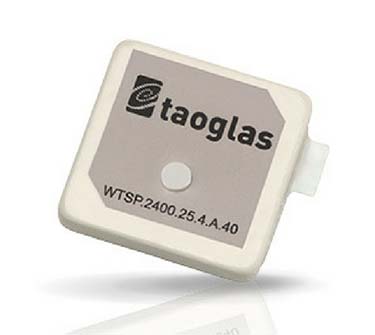
    The Taoglas Terrablast antenna line is designed for UAVs and transportation. (Photo: Taoglas)

    The polymer-based patch antennas are 30 percent lighter than their ceramic counterparts and extremely resistant to fracture upon impact. Terrablast antennas are designed for the automotive and unmanned aerial vehicle (UAV) markets, where impacts are possible but antenna performance cannot be compromised.

    Unlike traditional patch antennas, which are ceramic, Terrablast uses a new class of Taoglas polymer dielectric material composed of glass-reinforced epoxy laminate. The addition of the polymer to the blend makes the antenna extremely lightweight, yet impact resistant, the company said.

    The Terrablast antennas are designed to withstand drops, falls and impacts, and are designed for applications such as UAVs, where the antenna’s mechanical robustness following potential impact is critical.

    The Terrablast patch antennas are also typically 30-35 percent lighter than traditional patches. In drone applications, where weight over battery life is critical — each gram reduced enhances battery life.

    “Taoglas is leading the charge in material science advancement for the antenna industry, and our new Terrablast antennas are the latest innovation we’re introducing to the market,” said Ronan Quinlan, co-CEO and co-founder of Taoglas. “A variety of industries and applications, especially the automotive and drone markets, will benefit from Terrablast’s high-performance capabilities in a lightweight, impact-resistant form factor.”

    The first antennas in the Terrablast range are a 25-mm embedded 2.4 GHz patch antenna and a 35-mm embedded GPS patch antenna. The circular polarized design of the 2.4-GHz patch ensures maximum performance for constantly moving mobile applications where the orientation to the transmitter or receiver frequently changes. The antenna weighs 5.6 grams compared to an equivalent ceramic patch of 8.5 grams, providing a weight-saving substitute for ceramic patches in UAV applications.

    The 35-mm GPS/GLONASS/BeiDou patch antenna has extremely high efficiency of more than 70 percent across all bands, improving time to first fix. At 10 grams, the 3.5-mm-thick patch is 5.5 grams lighter than typical ceramic GNSS patches.

    All Terrablast antennas undergo rigorous temperature, vibration and impact tests, exceed the highest ISO 16750 standards, and are manufactured in Taoglas’ purpose-built facilities in Taiwan and the United States.

  • Hemisphere GNSS launches Vector V500 GNSS compass smart antenna

    Hemisphere GNSS launches Vector V500 GNSS compass smart antenna

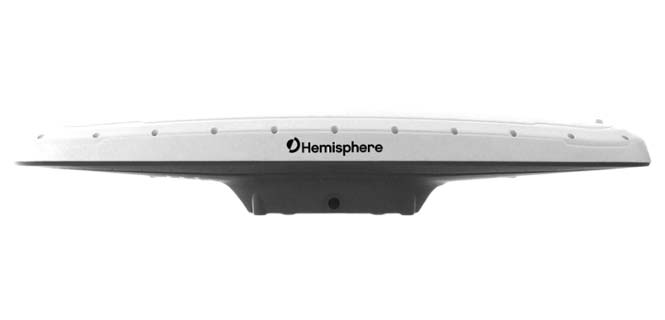
    Hemisphere GNSS has released its RTK-enabled Vector V500 smart antenna. The company made the announcement at the Oceanology International conference being held this week in London, U.K.

    The V500 supports multi-frequency GPS, GLONASS, BeiDou, Galileo, QZSS and IRNSS (with future firmware upgrade and activation) for simultaneous satellite tracking. The V500 is powered by Hemisphere’s Athena RTK (real-time kinematic) engine and is Atlas L-band capable.

    Using Hemisphere’s Eclipse Vector technology, the all-in-one V500 is a complete compass system that offers GNSS-based heading, pitch, roll, heave and RTK positioning, the company said.

    The V500 introduces support for Ethernet, Bluetooth and Wi-Fi in addition to NMEA 0183 and NMEA 2000 and offers unmatched ease of installation.

    Purpose-built for challenging applications, the V500’s rugged enclosure works reliably in harsh environments and is designed for professional marine applications requiring high-precision heading combined with RTK or Atlas positioning.

    The V500 is Hemisphere’s flagship rugged smart antenna. It combines the recently announced Eclipse Vector H328 OEM board with two superior multipath- and noise-rejecting antennas (spaced 50 cm apart) in a single enclosure.

    The V500 requires a single power/data cable connection, allowing for fast and reliable installations even in the presence of strong radio transmissions.

    According to Hemisphere GNSS, the V500 delivers 0.17 degree heading accuracy along with RTK positioning and Atlas L-band accuracies of up to 8 cm (95 percent).

    “The Vector V500 combines our expertise in GNSS, smart antenna design, and our new technology features such as Atlas,” said Lyle Geck, senior product manager at Hemisphere GNSS. “With very competitive RTK performance and the simplicity of installation offered by the all-in-one smart antenna design, it is an incredible product.”

    Atlas GNSS Global Correction Service. Atlas is a flexible and scalable GNSS-based global L-band correction service providing robust performance and correction data for GPS, GLONASS and BeiDou, the company said. Atlas delivers correction signals via L-band satellites to provide accuracies ranging from sub-meter to sub-decimeter levels, and leverages approximately 200 reference stations worldwide, providing coverage to virtually the entire globe.

    Atlas is available on all Hemisphere Atlas-capable single- and multi-frequency, multi-GNSS hardware and complements third-party GNSS receivers by using Atlas corrections with Hemisphere’s SmartLink and BaseLink capabilities. Atlas creates fast convergence times, and is robust and reliable near wharfs, piers, offshore rigs, cranes and other overhead obstructions.

    Atlas Basic provides users of both single- and multi-frequency Atlas-capable hardware the ability to achieve better than SBAS performance anywhere Atlas correction service is available. Atlas Basic offers accuracy of 30 cm (pass-to-pass 95%) to 50 cm (absolute 95%) and offers instantaneous sub-meter accuracy.

    The Vector V500 is featured in the Hemisphere GNSS booth (G500) at the Oceanology International exhibition and conference in London, UK, March 13-15. The new V500 will be available soon through Hemisphere’s global dealer network.

  • NovAtel test drives STMicroelectronics’ Teseo APP and Teseo V chipset

    NovAtel test drives STMicroelectronics’ Teseo APP and Teseo V chipset

    NovAtel has integrated its high-precision positioning engine and correction services with automotive-grade multi-frequency GNSS chipsets from STMicroelectronics: specifically, the Teseo APP (Automotive Precise Positioning) and Teseo V.

    The integration demonstrates possibilities for vehicle localization solutions. NovAtel is part of Hexagon’s Positioning Intelligence Division.

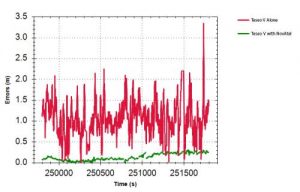
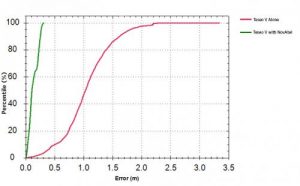
    STMicroelectronics’s Teseo APP and Teseo V provide multi-frequency GNSS data for PPP (precise point positioning) and RTK (real-time kinematic) for accurate positioning capabilities.

    The Teseo APP features built-in integrity checking for use in safety-critical systems, whereas Teseo V is used for non-safety-critical precise positioning applications.

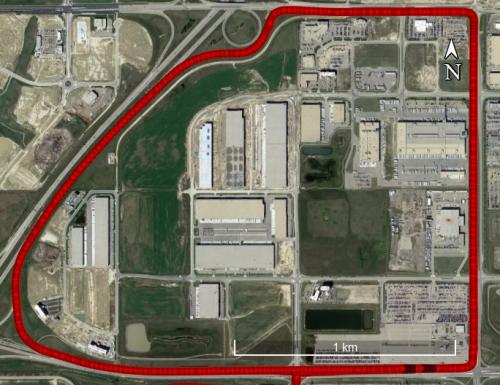
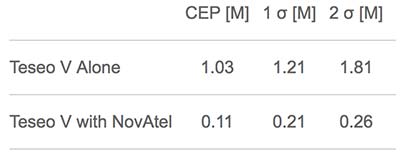
    The Teseo V SBAS and Teseo V NovAtel PPP tests took place in a light urban environment. (Image: NovAtel)

    NovAtel’s positioning engine combines the GNSS measurements from these chipsets with inertial measurement unit (IMU) data and Hexagon PPP correction services on the demonstration platform to deliver centimeter-level PPP positioning solutions in real time.

    “Working closely with STMicroelectronics using their Teseo APP chipset allowed us to innovate and speed up the development of our assured positioning solution tailored specifically for safe positioning of autonomous vehicles,” said Jonathan Auld, VP Engineering and Safety Critical Systems from NovAtel.

    NovAtel’s positioning engine architecture enables a flexible integration with different GNSS receiver chipsets, IMUs and processor environments, providing automotive manufacturers with additional flexibility when it comes to selecting components and subsystems of advanced driver assistance systems (ADAS) and autonomous driving solutions.

    The positioning engine is being developed to ASIL-B standards according to ISO26262 and will include a proprietary GNSS integrity solution to ensure safe positioning within defined protection limits that are tailored to the customer’s application requirements.

    “NovAtel’s choice of the automotive-quality ASIL-capable Teseo APP to integrate with their GNSS positioning engine is enabling them to develop a world-class safety-critical positioning offering to the automotive industry,” said Antonio Radaelli, Director, Infotainment Business Unit, STMicroelectronics.

    NovAtel technology continues to be an integral part of the connected and autonomous car ecosystems, including academic research, industry development and real-life applications. The company’s automotive positioning solution includes automotive GNSS antenna technology, GNSS/INS positioning engine, and global correction services.

  • Coast Guard issues notice on transitioning broadcast almanac

    In a notice advisory to NAVSTAR Users (NANU), the U.S. Coast Guard Navigation Center announced that starting March 7, after 22:00 Zulu hours, GPS will transition satellite SVN34 (PRN18) into the broadcast almanac for all satellites.

    The almanac transition, one satellite at a time, will require approximately 24 hours to complete.

    Also, on approximately March 8, SVN34 will resume transmitting L-band utilizing PRN18. SVN34/PRN18 will be unusable until further notice.

    Future NANUs will notify users of any changes to the above stated status.

    Contact the navigation center for more information:

  • FAA expands drone airspace authorization program

    The Federal Aviation Administration (FAA) is expanding tests of an automated system that will ultimately provide near real-time processing of airspace authorization requests for unmanned aircraft (UAS) operators nationwide.

    FAA Acting Administrator Dan Elwell announced the expansion at the third annual UAS Symposium, which kicked off on March 6 in Baltimore.

    Under the FAA’s Part 107 small drone rule, operators must secure approval from the agency to operate in any airspace controlled by an air traffic facility. To facilitate those approvals, the agency deployed the prototype Low Altitude Authorization and Notification Capability (LAANC) at several air traffic facilities in November 2017 to evaluate the feasibility of a fully automated solution enabled by data sharing.

    Based on the prototype’s success, the agency will now conduct a nationwide beta test beginning April 30 that will deploy LAANC incrementally at nearly 300 air traffic facilities covering approximately 500 airports. The final deployment will begin on Sept. 13.

    Drone operators using LAANC can receive near real-time airspace authorizations. This dramatically decreases the wait experienced using the manual authorization process and allows operators to quickly plan their flights. Air traffic controllers also can see where planned drone operations will take place.

    Beginning April 16, the FAA also will consider agreements with additional entities to provide LAANC services. Currently, there are four providers — AirMap, Project Wing, Rockwell Collins and Skyward. Applications must be made by May 16.


    Interested parties can find information on the application process here. This is not a standard government acquisition; there is no Screening Information Request (SIR) or Request for Proposal (RFP) related to this effort.

    LAANC uses airspace data provided through UAS facility maps. The maps show the maximum altitude around airports where the FAA may authorize operations under Part 107. LAANC gives drone operators the ability to interact with the maps and provide automatic notification and authorization requests to the FAA. It is an important step in developing the Unmanned Aircraft Systems Traffic Management System (UTM).

  • Esri releases Survey123 for ArcGIS with new Spike integration

    Esri releases Survey123 for ArcGIS with new Spike integration

    The new software release of Survey123 for the ArcGIS mobile application now has Spike, a laser measurement solution by ikeGPS.

    The paired technology dramatically accelerates field data capture and asset inspection activities.

    Spike allows users to measure hard-to-reach objects from a distance by taking a photo with their smartphone or tablet. Users can then capture real-time measurements from that image, including areas, elevations, distances between two points, and GPS/GNSS location.

    Use of the Survey123 integration with Spike will be of interest to organizations that use mobile workflows for asset and facilities management, field asset inventories and inspections, damage assessments, and tactical operations including disaster response.

    Using Spike with Survey123 relieves fieldworkers of the burden of carrying paper maps to find the object of interest and lugging multiple pieces of specialized, expensive measuring equipment. Instead, with a single mobile device, fieldworkers can locate the correct asset, record measurement data, and report accurate data directly back to the office.

    “The new Spike integration with Survey123 is a game changer for many field data collection and inspection workflows where the dimension of physical objects needs to be captured. Spike and Survey123 provide quick return on investment,” said Ismael Chivite, Esri product management lead. “The simplicity of the solution enables it to be quickly deployed and with little training. Customers are very enthused about this low-cost solution that will streamline many of their critical workflows.”

    The ability to capture accurate measurements in the field is particularly useful when working in areas that don’t lend themselves to hands-on or close-up measurement. Spike’s laser can be used in ranges from 6 to 650 feet, with the option to select units of measurement in inches, feet, meters or centimeters. With it, a single fieldworker is able to more quickly and safely accomplish what may otherwise have taken multiple field staff and costly equipment.

    The Spike laser device mounts to smartphones and tablets and connects via Bluetooth with the mobile device’s camera.

    Survey123 with Spike runs on Apple iOS and Google Android smartphones and tablets.