Author: Tracy Cozzens

  • SmartNav makes GPS ultra-precise, even in tough urban canyons

    SmartNav makes GPS ultra-precise, even in tough urban canyons

    NTNU researchers have built SmartNav, a system that overcomes urban GPS errors using satellite corrections and Google’s 3D data. It achieves near-centimeter precision, paving the way for safer, more reliable self-driving cars. 

    Researchers at the Norwegian University of Science and Technology (NTNU) have created SmartNav, combining satellite corrections, wave analysis, and Google’s 3D building data for remarkable precision. Their method achieved accuracy within 10 centimeters during testing, and could make reliable urban navigation accessible and affordable worldwide, including autonomous vehicles.

    The paper is published in the Journal of Spaial Sciences, DOI: 10.1080/14498596.2025.2536567.

    “Cities are brutal for satellite navigation,” explained Ardeshir Mohamadi. “In cities, glass and concrete make satellite signals bounce back and forth. Tall buildings block the view, and what works perfectly on an open motorway is not so good when you enter a built-up area.”

    Mohamadi, a doctoral fellow at NTNU, is researching how to make affordable GPS receivers much more precise without depending on expensive external correction services. “For autonomous vehicles, this makes the difference between confident, safe behavior and hesitant, unreliable driving. That is why we developed SmartNav, a type of positioning technology designed for urban canyons,” Mohamadi said.

    To solve this problem, the researchers combined several technologies to correct GPS signals, resulting in a computer program that can be integrated into the navigation system of autonomous vehicles. The software developed by the researches uses PPP-RTK (precise point positioning – real-time kinematic), which combines precise corrections with satellite signals. The European Galileo system now supports this by broadcasting its corrections free of charge.

    An assist from Google

    Meanwhile, Google launched a new service for its Android customers that provides 3D models of buildings in almost 4,000 cities around the world. The company is using these models to predict how satellite signals will be reflected between the buildings, allowing users to see if they are walking on the correct side of he street.

    The researchers were able to combine all these different correction systems with algorithms they had developed. When they tested it in the streets of Trondheim, they achieved an accuracy better than 10 centimeters 90 percent of the time.

    The use of PPP-RTK will also make the technology accessible to the general public because it is a relatively affordable service.

    “PPP-RTK reduces the need for dense networks of local base stations and expensive subscriptions, enabling cheap, large-scale implementation on mass-market receivers,” Mohamadi said.

  • UTTO partners wih GEODNET for utility mapping

    UTTO partners wih GEODNET for utility mapping

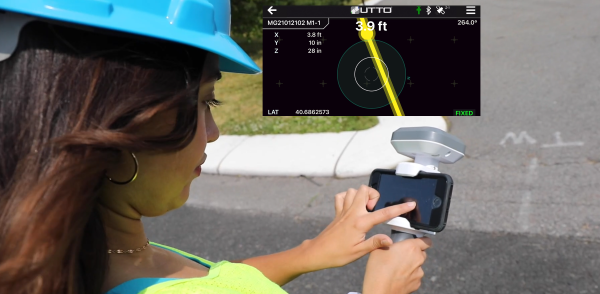
    GEODNET, a decentralized real-time kinematic (RTK) network with more than 20,000 active stations worldwide, is now partnering with UTTO, a leading innovator in underground utility mapping and digital damage prevention solutions.

    The partnership enables UTTO to leverage GEODNET’s global RTK correction services across its solutions, bringing enhanced centimeter-level accuracy to the utility locating and GIS industries.

    UTTO is known for pioneering products such as the vLocate Mapper, which integrates directly with GIS platforms like Esri’s ArcGIS Field Maps to streamline underground asset mapping and verification. By adopting GEODNET’s RTK correction services, UTTO customers gain access to reliable, triple-band GNSS corrections delivered through a uniform, global network. This ensures consistent accuracy across regions and significantly reduces the complexity traditionally associated with GNSS corrections.

    The collaboration provides UTTO users with seamless access to GEODNET’s correction services out of the box, eliminating the need for manual RTK configuration and reducing deployment friction for field teams. This simplifies the process of achieving centimeter-level accuracy in mapping underground infrastructure, while maintaining scalability for large utility operators and municipalities.

    Key benefits of the partnership include:

    • Turnkey RTK Access. UTTO devices now integrate directly with GEODNET corrections, requiring no manual RTK setup.
    • Global Coverage. GEODNET’s network of 20,000+ stations ensures consistent high-precision positioning across multiple regions.
    • Utility Mapping Optimization. Enhanced accuracy for locating underground assets, reducing strikes and improving field efficiency.
    • GIS Integration. Seamless compatibility with platforms such as Esri ArcGIS.
  • EASA, IATA release 4-point plan to mitigate GNSS interference risks

    EASA, IATA release 4-point plan to mitigate GNSS interference risks

    The International Air Transport Association (IATA) and the European Union Aviation Safety Agency (EASA) have published a comprehensive plan to mitigate the risks stemming from GNSS interference. The plan was among the conclusions of a jointly hosted workshop on the topic of GNSS interference.

    Given the continued rise in frequency of interference with GNSS signals, the workshop concluded that a broader and more coordinated approach is needed. focusing on four key areas: improved information gathering, stronger prevention and mitigation measures, more effective use of infrastructure and airspace management, and enhanced coordination and preparedness among relevant agencies.

    Reported incidents of interference with GNSS signals have been increasing across Eastern Europe and the Middle East in recent years. Similar incidents have been reported in other locations globally. The initial response focused only on containing those GNSS interference incidents.

    “GNSS disruptions are evolving in terms of both frequency and complexity,” said Jesper Rasmussen, EASA Flight Standards director. “We are no longer just containing GNSS interference — we must build resilience. The evolving nature of the threat demands a dynamic and ambitious action plan. Through collaboration with partners in the European Union and IATA, and by supporting the International Civil Aviation Organization (ICAO), we are committed to keeping aviation safe, secure and navigable.”

    The number of GPS signal loss events increased by 220% between 2021 and 2024, according to IATA’s data from the Global Aviation Data Management Flight Data eXchange (GADM FDX). “With continued geopolitical tensions, it is difficult to see this trend reversing in the near term,” said Nick Careen, IATA senior vice president, Operations, Safety and Security. “IATA and EASA are working together to reinforce the redundancies that are built into the system, to keep flying safe. The next step is for ICAO to move these solutions forward with global alignment on standards, guidance and reporting. This must command a high priority at the ICAO Assembly later this year. To stay ahead of the threat, aviation must act together and without delay.”

    Detailed Workshop Outcomes

    The workshop concluded that four workstreams are critical.

    1. Enhanced Reporting and Monitoring

    • Agree on standard radio calls for reporting GNSS interference and standardized notice to airmen (NOTAM) coding, i.e. Q codes.
    • Define and implement monitoring and warning procedures, including real-time airspace monitoring.
    • Ensure dissemination of information without delays to relevant parties for formal reporting.

    2. Prevention and Mitigation

    • Tighten controls (including export and licensing restrictions) on jamming devices.
    • Support the development of technical solutions to:
      • reduce false terrain warnings;
      • improve situational interference with portable spoofing detectors; and
      • ensure rapid and reliable GPS equipment recovery after signal loss or interference.

    3. Infrastructure and Airspace Management

    • Maintain a backup for GNSS with a minimum operational network of traditional navigation aids.
    • Better utilize military air traffic management (ATM) capabilities, including tactical air navigation networks and real-time airspace GNSS incident monitoring.
    • Enhance procedures for airspace contingency and reversion planning so aircraft can navigate safely even if interference occurs.

    4. Coordination and Preparedness

    • Improve civil-military coordination, including the sharing of GNSS radio frequency interference (RFI) event data.
    • Prepare for evolving-threat capabilities, also for drones.

    The workshop was held at EASA’s headquarters in Cologne, Germany, on May 22-23, and was attended by more than 120 experts from the aviation industry, research organizations, government bodies and international organizations.

  • BDStar unveils chip-cloud integrated business strategy

    BDStar unveils chip-cloud integrated business strategy

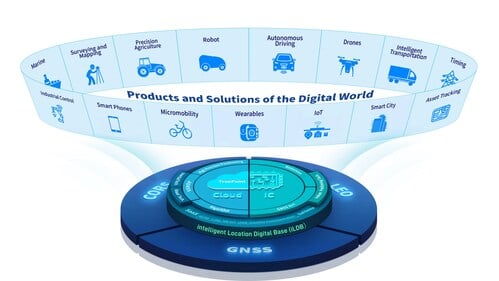
    BDStar Navigation Co. Ltd., a provider of positioning technology solutions, has announced its chip-coud integration strategy and introduced intelligent location digital base (iLDB) in Frankfurt, Germany.

    iLDB leverages a distributed chip-cloud architecture to create a unified technology and service system. Guided by the chip-cloud Integration paradigm, it combines focused R&D with cross-technology synthesis. This approach delivers robust positioning solutions and powers the integration of physical and virtual environments.

    By establishing the iLDB, BDStar has created a closed-loop ecosystem for its positioning products and services, encompassing algorithms, chips/modules, antennas and data services within a unified framework. The company’s solutions deliver on-demand positioning that is all-weather, all-scenario, secure, reliable and intelligently adaptive, serving a wide range of sectors, including intelligent driving, outdoor robotics (such as robotic lawn mowers), unmanned aerial vehicles, and smart wearables across industrial, automotive and consumer markets.

    Positioning for Europe. Aligned with the iLDB strategy, BDStar also introduced its new high-precision positioning data service for the European market. Built on network real-time kinematic (NRTK) technology, the service offers broad coverage across Europe and provides customers throughout the region with centimeter-level, real-time positioning accuracy within seconds.

    Founded in 2000, BDStar ranks among the world’s top ten suppliers of GNSS core components. In 2025, the company’s global GNSS chip/module shipments are expected to exceed 100 million units. Many leading international brands are already integrating BDStar’s GNSS chips, antennas, and data services into next-generation products designed to address changing market demands.

    David Zhou, vice president of BDStar, said the company’s chip-cloud integration strategy delivers multiple benefits through one-stop design, supply and support, enabling reduced cost, enhanced efficiency, assured security, single accountability, and rapid, effective troubleshooting.

    Ruxin Zhou, founder and chairman of BDStar, emphasized the company’s global vision. “With our chip-cloud integrated model, BDStar will strengthen worldwide partnerships and continue building a world-class, globally covered iLDB,” he said. “We are committed to creating long-term value for our customers and driving progress in the intelligent era.”

  • Orkid’s new VTOL drone integrates GNSS, lidar, photogrammetry and Starlink

    Orkid’s new VTOL drone integrates GNSS, lidar, photogrammetry and Starlink

    Drone-maker Orkid has unveiled a new variant of its Orkid 260 drone that incorporates four technologies to improve aerial data-capture technology.

    According to the company, the Orkid 260VTOL represents a leap forward in the integration of advanced sensing and communication technologies, setting a new benchmark for multi-mission drone capability across commercial and industrial applications. The company said it is the “first vertical take-off and landing (VTOL) drone to bring all four of the most advanced aerial data capture technologies together — onboard, fully integrated, and operating simultaneously.”

    The system combines lidar (YellowScan Surveyor Ultra), photogrammetry (Phase One P5 camera), GNSS/IMU (Trimble Applanix APX-RTX), and Starlink satellite communications integration in a single platform.

    Built on a 100% electric, NDAA-compliant architecture, the aircraft delivers an estimated 1.5 hours of flight endurance with a range of up to 75 miles. Designed for mapping, surveying, utilities, oil and gas, defense, and critical infrastructure inspection, the new model expands the operational scope for high-precision, long-range missions.

  • GEODNET launches survey-grade GNSS rover GEO-MEASURE

    GEODNET launches survey-grade GNSS rover GEO-MEASURE

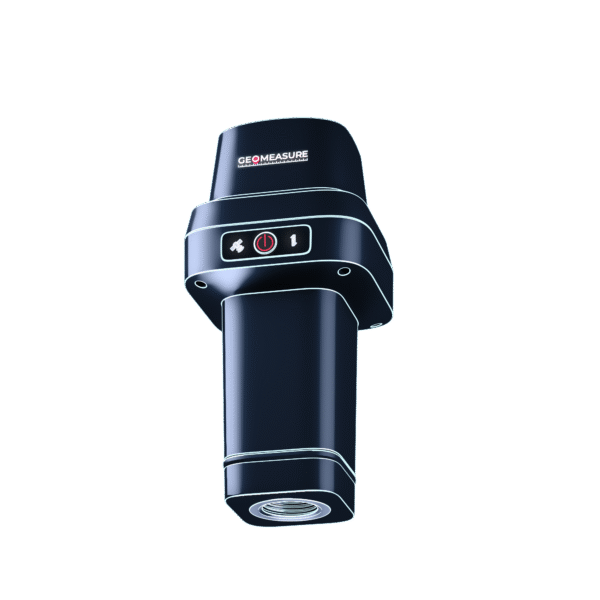
    GEODNET, provider of a decentralized real-time kinematic (RTK) network, has launched GEO-MEASURE, a survey-grade GNSS rover that delivers centimeter-level accuracy at a consumer-accessible price.

    For decades, survey-grade GNSS rovers have been essential tools for precision applications, but high costs and complex configurations have limited access to survey-grade GNSS rovers to large firms and specialized professionals. GEO-MEASURE is an affordable fully equipped RTK rover integrating robust hardware, a dedicated mobile app, and a preloaded RTK corrections service into a single turnkey package.

    GEO-MEASURE is engineered for professional reliability with quad-frequency support across GPS, GLONASS, Galileo and BeiDou, Its 1,040 tracking channels provide resilience under canopy or in urban environments. Its rugged, waterproof housing is built for daily use, while a 24-hour rechargeable battery and USB-C charging make it as convenient as a consumer device while still delivering survey-grade performance.

    Available for both iOS and Android, a free companion app simplifies setup, the company said. Once paired via Bluetooth, users can:

    • visualize survey points on maps
    • capture field notes
    • manage multiple projects
    • export data in standard formats (CSV, KML, GPX, GeoJSON) for integration with GIS platforms, CAD workflows, or drone mission software.

    By making centimeter-level accuracy affordable, accessible and scalable, GEO-MEASURE opens professional-grade GNSS workflows to new audiences in construction, GIS, drone operations, agriculture and environmental monitoring.

  • GNSS chipset shipments to hit 2.4B by 2029

    GNSS chipset shipments to hit 2.4B by 2029

    Demand for GNSS chipsets is rising globally, driven by growth in key verticals such as automotive and transportation, consumer electronics, and asset tracking applications. According to global technology intelligence firm ABI Research, global GNSS chipset shipments are projected to grow to 2.4 billion by 2029. 

    China is expected to lead this growth with the highest Compound Annual Growth Rate (CAGR) of 7.2% between 2024 and 2029, followed closely by Western Europe at 6.7% and the rest of the Asia-Pacific region at 5.6%. In contrast, the Middle East and Africa is anticipated to see slower growth, with a CAGR of 2.7%.

    “We are seeing a growing demand for consumer electronics, especially in countries like India, Indonesia, Vietnam and Thailand,” explains Rachel Kong, research analyst at ABI Research. “This is fueled by the rapidly growing middle-class populations and smartphone penetration rates, which are boosting the adoption of GNSS-enabled smartphones, wearables and tablets. In particular, the Sport & Wearables category – which includes devices such as smartwatches, smart glasses, fitness and wellness trackers, and wearable cameras – is forecast to see the highest CAGR of 13.2% between 2024 and 2029.”

    Increased E6 band support

    Another key technology experiencing rapid growth is GNSS chipsets supporting the E6 band, an emerging GNSS frequency designed for high-precision applications. These chipsets are expected to achieve a strong CAGR of 36.7% between 2024 and 2029, largely driven by high-precision applications such as autonomous driving, aerospace, critical infrastructure monitoring, land surveying, and new location-based services.

    With increasing global interoperability and integration of multiple GNSS solutions, worldwide demand for seamless, high-precision navigation continues to rise.

    “Manufacturers are more willing to adopt multi-constellation chipsets to support a broader range of applications and geographies,” said Kong.

    In addition, vendors such as Quectel, Unicore, Trimble and ComNav Technology are increasingly launching and developing products that support the E6 band. Recent updates, including Trimble’s firmware enabling Galileo High Accuracy Service (HAS) on its devices, and Unicore introducing the UM981 high-precision positioning model, demonstrate the growing traction of this frequency band. Multi-frequency bands are also gaining significance by offering enhanced positioning accuracy, improved signal reliability, and better resistance to interference.

    “These bands are already widely used in sectors such as aviation, maritime and automotive, and their adoption will continue to grow as new use applications emerge and evolve over time,” Kong said.

    These findings are from ABI Research’s Outdoor/Wide Area Location Technologies market data report, part of the company’s Space Technologies and Innovation research service, which includes research, data and ABI Insights.

  • Maritime agency warns of AIS jamming in Red Sea region, ICAO condemns Russia and North Korea

    Maritime agency warns of AIS jamming in Red Sea region, ICAO condemns Russia and North Korea

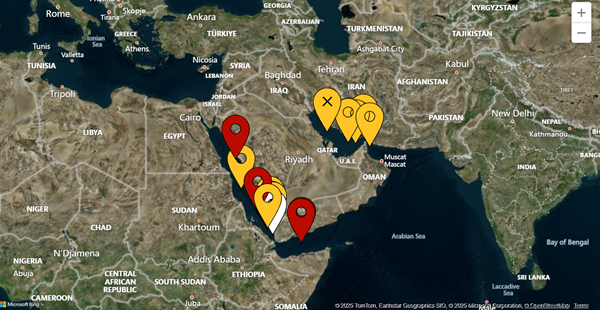
    The UK Maritime Trade Operations (UKMTO) has issued an advisory following a surge in reports of interference affecting GNSS and Automatic Identification System (AIS) displays. The disruptions, which began Oct. 3, are concentrated around Bandar-e-Pars (Iran), the Strait of Hormuz and Port Sudan.

    “UKMTO has received numerous reports of GNSS interference from vessels in the Red Sea and Persian Gulf, between October 3 and 7,” the operations centre said in the alert. “This is a significant increase of reports compared with the same period in the previous week.”

    UKMTO urged vessels to exercise heightened caution. Ships in the Gulf, Port Sudan, and Suez Canal areas are experiencing consistent AIS speed anomalies, further complicating navigation.

    Russia and North Korea named as culprits

    Also this week, the International Civil Aviation Organization (ICAO) Assembly issued two resolutions condeming Russia and North Korea for recurring incidents of GNSS interference, citing the intentional interference as infractions of the 1944 Convention on International Civil Aviation. The agency urgently called upon both countries to comply strictly with their obligations under the convention.

    The assembly also deplored the fact that incidents of GNSS interference originating from the two countries have continued despite concerns repeatedly expressed by the ICAO Council about the harmful impact of GNSS interference on the safety and security of international civil aviation. 

    Photo: ICAO
    Photo: ICAO

    The assembly reiterated the paramount importance of preserving the safety and security of international civil aviation through strict compliance with the principles enshrined in the Chicago Convention and its Annexes. It also recalled Assembly Resolution A41-8, which recognized that the spectrum used by GNSS should be free from harmful interference and urged countries to refrain from any form of jamming or spoofing affecting civil aviation.

    The resolutions were issued as the ICAO triennial assembly in Montreal concluded on Oct. 5.

  • Q-CTRL’s quantum navigation named to TIME’s best invention list

    Q-CTRL’s quantum navigation named to TIME’s best invention list

    A software-ruggedized quantum navigation system was chosen as one of The Best Inventions of 2025 by TIME magazine.

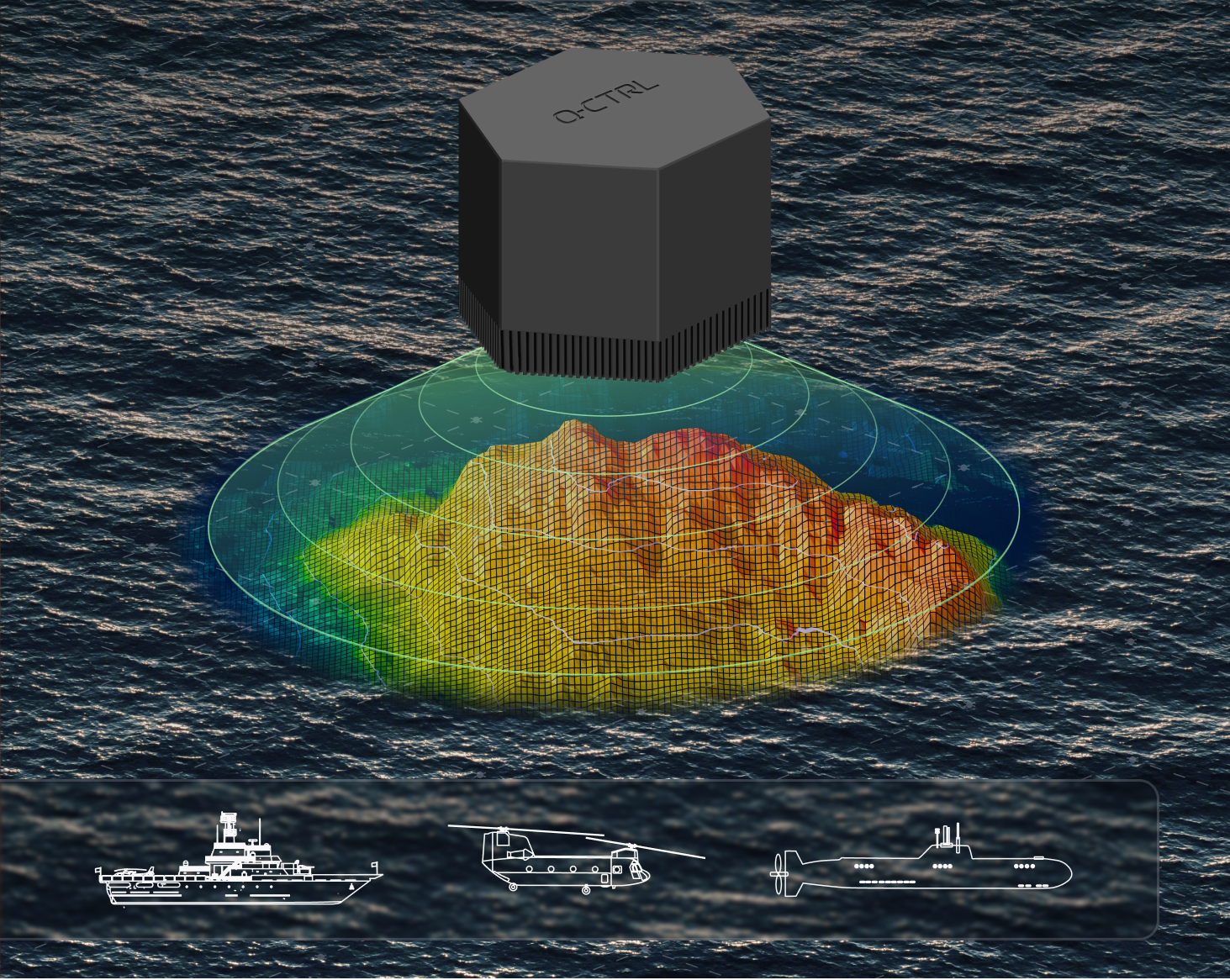
    Ironstone Opal by Q-CTRL has been field-validated in air, land and maritime trials. It provides a solution to GPS denial, which has become an increasing danger in conflict zones and recently threatened a plane carrying European Commission president Ursula von der Leyen. Q-CTRL is based in Sydney, Australia.

    Ironstone Opal leverages quantum sensors – stabilized using software – to provide navigation immune to the kinds of interference plaguing commercial aviation, shipping and defense operations.

    In airborne trials, Ironstone Opal enabled GPS-free navigation with an accuracy up to 111 times better than the best conventional GPS alternative, even under highly dynamic maneuvers. It delivered GPS-like positioning accuracy down to just 4 meters over flights up to 700 kilometers long.

    Most recently, Ironstone Opal operated continuously for more than 144 hours on an Australian Navy vessel, the MV Sycamore, trialling gravimetric navigation capabilities. 

    “In today’s sophisticated threat environment — marked by jamming, GPS denial, and spoofing — quantum sensing offers a strategic advantage delivering resilient and precise capabilities where traditional systems fall short,” said Jonathan Green, Chief Technology Officer, Northrop Grumman Mission Systems. “As a leader in quantum technology, Northrop Grumman supports innovators like Q-CTRL in advancing the quantum industry to enhance national security through cutting edge innovation.”

    Each year, TIME recognizes 300 products, software and services that are changing the world, including scientific or technological breakthroughs and innovations that make life easier and more sustainable. Ironstone Opal was identified through research from TIME’s global network of reporters and expert contributors based on key evaluation factors like originality, efficacy, ambition and impact.

    The Key to Ironstone Opal

    Ironstone Opal’s quantum sensors detect tiny, otherwise imperceptible signals from Earth’s structure that serve as gravimetric or magnetic “landmarks” for navigation, which are then compared with geophysical maps for precise positioning. Q-CTRL’s proprietary software-ruggedization hardens these quantum sensors for operation in the real world, allowing resilient performance in demanding environments.

    The system can function as a robust backup for GPS on both crewed and uncrewed defense platforms, as well as in commercial settings. More than 1,000 commercial flights per day are affected by GPS denial, and many key players in the aerospace industry, including Airbus, are looking into quantum-assured navigation technologies as a solution.

    TIME’s recognition of Ironstone Opal follows August’s news that DARPA awarded Q-CTRL two contracts totalling $24.4 million USD to develop quantum sensors for navigation on defense platforms. Also, in March, the Department of Defense’s Innovation Unit (DIU) awarded a contract to Lockheed Martin and Q-CTRL to develop a quantum-enabled inertial navigation system.

  • Quectel launches LR700A smart connected GNSS receiver

    Quectel launches LR700A smart connected GNSS receiver

    Quectel Wireless Solutions has introduced the Quectel LR700A smart connected GNSS receiver, an all-in-one high performance quad band base station solution, capable of connecting to the cloud to deliver GNSS correction data, usable either standalone or within an RTK station network.

    Available for use globally, the modular design integrates the GNSS receiver with cellular, Wi-Fi and antenna systems, while providing extension slots for Zigbee short-range communication.

    Cellular connectivity makes the system highly versatile, enabling deployment anywhere without requiring existing infrastructure, ideal for establishing RTK correction services in remote locations. The integrated short-range communication capabilities make it ideal for pairing directly with nearby rovers, creating a complete RTK solution for localized high-precision applications.

    The quad-band GNSS receiver enables simultaneous reception of signals from GPS, Galileo, BDS, GLONASS, QZSS and NavIC constellations across the L1, L2, L5 and E6 frequency bands. The Quectel LR700A supports 1040 channels, enabling flexible data transmission and remote management with cellular, ethernet and Wi-Fi networks. Easy monitoring and configuration over local networks are ensured via an intuitive web-based interface.

    “This highly versatile product enables developers to specify an all-in-one, full-constellation receiver that supports multi-frequency tracking while offering ultra-low power consumption and a robust, industrial-grade design,” said Windy Fang, director, GNSS Product Line, Quectel Wireless Solutions. “Its power efficiency and integrated, compact design make it ideal for use cases where space and energy are constrained.”

    Designed to function as a base station, the Quectel LR700A delivers precise GNSS corrections and positioning for high accuracy applications including smart agriculture and precision farming use cases, surveying and mapping, autonomous vehicles and outdoor robotics, such as lawnmowers.

    The LR700A’s ultra-low power consumption makes it ideal for power constrained use cases with typical consumption of up to approximately 2.1W with ultra-wide range voltage support from 9-36V. The LR700A weighs 2.1kg, has a diameter of 220mm and height of 149mm and operates in the -40oC to +85oC temperature range. Support for local Wi-Fi web user interfaces and remote cloud configuration ensure simplified field installation.

    Featuring an IP67 rated, industrial-grade design, the LR700A is resistant to shock, impact, drop, lightning and ultra-violet light damage, ensuring reliable operation and long-term durability in outdoor conditions. Certifications for CE, FCC, RoHS and REACH compliance are in progress.

  • Topcon and Amberg launch integrated solutions for rail and tunnel at Intergeo

    Topcon and Amberg launch integrated solutions for rail and tunnel at Intergeo

    Topcon Positioning Systems and Amberg Technologies are entering into a collaboration agreement and launching fully integrated solutions for rail and tunnel applications. The interoperability of hardware and software platforms is designed to allow professionals to seamlessly combine technologies from both companies to enhance workflow efficiency and accuracy.

    The announcement was made at Intergeo 2025, held Oct. 7-9, in Frankfurt, Germany.

    At the show, Topcon also announced an expansion of its geomatics portfolio, featuring advancements in mass data software solutions central to a connected workflow ecosystem. The producs follow
    the announcement of the dedicated business structure focused on delivering high-precision technology, software, and services for geomatics.

    The agreement with Amberg Technologies comes at a time when increased urbanization is driving demand for new underground infrastructure and placing demands on aging and existing infrastructure. Digitalization and automation can help contractors and civil engineering firms address these critical industry challenges, as well as labor shortages, tight project schedules, and increasingly complex design requirements.

    Key capabilities resulting from this collaboration include the ability to utilize Topcon’s advanced positioning technology directly with Amberg’s rail and tunnel hardware and software platforms. This integration streamlines tasks such as track alignment, tunnel profiling, and volumetric analysis. The integrations address the need for technology systems that reduce data translation gaps between different hardware and software platforms, eliminating potential errors that can occur when transferring data between systems. 

    Geomatics products and services

    Foundational tools for Topcon’s connected workflow are Collage and ClearEdge software, which allow for data, feature extraction, and the seamless delivery of results into GIS, BIM or CAD environments. Topcon Collage, available in Site, Office and Web versions, serves as a central data hub, enhancing data sharing among all project stakeholders in both the field and office. Topcon is also introducing the Collage Cloud Connector for improved connectivity with Autodesk platforms and ClearEdge solutions such as EdgeWise or Verity.

    Featured hardware and software include:

    • CR-H1 handheld scanner: The CR-H1 handheld mapping solution utilizes iPhone Pro devices with integrated LiDAR that collects georeferenced images and employs photogrammetry to create detailed, full-color 3D point clouds. The iPhone connects to the Topcon HiPer CR receiver, enabling centimeter accuracy with RTK corrections from the Topnet Live GNSS corrections service. The receiver and iPhone are both mounted on a specialized handle, so users can easily capture point clouds while walking throughout the job site. The devices needed can quite simply be held in one hand for maximum mobility in the field.
    • CR-M1 scanner and new Onami software: The CR-M1 is an indoor/outdoor mapping system that can be utilized on a backpack or on a survey pole. The CR-M1 is ideal for urban and construction mapping, multi-floor buildings, real estate, underground mapping, mines and tunnels, stockpiles, and forestry environments. Publishing and sharing the CR-M1 data with Collage Web allows the user fast, web‑based visualization and manipulation of their 3D point clouds and meshes.
    • CR-P1 multi-functional 3D terrestrial laser scanner: The CR-P1 provides real-time, georeferenced point cloud generation on-site, equipping the user with actionable data that can be used for various applications. Enhancements to the Topcon Collage Site software solution provide new mass data workflow capabilities designed to allow for the real-time acquisition and processing of data more accurately, efficiently, and quickly to provide the user with greater productivity.
    • CR-S2 handheld scanner with Magnet Flow and Bridge software: The CR-S2 is a handheld scanning system that uses multiple localization fusion-SLAM to perform mapping projects in challenging environments. It is designed to work in construction and infrastructure applications as well as open, featureless environments such as beaches, coastlines, farmland, and airports. In open environments, the RTK connection to the Topnet Live network ensures position quality. Publishing and sharing the CR-S2 data into Collage Web allows the user fast, web-based 3D point cloud and mesh visualization with easy-to-use measurement and annotation tools.
    • LN-1000i Layout Navigator withTopcon Digital Layout software: The LN-1000i is an addition to the Layout Navigator series that includes new features, including reflectorless measurement capabilities, green laser beam pointer and an integrated camera for live view, camera control and enhanced prism lock. When combined with the new Topcon Digital Layout 2.0 software, this instrument is designed to set new standards in building construction.
    • Expanded Hybrid Positioning capabilities with Topcon software updates for Field – Office – Tools – Enterprise: Allows for better cooperation switching between GT robotic total stations and the HiPer XR GNSS receiver as an optical and GNSS hybrid solution. The new version 10 Topcon Field software enables the user to use the tilt of the IMU when measuring to the prism in Hybrid Positioning mode.
    • Collage Cloud Connector: New Windows app designed to simplify and automate the process of downloading and synchronizing project data from Collage Web to a local machine for use with Autodesk, ClearEdge3D software, or Collage Office.
  • Septentrio demos tracking of Xona’s first LEO PNT satellite

    Septentrio demos tracking of Xona’s first LEO PNT satellite

    Septentrio and xonaspace.com have signed a Memorandum of Understanding (MOU) to deepen their collaboration on next-generation positioning and timing solutions.

    The agreement builds on Xona’s recent successful launch of Pulsar-0, its first production class LEO PNT satellite. Within days of launch, Septentrio began tracking and analyzing Pulsar signals, an early milestone toward unlocking the service’s full potential.

    Together, the companies will continue joint testing and validation to prove Pulsar’s full capabilities, including:
    •    native centimeter-level accuracy
    •    100x stronger signal strength that reaches indoors and under dense foliage
    •    robust protection against jamming and spoofing.

    Through this partnership, Septentrio and Xona will advance receiver development, evaluate real-world performance, and explore commercial opportunities across diverse set of industrial and defense applications. Potential use cases span drones and autonomous vehicles, precision agriculture, construction and mining, robotics, timing and critical infrastructure.

    This collaboration marks a significant step toward addressing the growing demand for robust, high-precision navigation in challenging environments. The MOU underscores a shared vision of both companies to advance satellite-based navigation technology and unlock the potential of hybrid GNSS-LEO solutions.