Category: Applications

  • Tackling NavWar and PNT Threats

    Tackling NavWar and PNT Threats

    With Safran Federal Systems

    GNSS simulation has evolved well beyond accuracy testing. It now covers full-spectrum NavWar and PNT validation. Today’s simulators are expected to generate real-time GNSS, LEO signals, inertial measurement units (IMU), alternative navigation sources, jamming and spoofing — all from a single system.

    “The number of signals continues to grow with the rise of multi-PNT sources and advanced threat capabilities,” said Jaemin Powell, senior product manager, NavWar & Simulation at Safran Federal Systems. “Our customers are preparing for GPS-denied operations, validating NavWar responses and ensuring resiliency in contested domains.”

    Powell noted that Safran Federal developed BroadSim Genesis to enable simultaneous streaming of L1, L2, L5 and L6 GNSS and LEO signals with integrated jamming and spoofing — all within a compact 4U platform.

    The company’s strategy is built on a software-defined architecture, allowing for rapid adoption to evolving threats and mission requirements, Powell said. Safran Federal collaborates closely with government stakeholders and defense primes to stay up-to-date with new requirements and incorporate real-world threat vectors, such as spoofing and jamming. The BroadSim platform supports software upgrades for every feature, from adding constellations and LEO signals to enabling hardware-in-the-loop (HIL) support or integrating additional PNT resources.

    While defense and aerospace continue to serve as core markets, rising demand also is coming from space companies, LEO-PNT developers, and advanced electronic warfare laboratories now relying on Safran simulators.

    “These users value the scalability, fidelity and flexibility of our simulation solutions, especially in environments with high dynamics,” Powell said. “They are looking beyond traditional GNSS, and we address that need with a simplified, all-in-one platform.

    Large-Scale Simulation 

    “Large-scale simulation is technically demanding,” Powell added. “Generating thousands of signals across multiple bands with ultra-low latency and 1000 Hz update rates pushes both hardware and software boundaries.”

    Maintaining the intuitive Skydel interface while adapting to evolving NavWar requirements remains a top priority for the company. For example, Safran Federal introduced real-time automated calibration for BroadSim Wavefront, which executes before every scenario. This allows users to power up and immediately begin testing, eliminating recalibration and setup delays.

    “Simulation is more than just signal generation. It is about enabling operational confidence,” Powell said. 

    “Our platform gives users the ability to stress test systems, visualize behavior in real time and adapt quickly without relying on range time or live sky testing…We are enabling teams to meet their toughest NavWar and PNT challenges with confidence and flexibility. If you have demanding requirements, we are ready to deliver a solution that is intuitive, capable and built for the future.” 
  • Spain’s defence minister’s aircraft latest to report GPS interference

    Spain’s defence minister’s aircraft latest to report GPS interference

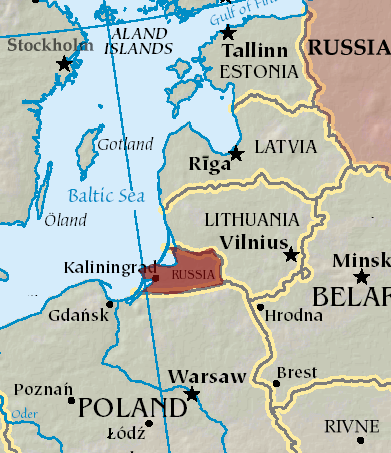
    An A330 airplane carrying Spanish Defence Minister Margarita Robles experienced GPS interference while flying over Kalingrad, Russia, reports EU Today. The news outlet cites Spanish newspaper El Mundo as its source.

    Robles was flying to in an aircraft belonging to the Spanish Air and Space Force. It was is “subjected to an attempt to throw it off course using GPS” over Kaliningrad as Robles was travelling to the Šiauliai air base in Lithuania on Sept. 24.

    The pilot said incidents attempting to disorient pilots have been common for both commercial and military flights over Kaliningrad. Becausee this was a military craft, the plane was receiving instructions from a military satellite and the attempt failed.

    Reports of GNSS interference have increased across the Baltic and adjacent regions since 2022, the beginning of Russia’s war with Ukraine. 

  • Taoglas expands comet antenna series with models engineered for metal enclosures

    Taoglas expands comet antenna series with models engineered for metal enclosures

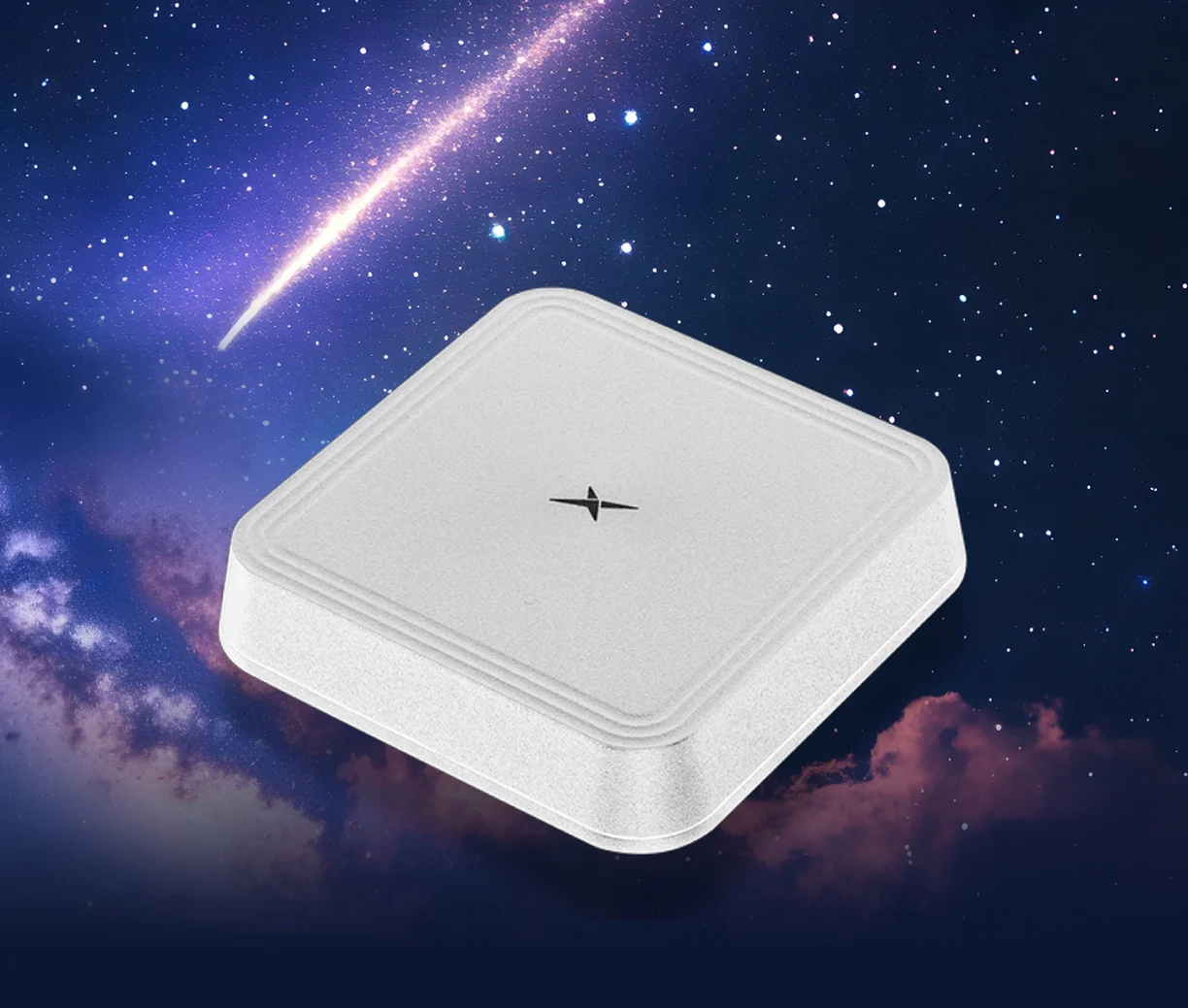
    Taoglas has expanded of its Comet Series with the MA58x family of compact, discrete, screw- or through-hole mount puck antennas.

    Metal structures or flat surfaces, such as cabinets, can affect antenna performance and change the electrical groundplane. The Comet MA58x series is specifically engineered to maintain stable, high-efficiency operation in these challenging conditions.

    Conventional LTE antennas rely on their RF cable to achieve low-band efficiency, particularly when the cable itself is routed inside a metal enclosure, turning it into an unintended radiator. The MA58x design removes this dependency, enabling efficient radiation and delivering at least 20% better performance than comparable alternatives.

    With a footprint of 101 x 101 mm and low profile of 20 mm, the antennas deliver reliable multi-antenna connectivity across GNSS constellations including GPS, GLONASS, Galileo, and BeiDou, as well as 5G/4G MIMO and Wi-Fi 6/7. Advanced RF design enables consistent gain and efficiency across global cellular frequencies from 600 MHz to 6 GHz and Wi-Fi bands up to 7.125 GHz, while also supporting legacy 2.4/5.8 GHz Wi-Fi and Bluetooth for maximum compatibility. These levels of performance are rarely achieved in antennas of this size, and even more so when installed on metallic structures.

    The rugged, weather-resistant housing is molded in Acrylonitrile Styrene Acrylate (ASA) for long-term outdoor durability, and the IP67-rated enclosure with a screw/stud mount provides a permanent installation option that ensures secure, reliable operation in vibration-prone and harsh conditions such as fleet vehicles, heavy equipment, and industrial automation.

    The new antennas are available in multiple configurations and in either black or white enclosures. Custom cable lengths and connector options are also offered, making integration more flexible for OEMs and system designers. The MA58x series is suited to gateways and routers, public safety systems, point-of-sale terminals, digital signage, smart home automation, robotics and industrial automation. The Comet Series also offers a magnetic mount MA32x variant to address different deployment needs.

    Further details on the design principles that deliver these performance gains are available in a Taoglas white paper.

  • GPS Innovation Alliance urges Trump administration to address GPS interference

    GPS Innovation Alliance urges Trump administration to address GPS interference

    A coalition of 14 major industry associations has called on the departments of Defense and Transportation to address increasing threats from GPS signal jamming and spoofing that are affecting civilian operations beyond traditional conflict zones.

    The letter, signed by organizations including the GPS Innovation Alliance (GPSIA), Aircraft Electronics Association, Airlines for America and the U.S. Chamber of Commerce, was sent to Defense Secretary Pete Hegseth and Transportation Secretary Sean Duffy, outlining concerns about GPS signal interference. The letter warns that such interference is expanding beyond military conflict zones to affect civilian transportation and commerce operations in international airspace and waters.

    The coalition represents industries that collectively contribute significant portions to the U.S. economy. The aviation system accounted for 5% of U.S. GDP in 2024, totaling $1.45 trillion, while ports and maritime operations contributed $2.9 trillion, nearly 10% of GDP. GPS technology has generated more than $1.4 trillion for the U.S. economy since its introduction, with more than 6 billion GPS-enabled devices in use worldwide.

    The organizations are seeking coordinated action from the Trump administration to modernize GPS infrastructure and enhance its resilience against interference. The coalition has indicated its willingness to work with federal agencies on addressing what it describes as challenges to national security, public safety and economic prosperity.

    System Vulnerabilities

    Despite GPS maintaining a 99.99% availability rate with no recorded outages since 1993, the system faces several challenges. On-orbit satellites operate years beyond their intended design life, ground system upgrades have been delayed, and the system lacks counter-spoofing capabilities.

    The coalition emphasizes that GPS serves as a foundation for modern defense, aviation, maritime operations and commercial activities. Transportation industry officials note their sector’s role as a key partner in U.S. military logistics operations.

    “GPS is one of the most important innovations of the modern era, underpinning national security, critical infrastructure such as transportation, and commerce,” said Lisa Dyer, Executive Director of the GPS Innovation Alliance. “The Trump administration’s approach to “getting stuff done” is what this nation needs to finally achieve a modern GPS that is resilient to jamming and spoofing. The President’s leadership can also deter further harmful interference – actions that will benefit most critical industries that are delivering goods and services around the world and transporting passengers safely to their destinations.”

    The GPSIA recommendations call for executive branch agencies to:

    • Accelerate the procurement and launch of modern GPS satellites and include anti-jamming and anti-spoofing technology upgrades in GPS ground systems.  Prepare a program plan that ensures GPS is technologically more advanced than China’s BeiDou and Europe’s Galileo GPS-like systems.
    • Strengthen enforcement and coordination across the U.S. government to rapidly identify and respond to interference events and crack down on illegal sales and use of jamming devices.
    • Streamline regulatory and certification processes to accelerate adoption of advanced technologies such as jam- and spoof-resistant antennas, modern GPS signals, and anti-spoofing signal authentication in airframes, receivers and devices.
    • Deter interference through public statements and diplomatic engagement, making clear the United States will not tolerate harmful jamming and spoofing outside conflict zones that risks public safety and impedes commerce.

    Read morof GPSIA’s reccomendations here.

    “These are concrete, achievable actions that, if pursued, will ensure the integrity, continuity, availability, and resiliency of GPS. This approach also offers the commercial position, navigation, and timing industry time to mature and deploy their technologies so that they can meet the high regulatory bar that is appropriately set for public safety applications,” Dyer said.

  • Ukraine shows off Toloka underwater drone

    Ukraine shows off Toloka underwater drone

    Ukraine unveiled its TLK-1000 underwater drone — capable of striking targets as distant as 2,000 km  (1,240 miles) away — at the Defense Tech Valley 2025 exhibition in Lviv on Sept. 19.

    While the torpedo drone itself moves underwater, it has surface elements including antennas for receiving GPS signals, video and thermal imaging cameras, and communication equipment, reported Militaryn in February, when Ukraine President Volodymyr Zelensky first introduced the Toloka drone at the Support Ukraine summit. Designed for stealth operations just below the surface, it uses electric propulsion to evade detection and penetrate Russian defenses.  

    Kyiv has repeatedly used maritime drones to inflict heavy losses on Russian assets in the Black Sea, according to Defense Express. The TLK-1000 could threaten the Crimean Bridge, a supply and transport route for Russian forces to occupied territories, as well as Russian submarines.

    There are three models of Toloka. The largest, TLK-1000, is 12 meters long with a warhead payload of up to 5,000 kg and a range up to 2,000 km (1,240 miles). It is built for long-distance missions and heavy loads. It navigates with GNSS supplemented by AI-INS with a Doppler Velocity Log (DVL).

    The TLK 400 also navigates with AI-INS with DVL and GNSS. It is 4 to 6 meters long, its payload can be up to 500 kg, and its range can be up to 1,200 kilometers. The TLK-400 features a hybrid propulsion system and is intended for reconnaissance, mining, signal relay and strike operations.

    The TLK 200 navigates with GNSS + AI-INS. It is 2.5 meters, its range 100 km, and its payload 20 to 50 kg of explosives. Typical tasks include reconnaissance, mining, short-range strike missions and radio-relay support.

  • Safran unveils upgraded VersaSync GNSS master clock

    Safran unveils upgraded VersaSync GNSS master clock

    Safran Electronics & Defense has released an enhanced version of VersaSync, its ruggedized GNSS master clock and network time server designed for defense applications.

    The updated VersaSync platform includes several technical improvements over previous versions. The system now offers improved frequency stability in harsh environmental conditions, including extreme temperatures, shock and vibration. Engineers have enhanced holdover performance for GNSS-denied missions and increased resistance to power supply transients to maintain timing continuity during platform power disruptions.

    The new version maintains form-fit-function compatibility with earlier VersaSync models, allowing for straightforward upgrades without major redesigns.

    The system has been deployed in more than 16,000 operational cases across various platforms, including high-altitude intelligence, surveillance and reconnaissance aircraft, armored vehicles, naval combat systems and offshore platforms. VersaSync incorporates anti-jamming and anti-spoofing algorithms and features a conduction-cooled design for size, weight and power (SWAP)-constrained environments.

    The device provides secure Network Time Protocol and Precision Time Protocol synchronization over Ethernet and offers configurable input/output options. Applications include mobile command, control, communications and intelligence platforms, airborne ISR, Satellite On The Move systems and naval communications.

    Safran Electronics & Defense will display the enhanced VersaSync at DSEI 2025.

  • PlanetiQ wins largest-ever NOAA contract to provide GNSS-RO weather data

    PlanetiQ wins largest-ever NOAA contract to provide GNSS-RO weather data

    PlanetiQ, a provider of commercial weather and space weather data, has been awarded a $24.3 million contract from NOAA’s National Environmental Satellite, Data, and Information Service (NESDIS). The award, issued under the Commercial Data Program’s Radio Occultation Data Buy 2 (RODB-2), is NOAA’s single largest commercial satellite weather data purchase.

    Under the agreement, PlanetiQ will deliver 7,000 GNSS-RO profiles per day, including 500 enhanced high-signal-to-noise ratio (SNR) profiles as well as 2,500 low-latency Total Electron Content (TEC) tracks daily. Data deliveries began Sept. 18.

    “I founded PlanetiQ because radio occultation is one of the few technologies I’ve worked with that tangibly improves the human condition. It’s gratifying to see this capability recognized and scaled.”

    GNSS-RO data from PlanetiQ provides precise vertical profiles of the atmosphere across the globe, over land and sea, and in cloudy and clear conditions. It is recognized as the most impactful satellite data input for weather forecast models. GNSS-RO has become critical to space-based climate monitoring, improving and stabilizing weather prediction and atmospheric research over the past several decades.

    The 500 enhanced high-SNR profiles per day are especially valuable in the lower troposphere, where measurement and forecast accuracy are often most challenging, further enabling actionable decisions and operations planning with reduced risk.

    TEC data additionally strengthens NOAA’s space weather monitoring and forecasting capabilities.

    “This award demonstrates NOAA’s confidence in our ability to deliver both the quantity and quality of data needed to advance weather and space weather forecasting,” said Ira Scharf, chief executive officer of PlanetiQ. “We are proud to expand our support for NOAA and its mission to protect life and property.”

    The new contract represents a threefold increase in PlanetiQ’s data deliveries compared to its most recent NOAA award, which provided 2,200 profiles per day, and is adding the enhanced SNR and TEC tracks as new products. PlanetiQ collects thousands of profiles daily across the planet and plans to expand its constellation of satellites in the future.

    PlanetiQ is excited that organizations running numerical weather prediction, and especially AI forecast models, are recognizing the value in high-quality GNSS-RO data. “Our ability to provide enhanced high-SNR profiles, at seven times the SNR of any other commercial company, sets us apart,” said Chris McCormick, president and chairman of PlanetiQ. “I founded PlanetiQ because radio occultation is one of the few technologies I’ve worked with that tangibly improves the human condition. It’s gratifying to see this capability recognized and scaled.”

    While NOAA is the procuring agency of the GNSS-RO data, it will also be used by NASA, the U.S. Air Force, the U.S. Navy, and international government weather agencies for operational and research purposes.

    This award underscores the critical role of public-private partnerships to bring new capabilities online faster and at a lower cost to strengthen national forecasting and research. PlanetiQ also partners with leading commercial technology companies and data providers.

  • Safran, QinetiQ to deliver advanced anti-jamming PNT capabilities for UK armed forces

    Safran, QinetiQ to deliver advanced anti-jamming PNT capabilities for UK armed forces

    Safran Electronics & Defense and QinetiQ have entered a strategic partnership to deliver sovereign and resilient positioning, navigation and timing (PNT) solutions for the United Kingdom Ministry of Defence. The collaboration addresses today’s urgent need for trusted PNT capabilities in increasingly challenging and GNSS-denied operational environments.

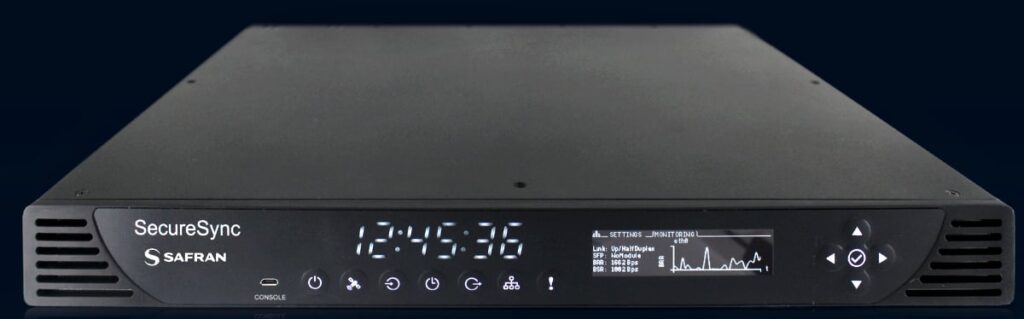
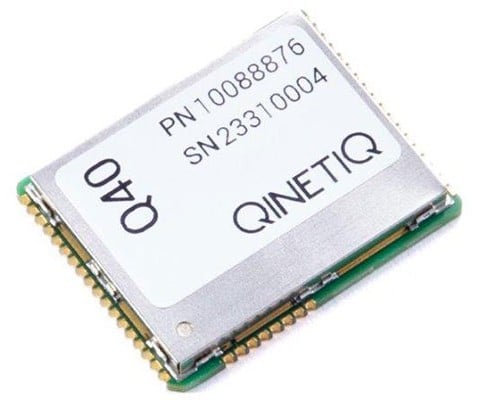
    By integrating QinetiQ’s Q40 GNSS receiver with Safran’s SecureSync time server, the partnership offers advanced protection against jamming, spoofing and other adversarial electronic warfare threats. The joint solution supports multi-signal reception and delivers reliable, coherent synchronization for mission-critical military operations — from strategic headquarters to frontline forces.

    Photo:
    The SecureSync time server. (Photo: Safran)

    This next-generation, sovereign capability strengthens the UK’s operational advantage, ensuring continuous access to secure timing and navigation, even under electronic attack. The solution is designed to adapt and expand, accommodating future threats and supporting the full spectrum of defence operations.

    “The Q40 provides navigational assurance in environments where jamming, spoofing and electronic attacks are ever-present,” said James Willis, chief executive UK Intelligence, QinetiQ. “By pairing it with Safran’s SecureSync, we are giving UK forces a trusted, sovereign solution that ensures precise timing and navigation data remains available when it matters most.”

    The Q40 GNSS receiver. (Photo: Qinetiq)
    The Q40 GNSS receiver. (Photo: Qinetiq)

    “In the current context of evolving threats and contested environments, guaranteeing sovereignty in navigation and timing is more critical than ever for national defence,” added Maxime Gorlier, director of PNT Business Unit for Safran Electronics & Defense. “This partnership enables UK armed forces to maintain full independence and sovereignty, even when facing sophisticated electronic warfare tactics. Together, we are committed to providing future-proof PNT solutions that strengthen the UK’s resilience and strategic autonomy.”

    The partnership leverages both companies’ sustained investment in customer-focused research, development and innovation, and demonstrates their shared commitment to providing robust, secure and resilient PNT solutions.

  • Spain’s PLD Space to develop GNSS-IMU for reusable space vehicles

    Spain’s PLD Space to develop GNSS-IMU for reusable space vehicles

    PLD Space, based in Elche, Spain, has been selected by the European Space Research and Technology Centre (ESTEC) for its first Guidance, Navigation and Control (GNC) contract. Under this contract, the company will develop HALCON (Hybridization Algorithms and Low-cost Components for Optimized Navigation), a new hybrid navigation software for reusable launch vehicles. 

    ESTEC is part of the European Space Agency (ESA). The project has been approved under NAVISP Element 2, a key ESA initiative to enhance European competitiveness in positioning, navigation and Timing (PNT) technologies.

    The contract, with a total budget of €995,705, will be co-funded equally by ESA and PLD Space, which will retain ownership of the final development. 

    GNSS-IMU System for Reusability

    The HALCON project aims to develop advanced software that combines inertial measurement unit (IMU) data with GNSS signals to achieve precise navigation during rocket launch and landing, a critical capability for reusable launchers such as MIURA 5 and MIURA Next. 

    Traditionally, IMU-only systems have been costly, less accessible, and less accurate over long operational periods. By integrating GNSS signals (such as Galileo or GPS), PLD Space will develop its own, more affordable and more precise navigation system, optimized for controlled landings — an essential step towards advancing the reusability of space vehicles. 

    Image: PLD Space
    Image: PLD Space

    “This project represents a strategic step forward in the development of our own navigation capabilities,” said Raúl Verdú, co-founder and chief business development officer of PLD Space. “With ESA’s support, we will enhance landing maneuver precision, gain vertical integration, and move towards the future integration of autonomous flight termination technologies in Europe.”

    The proposal was selected under ESA’s NAVISP Spanish Call, launched in November 2024, arranged both by the Spanish Space Agency (AEE) and ESA. The call invited Spanish industry to propose innovative projects in the PNT field. PLD Space’s contract follows a rigorous technical and commercial assessment and has been favorably evaluated for its alignment with market demand, the competitiveness of the solution, and the strength of its commercialization strategy. 

    Technology for Europe’s Future in Space 

    The HALCON system will deliver centimeter-level positioning accuracy, enhancing both safety and operational efficiency. It is based on commercial off-the-shelf (COTS) components, significantly reducing development costs compared to traditional high-end solutions. 

    This technology will not only improve the reliability and sustainability of space transportation but will also pave the way for future capabilities such as a European Autonomous Flight Termination System (AFTS), which is not yet authorized on the continent. This capability is critical for increasing flight autonomy and mission safety in complex scenarios, while positioning Spain as a leader in next-generation launchers. 

    The development will be carried out entirely in-house by PLD Space’s engineering team, with ESA’s technical support, and will be integrated into the company’s technology roadmap, aligned with its reusability and operational autonomy plans through 2030. 

  • New Telit Cinterion GNSS module delivers location with untethered dead reckoning  

    New Telit Cinterion GNSS module delivers location with untethered dead reckoning  

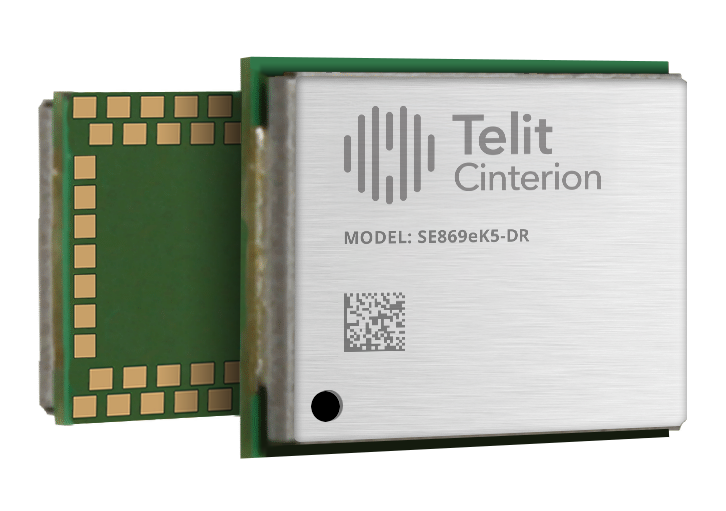
    Telit Cinterion, an end-to-end IoT solutions enabler based in Irvine, California, has launched the SE869eK5-DR, a dual-band, multi-constellation positioning receiver with untethered dead reckoning (UDR) built on the Airoha AG3335 chipset family.

    The UDR ensures reliable, continuous positioning even when satellite signals are lost due to jamming, interference or physical obstructions, delivering continuous and reliable location data for mission-critical applications without depending on a car connection.

    With its power-efficient design, the module is ideal for mission-critical applications in business and government that demand ultra-reliable location information, and long battery life. Applications include fleet management, automotive telematics systems, and high-value asset tracking, where uninterrupted and precise location data is critical for operational efficiency.

    Building on the successful Telit Cinterion SL869 series, the SE869eK5-DR adds an integrated six-axis sensor for UDR. This allows the module to maintain a position fix even when signals are blocked or jammed, able to track high-value assets deep inside buildings or in underground parking garages.

    The SE869eK5-DR also supports L1 and L5 bands, which maximizes resiliency through frequency redundancy. If one band’s signals are degraded by physical obstructions, the other band provides an alternative set of signals. The module also supports differential GNSS (DGNSS) positioning for applications that require sub-meter-level accuracy. 

    The SE869eK5-DR includes features that streamline product development. Its UDR technology is simple to integrate because it doesn’t require any external application information, which shortens the design phase. It also automatically identifies the direction of movement (forward or reverse), eliminating the need for a separate heading pin. While the SE869eK5-DR introduces an additional 34 pins for future use, it remains backward compatible with previous 24-pin generations, allowing device OEMs to upgrade existing designs.

    SE869eK5-DR engineering validation testing (EVT) samples are available now, with design validation testing (DVT) samples scheduled for November.

    Visit the Telit Cinterion booth (E314) at SIDO Sept. 17-18, 2025 in Lyon, France, to learn more. 

  • Construction company Render Networks integrates Trimble GNSS for real-time location data

    Construction company Render Networks integrates Trimble GNSS for real-time location data

    Render Networks, a specialist in digital network construction management, is integrating with Trimble Mobile Manager, bringing Trimble’s high-precision GNSS capabilities to broadband and utility network deployments.

    The integration enables centimeter-level accuracy at the point of construction, minimizing delays and ensuring that as-built records are complete and verifiable from day one.

    The integration enables Render users to consume high-precision positions from Trimble receivers, including the Trimble DA2 with Trimble Catalyst and the Trimble R2, directly within Render Networks’ mobile app. This means Render Networks’ customers can deliver fast, accurate and verifiable as-builts as part of their normal workflows, eliminating the need for site revisits, reducing rework, and streamlining project acceptance.

    “Our customers are building critical infrastructure at massive scale, and high-accuracy data is non-negotiable,” said Rob Laudati, chief product and partner officer, at Render Networks. “With this new integration, we’re giving crews the ability to capture as-builts with location accuracy in real time, accelerating closeout and ensuring data quality that supports compliance, operations, and asset management for decades to come.”

    Render Networks will showcase the new Trimble integration at the SCTE TechExpo, Booth #882, Sept. 29 – Oct. 1 in Washington, D.C.

  • Leankon launches multi-band GNSS antenna

    Leankon launches multi-band GNSS antenna

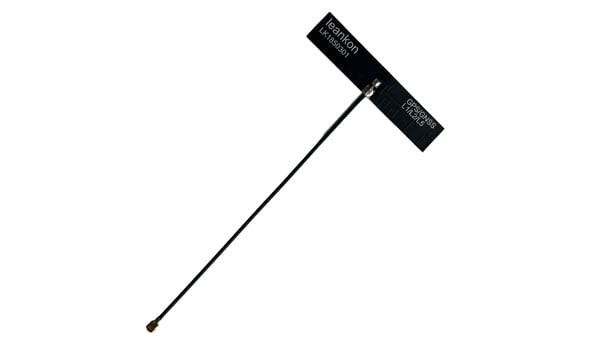
    Leankon, a global leader in innovative IoT antenna solutions, has introduced the LK1850301 Dipole FPC (Flexible PCB) GNSS antenna, engineered for seamless integration and high-performance positioning across various applications.

    Leveraging innovative technology, the LK1850301 achieves an ultra-compact size of just 49 × 10 × 0.1 mm while supporting global multi-band GNSS. It is fit for GNSS modules and offers flexible cable length configurations to meet diverse design requirements.

    Key Features and Benefits

    • Balanced dipole design: Optimized for superior return loss and stable radiation patterns, the antenna delivers consistent performance while minimizing interference from cable length or connector variations.
    • Multi-band GNSS support: Supporting GPS L1/L2/L5, Galileo E1/E5, GLONASS L1/L5, and BeiDou B1/B2, this compact antenna is ideal for precision applications such as smart agriculture, industrial tracking, navigation, and asset monitoring.
    • Customizable integration: Leankon offers multiple cable lengths and connector options, with custom configurations available for seamless system integration and optimized performance.
    • Designed for compatibility across a wide range of devices, the antenna includes a peel-and-stick adhesive backing for quick, hassle-free assembly.

    As industries increasingly adopt global multi-band GNSS navigation, the need for reliable, adaptable antenna solutions is greater than ever. The LK1850301 empowers engineers and product designers with high-performance satellite signal reception in a compact, integration-friendly form factor.

    To accelerate project development, Leankon provides free samples of the LK1850301 for early-stage testing and performance validation.