Category: Applications

  • Security, Spectrum in the Connected Vehicle

    Bethany Chambers
    Bethany Chambers

    With fall tradeshow season fast approaching and 2015 vehicles hitting the road, Scott McCormick, President of the Connected Vehicle Trade Association (CVTA), took the time to answer some questions for GPS World about one key conference, CTIA’s Super Mobility Week, and what to expect in the connected vehicle market for the second half of 2014. The CVTA is a nonprofit industry group dedicated to accelerating technologies in the consumer and commercial auto market. CVTA will be well represented at Super Mobility Week, with about a third of its membership comprised of companies involved in the wireless industry. However, McCormick won’t be in attendance in Las Vegas; that’s because he’s a member of the organizing committee and will be moderating sessions at ITS World Congress, being held that same week in Detroit.

    Do you think that ITS World Congress will end up cannibalizing the connected vehicle crowd from Super Mobility Week?

    Yes, I think it will a lot. Most of the connected vehicle companies don’t work solely in DSRC, they work in cellular and WiFi, too, so it really depends on where their business needs are. The company with the large multinational presence will certainly be at World Congress because that’s where the networking capability is, while CTIA will be most of the cellular providers. It’s about connecting with your channel partners, your supply base and your potential customers. It’s not really about seeing new technologies, but about engaging new customers.

    Will CVTA make any announcements at the shows?

    On September 11, we have our summit [The 5th Summit on the Future of the Connected Vehicle] and we do have a major announcement about a new service that we are going to be providing.

    Can you tell us more?

    What we are announcing is about doing something that will help benefit collaborative industries. We have our core industries, but there are now insurers, data mining companies, security companies, all these other companies that are not in the automotive space that are doing things related to it. A few years ago we had people in Silicon Valley begin working in the automotive space but they didn’t understand the user interface in the car, where you need to have control and return your attention to driving as quickly as possible. All the devices they knew were designed to focus your attention. It’s the same thing today: The insurers don’t know how to work with the automakers. Neither did the telecoms. They’re completely different business models, but they’re channel partners. This is not just about a company to hire, but where can we gain utility and expertise.

    So your announcement will be about reaching into a second tier of companies that just a few years ago were not involved in the connected vehicle space?

    That’s a perfect way to characterize these companies; they all have to deal with interoperability issues.

    What will be the hottest topics at Super Mobility Week? 

    There will be three: privacy, data ownership, and security. Security is the only one that’s important, and it’s for simple reasons. The United States has no personal privacy data law and it never will. The issue is one that we’re not going to solve. Everybody wants to talk but nothing ever comes of it. 

    The same question with data ownership. Why would my privacy or data ownership be device-specific? It should be device-agnostic. Anytime you transfer data, there are two levels of ownership. Of the data in the connected vehicle, an infinitesimally small amount is related to location or driving behavior. Although we talk about privacy and data ownership, nobody’s going to define data ownership. 

    Security, however, is a huge issue, because once you clear a gateway into the system, it can be breached. I’m not concerned about terrorists, it’s more just teens with nothing to do who want to rock the system. I’m most concerned about the insufficiency of the code. There’s an average of 43 networks in a car, and while they’re not likely going to affect braking, that doesn’t mean if you tinker with things long enough you couldn’t figure it out and remotely control functions. That’s really sophisticated and of very low value to do it to one vehicle. 

    It’s more important to ask if the overall infrastructure is protected. Systems have to be designed to be secure, detectable, and reparable. It’s incumbent upon cellular companies to take that responsibility.

    Will they accept that responsibility?

    If they don’t, people won’t use it. Now we understand that when a car is purchased it’s based largely on the perception of quality of service, not just on the quality of the engine or the comfort of the ride … it’s about how long until my connection breaks off and why didn’t I know about that traffic jam or that this road was icy if another guy did in a different make and model car.

    How do you think this year’s show will be different from last year’s show?

    Last year a lot of industries were still coming off the recession and going back to core competencies. This year I expect to see a lot of innovative companies coming out with much more focused sort of innovation where in the past it was about trying to be everything to everybody. In particular, the connected life stuff is going to be interesting because those are the people that when you look at it you’ll say, this is something I haven’t seen before or wasn’t aware of and it’s new and consequential.

    The automakers will be a part of a lot of those discussions. Do you think we’ll hear anything new?

    There will be some talk about the aftermarket. The average person keeps cars for 11 years. Now if I just bought a new car and next year someone has something really cool, I can’t just go buy a new car. But if I could add it … now there’s another revenue stream for the OEMs.

    What are some innovations you think we’ll see hitting the market in the next year?

    The machine-to-machine market is going to have a lot. Also, I just read a report that a lab figured out how to do 1000-times the data transmission speed of the fastest fiber-optic system by running it across copper. We have certain sized pipelines today and a certain time to get data from here to there, and we’re exploring how we can best do that with what we have.

    By all estimates the global connected car service market is expected to top $130 billion by 2019. What will fuel that growth the most? Safety and security? Infotainment? And is that growth sustainable?

    By 2020 we’re looking at a $200 billion market … and that’s going to be because of security. The problem with the automotive industry is that they have a very difficult time communicating the value proposition, because they’re used to selling business-to-business. But in the cellular industry you don’t question paying several hundred dollars a month for your phone, because they communicate that well to consumers. So the question is really one of both developing the product and service and understanding the consumer.

    CTIA has talked a lot about safe driving policy and distracted driving legislation. Where do you see this policy going in the next year? 

    I see the federal government moving at a glacial pace. They were 2 months late on the vehicle-to-vehicle report, they were supposed to work on the interstate commercial vehicle rule, and they’re struggling with a transportation authorization bill that’s not anywhere near where it should be. There are things that the federal government needs to be involved in and things they have no business being involved in, like setting standards. The automakers will do what the consumers want.  Look what happened with backup cameras. Even before there was legislation requiring backup cameras because of kids being hit, the automakers decided to put it on certain models because the consumers wanted it.

    What policies will come into play in the next year? 

    One is very critical. The American Jobs Act is pushing to allow unlicensed devices to use the 5.9 (GHz) spectrum (currently allocated to licensed Intelligent Transportation Systems), and we have conveyed what a bad idea that is. The FCC has tested it in lab conditions, not with hundreds of cars at an actual intersection. This is not like connecting a toaster and refrigerator, this is hundreds of people in the backseats of cars attempting to connect and disconnect (to WiFi). That’s the equivalent of a denial-of-service attack. Unless we deal with this soon, it’s going to be a real safety risk. The problem is once the spectrum gets reallocated, it’s going to be really hard to take it away.


  • Never Out of Reach

    Never Out of Reach

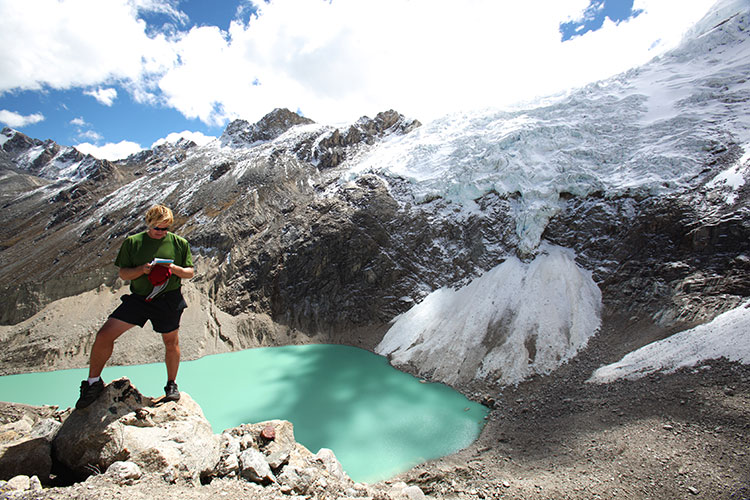
    John All takes an ice sample from a glacier in the Ishinca Valley, Peru.
    John All takes an ice sample from a glacier in the Ishinca Valley, Peru.

    A climate scientist relies on a GPS satellite communicator to get him out of tight spots.

    By Tracy Cozzens
    Photos by Clinton Lewis, Western Kentucky University


    Please call Global Rescue.  

    John broken arm, ribs, internal bleeding.

    Fell 70 ft crevasse.

    Climbed out.

    Himlung camp 2.

    Please hurry.

    That simple text message, sent May 19 via the DeLorme inReach communicator, alerted search-and-rescue monitors that the leader of a Himalayan research team was in dire straits.

    Dr. John All, director of the American Climber Science Program (ACSP), was leading a team collecting snow samples in the highest mountain range in the world to study the impacts of climate change when he tumbled into a crevasse. “After crawling back for hours to my tent, I sent texts via my sat messenger for help,” All told the local Kathmandu newspaper.

    Friends and family of the expedition followed the rescue efforts every step of the way as text messages were sent via the InReach to the ACSP’s Facebook page.

    The climate scientist was rescued via a helicopter and admitted to Norvic International Hospital in Kathmandu with five broken ribs, a dislocated shoulder, and internal bleeding. After a day in the ICU, he was discharged for a week of rest before returning for further care in the United States.

    
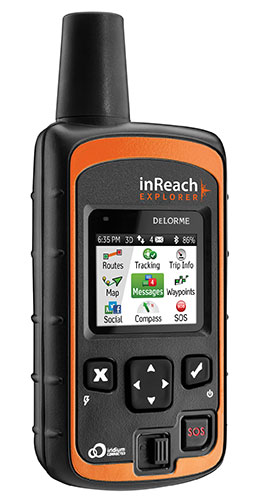
The DeLorme inReach Explorer.
    The DeLorme inReach Explorer.

    In an emergency such as All experienced, the interactive SOS capability of the inReach automatically triggers remote tracking and allows users to communicate via text with responders at GEOS, DeLorme’s partner for international 24/7 search-and-rescue monitoring.

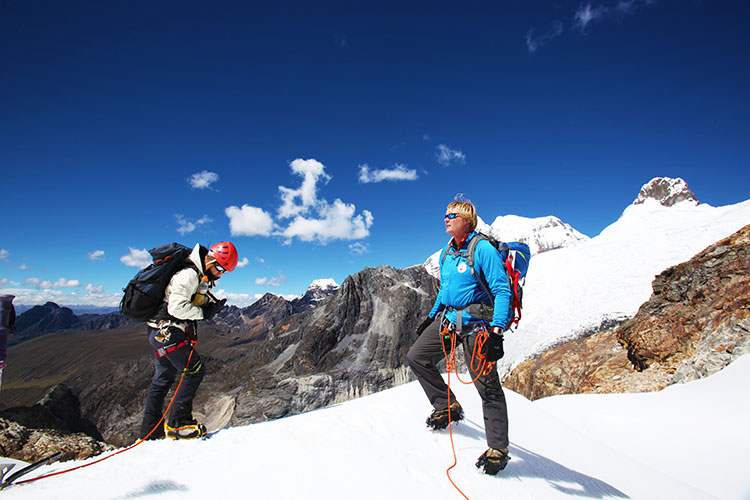
    Going Out Again. All and his ACSP team departed for Huascaran National Park in Peru on June 23, just a month after his harrowing rescue in the Himalayas, for a two-month research expedition. All and several of his team members will be carrying the inReach devices.

    Just like in the Himalayas, the inReach will give the team the ability to send and receive 160-character text messages from the remotest locations, provide location updates with GPS tracking, and keep them within reach of rescue with its SOS capabilities.

    Besides providing peace of mind, the latest version of the inReach — the Explorer — allows the team to plan a route, mark waypoints, and create detailed track logs of their expedition.

    “Knowing we would consistently be out of cell-phone range, we researched all satellite communication options to keep us connected,” All said. “A satellite phone was more than we really needed, and as a volunteer-driven non-profit program, it wasn’t very cost effective. We needed to be able to communicate back and forth in the event of an emergency, but we also wanted to keep everyone updated on the day-to-day status of the mission.”

    Checking on the team’s status is as easy as visiting their Facebook page. Team members regularly post messages from anywhere in the world they might travel.

    s&r_opener

    In Peru, the team of 20 students and scientists will examine changing climate conditions and the impact of human land use in the mountainous Cordillera Blanca region of the Andes, where Huascaran National Park is located. The park, a magnet for American climbers, has more than 33 peaks higher than 6,000 meters and hundreds of 5,000+ meter peaks. ACSP has been sampling snow in the region for the past three years in an effort to quantify the glacial contamination levels.

    “Our work in Peru will be much more comprehensive than our high-elevation work in the Himalayas and will cover whole gamut of environmental parameters, from vegetation to water quality. The region is very remote and we will be collecting some samples from the walls of a crevasse to assess the seasonality of pollutants and their impact over time, so having an inReach with us is critical — both to communicate with each other and our team back home,” All said. Plus, he added, the students on his team will be able to communicate with their parents, providing their parents with peace of mind as their children travel to remote regions.

    “Now that we’ve seen how well inReach works, we are looking forward to having more of them on this next trip — especially the newest Explorer model, which will allow us to mark waypoints during data collection,” All said.

    In addition to the messaging, tracking and SOS capabilities, users of the company’s latest product inReach Explorer can view, create or navigate routes and waypoints. A map view displays routes, waypoints, tracks, and messages geo-located onscreen for backtracking or self-rescue. The built-in digital compass, barometric altimeter, and accelerometer sensors ensure accuracy and provide heading and bearing information, elevation readings, speed, and other useful trip statistics.

    inReach communicates over the Iridium satellite network, providing global two-way satellite connections, high network reliability and low-latency data links (less than 60-second delivery of messages end-to-end) anywhere on Earth, with no gaps, fringe or weak signal areas. inReach has the ability to maintain a satellite signal lock even in difficult GPS environments, such as in a steep canyon or under a heavy forest canopy, DeLorme said.

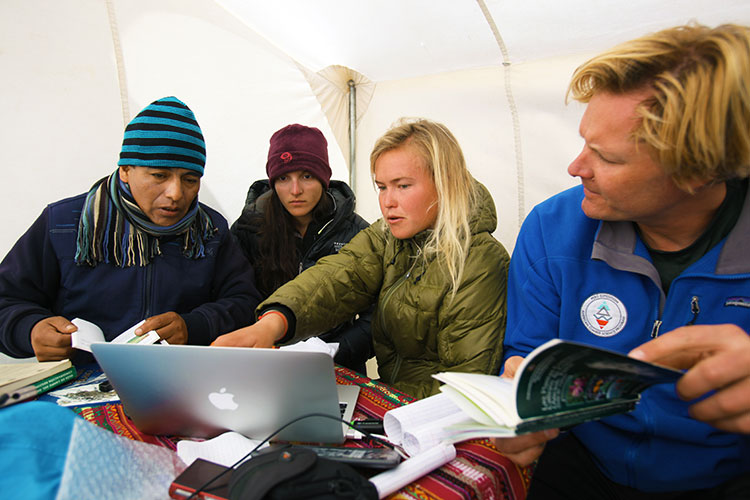
    The ACSP has visited Peru for climate research for three years, including in 2013 the Quillcayhuanca Valley (left) and the Ishinca Valley, places so remote that staying in touch can be a challenge. (Photos: Clinton Lewis/WKU)
    The ACSP has visited Peru for climate research for three years, including in 2013 the Quillcayhuanca Valley (left) and the Ishinca Valley, places so remote that staying in touch can be a challenge. (Photos: Clinton Lewis/WKU)

    PERU-Quillcayhuanca-Valley-5

    PERU-Quillcayhuanca-Valley-1

    PERU-Quillcayhuanca-Valley-3

    PERU-Quillcayhuanca-Valley-4

  • Trimble Announces Land-Based 3D Piling Application for Mixed Fleets

    Trimble Announces Land-Based 3D Piling Application for Mixed Fleets

    DPS900_Trimble
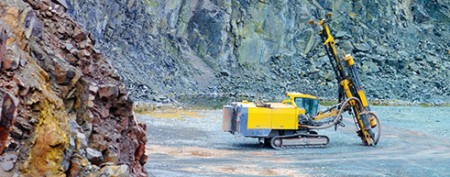
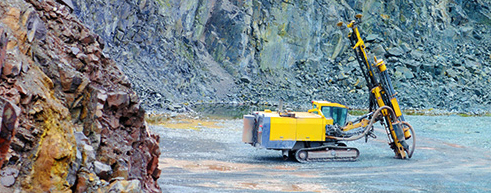
    The DPS900 Piling System

    Trimble has introduced the DPS900 Piling System, a dedicated land-based 3D machine control system for a variety of piling machine makes and models. The accuracy of the system allows piling contractors to increase operational efficiency and reduce costs for building structural foundations, retaining walls, coffer dams, and solar or wind farm installations.

    “The DPS900 Piling System can transform the way piling contractors work,” said Alan Sharp, business area director for Trimble Heavy Civil Construction. “Without DPS900, the process is manual and often error prone. With the DPS900 system, contractors can take advantage of accurate positioning and automated reporting to ensure machines are being utilized efficiently.”

    The DPS900 Piling System reduces surveying costs associated with staking and as-built checks. In addition, the system can increase on-site safety by reducing the number of people around machines, pilings and foundations. Accurate positioning in DPS900 can ensure navigation time between piles is reduced, resulting in increased piling time to maximize production and revenue per day.

    Built-in, automated quality assurance and quality control reporting includes capture of start and end positions, time and elevation, as well as actual embedment depth, blow count reporting, and inclination and orientation control. In addition, unique system logins allow managers to filter reports by operator for better accountability, production optimization and forecasting.

    Business Center–HCE office software by Trimble is used to create pile plans in the office, and allows for integration with data prep, estimating and reporting functions. Piling machines can be connected to the office using Trimble Connected Site solutions for wireless data transfer and GNSS corrections. In addition, machines can be tracked and monitored using VisionLink for location, hours and utilization information.

    The new Trimble DPS900 Piling System is available now in Australia, Europe, North America, Chile and South Africa through Trimble’s SITECH Technology Dealer Channel.

  • Mobile Location Data Accuracy Group to Develop Guidelines

    The Mobile Marketing Association (MMA), a global trade association for the mobile marketing industry, is forming a Mobile Location Data Accuracy Group. The focus of the group will be to eliminate any confusion around mobile location data and to improve the trust and confidence brand marketers and agencies have in mobile location advertising and the data that drives it.

    Simultaneously, the MMA is forming a Location Leadership Council that will be an industry “think tank” comprised of a merging together of thought leaders from the MMA’s Location and Privacy committees and experts in the various areas of location — marketing, technology, data and policy. Stemming from the council will be a number of working groups, the first of which is the Mobile Location Data Accuracy Group.

    The working group will expand on the previously launched Location Terminology Guide, in which the MMA Location Committee identified eight types of location data and signals, and ranked each according to the reach and accuracy of the data. The data and signals to be examined by the working group include (from most accurate to least):

    • Indoor positioning system
    • Bluetooth
    • GPS
    • Wi-Fi hotspots
    • Wi-Fi triangulation
    • Cell tower triangulation
    • IP address
    • User reported location

    Specifically the Mobile Location Data Accuracy Group will:

    1. Dig deeper into each of these data types and elaborate further on their appropriate uses and limitations.
    2. Develop and issue an RFI (Request for Information) to all location data vendors and validators that will establish criteria with which vendors can be aligned with the data types they use.
    3. Establish strict, standardized definitions with the MRC that vendors will be held accountable to and audited against.

    According to an April 2014 BIA/Kelsey study on local media spending, location targeted mobile advertising accounted for 40% of the $7.22 billion mobile ad spend in 2013, and is expected to grow to 52% of the $30.3 billion forecasted for 2018.

    “In order to scale mobile marketing specifically driven by location data, it is critical for the industry to come together to develop a common set of definitions of the types of location data available and how they are best used,” said Greg Stuart, CEO, MMA. “By agreeing to and abiding by a common set of best practices and guidelines, MMA members will be instrumental in driving the growth in the industry while assuring brand marketers of the measurable value derived from their mobile efforts.”

    With tighter definitions of location data, and the viable uses of such data, measuring results will be more consistent and reliable, the MMA said. These benchmarks will allow buyers to have a much clearer understanding of the data being used, and how it will impact their location-driven mobile advertising campaigns.

    Initial members of the group will include:

    • xAd – Monica Ho, SVP Marketing (co-chair)
    • Joule – Michael Lieberman, CEO (co-chair)
    • Factual – Vikas Gupta, Director of Marketing
    • ThinkNear – Brett Kohn, Director of Marketing
    • Mobiquity – James Meckley, CMO
    • Nielsen – Tom Eaton, VP, Client Services
    • MEC – Bav Panchal, Mobile
    • OpenX – Rob Kramer, GM, Mobile
    • Ubimo – Ran Ben-Yair, CEO
    • Verve – James Smith, CRO

    “Having this type of transparency into location data is a huge step forward that will allow us, as buyers, to invest in mobile with increased confidence,” said Michael Lieberman, CEO, Joule North America. “This program will, in large part, allow mobile marketing to truly scale and deliver measurable results for our clients around the world.”

    “We are committed to improving clarity and defining auditable standards for location data and ultimately all of location-based services. This will remove the barriers for brands and agencies to leverage the power of this unique mobile value proposition and improve their confidence in how and what to use,” said Monica Ho, SVP Marketing, xAd. “We are excited to work with the MMA and the industry in achieving standards that we believe will be critical for scaling the mobile marketing industry.”

    The Mobile Location Data Accuracy Group will be gathering the industry leaders to share initial definitions and use cases at the Location Data Accuracy Panel Session August 26 at the Crowne Plaza Times Square, New York, 6:30-9 p.m. The session will provide an opportunity for brands, agencies and key partners in the location advertising arena to meet and discuss opportunities ahead.


  • TeleCommunication Systems Adds 10 U.S. Patents Advancing LBS, Wireless

    The U.S. Patent and Trademark Office has issued 10 U.S. patents to TeleCommunication Systems, Inc. during the second quarter of 2014. TCS also received two foreign patents during the quarter.

    The 10 U.S. patents describe innovations in messaging, location-based services, GIS/mapping and wireless. They include the following three:

    • TCS reported in the first quarter that it was issued a Prepaid Short Messaging Services patent. In the second quarter, TCS received notice that another prepaid patent was issued to the company that will serve as one of the cornerstone patents in a monetization program that TCS is planning to launch later this year. The prepaid market has grown into a multibillion-dollar per year industry, with 86 million prepaid users comprising 27 percent of all U.S. wireless users, according to a J.P. Morgan 2013 market report. The recently issued Prepaid Short Messaging patent (U.S. 8,738,496) is a continuation of earlier TCS prepaid patents, bringing TCS’ prepaid messaging portfolio to eight, with one additional pending. Most prepaid phone systems allow users a prescribed amount of prepaid messaging and wireless call time. The ‘496 patent describes techniques for determining if a recipient’s account is sufficiently funded to receive a message. If it is not, the system prevents the delivery of messages until the recipient’s account is sufficiently funded, when follow-on messages will be delivered.
    • A geofence defines a virtual spatial boundary for creating triggers when a mobile device either enters or exits that boundary. Geofences are commonly used in child location services to alert parents when a child’s mobile device leaves the boundary of a school or park, or by enterprises to track the location of a mobile workforce or equipment. Establishing a geofence can be complicated, requiring that the user manually draw the boundary on an electronic map. The recently issued TCS patent covering a Method and System for Identifying and Defining Geofences (U.S. 8,731,813) describes techniques to simply and easily create geofences based on real-world objects or places. Using the map/navigation application on a mobile device, the user simply selects the desired location, using its pre-defined boundary to create the geofence.
    • Thousands of portable computing platforms have emerged that have the capability of directly connecting to the Internet either through a wireless wide area network (such as cellular network or campus Wi-Fi network) via a front-end built into the device (smartphone, etc.), or, via Bluetooth or other short-range wireless communication, to a wireless proxy device such as a modem or a smartphone. With various low-cost, short-range wireless devices installed in vehicles for navigation or entertainment purposes, it has become increasingly important to provide an easy and efficient method for a motor vehicle manufacturer, parent or other authority to monitor and control access to certain sites when those devices are connected to the Internet. The recently issued Remotely Provisioned Wireless Proxy patent (U.S. 8,712,408) describes techniques to create white lists (allowed URLs) and black lists (disallowed URLs) within a wireless/mobile device acting as a proxy so that access to certain sites can be controlled effectively.

    The remaining seven U.S. patents issued in the period are: Integrated, Detachable Ear Bud Device for a Wireless Phone (U.S. 8,688,174); N-Dimensional Affinity Confluencer (U.S. 8,688,087); Login Security with Short Message (U.S. 8,712,453); Intelligent Reverse Geocoding (U.S. 8,731,585); Secure Location Session Manager (U.S. 8,687,511); System and Method for Location Assurance of a Mobile Device (U.S. 8,718,673); and Wireless Network Tour Guide (U.S. 8,744,491).

  • TeleCommunication Systems Adds 10 U.S. Patents Advancing LBS, Wireless, GIS/Mapping

    The U.S. Patent and Trademark Office has issued 10 U.S. patents to TeleCommunication Systems, Inc. during the second quarter of 2014. TCS also received two foreign patents during the quarter.

    The 10 U.S. patents describe innovations in messaging, location-based services, GIS/mapping and wireless. They include the following three:

    • TCS reported in the first quarter that it was issued a Prepaid Short Messaging Services patent. In the second quarter, TCS received notice that another prepaid patent was issued to the company that will serve as one of the cornerstone patents in a monetization program that TCS is planning to launch later this year. The prepaid market has grown into a multibillion-dollar per year industry, with 86 million prepaid users comprising 27 percent of all U.S. wireless users, according to a J.P. Morgan 2013 market report. The recently issued Prepaid Short Messaging patent (U.S. 8,738,496) is a continuation of earlier TCS prepaid patents, bringing TCS’ prepaid messaging portfolio to eight, with one additional pending. Most prepaid phone systems allow users a prescribed amount of prepaid messaging and wireless call time. The ‘496 patent describes techniques for determining if a recipient’s account is sufficiently funded to receive a message. If it is not, the system prevents the delivery of messages until the recipient’s account is sufficiently funded, when follow-on messages will be delivered.
    • A geofence defines a virtual spatial boundary for creating triggers when a mobile device either enters or exits that boundary. Geofences are commonly used in child location services to alert parents when a child’s mobile device leaves the boundary of a school or park, or by enterprises to track the location of a mobile workforce or equipment. Establishing a geofence can be complicated, requiring that the user manually draw the boundary on an electronic map. The recently issued TCS patent covering a Method and System for Identifying and Defining Geofences (U.S. 8,731,813) describes techniques to simply and easily create geofences based on real-world objects or places. Using the map/navigation application on a mobile device, the user simply selects the desired location, using its pre-defined boundary to create the geofence.
    • Thousands of portable computing platforms have emerged that have the capability of directly connecting to the Internet either through a wireless wide area network (such as cellular network or campus Wi-Fi network) via a front-end built into the device (smartphone, etc.), or, via Bluetooth or other short-range wireless communication, to a wireless proxy device such as a modem or a smartphone. With various low-cost, short-range wireless devices installed in vehicles for navigation or entertainment purposes, it has become increasingly important to provide an easy and efficient method for a motor vehicle manufacturer, parent or other authority to monitor and control access to certain sites when those devices are connected to the Internet. The recently issued Remotely Provisioned Wireless Proxy patent (U.S. 8,712,408) describes techniques to create white lists (allowed URLs) and black lists (disallowed URLs) within a wireless/mobile device acting as a proxy so that access to certain sites can be controlled effectively.

    The remaining seven U.S. patents issued in the period are: Integrated, Detachable Ear Bud Device for a Wireless Phone (U.S. 8,688,174); N-Dimensional Affinity Confluencer (U.S. 8,688,087); Login Security with Short Message (U.S. 8,712,453); Intelligent Reverse Geocoding (U.S. 8,731,585); Secure Location Session Manager (U.S. 8,687,511); System and Method for Location Assurance of a Mobile Device (U.S. 8,718,673); and Wireless Network Tour Guide (U.S. 8,744,491).

  • TeleCommunication Systems Adds 10 U.S. Patents Advancing LBS, Wireless, GIS/Mapping

    The U.S. Patent and Trademark Office has issued 10 U.S. patents to TeleCommunication Systems, Inc. during the second quarter of 2014. TCS also received two foreign patents during the quarter.

    The 10 U.S. patents describe innovations in messaging, location-based services, GIS/mapping and wireless. They include the following three:

    • TCS reported in the first quarter that it was issued a Prepaid Short Messaging Services patent. In the second quarter, TCS received notice that another prepaid patent was issued to the company that will serve as one of the cornerstone patents in a monetization program that TCS is planning to launch later this year. The prepaid market has grown into a multibillion-dollar per year industry, with 86 million prepaid users comprising 27 percent of all U.S. wireless users, according to a J.P. Morgan 2013 market report. The recently issued Prepaid Short Messaging patent (U.S. 8,738,496) is a continuation of earlier TCS prepaid patents, bringing TCS’ prepaid messaging portfolio to eight, with one additional pending. Most prepaid phone systems allow users a prescribed amount of prepaid messaging and wireless call time. The ‘496 patent describes techniques for determining if a recipient’s account is sufficiently funded to receive a message. If it is not, the system prevents the delivery of messages until the recipient’s account is sufficiently funded, when follow-on messages will be delivered.
    • A geofence defines a virtual spatial boundary for creating triggers when a mobile device either enters or exits that boundary. Geofences are commonly used in child location services to alert parents when a child’s mobile device leaves the boundary of a school or park, or by enterprises to track the location of a mobile workforce or equipment. Establishing a geofence can be complicated, requiring that the user manually draw the boundary on an electronic map. The recently issued TCS patent covering a Method and System for Identifying and Defining Geofences (U.S. 8,731,813) describes techniques to simply and easily create geofences based on real-world objects or places. Using the map/navigation application on a mobile device, the user simply selects the desired location, using its pre-defined boundary to create the geofence.
    • Thousands of portable computing platforms have emerged that have the capability of directly connecting to the Internet either through a wireless wide area network (such as cellular network or campus Wi-Fi network) via a front-end built into the device (smartphone, etc.), or, via Bluetooth or other short-range wireless communication, to a wireless proxy device such as a modem or a smartphone. With various low-cost, short-range wireless devices installed in vehicles for navigation or entertainment purposes, it has become increasingly important to provide an easy and efficient method for a motor vehicle manufacturer, parent or other authority to monitor and control access to certain sites when those devices are connected to the Internet. The recently issued Remotely Provisioned Wireless Proxy patent (U.S. 8,712,408) describes techniques to create white lists (allowed URLs) and black lists (disallowed URLs) within a wireless/mobile device acting as a proxy so that access to certain sites can be controlled effectively.

    The remaining seven U.S. patents issued in the period are: Integrated, Detachable Ear Bud Device for a Wireless Phone (U.S. 8,688,174); N-Dimensional Affinity Confluencer (U.S. 8,688,087); Login Security with Short Message (U.S. 8,712,453); Intelligent Reverse Geocoding (U.S. 8,731,585); Secure Location Session Manager (U.S. 8,687,511); System and Method for Location Assurance of a Mobile Device (U.S. 8,718,673); and Wireless Network Tour Guide (U.S. 8,744,491).

  • Spatial Wave Software Now Compatible with ArcGIS 10.2.1

    Spatial Wave, Inc., has announced that its latest releases, Mapplet, Field Mapplet, and MapLibrary are now compatible with Esri’s latest version of ArcGIS 10.2. New customers and existing customers on maintenance will receive the new release.

    Mapplet is an advanced GIS viewer for viewing utility operational data that has unique capabilities to link to external data sources. Mapplet uses the latest ArcGIS technology for setup and configuration purposes and takes advantage of Arcgis.com base maps to enrich the experience of the users that are using map services from ArcGIS.com platform.

    Field Mapplet is an advanced mapping and GIS-enabled framework designed to optimize utility workflows with an easy-to-use and implement solution. Field Mapplet takes advantage of ArcGIS Version 10.2 and includes a map-centric user interface. These new enhancements help bring together field and office workers, which in turn streamlines the daily workflow processes between crews, supervisors, and management.

    MapLibrary is being further enhanced with support for displaying map services from ArcGIS Server 10.2 or ArcGIS.com platform depending on the choice of users.

    Through the use of many powerful components, Mapplet, Field Mapplet and MapLibrary are designed for both utilities and local government agencies interested in developing GIS portals and maintaining geographic assets without additional programming.

  • U.S. Corps of Engineers GIS Cadre Maps Hurricane Season

    The Army Corps' GIS Cadre working at the Corps' Recovery Field Office in Joplin, Missouri after a multiple-vortex tornado struck Joplin on May 22, 2011. (Credit: U.S. Army Corps of Engineers)
    The Army Corps’ GIS Cadre working at the Corps’ Recovery Field Office in Joplin, Missouri, after a multiple-vortex tornado struck Joplin on May 22, 2011. (Credit: U.S. Army Corps of Engineers)

    When rescue and recovery crews make their way through communities devastated by hurricanes, tornados and wildfires, they need maps to help them to get around safely. One of the most relied on sources of these maps has been the U.S. Army Corps of Engineers, Geographic Information System (GIS) Cadre.

    The cadre has successfully created maps to assist many federally declared disasters since 2002, including Hurricane Katrina and most recently Super Storm Sandy.

    The Corps already had Planning Response Teams for disaster rescue and recovery, including teams to perform temporary housing, power, water and ice missions, and decided a GIS cadre would also be useful. The GIS cadre is made up of Corps employees from throughout the nation who are GIS subject-matter experts.

    Wildfire Damage Maps. (Credit: U.S. Army Corps of Engineers)
    Wildfire Damage Maps. (Credit: U.S. Army Corps of Engineers)

    When a federally declared disaster occurs, the team gets ready to deploy and can be on the ground in just hours, setting up their own equipment even before other agencies are on the scene. At the disaster location, they provide their GIS expertise in support for USACE Emergency Support Teams and for the Federal Emergency Management Agency (FEMA) and other state, federal and volunteer agencies.

    Stephen McDevitt was one of the national action officers responsible for deploying and managing GIS teams during nationally declared disasters. “The GIS takes data from various sources, including aerial photographs and electronic data, and combines these layers of information in various ways to create maps. These maps can be used to perform many different missions and solve complex problems.”

    “FEMA has called us for every major disaster since the team started in 2002,” McDevitt said. These missions have included ice storms, hurricanes, typhoons, tornados, floods, wild fire disasters and could also include manmade terrorist events if needed.

    For these missions, a wide variety of maps have been created to help agencies to make important decisions to support relief and recovery efforts after a disaster strikes. Following are a few of these maps:

    Rescue & Recovery: The cadre creates maps using geospatial information on where hurricane victims are located so that search and rescue workers can locate and recover stranded individuals.

    Building Temporary Homes & Critical Facilities: Temporary housing and critical public facilities can’t be constructed on flood-prone land. The cadre creates maps that show agencies where there are flood zones. In addition, they create maps that show where there is safe land to place housing and facilities away from the devastation and near water, sewer and electric lines and services, such as schools and hospitals.

    Debris Removal: The cadre creates maps that show field workers the location of debris, as well as clear land to use as staging areas for debris removal equipment. Maps can also show field workers the optimal routes for removing and transporting debris. This is needed when street signs have been blown away and many structures destroyed.

    Pumping Water: The cadre creates maps that show agencies how long it will take for flood waters to subside, using different rates of pumping. The cadre can also take data on the locations and functionality of pump stations to create maps that help agencies figure out how long it will take to pump water out of a region.

    Identifying Impacted Communities: The cadre can create maps that show the locations of damaged homes and businesses. These maps show agencies like FEMA where displaced citizens requiring assistance may be located and where recovery centers should be stationed. The cadre can also create demographic maps so that agencies know where economically challenged individuals may live who do not have transportation to reach the nearest recovery center. In these cases, a mobile center can be sent to these areas.

    Preventing Future Safety & Environmental Problems: The cadre creates maps that can help communities prevent future dangers. For example, in the aftermath of the Southern California wildfires in 2008, the cadre created soil burn severity maps. These maps show where the fires burned the valley the most and where there is soil erosion. These large pieces of hardened soil can cause mud slides during the rainy season, creating dangerous landslides. These maps also show agencies where people should be evacuated.

    Stephen McDevitt, former action officer for the U.S. Army Corps of Engineers GIS Cadre and former coordinator for the Enterprise GIS for the Army Corps' New York District. (Credit: Dan Desmet, Public Affairs, USACE, New York District)
    Stephen McDevitt, former action officer for the U.S. Army Corps of Engineers GIS Cadre and former coordinator for the Enterprise GIS for the Army Corps’ New York District. (Credit: Dan Desmet, Public Affairs, USACE, New York District)

    The Army Corps’ GIS Cadre is unique from other national GIS teams because these individuals are not only GIS specialists, but are also from other disciplines with the Army Corps. These professions include geographers, cartographers, physical scientists, civil engineers, park rangers, environmental scientists and others.

    “Because of this, they bring a lot to the table,” McDevitt said. “We have engineers and hydrologists who use GIS to support district projects. These additional skills are very valuable when it comes to disaster situations. For example, if flood zones need to be identified before temporary housing can be set up; those with both GIS and water resources skills are especially useful for working with this data.”

    He added, “If there wasn’t a GIS Cadre, FEMA would be constantly contacting the Army Corps for information needed during a disaster, pulling Army Corps personnel away from other important projects. By having this specialized GIS team, the team can focus their time and energy to the mission on hand. This is more efficient and makes better use of taxpayer money.”

    McDevitt, a former action officer for the cadre and former coordinator for the Enterprise GIS for the Corps’ New York District, has been active with the cadre since it was created 11 years ago. Now as he nears his retirement he says he hopes the cadre, that is unique from other GIS teams, will continue well into the future. “I am proud to have had the opportunity to serve with the GIS Cadre since its creation. After 30 years of service with the federal government, I can honestly say it has been one of the most rewarding experiences,” said McDevitt.

    McDevitt said that the cadre’s future is bright and he hopes it will continue strong for another decade or more. He says what will contribute to its success are team members who have GIS skills. These skills can come from having experience working with remote sensing, computer-aided design (CAD) and other geospatial data and systems technology.

    There is also an increased need for individuals with advanced computer skills  because many of the new mapping applications are web-based. This includes knowledge of HTML 5, Java and Silver Light as well as good database skills, such as working with Oracle, because the team works with large data sets.

    “The Army Corps’ GIS Cadre stands ready to serve the nation, whenever and wherever there is a need for dedicated GIS subject-matter experts,” McDevitt said.

    McDevitt (Far right) when he was an action officer with members of his GIS Cadre team. (Credit:  U.S. Army Corps of Engineers)
    McDevitt (Far right) when he was an action officer with members of his GIS Cadre team. (Credit: U.S. Army Corps of Engineers)
  • Getmapping Aerial Photography Company Posts Strong Financials

    Getmapping has posted strong growth for the 2013 financial year. The recently released financial results showed Getmapping post record turnover and profits on the back of strong growth in both the United Kingdom and African markets.

    Getmapping is a public limited company, and terms itself the UK’s leading supplier of aerial photography, mapping products and data hosting solutions.

    Group turnover was up 34% overall from £3.5m in 2012 to £4.7m in 2013, with the contribution from African operations up 86% on the previous year. Getmapping’s strong performance has also been reflected in its share price which has tripled in the last three years as interest in the company from investors grows, the company said.

    Getmapping has been working hard to extend both the range of products and services that it can offer as well as its global reach. In 2013, for example, Getmapping established a new LiDAR division in Centurion, South Africa, which has enabled it to extend its range of services and provide them across a wider geographical area.

    While the UK remains a challenging market, Getmapping continues to work hard to retain its strong position. As an example, Getmapping, together with Bluesky, was recently awarded a multi-million pound contract for the supply of geographic data to Central Government organizations. The contract, awarded by the Department for Environment, Food and Rural Affairs (DEFRA), covers high resolution aerial photography, detailed 3D height models and colour infrared imagery for the whole of England, Wales and Scotland. Under the new Aerial Photography for Great Britain (APGB) contract, Getmapping and Bluesky can also provide training, consultancy and workshops to contract members.

    “Getmapping delivered strong growth in 2013 across all of our core business streams. The company has invested heavily in new sensor and processing technology and the investment is already delivering strong results which we expect to carry through 2014 and beyond,” said Dave Horner, managing director of Getmapping. “The recent DEFRA contract and winning the aerial photography contract for the Scottish government in 2013 has reinforced our position as the leading supplier of aerial photography services in the UK. The financial results are an endorsement of our strategy, but we won’t be resting on our laurels and aim to continue to improve our performance in 2014 and beyond.”

  • New York Giants Equip Players with GPS

    Tom Coughlin, head coach of the New York Giant football team, has outfitted his players with GPS devices strapped to their backs under their uniforms. The technology can provide the team with information such as top speed, burst and how long the player has run in terms of time and miles, reports the Wall Street Journal. This is the second year the team has used GPS during training.

    “We’re getting all kinds of information,” Coughlin said. “It’s player related so we have information coming every day on every player.”

    The data can help the coaches structure practices so they know when to do extra stretching or potentially cut down on repetitions. Some of the players use the information as a means of competition, comparing top speeds and workloads.

  • Avidyne Announces Certification of IFD540 GPS Navigator

    Avidyne Announces Certification of IFD540 GPS Navigator

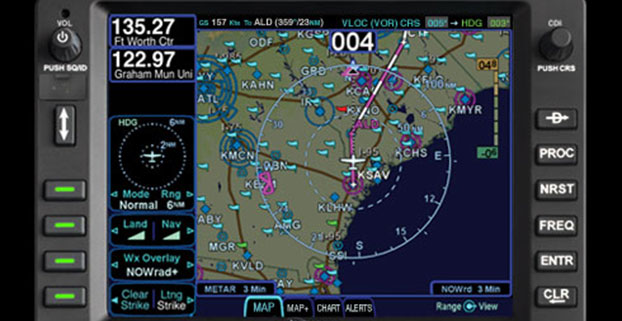
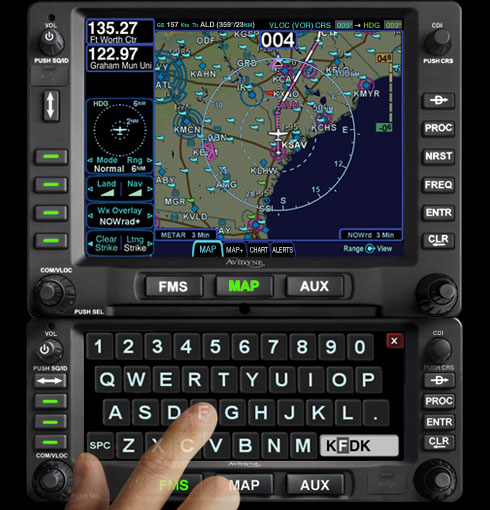
    The Avidyne IFD540.
    The Avidyne IFD540.

    Avidyne Corporation, a provider of integrated avionics and safety systems for general aviation aircraft, has received Technical Standard Order (TSO) approval and an Approved Model List Supplemental Type Certificate (AML-STC) from the Federal Aviation Administration (FAA) for installation of the IFD540 FMS/GPS/NAV/COM system in more than 1,000 aircraft makes and models.

     “The IFD540 gives aircraft owners a truly exceptional choice over anything else available today for GPS and VHF NAV/COM capabilities,” said Patrick Herguth, Avidyne’s chief operating officer.  “The IFD540 delivers the perfect combination of touchscreen and dedicated-button user interface, making it much easier and more enjoyable for pilots transitioning from previous-generation systems.”

    “The IFD540 adds significant improvements in functionality and ease of use, while providing huge cost and time savings for a large number of aircraft owners looking to upgrade their obsolete GPS systems,” said Dan Schwinn, Avidyne’s president and CEO. “Our ‘plug-and-play’ strategy opens up a huge market for aircraft owners who want new features like rubber-band flight plan editing, WAAS and ADS-B, but at a lower cost and with quicker installs.”

    The IFD540 is the centerpiece of Avidyne’s previously announced stack of plug-and-play panel-mounted avionics, which also includes the AMX240 Audio Panel and the AXP340 Mode S ADS-B Transponder, both of which are already TSO’d and available now.

    A smaller-screen version of the IFD540 called the IFD440 FMS/GPS/NAV/COM is planned for availability later this year.

    Rounding out Avidyne’s panel-mounted avionics stack is the DFC90 digital Autopilot with Envelope Protection and Envelope Alerting, which has already been certified on a number of aircraft including Cirrus SR20/22, Piper PA-46, Beech Bonanza series, and Cessna 182 series.