Category: Galileo

  • Synergies between Europe’s Rail and SatNav Programs Can Make Rail Travel Affordable

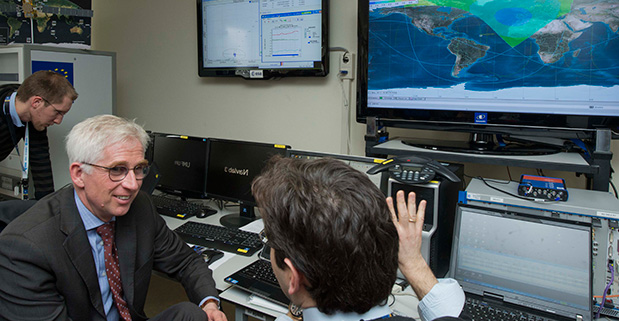
    Cost-effective synergies between the European Rail Traffic Management System (ERTMS) and satellite technologies such as Galileo can make rail transport more efficient and reliable, agreed European authorities in February at a Rail Forum Europe dinner in Brussels. But while the technology is now available, its implementation pace is still too slow due to the long term return on investment.

    Francesco Rispoli, manager of satellite technologies at Ansaldo STS, an Italian provider of rail-traffic management, planning, train control and signalling systems, stressed that satellite technology can improve the penetration of ERTMS in the worldwide market as well as on European local and low-traffic lines. He predicted that further synergies will be developed on the SHIFT²RAIL initiative: “EGNOS and Galileo are key enabling technologies for a market-driven step change in the rail sector” he concluded. In that light, Ansaldo STS is developing an open platform to allow the ERTMS to fully exploit EGNOS and Galileo.

    Olivier Onidi, director for Innovative and Sustainable Mobility at the EC’s Directorate General for Mobility and Transport (DG MOVE), highlighted the role of ERTMS in achieving an interoperable Single European Railway Area. “2014 is a key year in terms of innovation for the rail sector. Major progress is expected on ERTMS, Galileo, and SHIFT2RAIL”.

    SHIFT²RAIL is a European technology initiative  seeking to double the capacity of the European rail system, increase its reliability and service quality by 50 percent ,and cut lifecycle costs in half.

    Carlo des Dorides, executive director of the European GNSS Agency, applauded the ERTMS Memorandum of Understanding envisaging the future use of EGNOS and Galileo to improve the competitiveness of train control systems. “There are signs that GNSS will be adopted globally as in the aviation sector. In this scenario, Europe now has the opportunity to exploit the synergy between ERTMS and GNSS.”

  • Galileo Countdown to 10 by Year’s End

    Europe’s Galileo satnav system.
    Europe’s Galileo satnav system.

    Signs Point Toward Early Services in December, If ESA Delivers

    A February conference on the European Union’s space policy in Brussels sought to set a course for 2020 and close official ranks behind the prospect of early Galileo services at the end of this year. Much in the business community’s perception of the new system — critical for device availability and mass- and professional-market adoption of Galileo — will depend on meeting the projected unveiling of early services in December. This is turn depends on an operational 10-satellite constellation; the fleet now stands at four.

    Among trends noted at the meeting: the growing importance of the European GNSS Agency (GSA)  as Galileo service provider, with perhaps more authority — and budget — than it has had in the past to get the job done. “The GSA will gradually assume responsibility for the operational management of the programmes while ESA will remain responsible for the deployment of Galileo, and the design and development of new generation of systems,” announced the European Commision (EC).

    EC Vice President Antonio Tajani reiterated there will be three Galileo launches in 2014 to reach the requisite year-end total. “The first will come in June. Two satellites have passed the necessary tests. We need to keep this up, and continue to raise our game.”

    Trouble on the Equator. The next two Galileo satellites may be ready to ship to Europe’s spaceport in South America by early April. But a large European commercial satellite customer is crowding the schedule, pressuring launch operator Arianespace to lift its satellites first. This could delay the Galileo birds, now set for June rise.

    ESA’s year-end plan calls for two more dual-satellite launches in October and December on Russian Soyuz rockets — new partners to the Galileo dance, bringing perhaps new technical connectivity issues.

    It’s Not Easy. With Galileo and EGNOS  financed to the tune of €7 billion for 2014–2020, expectations are high, yet the European Commission brings a decidely conservative approach to expenditure on new ventures.

    “To take a chance, to do what no one has ever done — it’s not easy in a culture that doesn’t like risk,” said ESA director Jean-Jacques Dordain.

    Other conference speakers pointed to the securely established European Geostationary Navigation Overlay Service (EGNOS), the first generation of Europe’s GNSS, now fully operational.

    Carlo des Dorides, executive director of the GSA, responsible for operating EGNOS through the EGNOS Service Provider (ESSP), elaborated on his big job in 2014: maintaining and improving EGNOS performance and maximizing user adoption, particularly in the aviation, maritime transport, and rail transport sectors.

    “The experience we gain through our work with EGNOS will be instrumental as we move towards Galileo service delivery.”

    As well as organizational experience with EGNOS, user adoption of the GNSS precursor augurs much for Galileo. With one eye on the present and another on the future, the GSA has a big serving coming to its plate by December: management of a long-awaited, heavily invested system that has been in discussion since the 1990s and in various stages of gestation since 2000.

  • Downstream Dialog, Tests in Europe

    With Galileo services set to take effect in December, the two European entities charged with the program are engaging manufacturers — the European Space Agency (ESA) in consumer markets, and the European GNSS Agency (GSA) in the government security sector, respectively.

    “We put out an open call to satnav manufacturers offering testing with our laboratory facilities,” said the head of ESA’s Radio Frequency Systems, Payload, and Technology  Division. “We have gone on to work with five mass-market chipset makers and a comparable number of professional receiver manufacturers.”

    Available ESA facilities include:

    • a hybrid localization solution rack for receiver plug-in; it generates simulated constellations of multiple satnav systems along with Wi-Fi or mobile networks. It can also simulate inputs from inertial devices.
    • the octobox, a mini anechoic chamber into which phones or mobile devices can be placed, to feed them simulated satnav and cellular network signals.
    • a telecommunications and navigation testbed vehicle for field tests, carrying its own extremely accurate receivers to assess the performance of the consumer devices under test.

    “Thanks to earlier collaboration with ESA and the EU, the millions of multi-constellation satnav chips we sell annually have been equipped for Galileo signals since 2009,” stated Philip Mattos of ST Microelectronics, whose Teseo II receiver chips are used in satnavs and embedded in cars (see detailed technical article on page 36). “It will take only a software update to enable them to start using Galileo. This cooperation allows us to optimize our software based on access to actual signals and background technical information.”

    Regulated Service. The GSA invited European industries and member states’ Public Regulated Service (PRS) authorities to share views and ideas on technologies at the user segment level for the adoption of the PRS. The PRS uses encrypted signals designed to resist jamming, involuntary interference, and spoofing. GSA’s objective is to ensure that PRS service is affordable and secure for all interested users while also ensuring that European industry maintains its competitive edge in the global satellite navigation marketplace.

    GSA consultations will focus on:

    • steps transforming technologies into products competitive enough in terms of cost, power, dimension;
    • euro-manufacturing capability and capacity, especially nanotechnology;
    • how to build the manufacturing lines capable of serving PRS user segment needs;
    • main domains, elements, and interfaces that will benefit from standardization, allowing for a stronger market adoption of PRS.


  • Galileo Product Showcase

    System Design & Test

    Galileo Test Bed

    Over the past few years, GATE has become well known for being a top-level Galileo test and development range worldwide. It is operated by IFEN GmbH under contract of the owner DLR (German Aerospace Center). The GATE test bed offers a wide range of possibilities for navigation test scenarios with realistic Galileo signals on three frequencies simultaneously in an outdoor environment. Although the test range is, of course, a ground-based infrastructure in the Berchtesgaden Alps, the certified GATE system is able to transmit the original navigation signals from eight “virtual” Galileo satellites. This also includes the simulation of natural influences such as ionosphere or troposphere delays, the adaptation of other signal characteristics, as well as effects of signal strength. Furthermore, GATE includes the capability to induce dedicated “Feared Events” and alerts for one or several satellites of the simulated Galileo constellations.

    IFEN

    Leica-iconMachine Control

    Machine Receiver

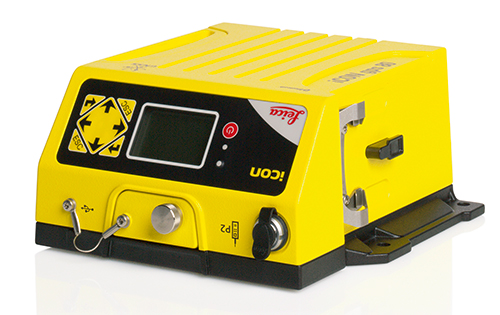
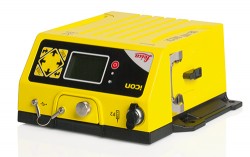
    The Leica iCON gps 80 GNSS machine receiver offers features and benefits for system integrators looking for powerful, reliable, and future-proof GNSS machine receivers. It increases the overall performance of the iCON machine control system, allowing users to work more productively. Besides Galileo, signals tracked include GPS, GLONASS, and BeiDou. The iCON gps 80 increases the overall performance of the system, so that the uptime of dozers, excavators, drilling and dredging machines, wheel loaders, graders, and pavers is maximized with fast, reliable 3D positioning and productive operation by a perfectly tuned machine control system.

    xRTK allows machine guidance in difficult environments, increasing machine productivity. Leica iCON telematics provides remote access to the machine computer for fast data transfer and support.

    Leica Geosysems

    GSG-51-GNSS-Signal-Generator-WSimulation

    GNSS Signal Generator

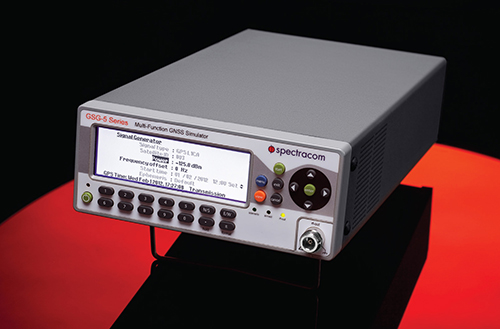
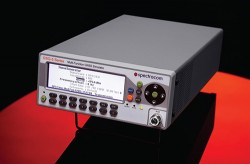
    The GSG-51 GNSS signal generator provides a fast and cost-effective solution for production testing for Galileo and other GNSS. It emulates a single GNSS signal and can be upgraded for Galileo, as well as to increase the channel count, add receiver trajectory control, and add advanced features such as SBAS (WAAS, EGNOS,MSAS, or GAGAN), white noise generation, or multipath simulation. Its main application is a simple but very fast manufacturing test, to assure that the assembly is correct, that the antenna is properly connected, and that the receiver can receive and identify a satellite signal, for instance, in mobile phones with integrated GNSS receivers.

    With a wide RF level range from –65 to –160 dBm, the sensitivity of all types of GNSS receivers can be verified with a minimum of delay. The 60-dB of extra power from normal test scenarios allows for splitting the signal many times.

    Spectracom

    Septentrio-PolaRxSSpace Weather Monitoring

    Multi-Constellation Receiver

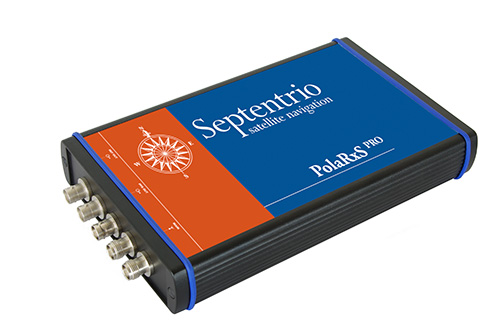
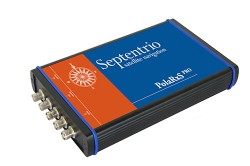
    The PolaRxS is a multi-frequency, multi-constellation receiver dedicated to ionospheric monitoring and space weather applications. It features simultaneous high-quality tracking of all visible signals (L1, L2, L5, E5ab/AltBOC GPS/GLONASS/Galileo/Beidou/SBAS) at low noise levels. The receiver outputs an extensive set of GNSS measurements, including signal phase and intensity at up to 100 Hz, with a phase noise standard deviation (phi60) as low as 0.03 rad.

    The A Posteriori Multipath Estimator (APME+) tackles short-delay multipath to enhance the measurement quality, while LOCK+ tracking guarantees robust tracking of rapid signal dynamics during scintillation events. Included tools provide continuous total electron content (TEC) and scintillation indices logging for space weather and ionosphere monitoring.

    Septentrio

    A3-angle-view-WPersonal Tracking

    Multi-GNSS Antenna Module for Wireless

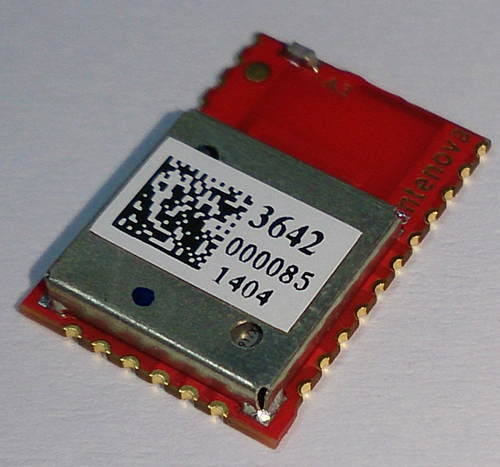
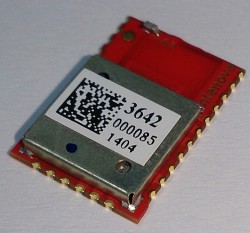
    The M2M Radionova M10478-A3 antenna module combines a full receiver and antenna on the same ultra-compact module. The highly integrated multi-GNSS RF antenna module is based on the Mediatek MT3333 architecture combined with Antenova’s antenna technology, receiving Galileo as well as GPS, GLONASS, BeiDou, QZSS, and SBAS signals. Using patented external matching means this module is suitable to applications from small watches to smartphones and asset trackers. All front-end and receiver components are contained in a single package laminate base module, providing a complete GNSS receiver for optimum performance.

    Antenova


    Location-Based Services / Wireless

    Software Receiver

    A software-based GNSS receiver from Galileo Satellite Navigation (GSN) is available on Tensilica ConnX digital signal processor (DSP) cores, for wireless mobile applications. The GSN GNSS receiver running on a Cadence ConnX BBE16 DSP consumes as little as 10 mW of power on a 40-nm process and has the ability to work in lower rates, or snapshots, for ultra-low-power mobile scenarios. It delivers high-sensitivity tracking, offering a seamless GNSS experience in challenging environments. This provides customers with the ability to upgrade their designs to include future satellite systems, including Galileo. With no additional silicon costs and a low cost of deployment, this software-based solution offers a way to implement satellite navigation functionality in many products where it otherwise might be impractical.

    Cadence; Galileo Satellite Navigation
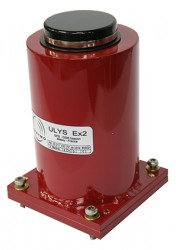

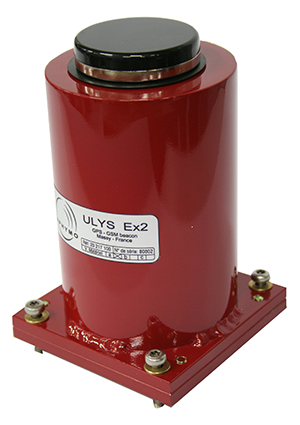
    Ulys-Ex2-20217100-detouree-WAsset Tracking

    Hazardous Goods Surveillance

    The Ulys-Ex2 beacon is a standalone tracking unit providing worldwide location-based alerts for up to seven years, for monitoring of unpowered mobile assets in potentially explosive atmospheres.

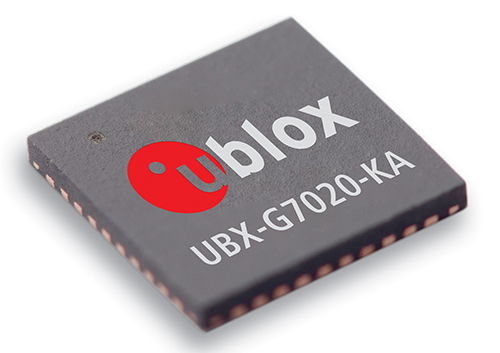
    With a Galileo-ready u-blox receiver, it provides monitoring data for tank containers and tank-trailer transport operations, increasing the level of security and safety of explosion-sensitive shipments. The beacon is part of a turnkey, real-time dangerous goods monitoring solution adapted to risk environments, guaranteeing global visibility on routing from the production site to the customer delivery point. It is ATEX Zone 1 certified for Europe — Zone 1 is an atmosphere where a mixture of air and flammable substances in the form of gas, vapor, or mist is likely to occur in normal operating circumstances.

    Saphymo
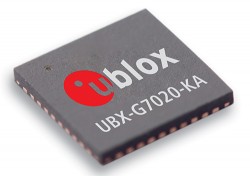

    ubx-m8030-WConsumer OEM

    Galileo-Ready Module

    The Galileo-ready NEO-M8 series of standalone concurrent GNSS modules is built on the u-blox M8 GNSS (GPS, GLONASS, Galileo, BeiDou, QZSS, and SBAS) engine in the NEO form factor. The NEO-M8 series provides high sensitivity and minimal acquisition times while maintaining low system power. It is optimized for cost-sensitive applications, with the NEO-M8N and NEO-M8Q providing high performance and easier RF integration. Sophisticated RF-architecture and interference suppression ensure maximum performance even in GNSS-hostile environments. The NEO-M8 combines a high level of robustness and integration capability with flexible connectivity options. The future-proof NEO-M8N includes an internal Flash that allows simple firmware upgrades for supporting additional GNSS systems, making the NEO-M8 suitable for industrial and automotive applications.

    u-blox
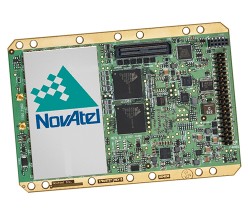

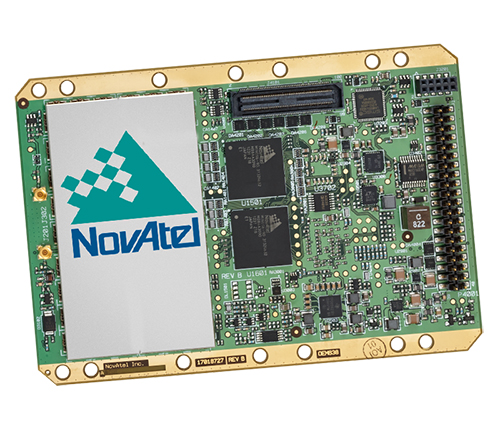
    Novatel-OEM638-WProfessional OEM

    High-Precision Receiver Card

    The OEM638 high-precision receiver card tracks all existing and planned constellations including Galileo, GPS, BeiDou, GLONASS, and QZSS. By providing flexible positioning options, from standalone meter-level to AdVanceRTK centimeter-level accuracy, the OEM638 offers the flexibility to meet a wide range of positioning requirements. A powerful API, 4-GB on-board data storage, wide input voltage, and a host of interface options simplifies integration, decreasing time to market and overall system costs. With 240 channels and comprehensive tracking and positioning with all current and planned GNSS signals, the OEM638 is field upgradeable. It offers user configurability for reference station, timing, and other precision positioning applications.

    NovAtel


    Consumer OEM
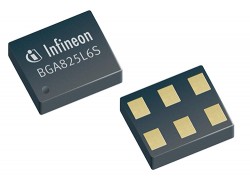
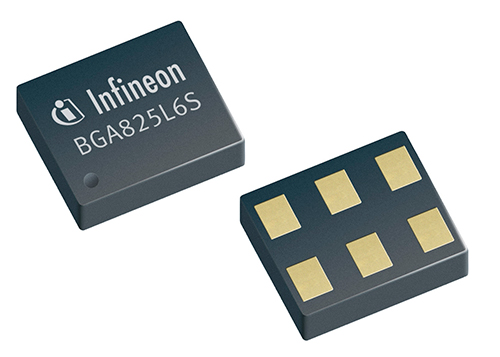
    Infineon-WLow-Noise Amplifier

    The BGA825L6S is a cost-effective low noise amplifier (LNA) for Galileo and other GNSS. It features an ultra-low noise figure, high linearity, high gain, and low current consumption over a wide range of supply voltages from 3.6V to 1.5V. It is designed for GNSS LNA, as it improves sensitivity, provides greater immunity against out-of-band jammer signals, and reduces filtering requirements, which lowers the overall cost of the receiver. The low noise figure of 0.6 dB is a key parameter for GNSS systems as it directly influences the sensitivity of the system, as well as the time-to-first-fix and time-to-subsequent-fix. LNAs with a lower noise figure enable mobile phones with faster GNSS signal fix and higher end-user satisfaction.

    Infineon Technologies AG

    GSS9000-WSimulation

    RF Constellation Simulator

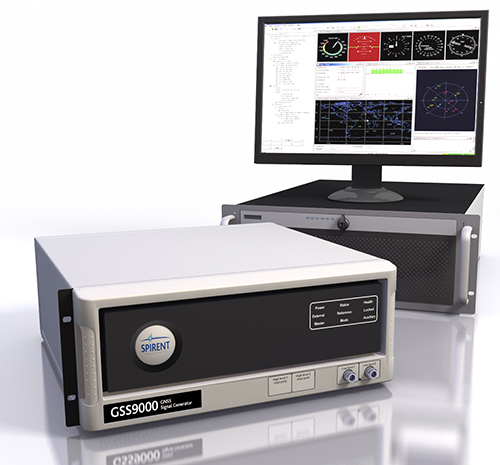
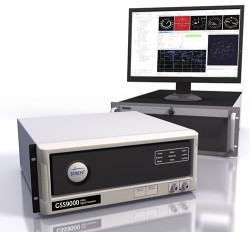
    The newly released Spirent GSS9000 Multi-Frequency, Multi-GNSS RF Constellation Simulator can simulate signals from all GNSS and regional navigation systems, including Galileo. The GSS9000 offers a four-fold increase in RF signal iteration rate (SIR) over Spirent’s GSS8000 simulator. The GSS9000 SIR is 1000 Hz (1ms), enabling higher dynamic simulations with more accuracy and fidelity. It includes support for restricted and classified signals from the Galileo and GPS systems, as well as advanced capabilities for ultra-high dynamics. It can evaluate resilience of navigation systems to interference and spoofing attacks, and has the flexibility to reconfigure constellations, channels, and frequencies between test runs or test cases.

    Hardware changes can be done in the field, supported by the new on-board calibrator module. The GSS9000 is extensible and can support the widest range of carriers, ranging codes, and data streams for the Galileo, GPS, GLONASS, and BeiDou systems, as well as regional/augmentation systems. Multi-antenna/multi-vehicle simulation, for differential-GNSS and attitude determination, and interference/jamming and spoofing testing are also supported.

    Spirent

    Teseo_III_p3509-WTransportation

    eCall-Ready Positioning Chip

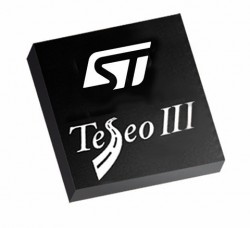
    The Teseo II (STA8088 series) is a single-chip positioning device capable of receiving signals from multiple satellite navigation systems, including Galileo, GPS, GLONASS, and QZSS. The Teseo II combines high-positioning accuracy and indoor sensitivity performance with powerful processing capabilities and design flexibility, making Teseo II suitable for eCall, ERA-GLONASS, telematics, handheld, consumer, portable navigation devices, marine, and in-car navigation systems. The Teseo II is being tested by the European Space Agency and the European Commission Joint Research Center for eCall approval. The testing campaign is coordinated by the European GNSS Agency as part of its effort to accelerate Galileo adoption.

    While the Teseo II Ihas always had the capability to be Galileo-ready, ST is enabling a firmware update from Galileo that benefits consumers and doesn’t require a hardware modification. The Teseo II chips can simultaneously use signals from multiple satellite navigation systems, including the currently available Galileo satellites, and progressively, as future satellites are launched, the full satellite constellation.

    STMicroelectronics

    JAVAD_TRE-3Professional OEM

    High-Precision Receiver

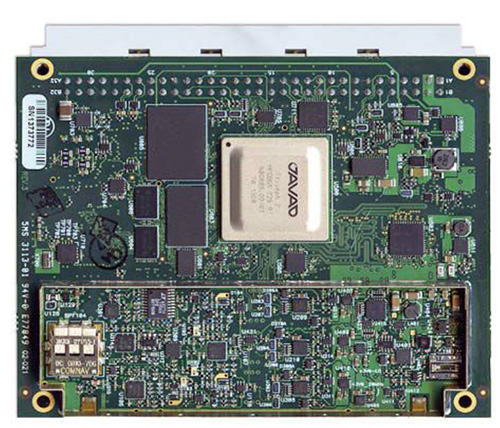
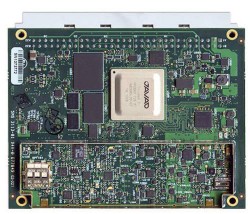
    The 864-channel TRE-3 receiver can simultaneously access all current GNSS signals, with room to spare for multiple-channel tracking of select signals. The new product offers three ultra wide-band (100 MHz) fast sampling and processing, programmable digital filters, and superior dynamic range. After 12-bit digital conversion, nine separate digital filters are shaped for each of the nine bands: GPS L1/Galileo  E1, GPS L2, GPS L5/Galileo E5A, GLONASS L1, GLONASS L2, Galileo E5B/BeiDou B2/GLONASS L3, Galileo altBoc, Galilee E6/BeiDouB3/QZSS LEX, and BeiDou B1.

    JAVAD GNSS

    TeleOrbitInterference Monitoring

    Modular RF Front-End

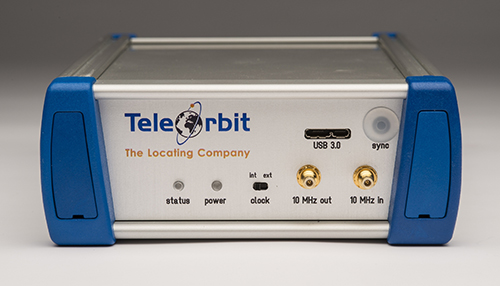
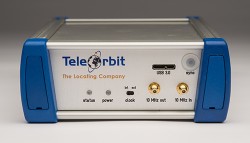
    The GTEC-RFFE is a flexible, portable, and affordable ultra-wideband recording solution that can be adapted to the reception of all GNSS bands available, including Galileo, supporting up to 80 MHz of RF bandwidth. Because of its modular concept, the GTEC-RFFE not only supports a set of pre-selected configurations, it can be set up for multi-antenna inputs, user selectable bandwidth, intermediate frequencies, and customized ADC sampling rates and resolutions. It is designed for development of software-defined radios and receivers, GNSS multi-system signal analysis and comparison, analysis of atmospheric effects such as ionospheric and tropospheric irregularities and scintillation, and interference monitoring for protecting critical operations and infrastructures.

    TeleOrbit
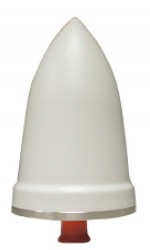

    PCTEL-GNSS1-TMG-26N-WTiming

    GNSS Timing Reference Antenna

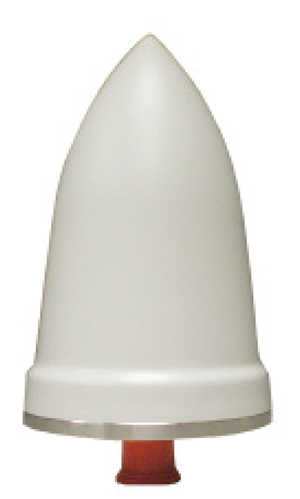
    The GNSS1-TMG-26N is a fixed-mount network timing antenna covering Galileo L1, as well as GPS, GLONASS, and Beidou frequencies. It is designed for long-lasting, trouble-free deployments in congested cell-site applications. The low-noise, high-gain amplifier is suited to address attenuation issues associated with applications requiring longer cable runs. The proprietary quadrifiliar helix design, coupled with multistage filtering, provides superior out-of-band rejection and lower elevation pattern performance than traditional patch antennas.

    PCTEL
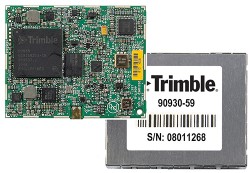

    Trimble-BD930-WProfessional OEM

    Positioning and Heading System

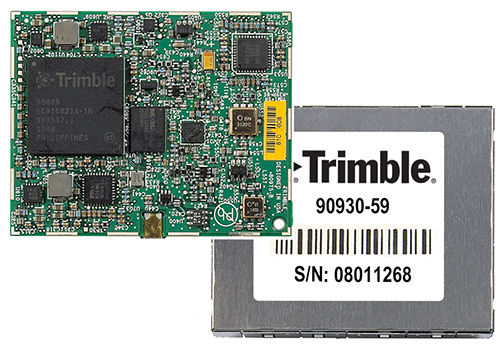
    The Trimble BD930 supports both triple frequency from the GPS and GLONASS constellations, plus dual frequency from Galileo and BeiDou. As the number of satellites in the constellations grows, the BD930 is ready to take advantage of the additional signals to deliver fast and reliable RTK initializations for 1–2 centimeter positioning. Different receiver configurations are available, including autonomous GPS L1 to four-constellation triple-frequency RTK.

    Trimble
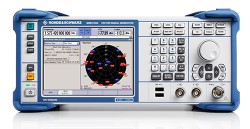

    SMBV100A_GNSS_front-WSimulation

    Vector Signal Generator

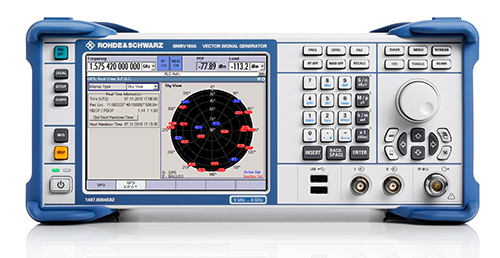
    The R&S SMBV100A vector signal generator can generate Galileo, GPS, and GLONASS signals for up to 24 satellites in realtime. With the SMBV-K107 option, the simulator covers the BeiDou standard as well.

    The R&S SMBV-K101 option allows developers in the automotive and wireless communications industries to test GNSS receivers for specific effects such as obscuration and multipath propagation. If the GNSS receiver of a navigation instrument or smartphone is located inside a vehicle, testing must also take into account the obscuring effect of the vehicle’s metal body. The R&S SMBV-K102 option can simulate this obscuration and, if required, the additional antenna pattern.

    In addition to test scenarios for A-GPS, smartphone developers have the Assisted Galileo (R&S SMBV-K67) and Assisted GLONASS (R&S SMBV-K95) options at their disposal.

    Rohde & Schwarz


    GPS30-blue-WSignal Amplification

    Antenna Amplifier

    The GPS35-BNC is an inline antenna amplifier for both the L1 and L2 frequencies of the Galileo, GPS, and GLONASS satellite systems. When connected between the GPS receiver and the GPS antenna, power from the GPS receiver that normally powers the active antenna powers both the active antenna and the GPS-BNC, so no extra power supply is needed. The GPS35-BNC can be used with either active or passive GPS antennas by selecting internal jumpers. The GPS35-BNC provides a gain of 35 dB between 1200 and 1607 MHz. With the GPS35-BNC installed, extra lengths of cable can be used between the antenna and the GPS receiver itself. If low-loss cable is used, cable lengths over 350 meters (1,150 feet) can be used without any degradation to the GPS signal.
    The noise figure of the GPS35-BNC is less than 3 dB, and signals in the cellular or mobile frequency bands are rejected by more than 35 dB.

    Precision Test Systems
     

  • Dutch Company Powers Galileo Satellites

    Dutch Company Powers Galileo Satellites

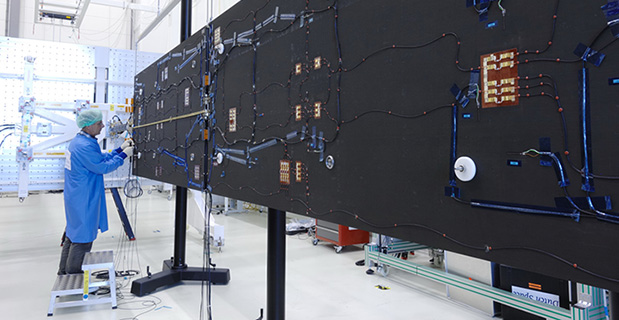
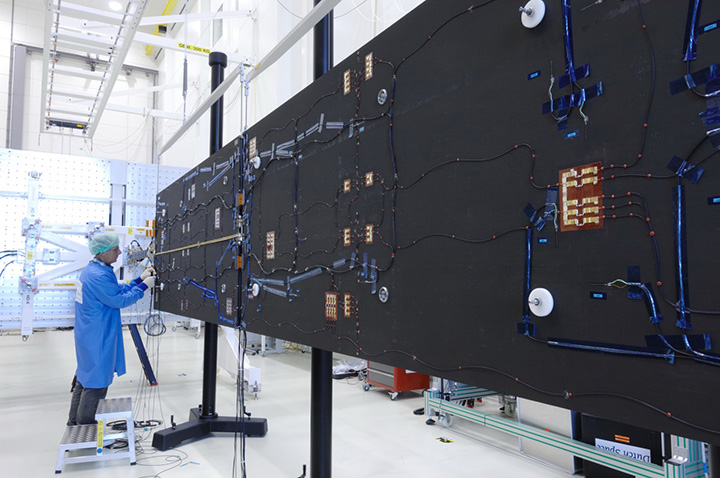
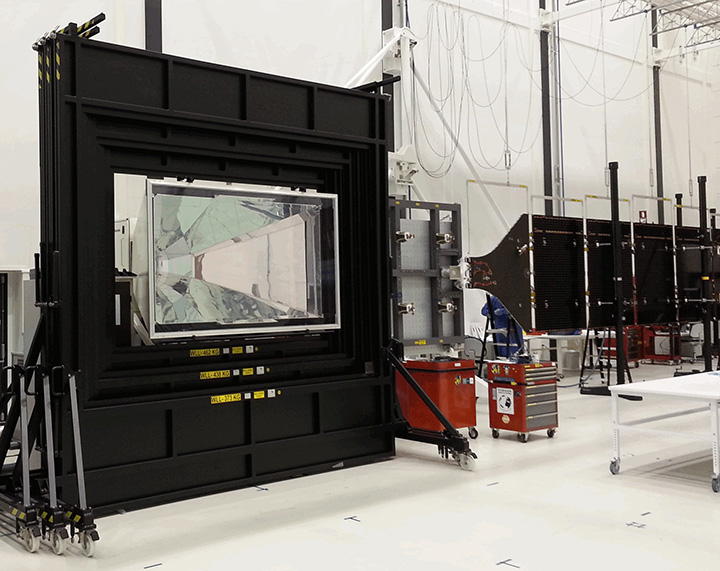
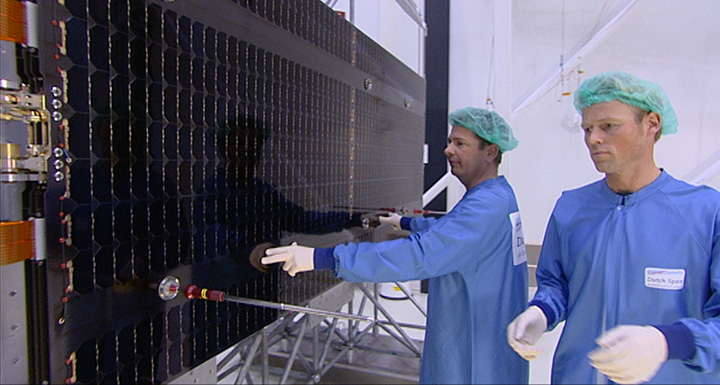
    Solar arrays for a Galileo Full Operational Capability (FOC) satellite at the Dutch Space company near Leiden in the Netherlands. A pair of 5 m-long solar arrays supply 1.9 kilowatts of power – about the same as an average household’s consumption. The side of the solar array normally left in shadow is seen here.
    Solar arrays for a Galileo Full Operational Capability (FOC) satellite at the Dutch Space company near Leiden in the Netherlands. A pair of 5 m-long solar arrays supply 1.9 kilowatts of power – about the same as an average household’s consumption. The side of the solar array normally left in shadow is seen here.

    By the European Space Agency

    As they bathe the ground below them in test navigation messages, Europe’s Galileo satellites are kept alive by the Sun.

    A pair of 5 m-long solar arrays supply 1.9 kilowatts of power – about the same as an average household’s consumption. These arrays are sourced from the Dutch Space company in the Netherlands.

    Located just outside Leiden, a short drive from ESA’s Technical Centre, the Airbus Defence and Space subsidiary is based in what might appear to be a standard office building, the only clue to its space-based focus being an Ariane 5 frame outside.

    Inside its specialized facilities include a class 100 000 cleanroom, space simulation equipment and a “Very Large Sun Simulator” — a giant camera flash able to test the electrical performance of the solar arrays the company supplies to about two thirds of ESA missions — which includes all Galileo satellites commissioned to date, as well as one of their two GIOVE predecessors.

    “Think of us as the prime contractor for Galileo’s solar panels,” explains senior project manager Jan Zuidam, overseeing the work for Dutch Space. “We build nothing directly ourselves, but — working with a network of partner companies — oversee the panels’ design, engineering management, assembly and testing, all performed here in these buildings.

    The composite panel substrates, sourced from local Dutch company Airborne Composite, are equipped with solar cells in the Airbus Defence and Space facility in Ottobrunn, Germany, with the photovoltaic cells themselves sourced from German company Azur Space Solar Power. It is a bit like the way silicon chips are mounted on printed circuit boards, only on a much bigger scale.”

    The cells in question are state-of-the-art “triple junction” gallium arsenide designs, with sandwiched layers optimised for different segments of the solar spectrum.

    At Ottobrunn these cells are interconnected together into “strings” that run the length of each panel. The bare cells have also have protective cover glass added at this stage, without which they would be quickly tarnished by the radiation and unfiltered sunlight prevailing in orbit.

    Testing

    Before delivery to Dutch Space, each panel is thermal vacuum tested at IABG, Germany, followed by the absolute performance measurement and inspection.

    Solar arrays for a Galileo Full Operational Capability (FOC) satellite at the Dutch Space company near Leiden in the Netherlands. A pair of 5 m-long solar arrays supply 1.9 kilowatts of power – about the same as an average household’s consumption. The side of the solar array normally left in shadow is seen here.
    Solar arrays for a Galileo Full Operational Capability (FOC) satellite at the Dutch Space company near Leiden in the Netherlands. A pair of 5 m-long solar arrays supply 1.9 kilowatts of power – about the same as an average household’s consumption. The side of the solar array normally left in shadow is seen here.

    This includes flash testing to illuminate all the cells at once to check the arrays meet the set power requirements, as well as electrical luminescence testing, where an electrical current is run through each string to make them glow red, basically reversing the way solar cells usually work. Visual inspection is typically enough to ensure all connections are properly linked.

    At Dutch Space, the panels from Ottobrunn are integrated together with the mechanisms, typically sourced from local Dutch companies assembled and tested by Dutch Space, into complete solar array wings.

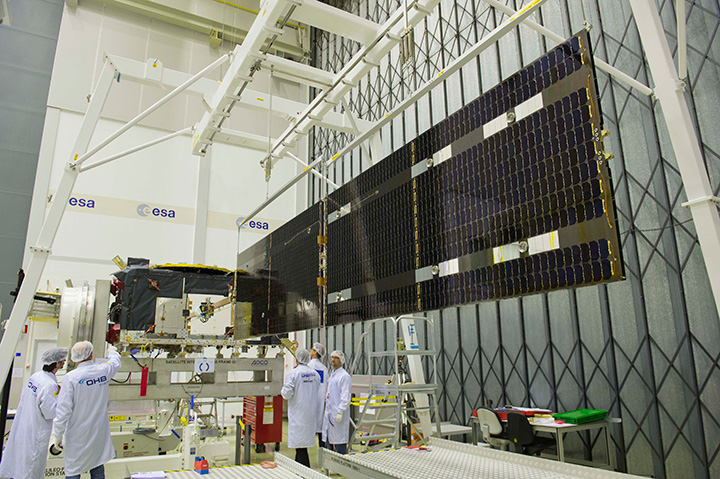
    The completed wings are suspended on specially weighted deployment rigs, to compensate for the presence of gravity the 29 kg wings are not designed to endure. Here alignment testing is performed, to check the wings will unfold in a straight line as planned.

    Galileo solar arrays being inspected in the Dutch Space cleanroom. The panels received from Ottobrunn in Germany are integrated together with the mechanisms, typically sourced from local Dutch companies assembled and tested by Dutch Space, into complete solar array wings. The completed wings are then suspended on specially weighted deployment rigs, to compensate for the presence of gravity the 29 kg wings are not designed to endure. Here alignment testing is performed, to check the wings will unfold in a straight line as planned.
    Galileo solar arrays being inspected in the Dutch Space cleanroom. The panels received from Ottobrunn in Germany are integrated together with the mechanisms, typically sourced from local Dutch companies assembled and tested by Dutch Space, into complete solar array wings. The completed wings are then suspended on specially weighted deployment rigs, to compensate for the presence of gravity the 29 kg wings are not designed to endure. Here alignment testing is performed, to check the wings will unfold in a straight line as planned.

    “Alignment testing involves the use of reference mirrors and theodolites to check the arrays’ straightness, down to a scale of a tenth of a millimeter at wing tip,” Jan explains.

    “In orbit, any bad alignment would be felt by the satellite’s attitude control system, and might even reduce a satellite’s operational life. We also make stiffness tests, which involves hanging weights on a rope on the end of the array, to see what the resulting displacement is. Flex to 100 mm is expected, but not more.”

    A large‘ambient pressure temperature test chamber can simulate the rapid temperature swings the arrays will experience as they pass between orbital daylight and darkness. A much smaller cabinet does the same in vacuum conditions, and is used for accelerated lifetime testing to simulate the total life of the arrays, although only for a 50 x 50 cm sample array.

    Dutch Space has been designing its Advanced Rigid Array family of arrays for space missions since the 1970s, Jan recalls: “Each mission has different requirements. Low-Earth orbiting arrays such as those for ESA’s Automated Transfer Vehicle need protection from erosive atomic oxygen, found at the top of the atmosphere, while deep space missions like Rosetta or the US Dawn spacecraft require low-intensity low-temperature LILT solar cells to go on producing power far from the Sun.

    Deployment of the solar wings on the first Galileo satellite 'Full Operational Capability' satellite is shown being checked at ESA’s ESTEC technical hub in the Netherlands at the end of June 2013. The navigation satellite’s pair of 1 x 5 m solar wings, carrying more than 2500 state-of-the-art gallium arsenide solar cells, will power the satellite during its 12-year working life.
    Deployment of the solar wings on the first Galileo satellite ‘Full Operational Capability’ satellite is shown being checked at ESA’s ESTEC technical hub in the Netherlands at the end of June 2013. The navigation satellite’s pair of 1 x 5 m solar wings, carrying more than 2500 state-of-the-art gallium arsenide solar cells, will power the satellite during its 12-year working life.

    “Galileo flies in medium-Earth orbit, and in the process passes through Earth’s radiation belts. This heightened radiation exposure implies a higher loss factor of cells, which is accounted for with higher capacity at the start. We design solar arrays based on their end-of-life performance — how can we ensure they will still meet mission requirements after 12 years in orbit?”

    Galileo’s solar arrays are also designed to guard against potential harmful electrostatic discharge — a spark caused by the build-up of static — by introducing gaps any charge cannot traverse, as well as other voltage safeguards.

    “As a safety margin, Galileo’s arrays can go on operating satisfactorily with the loss of one complete string of cells.”

    The completed arrays are sent on to Full Operational Capability (FOC) prime contractor OHB in Bremen, Germany for integration onto the satellites. Although this is not quite the end of the story for Dutch Space.

    “We have a 100% record of successfully deployed wings in space and we’d like to keep it that way,” Jan comments. “So we provide training to our customers on handling and storing the wings, and especially in working with our unique hold-down system that keeps the solar arrays stacked on either side of the satellite during launch.”

    The panels are delicate, composed of just four layers of carbon fibre, and would break easily if struck hard. They are therefore tied tight against the satellite during the violence of launch.

    The Kevlar restraint cables are then severed by thermal knives, with two in place per each hold-down point.

    “The Kevlar is weakened gradually instead of suddenly snapping,” Jan explains. “This reduces the amount of shock the arrays experience, compared to the pyros or unwinding rods that other companies use. The arrays then unfold gradually due to springs in the hinges, the process taking a few minutes in all.

    “But the system depends on correct tensioning at the outset, which is why we like to be there in person for this point.”

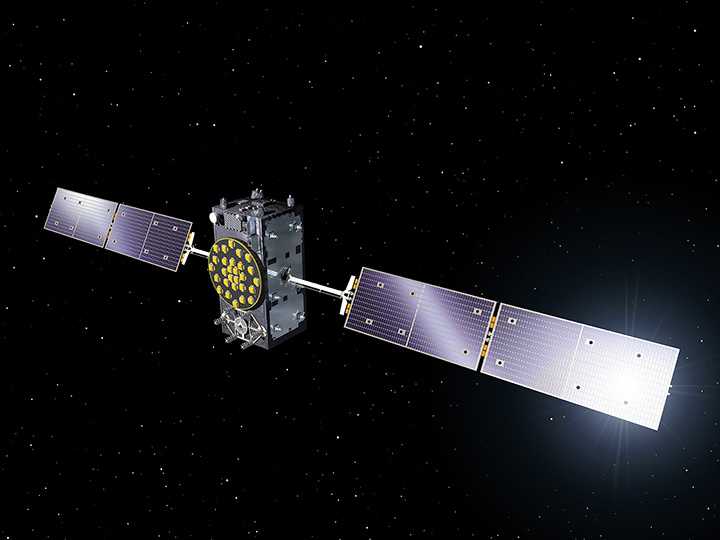
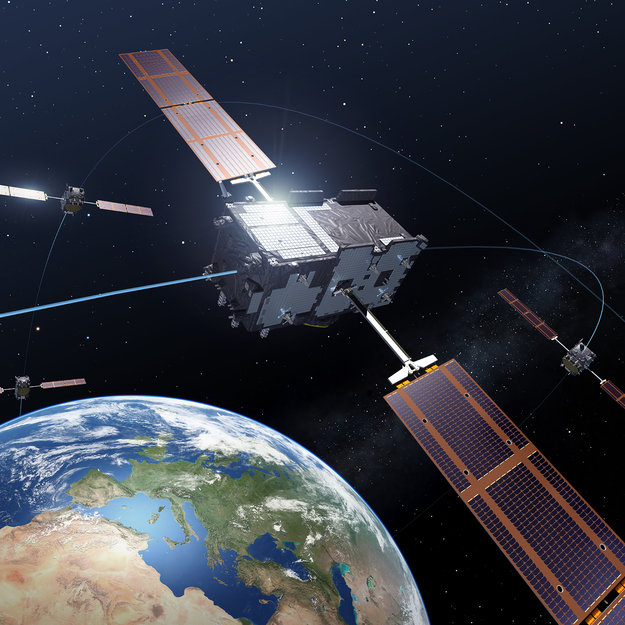
    A Galileo Full Operational Capability (FOC) satellite, following on from the first four Galileo satellites already in orbit. A total of 22 FOC satellites are on the way, built by OHB in Germany with navigation payloads from Surrey Satellite Technology Ltd. in the UK.
    A Galileo Full Operational Capability (FOC) satellite, following on from the first four Galileo satellites already in orbit. A total of 22 FOC satellites are on the way, built by OHB in Germany with navigation payloads from Surrey Satellite Technology Ltd. in the UK.

    Dutch Space is well ahead on its Galileo obligations, with 88 substrate panels manufactured and 72 panels equipped with solar cells ready for wing integration. They are carefully stored in gaseous nitrogen until needed,  separately from each other for the most part, with integration performed before delivery.“Our continued involvement with Galileo has been very important to the company,” reflects Jan.

    “Dutch Space has worked on batch production previously, such as with solar arrays for the ATV and the US Orbital company’s Cygnus supply vehicle to the International Space Station, but the scale of Galileo is even larger.

    We have had a valuable learning curve, finding ways to optimize our production flow and working methods so that we’ve been able to reduce the time needed by 50% from the initial satellite to the latest. And all the things we learn should make us leaner and cheaper for future one-off missions as well.”

  • Get a Galileo Position Fix? ESA Wants to Give You a Prize

    Get a Galileo Position Fix? ESA Wants to Give You a Prize

    First_Galileo_position_fix-W
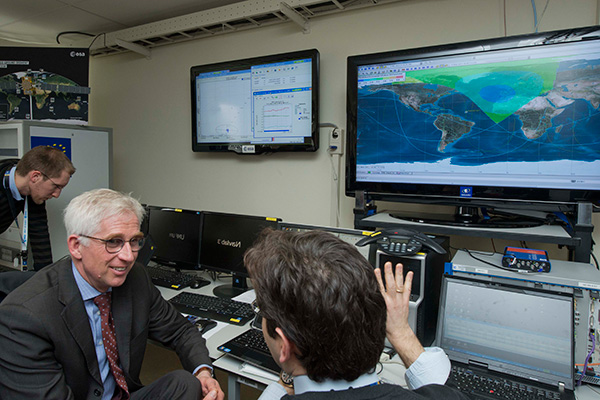
    Javier Benedicto, ESA’s Galileo Project Manager, looks on as Europe’s own satellite navigation system performs its historic first position fix of longitude, latitude and altitude. The position fix took place at the Navigation Laboratory at ESA’s technical heart ESTEC, in Noordwijk, the Netherlands on the morning of March 12, 2013, with an accuracy between 10 and 15 meters — expected taking into account the limited infrastructure deployed so far. Horizontal accuracy reached as high as 6 m. The left-side screen shows the position fix while the right side screen shows the position of the four Galileo satellites and their current signal coverage.

    Did you get a fix on four Galileo satellites? Then there could be a certificate in it for you! ESA will recognize Galileo pioneers with commemorative certificates to the first 50 entities who document their achievement of a past or present fix. Details of how to apply are provided here.

    To mark the first anniversary of Galileo’s historic first satnav positioning measurement, ESA plans to award certificates to groups who picked up signals from the four satellites in orbit to perform their own fixes.

    In 2011 and 2012 the first four satellites were launched — the minimum number needed for navigation fixes.

    Europe’s Galileo satnav system.
    Europe’s Galileo satnav system.

    On March 12, 2013, Galileo’s space and ground elements came together for the first time to perform the historic first determination of a ground location — the Navigation Laboratory of ESA’s Technical Centre in Noordwijk, the Netherlands.

    From this point, generation of navigation messages enabled full testing of the entire Galileo system — not just by ESA and its industry and institutional partners but also by any entity with a customized satnav receiver.

    ESA’s Galileo team has heard about position fixes carried out by organizations and companies all over Europe and beyond, including as far away as Vietnam.

    A year after the first fix, ESA is recognizing these Galileo pioneers with commemorative certificates to the first 50 entities who document their achievement of a past or present fix.

    Applicants should send in their name, address, details of the receiver they used, the start and end time of their fixes in Universal Time Coordinated (UTC) and a plot of their latitude/longitude position fixes overlaid on a map, such as Google Earth. Submissions should be sent to [email protected] within the next two months. Certificates will be sent out after May 12, along with an online results update. See details of how to apply here.

    The first Galileo services are scheduled to begin later this year, as more satellites are delivered into orbit. The next launches will occur in the second half of this year, each with two satellites aboard a Soyuz ST-B. They will take place in close succession to build up the constellation.

    Many satnav receiver chips are already technically Galileo ready, requiring only software upgrades from their manufacturer to begin working with Galileo signals along with GPS and other international satnav systems.

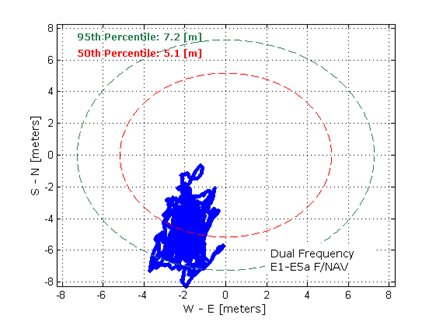
    Dual-frequency Galileo positioning performance during the In-Orbit Validation phase: positioning accuracy is an average 8 m horizontal and 9 m vertical (95% of the time). Its average timing accuracy is 10 nanoseconds on average. Plot courtesy of ESA.
    Dual-frequency Galileo positioning performance during the In-Orbit Validation phase: positioning accuracy is an average 8 m horizontal and 9 m vertical (95% of the time). Its average timing accuracy is 10 nanoseconds on average. Plot courtesy of ESA.


  • The System: Galileo Accomplishes In-Orbit Validation

    Galileo Accomplishes In-Orbit Validation

    Nucleus of Four Now Operational: It “Works, and Works Well”

    figure 1  Dual-frequency Galileo positioning performance during the In-Orbit Validation phase: positioning accuracy is an average 8 m horizontal and 9 m vertical (95% of the time). Its average timing accuracy is 10 nanoseconds on average. Plot courtesy of ESA.
    Dual-frequency Galileo positioning performance during the In-Orbit Validation phase: positioning accuracy is an average 8 m horizontal and 9 m vertical (95% of the time). Its average timing accuracy is 10 nanoseconds on average. Plot courtesy of ESA.

    The European Space Agency (ESA) announced fulfillment of the in-orbit validation (IOV) of Galileo on February 10. IOV was achieved with four satellites, the minimum number needed to perform navigation fixes.

    “IOV was required to demonstrate that the future performance that we want to meet when the system is deployed is effectively reachable,” said Sylvain Loddo, ESA’s Galileo Ground Segment manager. “It was an intermediate step with a reduced part of the system to effectively give evidence that we are on track.”

    Following a March 2013 first determination of a ground location, jointly by Galileo’s space and ground segments, program managers undertook  a wide variety of tests all across Europe.

    “More than 10,000 kilometers were driven by test vehicles in the process of picking up signals, along with pedestrian and fixed receiver testing. Many terabytes of IOV data were gathered in all,” said Marco Falcone, ESA’s Galileo System manager.

    According to ESA’s elaboration on the test results, the system has proved itself capable of solely performing positioning fixes across the planet.

    Galileo’s observed dual-frequency positioning accuracy is an average of 8 meters horizontal and 9 meters vertical, 95 percent of the time. Its average timing accuracy is 10 billionths of a second. Its performance is expected to improve as more satellites are launched and ground stations come on line.

    For Galileo’s search-and-rescue function — operating as part of the existing international Cospas–Sarsat programme —  77 percent of simulated distress locations can be pinpointed within 2 kilometers, and 95 percent within 5 kilometers. All alerts are detected and forwarded to the Mission Control Centre within a minute and a half, compared to a design requirement of 10 minutes.

    “Europe has proven with IOV that in terms of performance we are at a par with the best international systems of navigation in the world,” said Didier Faivre, ESA director of Galileo and Navigation-related Activities.

    Historically Speaking. In a February 2013 GPS World article, Peter Steigenberger, Urs Hugentobler, and Oliver Montenbruck discussed Galileo-only positioning. “Using an ionosphere-free dual-frequency linear combination of pseudorange measurements on the Galileo E1 and E5a frequencies, the position of the TUME reference station [at the Technische Universität München (TUM) in Munich, Germany] could be determined with a 3D position error of less than 1.5 meters,’” the authors said.

    Crystal Ball Gazing. The next two Galileo satellites, of the full operational capability (FOC) class, currently complete their testing for flight clearance at ESA’s ESTEC facility.

    Six such satellites are destined to rise into space in 2014, according to ESA’s master plan. Should all those launches occur as scheduled, Galileo’s initial services could start by the end of the year.

    GNSS Vulnerable: What to Do?

    Too Much Sensitivity, Not Enough Robustness, Says Parkinson

    Brad Parkinson, the founding architect of GPS, told a UK conference that the system needs to be made more robust to ensure worldwide availability of services to users. His concerns over GPS availability relate to threats such as the loss of authorized frequency spectrum (implicitly creating licensed jammers), space weather due to hyperactive ionospheric conditions, and deliberate or inadvertent jamming of GPS signals.

    He warned that GPS is more vulnerable to sabotage or disruption than ever before, and charged that politicians and security chiefs are ignoring the risk. Western governments are “in their infancy in recognizing the problem,” he remarked further in an interview with London’s Financial Times. “[In the United States] I don’t know anyone that is really in charge of it. The Department of Homeland Security should be [but] … they don’t have any people that understand it very well. They’ve got one person without any budget to speak of.”

    He also warned that Europe’s €5 billion Galileo system is equally at risk.

    Parkinson proposed a three-stage program to:

    • Protect (legally) the signal and physically eliminate jamming sources;
    • Toughen the GPS/Galileo receiver’s resistance to interference;
    • Augment the GPS signals with other satellites or with ground-based transmitters such as eLoran.

    To support his proposal, Parkinson stated, “The number one need for all GPS or Galileo users is availability. Over the years, manufacturers of signal receiver technologies have focused too much on sensitivity and not enough on resilience or robustness. The maritime industry is a particular concern where users have taken GPS for granted. They must increase preparedness and backups as they do in aviation or other GNSS-using industries.

    “Even today, most ships have only GPS and the vision of their crew to guide them when approaching harbors. As you can see from today’s conference, there are a wealth of solutions to toughen and back up GPS, many of which are not technologically difficult nor expensive, but still their adoption in sectors such as global shipping is certainly not adequate.”

    As part of his protection program, Parkinson urged that penalties for jamming GPS networks be coordinated worldwide. “In Australia, if you cause interference likely to cause prejudice to the safe conduct of a vessel, it’s five years in the jug [jail] and $850,000.” Contrasting this with a U.S. case that may simply impose a forfeiture of the culprit’s jamming device, Parkinson added, “I’m calling for the community of nations to move to the Aussie-type penalties.”

    In the toughening regard, Parkinson alluded to integration of GPS data with information derived from an inertial positioning system. “If you combine all of these things, a good set should be able to fly within 1 kilometer of a jammer with a 10-kilometer range,” said Parkinson. “That’s what I call toughening.”

    Parkinson made his remarks as the keynote speech at GNSS Vulnerabilities and Resilient PNT 2014, hosted by the Royal Institute of Navigation. He will also deliver the keynote address, “Assured PNT: Assured World Economic Benefits,” for the European Navigation Conference on April 15 in The Netherlands.

    GLONASS Seeks Broader Monitoring Footprint; Launch Imminent

    Russia will deploy as many as seven ground monitoring and augmentation stations for GLONASS outside its national boundaries. GLONASS/GNSS Forum Association Executive Director Vladimir Klimov stated that “It is planned to deploy about six or seven stations on foreign territories this year.” Negotiations for the stations are now taking place with foreign nations.

    Currently, there are 46 GLONASS ground stations on Russian territory, eight in neighboring countries, three in Antarctica, and one in Brazil. The United States recently spurned, with some Congressional trumpeting, a Russian tender to site one of the ground stations on U.S. soil.

    New Instrument in Space. In mid-February, the most recent GLONASS-M satellite traveled to the Plesetsk cosmodrome for a probable mid-March launch. GLONASS-M 54 will carry a high-accuracy thermal stabilization unit, installed on the spacecraft for testing and flight qualification. The next-generation K-class of GLONASS spacecraft will loft this device to provide increased positioning accuracy.

    Five GLONASS-M craft are planned for launch in 2014, in one triple and two single launches.

  • SBAS Working Group Looks to Galileo for Aircraft Guidance, Defines L5

    SBAS Working Group Looks to Galileo for Aircraft Guidance, Defines L5

    Plans to harness Galileo and other satnav systems for next-generation satellite augmentation systems for aviation and other high-performance uses took a significant step forward at the latest gathering of worldwide operators and experts, reports the European Space Agency.

    Satellite augmentation systems combine additional ground stations and satellite transponders to sharpen satnav accuracy and reliability across given geographical regions — based on the U.S. GPS for now, but with plans to move to a multi-constellation design additionally employing Europe’s Galileo, China’s BeiDou, and Russia’s GLONASS systems in the post-2020 era.

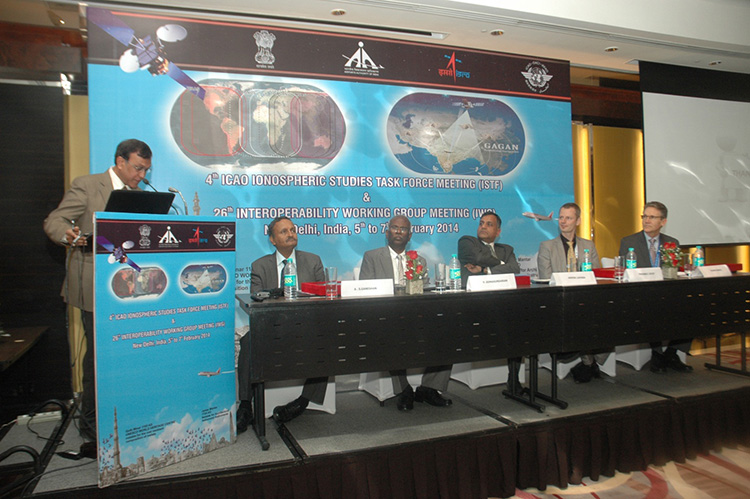
    The 26th Satellite Based Augmentation Systems (SBAS) Interoperability Working Group (IWG) took place in New Delhi, India on February 5–7.
    The 26th SBAS Interoperability Working Group (IWG) was introduced by V. Somasundaram, board member of the Airport Authority of India.
    The 26th SBAS Interoperability Working Group (IWG) was introduced by V. Somasundaram, board member of the Airport Authority of India.

    Among its achievements was to converge on a standard message definition for one of the channels — known as L5 — of the planned second-generation SBAS systems, which will utilize dual-frequency, multi-constellation signals.

    “Two solutions had been put forward, one by ESA based on work by European industry and one from the U.S. Federal Aviation Administration and Stanford University,” explains ESA’s Didier Flament, co-chair of the IWG.

    “A single definition coordinated between both bodies has been presented, combining the benefits of both solutions. The formal IWG review and approval loop has now been started with the objective of finalizing it for September’s IWG meeting.

    “The aim is to have it ready to submit to the official international SBAS standardization bodies — the International Civil Aviation Organization and the Radio Technical Commission for Aeronautics — as soon as October.”

    The meeting also marked the significant progress made by Indian’s own SBAS system GAGAN, which underwent its final stability test last summer, followed by its safety certification in December.

    At this point GAGAN was declared certified for non-precision approach users , followed by its safety-of-life service being formally offered to civil aviation users on 14 February.

    GAGAN has been jointly undertaken by the AAI and the Indian Space Research Organisation, intended to provide improved accuracy, availability and integrity necessary to enable users to rely on satnav signals for all phases of flight – from en route as well as approach to all qualified airports within the GAGAN service area.

    SBAS services worldwide

    GPS has an accuracy of 5–10 meters. Across Europe, that accuracy is sharpened to 1–2 meters through EGNOS, an operational precursor to Europe’s Galileo global satnav system.
    EGNOS is an operational precursor to Europe’s Galileo global satnav system.

    GAGAN is the fourth certified SBAS to enter servicer worldwide. Europe has the European Geostationary Navigation Overlay Service (EGNOS), which was designed and built by ESA then turned over for operation by the European Satellite Service Provider, ESSP, overseen by the European Global Navigation Satellite System Agency  (GSA) — both of whom also participated in the meeting. ESA retains responsibility for the future evolution of EGNOS.

    The U.S. has the Wide Area Augmentation System (WAAS), developed and operated by the Federal Aviation Administration, with an extension over Canada called CWAAS (Canadian WAAS). WAAS celebrated its 10th anniversary of operational life last July.

    Japan has the Multi-functional Satellite Augmentation System (MSAS), developed and operated by Japan’s Civil Aviation Bureau. Japan is currently discussing plans to merge this capability with their new home-grown satnav system, QZSS.

    Along with GAGAN, the meeting also covered the progress made by the other SBAS systems under definition or development — the Russian SDCM, Chinese SNAS and Korean K-SBAS.

    The follow-up IWG meeting is due to take place in September in Tampa, Florida.

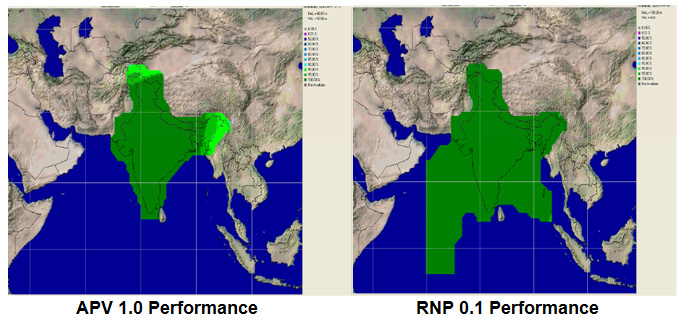
    Planned GAGAN service coverage for the two different service levels (RNP0.1 and APV1). GAGAN has been jointly undertaken by the Airport Authority of India and the Indian Space Research Organization, ISRO, to achieve smooth transition to satellite-based navigation and seamless air traffic management across continents. GAGAN is designed to provide improved accuracy, availability and integrity necessary to enable users to rely on GPS for all phases of flight, from en route through approach for all qualified airports within the GAGAN service volume. More precisely it is aimed to provide Non Precision Approach RNP0.1 service levels to the entire Indian Flight Information Region and Precision Approach APV1 service (equivalent to the current EGNOS Service) within a specified service volume within Indian land mass.
    Planned GAGAN service coverage for the two different service levels (RNP0.1 and APV1). GAGAN has been jointly undertaken by the Airport Authority of India and the Indian Space Research Organization, ISRO, to achieve smooth transition to satellite-based navigation and seamless air traffic management across continents. GAGAN is designed to provide improved accuracy, availability and integrity necessary to enable users to rely on GPS for all phases of flight, from en route through approach for all qualified airports within the GAGAN service volume. More precisely it is aimed to provide Non Precision Approach RNP0.1 service levels to the entire Indian Flight Information Region and Precision Approach APV1 service (equivalent to the current EGNOS Service) within a specified service volume within Indian land mass.

    Tackling ionospheric interference

    The New Delhi IWG took place concurrently with a related meeting, the ICAO’s 4th Ionospheric Study Task Force. This group has been tasked with the objective of developing region-specific models of ionospheric models to compensate for satnav signal interference or loss.

    The ionosphere, the electrically sensitive outer shell of Earth’s atmosphere, can be perturbed by solar activity. And because satnav signals pass from space by Earth they can then be disrupted in turn. Equatorial regions see the greatest disturbance, including signal delay or ‘scintillations’ making signals unstable.

    The aim is to develop reliable ionospheric models to compensate for these effects, particularly for equatorial SBAS regions, such as India. ESA is contributing with data from its worldwide Monitor network, gathering data to improve future EGNOS performance and potentially support further geographical extension.

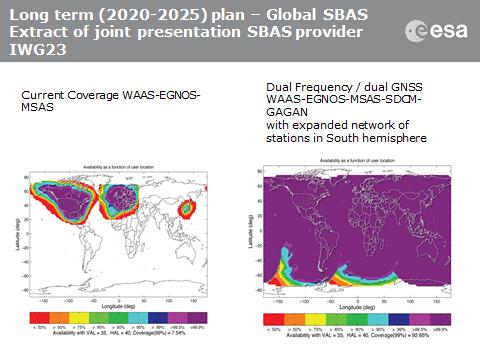
    Comparing current worldwide SBAS coverage – based on WAAS, EGNOS and MSAS – to the situation envisaged for 2020–25: near-global coverage based on WAAS, EGNOS, MAAS, SDCM and GAGAN, with an expanded network of stations in the southern hemisphere, based on a common dual-frequency/dual satnav standard being finalized by the SBAS IWG.
    Comparing current worldwide SBAS coverage — based on WAAS, EGNOS and MSAS — to the situation envisaged for 2020–25: near-global coverage based on WAAS, EGNOS, MAAS, SDCM and GAGAN, with an expanded network of stations in the southern hemisphere, based on a common dual-frequency/dual satnav standard being finalized by the SBAS IWG.
  • GNSS Receiver from Galileo Satellite Navigation Now on Cadence Core

    A software-based GNSS receiver is now available on Tensilica ConnX DSP IP cores, according to an announcement by Cadence Design Systems and Galileo Satellite Navigation, Ltd. (GSN), a developer of multi-system GNSS products including software receiver technology. The core is being demonstrated at the Cadence booth at Mobile World Congress, being held this week in Barcelona, Spain.
    The GSN GNSS receiver running on a Cadence ConnX BBE16 DSP consumes very little power — as low as 10mW of power on a 40nm process — and has the ability to work in lower rates, or snapshots for ultra-low-power mobile scenarios. The solution delivers high-sensitivity tracking, offering a seamless GNSS experience in challenging environments, the companies said.

    “GSN’s software-based approach for satellite receivers perfectly complements Cadence DSPs, taking maximum advantage of the flexibility of our DSP architecture,” said Jack Guedj, corporate vice president of Research and Development at Cadence. “The availability of GSN’s software on our ConnX BBE16 further reinforces the strength of our low-power programmable modem strategy for advanced communications.”

    “The Tensilica ConnX BBE16 DSP delivers outstanding performance for implementing our GNSS receivers and with a low-power footprint. This provides customers with the ability to easily upgrade their designs to include future satellite systems including Beidou, GLONASS, and Galileo via software,” said Eli Ariel, CEO at GSN. “With no additional silicon costs and at a low cost of deployment, this software-based solution results in a very compelling approach to implement satellite navigation functionality in many products where it otherwise might be impractical.”
  • ESA Helps Prepare Satnav Mass Market for Galileo Services

    ESA Helps Prepare Satnav Mass Market for Galileo Services

    Satellite navigation.
    Satellite navigation.

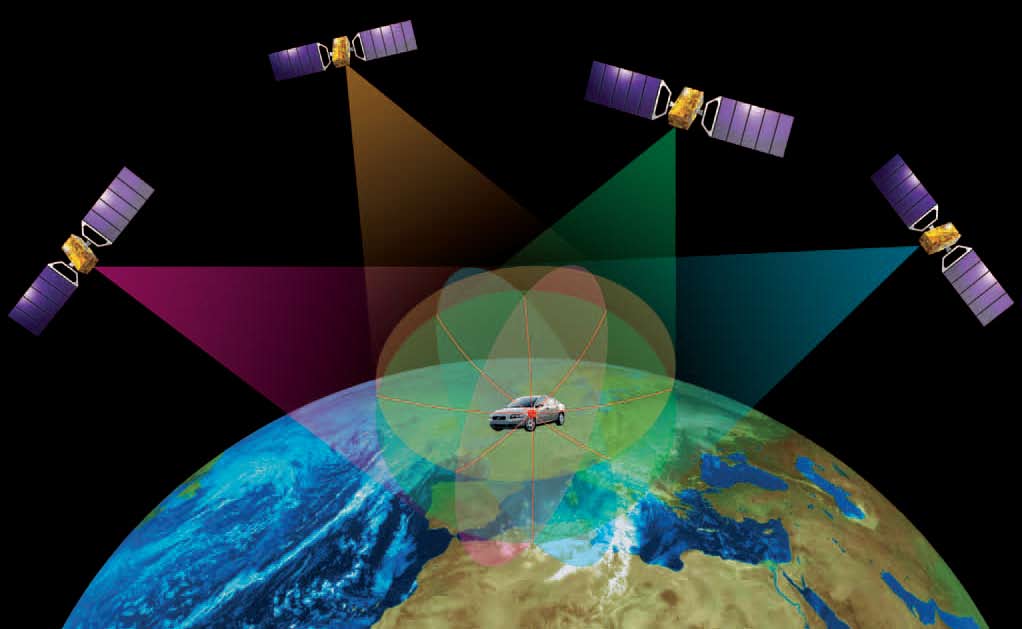
    With the first Galileo services set to begin this year, the European Space Agency (ESA) is working directly with European manufacturers of mass-market satnav chips and receivers to ensure that their products are Galileo-ready.

    “Our objective is to make sure, ahead of the European Union’s declaration of early Galileo services that mass-market devices are ready and able to make use of them,” explained Riccardo de Gaudenzi, head of ESA’s Radio Frequency Systems, Payload and Technology  Division.

    “In coordination with the European GNSS Agency, we put out an open call to satnav manufacturers offering testing with our laboratory facilities. We have gone on to work with five mass-market chipset makers and a comparable number of professional receivers manufacturers.”

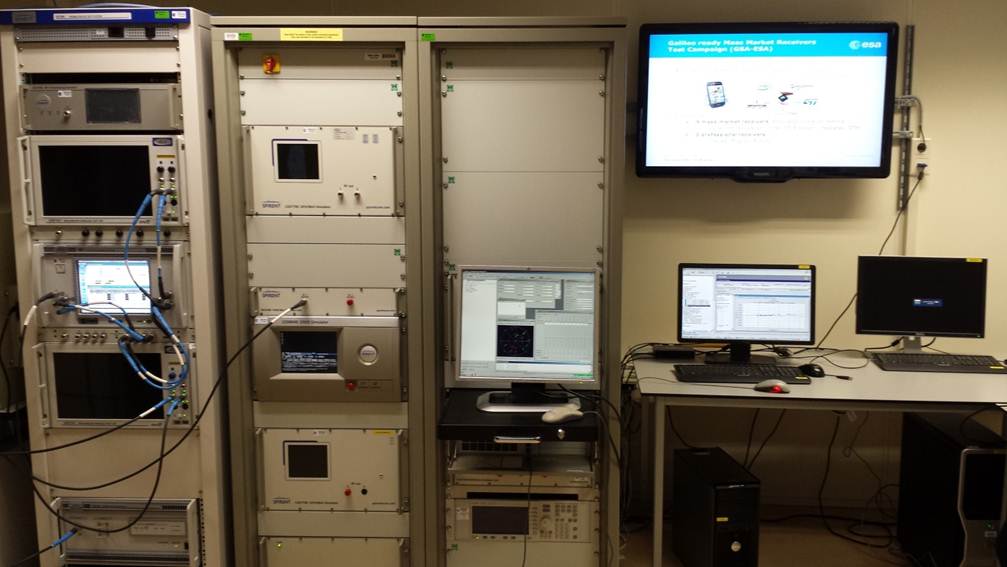
    Key facilities being used at ESA’s Navigation Laboratory include its state-of-the-art “hybrid localization solution rack,” where receiver chips can be plugged in. This rack generates simulated constellations of Galileo, GPS and other satnav systems along with Wi-Fi or mobile networks which phone-based satnav chips often additionally employ. It can also simulate inputs from the kind of inbuilt gyro-type devices receivers employ for dead reckoning, to continue positioning measurements when satellites are out of view.
    Hybrid localization solution rack.
    Hybrid localization solution rack.

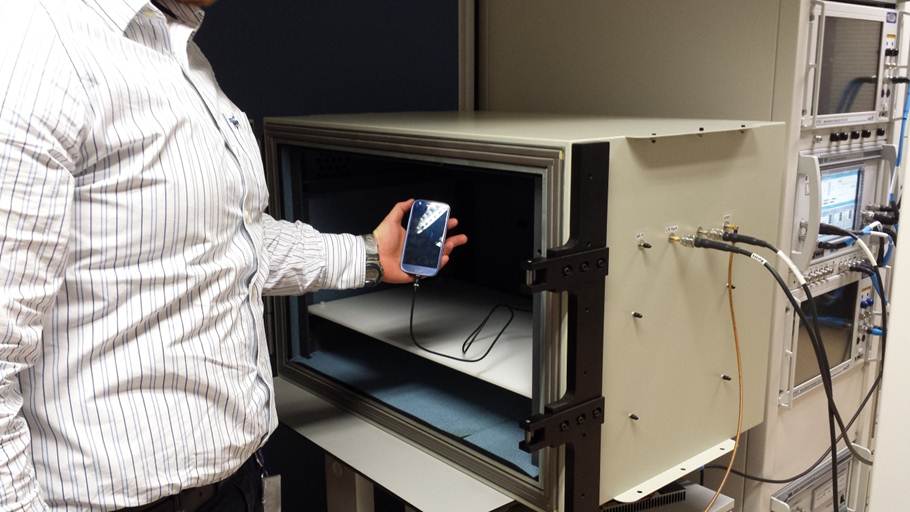
    Another resource is the octobox — a mini anechoic chamber into which phones or mobile devices can be placed, to feed them simulated satnav and cellular network signals.

    Octobox
    Octobox

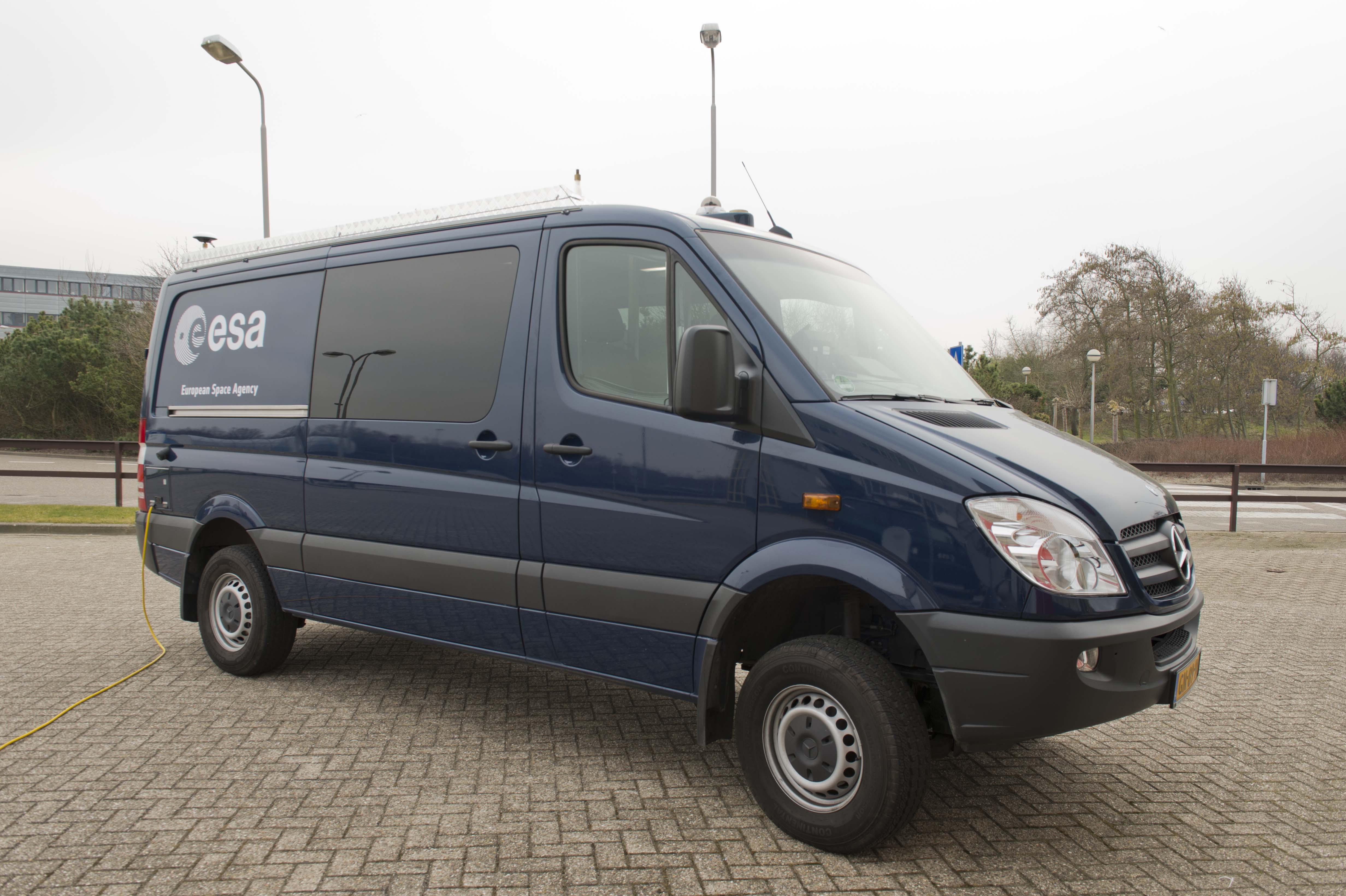
    Testing in the field is carried out with the Lab’s Telecommunications and Navigation Testbed Vehicle. This fully equipped van carries its own extremely accurate receivers to assess the performance of the consumer items being tested.

    Whether they are being used for vehicle navigation, shipment navigation, or precision agriculture, the performance of satnav terminals comes down to the specialized chips embedded within them. The same is true of mobile phones, although their chips tend to be optimized for low-power, high-sensitivity operations.Post

    Test vehicle.
    Test vehicle.

    “This is a very useful initiative from our point of view, closing the loop between Galileo and industry,” commented Philip Mattos of ST Microelectronics, whose Teseo-2 receiver chips are used in satnavs and embedded in cars.

    “Thanks to earlier collaboration with ESA and the EU, the millions of multi-constellation satnav chips we sell annually have been equipped for Galileo signals since 2009. It will take only a software update to enable them to start using Galileo,” Mattos said. “We have worked a lot with simulated Galileo signals, but this cooperation is allowing us to optimize our software based on access to actual signals and background technical information.”

    Combining radio frequency and silicon elements, a single 1-cm square chip can detect signals from multiple satellite constellations — Russia’s GLONASS and China’s BeiDou as well as Galileo and GPS — then convert them into precise positioning measurements.

    Beamed across thousands of kilometers of space, the signals are incredibly faint, barely distinguishable from background noise. But a technique called correlation gain synchronizes them with copies of each satellite’s broadcast code stored in the chip’s memory to boost them to usable levels.

    Data from other systems, such as in-car accelerometers or gyros, can also be fed into the positioning measurements as desired.

    For mass-market single-frequency designs, an ESA-created ionospheric model allows the subtraction of ionospheric delays, its performance coming close to dual-signal standards.

    Chips also apply stored ephemerides data embedded in satellite signals — updates on where satellites are positioned in the sky — to speed up acquisition times.

    The first four Galileo satellites are already in orbit and operational. Over the course of 2014 six more satellites are planned to join them in three separate Soyuz launches. Galileo initial services are scheduled to start by the end of this year.

  • Galileo Achieves In-Orbit Validation

    Dual-frequency Galileo positioning performance during the In-Orbit Validation phase: positioning accuracy is an average 8 m horizontal and 9 m vertical (95% of the time). Its average timing accuracy is 10 nanoseconds on average. Plot courtesy of ESA.
    Dual-frequency Galileo positioning performance during the In-Orbit Validation phase: positioning accuracy is an average 8 m horizontal and 9 m vertical (95% of the time). Its average timing accuracy is 10 nanoseconds on average. Plot courtesy of ESA.

    The in-orbit validation of Galileo has been achieved, according to the European Space Agency (ESA). Europe now has the operational nucleus of its own satellite navigation constellation in place — the world’s first civil-owned and operated satnav system.

    Four is the minimum number of satellites needed to perform navigation fixes. In 2011 and 2012, the first four satellites were launched into orbit. In 2013, these satellites were combined with a growing global ground infrastructure to allow the project to undergo its crucial in-orbit validation phase: IOV.

    “IOV was required to demonstrate that the future performance that we want to meet when the system is deployed is effectively reachable,” said Sylvain Loddo, ESA’s Galileo Ground Segment manager. “It was an intermediate step with a reduced part of the system to effectively give evidence that we are on track.”

    Galileo Validated Video

    On March 12, 2013, Galileo’s space and ground infrastructure came together for the first time to perform the historic first determination of a ground location, taking place at ESA’s Navigation Laboratory in the ESTEC technical centre, in Noordwijk, the Netherlands. From that point, generation of navigation messages enabled full testing of the entire Galileo system. A wide variety of tests followed, carried out all across Europe.

    “ESA and our industrial partners had teams deployed in the field continuously for test operations,” said Marco Falcone, ESA’s Galileo System Manager. “More than 10,000 km were driven by test vehicles in the process of picking up signals, along with pedestrian and fixed receiver testing. Many terabytes of IOV data were gathered in all.”

    The single most important finding from the test results? Galileo works, and it works well. The entire self-sufficient system has been shown as capable of performing positioning fixes across the planet.

    Galileo’s observed dual-frequency positioning accuracy is an average of 8 meters horizontal and 9 meters vertical, 95 percent of the time. Its average timing accuracy is 10 billionths of a second. Its performance is expected to improve as more satellites are launched and ground stations come on line.

    For Galileo’s search and rescue function — operating as part of the existing international Cospas–Sarsat programme —  77 percent of simulated distress locations can be pinpointed within 2 kilometers, and 95 percent within 5 kilometers. All alerts are detected and forwarded to the Mission Control Centre within a minute and a half, compared to a design requirement of 10 minutes.

    “Europe has proven with IOV that in terms of performance we are at a par with the best international systems of navigation in the world,” said Didier Faivre, ESA director of Galileo and Navigation-related Activities.

    In an article for The System section of the February 2013 GPS World, Peter Steigenberger, Urs Hugentobler, and Oliver Montenbruck discuss Galileo-only positioning. “Using an ionosphere-free dual-frequency linear combination of pseudorange measurements on the Galileo E1 and E5a frequencies, the position of the TUME reference station [at the Technische Universität München (TUM) in Munich, Germany] could be determined with a 3D position error of less than 1.5 meters,’” the authors said. Read more here.

  • Switzerland Joins the EU’s Galileo Program

    Switzerland has signed a cooperation agreement to participate in the Galileo and EGNOS programs, the pillars of the EU’s Global Navigation Satellite System (GNSS). Switzerland will now fully financially participate in the programs, and will retroactively contribute €80 million for the period 2008-2013.

    The agreement, signed in Brussels December 18, 2013, also covers cooperation in areas such as security, export control, standards, certification and industrial cooperation.

    The Swiss government is not a member of the European Union, but does hold membership in the European Space Agency (ESA). Norway, another ESA member who is not a member of the EU, signed a similar agreement with the commission in 2010.

    Swiss authorities will pay an annual Galileo fee of €27 million to the commission for access to Galileo services, but access to the Public Regulated Service (PRS) signals is still being negotiated. PRS signals will be restricted to authorized users by governments for sensitive applications that require a high level of continuity.

    “I welcome Switzerland’s decision to fully step on board the European space programme,” said European Commission Vice-President Antonio Tajani. “This co-operation will not only help to provide better results for the EU’s satellite navigation services, it will also open up a series of business opportunities for small and medium sized enterprises both from Switzerland and the EU.”

    Through its membership of the European Space Agency (ESA), Switzerland has contributed to Galileo’s development phase. For example, the state-of-the-art hydrogen-maser clocks used by the Galileo satellites originate from Switzerland. Such extremely accurate clocks are crucial to a number of sectors. Wireless telecommunication networks use Galileo satellites’ timing signal for network management, for time tagging and for synchronization of frequency references. Certified time stamps are also necessary for applications such as electronic banking, e-commerce, stock transactions, quality assurance systems and services.

    With the signing of this agreement Switzerland will now participate in the EU satellite navigation programs and in their committees and working groups.

    Studies show that Galileo will deliver around €90 billion to the EU economy over the first 20 years of operation, while from now until 2020, the EU will spend €7 billion on satellite navigation. Switzerland’s financial contribution for the period 2014-2020 will be calculated in accordance with the standard formula1 applied for the Swiss participation in the EU research Framework Programme.