In Portland, Oregon, and in Berlin, Germany, the two largest and most important international conferences on GPS, GNSS, PNT, survey, mapping and geodesy take place this year on exactly the same dates — just 5,177 miles apart. Now that’s bad timing. Our strategy is to divide our forces and send key personnel to interact with industry leaders at each gathering — to bring you the news and developing stories you need to keep on the forefront of change.
If you’re at ION GNSS+ or Intergeo, look for these faces, come up and introduce yourselves. We want to talk with you! If you’re not fortunate enough to attend either conference, look to our website, newsletters and this magazine for product launches, videos and in-depth stories filed from the developing frontiers of PNT. We’ll be reporting !!Live!! and for weeks, even months, to come.
Attending Intergeo in Berlin:
Burch
Barwacz
Joyce
Gerard
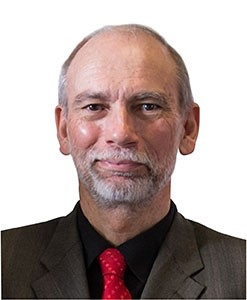
Tim Burch is our survey editor; in his day job he’s a professional surveyor and board of directors secretary of that profession’s national society.
Allison Barwacz is digital media content producer for North Coast Media (NCM, that’s us) with a passion for videography and writing.
Mike Joyce and Ryan Gerard, senior account manager and account manager, respectively, work closely with our marketing partners, who make this magazine and multi-media communications channel possible.
Attending ION GNSS+ in Portland:
Stoltman
Whitford
Mitchell
Cozzens
Harms
Sabau
Limpert
Cameron
Langley
Kevin Stoltman is founder and president of NCM, with a distinguished career in business-to-business publishing.
Marty Whitford is editorial director and publisher; earlier, he actually worked at GPS World and attended ION-GNSS 2004.
Michelle Mitchell is account manager for GPS World and senior marketing and event manager for NCM. She knows the GPS industry landscape and players extremely well.
Tracy Cozzens is our managing editor, with her hands on all the controls.
Joelle Harms is an award-winning digital media manager, focused on content planning and creation.
Joe Sabau is an account manager with a keen eye for market trends.
Kelly Limpert is a digital media content producer developing a strong online and social media presence for all of our partners.
Richard Langley is GPS World’s innovation editor and a professor at the University of New Brunswick.
A GPS-lidar fusion technique implements a novel method for efficiently modeling lidar-based position error covariance based on features in the point cloud. The fusion uses a three-dimensional (3D) city model to detect and eliminate non-line-of-sight (NLOS) GPS satellites to improve global positioning.
The technique has potential application in UAV missions such as 3D modeling, filming, surveying, search and rescue, and package delivery.
By Akshay Shetty and Grace Xingxin Gao, University of Illinois
Unmanned aerial vehicles (UAVs) commonly rely on GPS for continuous and accurate outdoor position estimates. However, in certain urban scenarios, additional onboard sensors such as light detection and ranging (lidar) are desirable due to errors in GPS measurements. To fuse these measurements it is important, yet challenging, to accurately characterize their error covariance. We propose a GPS-lidar fusion technique with a novel method for efficiently modeling the position error covariance based on surface and edge features in point clouds. We use the lidar point clouds in two ways: to estimate incremental motion by matching consecutive point clouds; and, to estimate global pose (position and orientation) by matching with a 3D city model. For GPS measurements, we use the 3D city model to eliminate NLOS satellites and model the measurement covariance based on the received signal-to-noise-ratio (SNR) values. Finally, all the above measurements and error covariance matrices are input to an unscented Kalman Filter (UKF), which estimates the globally referenced pose of the UAV. To validate our algorithm, we conducted UAV experiments in GPS-challenged urban environments on the University of Illinois at Urbana-Champaign campus.These experiments demonstrate a clear improvement in the UAV’s global pose estimates using the proposed sensor fusion technique.
SITUATION
Emerging applications in UAVs such as 3D modeling, filming, surveying, search and rescue, and package delivery all involve flying in urban environments. In these scenarios, autonomously navigating a UAV has certain advantages such as optimizing flight paths and sensing and avoiding collisions. However, to enable such autonomous control, we need a continuous and reliable source for UAV positioning. In most cases, GPS is primarily relied on for outdoor positioning. However, in an urban environment, GPS signals from the satellites are often blocked or reflected by surrounding structures, causing large errors in the position output.
In cases when GPS is unreliable, additional onboard sensors such as lidar can provide the navigation solution. An onboard lidar provides a real-time point cloud of the surroundings of the UAV. In a dense urban environment, lidar can detect a large number of features from surrounding structures such as buildings.
Positioning based on lidar point clouds has been demonstrated primarily by applying different simultaneous localization and mapping (SLAM) algorithms. In many cases, algorithms implement variants of iterative closest point (ICP) to register new point clouds.
APPROACH
The main contribution of this article is a GPS-lidar fusion technique with a novel method for efficiently modeling the error covariance in position measurements derived from lidar point clouds. Figure 1 shows the different components involved in the sensor fusion.
Figure 1. Overview of sensor fusion architecture.
We use the lidar point clouds in two ways: to estimate incremental motion by matching consecutive point clouds; and, to estimate global pose by matching with a 3D city model. We use ICP for matching the point clouds in both cases.
For the lidar-based position estimates, we proceed to build the error covariance model depending on the surrounding point cloud. First, we extract surface and edge feature points from the point cloud. We then model the position error covariance based on these individual feature points. Finally, we combine all the individual covariance matrices to model the overall position error covariance ellipsoid.
For the GPS measurement model, we use the pseudorange measurements from a stationary reference receiver and an onboard GPS receiver to obtain a vector of double-difference measurements. Using the double-difference measurements eliminates clock bias and atmospheric error terms, hence reducing the number of unknown variables. We use the global position estimate from the lidar-3D city matching to construct LOS vectors to all the detected satellites. We then use the 3D city model to detect NLOS satellites, and consequently refine the double-difference measurement vector. We create a covariance matrix for the GPS double-difference measurement vector based on SNR of the individual pseudorange measurements.
We implement a UKF to integrate all lidar and GPS measurements. Additionally, we incorporate orientation, orientation rate and acceleration measurements from an onboard inertial measurement unit (IMU). Finally, we test the filter on an urban dataset to show an improvement in the navigation solution.
LIDAR-BASED ODOMETRY
ICP is commonly used for registering three-dimensional point clouds. It takes a reference point cloud q, an input point cloud p, and estimates the rotation matrix R and the translation vector T between the two point clouds. Different variants of the algorithm generally consist of three primary steps.
Matching. This involves matching each point pi in the input point cloud, to a point qi in the reference point cloud. The most common method is to find the nearest neighbors of each point in the input point cloud. For our application, a kDtree performs best since the two point clouds are relatively close to each other.
Defining Error Metric. This defines the error metric for the point pairs. We choose the point-to-point metric, which is generally more robust to difficult geometry than other metrics such as point-to-plane. The total error between the two point clouds is defined as follows:
(1)
where N is the number of points in the input point cloud p.
Minimization. The last step of the algorithm is the minimization of the error metric with regard to the rotation matrix R and the translation vector T between the two point clouds.
We use ICP to estimate the incremental motion of the lidar between consecutive point clouds. Figure 2 shows our implementation of ICP to estimate the lidar odometry.
Figure 2. The input to ICP is a reference point cloud q and an input point cloud p as shown in (a). The algorithm calculates the rotation matrix R and the translation vector T such that the error metric E is minimized. (b) shows the reference point cloud q and the transformed input point cloud R • p + T.
MATCHING LIDAR, 3D MODEL
We generate our 3D city model using data from two sources: Illinois Geospatial Data Clearinghouse and OSM. The Illinois Geospatial Data were collected by a fixed-wing aircraft flying at an altitude of 1700 meters, equipped with a lidar system including a differential GPS unit and an inertial measurement system to provide superior global accuracy. Since the data were collected from a relatively high altitude, it primarily contains adequate details for the ground surface and the building rooftops. In order to complete the 3D city model, we need additional information for the sides of buildings. We use OSM to obtain this information. OSM is a freely available, crowd-sourced map of the world, which allows users to obtain information such as building footprints and heights. Figure 3 shows a section of the 3D city model for Champaign County.
Figure 3. Section of the point cloud for Champaign County dataset. (Left) shows the 3D city model using only the Illinois Geospatial Data. (Right) fhows the model after incorporating building information from OpenStreetMap.
To estimate the global pose of the lidar, we match the onboard lidar point cloud with the 3D city model using ICP, in these steps:
Use the position output from onboard GPS receiver as an initial guess. If position output is unavailable, use the position estimate from the previous iteration as an initial guess. For orientation, use the estimate from the previous iteration. Thus, we obtain an initial pose guess .
Project the onboard lidar point cloud pL to the same space as the 3D city model qcity using .
Implement ICP, to obtain the rotation RL and translation TL between the two point clouds. Use this output to obtain an estimate for the global pose .
Figure 4 shows the results of implementation of the above method. While navigating in urban areas, the GPS receiver position output used for the initial pose guess might contain large errors in certain directions. This might cause ICP to converge to a local minimum, depending on features in the point cloud pL generated by the onboard lidar.
Figure 4. Global pose estimation with the aid of 3D city model. (Left) shows the intial position guess (red dot, with term in red outlined box) and the onboard lidar point cloud pL projected on the same space as the 3D city model qcity. (b) shows the updated global position (green dot, with term in green outlined box) after the ICP step. We see an improvement in the global position, as the point cloud matches with the 3D city model.
To evaluate how our lidar-3D city model matching algorithm performs in such challenging cases, we test it in two different urban areas as shown in Figure 5. We begin by selecting a grid of initial position guesses up to 20 meters away from the true position. With an adequate distribution of features, ICP is able to correctly match the two point clouds and provide an accurate position estimate after matching. In contrast, when there’s an urban scenario with a relatively poor distribution of features, ICP is unable to estimate the position accurately.
Figure 5. Lidar-3D city model matching in two different urban areas. We begin with a grid on initial position guesses (red) around the true position (black). In (a) and (b), there are adequate features. The position estimates after matching (blue) converge to the true position. In (c) and (d) the feature distribution is relatively poor. The position estimates after matching (blue) are parallel to the building surface.
MODELING ERROR COVARIANCE
We model the lidar position error covariance as a function of the surrounding features. In urban environments, we typically observe structured objects such as buildings, hence we focus primarily on surface and edge features in the point cloud. We extract these feature points based on the curvature at each point. Points with curvature values above a threshold are marked as edge points, whereas points with curvature values below a threshold are marked as surface points. (For detailed discussion of the algorithms involved, see GPS-LiDAR_AkshayShetty-algorithms.
For each surface feature point, we first compute the normal by using 9 of the neighboring points to fit a plane. We model the error covariance ellipsoid with the hypothesis that each surface feature point contributes in reducing position error in the direction of the corresponding surface normal. Additionally, we assume that surface points closer to the lidar are more reliable than those further away, because of the density of points.
For each edge feature point, we first find the direction of the edge using the closest edge points in the scans above and below. We model the error covariance ellipsoid with the hypothesis that each edge feature point helps in reducing position error in the directions perpendicular to the edge vector. A vertical edge, for example, would help in reducing horizontal position error. Additionally, we assume that edge points closer to the lidar are more reliable than those further away, again because of the density of points. Figure 6 shows sample error covariance ellipsoids for a surface point and an edge point.
Figure 6. Position error covariance ellipsoid for surface and edge feature points. The exact sizes of the ellipsoids are tuned during implementation.
To obtain the overall position error covariance, we combine the error covariance matrices for all the individual surface and edge feature points. Figure 7 shows the combined covariance ellipsoid for two different scenarios. We observe that while passing through a corridor, the covariance ellipsoid is larger in the direction parallel to the building sides due to a poor distribution of features.
Figure 7. Overall position error covariance ellipsoids (black) for two point clouds (green). We combine the error ellipsoids from individual surface (red) and edge (blue) feature points.
GPS MEASUREMENT MODEL
We use pseudorange measurements from the GPS receiver to create the measurement model. To eliminate certain error terms, we use double-difference pseudorange measurements, which are calculated by differencing the pseudorange measurements between two satellites and between two receivers. Before proceeding to use the pseudorange measurements, we check if any of the satellites detected by the receiver are NLOS signals. We use the 3D city model mentioned earlier to detect the NLOS satellites. We use the position output generated by the lidar-3D city model matching to locate the receiver on the 3D city model.
Next, we draw LOS vectors from the receiver to every satellite detected by the receiver and eliminate satellites whose corresponding LOS vectors intersect the 3D city model. Figure 8 shows the above implementation in an urban scenario.
Figure 8. Elimination of NLOS satellite signals. LOS vectors are drawn to all detected satellites: SV3, SV14, SV16, SV22, SV23, SV26, SV31. The LOS vectors to satellites SV23 and SV31 intersect (red) the 3D city model and are eliminated from further calculations.
After eliminating the NLOS satellites, we select satellites that are visible to both the user and the reference receivers to create the GPS double-difference measurement vector and its covariance. We assume that the individual pseudorange measurements are independent, and that the variance for each measurement is a function of the corresponding SNR. We propagate the covariance matrix for the individual pseudorange measurements, to obtain the covariance matrix for the double-difference measurements.
GPS-Lidar Integration
In addition to using a lidar and a GPS receiver, we use an IMU on board the UAV. Figure 9 shows the experimental setup: the UAV designed and built by our research group. For the double-difference GPS measurements, we use a reference receiver within a kilometer of our data collection sites. We implement a UKF to fuse measurements from the sensors and estimate the global pose of the UAV.
Figure 9. Experimental setup for data collection. Our custom-made iBQR UAV mounted with a lidar, a GPS receiver and antennas, an IMU, and an onboard computer.
Position and orientation estimates from lidar and GPS are incorporated via the correction step of the filter, whereas the IMU measurements are included in the prediction step. For position corrections from lidar, we use our point cloud feature based model for the error covariance. For GPS double-difference measurements, we use the covariance based on the individual pseudorange measurement SNR.
We implement our algorithm on an urban dataset collected on our campus of University of Illinois at Urbana-Champaign. As shown in Figure 10, the GPS measurements and the GPS position output contain large errors, due to the presence of nearby urban structures. Here we stack all the double-difference measurements and compute the unweighted least square estimate of the baseline between the UAV and the reference receiver.
Figure 10. Position estimates from GPS measurements. The position output from the GPS receiver (blue) and the unweighted least-squares position estimate (red) contain large errors.
For the lidar measurements, we check the output from our incremental ICP odometry method and the lidar-3D city model matching algorithm. Furthermore, we implement an ICP mapping algorithm to check the performance of existing ICP-based methods on the dataset. In Figure 11, the ICP odometry method and the ICP mapping algorithm accumulate drift over the course of the trajectory. The lidar-3D city model matching algorithm does not drift over time; however, the position still contains errors in situations where the lidar does not detect enough number of points or the matching algorithm converges to a local minimum.
Figure 11. Position estimates from lidar point clouds. The incremental ICP odometry (green) and the ICP mapping (blue) estimates accumulate drift over time. The lidar-3D city model matching (yellow) does not drift over time, but contains errors where the ICP algorithm might converge to a local minimum.
Figure 12 shows the output of the filter for the same trajectory. The filter output estimates the actual path much more accurately than the individual measurement sources by themselves.
Figure 12. Position estimates from UKF, integrating GPS and lidar measurements. The filter position output (blue) resembles the actual trajectory, more accurately than any individual source of GPS or lidar measurements.
CONCLUSION
In summary, we proposed a GPS-lidar integration approach for estimating the navigation solution of UAVs in urban environments. We used the onboard lidar point clouds in two ways: to estimate the odometry by matching consecutive point clouds, and to estimate the global pose by matching with an external 3D city model. We built a model for the error covariance of the lidar-based position estimates as a function of surface and edge feature points in the point cloud. For GPS measurements, we eliminated NLOS satellites using the 3D city model and used the remaining double-difference measurements between an onboard receiver and a reference receiver. To construct the covariance matrix for the double-difference measurements, we used the SNR values for individual pseudorange measurements.
Finally, we applied an UKF to integrate the measurements from lidar, GPS and an IMU. We experimentally demonstrated the improved positioning accuracy of our filter.
ACKNOWLEDGMENTS
The authors would like to sincerely thank Kalmanje Krishnakumar and his group at NASA Ames Research Center for supporting this work under the grant NNX17AC13G.
The material in this article was first presented at the ION GNSS+ 2017 conference in Portland, September 2017.
MANUFACTURERS
The lidar used aboard the UAV in these tests is a Velodyne VLP-16 Puck Lite. The GPS receiver is a u-blox LEA-6T with a Maxtena M1227HCT-A2-SMA antenna. The IMU is an Xsens Mti-30, and the onboard computer an AscTec Mastermind 3a.
The iBQR UAV was designed and assembled by the authors.
AKSHAY SHETTY received an M.S. degree in aerospace engineering from University of Illinois at Urbana-Champaign. He is also pursuing a Ph.D. at the same university.
GRACE XINGXIN GAO received a Ph.D. degree in electrical engineering from Stanford University. She is an assistant professor in the Aerospace Engineering Department at the University of Illinois at Urbana-Champaign.
I had my special ISO-certified glasses ready. Living in Oregon, I wasn’t about to miss the once-in-a-lifetime chance to see a total eclipse of the sun.
On Aug. 21, my family drove a few miles north to get into the path of totality, which for us lasted about a minute. It was definitely worth the field trip.
Besides regular folk like me, experts in numerous fields turned their eyes — and their instruments — to the eclipse.
The National Center for Atmospheric Research took to the air with a Gulfstream V fitted out with sensors and equipment for atmospheric research. The flight gathered data about the sun that can’t be collected from the ground.
With better instruments than ever before, for the first time scientists had the chance to observe the corona in the infrared spectrum, which may provide insight into the sun’s magnetic fields.
Back on terra firma, atmospheric scientists closely monitored changes in temperature and other weather effects. The temperature dropped as much as 7 degrees in Crossville, Tennessee, reports the National Weather Service.
Scientists at zoos and aquariums across the country closely watched animal behavior during totality. Species exhibiting unusual behavior included elephants, hippos, crocodiles and penguins.
The scientists found a “decrease in the number of free electrons in the part of the Earth’s ionosphere along the eclipse path where sunlight was temporarily blocked by the moon…
“TEC [total electron content] time series from two continuously operating GPS monitoring stations near the path of totality…show a small dip of about 2 TECU [TEC units] or so around 18:00 UTC on Aug. 21, coincident with the timing of the eclipse.”
The eclipse also affected WAAS real-time correction data from geostationary satellites.
While study of the data continues, it’s clear that GPS easily withstood the eclipse. Learn more here.
The day started like any other day. The land surveying crew loaded up their vehicle, equipment and marching orders to tackle the next project on the list.
This field party is like most surveyors across the globe — they are equipped with the latest surveying technology including GPS base and receivers, robotic total station and a UAS for aerial photography. These tools are necessary to be competitive in today’s surveying arena as speed and productivity are paramount to the success of the project and the company.
But on this day, any device with the ability to determine geographic location via satellite reception was rendered useless.
Today became known as the day that GPS went away.
How we became dependent on GPS
Let’s back up the story to the introduction of GPS and how our dependency on this technology came to be. With the invention of satellites culminating with the Russian effort to launch Sputnik, the United States became involved in a “race to space.” Our early efforts to use satellites were proven worthy with the successful ability to track submarines by reception of radio signals and trilateration.
Further enhancements through research resulted in the development and creation of the NAVSTAR satellite in 1978. By 1993, 24 satellites were in orbit to make the GPS system fully functional (NASA.gov).
Meanwhile, the Russians were committed to a satellite network for navigational purposes during the same time period. The first satellite, Kosmos-1413, was launched in 1982 with the full 24 satellite constellation becoming operational in 1995.
Together, these systems (known as global network satellite systems or GNSS) allowed for location and navigation abilities never thought possible, and the surveying community began its adoption of the technology.
Early survey adopters of GPS were usually large engineering firms, state departments of transportation (DOTs) and federal agencies that could afford the large financial commitment to the equipment (both GPS and computers), software and computing costs required to use the technology.
The data-collection times were long, and the software analysis required enormous patience and extensive mathematical knowledge, but the results were beyond what the everyday surveyor had ever before accomplished.
Significant distances could now be measured with the same or better accuracy than taping or using an electronic distance meter could have provided. The true revolution came when real-time kinematic (RTK) GPS was invented and was affordable to the everyday surveyor (GPS World, May 2016).
S/A and A-S
Most GPS users, especially operators of survey-grade receivers, are not aware of the early days of satellite navigation and the military’s use of selective availability, otherwise known as S/A (GPS World, Sept/Oct 1990). This methodology was implemented by the Department of Defense (DoD) on May 25, 1990 to limit accuracies for non-military GPS users.
This procedure was created to allow erroneous timing at random occurrences throughout transmission of satellite radio signals. These variations in timing more than negatively tripled the normal precision of an autonomous GPS position calculation, all in the name of introducing uncertainty to potential enemy users.
And if S/A wasn’t enough, the DoD also could implement another deterrent called anti-spoofing (A-S) and encrypt the precision or P-code of the satellite signal. The big factor here is that the general public (in our case, the surveying community) didn’t know if or when A-S was turned on. These factors were frustrating to the GPS user, so data collection and coordinate determination became a tedious operation.
Early receiver use by surveyors relied on differential GPS data collection for high-accuracy location (<10 cm or better). This method consisted of placing one or more receivers on known positional points (usually on monuments published through the National Geodetic Survey) while simultaneously performing data collection on new points for positional establishment.
Prior to S/A, the software utilized to analyze and reduce the data collection provided feedback on “bad” data, but there were usually environmental issues causing the problem (such as cycle slips and radio interference.) The software would highlight the suspect data for the reviewer to determine validity and acceptance.
Because of the nature of differential GPS data collection, error checking remained the same once S/A was implemented. If the software calculated an incorrect coordinate at a known point, the same measurements to the new survey point were dismissed as a false reading.
Surveyors were mostly left unfazed by S/A as real-time kinematic (RTK) and real-time network (RTN) follow a similar procedure utilizing a correction from a known terrestrial point. Even with the anti-spoofing activated, the surveying profession continued to use this high-tech location system that revolutionized long distance measurement. Things have been running along smoothly with steady improvement of receivers, data collectors, and data coverage until…
The day it goes away
…the unthinkable happens. Our national satellite system is no longer available.
It doesn’t matter why GPS has gone away on this day. It could be for many different reasons: federal budgets; enemy interference such as geomagnetic disturbances (GMD) or electromagnetic pulse (EMP);
conventional or nuclear war; interference from solar storms, asteroids, or comets; or the system just simply breaks.
Artist’s rendering of a cross-section of the Earth’s magnetosphere. (IMAGE: NASA)
Another thing for all users of GNSS to consider in these tumultuous times is how newer systems are integrating other countries’ satellite networks into their navigational observations.
Our relationship with the Russian government can be on unsteady ground from time to time, so our use of their GLONASS signals must be reviewed for accuracy as well (See GPS World, August 2017).
It won’t matter whether a spoofed satellite signal originates from a private Russian hacker or from their actual government; it will still lead to incorrect information and bad data. Imagine having to revise a plat because the GLONASS data was purposely corrupted!
Obviously, the main reason they would allow transmittal of misinformation would be for military reasons, but I can only imagine their joy of messing with professional navigation and the recreational users in the U.S. These opportunities will also apply to the Chinese and Indian constellations, too.
We’re not ready
The bottom line is that we, the U.S., aren’t ready for it. Whatever may be the reason for the failure, we do not have a backup plan and have relied much too heavily on satellite navigation. Gone is our ability to navigate through our electronic devices, including smartphones, fitness trackers, in-car mapping and, yes, high-precision surveying equipment. These items have now become door stops and space wasters.
This new conundrum doesn’t just stop with the surveyor and recreational GPS equipment. A significant amount of construction equipment relies on machine control, from bulldozers and road graders to high-rise cranes.
This will also affect a large amount of agricultural equipment and processes. Those high-tech tractors with autosteer and computer-guided planters? Back to the drawing boards. So many things in our lives today are guided or controlled by navigational systems designed around GPS use, and the surveyor is squarely in this mix.
What’s a surveyor to do?
The first thought on the surveyor’s mind is now having to perform all surveying tasks with instruments that are not based on satellite navigation. Yes, the reason for this GPS shutdown isn’t widespread enough to affect cellphone signals and other radio communications, but it killed off the one navigation system more people rely on than any other.
Because of this unfortunate shutdown, all GPS-based equipment is now worthless. This means your trusty RTN receiver with cellphone connection, your old base unit for those times when cellphone coverage is lacking, the fancy new UAV for taking orthophotography, and your cellphone or handheld GPS receiver for tracking down NGS monuments — all of them are done. Only your conventional equipment will complete the job.
Is the surveying profession finished? How do we locate those remote section corners in the middle of nowhere?
Don’t throw in the towel just yet. Surveyors have been measuring land using these types of instruments for centuries, with today’s versions being electronic and sophisticated. Robotic servos, mini computer-data collectors, efficient radio links and active tracking prisms have turned our forefathers’ simple transit into a sophisticated topographic or construction staking machine.
Data collection is much easier than writing everything in a field book, and have graphical interfaces and remote connection capability to keep you in touch with the office from nearly anywhere. The reality, however, is that the surveyor will now have to use methods and equipment for traversing, data collections and all staking tasks that will greatly reduce our productivity and profitability.
Experience could also end up being a big factor here as well. The average age of the professional land surveyor in the United States is 58 and climbing. This means most of these practitioners have been in the business well before GPS technology, so there is still the potential of surveying without the electronic birds in the sky.
Surveyors can still hang their shingle and practice their craft, but we’ve now lost a big component of our world: geographical location. The key to the success of GPS was the ability to determine geographic location and subsequently convert that information into a data format compatible with one’s local system. From UTM coordinates to State Plane, the world became smaller with this technology.
The surveyor can still determine latitude and longitude using manual surveying methods for specifically observing the sun and Polaris. The mathematics and procedures are complicated, but they still allow for determining a geographical location with high accuracy.
We can also utilize the extensive geodetic monumentation networks established nationwide, all started around the formidable effort by the Coastal and Geodetic Survey. This key federal agency, later to become the National Geodetic Survey, laid the groundwork and set the monuments for the backbone of our national horizontal network system. This system has been augmented over the years by their own programs, as well as state and local authorities, to expand our coverage to all portions of the United States.
By incorporating these monuments into a survey, a relationship to geographical datums is still easily obtained. While these methods of establishing geographical coordinates through use of conventional equipment sounds time consuming, without GPS and other satellite-based navigational aids, it will become much more cumbersome.
So, what do we do next?
Depending on which industry you are in or your necessary level of accuracy, several alternatives are being developed. For those in the shipping industry (including the trucking sector, which numbers more than 15 million vehicles), accuracy may only need to be nominal — for instance, 5 meters, give or take.
Several systems are in development with the biggest priority on enhanced loran (short for “long range navigation”) or eLoran (also see GPS World April 2014 and GPS World Nov 2015). Several bills are currently being reviewed in the U.S. House and Senate for consideration of funding this technology.
These programs are still under development, but DARPA has been tasked with finding another system so our dependence on GPS will not cripple our defense in a time of war.
Abraham Lincoln, the county surveyor — a statue at Lincoln’s New Salem State Historic Site, Illinois.
Another alternative will be private satellite networks. With programs like SpaceX and Blue Origin, vehicles to carry new satellites into orbit are now a viable option. It will be possible for companies to create their own networks for private or commercial use.
With the large number of construction, shipping and automobile sales, the day may come when the navigation system within each of these is proprietary. However, if we are faced with geomagnetic disturbances (GMD) or an electromagnetic pulse (EMP) as mentioned earlier, it won’t matter whose network it is — they will all be rendered useless.
Until another viable option is created, the surveyor will be forced to take a step back in productivity and technology with conventional instruments. While not the most ideal thing, it will force the profession to retrain its entire workforce on procedures and methods that haven’t been regularly utilized for many years.
For some, it will be like throwing away the computer for a typewriter or the remote control for the television set. For others, it will be an opportunity to truly “follow in the footsteps” of past surveyors. They will understand exactly how their predecessors went about “running the lines” and completing a true boundary survey.
I, however, hope we don’t find ourselves in this situation, and that a suitable backup system or even a more advanced replacement for our antiquated GPS is invented soon.
But if the day comes and our GPS goes away, I’m guessing that surveyors not having their favorite locating device will be the least of our society’s worries. It will truly be a day that will live in infamy.
The eclipse across America on Aug. 21 was not only a magnificent visual event, it was also observed indirectly by the impact that it had on the propagation of radio signals — including those of global navigation satellite systems.
There was a decrease in the number of free electrons in the part of the Earth’s ionosphere along the eclipse path where sunlight was temporarily blocked by the moon. While not as significant as the daily variation as day turns to night, the effect was clearly seen in the signals received on the ground from GPS satellites.
GPS signals are routinely used to monitor the behavior of the ionosphere. The density of electrons in the ionosphere affects the speed of propagation of radio signals and this effect is slightly different at different frequencies.
By combining measurements made on the L1 and L2 legacy signals transmitted by all GPS satellites using high-grade receivers, scientists and engineers can measure the total electron content (TEC), which is the number of electrons in a column with a cross-sectional area of one meter squared along the path of the signal from satellite to receiver.
This value can then be projected to the vertical direction using a simple equation. Given the large number of electrons in the column, we measure the TEC in TEC units (TECU), where 1 TECU = 1016 electrons per square meter.
TEC time series from two continuously operating GPS monitoring stations near the path of totality, BREW at Brewster, Washington, and NISA at Boulder, Colorado, show a small dip of about 2 TECU or so around 18:00 UTC on Aug. 21, coincident with the timing of the eclipse. These time series are illustrated in FIGURES 1 and 2. Also shown in the figures are the time series for the day before, Aug. 20, which just show the normal diurnal ionospheric variation.
Figure 1. Time series of vertical total electron content observed using all GPS satellites observed at Brewster, Washington, on Aug. 21, 2017, the day of the eclipse (in blue) and the time series from the previous day, Aug. 20., 2017, for comparison (in red).Figure 2. Time series of vertical total electron content observed using all GPS satellites observed at Boulder, Colorado, on Aug. 21, 2017, the day of the eclipse (in blue) and the time series from the previous day, Aug. 20., 2017, for comparison (in red).
The effect of the eclipse was also be seen in the real-time correction data transmitted by the U.S. Wide-Area Augmentation System (WAAS) using geostationary satellites.
WAAS provides enhanced accuracy, integrity and availability for GPS single-frequency users using a network of dual-frequency GPS receivers all across North America. Corrections include a grid of ionospheric propagation delay values, updated every 5 minutes, which are used to account for the delay in receiver measurements.
FIGURE 3 shows part of the grid transmitted by WAAS and the path of totality across the U.S. Three of the grid points are close to the path and the time series of delay values of these points are shown in FIGURE 4.
Figure 3. Map showing the locations of a subset of the grid points used for the WAAS ionospheric delay corrections highlighting the three grid points close to the eclipse path of totality used to examine the effect of the eclipse along with one grid point far removed from the path for comparison.Figure 4. Time series of ionospheric vertical delay values of three WAAS ionospheric grid points along the eclipse path of totality on Aug. 21, 2017, along with the values from a grid point far removed from the path.
We see clear dips in values of up to about 50 centimeters. This is equivalent to what we see in the TEC time series from the BREW and NISA monitor stations since 1 TECU equates to 16 centimeters of propagation delay at the GPS L1 frequency.
Furthermore, the times of the dips correspond to the times of totality as the eclipse quickly moved across the country from west to east. Also shown for comparison in Figure 4 are the delay values for a grid point far removed from the path of totality, which show only the normal diurnal variation.
Not only does a total eclipse mesmerize the general public, it excites many scientists and engineers, too. A number of university research groups organized special eclipse observing campaigns to collect data from GPS receivers as well as other ionospheric monitoring tools to better understand exactly how the ionosphere reacts to a total eclipse of the sun.
And although we expect future analysis of the data will show features of great interest to science, the immediate results from the total eclipse of Aug. 21 show no significant impacts on the position, navigation and timing service GPS provides.
GPS “weathered” the eclipse with flying colors.
(Attila Komjathy, Siddharth Krishnamoorthy, Anthony J. Mannucci, Lawrence C. Sparks, Lawrence E. Young and Giorgio Savastano from the NASA Jet Propulsion Laboratory operated by the California Institute of Technology; Gerald W. Bawden from NASA HQ Earth Science Division; and Hyun-Ho Rho and Richard B. Langley from the University of New Brunswick, Fredericton, Canada, contributed to this article.)
In the July and August issues of the magazine, the “Out in Front” editorials held forth on the perfection or lack thereof in the GPS signal and service.
Now it’s your turn!
Give us your opinion at gpsworld.com/17augustpolland we’ll publish the results in the September issue. And you’ll gain entry to a random drawing for a $50 gift card.
The question is: How close to perfect is GPS performance?
And your choices are:
Absolutely perfect. 100 percent.
Nearly perfect. The space segment functions flawlessly. The only problems are with jamming and user equipment.
Almost nearly perfect. There have been a few hiccups in space, then there’s jamming, and user equipment weaknesses.
Not nearly close enough to perfect — but pretty good. The (admittedly rare) operator miscue, jamming, spoofing, and other exploitable user equipment weaknesses.
Fair, but a long way to go. All the above cited problems, plus lack of signal reception under canopy, urban canyons, indoors.
Not a passing grade. But it’s the best I have, so I grit my teeth and use it.
Pretty poor if you ask me. It just does not meet my requirements.
Other (please specify)
For background and two different views on the controversy engendered by a U.S. Air Force public release on this subject, see:
Possibly during the course of last month’s editorial here, “‘Nearly Perfect’ Not Nearly,” in which I called out the U.S. Air Force for lauding itself a bit much, I veered across the line separating vehemence from over-vehemence. Just possibly. Over-vehemence is a professional hazard of journalism. A gentle reader wrote in to suggest as much. He began, in his polite way, with “As always, I enjoyed your article and it made me think.” Then he offered a few of his thoughts for me in turn to consider.
First, he urged me to weigh all three GPS segments. The space and control segments operate almost flawlessly, he averred. Except, I can’t refrain from riposting, for the times that they don’t.
The user segment, we can all agree, is a different story. Most current GPS user equipment can be jammed and spoofed, sometimes very easily, and some have difficulty handling leap seconds and GPS week rollovers.
The U.S. Air Force and the GPS program office cannot fix the problem with user equipment. This is up to those who manufacture, purchase, install and maintain the user equipment.
Fair enough.
Let’s not even get into mapping and guidance algorithms and obsolete data that generate multitudinous stories in mass media about drivers led astray and into danger “by GPS.” Those are the fault, not of the user equipment per se, but of software conjoined to a receiver in a navigation device or smartphone.
My column in June’s GNSS Design & Test enewsletter covered the same ground and then tackled the potential costs of GPS disruption, citing a study done by Innovate U.K., the U.K. Space Agency and the Royal Institute of Navigation. This included a pie chart of potential economic losses in the U.K. that would stem from a prolonged GNSS disruption. I really should have correleated these with, or at least mentioned in the same breath, the reports done for the National Space Based-PNT Advisory Board by Irv Leveson, because there were several mismatches. In particular, the PNT Advisory Board study concluded that more than 50 percent of the value of GPS to the U.S. economy lies in high-precision uses — substantially higher than estimated in the U.K.
Regardless of statistics, we should think, my correspondent reminded me, about the performance needs of different uses. It’s not just whether you have PNT or you don’t. The degree to which you have it is the key: accuracy, coverage, 3D versus 2D positioning and other factors determine if a technology can perform to meet a given need. Aviation requires 3D positioning for some operations. Surveying and machine control require submeter accuracy. Road use requires meter accuracy now, and submeter in the future for autonomous driving. Almost 50 percent of the U.K. pie chart, and more than 50 percent of GPS value to the U.S., requires meter or better accuracy. Except for other satnav systems, what known technology can provide this kind of performance over an area the size of a nation, whether U.K. or U.S.?
GPS expert Scott Pace has been chosen by the White House to serve as executive secretary of the National Space Council. Pace is currently director of the Space Policy Institute and Professor of Practice of International Affairs at George Washington University (GWU).
He also serves as a special counselor to the National Space-Based Positioning, Navigation and Timing (PNT) Advisory Board.
Pace has a long career in space policy and is well known and highly respected in the community. Ever since the Trump Administration indicated that it would reestablish the Space Council, his is virtually the only name rumored to be in the running to serve as the head of its staff, according to the announcement on Space Policy Online.
The council was officially reestablished on June 30, and is chaired by Vice President Mike Pence. Pace was spotted at Kennedy Space Center last week where Pence addressed the KSC workforce, further fueling speculation that he would be appointed as head of the Space Council.
In its announcement, the White House said Pace has “honed his expertise in the areas of science, space, and technology” citing his career at GWU, NASA, the White House Office of Science and Technology Policy (OSTP), and the RAND Corporation’s Science and Technology Policy Institute.
Pace received a bachelor’s degree in physics from Harvey Mudd College, a master’s in Aeronautics and Astronautics and Technology and Policy from MIT, and a Ph.D. in policy analysis from the RAND Graduate School.
During the George W. Bush Administration’s second term, Pace was NASA’s Associate Administrator for Program Analysis and Evaluation under then-NASA Administrator Mike Griffin. He was closely involved in formulating the Constellation program to return humans to the surface of the Moon and then going on to Mars.
His expertise is much broader, however. He was deputy director and acting director of the Office of Space Commerce at the Department of Commerce from 1990 to 1993, when that office reported to the Deputy Secretary of Commerce (instead of being part of NOAA as it is today).
He has been very active on GPS issues for many years, including protecting GPS spectrum at World Radiocommunications Conferences (WRCs) organized by the International Telecommunication Union (ITU). He was a member of the U.S. delegation to the WRCs in 1997, 2000, 2003 and 2007.
He also has served as a member of the U.S. delegation to the United Nations Committee on Peaceful Uses of Outer Space (2009 and 2011-2015). Today he is vice-chair of NOAA’s Advisory Committee on Commercial Remote Sensing, of which he has been a member for several years.
John Logsdon, who founded GWU’s Space Policy Institute and is Professor Emeritus there, said via email that he could think of “no one more qualified” to take on the “essential task of crafting a strategic approach to using U.S. space capabilities to advance this country’s geopolitical interests and to forge productive collaboration among all government space actors and the private sector.”
Mary Lynne Dittmar, president and CEO of the Coalition for Deep Space Exploration (CDSE), also praised the announcement.
“Dr. Pace’s unique combination of experience in government, the private sector, and academia, and his internationally-recognized expertise in space policy, make him an exemplary selection” for the position. She added that CDSE looks forward to working with “the Council, its staff, and the vice president’s office to support U.S. leadership and strategic interests in space.”
CDSE is an alliance of space industry businesses and advocacy groups that support deep space human exploration and science.
Here there be dragons. That phrase (or a variation of it) was used by early mapmakers to designate the unknown — and alert sailors to the danger of traveling into uncharted waters.
I’ve always admired explorers who dared to push the boundaries of the known world. We’ve moved from the Age of Exploration to the Age of Information, but exploration continues on frontiers big and small.
Today, of course, most people think of the world as having been mapped. They can simply call up Google maps on their smartphone and see not only the world, but their town, their street and their house — in representational cartography (traditional map), satellite imagery, or even street-view imagery.
Professionals in geographic information systems (GIS) know better. The world is still a mystery in uncounted areas. For one thing, it’s not static: Volcanoes form new land masses, storms change coastlines, the sea-level is rising. For another, there’s more to exploration than a basic map.
That’s where the GIS professional takes center stage, assessing an area beyond what is already known, using a variety of tools to collect and analyze data. As Esri defines it, a GIS lets us “visualize, question, analyze and interpret data to understand relationships, patterns and trends. GIS benefits organizations of all sizes and in almost every industry.” A software-based profession, GIS experts use GPS, GNSS and inertial to gather data, which is where this magazine comes in.
At GPS World, we share GIS developments in our Mapping Market Watch, Mapping Launchpad and at geospatial-solutions.com.
Esri President Jack Dangermond describes the value of GIS at the plenary session of the Esri UC.
“Maps are alive,” declared Jack Dangermond, Esri founder and president, on the plenary stage at the world’s largest GIS event. The 38th annual Esri User Conference is taking place July 10–14 at the San Diego Convention Center.
We are on the cusp of a data and information explosion, Dangermond explained while introducing the conference theme “The Science of Where.”
“We are about to launch in to a different scale,” he predicted. GIS is changing rapidly with numerous new information streams and advances in real-time data, and maps are central to understanding our changing world. GIS provides a platform for managing, analyzing and applying that data and information, he said.
His advice? “Share, collaborate. Communicate so we collectively can learn all bout world. Let’s take our work collectively to scale.”
GIS is vital to understanding developments in numerous areas: population growth, climate change, social changes, natural disasters and political polarization, to name a few. “We have to do everything we can to better understand and form collaborations to address these areas,” he said.
“Today’s businesses and governments require new ways of thinking,” said Dangermond. “Our users are leading the charge, using mapping and analytics to empower digital transformation, accelerate understanding of big data, and democratize technology. It is an inspiration to see how so many different organizations are applying the science of geography and the technology of GIS to gain insight into their data and reveal hidden patterns and spatial relationships.”
Dangermond presented numerous examples of organizations using GIS in new ways. For instance, Oak Ridge National Laboratory has created an “energyshed” map similar to a watershed map. An orchard is using GIS and GPS tracking to collect data on cherry picking. The Democratic Republic of Congo is making use of crowdsourcing to generate maps.
Story Maps are aiding what Dangermond calls “geo-journalism,” telling stories about new developments in virtually every field.
A screenshot of “Washington’s Ice Age Floods” story map from the Washington Geological Survey.
Dangermond also presented the following awards:
Ice Age Floods, by the Washington Geological Survey, won Best Story Map.
The GIS Digital Transformation Award went to Abu Dhabi, which “has taken GIS to new frontiers” in every government agency with every citizen, Dangermond said.
The Enterprise GIS Award went to the U.S. National Geospatial-Intelligence Agency for maintaining the largest GIS database in the world, with daily updates and a user-friendly portal.
The President’s Award, chosen personally by Dangermond, was given to the United Parcel Service (UPS), which saves up to $400 million a year with its location-enabled Orion system. It puts the ability to update maps in the hands of supervisors, who constantly are optimizing routes. Now deployed in the U.S., the Orion system is going worldwide.
Other speakers and their topics at the first-day plenary included:
Renowned author and theoretical physicist Geoffrey West — His book Scale: The Universal Laws of Growth, Innovation, Sustainability, and the Pace of Life in Organisms, Cities, Economies, and Companies, explores dynamic growth and the challenges of achieving that growth sustainably.
Oakland County, Michigan — Making government services more cost-effective
Chesapeake Conservancy — Analyzing imagery and sensor data to protect watershed areas
Taylor Shellfish Farms — Transforming the family-run business by implementing cloud GIS solutions so staff can perform spatial data collection in the field
Severe Trauma Air Rescue Service (STARS), Calgary, Canada — Powering real-time decision support systems to improve emergency services
Smart Dubai — Empowering one of the smart cities of the future with citizen engagement and smart growth
Walt Disney Animation Studios — Behind the scenes of Zootopia.
GIS provides the means for users to apply “the Science of Where” everywhere, according to Esri President Jack Dangermond. (Photo: Esri)
“Maps are alive,” declared Jack Dangermond, Esri founder and president, on the plenary stage at the world’s largest GIS event. The 38th annual Esri User Conference is taking place July 10–14 at the San Diego Convention Center.
We are on the cusp of a data and information explosion, Dangermond explained while introducing the conference theme “The Science of Where.”
Esri President Jack Dangermond describes the value of GIS at the plenary session of the Esri UC. (Photo: GPS World)
“We are about to launch in to a different scale,” he predicted. GIS is changing rapidly with numerous new information streams and advances in real-time data, and maps are central to understanding our changing world. GIS provides a platform for managing, analyzing and applying that data and information, he said.
His advice? “Share, collaborate. Communicate so we collectively can learn all bout world. Let’s take our work collectively to scale.”
GIS is vital to understanding developments in numerous areas: population growth, climate change, social changes, natural disasters and political polarization, to name a few. “We have to do everything we can to better understand and form collaborations to address these areas,” he said.
“Today’s businesses and governments require new ways of thinking,” said Dangermond. “Our users are leading the charge, using mapping and analytics to empower digital transformation, accelerate understanding of big data, and democratize technology. It is an inspiration to see how so many different organizations are applying the science of geography and the technology of GIS to gain insight into their data and reveal hidden patterns and spatial relationships.”
Dangermond presented numerous examples of organizations using GIS in new ways. For instance, Oak Ridge National Laboratory has created an “energyshed” map similar to a watershed map. An orchard is using GIS and GPS tracking to collect data on cherry picking. The Democratic Republic of Congo is making use of crowdsourcing to generate maps.
Story Maps are aiding what Dangermond calls “geo-journalism,” telling stories about new developments in virtually every field.
A screenshot of “Washington’s Ice Age Floods” story map from the Washington Geological Survey.
Dangermond also presented the following awards:
Ice Age Floods, by the Washington Geological Survey, won Best Story Map.
The GIS Digital Transformation Award went to Abu Dhabi, which “has taken GIS to new frontiers” in every government agency with every citizen, Dangermond said.
The Enterprise GIS Award went to the U.S. National Geospatial-Intelligence Agency for maintaining the largest GIS database in the world, with daily updates and a user-friendly portal.
The President’s Award, chosen personally by Dangermond, was given to the United Parcel Service (UPS), which saves up to $400 million a year with its location-enabled Orion system. It puts the ability to update maps in the hands of supervisors, who constantly are optimizing routes. Now deployed in the U.S., the Orion system is going worldwide.
UPS took home the President’s Award for innovative use of GIS. (Photo: Esri)
Other speakers and their topics at the first-day plenary included:
Renowned author and theoretical physicist Geoffrey West — His book Scale: The Universal Laws of Growth, Innovation, Sustainability, and the Pace of Life in Organisms, Cities, Economies, and Companies, explores dynamic growth and the challenges of achieving that growth sustainably.
Walt Disney Animation Studios — Behind the scenes of Zootopia. (Read more here.)
Oakland County, Michigan — Making government services more cost-effective
Chesapeake Conservancy — Analyzing imagery and sensor data to protect watershed areas
Taylor Shellfish Farms — Transforming the family-run business by implementing cloud GIS solutions so staff can perform spatial data collection in the field
Severe Trauma Air Rescue Service (STARS), Calgary, Canada — Powering real-time decision support systems to improve emergency services
Smart Dubai — Empowering one of the smart cities of the future with citizen engagement and smart growth.
When someone utters the words “I’m nearly perfect,” get on your toes. Such self-appraisal usually masks something. It could be insecurity, denial, ignorance or simply fear. At the very least, some level of illusion, if not delusion, is involved.
The press release actually says, “The U.S. Air Force released two technical reports demonstrating that the Global Positioning System (GPS) continues to deliver exceptional performance to civilian users around the world….The 2014 and 2015 performance reports confirm that the GPS Standard Positioning Service (SPS) satisfied nearly all measurable performance commitments documented in the GPS SPS Performance Standard.”
Fair enough. Those are demonstrable facts. Nowhere does the release — other than in its headline — employ the words “perfect” or “near-perfect.”
The problem is, as current events repeatedly show, people remember only the headline. That may be all that they read or register in the first place.
Affixing the label “near-perfect” to GPS is “potentially dangerous,” points out Dana Goward of the Resilient PNT Foundation, “because it could exacerbate the public’s growing over-reliance on, and often blind faith in, GPS. Even if GPS did always perform perfectly, all kinds of things can happen to signals after they leave the satellites and before they get to receivers. Personal privacy devices, other jammers, spoofers, solar activity, other electromagnetic interference, even the local geography can significantly degrade or disable a receiver’s performance. That’s why in the GPS System Performance Standard the Air Force specifically says its responsibility ends once signals are in space.”
Perfection might exist in space, but it doesn’t down here.
Even in space, accidents sure will happen. The Air Force release documents GPS performance for 2014 and 2015. This conveniently draws up short of January 2016, when several GPS satellites broadcast a timing error that triggered equipment faults and failures globally for nearly 12 hours. Thus demonstrating something far from perfection.
Issuing a statement in the manner done on June 16 perpetuates a dangerous myth, keeps users in the dark about the actual state of affairs, cultivates a What-Me-Worry? approach to positioning, navigation and timing, and abets the lack of political will and understanding of GNSS vulnerabilities.
We have expanded the focus of this magazine to cover other technologies relevant and applicable to the field precisely because GPS, and by extension GNSS, great though they may be, are not perfect. Not even nearly.





 .
. .
.


