Category: GNSS

  • GPS data release to boost space-weather science

    GPS data release to boost space-weather science

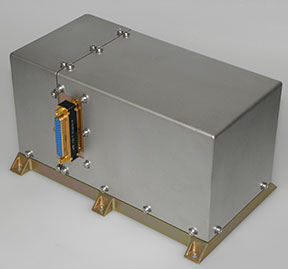
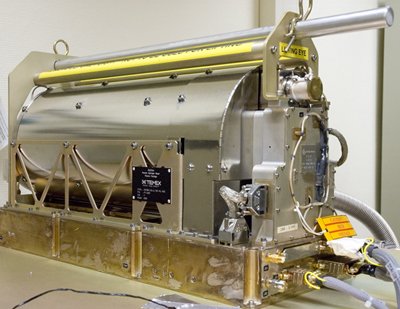
    Today, more than 16 years of space-weather data is publicly available for the first time in history. The data comes from space-weather sensors on board the nation’s GPS satellites.

    The newly available data gives researchers a treasure trove of measurements they can use to better understand how space weather works and how best to protect critical infrastructure, such as the nation’s satellites, aircraft, communications networks, navigation systems and electric power grid.

    A feature article providing an overview of the data that have been released was published today in Space Weather, a journal of the American Geophysical Union.

    “Space-weather monitoring instruments developed at Los Alamos have been fielded on GPS satellites for decades,” said Marc Kippen, program manager at Los Alamos National Laboratory in New Mexico, which developed the space weather sensors. “Today, 23 of the nation’s more than 30 on-orbit GPS satellites carry these instruments. When you multiply the number of satellites collecting data with the number of years they’ve been doing it, it totals more than 167 satellite years. It’s really an unprecedented amount of information.”

    An image illustrating the six orbital planes in which GPS satellites (“navigational satellites,” or ns) fly around Earth. This configuration shows the orbits just before the start of this solar cycle’s biggest geomagnetic storm, which occurred on March 17, 2015. The darkest orbital lines indicate the position of the satellites in that moment; the lightest lines indicate where they were 12 hours prior. (Credit: Los Alamos National Laboratory)
    An image illustrating the six orbital planes in which GPS satellites (“navigational satellites,” or ns) fly around Earth. This configuration shows the orbits just before the start of this solar cycle’s biggest geomagnetic storm, which occurred on March 17, 2015. The darkest orbital lines indicate the position of the satellites in that moment; the lightest lines indicate where they were 12 hours prior.
    (Credit: Los Alamos National Laboratory)

    Extreme space-weather events have the potential to significantly threaten safety and property on Earth, in the air, and in space.

    For example, the hazard of increased radiation exposure from charged particles released during a large solar flare could require that flights be diverted away from a polar route.

    Similarly, sudden bursts of plasma and magnetic field structures (coronal mass ejections, or CMEs) from the sun’s atmosphere and high-speed solar wind could significantly disable large portions of the electric power grid. The resulting cascading failures could disturb air traffic control, disrupt the water supply, and interfere with life-saving medical devices.

    In space, the charged particles measured by the Los Alamos-GPS sensors are the primary limit on how long a satellite can operate in space before succumbing to the damaging effects of radiation.

    In extreme events those particles can cause malfunction of satellites or even catastrophic failure of entire satellite systems.

    For example, in April 2010, a large magnetic disturbance resulted in a communications failure, causing a satellite to uncontrollably drift in space and presenting a hazard to nearby satellites.

    Currently, scientists are unable to predict when these extreme events will occur, how strong they will be, or how severe the effects will be. The release of Los Alamos-GPS data enables new studies that will help answer these questions.

    The Los Alamos-GPS sensors continuously measure the energy and intensity of charged particles, mainly electrons and protons, energized and trapped in Earth’s magnetic field. These trapped particles form the Van Allen radiation belts, which are highly dynamic—varying on time scales from minutes to decades. From GPS orbit (roughly 12,600 miles above Earth), satellite-borne sensors probe the largest radiation belt—consisting mainly of energetic electrons.

    Each of the 23 sensors in the current GPS constellation makes detailed measurements of the belts every six hours. Together the sensors provide 92 complete measurements of the belts every day. The newly released measurements constitute a nearly continuous global record of the variability in this radiation belt for the past 16 years, including how it responds to solar storms. The data provides an invaluable record for understanding radiation-belt variability that is key to developing effective space-weather forecasting models.

    Los Alamos has been anticipating greater awareness of the nation’s vulnerability to space weather since the 1990s, when it began aligning its space-weather research activities with its critical-infrastructure program. “This led to an awareness that we could expand the utility of our space-weather data to programs beyond the specific requirements they were designed for,” said Kippen, a co-author of the feature article.

    The public release of GPS energetic-particle data was conducted under the terms of an October 2016 White House Executive Order. It culminates years of work between the Office of Science and Technology Policy and the National Security Council to coordinate interagency efforts aimed at improved understanding, prediction and preparedness for potentially devastating space-weather events. The specific goal of releasing space-weather data from national-security assets such as GPS satellites is to enable broad scientific community engagement in enhancing space-weather model validation and improvements in space-weather forecasting and situational awareness.

    “The US DoD, the Office of Science Technology Policy, and the broader space weather enterprise deserve our support and thanks for this data release,” Delores Knipp, editor-in-chief of Space Weather, wrote in a blog post accompanying the feature article. “This cache of data will likely drive fundamental new developments in geospace research. The data release should be emulated by other nations as they invest in space-based global and regional navigation satellite systems.”

    The Los Alamos-GPS sensor data is hosted by the National Oceanic and Atmospheric Administration (NOAA) at https://www.ngdc.noaa.gov/stp/space-weather/satellite-data/satellite-systems/, or by searching for “GPS Energetic Particles” at https://data.gov. The sensors are supported by the Department of Energy’s National Nuclear Security Administration.
  • 3 atomic clocks fail on 1 Indian satellite, replacement prepped

    3 atomic clocks fail on 1 Indian satellite, replacement prepped

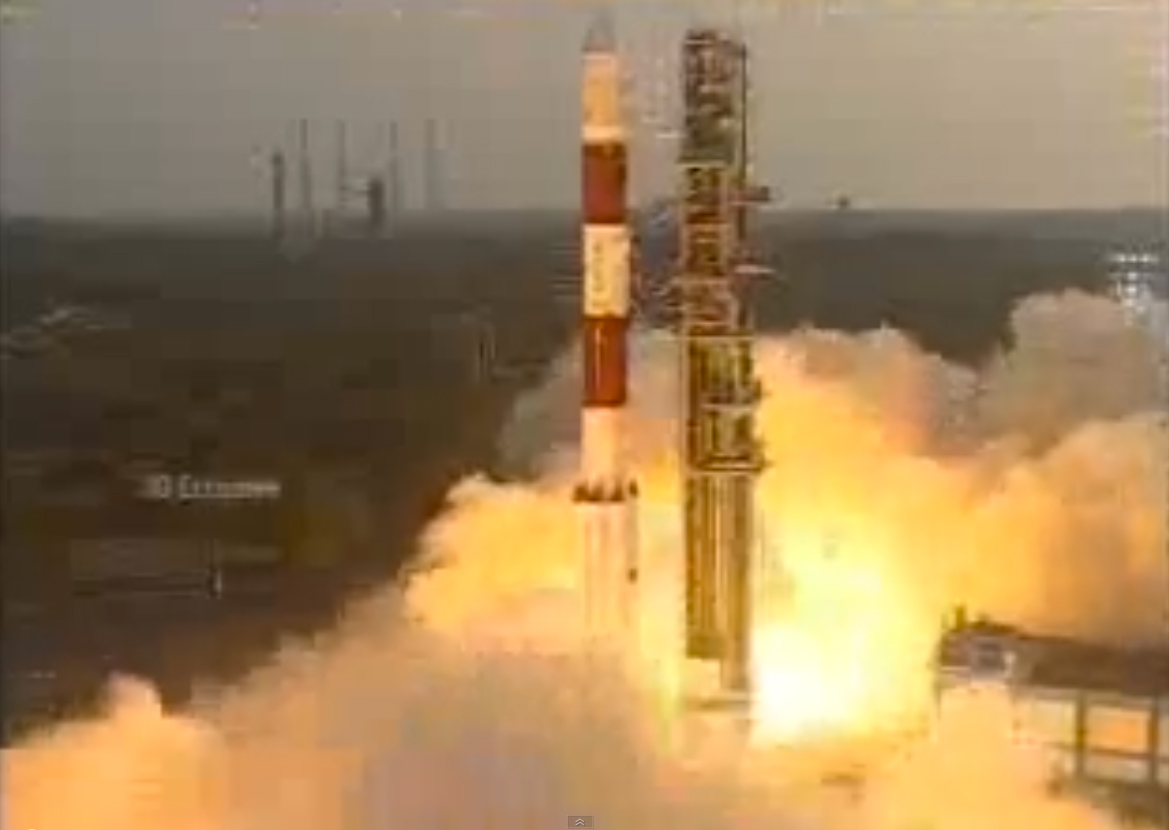
    IRNSS-B was launched April 4, 2014.
    IRNSS-1B, launched April 4, 2014.

    Three atomic clocks onboard a single satellite of the NAVIC Indian regional navigation satellite system have failed.

    Indian Space Research Organization (ISRO) Chairman A.S. Kiran Kumar told The Hindu newspaper that the agency is trying to restart the clocks. Kumar said the affected satellite, IRNSS-1A, is otherwise healthy, and the rest of the constellation is performing its core function of providing accurate position, navigation and time.

    Last week, the European Space Agency discussed clock failures on board Galileo satellites. Rubidium atomic clocks onboard both constellations were manufactured by Spectratime of Switzerland, but the cause of the failures has not been identified and could involve factors other than clock design.

    IRNSS-1A is equipped with one primary and two back-up clocks. At this time, it “will give a coarse value. It will not be used for computation. Messages from it will still be used,” Kumar said. “There are some anomalies in the atomic clock system on board. We are trying to restart it. Right now we are working out a mechanism for operating it.”

    The ISRO is readying one of the two back-up navigation satellites — IRNSS-1H — to replace it in space in the second half of this year. IRNSS-1A was launched in July 2013 and has an expected lifespan of 10 years.

    The Indian Regional Navigation Satellite System (IRNSS) constellation was completed April 28, 2016. It was then renamed NAVIC — Navigation Indian Constellation, by India’s Prime Minister Narendra Modi.

    With seven satellites in orbit, the constellation’s primary focus is to provide information in the Indian region and 1,500 kilometers around the mainland.

  • NASA to hold workshop on autonomous navigation, GNSS, PNT

    The National Aeronautics and Space Administration (NASA) published a notice Jan. 26 in the Federal Register on a planned space navigation workshop.

    The Workshop on Emerging Technologies for Autonomous Space Navigation is sponsored by NASA Space Communication and Navigations (SCaN) Program. The Feb. 17 workshop is intended to inform industry on evolving positioning, navigation and timing (PNT) technologies and techniques being developed to enhance the operational efficiency and flexibility of future missions.

    The workshop will include optional one-on-one discussions with industry participants on a space-available basis on Friday, Feb. 17. NASA is soliciting information from all interested U.S. private sector enterprises only.

    Navigation topics to be discussed during the workshop include:

    • Emerging GNSS applications, including the development and use of GNSS in high-altitude applications in the Space Service Volume (SSV), protecting and enhancing the GPS SSV, developing a multi-GNSS SSV, NASA’s current and future missions employing GNSS in the SSV, and GNSS receiver developments within NASA.
    • Emerging navigation technologies, including PNT capabilities envisioned for the Next Generation Broadcast Service (NGBS), innovative timing system developments and techniques such as the Deep Space Atomic Clock (DSAC), optical navigation capabilities and techniques that support rendezvous, landing on objects (near Earth or solar system objects) or docking to vehicles, and navigation and PNT capabilities supporting proximity operations, satellite servicing and formation flying.
    • Other advanced topics to be addressed include the use of optimetrics from laser communications systems to support precise PNT solutions, on-board navigation software and filters, such as the Goddard Enhanced Onboard Navigation System (GEONS), and x-ray navigation capabilities and techniques.

    Registration

    The workshop will be held at NASA Headquarters Auditorium (west lobby) 300 E Street SW., Washington, D.C. 20546.

    U.S. participants will register for the navigation workshop at the door on Feb. 16. To RSVP for the follow-on one-on-one meetings scheduled for Feb. 17, RSVP to James J. Miller by Feb. 8 at [email protected] or 202-358-4417.

    Reservations must be received no later than 5:00 p.m. EST on Wednesday, Feb. 8. A confirmation email will be sent to acknowledge your requested participation. Companies will be notified on or before Friday, Feb. 10 of their assigned one-on-one meeting time.

    Agenda

    The agenda for the workshop and industry meetings is as follows:

    Workshop, Thursday, Feb. 16

    8:30 a.m. to 9:30 a.m., Networking Opportunity

    9:30 a.m. to 12:30 p.m., Introductions & Emerging GNSS Applications

    12:30 p.m. to 1:30 p.m., Lunch Break

    1:30 p.m. to 3:30 p.m., Next-Generation Developing Technologies

    3:30 p.m. to 5:30 p.m., Game-Changing Initiatives

    5:30 p.m. to 6:00 p.m., Wrap-Up

    6:00 p.m. to 8:00 p.m., Networking Opportunity

    One-on-One Industry Meetings with NASA, Feb. 17

    9:00 a.m. to 5:00 p.m., 45-minute information-exchange/discussion

    Attendance limitations: The Navigation Workshop and One-on-One Meeting attendees is strictly limited to four (4) persons per company.

    One-on-One Meeting Description

    To facilitate interactive communication with industry, NASA SCaN representatives will be available for one-on-on emeetings to exchange ideas on areas of synergy and potential collaboration. NASA will hold one-on-one meetings with industry on Friday, Feb. 17, 2016, from 9 a.m. to 5 p.m. EST, to discuss space navigation technologies and techniques as related to Nav Workshop presentations. The meetings will be held with interested parties at scheduled times provided in response to the RSVP on a space available basis. NASA will attempt to prioritize non-local companies with One-on-One meeting times.

    The one-on-one meetings are intended to be private question-and-answer and information-gathering sessions based on industry developments that align with NASA investments for enhanced autonomous space navigation capabilities. Industry presentation packages are acceptable and will be held in accordance with any proprietary or business confidential markings as annotated on the chart package. Meetings will not exceed 45 minutes in length. One appointment per hour will be scheduled. Additional separate meetings can be scheduled later if demand exceeds capacity.


  • AGU concerned over US limits to science communication

    AGU concerned over US limits to science communication

    AGU-logo
    Logo: AGU

    The American Geophysical Union (AGU) wrote to U.S. federal agency heads on Jan. 26, in response to reports that the administration under President Donald Trump has instructed federal agencies to stop communicating with the media, policymakers and the public.

    “The signals are not encouraging, and they’re alarming, and they’re causing a lot of fear in the scientific community,” Christine McEntee, AGU chief executive and executive director, told the Washington Post.

    “I’ve never seen the scientific community so concerned,” Rush Holt, chief executive of the American Association for the Advancement of Science, told the Post.This goes way beyond funding. When fake news is accepted as just one of the alternate approaches, then there are serious problems to be addressed.”

    MarchforScience
    Logo: AGU

    March for Science. The AGU is among several professional scientific organizations expressing concerns. A March for Science is being planned in Washington, D.C.

    When asked about the march, McEntee told the Post, “If it’s a neutral and nonpartisan voice for the value of science and the work of scientists, we would consider endorsing it, but we need to find out more information.”

    The march now has a Facebook page, a Twitter handle and a website, as well as a Google form through which those interested can sign up to help. Organizers told snopes.com that plans are to release both a date for the event and a platform statement by Jan. 30.

    Scientific Integrity. The letter from AGU expresses concern over news reports about violations of scientific integrity and interference with public access to and communication of scientific information.

    In the letter, AGU emphasized scientific integrity and transparency as critical to “advancing national security, a strong economy, public health, and food security.” AGU calls on the agencies, and the administration, to reverse policies that threaten scientific integrity and open communication as soon as possible and urges that they not be reinstated.

    “Access to scientific information improves and informs many aspects of our everyday lives,” McEntee said in a press release about the letter. “AGU will be monitoring to see if the policies have been lifted and whether the scientific information that is currently available remains. It is critical to our economic success, national security and public health that the American people continue to receive to the most up-to-date scientific research and information.”

    AGU has a position statement related to scientific integrity entitled, “AGU Supports Free and Open Communication of Scientific Findings.” The statement was adopted in 2011 and reaffirmed in September 2016. In late 2016, AGU launched a petition calling on the new administration to make the appointment of a scientific advisor a top priority. The petition has nearly 9,000 signatures.

    Communication is one of AGU’s cornerstones. According to its letter masthead, “AGU galvanizes a community of Earth and space scientists that collaboratively advances and communicates science and its power to ensure a sustainable future.”

    Below is the text of an email to members that AGU issued the same day. AGU is asking U.S. members to send a copy of the letter to their congresspersons.


    Dear AGU member,

    Whether you live in the United States or not, you likely have heard the recent news reports about U.S. federal agencies instructing scientists to cease communication of their research to the media, policymakers and in some case, the public. While there are reports and rumors that many of those orders are being rescinded or otherwise qualified, we have heard from members around the world expressing concern about the impact such actions could have on scientific integrity and the open and unfettered communication of science.

    AGU shares your concerns. Science plays a critical role in advancing national security, a strong economy, public health, and food security, and as such, scientists must be allowed to share their work directly and openly with the public. That’s why we issued a letter to the federal scientific agencies today asking that the restrictions be lifted soon so that critical, up-to-date scientific information remains readily available to the public.

    For those of you in the U.S., we strongly encourage you to consider sending a copy of this letter to your members of Congress. AGU’s Action Center platform provides an easy option for sending such communications, and it can be accessed here. If you are in the U.S. (and even for those of you who aren’t), I also encourage you to sign up for AGU’s Science Policy Alerts, where we will be sharing regular updates and making recommendations for how you can take action.

    In closing, please know that AGU intends to be a strong and active voice for the important role science plays in our global society, and for the need to protect scientific integrity and scientists’ ability to perform and communicate their research without political interference.

    Best,
    Eric and Chris

    Eric Davidson, AGU President
    Christine McEntee, AGU Executive Director and CEO

  • CNN explores space warfare, US military’s use of GPS

    shiyan-grabbing-cnn-space-warfare
    Photo: Shiyan

    A spaceborne laser zaps a GPS satellite, disabling it.

    A “kamikaze” satellite hits and destroys other nations’ critical satellites.

    Another satellite moves beside an Intelsat bird — and listens in.

    A new CNN special considers all of these possibilities in an exploration of an arms race in space, showcasing the devastation that would be caused by space warfare and how the U.S. military is preparing.

    War in Space: The Next Battlefield” premiered Nov. 29 on CNN. It provides the general public with an understanding of the critical nature of GPS, ranging from mundane activities such as daily commutes and withdrawing money from a bank, to the reliance on GPS for soldiers and intelligence agencies defending the U.S.

    The documentary explores the belief by many in the military and civilian experts that war in space is inevitable, with particular attention to methods China and Russia might use to interfere with or disable GPS.

    CNN goes inside Lockheed Martin’s facility, where it is building the next-generation GPS III satellite, as well as U.S. Space Command at Peterson Air Force Base, and visits the 2SOPS team at Schriever Air Force Base.

    CNN national security correspondent Jim Sciutto interviews the chain of command for space warfare, including Gen. William L. Shelton and Gen. John Hyten, both former commanders of Air Force Space Command. (Gen. Hyten is now commander of U.S. Strategic Command).

    Also interviewed are Adm. Cecil Haney (Ret.), former commander of U.S. Strategic Command; Lt. Gen. David Buck, commander of the Joint Functional Component Command for Space; and Defensive Duty Officer 1st Lt. Andrew Engle, a newly created position to monitor threats in space.

    If you haven’t seen this documentary, you can still watch it through on demand on cable and via the CNNgo app.

  • Implications of BeiDou explored in US congressional report


    The U.S.-China Economic and Security Review Commission has issued a staff report titled “China’s Alternative to GPS and Its Implications for the United States.”

    The report examines the objectives behind Beijing’s decision to develop the system as an alternative to GPS, its efforts to build an industry around the system, and the effects this might have in security, economic and diplomatic terms for the U.S.

    “The system’s primary purpose is to end China’s military reliance on GPS, although China’s associated industrial policies will likely affect U.S. firms operating in China’s market. Industry professionals assess there are no inherent risks to products such as smartphones receiving data from BeiDou.”

    China’s BeiDou is projected to achieve global coverage by 2020.

    The commission was created through a congressional mandate in October 2000, and is responsible for monitoring and investigating national security and trade issues between the United States and People’s Republic of China.

    Beidou constellation

    Key Findings

    • China has sought to field its own satellite navigation system in order to (1) address national security requirements by ending military reliance on GPS; (2) build a commercial downstream satellite navigation industry to take advantage of the quickly expanding market; and (3) achieve domestic and international prestige by fielding one of only four such systems yet developed, cementing China’s status as a leading space power and opening the door to international cooperation opportunities.
    • Industry professionals assess there are no inherent risks to products such as smartphones receiving data from Beidou. While concerns have been raised that malware in devices could allow China’s government to track users, experts (1) are not aware of ways to feasibly transmit malware through a navigation signal and (2) assess that manufacturers will be unlikely to include Beidou’s unique messaging function due to cost factors. Restrictions on technology purchases from China by U.S. government and military users can help guard against malware being physically installed.
    • Beidou is of foremost importance in allowing China’s military to employ precision-guided conventional strike weapons—a central feature of Beijing’s efforts to counter a U.S. intervention in a potential contingency—if access to GPS is denied.
    • GPS and Beidou signals are both provided for free and are not in “competition” for market share. Also, the satellite navigation industry is trending toward “multi-constellation” receivers that work with all systems. This means that the U.S. firms that currently dominate the downstream satellite navigation industry will likely be able to incorporate Beidou functionality and continue to compete, although prospects in the China market may narrow.
    • China plans to expand Beidou coverage to most of the countries covered in its “One Belt, One Road” initiative by 2018, indicating it sees the system as playing a role in its economic diplomacy efforts. China has also sought to incentivize countries in Southeast Asia and the Middle East to begin using Beidou, and seeks to build a network of ground stations throughout Asia to improve the system’s accuracy.
    • In response to these developments, the United States can consider allowing government and military users to take advantage of multi-constellation devices, while continuing to monitor the industry to assure that security threats do not materialize; promote interoperability to ensure its firms remain competitive; and continue to invest in maintaining its leadership in space.
    Current coverage of BeiDou constellation
    (from report).
  • USAF to test increased GPS signal power Jan. 25

    Beginning Wednesday, Jan. 25, Air Force Space Command (AFSPC) will conduct a limited-duration test implementing an increase of the Ll C/A power level on the GPS Block IIR-M and llF satellites — a total of 19 satellites.

    The C/A power will remain within IS-GPS-200-H specifications, and the power increase is not expected to increase the noise floor by more than 0.3 signal-to-noise ratio in the worst case.

    “We assess that there will be no adverse impacts to civil, commercial or military GPS users, but anyone who experiences issues during this test should address them through established reporting channels,” said Gen. John W. Raymond, U. S. Air Force (USAF) commander, in a “Memorandum for Distribution.”

    Military users can contact the GPS Operations Center at DSN 560-2541, while civilian users can contact the U.S. Coast Guard Navigation Center at 703-313-5900. In the event of unexpected critical impacts, a process to cease testing operations has been put in place.

    The AFSPC point of contact for this test is Maj. Jeffrey Koch, DSN 692-0233, commercial 719-554-0233.

  • Caltrans takes delivery of Riegl mapper

    Caltrans — the California state agency responsible for highway, bridge and rail transportation planning, construction and maintenance — has taken delivery of the new Riegl VMX-1HA mobile mapping system.

    caltrans-Riegl-W
    The Riegl VMX-1HA dual-scanner mobile mapping system.

    The Riegl VMX-1HA is a high-speed, high-performance dual-scanner mobile mapping system. It provides high performance and dense, accurate and feature-rich data at highway speeds.

    With two million measurements and five hundred scan lines per second, the turnkey solution is suited for survey-grade mobile mapping applications to meet the standards of departments of transportation nationwide, Riegl said.

    The technology of the system comprises two Riegl VUX-1HA high-accuracy waveform lidar sensors and a high-performance INS/GNSS unit, housed in an aerodynamically shaped protective cover. Four 9-megapixel cameras, along with a LadyBug 5 camera, complement the waveform lidar data with precisely georeferenced images.

    The Riegl software suite provides seamless workflows for mobile data acquisition, processing, adjustments and deliverables.

    Riegl USA was awarded the contract of the Request For Quote (RFQ) on the open market.

  • Galileo clock anomalies under investigation

    Galileo clock anomalies under investigation

    The European Space Agency (ESA) issued a press release addressing the Galileo clock failures reported Jan. 18. GPS World Innovation editor Richard Langley provided the following summary of the satellites and clocks involved, based on information we have received to date.

    • 5 satellites affected: 3 IOVs, 2 FOCs
    • Total of 10 failures; 1 fixed; so 9 continuing failures
    • 5 masers on IOV satellites
    • 2 masers on FOC satellites but 1 of these fixed
    • 3 rubidiums on FOC satellites
    • No satellite currently has fewer than 2 working clocks

    The ESA press release provides additional details on the failures and actions being taken to address the problem.


    Press Release from the European Space Agency

    As first reported November 2016, anomalies have been noted in the atomic clocks serving Europe’s Galileo satellites.

    Anomalies have occurred on five out of 18 Galileo satellites in orbit, although all satellites continue to operate well and the provision of Galileo Initial Services has not been affected.

    Highly accurate timing is core to satellite navigation. Each Galileo carries four atomic clocks to ensure strong, quadruple redundancy of the timing subsystem: two Rubidium Atomic Frequency Standard (RAFS) clocks and two Passive Hydrogen Maser (PHM) clocks.

    The current Galileo constellation consists of 18 satellites in orbit, adding up to a total of 36 RAFS clocks and 36 PHM clocks.

    Rubidium atomic clock, or RAF.
    Rubidium atomic clock, or RAF.

    RAFS clocks

    In recent months, a total of three RAFS clocks unexpectedly failed on Galileo satellites — all on Full Operational Capability (FOC) satellites, the latest Galileo model. These failures all seem to have a consistent signature, linked to probable short circuits, and possibly a particular test procedure performed on the ground, with investigations continuing to identify a root cause.

    No RAFS clock failures have occurred aboard the four Galileo In Orbit Validation (IOV) satellites, the original Galileo model. In addition the RAFS clock on ESA’s very first test navigation satellite, GIOVE-A launched in 2005, has been checked, and was reactivated successfully.

    Continuing investigations on the ground have identified potential weaknesses in the RAFS clock design, but no root cause has yet been yet established.

    PHM Clocks

    Passive hydrogen maser atomic clock of the type flown on Galileo, accurate to one second in three million years. (Photo: ESA)
    Passive hydrogen maser atomic clock of the type flown on Galileo, accurate to one second in three million years. (Photo: ESA)

    In the past two years, there have been five PHM clock failures on the IOV satellites and one PHM failure on the FOC satellites.

    These failures are better understood, linked to two apparent causes. One is a low margin on a particular parameter that leads, on some units, to a failure. The second is related to the fact that when some healthy PHM clocks are turned off for long periods, they do not restart because of a change in clock characteristics in orbit. To date, two PHM clocks have failed owing to the first mechanism, and four to the second.

    Corrective Actions

    For the remaining 33 RAFS clocks in orbit, the risk of failure is believed to be lower owing to different testing procedures on the ground before launch. In addition, new operational measures have been put in place to further mitigate the risk. All these measures have no effect on Galileo’s overall performance.

    While investigations by ESA and its industrial partners are continuing, there is consensus that some refurbishment is required on the remaining RAFS clocks still to be launched on the eight Galileo satellites being constructed or tested, and awaiting launch.

    For the remaining 30 PHM clocks working in orbit, operational procedures are being studied to significantly reduce the risk of future failure. These measures are being validated, ahead of their planned introduction in a few weeks.

    Looking Forward

    Overall, three out of four IOV satellites have experienced clock anomalies, and two out of 14 FOC satellites.

    As ESA Director General Jan Woerner commented during his Jan. 18 press briefing, no individual Galileo satellite has experienced more than two clock failures, so the robust quadruple redundancy designed into the system means all 18 members of the constellation remain operational. This includes one satellite that supports only the Open Service for mass-market applications, and two satellites in elliptical orbits that are nevertheless expected to be reintegrated into the full constellation for use from these orbits.

    Similarly, Galileo’s Initial Services, which began on Dec. 16, have been unaffected by these anomalies.

    The impact of RAFS and PHM clock refurbishment on Galileo’s launch schedule is under study, but ESA is confident that the clock issues will be resolved and remains committed to launch the next four Galileo FOC satellites before the end of this year.


    Director General Press Briefing

    January 18, 2017

    Clock problems are discussed at about the 12-minute mark, and in the Q&A portion started at the 52-minute mark.

  • 3D GNSS data and the GEOID

    As high-precision GNSS horizontal and vertical data becomes less expensive to collect, greater attention must be paid when reconciling vertical datasets. In 2013, I wrote two articles entitled “Nightmare on GIS Street: Accuracy, Datums, and Geospatial Data” and “Part 2: Nightmare on GIS Street – Accuracy, Datums, and Geospatial Data” as well as conducted some webinars on horizontal datums.

    Reconciling data with disparate horizontal datums is a headache, sometimes a big headache, and sometimes a brutal migraine, especially with large enterprise databases. NAD83? WGS-84? ITRF08? The acronyms seem endless. Then there’s different variations of NAD83, WGS-84, ITRF08. Combine that with the myriad of datum conversion options in GIS software, and you’ve got a perfect opportunity to really mess up your 2D data.

    The idea behind a horizontal reference frame (datum) is that anyone whose data is tied to that reference frame should be spatially “compatible.” Some pretty solid horizontal reference frames exist. In the United States, it’s NAD83/2011.

    For vertical reference, it’s not so easy.

    A common term used when referencing elevations is Mean Sea Level (MSL). If you’re interested in high-precision elevations, MSL is a dangerous term because it’s a regional reference and tends to be referred to as a global reference. The fact is that MSL is different depending on where you are located. MSL in Boston is different than in Miami, different than in Galveston, and different in Seattle so it’s not a suitable reference in a generic sense.

    So, what does one use for a vertical reference in order to combine various datasets?

    In the United States, the current vertical datum of the National Spatial Reference System is NAVD88. We can get into an entire discussion about how NAVD88 was created, but in an attempt to keep it simple, let’s talk about how to check if your elevation data is referenced to NAVD88. In the United States and other countries, there are survey marks on the ground that serve as points that you can reference.

    In the United States, a database of survey marks can be accessed via the NGS Data Explorer website. To use it, simply type in the name of the city and click on Find Marks.

    NGSDataExplorer

    To choose an area within a city, you can use your mouse to pan to where you want, then click Find Marks again to refresh the survey marks. A legend on the right side gives you a definition of each symbol. Focus on the GPS-specific symbols because GPS is the easiest way for you to check the accuracy of your vertical data. For this example, I clicked on a symbol for a “GPS and Approx Height” survey mark. Following is what is displayed:

    AI2002_Page1_1

    Above is the standard NGS Data Sheet format for all survey marks in the database. The PID (Permanent Identifier) code is a unique number for the survey mark. In this case, it is AI2002.

    AI2002_Page1_SurveyControl-W

    The Current Survey Control section on the data sheet provides the key information, including the latitude, longitude and height (elevation) information for the survey mark. Notice the NAVD88 height under the latitude/longitude.

    The easiest way to check the accuracy of your vertical data is to use a high-precision GNSS receiver and collect a point on the survey mark. By high-precision, I’m referring to a standard RTK GNSS receiver capable of centimeter accuracy such as pictured below:

    20160803_163538

    You could use a sub-foot or sub-meter GNSS receiver as long as you understand that your elevation accuracy error will be about twice that of your horizontal accuracy. For example, a sub-meter GNSS receiver elevation accuracy will be about 2 meters. For this discussion, let’s assume you’re using an RTK GNSS receiver.

    Even though the vertical datum in the United States is NAVD88 and the NGS Data Sheet clearly shows that value, GNSS receivers don’t typically output NAVD88 elevation values. GNSS has its own vertical reference, a reference ellipsoid that approximates the shape of the Earth (GEOID). So, when your GNSS receiver reports elevations, it generally reports them as the Height Above Ellipsoid. This value, as you can see below, is quite different than the NAVD88 elevation….about 23 meters different.

    AI2002_Page1_SurveyControl_HAE-W

    The following graphic depicts the relationship between the ellipsoid, geoid and NAVD88 (surface height).

    Geoid03-W

    Remember, GNSS reports in Ellipsoidal Height (HAE). In order to convert this to NAVD88 height, you need to add the GEOID height. It starts to get a little complicated here because the model that defines the GEOID height is updated every few years.

    Notice in the above graphic that the GEOID height refers to GEOID03. GEOID03 is the United States GEOID model released in 2003. The current GEOID model was released in 2012 (GEOID12B). The GEOID model changes because better data is being collected to further refine the GEOID model. The changes in the GEOID value from one GEOID model to the next (such as GEOID09 to GEOID12B) can be significant (many decimeters). Note that the ellipsoidal height will not change when the GEOID model is updated, only the GEOID height and the resulting NAVD88 height.

    Since the GEOID models change somewhat frequently (every few years), most GIS data-collection software doesn’t incorporate the latest GEOID model, or any GEOID model at all. GPS receivers have a rough GEOID model built in so they can output a “surface elevation” that gets it close (within a few meters) to NAVD88 elevations as opposed to outputting ellipsoidal height, which is many meters in error.

    Lastly, all GPS receivers output NMEA data strings, which are consumed by GIS data collection software. GPS receivers typically display this data (or output via Bluetooth or serial port) once per second. One of the key data strings, the GGA message, contains elevation data and looks like this:

    $GPGGA,181908.00,3404.7041778,N,07044.3966270,W,4,13,1.00,495.144,M,29.200,M,0.10,0000*40

    If you would like to see a complete description of this NMEA data string, I wrote an article describing it here. Otherwise, I’d like to focus your attention on the elevation part of the above data string.

    The ninth field of the string (495.144) is the elevation is this case. It is the surface elevation value, but not an accurate representation of NAVD88 elevation. The reason is due to the 11th field of the string (29.200), which is the GEOID value used in this example.

    The GEOID value in this example is derived from a rough GEOID model built-into the GNSS receiver. It’s not accurate. Each receiver is different, but this value can be off by a few meters.

    Interestingly enough, the GNSS receiver doesn’t output ellipsoidal height (HAE), which is the native elevation reference for GNSS receivers. To compute the ellipsoidal height, you need to subtract the inaccurate GEOID value (29.200) from the surface elevation the GNSS receiver is reporting (495.144), which in this case would be 495.144 – 29.200 = 465.944 meters. Clear as mud?

    Now, let’s say you wanted to use an accurate GEOID value from the latest GEOID model and apply it to your data. You would have to perform the following calculation:

    495.144 – 29.200 = 465.944 Ellipsoidal height. ###this is to remove the incorrect GEOID value.

    Now, you would need to add the accurate GEOID value to the Ellipsoid height (let’s assume the accurate GEOID value is 31.45 meters).

    465.944 + 31.45 = 497.394 meters (NAVD88).

    Now, when 497.394 refers to NAVD88, this is assuming your GNSS receiver is accurate to a few centimeters in elevation. Of course, applying an accurate GEOID value to an elevation being output by a Garmin handheld doesn’t make much sense because the inaccuracy of the Garmin elevation is much greater than the rough GEOID model used by the Garmin.

    Well, this concludes my stepping-off point for a discussion about elevations in what is sure to become a series of articles about the accuracy of GIS elevation data and how to check the elevation accuracy of your GIS data, as well as how to collect it.

    Follow me on Twitter at https://twitter.com/GPSGIS_Eric

    Sources: NGS Data Explorer

  • Qualcomm Research: Robust positioning from visual-inertial and GPS

    Presented at ION GNSS+, September 2016

    GPS positioning in urban scenarios is challenging because of large numbers of non-line-of-sight outlier measurements. We propose a robust positioning algorithm that combines GPS observations with visual-inertial odometry information to handle such outliers. We demonstrate the effectiveness of our algorithm in a simulation scenario with close to 80-percent outliers. In experiments in a mild urban-canyon environment, our approach reduces the 95th percentile horizontal positioning error by 66 percent compared to a GPS-only solution.

    Motivation

    GPS performance drastically degrades if large parts of the sky are obstructed. This occurs for example in urban-canyon scenarios, where GPS positions may be off by as much as 50 meters. These large positioning errors are prohibitive in applications such as autonomous vehicles and advanced driver assistance systems (ADAS).The large positioning errors in urban canyons are mainly caused by non-line-of-sight (NLOS) observations and multipath effects. Such observations result when the line-of-sight (LOS) path from the receiver to a satellite is blocked, and the receiver instead erroneously tracks a reflected version of the satellite signal.

    Summary of Results

    We propose a low-cost method to detect and remove such NLOS outliers by combining GPS pseudorange measurements with visual inertial odometry (VIO) measurements. These measurements are complementary: GPS pseudoranges provide absolute positioning information; VIO measurements, constructed from camera frames and inertial measurements, provide high-accuracy relative positioning.

    We develop a robust and efficient, tightly-coupled GPS+VIO positioning algorithm, able to work under extremely challenging conditions. For example, in scenarios with close to 80 percent of GPS measurement outliers or with only intermittent satellite visibility. Even under these extreme conditions, the proposed algorithms are able to produce reliable and accurate position estimates.

    Problem Setting

    The overall positioning system consists of a GPS module and a VIO module. The GPS module provides raw pseudorange and Doppler range-rate measurements. The VIO module consists of a camera along with inertial sensors such as an accelerometer and a gyroscope. The output of the VIO processing engine are vectors of velocities and displacements expressed in the local camera coordinate frame.

    We will not go into the details of the VIO design, rather we will use it as a black box that provides us with the velocities. The goal is to integrate the pseudorange measurements across time using the highly accurate velocities from the VIO to detect and discard the measurements corrupted by NLOS errors.

    The positioning algorithm consists of two stages. In the first stage, we transform the velocities from the VIO frame of reference to the GPS frame of reference. This requires estimation of the rotation matrix relating the VIO frame and the GPS frame. Once this transformation is completed, the second stage is to perform outlier detection and to estimate the rover position.

  • Clocks fail on some Galileo satellites, backups working

    Clocks fail on some Galileo satellites, backups working

    Clocks have failed onboard several Galileo satellites in space, reports Phys.org, a web-based science, research and technology news service.

    The cause of the failure is being investigated, European Space Agency director general Jan Woerner told journalists in Paris on Wednesday.

    Each Galileo satellite has four atomic timekeepers — two rubidium and two hydrogen maser. Three rubidium and six hydrogen maser clocks are not working.

    Passive hydrogen maser atomic clock of the type flown on Galileo, accurate to one second in three million years. (Photo: ESA)
    Passive hydrogen maser atomic clock of the type flown on Galileo, accurate to one second in three million years. (Photo: ESA)

    The rubidium devices are similar to those used on current GPS satellites. The more precise hydrogen maser instruments were designed to give Galileo superior performance to the American GPS network.

    Five of the maser failures have occurred on the satellites that were originally sent into orbit to validate the system, but all three rubidium stoppages are on the spacecraft that were subsequently launched to fill out the network, reports BBC News.

    Each orbiter needs one working clock for the satellite navigation to work, with the other three clocks being spares. As of mid-January, 10 Galileo atomic clocks, the key element in a navigation satellite, had failed on four different satellites. One was recently returned to service, leaving nine outages, reports Space Intel Report.

    Initial services were launched in December, and the failure of nine clocks out of 72 launched to date has not affected operation, Woerner said.

    “If this failure has some systematic reason we have to be careful” not to place more flawed clocks in space, Woerner said. The question now is “should we postpone the next launch until we find the root cause?”

    The next four satellites were to have been launched in August-September, but the launch has been postponed for November or December to investigate the clock failures. “You can say we wait until we find the solution, but that means if more clocks are failing then we are reducing the capability of Galileo,” Woener said.

    The failures have occurred on two satellite platform designs: one built by Airbus and Thales Alenia Space as part of a four-satellite system validation program, and the other by Galileo prime contractor OHB SE of Germany, reports Space Intel Report. This is complicating the analysis to determine the cause of the failures.

    Eighteen orbiters have been launched for the Galileo constellation to date, a number that will ultimately be boosted to 30 operational satellites and two spares.