Category: Receivers

  • Taoglas unveils AI-driven antenna recommendation platform

    Taoglas unveils AI-driven antenna recommendation platform

    Taoglas has launched its AI-driven Antenna Product Recommendation Engine, a platform that helps engineers and organizations select the company’s antennas and RF components.

    Available worldwide, the tool provides both seasoned RF engineers and non-technical decision-makers with intelligent guidance to make informed choices.

    Early-stage antenna decisions can disproportionately impact system performance, cost and time to market. Yet engineers often rely on datasheets, parametric searches, or manual cross comparison, a process that can consume hours or days amid the growing complexity of modern RF systems.

    The new recommendation platform embeds two decades of Taoglas expertise into a digital tool, applying AI trained on real-world design knowledge to scan, filter and refine suitable products in minutes, drawing on insights from tens of thousands of projects worldwide.

    The tool is the newest addition to the AntennaXpert ecosystem, complementing Taoglas’ Antenna Builder and Cable Builder for configuration, as well as the Antenna Integrator for PCB placement. Together, they enable a seamless path from initial selection to integration, Taoglas said.

  • Safran acquires Syntony to strengthen position in resilient PNT market

    Safran Electronics & Defense has acquired Syntony GNSS, a simulator and receiver company founded in 2015 in Toulouse, France. The acquisition is intended to strengthen Safron’s resilient PNT innovations.

    In 2023, Safran acquired Orolia, also for its GNSS and PNT expertise.

    Under the agreement, signed Feb. 13, Safran will take 100% of Syntony’s share capital, subject to customary regulatory approvals. Financial terms were not disclosed.

    A European leader in GNSS solutions for underground environments, Syntony has developed unique expertise to ensure reliable positioning in contexts where satellite signals are unavailable.

    Syntony’s technology addresses a major challenge of satellite navigation systems: the vulnerability of GNSS signals to physical obstacles, jamming and interference. To tackle this, Syntony has developed several critical technologies, including:

    • Controlled reception pattern antennas (CRPAs) that make GNSS receivers less sensitive to jamming and spoofing — essential for flight safety and the protection of sensitive infrastructure.
    • Software-defined radio (SDR), a digital radio that can change function (switching from FM to Wi-Fi or GPS) through a simple software update without changing hardware, allowing it to adapt to threats or to changes in received or transmitted signals. It offers compactness and scalability, particularly suited to embedded systems and the requirements of modern operational environments.

    In addition, Syntony develops GNSS receivers for next-generation satellites, particularly for low Earth orbit (LEO) constellations, further strengthening Safran Electronics & Defense’s offering in the space-based PNT and New Space sectors.

    Syntony employs nearly 70 people across Toulouse and Paris.

    For Safran Electronics & Defense, this acquisition makes it possible to offer more comprehensive equipment that is also more compact and energy-efficient, while remaining adaptable to the constant evolution of signals. These gains in weight and power consumption are essential for future civilian and military platforms (drones and counter-drone systems, missiles, aircraft and low-orbit satellites).

  • Milanion products to feature NovAtel inside

    Milanion products to feature NovAtel inside

    At World Defense Show 2026 in Riyadh, Saudi Arabia, Milanion Group signed memorandum of understanding (MOU) with NovAtel to integrate assured positioning, navigation and timing into its unmanned land, maritime and air platforms, reports Global Defense News.

    A second MOU was signed with Elistair to introduce tethered unmanned aerial systems into Milanion’s ground and maritime architecture.

    The agreements focus on maintaining operational capability in environments affected by electronic warfare, GNSS denial, jamming, spoofing and cyber interference, with technical integration work scheduled to begin after the exhibition and demonstrations planned for later in 2026.

    The agreement with NovAtel covers land, maritime and air domains and focuses on operations in contested environments where electronic warfare, GNSS denial and cyber interference are present.

    Milanion linked the partnerships to requirements raised by defense delegations at WDS 2026 for unmanned systems that remain operational without dependence on vulnerable networks and that support sovereign-ready integration.

    Technical integration discussions with both companies are scheduled to begin immediately after the exhibition. Joint development pathways and capability demonstrations are planned later in 2026 as part of a broader connected autonomy architecture.

    Milanion Group was founded in 2020 and is headquartered in the UK, with manufacturing in Abu Dhabi. The company develops autonomous and optionally manned systems for military and security missions across land, sea, and air. 

    The MOU with NovAtel will embed NovAtel assured-PNT and anti-jam technologies into Milanion assets to maintain navigation accuracy and mission integrity during GNSS denial or interference. The integration supports secure routing, guidance stability, and targeting precision even when GPS signals are degraded or disrupted. This capability is relevant for unmanned ground vehicles, maritime conversions, and airborne systems operating in electronically contested theatres. Milanion links the functionality to survivability and operational continuity during electronic warfare and cyber-disruption scenarios.

    By combining assured navigation with persistent ISR and resilient communications, the company aims to maintain autonomous mission performance across multi-domain deployments. The approach integrates sensing, navigation, and communications into a unified architecture to address contested-environment requirements identified at WDS 2026.

  • Hexagon | NovAtel updates firmware with advancements in GNSS reliability

    Hexagon | NovAtel updates firmware with advancements in GNSS reliability

    Hexagon | NovAtel has released its latest firmware for the OEM7 family of GNSS receivers, featuring improvements in positioning reliability and accuracy.

    Proven in tough defense markets, and now available for all customers, the firmware release sets new standards for innovation and reliability with the introduction of advanced tracking capabilities that enhance GNSS performance in challenging or obstructed environments, such as under foliage or in mixed urban scenarios.  

    Customers can now benefit from enhanced position accuracy and availability, leveraging NovAtel’s SPAN GNSS+INS technology, precise point positioning (PPP), and real-time kinematic (RTK) capabilities. This ensures greater operational availability and reduced downtime, according to the company.

    Key features

    • Tracking improvement of 5-7 decibels (dB) and acquisition improvement of 4-5 dB for most GNSS signals
    • PPP root mean squared (RMS) error improvement up to 26% under challenging conditions
    • RTK RMS error improvement up to 15% under challenging conditions
    • Up to 48% improvement on the 3D position error when using SPAN in severely GNSS-challenged environments.

    “Our latest firmware release is a testament to our dedication to innovation and customer success,” said Jonathan Auld, president, NovAtel Positioning Division, Hexagon. “By enabling receivers to track weaker signals and maintain positioning in the most challenging environments, we are empowering our customers with the tools they need to overcome obstacles and achieve their goals with confidence.”

    The latest firmware for OEM7 GNSS receivers is now available. Visit NovAtel to download it for your specific platform.

  • Inertial Labs launches IRINS LEO-aided inertial navigation system

    Inertial Labs launches IRINS LEO-aided inertial navigation system

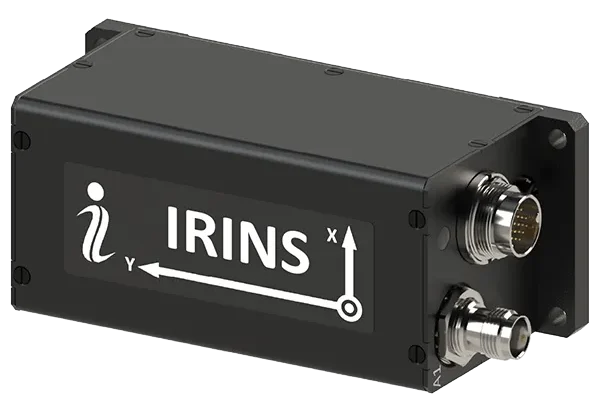
    Inertial Labs, a Viavi Solutions Inc. company, has announced IRINS, a low Earth orbit (LEO)-aided inertial navigation system (INS) designed to allow full operation across land, air and sea in GNSS-denied, -degraded and -disrupted space operating environment .

    Combining the capabilities of an INS, an altitude and heading reference system (AHRS) and a LEO PNT receiver, this platform marks a major milestone in Viavi’s portfolio for assured positioning, navigation and timing by bringing together the INS capabilities of inertial labs and the timing expertise of Jackson Labs.

    The IRINS embedded system has been developed to counter the exponentially rising number of spoofing and jamming attacks that have affected military and critical infrastructure. Now, resilient LEO-based PNT and inertial navigation are available within a fully integrated system from a single vendor.

    The system combines an INS, an AHRS and the GNSS-independent STL-2600 LEO Iridium receiver module. These capabilities enable the system to calculate altitude, position, velocity and time data, as well as minimize bias from causing drift. To help detect and eliminate attack signals, the device additionally integrates a GNSS receiver with a controlled reception pattern antenna (CRPA) port.

    “The IRINS is the first fruit borne of VIAVI’s visionary strategy to mitigate vulnerabilities in positioning, navigation and timing, bringing together resilient satellite-based timing with tactical-grade IMUs to deliver the most precise PNT for GNSS-denied environments,” said Jamie Marraccini, vice president, Inertial Labs Products, Viavi. “By tightly coupling inertial sensing, LEO-based timing and navigation and anti-jam GNSS technologies into a single platform, the IRINS provides unmatched continuity, accuracy and trust for operations in contested and denied environments.”

    “Assured access to PNT is critical for operations in contested environments,” said Maynard Porter, Director, Government PNT Business, Iridium. “Integrating Iridium PNT alongside VIAVI’s INS and AHRS provides users with an exceptionally resilient source of time and location data to maintain operational effectiveness when GNSS signals are disrupted.”

    The IRINS is certified for IP67 and MIL-STD-810G environmental requirements. It is based on the company’s fully calibrated tactical-grade MEMS 3-axis accelerometer, gyroscope and clock. These are combined with embedded barometers, magnetometers and an optional onboard air-data computer as part of its AHRS.

    Satellite communication is provided through the company’s STL-2600 receiver, which links to the Iridium LEO constellation. All capabilities are housed within a compact 126.5 × 49.3 × 53.3 mm enclosure. 

  • ARK Electronics launches GNSS magnetometer unit for autonomous applications

    ARK Electronics launches GNSS magnetometer unit for autonomous applications

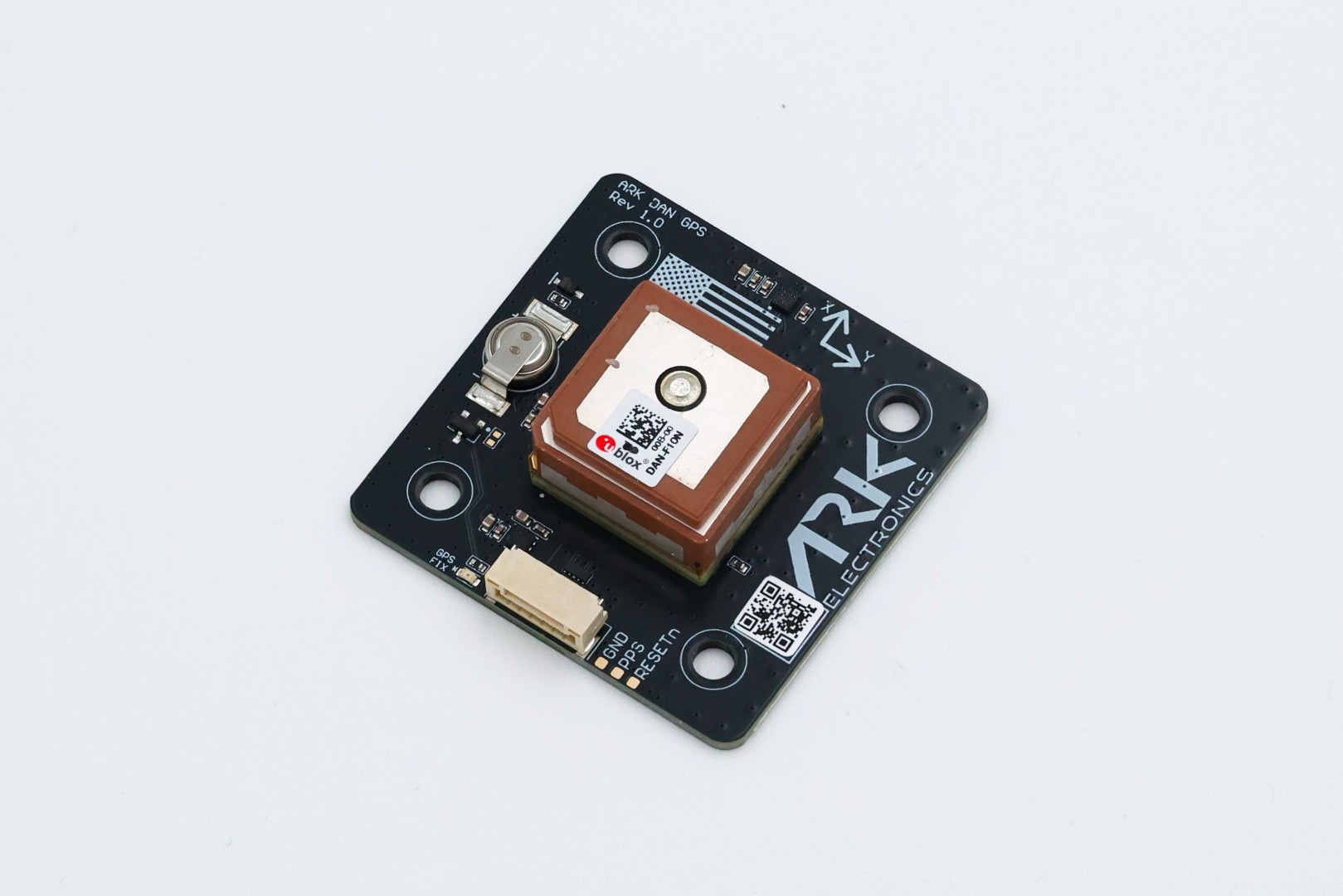
    ARK Electronics has launched the ARK DAN GPS, a U.S.-built dual-band L1/L5 GNSS and industrial magnetometer unit. The ARK DAN is designed for dependable navigation and orientation in professional drone and autonomous platform applications.

    Incorporating the u-blox DAN-F10N receiver, the system delivers resilient signal acquisition across L1, L5, E5a, and B2a frequency bands. Its integrated SAW-LNA-SAW design ensures robust immunity to interference, while proprietary dual-band multipath mitigation enhances positional reliability even in complex environments.

    An onboard ST IIS2MDC magnetometer provides stable heading data, complemented by a compact 4.4 cm × 4.4 cm × 1.3 cm form factor for flexible installation. The Pixhawk-standard UART/I2C interface and 6-pin JST-GH connector simplify integration into existing flight control architectures.

    With an efficient 5 V power draw averaging just 25 mA and a visual GPS fix indicator, the NDAA-compliant ARK DAN GPS combines performance, precision, and compliance in a lightweight, 25 g package.

    Specifications

    • Dimensions: 4.4 × 4.4 × 1.3 cm
    • Weight: 25 g
    • Power: 5V; 25mA average, 44mA max
    • Frequency Bands: L1/L5/E5a/B2a

  • JAVAD introduces US-built GNSS board for LEO applications

    JAVAD introduces US-built GNSS board for LEO applications

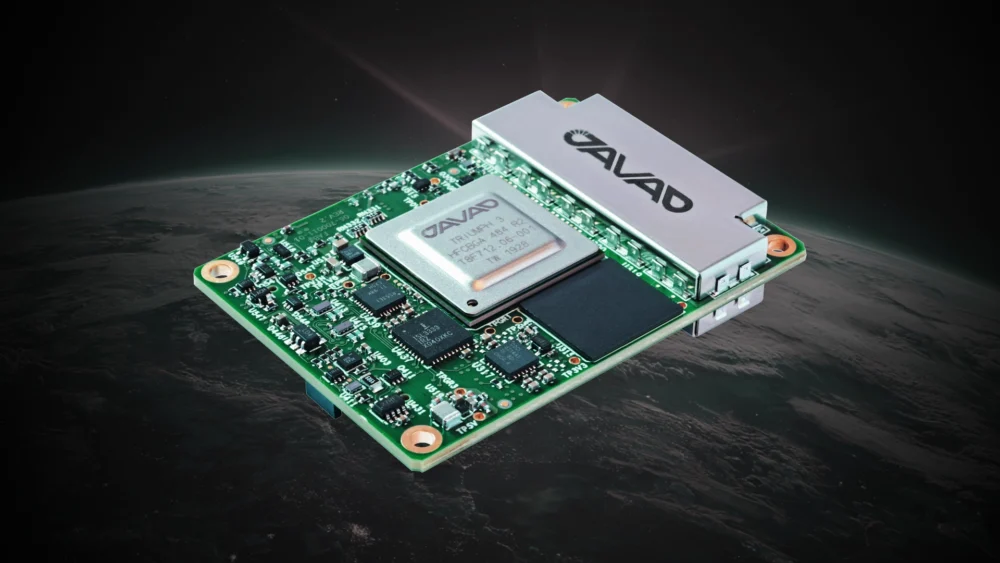
    JAVAD GNSS has announced the TR-2S LEO, a compact GNSS OEM board designed and manufactured at the company’s headquarters in San Jose, California. The TR-2S LEO delivers high-precision GNSS positioning for low Earth Orbit (LEO) missions.

    Developed for customers requiring high-integrity navigation performance under the demanding conditions of space, the TR-2S LEO integrates radiation-tolerant, space-hardened electronics with patented spoofing and jamming detection to support, secure and protect continuous GNSS operation. The board tracks 874 channels across all major GNSS constellations, enabling robust and real-time position, velocity, time and measurements (PVT) with multi-frequency resilience.

    JAVAD GNSS brings more than two decades of flight heritage, with OEM boards deployed on most commercial launch vehicles worldwide, including the Vega program of the European Space Agency (ESA). The company continues to build upon its experience, now with focused concentration on LEO-based applications with technologies like the TR-2S LEO and the SpaceAnt-G3T OEM GNSS antenna. The SpaceAnt-G3T features a stable phase center and is usable for single-, dual- and triple-frequency applications.

    “The TR-2S LEO reflects our commitment to delivering mission-critical GNSS solutions engineered and manufactured entirely in the United States,” said Tom Hunter, senior vice president, Aerospace and Defense Solutions at JAVAD GNSS. “As commercial space operations expand, our customers need a navigation platform they can trust — one built on proven flight heritage, radiation-hardened design, and the technical support to see their missions succeed. That’s what we deliver.”

    The TR-2S LEO is adaptable to a wide range of commercial launch vehicles, spacecraft and high-dynamic applications.

  • Syslogic offers cm-accurate expansion board for embedded computers

    Syslogic offers cm-accurate expansion board for embedded computers

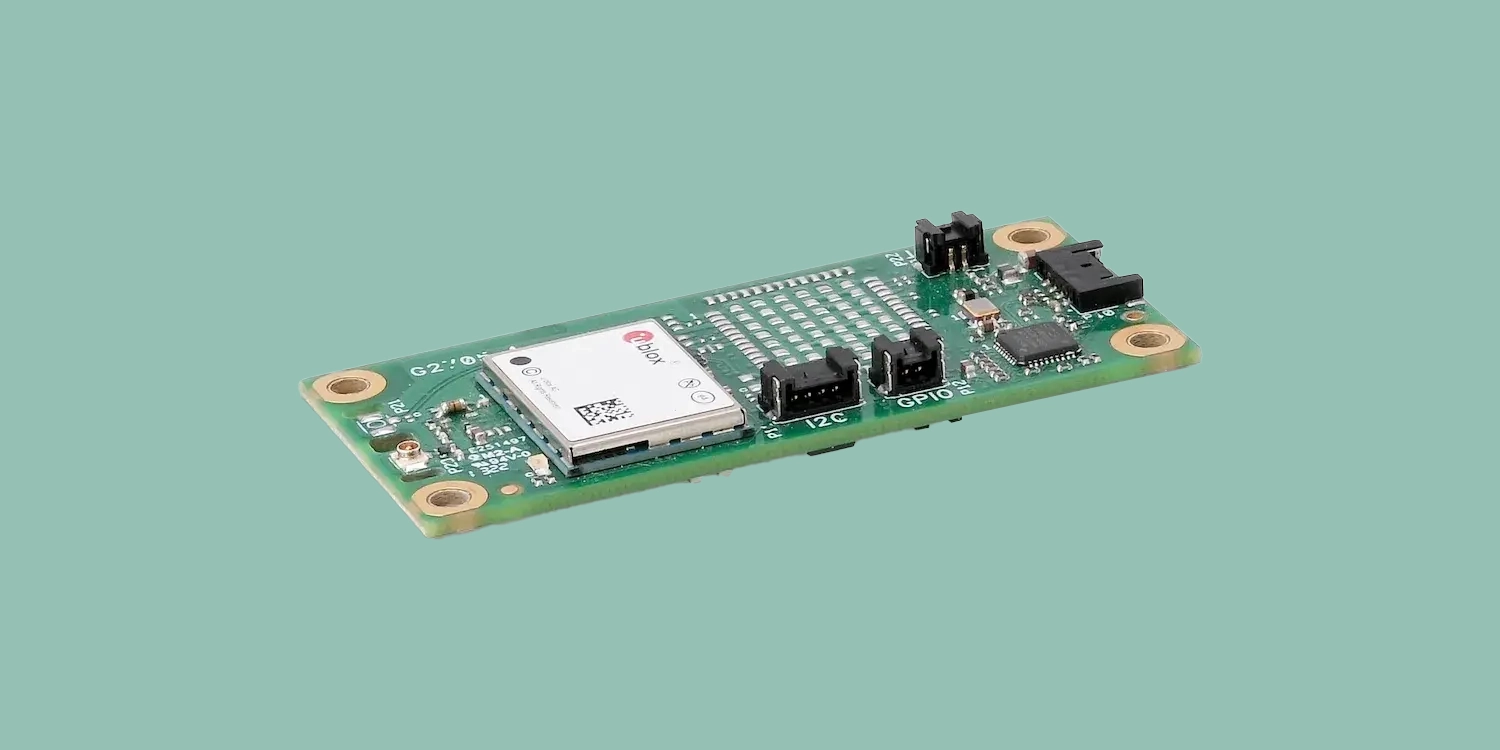
    Syslogic has introduced a GNSS expansion board for its rugged embedded computers. Based on u-blox GNSS technology, the board provides centimeter-level positioning, opening up new applications across industries such as autonomous field management, operation of construction machinery in remote areas, and navigation of automated guided vehicles (AGVs) and autonomous mobile robots.

    All-band, multi-frequency reception and HAS-ready

    Syslogic’s all-band GNSS board is powered by the u-blox X20 receiver, supporting all major GNSS constellations and frequencies, including L1, L2, L5, L6, and L-band. This enables the use of the upcoming Galileo High Accuracy Service (HAS).

    HAS supplements standard Galileo Open Service positioning with correction data transmitted directly over the E6/L6 band. The result is centimeter-level positioning via GNSS signals without the need for traditional RTK base stations, costly reference networks, or 5G connectivity.

    The u-blox X20-based GNSS board also supports simultaneous multi-frequency reception. With additional frequencies compared to previous models, typical GNSS errors, such as multipath effects and signal blockage, are significantly reduced, particularly in urban environments. This is crucial for applications that demand highly precise and reliable positioning, including surveying, autonomous vehicles, agricultural machinery and industrial automation.

    The GNSS board is designed for worldwide use. The integrated u-blox receiver supports modern correction techniques such as RTK, PPP-RTK and PPP. For the first time, it has been fully optimized for PointPerfect Global, u-blox’s proprietary high-precision GNSS correction service, delivering centimeter-level positioning anywhere in the world. This is particularly useful in remote areas without cellular coverage. PointPerfect Global uses advanced PPP-AR technology (precise point positioning with ambiguity resolution), providing corrections via the internet or L-band satellite transmission. The service achieves convergence times of less than two minutes and positioning accuracy within ten centimeters.

    RTK and Heading Capabilities Without Additional Hardware

    The new expansion board is compatible with Syslogic embedded computers, including both Nvidia Jetson-based and x86-based devices. It is available with either one or two receivers, enabling RTK and heading functions without additional hardware.

    Vehicles and machines can be positioned with centimeter-level accuracy. Several Syslogic customers are already using the GNSS functionality in pilot projects, including precision farming and construction machinery monitoring.

    Features of the Syslogic All-Band GNSS Board

    • based on u-blox X20
    • All-band, all constellation GNSS receiver
    • RTK, PPP-RTK and global PPP, cm-level accuracy
    • PPS output to host system (GPIO)
    • Galileo HAS support on L6 band
    • Flexible integration into Syslogic products
    • Extended temperature range from –40°C to +85°C.

  • Arazim Navigation Systems secures new defense order for HPLS-2G navigation units

    Arazim Navigation Systems secures new defense order for HPLS-2G navigation units

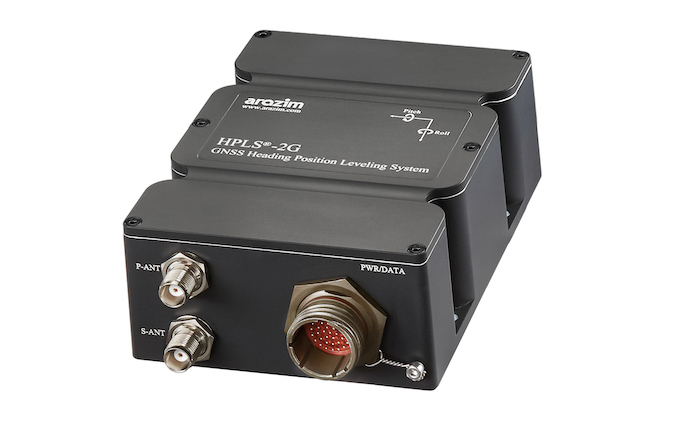
    The nearly $1 million contract covers delivery of approximately 100 dual-antenna GPS/GNSS compasses for land-based applications.

    Arazim Navigation Systems, an Israeli manufacturer of inertial navigation systems, has received a new order valued at nearly $1 million from an Israeli defense customer. The order includes 100 units of the HPLS-2G GPS/GNSS compass, designed to provide heading and attitude information for static land-based systems using dual-antenna GPS technology.

    According to Arazim, the HPLS-2G NFS system is a rugged, MIL-STD-compliant device built to operate in harsh environmental conditions and hostile operational environments.

    “This continued trust represents more than another contract; it reflects confidence in the reliability, performance, and ongoing development of our navigation solutions,” Sason Noama, CEO and founder of Arazim Navigation Systems, said. “For years, our technology has supported critical operations where precision and resilience are essential. This order further underscores Arazim’s role as a trusted provider of advanced navigation and situational awareness systems for defense and security organizations.”

  • Xsens IMUs deliver sub-5 cm heave accuracy for maritime wave motion

    Xsens IMUs deliver sub-5 cm heave accuracy for maritime wave motion

    Firmware upgrade available for Xsens Sirius and Xsens Avior motion sensors delivers centimeter-level vertical displacement measurement for marine stabilization and control systems

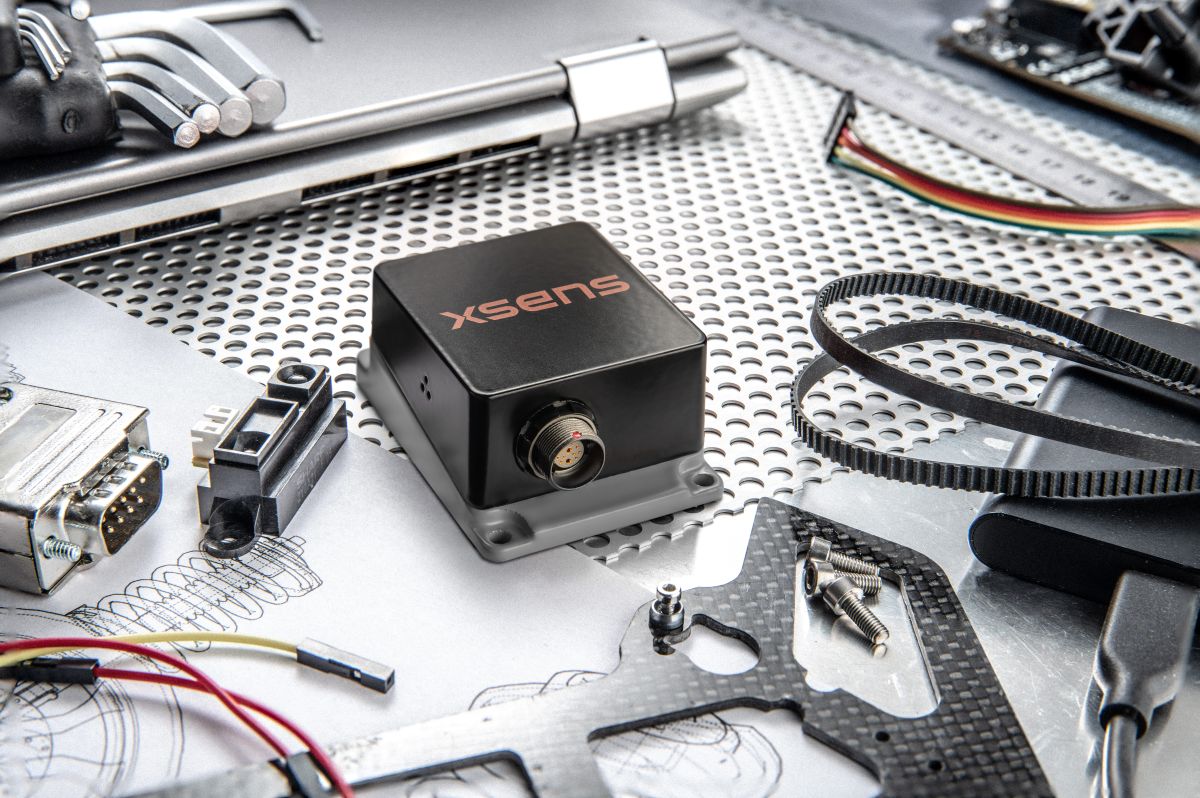
    Xsens has announced a major capability upgrade for its industrial-grade Xsens Sirius and Xsens Avior inertial measurement units (IMUs). The new Heave feature delivers centimeter-level vertical displacement measurement, enabling real-time stabilization and wave compensation in a wide range of marine applications. 

    Marine engineers can now access comprehensive motion data — roll, pitch, yaw and Heave — from a single compact sensor. This eliminates the need for external processing or for oversized tactical-grade systems while maintaining the precision required for offshore platforms, vessels, docking systems, marine robots, buoys and surveying equipment.

    The Heave output operates at up to 100Hz, providing the real-time response needed in active stabilization and wave compensation systems. All processing happens on-device, simplifying system integration and reducing latency.

    Xsens motion reference units (MRUs) — IMUs with Heave capability — deliver real-time Heave accuracy better than 5 cm for wave periods up to 29 s. This covers most marine applications. For longer wave periods up to 40 s, accuracy is approximately 6cm, twice the range supported by comparable industrial-grade MRUs.

    “Engineers now get vertical displacement data directly onboard, alongside roll, pitch and yaw,” said Ayush Sharma, Algorithms Engineer at Movella. “This gives marine customers the complete motion reference they need for stabilization and compensation systems, without the size or certification overhead of tactical MRUs.”

    The algorithm uses proprietary phase correction and bias estimation to mitigate the effect of drift over extended operating periods. Users can also define offset points — center of rotation (COR) and point of interest (POI) — ensuring that Heave values reflect the true motion of the vessel or payload, even when the MRU is installed away from the POI.

    The Heave algorithm is available for download immediately as a firmware update for existing Xsens Sirius and Xsens Avior units in the field, with no hardware modifications required. All new units ship with the feature integrated. Heave output is enabled with a single setting in the MT Manager software or the Xsens software development kit (SDK). 

    Designed for straightforward integration

    Xsens Avior is a compact OEM module for embedded system designs.

    Xsens Sirius is a standalone MRU in a rugged IP68 housing for harsh environments. It meets MIL-STD-202 requirements.

    Both products support RS-422, CAN, and UART interfaces. Development kits are available for prototyping, with free SDKs for C/C++, Python, ROS1, ROS2, and MATLAB. All units meet CE, FCC, and RoHS regulatory requirements, and are ITAR-free.

    Xsens Avior and Xsens Sirius MRUs are available globally from Movella and authorized partners. For specifications, datasheets, and ordering information, visit www.movella.com/products/sensor-modules or contact a Movella sales representative.

  • etherWhere and AsiaRF display new GNSS modules at CES 2026

    etherWhere has partnered with AsiaRF to offer two new GNSS modules based on its EW6181, a module that offers low power consumption with fast acquisition time.

    AsiaRF is offering two module designs (10.1 × 9.7 × 2.3 mm and 18 × 18 × 6.2 mm). The modules are targeted for wireless solutions, including Wi-Fi 7 access points, body-worn cameras, and asset tracking solutions.

    etherWhere specializes in low-power GNSS chipset solutions, and Asia RF is a leader in wireless connectivity. Both companies are attending CES 2026 (visit etherWhere at LVCC – North Hall Booth No. 10763; see the modules on display at the nearby Asia RF booth, No. 10676.)

    For customers with challenging applications, etherWhere offers performance improvement through the use of accuWhere cloud. accuWhere’s multi-modal operation can reduce power consumption for battery operated devices or improve accuracy for demanding applications.

    “We’re thrilled to work with AsiaRF, a leader in wireless connectivity solutions, targeting the enterprise, IoT, and public safety markets. Location awareness is becoming a key requirement across the industry, and we’re excited to be partnering with AsiaRF to bring solutions to the market,” said Michael Raam, CEO of etherWhere.

    “Our partnership with etherWhere marks a significant milestone in AsiaRF’s mission to push the boundaries of wireless innovation,” said Paul Lai, CEO of AsiaRF. “The new GNSS modules address critical market demand for high precision and ultra-low power consumption in compact form factors. We are excited to showcase these solutions at CES 2026, offering our clients the perfect synergy of Wi-Fi 7 connectivity and state-of-the-art geolocation.”

  • Quectel issues cease and desist letters in response to ‘disinformation’

    Quectel issues cease and desist letters in response to ‘disinformation’

    Quectel Jan. 7 announced that it sent letters to Telit Cinterion, Thales Group, DBAY Advisors, Liberty Bell Project and Charles Parton demanding that they stop disseminating false and defamatory statements about Quectel regarding risks associated with its products’ security and the company’s purported connections to the Chinese government.

    The letters assert that Telit Cinterion, Thales Group, DBAY Advisors, Charles Parton, and entities that Parton is associated with including Royal United Services Institute and the Council on Geostrategy, and the Liberty Bell Project, have conducted coordinated disinformation campaigns against Quectel.

    The letters allege that the efforts, which are designed to harm Quectel’s business using malicious falsehoods, constitute inappropriate and unfair business practices and must stop.

    “Quectel believes in fair competition and responsible business conduct,” said Jaron Xu, Quectel’s chief sales officer. “We will not tolerate attempts to interfere with our customer relationships and to compete on unfair terms by spreading maliciously false statements in a coordinated fashion under the guise of independent expertise. We will vigorously defend ourselves against competitors’ unfair business practices and we will not tolerate untrue and defamatory practices targeting Quectel and its customers.”

    Quectel demanded that the competitors and associates cease such conduct immediately.