Category: Uncategorized

  • Septentrio to spotlight drone GNSS solutions at Esri UC

    Septentrio to spotlight drone GNSS solutions at Esri UC

    Septentrio will showcase its latest GNSS systems and software solutions for GIS professionals at the 2016 Esri User Conference in San Diego, June 28-30, with a special focus on the rapidly growing market for drone-based aerial survey.

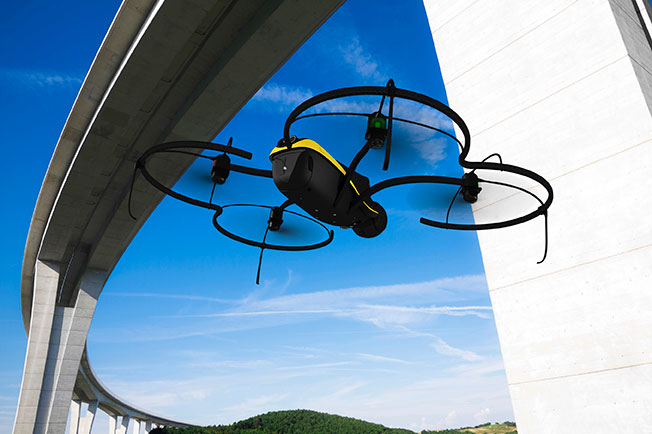
    The AsteRx-m UAS by Septentrio.
    The AsteRx-m UAS by Septentrio.

    At center stage will be Septentrio’s suite of products designed specifically for aerial surveys. They include the compact AsteRx-m UAS onboard GNSS receiver and GeoTagZ high-accuracy drone positioning software, which is optimized for automatic interface with Esri ARCGis and Drone2Map platforms.

    “Demand for drone imagery is booming in the GIS marketplace as a fast and efficient alternative to ground-based surveys for applications such as mapping, photogrammetry, infrastructure inspection and natural disaster monitoring,” said Neil Vancans, vice president of Septentrio Americas. “To meet that demand, we are bringing to market a range of hardware and software solutions that will make it easier than ever for Esri users to capture, georeference, process and visualize drone-captured imagery.”

    Septentrio is also introducing new firmware for its versatile NR2 GNSS receivers and the PinPoint-GIS utility software for terrestrial applications. NR2 V1.2.0 offers a host of new connectivity features, including direct dial-up, dynamic DNS, base-rover Wi-Fi point-to-point connection and other new features that will streamline field work. PinPoint-GIS has also been enhanced to provide seamless integration with Esri’s Collector for ArcGIS.

    “Septentrio is pioneering the way by which Esri users collect data,” said Gustavo Lopez, product manager at Septentrio. “GeoTagZ and PinPoint-GIS bring more accuracy and flexibility into the field by combining the power of Septentrio’s GNSS products with the user-friendly interface of Collector for ArcGIS. From the air to your own device, you are guaranteed accuracy and reliability in your GNSS positioning by using GeoTagZ to georeference aerial photos and PinPoint-GIS to harness the power of GIS data.”

    Esri User Conference attendees are invited to visit Booth 2633 for a first-hand look at Septentrio’s solutions for the full range of aerial and ground-based GNSS solutions for GIS, including the new-generation APS-3G multi-constellation RTK receiver, which was just introduced to the market.

  • Hemisphere GNSS reveals new, improved Eclipse OEM boards

    Hemisphere GNSS reveals new, improved Eclipse OEM boards

    Hemisphere GNSS has announced the Eclipse P326 and P327, first in a line of new and refreshed low-power, high-precision, position and heading OEM boards. The boards are the latest addition to the company’s Eclipse series of products.

    The multi-frequency, multi-GNSS Eclipse P326 and P327 are based on an innovative platform that integrates L-band and receives Atlas GNSS corrections on a single small board, the company said. Designed with this new platform, the overall cost, size, weight and power consumption of the P326 and P327 are significantly reduced.

    The Hemisphere GNSS P326 board.
    The Hemisphere GNSS P326 board, a drop-in upgrade for many Hemisphere products.

    The P326 and P327 support 394 channels and are scalable board solutions that offer centimeter-level accuracy in either single-frequency or full performance multi-frequency, multi-GNSS, Atlas-capable mode.

    The small form factor (41 x 71 millimeters) 34-pin P326 module is a drop-in upgrade for many Hemisphere products. The P327 module (41 x 72 millimeters) is a drop-in upgrade for standard 20-pin modules from other manufacturers.

    “Our continuous commitment to innovation in GNSS solutions allows our OEM partners to take their products to the next level,” said Jennifer Keenan, product marketing manager at Hemisphere GNSS. “With integrated L-band for Atlas support, future output rates of 50 Hz, and tracking of 394 channels in such a small form factor, our OEM boards have never been this appealing to system integrators.”

    The latest technology platform enables simultaneous tracking of all satellite signals including GPS, GLONASS, BeiDou, Galileo and QZSS, which the company said makes it a robust and reliable solution, while the updated power-management system efficiently governs the processor, memory and ASIC — important for multiple integration applications such as handheld and battery-powered devices.

  • FAA: Commercial drone use to take flight

    FAA: Commercial drone use to take flight

    Today, the Federal Aviation Administration (FAA) has finalized the first operational rules for routine commercial use of small unmanned aircraft systems (UAS), opening pathways towards fully integrating UAS into the nation’s airspace.

    These new regulations work to harness new innovations safely, to spur job growth, advance critical scientific research and save lives, the FAA said in a press release.

    “We are part of a new era in aviation, and the potential for unmanned aircraft will make it safer and easier to do certain jobs, gather information, and deploy disaster relief,” said U.S. Transportation Secretary Anthony Foxx. “We look forward to working with the aviation community to support innovation, while maintaining our standards as the safest and most complex airspace in the world.”

    According to industry estimates, the rule could generate more than $82 billion for the U.S. economy and create more than 100,000 new jobs over the next 10 years.

    The new rule, which takes effect in late August, offers safety regulations for unmanned aircraft drones weighing less than 55 pounds that are conducting non-hobbyist operations.

    The rule’s provisions are designed to minimize risks to other aircraft and people and property on the ground. The regulations require pilots to keep an unmanned aircraft within visual line of sight. Operations are allowed during daylight and during twilight if the drone has anti-collision lights. The new regulations also address height and speed restrictions and other operational limits, such as prohibiting flights over unprotected people on the ground who aren’t directly participating in the UAS operation.

    The FAA is offering a process to waive some restrictions if an operator proves the proposed flight will be conducted safely under a waiver. The FAA will make an online portal available to apply for these waivers in the months ahead.

    “With this new rule, we are taking a careful and deliberate approach that balances the need to deploy this new technology with the FAA’s mission to protect public safety,” said FAA Administrator Michael Huerta. “But this is just our first step. We’re already working on additional rules that will expand the range of operations.”

    Under the final rule, the person actually flying a drone must be at least 16 years old and have a remote pilot certificate with a small UAS rating, or be directly supervised by someone with such a certificate. To qualify for a remote pilot certificate, an individual must either pass an initial aeronautical knowledge test at an FAA-approved knowledge testing center or have an existing non-student Part 61 pilot certificate. If qualifying under the latter provision, a pilot must have completed a flight review in the previous 24 months and must take a UAS online training course provided by the FAA. The TSA will conduct a security background check of all remote pilot applications prior to issuance of a certificate.

    Operators are responsible for ensuring a drone is safe before flying, but the FAA is not requiring small UAS to comply with current agency airworthiness standards or aircraft certification. Instead, the remote pilot will simply have to perform a preflight visual and operational check of the small UAS to ensure that safety-pertinent systems are functioning property.  This includes checking the communications link between the control station and the UAS.

    Although the new rule does not specifically deal with privacy issues in the use of drones, and the FAA does not regulate how UAS gather data on people or property, the FAA is acting to address privacy considerations in this area. The FAA strongly encourages all UAS pilots to check local and state laws before gathering information through remote sensing technology or photography.

    As part of a privacy education campaign, the agency will provide all drone users with recommended privacy guidelines as part of the UAS registration process and through the FAA’s B4UFly mobile app. The FAA also will educate all commercial drone pilots on privacy during their pilot certification process; and will issue new guidance to local and state governments on drone privacy issues. The FAA’s effort builds on the privacy “best practices” the National Telecommunications and Information Administration published last month as the result of a year-long outreach initiative with privacy advocates and industry.

    Part 107 will not apply to model aircraft.  Model aircraft operators must continue to satisfy all the criteria specified in Section 336 of Public Law 112-95 (which will now be codified in Part 101), including the stipulation they be operated only for hobby or recreational purposes.

    Visit the FAA website for more information on the FAA and UAS.

    Reaction

    Brian Wynne, president and CEO of the Association for Unmanned Vehicle Systems International (AUVSI), issued the following statement:

    “Today’s release of the final small UAS rule by the FAA is a critical milestone in the integration process, and a long-awaited victory for American businesses and innovators. It establishes a clear regulatory framework and helps to reduce many barriers to civil and commercial operations, allowing anyone who follows the rules to fly in the national airspace.

    “Accelerating civil and commercial UAS operations will not only help businesses harness tremendous potential of UAS, it will also help unlock the economic impact and job creation potential of the technology. Once UAS are fully integrated into the national airspace and become more widely used, the industry will continue to grow as a job creator and generate significant economic impact.

    “Our economic report projects that the expansion of UAS technology will create more than 100,000 jobs and generate more than $82 billion to the economy in the first decade following integration. Whether it’s aiding search and rescue missions, advancing scientific research, responding to natural disasters, or helping farmers care for their crops, UAS are capable of saving time, saving money and most importantly, saving lives.

    “The final rule allows for many uses of small UAS and a streamlined waiver process to expand applications. We are looking forward to additional rulemaking which has already begun with AUVSI’s support, to enable more complex operations. We need to make sure we are doing all we can to support the UAS industry’s growth and development; otherwise we risk stunting a still-nascent industry and restricting the many beneficial uses of this technology.”

    National Association of Realtors (NAR) President Tom Salomone called the rules a win for the industry.

    “We’ve worked hard to strike a responsible balance that protects the safety and privacy of individuals, while also ensuring Realtors can put drones to good use,” said Salomone, broker-owner of Real Estate II Inc. in Coral Springs, Florida. “That effort just took another big step forward. The rules unveiled today will help more real estate professionals take flight, making the efficiency and innovation that drones have to offer available to a much broader base of operators.”

    The FAA’s announcement marks a long-fought victory for Realtors. Since early 2014, NAR has worked with the FAA and industry partners to integrate drones into the national airspace for commercial use. NAR wrote to the FAA on numerous occasions to weigh in on the final Small UAS Rule, and testified before Congress to support the use of drones in real estate.

    Despite eliminating the requirement that operators hold a pilot’s license, anyone looking to fly drones commercially will still have to comply with strict requirements designed to protect people on the ground.

    Drones are useful in a number of real estate-related applications, including marketing properties, assisting with appraisals, facilitating insurance claims and overseeing utility work. While many real estate professionals with pilot’s licenses have already put drones to use in these arenas, the new rules are expected to open the door for additional operators to do the same.

    Despite the significant progress made in the FAA’s final rule, NAR’s work on this issue will continue. NAR is calling for eased restrictions on a “micro” category of drones; drones in this category weigh less than four pounds and present a much smaller safety risk than certain drones in the under-55 pound category covered by the rule released today.

    NAR also believes there is an ongoing need for a drone strategy that allows for “beyond visual line-of-sight” flights, or those where the operator cannot physically see the drone throughout the entire operation. These flights are particularly important for aerial photography across large buildings or tracts of land.

    Salomone praised the FAA for their efforts in crafting the rule.

    “Getting here wasn’t easy, and the FAA is to be commended for listening to the concerns of real estate professionals throughout the rulemaking process,” he said. “We’re entering a new stage of drone use in real estate, and no doubt there will be additional questions and challenges ahead. NAR will continue educating its members on issues important to the safe, responsible use of drones so they can grow their business and better serve their clients.”

    The National Association of Realtors, “The Voice for Real Estate,” is America’s largest trade association, representing more than 1.1 million members involved in all aspects of the residential and commercial real estate industries.
  • Spirent announces portable, high-resolution system for navigation testing

    Spirent announces portable, high-resolution system for navigation testing

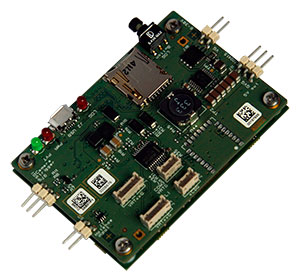
    Spirent-GSS6450-WSpirent Communications plc, a manufacturer of test equipment and services for improving positioning, navigation and timing (PNT) system performance, today announced the new Spirent GSS6450 RF record and playback system.

    RF record and playback systems capture the rich, real-world radio frequency environment and bring it into the lab. This enables receiver, system and application technology developers to optimize performance and robustness.

    The GSS6450 uniquely combines high-resolution, 16-bit-wide band sampling in a highly portable unit measuring 22 x 20 x 7.3 centimeters and weighing only 2 kilograms. The high-resolution capability means it can capture a more detailed RF environment, including RF interference, complex atmospheric scintillation and space weather impacts on the GNSS signal, so users can improve receiver performance against these signals.

    With its compact size, the GSS6450 is designed for capturing data in the field such as on foot or in vehicles, and easily portable when traveling.

    “The GSS6450 offers high resolution in a small self-contained battery powered unit,” said Rahul Gupta, commercial segment lead for Spirent’s positioning division. “Until now, high-resolution record and playback systems have been mains powered and not designed for in-field use. The GSS6450 changes that, enabling a range of signal powers and characteristics to be sampled, recorded, brought into the lab and replayed.”

    It offers a choice of 4-, 8- or 16-bit I/Q quantization, and a 10-, 30- or 50-MHz recording bandwidth. Up to four GNSS frequency bands can be recorded simultaneously, making the GSS6450 suitable for a wide range of applications, from testing new devices, such as wearable tech and unmanned vehicles, to chipset development using new GNSS frequencies, and high-end system test.

    The 16-bit I/Q quantization option gives up to 96 dB of dynamic range, so it also can be used for interference analysis and improving receiver resilience to GPS jamming.

    The GSS6450 is also capable of recording additional non-RF sources including inertial sensor outputs, dead reckoning, and up to four video streams. Long recordings are achieved using up to 4 terabytes of on-board storage. An additional 8 terabytes of RAID storage can be added externally.

    The Spirent GSS6450 is available now.

  • Esri observes World Refugee Day with new Story Map

    In celebration of World Refugee Day, Esri has revealed a Story Map, “The Uprooted,” which provides insight into the Syrian displacement. Syria accounts for a large portion of the world’s refugees and internally displaced people.

    World Refugee Day is held every year on June 20 to commemorate the strength, courage and perseverance of millions of refugees.

    Check out more data on displaced people on Esri’s website.

  • Report: Counter UAV market to generate $2.4 million this year

    AUDS System
    AUDS System

    A new report from business intelligence provider Visiongain offers market insight and analysis of the emerging counter UAV (C-UAV) market. In “Counter UAV (C-UAV) Technologies Market 2016-2026,” Visiongain assesses that the C-UAV market will generate revenues of $2,483 million in 2016.

    In May 2016, Blighter Surveillance Systems, Chess Dynamics and Electronic Control Systems had their AUDS C-UAV system selected by the U.S. Federal Aviation Administration for evaluation at U.S. airports as part of its Pathfinder Program.

    Visiongain’s report provides an objective analysis of how the AUDS selection will impact companies and the industry more broadly. It provides clear detailed insight into the global C-UAV market and reveals the key drivers and challenges affecting the market.

    The 205-page report includes 249 in-depth tables, charts and graphs, plus an exclusive interview with Mark Radford, CEO of Blighter Surveillance Systems.

    To see a report overview, email Sara Peerun at [email protected].

  • UAV Design and Applications: Autonomous Relative Navigation and GNSS Robustness for UAV Systems

    Broadcast Date: May 19, 2016
    On-Demand Available Until: May 19, 2017
    Sponsor: Septentrio
    Summary: Constantly evolving, it’s no wonder keeping up on the latest in UAV design and applications can be challenging. In this webinar, speakers will engage you in discussions involving self-generated radio-frequency interference aboard UAVs; an autonomous relative navigation tool for in-air UAV refueling; sensor integration for a UAV designed for industrial environments; and considerations for multi-GNSS integration onto UAV platforms.
    Speakers: Dennis Akos, Professor, University of Colorado at Boulder; Joshua Stubbs, Recent Graduate, MS, Luleå University of Technology; Jeffrey Fayman, CTO, Geodetics; Chris Miser, CEO, Falcon Unmanned; and Jan Leyssens, Product Manager, Septentrio

  • Connected Car: Cutting edge research aimed at implementing connected car and driverless car technology

    Broadcast Date: Thursday, June 16, 2016
    On Demand available until: Thursday, June 15, 2017
    Duration: 60 minutes + time for Q&A
    Sponsor: u-blox

    Connected cars and V2X — connectivity between vehicles and infrastructure — lie around the next bend in the road. Extensive research and development have prepared these revolutionary concepts for implementation very soon.

    Join GPS World and our panel of expert presenters as we discuss:

    • Recent developments in – and the potential safety impact of – V2X technology.
    • The role of GNSS, and potential challenges in accuracy, reliability, jamming and spoofing.
    • How radar, lidar, cameras, dedicated short range communications (DSRC) and V2X will combine to create advanced Advanced Driver Assistance Systems (ADAS).
    • Potential regulations and aftermarket devices.

    Speakers: Chaminda Basnayake, Principal Engineer, V2X Systems, Renesas Electronics; John Kenney, Director and Principal Researcher, Network Division Toyota InfoTechnology Center; Nikolaos Papadopoulos, President, u-blox America, Inc.; and Roger Berg, Vice President, Wireless Technologies DENSO North American Research and Development Laboratories.

    Moderator: Alan Cameron, Editor-In-Chief, GPS World

    AESTHETICALLYPLEASINGBUTTON


  • Gamma 2 Robotics launches autonomous security robot, partners with Hexagon

    Gamma-2-Robotics_-RAMSEE

    Gamma 2 Robotics introduced its new RAMSEE security patrol robot at Hexagon’s international conference HxGN LIVE, which is being held June 13-16 in Anaheim, California. The launch is part of a new partnership with Hexagon Safety & Infrastructure.

    RAMSEE is a physical presence that patrols autonomously without supervision and provides real-time data on intruders, motion, heat, fire, smoke, gas and more. the company says in a news release.

    “RAMSEE will change the world of security because it never rests and operates at a fraction of the cost paid for other security services,” says Lew Pincus, chief executive officer, Gamma 2 Robotics. “We built RAMSEE to be ideally suited for the overnight dull, dirty and dangerous patrols nobody wants to do. These are the jobs for which the security industry struggles to find staffing.”

    RAMSEE can be used by companies that provide security personnel, as well as end users of security services, to provide safety and security at a lower cost than staffing with greater reliability.

    “Mobile sensor platforms, such as robots and drones, have the potential to disrupt public safety and security markets,” said Kalyn Sims, chief technology officer, Hexagon Safety & Infrastructure. “Through our partnership with Gamma 2 Robotics and other efforts, Hexagon is exploring the integration of mobile sensor platforms, command-and-control software and advanced analytics to enhance public safety and security.”

    The robot can be integrated with other safety and security assets, such as video surveillance systems, access control systems, building automation systems and others, into command-and-control software for a comprehensive solution for threat detection, assessment and response.

    At HxGN LIVE, Hexagon Safety & Infrastructure and Gamma 2 Robotics are demonstrating the capabilities of a comprehensive physical security information management (PSIM) solution featuring Hexagon’s command-and-control software and multiple security systems and sensors, including RAMSEE.

    “We teamed with Hexagon Safety & Infrastructure and chose to launch our new line of security robots at HxGN LIVE because Hexagon’s global footprint and reputation for innovative solutions provide an international platform for our game-changing, disruptive technology in security services,” Pincus says.

  • TomTom adds HD Map, RoadDNA for 17 new states

    TomTom has expanded coverage of its High Definition (HD) Map and RoadDNA products to 17 new states across the U.S., the company announced at TU-Automotive Detroit, which is being held June 8-9 in Novi, Michigan.

    “With over 122,000 kilometres (75,800 miles) of HD Map coverage globally, we’re equipping our automotive customers with the data needed to continue to push autonomous driving forward,” said Willem Strijbosch, head of autonomous driving at TomTom. “The importance of having a map in the vehicle for autonomous driving is now widely accepted; TomTom has responded to this need with an unprecedented ability to provide HD Maps today, while others are still in the R&D stage.”

    TomTom’s HD Map and RoadDNA are now available for interstates in Connecticut, Delaware, District of Columbia, Georgia, Idaho, Kansas, Louisiana, New Hampshire, New Mexico, North Carolina, Ohio, Pennsylvania, 
Rhode Island, South Dakota, Tennessee, Texas, and Vermont; interstates and highways in California, Michigan, and Nevada;
    and the Autobahn network in Germany.

    TomTom HD Map and RoadDNA are two highly accurate digital map products aiding automated vehicles to precisely locate themselves on the road and plan maneuvers. The technologies are being rolled out in strategic geographies and are the subject of key partnerships with other automotive suppliers.

    The company also unveiled its Localisation Demonstrator, a new demonstration device that leverages its HD Map and RoadDNA technology to provide lane-level localization of a vehicle. The device, utilizing sensors, combines TomTom autonomous driving content with TomTom correlation software for precision of the data, and the ability to perform real-time lane positioning.

    “We believe that this demo enables our customers to truly experience the powerful nature of our autonomous driving products,” Strijboschsaid. “This demo not only illustrates TomTom’s product innovation but also enables us to elevate the level of engagement with our automotive partners.”

    The company is showcasing its autonomous driving products at booth C116 at 
TU-Automotive.

  • Google opens up GNSS pseudoranges

    Google opens up GNSS pseudoranges

    Google has announced that raw GNSS measurements will be available to apps in the Android N operating system, which will be released later this year. This means pseudoranges, dopplers and carrier phase will be obtainable from a phone or tablet computer.

    The announcement came during Google’s I/O 2016, its three-day developer conference which was held May 18-20. The specific announcement occurs during a video summary of the conference, shown below.

    “This is groundbreaking,” says Steve Malkos, a technical program manager at Google. “It is the first time in history that a mobile application will have access to the raw GPS measurements. This is beneficial to many, but especially the phone makers, because they can use these measurements to help them in their performance testing. And if you ever had a bright idea on how to use GPS measurements, now’s your time to shine.”

    Malkos co-wrote “The Fashion Demands of Always-On: Ultra-Low-Power, High-Accuracy Location for Wearable GNSS Devices: From Host-Based to On-Chip” in the December 2014 issue of GPS World, and “Putting the (ultra-low) Power in GeoFence” in the November 2013 issue. His blog post in the upcoming July 2016 issue will include more information about the new Google development, including a hands-on demonstration course to be offered at ION-GNSS+ 2016 in Portland, Oregon in September.

    For a brief background and context of this development for application developers and chip-makers, see “OS providers: 800-pound gorillas in PNT jungle” from the current (June) issue of GPS World. Contributing editor for geospatial Eric Gakstatter has also written on this topic in “Mobile Device Operating System Wars: Android vs. iOS vs. Windows Mobile “ (April 2012) and “Mobile Device Operating System Wars: Ver. 2.0” (April 2014). “The BYOD (Bring Your Own Device) trend has been hot for a few years due to the growing popularity of iOS and Android devices.”

    Android N is the codename of an upcoming release of the Android operating system. It was first released as a developer preview on March 9, with factory images for current Nexus devices, as well as with the new Android Beta Program which allows supported devices to be upgraded directly to the Android N beta via over-the-air update.  The stable release of the operating system is expected in mid-2016.

    Google I/O is an annual developer-focused conference held by Google in the San Francisco Bay Area. It features technical, in-depth sessions focused on building web, mobile, and enterprise applications with Google and open web technologies such as Android, Chrome, Chrome OS, APIs, Google Web Toolkit, App Engine, and more. Google I/O began in 2008. The “I” and “O” stand for input/output, as well as the slogan “Innovation in the Open.”

  • Topcon, Bentley Systems integrate Magnet 4.0 and ProjectWise

    Topcon_Bentley_screen-W

    Topcon Positioning Group and Bentley Systems have announced a new level of direct communication between Bentley’s design applications and Topcon mobile work force products with the upcoming Magnet 4.0 release.

    With the direct communication from Magnet Enterprise to Bentley’s ProjectWise, users of Topcon’s family of Magnet and 3D-MC software solutions can, while working in the field, access or receive i-models created by Bentley’s OpenRoads design modeling technology.

    Furthermore, the survey data and as-built conditions captured by Topcon’s field devices can be brought back into Bentley’s design applications using the same Magnet to ProjectWise direct connection.

    Topcon_Bentley_man-at-desk-W“The direct connection to Bentley’s ProjectWise in Magnet Enterprise allows project managers to distribute i-models directly to their Topcon field devices,” said Jason Hallett, Topcon vice president of global product management. “With this drag and drop functionality, i-models from ProjectWise easily move from the Magnet Enterprise Data Manager to your mobile work force.”

    The integration will allow for direct import and export of i-models in Magnet Field and Magnet Office products.

    “With the simplified workflow from ProjectWise to machines with a Sitelink3D connection from Magnet Office or Enterprise, updated models can be quickly sent to a machine, reducing the chance of rework and ensuring the most current data can be sent to project teams,” Hallett said.

    With the upcoming release, users will be able to deliver any Magnet project files as i-models into ProjectWise for the purpose of capturing “as constructed” conditions of infrastructure projects.

    Dustin Parkman, Bentley vice president of product development, said, “We are excited to offer the industry-first ability to ‘round trip’ i-models. Soon operators will be able to send i-models directly to their mobile work force, who can consume the models, update them directly on the job site, and then send the updated i-models from the field back to ProjectWise with selected data (points, point lists, layers library) directly to an i-model.

    “The integration between ProjectWise and Magnet Enterprise has opened up endless new possibilities for construction-driven engineering workflows using OpenRoads and Magnet Office,” Parkman said.

    Magnet 4.0 is expected to be available in late June with additional upgrades and functionality for users.