Cobham‘s Sunita Shah discusses the company’s AESA (actively electronically scanned array) antenna system at the Association for Unmanned Vehicle Systems International’s Xponential show, held May 2-5 in new Orleans.
Category: Uncategorized
-
UAV reaches new heights in Tibet
 In the Himalayas, MAVinci GmbH has operated a Sirius Pro unmanned aircraft system (UAS) at an altitude of 4,800 meters above sea level (ASL).
“Take-off altitude was 4,150 meters ASL. The flight was performed at BaSu County, ChangDu, Tibet,” the company shared in an email. “This is a new altitude record for us! Thank you to everyone who supported this mission!”
MAVinci manufactures UAS for surveying professionals, designed to enable easy and quick surveying and documentation.
The MAVinci Surveying Sirius Pro is manufactured in Germany. It is a fixed wing UAV with a 1.6-meter wingspan and less than 3-kilogram take-off weight.
The Siruis Pro guarantees high precision without setting control points on the ground, according to MAVinci.
Using a Topcon receiver and navigation system, it precisely measures the camera position for each image, making it equivalent to a control point. With the control points virtually set from the air during the flight, their coordinates calculated in real time.
-
Research Online: Laser localization system implementation, UAS sense and avoid integrity
Implementation of a Laser Localization System
By Aidan F. Browne and David Vutetakis, The University of North Carolina at Charlotte.
Presented at IEEE/ION PLANS 2016 in Savannah, Georgia.A novel laser-beacon localization system has been developed that has applications in positioning and navigation of mobile ground or aerial vehicles where other forms of localization are absent (such as GPS). The system allows for accurate position determination within an area of interest with reasonable accuracy.
The overall operation of the system is accomplished using only two external co-located beacons and a single on-board detector to perform pseudo-triangulation. The two beacons are spaced two meters apart, and continuously scan the area of interest in a sweeping fashion. As a beacon sweeps across the area of interest, its instantaneous angle is encoded in the pulse frequency of its emitted laser beam using a unique range of frequencies. A rotating detector on the vehicle is continually scanning over a 360-degree arc; it captures and decodes received beacon information in combination with its own relative angle at time of receipt.
The system has been successfully modeled in MATLAB to evaluate its effectiveness in terms of spatial localization accuracy under thousands of scenarios as well as to analyze the effects of the error parameter variations.
A prototype of the system has been realized using stepper motors, TTL-modulated 4.5 milliwatt line-generating lasers and a transimpedance amplified photodetector. Initial system testing has been promising with consistent results, indicating that the assumed error levels for the model were reasonable. Testing is underway to validate the results of the model and demonstrate the feasibility of the system.
UAS Sense and Avoid Integrity
By Michael B. Jamoom, Mathieu Joerger, and Boris Pervan, Illinois Institute of Technology
Presented at IEEE/ION PLANS 2016 in Savannah, Georgia.Sense and avoid (SAA) concepts and methods can be tools for certification authorities to set potential requirements for integrating unmanned aircraft systems (UAS) into the National Airspace System.
One new method seeks to ensure the safety of SAA functions for UAS in the presence of multiple intruders. Integrity and continuity are used as quantifiable safety performance metrics, and are addressed though determination of the probability of data mis-associations for multiple intruders. A miss-association occurs when the system incorrectly associates one intruder’s measurement with another intruder’s trajectory. Incorrect intruder associations are hazardously misleading information, impacting integrity. Likewise, a detected mis-association can result in a break in the continuity of the SAA operation.
A sensitivity analysis is performed based on two two-intruder encounters. The resulting impact of mis-associations between multiple intruders on integrity and continuity is quantified for a nominal composite SAA sensor.
-

Falcon Unmanned CEO to speak at GPS World UAV webinar
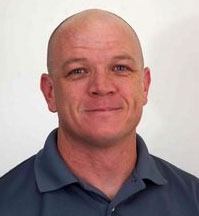
Chris Miser, CEO A fourth speaker has joined the line-up of experts in unmanned aerial vehicles (UAVs) who will share their know-how in UAV design and applications in a free GPS World webinar May 19.
Chris Miser, CEO and owner of Falcon Unmanned, will discuss a topic important to all of our readers: the practical considerations to integrate a professional GNSS receiver on a drone.
The free webinar will take place Thursday, May 19, at 1 p.m. U.S. Eastern / 7 p.m. Central European Time. Register here for “UAV Design and Applications: Autonomous Relative Navigation and GNSS Robustness for UAV Systems.”
Constantly evolving, it’s no wonder keeping up on the latest in UAV design and applications can be challenging. In the webinar, speakers will engage you in discussions involving:
- Self-generated radio-frequency interference aboard UAVs. (Presented by Dennis Akos, Professor, University of Colorado at Boulder, and Joshua Stubbs, Ph.D. candidate)
- An autonomous relative navigation tool for in-air UAV refueling. (Presented by Jeff Fayman, CTO, Geodetics)
- GNSS integration aboard small UAVs (Presented by Chris Miser, CEO, Falcon Unmanned)
- Considerations for multi-GNSS integration onto UAV platforms. (Presented by Jan Leyssens, Product Manager, Septentrio)

About Falcon Unmanned. Falcon Unmanned provides professional tactical unmanned aircraft systems for public safety agencies and commercial sector customers, as well as anti-poaching / conservation activities.
Falcon has several modular payload options providing multi-mission capability including live video missions (day or night), photogrammetry, high-resolution aerial photography and multispectral sensing.
In April, Falcon Unmanned delivered the first round of Falcon (fixed-wing) and Falcon Hover (quadcopter) aircraft to the U.S. Department of Interior (DOI) as part of a four-year IDIQ vendor contract. Falcon Unmanned is tasked with providing a complete array of aircraft, payloads, ground control stations, training and support services.
Falcon Unmanned successfully completed DOI/NASA airworthiness testing for its Falcon and Hover models, becoming one of only a handful of UAVs with a U.S. federal agency airworthiness evaluation.
Falcon and Hover meet or exceed a number of key DOI target requirements including:
- Communications/video range of 5 miles
- Fixed-wing/multicopter interoperability, with interoperable batteries, ground-control stations (GCS) and payloads
- Easily swappable modular electro-optical/infrared (EO/IR) gimbal and mapping payloads
- Open-source GCS
- Secure 256-bit encrypted communications link(s)
Miser will be joined by three other experts, who will share their in-depth knowledge and practical tips, as well as take audience questions.
Click here to learn about the other four speakers, and register quickly and easily for this free webinar, sponsored by Septentrio.
-

UAV achieves full-speed autonomous landing
In the most critical phase of the landing maneuver, the UAV flight control system must compensate for the accelerated air flow above the ground vehicle. (Photo: DLR) Moving at 75 kilometers an hour (47 mph) an unmanned, electric, autonomous aircraft settled gently on the roof of a moving car.
Scientists from the German Aerospace Center (DLR) Institute of Robotics and Mechatronics combined robotics and unmanned aerial vehicles (UAVs) to develop a system where a fixed-wing aircraft automatically lands on a moving ground vehicle.
The DLR system is designed for commercial applications such as remote sensing and communication. It could be applied to ultra-lightweight solar aircraft that complement traditional satellite systems in the stratosphere. Or, it could support crisis management, such as aiding disaster-communications networks or providing data on climate change.
Losing weight
Ultralight solar aircraft can reach more than 20 kilometers in altitude. The weight factor is crucial to how long the ultralight can stay in the air.

The Demonstrator Platform Penguin BE UAV is equipped with redundnant landing hardware. (Photo: DLR) By omitting the traditional landing gear, the dead weight of these UAVs can be significantly reduced. This allows more load capacity, greater range and better performance. A lighter craft also increases payload capacity, creating more space for scientific instruments.
In flight tests on an airfield in Swabia Mindelheim-Mattsies, the DLR system was successfully tested with a 3-meter, 20-kilogram, electric fixed-wing UAV. A net was provided on the roof of a car, along with optical markers. The UAV can position itself up to half a meter over the 4 x 5 meter landing platform. The optical multi-marker tracking system detects the landing apparatus and determines the relative position of the ground vehicle with high accuracy. The computer-controlled landing is then carried out.
Movement of UAV and the vehicle are adjusted with the help of special algorithms. With the car and the UAV moving at the same speed, the landing is more like a settling, making the landing safer and easier. Though designed for both autonomous car and UAV, a driver remained in the car for safety during the tests. A robotic vehicle without a driver will be tested next.
The work was supported by the EU project EC-Safe Mobile Support and complement the activities of the Flight Robotics Group.

In the semi-autonomous landing vehicle, the driver receives control commands via a graphical display. The crosshairs indicate the location of the UAV. (Photo: DLR) -
eyesMap3D software provides high-quality 3D models

3D model created using eyesMap3D software. Technology company eCapture has launched a new software program, eyesMap3D, to generate accurate 3D models and point clouds, measured directly from images.
EyesMap3D allows users to create high-density points clouds with textures achieving a realistic 3D model appearance. In addition, eyesMap3D is able to measure accurately on the images, generate true orthophotos, and geo-reference and scale the results.
eyesMap3D users can use their cameras, mobile phone or camera drone to capture images. It is compatible with most popular software packages on the market.
The goal of the company is to allow the user to easily generate and work with 3D models and photogrammetric tools, while maintaining data quality.
In 2015, eCapture launched the eyesMap tablet for modeling 3D scenes indoors and outdoors. The EyesMap tablet is a versatile instrument for users who needs results directly while working in the field.
eyesMap3D software is offering three licenses: educational, public organizations and business. The software can be downloaded from the eCapture website.

3D model of small object (a bracelet) made using eyesMap3D software. -
FAA expands drone detection Pathfinder initiative
The Federal Aviation Administration (FAA) is expanding the part of its Pathfinder Program that focuses on detecting and identifying unmanned aircraft systems (UAS) flying too close to airports.
On Monday, the FAA signed Cooperative Research and Development Agreements (CRDAs) with Gryphon Sensors, Liteye Systems Inc. and Sensofusion. The FAA will evaluate procedures and technologies designed to identify unauthorized UAS operations in and around airports. This research effort, part of the FAA’s Pathfinder Initiative, addresses one of the significant challenges to safe integration of UAS into the nation’s airspace.
“Sometimes people fly drones in an unsafe manner,” said Marke “Hoot” Gibson, FAA Senior Advisor on UAS Integration. “Government and industry share responsibility for keeping the skies safe, and we’re pleased these three companies have taken on this important challenge.”
“Gryphon Sensors, LLC is excited to collaborate with the FAA on utilizing technologies that detect, track and identify errant or hostile UAS in and around our nation’s airports and sensitive areas. Detecting these threats is challenging because most of them are very small, fly low to the ground and can be pre-programed to fly autonomously,” said Gryphon Sensors President Tony Albanese.
“Our AUDS team is very excited to join the FAA’s efforts to counter rogue UAVs,” stated Thomas Scott, President of Liteye Systems. He added, “As the legitimate use of unmanned vehicles becomes more prevalent in many industries, unfortunately this large number of aircraft also makes them readily available for illicit use. With the right technologies we can assist the UAV operator to conduct his mission, while protecting against those who wish us harm.”
“We first developed the technology to detect, locate, track and gain control over UAS three years ago as a military project and operated it with three European armies under NATO,” said Sensofusion CEO Tuomas Rasila. “Fast forward to the present time, and AIRFENCE is now protecting various customer sites in Europe, including prisons, high profile government buildings, police, and military sites. Since the technology is software based, it improves with over-the-air updates, ensuring that we are always ahead of the commercial UAS market.”
The companies’ prototype UAS sensor detection systems will be evaluated at airports selected by the FAA. The agency and its federal government partners — particularly the Department of Homeland Security (DHS) — will work with the companies to study how effective their respective technologies are, while ensuring they do not interfere with the safety and security of normal airport operations.
The CRDAs with Gryphon, Liteye and Sensofusion expand upon collaborative efforts with industry to develop system standards to identify unauthorized UAS flights near airports, which could pose a hazard to manned aircraft. The agency has seen a steep increase in reports of small UAS close to airports over the last two years.
The FAA has also partnered with DHS and CACI International on similar research to explore how that company’s prototype detection technology may help detect UAS.
The FAA supports DHS in an inter-agency effort to meet the threat of unauthorized UAS from a “whole of government” perspective. Other participating federal agencies include: the Department of Defense, Department of Energy, U.S. Secret Service and the Federal Bureau of Investigation.
-

Trimble offers GNSS module for system integrators
MB-Two module by Trimble. Trimble has introduced the MB-Two GNSS module, which delivers highly accurate GNSS-based heading plus pitch or roll in an advanced industry standard form-factor for system integrators.
The module’s embedded Z-Blade GNSS technology uses all available dual-frequency GNSS signals equally, without any constellation preference, to deliver fast and stable centimeter-accurate position and heading information, the company said.
The MB-Two is designed for a wide variety of applications such as unmanned, agriculture, automotive, marine and military systems.
The announcement was made at AUVSI’s Xponential 2016, the largest trade show for the unmanned systems and robotics industry.
“System integrators demand high performance, reliability and support for their positioning solutions,” said Elmar Lenz, general manager of Trimble’s Integrated Technologies Division. “The MB-Two is designed for easy integration and rugged dependability. The size, weight and power specifications of the unit make it the ideal choice for smaller unmanned platforms.”
The MB-Two features an enhanced dual-core GNSS engine with 240 channels capable of tracking L1/L2 frequencies from the GPS, GLONASS, Galileo and BeiDou constellations. The GNSS engine supports Trimble RTX correction services, including CenterPoint RTX and RangePoint RTX, delivered worldwide via L-Band satellite. The MB-Two combined with CenterPoint RTX delivers centimeter-level positioning without requiring a local base station or VRS network.
The Trimble MB-Two module is available now through the Trimble GNSS OEM international network of representatives and authorized dealers.
-

Insitu and PrecisionHawk form commercial drone alliance
Insitu and BNSF officials launch ScanEagle in support of the FAA’s pathfinder initiative (Photo: Insitu) Insitu and PrecisionHawk have formed a strategic alliance to provide UAS solutions that help commercial enterprises achieve safe unmanned flight for extended and beyond-visual-line-of-sight operations. Insitu is a provider of information and unmanned aircraft systems (UAS) for commercial, civil and military operations, and PrecisionHawk is an aerial data provider.
Both companies are exhibiting at this week’s AUVSI Xponential 2016 show in New Orleans.
The alliance also leverages the extensive research and testing capabilities of two of the participants of the Federal Aviation Administration (FAA) Pathfinder Program, which is dedicated to expanding the use of UAS within the nation’s airspace.
“While our businesses are diverse, the areas where we intersect have tremendous potential for creating new opportunities in the commercial industries we both serve,” said Ryan M. Hartman, Insitu President and CEO. “This alliance ensures that more businesses will explore what unmanned technology can offer.”
Thanks to the integration of each company’s proprietary platforms, hardware and software, Insitu and PrecisionHawk plan to deliver even more data insights.
“Our customers are always pushing us to bring more advanced and comprehensive solutions, and we go above and beyond to make sure we are developing tools that serve their specific needs,” said PrecisionHawk president Christopher Dean. “We believe this alliance with Insitu will help us deliver on our promise even more.”
The emphasis of the U.S.-based alliance is on providing business intelligence support for commercial operations, including asset protection, property preservation, safety enhancement and environmental monitoring. -
FAA establishing advisory committee on UAV integration
Speaking today at Xponential, the AUVSI annual conference in New Orleans, FAA Administrator Michael Huerta announced the agency is establishing a broad-based advisory committee that will provide advice on key unmanned aircraft integration issues. He also announced plans to make it easier for students to fly unmanned aircraft as part of their coursework.
Huerta said the drone advisory committee is an outgrowth of the successful stakeholder-based UAS registration task force and the MicroUAS aviation rule-making committee.
Those panels were set up for a single purpose and for limited duration. In contrast, the drone advisory committee is intended to be a long-lasting group. It will help identify and prioritize integration challenges and improvements, and create broad support for an overall integration strategy.
“Input from stakeholders is critical to our ability to achieve that perfect balance between integration and safety,” Huerta said. “We know that our policies and overall regulation of this segment of aviation will be more successful if we have the backing of a strong, diverse coalition.”
Huerta said he has asked Intel CEO Brian Krzanich to chair the group.
Student UAS operation
Huerta also announced the FAA will start allowing students to operate UAS for educational and research purposes today.
As a result, schools and students will no longer need a Section 333 exemption or any other authorization to fly provided they follow the rules for model aircraft. Faculty will be able to use drones in connection with helping their students with their courses.
“Schools and universities are incubators for tomorrow’s great ideas, and we think this is going to be a significant shot in the arm for innovation,” Huerta said.
-
DJI, PrecisionHawk partner on UAV remote sensing for agriculture
PrecisionHawk and DJI announced during the Association for Unmanned Vehicle Systems International’s Xponential show an exclusive partnership for the agriculture market with a complete agricultural analytics solution. The solution links DJI’s drone hardware to PrecisionHawk’s drone software platform, DataMapper.
“Farmers need real-time information about their crops, their fields and their harvests, and DJI and PrecisionHawk are working together to give them what they need,” said Michael Perry, DJI’s Director of Strategic Partnerships. “We are excited to make collecting and analyzing aerial data easier and more cost-effective than ever, because putting this technology within reach of working farmers will help them as well as everyone who relies on the crops they produce.”
DJI’s UAV platforms, such as the Matrice M100 and M600 series, allow for extensive customization, providing the flexibility to monitor crops, carry advanced sensors or accomplish other tasks specific to each mission.
The combined package will also include the new DataMapper Inflight app for data collection and a one-year subscription to DataMapper for data management and analysis.
The pairing of industry-leading UAV hardware with the best-in-class analytics platform enables agriculture professionals to concentrate on identifying crop stress and maximizing yields.
“This partnership is bringing the best of both worlds to the agriculture industry,” said Pat Lohman, VP Partnerships at PrecisionHawk. “By combining our strengths — DJI’s world-renowned hardware and PrecisionHawk’s seamless software tools that bridge the gap from flight to geospatial data analysis — we are effectively eliminating any major barriers to entry and allowing the industry to begin adopting this technology in their everyday workflows on a broader scale.”
With the DataMapper Inflight app, a user can easily create a flight plan and autonomously collect geospatial data. The images are viewable within DataMapper where they are processed into 2D and 3D maps and ready for further analysis. Users also have access to DataMapper’s library of analysis algorithms that provide detailed information around the major decisions a farmer makes throughout the season: optimizing inputs, reacting to threats, improving variable rate, increasing efficiency of crop scouting and estimating yield.
“We believe that in order to promote widespread adoption of this technology we need to build products and partnerships that empower the user,” Lohman continued. “In an effort to do so, the DataMapper Inflight app is now compatible with the entire line of DJI hardware to make it easier and more accessible than ever to collect actionable, aerial data.”
The new DataMapper Inflight app is now available for download on Android and coming soon on iOS.
-

SOAR Oregon backs UAS FutureFarm for digital agriculture
SOAR Oregon, a non-profit organization focused on the development of the unmanned aircraft systems (UAS) industry in Oregon, has given the city of Pendleton a grant for the establishment of a FutureFarm project at the Pendleton UAS Test Range.
The Oregon UAS FutureFarm is a real-world proving ground designed to help digital agriculture pioneers accelerate product development, reduce cycles and expand market growth.
SOAR Oregon is exhibiting at AUVSI Xponential 2016, being held in New Orleans this week.

Pendleton Mayor Phil Houk (right) signs the FutureFarm grant agreement with SOAR Oregon. SOAR Oregon’s John Stevens (front left), Roundup City Development Corporation’s Mike Short (back left), and Pendleton UAS Range’s Steve Chrisman (back right) were on hand to witness the signing. Once established in June, it will be the only digital agriculture proving ground of its caliber in the United States, SOAR Oregon said. Developers of agriculture-focused unmanned robotics and data systems will find the Oregon UAS FutureFarm has a broad spectrum of high value and commodity crops, multiple layers of remote sensing for benchmarking, and access to the agricultural knowledge base they need to test, validate and innovate the next generation of interconnected unmanned and automated agricultural systems.
The Oregon UAS FutureFarm features a network of research-friendly farmers growing a large variety of irrigated and dry-land crops in both traditional and modern farming infrastructures. Strategic partners include the City of Pendleton, Digital Harvest, SOAR Oregon, Blue Mountain Community College, Oregon State University and USDA Columbia Basin Agricultural Research Center.
“We believe that the Oregon UAS FutureFarm fills a clearly defined market niche for UAS platform and payload developers who are working on the next generation of technologies for precision agriculture,” said SOAR Oregon Executive Director Chuck Allen. “We are especially pleased that this project is taking place at one of Oregon’s FAA-designated UAS test ranges.”
“We are pleased to be supporting the Oregon UAS FutureFarm as both a partner and user,” said Young Kim, CEO of Digital Harvest. “The fact that the test range includes high-value tree fruit orchards, premium wine grape vineyards, hundreds of automated irrigated plots, and hundreds of thousands of acres of dry land farms makes it a unique and special zone.”
“The Oregon UAS FutureFarm is open to UAS developers, sensor makers, robotics companies, universities and any others who are looking for a real-world digital agriculture proving ground that is supported by a collaborative innovation focused community,” said Jeff Lorton, Oregon UAS FutureFarm project manager.
Pendleton Mayor Phil Houk signed the agreement with John Stevens and Mike Short from SOAR in attendance. “The FutureFarm represents what we’d hoped the Pendleton UAS Range could become — not just an environment for the development of technology, but the place where real-world questions could be solved with unmanned aircraft,” said Steve Chrisman, Pendleton director of Economic Development. “We are excited about the potential of this project to develop solutions which benefit growers across the Northwest.”